
PLANTAE / PHANEROGAMAE / ANTHOPHYTA / CARYOPHYLLALES / AIZOACEAE / RUSCHIOIDEAE / RUSCHIEAE / TRICHODIADEMA / INTONSUM

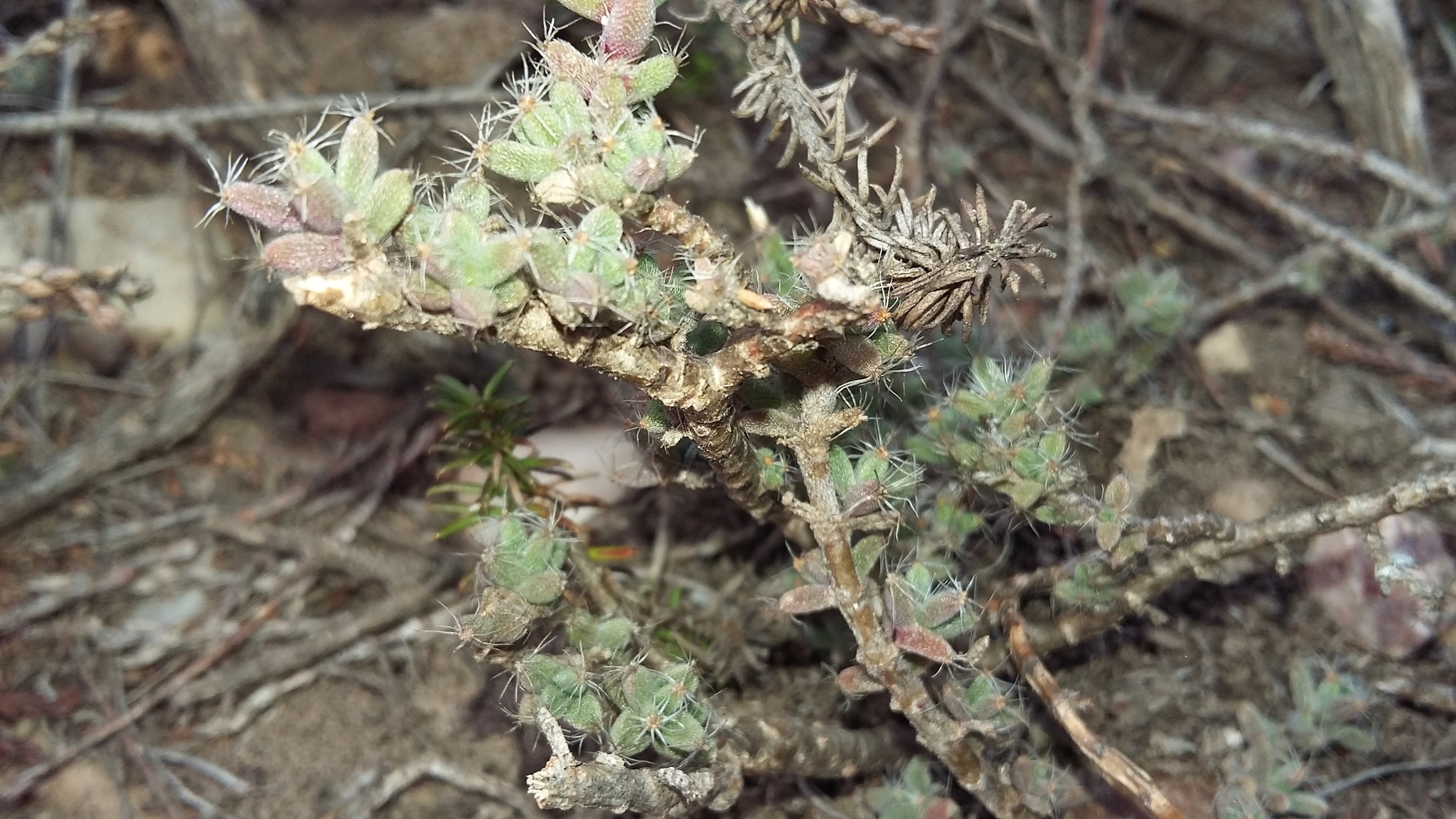
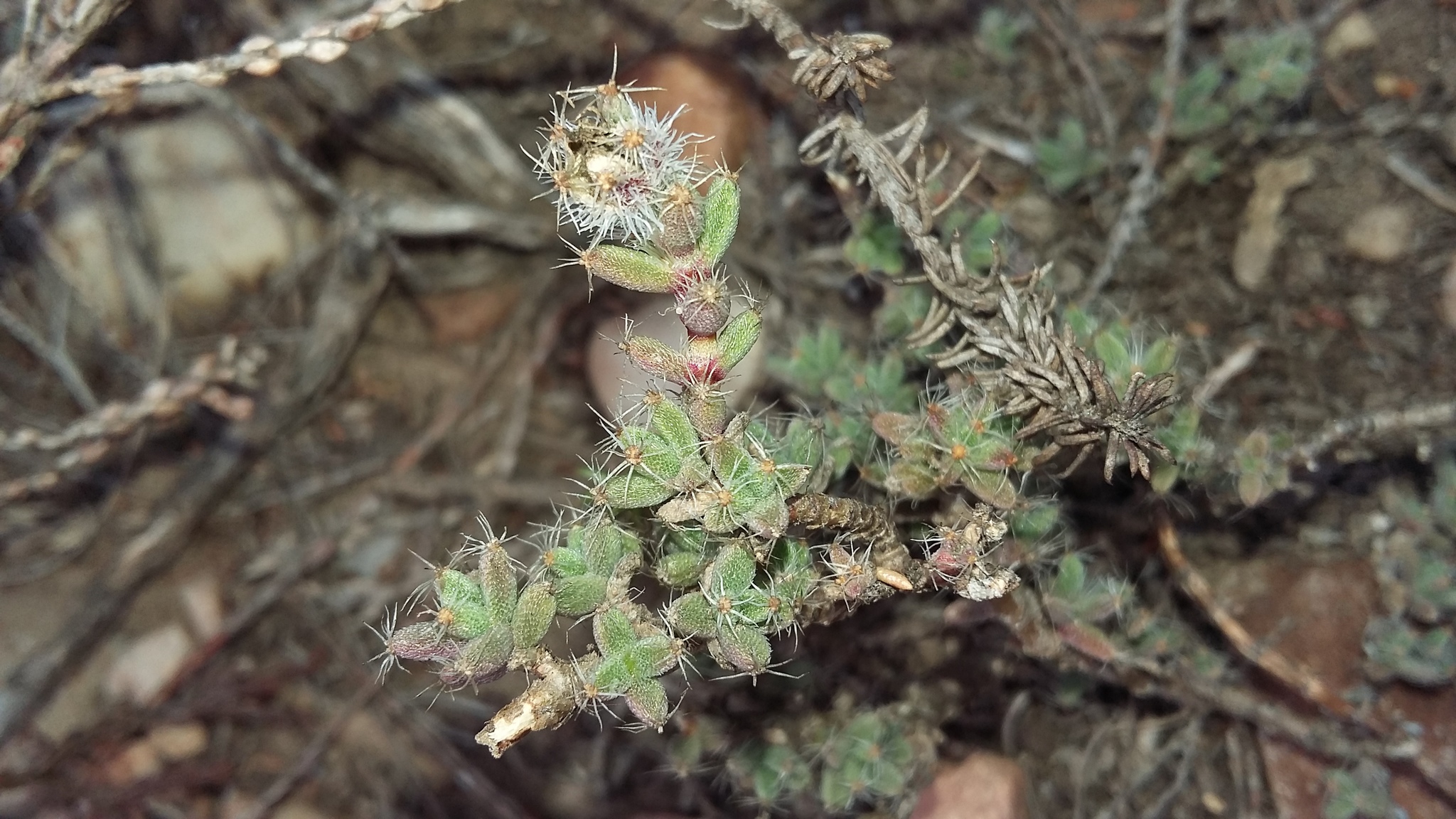
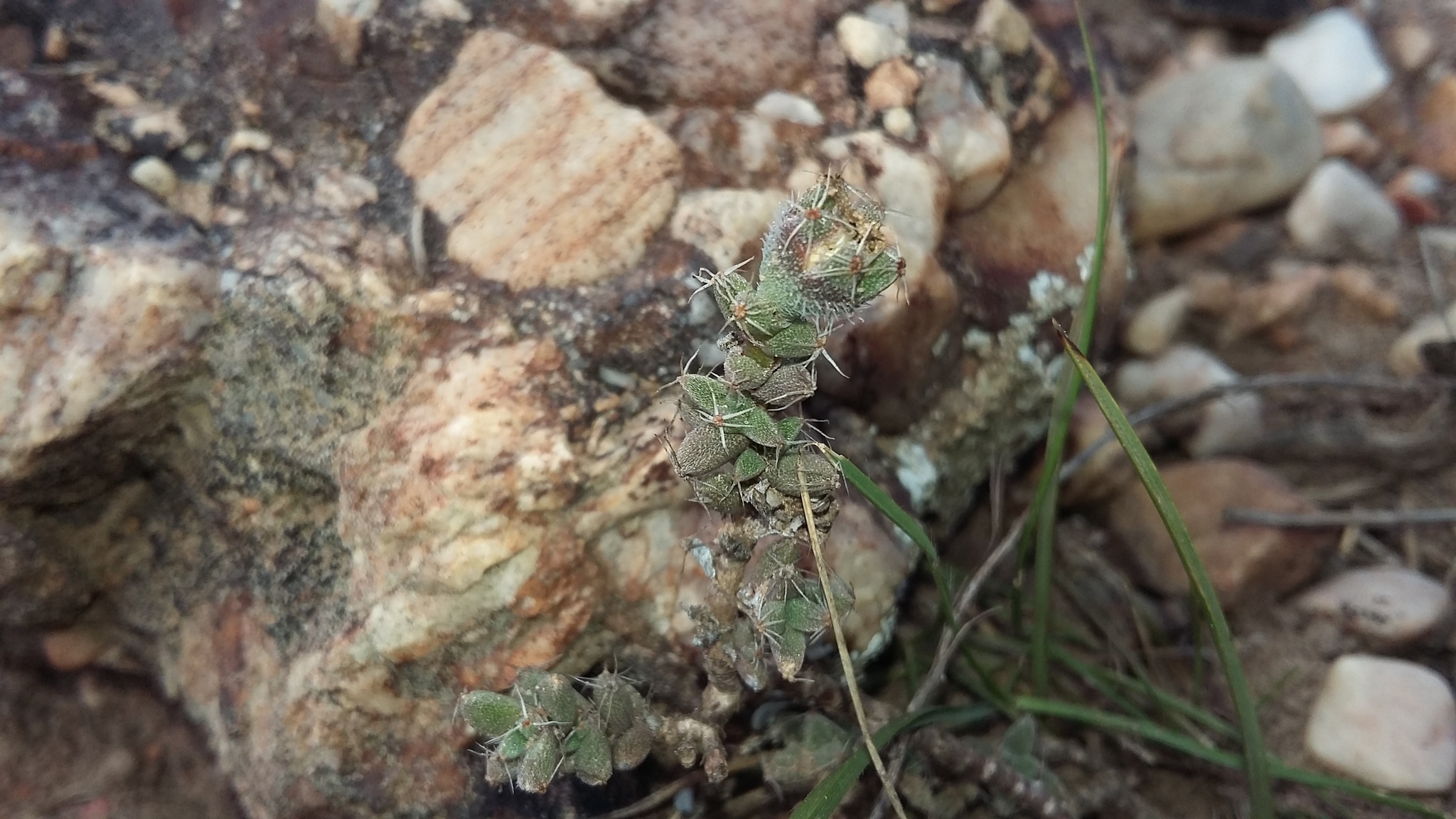
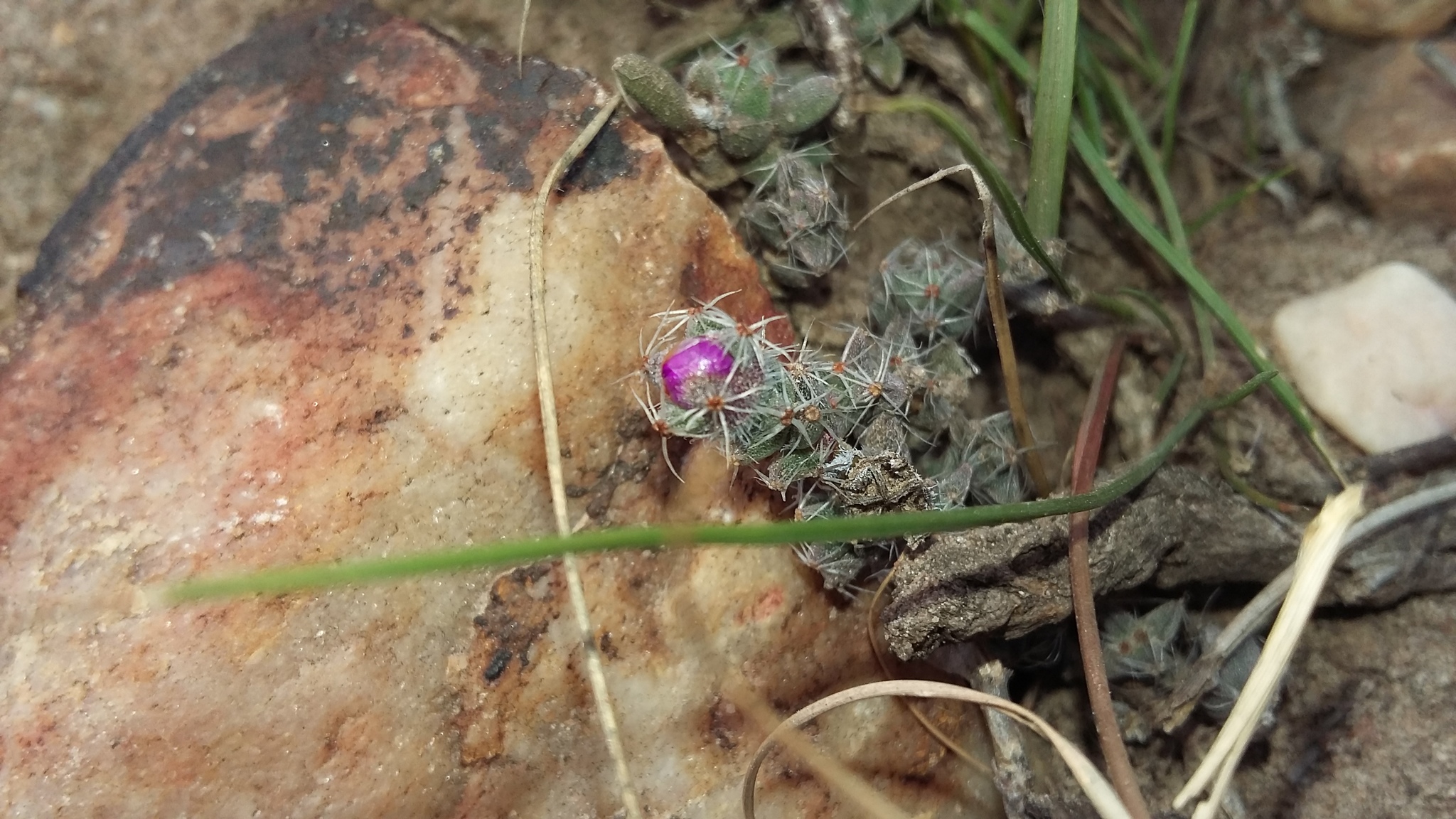
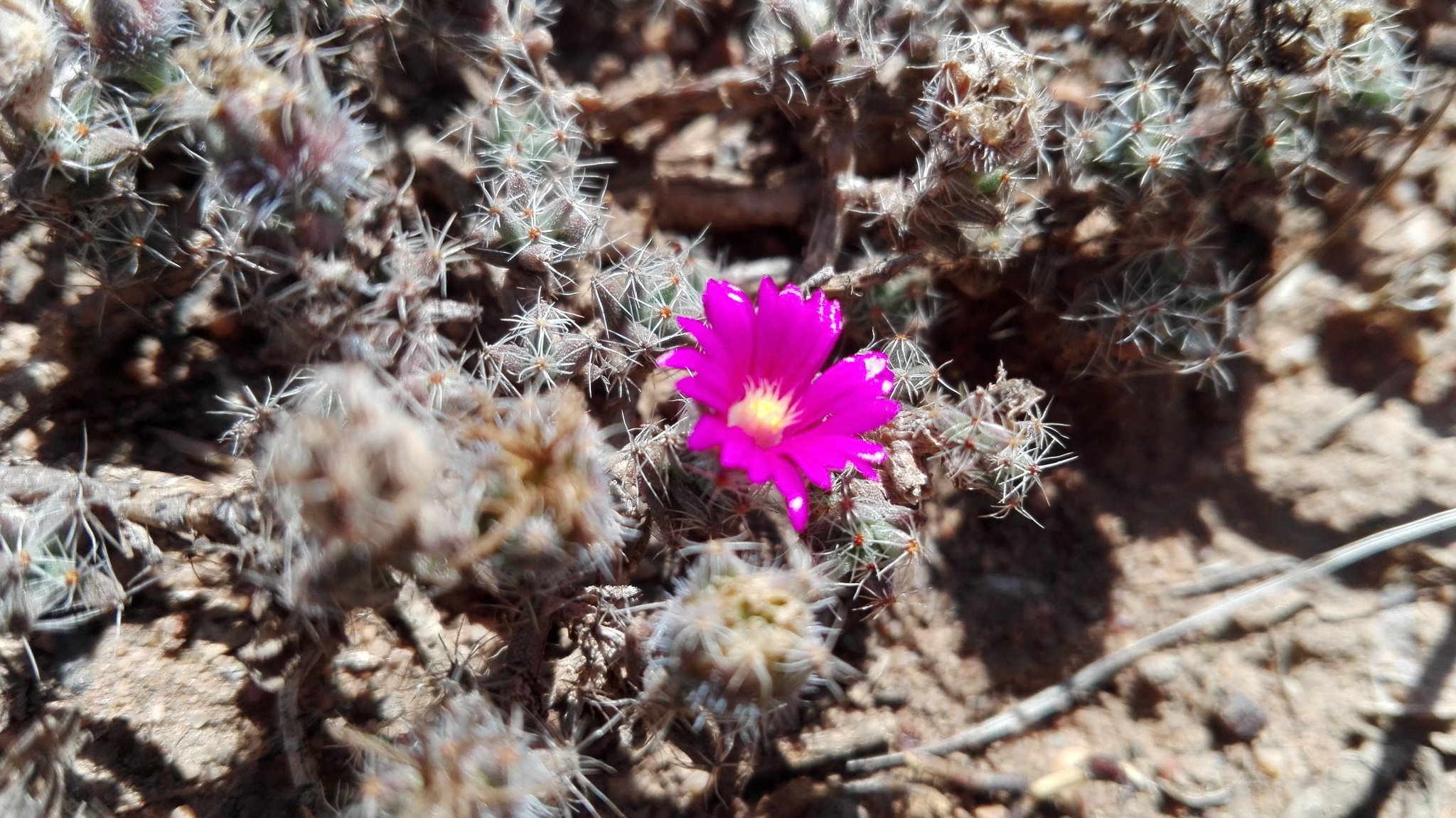
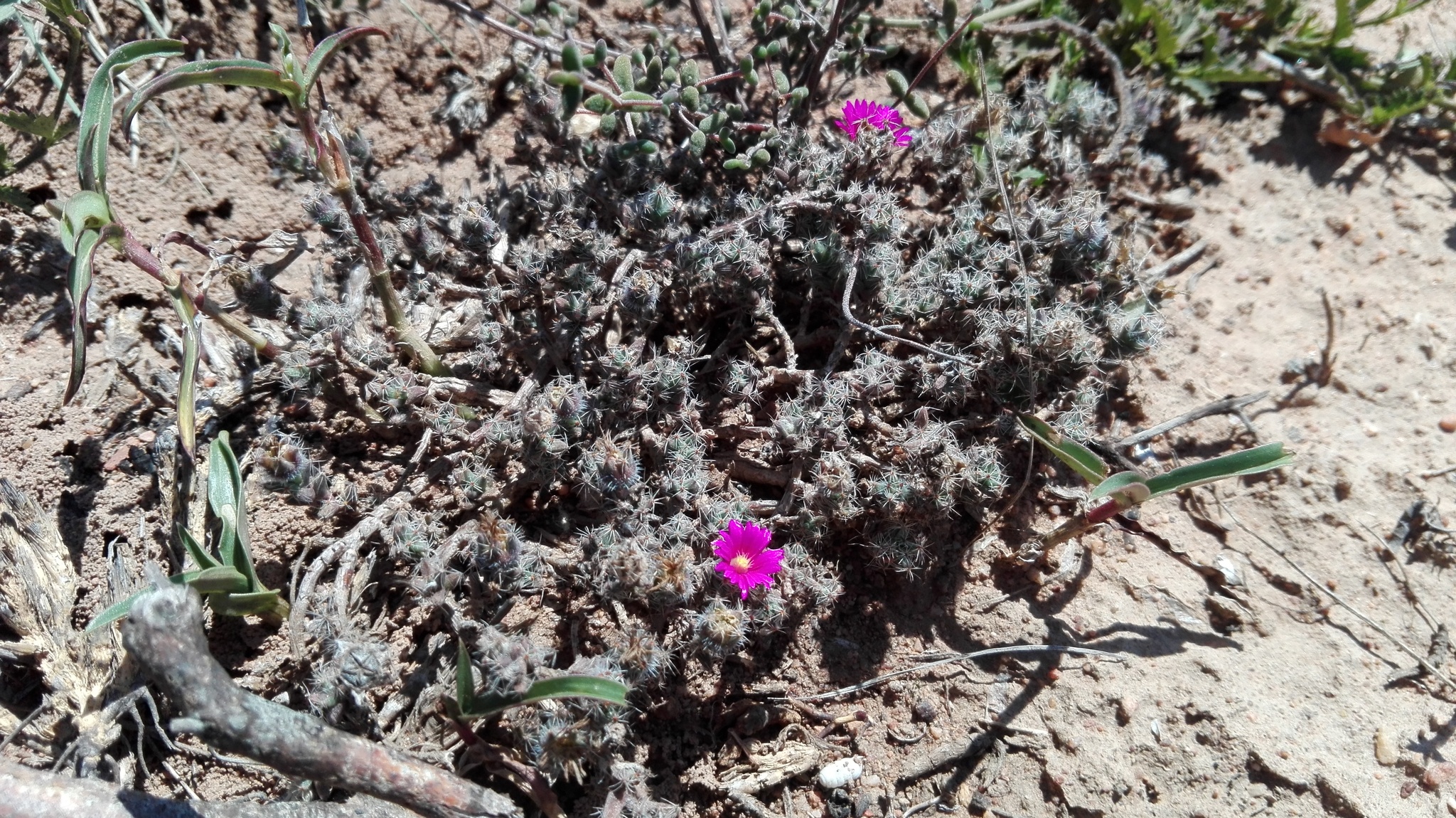
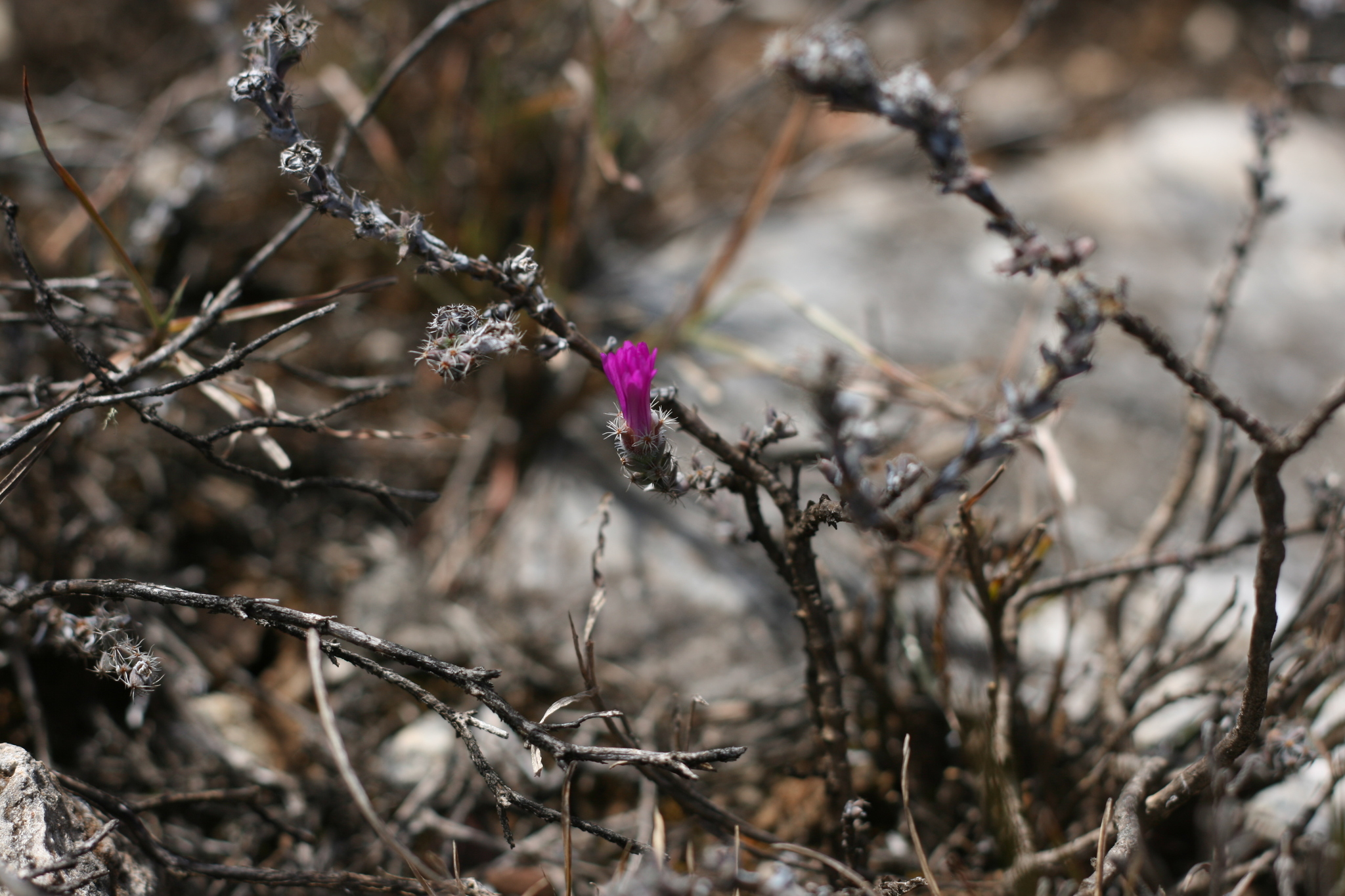
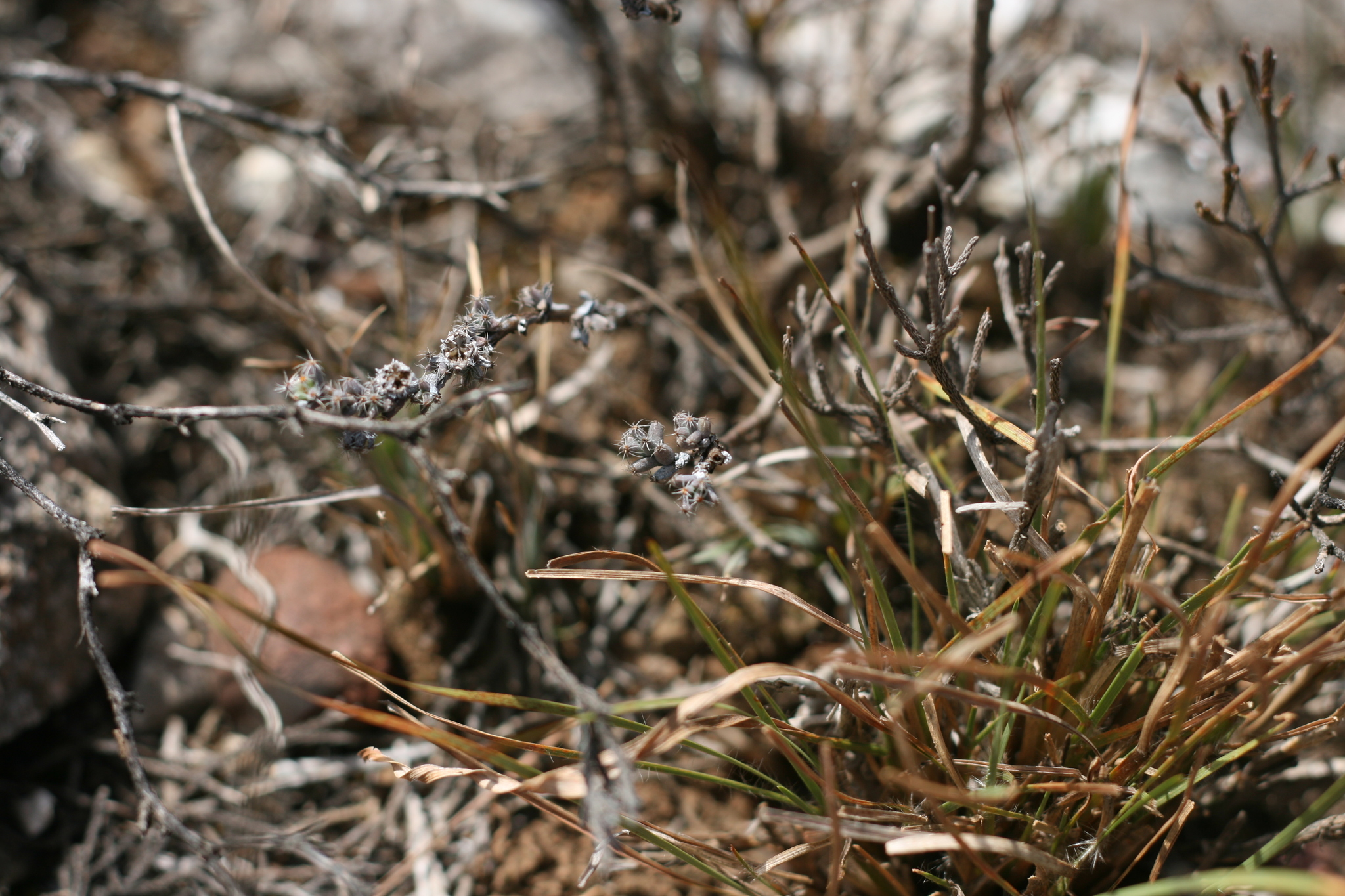
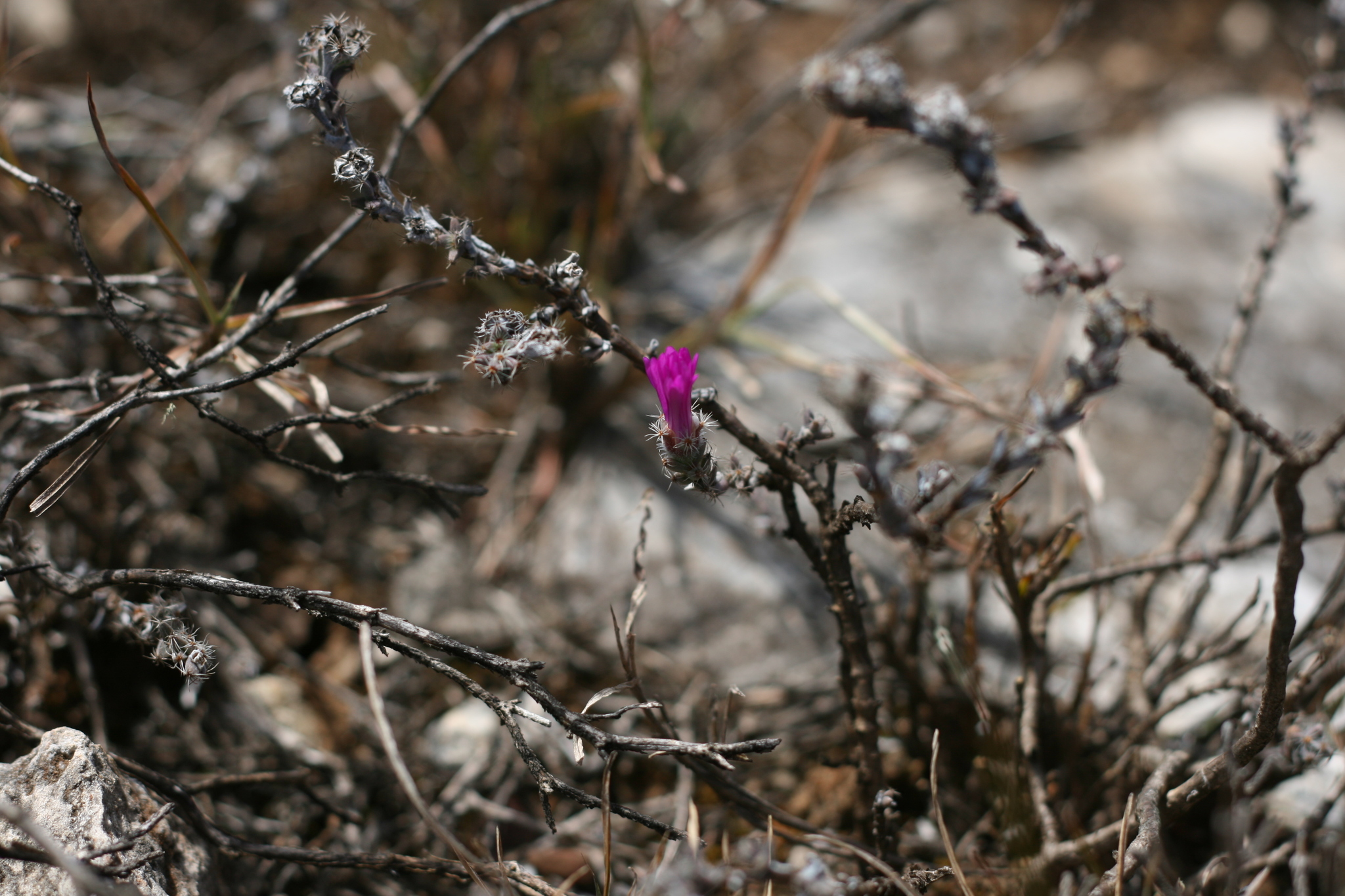
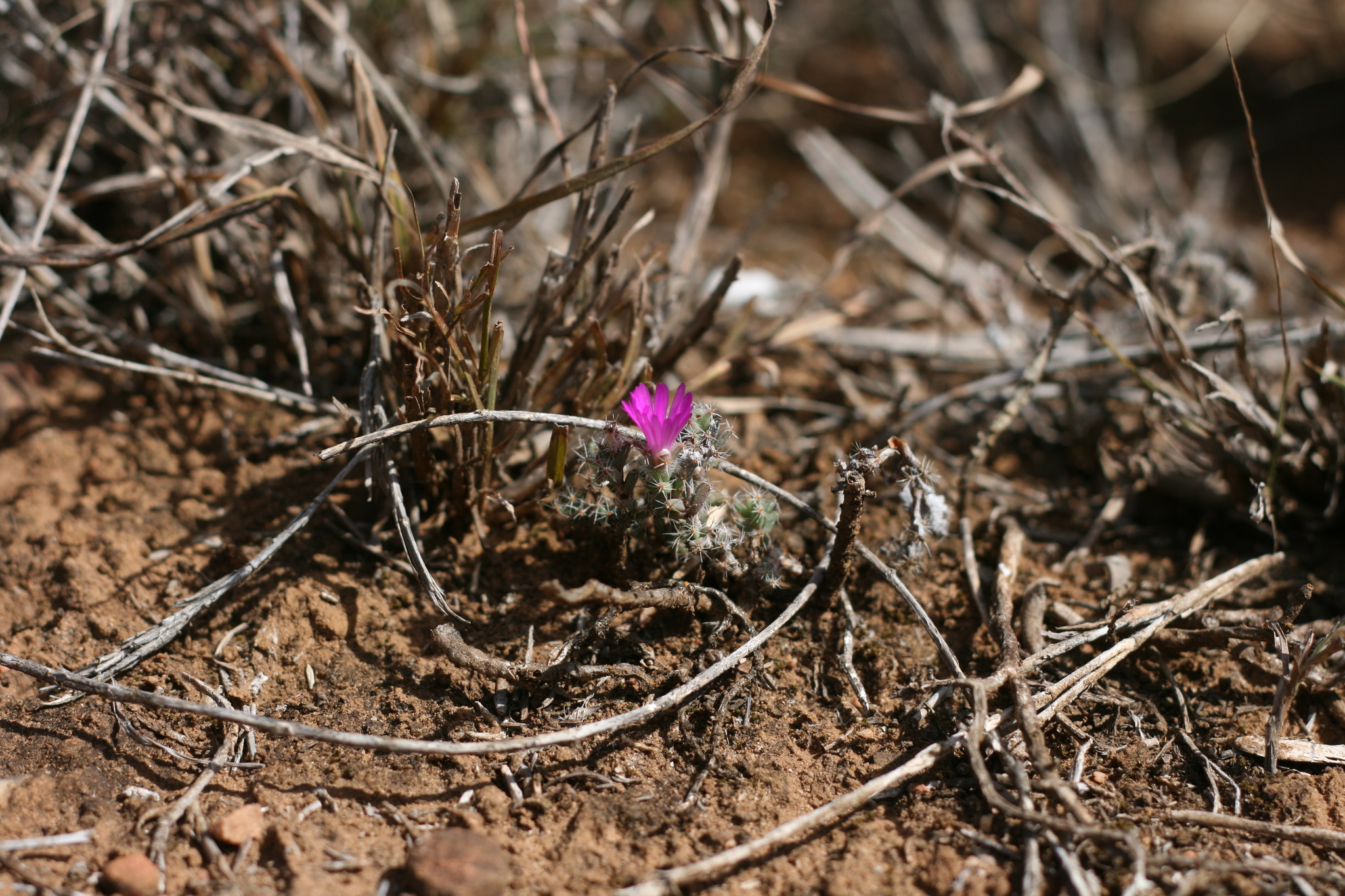
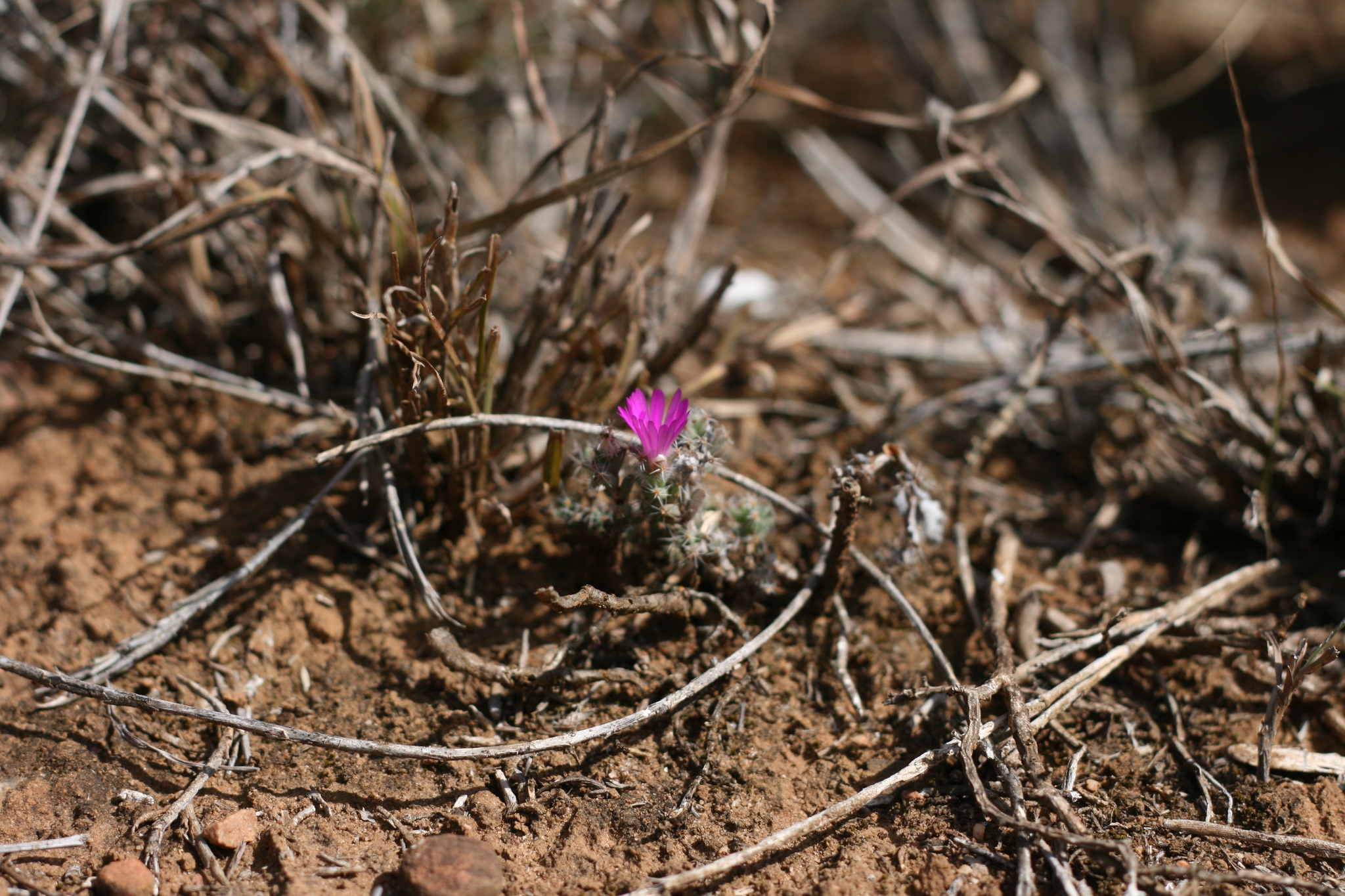
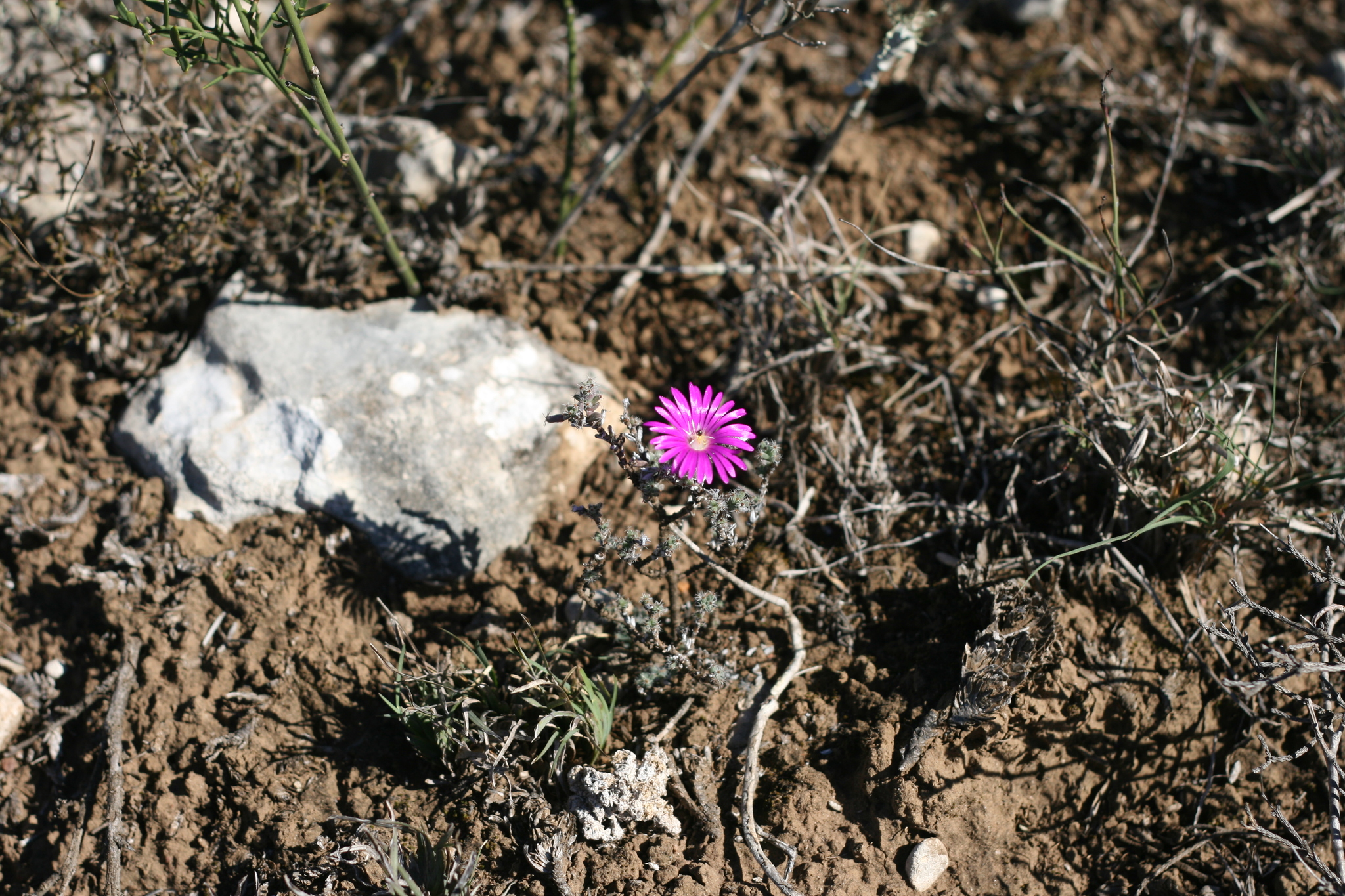
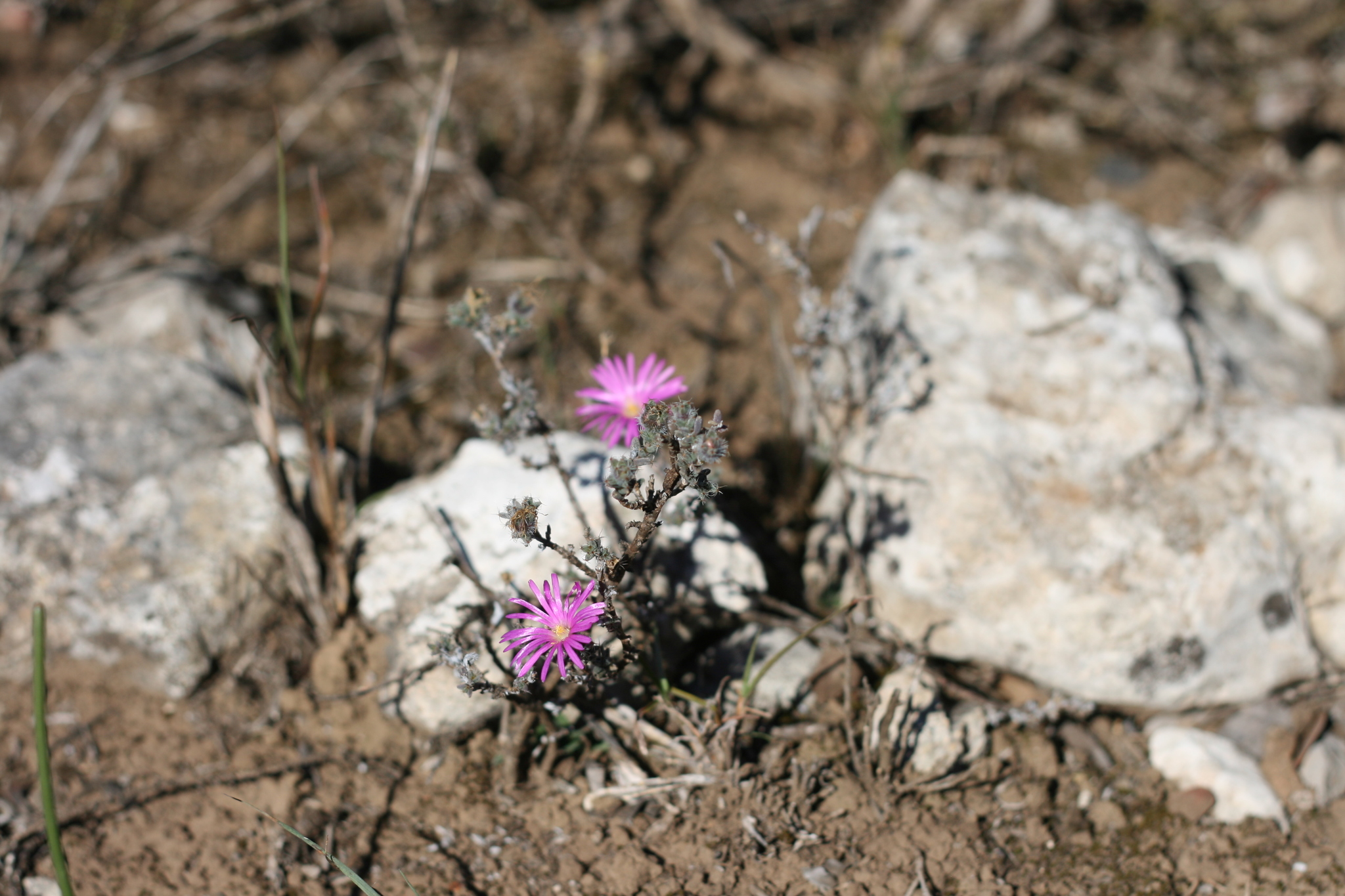
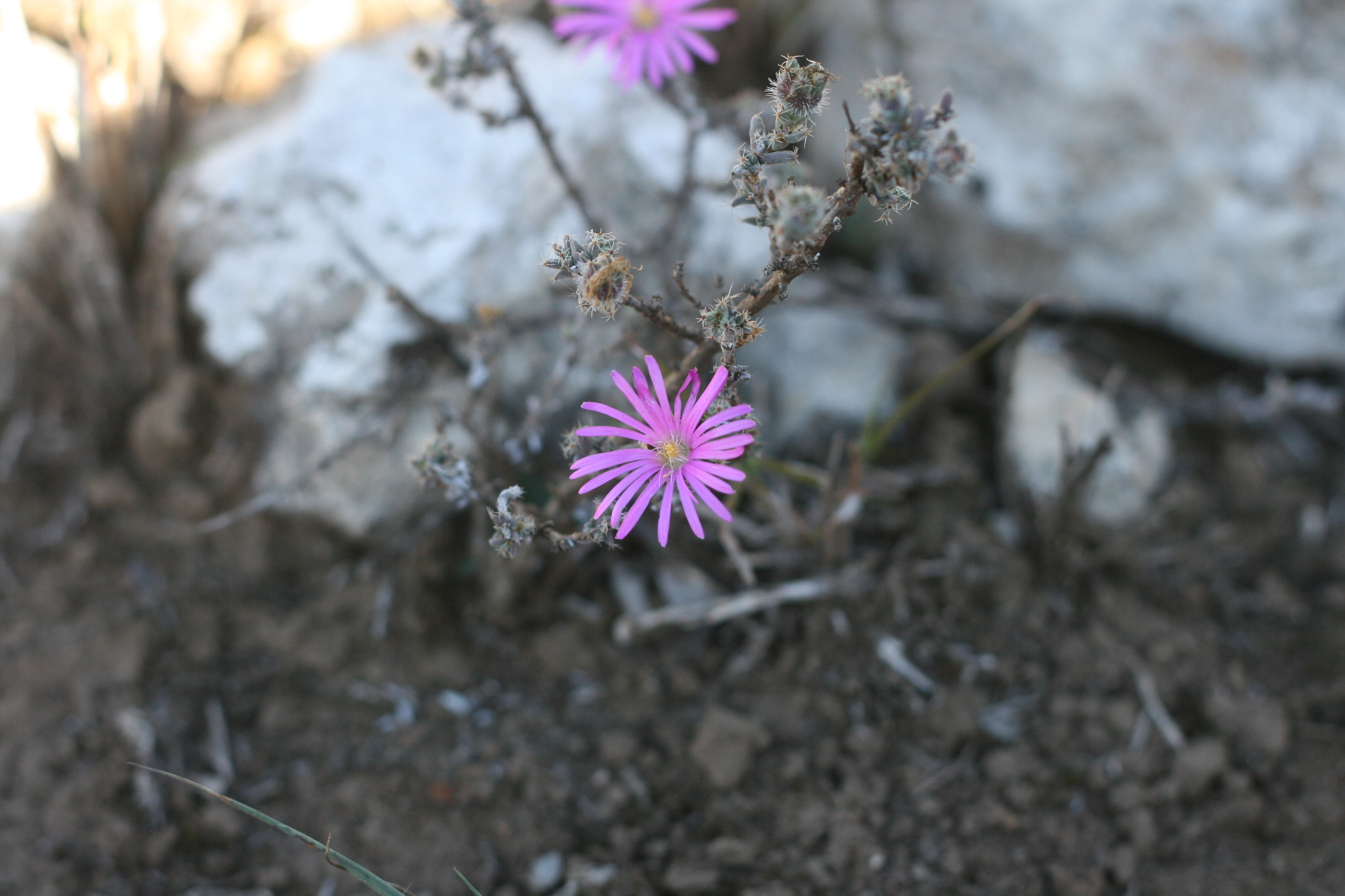
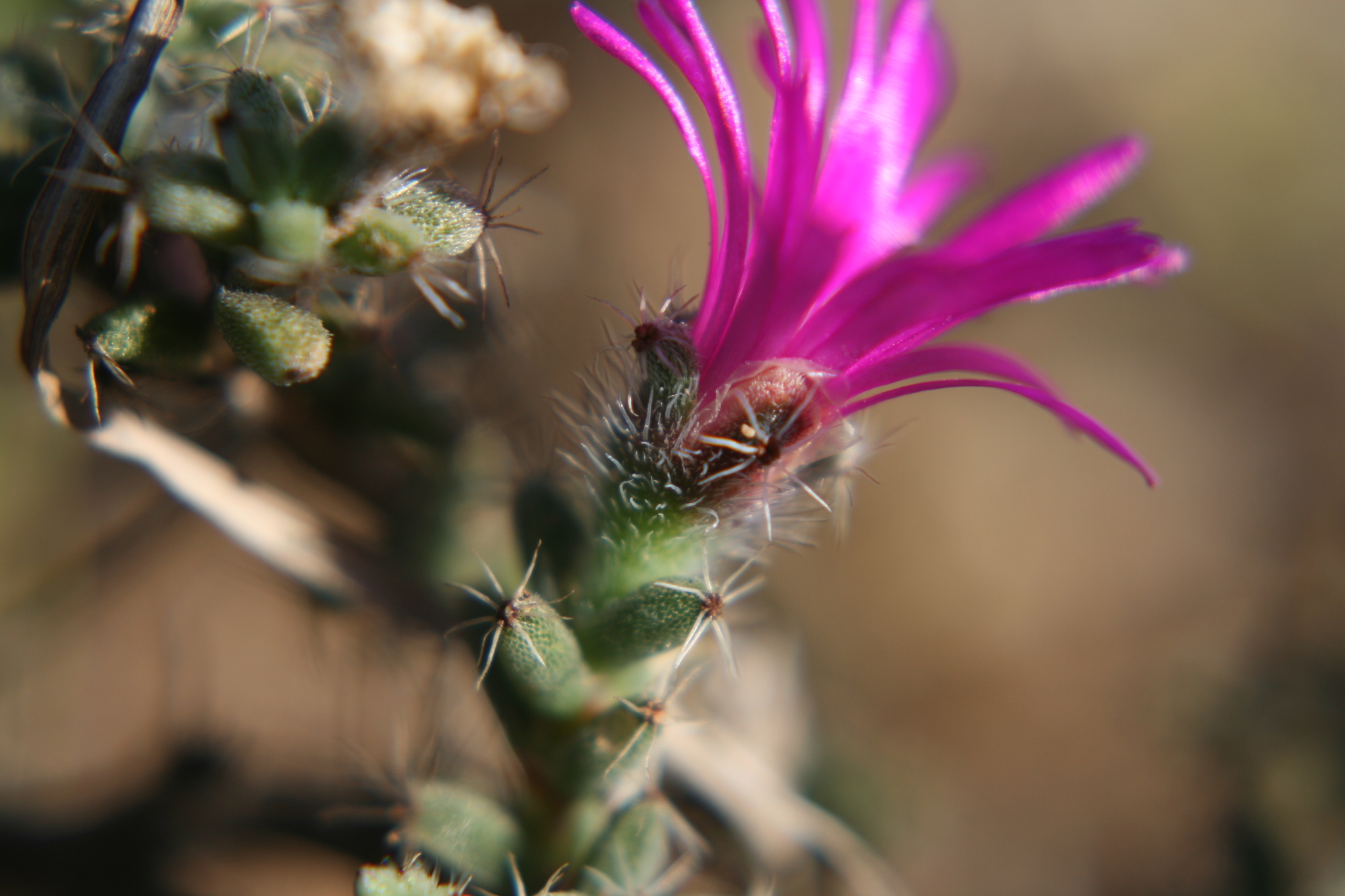
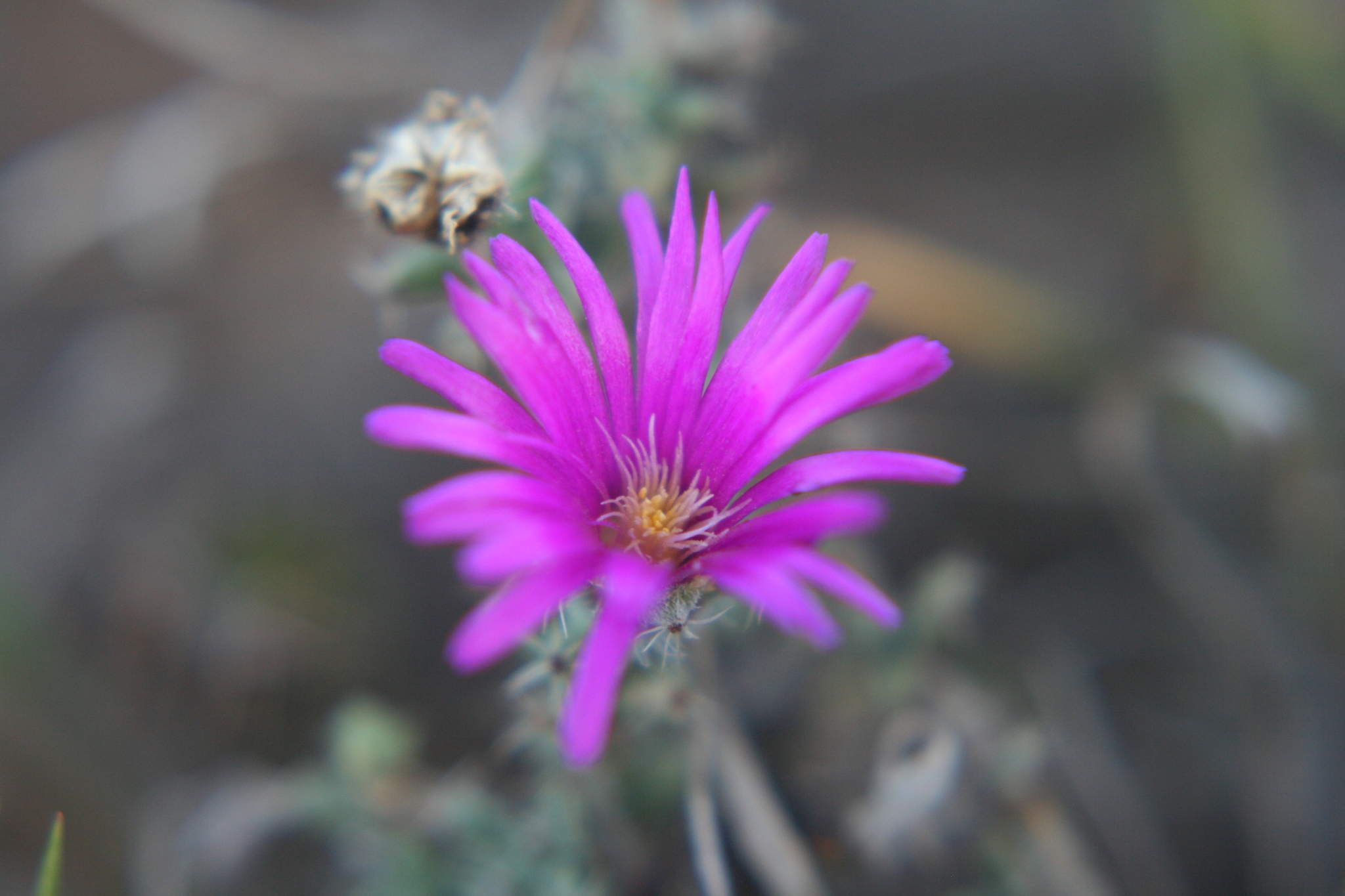
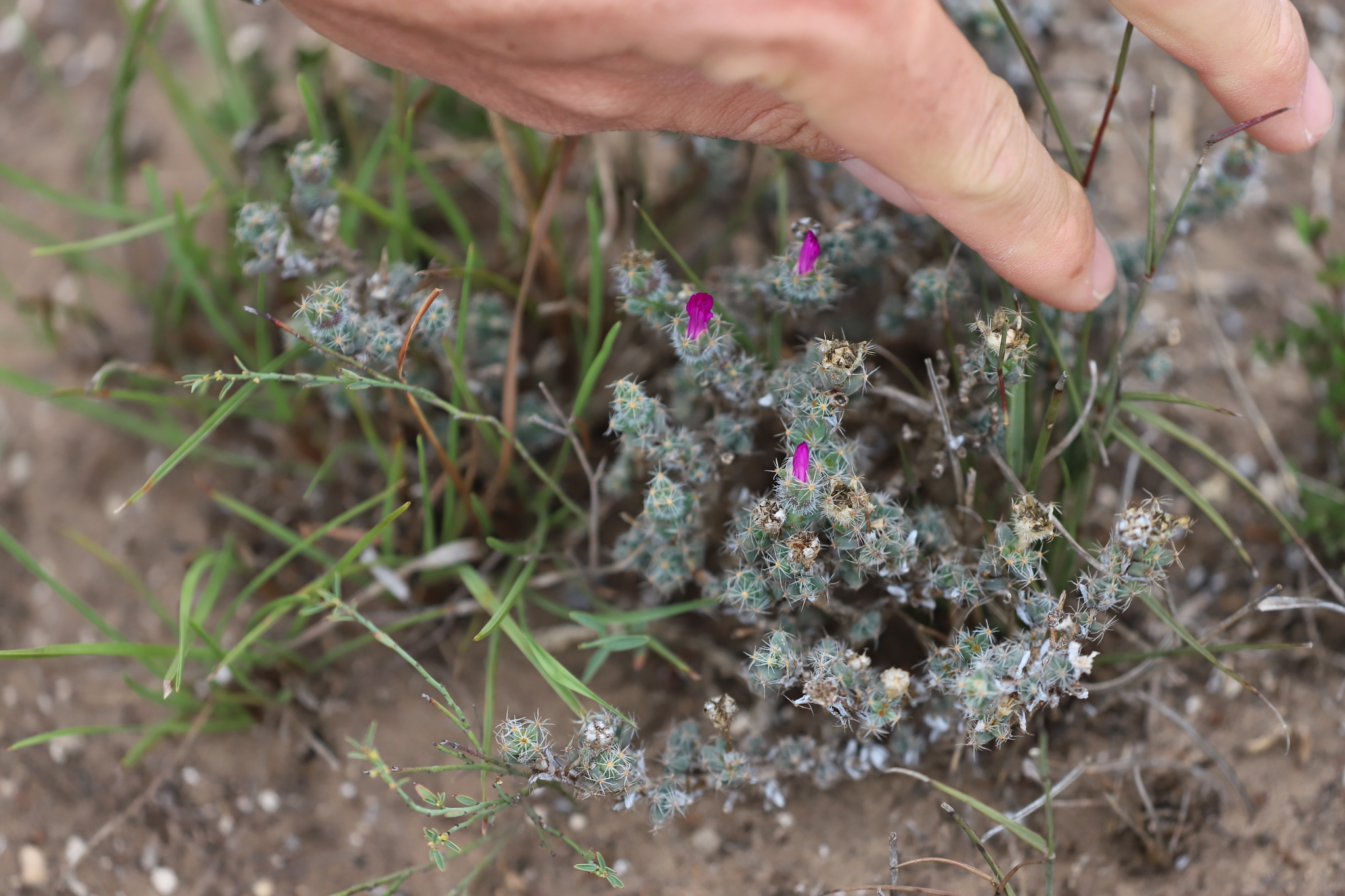
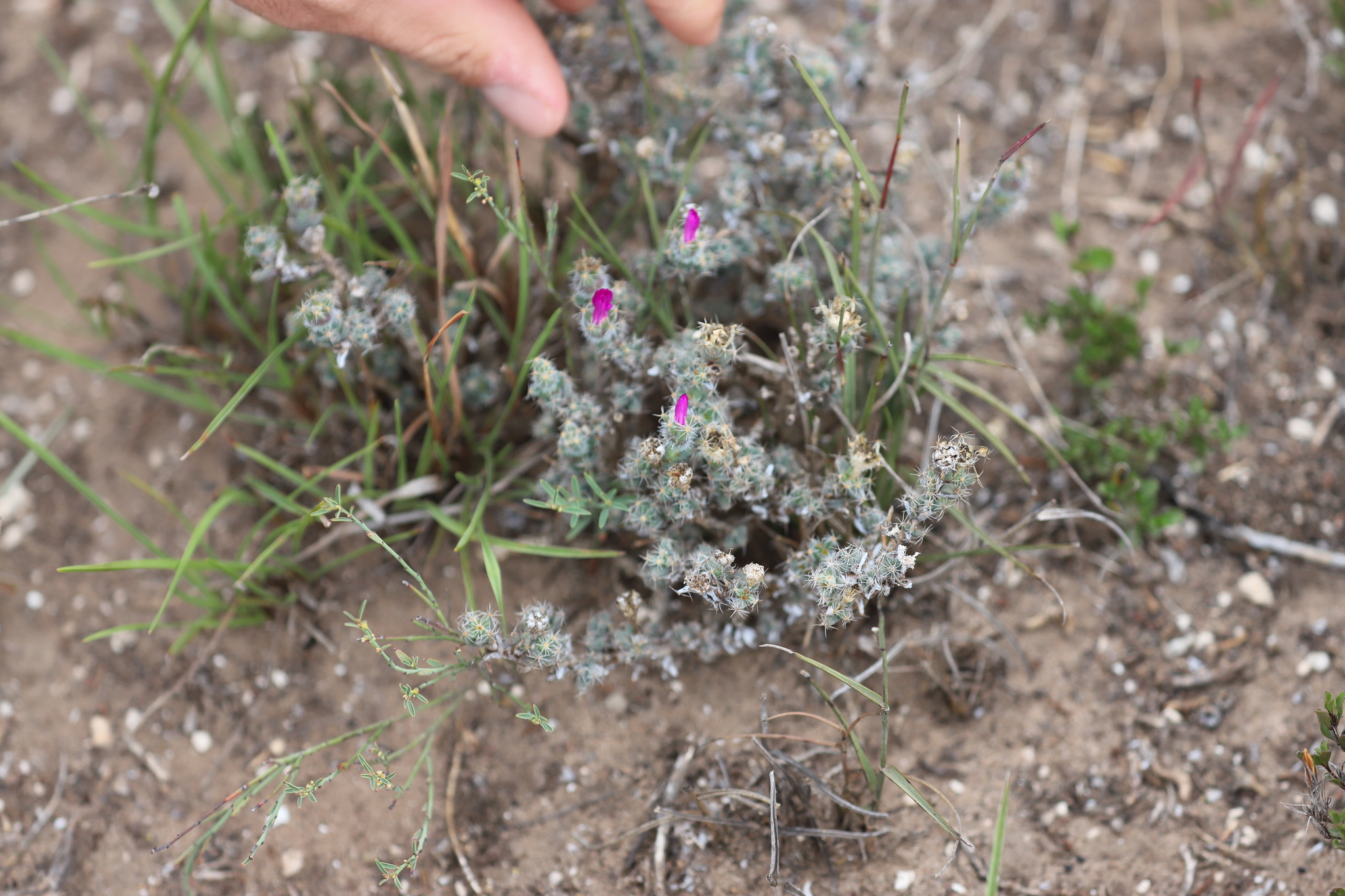
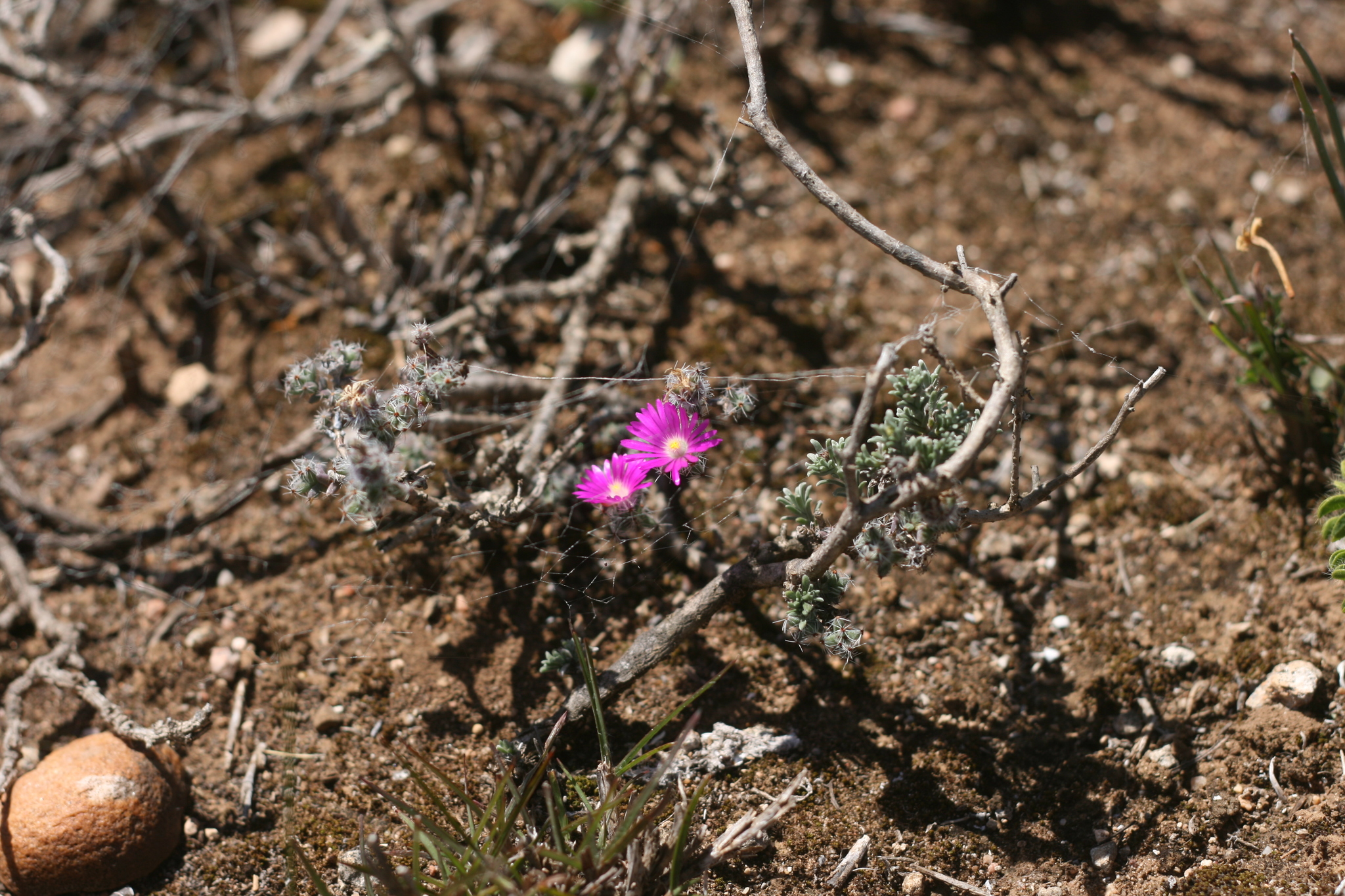
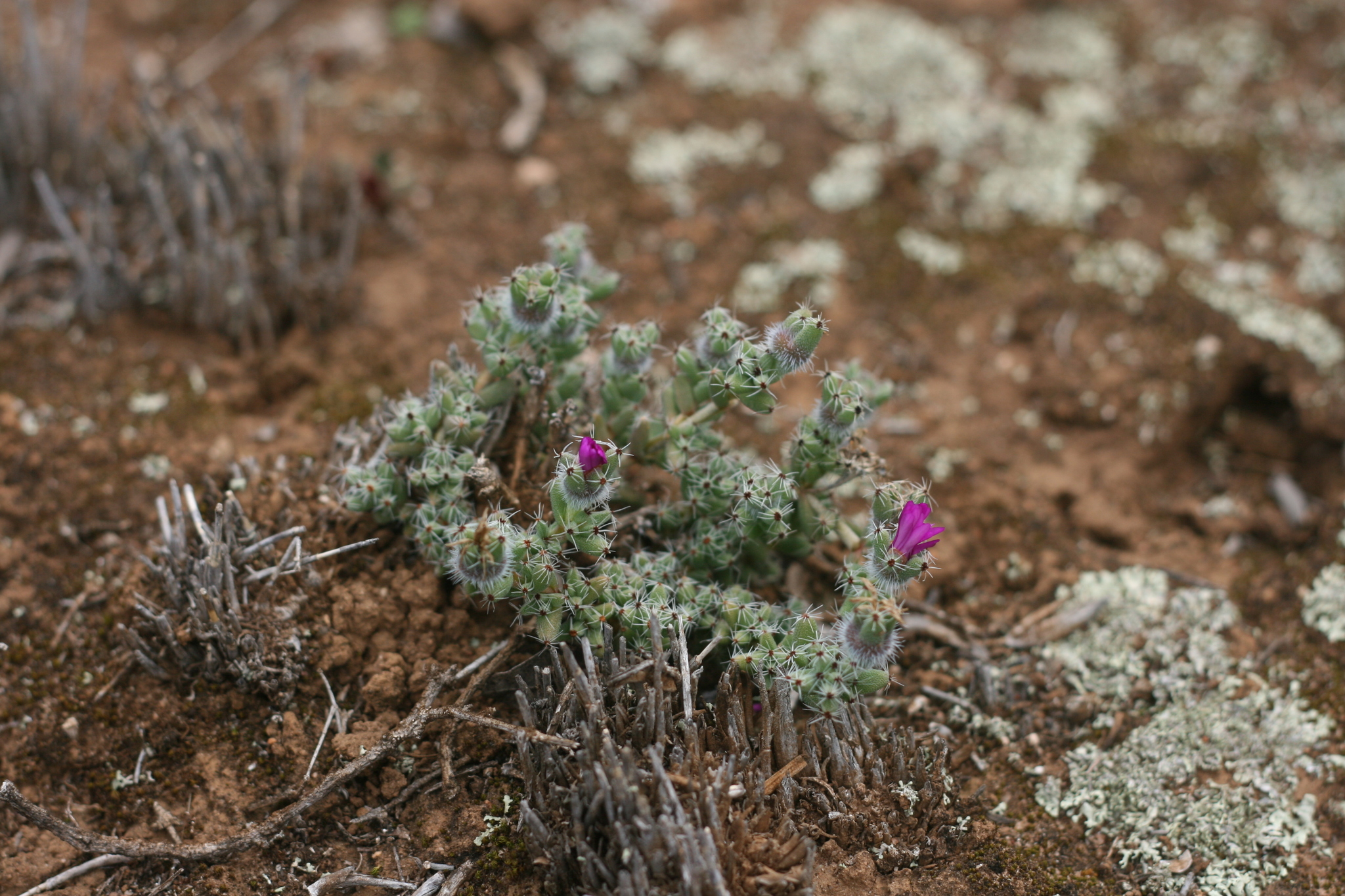
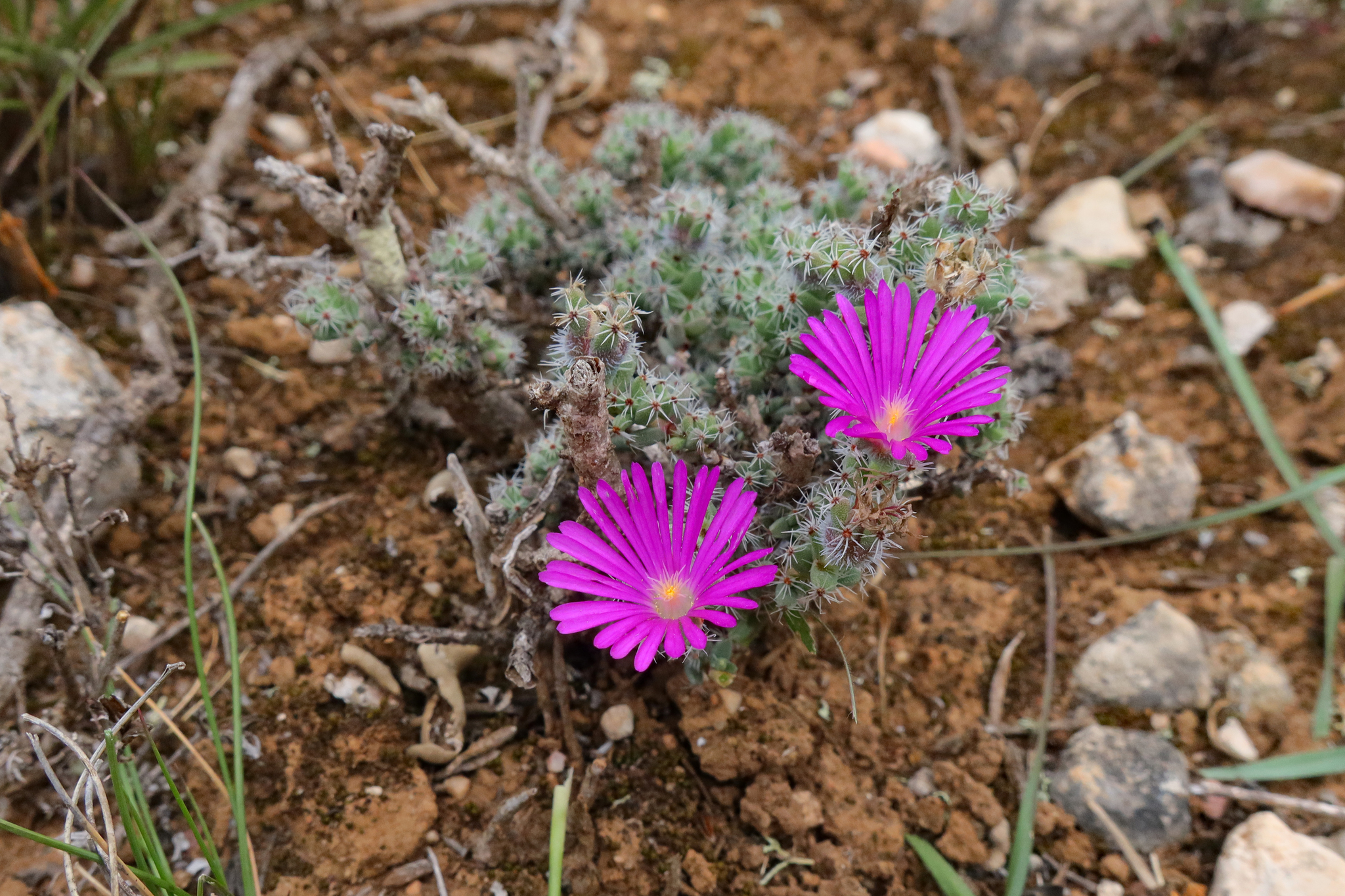
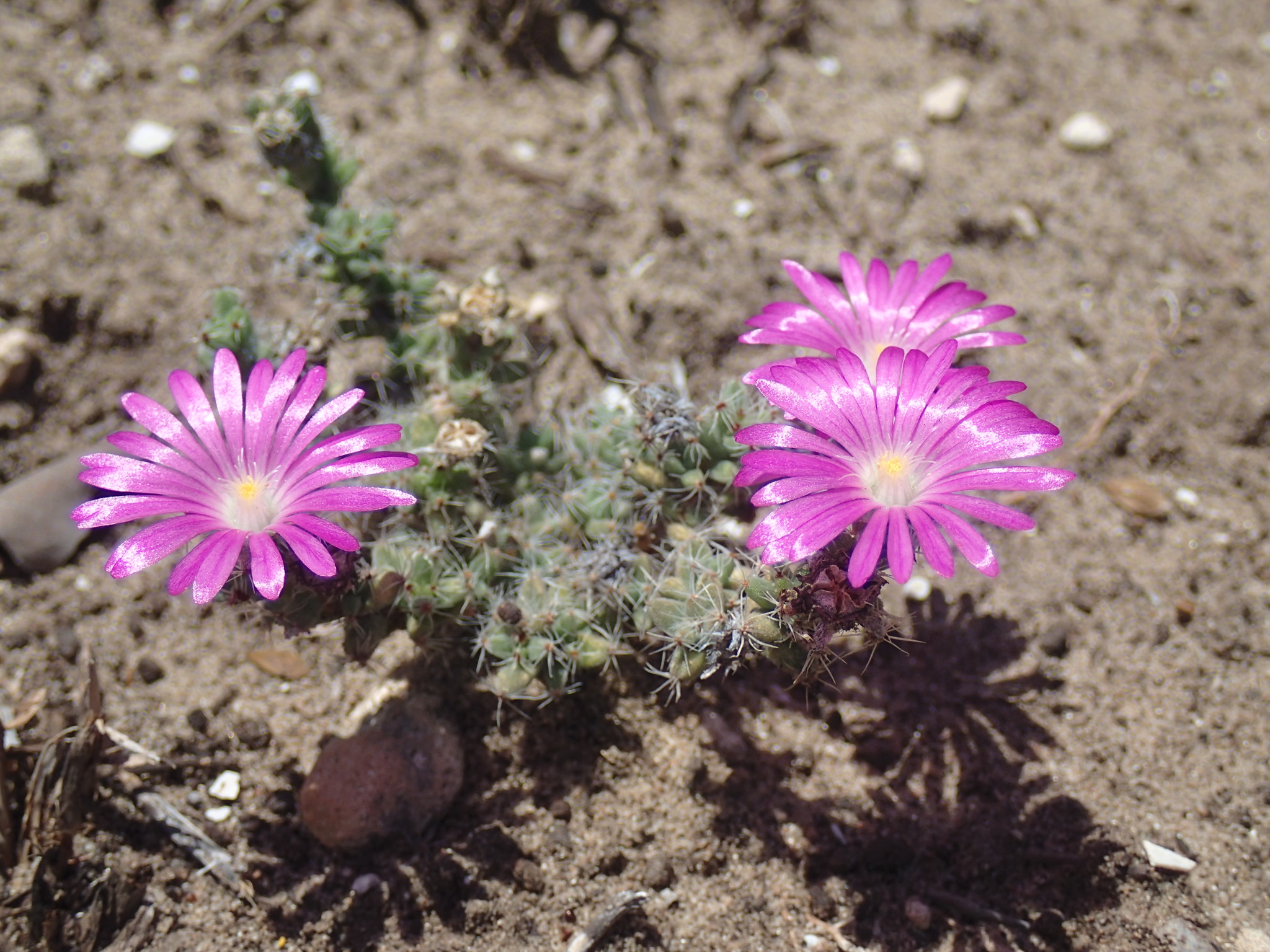
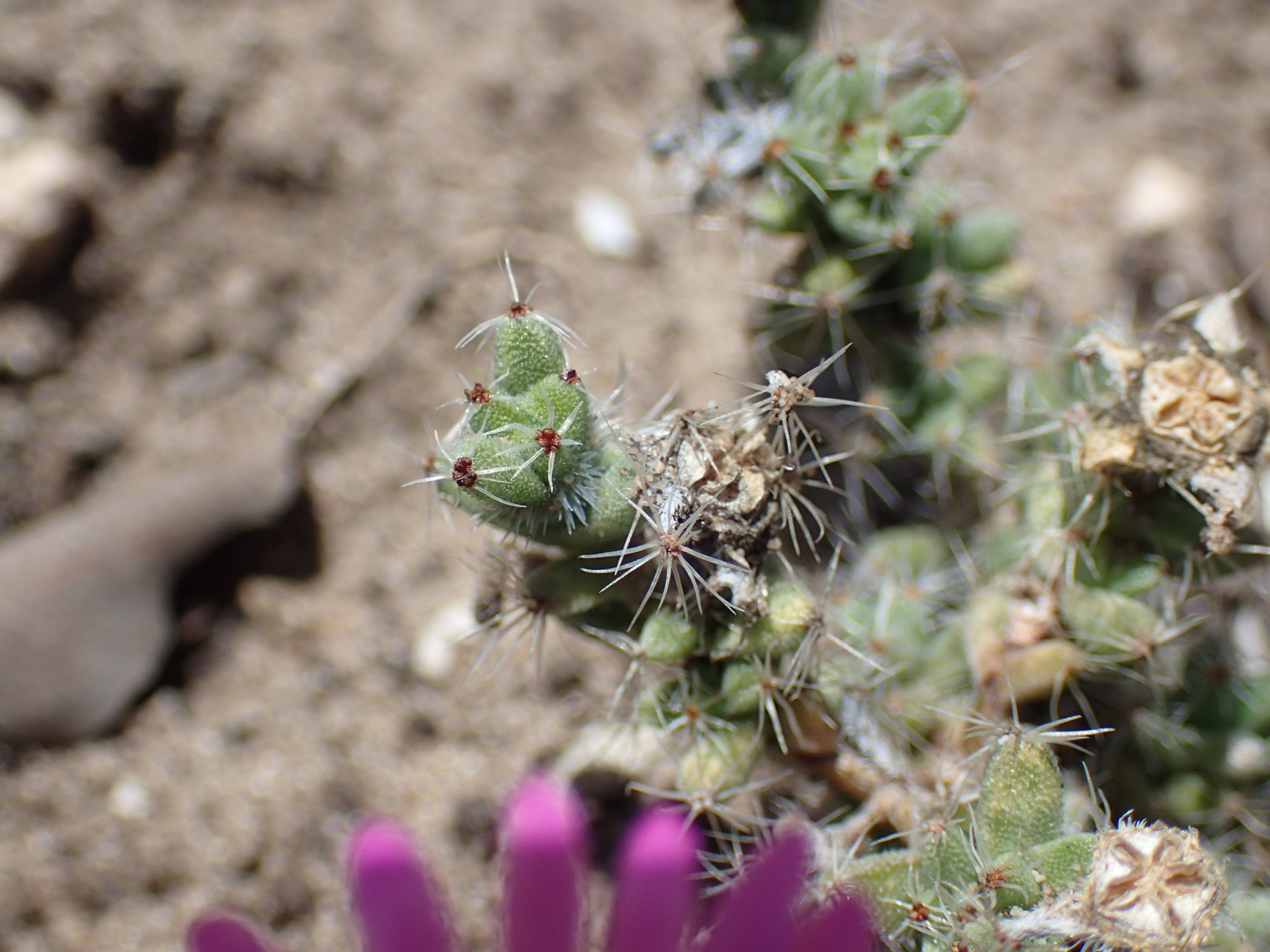
Perennial, dwarf shrublet, up to 0.35 m high, stems erect to spreading. Leaves semicylindrical, slightly recurved, glaucous, bladder cells elongate terminating in a sharp point at upper end, lower end obtuse, dark brown radiating bristles arising from black cup-cells. Flowers solitary, pink to white. Capsules 5-locular. From: Burgoyne, PM; Bredenkamp, CL. 2019. Aizoaceae: Trichodiadema Schwantes. In: CL Bredenkamp (ed.), A Flora of the Eastern Cape Province. Strelitzia 41(1): 254-257. South African National Biodiversity Institute, Pretoria. [CC BY]
Perennial, dwarf shrublet, up to 0.2 m high, roots fusiform, tuberous. Leaves glaucous, cylindrical, covered with domed, elongate bladder cells with apical and basal parts ending in points, diadem radiating, cup-cells orange-brown, bristles pale. Flowers solitary, dark pink. Flowering time Nov.-Feb. Capsules 5-locular. From: Burgoyne, PM; Bredenkamp, CL. 2019. Aizoaceae: Trichodiadema Schwantes. In: CL Bredenkamp (ed.), A Flora of the Eastern Cape Province. Strelitzia 41(1): 254-257. South African National Biodiversity Institute, Pretoria. [CC BY] As: Trichodiadema bulbosum (Haw.) Schwantes
Perennial, dwarf shrublet, up to 0.15 m high, single to few tuberous taproots. Leaves glaucous, cylindrical, covered with domed, elongate bladder cells, apex obtuse, diadem radiating, cup-cells brown-black. Flowers solitary, purplish pink with white centre. Flowering time Sept.-Jan. Capsules 5-locular. From: Burgoyne, PM; Bredenkamp, CL. 2019. Aizoaceae: Trichodiadema Schwantes. In: CL Bredenkamp (ed.), A Flora of the Eastern Cape Province. Strelitzia 41(1): 254-257. South African National Biodiversity Institute, Pretoria. [CC BY] As: Trichodiadema concinnum L.Bolus
Leaves with an apical diadem of coloured, sclerotinized bristles. Erect shrublet to 20 cm, with tuberous roots. Leaves grey-green from papillae, subcylindrical, with a diadem, 5-8 x ±3 mm. Flowers solitary, terminal, subsessile, magenta. Fruits 5-locular. From: Klak, C. 2012. Aizoaceae: Trichodiadema Schwantes. In: J Manning & P Goldblatt (eds), Plants of the Greater Cape Floristic Region 1: The Core Cape flora. Strelitzia 29: 307-309. South African National Biodiversity Institute, Pretoria. [CC BY] As: Trichodiadema bulbosum (Haw.) Schwantes
Leaves with an apical diadem of coloured, sclerotinized bristles. Erect to spreading perennial. Leaves distant, inclined, slightly recurved, with a diadem, ±13 x 4 mm. Flowers solitary on short pedicels, white or pink, to 20 mm diam. Fruits 5-locular. From: Klak, C. 2012. Aizoaceae: Trichodiadema Schwantes. In: J Manning & P Goldblatt (eds), Plants of the Greater Cape Floristic Region 1: The Core Cape flora. Strelitzia 29: 307-309. South African National Biodiversity Institute, Pretoria. [CC BY]
River flats. From: Burgoyne, PM; Bredenkamp, CL. 2019. Aizoaceae: Trichodiadema Schwantes. In: CL Bredenkamp (ed.), A Flora of the Eastern Cape Province. Strelitzia 41(1): 254-257. South African National Biodiversity Institute, Pretoria. [CC BY]
Flats and hills of karoo shales or siltstones. From: Burgoyne, PM; Bredenkamp, CL. 2019. Aizoaceae: Trichodiadema Schwantes. In: CL Bredenkamp (ed.), A Flora of the Eastern Cape Province. Strelitzia 41(1): 254-257. South African National Biodiversity Institute, Pretoria. [CC BY] As: Trichodiadema bulbosum (Haw.) Schwantes
Uncertain. From: Klak, C. 2012. Aizoaceae: Trichodiadema Schwantes. In: J Manning & P Goldblatt (eds), Plants of the Greater Cape Floristic Region 1: The Core Cape flora. Strelitzia 29: 307-309. South African National Biodiversity Institute, Pretoria. [CC BY]
Uncertain. From: Klak, C. 2012. Aizoaceae: Trichodiadema Schwantes. In: J Manning & P Goldblatt (eds), Plants of the Greater Cape Floristic Region 1: The Core Cape flora. Strelitzia 29: 307-309. South African National Biodiversity Institute, Pretoria. [CC BY] As: Trichodiadema bulbosum (Haw.) Schwantes
Uitenhage, E to Swartkops and Sundays rivers. From: Burgoyne, PM; Bredenkamp, CL. 2019. Aizoaceae: Trichodiadema Schwantes. In: CL Bredenkamp (ed.), A Flora of the Eastern Cape Province. Strelitzia 41(1): 254-257. South African National Biodiversity Institute, Pretoria. [CC BY]
Port Elizabeth. From: Burgoyne, PM; Bredenkamp, CL. 2019. Aizoaceae: Trichodiadema Schwantes. In: CL Bredenkamp (ed.), A Flora of the Eastern Cape Province. Strelitzia 41(1): 254-257. South African National Biodiversity Institute, Pretoria. [CC BY] As: Trichodiadema bulbosum (Haw.) Schwantes
Port Elizabeth to Bushman’s River. From: Burgoyne, PM; Bredenkamp, CL. 2019. Aizoaceae: Trichodiadema Schwantes. In: CL Bredenkamp (ed.), A Flora of the Eastern Cape Province. Strelitzia 41(1): 254-257. South African National Biodiversity Institute, Pretoria. [CC BY] As: Trichodiadema concinnum L.Bolus
Port Elizabeth. From: Klak, C. 2012. Aizoaceae: Trichodiadema Schwantes. In: J Manning & P Goldblatt (eds), Plants of the Greater Cape Floristic Region 1: The Core Cape flora. Strelitzia 29: 307-309. South African National Biodiversity Institute, Pretoria. [CC BY] As: Trichodiadema bulbosum (Haw.) Schwantes
Uitenhage. From: Klak, C. 2012. Aizoaceae: Trichodiadema Schwantes. In: J Manning & P Goldblatt (eds), Plants of the Greater Cape Floristic Region 1: The Core Cape flora. Strelitzia 29: 307-309. South African National Biodiversity Institute, Pretoria. [CC BY]
October
20 to 150 m
This map contains point-based occurrences at different locations
Occurrence in the Flora of Southern Africa (FSA) countries and South African provinces. Residence status indicates if a taxon is indigenous, endemic, naturalised or invasive in a specific region. This data is based on specimen records and literature
FSA
SA
BOT
NAM
ESW
LES
WC
EC
NC
FS
GA
KZN
LP
MP
NW
Absent
Indigenous
Endemic
Naturalised
Invasive

Names and Sources
Published in: Z. Sukkulentenk. 2: 188 (1926)
Mesembryanthemum intonsum Haw. var. rubicundum Haw.
Mesembryanthemum bulbosum Haw.
Published in: Till. Phil. Mag. 64: 428 (1824)
Mesembryanthemum intonsum Haw.
Published in: Till. Phil. Mag. 64: 62 (1824)
Trichodiadema bulbosum (Haw.) Schwantes
Published in: Z. Sukkulentenk. 2: 188 (1926)
Trichodiadema concinnum L.Bolus
Published in: J. S. African Bot. 30: 79 (1964)
Classification
KINGDOM Plantae
SUBKINGDOM Phanerogamae
PHYLUM Anthophyta
ORDER Caryophyllales
FAMILY Aizoaceae
SUBFAMILY Ruschioideae
TRIBE Ruschieae
GENUS Trichodiadema
SPECIES intonsum
36 results for Trichodiadema intonsum (Haw.) Schwantes
Year
Barcode: PRE0397528-0 Collector(s) & number: Roberts, BR, 5481 | 1970-11-14
South Africa, Free State, BETHULIE; TUSSEN-DIE-RIVIERE N
Data Resource: BODATSA View record
Barcode: PRE0896432-0 Collector(s) & number: Niemand, L, EC28 | 2008-10-27
South Africa, Eastern Cape, Barkley Bridge.
Data Resource: BODATSA View record
Barcode: PRE0764242-0 Collector(s) & number: Burgoyne, PM, 10032 | 2004-11-28
South Africa, Eastern Cape, Graaff-Reinet District. Hills just N of Graaff-Reinet.
Data Resource: BODATSA View record
Barcode: PRE0594339-0 Collector(s) & number: Burgoyne, PM, 8662 | 2001-11-11
South Africa, Eastern Cape, Willowmore District, ±24 km west of Willowmore on road to Aberdeen.
General notes: No slope. Upright stems.
Data Resource: BODATSA View record
Barcode: PRE1002347-0 Collector(s) & number: Morgenthal, TL, TLM1393 | 2012-5-15
South Africa, Eastern Cape, Kleinpoort; Kleinpoort.
Data Resource: BODATSA View record
Barcode: NH0024518-0 Collector(s) & number: Thode, HJ, 1083 | 1926-11-
South Africa, Eastern Cape, Uitenhage.
Data Resource: BODATSA View record
Barcode: PRE0578931-0 Collector(s) & number: Meyer, JJ, 1617 | 1998-11-2
South Africa, Eastern Cape, Grahamstown: Ecca Pass Nature Reserve.
General notes: Succulent Karoo. Plateau. Soil. Well drained. Sand. Full sun. No slope. Succulent, 10 cm tall. Flowers pink.
Data Resource: BODATSA View record
Barcode: NBG0802246-0 Collector(s) & number: Van der Merwe, C, 1969 | 1971--
South Africa, Western Cape, Cape, De Hoop.
Data Resource: BODATSA View record
Barcode: PRE0764241-0 Collector(s) & number: Burgoyne, PM, 10681 | 2006-9-29
South Africa, Western Cape, Calitzdorp District. Farm NE of town (Besemkop).
General notes: Gravelly loam. Slope: gentle. Rounded shrublets. Flowers deep pink.
Data Resource: BODATSA View record
Barcode: PRE0729546-0 Collector(s) & number: Gibbs Russell, GE, 331 | 1978-4-13
South Africa, Western Cape, BLEAK HOUSE FARM; ON COMPACTED SOIL BETWEEN DOLERITE BOULDERS/STONES ON E-FACING SLOPE
General notes: Karoo vegetation, rainfall 8,25 in. Mesem, growing on compacted soil between dolerite boulders/stones. Flowering 3 weeks after rains.
Data Resource: BODATSA View record
Barcode: PRE0623666-0 Collector(s) & number: Bredenkamp, CL, 3173 | 2004-11-8
South Africa, Eastern Cape, Steytlerville District. Noorspoort Farm of George Craven, ± 2 km W from homestead.
General notes: Plain below hill in Karoo. Gravelly sand. No slope.
Data Resource: BODATSA View record
Barcode: NBG0802245-0 Collector(s) & number: Van der Merwe, C, 1969 | 1971--
South Africa, Western Cape, Cape, De Hoop.
Data Resource: BODATSA View record
Barcode: PRE0763794-0 Collector(s) & number: Vlok, JHJ, 951 | 1985-3-9
South Africa, Eastern Cape, Koega Mountains near Engelandkop.
General notes: On plateaux on northern slope. Flower colour very attractive. magenta-purple.
Data Resource: BODATSA View record
Barcode: PRE0764243-0 Collector(s) & number: Burgoyne, PM, 10835 | 2006-10-4
South Africa, Northern Cape, Victoria West District; ± 21 km S of Victoria West.
General notes: Rocky ridge. Flat rock plates. Gravelly sand. Grazed by sheep. Slope: gentle. Height: ± 3-5 cm. Low dense clumps with glaucous leaves. Flowers deep pink.
Data Resource: BODATSA View record
Barcode: PRE0821289-0 Collector(s) & number: Victor, JE, 1080 | 1995-4-15
South Africa, Eastern Cape, Eastern Cape: Somerset East Region; About 40 km S-SE of Somerset East, near Farm Garsfontein. Flat landscape.
General notes: False central lower karroo. Dry. Solitary plants, not much-branched. Erect. Flowers yellow.
Data Resource: BODATSA View record
Barcode: NBG0277618-0 Collector(s) & number: Ebrahim, I, CR2291 | 2007-5-13
South Africa, Eastern Cape, Kabeljou Nature Reserve, on path 50 m from entrance gate. 33°59'29.1" S; 24°56'17.2" E.
General notes: Mixed Renosterveld vegetation. Gentle, hill slope. Well-drained, loam soil. Sandstone.
Data Resource: BODATSA View record
Barcode: PRE0594341-0 Collector(s) & number: Burgoyne, PM, 8860 | 2001-11-22
South Africa, Northern Cape, Victoria West District, ±35 km south on Victoria West road to N1.
General notes: Baked shale. Partial shade of other plants. No slope. Upright scrambling in other bushes.
Data Resource: BODATSA View record
Barcode: PRE0594343-0 Collector(s) & number: Burgoyne, PM, 8854 | 2001-11-22
South Africa, Northern Cape, Victoria West District, ±36 km from Victoria West (110 km from Beaufort West).
General notes: Gravel on baserock. Gentle slope. Flowers bright mauve. Clumped with side branches creeping.
Data Resource: BODATSA View record
Barcode: PRE0577057-0 Collector(s) & number: Meyer, JJ, 2259 | 1999-10-20
South Africa, Western Cape, ±3km West of Beaufort West at a turn off to Oudtshoorn. 32°22'37.1"S, 22°31'37.7"E
General notes: Karroid broken veld. Plain. Well drained. Sand. Full sun. No slope. Biotic Effect: grazed. Succulent, 50cm in height. Fleshy leaves. Purple flowers. Slide no 28.
Data Resource: BODATSA View record
Barcode: PRE0561904-0 Collector(s) & number: Steel, BS, 549 | 1994-10-26
South Africa, Eastern Cape, ± 20 km N of Jansenville.
General notes: Karroid. Rocky substrate. Sandy loam soil. Dry. Full sun exposure. Biotic effect: undisturbed. Common.
Data Resource: BODATSA View record
Barcode: NBG0207378-0 Collector(s) & number: Prozesky, I, CR1233 | 2005-9-9
South Africa, Eastern Cape, Kouga Region. Papiesfontein Private Farm, E of Jeffreys Bay. 33°58.440' S; 24°58.709' E.
General notes: Transitional Renosterveld. Dry, seasonally moist, sandy on conglomorate soil. Full sun. Undisturbed. Small shrublet, appoximately 150 mm high. Tiny greyish-green leaves, approximately 4 mm, are tightly clustered on woody stems. Leaves are covered with water cells that glisten in the sun, and are succulent, almost sausage-shaped, with a diadem of fine stiff hairs sprouting from a small dark tan structure at the apex. Flowers, approximately 20 mm, borne on a short stalk. C.R.E.W. Project.
Data Resource: BODATSA View record
Barcode: NBG0104803-0 Collector(s) & number: Glass, J, 825 | 1894--
South Africa, Eastern Cape, Cape, Grahamstown
Data Resource: BODATSA View record
This map contains point-based occurrences at different locations
2019
SERIES CHAPTER
Aizoaceae: Trichodiadema Schwantes Burgoyne, PM; Bredenkamp, CLIn: CL Bredenkamp (ed.), A Flora of the Eastern Cape Province. Strelitzia 41(1)254-257
South African National Biodiversity Institute, Pretoria
2012
SERIES CHAPTER
Aizoaceae: Trichodiadema Schwantes Klak, CIn: J Manning & P Goldblatt (eds), Plants of the Greater Cape Floristic Region 1: The Core Cape flora. Strelitzia 29: 307-309
South African National Biodiversity Institute, Pretoria
2003
PERIODICAL/JOURNAL
Notes on Trichodiadema Schwantes (Mesembryanthema, Aizoaceae): T. intonsum (Haw.) Schwantes Hartmann, HEKO; Niesler, IMBradleya 21: 93-106
2001
BOOK
Illustrated handbook of succulent plants: Aizoaceae F-Z Hartmann, HEKONo results found for Trichodiadema intonsum (Haw.) Schwantes
Status and criteria
LC
Assessment date
2016-01-14
Assessor(s)
Plantae Coordinator
Range
The species occurs across large parts of South Africa, Namibia, Botswana, Zimbabwe, Angola and Zambia as well as in the southern parts of the Democratic Republic of Congo and Mozambique (Skinner & Chimimba 2005). It is also predicted to occur marginally in the lowlands of Lesotho (Lynch 1994) and is listed in a recent compiled checklist of the mammals of Lesotho (Ambrose & Talukdar 2000). However, Boshof and Kerley (2013) doubt the accuracy of these predictions and, until voucher specimens have been procured, their presence in Lesotho should be considered doubtful. Similarly, Butynski (2013b) report no records for either Lesotho or Swaziland.<br/><br/>Within South Africa, the species occurs across large parts of the Northern Cape, North West, Free State, Gauteng, Limpopo and Eastern Cape provinces (Figure 1), where there are sufficient sandy areas for burrowing, and open short grassland for foraging (Skinner & Chimimba 2005; Power 2014). In addition, it occurs in the western parts of Mpumalanga, the eastern areas of the Western Cape and marginally in the extreme northern and western parts of KwaZulu-Natal (Figure 1). It is absent from the eastern half of the Eastern Cape Province.<br/><br/>It is, however, important to note that within these areas their distribution is patchy and discontinuous. There is no clear evidence in the literature to indicate that the current distribution range has changed substantially from the historical distribution range. In Coetzee’s (1979) assessment of the distribution and status of some of the mammals of the Albany district (Eastern Cape Province). he does indicate that the species is absent from some areas where one might otherwise expect it to occur, and that this could be due to sport hunting. Although this seems to be localised and relatively insignificant, this trend throughout its range bears monitoring, as localised extinctions of subpopulations may be on the increase.
Major system
Major habitats
Population trend
RLDB
Hamer, M.L. 2000. Review of the millipede genus <i>Doratogonus</i>, with descriptions of fifteen new species from Southern Africa (Diplopoda, Spirostreptida, Spirostreptidae)
RLDB
Hamer, M.L. and Slotow, R.H. 2000. Patterns of distribution and speciation in the genus <i>Doratogonus</i> (Diplopoda: Spirostreptidae). In: Progress in studies on Myriapoda and Onychophora
RLDB
Hamer, M.L. and Slotow, R.H. 2002. Conservation application of existing data for South African millipedes (Diplopoda)
ELECTRONIC SOURCE
South African National Biodiversity Institute 2014. National Landcover Map
| Part(s) of plant used | Use(s) | Reference |
|---|
Coming soon...


