PLANTAE / PHANEROGAMAE / ANTHOPHYTA / ASTERALES / ASTERACEAE / ASTEROIDEAE / ASTEREAE / MAIRIA / PETIOLATA

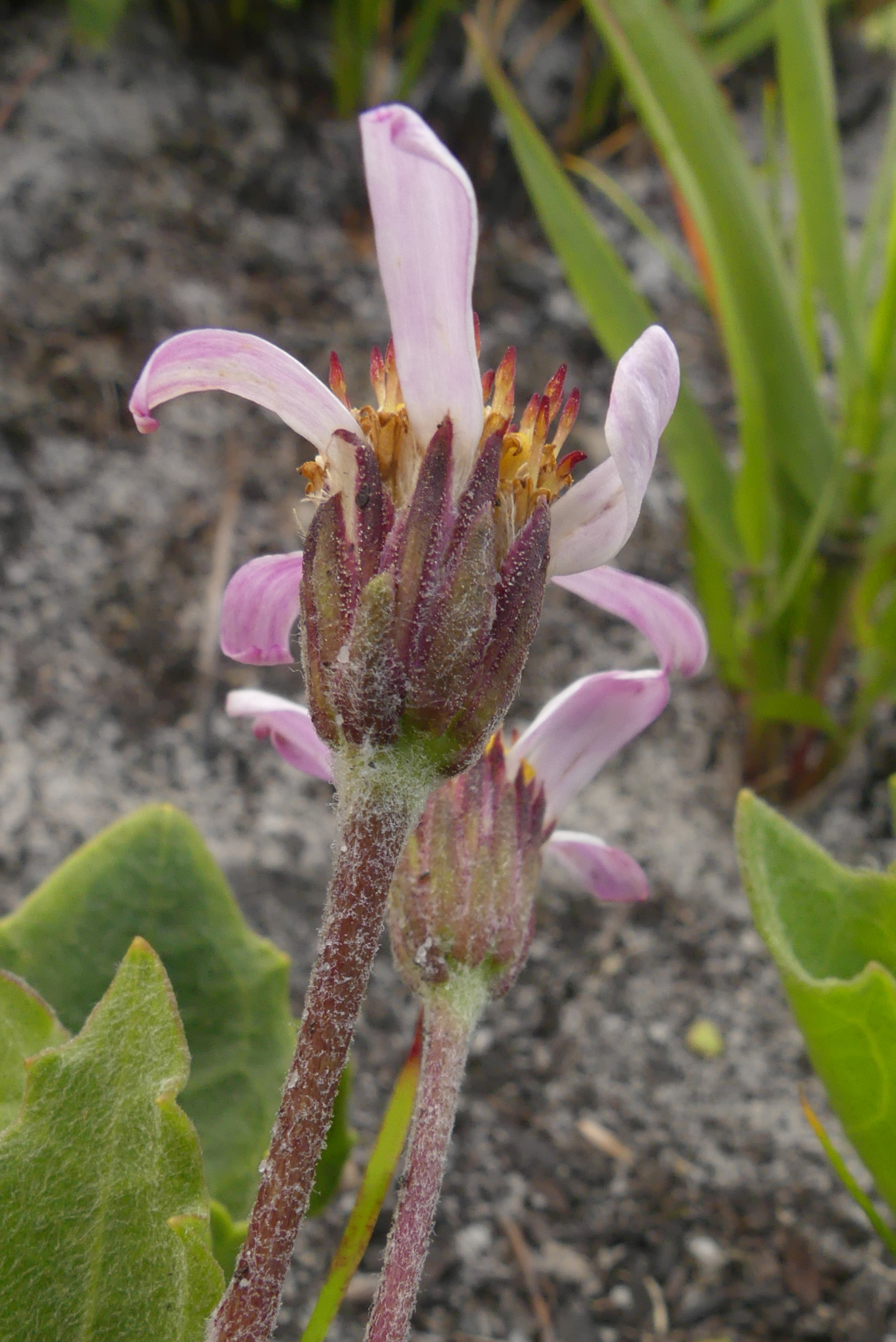
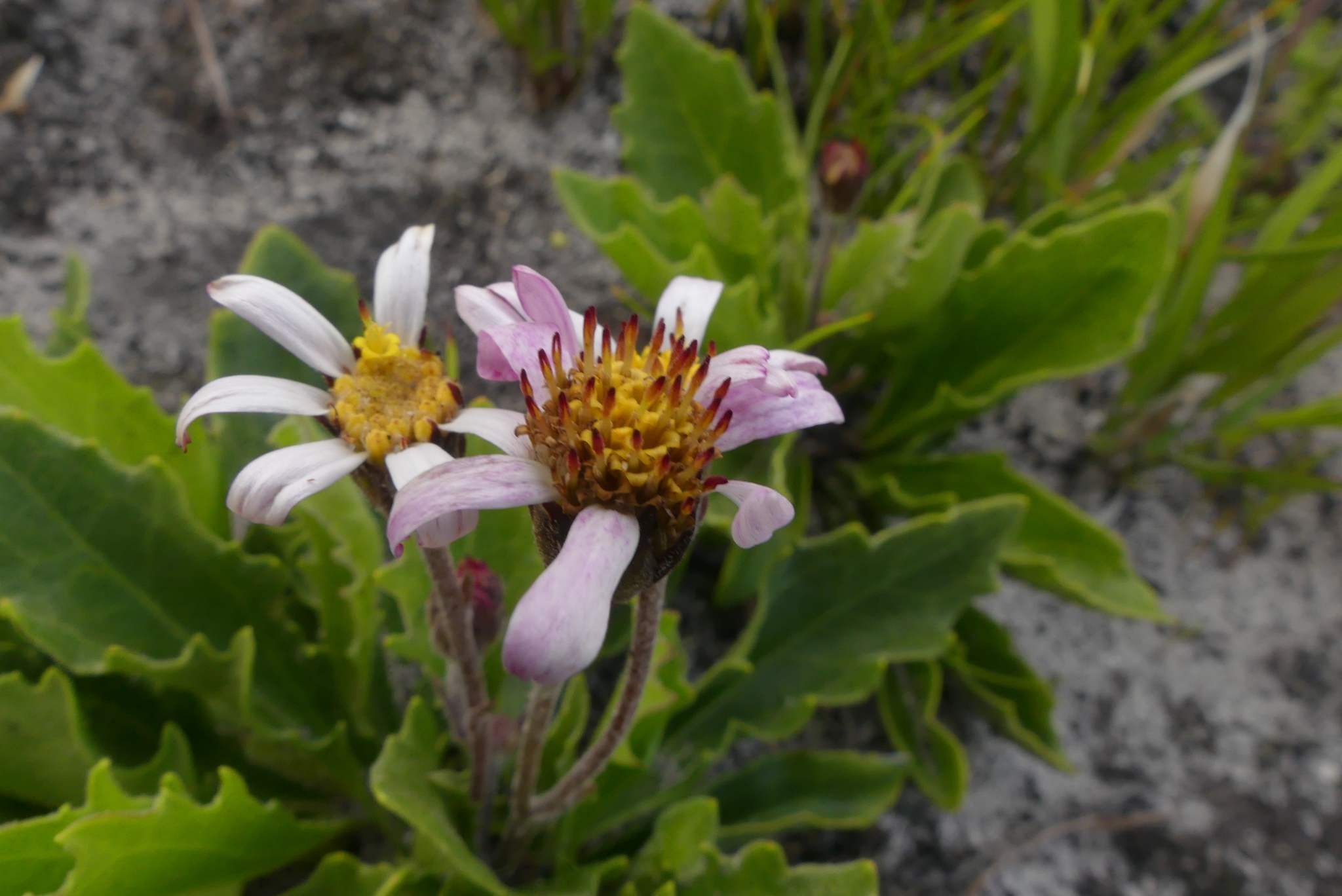
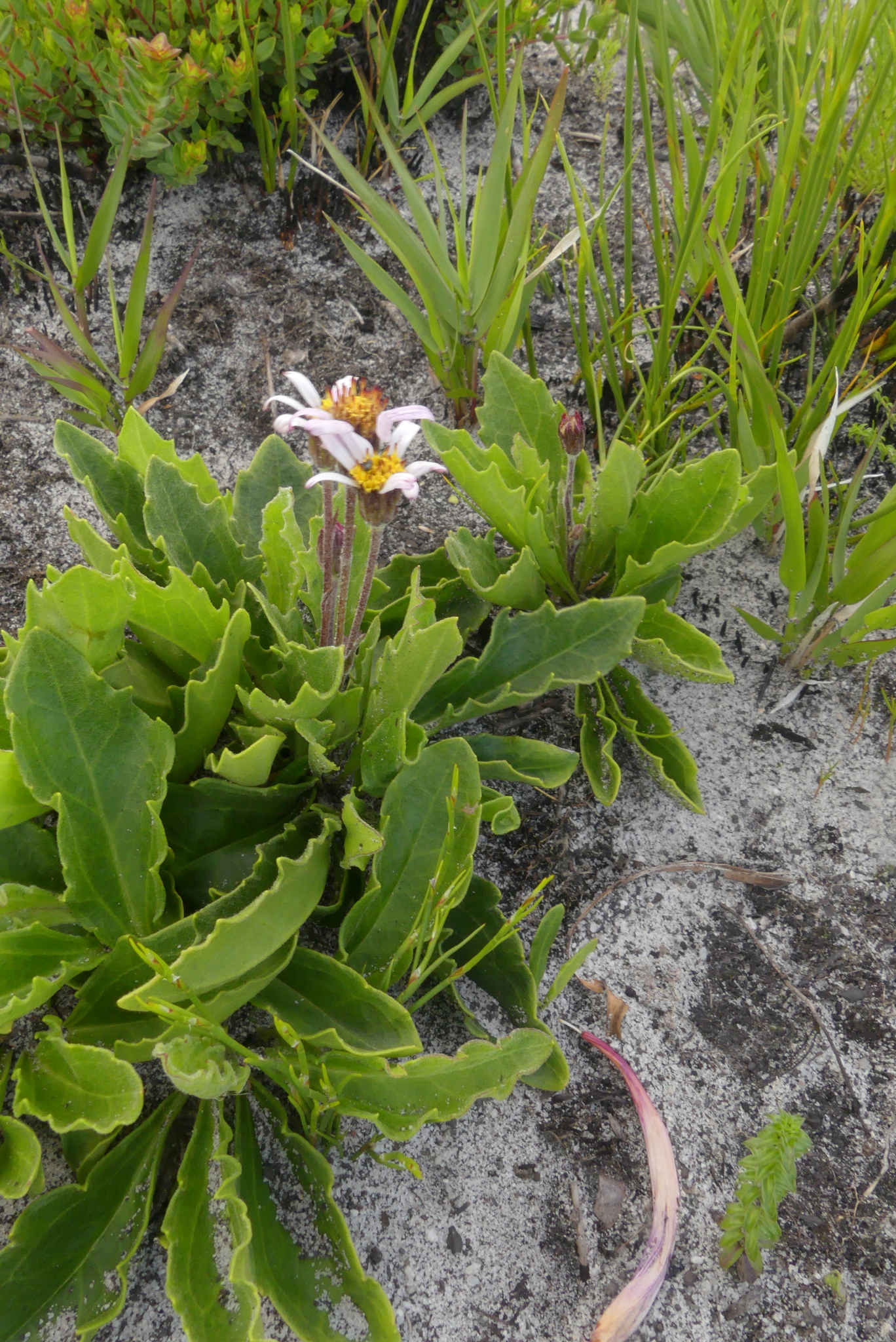
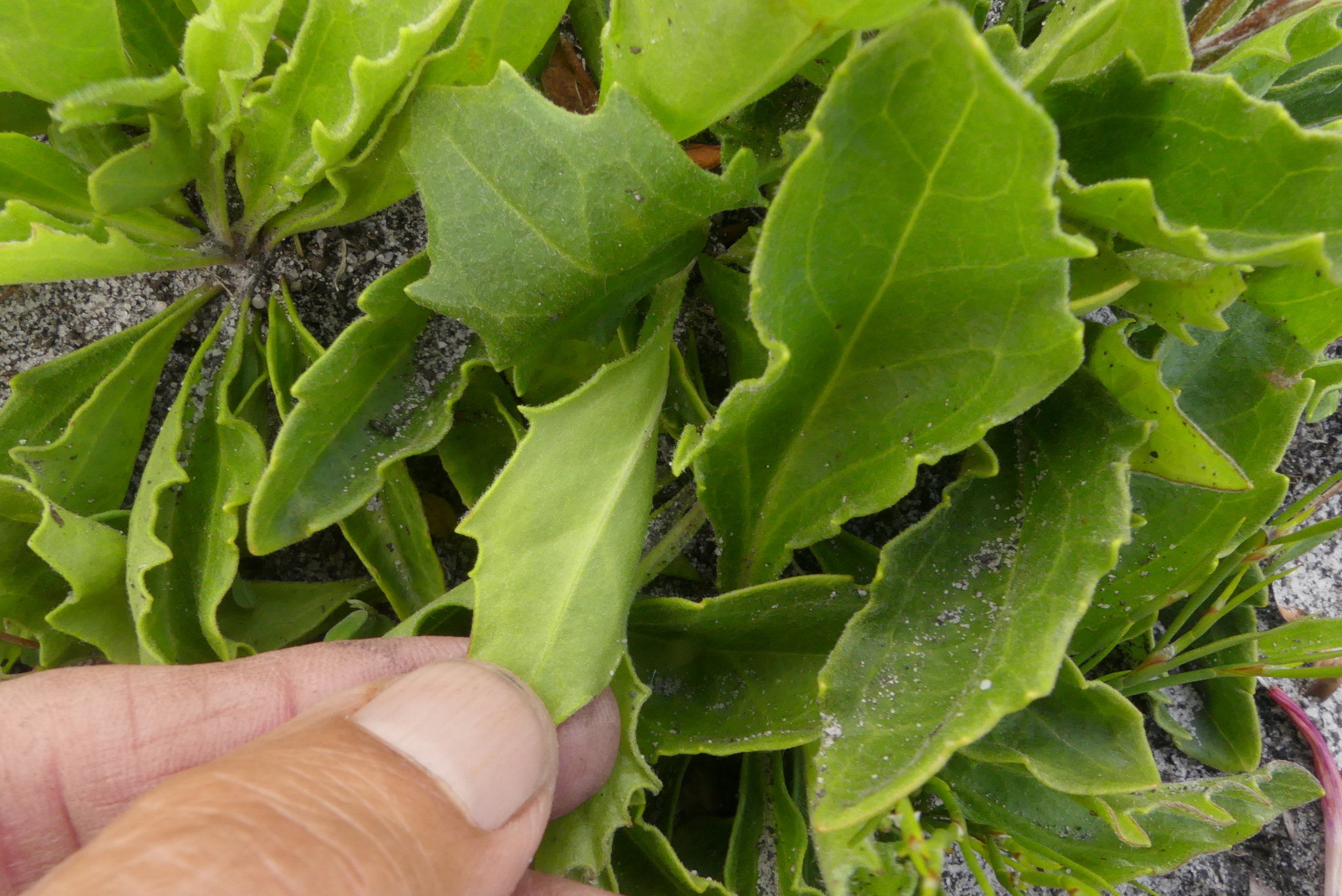
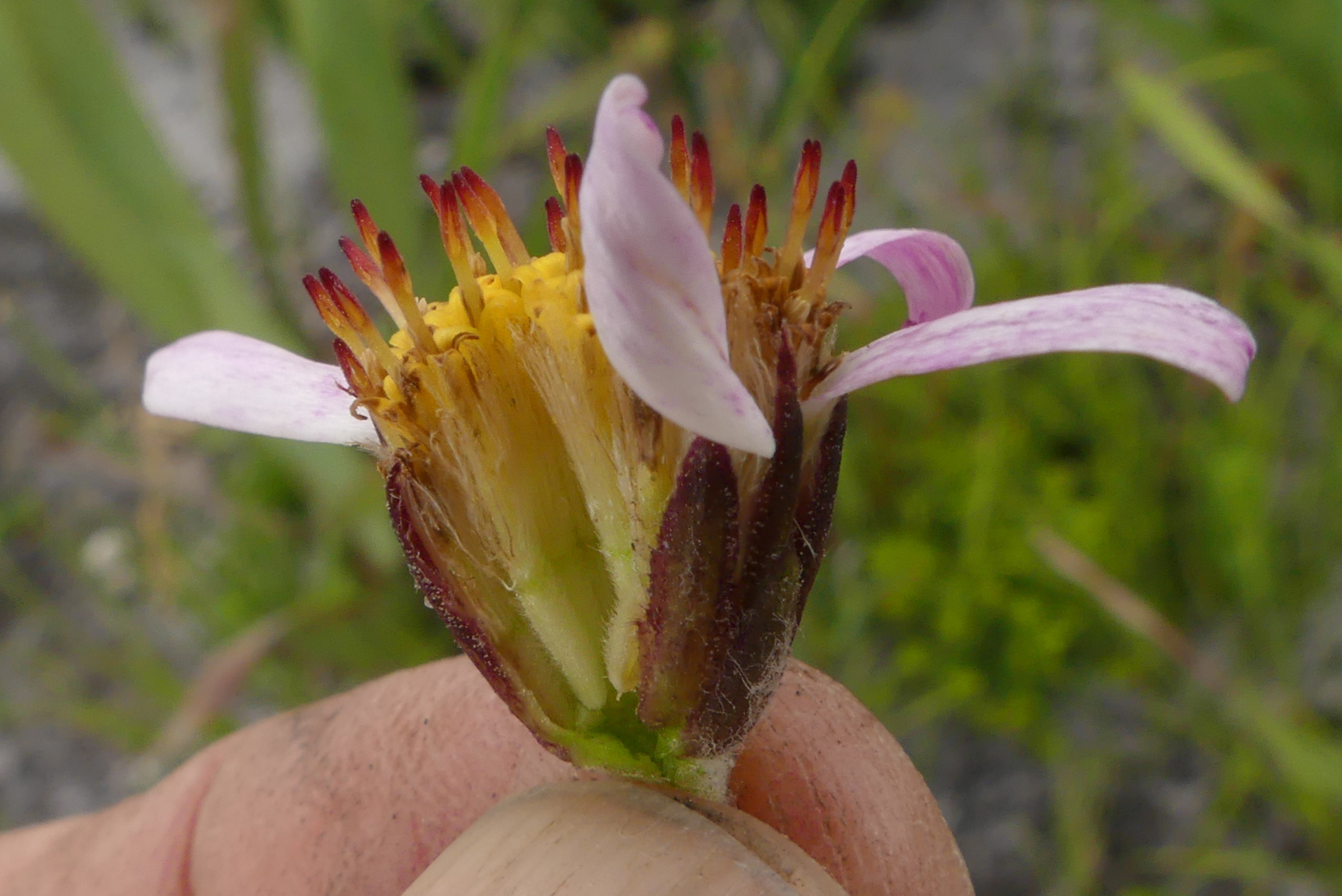
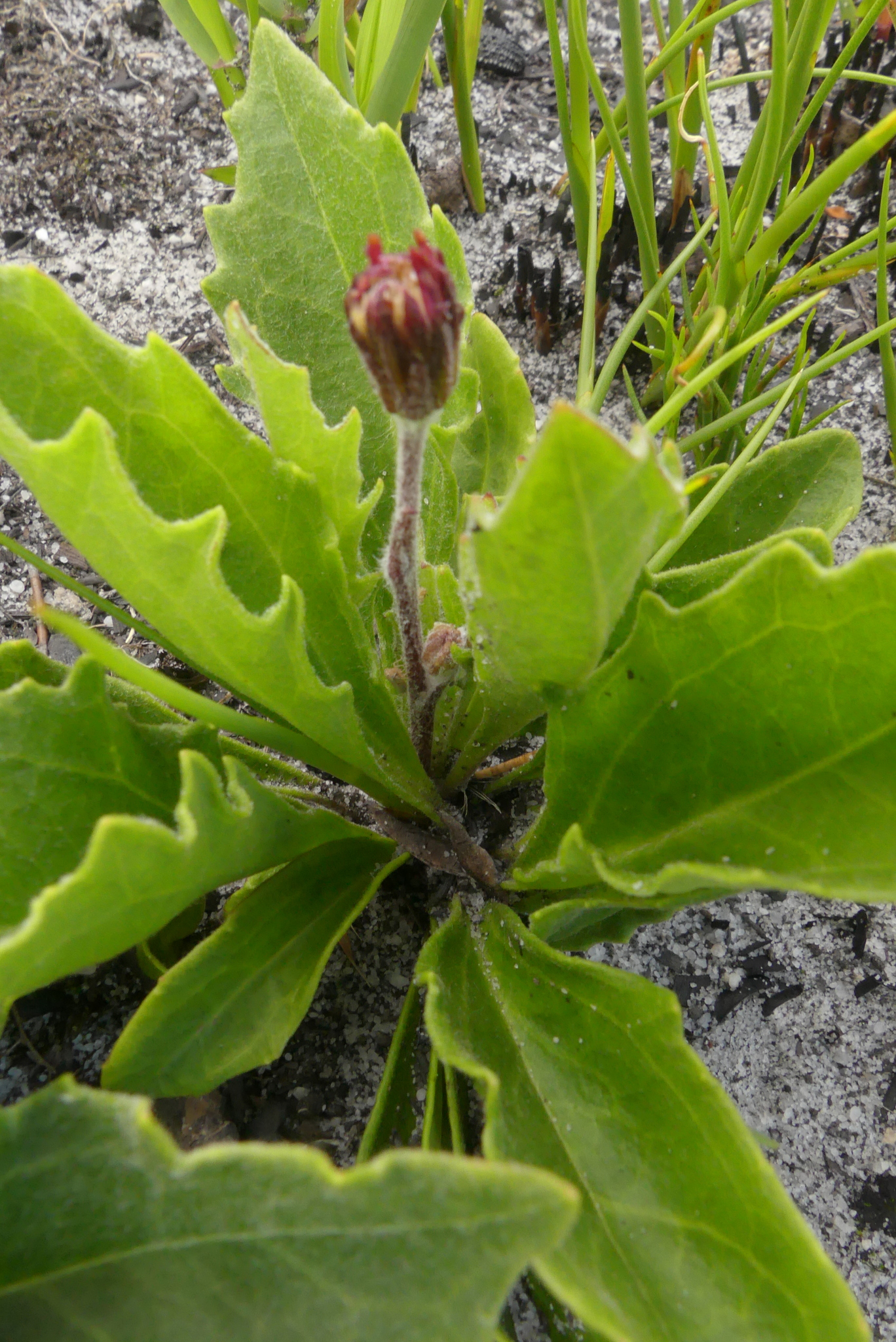
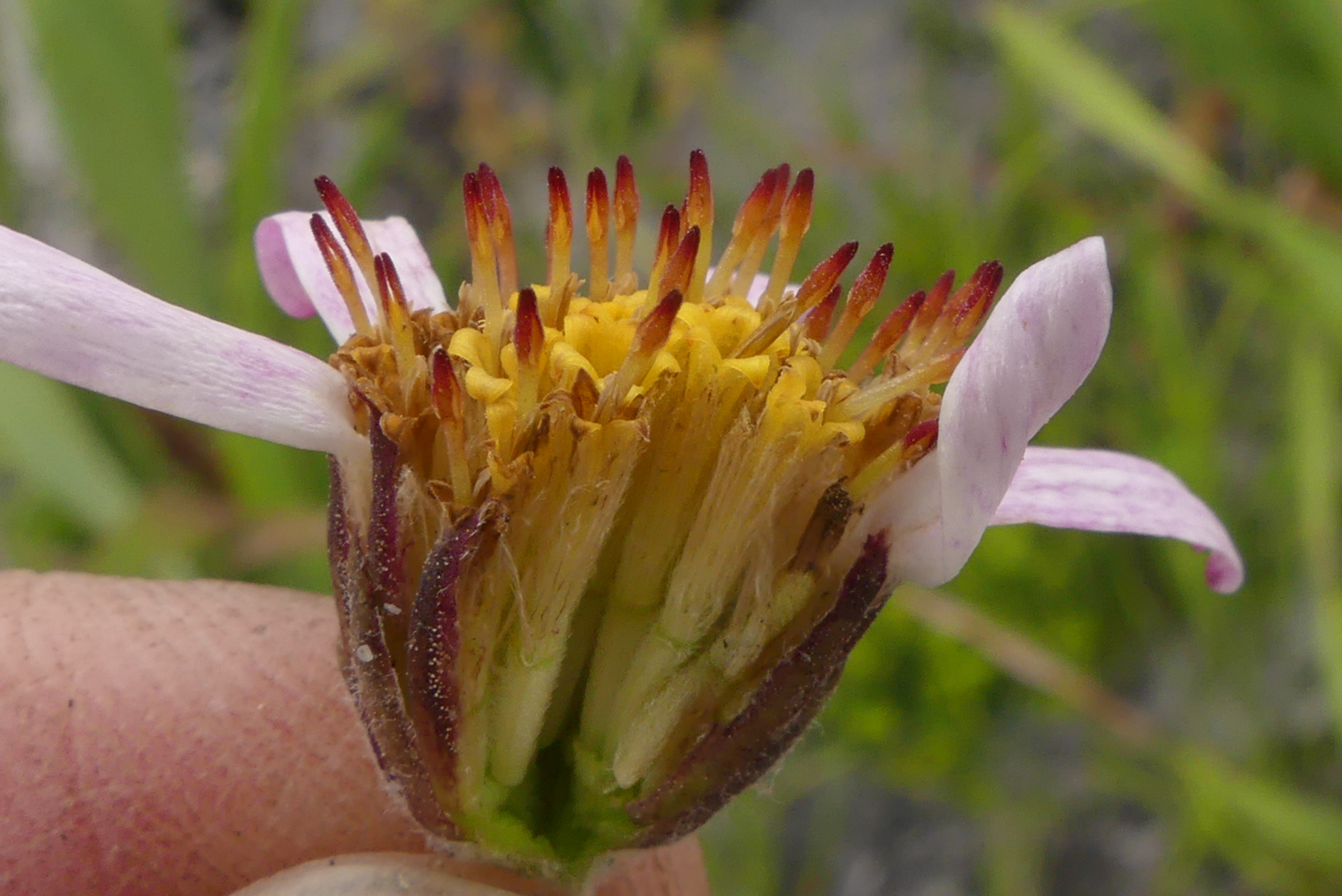
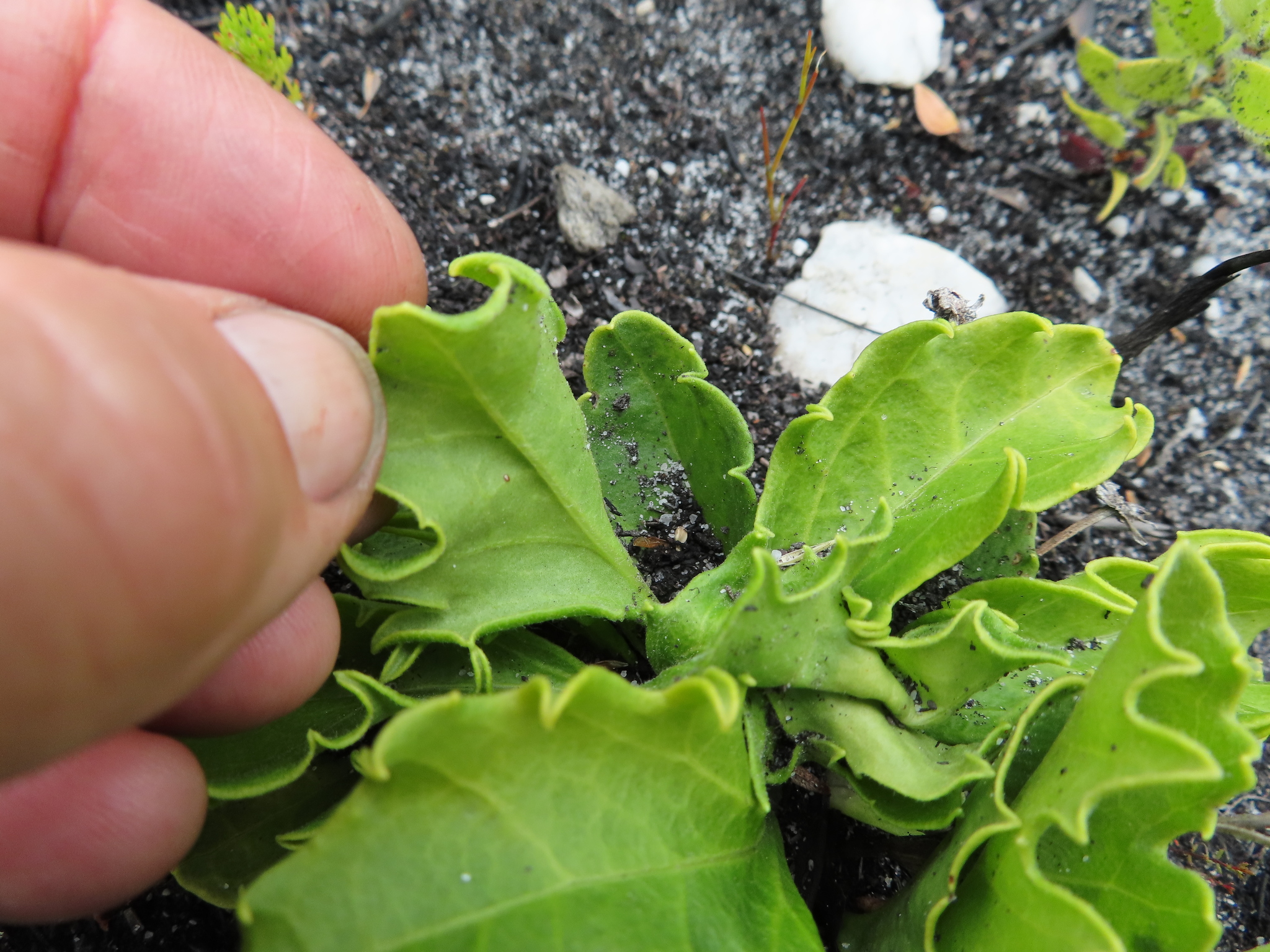
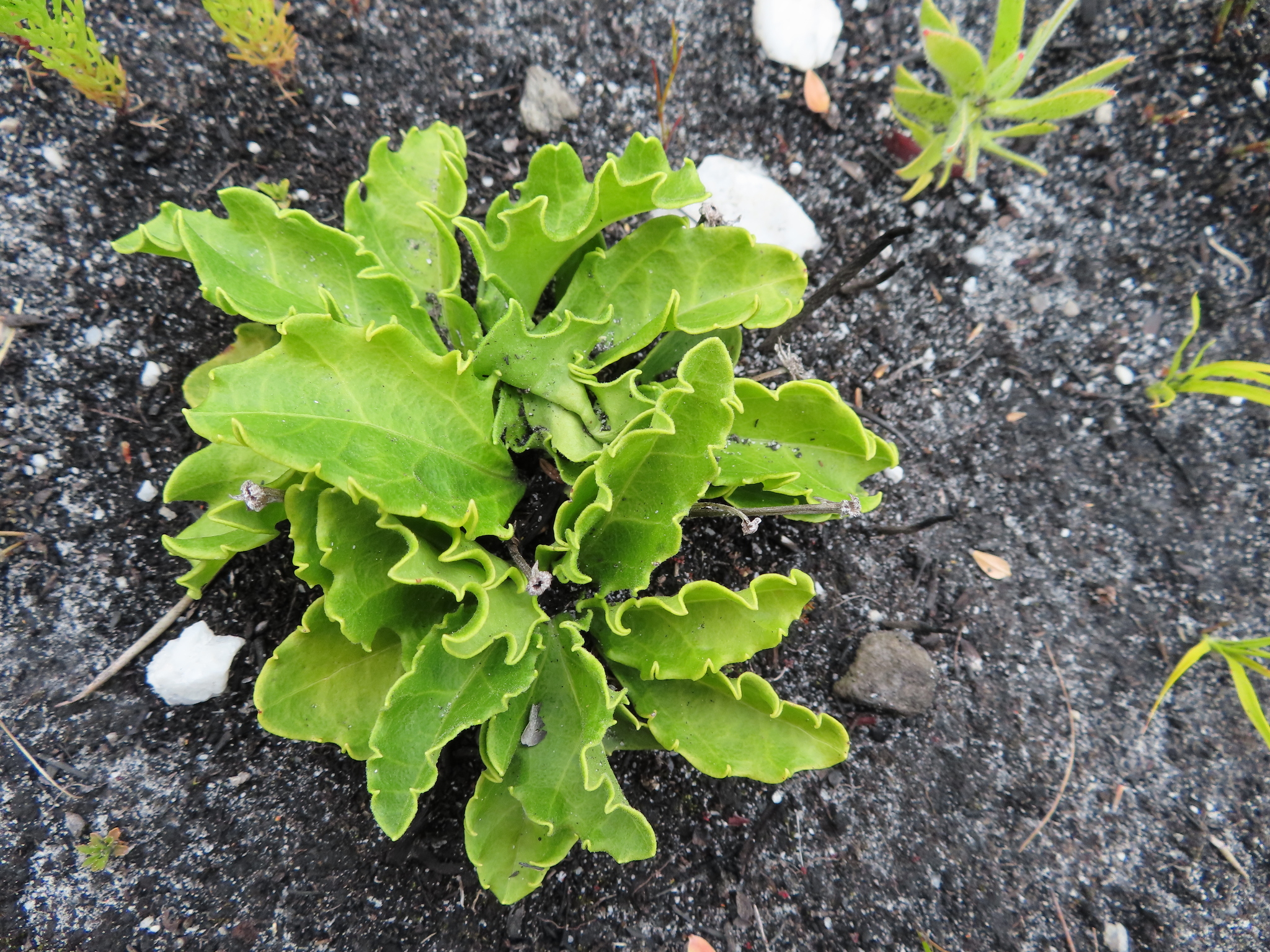
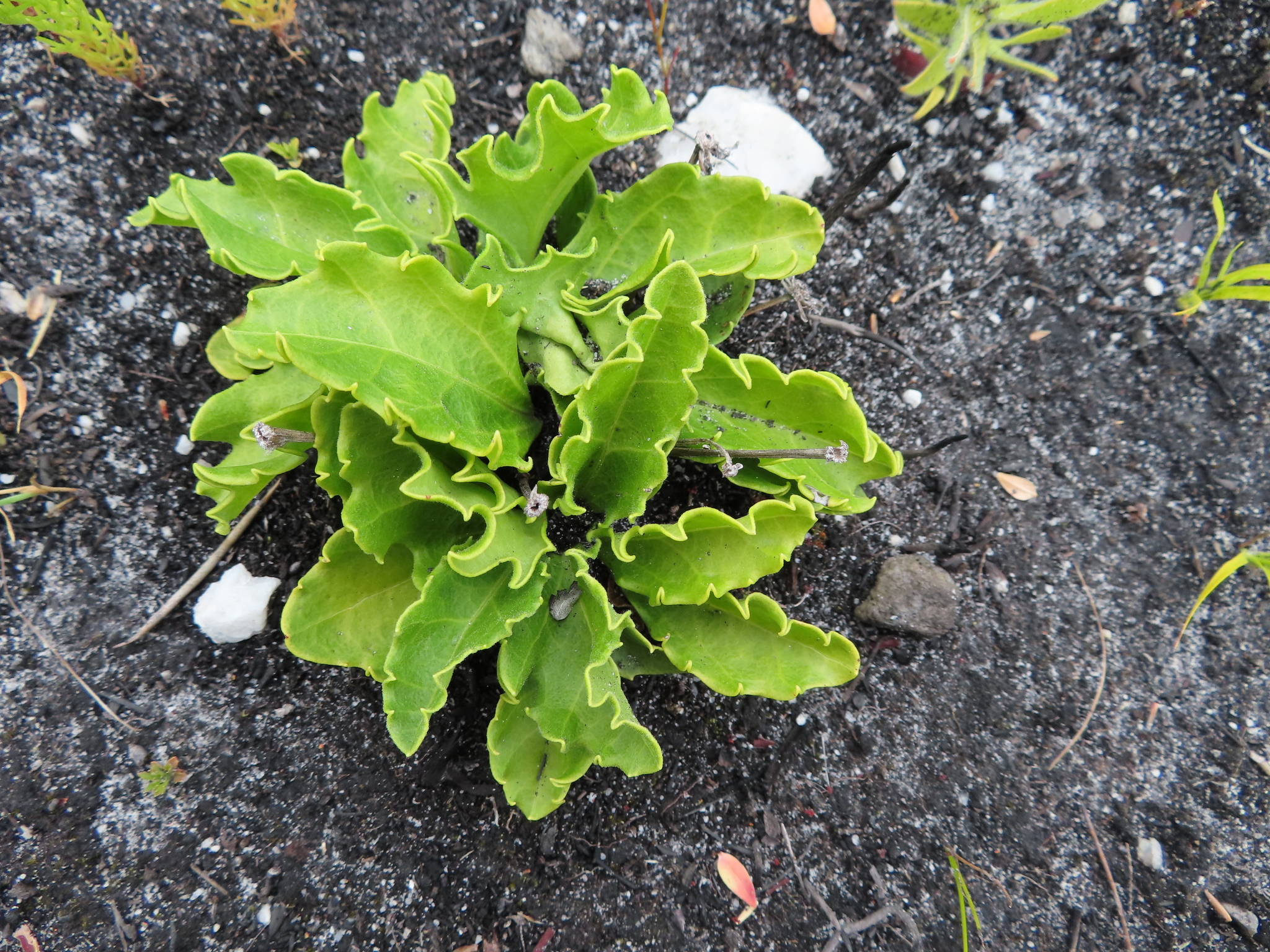
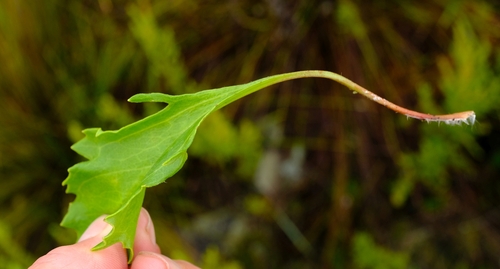
Rosulate perennial herb, up to 15 cm high. Roots thick, succulent, up to 80 x ±2 mm, dark brown to black. Leaves ±6 to 10, shortly to distinctly petiolate, petiole (10-)20-50(-90) mm long, slender, often tinged dark purple-red, densely white lanate adaxially at very base, white lanate, glabrescent to glabrous upwards; blade obovate to elliptic, 30-90 x 20-65 mm; apex acute, rarely obtuse; base attenuate; margin coarsely and irregularly dentate, sometimes slightly lobed, rarely almost entire, revolute; net-veined, with single main vein distinct on abaxial surface; often dark coloured, both surfaces glabrous or sparsely and shortly lanate, leaf surface visible through indumentum. Scapes 1 to 3, mostly 2(rarely 1 or 3)-headed, rigid, erect, 70-150 mm long, branched about halfway, tinged dark red-brown, ribbed, occasionally loosely lanate, sparsely glandular, slightly broadened and white lanate below capitula, with 1 to 3 bracts, decreasing in size upwards. Involucre campanulate to cyathiform, 10 x 10-18 mm. Involucral bracts 20 to 24, in 3 or 4 series, imbricate, narrowly ovate to narrowly obovate, margins membranous, tinged dark red-violet or purplish, strongly ciliate, central part green, occasionally scattered white lanate and loosely glandular; outer bracts 5.5-7.0 x 1.5-1.8 mm; inner bracts 7.8-10.5 x 1.8-2.0 mm, glabrescent. Ray florets 12 to 16; corolla pink, limb linear, 10-11 mm long, broadly obtuse, 3-lobed, narrowing towards base, 5- to 7-veined; tube ±4 mm long, loosely glandular hairy. Staminodes present, exserted from tube. Style furcate. Cypsela and pappus as in disc florets. Disc florets many, corolla ±6 mm long, slightly longer than pappus; tube glandular hairy in lower half; lobes distinctly erect, laxly glandular hairy and with marginal resin ducts. Anthers 1.5 mm long, exserted, with triangular apical appendages. Style dark red, distinctly exserted; style branches 1.2-1.4 mm long, style appendages ±0.3 x 0.2 mm. Cypselae fusiform, 5.5-6.0 x 1.5 mm, bright brown, 4- or 5-ribbed, with shiny glands and dense 0.5 mm long twin hairs; epicarp smooth. Pappus biseriate, outer series of few free, delicate, barbellate bristles, 0.55-1.55 mm long, white; inner series of white plumose bristles up to 5.3 mm long, barbellate basally. From: Herman, PPJ; Zinnecker, U. 2016. A taxonomic revision of the genus Mairia (Asteraceae, Astereae) in South Africa. S. African J. Bot. 105: 45-60. [Copyright held by the South African Association of Botanists (2016); http://www.sciencedirect.com/science/journal/02546299] [CC BY]
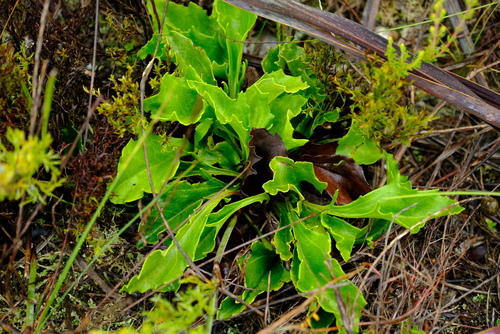
Tufted perennial to 20 cm. Leaves in a basal rosette, petiolate, elliptic-obovate, margins mostly ragged, softly woolly beneath or glabrescent. Flower heads radiate, solitary on few-branched peduncles, yellow with pink rays. From: Manning, JC; Goldblatt, P. 2012. Asteraceae: Mairia Nees. In: J Manning & P Goldblatt (eds), Plants of the Greater Cape Floristic Region 1: The Core Cape flora. Strelitzia 29: 393-394. South African National Biodiversity Institute, Pretoria. [CC BY]
This species is characterised by the coarsely and irregularly dentate leaves, distinctly net-veined on the abaxial surface and slender petioles. Florets of this species have only been observed in the type specimen. The relatively graceful and elegant heads are borne on long, slender, branched scapes. The dark red margins of the involucral bracts, the disc florets that are longer than the pappus and the dark red, exserted styles are also diagnostic. From: Herman, PPJ; Zinnecker, U. 2016. A taxonomic revision of the genus Mairia (Asteraceae, Astereae) in South Africa. S. African J. Bot. 105: 45-60. [Copyright held by the South African Association of Botanists (2016); http://www.sciencedirect.com/science/journal/02546299] [CC BY]
M. petiolata is known from a single population in the Langeberg mountains just north of Swellendam, where it seems to be endemic. From: Herman, PPJ; Zinnecker, U. 2016. A taxonomic revision of the genus Mairia (Asteraceae, Astereae) in South Africa. S. African J. Bot. 105: 45-60. [Copyright held by the South African Association of Botanists (2016); http://www.sciencedirect.com/science/journal/02546299] [CC BY]
December
This map contains point-based occurrences at different locations
Occurrence in the Flora of Southern Africa (FSA) countries and South African provinces. Residence status indicates if a taxon is indigenous, endemic, naturalised or invasive in a specific region. This data is based on specimen records and literature
FSA
SA
BOT
NAM
ESW
LES
WC
EC
NC
FS
GA
KZN
LP
MP
NW
Absent
Indigenous
Endemic
Naturalised
Invasive

Names and Sources
Published in: Taxon 60(4): 1195 (2011)
Type: South Africa, Western Cape province, Swellendam Distr., Misty Point (Goedgeloof Pk.), 4-12-1979, Esterhuysen 35366 (M, holo.; BOL, iso.)
Classification
KINGDOM Plantae
SUBKINGDOM Phanerogamae
PHYLUM Anthophyta
ORDER Asterales
FAMILY Asteraceae
SUBFAMILY Asteroideae
TRIBE Astereae
GENUS Mairia
SPECIES petiolata
4 results for Mairia petiolata Zinnecker
Barcode: NBG1480765-0 Collector(s) & number: Esterhuysen, E, 35366 | 1979-12-24
South Africa, Western Cape, Swellendam District. Misty Point (Goedgeloof Peak).
Data Resource: BODATSA View record
This map contains point-based occurrences at different locations
2016
PERIODICAL/JOURNAL
A taxonomic revision of the genus Mairia (Asteraceae, Astereae) in South Africa Herman, PPJ; Zinnecker, USouth African Journal of Botany 105: 45-60
2012
SERIES CHAPTER
Asteraceae: Mairia Nees Manning, JC; Goldblatt, PIn: J Manning & P Goldblatt (eds), Plants of the Greater Cape Floristic Region 1: The Core Cape flora. Strelitzia 29: 393-394
South African National Biodiversity Institute, Pretoria
2011
PERIODICAL/JOURNAL
Valid publication of names in Astereae originally proposed in 1990 in a University of Munich dissertation Ortiz Nunez, S; Zinnecker, UTaxon 60(4)1194-1198
No results found for Mairia petiolata Zinnecker
Status and criteria
LC
Assessor(s)
Plantae Coordinator
| Part(s) of plant used | Use(s) | Reference |
|---|
Coming soon...