
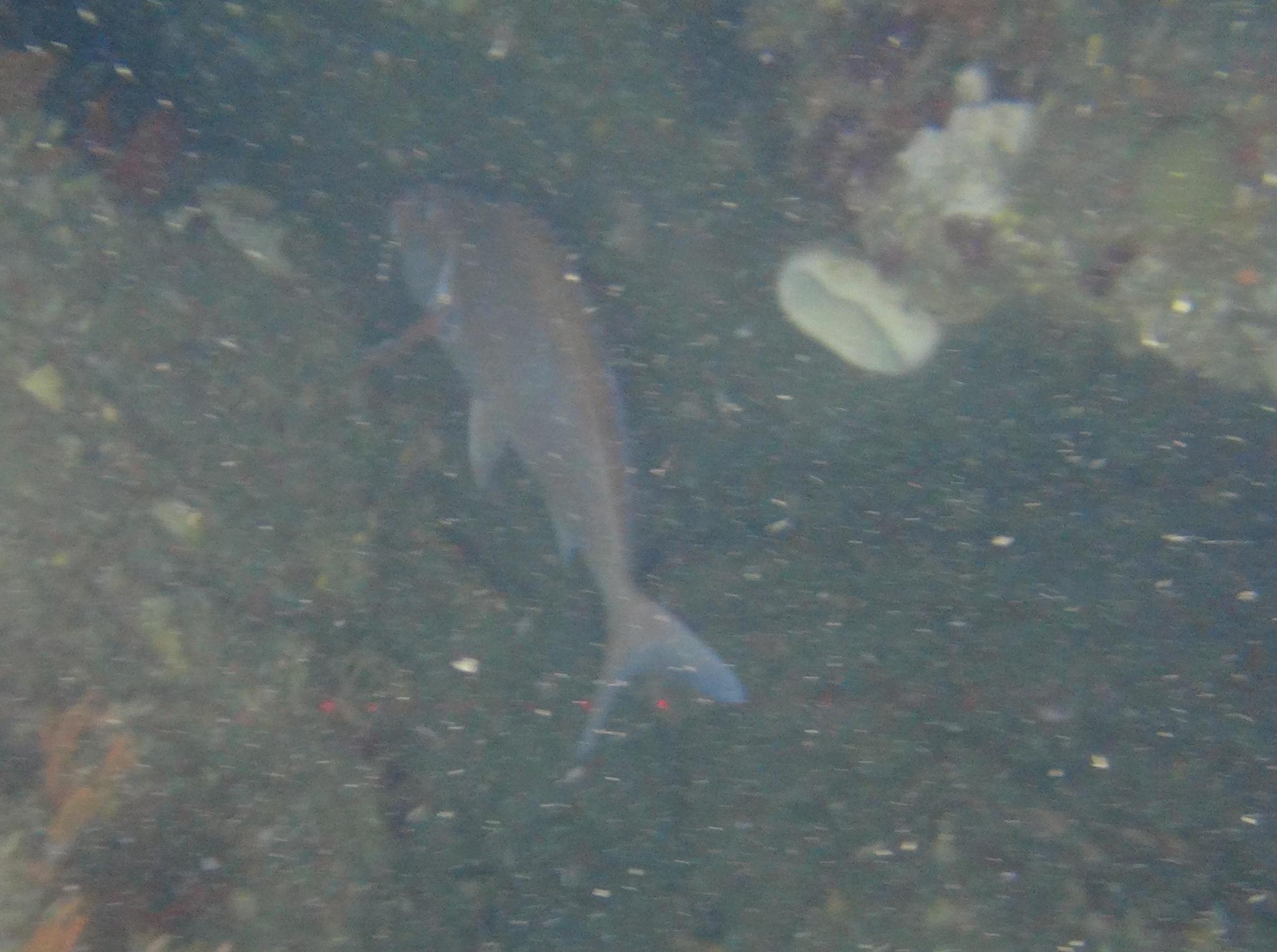
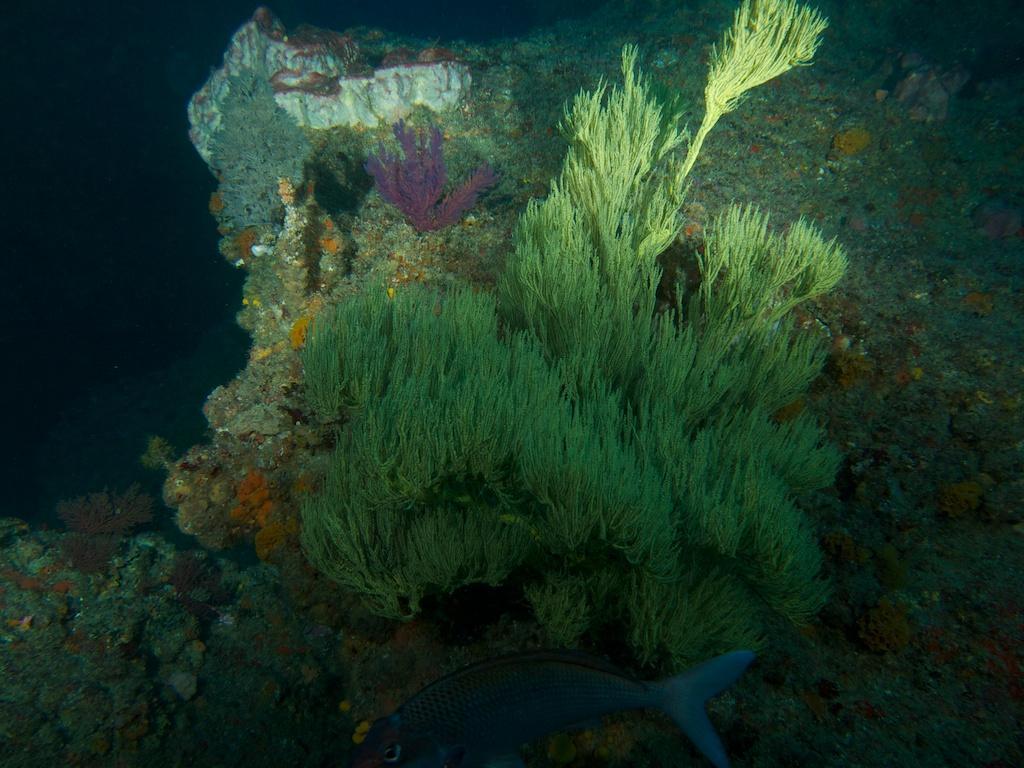
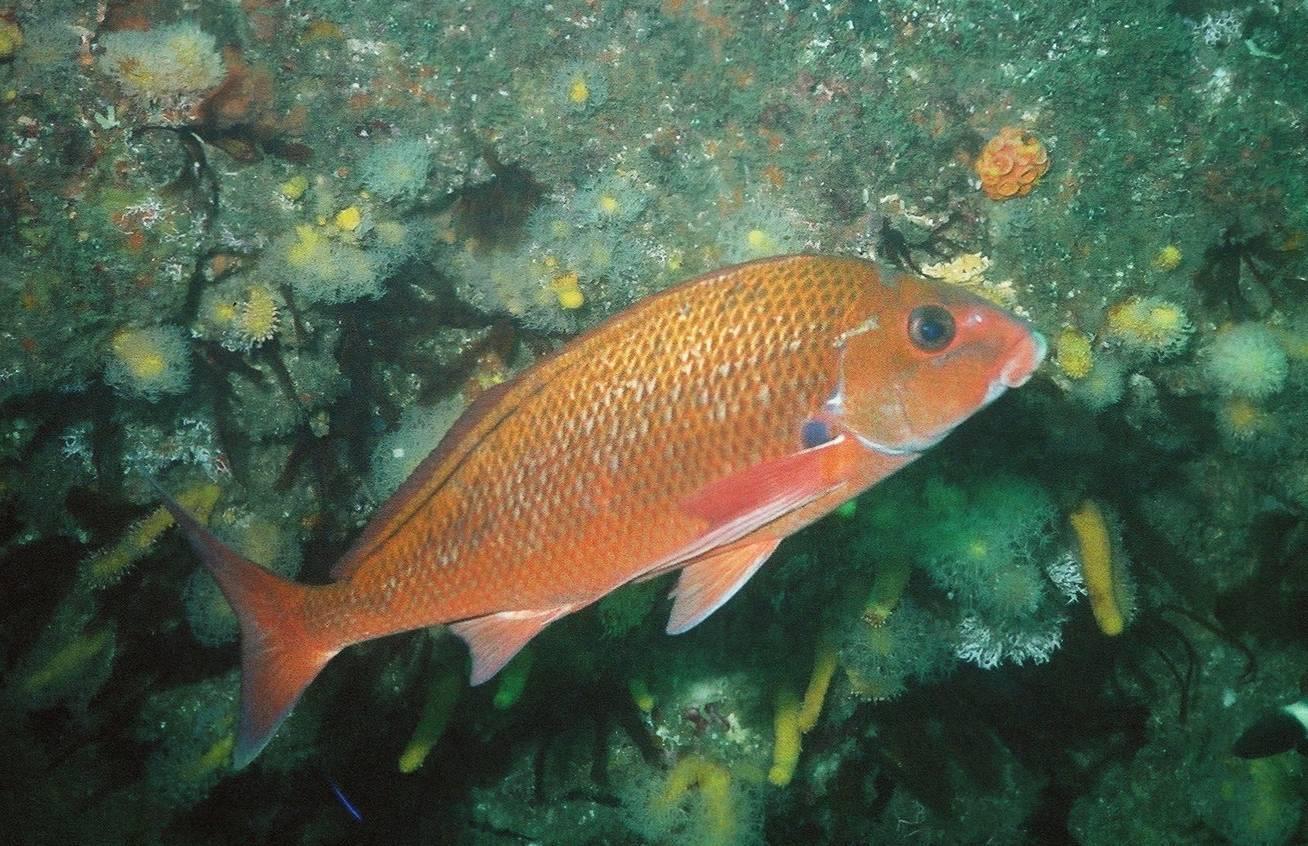
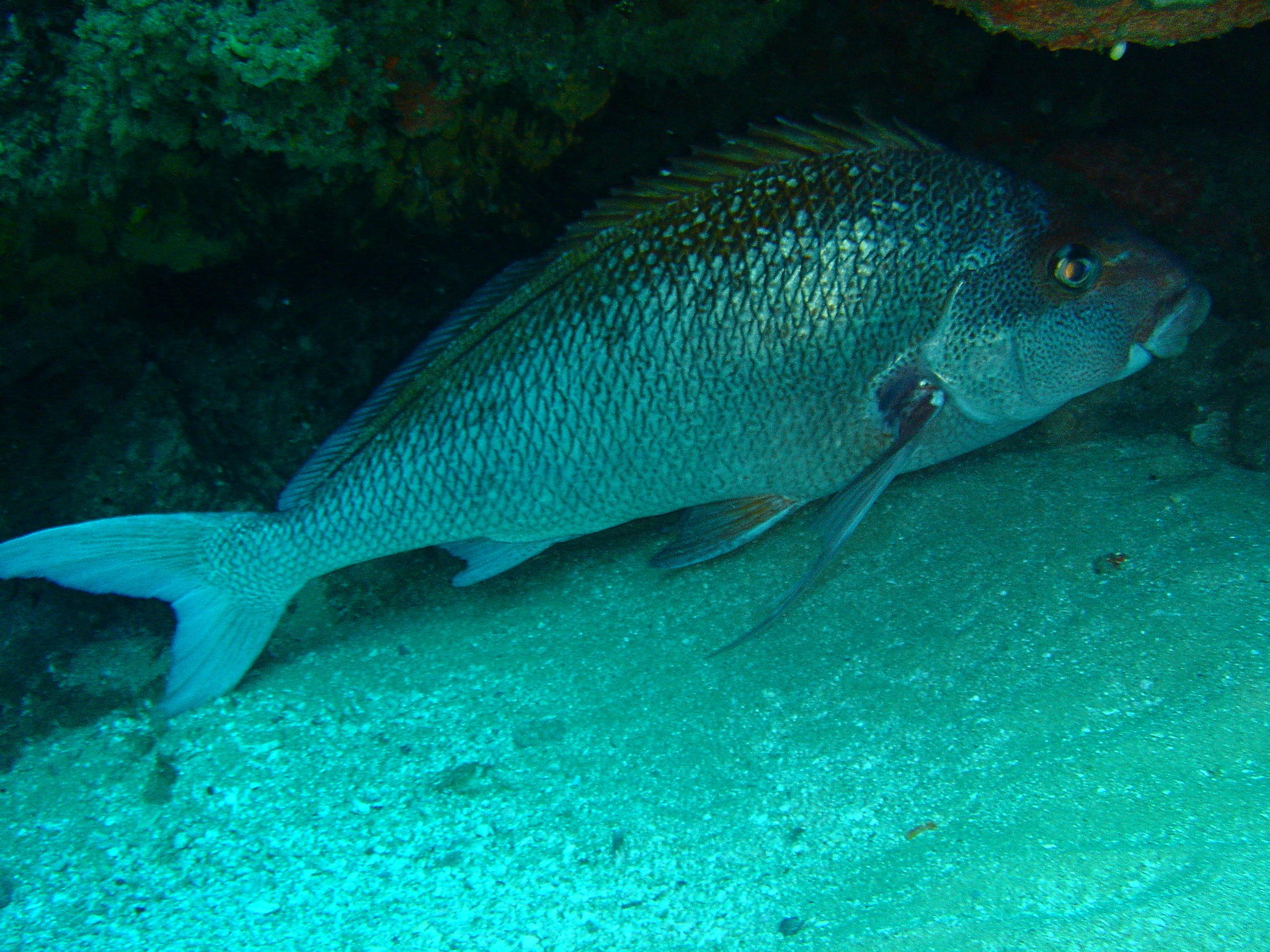
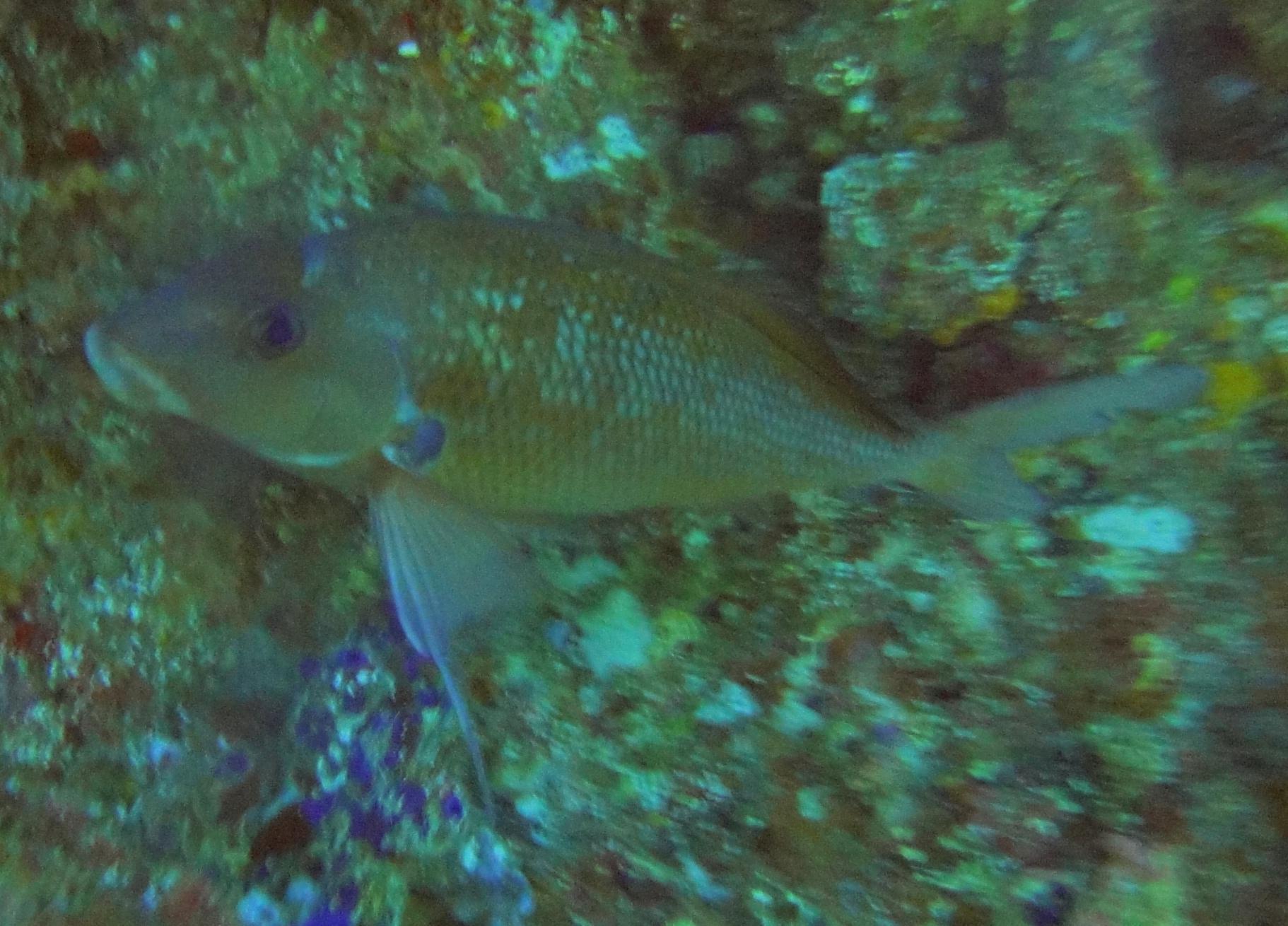
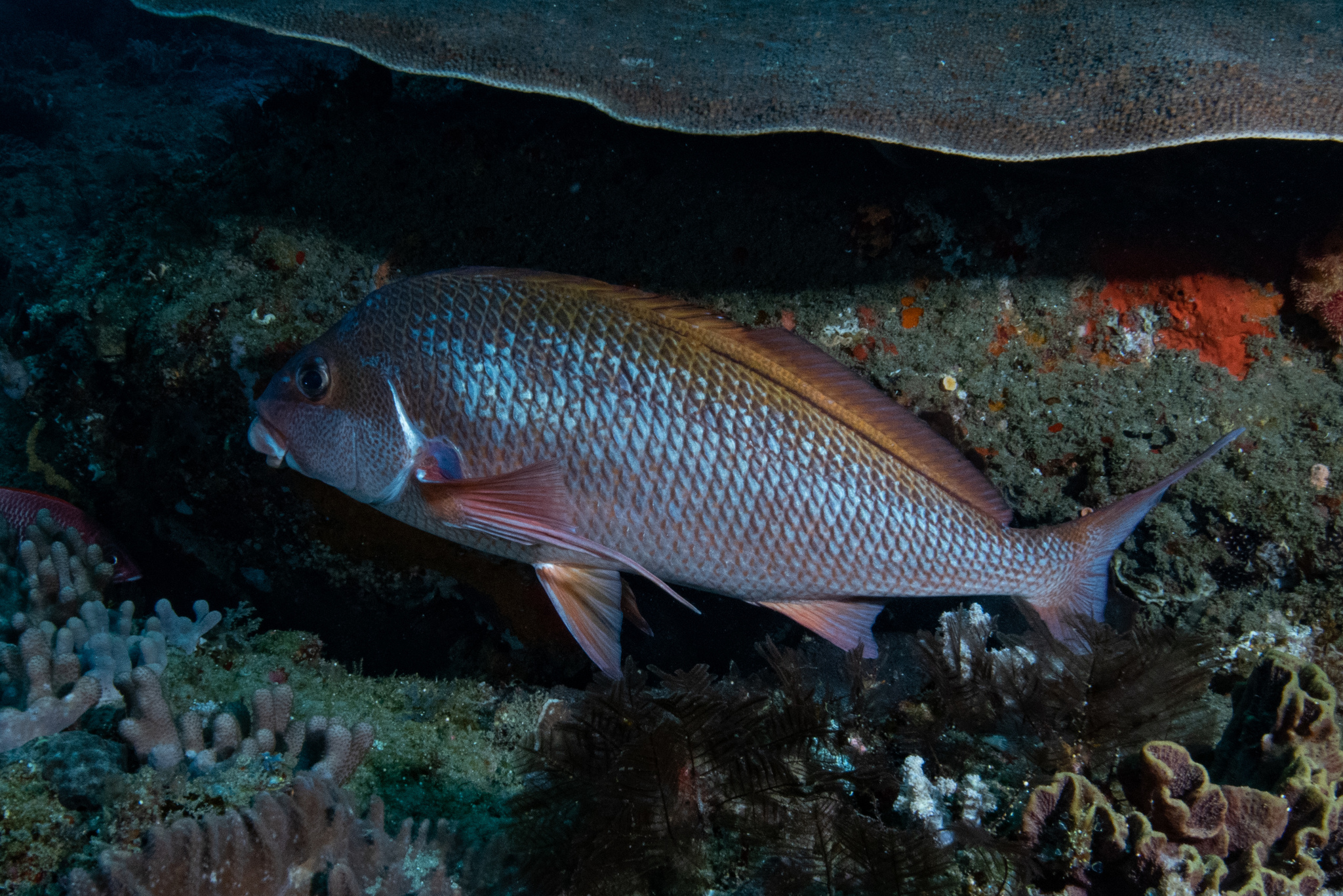
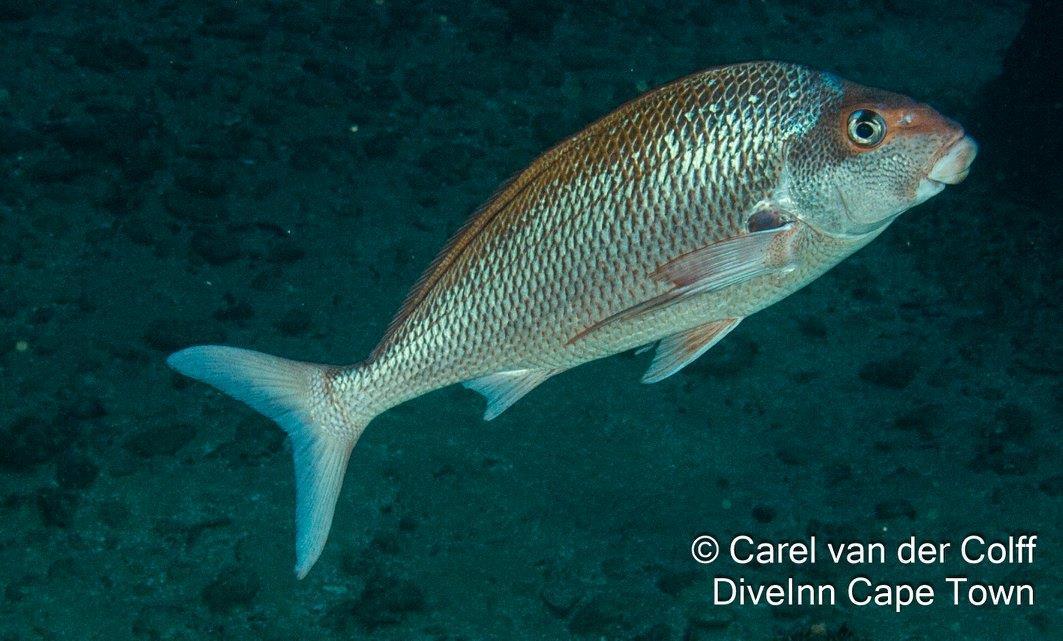
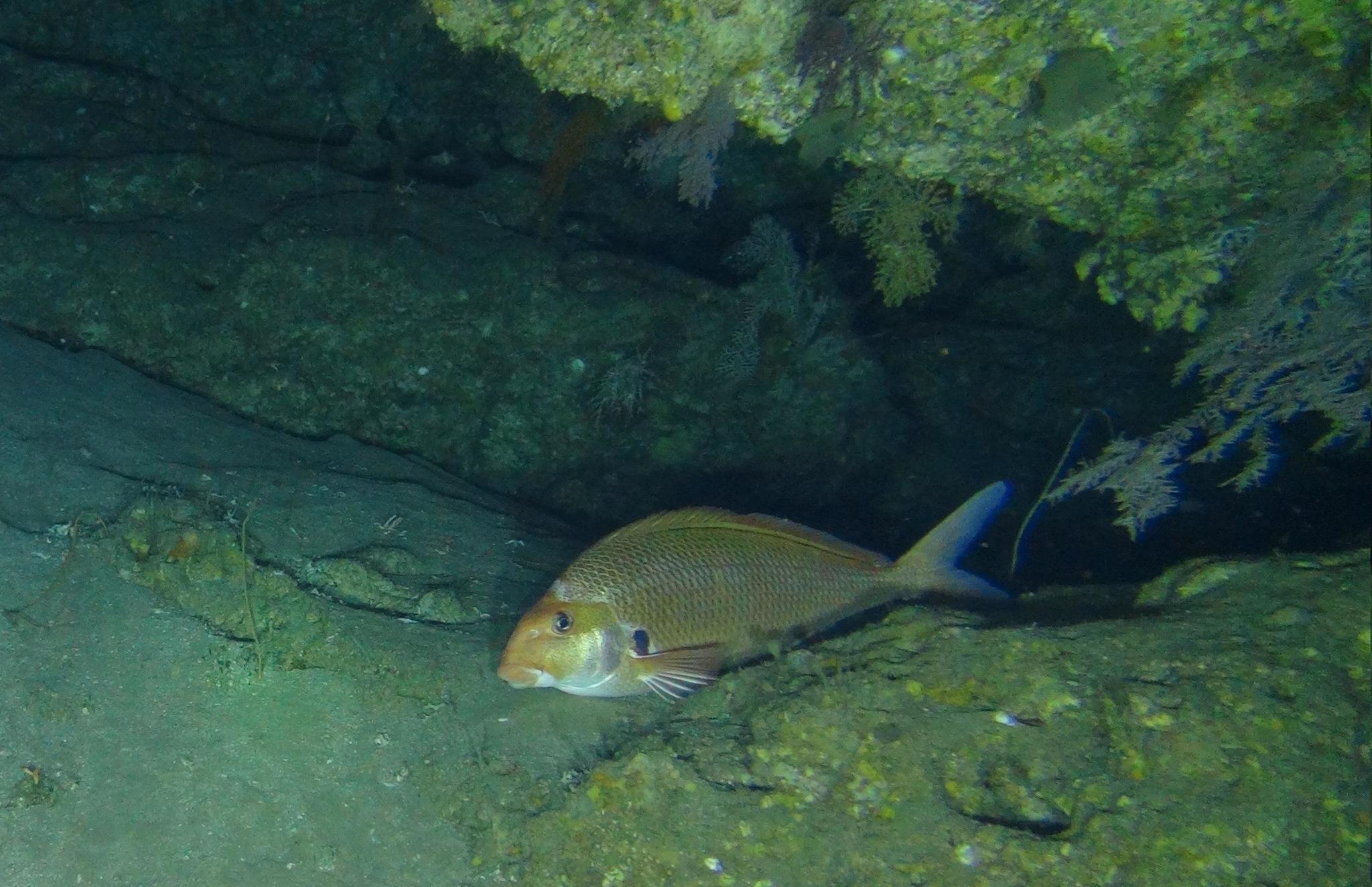
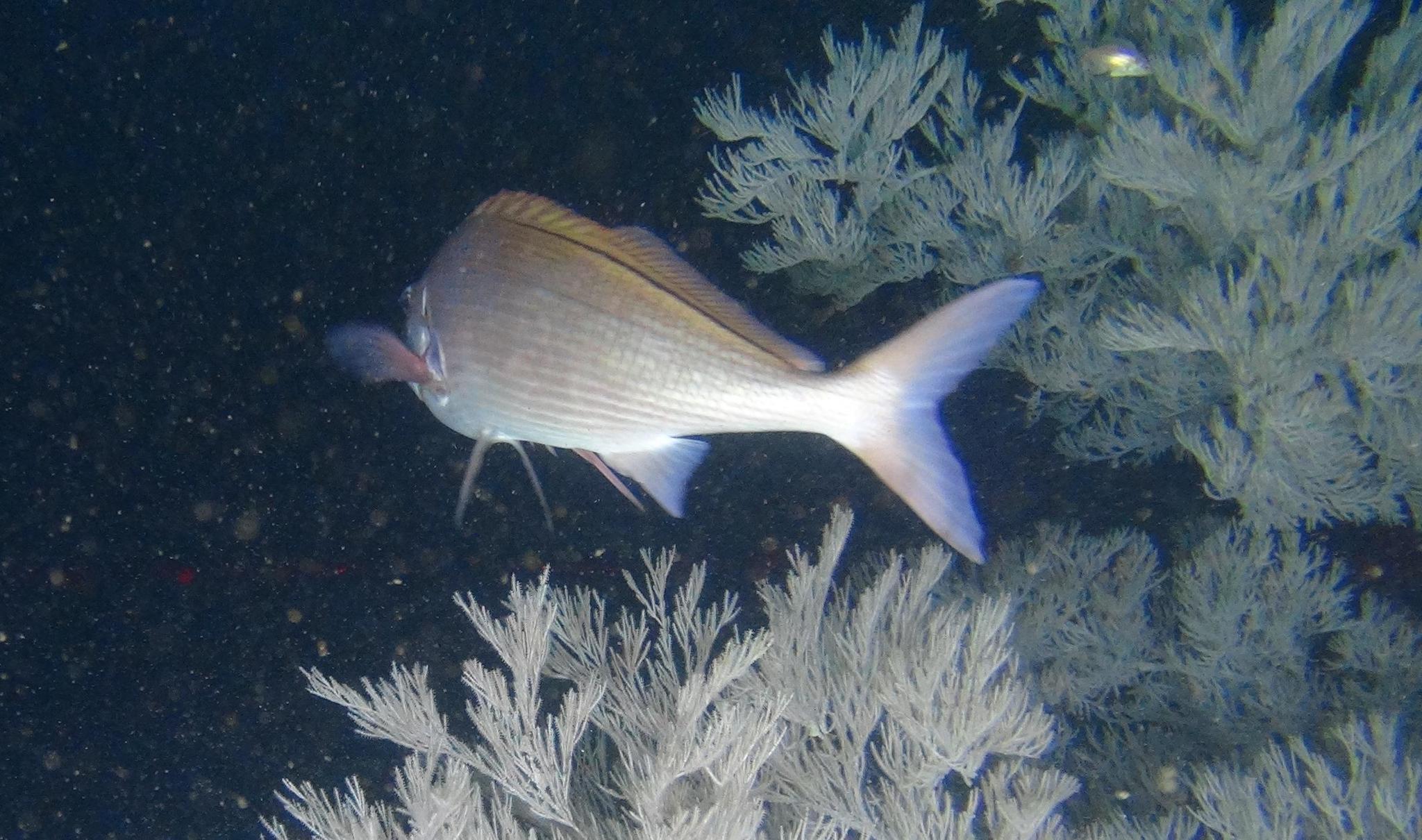
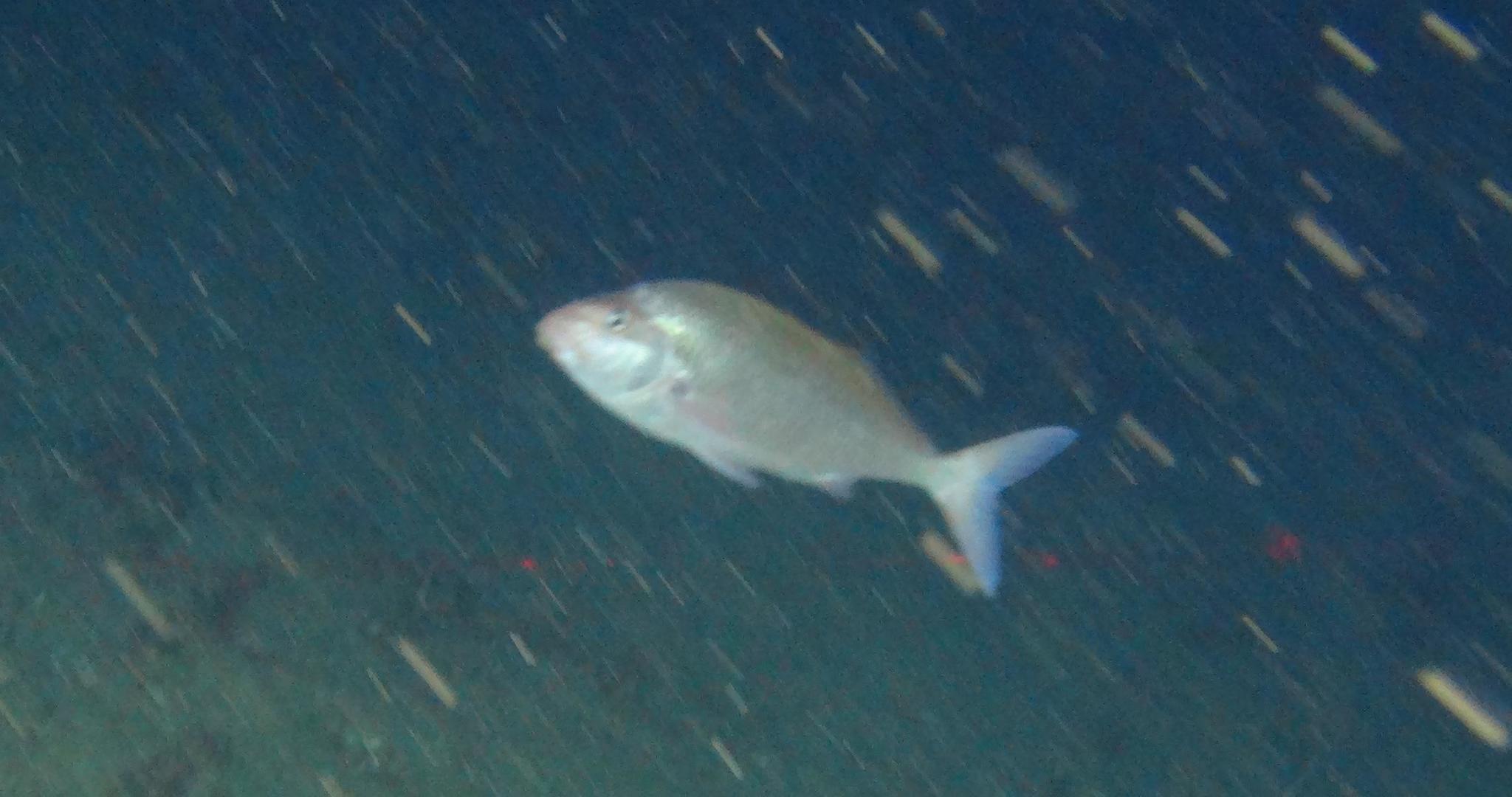
Natal fingerfin have a reddish head and body that is darker dorsally and fades to white below. The dorsal scales at the front of the body have a dark spot at the centre and there is a dark red or black blotch on the flap of skin at the upper pectoral base. The pectoral fin has 14 rays with the lower 6 characteristically lengthened. The total length is 2.6 to 2.8 times the body depth and the dorsal fin has 17-18 spines and 26-27 rays.
Natal fingerfin are endemic to South Africa (Smith and Bauchot 1984, Heemstra and Heemstra 2004) but also recently found along the southeast coast of Madagascar (B. Mann, ORI, pers. obs.).
Found from Algoa Bay in the eastern Cape north to Sodwana Bay, Kwa-Zulu Natal (van der Elst 1993, Heemstra and Heemstra 2004).
Natal fingerfin are known to congregate at certain times of the year into loosely packed shoals which are thought to be to spawn (van der Elst 1993).
Adults are day time predators which feed on small, benthic invertebrates, but also squid and small fish (van der Elst 1993, Heemstra and Heemstra 2004). The diet of juveniles is unknown but small juveniles are thought to feed on zooplankton.
Little is known about the reproductive strategy of Natal fingerfin. Spawning strategy and season is not known although eggs are most commonly found in winter. Exact spawning location is not known but eggs have been collected along the 20 to 30m depth contour off Park Rynie on the KZN south coast each year between 1987 and 2011 (Connell 2012).
Inshore
This map contains point-based occurrences at different locations
Occurrence in African countries and South African provinces. Residence status indicates if a taxon is indigenous, endemic, or alien in a specific region. This data is based on specimen records and literature.
FSA
SA
BOT
NAM
ESW
LES
WC
EC
NC
FS
GA
KZN
LP
MP
NW
Absent
Indigenous
Endemic
Naturalised
Invasive
Names and Sources
| Common Name | Language |
|---|---|
| Natal Fingervin | En |
| Natal Fingerfin | En |
| Natalse Vingerfin | Af |
| Natal Banky |

Classification
KINGDOM Animalia
PHYLUM Chordata
CLASS Actinopterygii
ORDER Perciformes
FAMILY Cheilodactylidae
GENUS Chirodactylus
SPECIES jessicalenorum
No results found for Chirodactylus jessicalenorum Smith, 1980
Taken mainly by spearfishers (van der Elst 1993) but forms only a small component of their catches (Mann et al. 1997a, Lloyd et al. 2012).
10 results for Chirodactylus jessicalenorum Smith, 1980
This map contains point-based occurrences at different locations
2012
REPORT
Marine fish eggs and larvae off the east coast of South AfricaConnell, A.D.. 2012. Marine fish eggs and larvae off the east coast of South Africa.
2004
BOOK
Coastal fishes of Southern AfricaHeemstra, Phillip, Heemstra, Elaine. 2004. Coastal fishes of Southern Africa. NISC (PTY) LTD.
2012
JOURNAL ARTICLE
Ocean warming alters species abundance patterns and increases species diversity in an African sub-tropical reef-fish communityLloyd, Penn, Plaganyi, Eva, Weeks, Scarla, MAGNO-CANTO, MARITES, Plaganyi, Gyula. 2012. Ocean warming alters species abundance patterns and increases species diversity in an African sub-tropical reef-fish community Vol. 21 pp.78–94.
2013
JOURNAL ARTICLE
Southern African Marine Linefish Species ProfilesMann, BQ. 2013. Southern African Marine Linefish Species Profiles Vol. 9.
1997
JOURNAL ARTICLE
Evaluation of linefishery participation and management along the KwaZulu-Natal coastMann, BQ, Beckley, LE, Van der Elst, RP. 1997. Evaluation of linefishery participation and management along the KwaZulu-Natal coast Vol. 134 pp.1–17.
1984
BOOK CHAPTER
CheilodactylidaeFischer, W., Bianchi, G., Smith, M., Bauchot, M.. 1984. Cheilodactylidae. Rome. Western Indian Ocean (Fishing Area 51).
1993
JOURNAL ARTICLE
A guide to the common sea fishes of southern Africa (3rd edition)van der Elst, R.P.. 1993. A guide to the common sea fishes of southern Africa (3rd edition) pp.398p.
Status and criteria
LC
Assessor(s)
Sean Fennessy
Reviewer(s)
Animalia Coordinator