ANIMALIA / CHORDATA / ACTINOPTERYGII / PERCIFORMES / POMACANTHIDAE / APOLEMICHTHYS / KINGI

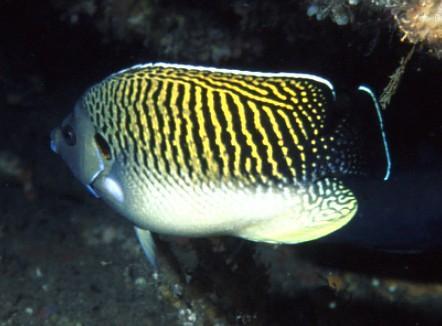
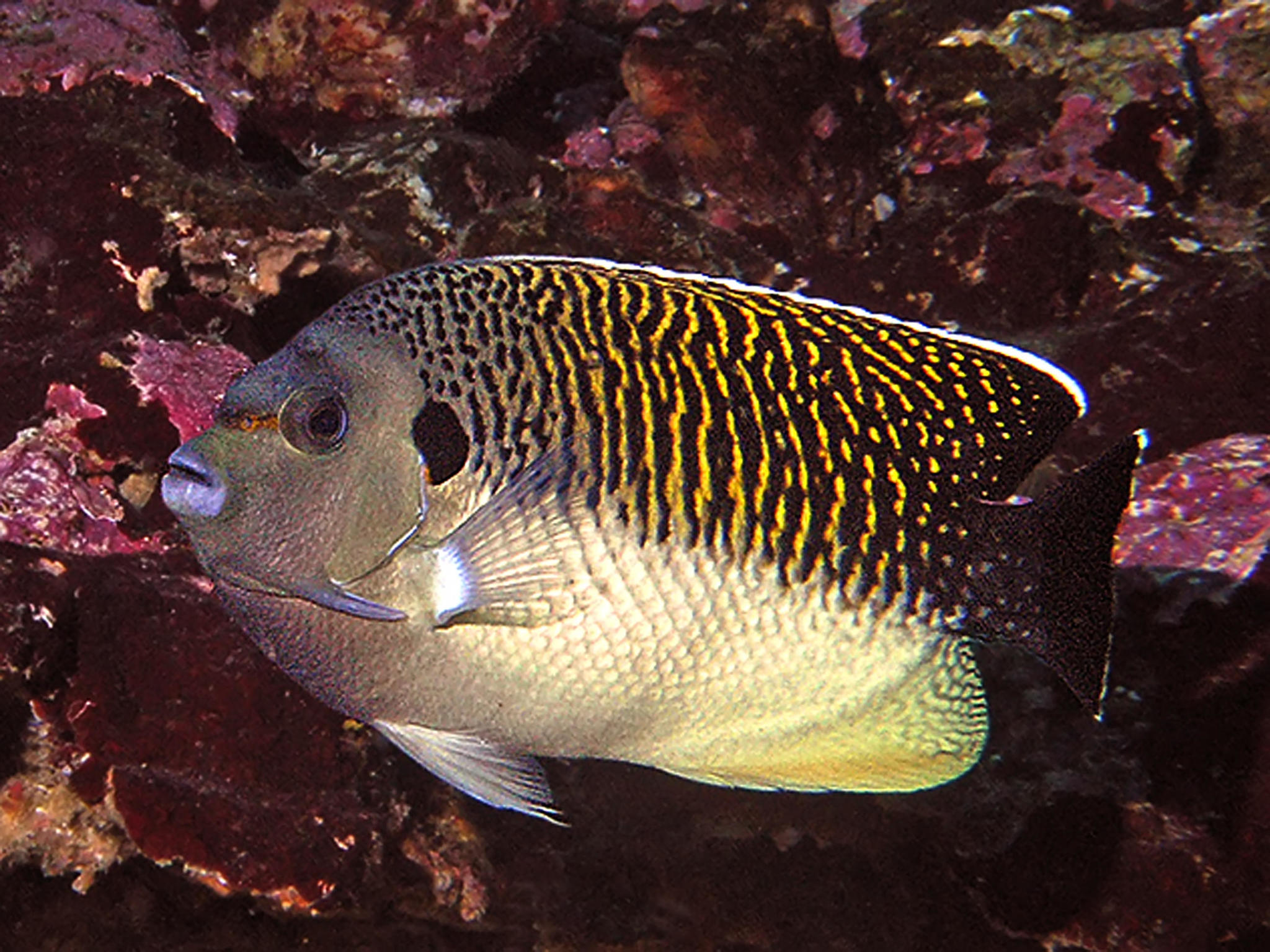
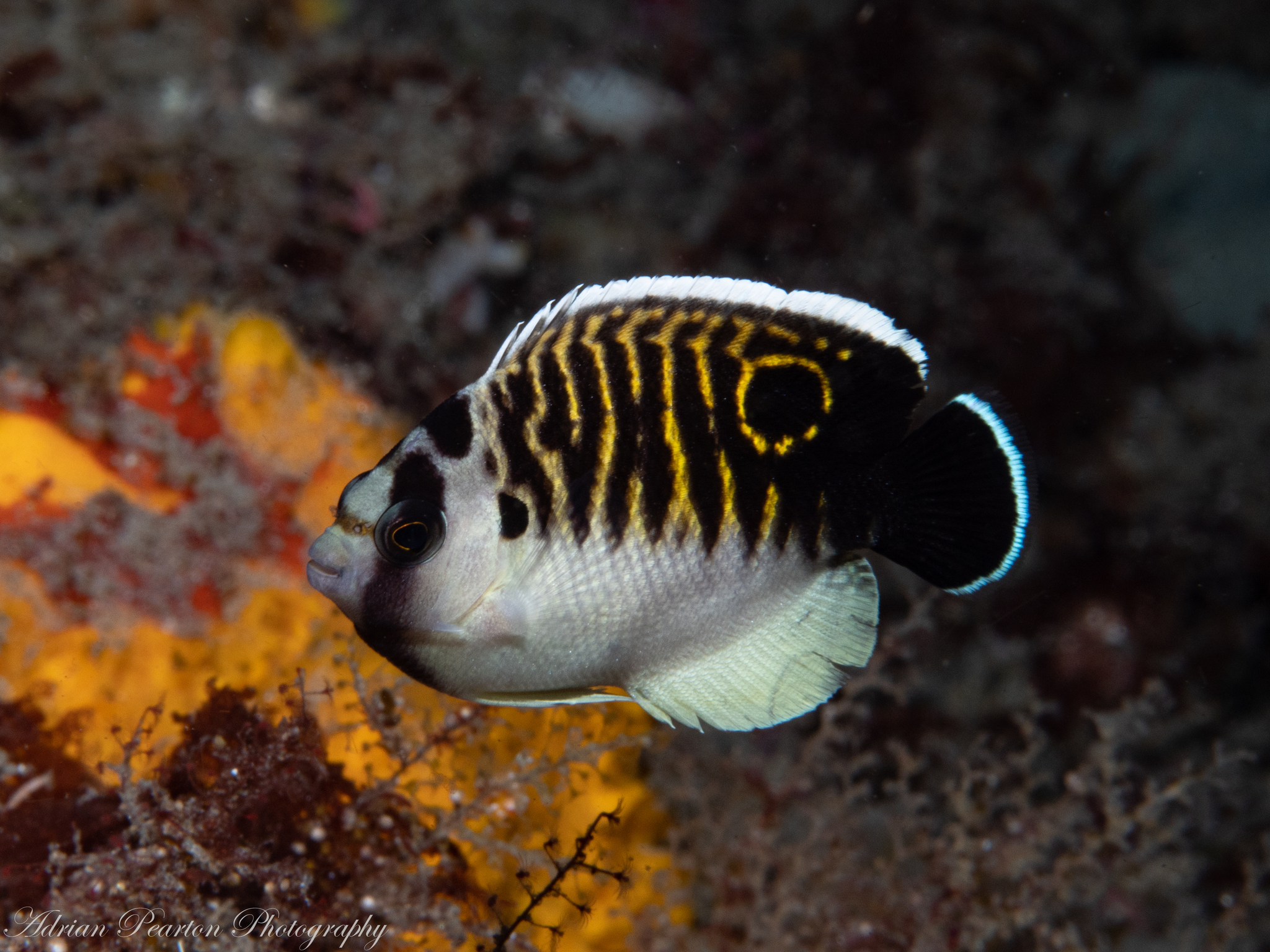
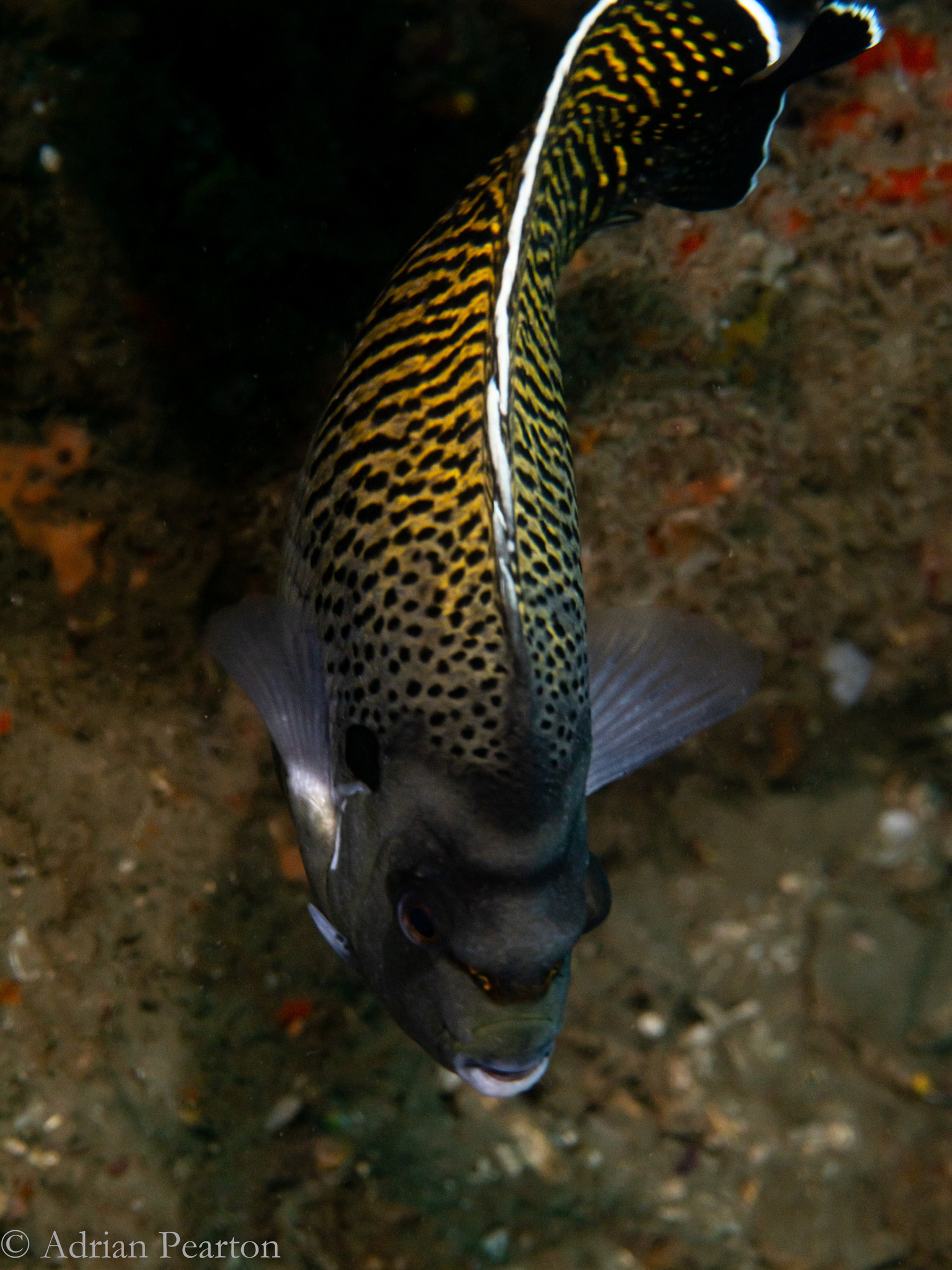
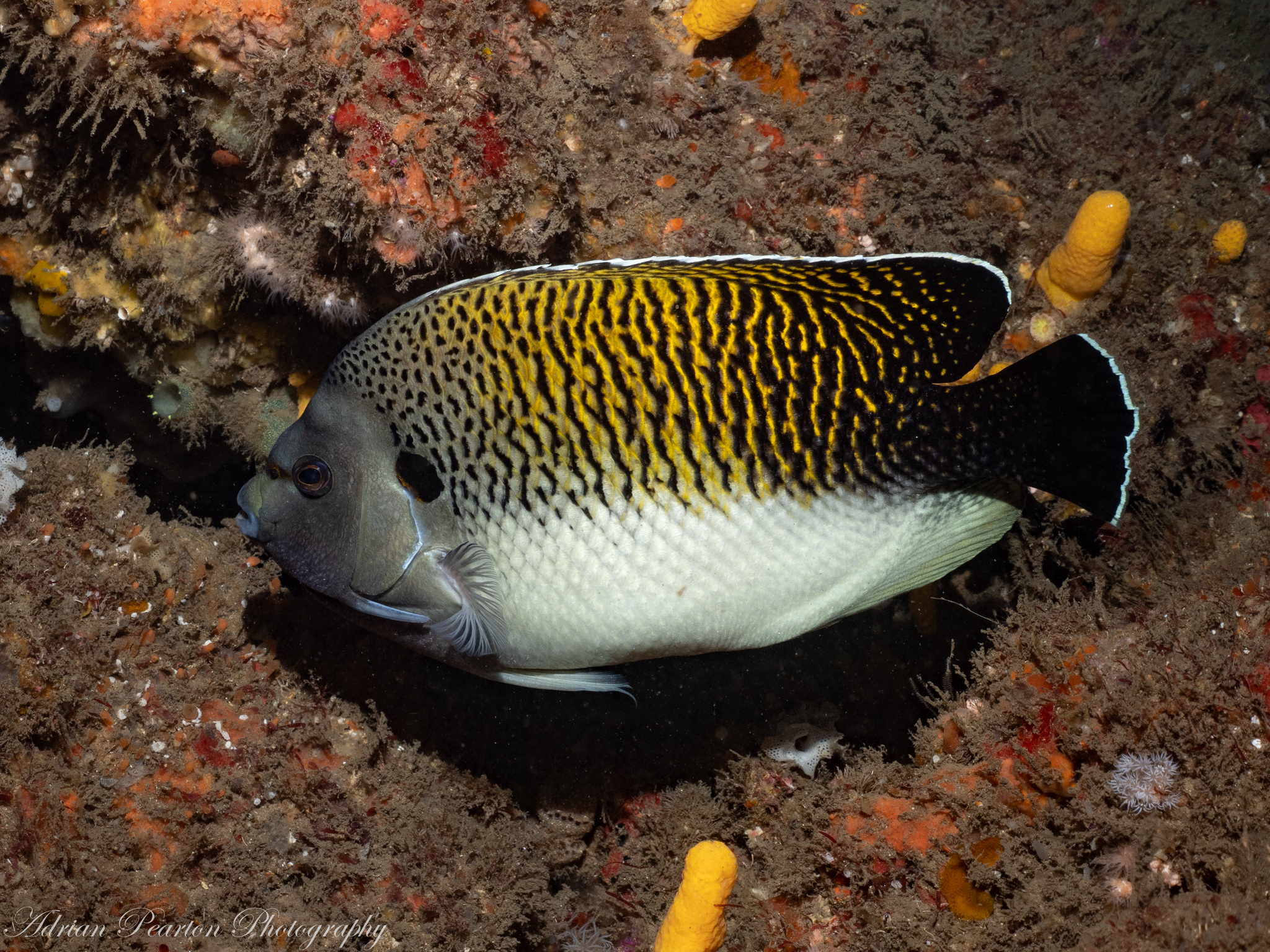
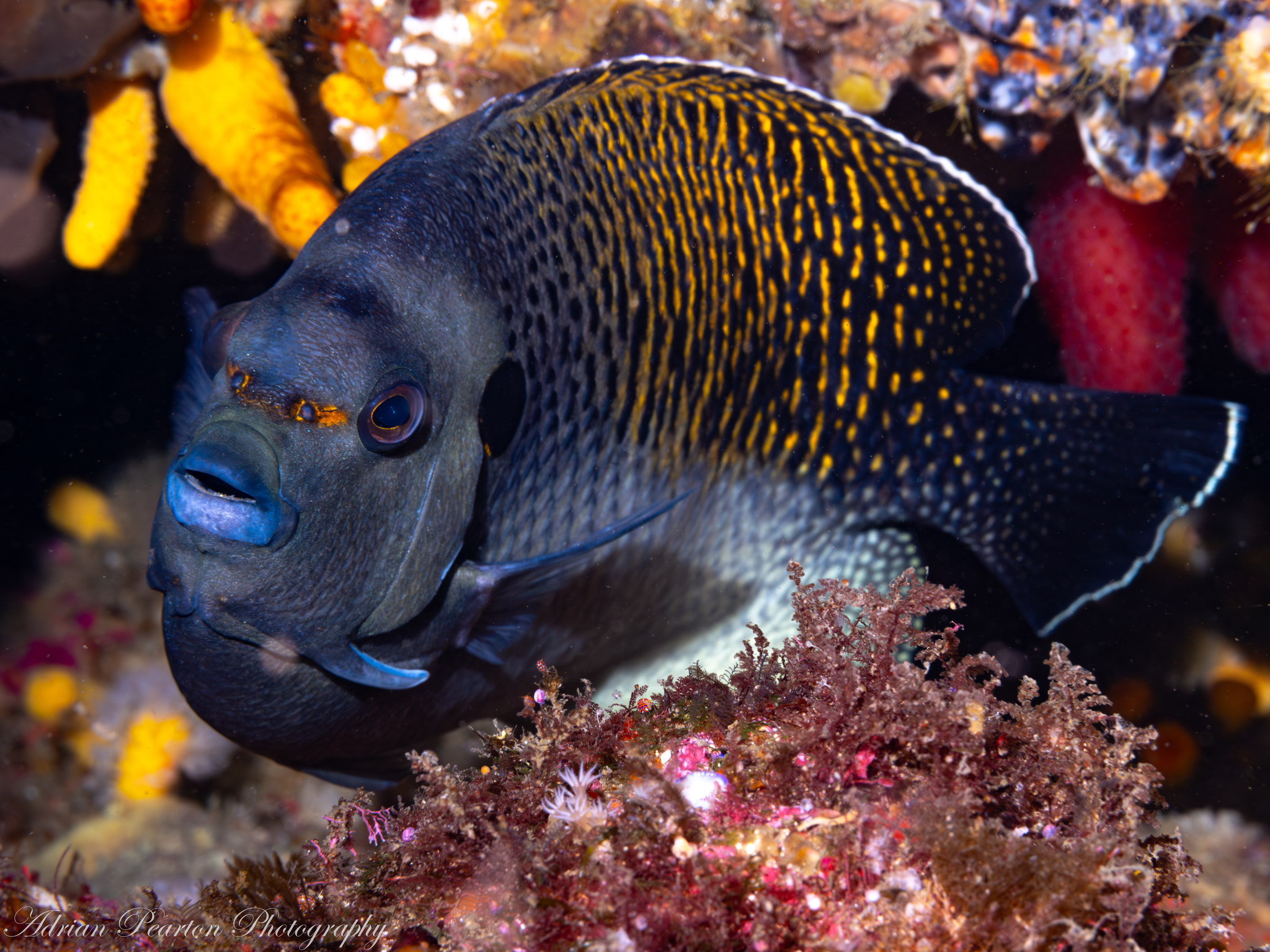
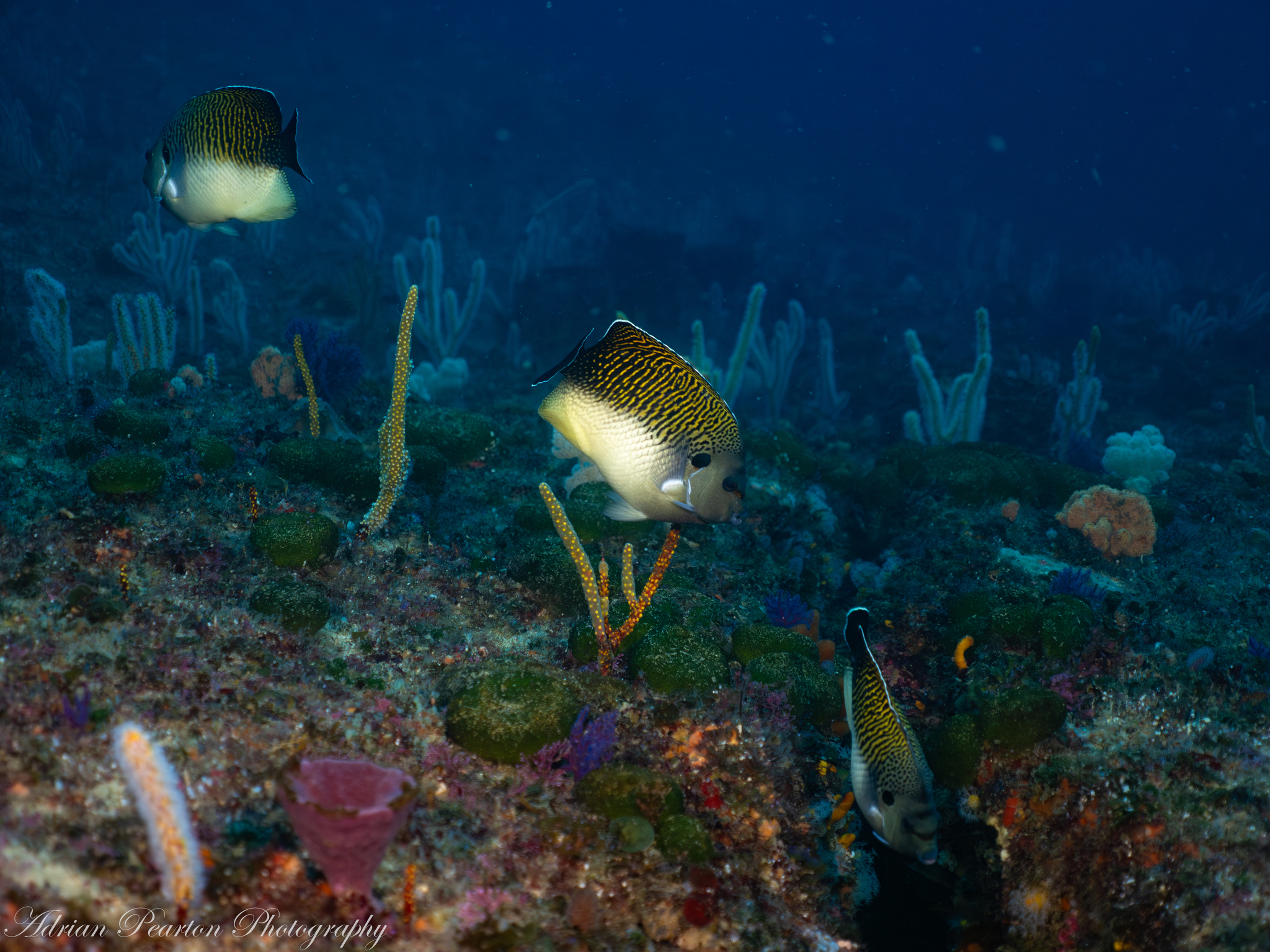
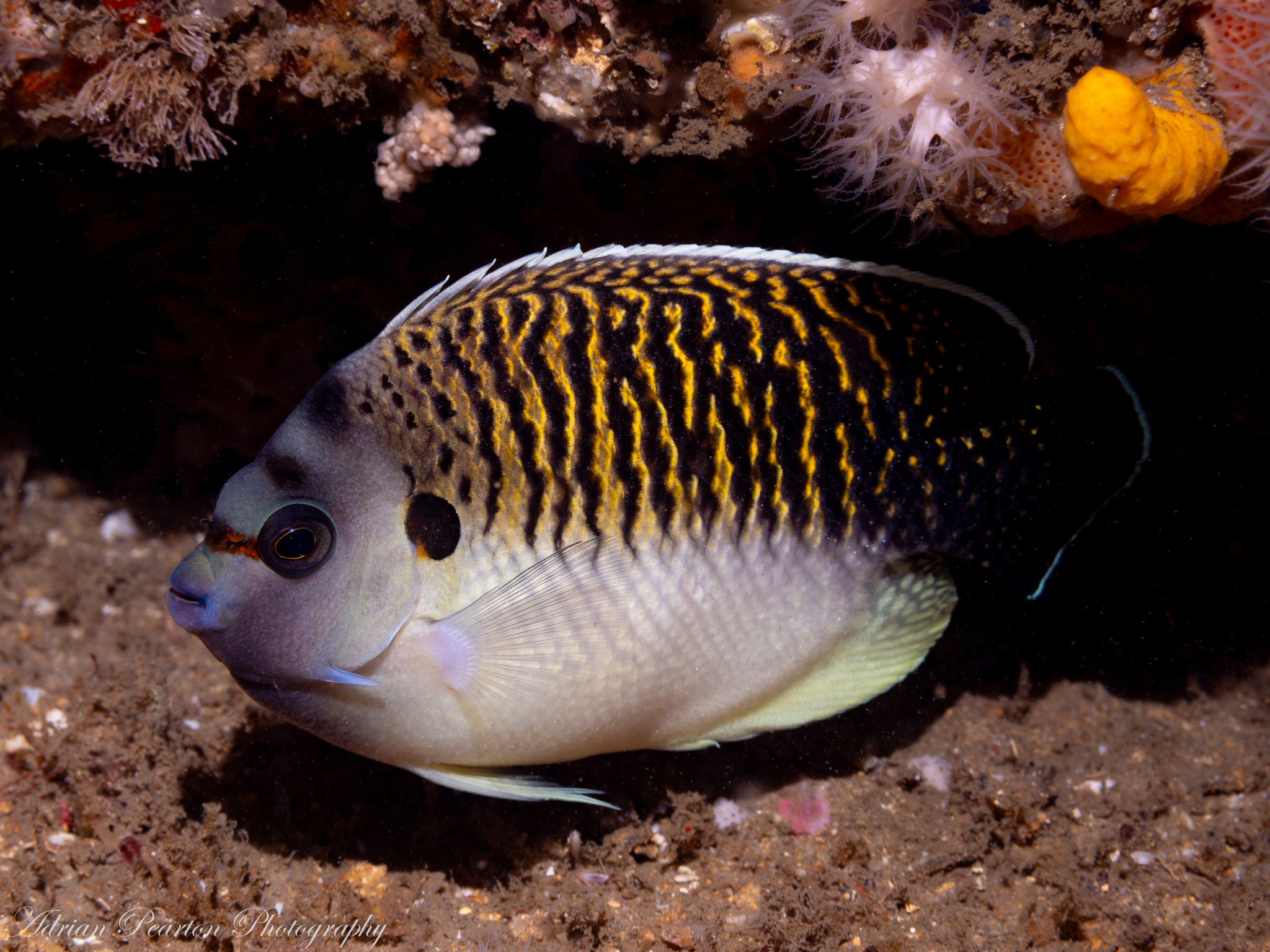
The most diagnostic feature are the tiger-like pattern of yellow and black wavy lines and stripes on the upper body. The tiger angelfish has a pale lower body, and a grey head. The lips and gill spine are black and there is a black spot behind the gill cover. The tail fin is black with a white margin that extends onto the dorsal fin. Small juveniles may be confused with a butterfly fish as they have a black band across the eye but can be recognised by the yellow edged, black ocellus at the base of the soft dorsal fin (King and Fraser 2014). Attains at least 21 cm (Smith and Heemstra 2003). Dorsal spines 15, dorsal rays 16-17, anal spines 3-4, anal rays 17-18 (Froese and Pauly 2015).
Natal, South Africa (Smith and Heemstra 2003), Mozambique (Pereira 2000) and Madagascar (King and Fraser 2014).
Known from Durban (Smith and Heemstra 2003) in Southern KwaZulu Natal to Mozambique (King and Fraser 2014). A juvenile has been found off East London (Heemstra and Heemstra 2004)
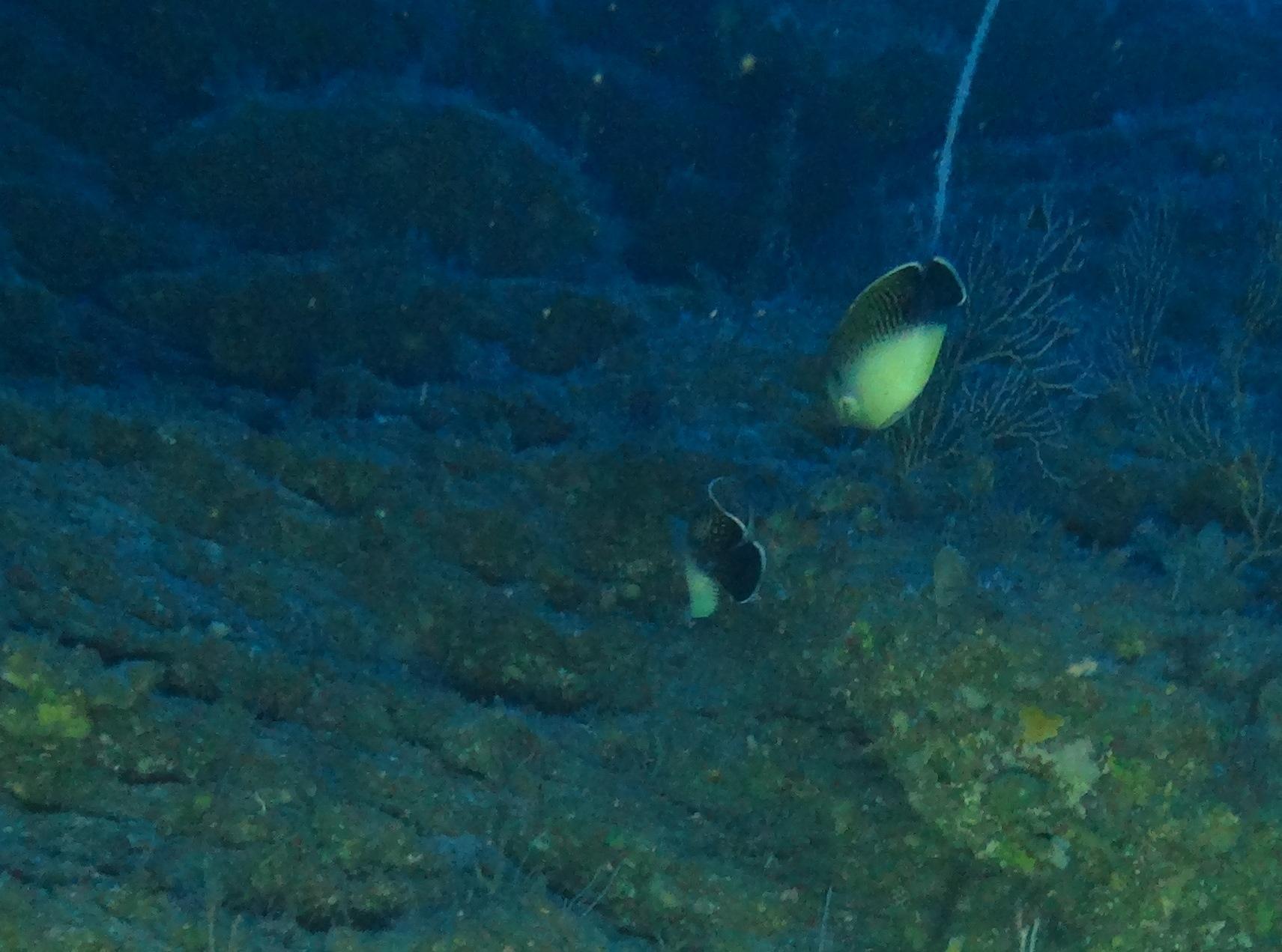
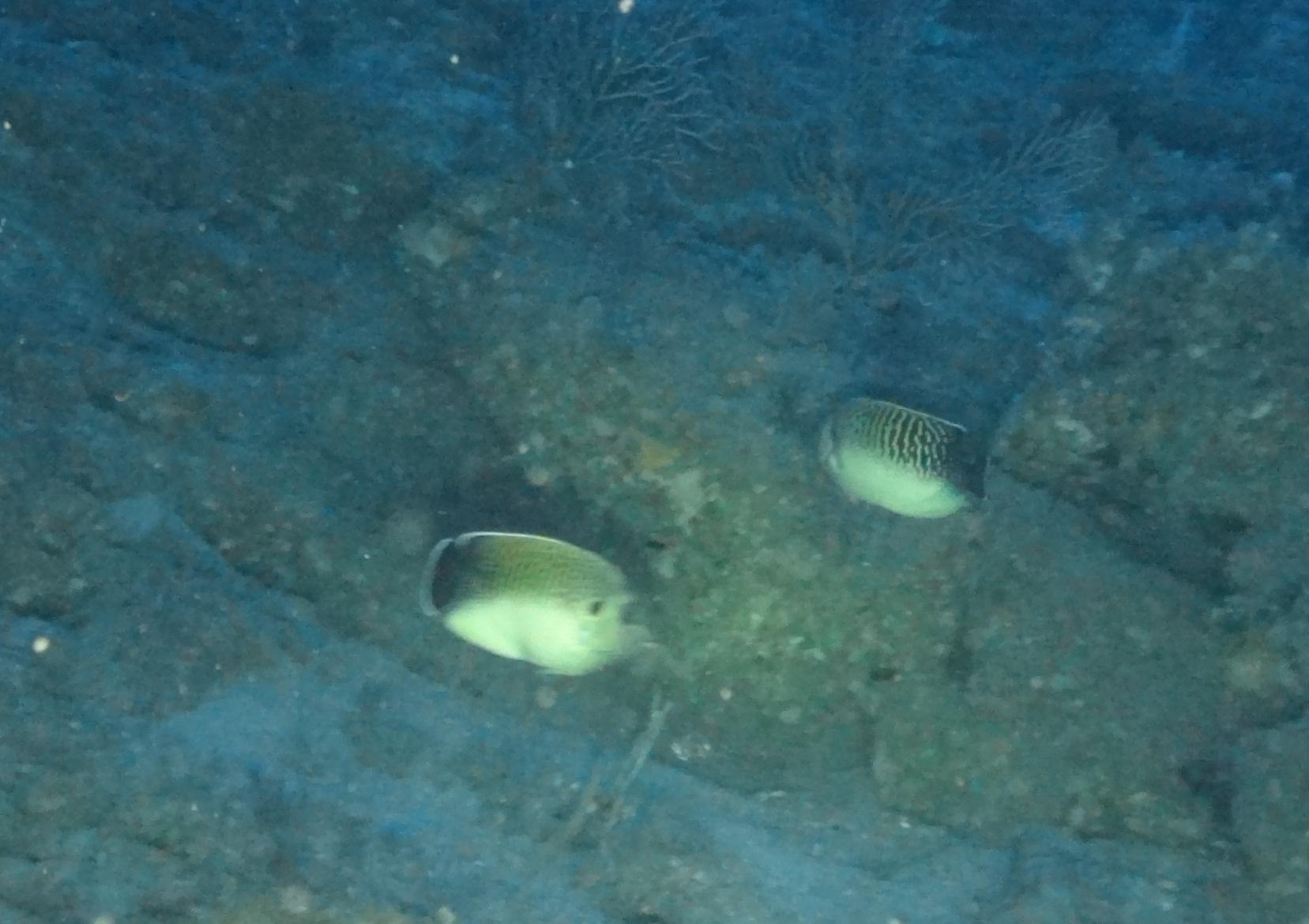
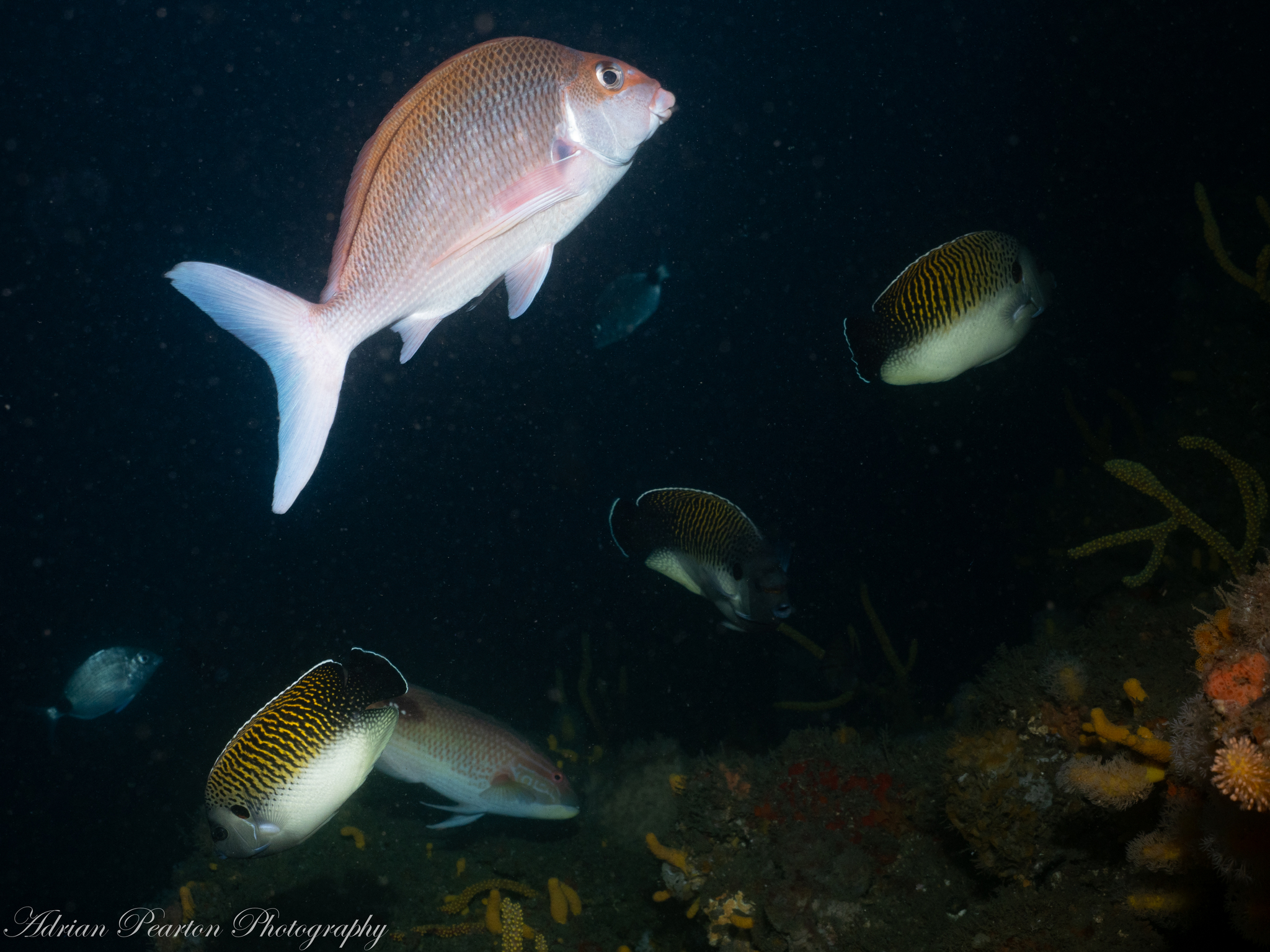
Usually solitary of in pairs but has occasionally been seen in loose small groups. Timid and often shelters in cracks an crevices in the reef (King and Fraser 2014)..
Feeds on sponges and small invertebrates (King and Fraser 2014).
Juveniles are extremely cryptic and rarely seen (King and Fraser 2014).
Inshore, Offshore (>30m)
This map contains point-based occurrences at different locations
Occurrence in African countries and South African provinces. Residence status indicates if a taxon is indigenous, endemic, or alien in a specific region. This data is based on specimen records and literature.
FSA
SA
BOT
NAM
ESW
LES
WC
EC
NC
FS
GA
KZN
LP
MP
NW
Absent
Indigenous
Endemic
Naturalised
Invasive
Names and Sources
| Common Name | Language |
|---|---|
| Tiger Angelfish | En |
| Tierengelvis | Af |
| Tier-Engelvis | Af |
Classification
KINGDOM Animalia
PHYLUM Chordata
CLASS Actinopterygii
ORDER Perciformes
FAMILY Pomacanthidae
GENUS Apolemichthys
SPECIES kingi
No results found for Apolemichthys kingi Heemstra, 1984
It may be harvested as by-catch and is occasionally for the aquarium trade. However, it occurs within a marine protected area with reefs in relatively good condition (Pyle et al. 2010)
10 results for Apolemichthys kingi Heemstra, 1984
This map contains point-based occurrences at different locations
2015
WEB ARTICLE
Apolemichthys kingiFroese, R, Pauly, D. 2015. Apolemichthys kingi. World Wide Web electronic publication.
2014
BOOK
The Reef GuideFraser, V, King, D.. 2014. The Reef Guide. Cape Town. Struik Nature pp.60.
2000
GOVERNMENT REPORT
Preliminary checklist of reef-associated fishes of MozambiquePereira, M.A.M.. 2000. Preliminary checklist of reef-associated fishes of Mozambique. Ministry for the Coordination of Environmental Affairs, Maputo pp.21.
2010
WEB ARTICLE
Apolemichthys kingiPyle, R, Craig, M.T., Rocha, L.A.. 2010. Apolemichthys kingi Vol. 2016. IUCN.
2003
BOOK
Smith's Sea FishesSmith, JLB, Heemstra, P. 2003. Smith's Sea Fishes. Cape Town. Struik Publishers pp.1047.
2004
BOOK
Coastal fishes of Southern AfricaHeemstra, P, Heemstra, E. 2004. Coastal fishes of Southern Africa. Grahamstown. NISC pp.488.