ANIMALIA / CHORDATA / REPTILIA / SQUAMATA / CHAMAELEONIDAE / BRADYPODION / CAERULEOGULA
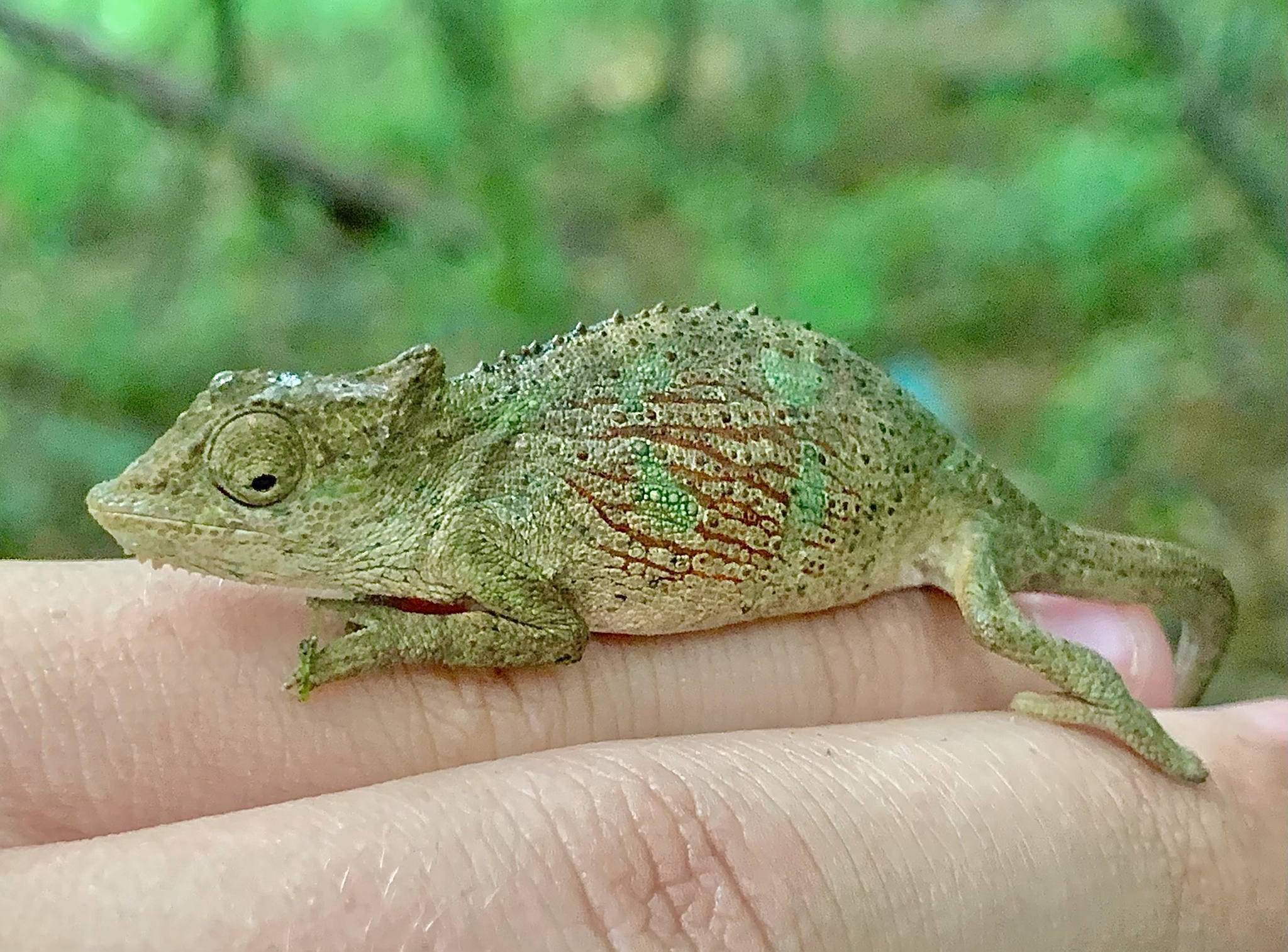
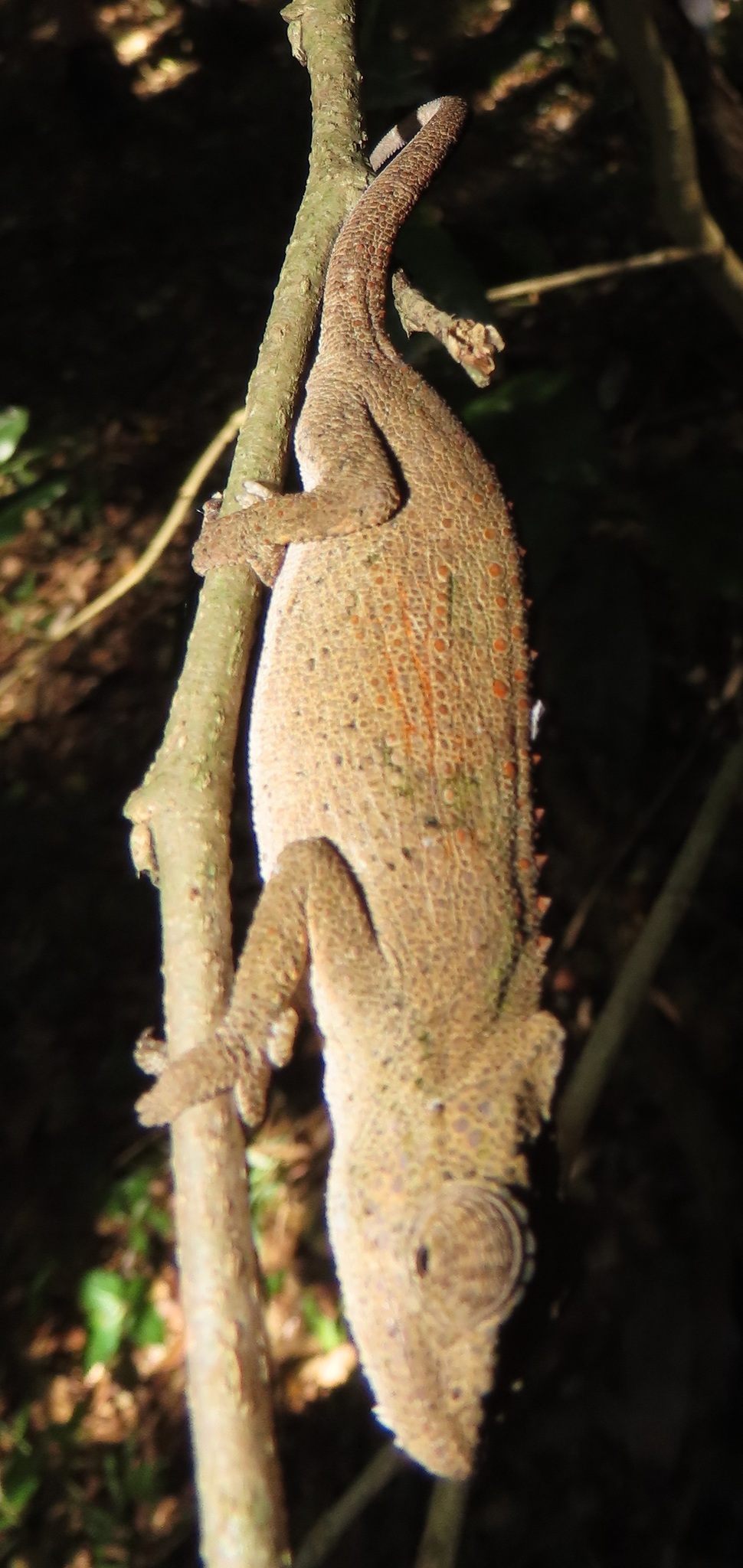
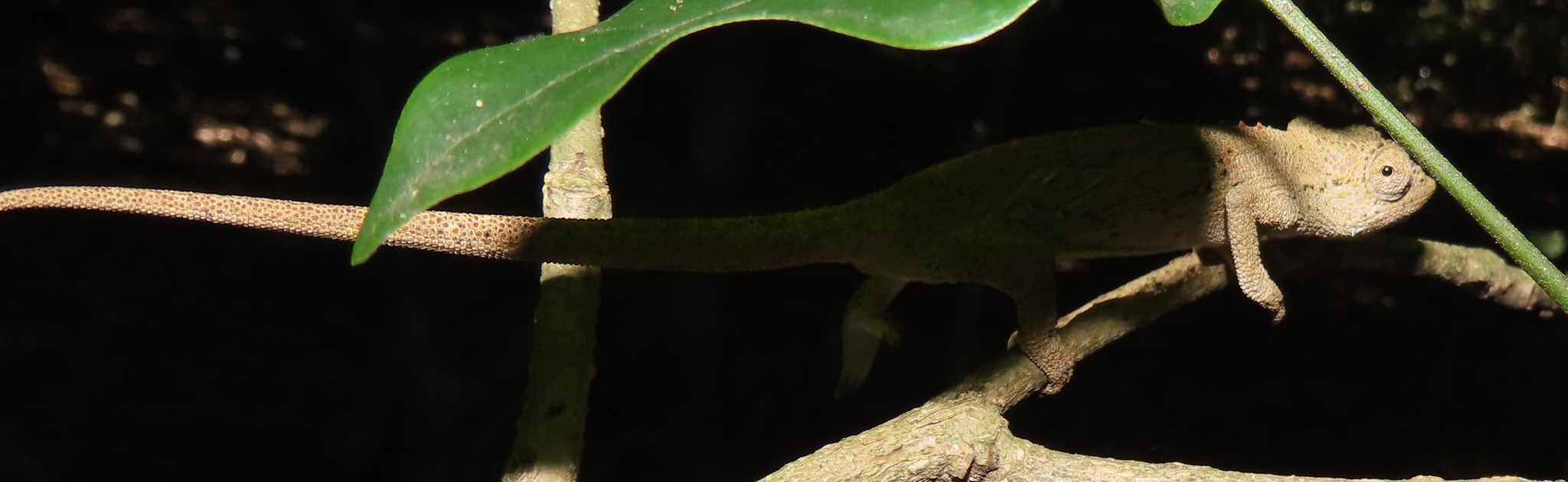
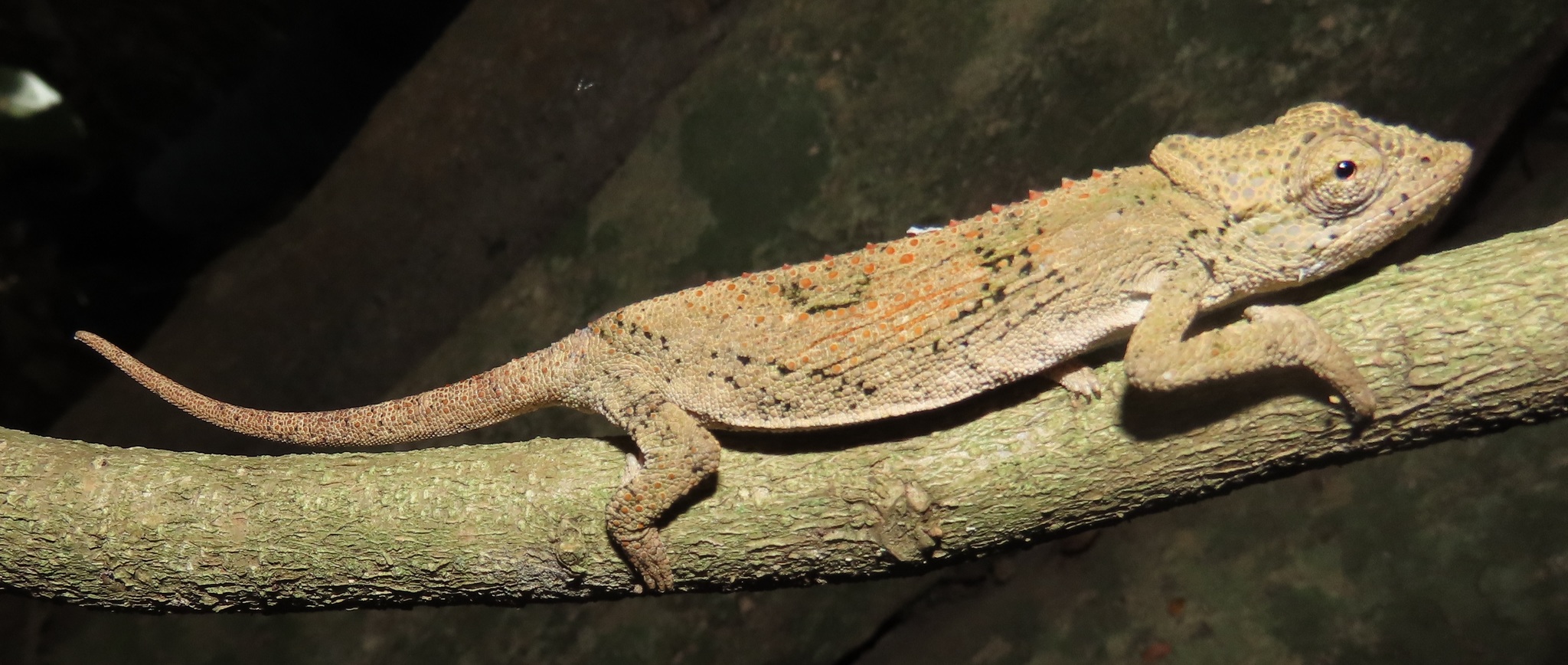
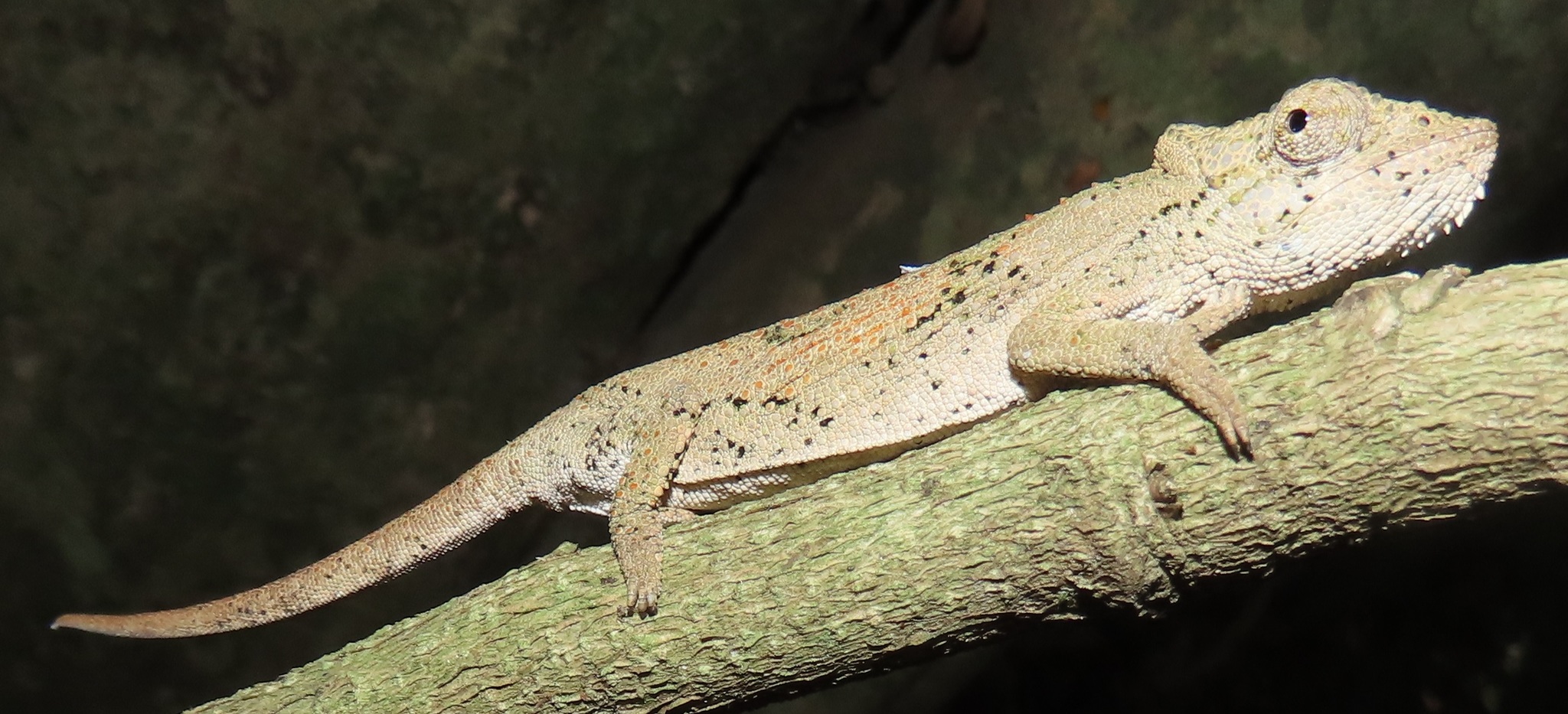
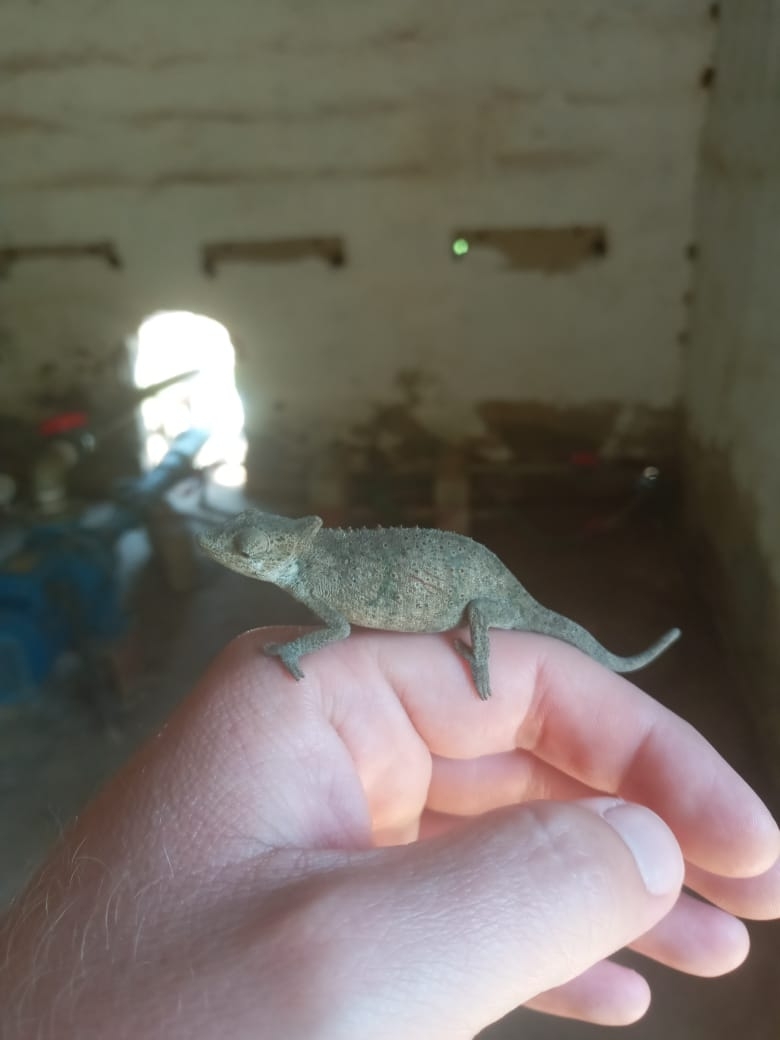
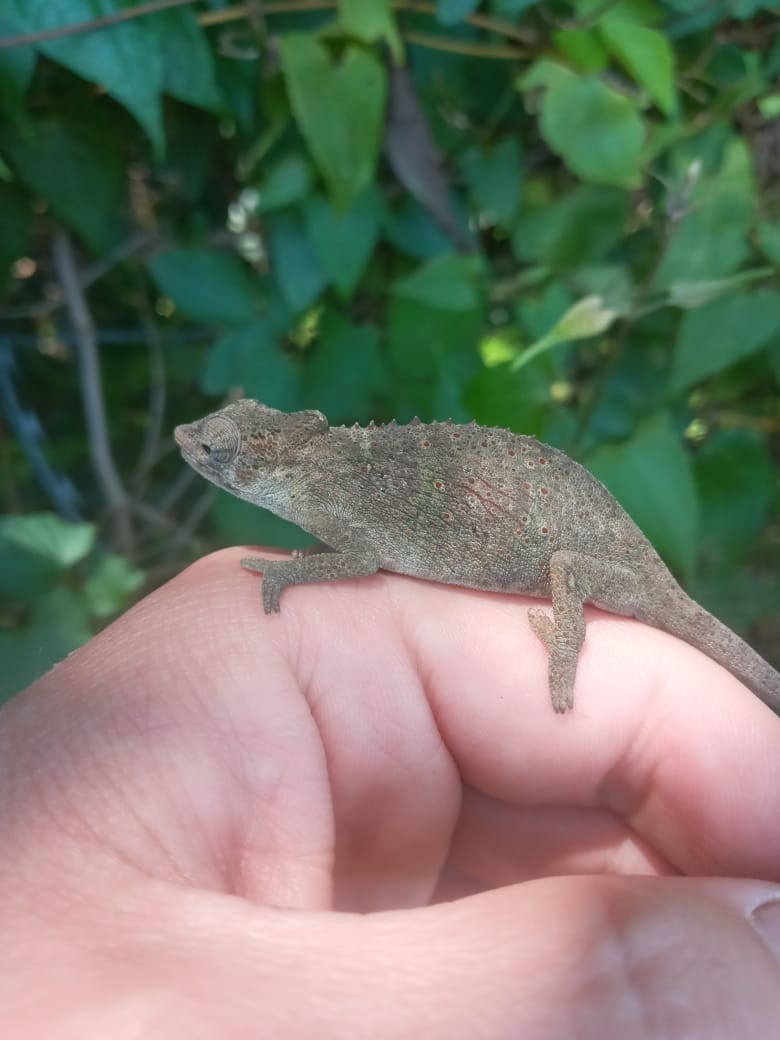
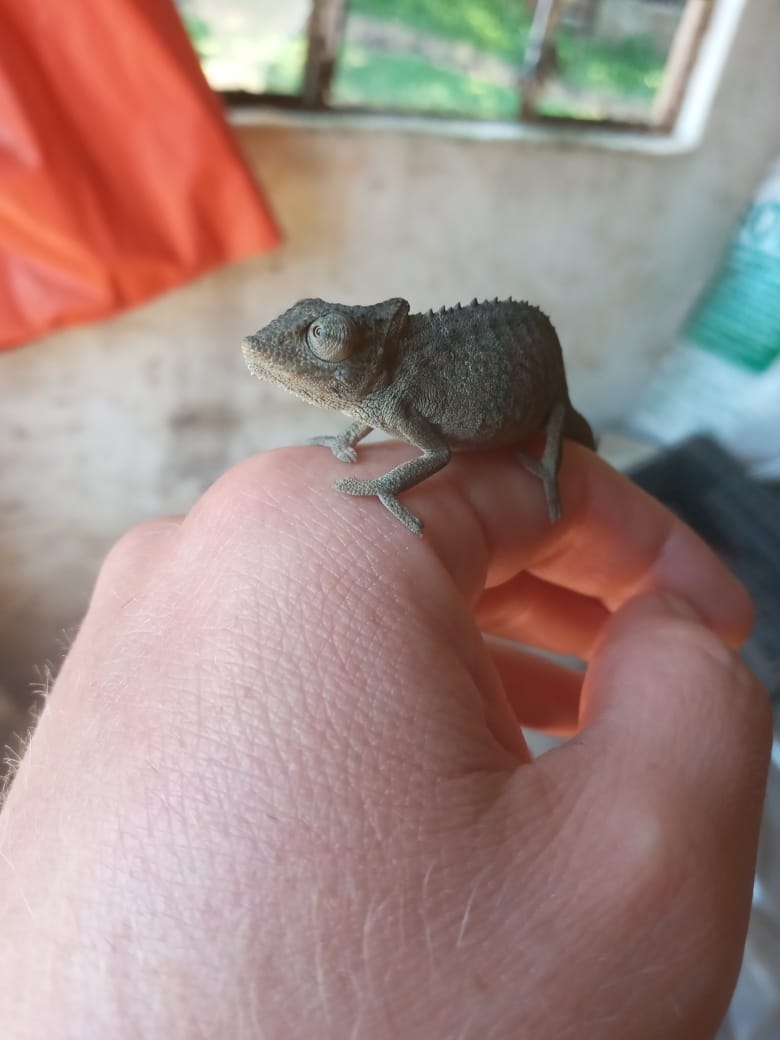
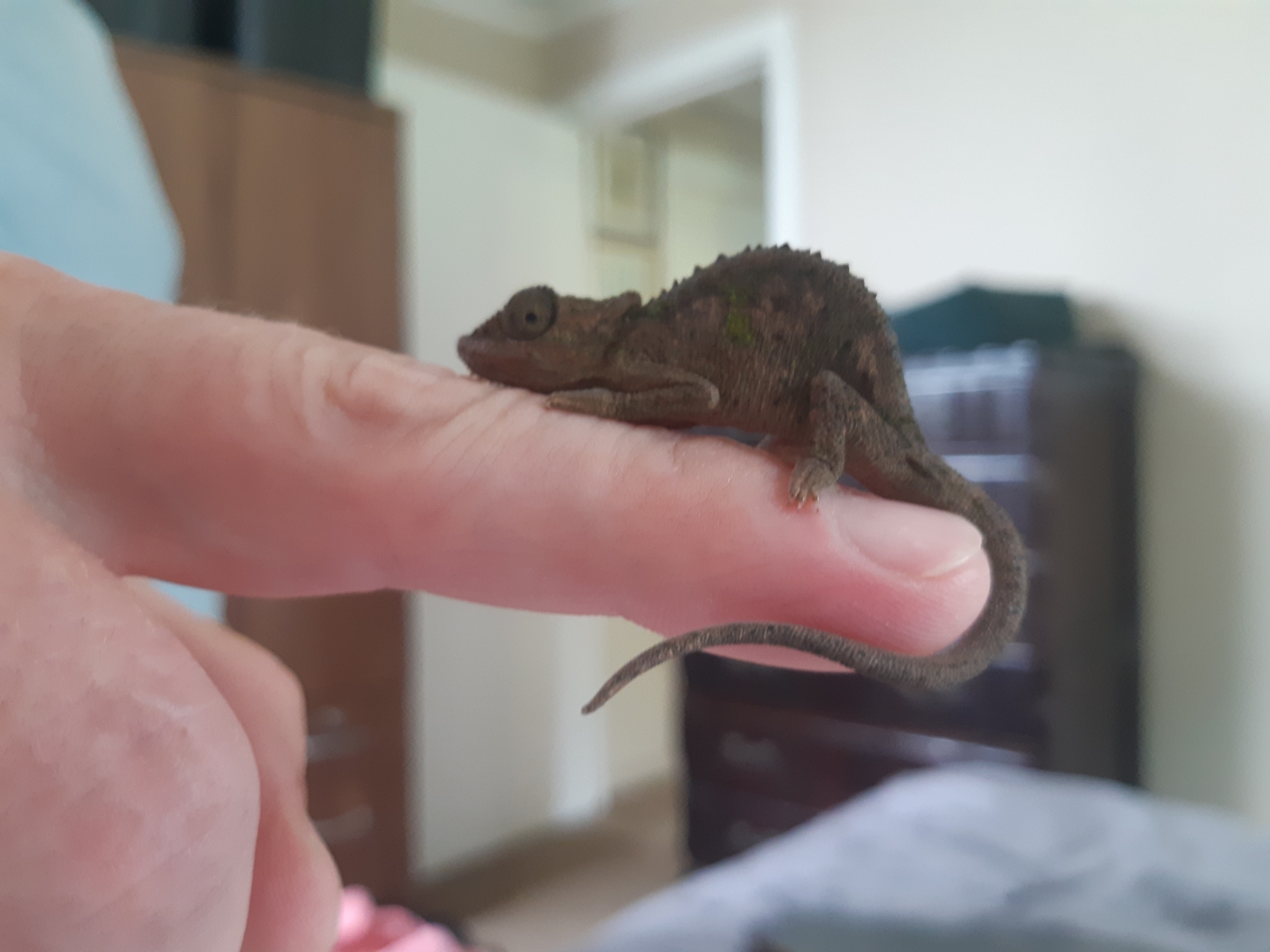
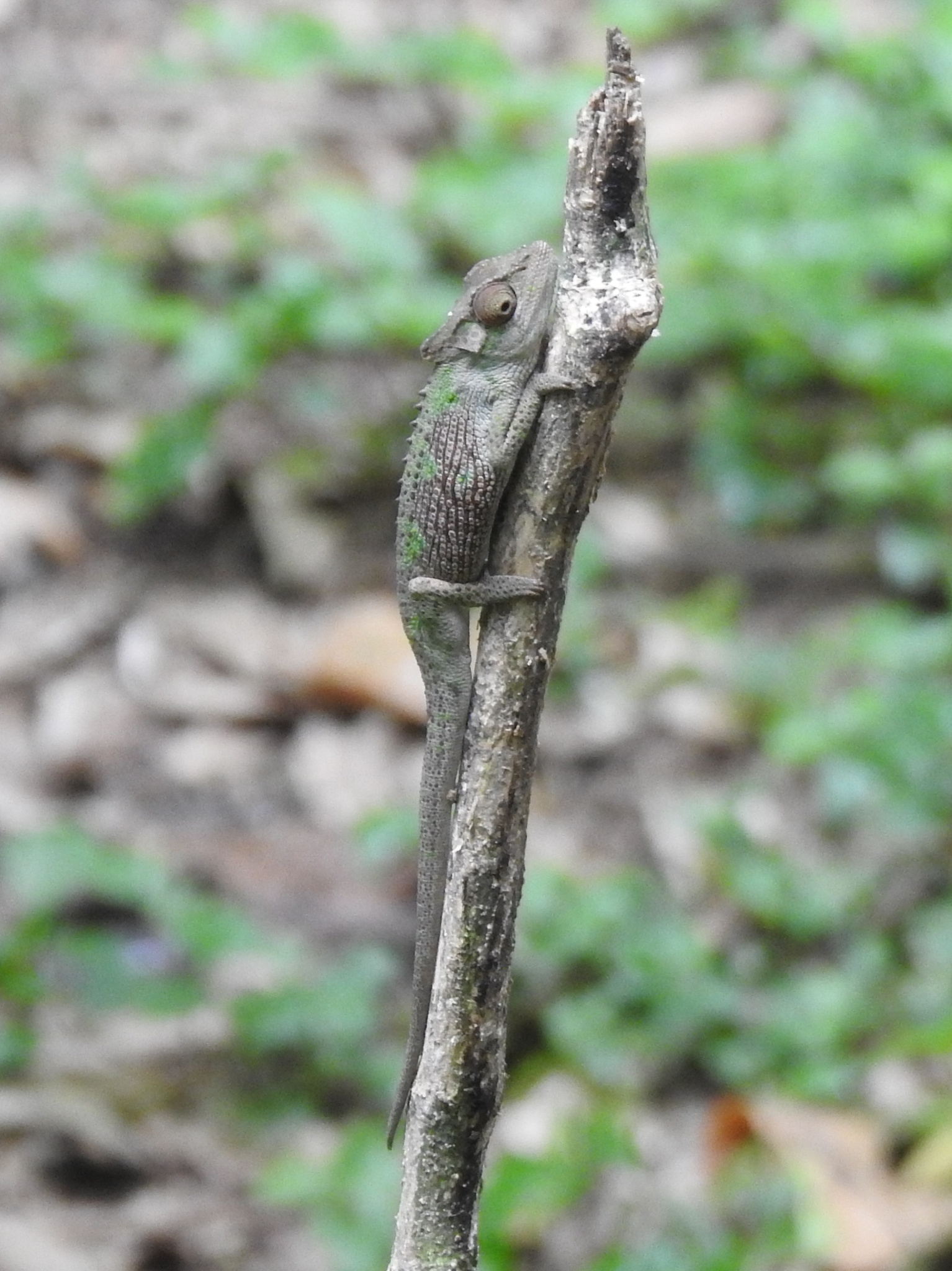
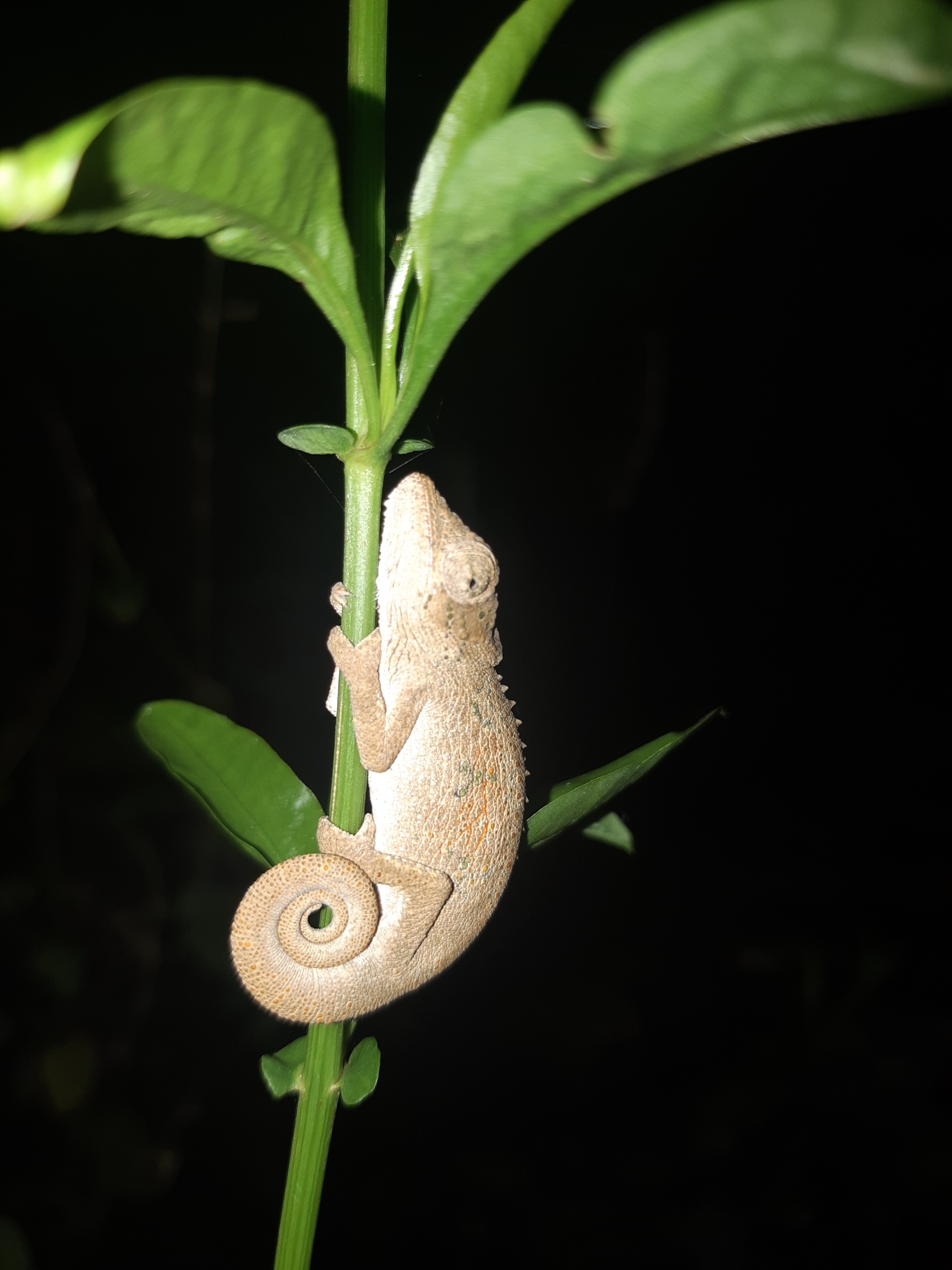
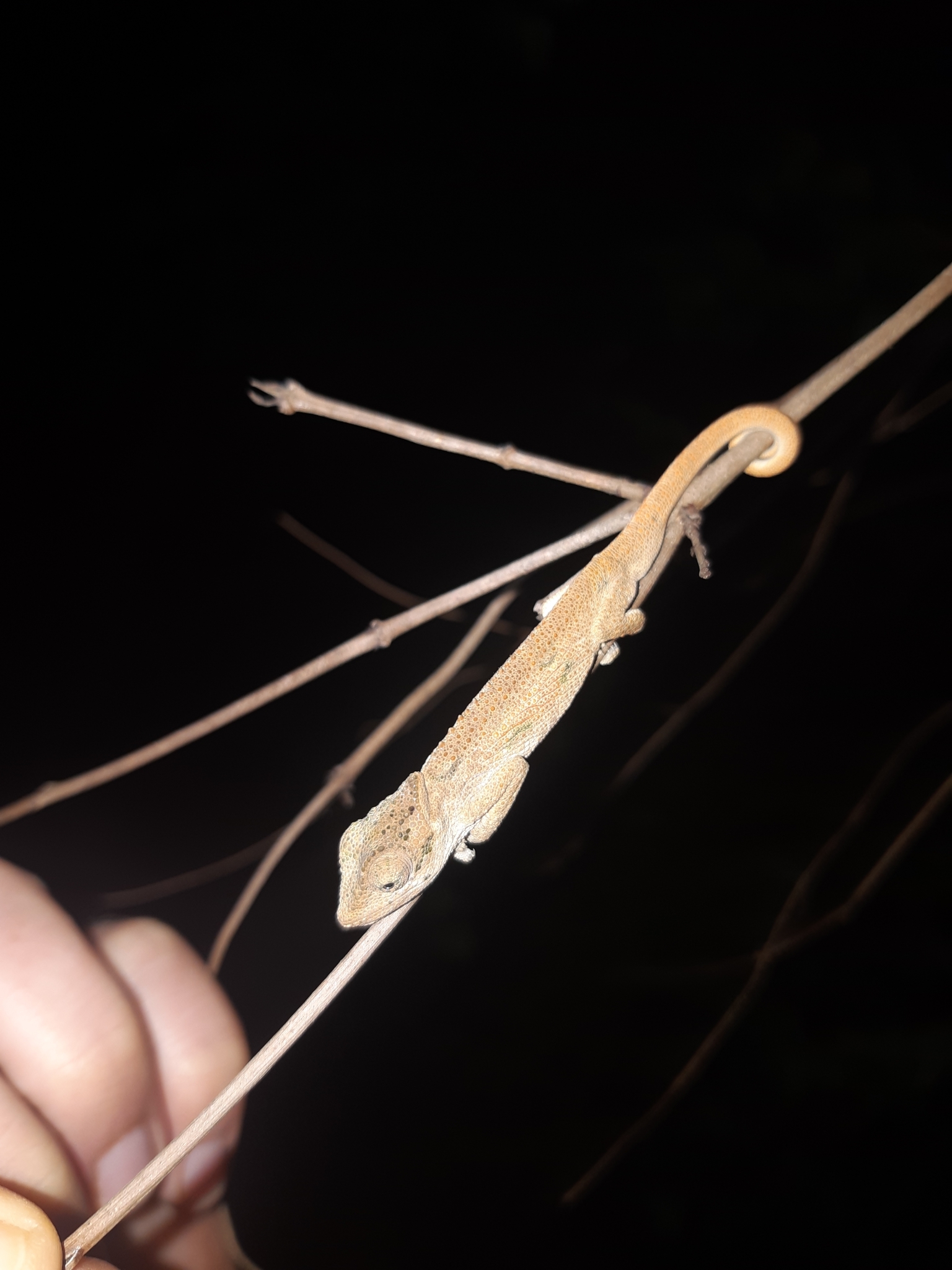
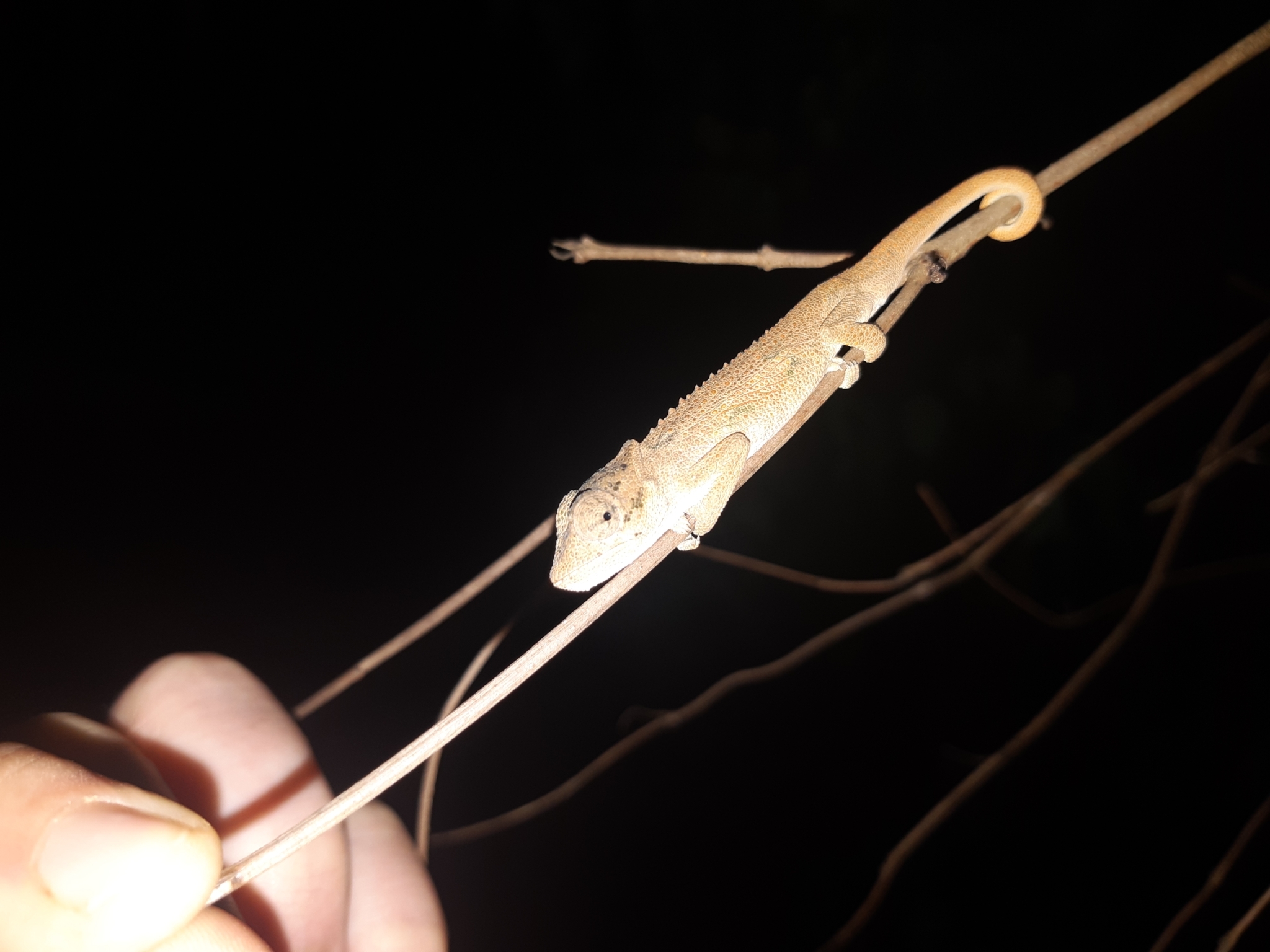
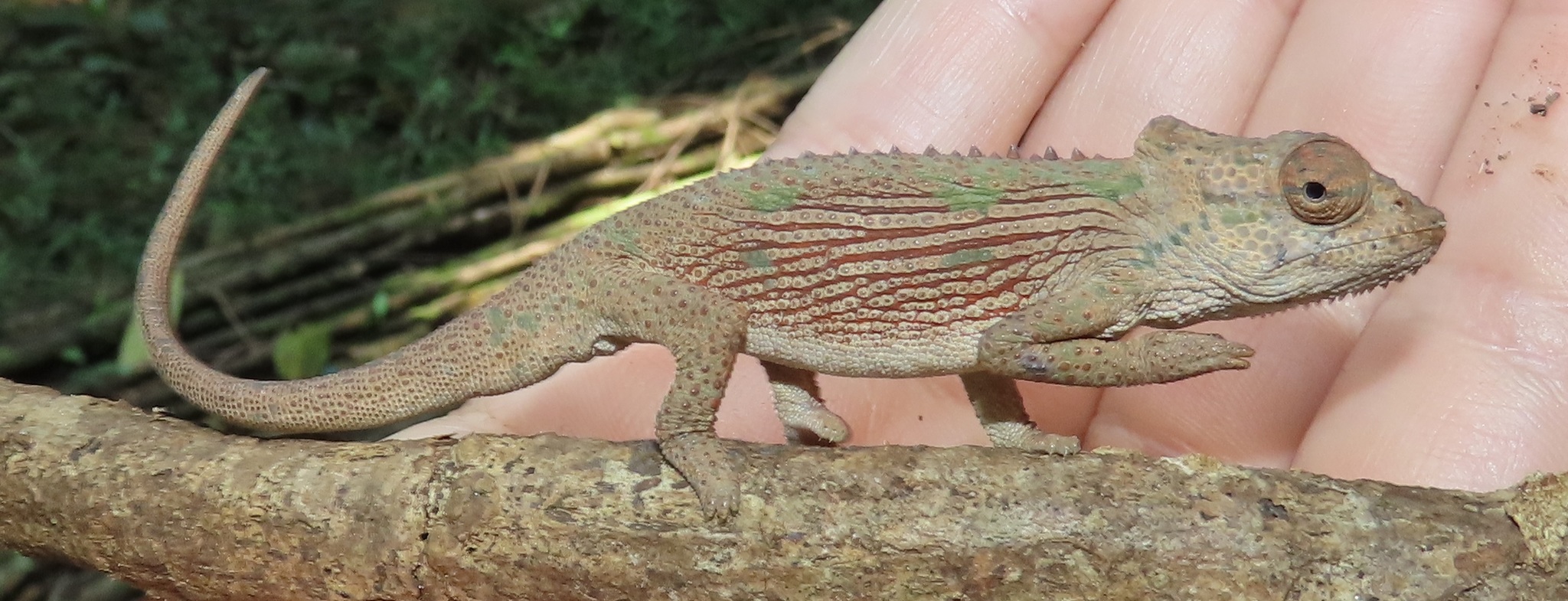
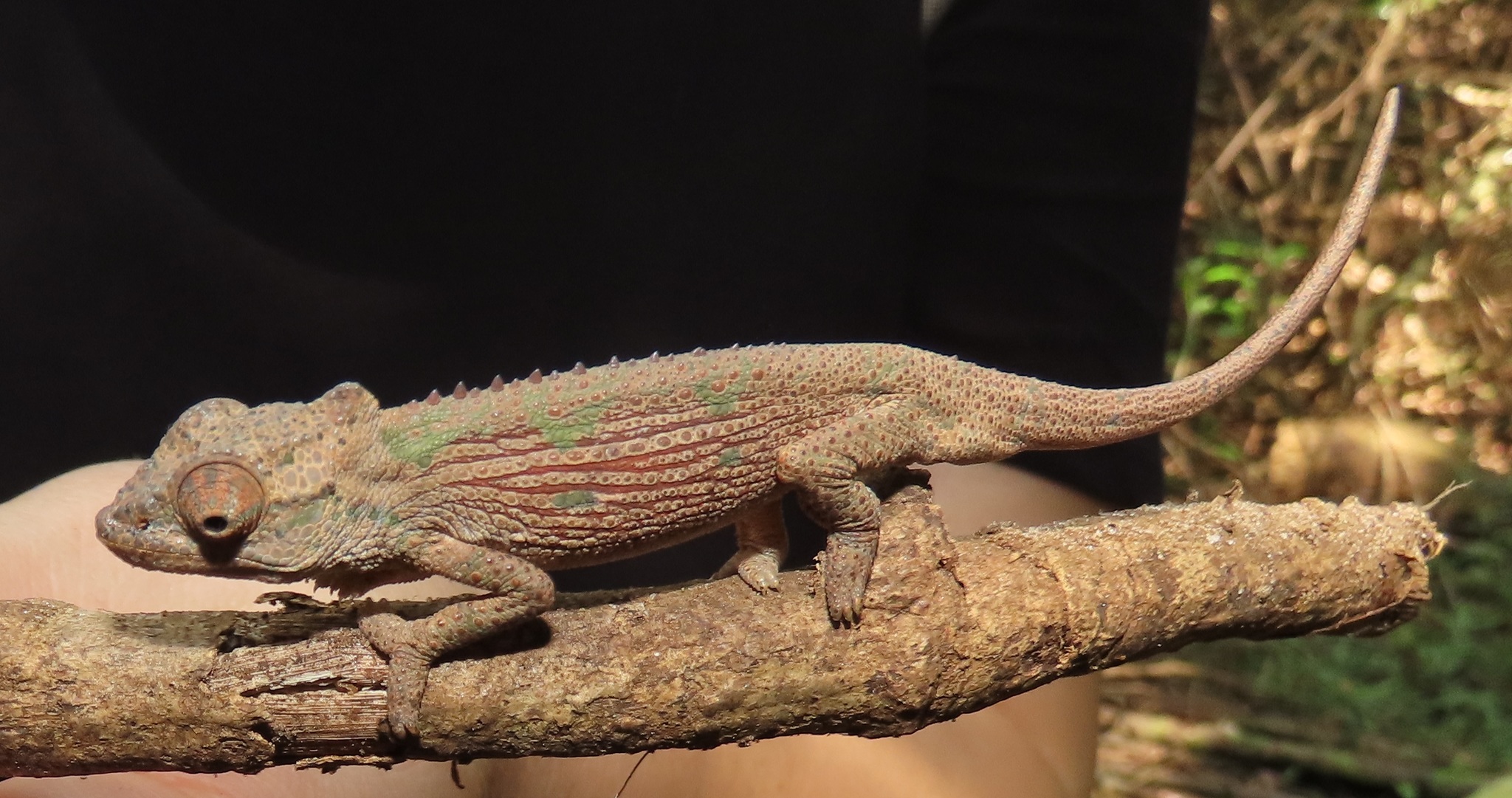
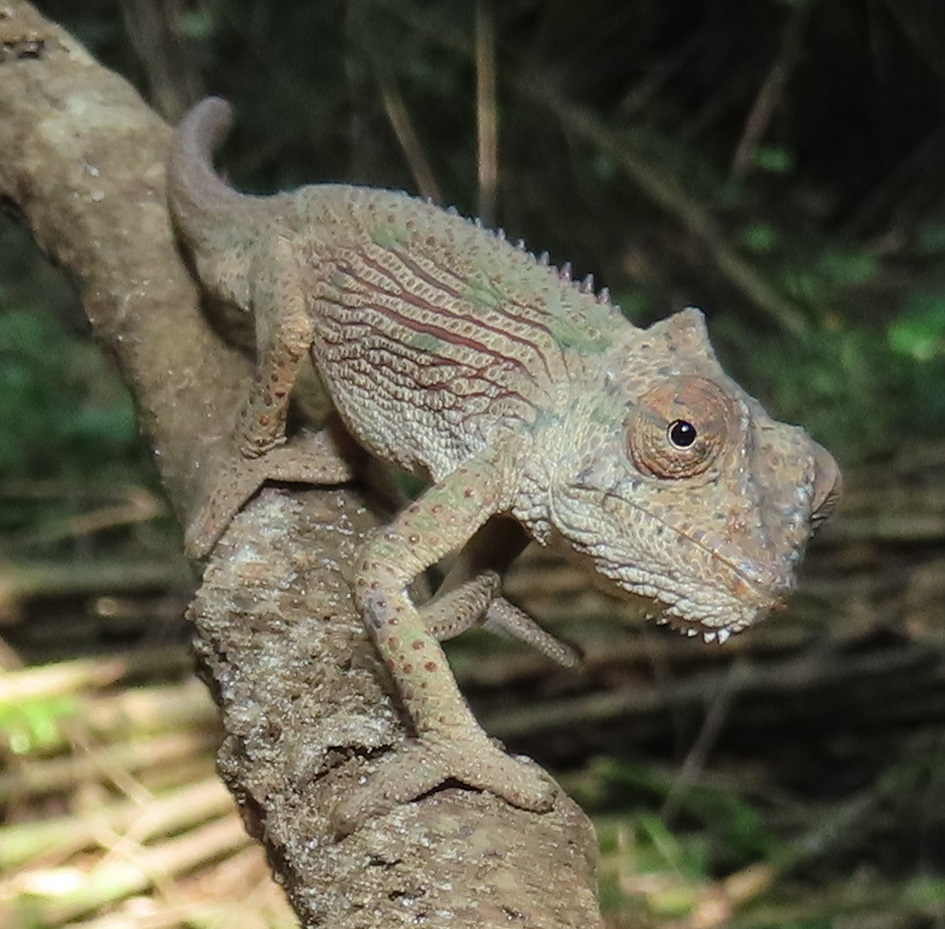
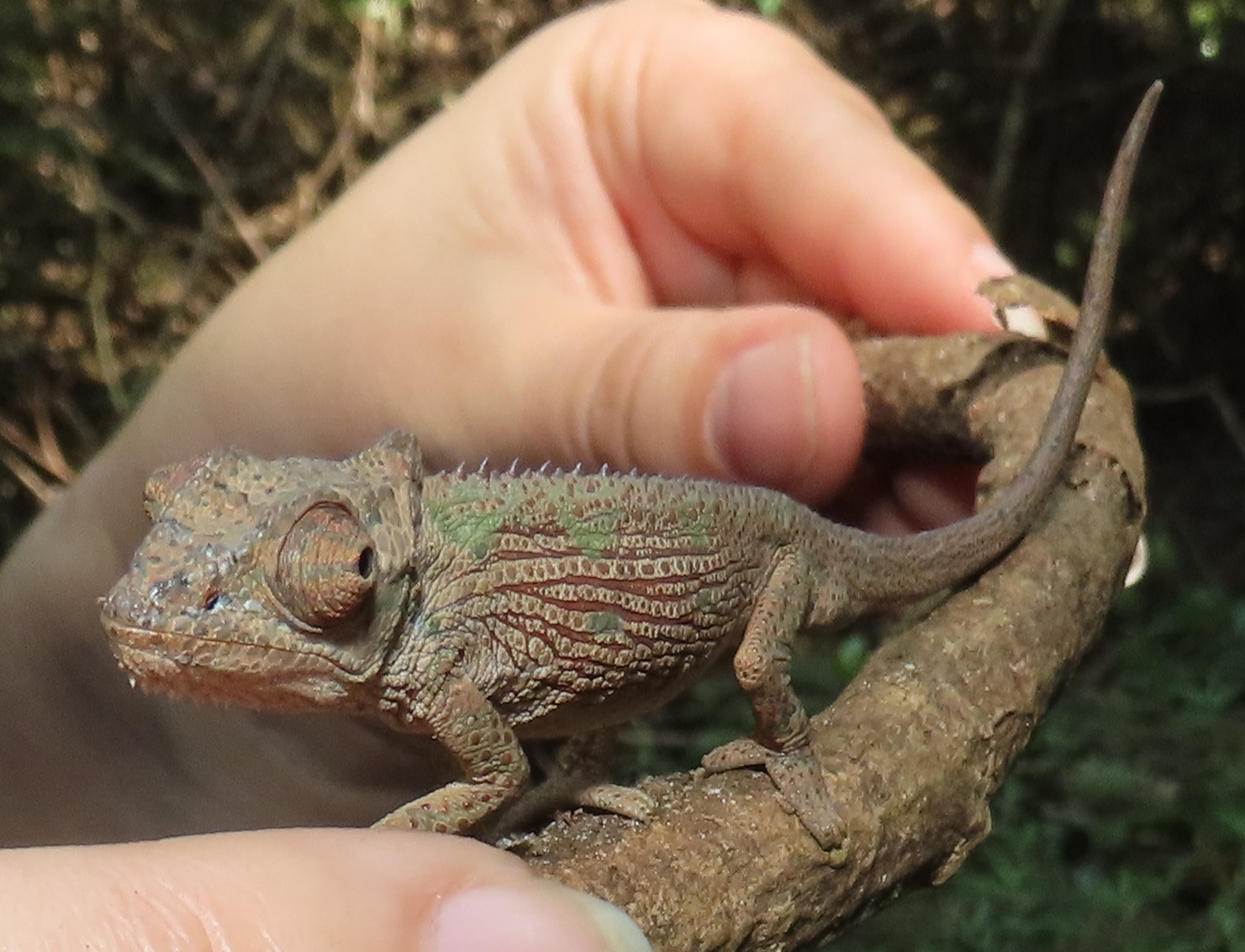
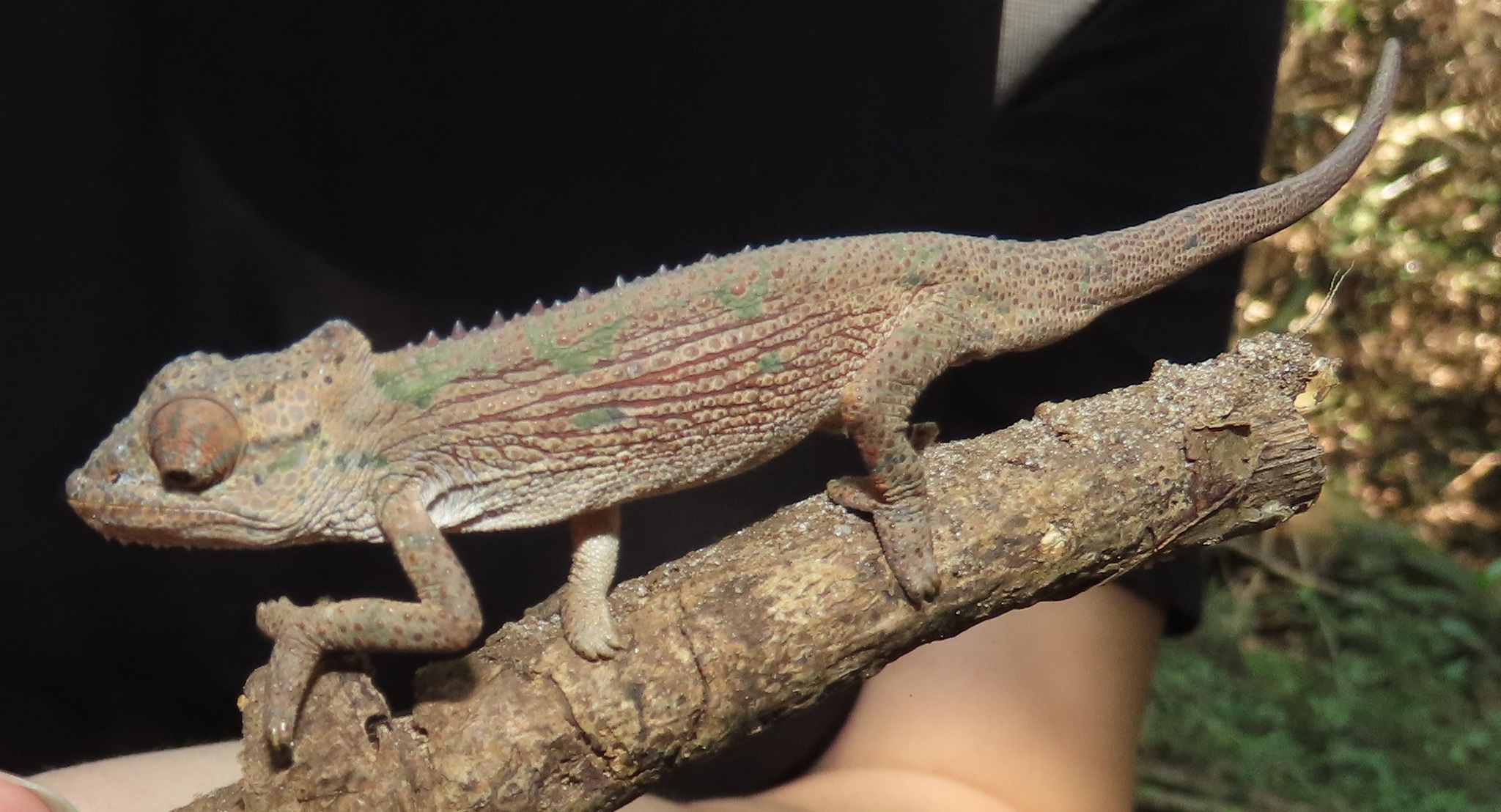
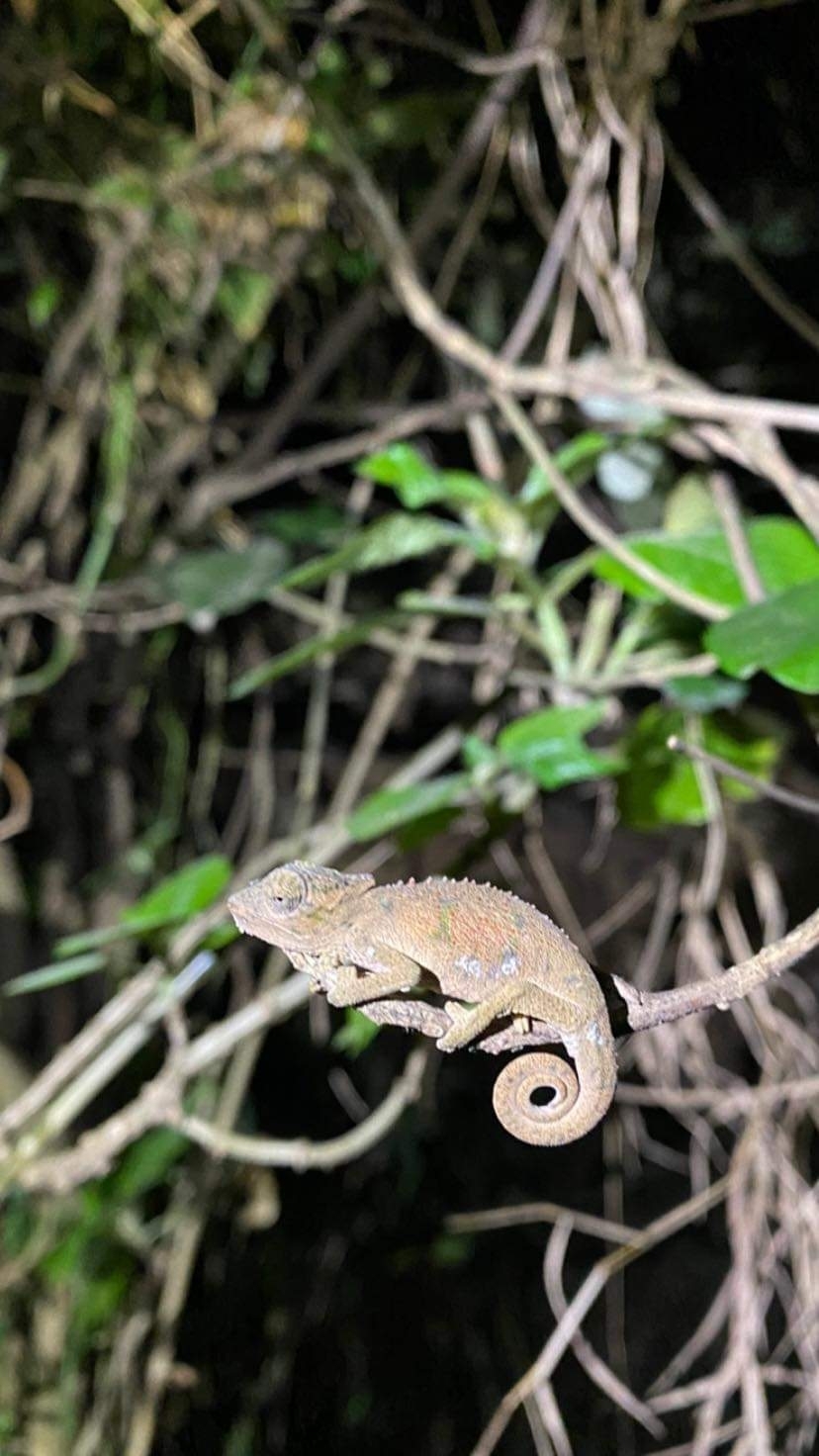
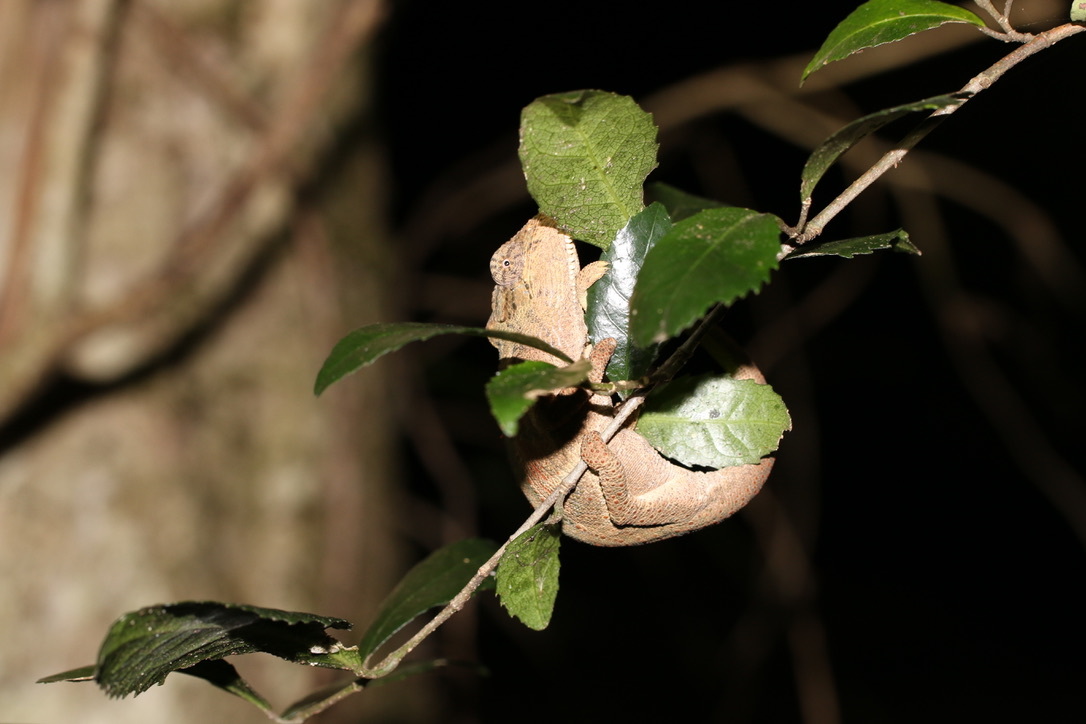
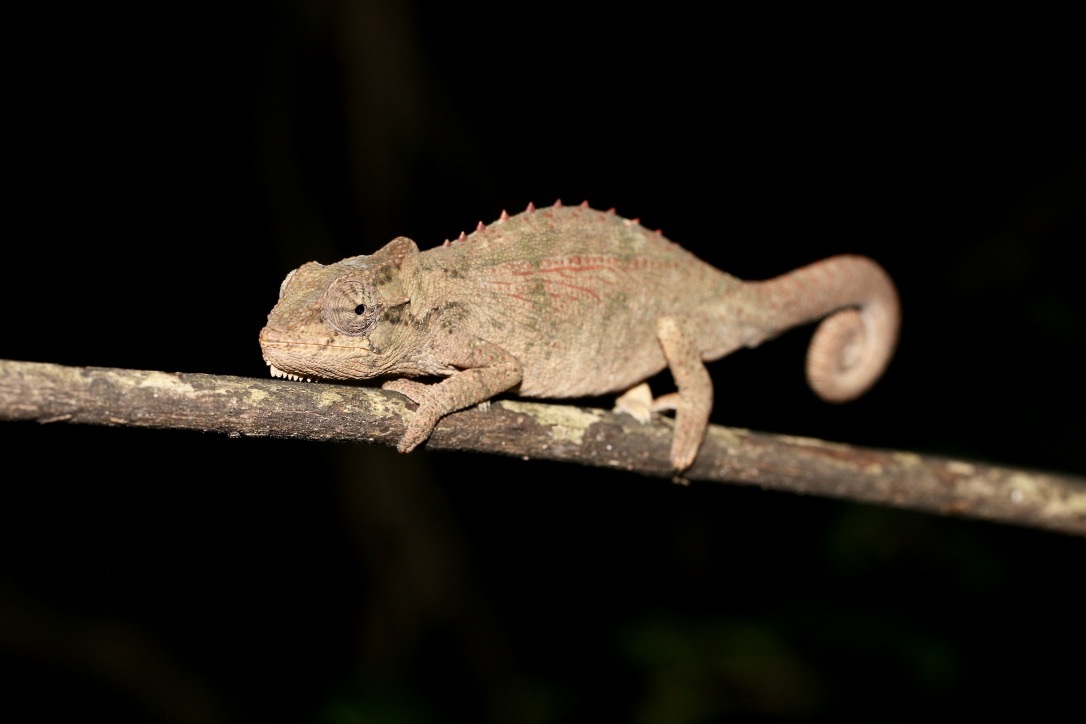
Raw and Brothers (2008) described this species as follows: Snout sharp, distance from tip to anterior edge of orbit greater than diameter of orbit. Casque distinctly raised, not produced posteriorly, median parietal crest straight. Posterior temporal (squamosal) crest replacing lateral parietal crest at side of casque; median parietal crest raised to form a less-distinct ridge; paraparietal tubercles present anteriorly; inter-orbital tubercles present; temporal crests with lower temporal crest not developed except for posterior tubercle and posterior temporal crest tubercles reduced. Subocular tubercle not raised and not bordering mouth. Colour of interstitial skin of gular grooves blue grey. Gular lobes all more or less equal in size. Gular lobes mostly narrowly triangular and sharply pointed, not papillate or with denticulate edges. Flanks with red longitudinal grooves or striations. Posterior dorsolateral scales forming a slightly discernable pattern of alternating larger and smaller scales. Flank tubercles slightly enlarged, forming single row. Dorsal crest not reaching tail; tubercles strongly differentiated to form a very distinct pattern. Tail length less than head-and-body length in females, longer in males; tail slender without a distinct tip region. Counts. The type has 14 gular lobes (range 14-20, mean 16,67, median 17; n = 15) and 14 dorsal tubercles (range 11-22, mean 15,3, median 15; n = 15). Size. Holotype (LR 2777) head-and-body length 62 mm, tail length 54 mm. Largest male (LR 2847) head-and-body length 62 mm, tail length 54 mm. Largest female (LR 2833) head-and-body length 67 mm, tail length 56 mm. Coloration in life. (Entumeni – LR 2790 and Eshowe – LR 2789) Overall colour greyish-green or yellow. Throat grooves dark grey blue. Eyelids with dark greenish lines radiating outwards. Tubercles on dorsal crest and numerous tubercles on flanks, limbs and tail orange. Flanks with 9-12 reddish-orange irregular stripes in grooves on flanks. Gular crest white. Hemipenes. LR 2847 has right hemipenis with finely calyculate sides and four apical rotulae. Outer posterior rotula distinctly larger than inner posterior rotula. Both anterior rotulae much smaller. Sulcus spermaticus passing posteriorly around the base then turning to form a channel up the posterior of the outer side. Left hemipenis incompletely everted.
This information was extracted from Raw and Brothers (2008): Living animals can be distinguished from other Bradypodion by the dark blue-grey gular grooves and red lateral flank grooves.
Type locality: Eshowe, Zululand, KwaZulu-Natal, South Africa. Holotype: LRC (given as LRG, private collection of Lynn Raw number LR 2777. An adult female collected by DRJ, KL, LA, LRG & PEV Raw in January. Specimens are in Denmark (L. Raw, pers. comm., 24 Oct 2018).
Genetic studies show that populations from forests Dlinza, Ntumeni and Ngoya forests belong to this taxon (Tilbury and Tolley, 2009).
South Africa
The species occurs in three forest patches (Ntumeni, Dlinza and Ngoya) in KwaZulu-Natal province, South Africa (Tilbury and Tolley, 2009; Tilbury, 2018). It has also been recorded from well-vegetated gardens and road verges that border the forest, but not across the broader transformed landscape (Tolley et al. 2023).
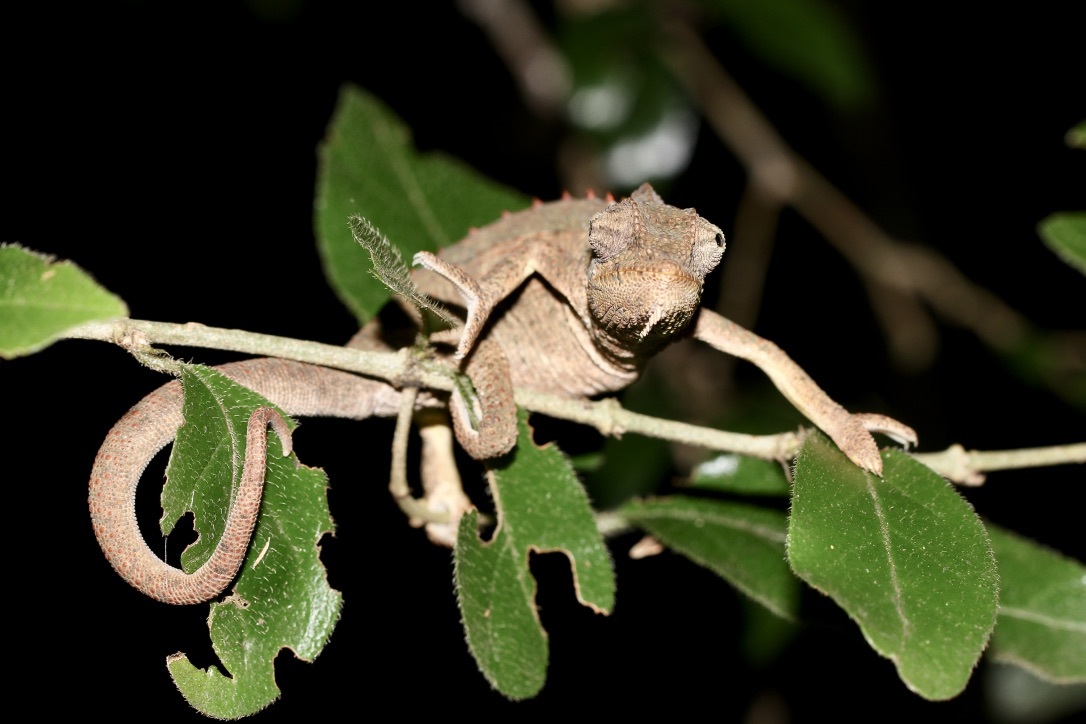
Dwarf chameleons are very slow-moving animals, walking and climbing, with at least one foot touching a surface (e.g., branch) at all times during movement. Their prehensile tail assists in locomotion by providing stability and balance when they move vertically through vegetation and between gap areas. Their fused digits on their feet aids in grasping branches without slipping (Tolley and Burger, 2007).
Carnivore - Insectivore (insect-eating)
Bradypodion are primarily insectivores, and use their long projectile tongue to catch small insects like flies, grasshoppers, crickets, insect larvae and other small invertebrates. Water is required regularly and is licked from dew or raindrops on foliage. They use their long projectile tongue to catch prey (Tolley and Burger, 2007).
As with other Bradypodion species, B. caeruleogula has aseasonal reproduction and is ovoviviparous, capable of birthing 5-15 babies per litter and several litters maybe produced per years (Branch et al., 2006; Tolley and Burger, 2007). Females may mate with several males and are thought to store sperm (Tolley et al., 2014). Fertilized eggs take several months to develop , and babies have rapid growth, reaching maturity in about nine months (Tolley and Burger, 2007). No parental care is given.
Like all Bradypodion, these chameleons have the ability to change colour as a physiological response to external conditions such as light and temperature, when sick, stressed, males displaying when courting females, as a defense mechanism and camouflage (Tolley and Burger, 2007).
Forest
This map contains point-based occurrences at different locations
Occurrence in African countries and South African provinces. Residence status indicates if a taxon is indigenous, endemic, or alien in a specific region. This data is based on specimen records and literature.
FSA
SA
BOT
NAM
ESW
LES
WC
EC
NC
FS
GA
KZN
LP
MP
NW
Absent
Indigenous
Endemic
Naturalised
Invasive
Names and Sources
| Common Name | Language |
|---|---|
| Umlazi Dwarf Chameleon, Eshowe Dwarf Chameleon | En |
| Eshowe Dwarf Chameleon | En |
| uMlalazi Dwarf Chameleon | En |
| uMlalazi Dwergverkleurmannetjie | En |
Classification
KINGDOM Animalia
PHYLUM Chordata
CLASS Reptilia
ORDER Squamata
FAMILY Chamaeleonidae
GENUS Bradypodion
SPECIES caeruleogula
No results found for Bradypodion caeruleogula Raw & Brothers, 2008
Although this species has not previously been in pet trade, there have been advertisements online (2018) where it was for sale. the species is listed in CITES Appendix II, with international trade regulated through CITES; however, local and international trade must be monitored, and individuals should not be removed from the wild for trade (Tolley et al. 2023).
10 results for Bradypodion caeruleogula Raw & Brothers, 2008
This map contains point-based occurrences at different locations
2009
BOOK
A new species of dwarf chameleon (Sauria; Chamaeleonidae, Bradypodion Fitzinger) from KwaZulu Natal South Africa with notes on recent climatic shifts and their influence on speciation in the genusTilbury, C., Tolley, K.. 2009. A new species of dwarf chameleon (Sauria; Chamaeleonidae, Bradypodion Fitzinger) from KwaZulu Natal South Africa with notes on recent climatic shifts and their influence on speciation in the genus Vol. 2226 pp.43-57.
2008
JOURNAL ARTICLE
Redescription of the South African dwarf chameleon, Bradypodion nemorale Raw 1978 (Sauria: Chamaeleonidae), and description of two new speciesRaw, L., Brothers, D.. 2008. Redescription of the South African dwarf chameleon, Bradypodion nemorale Raw 1978 (Sauria: Chamaeleonidae), and description of two new species Vol. 1(1) pp.1-7.
2007
BOOK
Chameleons of Southern AfricaBurger, M., Tolley, K.. 2007. Chameleons of Southern Africa. Cape Town. Struik Publishers.
2023
BOOK
Conservation status of the reptiles of South Africa, Eswatini and LesothoTolley, K., Burger, M., Alexander, G., Pietersen, D., Conradie, W., Weeber, J.. 2023. Conservation status of the reptiles of South Africa, Eswatini and Lesotho Vol. Suricata 10. Pretoria. South African National Biodiversity Institute.
2014
JOURNAL ARTICLE
Multiple paternity and sperm storage in the Cape Dwarf Chameleon (Bradypodion pumilum)Tolley, K., Feldheim, K., Chauke, L., Jackson, J.. 2014. Multiple paternity and sperm storage in the Cape Dwarf Chameleon (Bradypodion pumilum) Vol. 63 (1) pp.47-56.
2018
BOOK
Chameleons of Africa - An Atlas including the chameleons of Europe, the Middle East and AsiaTilbury, C.. 2018. Chameleons of Africa - An Atlas including the chameleons of Europe, the Middle East and Asia. Frankfurt am Main. Chimaria.
Status and criteria
EN
Assessor(s)
Krystal Tolley
Reviewer(s)
M.D. Hofmeyr