
ANIMALIA / CHORDATA / REPTILIA / SQUAMATA / ELAPIDAE / ELAPSOIDEA / BOULENGERI
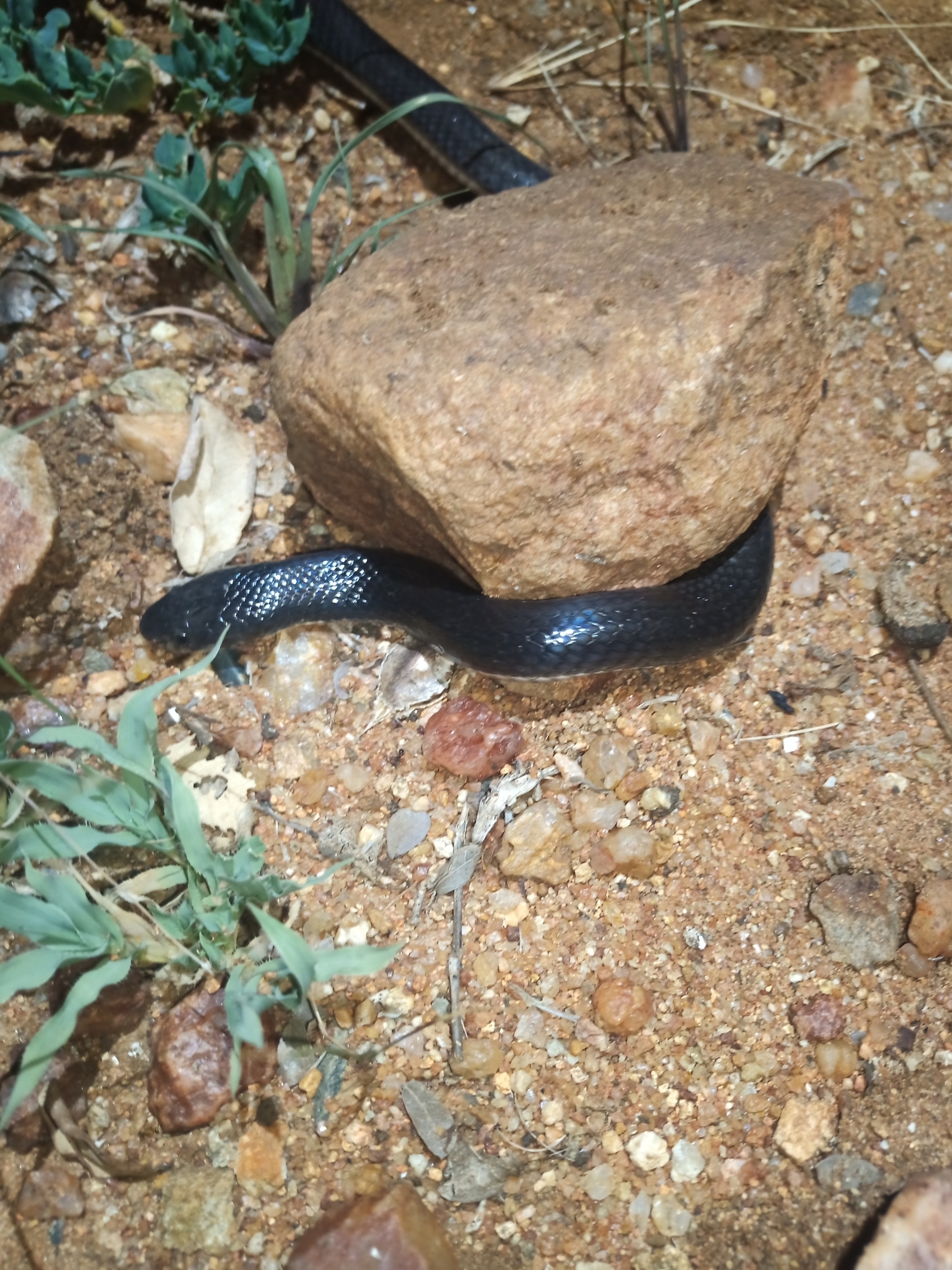
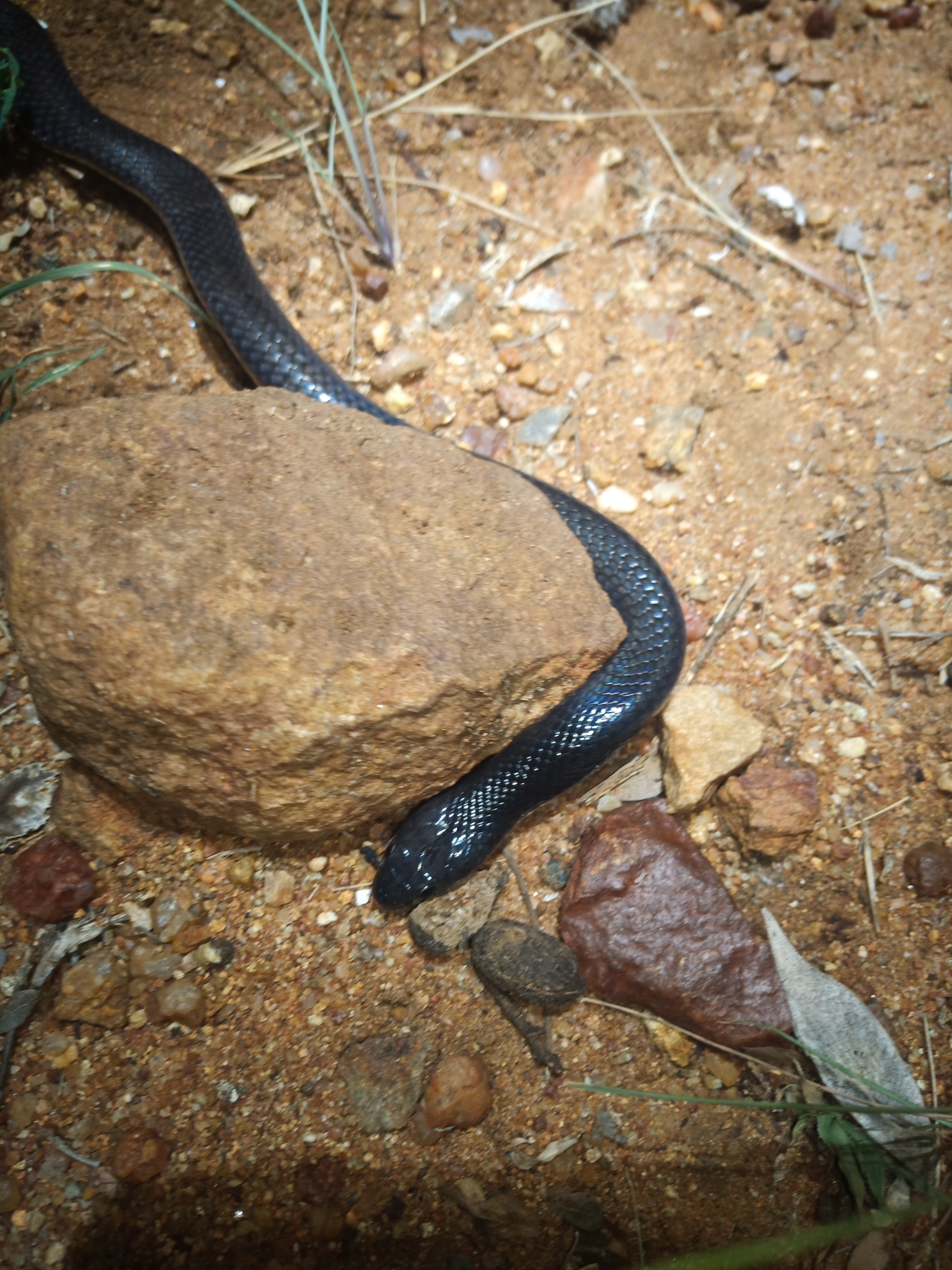
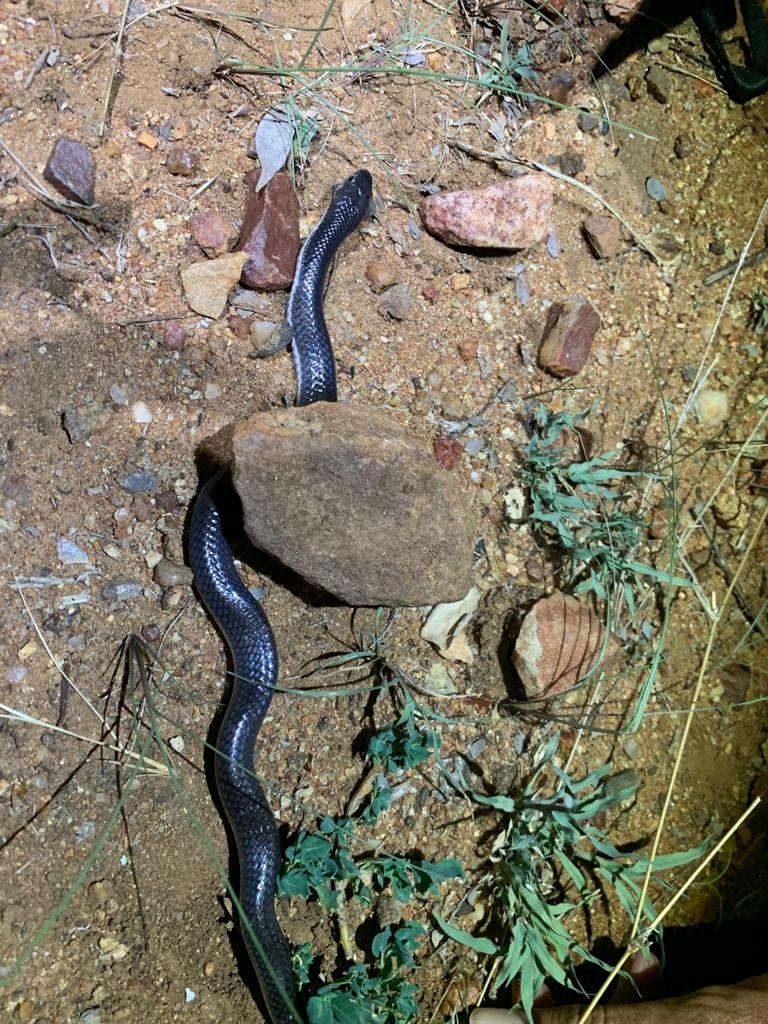
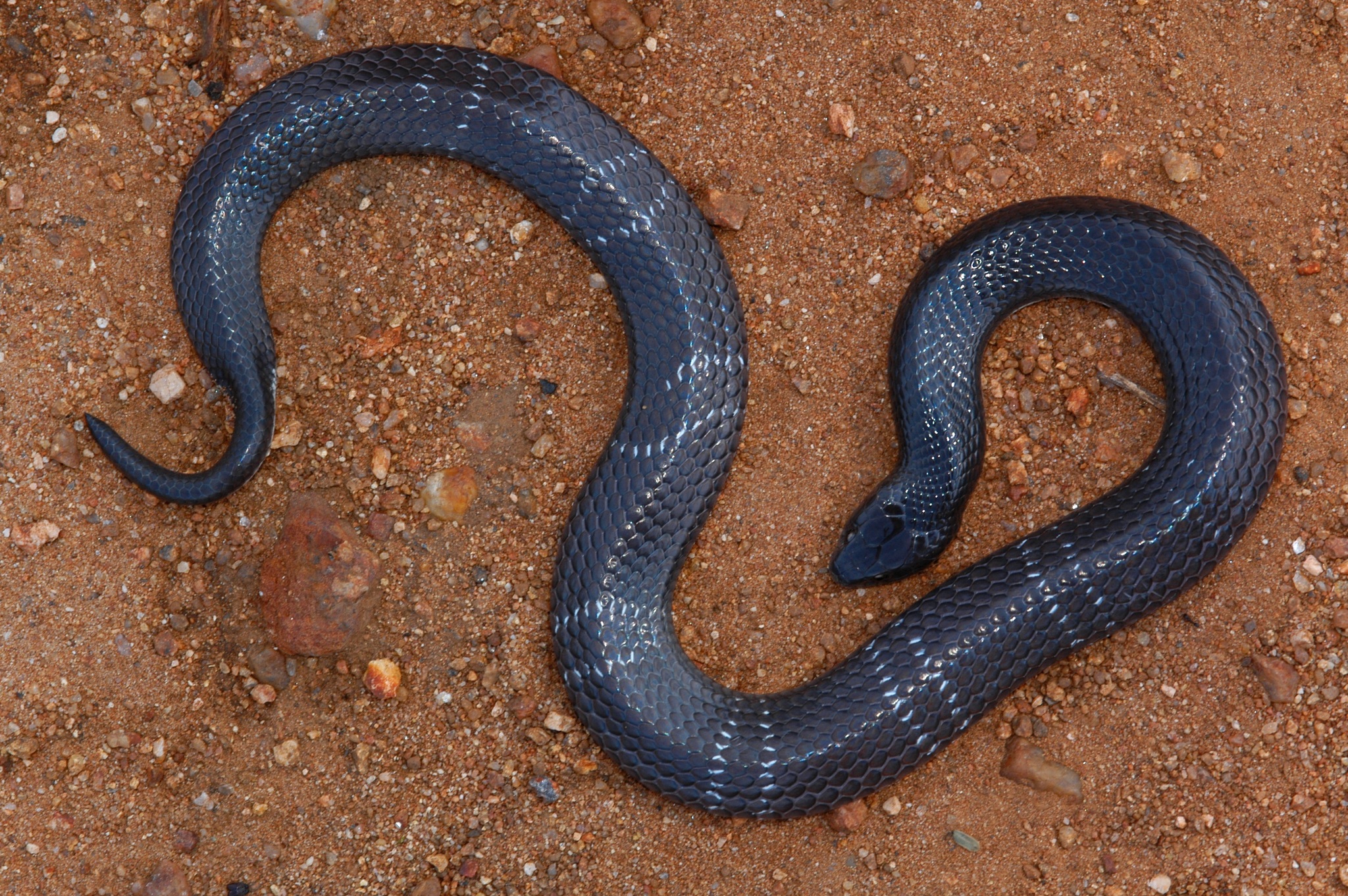
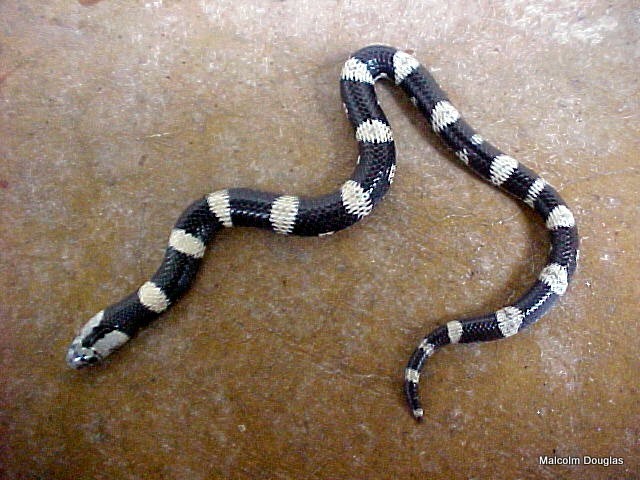
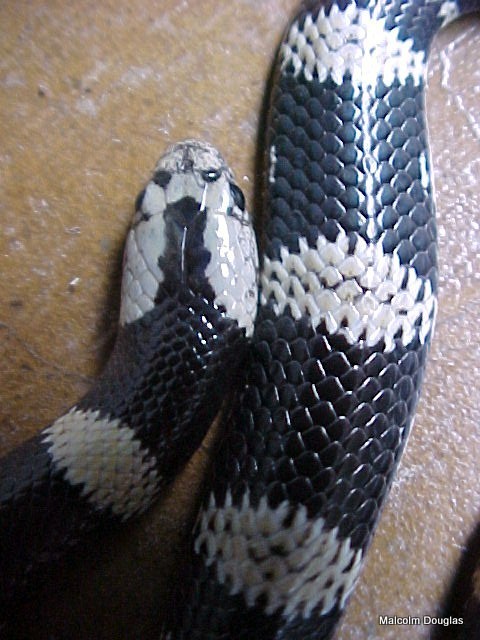
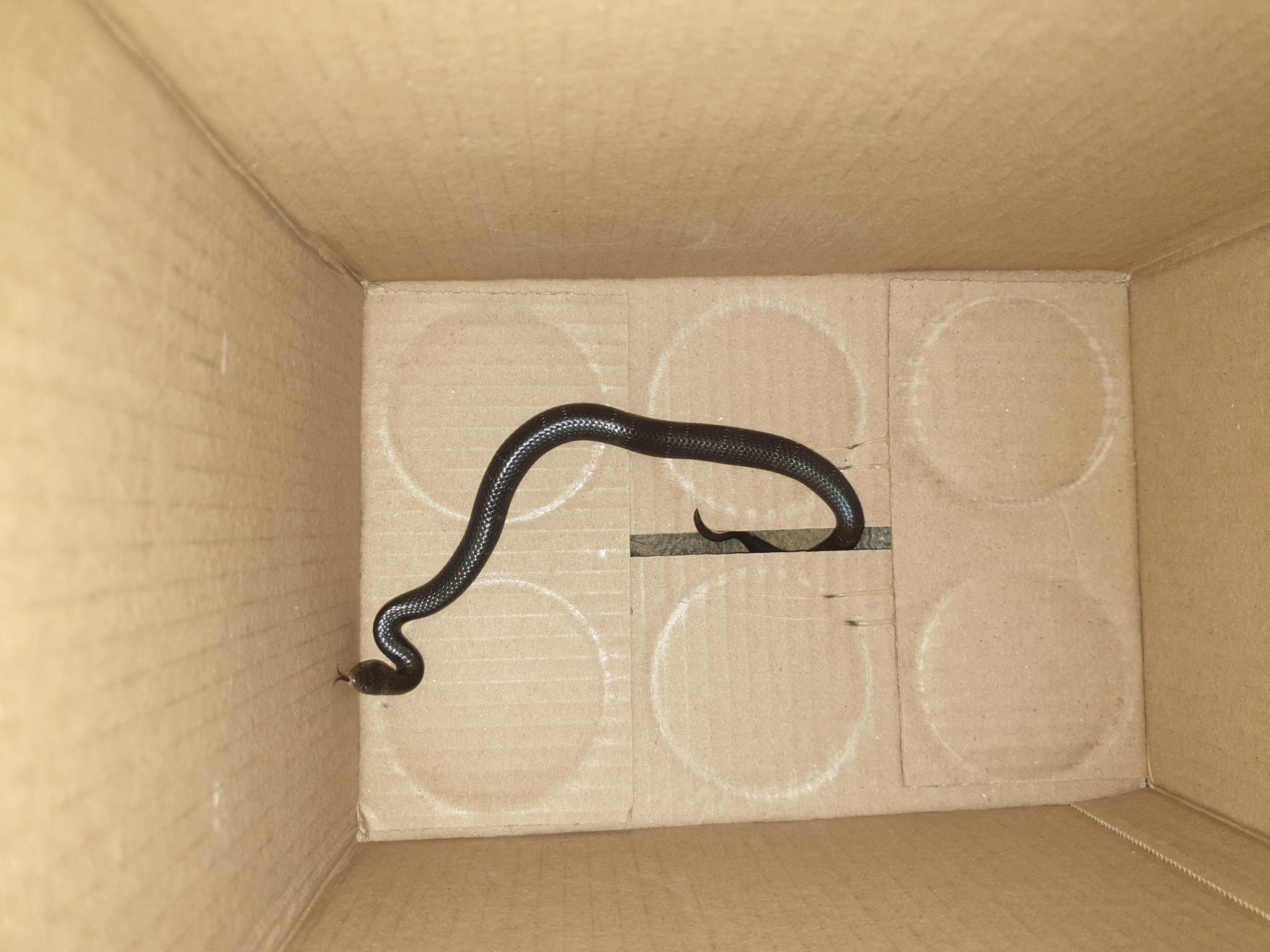
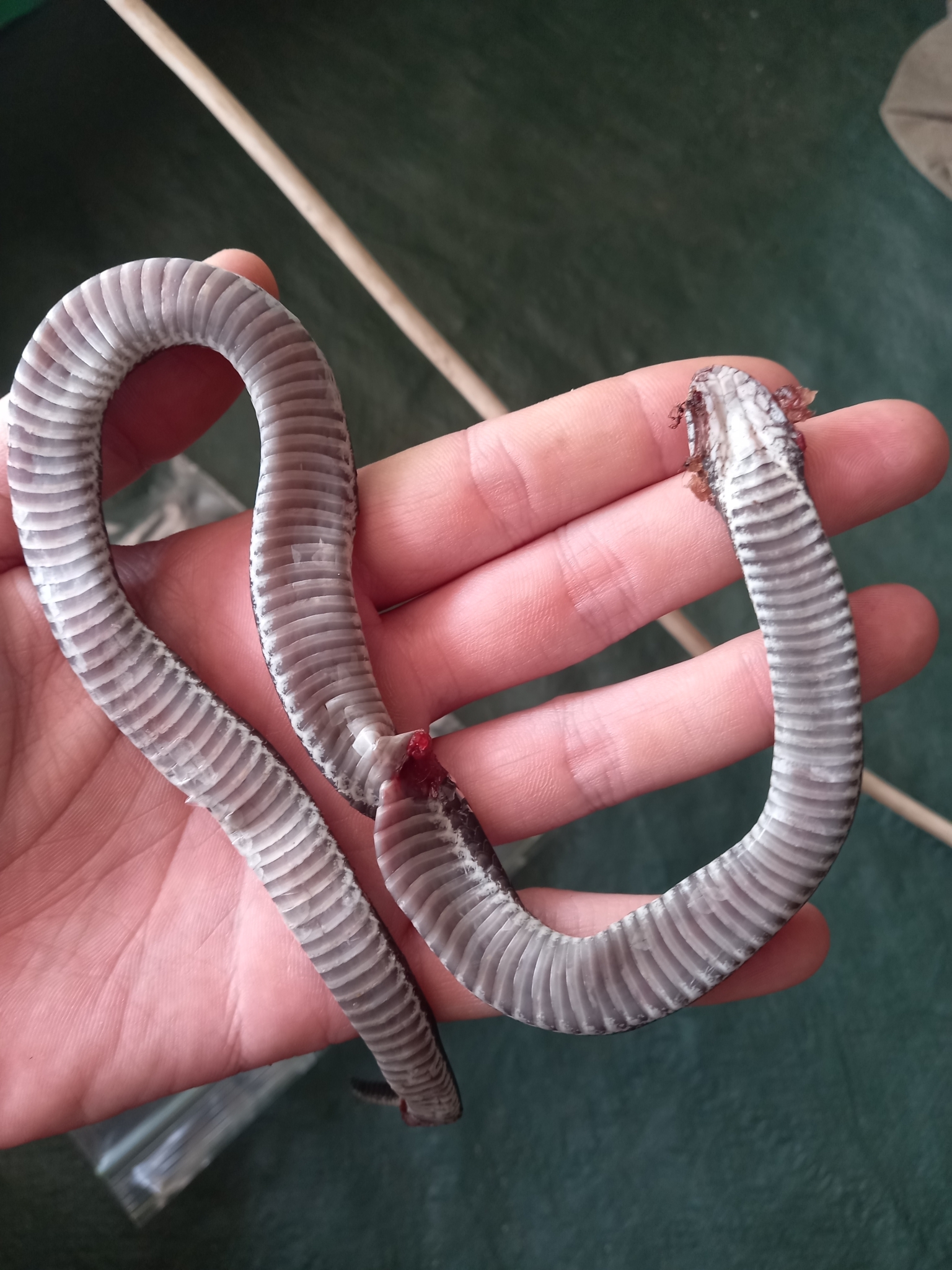
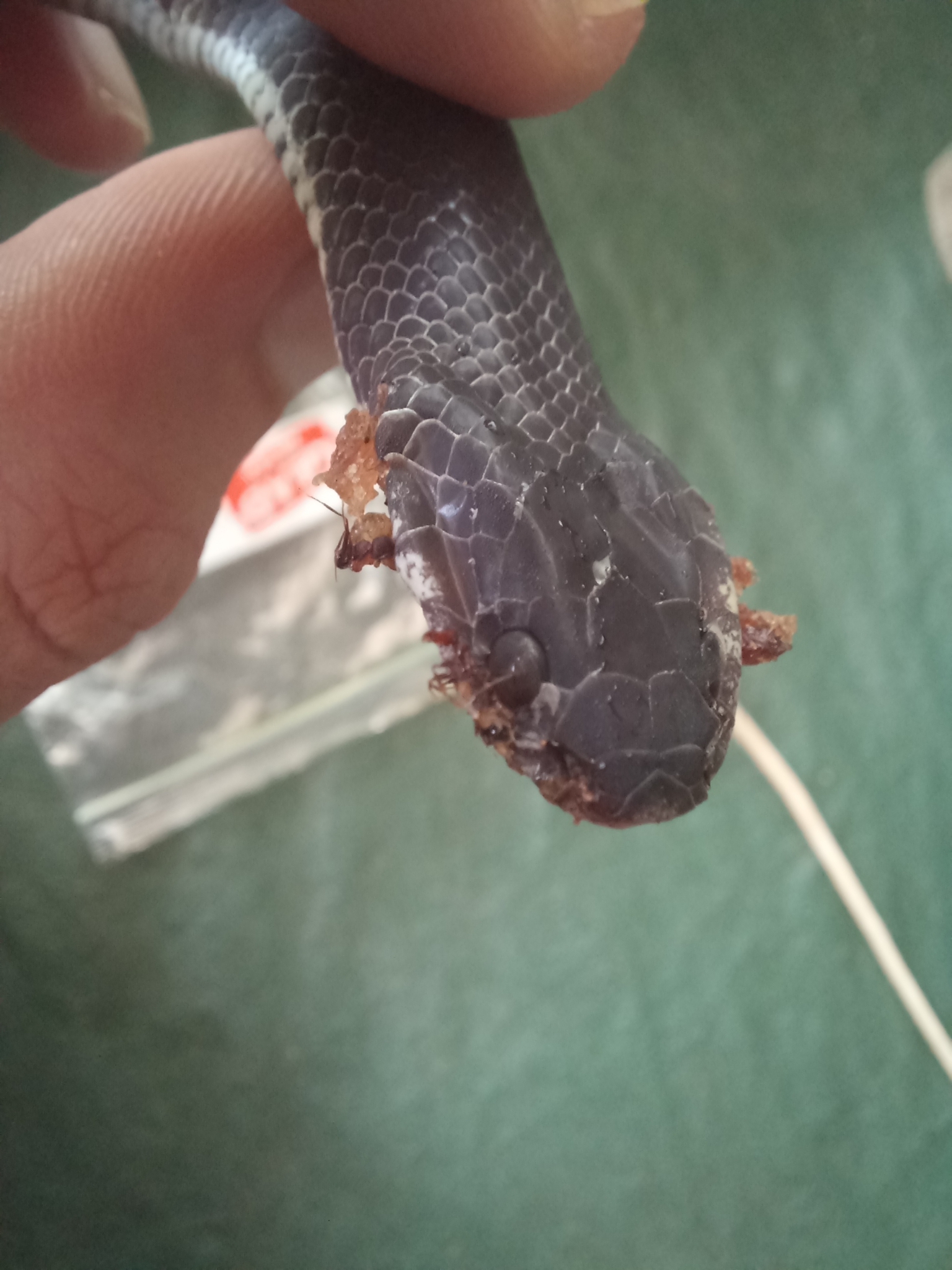
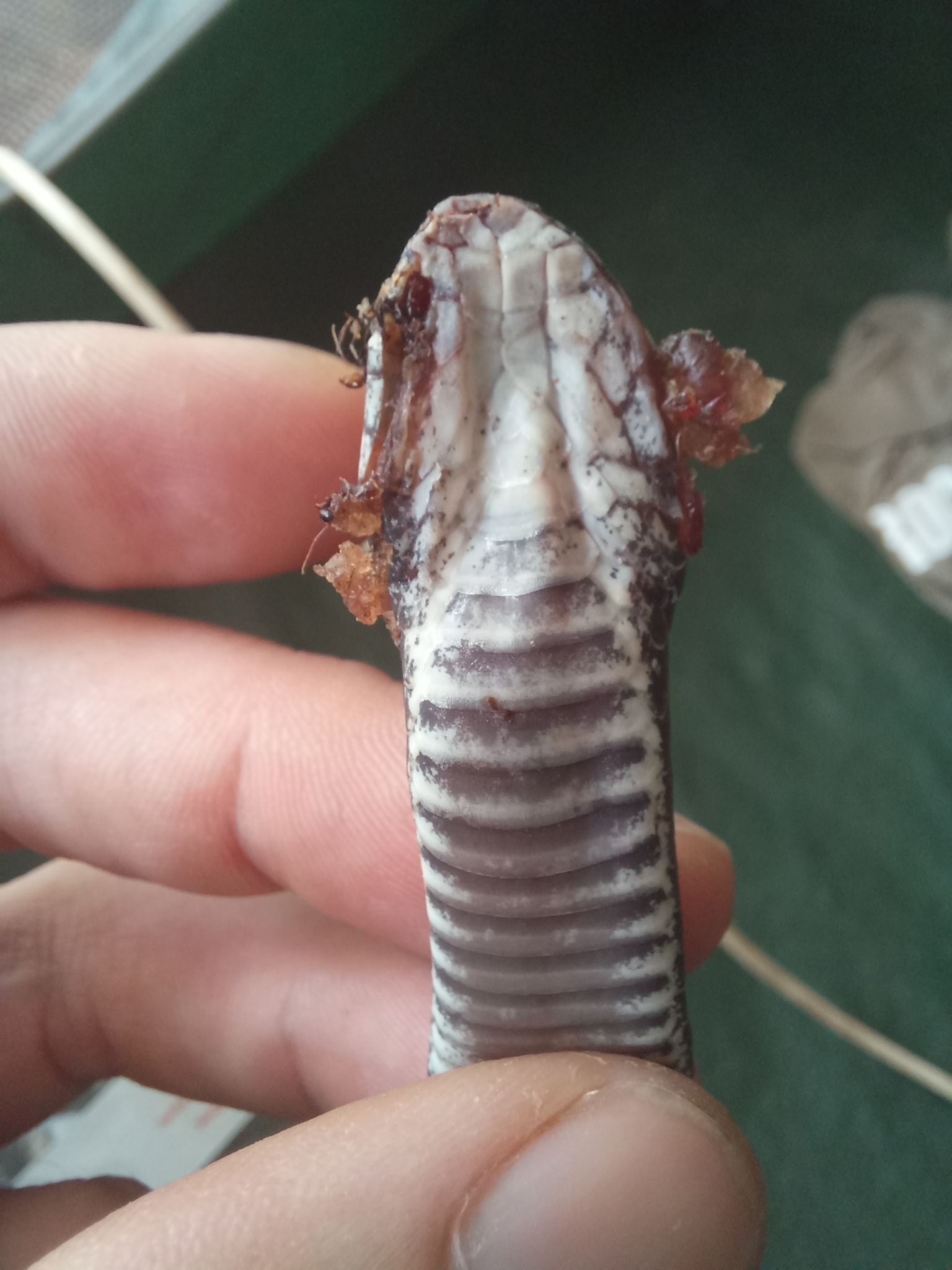
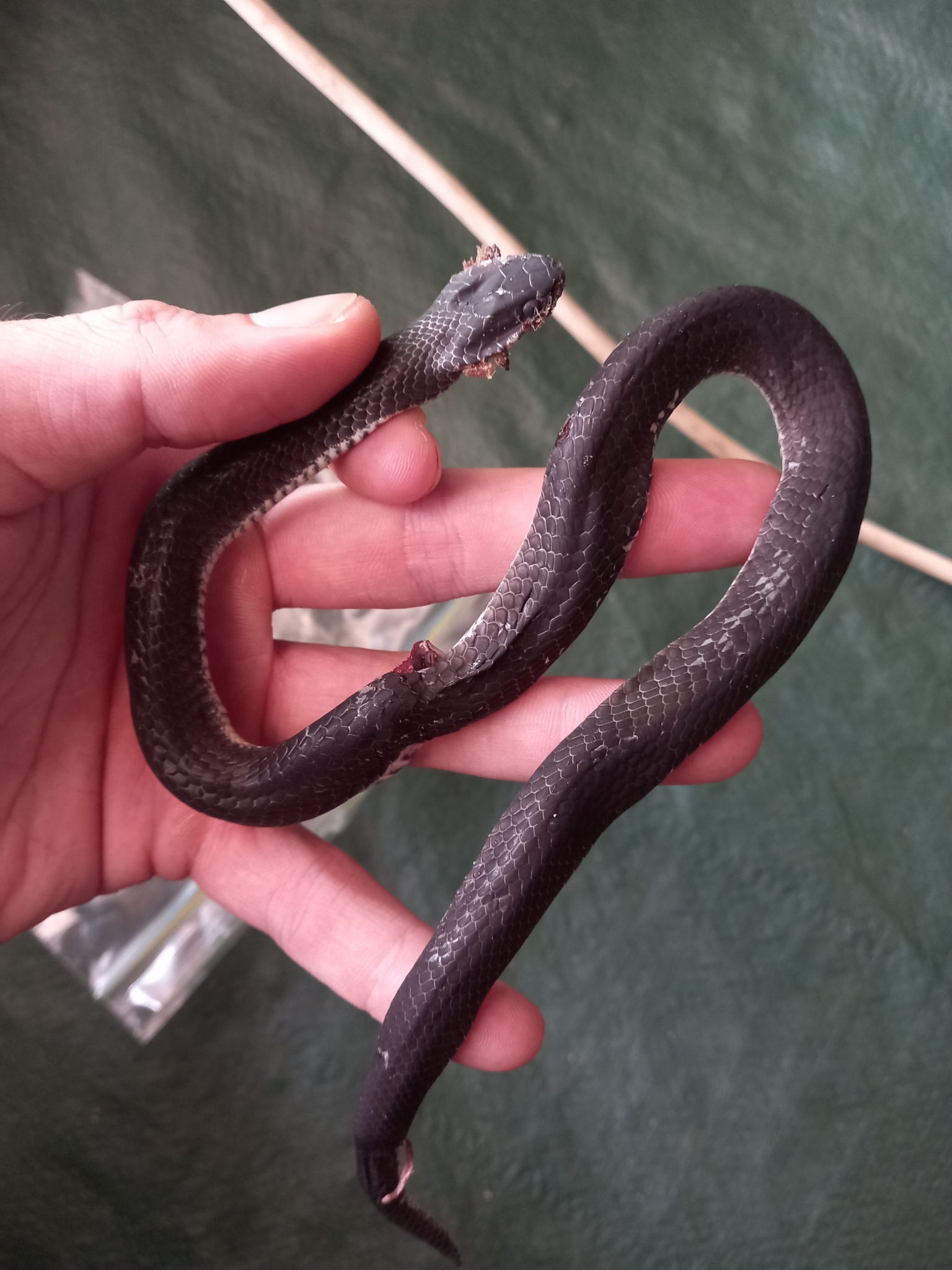
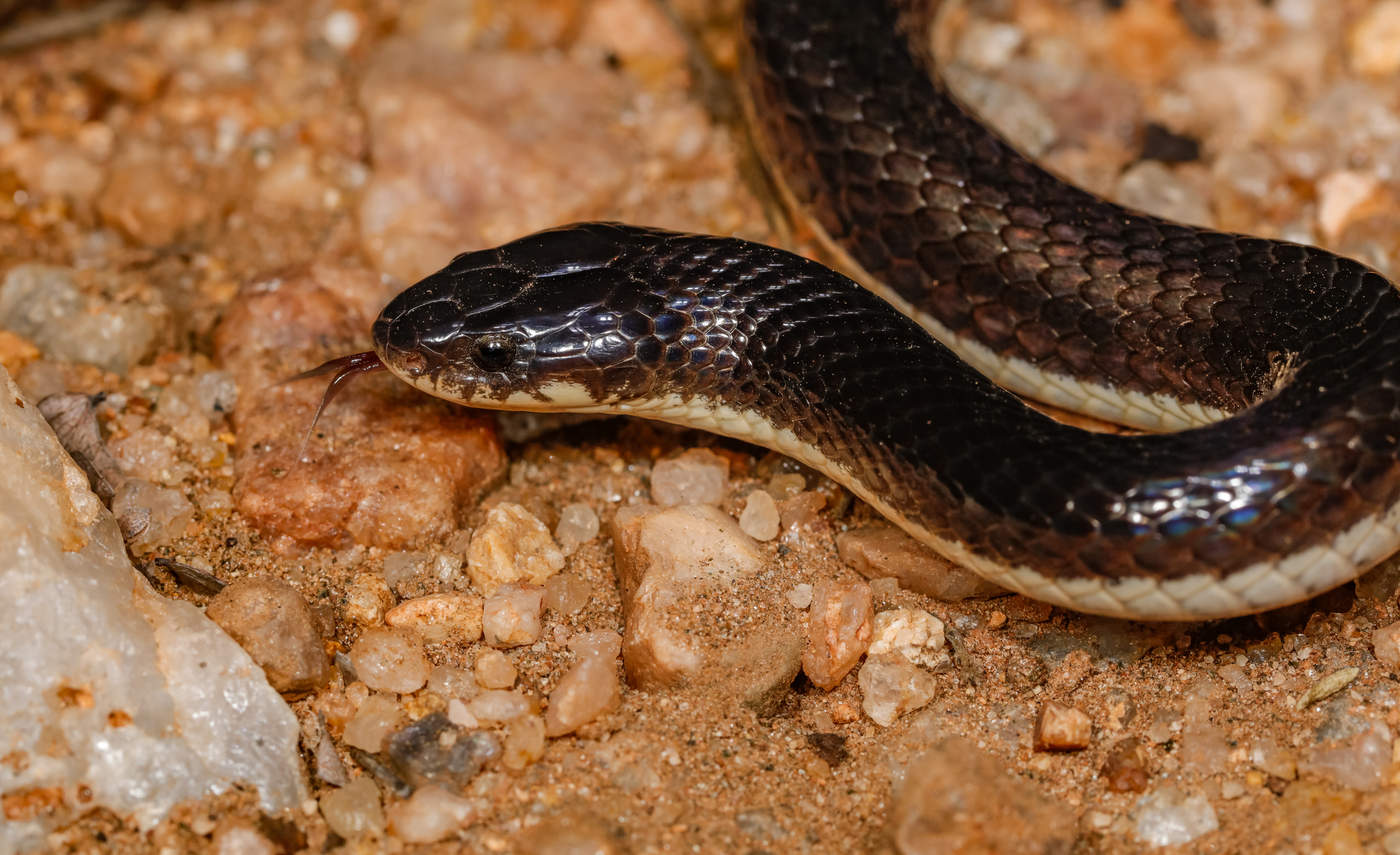
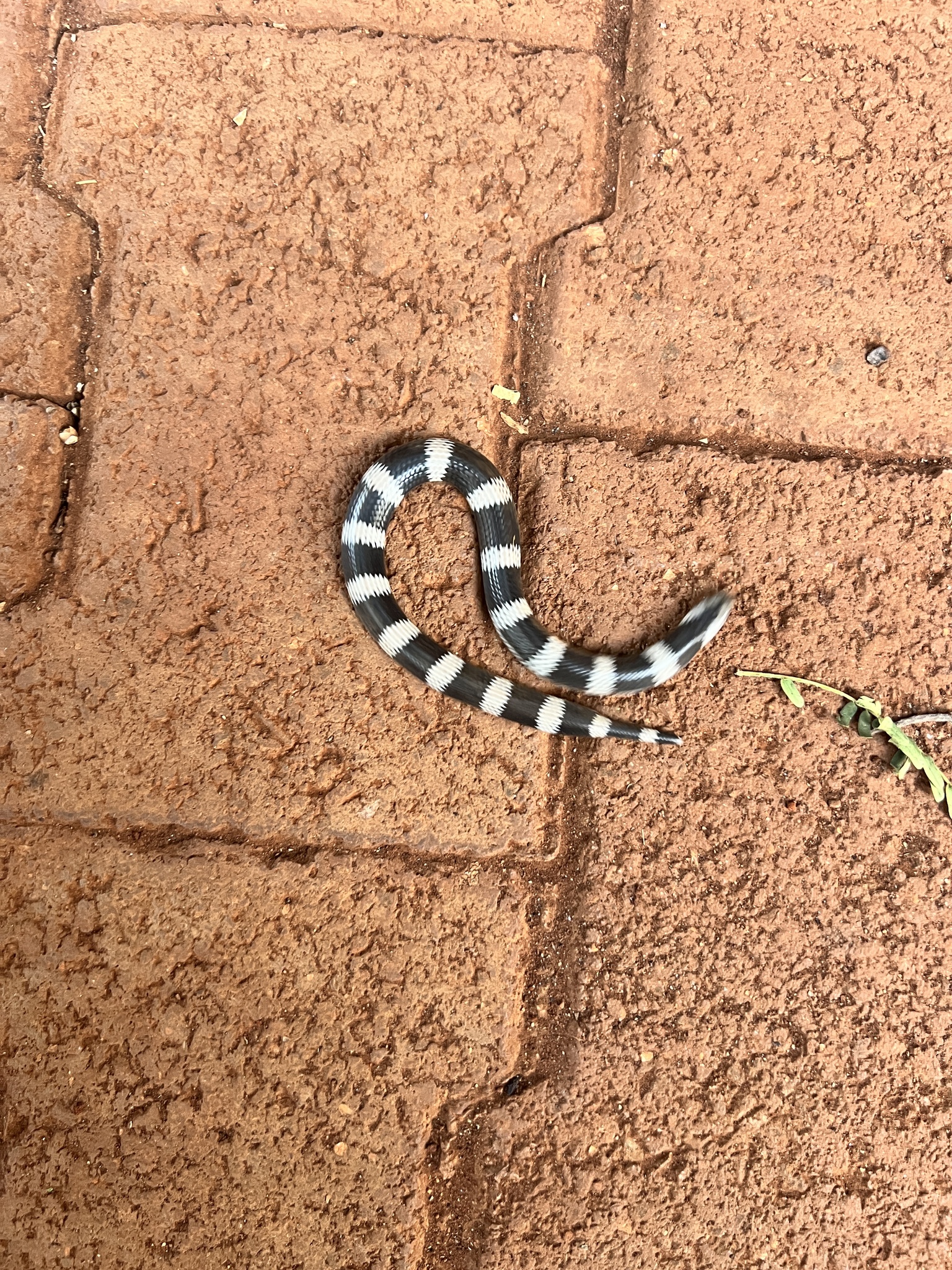
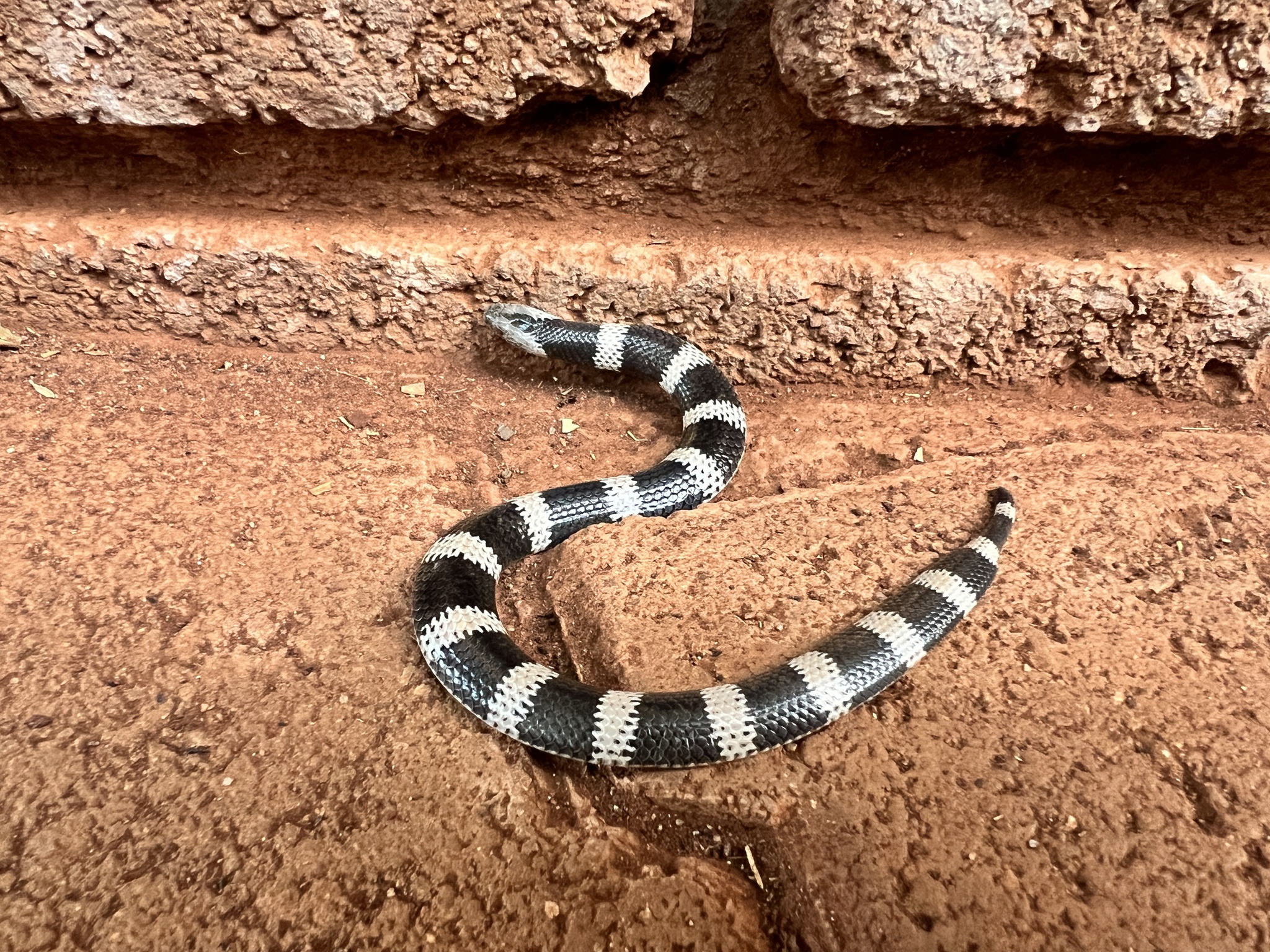
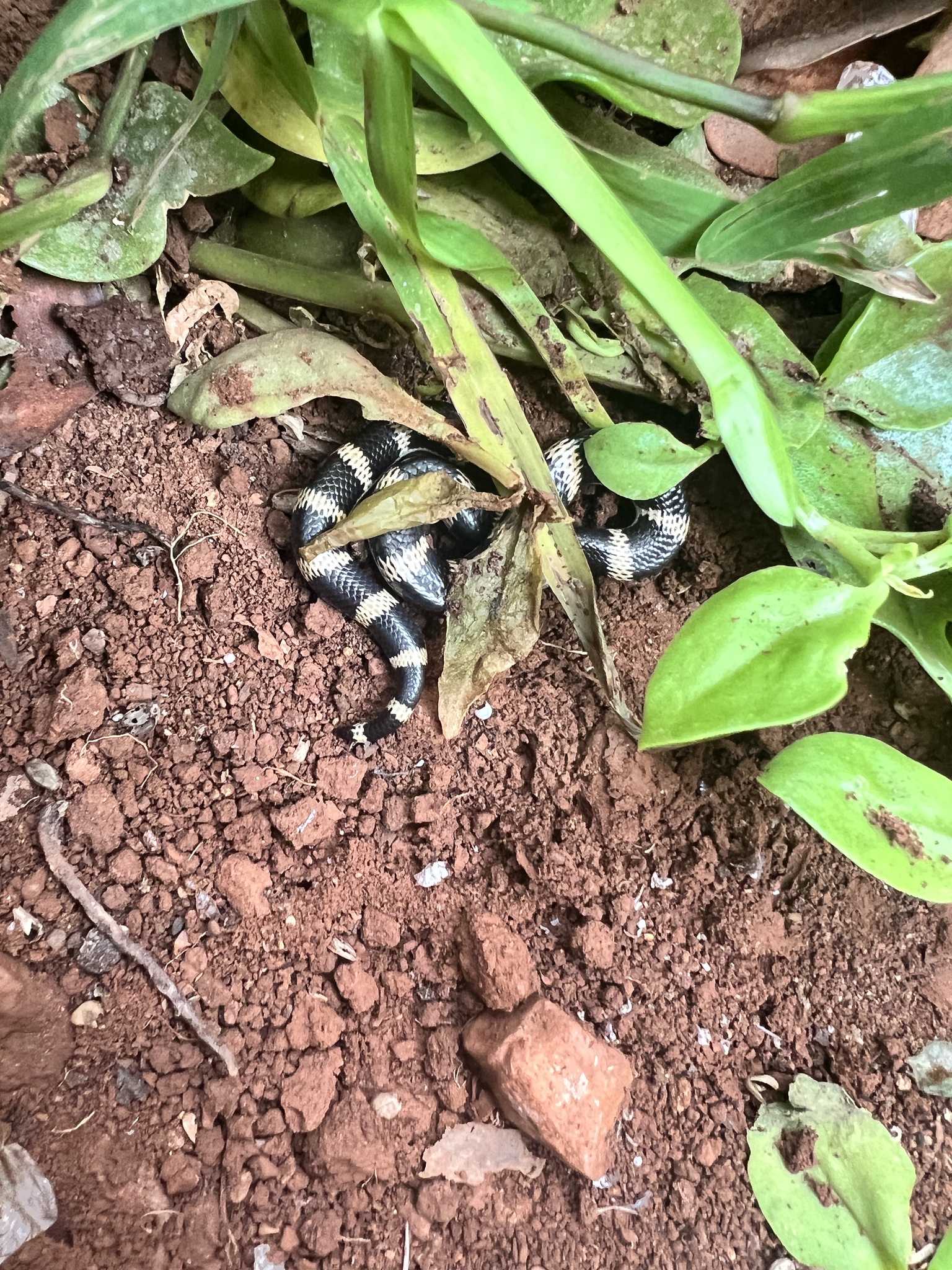
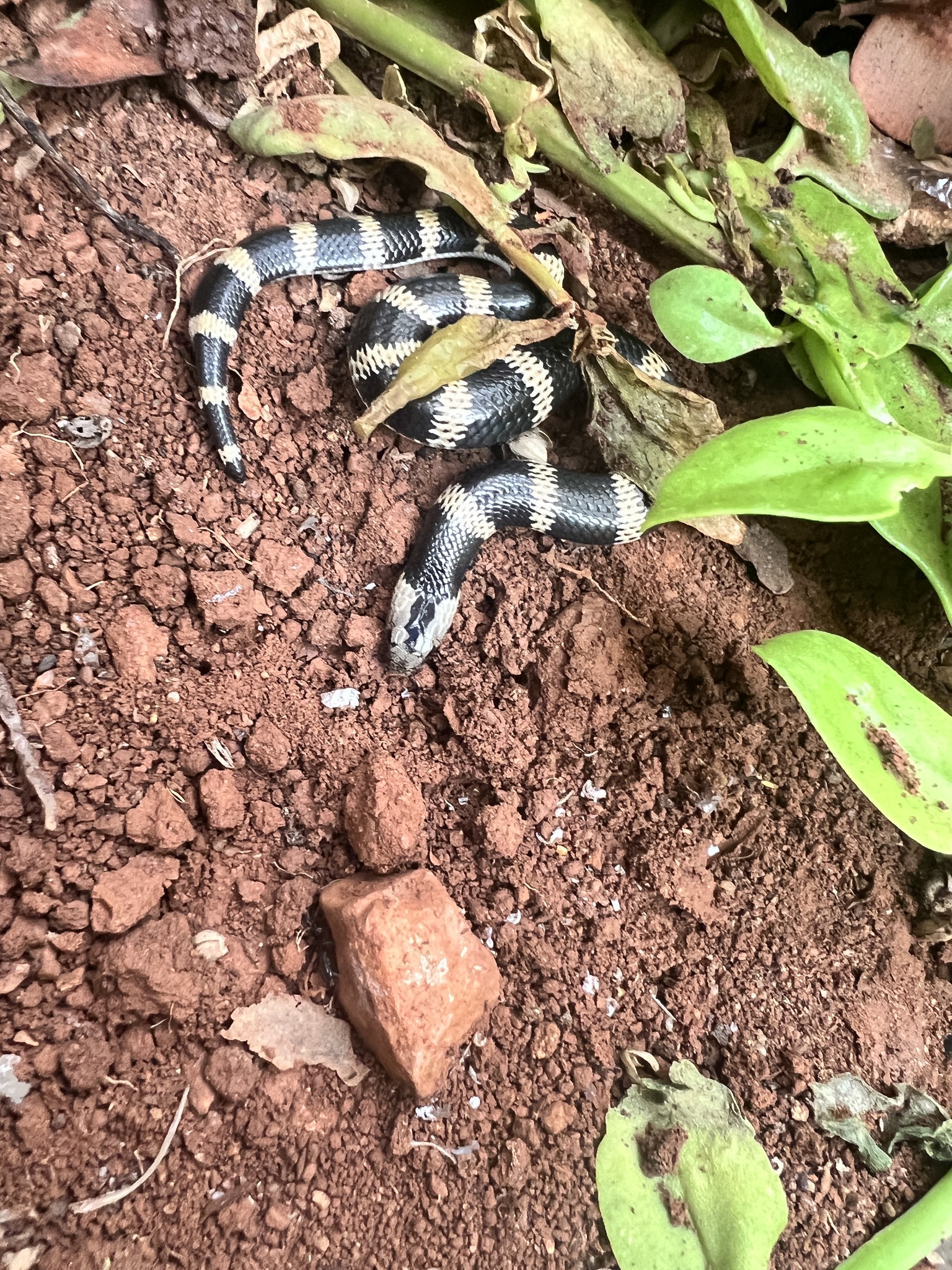
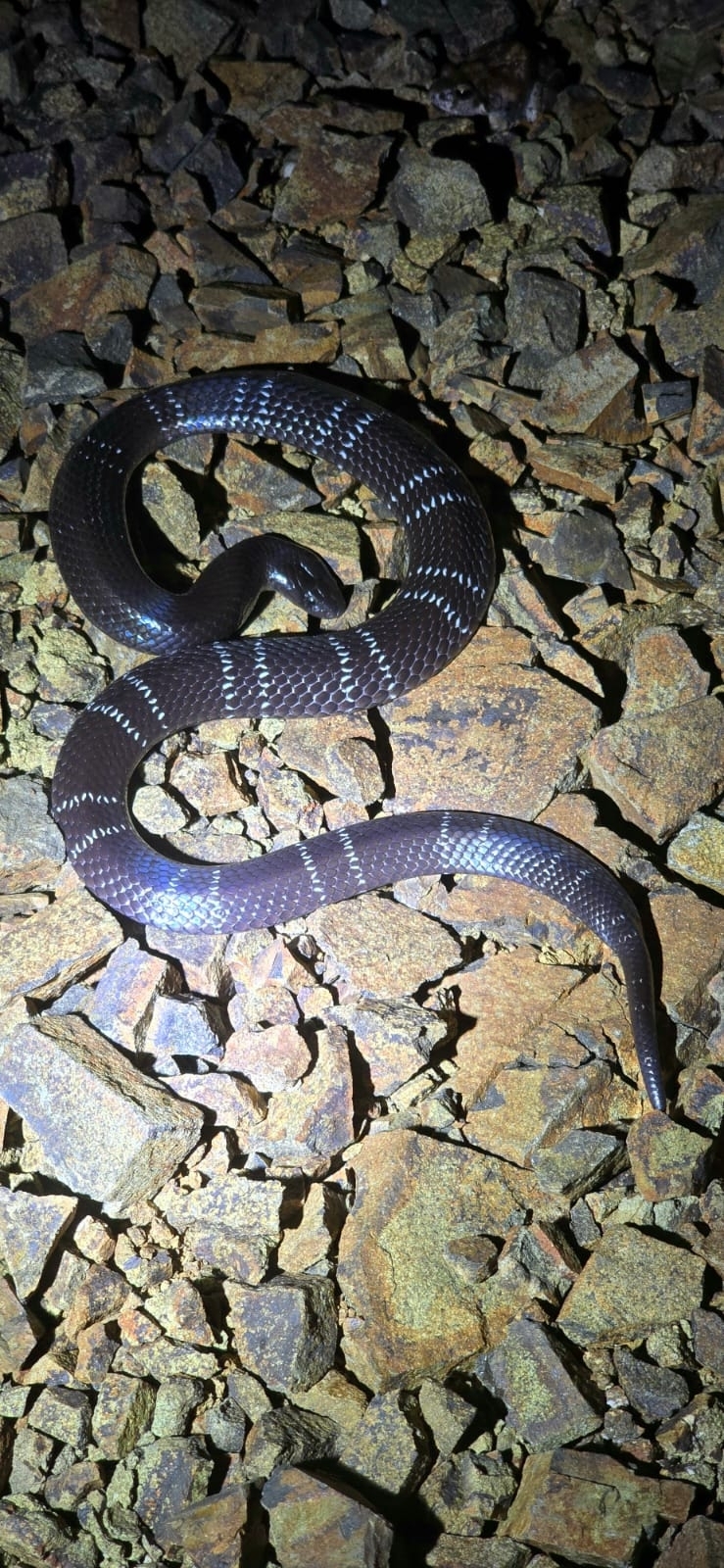
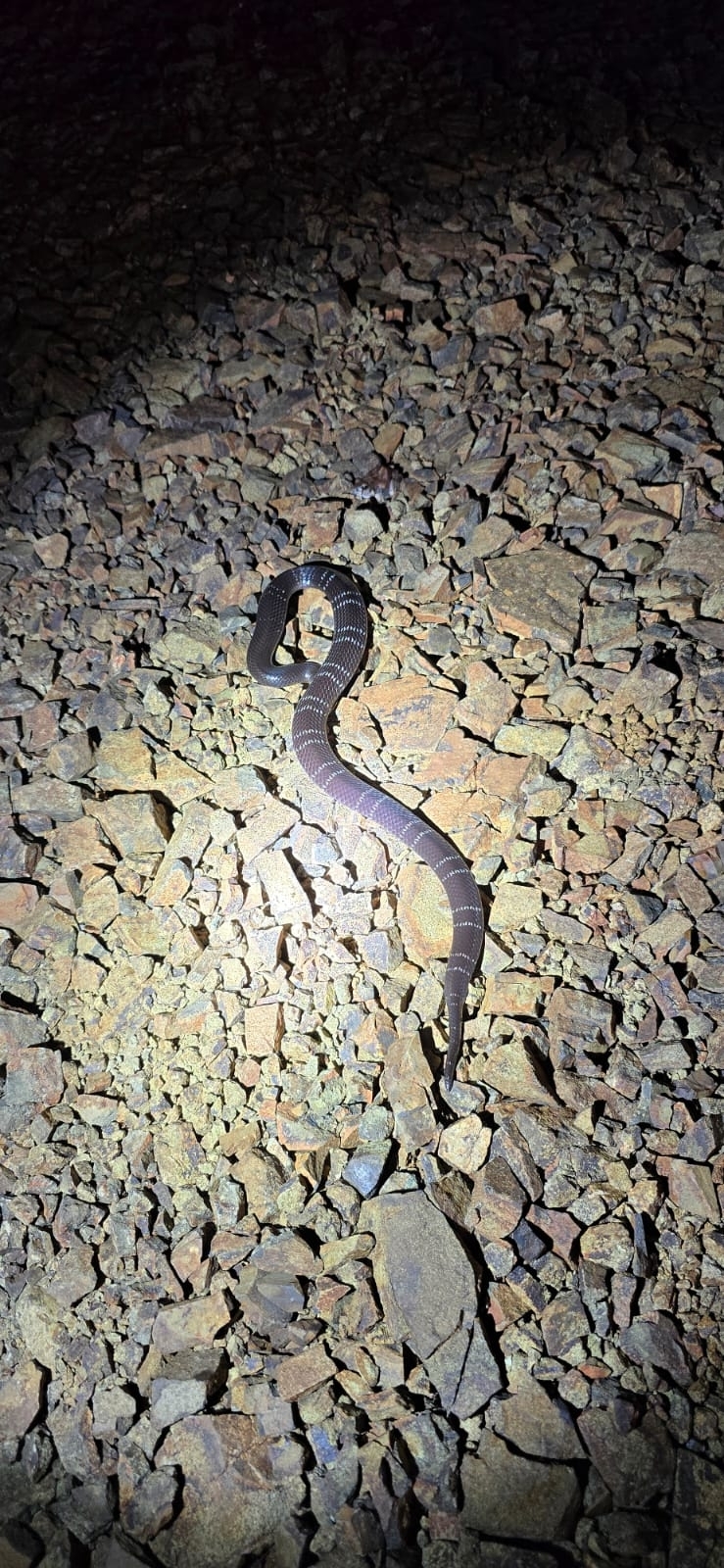
Boettger (1895) described this species in German as follows: Char. Abweichend von allen bekannten Arten der Gattung durch 1 5 (statt 1 3) Schuppenreihen. — Auf dem kurzen Oberkiefer stehen hinter den gefurchten Giftzähnen noch zwei weitläufig gestellte, solide Zähnchen. Körper kurz, gedrungen; Kopf depress, oblong, an den Seiten leicht erweitert und etwas vom Halse- abgesetzt; Auge von mäßiger Größe , sein Durchmesser so groß wie der Abstand vom Nasenloch, nostrale etwa anderthalbmal so breit wie hoch; sein Oberrand bildet einen sehr stumpfen Winkel, der von oben sichtbar ist; Frontonasalen kaum halb so lang wie die Praefrontalen ; Frontale etwa 1/3 länger als vorn breit, länger als sein Abstand von der Schnauzenspitze , aber wesentlich kürzer als die Parietalen, sechsseitig, aber seine beiden Vorderseiten fast eine gerade Linie bildend; Parietalen so lang wie Praefrontalen und Frontale zusammen. Das Nasale bildet eine kurze Sutur mit dem Praeoculare , das nur wenig auf den Pileus übergebogen ist; zwei gleichgroße Postocularen. Sieben Supralabialen, das erste am kleinsten, das dritte und vierte ans Auge stoßend, das fünfte sehr niedrig, das sechste hoch und oben sehr breit. Temporalen 1+2. Nur drei Infralabialen und das vierte höchstens mit einem Puncte in Berührung mit den vorderen Submentalen, die so groß oder etwas größer sind als die hinteren. Wie gewöhnlich berührt sich das erste Infralabialenpaar hinter dem Mentale. Squ. 15; G. 3, V. 141, A. 1, Sc. 20/20 + 1. Tiefschwarz; Kopf bis auf die breit schwarze Parietalnaht und einige grauliche Staubfleckchen auf den Kopfschildern rein weiß ; acht schmale Halbringe auf dem Rumpf, zwei auf dem Schwänze, rein weiß. Diese weißen Halbringe nehmen drei bis vier, die schwarzen Zwischenräume 13 — 14 Schuppenreihen ein. Unterseite einfarbig schwarzgrau, unter dem Halse und dem Schwänze einige breite weißliche Schildränder. DeepL Translation: Char. Differs from all known species of the genus by 1 5 (instead of 1 3) rows of scales. - On the short upper jaw there are two more widely spaced, solid teeth behind the furrowed venomous teeth. Body short, stocky; head depressed, oblong, slightly widened at the sides and slightly set off from the neck; eye of moderate size, its diameter as large as the distance from the nostril, nostrale about one and a half times as wide as high; its upper margin forms a very obtuse angle, visible from above; frontonasals barely half as long as the prefrontals; frontals about 1/3 longer than wide in front, longer than its distance from the tip of the snout, but considerably shorter than the parietals, six-sided, but its two front sides forming almost a straight line; parietals as long as prefrontals and frontals together. The nasals form a short suture with the praeoculars, which are only slightly bent over onto the pileus; two postoculars of equal size. Seven supralabials, the first smallest, the third and fourth touching the eye, the fifth very low, the sixth high and very broad at the top. Temporals 1+2. Only three infralabials and the fourth with at most one punctum in contact with the anterior submentals, which are as large or slightly larger than the posterior ones. As usual, the first pair of infralabials touch behind the mentals. Squ. 15; G. 3, V. 141, A. 1, Sc. 20/20 + 1. Deep black; head pure white except for the broad black parietal suture and a few grayish dust spots on the head shields; eight narrow half-rings on the rump, two on the tail, pure white. These white half rings take up three to four rows of scales, the black spaces between them 13 - 14 rows. Underside unicolored black-grey, under the neck and the tail some broad whitish shield edges.
No separate diagnostic description was provided. Refer to the morphological description.
Type locality: Boroma, Mozambique. Holotype: SMF 20555
The taxonomy of Elapsoidea has had a complicated history, with most species and subspecies defined on colouration without any clear morphological differences. The\ \ validity of the various Elapsoidea taxa should be assessed in a phylogenetic framework. (Tolley et al., 2023).
Botswana, Eswatini, Malawi, Mozambique, South Africa, Tanzania, Zambia, Zimbabwe
This species occurs is restricted to the northern parts of KwaZulu-Natal province, eastern Mpumalanga and Limpopo provinces, South Africa, extending into Eswatini (Tolley et al., 2023).
Snakes have no limbs; instead their long backbones with many articulated ribs are used for locomotion (Branch, 1998). Engaging the muscles attached to these rib bones allows snakes to move in a typical slither fashion, but it also enables them to swim and climb. They use an undulating, side-to-side movement ('S' pattern or serpentine).
Carnivore - Anurophagy (frog-eating)
Boulenger's Garter Snakes prefer to prey upon skinks and small snakes, however they are also known to occasionally eat geckos and frogs. They are also prone to cannabilism (Branch, 1998).
This snake is oviparous, with females known to lay between 4-8 eggs in the early summer (Branch, 1998).
This is a slow-moving snake and is prone to cannibalism (Branch, 1998).
Savanna
This map contains point-based occurrences at different locations
Occurrence in African countries and South African provinces. Residence status indicates if a taxon is indigenous, endemic, or alien in a specific region. This data is based on specimen records and literature.
FSA
SA
BOT
NAM
ESW
LES
WC
EC
NC
FS
GA
KZN
LP
MP
NW
Absent
Indigenous
Endemic
Naturalised
Invasive
Names and Sources
| Common Name | Language |
|---|---|
| Boulenger's Garter Snake | En |
| Zambesikousbandslang | En |
Classification
KINGDOM Animalia
PHYLUM Chordata
CLASS Reptilia
ORDER Squamata
FAMILY Elapidae
GENUS Elapsoidea
SPECIES boulengeri
No results found for Elapsoidea boulengeri Boettger, 1895
No data.
19 results for Elapsoidea boulengeri Boettger, 1895
This map contains point-based occurrences at different locations
1895
JOURNAL ARTICLE
Zweiter Beitrag zur Herpetologie Südwest- und SüdafrikasBoettger, O.. 1895. Zweiter Beitrag zur Herpetologie Südwest- und Südafrikas Vol. 18 pp.135-173.
1998
BOOK
A review of the Elapsoidea semiannulata complex (Serpentes: Elapidae)Broadley, D, . 1998. A review of the Elapsoidea semiannulata complex (Serpentes: Elapidae) Vol. 47(1) pp.13–23.
1990
BOOK
FitzSimons' Snakes of Southern AfricaBroadley, D, . 1990. FitzSimons' Snakes of Southern Africa. Jonathan Ball and Ad. Donker Publishers.
1971
JOURNAL ARTICLE
A revision of the African snake genus Elapsoidea Bocage (Elapidae)Broadley, D.. 1971. A revision of the African snake genus Elapsoidea Bocage (Elapidae) Vol. 4(32) pp.577–626.
1998
BOOK
Field Guide to Snakes and Other Reptiles of Southern AfricaBranch, B.. 1998. Field Guide to Snakes and Other Reptiles of Southern Africa. Cape Town. Struik Publishers.
1989
TECHNICAL REPORT
The distribution and conservation status of reptiles and amphibians in the Transvaal. Final Report Project TN 6/4/1/30Jacobsen, N.. 1989. The distribution and conservation status of reptiles and amphibians in the Transvaal. Final Report Project TN 6/4/1/30. Pretoria. Chief Directorate of Nature and Environmental Conservation.
2023
BOOK
Conservation status of the reptiles of South Africa, Eswatini and LesothoTolley, K., Burger, M., Alexander, G., Pietersen, D., Conradie, W., Weeber, J.. 2023. Conservation status of the reptiles of South Africa, Eswatini and Lesotho Vol. Suricata 10. Pretoria. South African National Biodiversity Institute.
Status and criteria
LC
Assessor(s)
Graham Alexander
Reviewer(s)
Michael Bates


