
ANIMALIA / ARTHROPODA / INSECTA / ORTHOPTERA / TETTIGONIIDAE / ZABALIUS / OPHTHALMICUS
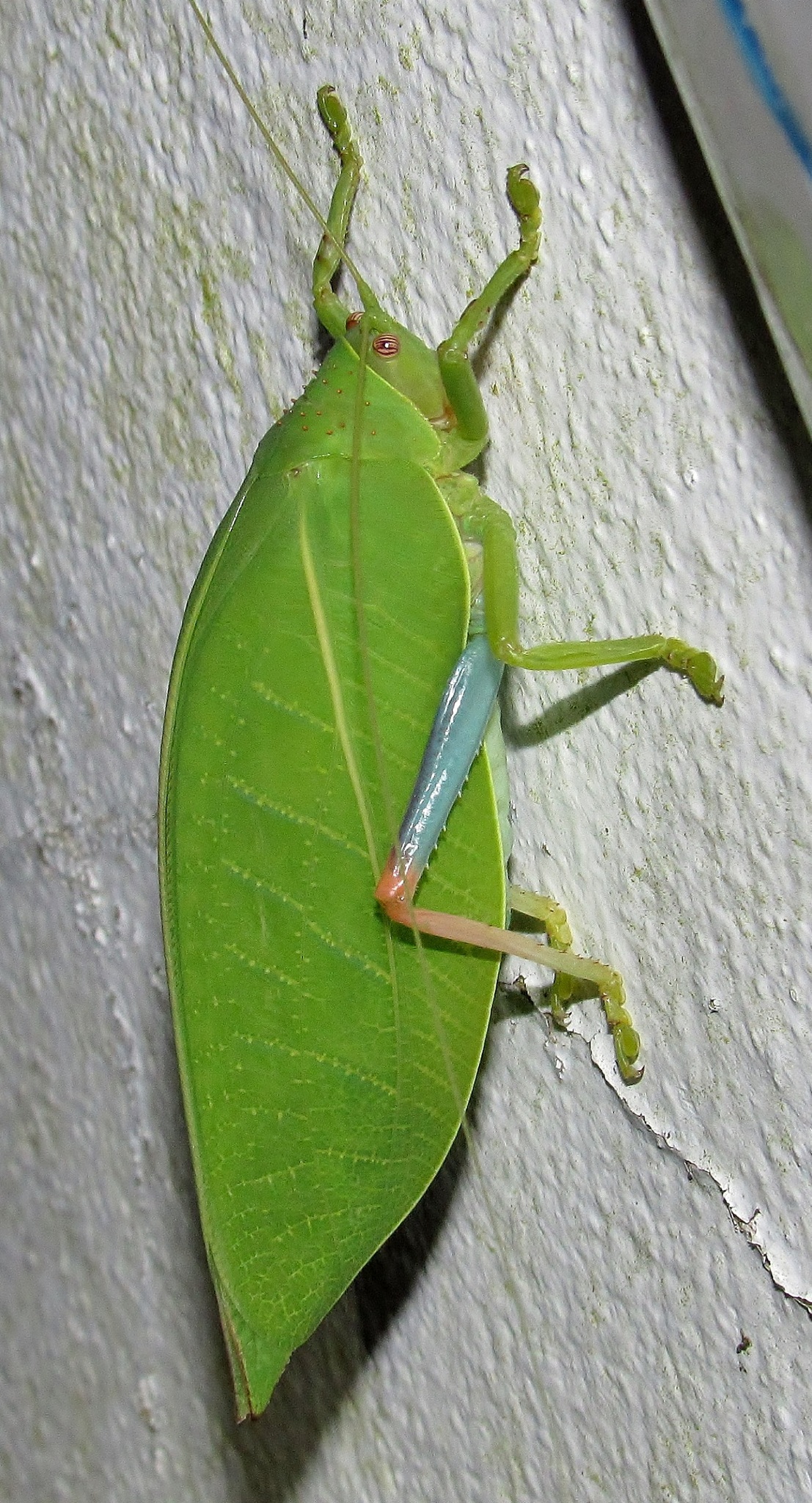
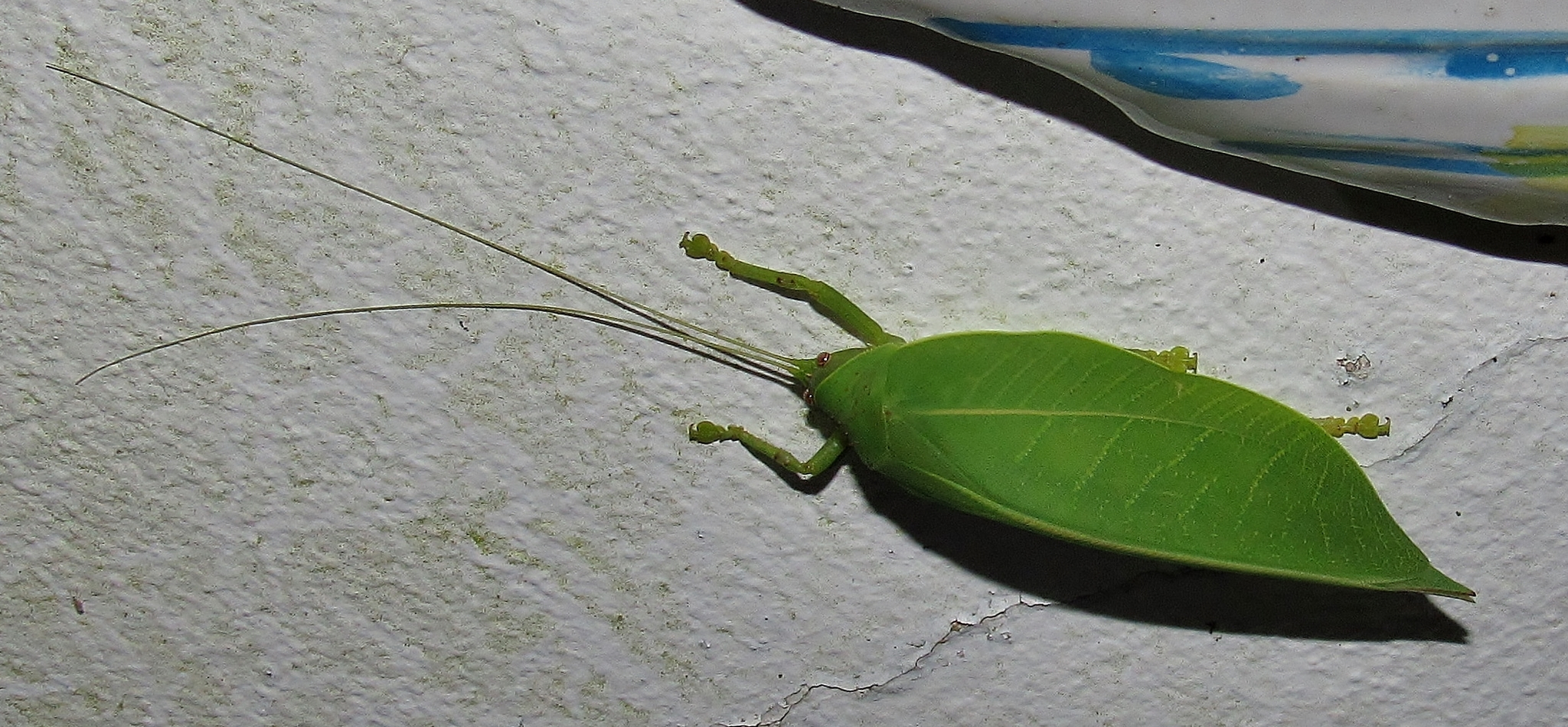
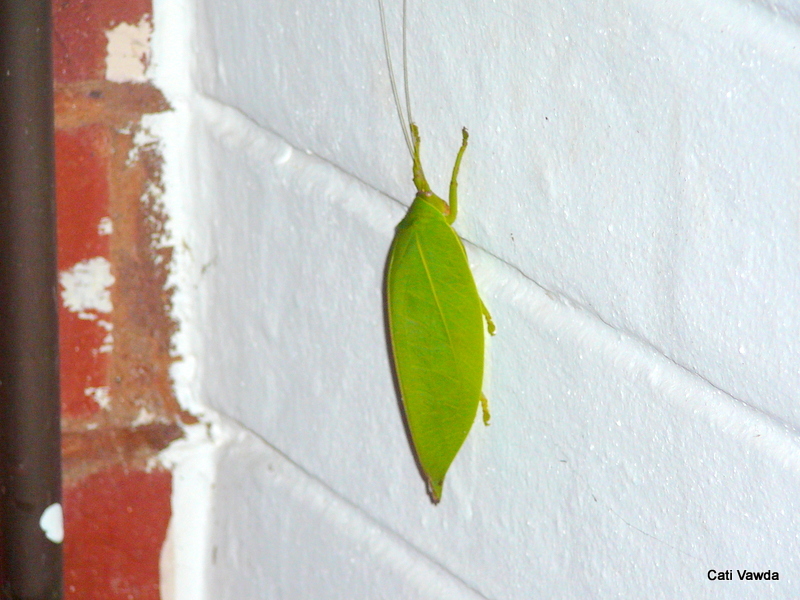
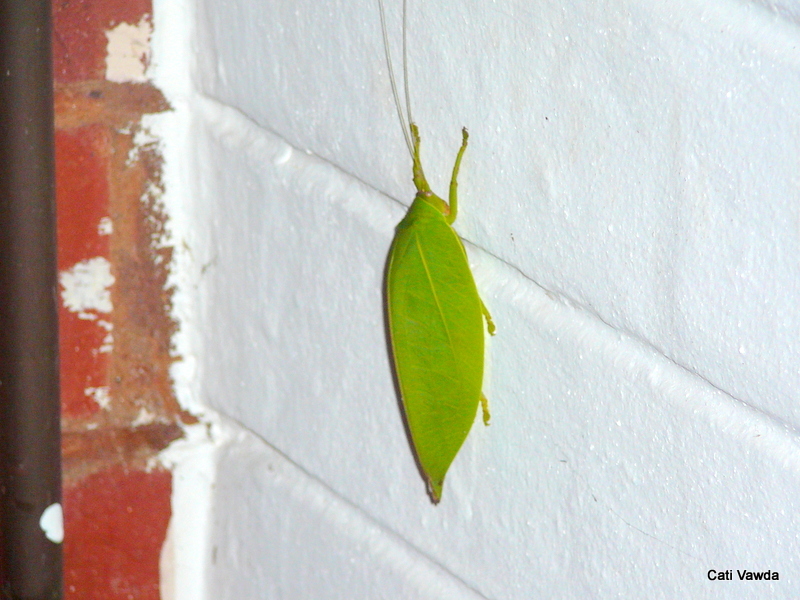
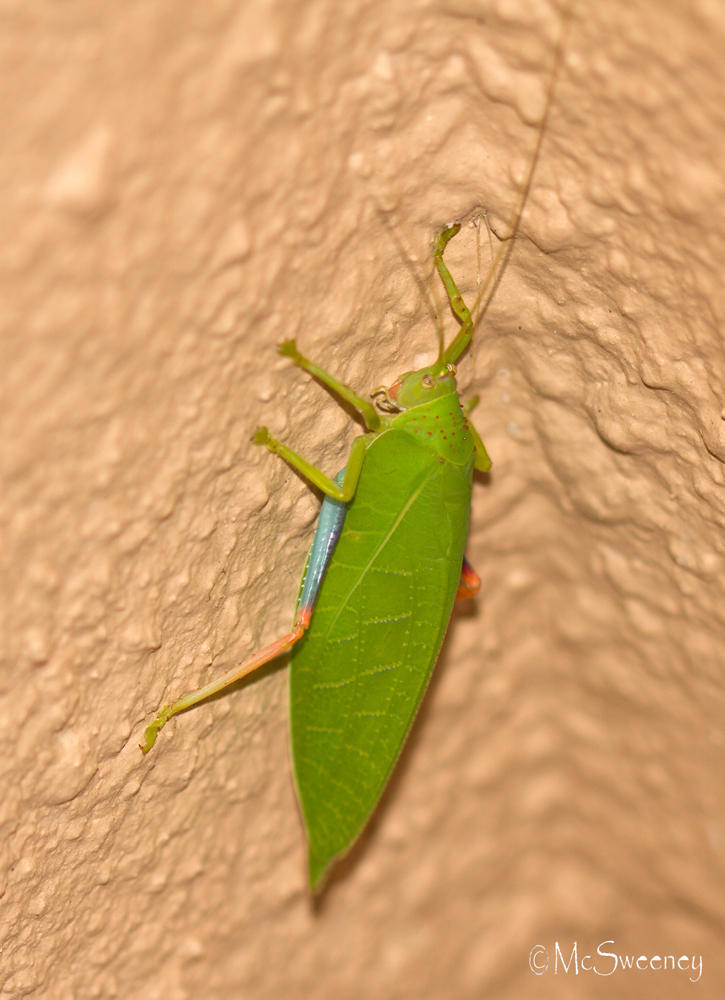
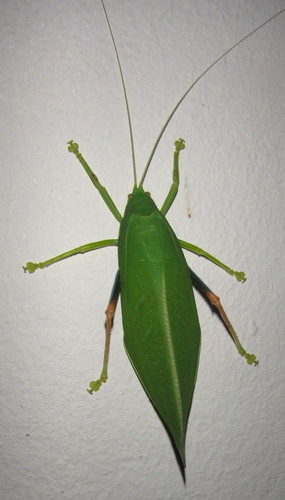
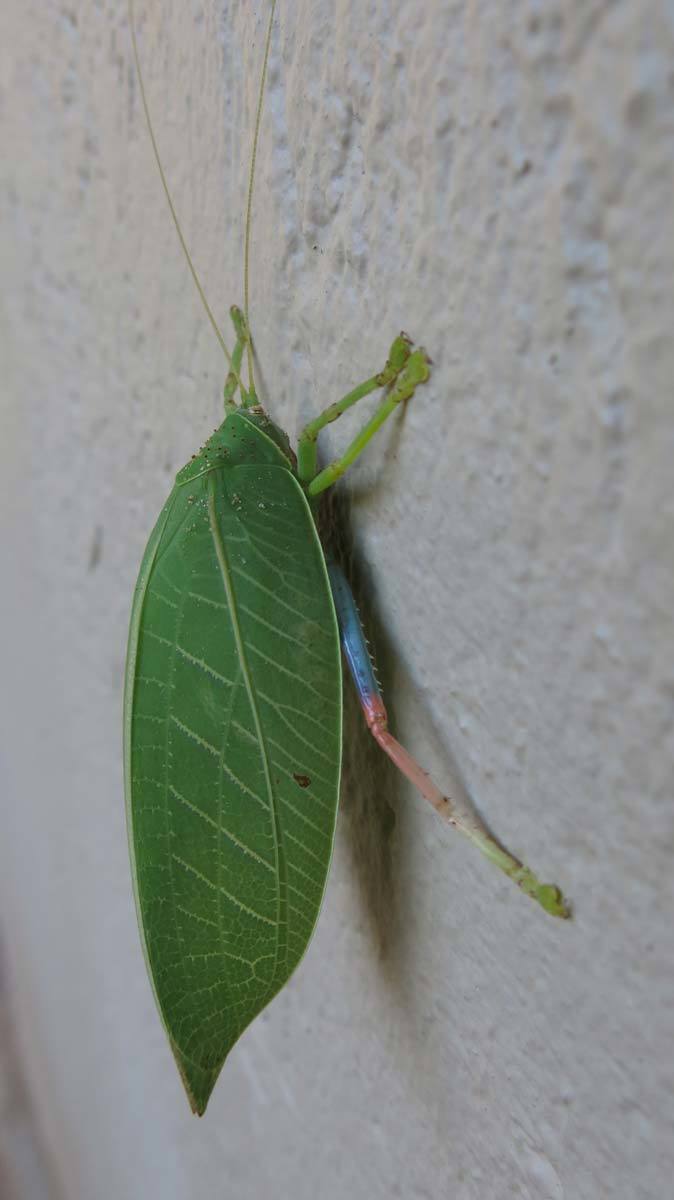
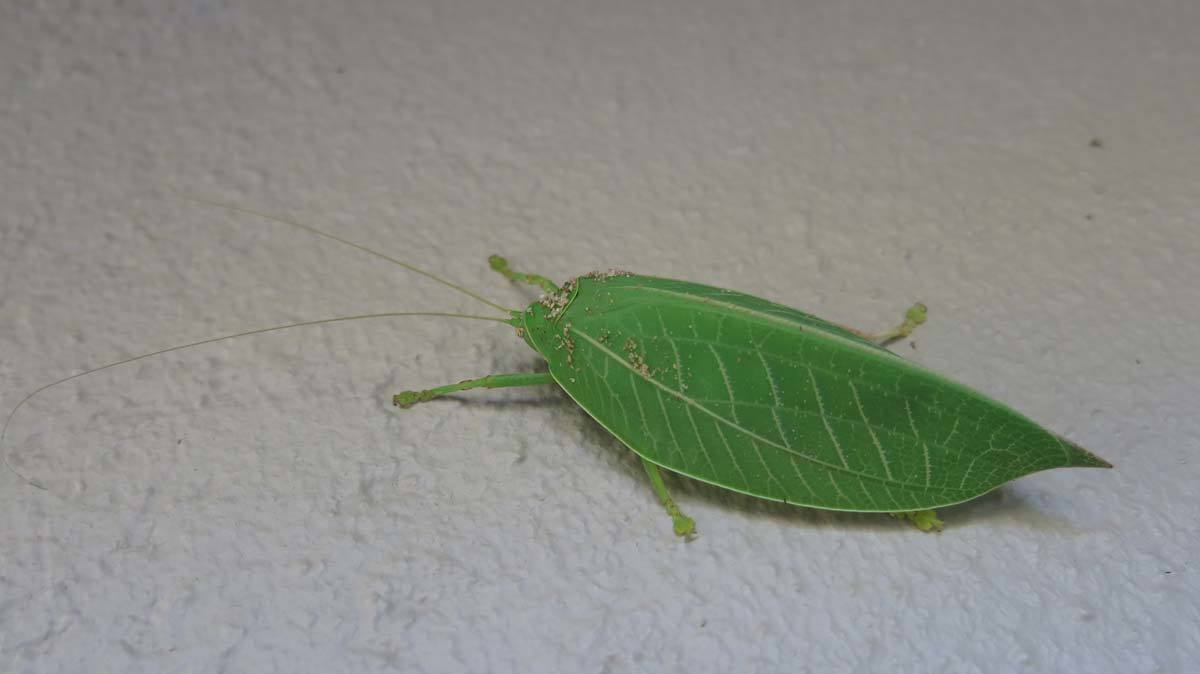
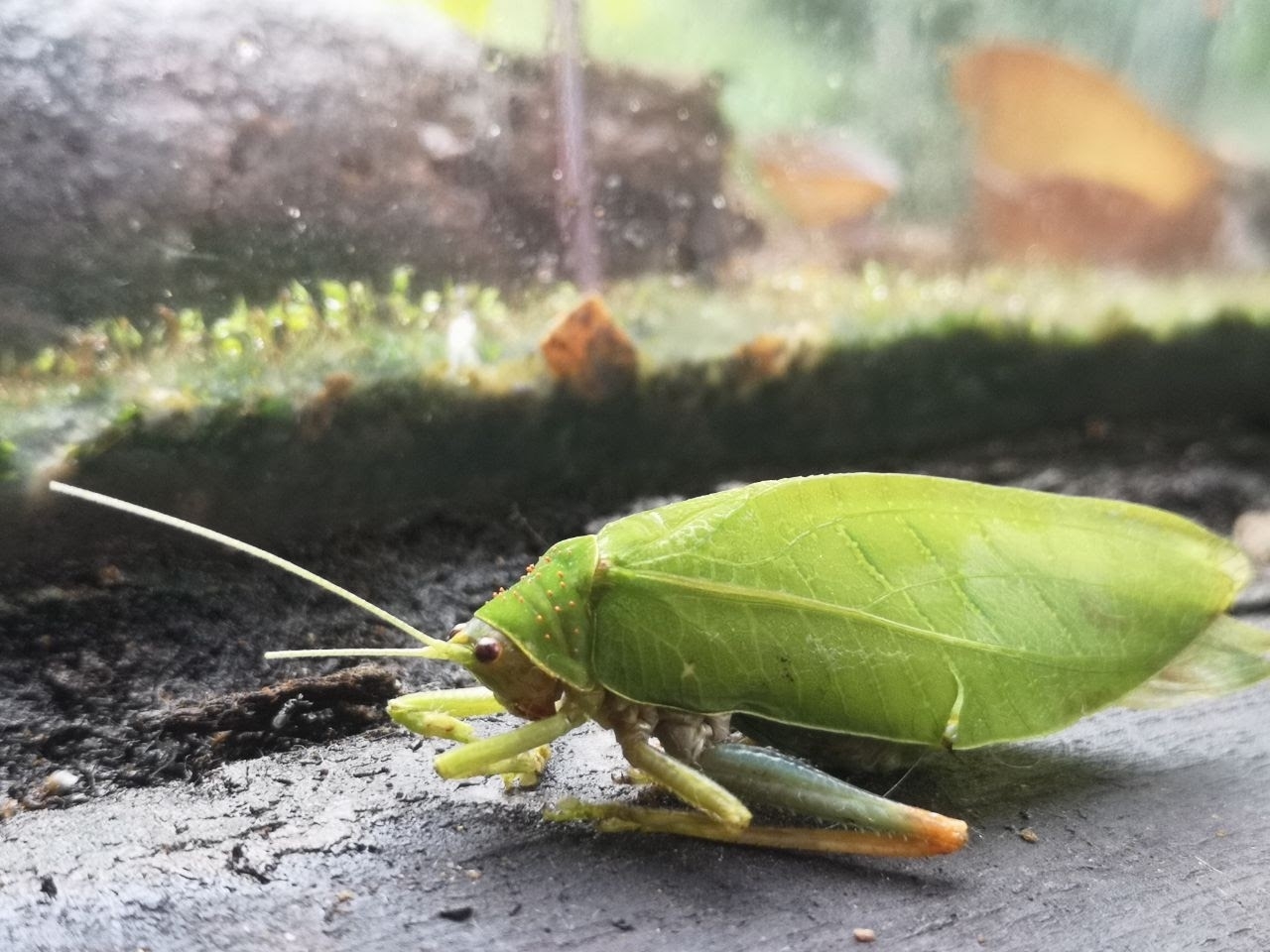
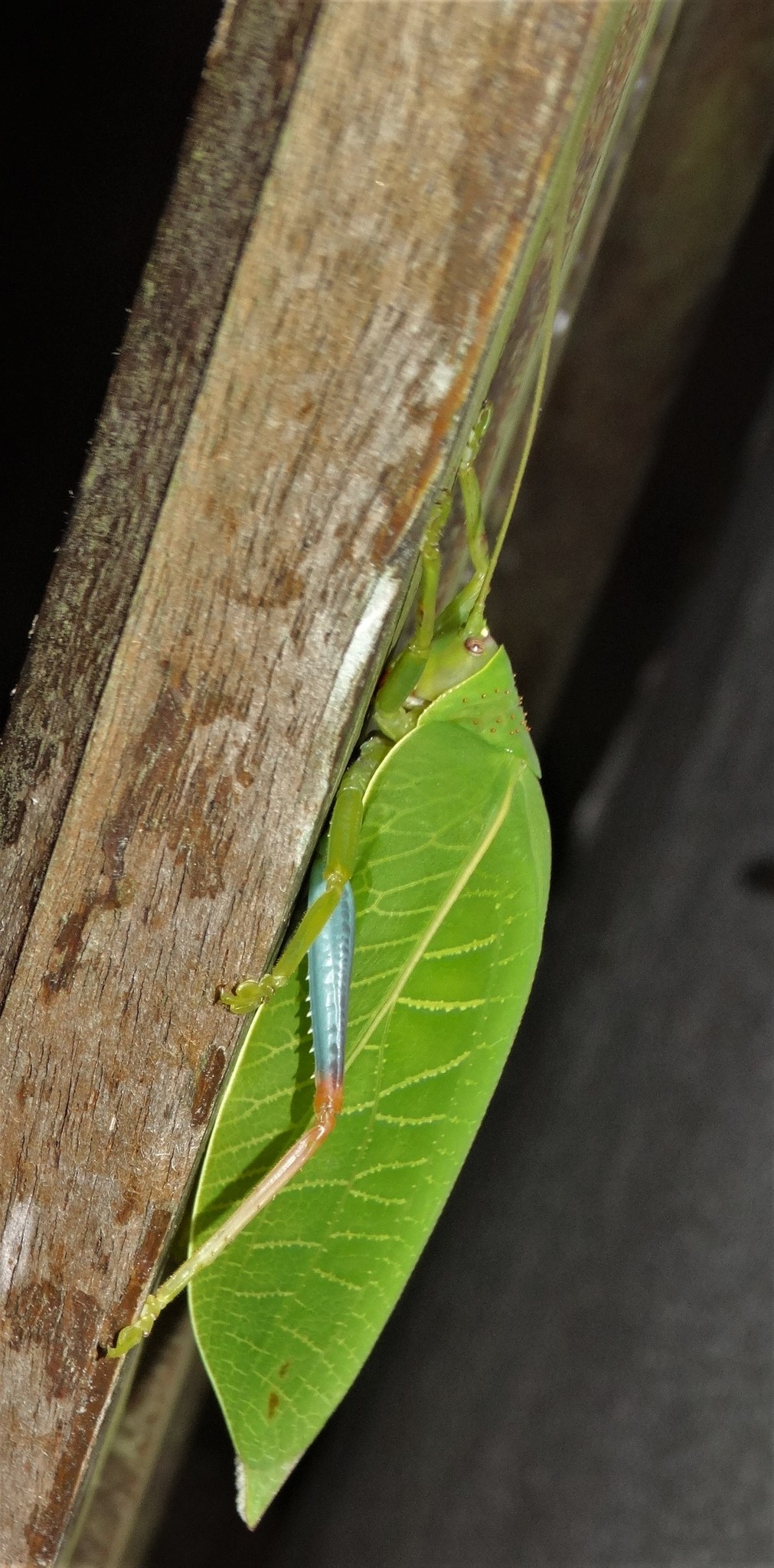
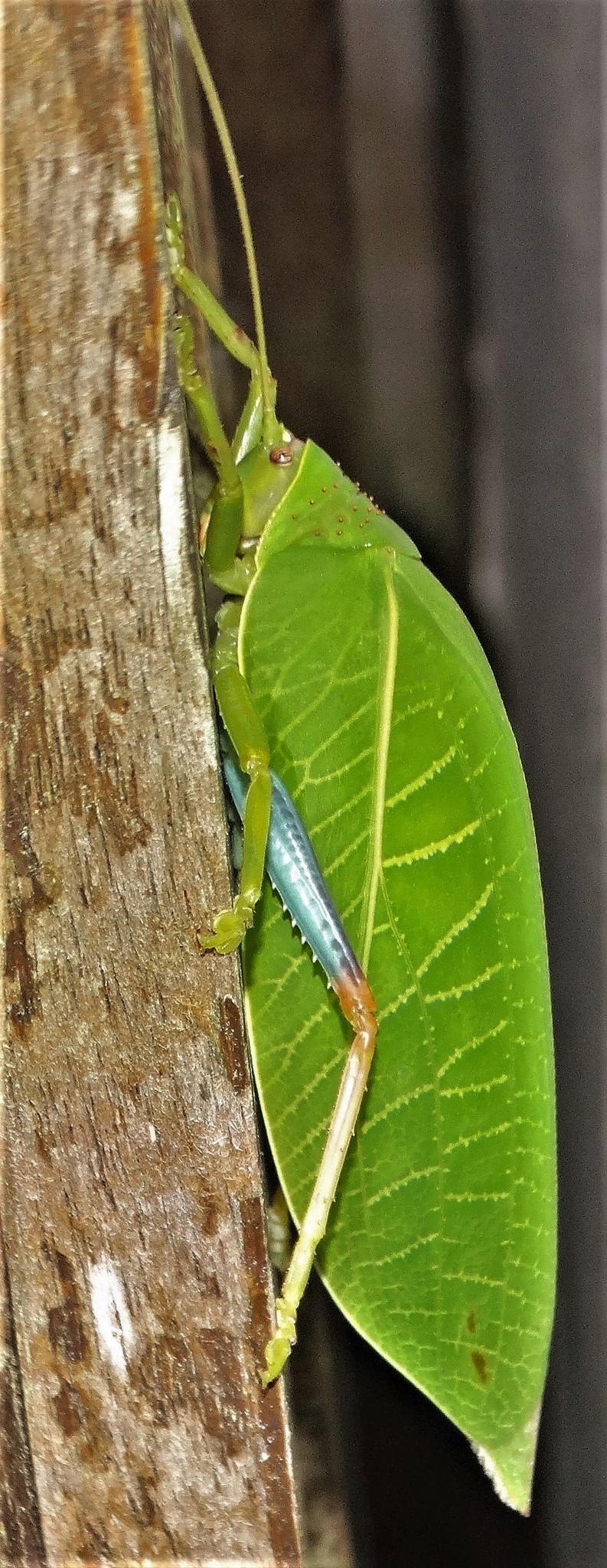
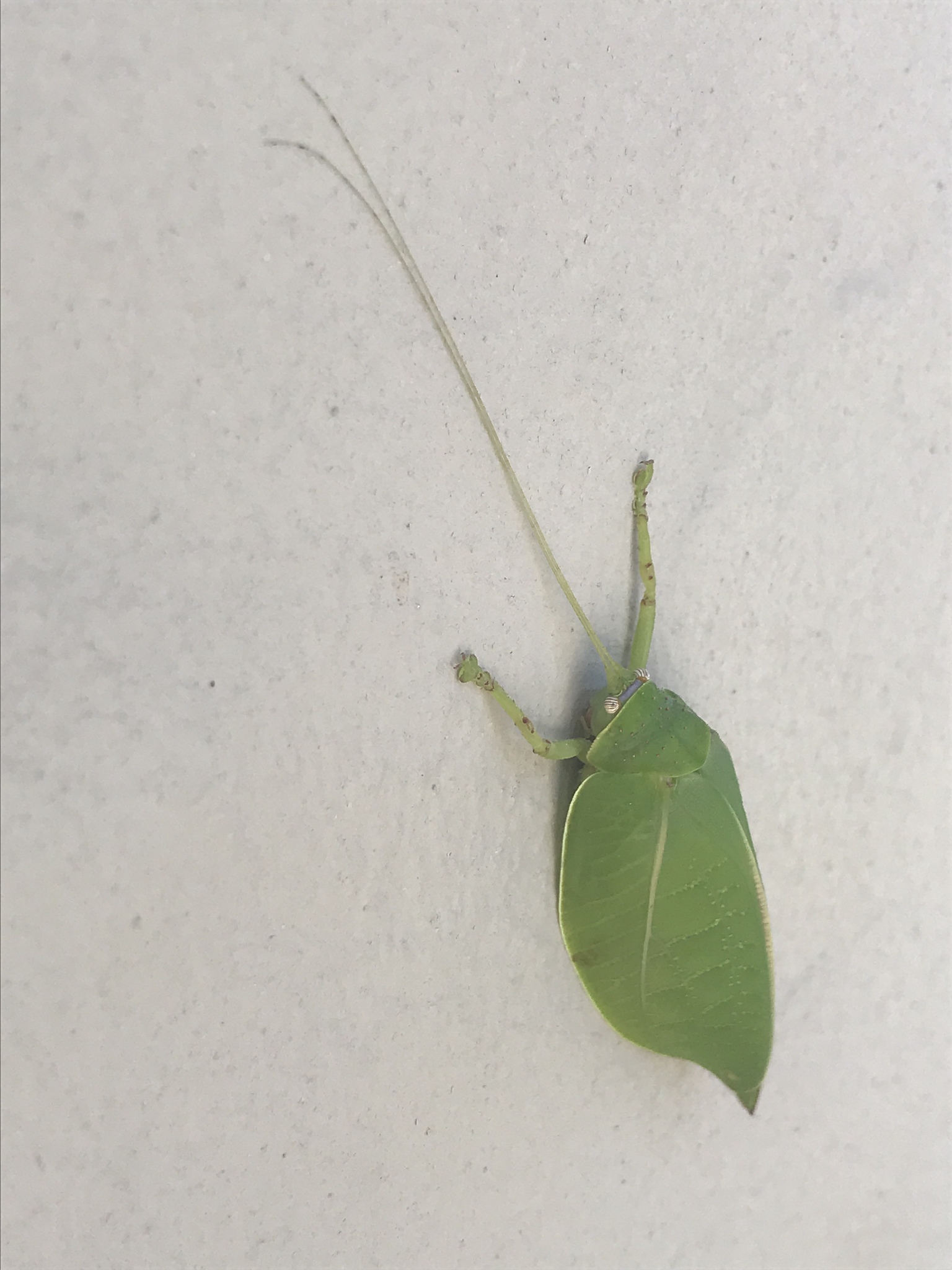
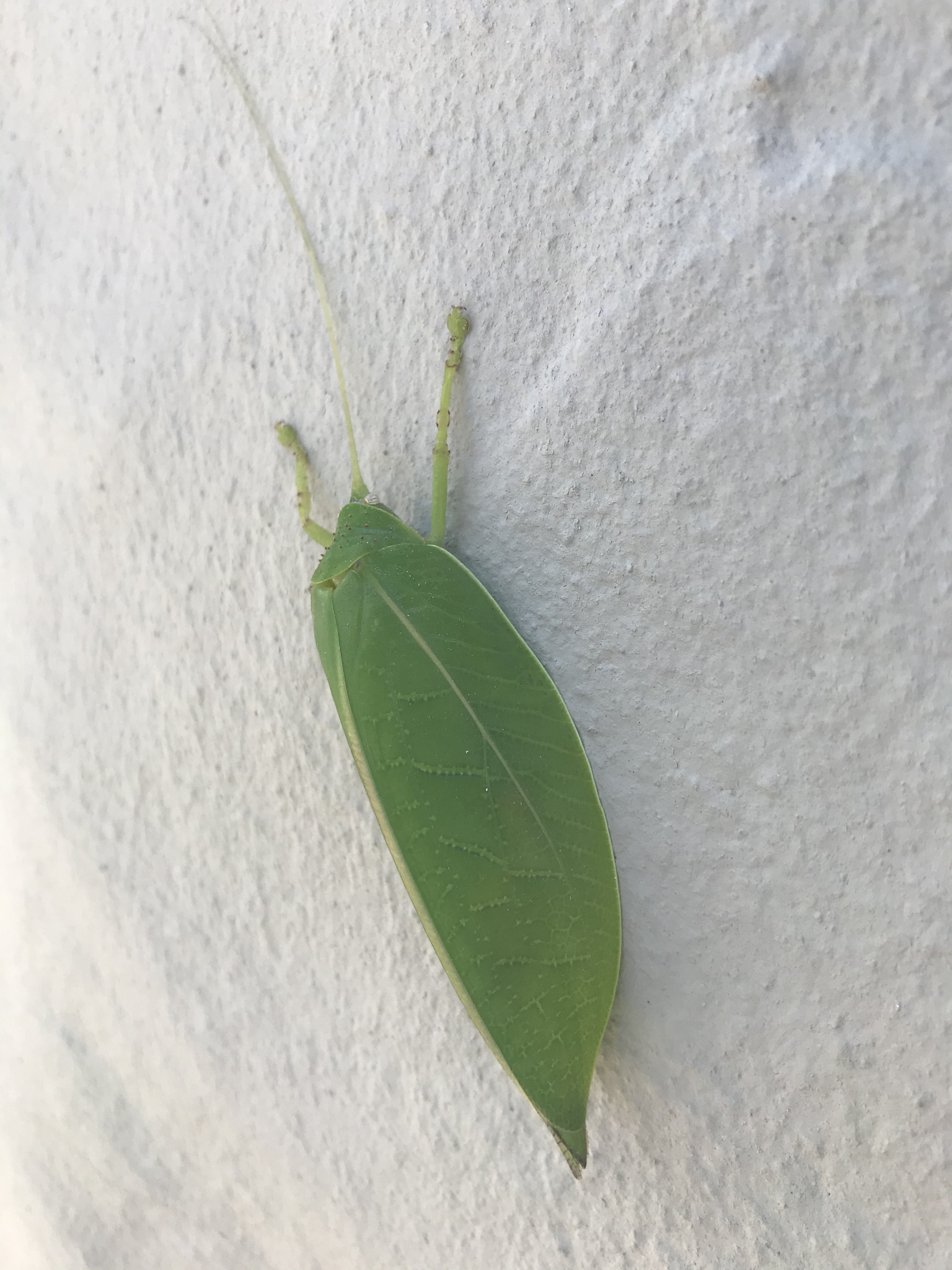
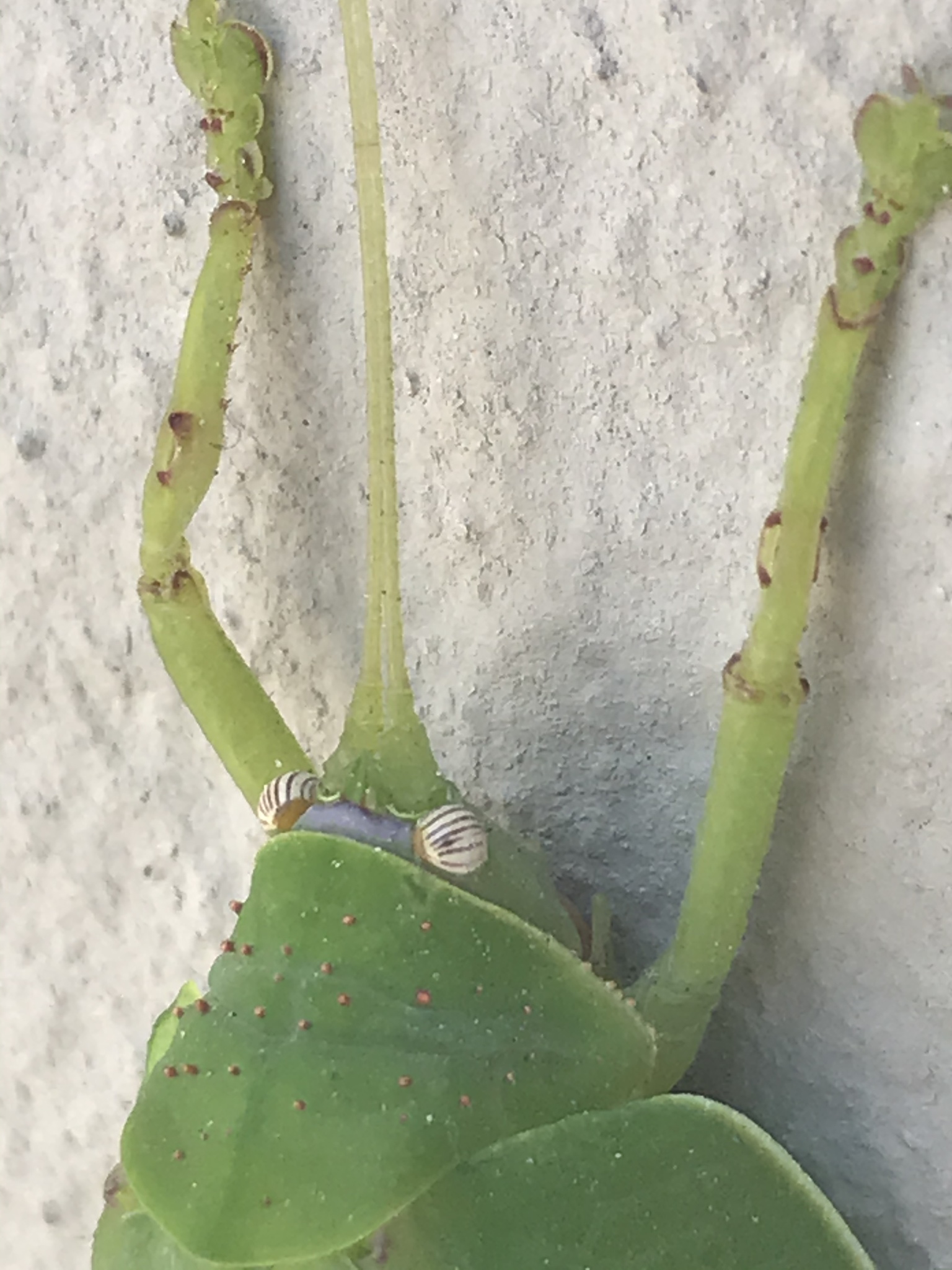
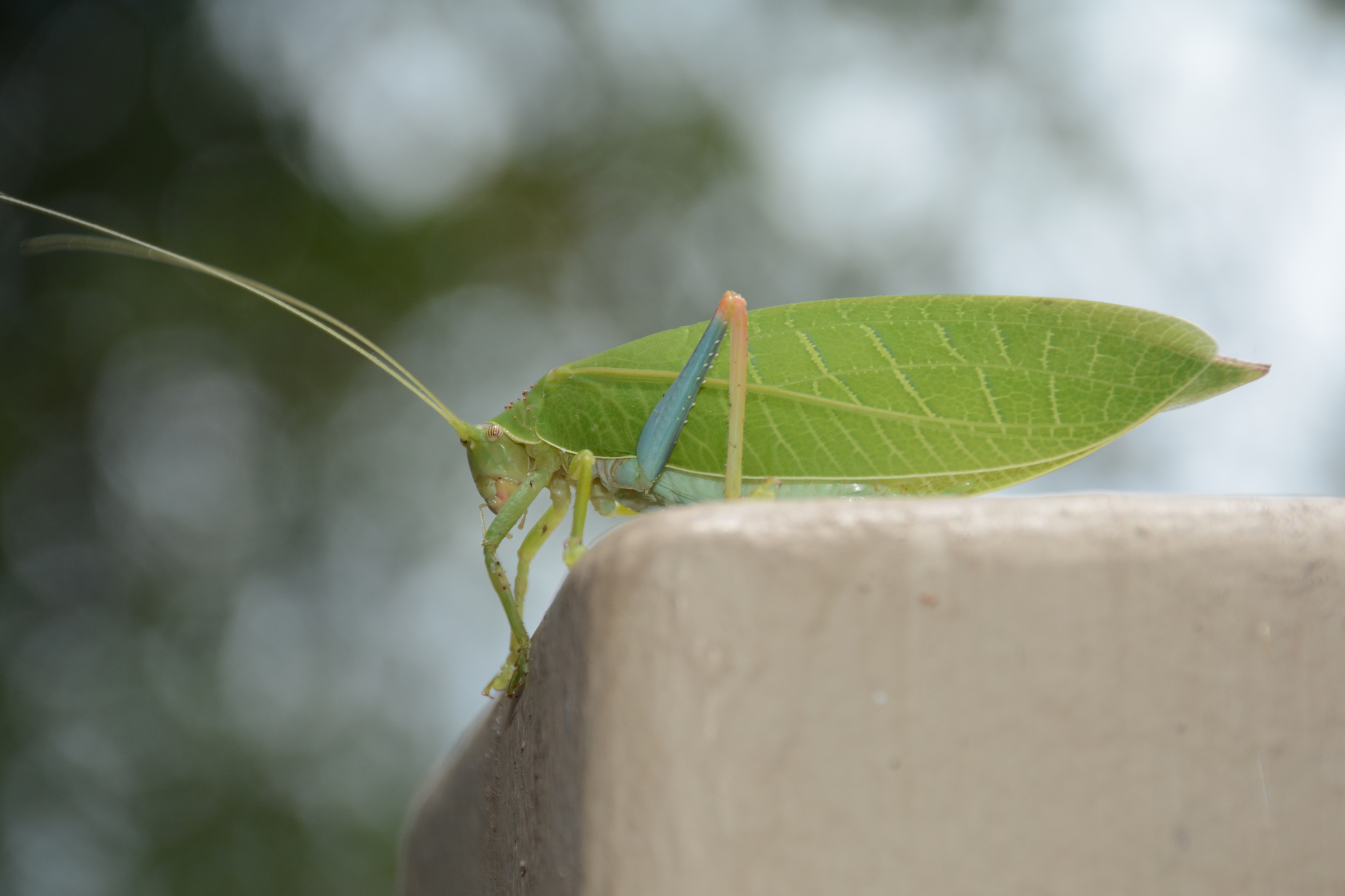
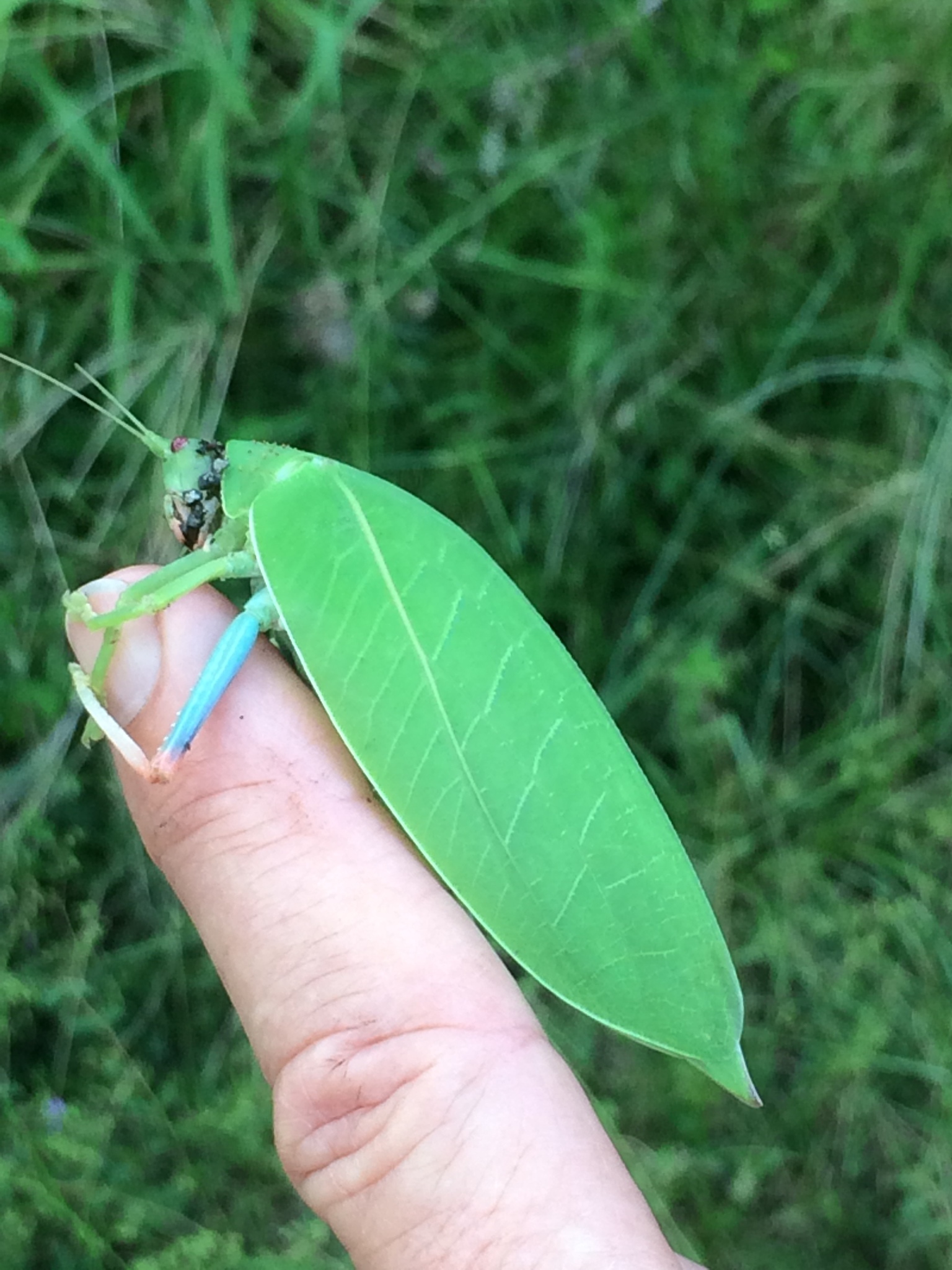
Walker (1869) described this species as follows: Female: Green or pale luteous. Head a little narrower than the fore border of the prothorax; fore part paler, shining; keel of the vertex lanceolate, furrowed, a little shorter and narrower than the first joint of the antennae; front lanceolate between the antennae. Eyes reddish, round, prominent, with several black stripes. Prothorax with a few tubercles and with two strongly impressed transverse lines, which converge on each side and have between them an indistinct longitudinal line; fore border rounded; sides with a conical outline; hind border hardly angular. Oviduct black towards the tips, a little more than half the length of the abdomen. Legs stout; four anterior femora and tibia-3 with very minute spines, those on the fore femora merely rudimentary; hind tibiae with a few small spines on each of the four keels of equal length. Forewings broad, subfusiform, shorter by three lines than the hindwings; costa rounded; hind border nearly straight; secondary areolets irregular, very small; space between the scapular vein and the costa as usual; scapular and externo-medial diverging from each other and including some small quadrate areolets; areolets between the externomedial and the interno-medial in two rows, very large; those between the latter and the anal smaller; those between the anal and the interior border very small. Hindwings pellucid; apical patch green or pale luteous; veins very pale green or straw-colour. Length of the body 19 lines; expansion of the fore wings 60 lines. (A British line is approx. 2.1 mm).
Unknown.
Type locality: Africa, southern Africa, KwaZulu-Natal
This species is distributed throughout the eastern part of sub-Saharan Africa (Hemp 2013). In countries like the Democratic Republic of the Congo, Kenya; Mozambique; Namibia; South Africa, Tanzania and Zimbabwe (Bazelet & Naskrecki 2014).
Bazelet & Naskrecki (2014) reported that in South Africa, the species is common in the eastern part of the country. In recent years, a population of the species was established in Cape Town and surrounding urban areas.
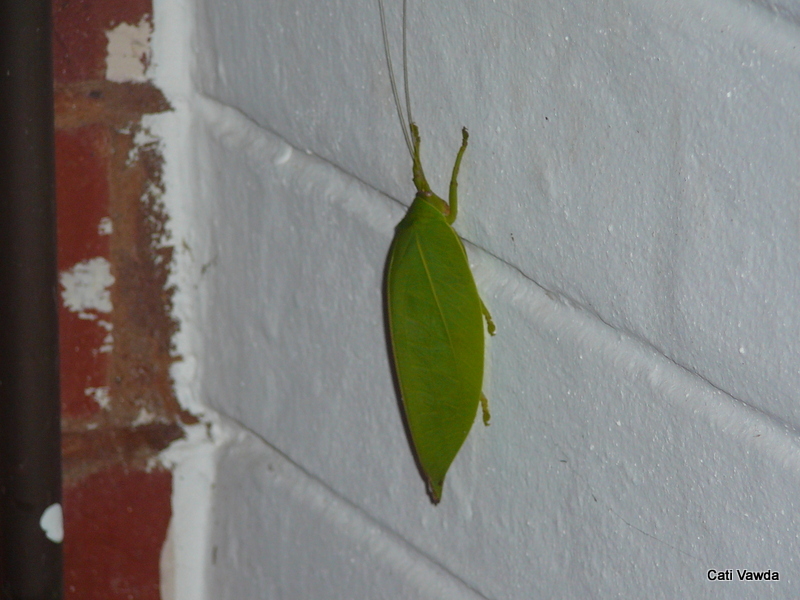
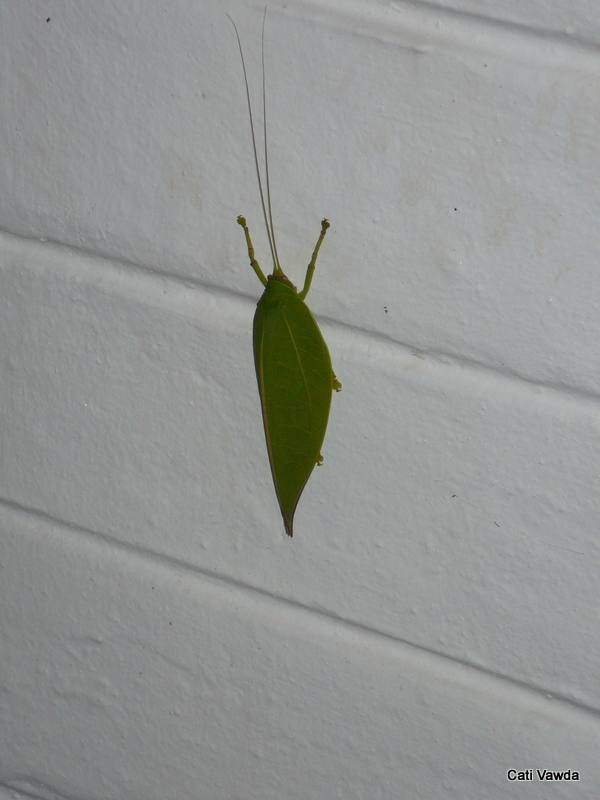
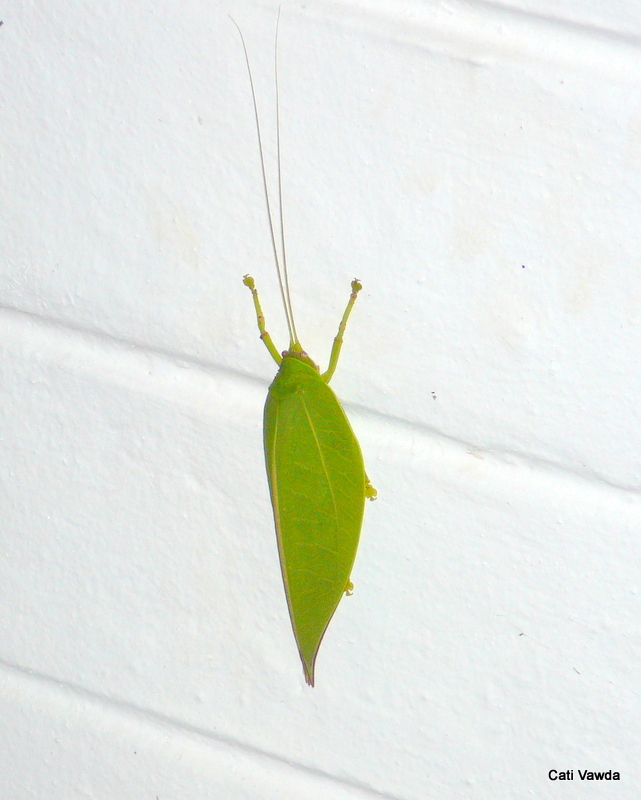
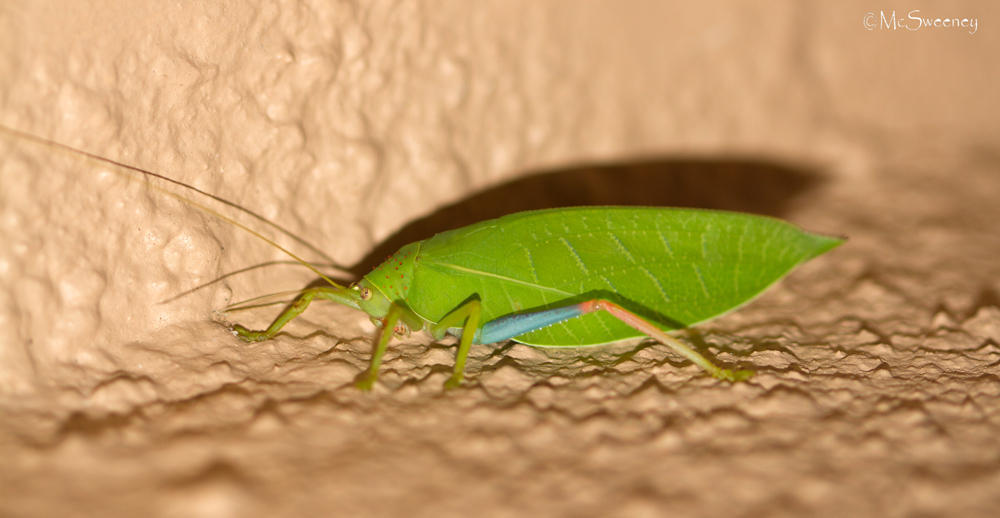
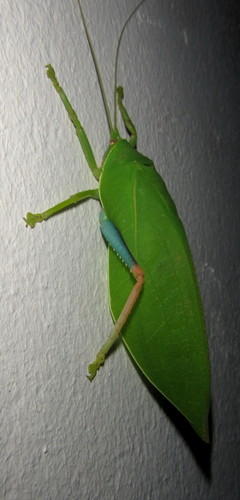
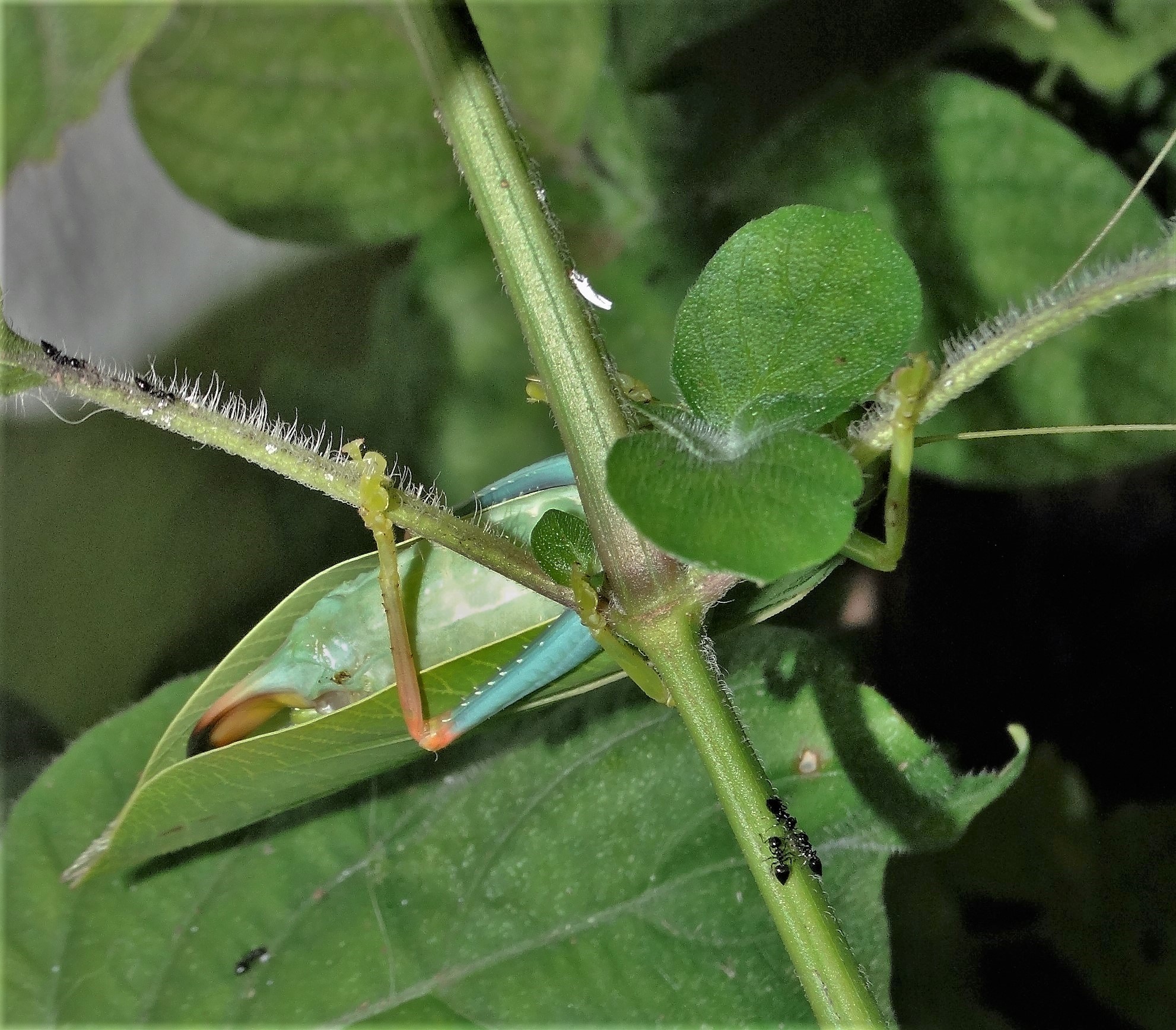
When threatened, the Blue-legged Sylvan Katydid extend and display their brightly coloured hind legs (Bazelet & Naskrecki 2014).
Herbivore - Folivore (leaf-eating)
Katydids feed on leaves, fruits, seeds and flowers. They are also specialised to feed on nectar and pollen. Herbivorous species feed on a wide variety of grasses and foliage of shrubs and trees. Many species are opportunistic and feed on any food source available. Some even feed on the dead animals. It is common to find a katydid feeding on a roadkill of their own kind or other insects. Head structures usually indicate the feeding habits of these insects, with rounded heads as characteristic for leaf-eaters. The slanted heads either crack the seeds or eat tough fruits or chew on wood. Others with projecting mouthparts are flower feeders (Rentz 2010).
This species lays its eggs in bark and then spends its entire life in trees (Bazelet & Naskrecki 2014).
Savanna, Grassland, Indian Ocean Coastal Belt, Albany Thicket, Fynbos.
This map contains point-based occurrences at different locations
Occurrence in African countries and South African provinces. Residence status indicates if a taxon is indigenous, endemic, or alien in a specific region. This data is based on specimen records and literature.
FSA
SA
BOT
NAM
ESW
LES
WC
EC
NC
FS
GA
KZN
LP
MP
NW
Absent
Indigenous
Endemic
Naturalised
Invasive
Names and Sources
| Common Name | Language |
|---|---|
| Blue-legged Sylvan Katydid | En |
Classification
KINGDOM Animalia
PHYLUM Arthropoda
CLASS Insecta
ORDER Orthoptera
FAMILY Tettigoniidae
GENUS Zabalius
SPECIES ophthalmicus
No results found for Zabalius ophthalmicus (Walker, 1869)
This species is not utilised.
10 results for Zabalius ophthalmicus (Walker, 1869)
This map contains point-based occurrences at different locations
2013
JOURNAL ARTICLE
Annotated list of Ensifera (Orthoptera) and further records on Caelifera (Orthoptera) of Mt Kilimanjaro, TanzaniaHemp, C.. 2013. Annotated list of Ensifera (Orthoptera) and further records on Caelifera (Orthoptera) of Mt Kilimanjaro, Tanzania Vol. 3613(4) pp.301-342.
1869
BOOK
Catalogue of the specimens of Dermaptera Saltatoria in the collection of the British MuseumWalker, F.. 1869. Catalogue of the specimens of Dermaptera Saltatoria in the collection of the British Museum Vol. 3. Trustees of the British Museum pp.562.
1891
JOURNAL ARTICLE
Orthopterologische Beiträge. IV. Beiträge zur Systematik der Pseudophylliden Afrika'sKarsch, F.. 1891. Orthopterologische Beiträge. IV. Beiträge zur Systematik der Pseudophylliden Afrika's Vol. 36 (1). Publisher Berlin :In Commission der Nicolai'schen Verlagsbuchhandlung,1881-1914 pp.71—114.
2010
BOOK
A Guide to the Katydids of AustraliaRentz, DCF. 2010. A Guide to the Katydids of Australia. CSIRO PUBLISHING pp.1-213.
2020
WEB ARTICLE
Orthoptera Species File Version 2020Cigliano, MM, Braun, H, Eades, DC, Otte, D. 2020. Orthoptera Species File Version 2020.
Status and criteria
LC
Assessor(s)
Corinna Bazelet
Reviewer(s)
Axel Hochkirch


