

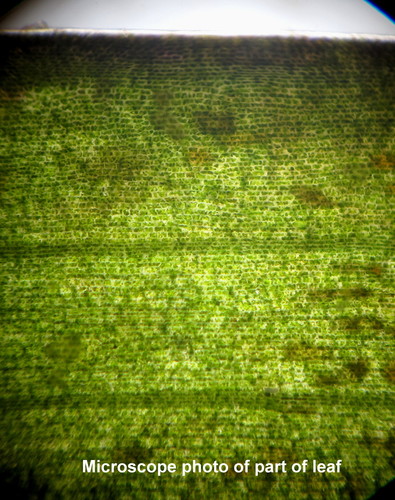
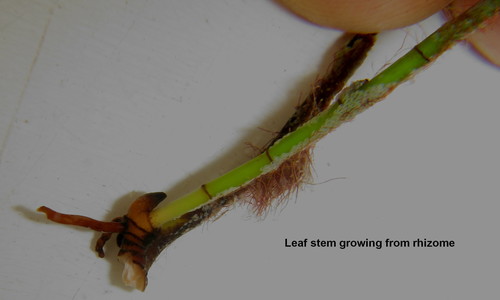
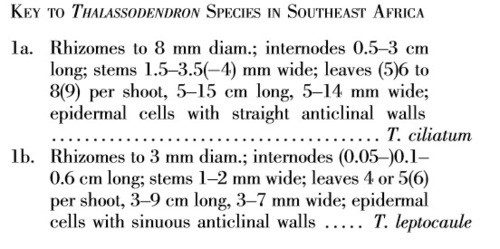
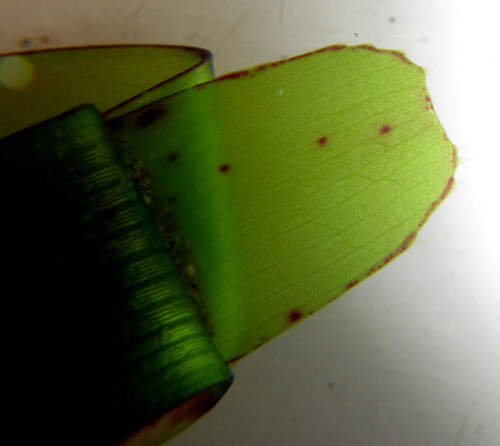
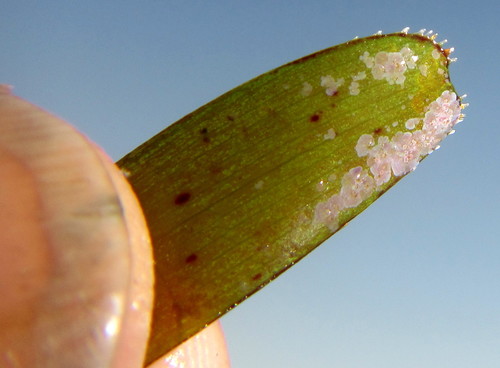
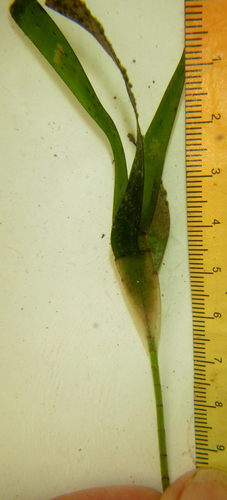
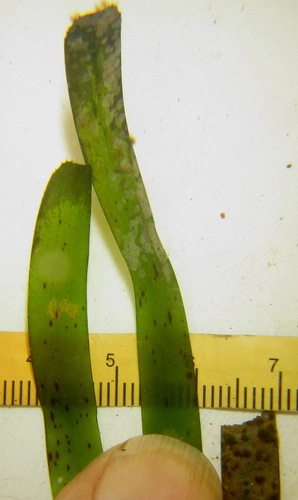
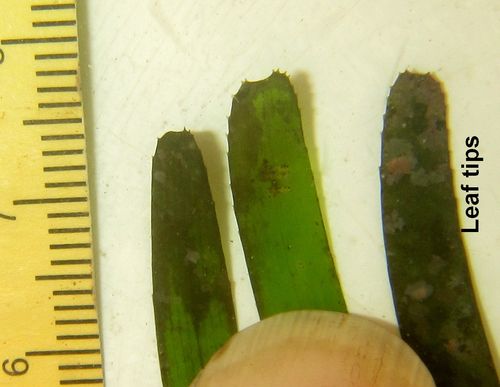
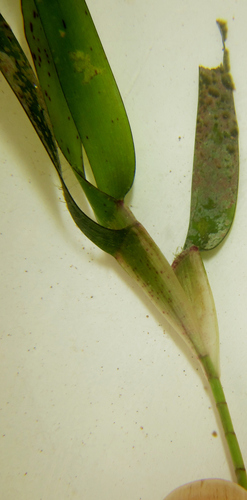
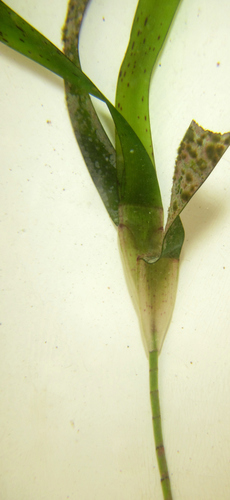
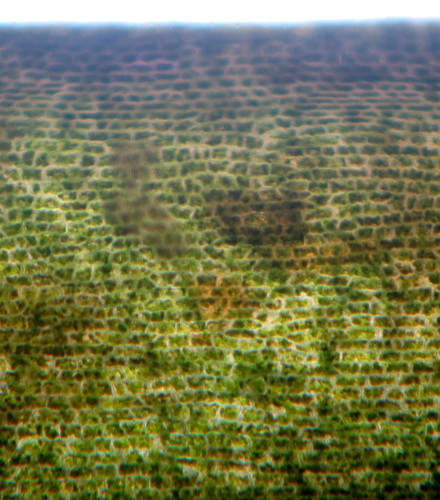
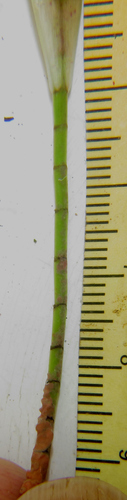
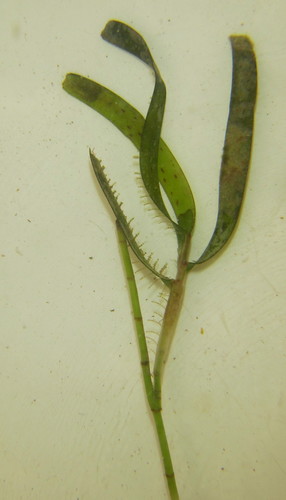
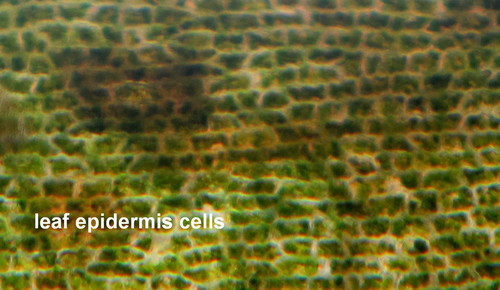
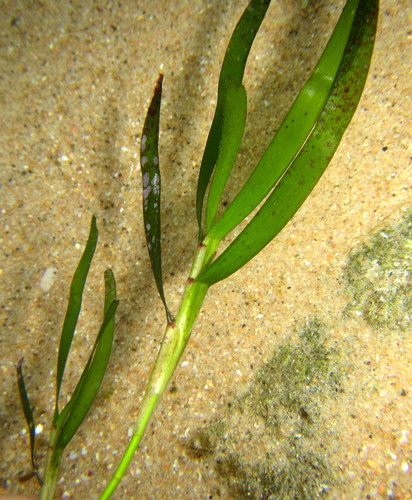
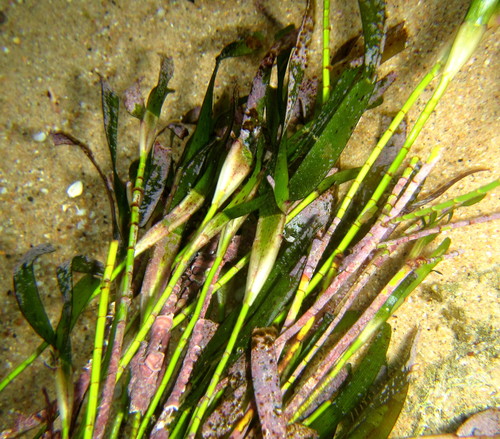
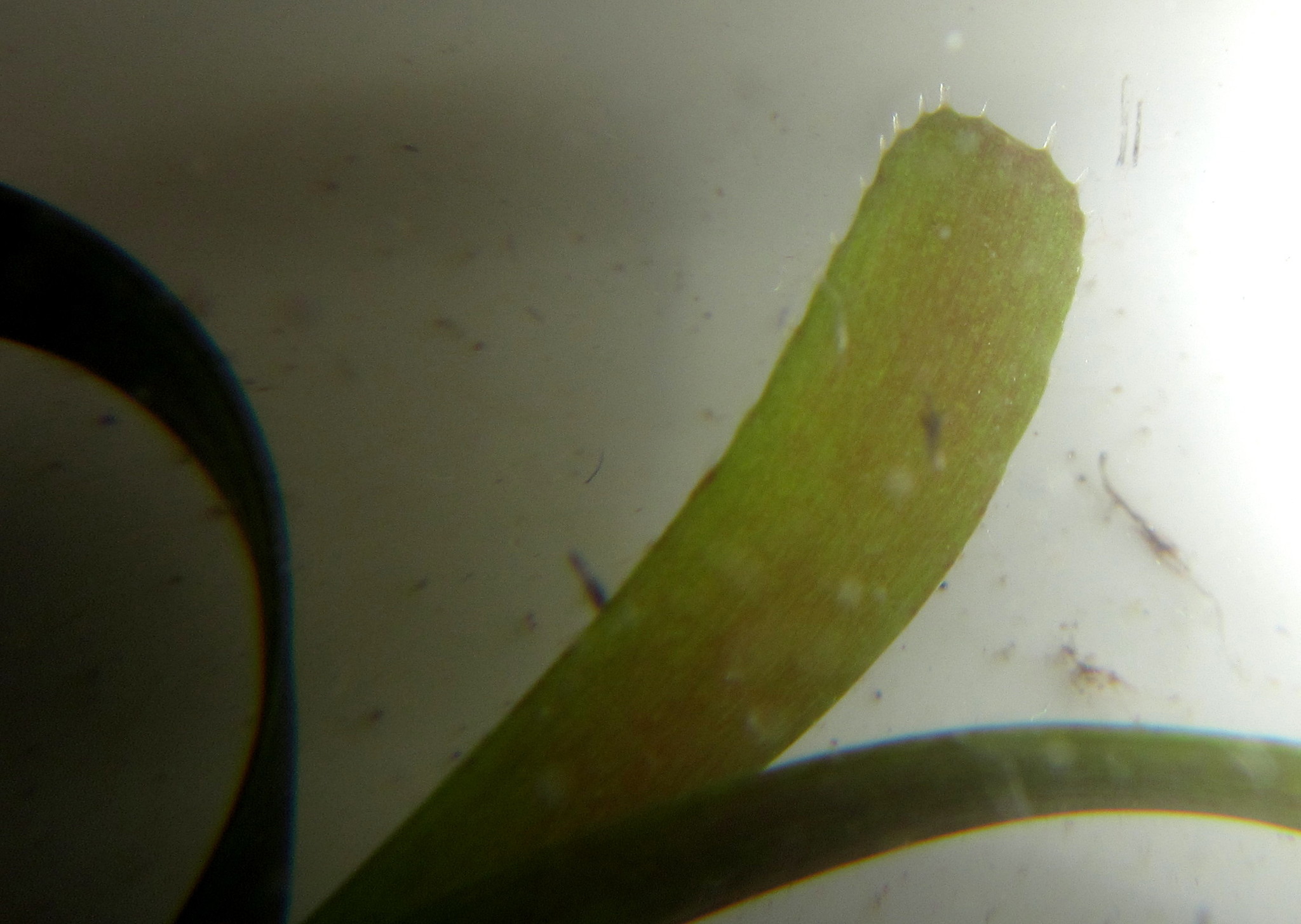
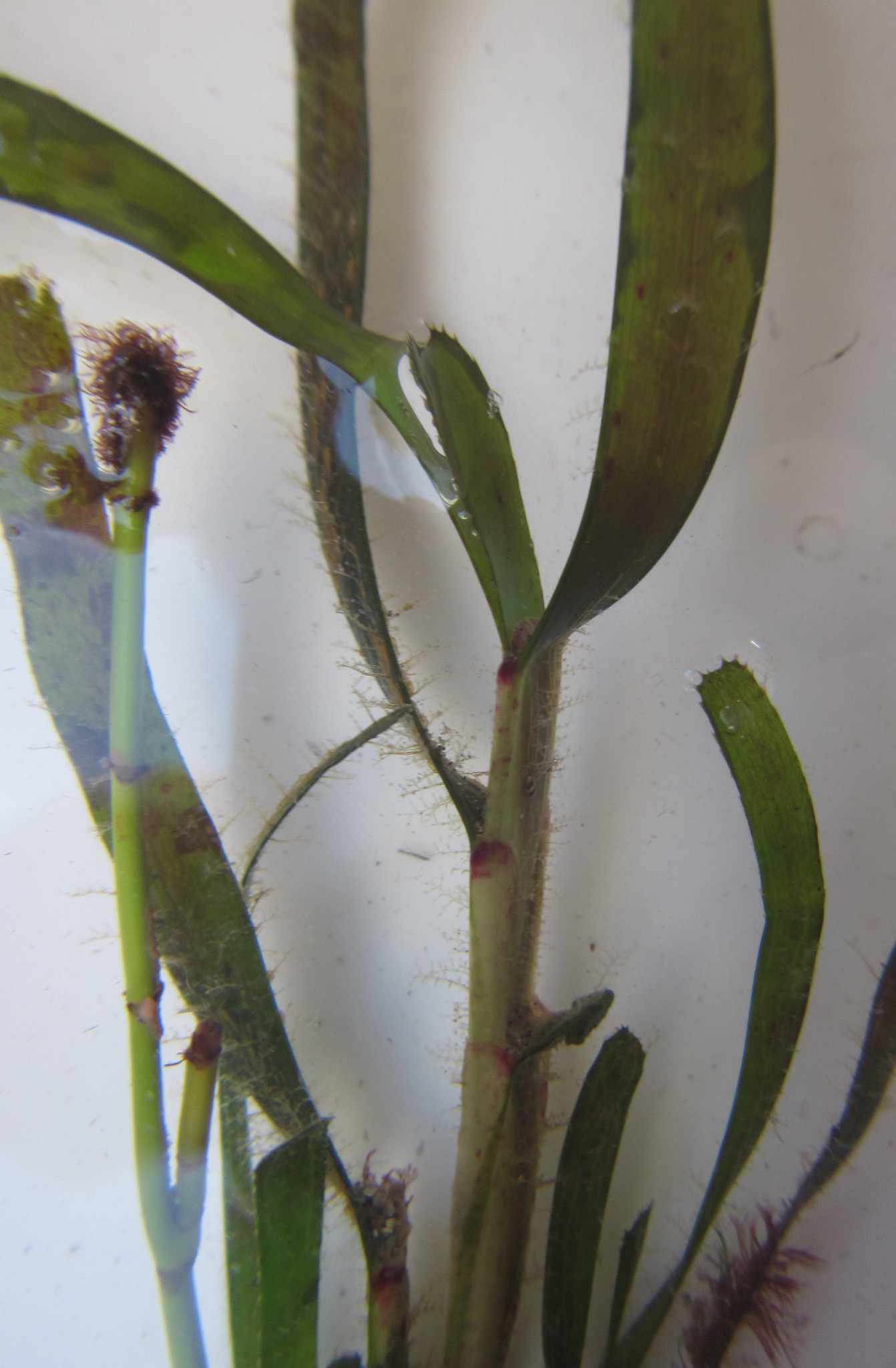
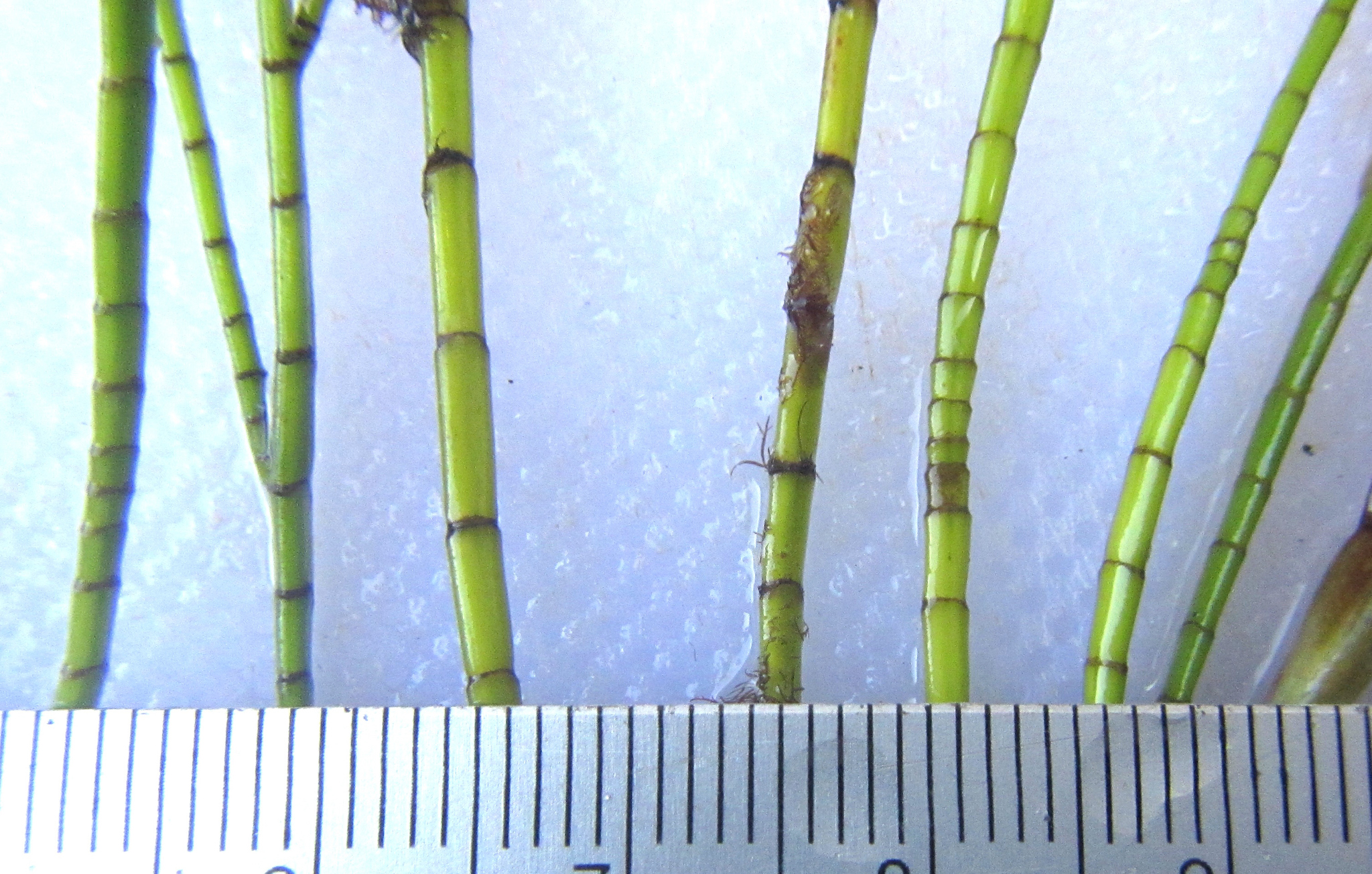
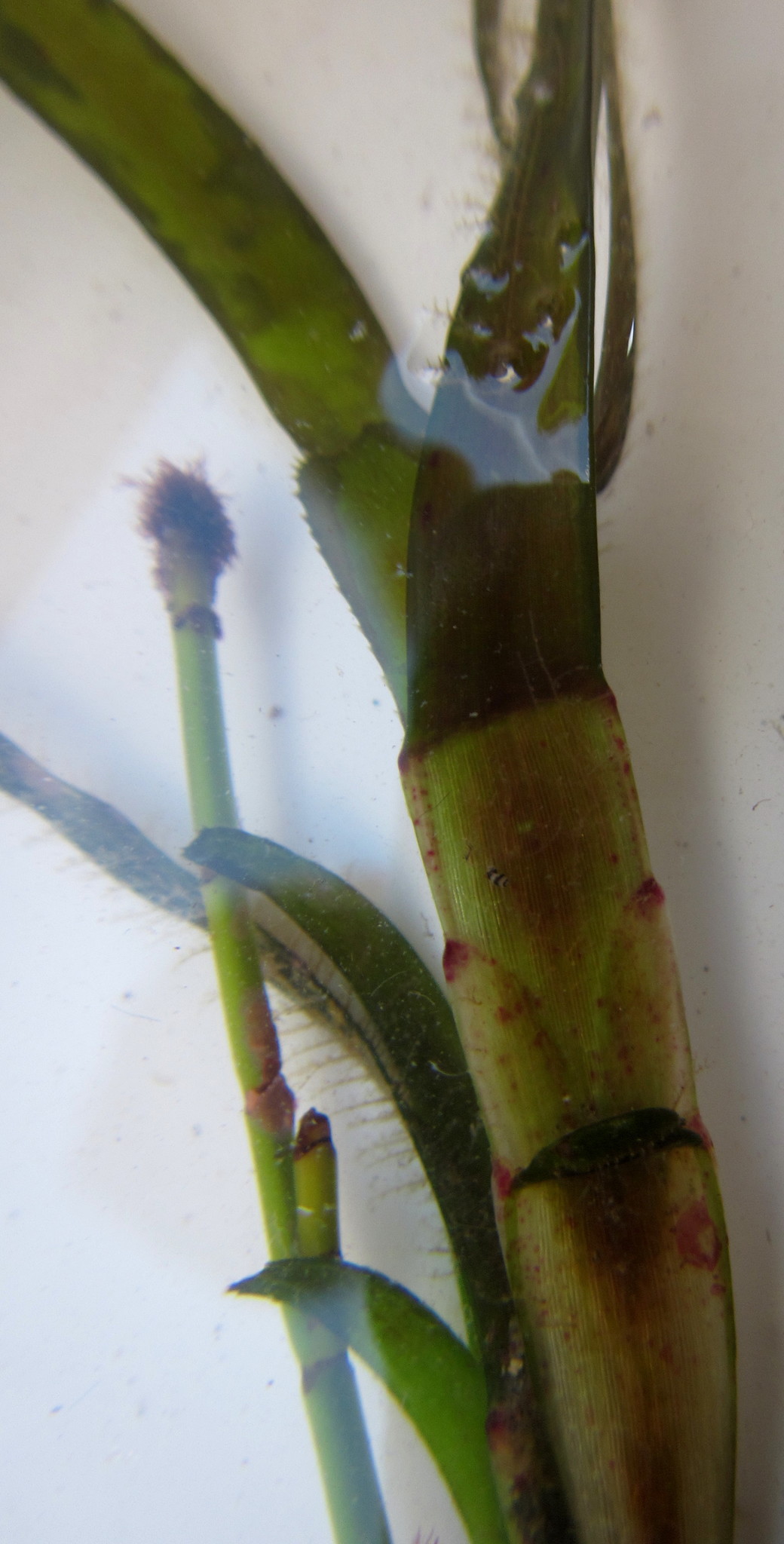
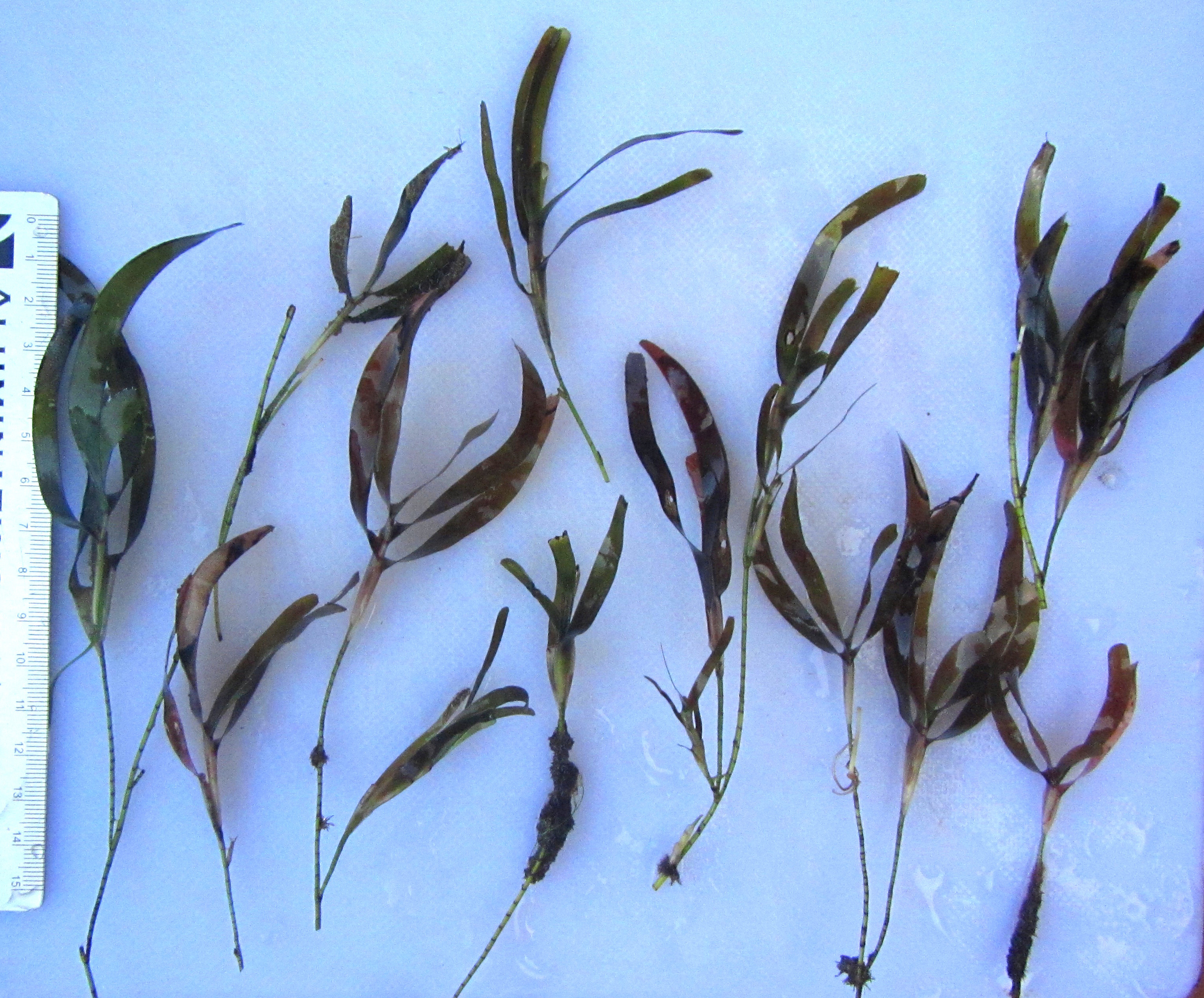
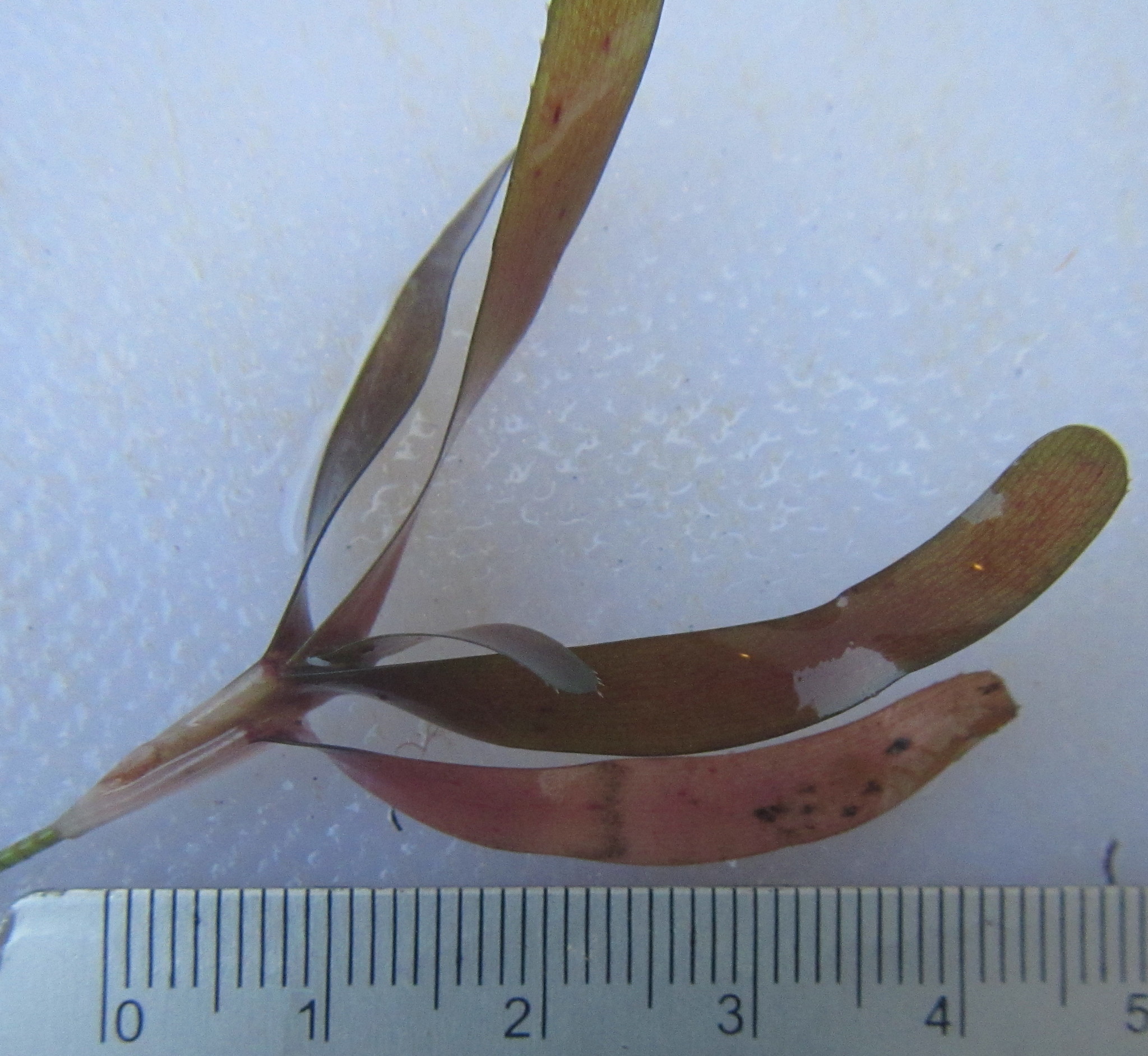
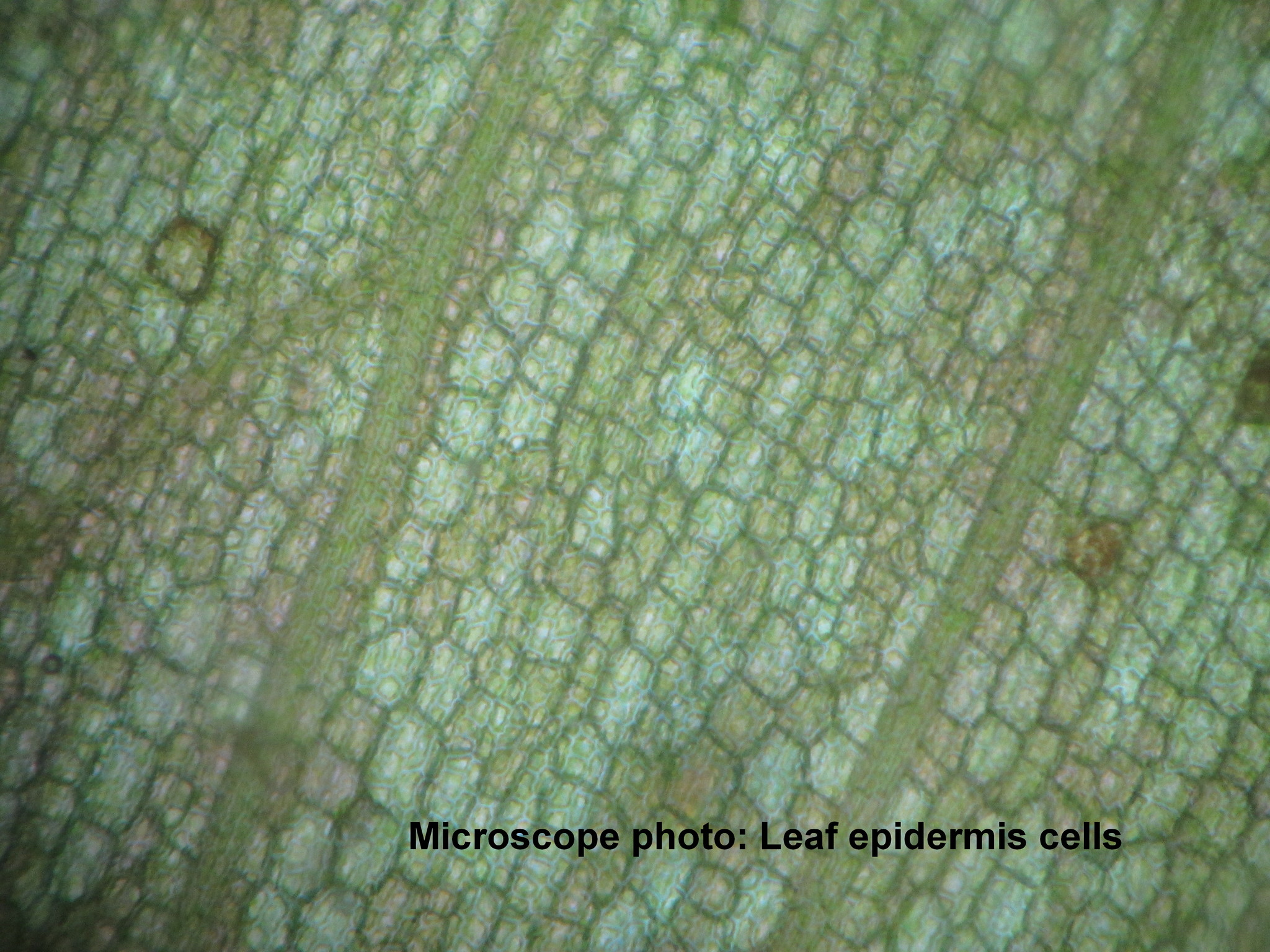
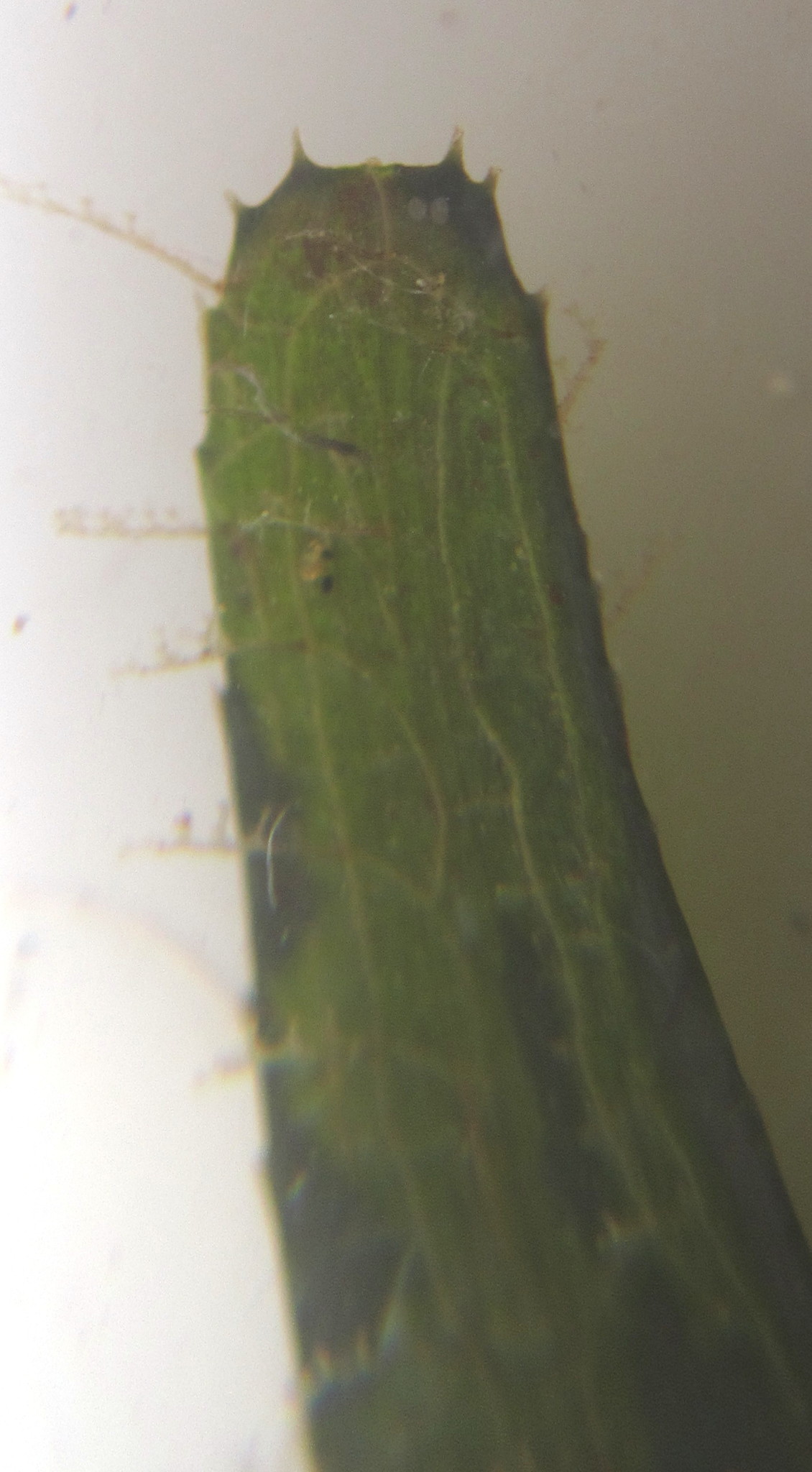
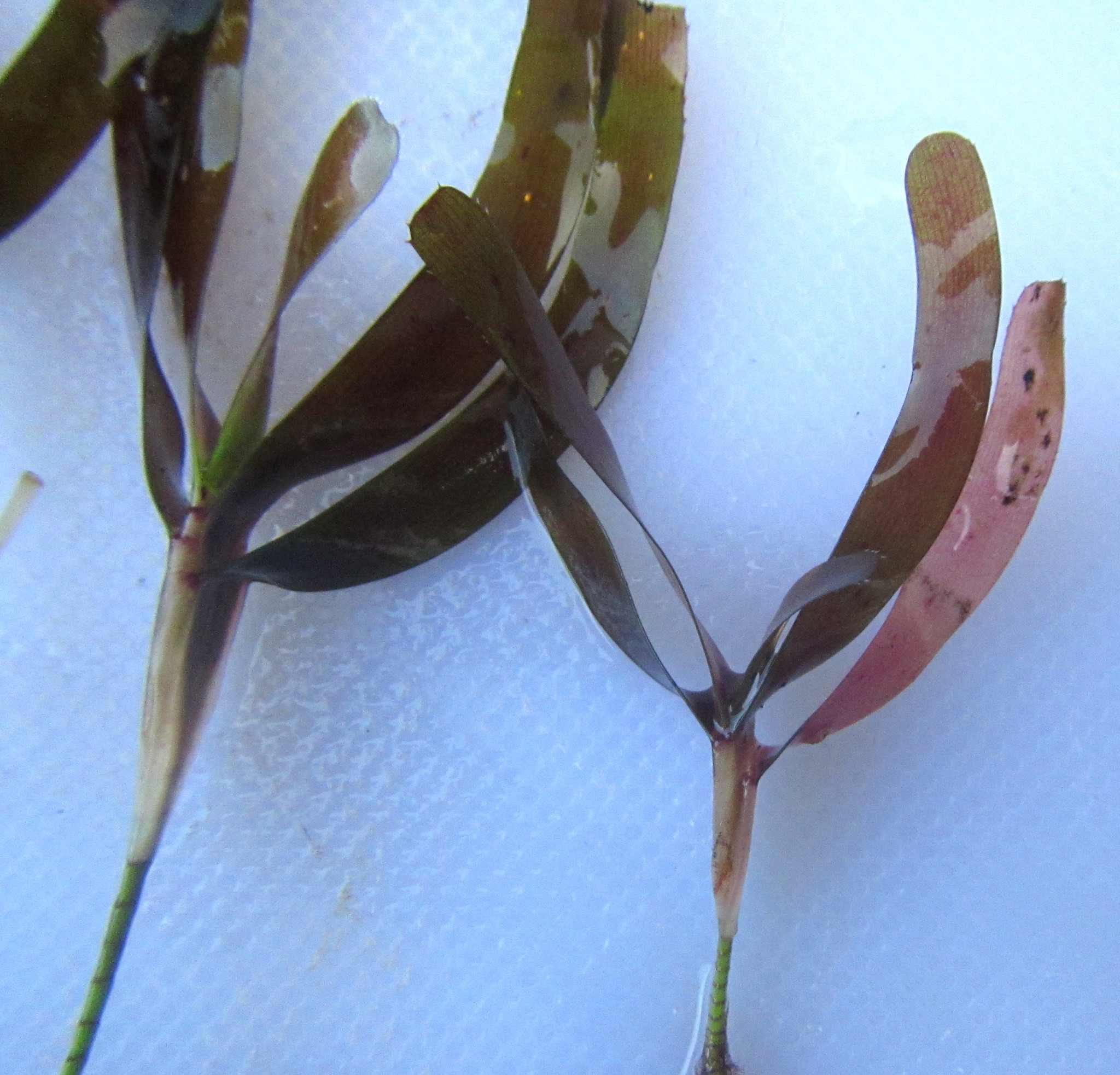
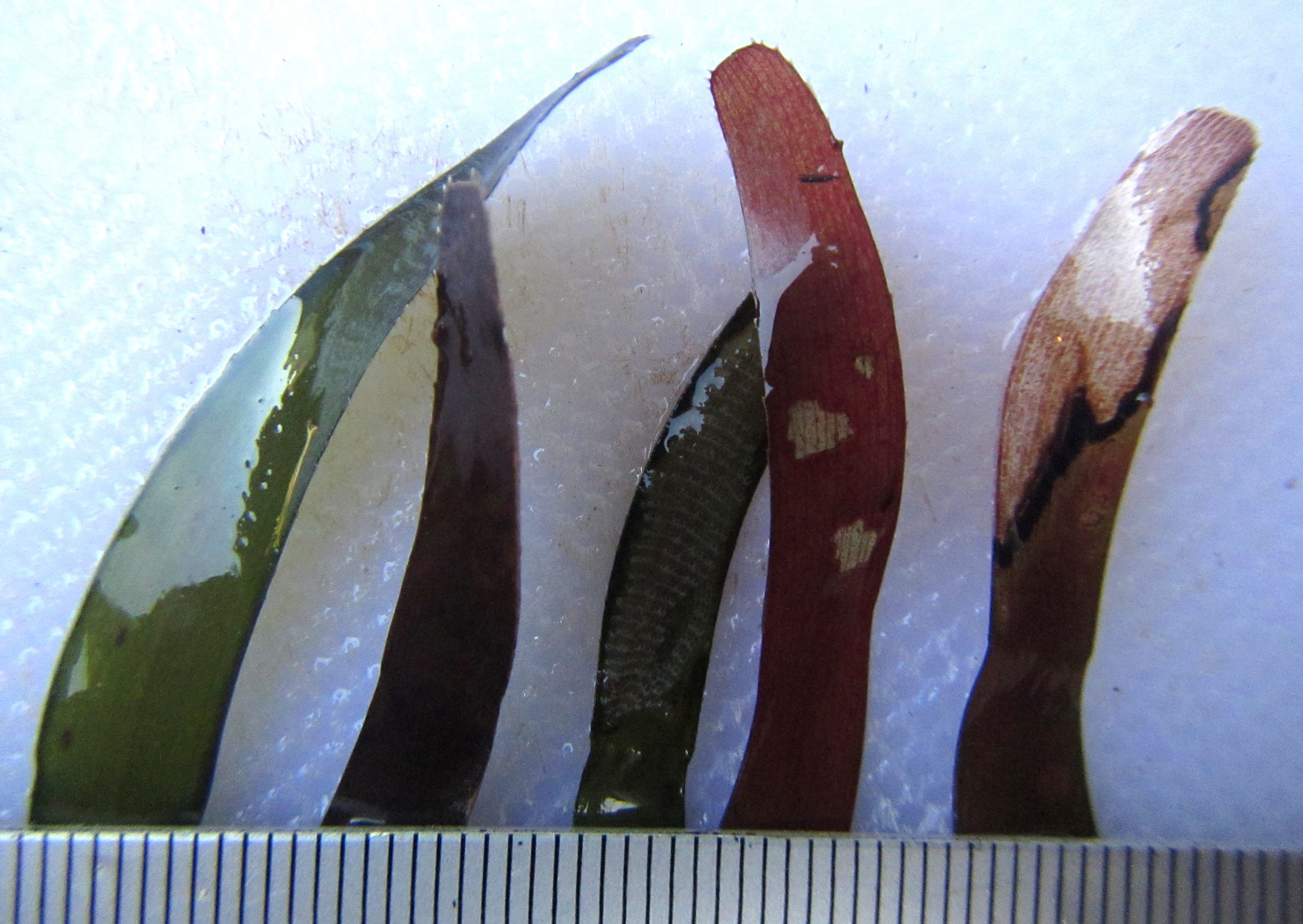
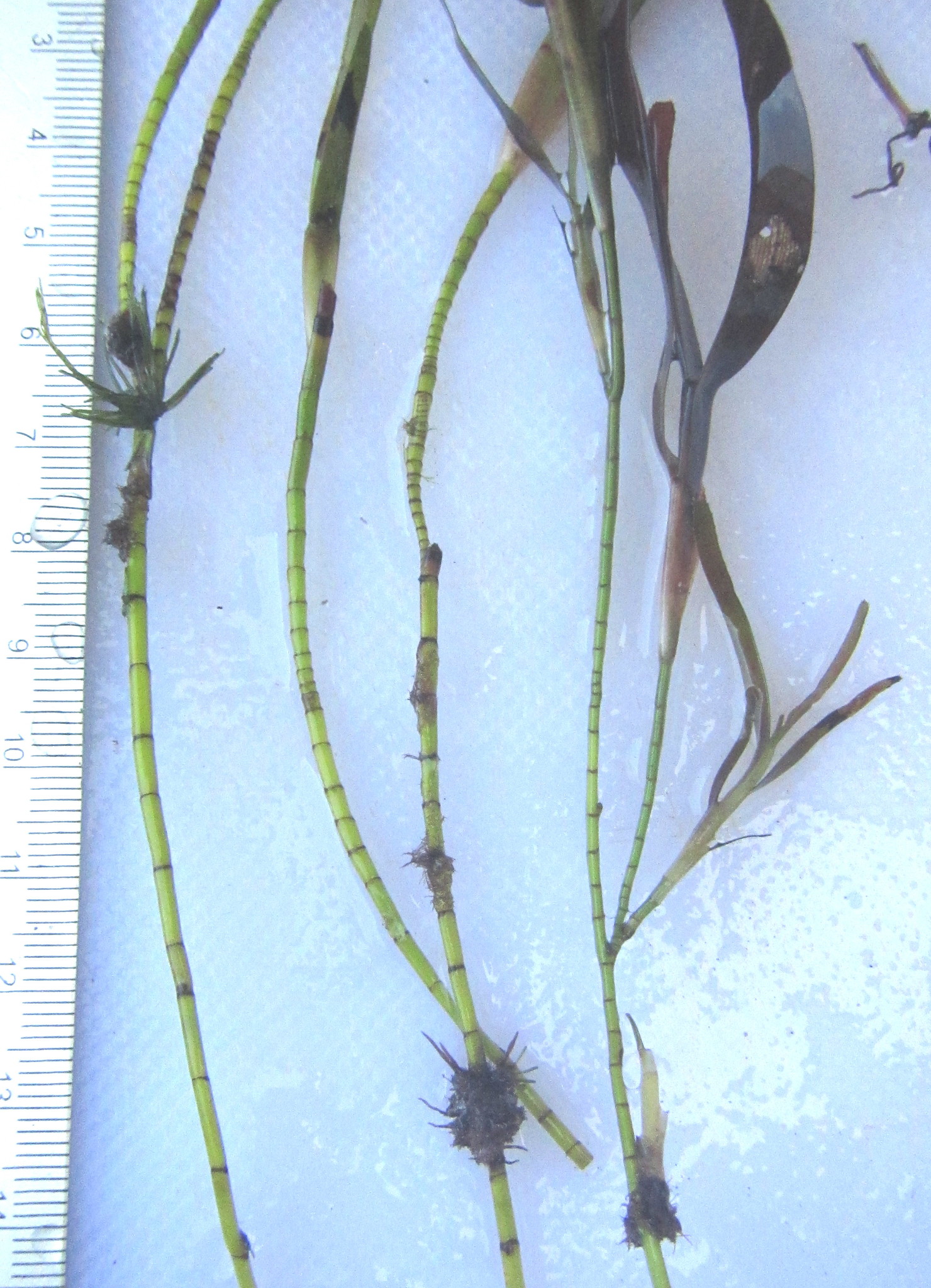
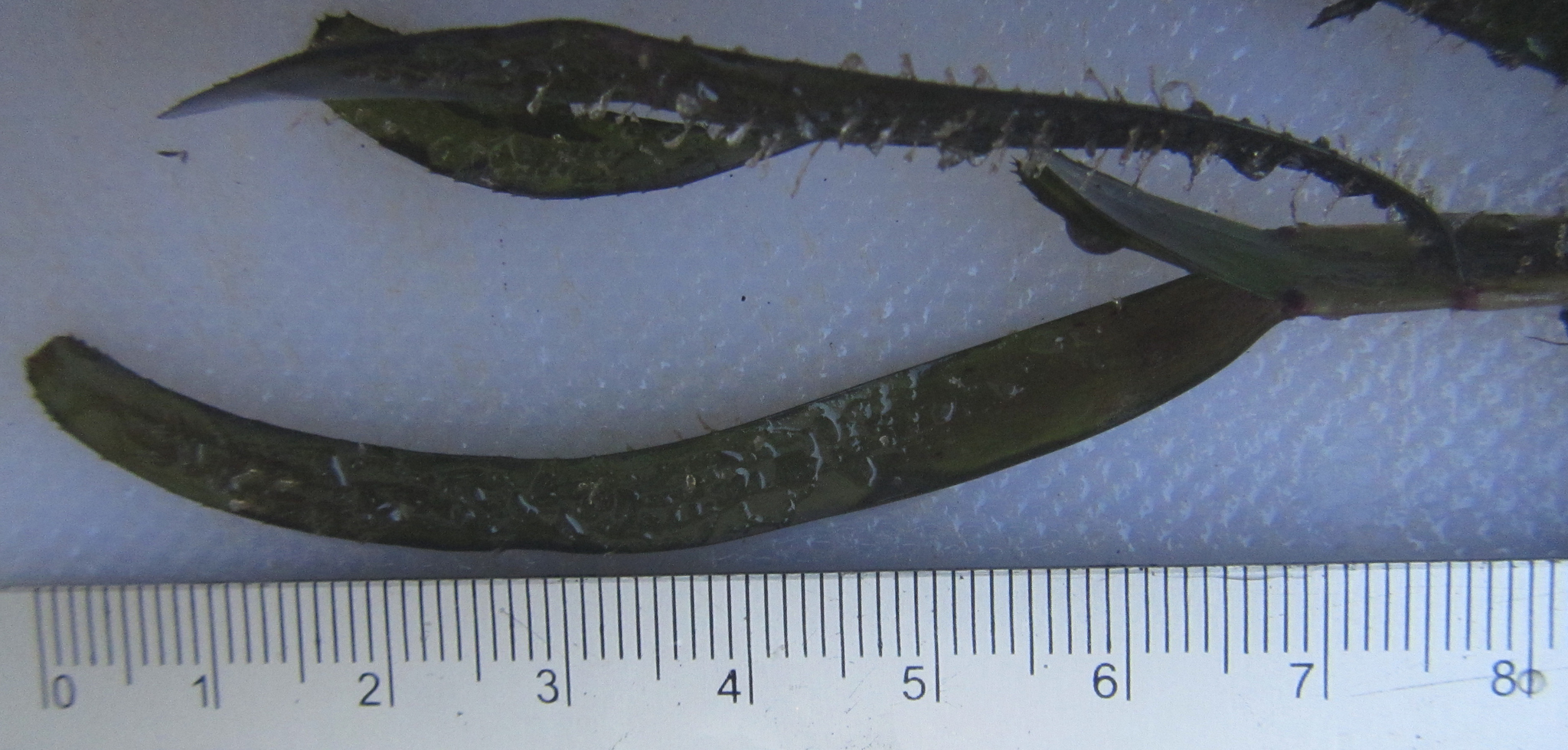
Perennial, dioecious seagrass; rhizomes with sympodial branching, brown, terete, gnarled, to 3mm diam.; vertical rhizomes rare; roots usually much branched, 2 at the stem-bearing internode (4th), 2 at the preceding internode (3rd), and none at the 1st and 2nd internodes; internodes much condensed (0.5-)1-6 mm. Scales ca. 5 mm, broadly ovate, early deciduous, dark brown; apex obtuse and apiculate; stems erect, 1(2), unbranched or little branched, to 70 cm, 1-2 mm width, with 4 or 5(6) leaves per shoot; leaf sheaths 10-30 x 3-9 mm, cuneate at the base, cream at the base becoming greenish (similar to leaf blade) to the top, with obtuse auricules, caducous, leaving circular scars irregularly spaced, to 10 mm apart; tanniniferous cells usually inconspicuous, margins scarious; ligule obtuse, 0.5-0.75 mm high; leaf blade usually falcate, 3-9 x 0.3-0.7 cm, greenish brown in dried condition; distal margins irregularly serrulate; veins (7)11 to 15(17), united below leaf apex; median and lateral veins slightly prominent; 15 to 23 rows of cells between secondary veins; leaf epidermis cells elongate and rectangular with anticlinal walls sinuous in surface view; leaf apex obtuse, slightly emarginate, denticulate, except at the middle zone; apical teeth to 0.5 mm high, acute or truncate. Squamules in leaf axils in 2 opposite groups of (1)2 to 4 squamules each, of unequal size, the longer about 0.75-2 mm. Male and female flowers solitary on short lateral shoots near the base of leaf clusters. Male flower enclosed in a leafy bract, sessile; anthers ca. 2.5 mm, 2 dorsally connate over entire length and attached at the same height with a short terminal appendage (ca. 0.5 mm), entire. Female flower enclosed in 3 leafy bracts, all differentiated into a sheath and a blade, with a ligule 0.5-0.75 mm; 1st bract outermost with a sheath 13-15 mm, the blade slightly smaller; 2nd bract with a sheath ca. 16-22 mm, the blade slightly shorter or longer; 3rd bract 14-20 mm, the blade equal to or longer, slightly falcate with the apex acute, obscurely veined, somewhat fleshy; ovary ellipsoid, 1.5-2 mm; style divided into 2 stigmatic arms 12-16 mm, strap-shaped. Seedlings viviparous. From: Duarte, MC; Bandeira, SO; Romeiras, MM. 2012. Systematics and ecology of a new species of seagrass (Thalassodendron, Cymodoceaceae) from Southeast African coasts. Novon 22: 16-24. [doi: 10.3417/2010079] [Acknowledgement: Missouri Botanical Garden Press; St. Louis] [All rights reserved]
Haec species Thalassodendro ciliato (Forssk.) Hartog affinis, sed ab eo rhizomate usque ad 3 mm diametro, internodiis (0.5)1-6 mm longis, foliis lamina 3-9 cm longa et 3-7 mm lata, epidermidis cellulis pariete anticlinali flexuoso, floribus masculinis in bractea solitaria foliosa inclusis atque floribus femineis in bracteis 3 foliaceis inclusis differt. From: Duarte, MC; Bandeira, SO; Romeiras, MM. 2012. Systematics and ecology of a new species of seagrass (Thalassodendron, Cymodoceaceae) from Southeast African coasts. Novon 22: 16-24. [doi: 10.3417/2010079] [Acknowledgement: Missouri Botanical Garden Press; St. Louis] [All rights reserved]
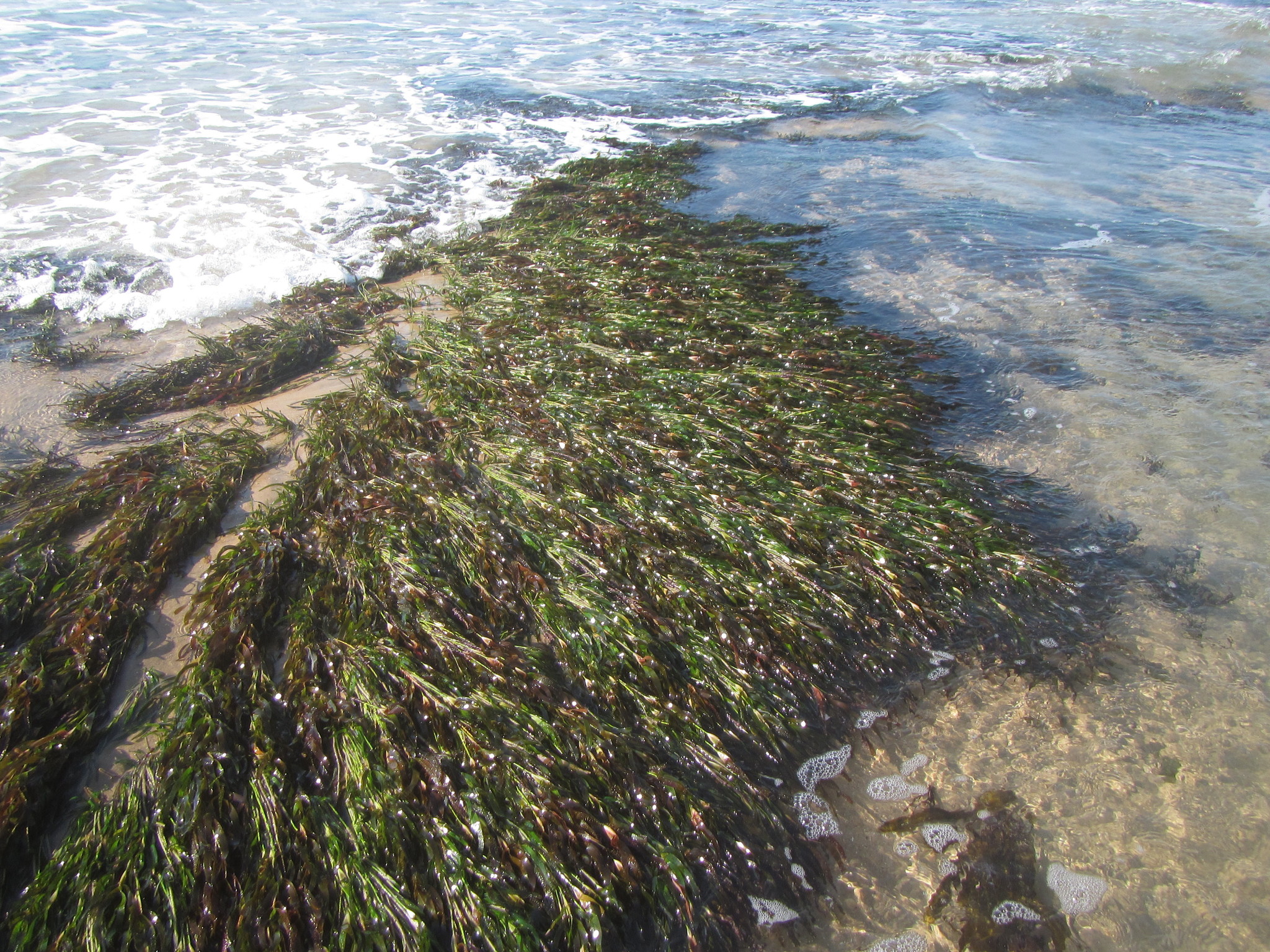
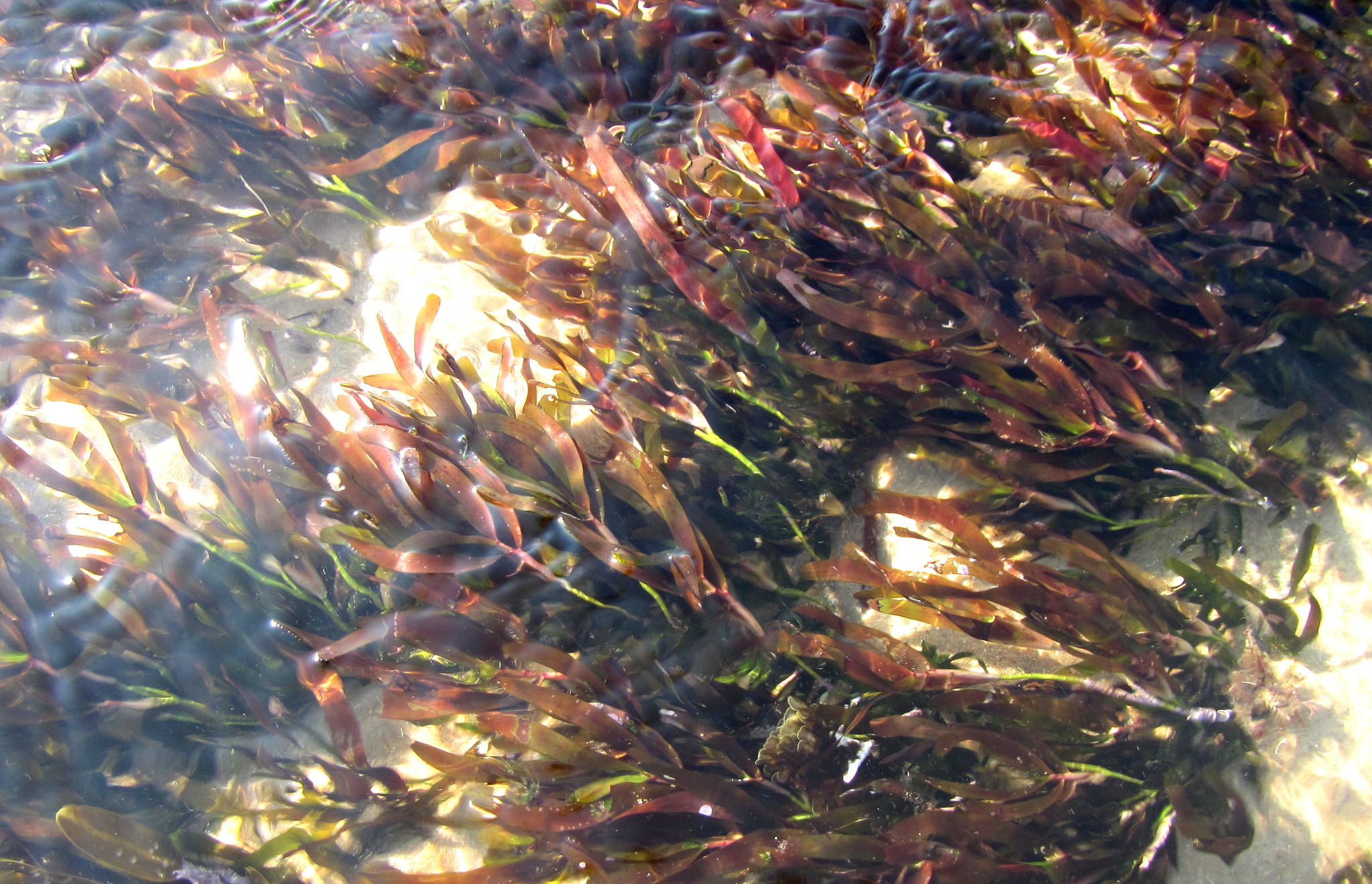
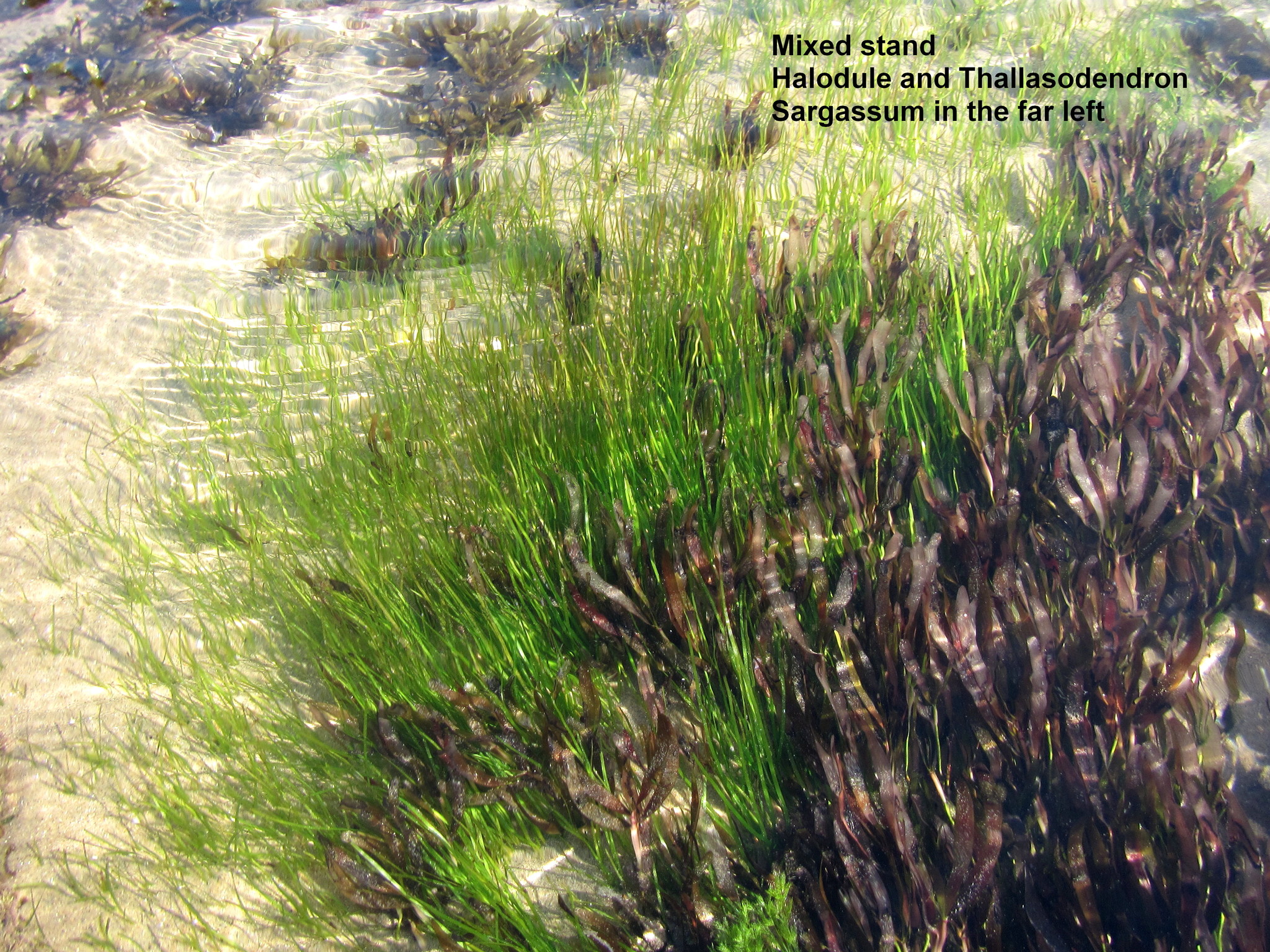
Thalassodendron leptocaule occurs from the intertidal area to the subtidal fringe, usually in rocky pools, in crevices and creeks, and on calcareous sandstone, and is exposed to severe wave action. The species occurs in habitats that are permanently submerged or partially exposed at low water to ordinary spring tides and water temperature in the distribution area ranges between ca. 27°C (at Maputo latitude) and 26°C in the south (at Richards Bay latitude) during the warmest month (February). From: Duarte, MC; Bandeira, SO; Romeiras, MM. 2012. Systematics and ecology of a new species of seagrass (Thalassodendron, Cymodoceaceae) from Southeast African coasts. Novon 22: 16-24. [doi: 10.3417/2010079] [Acknowledgement: Missouri Botanical Garden Press; St. Louis] [All rights reserved]
According to current data, Thalassodendron leptocaule occurs in southeast African tropical coastal areas from Xai-Xai (Gaza Province) and Ponta do Ouro (Maputo Province, type locality) in southern Mozambique, extending to Boteler Point (KwaZulu-Natal Province) in South Africa. Field observations (S. O. Bandeira) indicate the presence of the taxa in Chidenguele (70 km north of Xai-Xai) and north to Inhambane Province in Mozambique. From: Duarte, MC; Bandeira, SO; Romeiras, MM. 2012. Systematics and ecology of a new species of seagrass (Thalassodendron, Cymodoceaceae) from Southeast African coasts. Novon 22: 16-24. [doi: 10.3417/2010079] [Acknowledgement: Missouri Botanical Garden Press; St. Louis] [All rights reserved]
October to November
This map contains point-based occurrences at different locations
Occurrence in the Flora of Southern Africa (FSA) countries and South African provinces. Residence status indicates if a taxon is indigenous, endemic, naturalised or invasive in a specific region. This data is based on specimen records and literature
FSA
SA
BOT
NAM
ESW
LES
WC
EC
NC
FS
GA
KZN
LP
MP
NW
Absent
Indigenous
Endemic
Naturalised
Invasive

Names and Sources
Published in: Novon 22(1): 17 (2012)
Type: Mozambique, Maputo: Matutuine, Ponta do Ouro, 28 Nov. 2008 (female), M.C. Duarte & A.M. Manjate 3801 (LISC, holo.; LMU, MO, iso.)
Classification
KINGDOM Plantae
SUBKINGDOM Phanerogamae
PHYLUM Anthophyta
ORDER Alismatales
FAMILY Cymodoceaceae
GENUS Thalassodendron
SPECIES leptocaule
2 results for Thalassodendron leptocaule Maria C.Duarte, Bandeira & Romeiras
This map contains point-based occurrences at different locations
2012
No results found for Thalassodendron leptocaule Maria C.Duarte, Bandeira & Romeiras
| Part(s) of plant used | Use(s) | Reference |
|---|
Coming soon...


