
PLANTAE / PHANEROGAMAE / ANTHOPHYTA / ASPARAGALES / IRIDACEAE / IRIDOIDEAE / IRIDEAE / BOBARTIA / PANICULATA

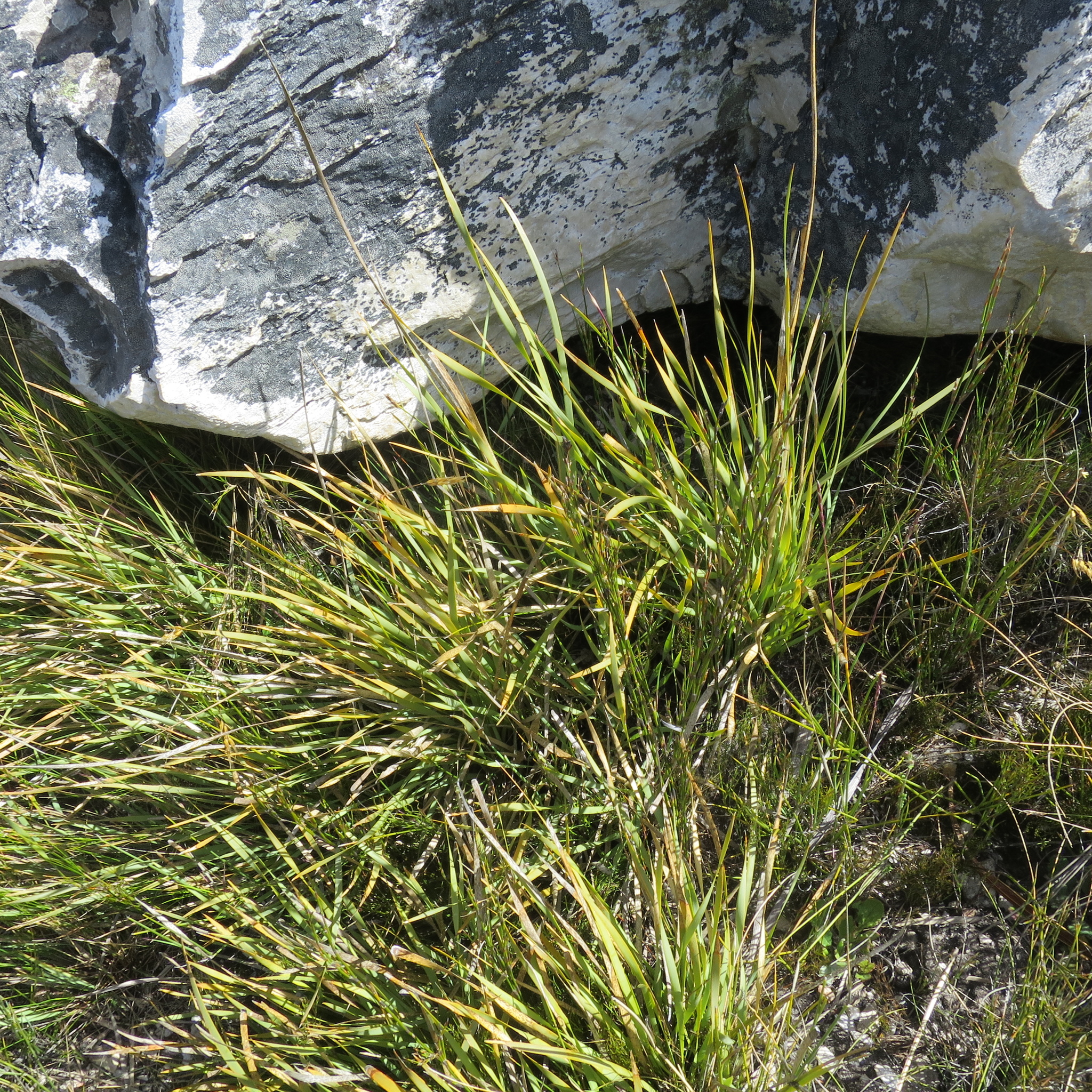
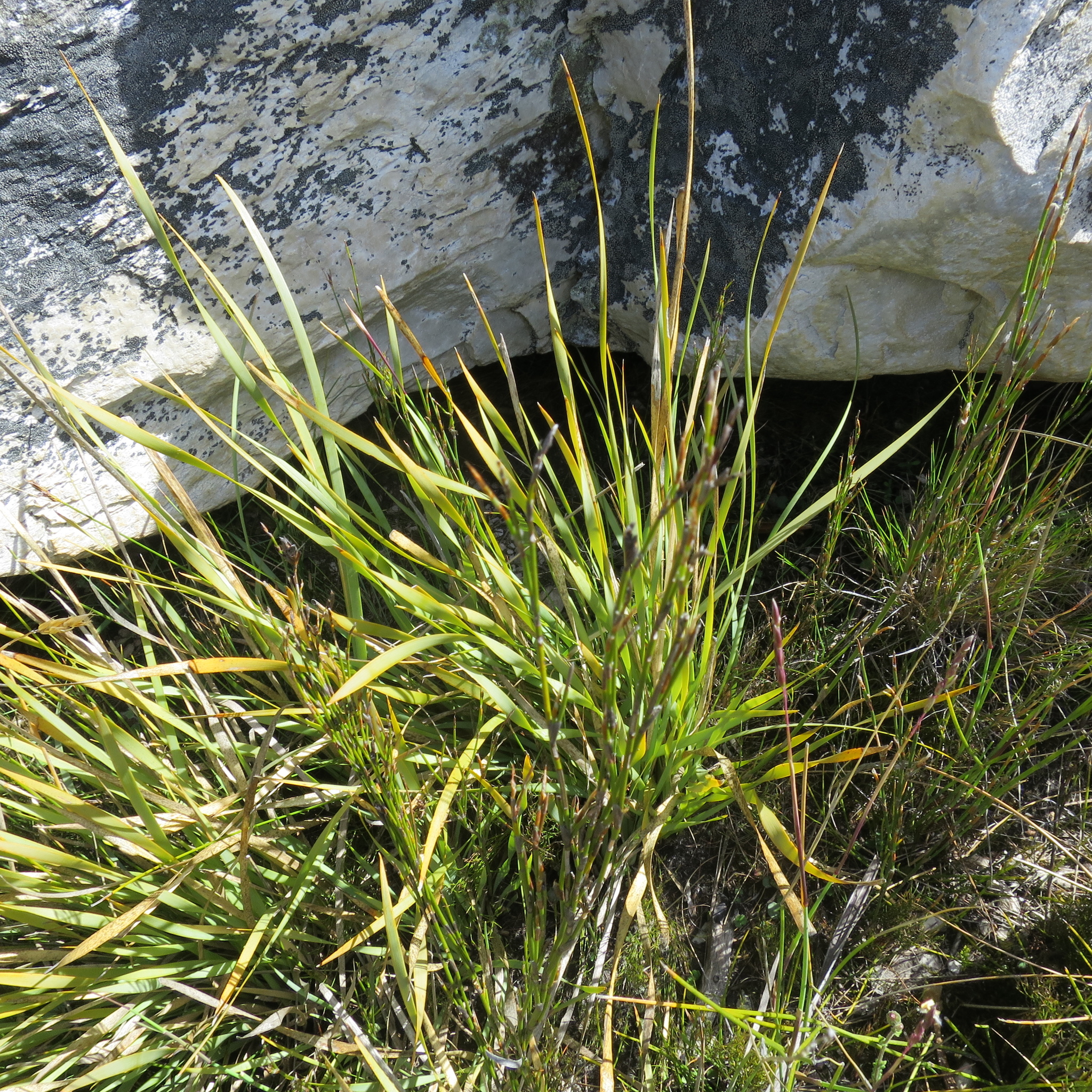
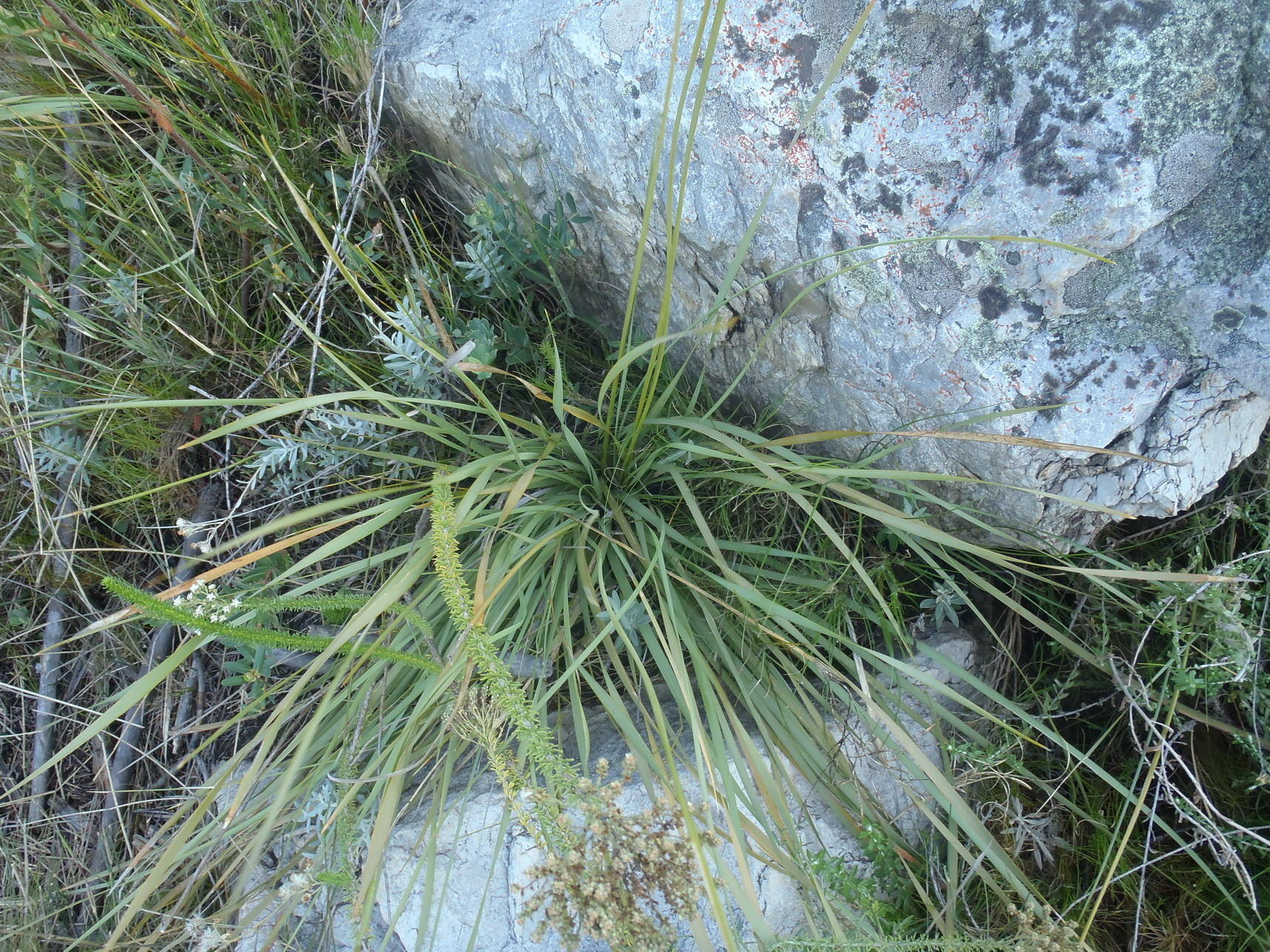
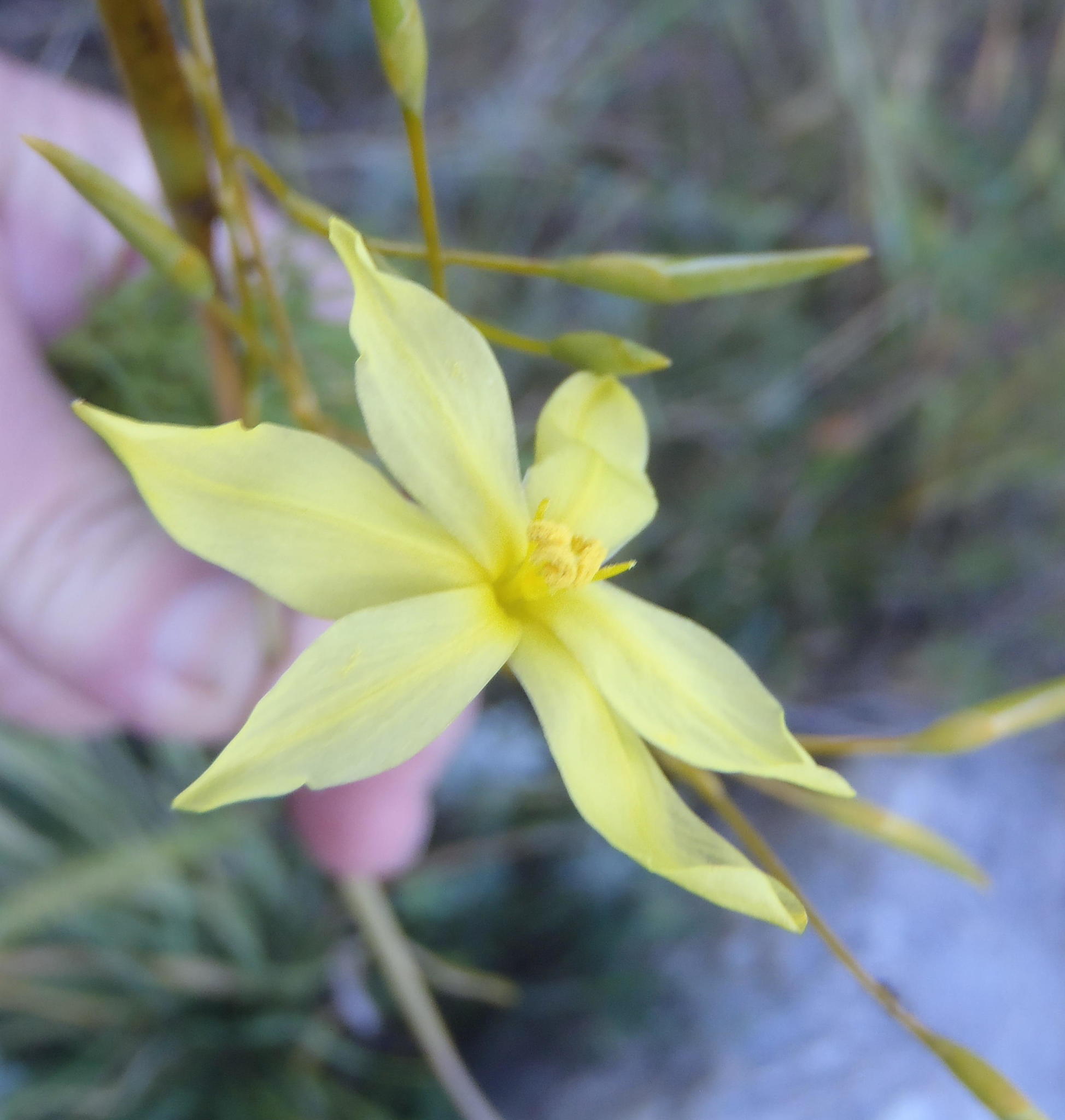
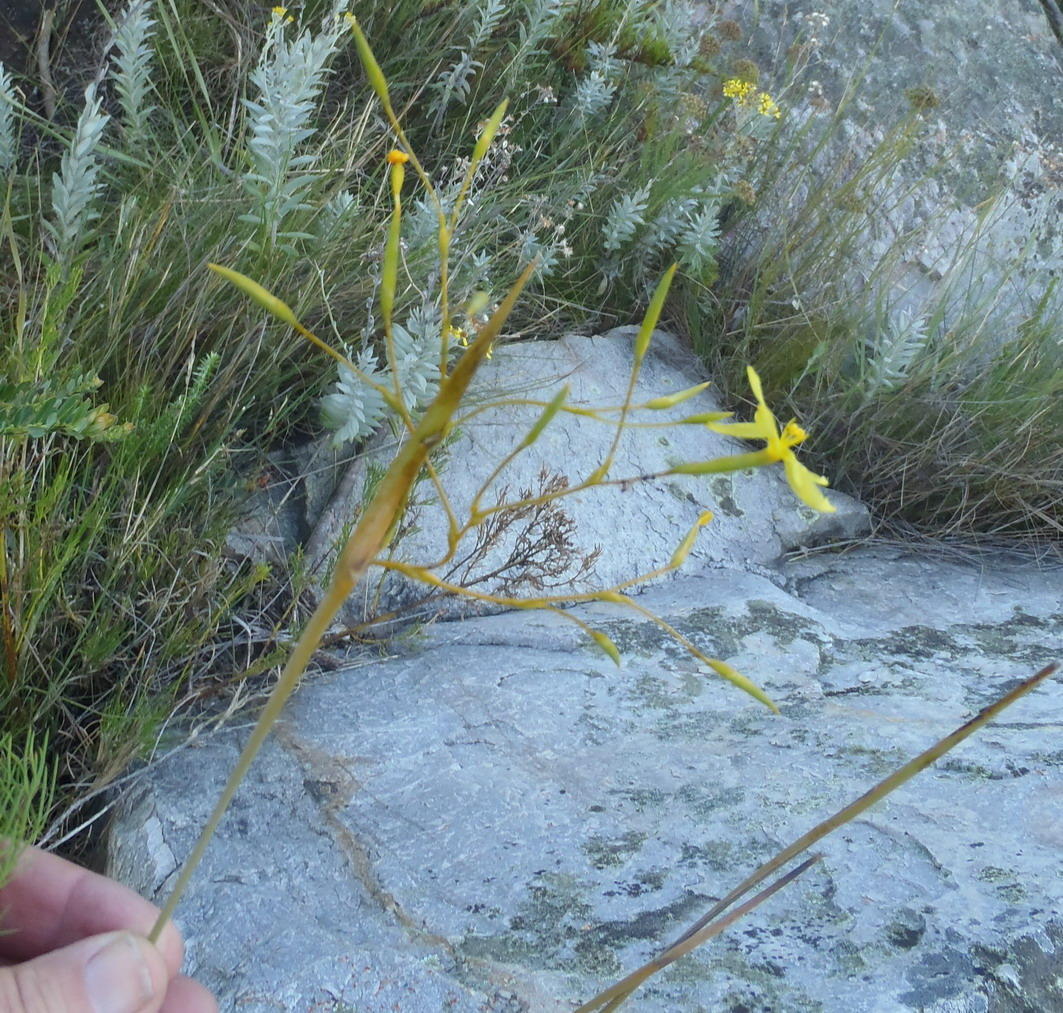
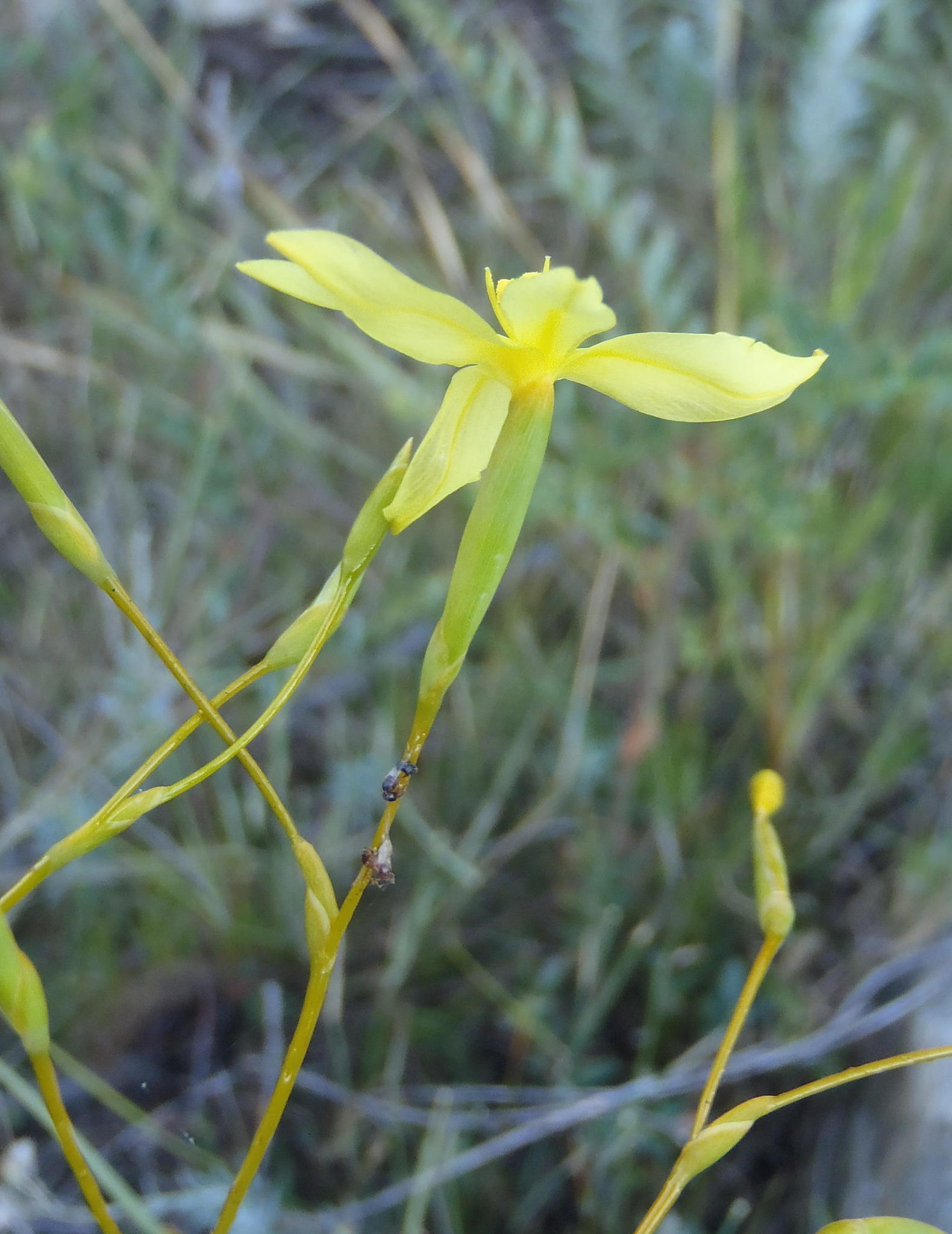
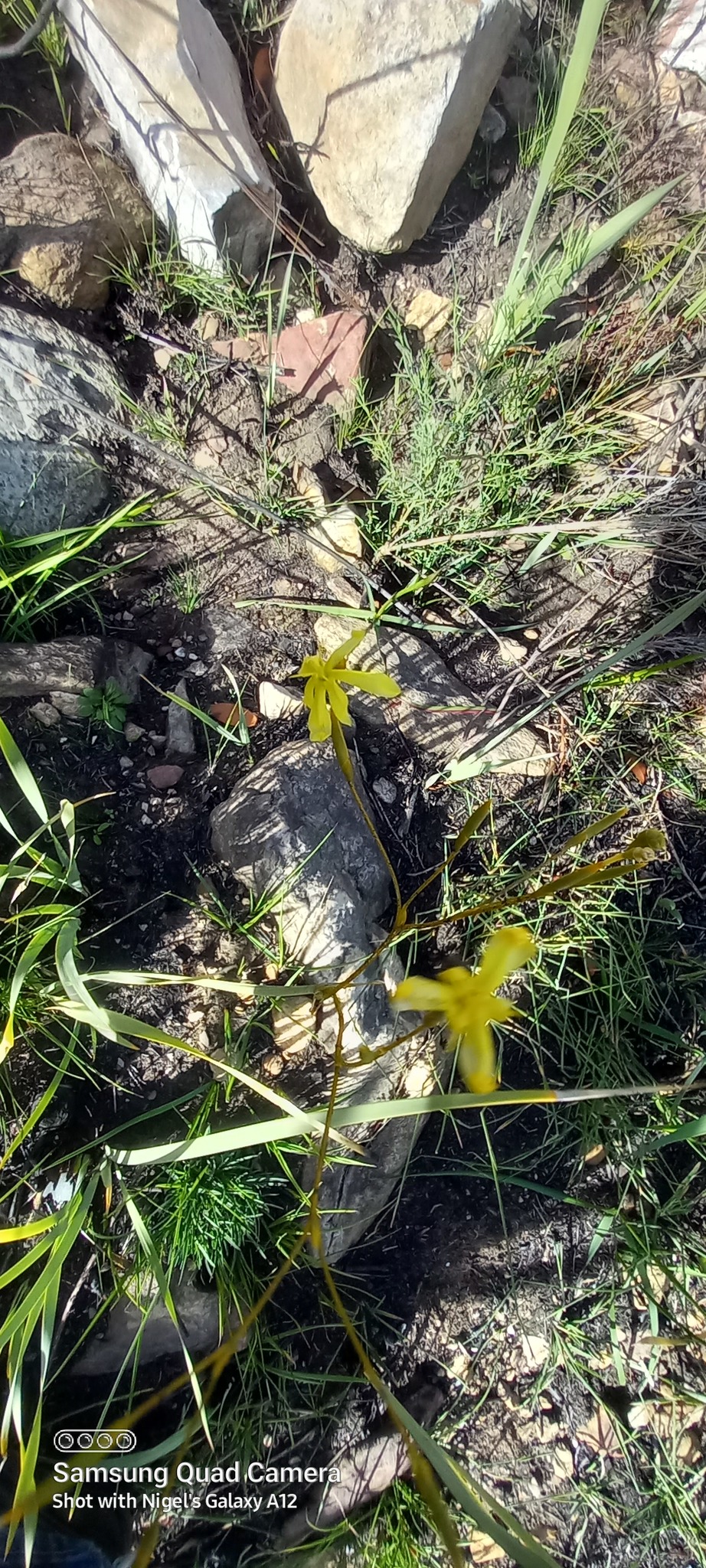
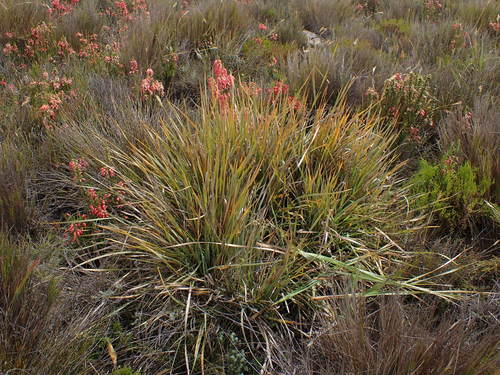
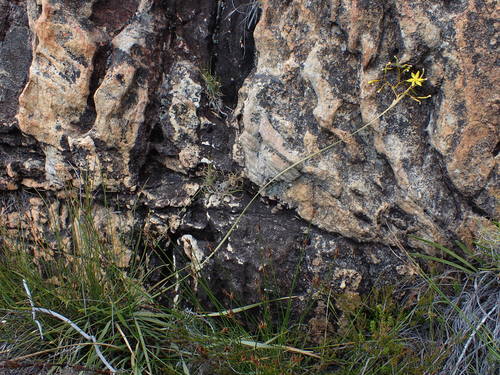
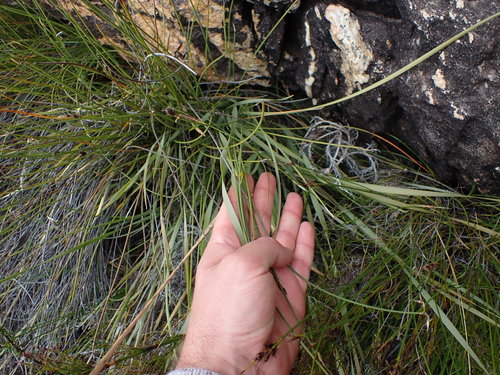
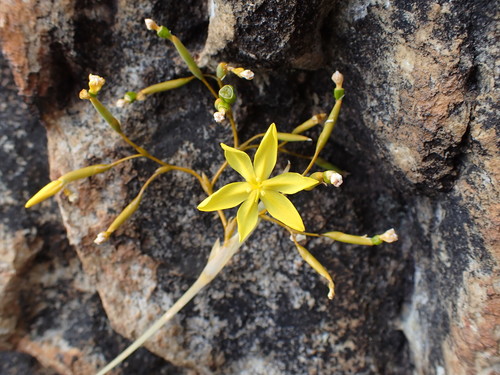
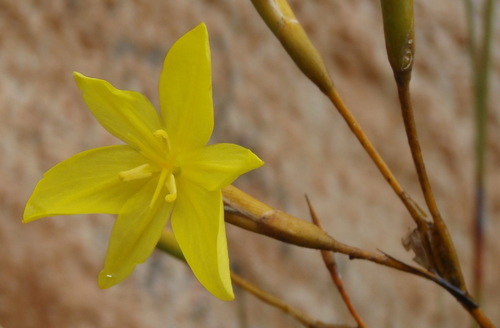
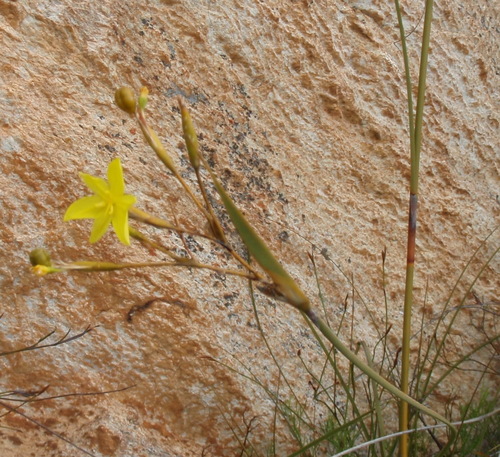
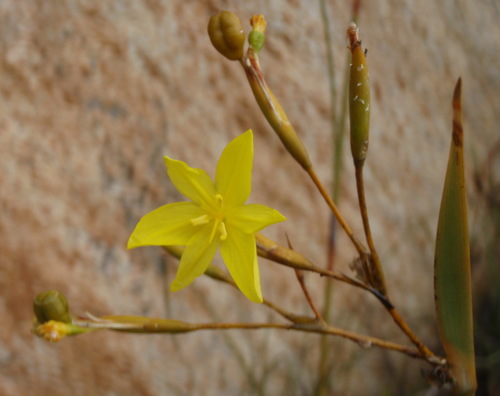
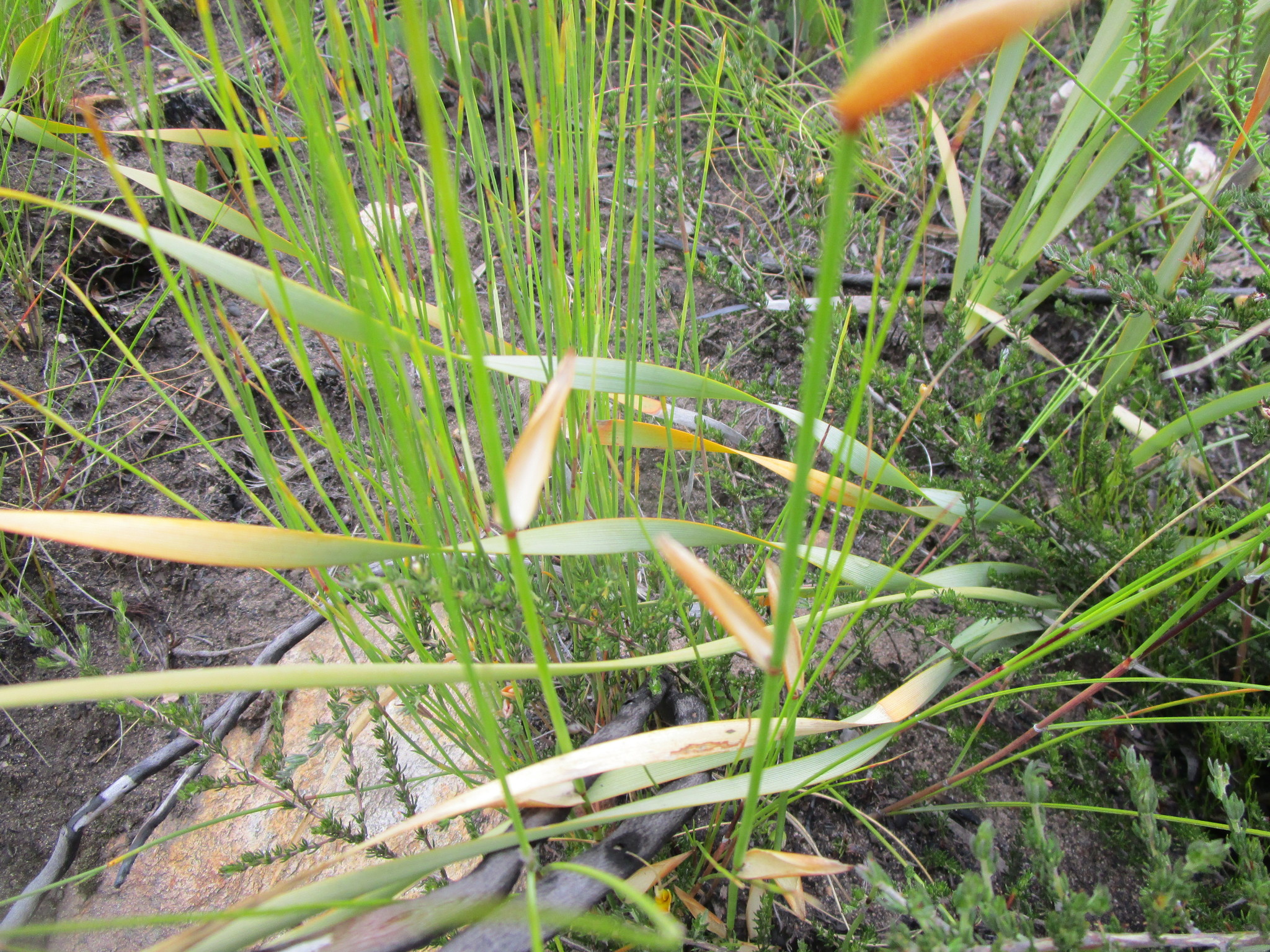
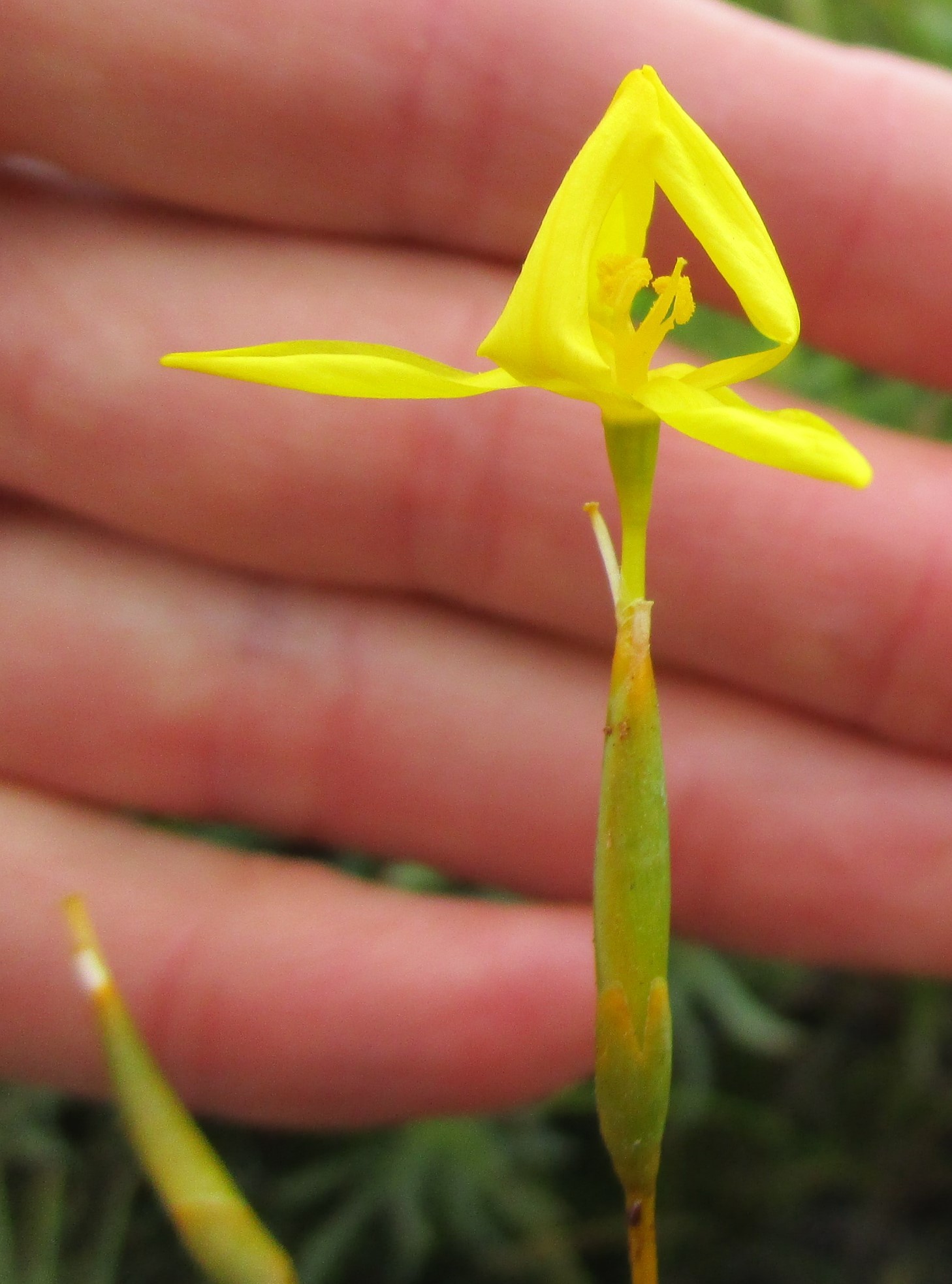
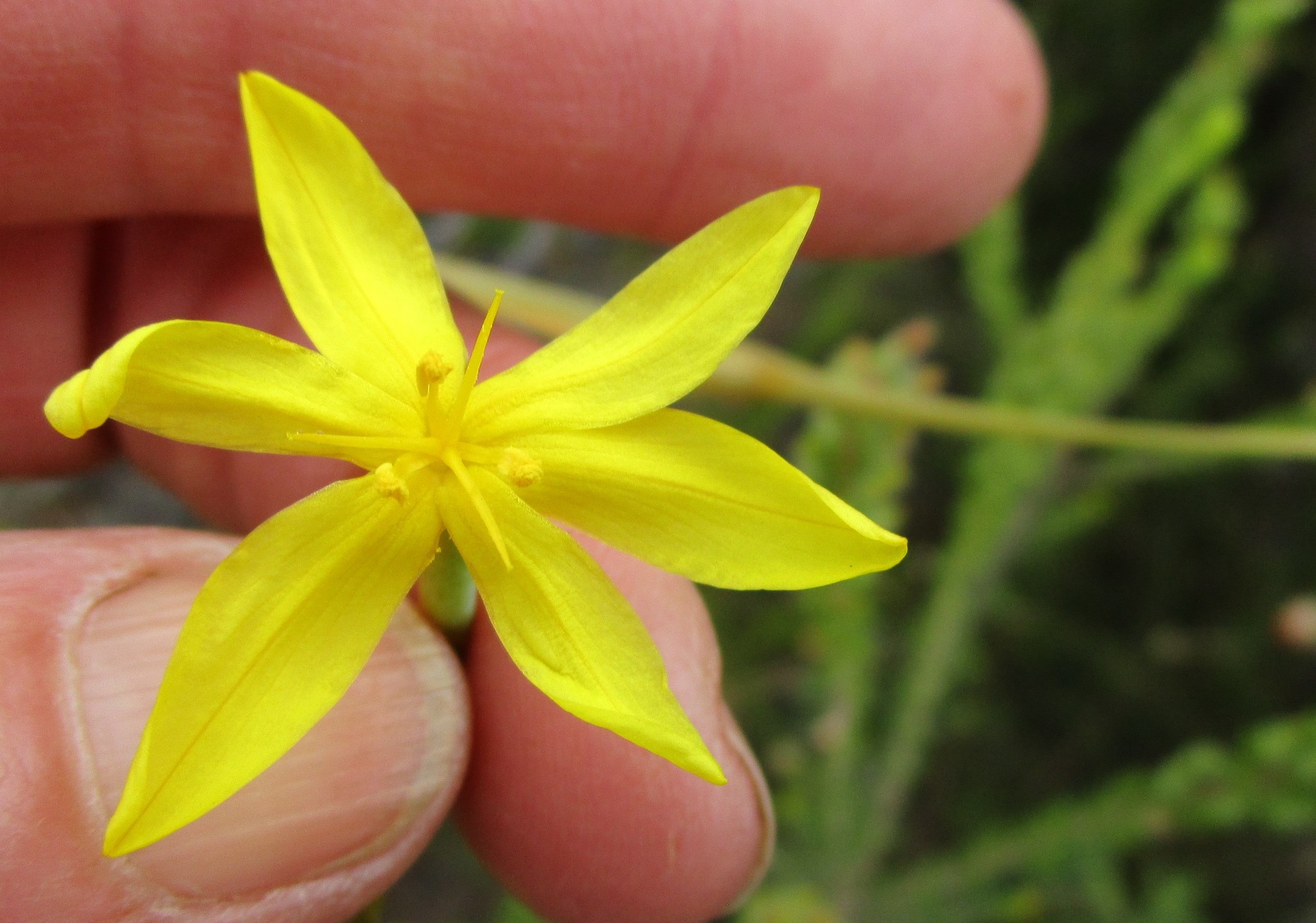
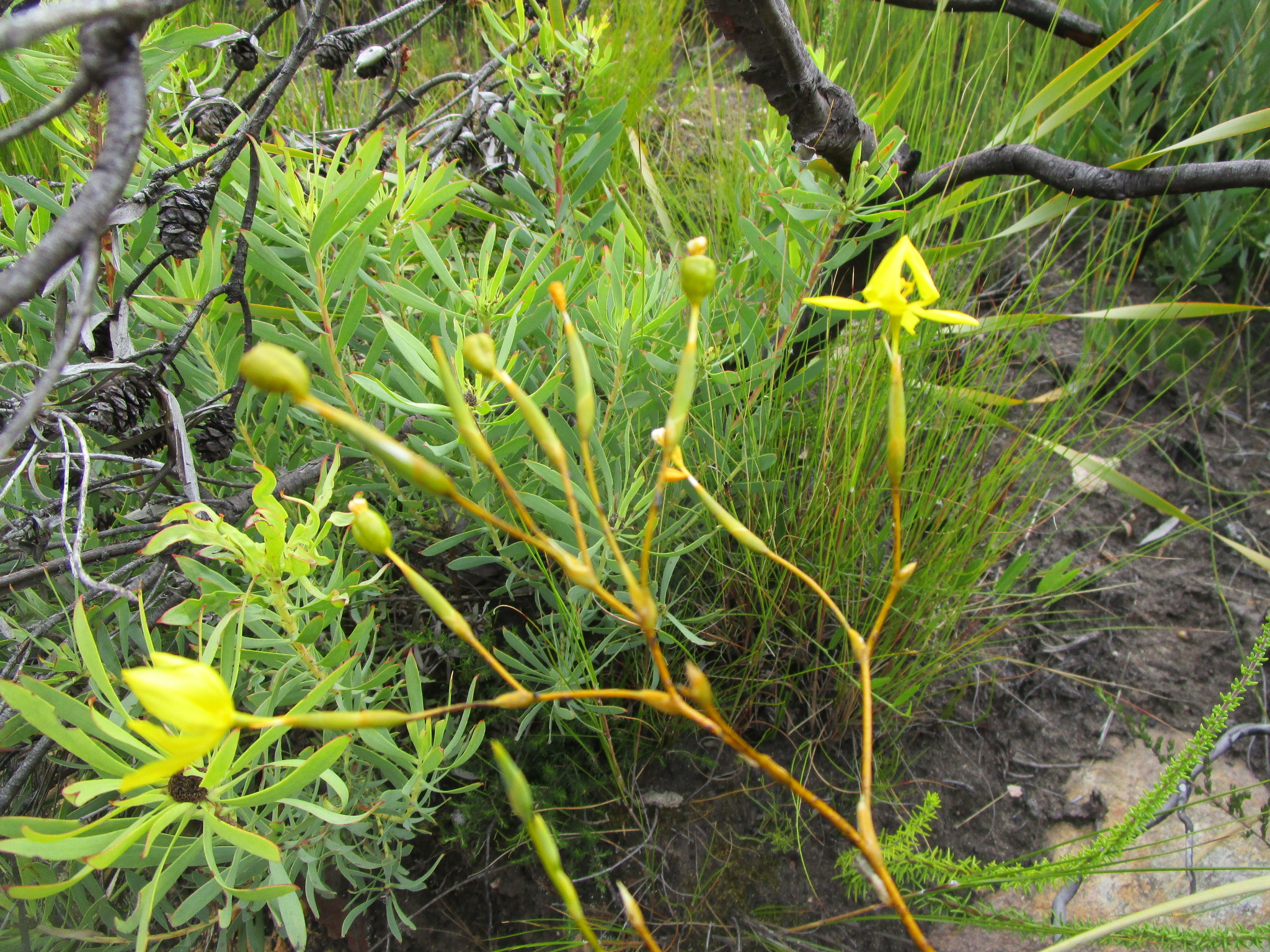
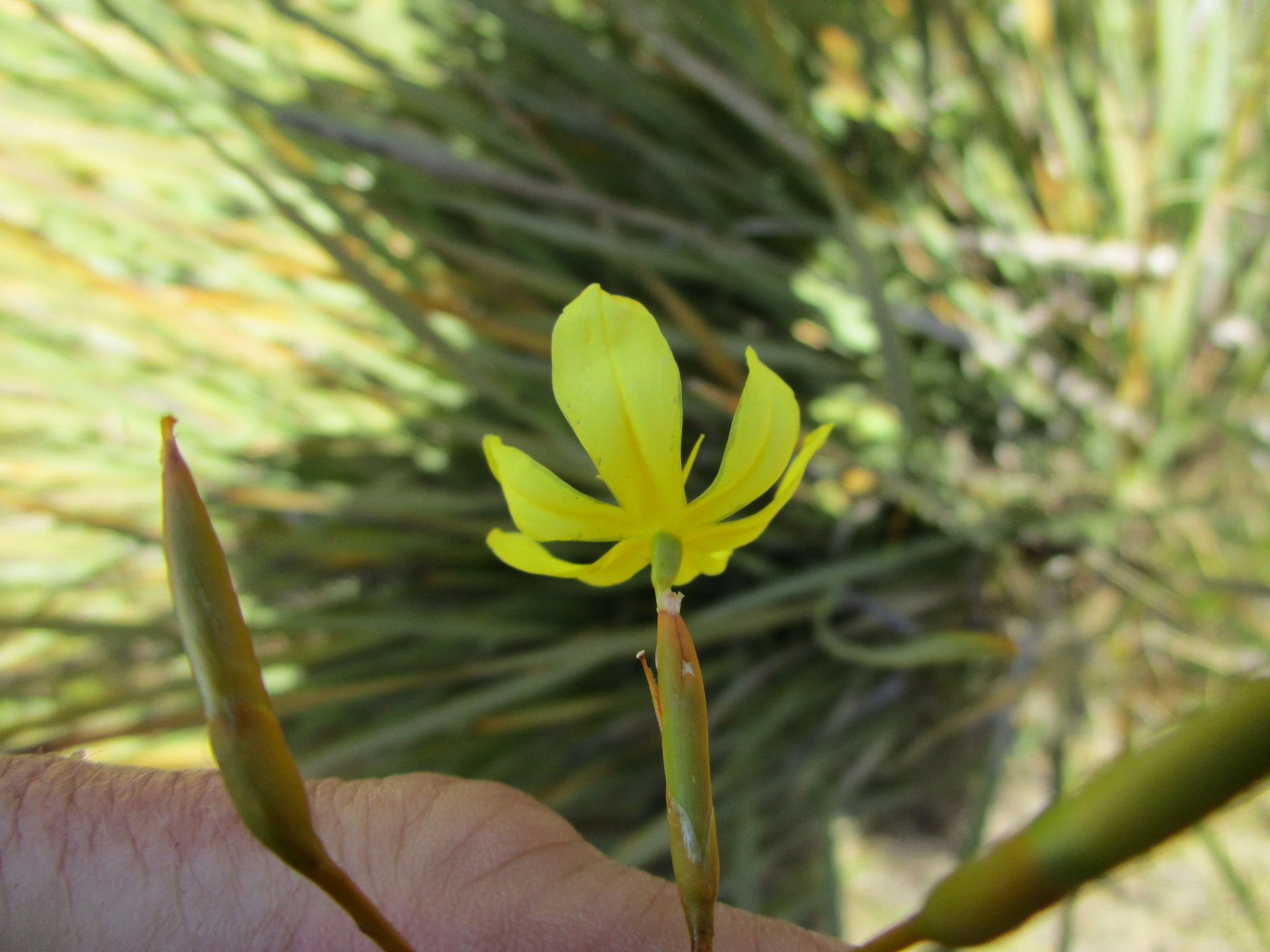
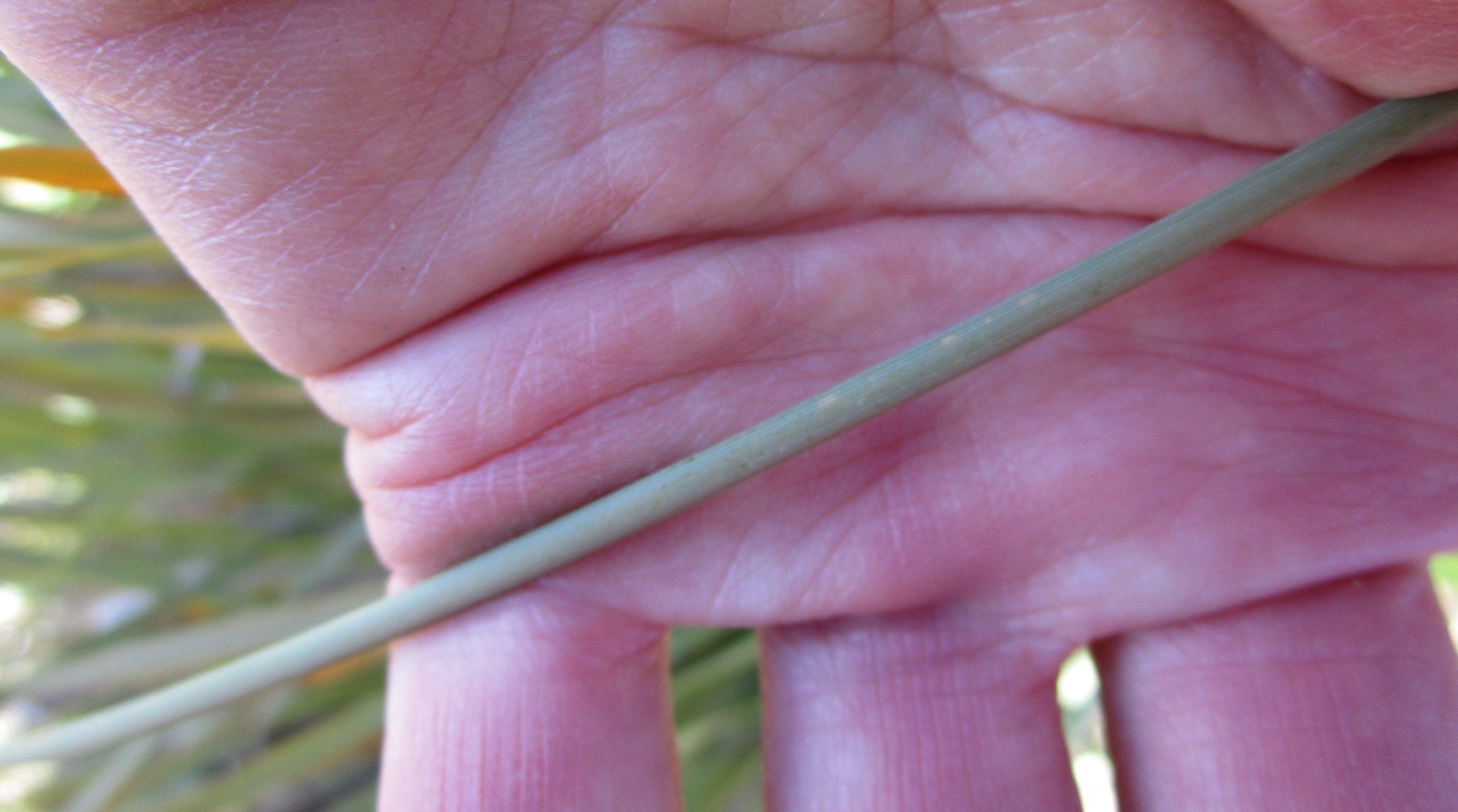
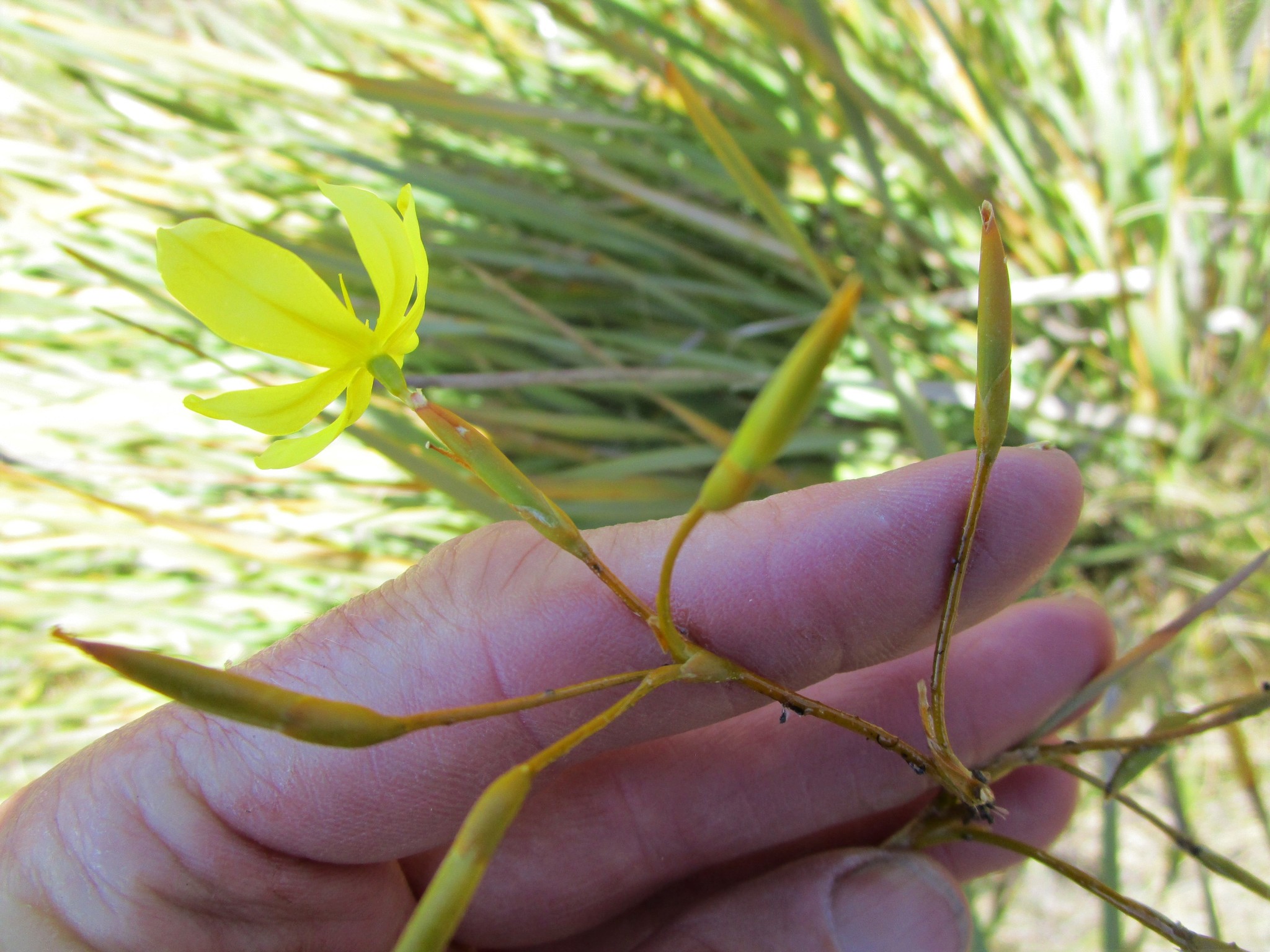
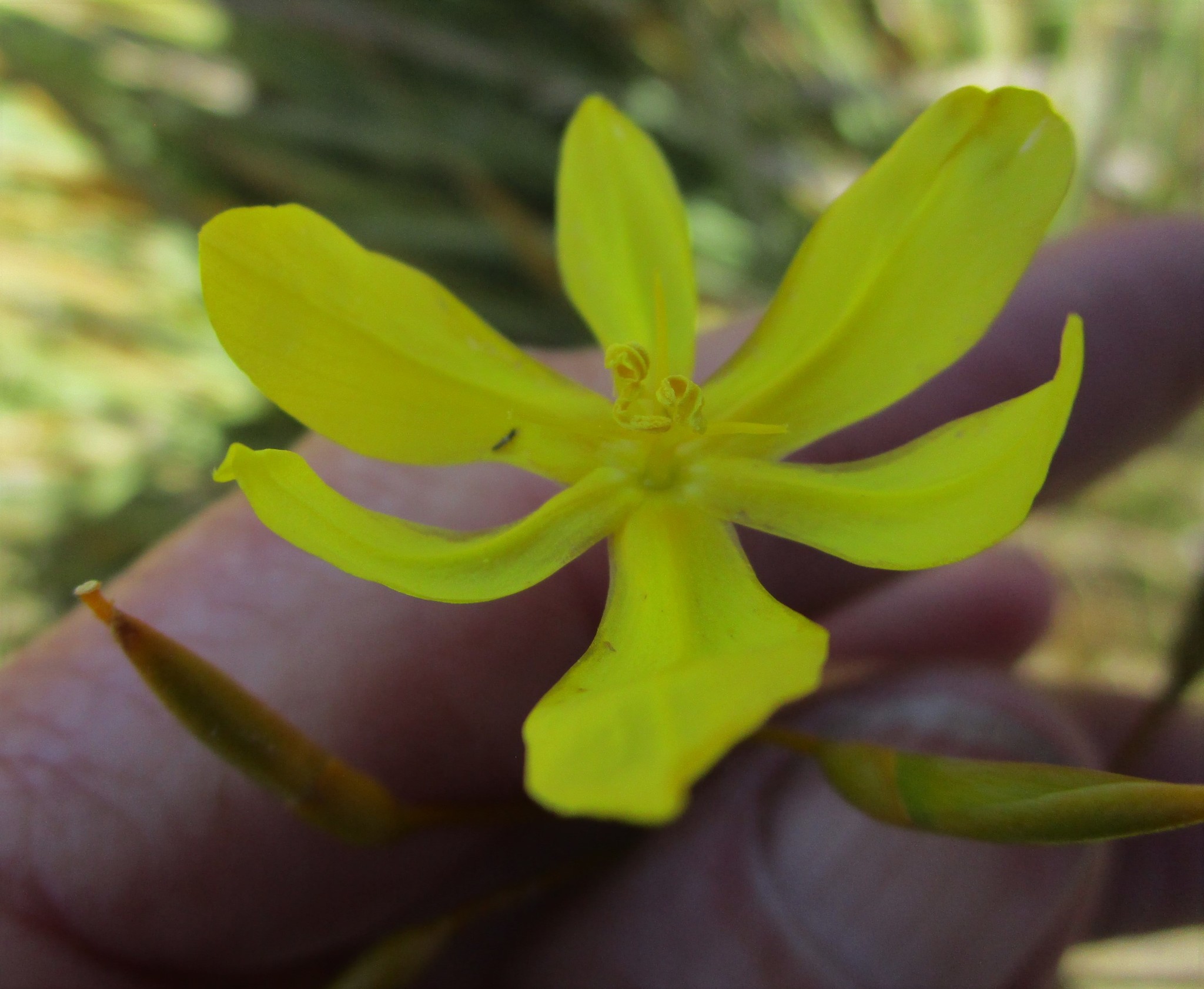
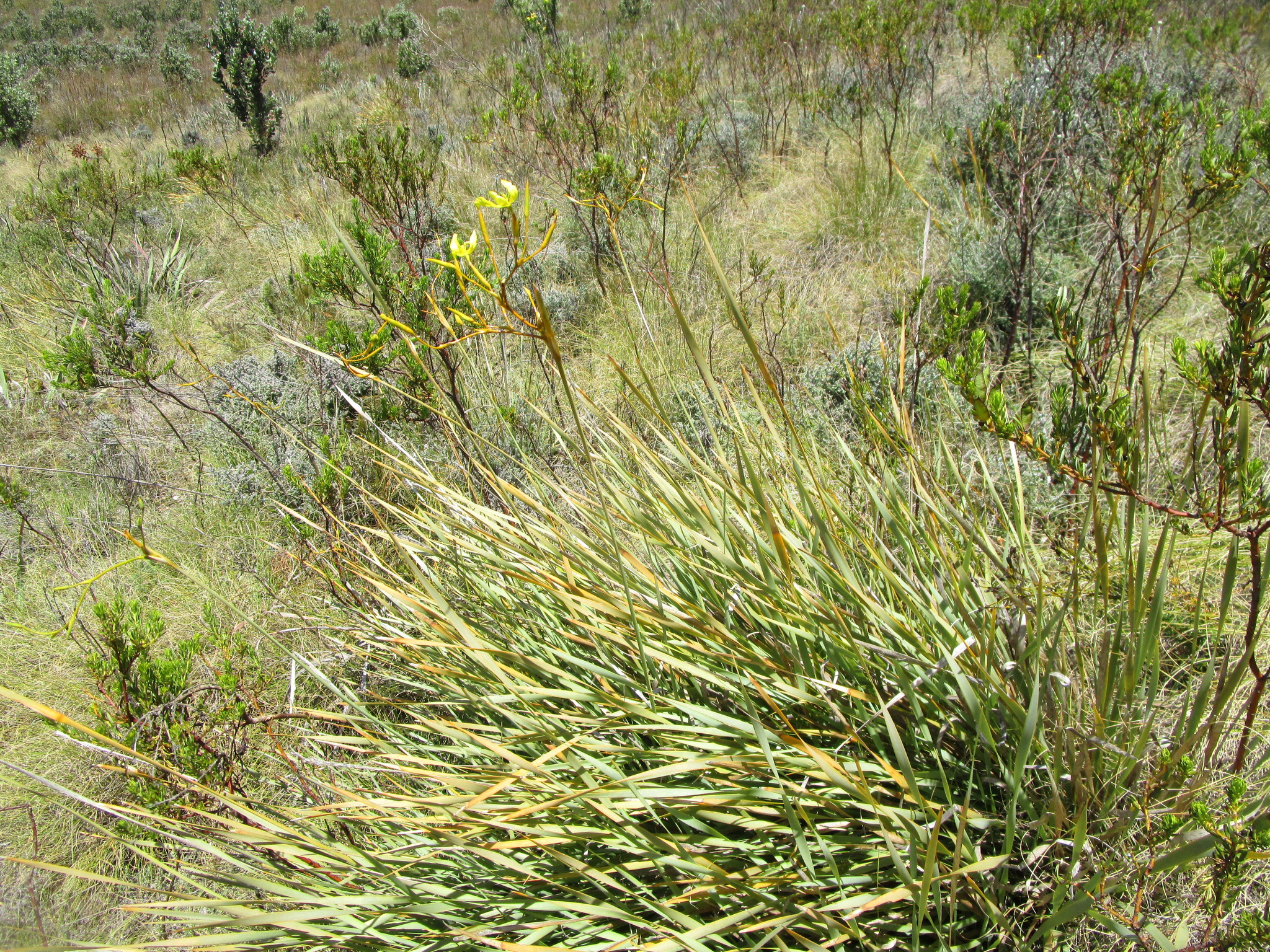
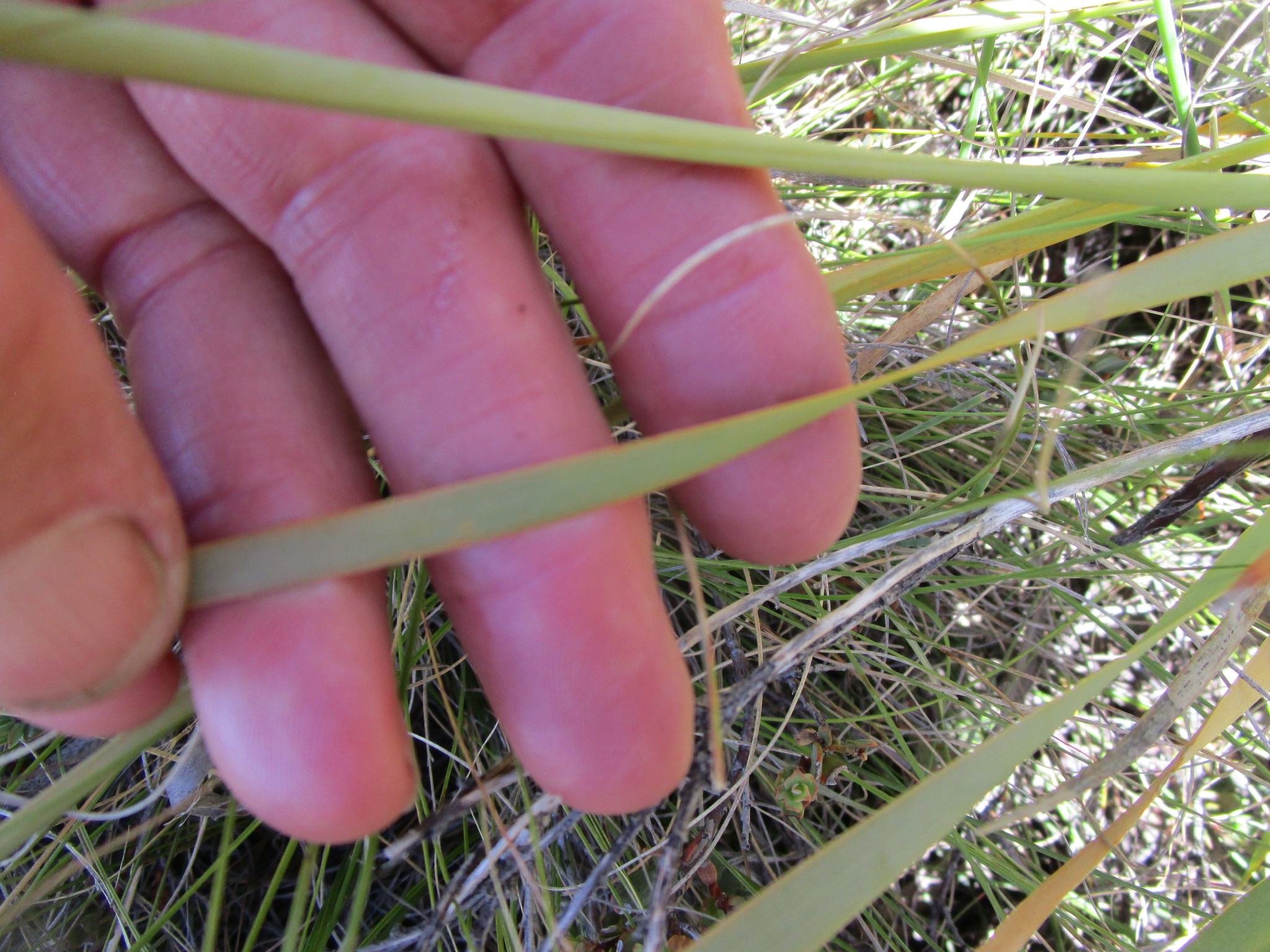
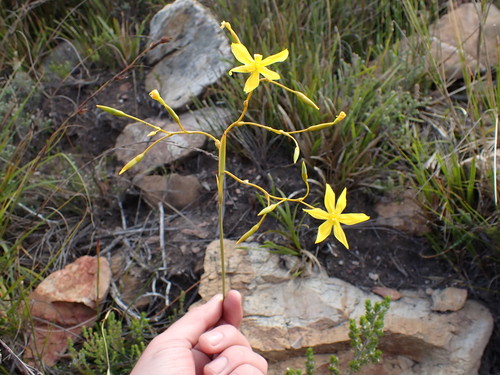
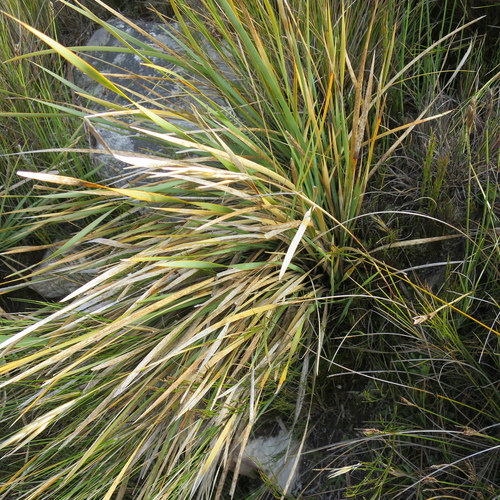
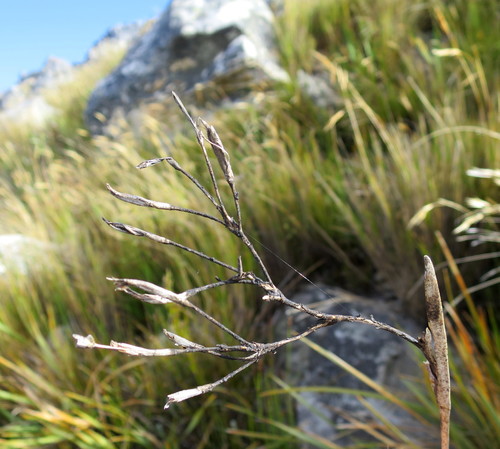
Plants 300-1000 mm high, forming large, loose tufts. Rhizome compact and corm-like, ± 20 mm diam. Stem consisting of 1 long basal internode, slightly flattened, elliptic in section, 2-4 mm diam. near base, striate when dry but without stomatiferous furrows, branching in upper 1/3, forming a hemispherical, ± laxly panicle. Foliage leaves 4 to 8 in a basal fan, ± 2/3 as long as flowering stem, linear, 3-7 mm wide, striate. Rhipidia several, solitary at branch tips, together forming a lax panicle, on branches 10-30 mm long subtended by leaf-like bract with unifacial blade, 20-50 mm long, immediately associated with next bract, internodes viscid; pedicels subglabrous; spathes with translucent membranous margins and brownish apices; outer ± 1/3 as long as inner, 4-7 mm long, inner 14-20 mm long. Flowers yellow; tepals free, elliptic, outer 10-16 x 4-6 mm, inner slightly smaller. Filaments 2-3 mm long; anthers ± 3 mm long. Ovary exserted, smooth; style 1-2 mm long, branches 3-4 mm long. Capsules broadly obovoid to subglobose, smooth, 6-10 mm long. From: Goldblatt, P; Manning, JC. 2020. Iridaceae of southern Africa. Strelitzia 42: 1-1159. South African National Biodiversity Institute, Pretoria. [CC BY]
Rhizomatous perennial, 40-100 cm, stem branched above and sticky below nodes. Leaves linear. Flowers in solitary cymes loosely clustered near top of stem, yellow. From: Manning, JC; Goldblatt, P. 2012. Iridaceae. In: J Manning & P Goldblatt (eds), Plants of the Greater Cape Floristic Region 1: The Core Cape flora. Strelitzia 29: 119-176. South African National Biodiversity Institute, Pretoria. [CC BY]
Distinguished by the hemispherical, paniculate inflorescence with sticky internodes and relatively small, yellow flowers. The basal internode of the stem is conspicuously elongated, with the inflorescence thus clearly borne at the tip. This is intermediate between the inflorescence type in Bobartia lilacina, in which the two or three lower internodes are subequally developed, and the remaining species in the genus, which have only the lowermost internode elongated and a congested inflorescence. The stem lacks stomatiferous furrows and is thus smooth when fresh but the presence of peripheral longitudinal sclerenchyma strands causes it to become slightly striate when dry. From: Goldblatt, P; Manning, JC. 2020. Iridaceae of southern Africa. Strelitzia 42: 1-1159. South African National Biodiversity Institute, Pretoria. [CC BY]
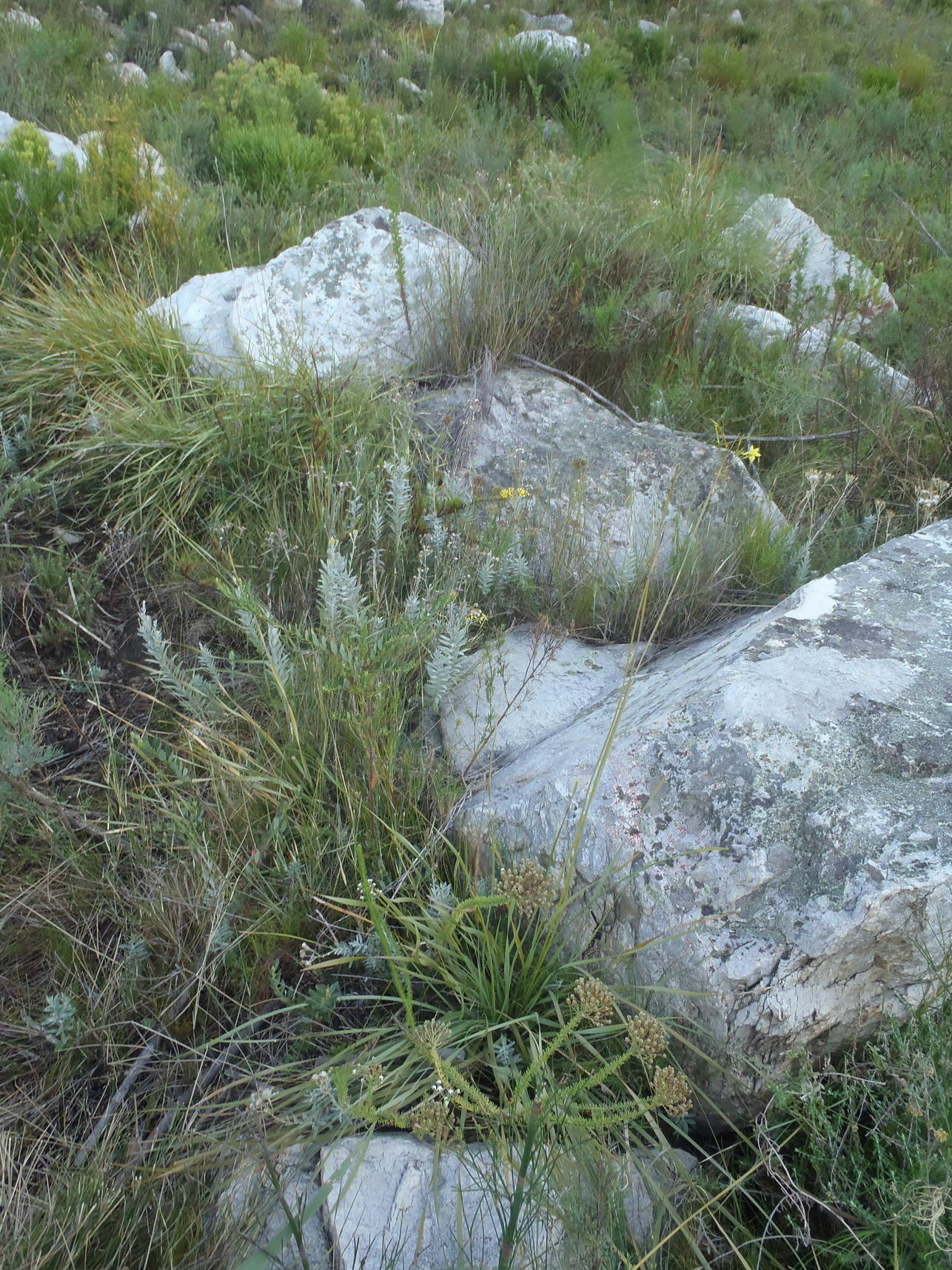
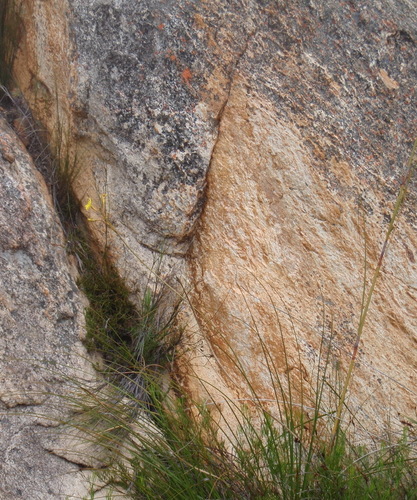
Relatively common on the upper southern slopes of Mannetjiesberg, flowering mainly after fire. From: Goldblatt, P; Manning, JC. 2020. Iridaceae of southern Africa. Strelitzia 42: 1-1159. South African National Biodiversity Institute, Pretoria. [CC BY]
Middle to upper slopes in dry fynbos. From: Manning, JC; Goldblatt, P. 2012. Iridaceae. In: J Manning & P Goldblatt (eds), Plants of the Greater Cape Floristic Region 1: The Core Cape flora. Strelitzia 29: 119-176. South African National Biodiversity Institute, Pretoria. [CC BY]
Endemic to the Kamanassie Mtns east of Oudtshoorn in Western Cape. From: Goldblatt, P; Manning, JC. 2020. Iridaceae of southern Africa. Strelitzia 42: 1-1159. South African National Biodiversity Institute, Pretoria. [CC BY]
Kammanassie Mtns. From: Manning, JC; Goldblatt, P. 2012. Iridaceae. In: J Manning & P Goldblatt (eds), Plants of the Greater Cape Floristic Region 1: The Core Cape flora. Strelitzia 29: 119-176. South African National Biodiversity Institute, Pretoria. [CC BY]
December to February
1200 to 1800 m
This map contains point-based occurrences at different locations
Occurrence in the Flora of Southern Africa (FSA) countries and South African provinces. Residence status indicates if a taxon is indigenous, endemic, naturalised or invasive in a specific region. This data is based on specimen records and literature
FSA
SA
BOT
NAM
ESW
LES
WC
EC
NC
FS
GA
KZN
LP
MP
NW
Absent
Indigenous
Endemic
Naturalised
Invasive
Names and Sources
| Common name | Language | Reference/barcode | Published as |
|---|---|---|---|
| Biesie | Afrikaans | Phillips, EP; Smith, CA; Van Hoepen, E. 1966. Common names of South African plants. Mem. Bot. Surv. South Africa 35: 1-642. Government Printer, Pretoria. | |
| Blombiesie | Afrikaans | Phillips, EP; Smith, CA; Van Hoepen, E. 1966. Common names of South African plants. Mem. Bot. Surv. South Africa 35: 1-642. Government Printer, Pretoria. |
Classification
KINGDOM Plantae
SUBKINGDOM Phanerogamae
PHYLUM Anthophyta
ORDER Asparagales
FAMILY Iridaceae
SUBFAMILY Iridoideae
TRIBE Irideae
GENUS Bobartia
SPECIES paniculata
21 results for Bobartia paniculata G.J.Lewis
Barcode: NBG0059662-0 Collector(s) & number: Compton, RH, 10394 | 1941-2-1
South Africa, Western Cape, Uniondale. Kamanassiberg.
Data Resource: BODATSA View record
Barcode: NBG0202742-2 Collector(s) & number: Harrower, AD, ADH 2317 | 2004-9-13
South Africa, Western Cape, Kamanassi Mountains, Mannetjiesberg middle slopes, on S side on service road, up to radio mast. 33°37'379"S: 22°55'390"E.
Data Resource: BODATSA View record
Barcode: PRE0820455-0 Collector(s) & number: Bond, WJ, 1667 | 1979-2-
South Africa, Western Cape, Buffelsdrif: Kammamassie; "Toringberg" area (peak W of Kammanassieberg).
General notes: On S slopes in Ericoid shrublands. Common in firebreaks.
Data Resource: BODATSA View record
Barcode: SAM0054287-1 Collector(s) & number: Zinn, H, s.n. | 1940-1-
South Africa, Western Cape, Kammanassie Mountains.
Data Resource: BODATSA View record
Barcode: PRE0052258-0 Collector(s) & number: Compton, RH, 10394 | 1941-2-1
South Africa, Western Cape, OUDTSHOORN DIST.; KAMANASSIBERG.
Data Resource: BODATSA View record
Barcode: NBG0191135-0 Collector(s) & number: Helme, NA, 2378 | 2001-11-26
South Africa, Western Cape, Uniondale. Mannetjiesberg, all over upper southern slopes.
Data Resource: BODATSA View record
Barcode: PRE0774687-0 Collector(s) & number: Goldblatt, P, 7468 | 1985-12-6
South Africa, Western Cape, OUDTSHOORN: KAMMANASSIE MOUNTAINS.
General notes: On upper S slopes.
Data Resource: BODATSA View record
Barcode: NBG0202742-1 Collector(s) & number: Harrower, AD, ADH 2317 | 2004-9-13
South Africa, Western Cape, Kamanassi Mountains, Mannetjiesberg middle slopes, on S side on service road, up to radio mast. 33°37'379"S: 22°55'390"E.
Data Resource: BODATSA View record
Barcode: NBG0101397-0 Collector(s) & number: Dahlgren, RMT, 4863 | 1966-2-12
South Africa, Western Cape, Uniondale Div. Upper southern slopes of Mannetjiesberg.
Data Resource: BODATSA View record
Barcode: NBG0180132-0 Collector(s) & number: Bond, WJ, 1667 | 1979-2-
South Africa, Western Cape, Oudtshoorn. Buffelsdrif, Kammanassie, Toringberg area.
Data Resource: BODATSA View record
Barcode: SAM0054287-2 Collector(s) & number: Zinn, H, s.n. | 1940-1-
South Africa, Western Cape, Kammanassie Mountains.
Data Resource: BODATSA View record
This map contains point-based occurrences at different locations
2020
SERIES
Iridaceae of southern Africa Goldblatt, P; Manning, JCStrelitzia 42: 1-1159
South African National Biodiversity Institute, Pretoria
2012
SERIES CHAPTER
Iridaceae Manning, JC; Goldblatt, PIn: J Manning & P Goldblatt (eds), Plants of the Greater Cape Floristic Region 1: The Core Cape flora. Strelitzia 29: 119-176
South African National Biodiversity Institute, Pretoria
No results found for Bobartia paniculata G.J.Lewis
Status and criteria
LC
Assessor(s)
Plantae Coordinator
JOURNAL ARTICLE
Sliwa, A. 2004. Home range size and social organisation of black-footed cats (<i>Felis nigripes</i>). Mammalian Biology. 69:96-107
JOURNAL ARTICLE
Sliwa, A. 2006. Seasonal and sex-specific prey composition of black-footed cats <i>Felis nigripes</i>. Acta Theriologica. 51:195-204
BOOK SECTION
Sliwa, A. 2013. <i>Felis nigripes</i>. Edited by J. Kingdon and M. Hoffmann. The Mammals of Africa. Volume V: Carnivores, Pangolins, Equids and Rhinoceroses. Bloomsbury Publishing
BOOK SECTION
Sliwa, A., Herbst, M. and Mills, M. J. 2007. Prey consumption and distances covered by black-footed cat (<i>Felis nigripes</i>) and African wildcats (<i>Felis silvestris</i>) - a comparison of two small felids from South African arid lands. Edited by J. Hughes and R. Mercer. Felid Biology and Conservation: Conference Abstracts. Wildlife Conservation Research Unit, University of Oxford
EDITED BOOK
Skinner, J.D. and Chimimba, C.T. 2005. The Mammals of the Southern African Subregion. Cambridge University Press, United Kingdom
BOOK
Meester, J.A.J., Rautenbach, I.L., Dippenaar, N.J. and Baker, C.M. 1986. Classification of Southern African Mammals. Monograph number 5.. Transvaal Museum
JOURNAL ARTICLE
Smithers, R.H.N. 1971. The mammals of Botswana. National Museums of Rhodesia, Museum Memoir. National Museum of Rhodesia. 4:1-340
BOOK
Sunquist, M. and Sunquist, F. 2002. Wild Cats of the World. University of Chicago Press
BOOK
Nowell, K. and Jackson, P. 1996. Wild Cats. Status Survey and Conservation Action Plan. IUCN/SSC Cat Specialist Group
JOURNAL ARTICLE
Hoskin, C.J., Higgie, M.A., McDonald, K.R. and Moritz, C. 2005. Reinforcement drives rapid allopatric speciation. Nature. 437:1353–1356
JOURNAL ARTICLE
Lindsey, P.A., Balme, G., Becker, M., Begg, C., Bento, C., Bocchino, C., Dickman, A., Diggle, R.W., Eves, H., Henschel, P., Lewis, D., Marnewick, K., Mattheus, J., McNutt, J.W., McRobb, R., Midlane, N., Milanzi, J., Morley, R., Murphree, M., Opyene, V., Phadima, J., Purchase, G., Rentsch, D., Roche, C., Shaw, J., Van der Westhuizen, H.,Van Vliet, N. and Zisadza-Gandiwa, P. 2013a. The bushmeat trade in African savannas: Impacts, drivers, and possible solutions. Biological Conservation. 160:80-96
JOURNAL ARTICLE
Avenant, N.L. and du Plessis, J.J. 2008. Sustainable small stock farming and ecosystem conservation in southern Africa: a role for small mammals?. Mammalia. 72:258-263
| Part(s) of plant used | Use(s) | Reference |
|---|
Coming soon...


