

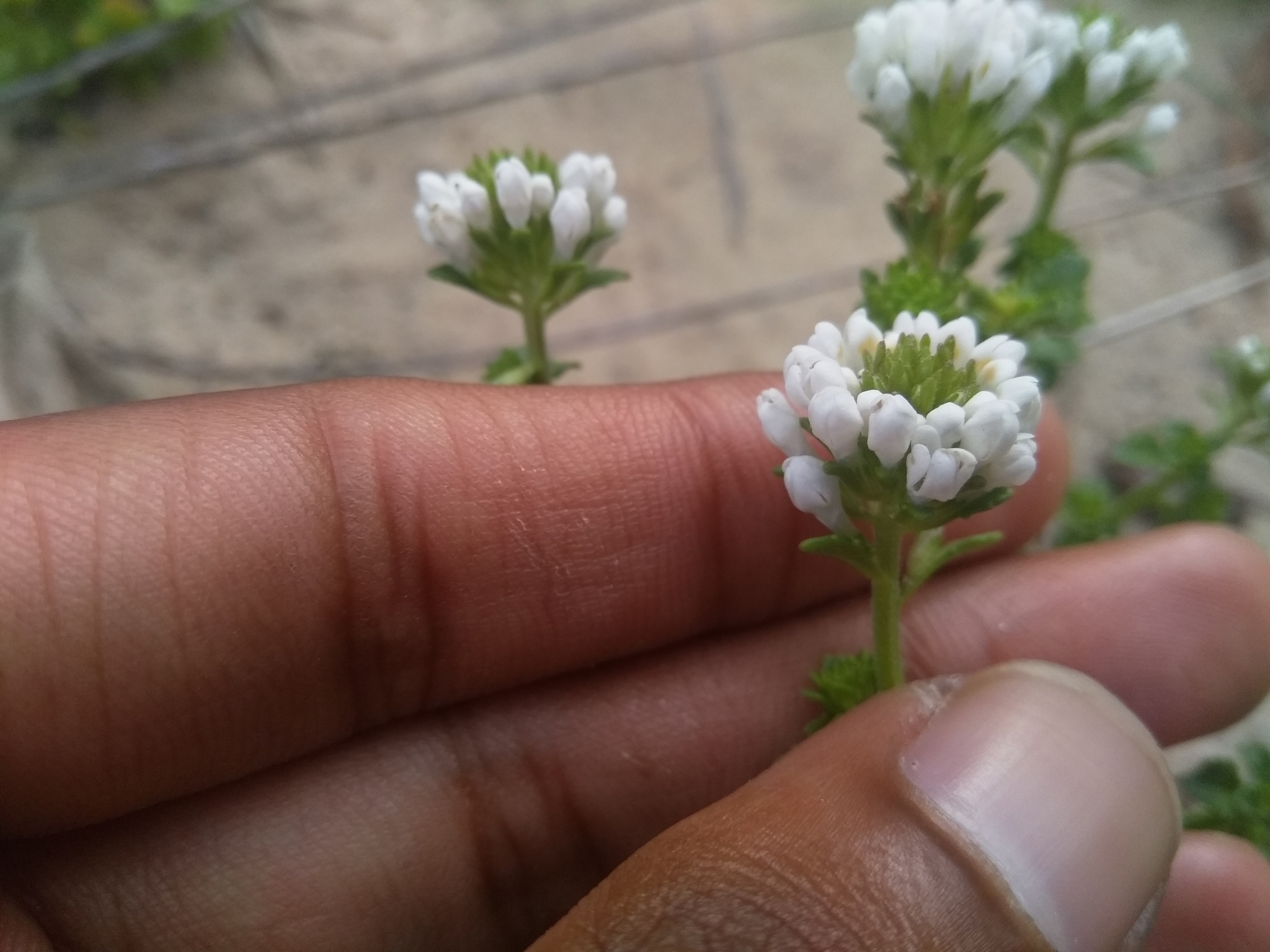
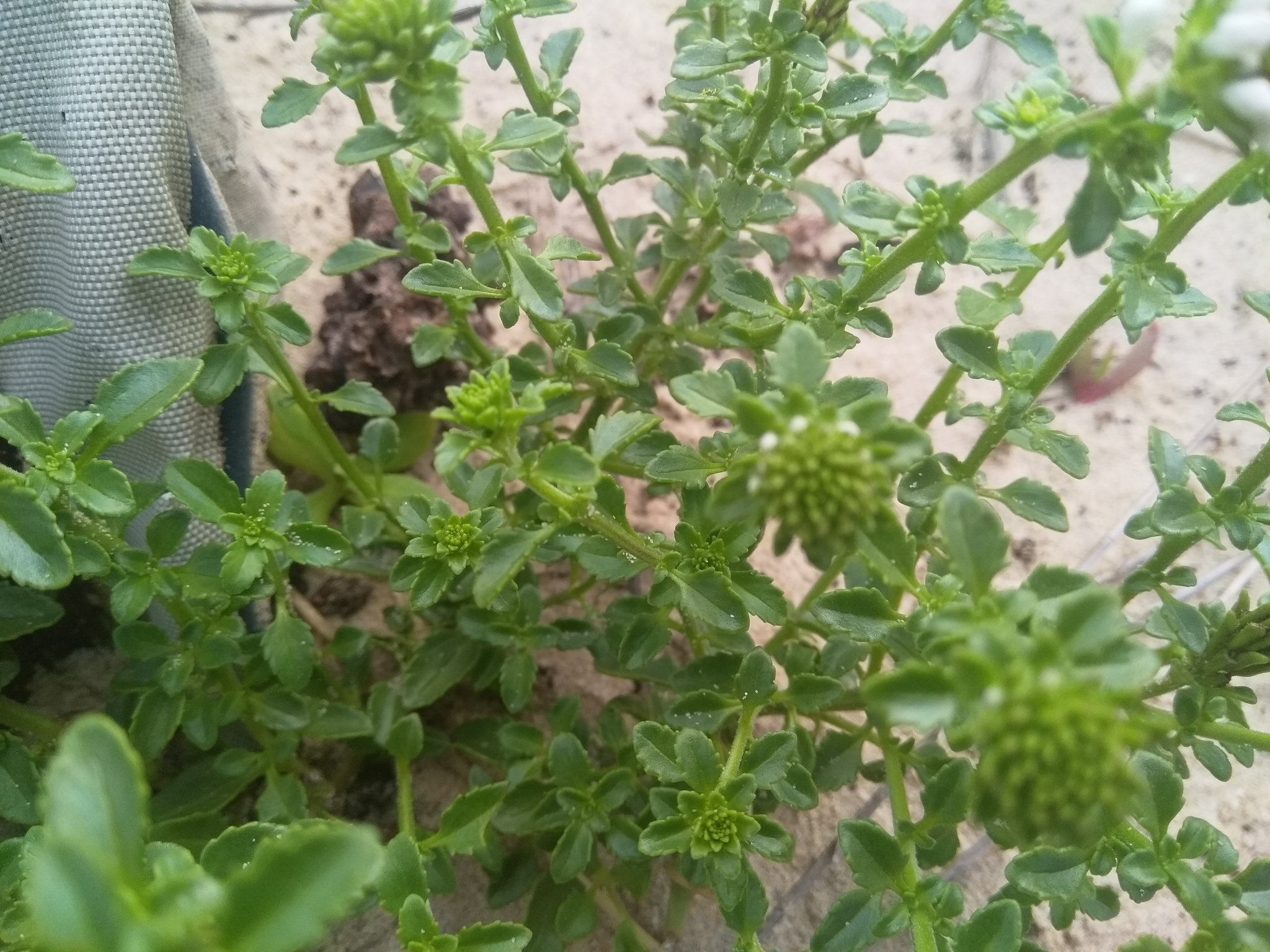
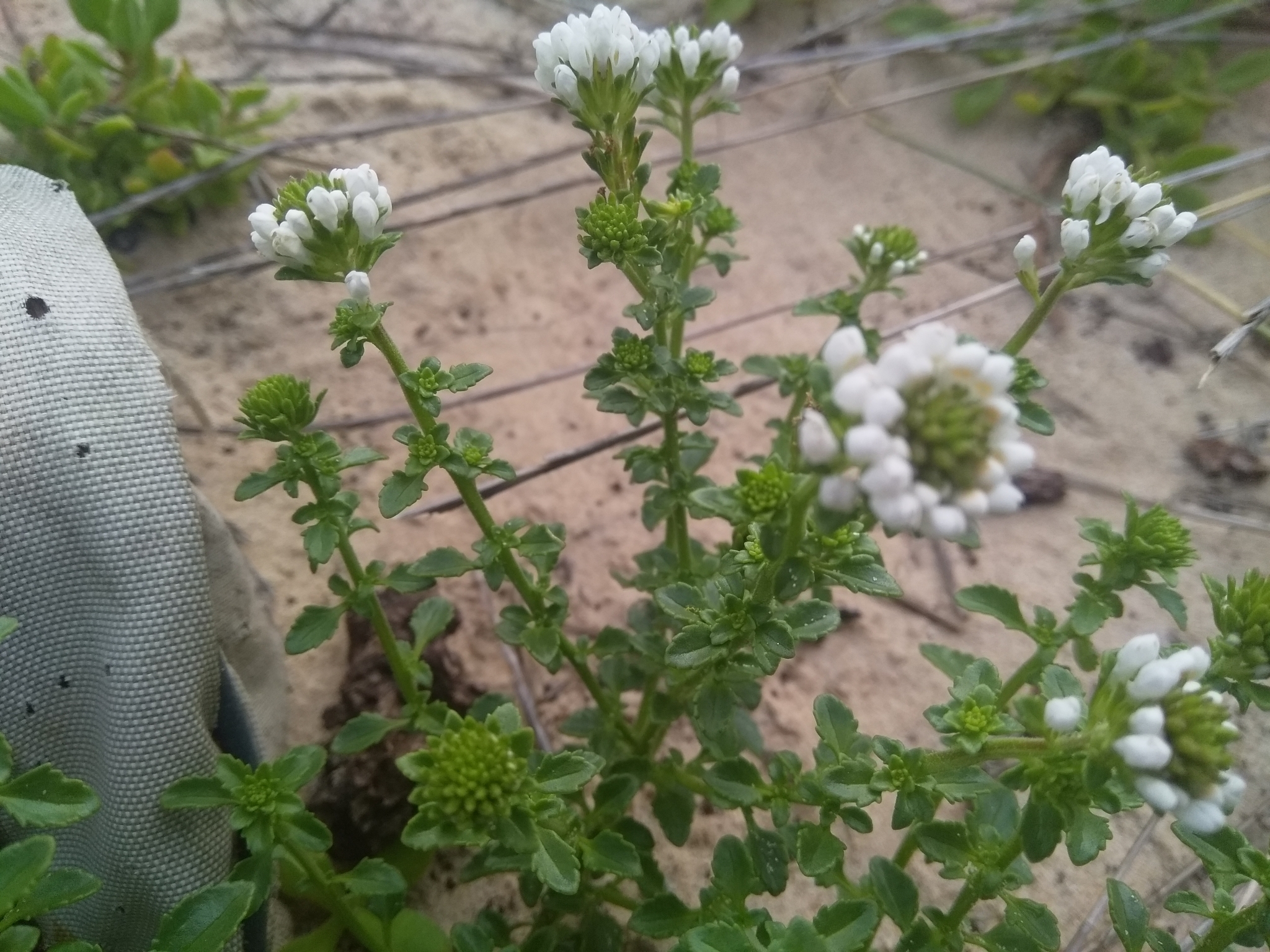
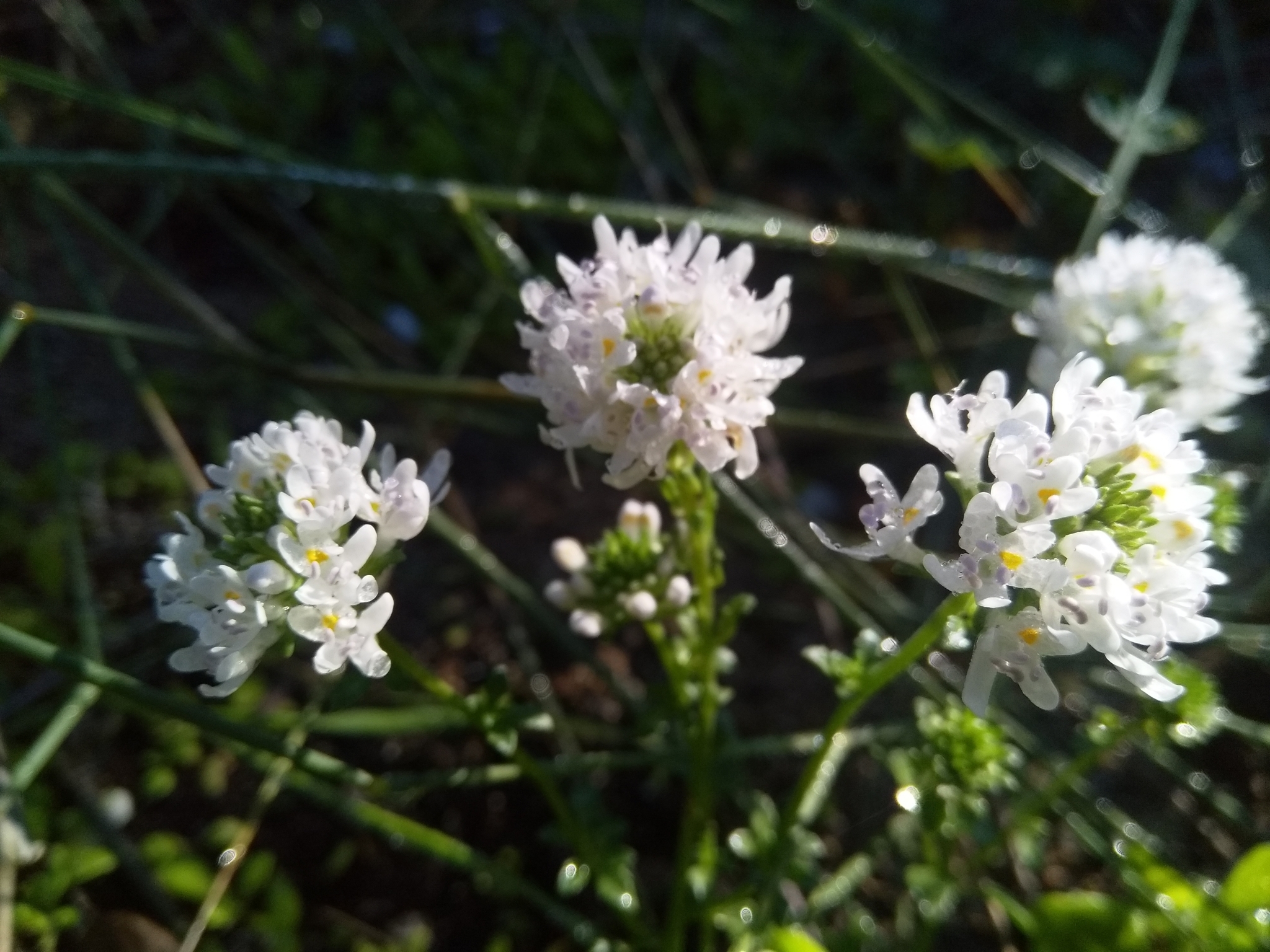
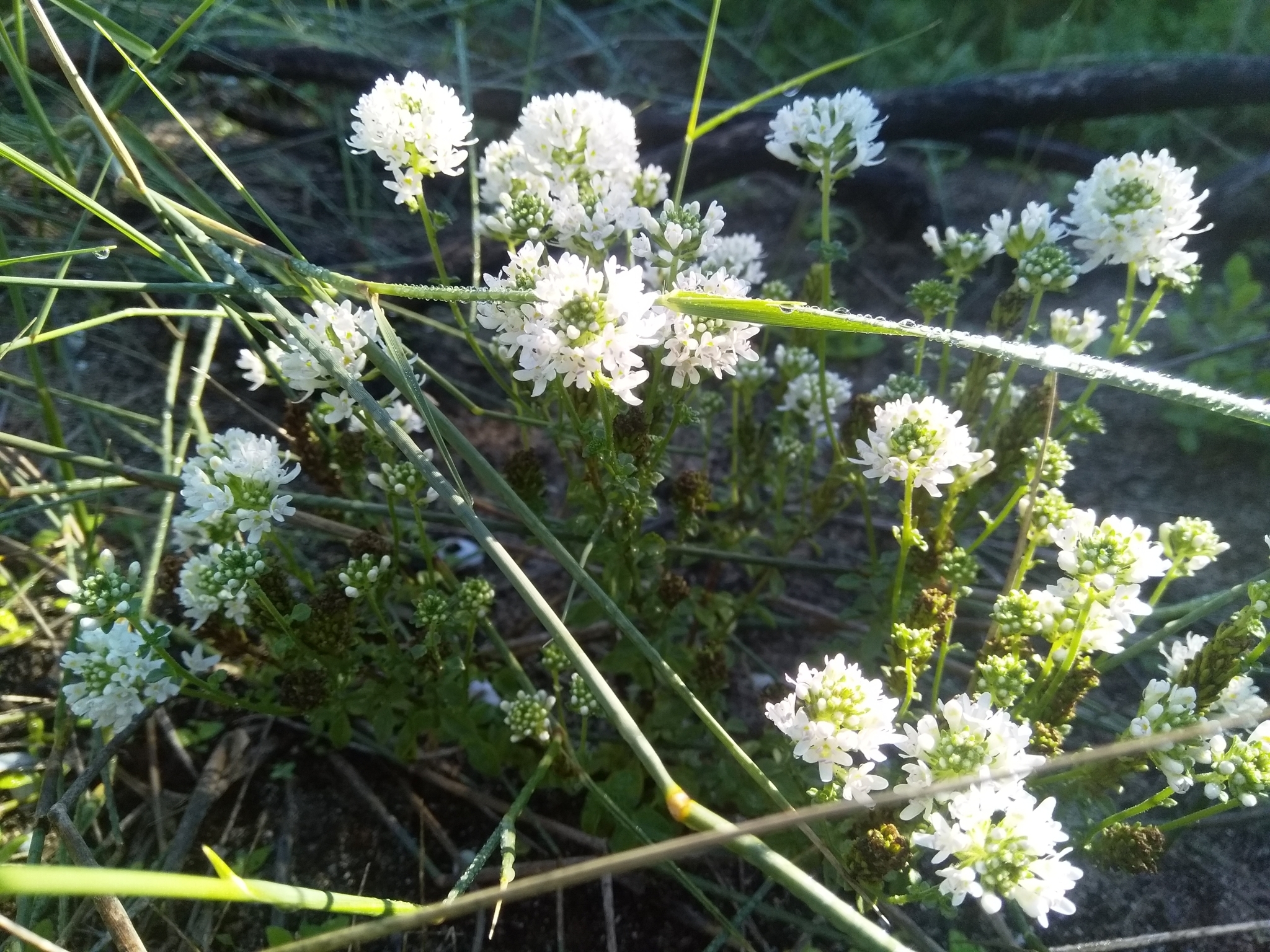
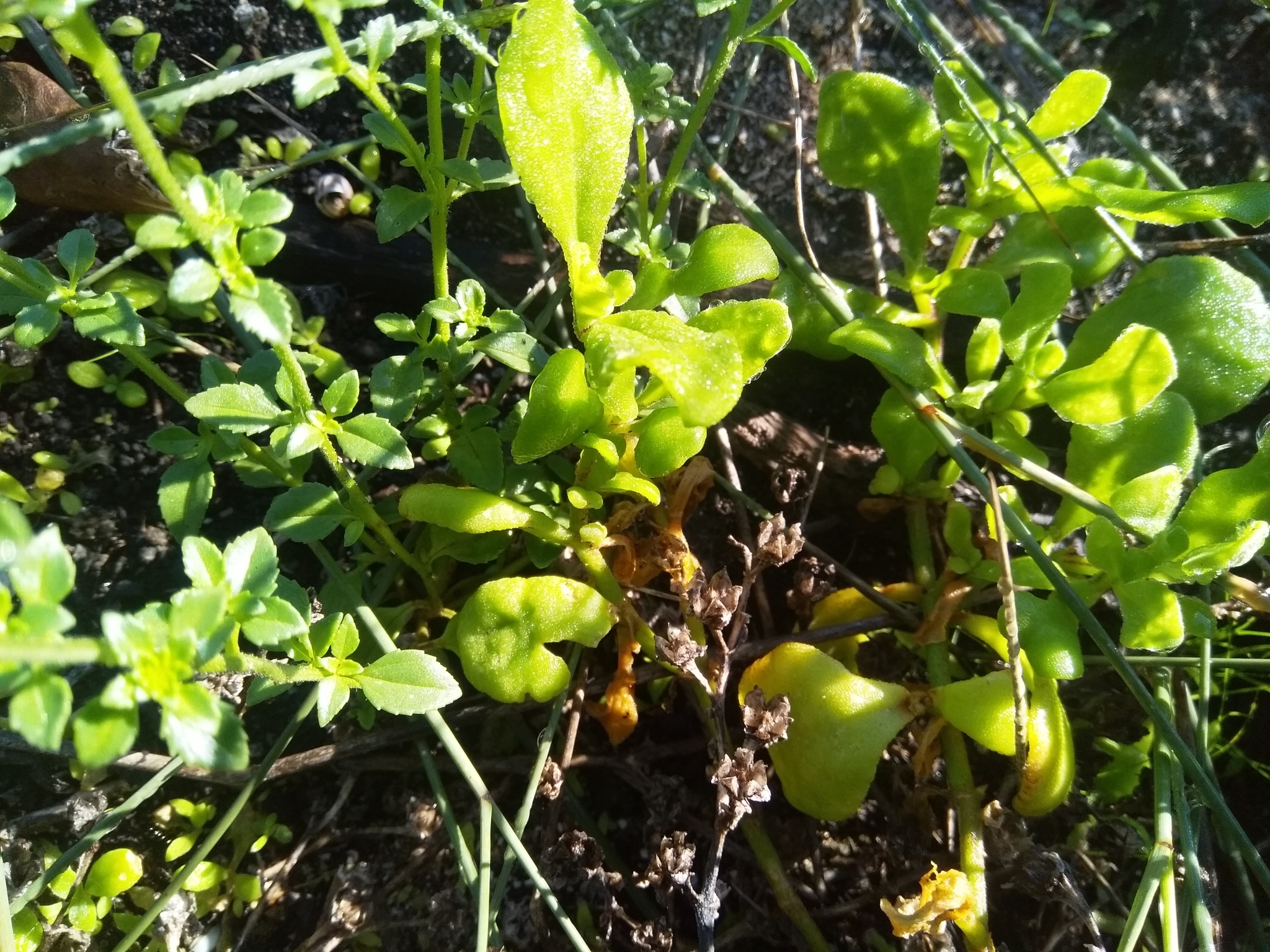
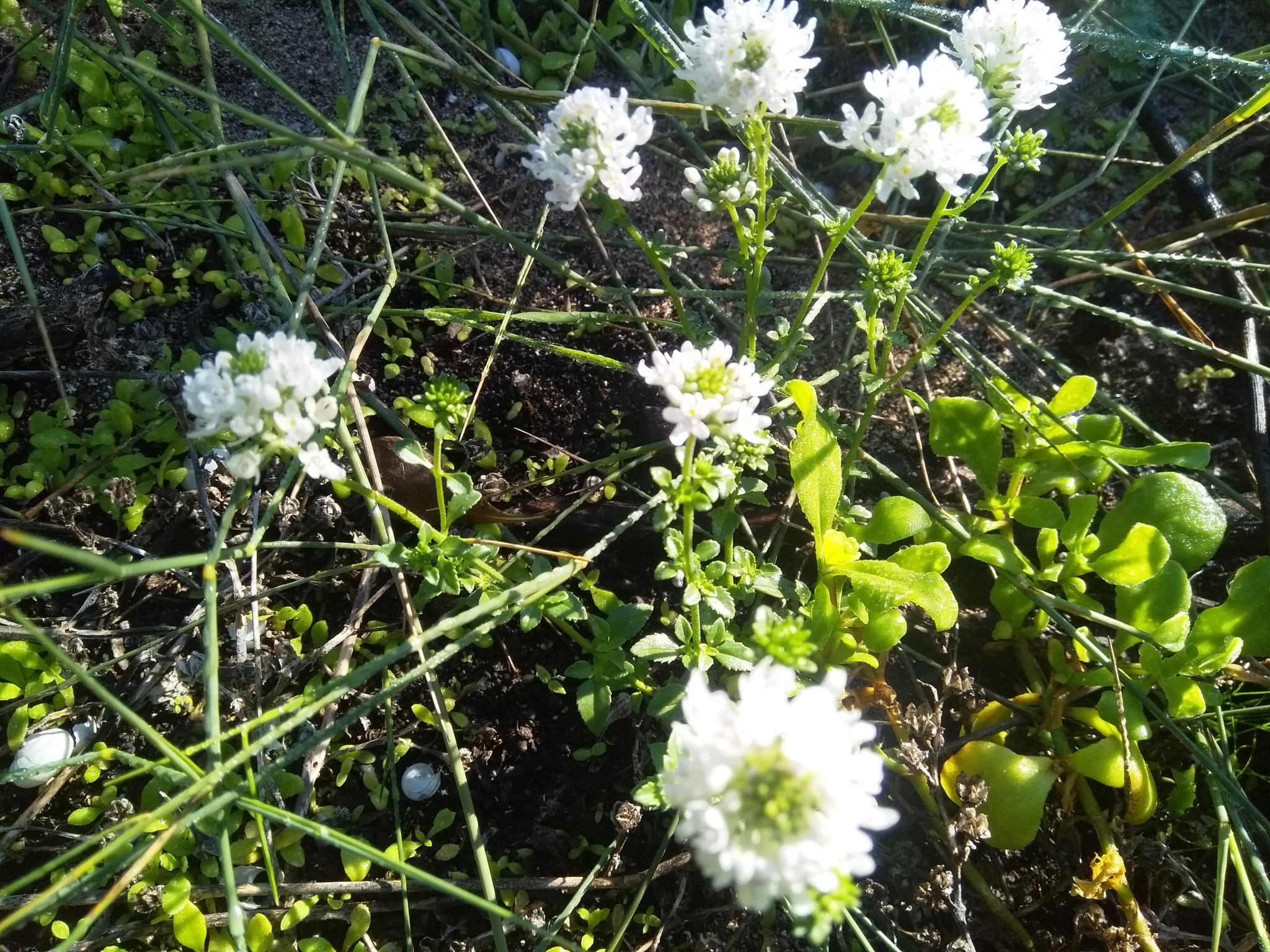
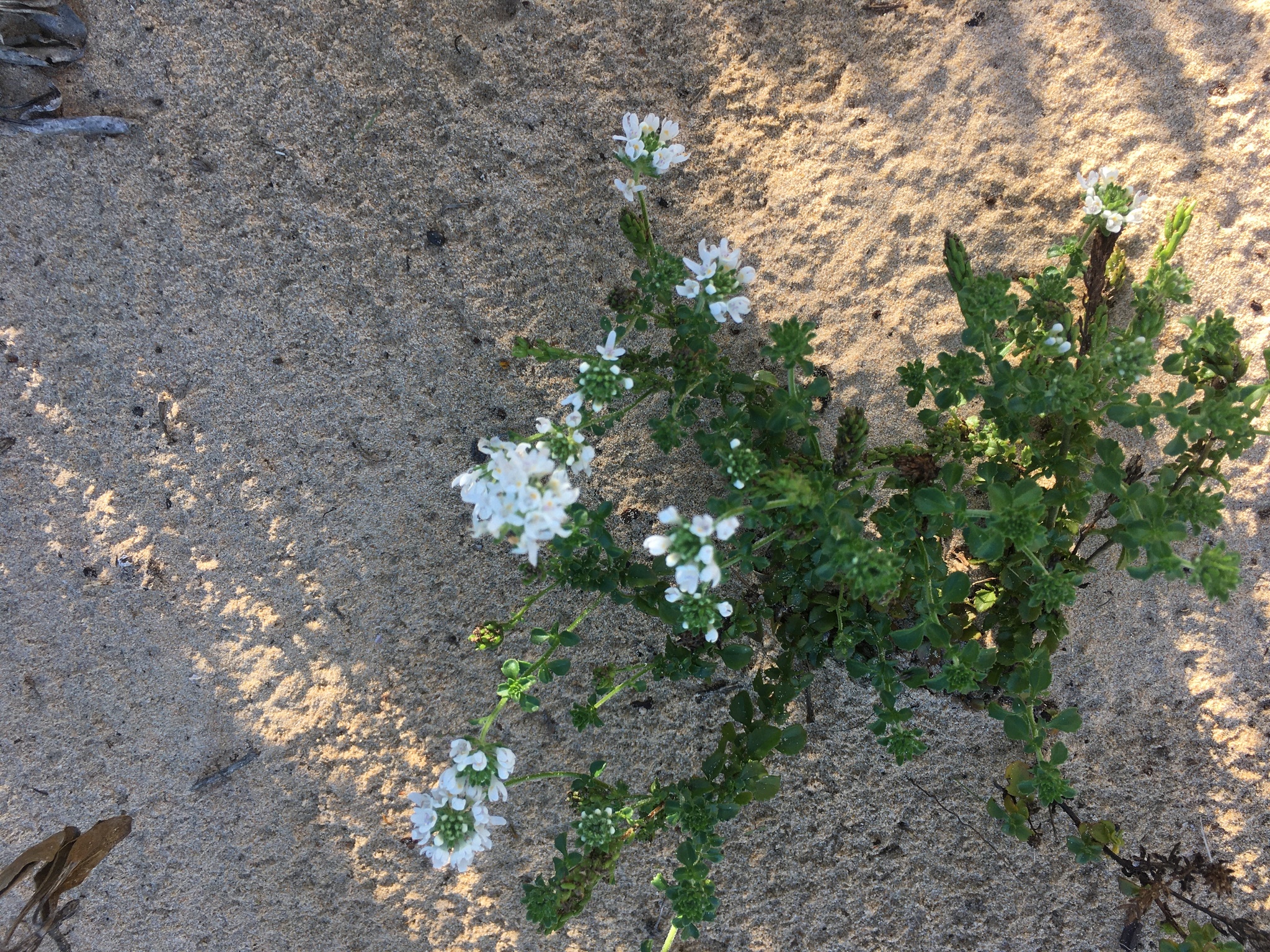
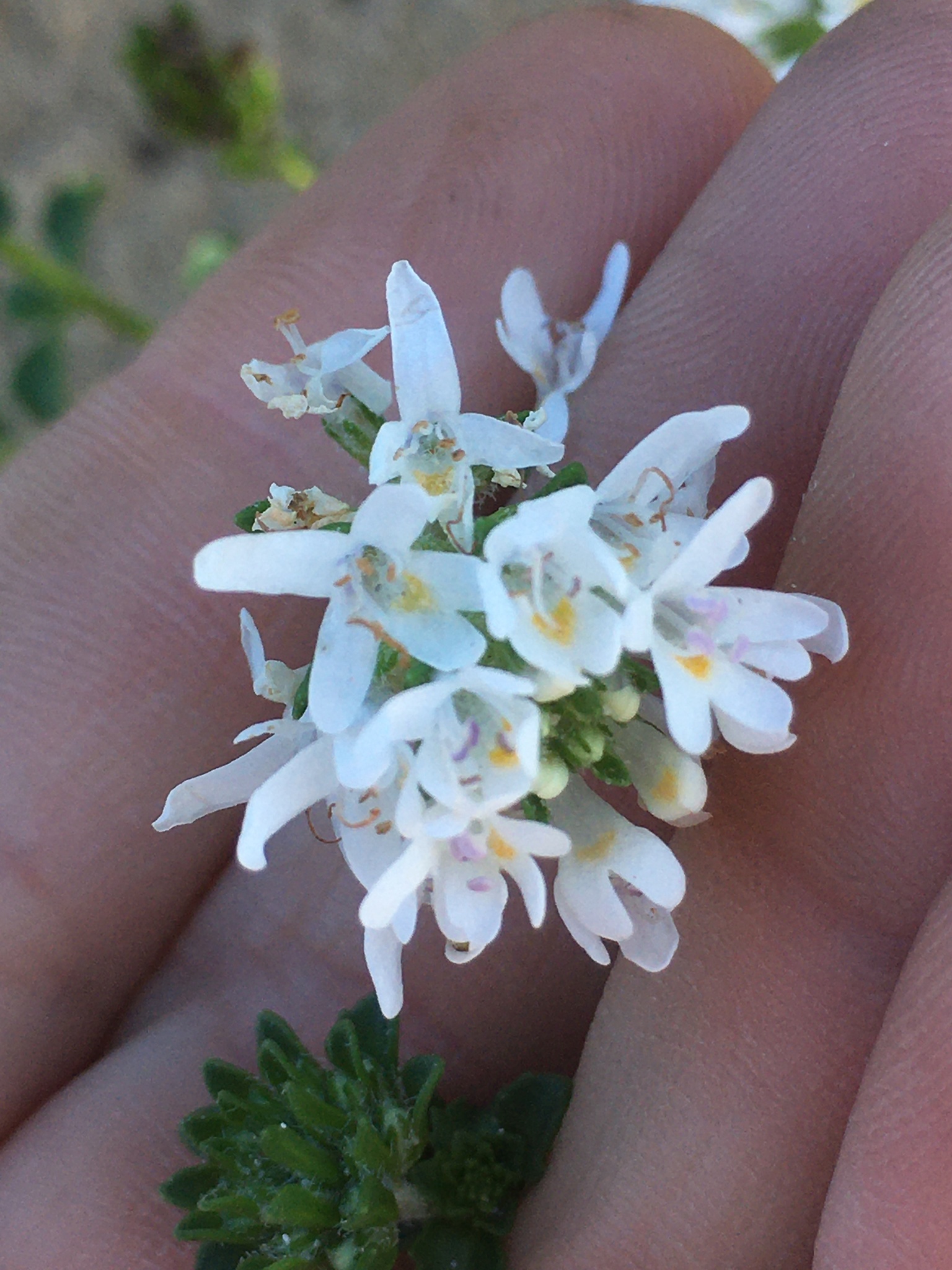
Annual herb 50-300 mm tall, stems simple to well-branched from the base, lower branches often decumbent, basal parts sometimes becoming woody, upper parts herbaceous, leafy, pubescent, the hairs c. 0.5-1 mm long, often ± curled, spreading to retrorse. Leaves opposite, blade c. 7-35 x 5-23 mm, broadly elliptic or ovate, contracted below into a petiolar part 3-20 mm long, triplinerved, margins serrate, blade glandular-punctate, sparsely hairy chiefly on the margins, main veins and lower surface near the base. Flowers many in lax leafy racemes. Bracts 6.5-18 x 2.5-9 mm, leaf-like and grading imperceptibly from leaves to bracts, adnate to pedicel and calyx tube, lower margins with patent hairs 0.5-1 mm long. Pedicels 0.25-1 mm long. Calyx distinctly bilabiate, tube 0.75-1.5 mm long, anticous lobes (2.25-)3-4 x 0.3-0.75 mm, keeled, conduplicate near tips, margins with patent hairs 0.5-1 mm long. Corolla tube 3-5 x 0.75-1.1 mm, slightly broadened in throat, limb 3-4.5 mm across the lateral lobes, posticous lobes 0.3-1.5 x 0.3-1 mm, anticous lobe 1-2.1 x 0.75-1 mm, all lobes oblong, white, orange patch at base of posticous lip and bearded there, the hairs running halfway down the tube inside, a few hairs often present at base of anticous lip. Stamens 4, anthers 0.3-0.6(-0.75) mm long. Stigma well exserted. Capsules 4-6 x 1.5-3 mm Seeds c. 0.5 mm long, irregularly colliculate, amber-coloured. Flowering in any month. From: Hilliard, OM. 1994. The Manuleae: a tribe of Scrophulariaceae. Edinburgh University Press, Edinburgh. [All rights reserved]
Annual herbs, stems up to 300 mm high; simple to much branched, lower ones often decumbent, leafy and spreading- to retrorse-haired. Leaves opposite, widely elliptic or ovate. Flowers many in lax racemes, where leaves gradually become bracts upwards. Corolla: lobes white with orange patch at base of upper lip. Flowering time all year. From: Smithies, SJ; Bredenkamp, CL; Magwaza, ZL. 2019. Scrophulariaceae s.l.?. In: CL Bredenkamp (ed.), A Flora of the Eastern Cape Province. Strelitzia 41(2): 1475-1538. South African National Biodiversity Institute, Pretoria. [CC BY]
Hairy annual to 30 cm. Leaves elliptic-ovate, toothed, grading into floral bracts. Flowers in lax, leafy racemes, white with orange patch at base of upper lobes. From: Manning, JC; Goldblatt, P. 2012. Scrophulariaceae: Phyllopodium Benth. In: J Manning & P Goldblatt (eds), Plants of the Greater Cape Floristic Region 1: The Core Cape flora. Strelitzia 29: 750-752. South African National Biodiversity Institute, Pretoria. [CC BY]
It is closely allied to P. cuneifolium; the differences between them are detailed under that species. From: Hilliard, OM. 1994. The Manuleae: a tribe of Scrophulariaceae. Edinburgh University Press, Edinburgh. [All rights reserved]
It is a weed of damp sandy places. From: Hilliard, OM. 1994. The Manuleae: a tribe of Scrophulariaceae. Edinburgh University Press, Edinburgh. [All rights reserved]
Damp sandy areas, often weedy; Indian Ocean Coastal Belt, Albany Thicket, Eastern Fynbos-Renosterveld. From: Smithies, SJ; Bredenkamp, CL; Magwaza, ZL. 2019. Scrophulariaceae s.l.?. In: CL Bredenkamp (ed.), A Flora of the Eastern Cape Province. Strelitzia 41(2): 1475-1538. South African National Biodiversity Institute, Pretoria. [CC BY]
Damp, sandy places. From: Manning, JC; Goldblatt, P. 2012. Scrophulariaceae: Phyllopodium Benth. In: J Manning & P Goldblatt (eds), Plants of the Greater Cape Floristic Region 1: The Core Cape flora. Strelitzia 29: 750-752. South African National Biodiversity Institute, Pretoria. [CC BY]
Phyllopodium bracteatum ranges from Pietermaritzburg and Durban through the coastal areas of Natal and Transkei to the Cape as far west as Mossel Bay and inland to the environs of Grahamstown and Fort Beaufort. From: Hilliard, OM. 1994. The Manuleae: a tribe of Scrophulariaceae. Edinburgh University Press, Edinburgh. [All rights reserved]
Mossel Bay to KwaZulu-Natal. From: Manning, JC; Goldblatt, P. 2012. Scrophulariaceae: Phyllopodium Benth. In: J Manning & P Goldblatt (eds), Plants of the Greater Cape Floristic Region 1: The Core Cape flora. Strelitzia 29: 750-752. South African National Biodiversity Institute, Pretoria. [CC BY]
January to December
8 to 550 m
This map contains point-based occurrences at different locations
Occurrence in the Flora of Southern Africa (FSA) countries and South African provinces. Residence status indicates if a taxon is indigenous, endemic, naturalised or invasive in a specific region. This data is based on specimen records and literature
FSA
SA
BOT
NAM
ESW
LES
WC
EC
NC
FS
GA
KZN
LP
MP
NW
Absent
Indigenous
Endemic
Naturalised
Invasive

Names and Sources
Polycarena bracteata (Benth.) Levyns
Classification
KINGDOM Plantae
SUBKINGDOM Phanerogamae
PHYLUM Anthophyta
ORDER Lamiales
FAMILY Scrophulariaceae
TRIBE Limoselleae
GENUS Phyllopodium
SPECIES bracteatum
7 results for Phyllopodium bracteatum Benth.
Barcode: NH0118291-0 Collector(s) & number: Ward, CJ, 11307 | 1991-9-3
South Africa, KwaZulu-Natal, Upper South Coast, Umbogintwini, AECI Property.
Data Resource: BODATSA View record
Barcode: NH0129798-0 Collector(s) & number: Ward, CJ, 13478 | 1995-12-28
South Africa, KwaZulu-Natal, Greater Durban Metropolitan Area. Hammarsdale Area. Hector (Eskom) Substation Site.
General notes: Herb, annual, low, erect and branched, up to ca. 200mm tall. Vegetation type: grassland. Substrate: soil. Soil type: sand. Rock: Natal Group Sandstone. Exposure: sun. Aspect: East. Slope: gentle. Other: in outwashed rain-eroded sand. Notes: common.
Data Resource: BODATSA View record
Barcode: PRE0827961-0 Collector(s) & number: Vlok, JHJ, 2145 | 1989-7-12
South Africa, Western Cape, Great Brak River at new Wolwedansdam site; on slope.
General notes: Det: Hilliard & Burtt Edinburgh
Data Resource: BODATSA View record
Barcode: NH0073924-0 Collector(s) & number: Jordaan, M, 203 | 1981-10-22
South Africa, KwaZulu-Natal, Umlaas Filters, Durban Corporation property, Prospective Nature Reserve.
Data Resource: BODATSA View record
This map contains point-based occurrences at different locations
2019
SERIES CHAPTER
Scrophulariaceae s.l.? Smithies, SJ; Bredenkamp, CL; Magwaza, ZLIn: CL Bredenkamp (ed.), A Flora of the Eastern Cape Province. Strelitzia 41(2)1475-1538
South African National Biodiversity Institute, Pretoria
2012
SERIES CHAPTER
Scrophulariaceae: Phyllopodium Benth. Manning, JC; Goldblatt, PIn: J Manning & P Goldblatt (eds), Plants of the Greater Cape Floristic Region 1: The Core Cape flora. Strelitzia 29: 750-752
South African National Biodiversity Institute, Pretoria
1994
No results found for Phyllopodium bracteatum Benth.
Status and criteria
LC
Assessor(s)
Plantae Coordinator
JOURNAL ARTICLE
Davis, A.P., Govaerts, R.l., Bridson, D.M., Ruhsam, M., Moat, J. and Brummitt, N.A. 2009. A Global Assessment of Distribution, Diversity, Endemism, and Taxonomic Effort in the Rubiaceae1. Annals of the Missouri Botanical Garden. 96:68-78
BOOK
Davis, S.D., Droop, S.J.M., Gregerson, P., Henson, L., Leon, C.J., Vila-Lobos, J.L., Synge, H. and Zantovska, J. 1986. Plants in danger: what do we know?. IUCN
JOURNAL ARTICLE
Davison, J.D. 1927. Celastraceae. Bothalia. 2:289-346
JOURNAL ARTICLE
Davy, B. 1935. New compositae from the Transvaal. Journal of South African Botany. 1:105
| Part(s) of plant used | Use(s) | Reference |
|---|
Coming soon...


