PLANTAE / PHANEROGAMAE / ANTHOPHYTA / LAMIALES / SCROPHULARIACEAE / LIMOSELLEAE / LYPERIA / FORMOSA

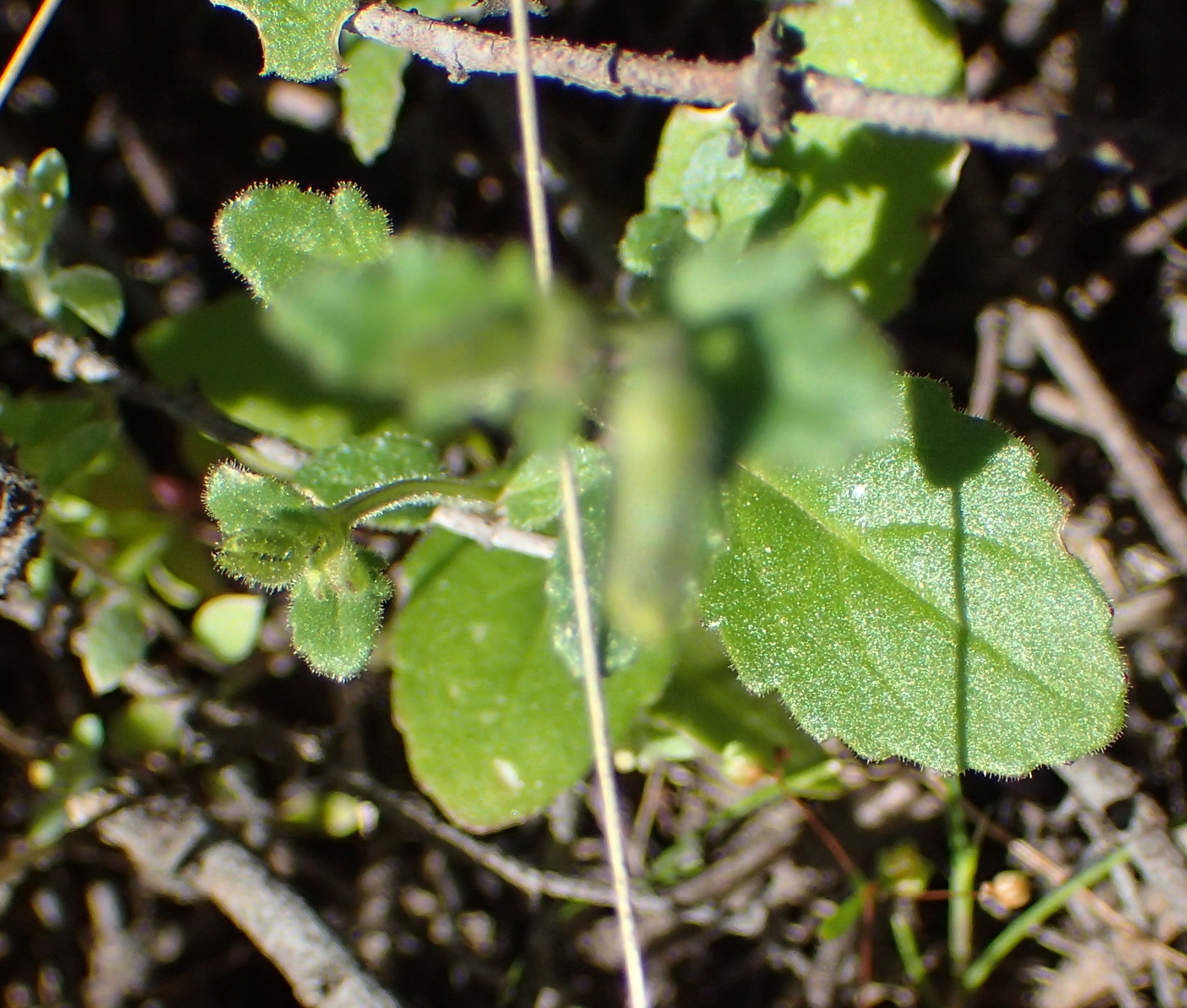
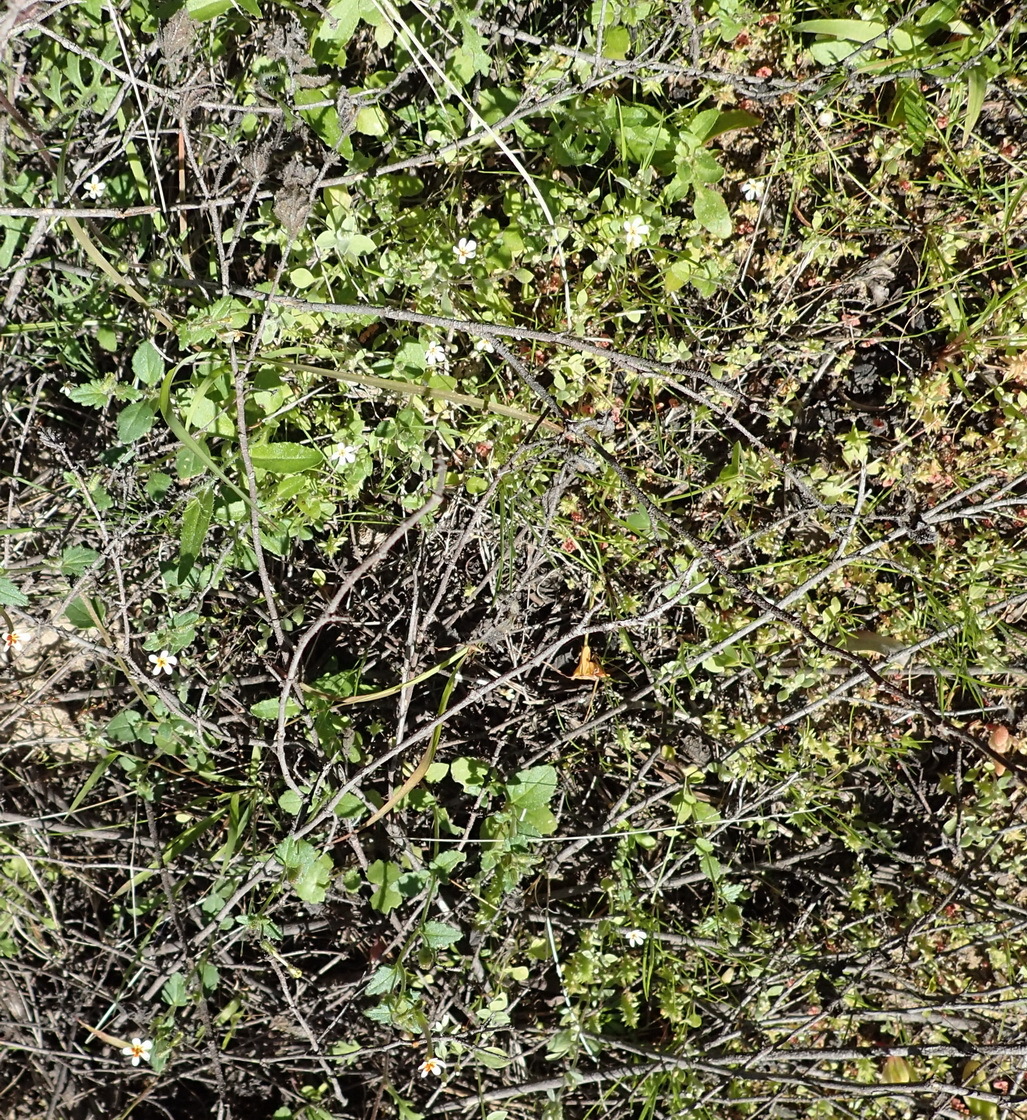
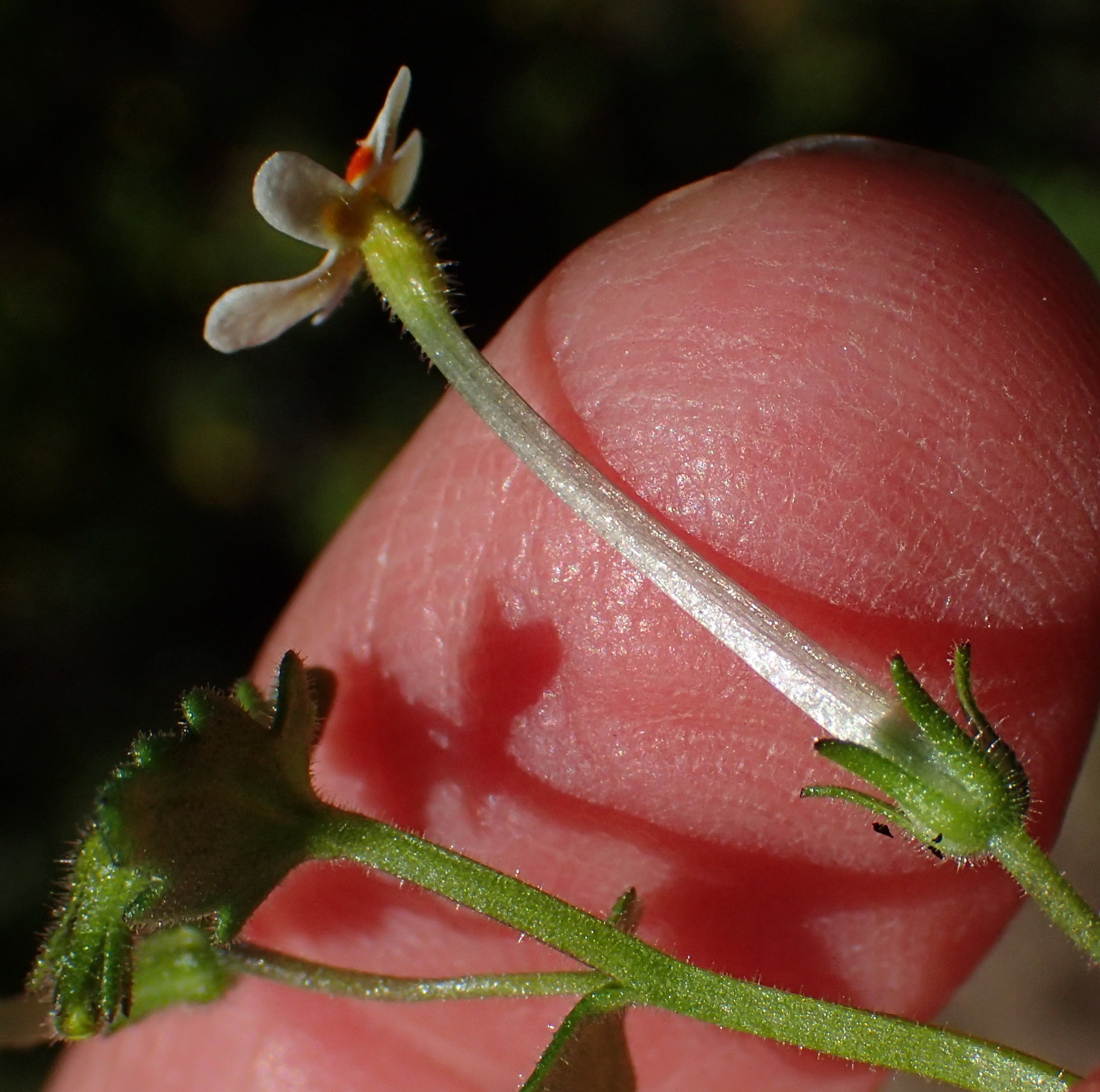
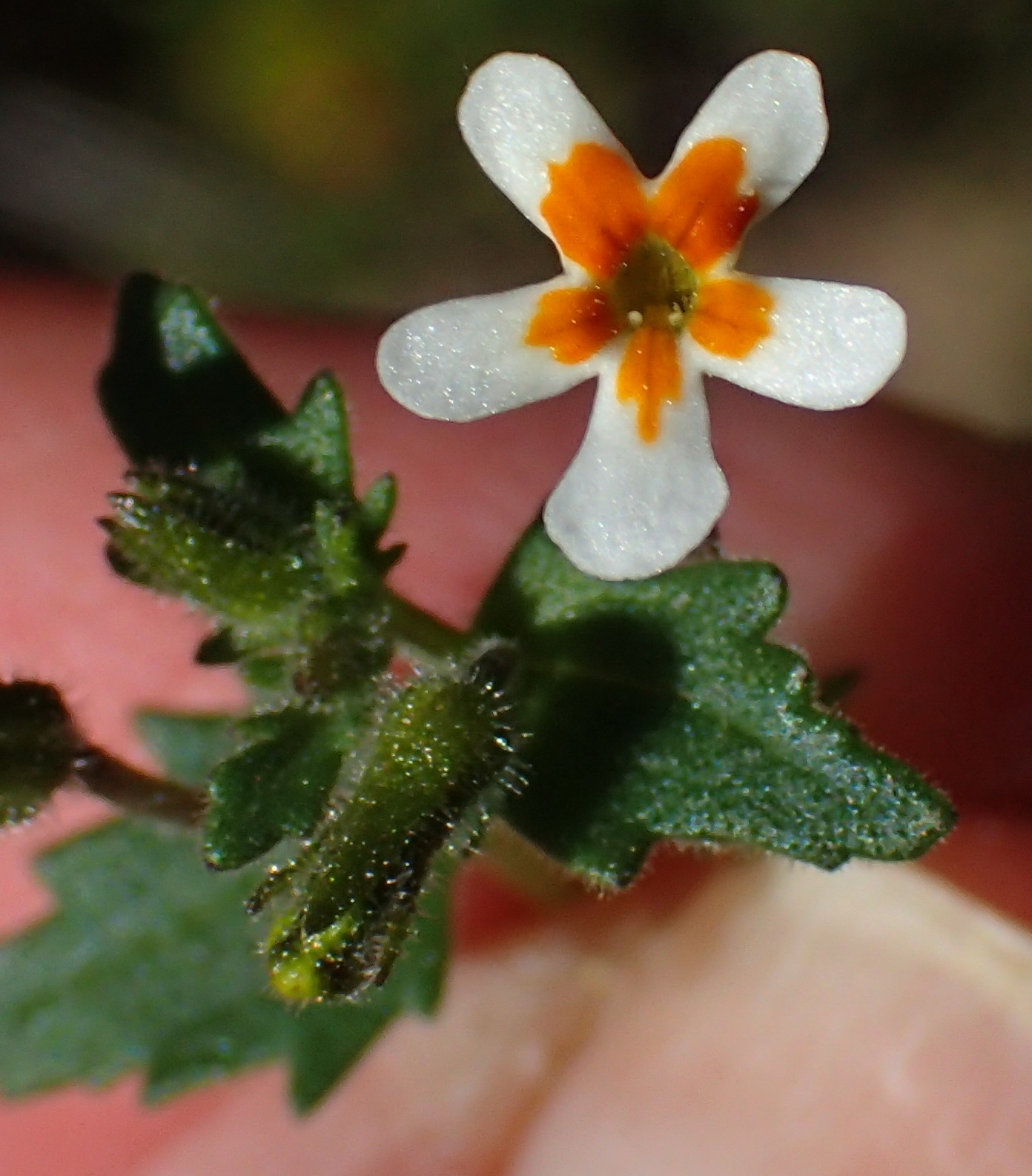
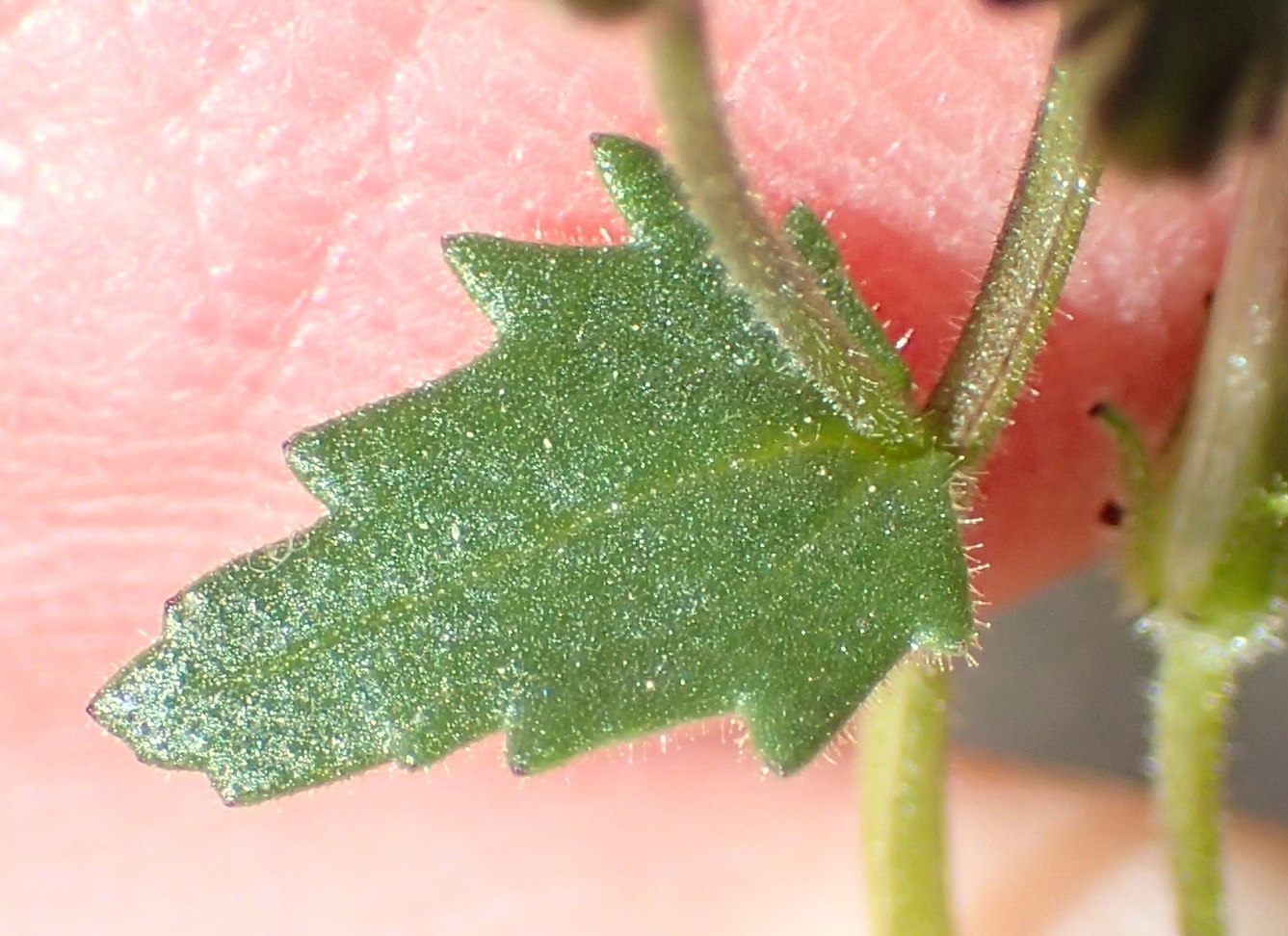
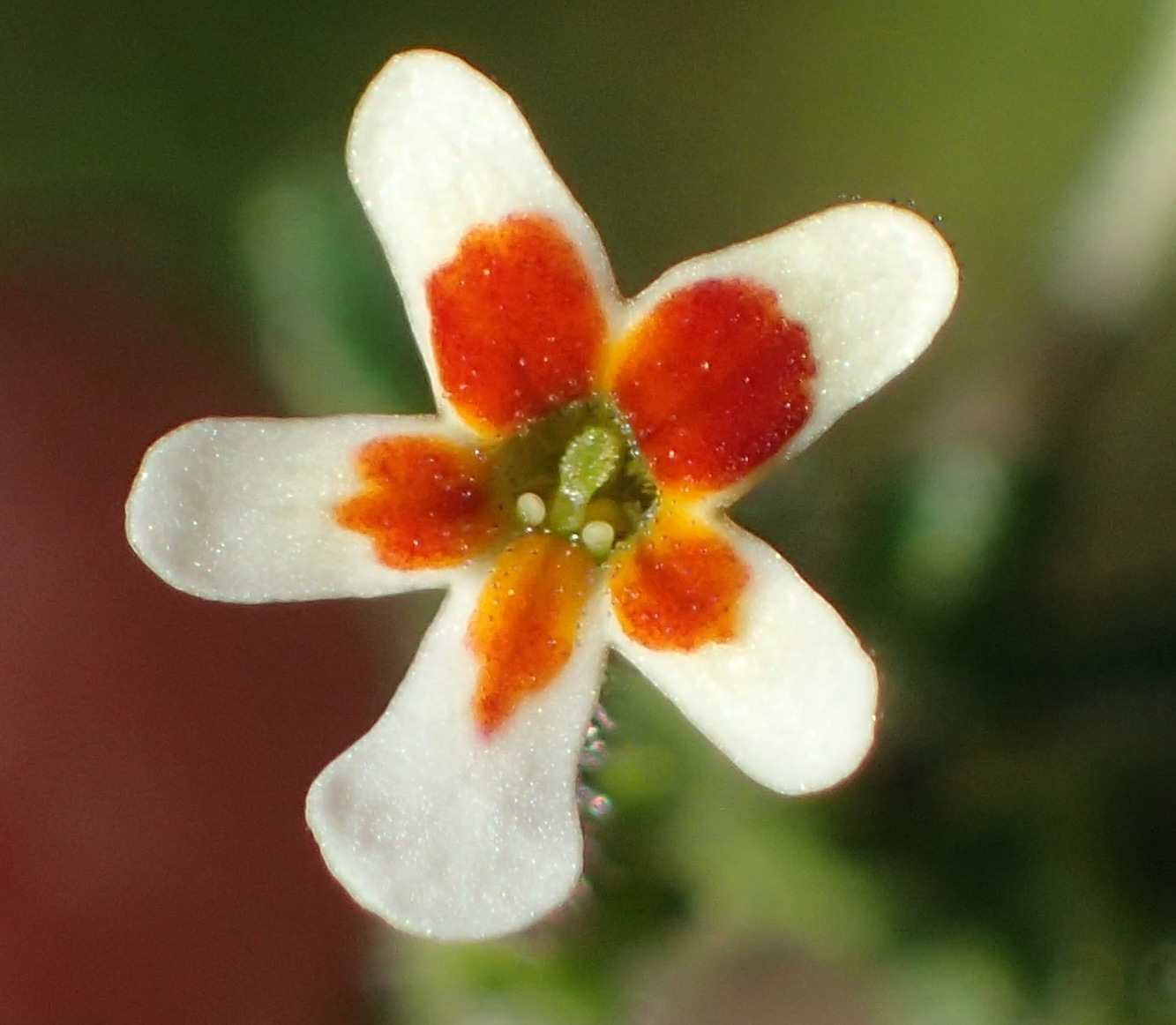
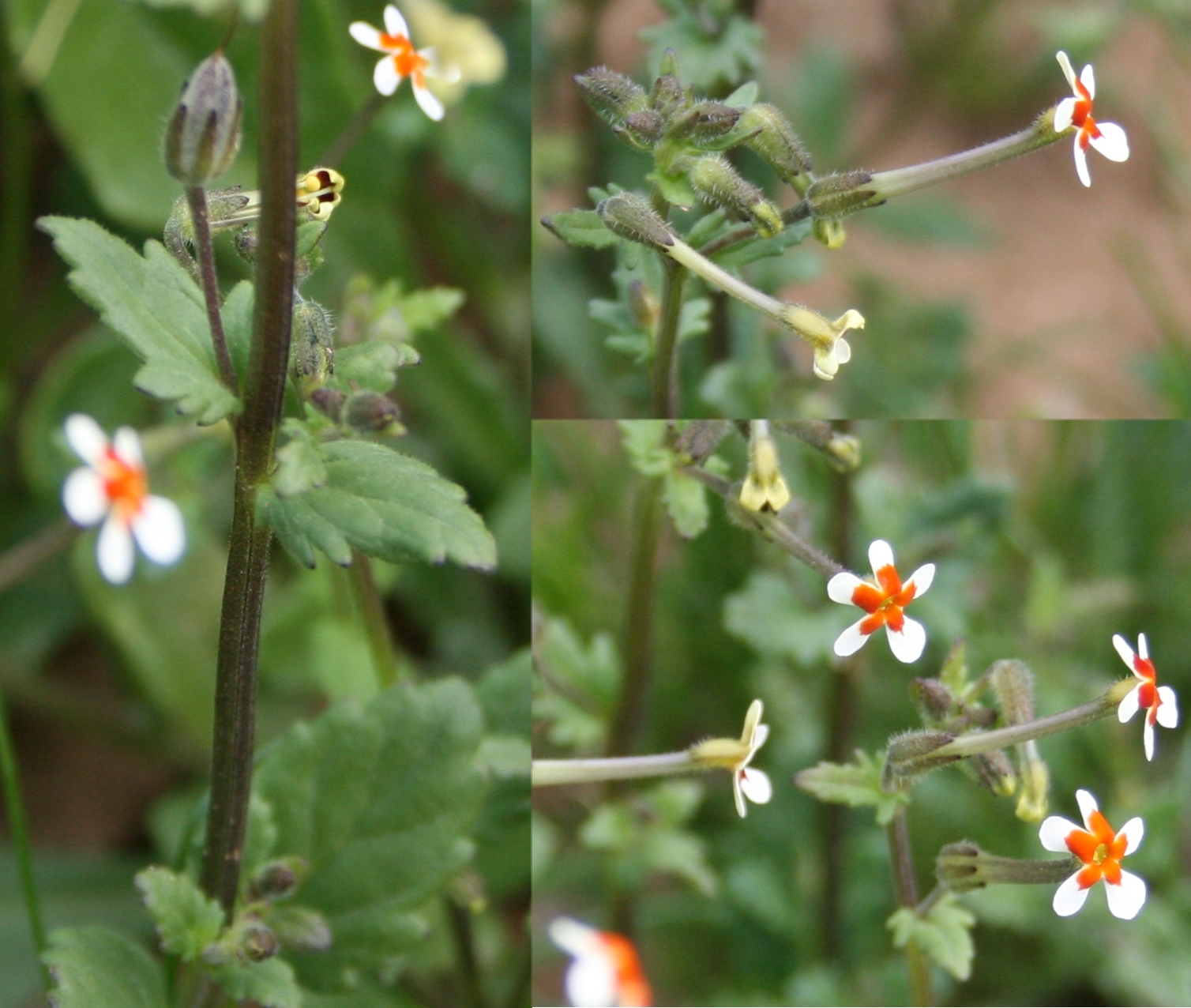
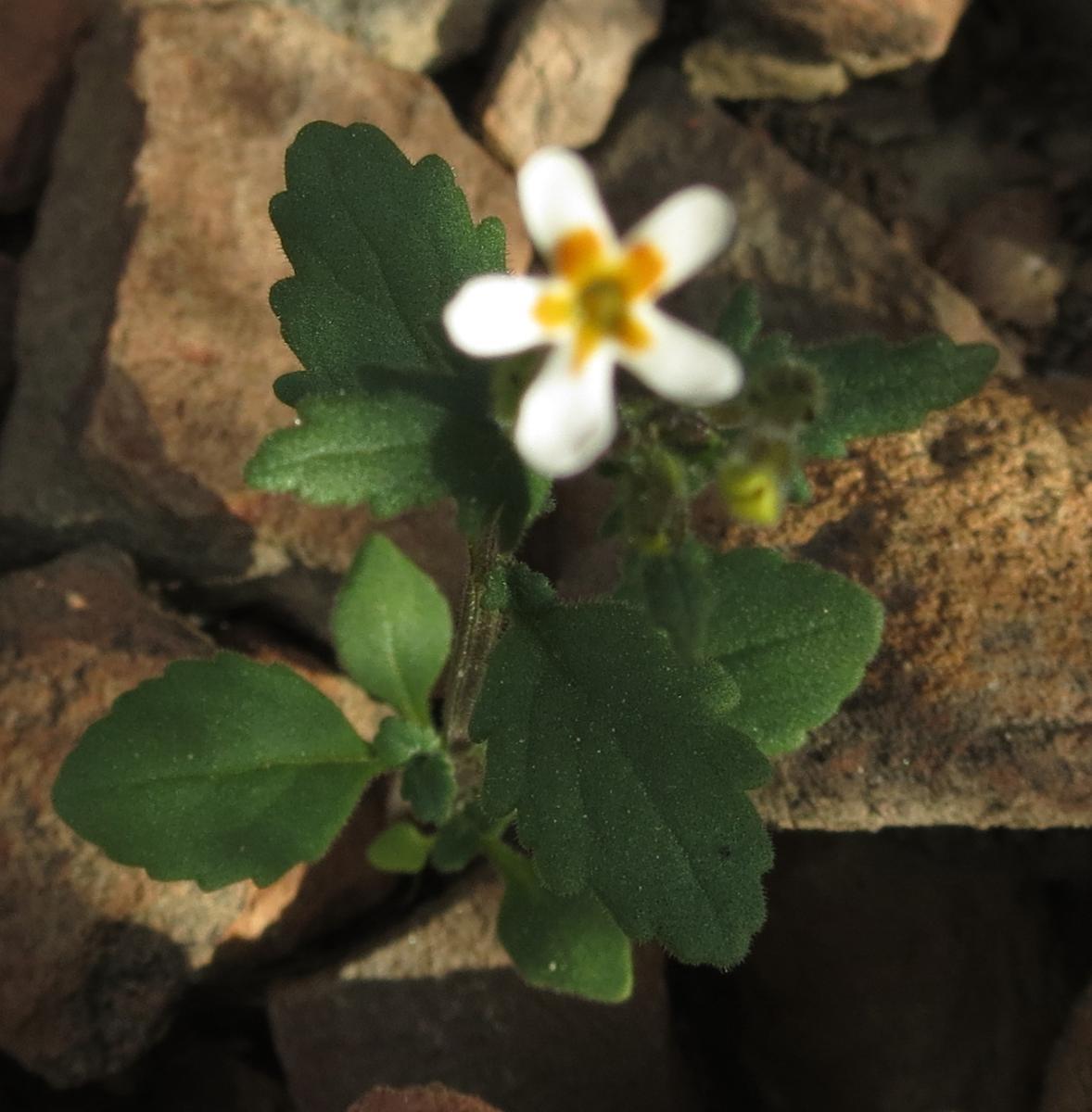
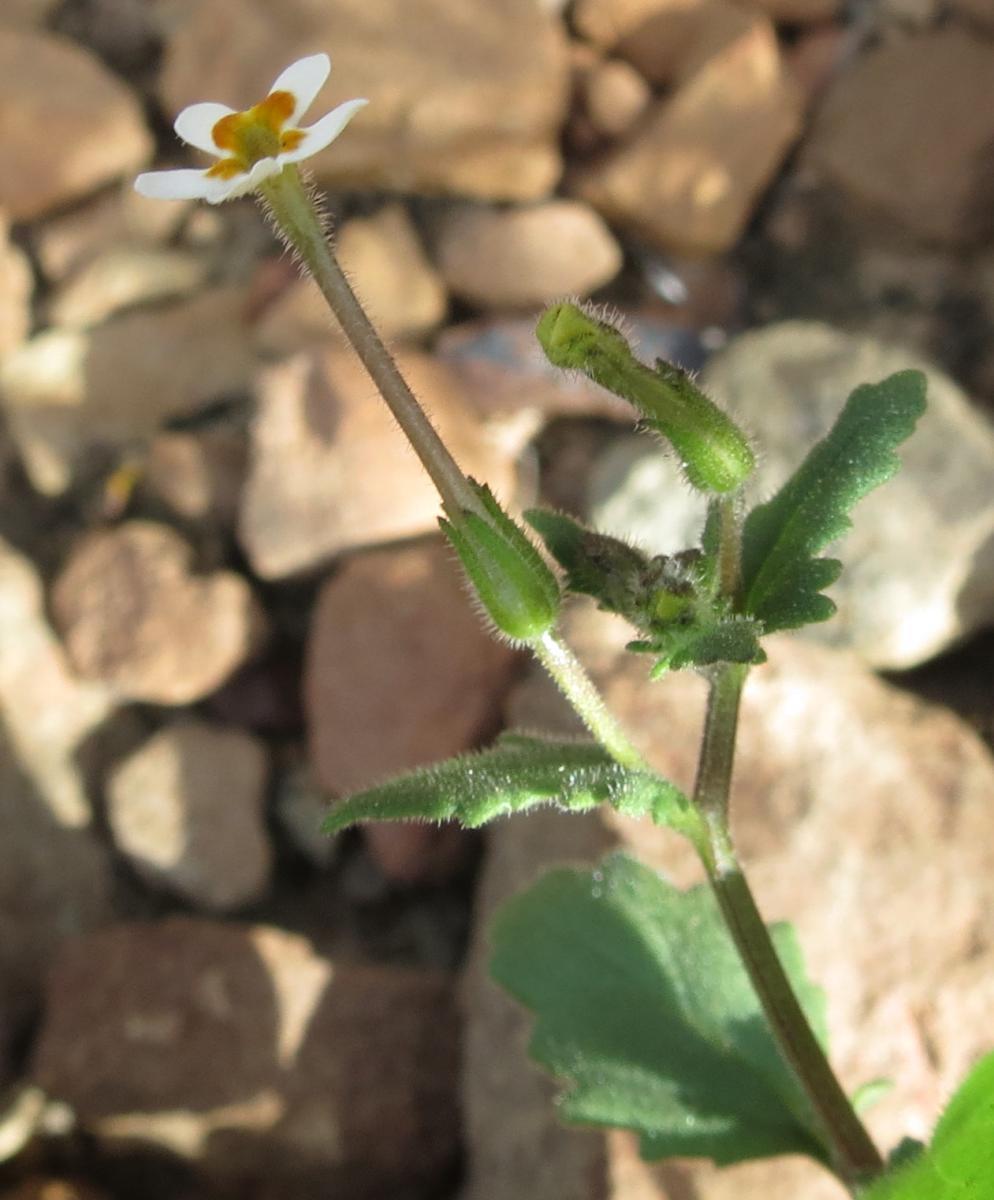
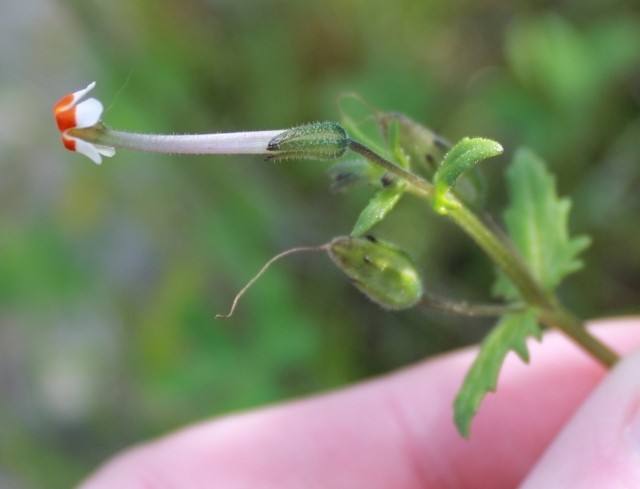
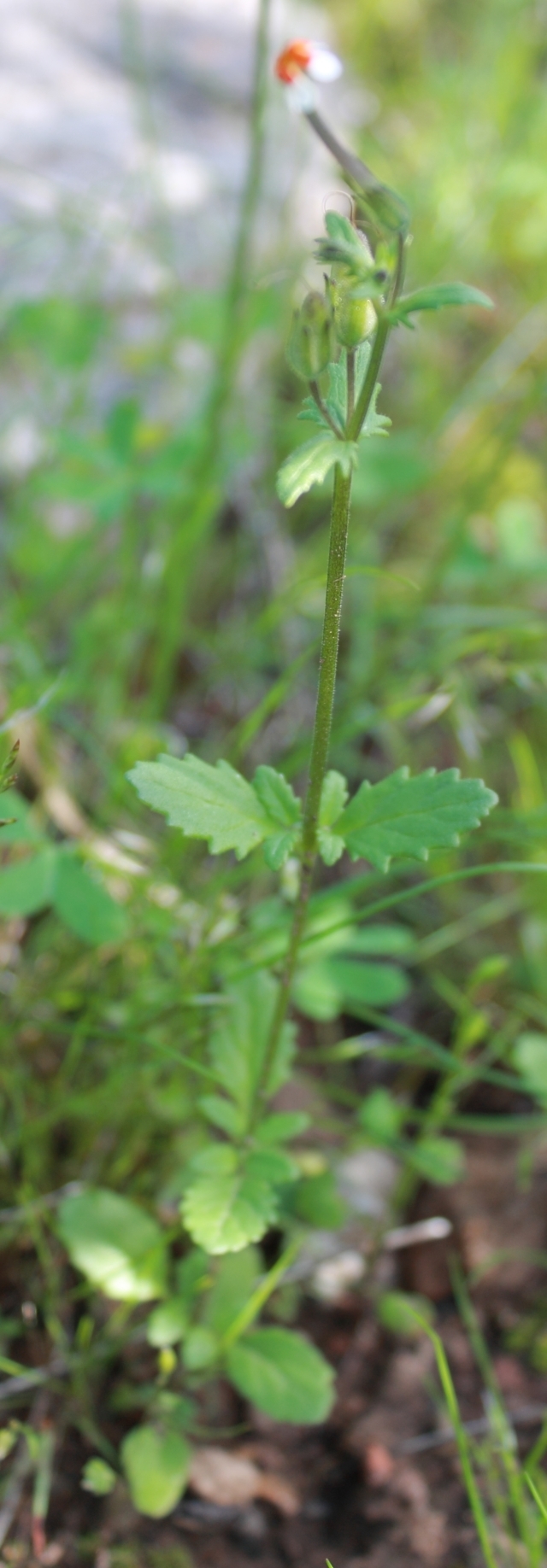
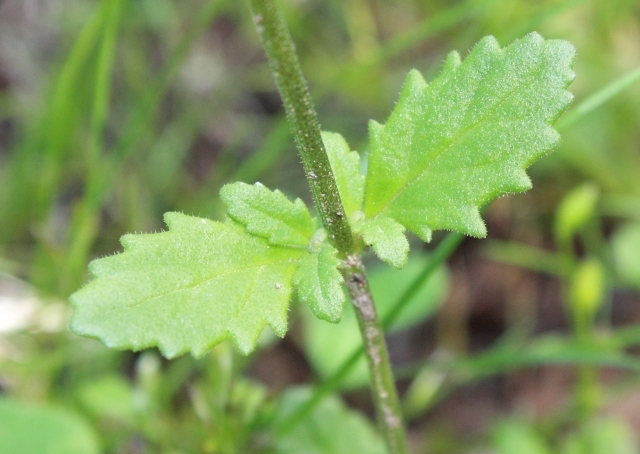
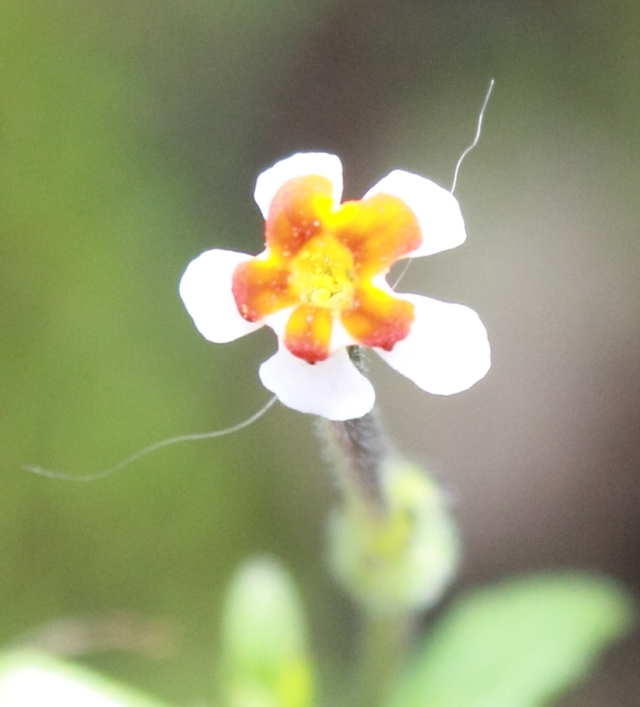
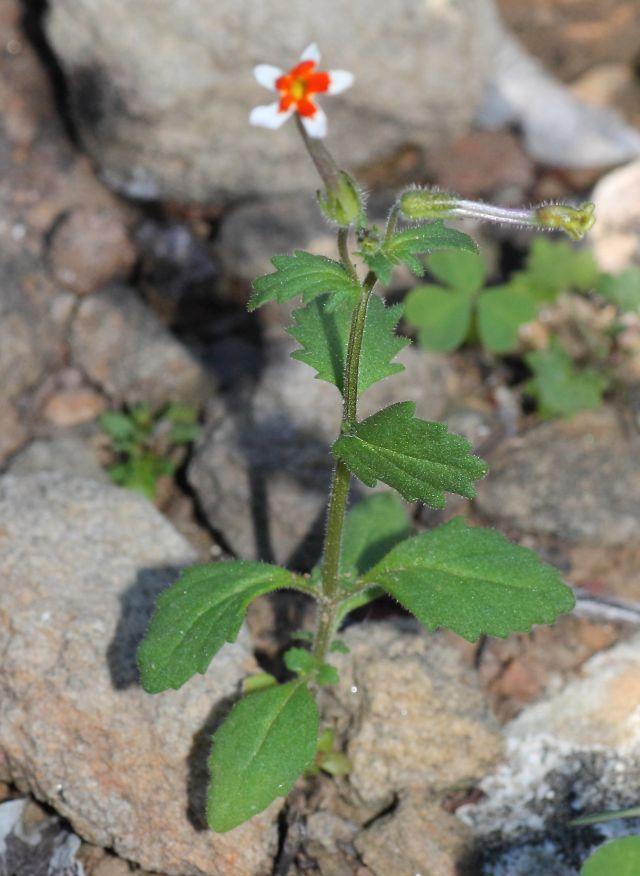
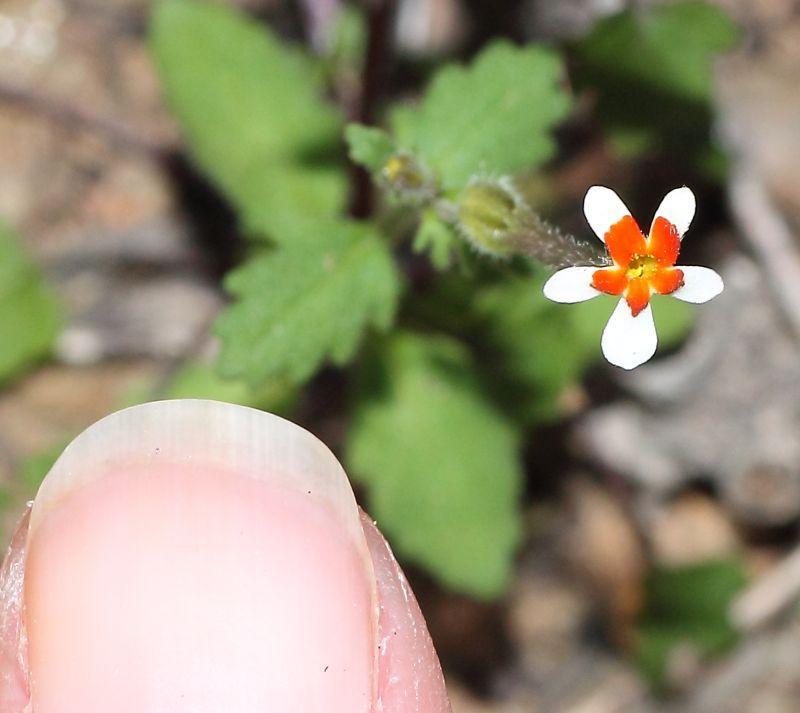
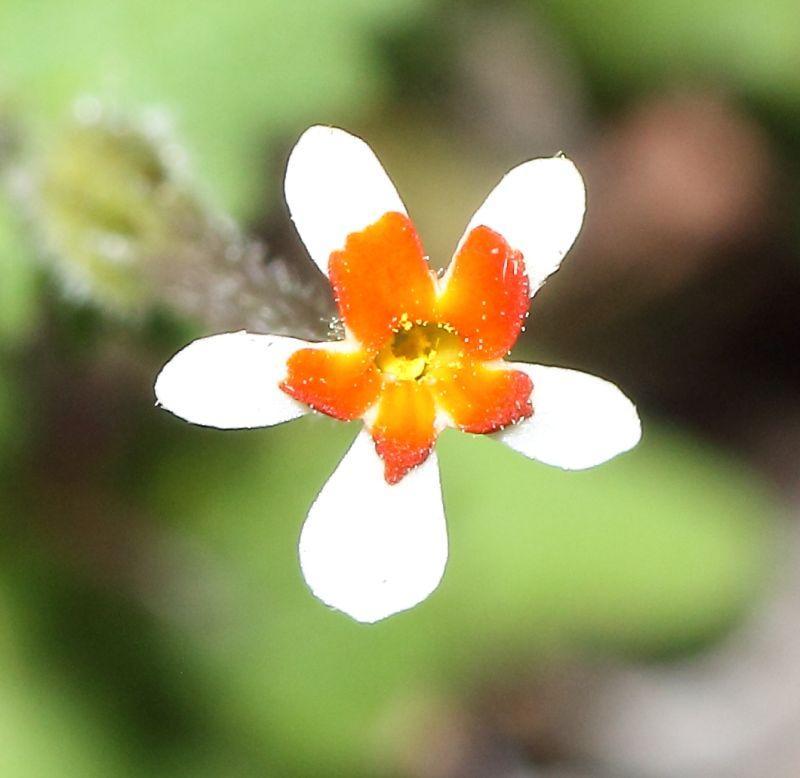
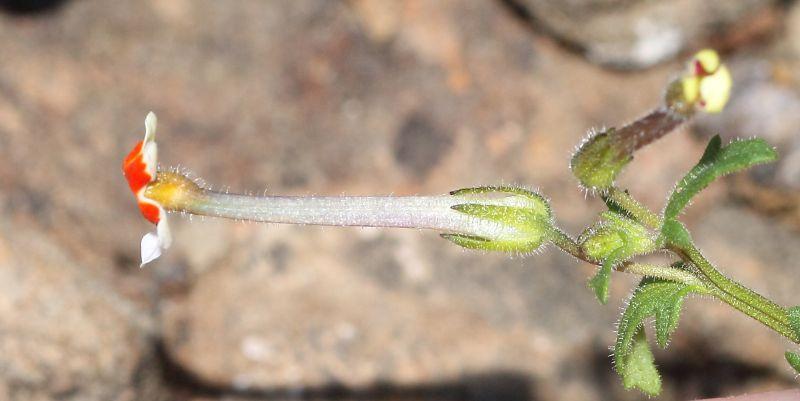
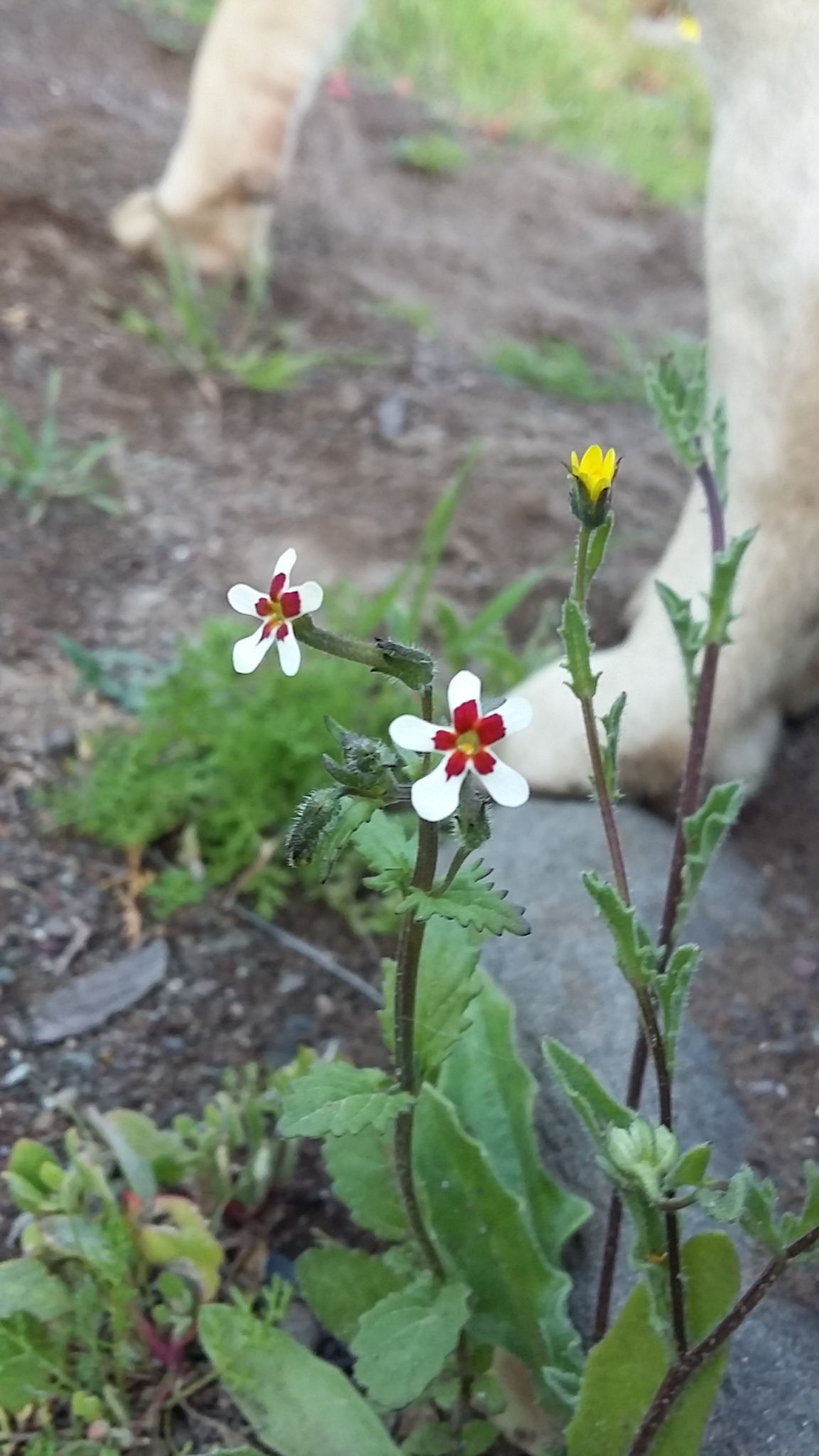
Annual herb scarcely blackening on drying, main stem c. 200-400 mm tall, simple at first, later loosely branched from the base and above, branches ascending, glandular-puberulous, hairs up to c. 0.3 mm long, very sparse glistening glands as well, leafy. Leaves opposite, c. 15-47 x 6-20 mm, elliptic tapering to a petiolar part up to 1/3 total leaf length, rapidly shorter upwards, apex ± obtuse, margins serrate, both surfaces hairy as stem. Flowers few to many in lax terminal racemes. Bracts alternate, leaf-like, lowermost c. 10-23 x 5-10 mm Pedicels (lowermost) c. 18-23 mm Calyx tube c. 0.2 mm long, lobes c. 4.2-5 x 1 mm, glandular-pubescent, hairs up to 0.5-1 mm long, sparse glistening glands as well. Corolla tube c. 24 x 1.4 mm, cylindric, expanded in throat to c. 2.8 mm, limb nearly regular, c. 14 mm across, lobes c. 5.2-6 x 4.2-5 mm, broadly and bluntly spathulate, tube and backs of lobes glandular-puberulous, hairs up to 0.4-0.5 mm long, very few glistening glands on upper part, upper surface of lobes glabrous except for a broad band of minute glandular hairs around mouth, band of upward-pointing clavate hairs in throat, limb white, base of each lobe with a broad orange patch 3-toothed at apex. Stamens 2, filaments 1.2 mm long, anthers c. 1.7 mm long, included, staminodes 2.0.3 mm long. Stigma c. 1-1.3 mm long, included. Style c. 20 mm long, glandular-puberulous. Ovary c. 3.5 x 2 mm, densely clad in glistening glands and glandular hairs c. 0.3-0.6 mm long. Capsule (young) c. 14 x 6 mm, hairy as ovary. Seeds immature. In full flower and young fruit near the end of August. From: Hilliard, OM. 1994. The Manuleae: a tribe of Scrophulariaceae. Edinburgh University Press, Edinburgh. [All rights reserved]
Like L. antirrhinoides but flowers larger, ± 14 mm diam. and tube ± 24 mm long. From: Manning, JC; Goldblatt, P. 2012. Scrophulariaceae: Lyperia Benth. In: J Manning & P Goldblatt (eds), Plants of the Greater Cape Floristic Region 1: The Core Cape flora. Strelitzia 29: 744-745. South African National Biodiversity Institute, Pretoria. [CC BY]
The species is closely allied to L. tenuiflora, but it is a more robust plant, mostly broader in the leaf than L. tenuiflora (ratio of length: breadth c.2-3: 1 versus 4-5: 1) with longer pedicels (lowermost c. 18-23 mm, not 4-11 mm), and larger, hairier ovaries and capsules. The corolla limb is white (shades of pink and mauve in L. tenuiflora) and the colour-patterning around the mouth more pronounced. From: Hilliard, OM. 1994. The Manuleae: a tribe of Scrophulariaceae. Edinburgh University Press, Edinburgh. [All rights reserved]
The plants were growing on a river bank in shallow soil over rock. From: Hilliard, OM. 1994. The Manuleae: a tribe of Scrophulariaceae. Edinburgh University Press, Edinburgh. [All rights reserved]
Shallow, rocky soils. From: Manning, JC; Goldblatt, P. 2012. Scrophulariaceae: Lyperia Benth. In: J Manning & P Goldblatt (eds), Plants of the Greater Cape Floristic Region 1: The Core Cape flora. Strelitzia 29: 744-745. South African National Biodiversity Institute, Pretoria. [CC BY]
Cape. 3319DB, southern foothills of Voetpadsberg, farm Doringkloof. From: Hilliard, OM. 1994. The Manuleae: a tribe of Scrophulariaceae. Edinburgh University Press, Edinburgh. [All rights reserved]
Langeberg: Robertson to Montagu. From: Manning, JC; Goldblatt, P. 2012. Scrophulariaceae: Lyperia Benth. In: J Manning & P Goldblatt (eds), Plants of the Greater Cape Floristic Region 1: The Core Cape flora. Strelitzia 29: 744-745. South African National Biodiversity Institute, Pretoria. [CC BY]
August
0 to 460 m
This map contains point-based occurrences at different locations
Occurrence in the Flora of Southern Africa (FSA) countries and South African provinces. Residence status indicates if a taxon is indigenous, endemic, naturalised or invasive in a specific region. This data is based on specimen records and literature
FSA
SA
BOT
NAM
ESW
LES
WC
EC
NC
FS
GA
KZN
LP
MP
NW
Absent
Indigenous
Endemic
Naturalised
Invasive
Names and Sources
Classification
KINGDOM Plantae
SUBKINGDOM Phanerogamae
PHYLUM Anthophyta
ORDER Lamiales
FAMILY Scrophulariaceae
TRIBE Limoselleae
GENUS Lyperia
SPECIES formosa
9 results for Lyperia formosa Hilliard
Barcode: PRE0591238-0 Collector(s) & number: Morley, M, 420 | 1985-8-23
South Africa, Western Cape, VOETPADSBERG.; DORINGKLOOF FARM.; S FOOTHILLS OF VOETPADSBERG. ON ROCK
General notes: On river bank, shallow soil on rock. Occasional herb, 40-50 cm tall. Flowers white with orange centre.
Data Resource: BODATSA View record
Barcode: PRE0705212-0 Collector(s) & number: Morley, M, 420 | 1985-8-23
South Africa, Western Cape, Voetpadsberg; Doringkloof farm; S foothills of Voetpadsberg. (Grid changed to 3319DB by S.J. Smithies 1/2012. It was 3319DA.)
General notes: On river bank, shallow soil on rock. Occasional herb, 40-50 cm tall. Flowers white with orange centre.
Data Resource: BODATSA View record
Barcode: NBG0193723-0 Collector(s) & number: Morley, M, 420 | 1985-8-23
South Africa, Western Cape, Farm Doringkloof, southern foothills of Voetpadsberg.
General notes: On riverbank, shallow soil on rock. Occasional herb, 40-50 cm tall. Flowers white with orange centre.
Data Resource: BODATSA View record
This map contains point-based occurrences at different locations
2012
SERIES CHAPTER
Scrophulariaceae: Lyperia Benth. Manning, JC; Goldblatt, PIn: J Manning & P Goldblatt (eds), Plants of the Greater Cape Floristic Region 1: The Core Cape flora. Strelitzia 29: 744-745
South African National Biodiversity Institute, Pretoria
1994
1991
PERIODICAL/JOURNAL
Further new names and combinations in Scrophulariaceae-Manuleae Hilliard, OMEdinburgh Journal of Botany 48: 341-346
No results found for Lyperia formosa Hilliard
Status and criteria
VU
Assessor(s)
Plantae Coordinator
JOURNAL ARTICLE
De Vos, M.P. 1979. The African genus Ferraria. Journal of South African Botany. 45:295-375
JOURNAL ARTICLE
De Vos, M.P. 1982. The African genus Tritonia Ker Gawler (Iridaceae): Part I. Sections Tritonia, Pectinatae and Teretifoliae. Journal of South African Botany. 48:105-163
JOURNAL ARTICLE
De Vos, M.P. 1983. The African genus Tritonia Ker Gawler (Iridaceae): Part II. Sections Subcallosae and Montbretia. Journal of South African Botany. 49:347-422
GENERIC
De Vos, M.P. 1983. Syringodea, Romulea. Edited by O.A. Leistner. Flora of Southern Africa. Botanical Research Institute. 7 Iridaceae, Part 2 Ixioideae, Fascicle 2:1-73
JOURNAL ARTICLE
De Vos, M.P. 1984. The African genus Crocosmia Planchon. Journal of South African Botany. 50:463-502
JOURNAL ARTICLE
De Vos, M.P. 1985. Revision of the South African genus Chasmanthe (Iridaceae). South African Journal of Botany. 51:253-261
GENERIC
De Vos, M.P. 1999. Chasmanthe. Edited by O.A. Leistner. Flora of Southern Africa. National Botanical Institute. 7 Iridaceae Part 2: Ixioideae, Fascicle 1: Ixieae:143-148
GENERIC
De Vos, M.P. 1999. Crocosmia. Edited by O.A. Leistner. Flora of Southern Africa. National Botanical Institute. 7 Iridaceae Part 2: Ixioideae, Fascicle 1: Ixieae:129-138
| Part(s) of plant used | Use(s) | Reference |
|---|
Coming soon...