
PLANTAE / PHANEROGAMAE / ANTHOPHYTA / LAMIALES / SCROPHULARIACEAE / SELAGINEAE / SELAGO / RAMOSISSIMA

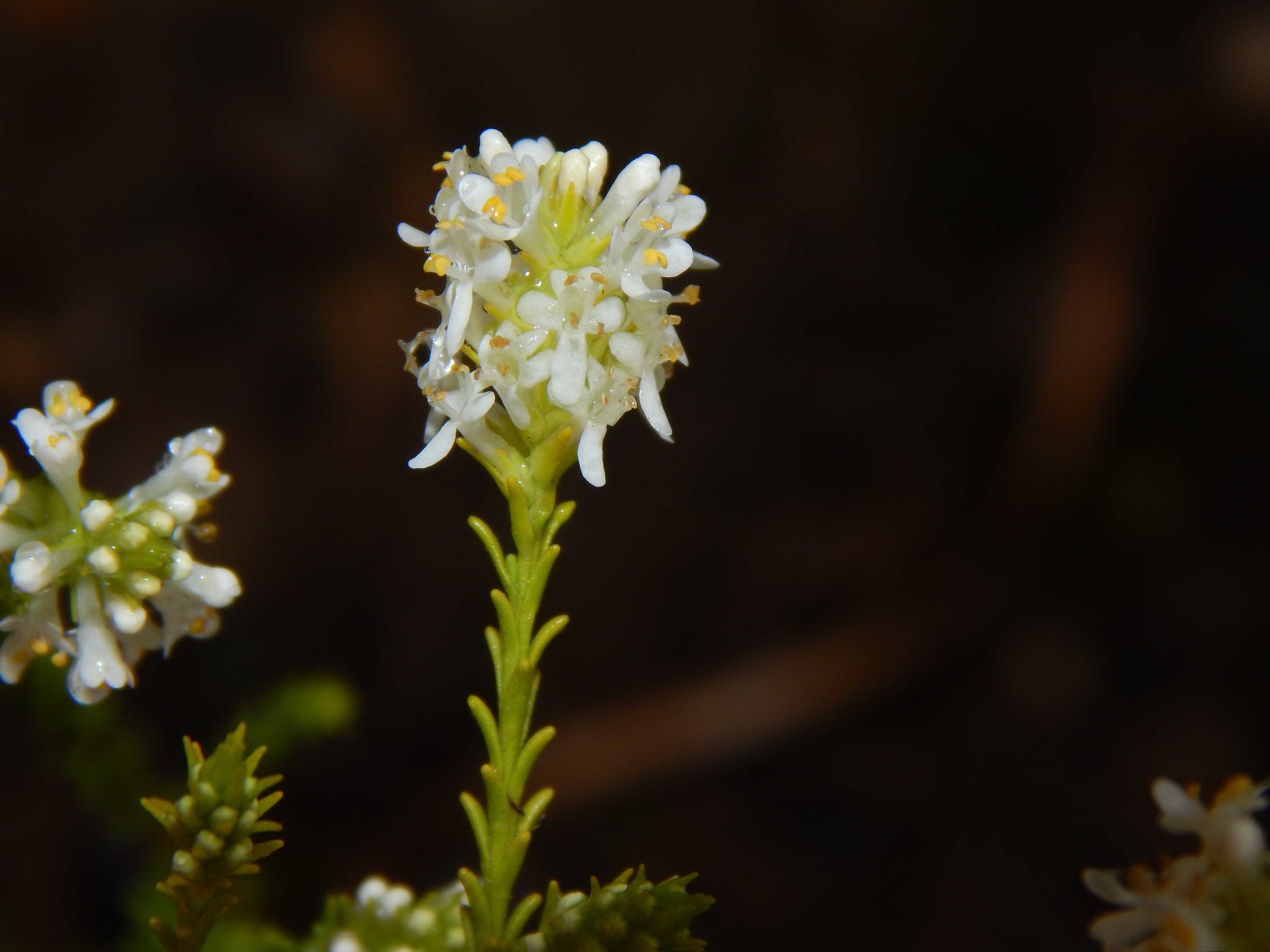
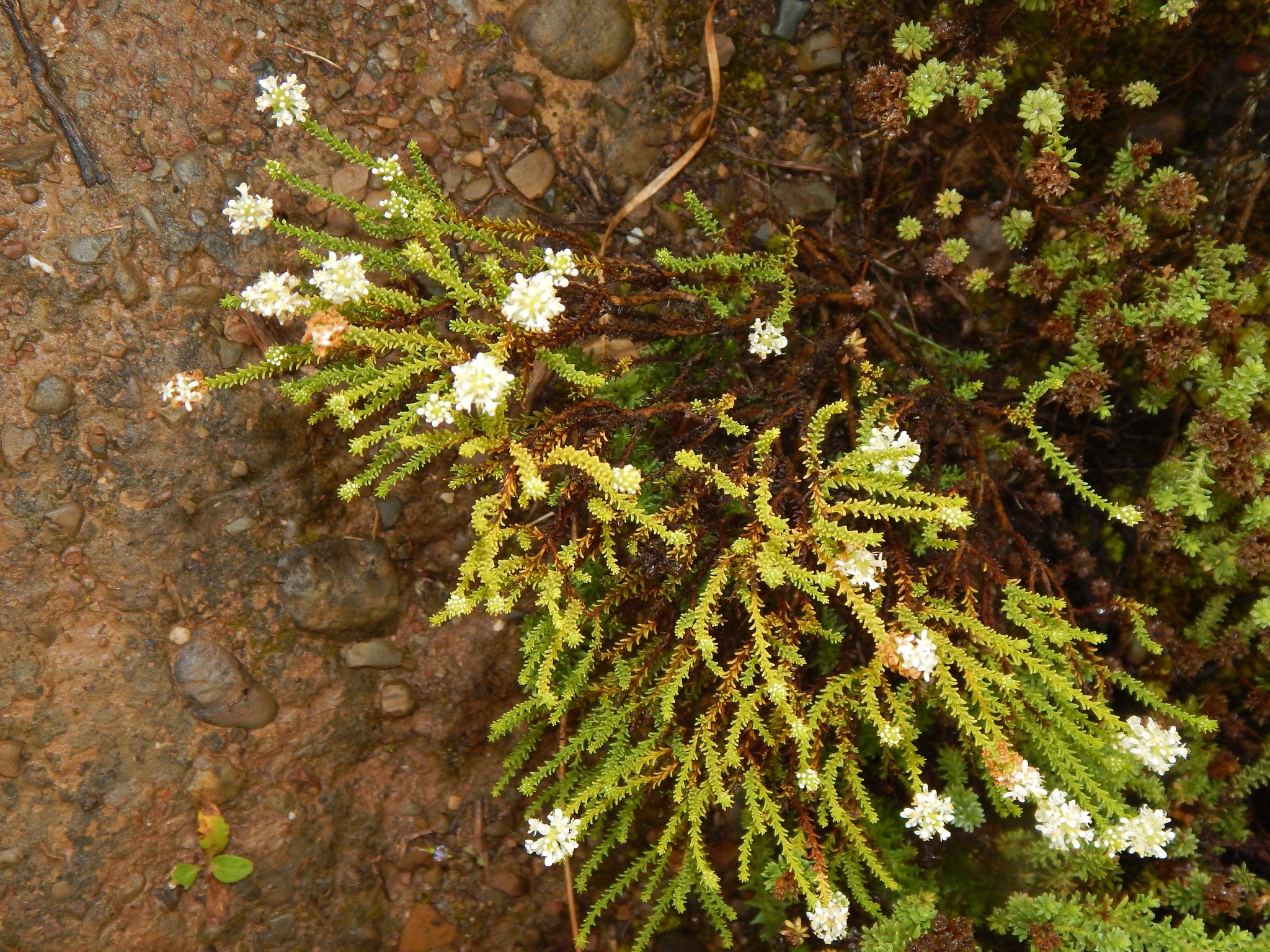
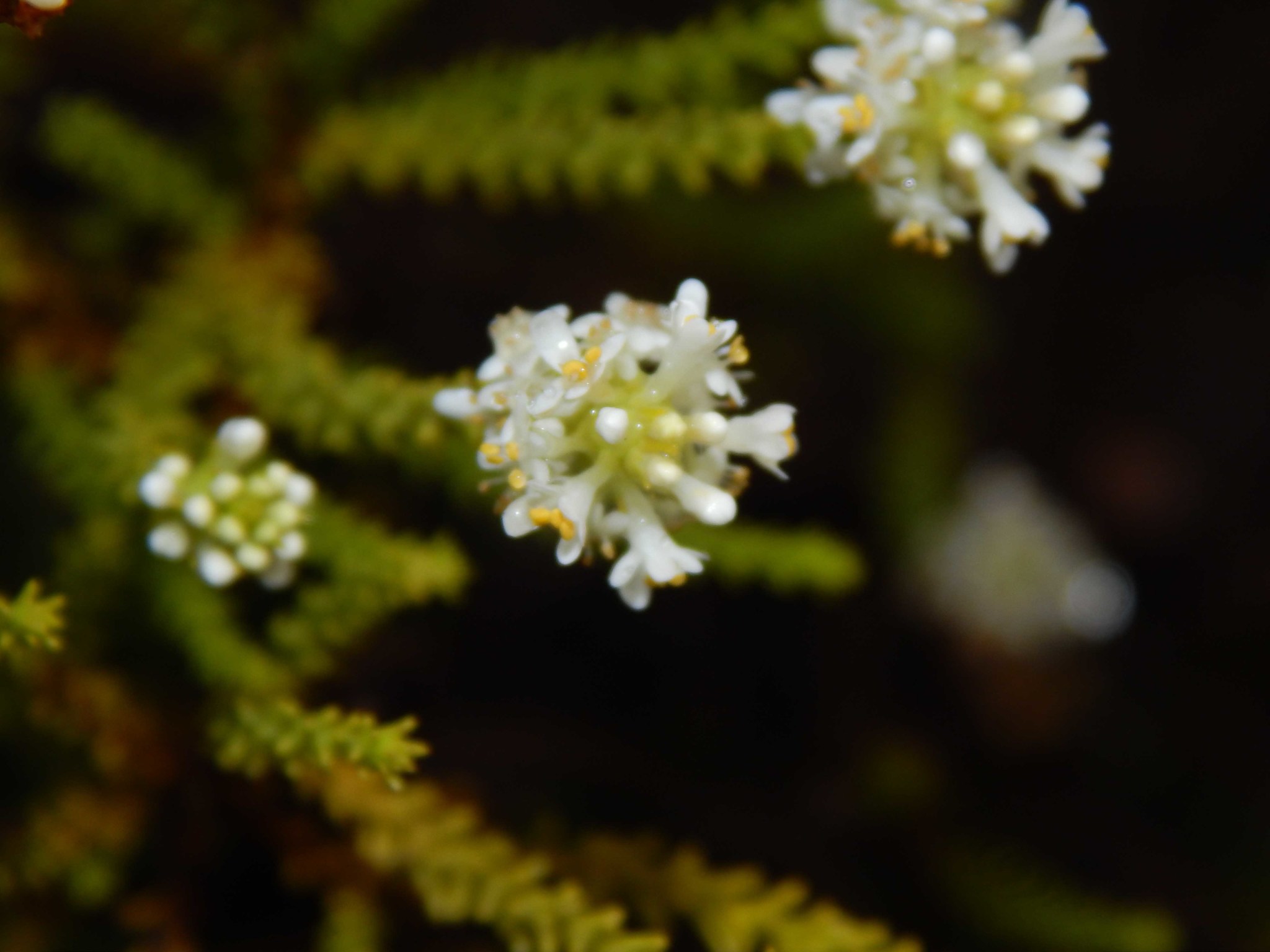
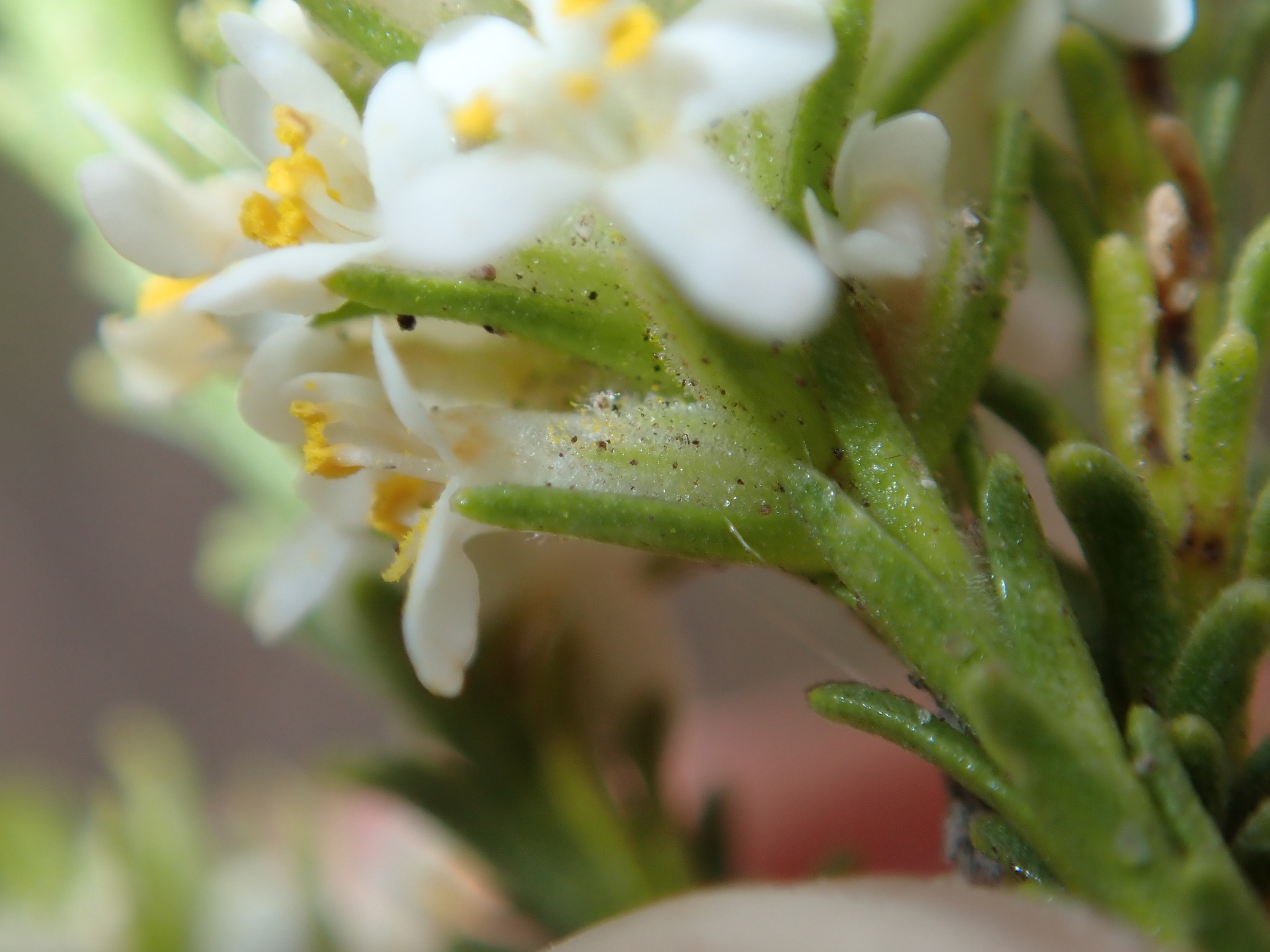
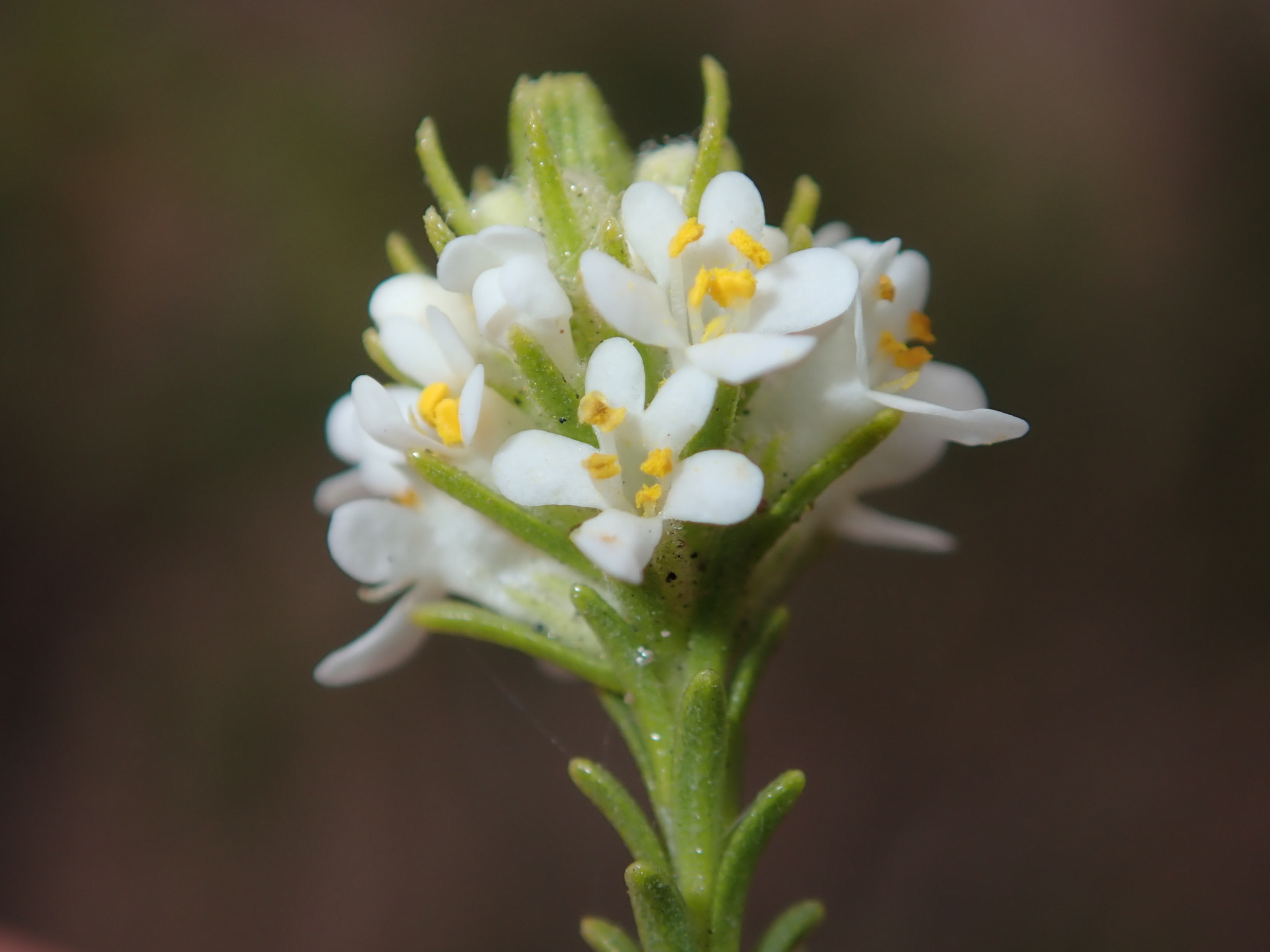
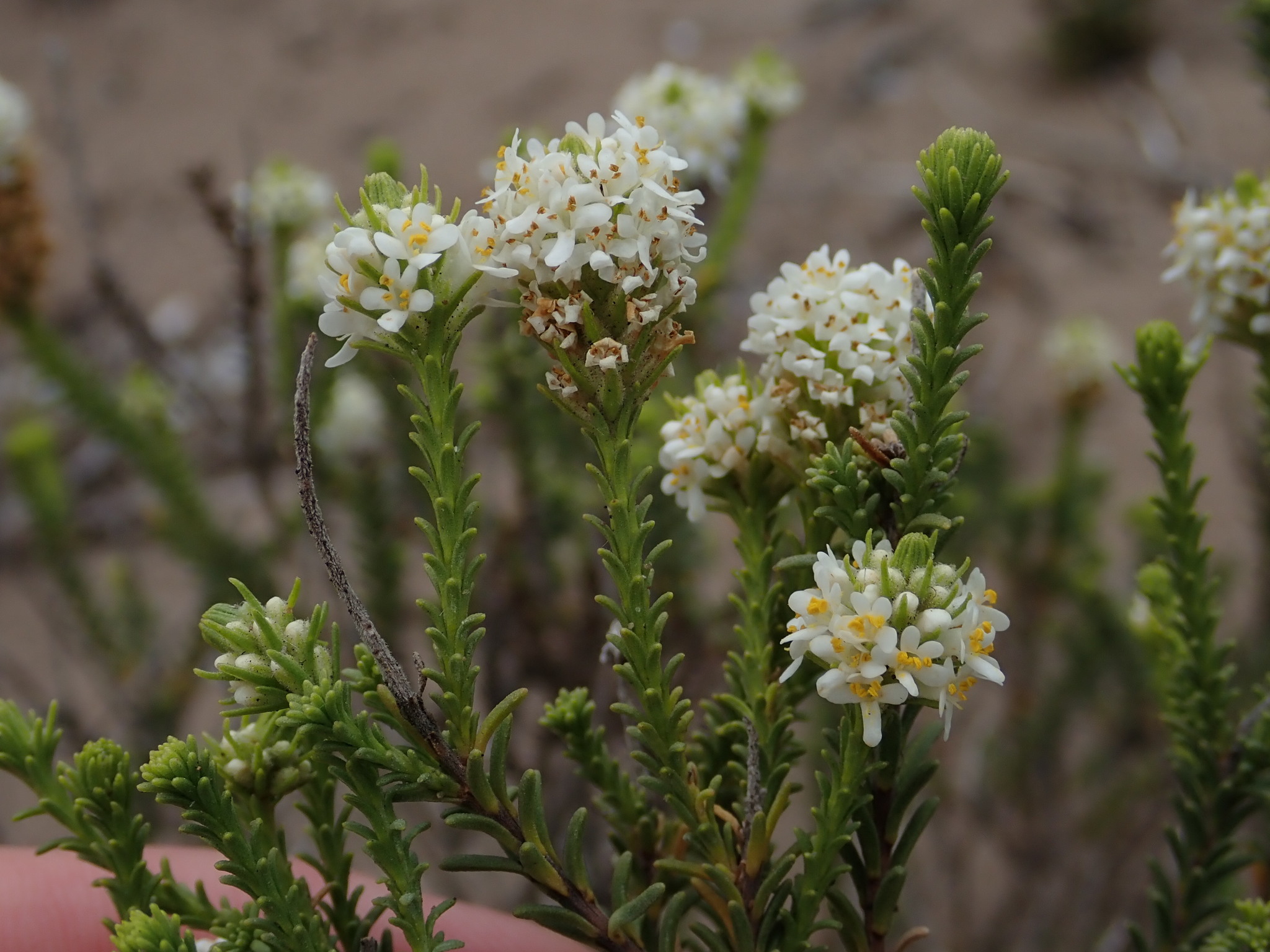
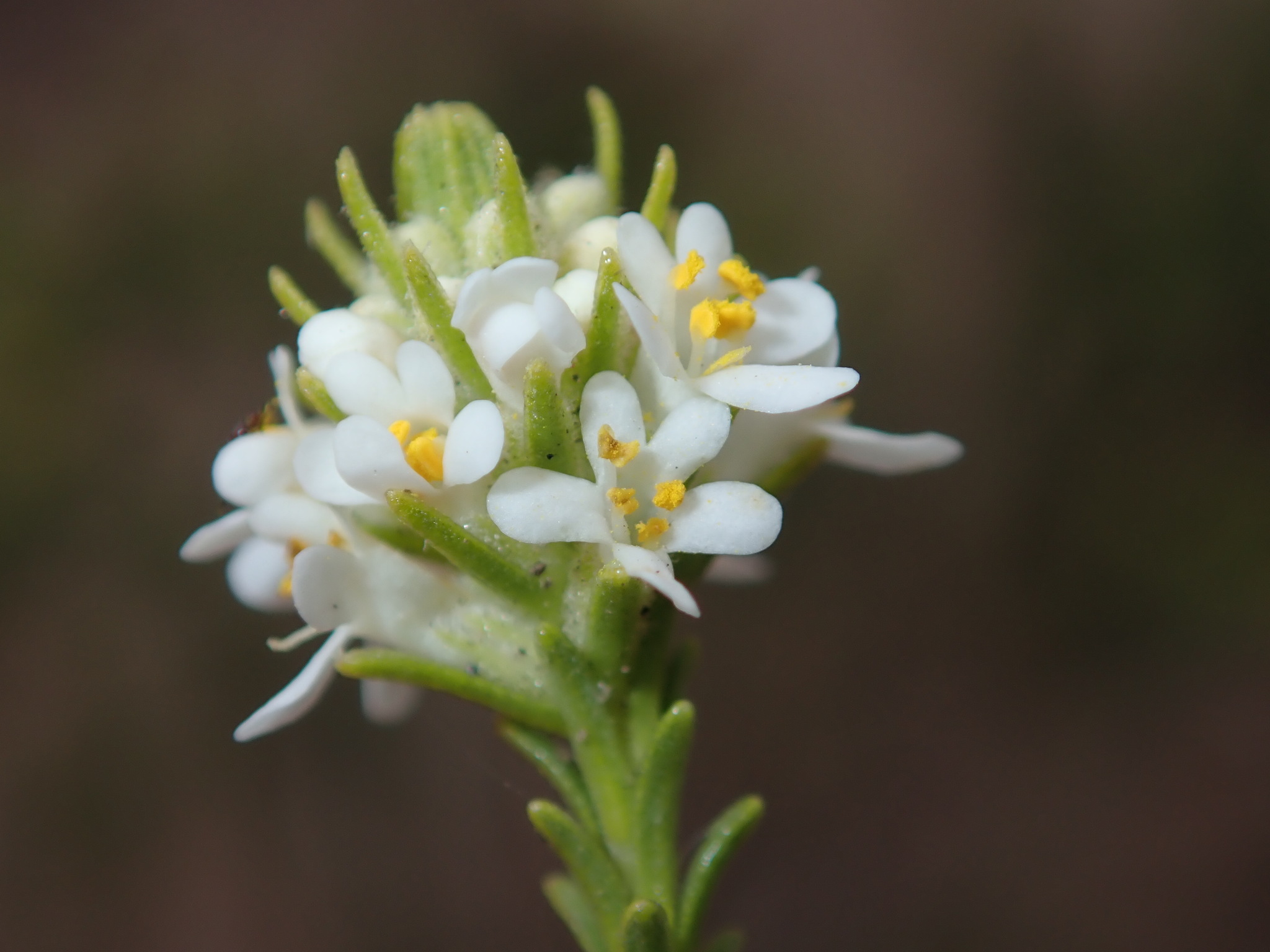
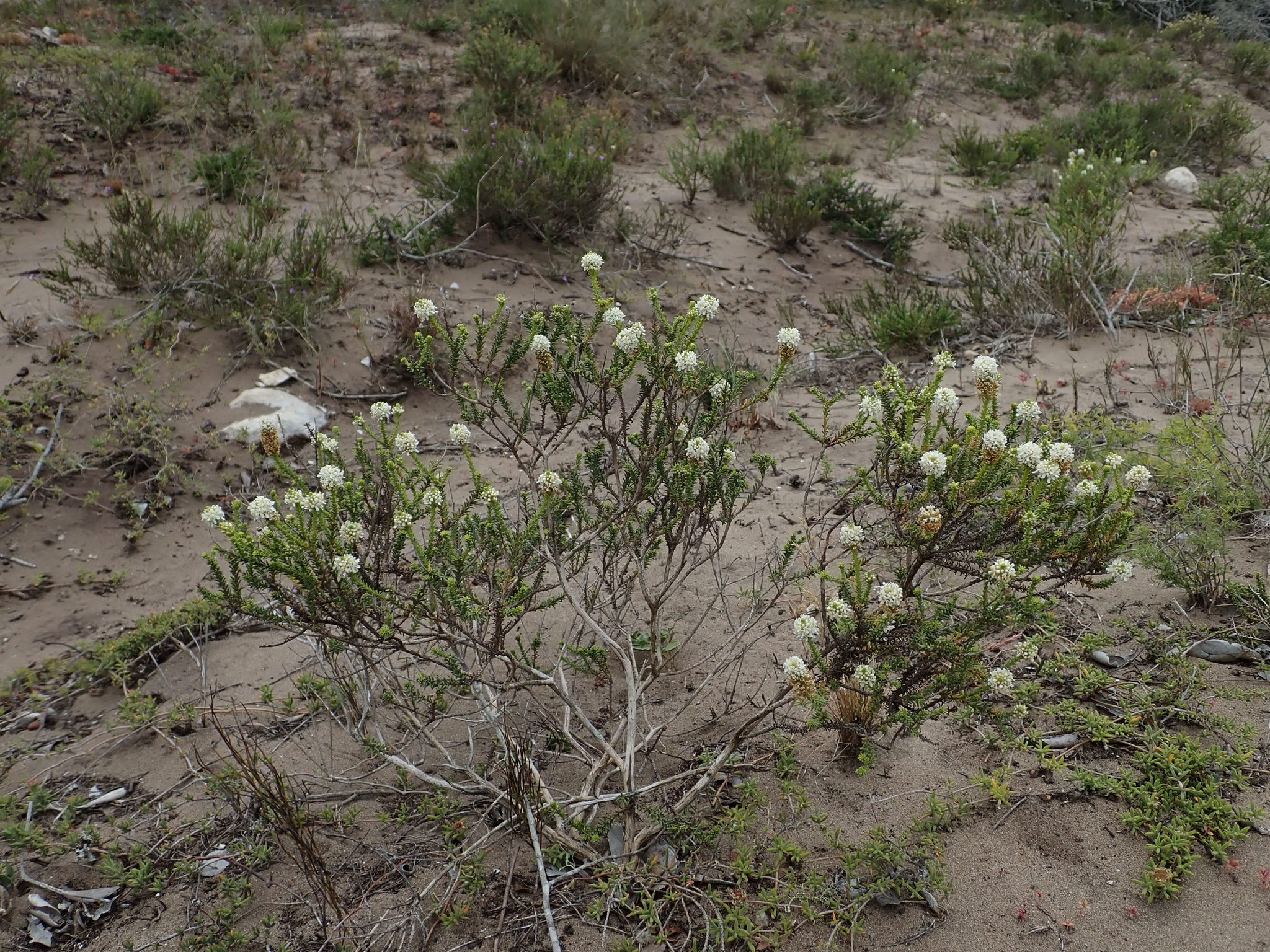
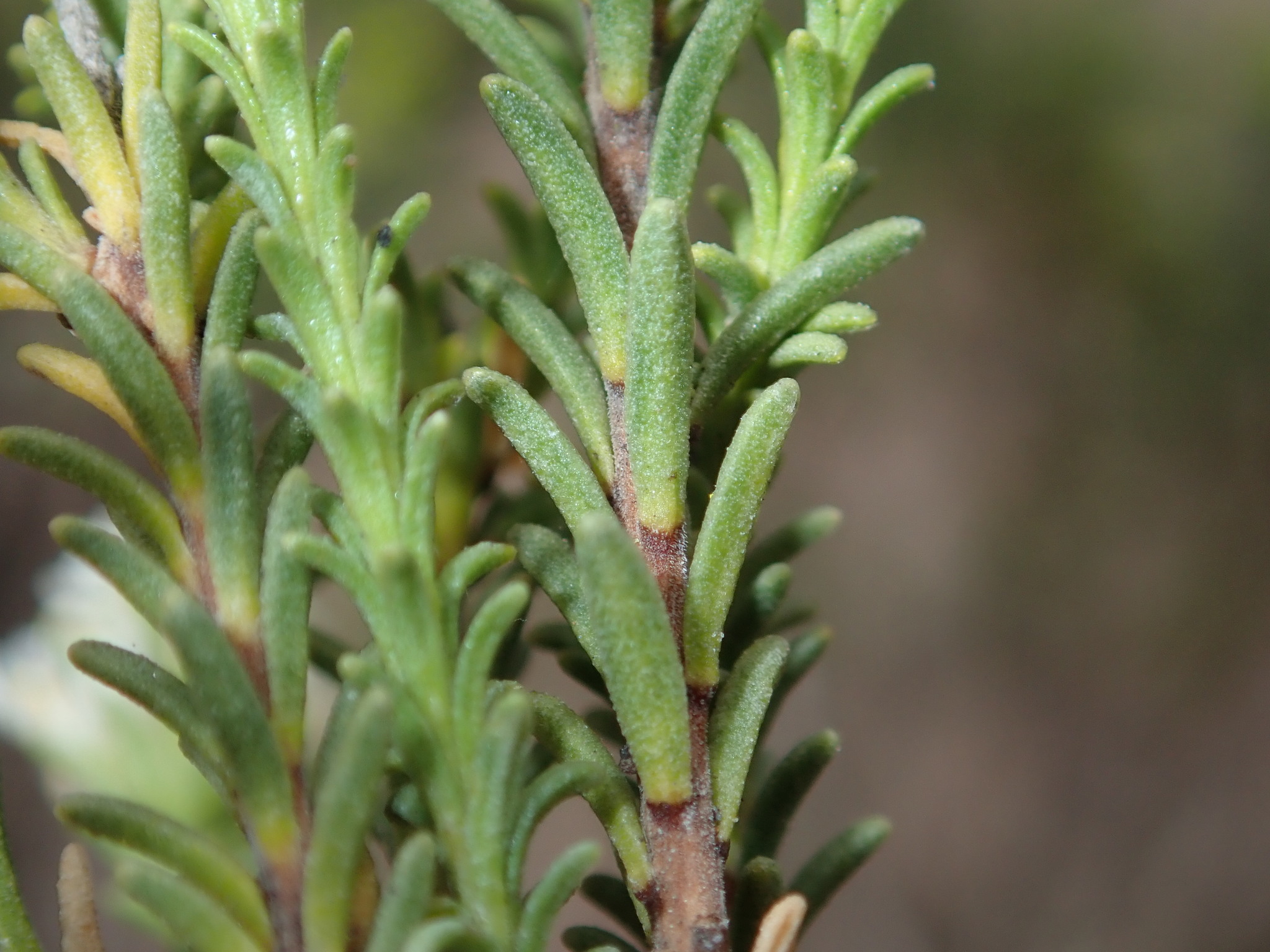
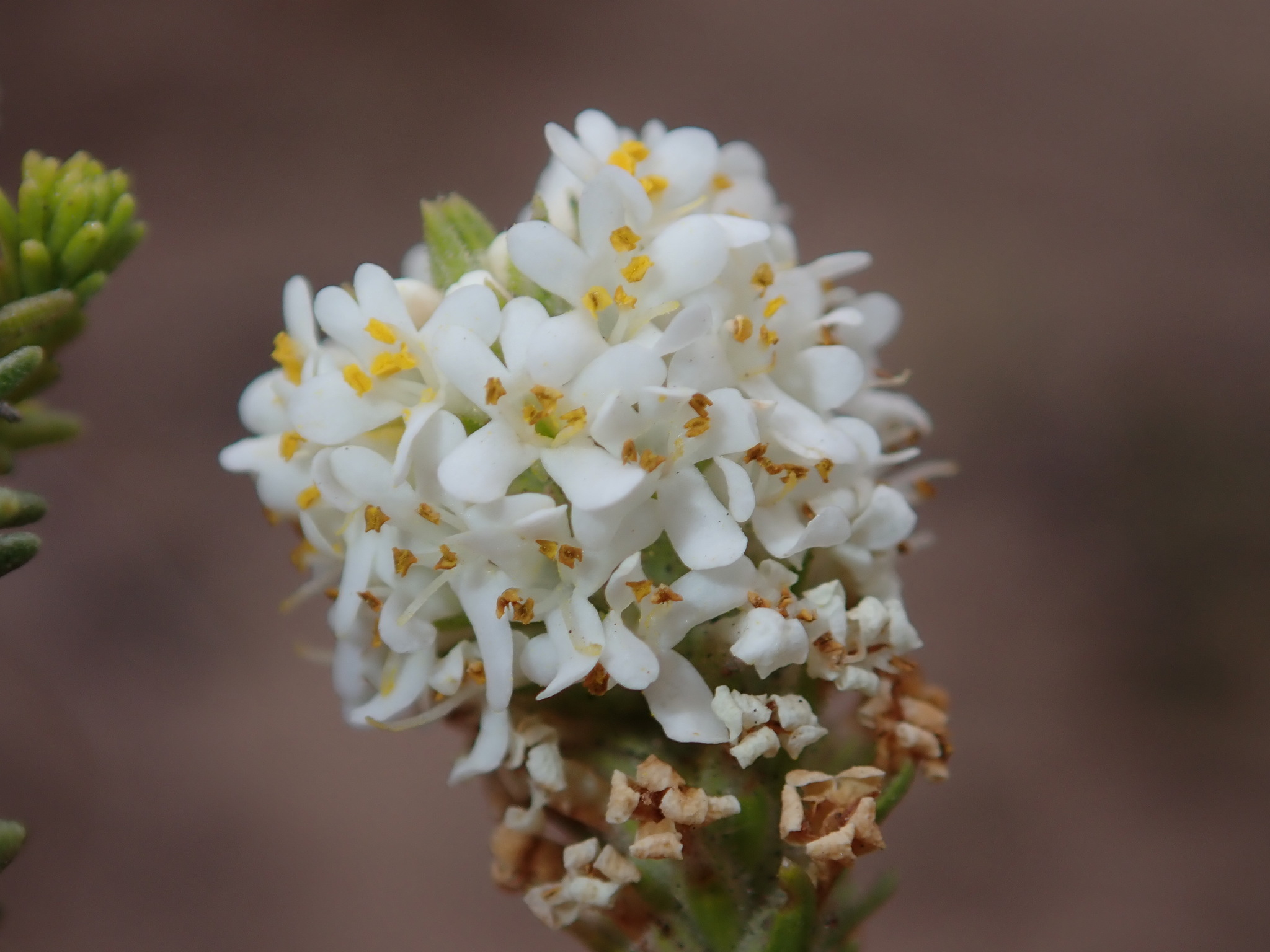
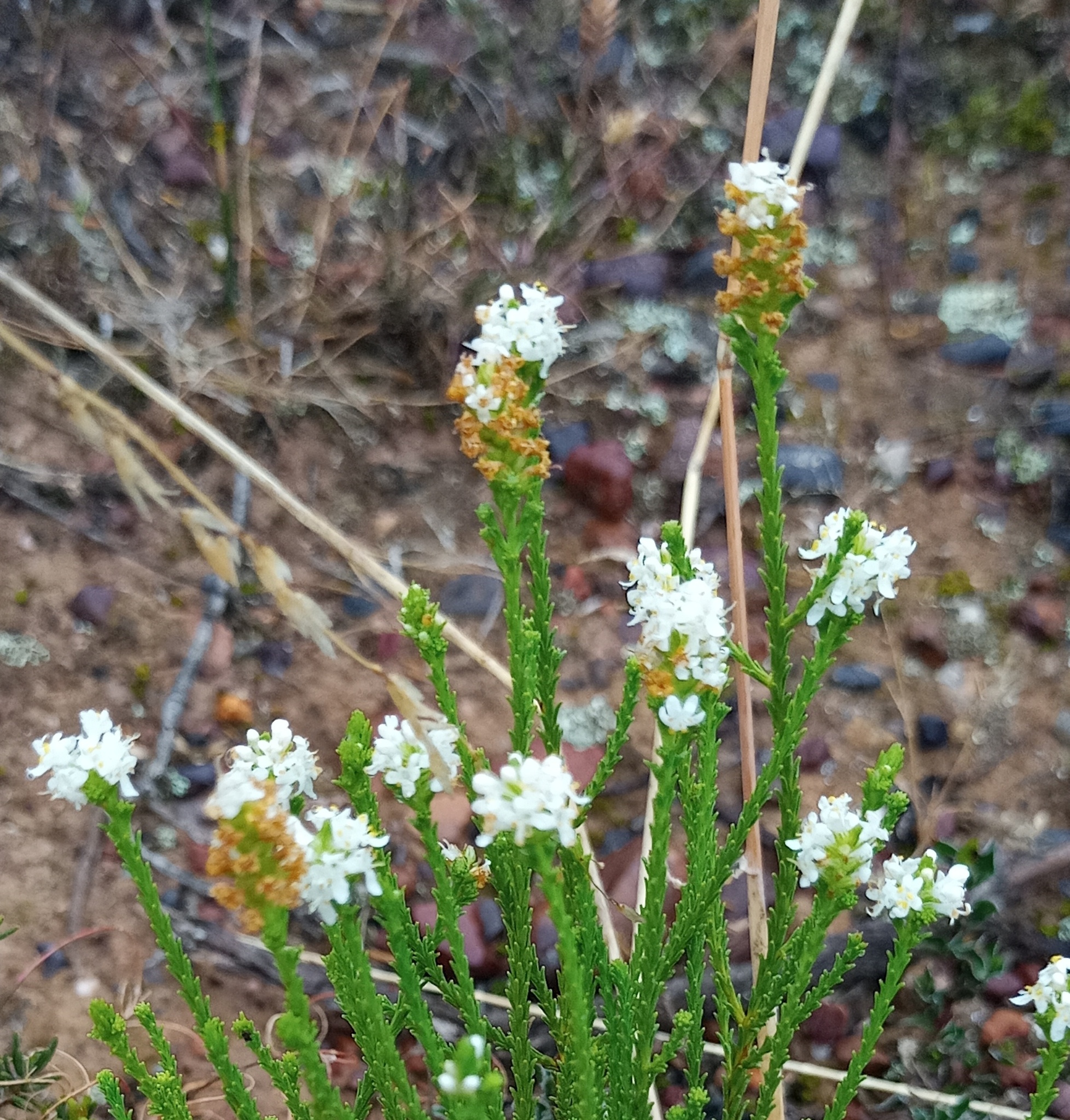
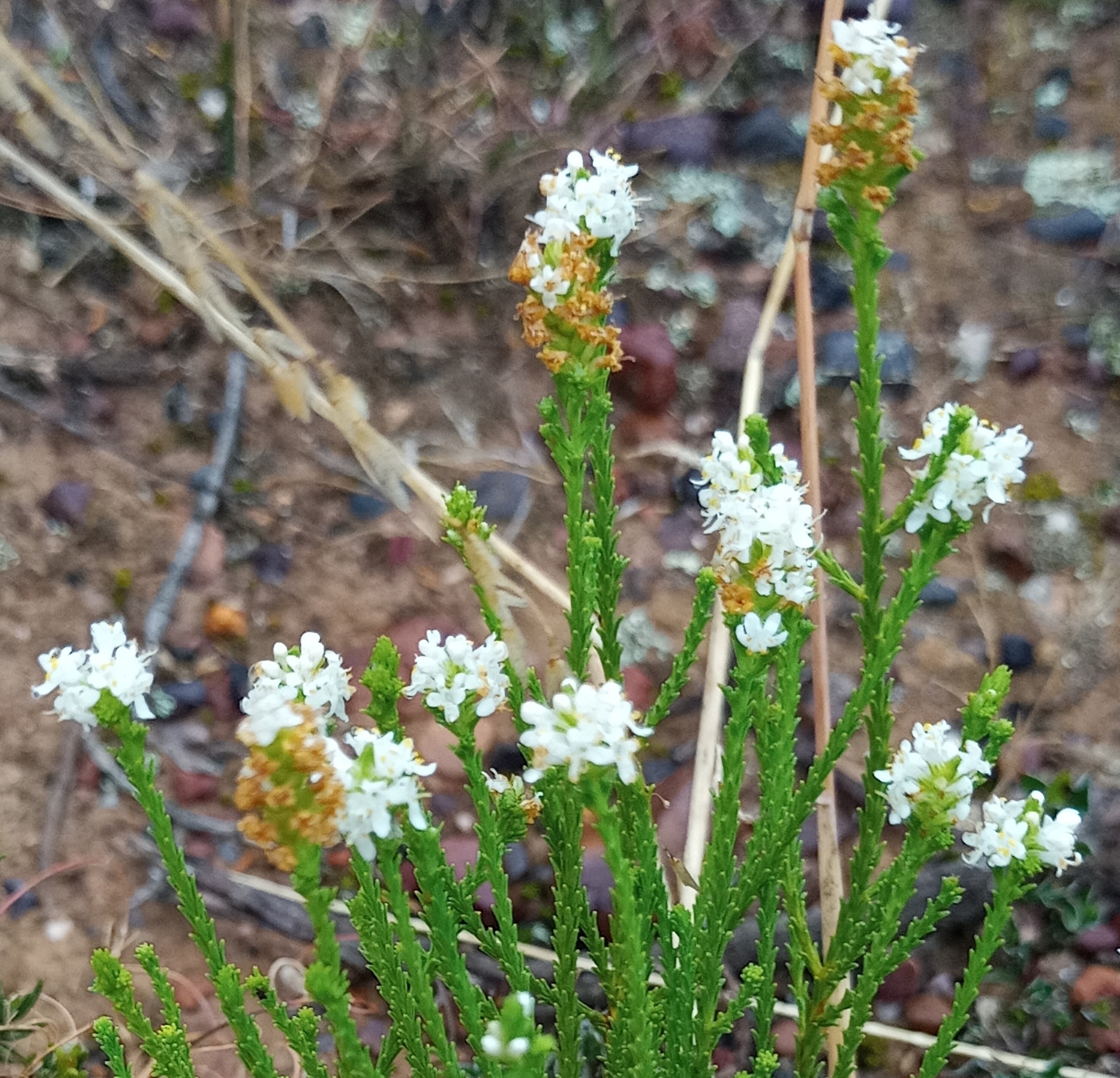
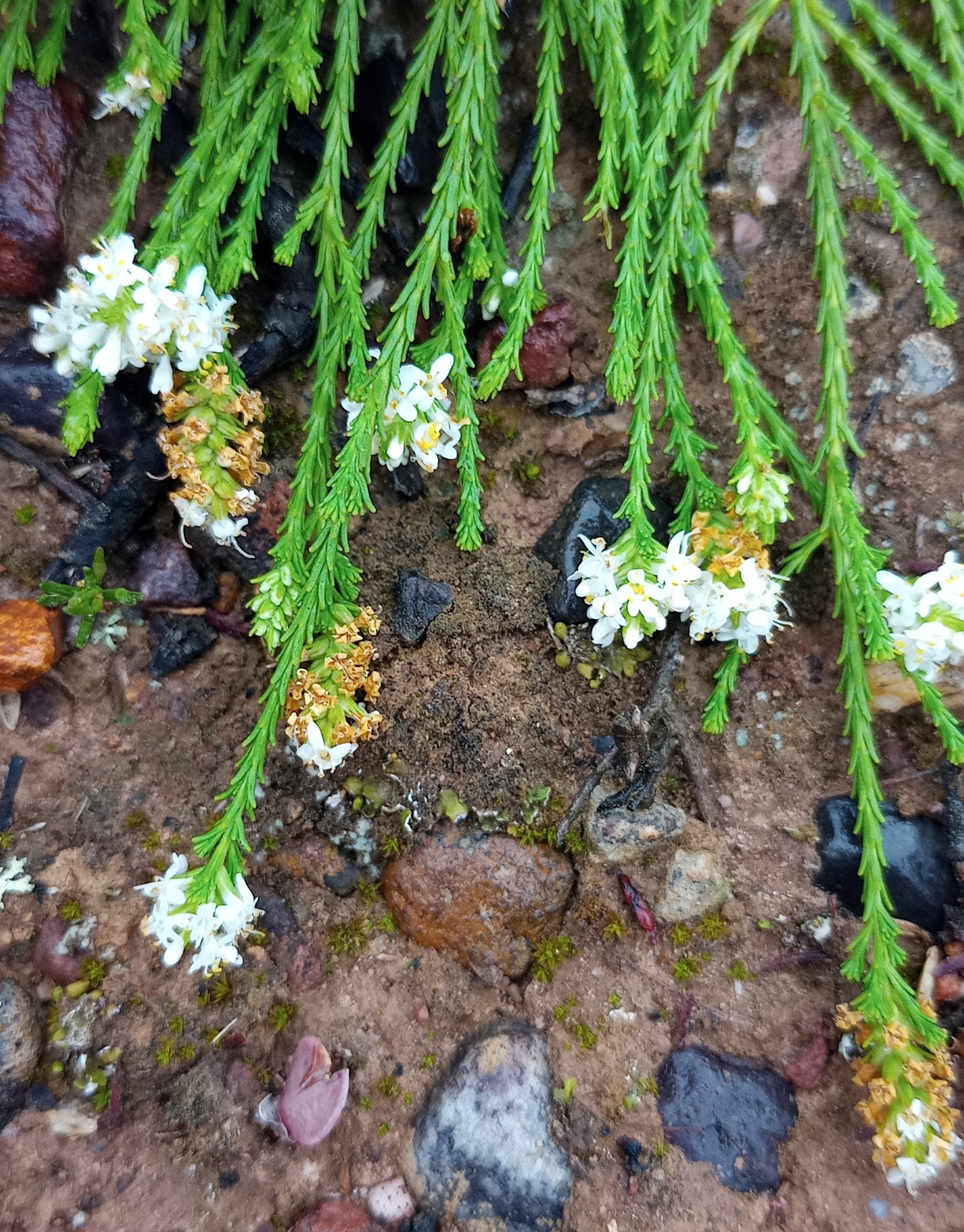
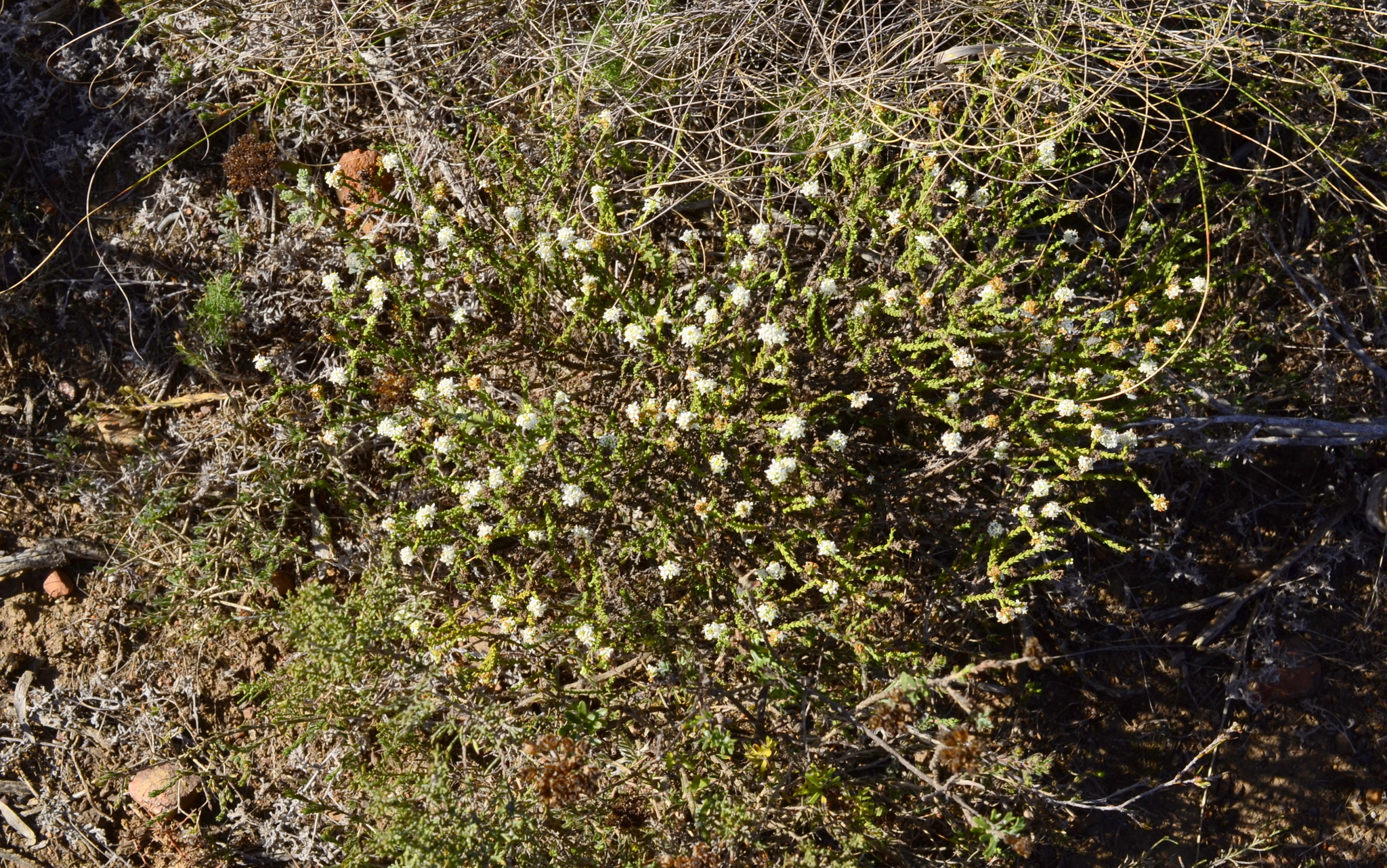
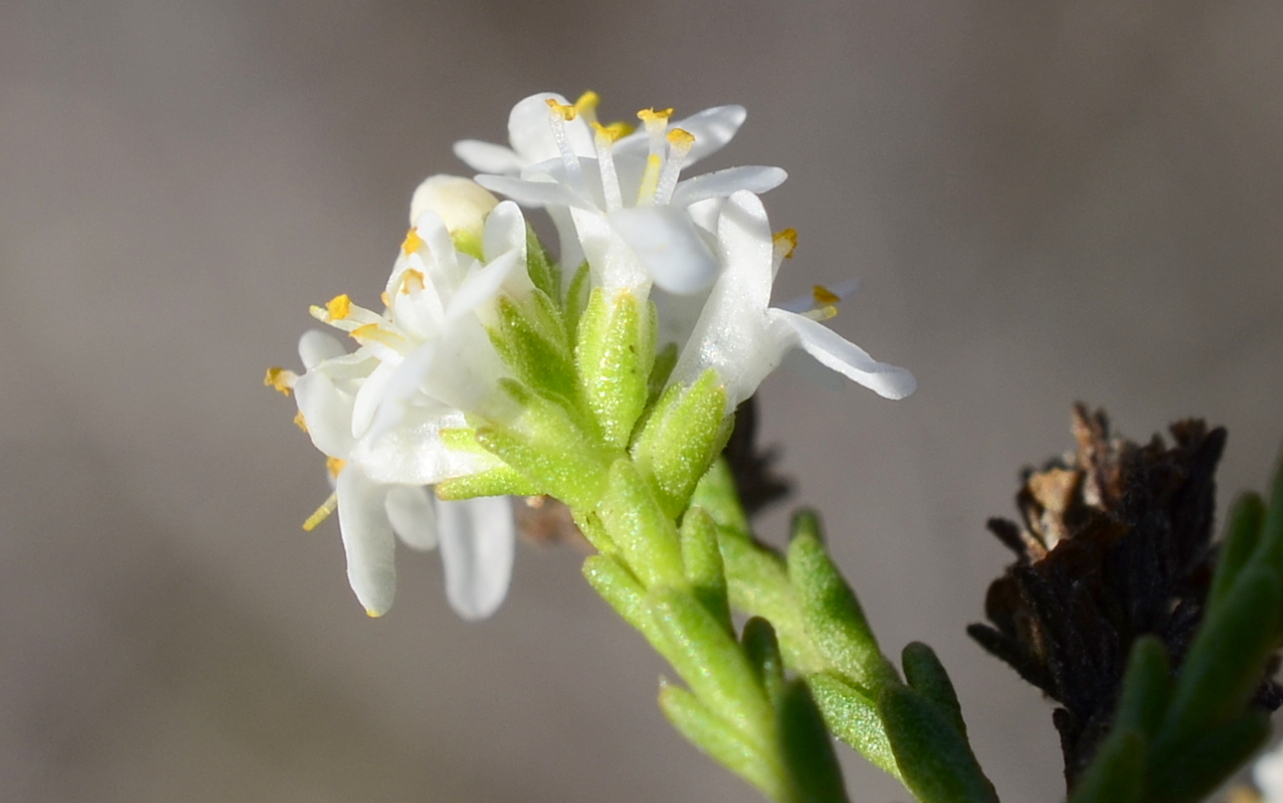
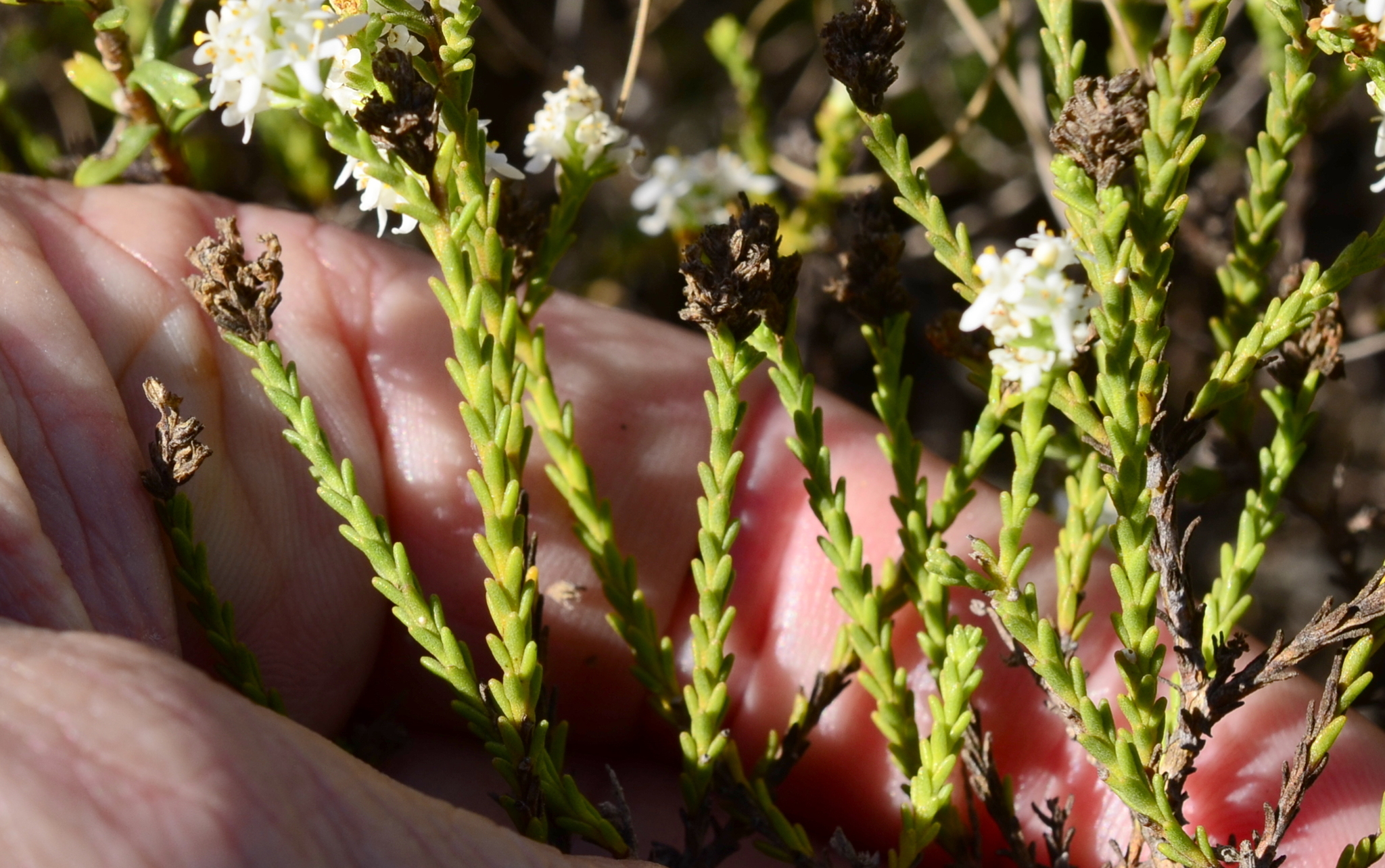
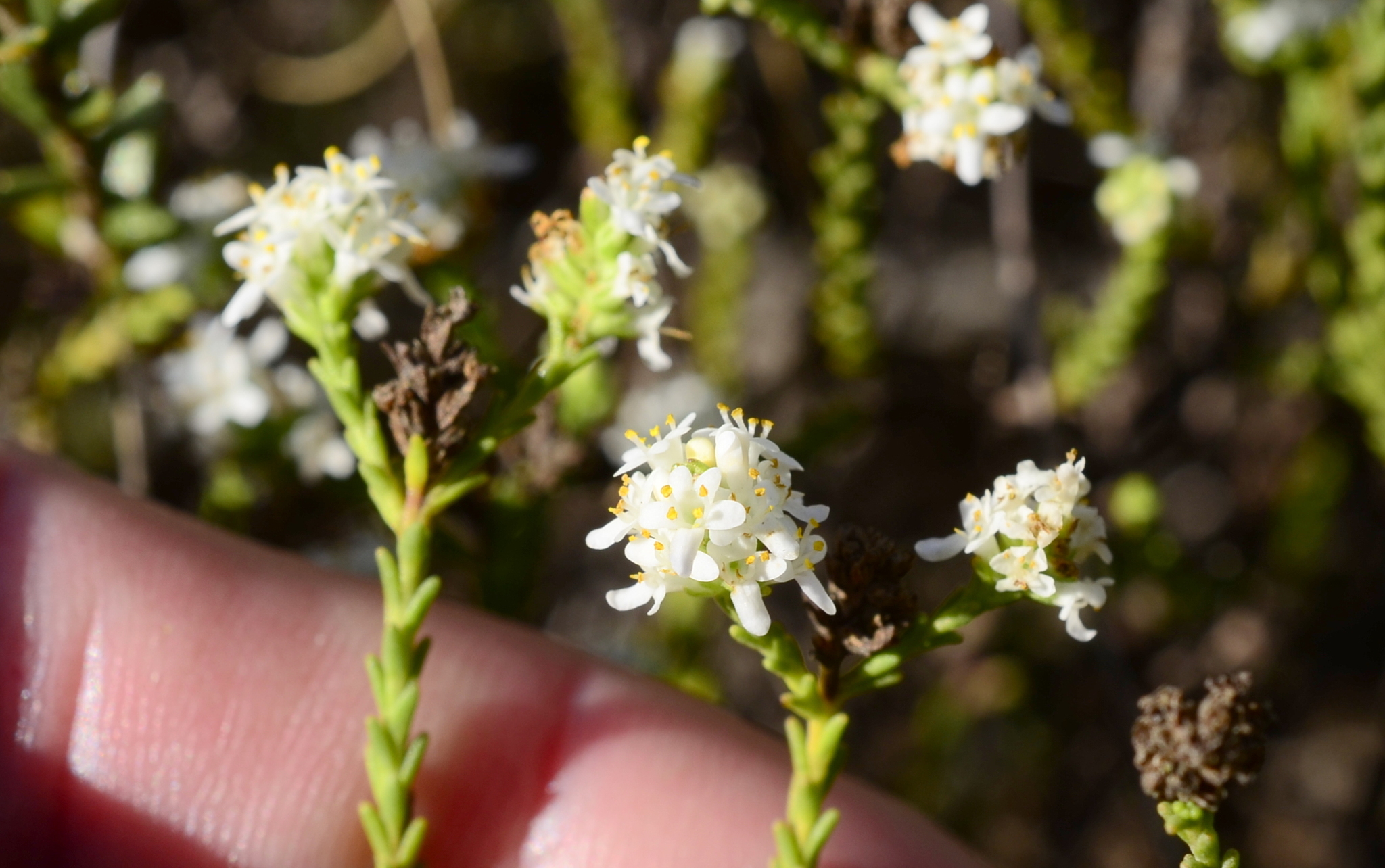
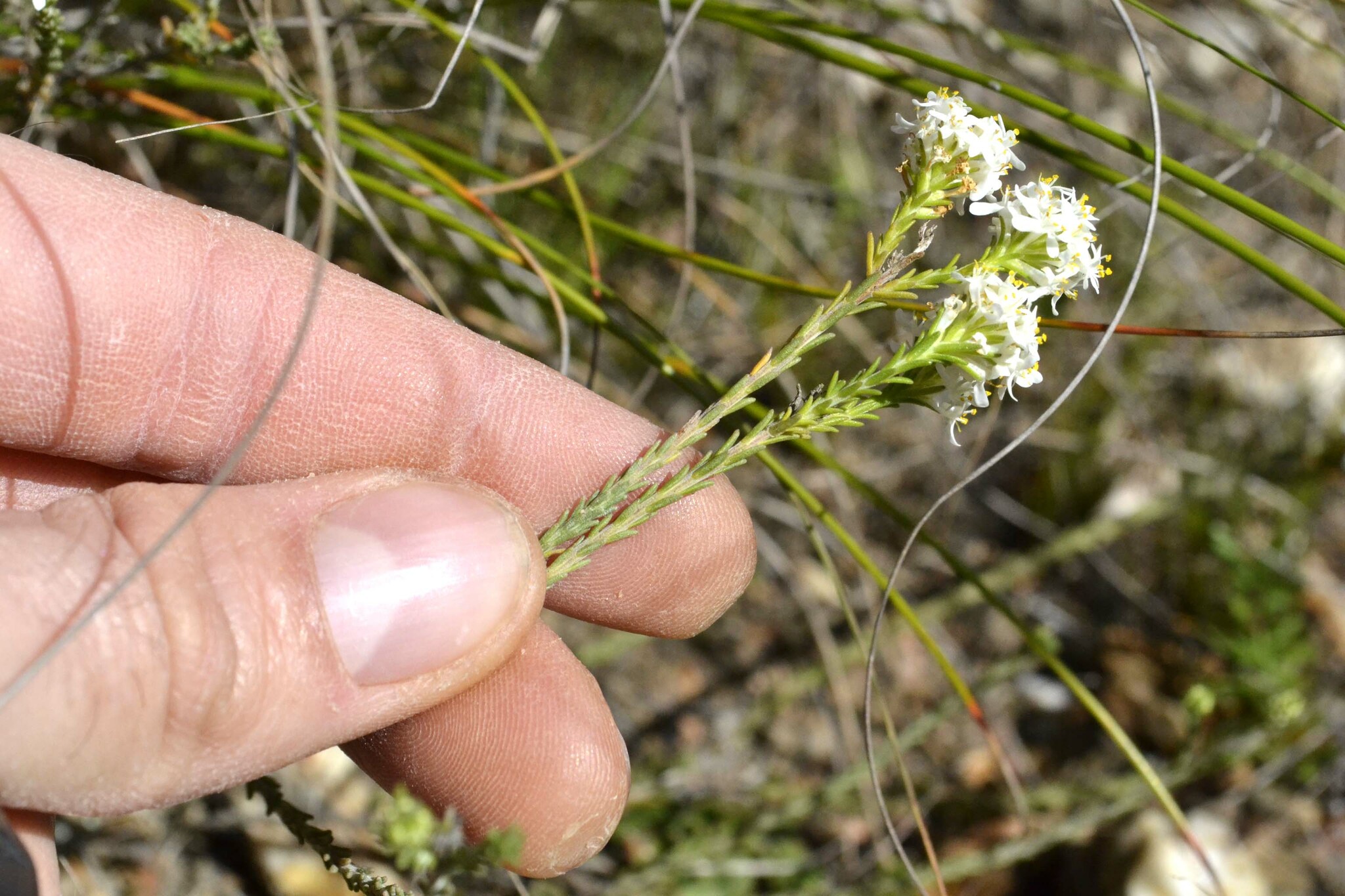
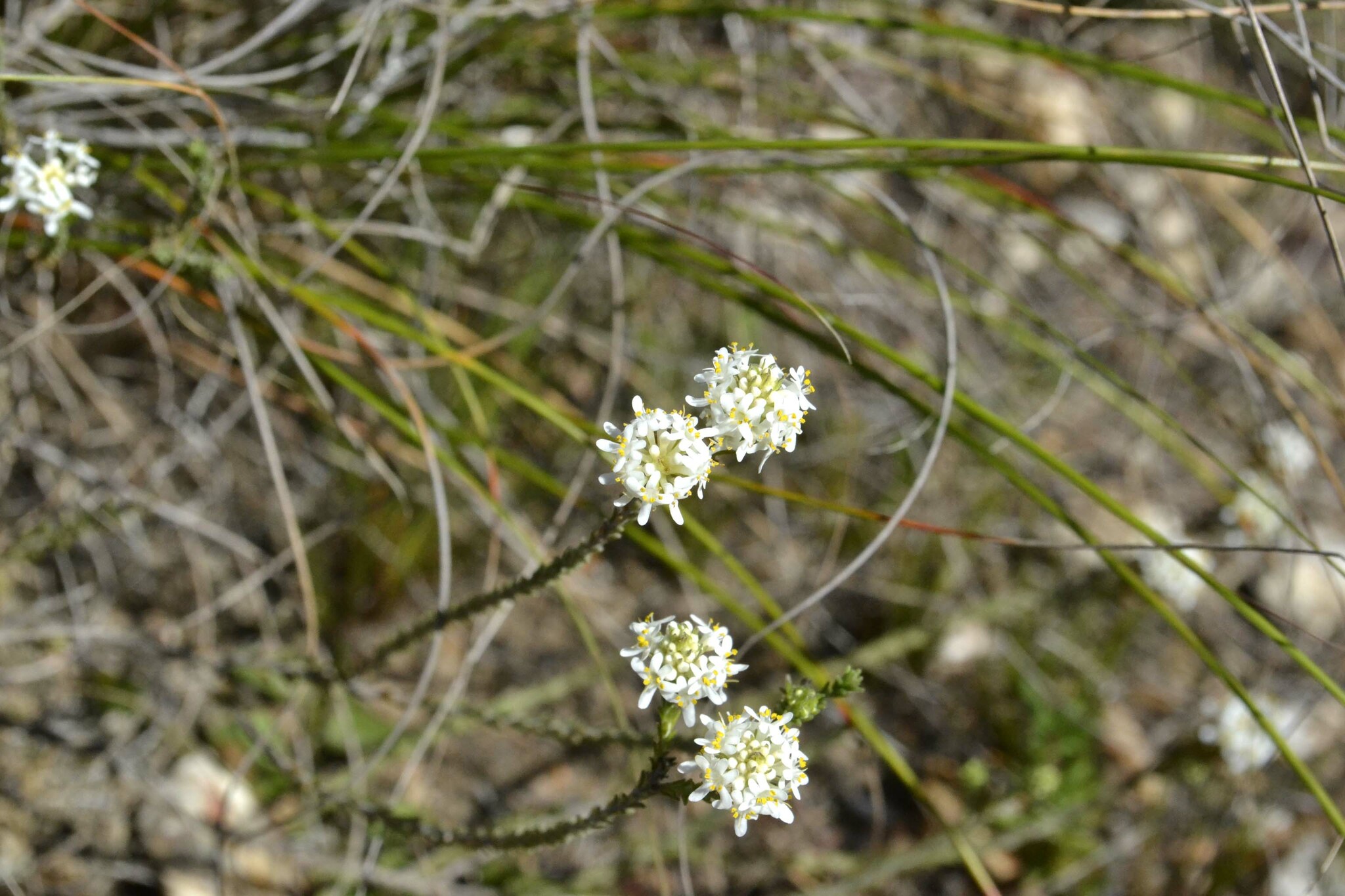
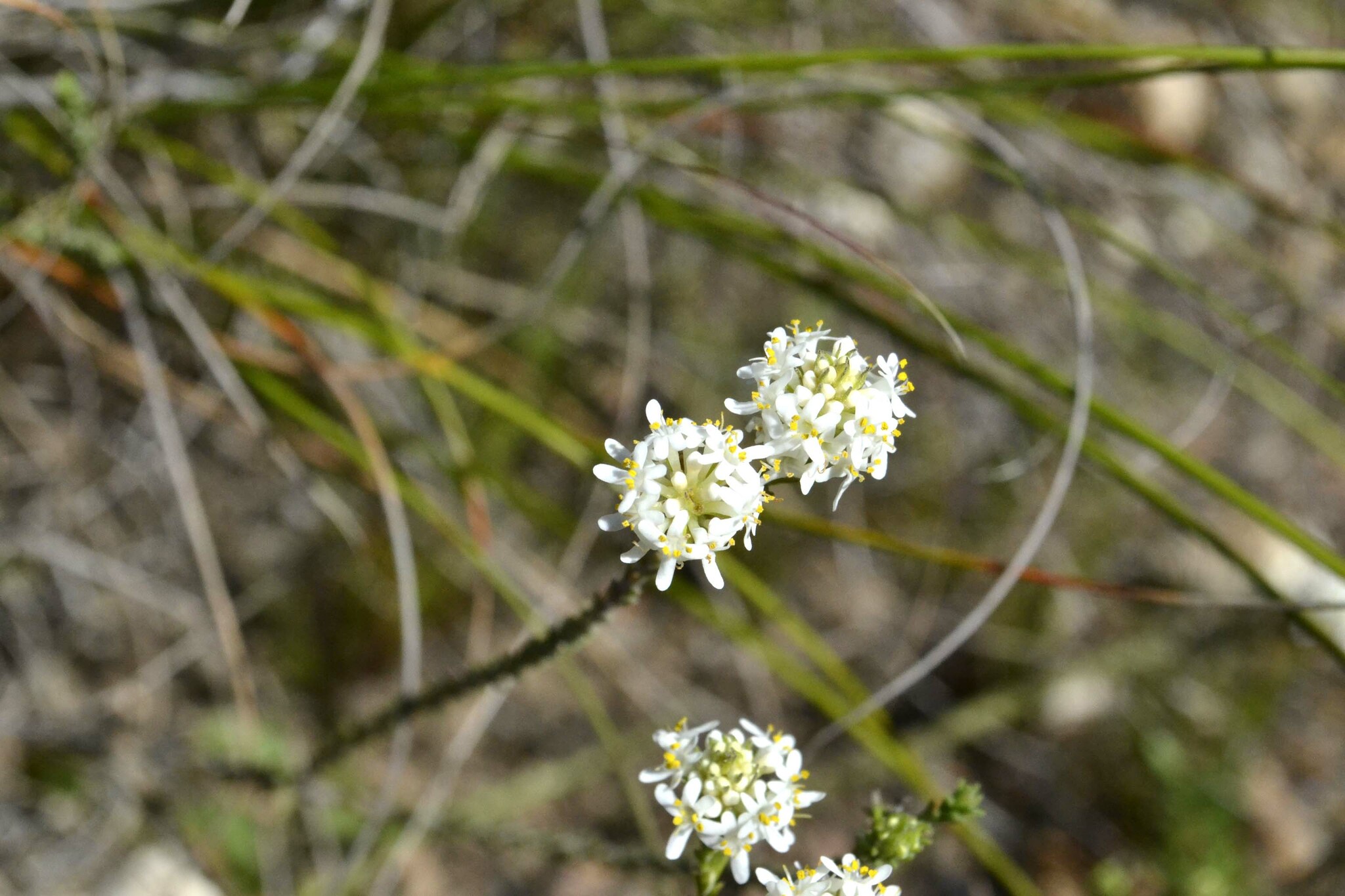
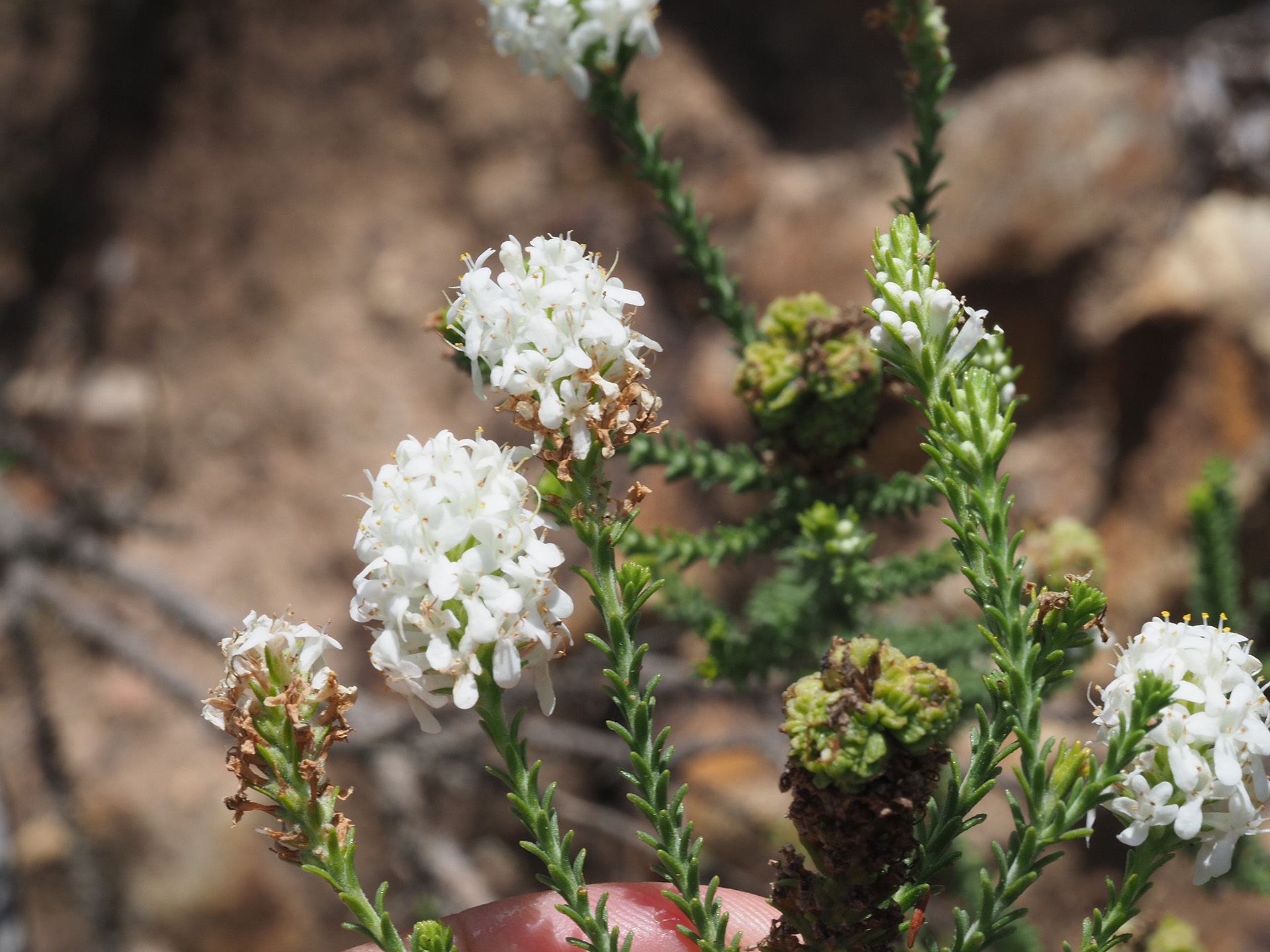
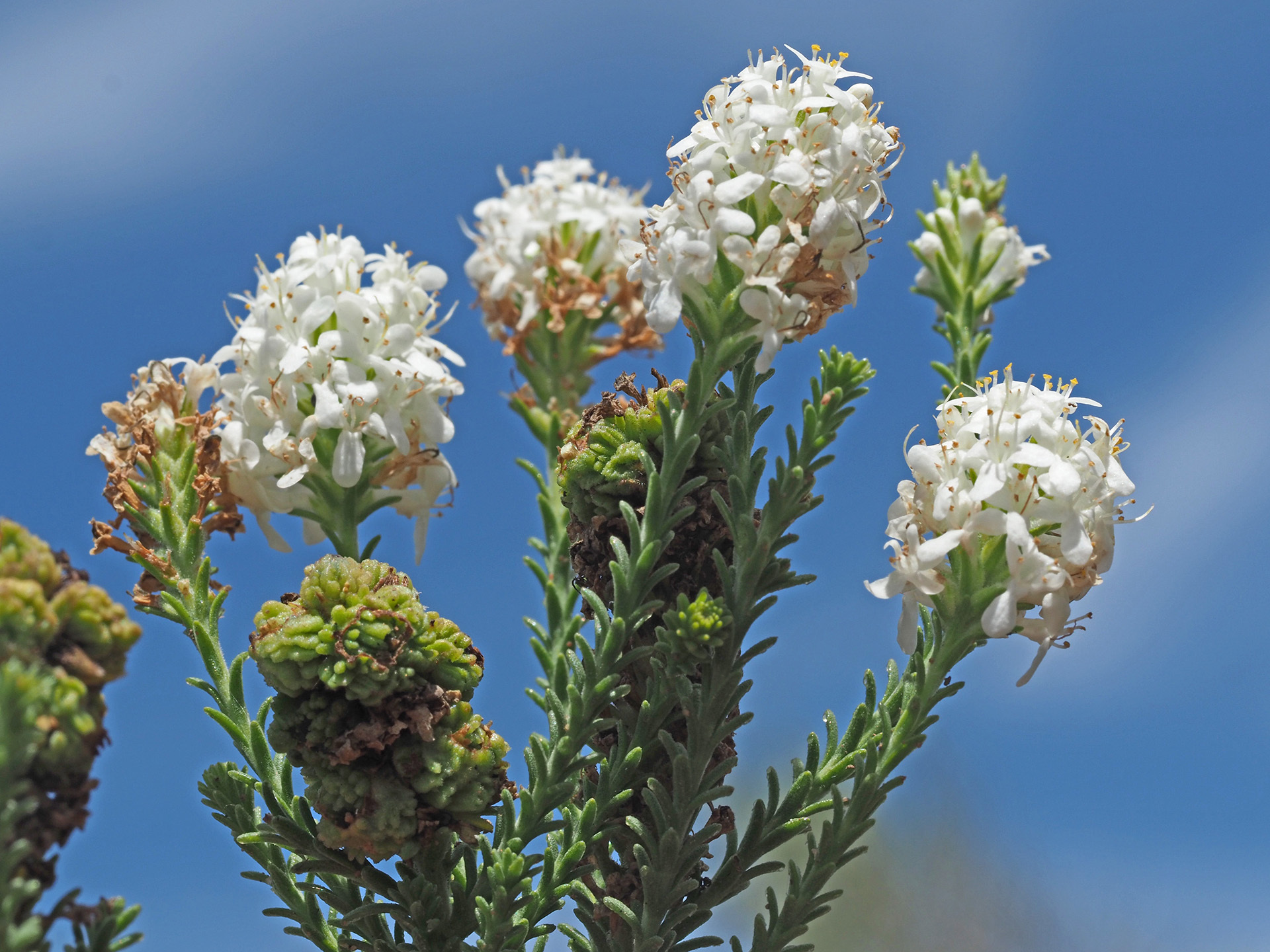
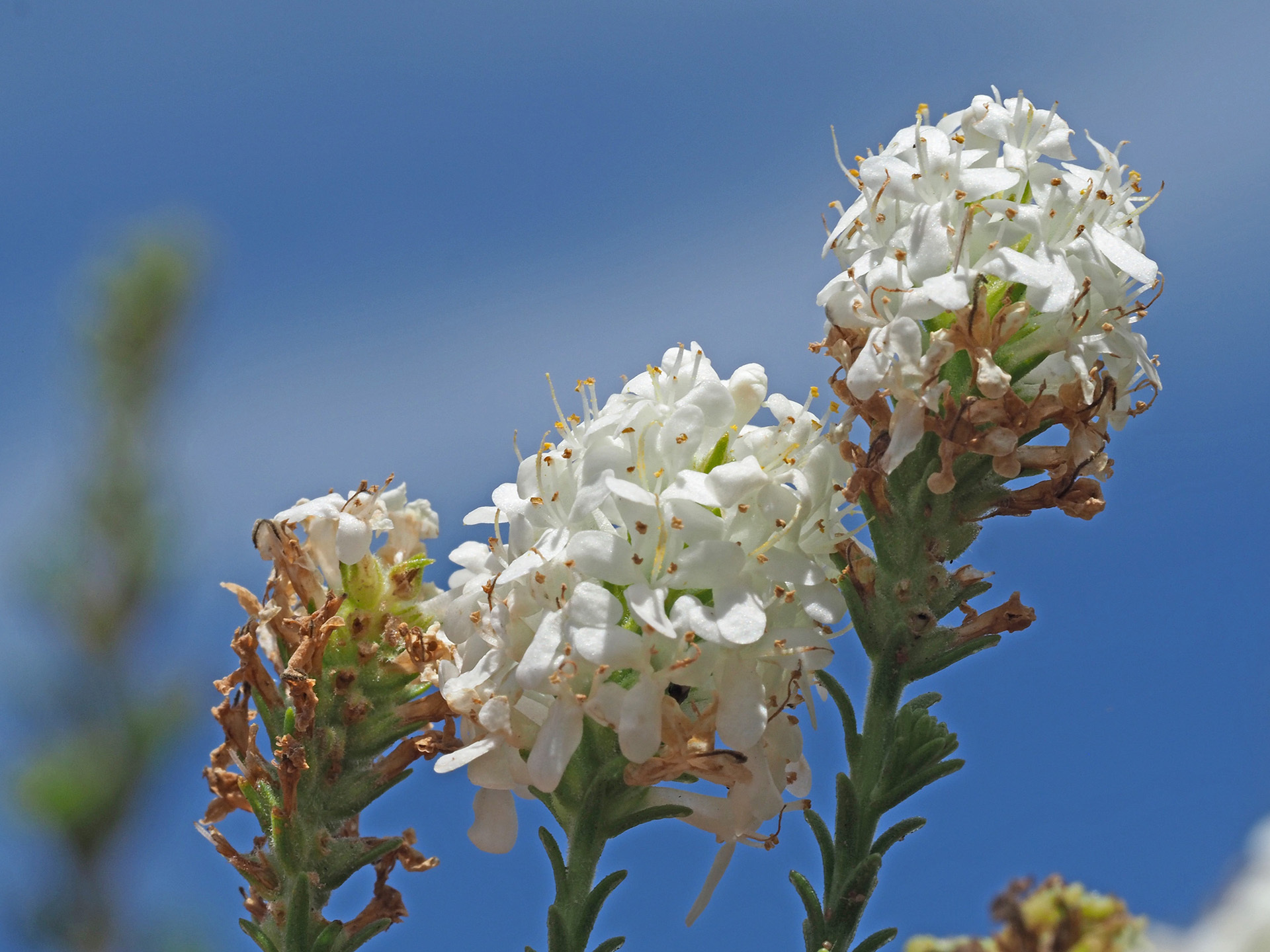
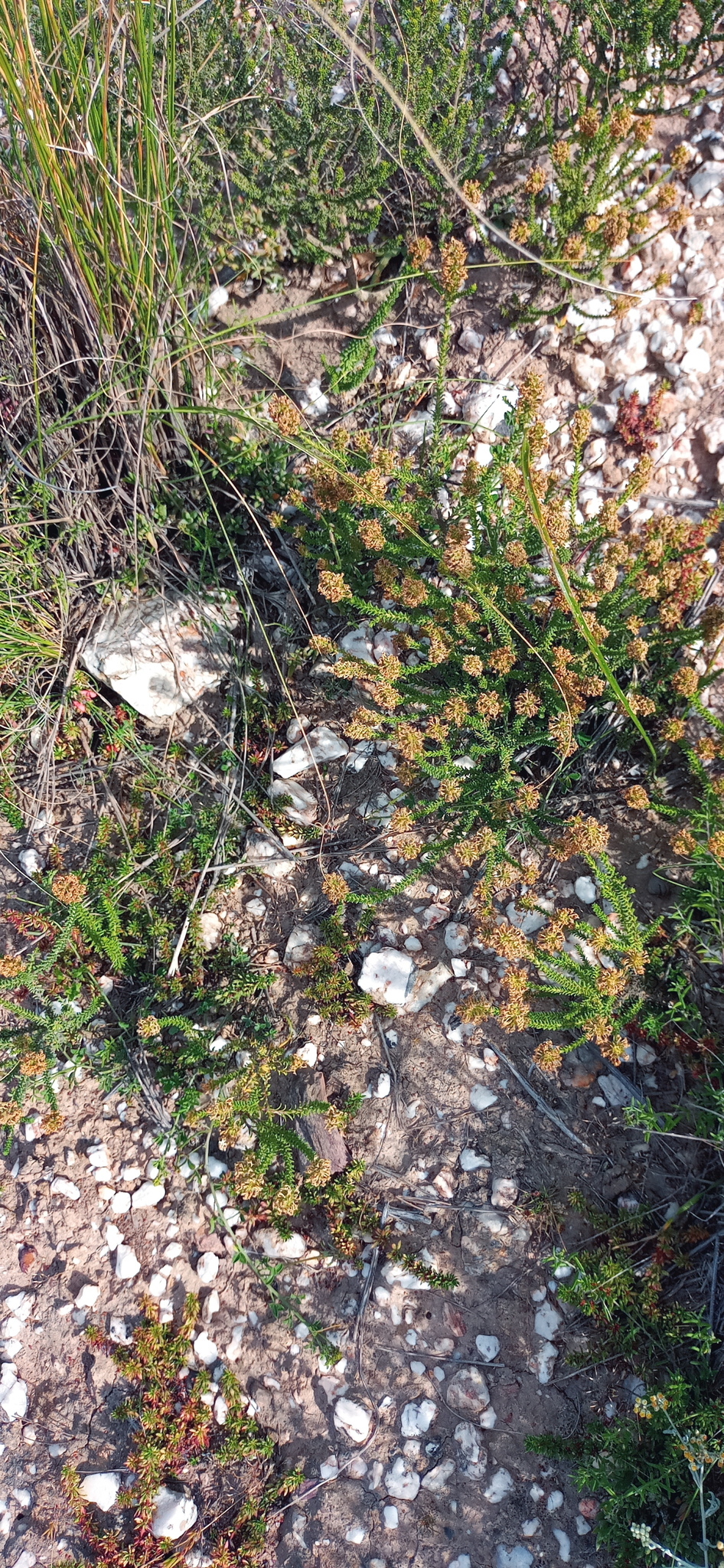
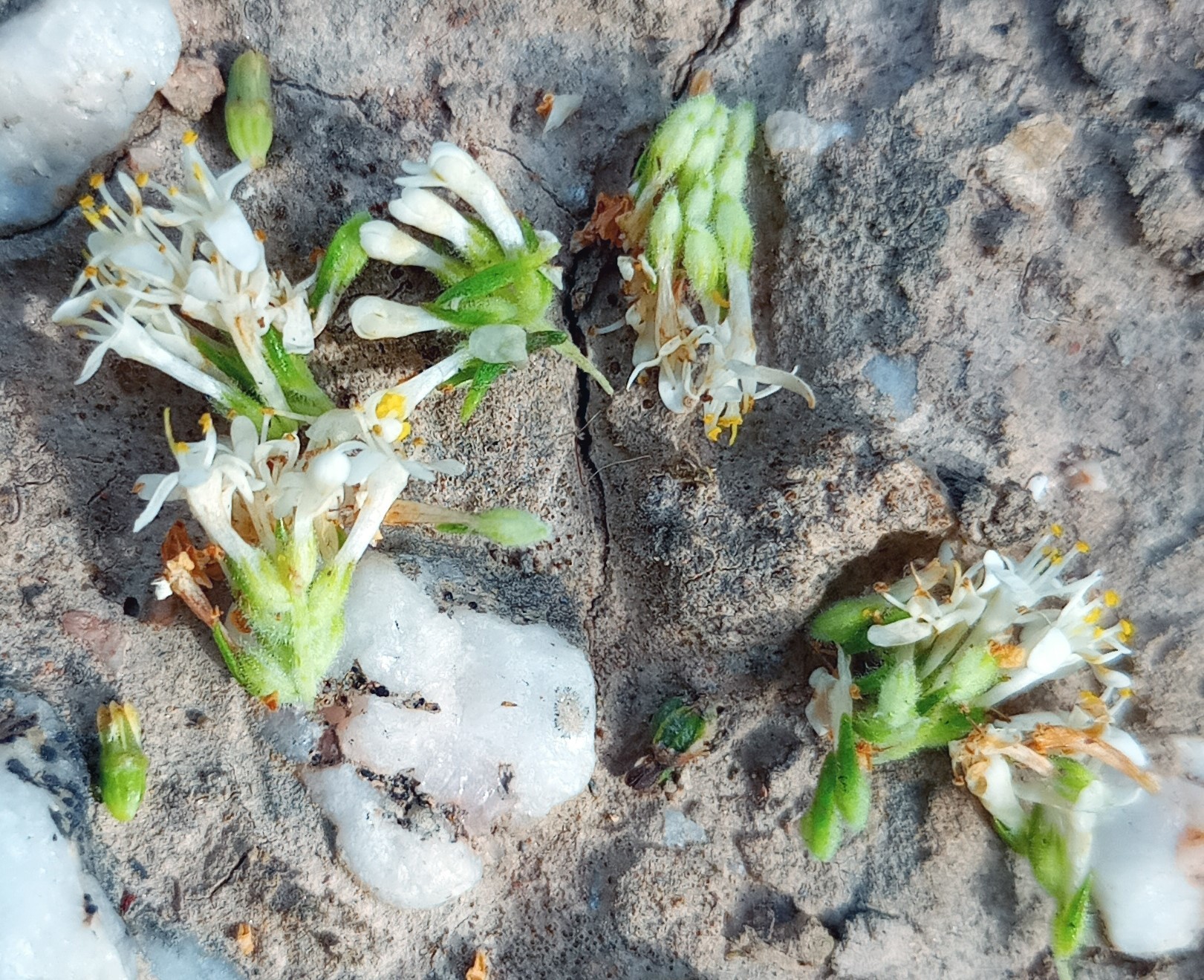
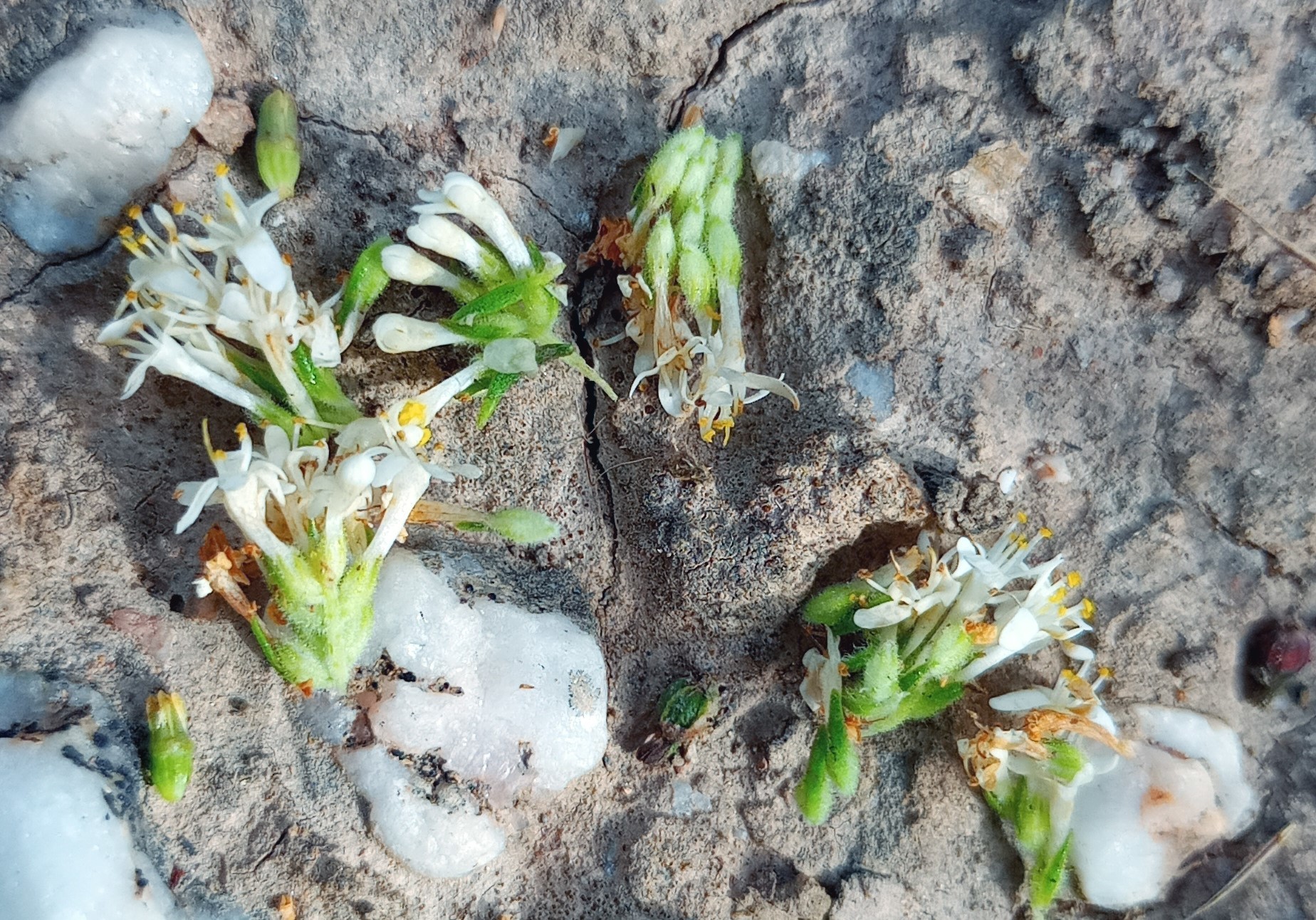
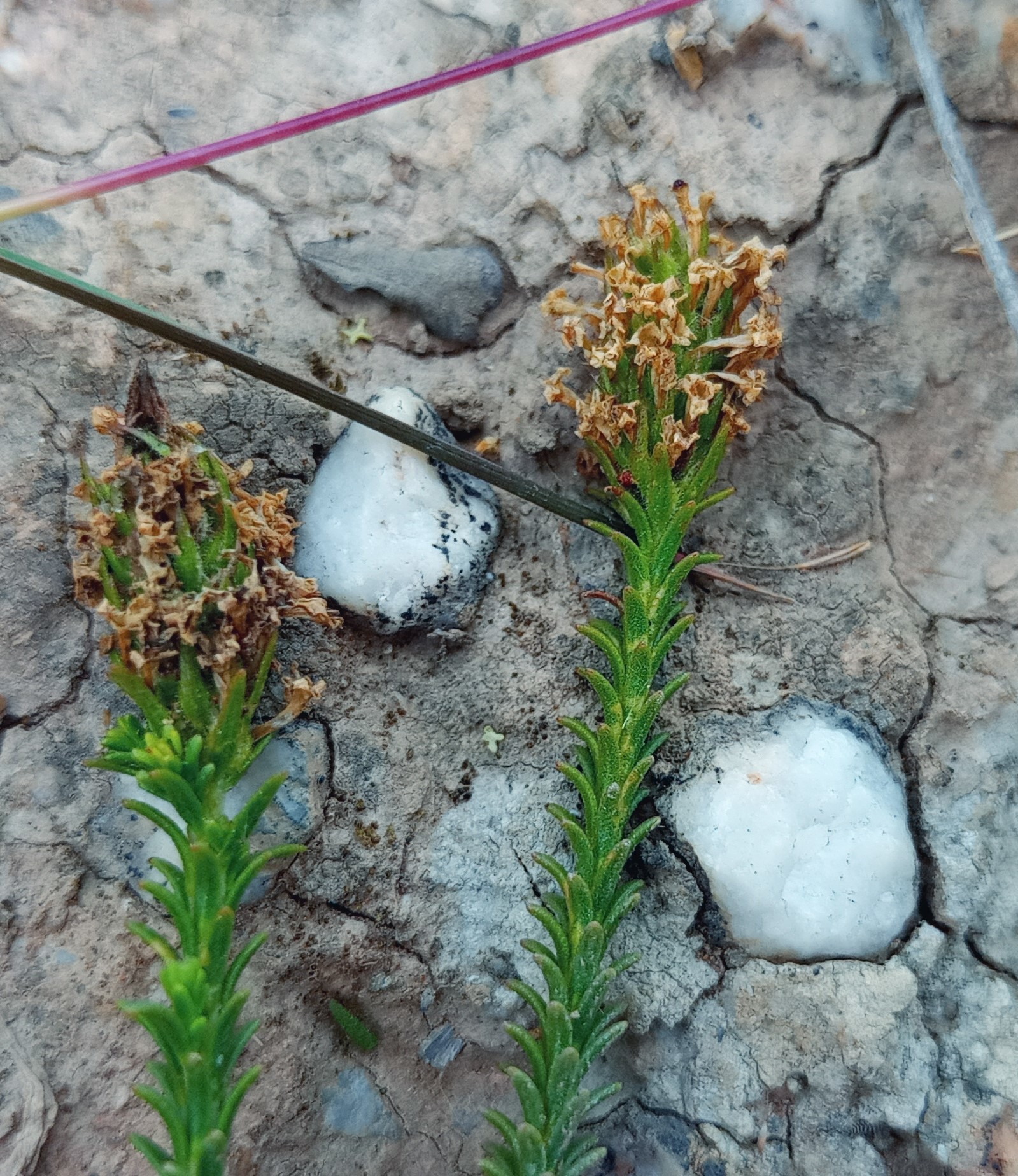
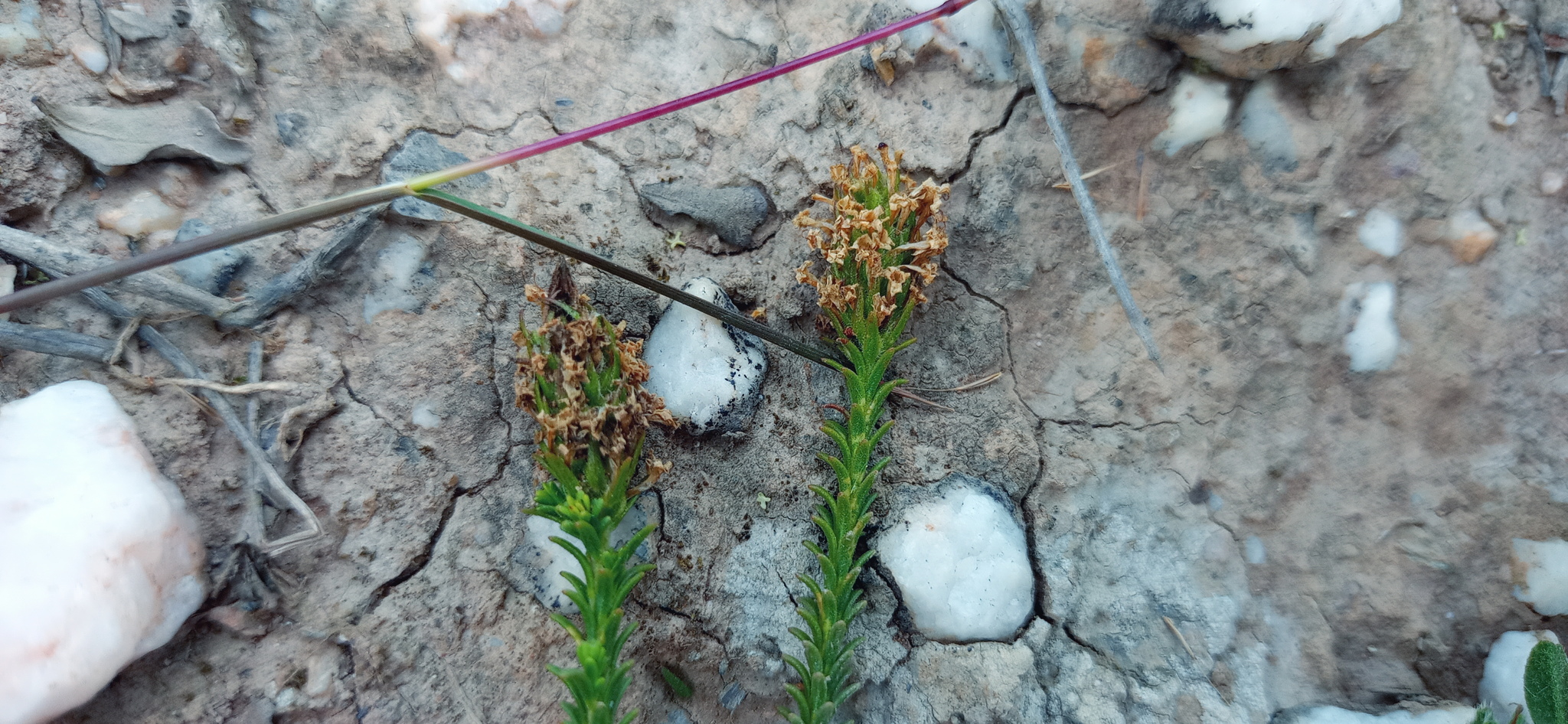
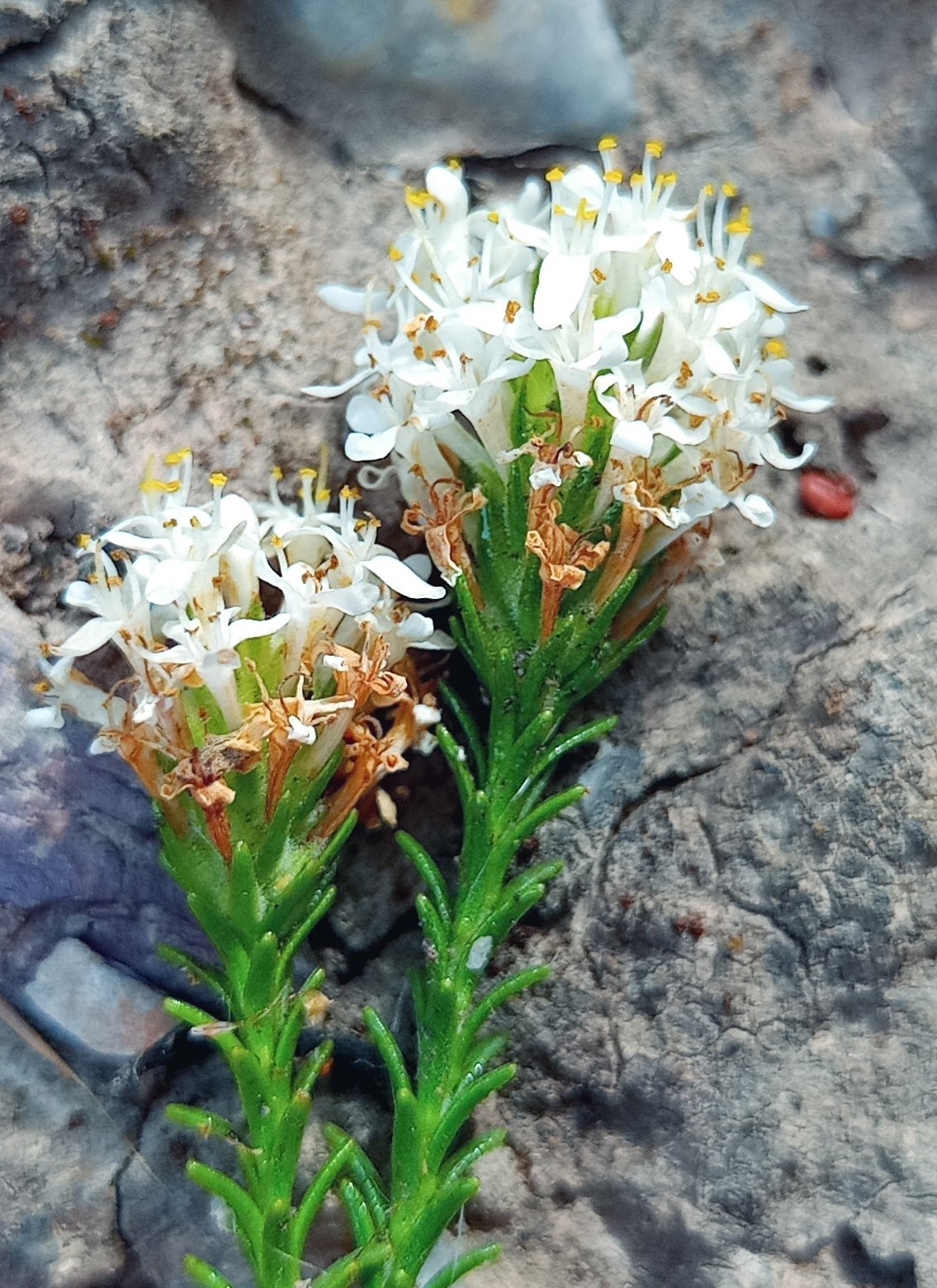
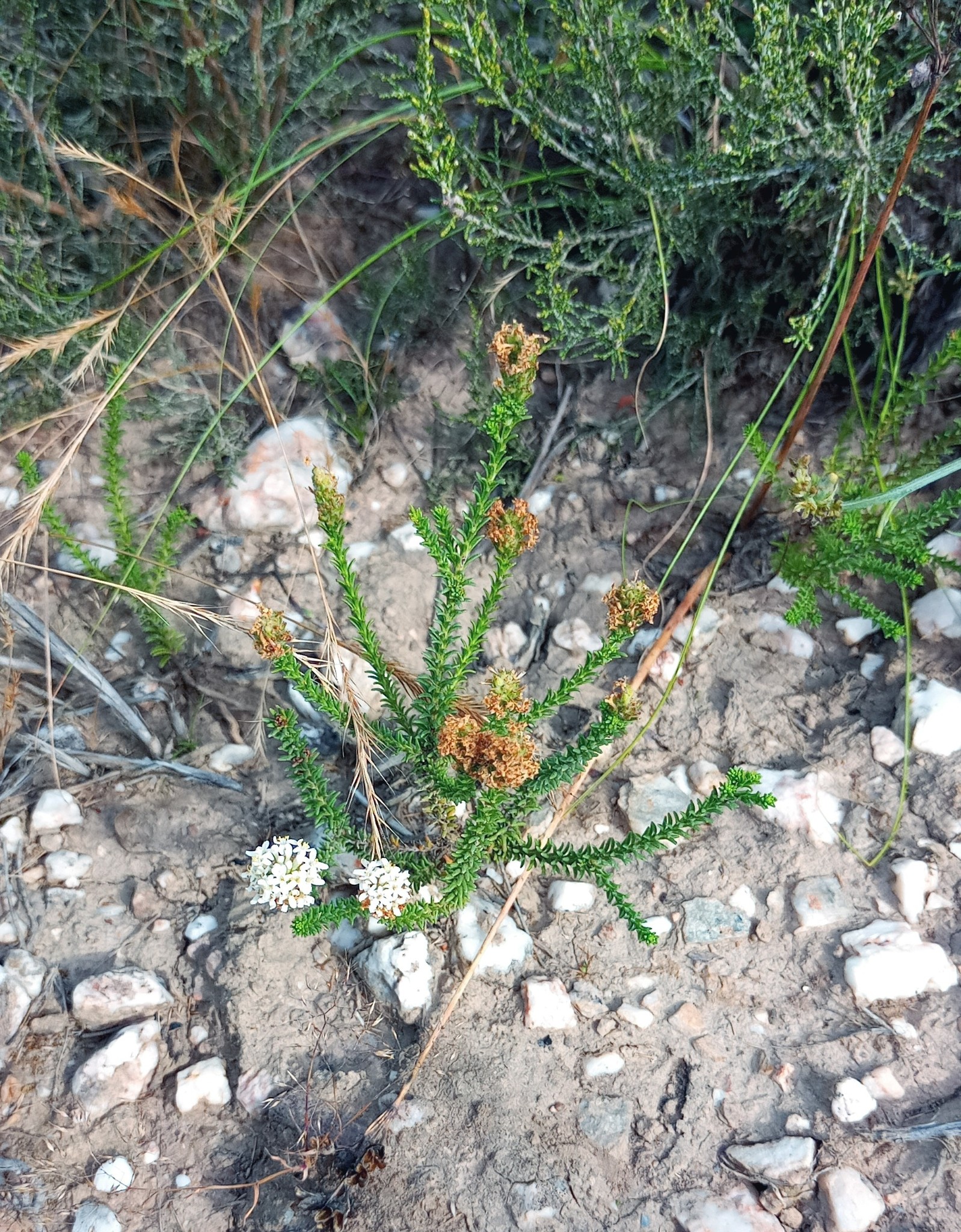
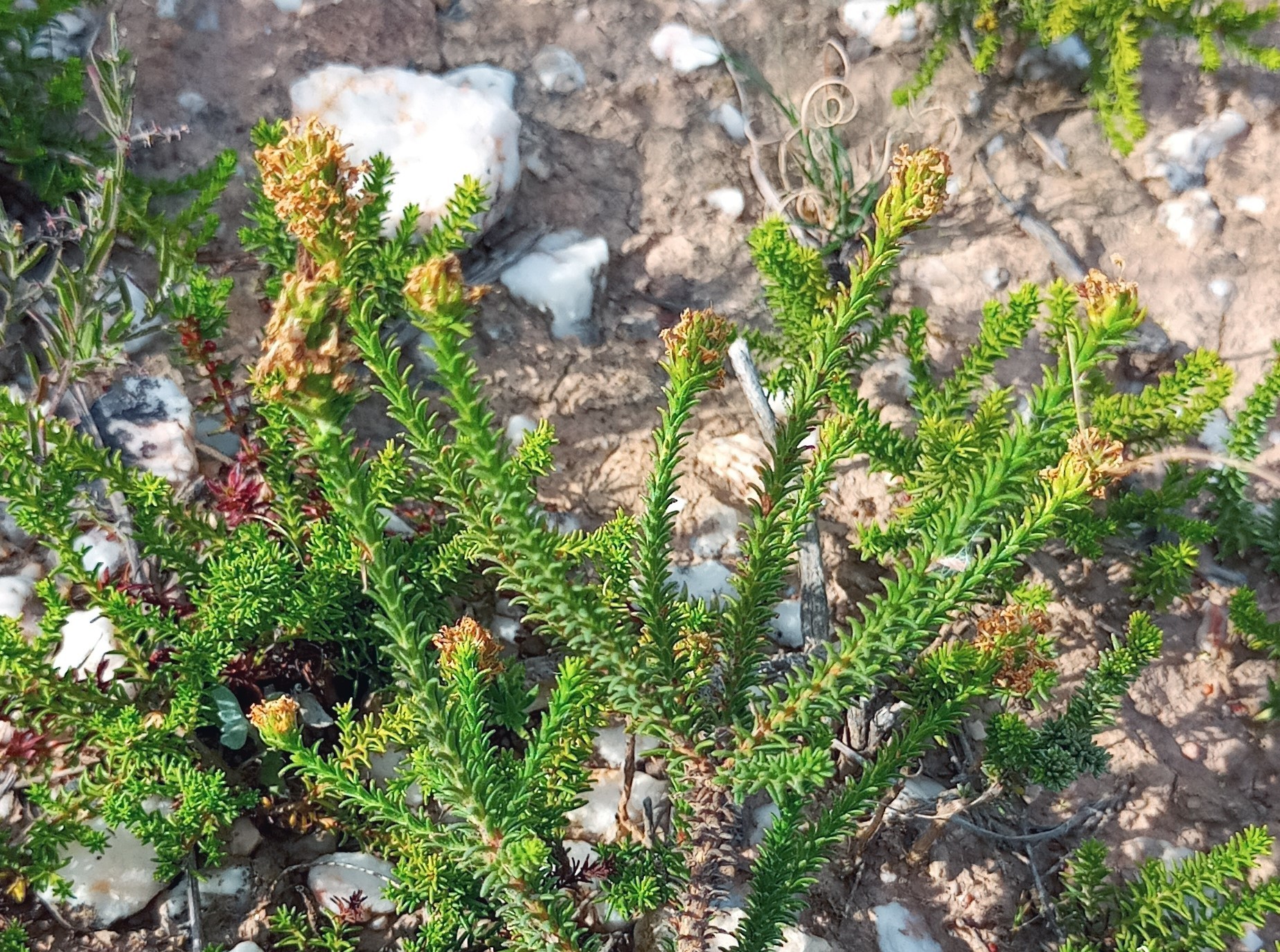
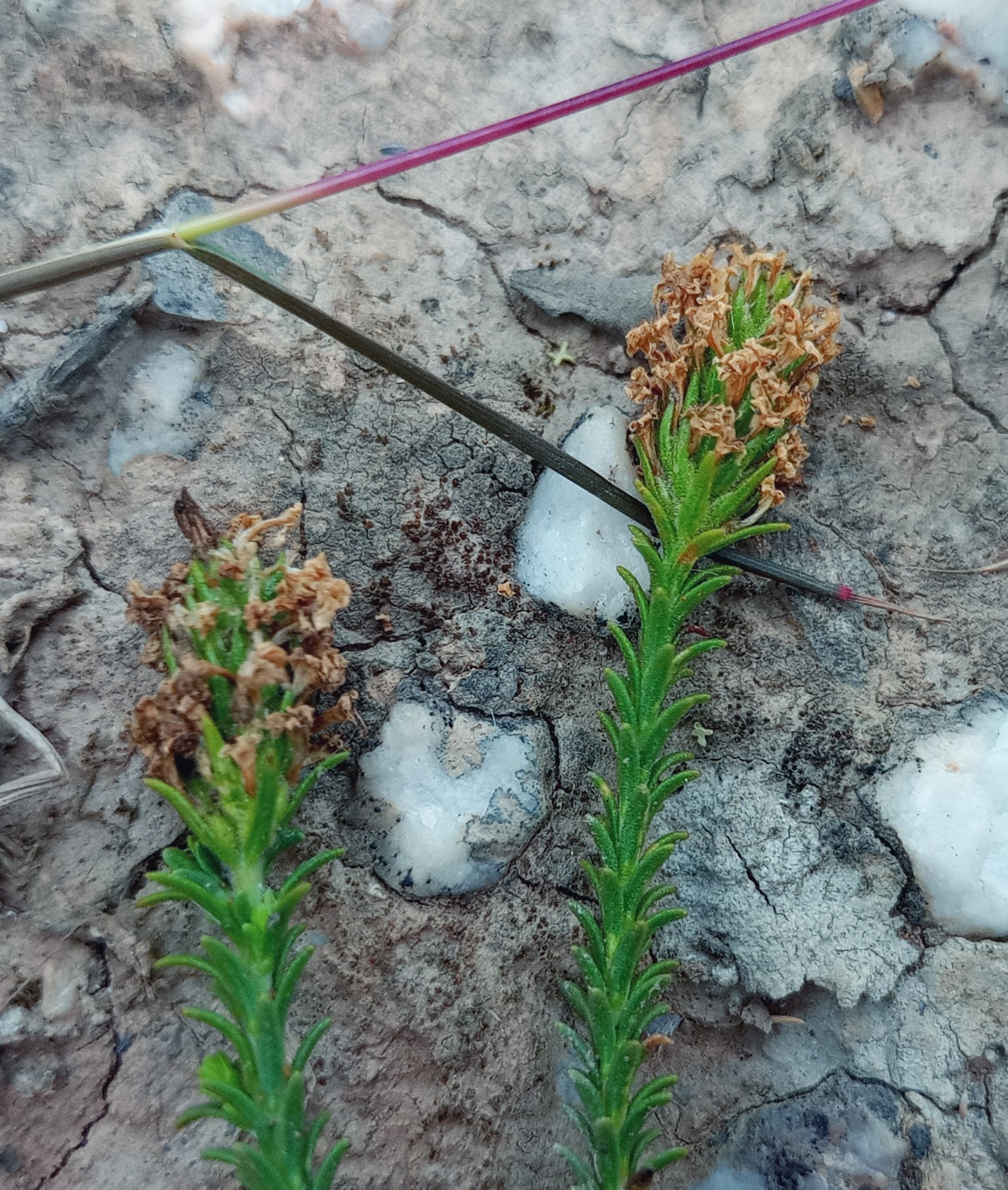
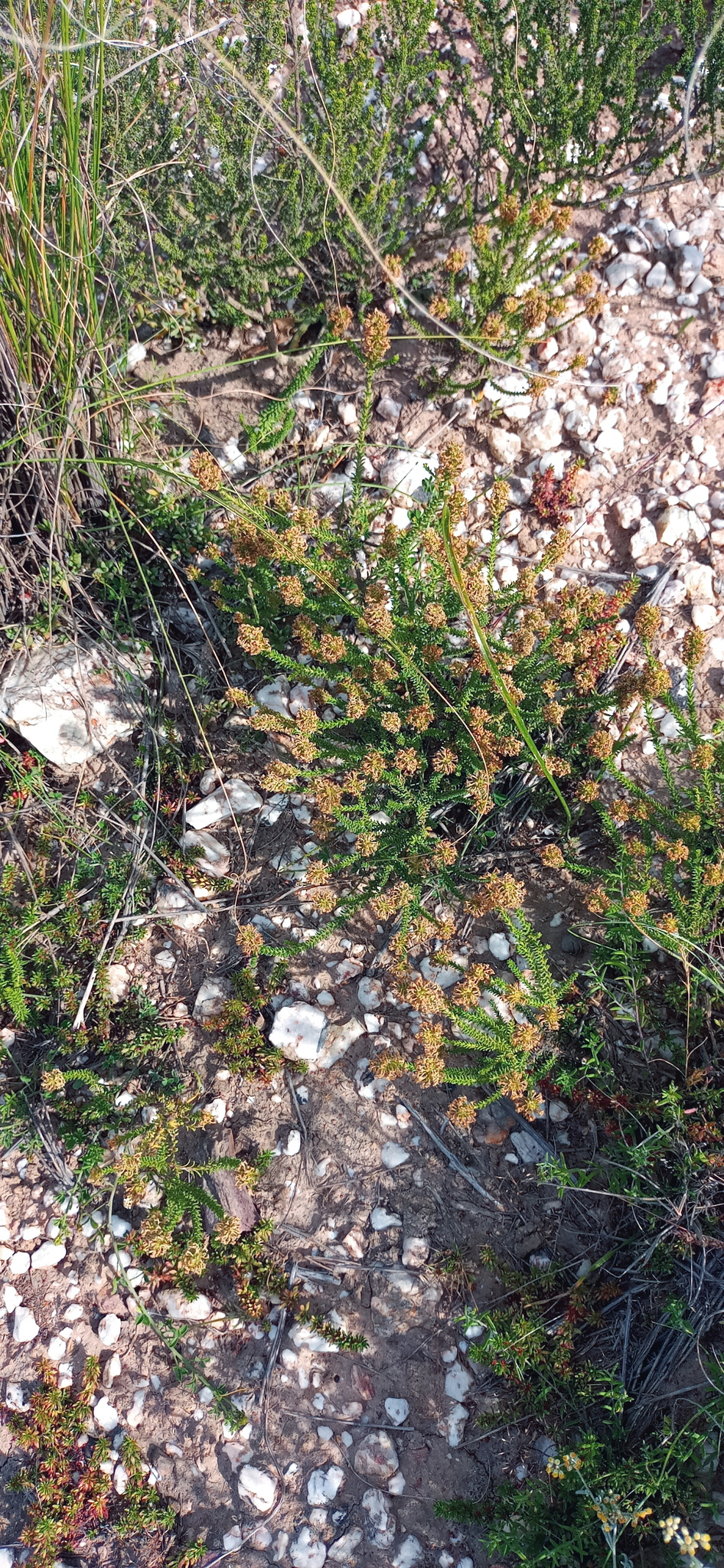
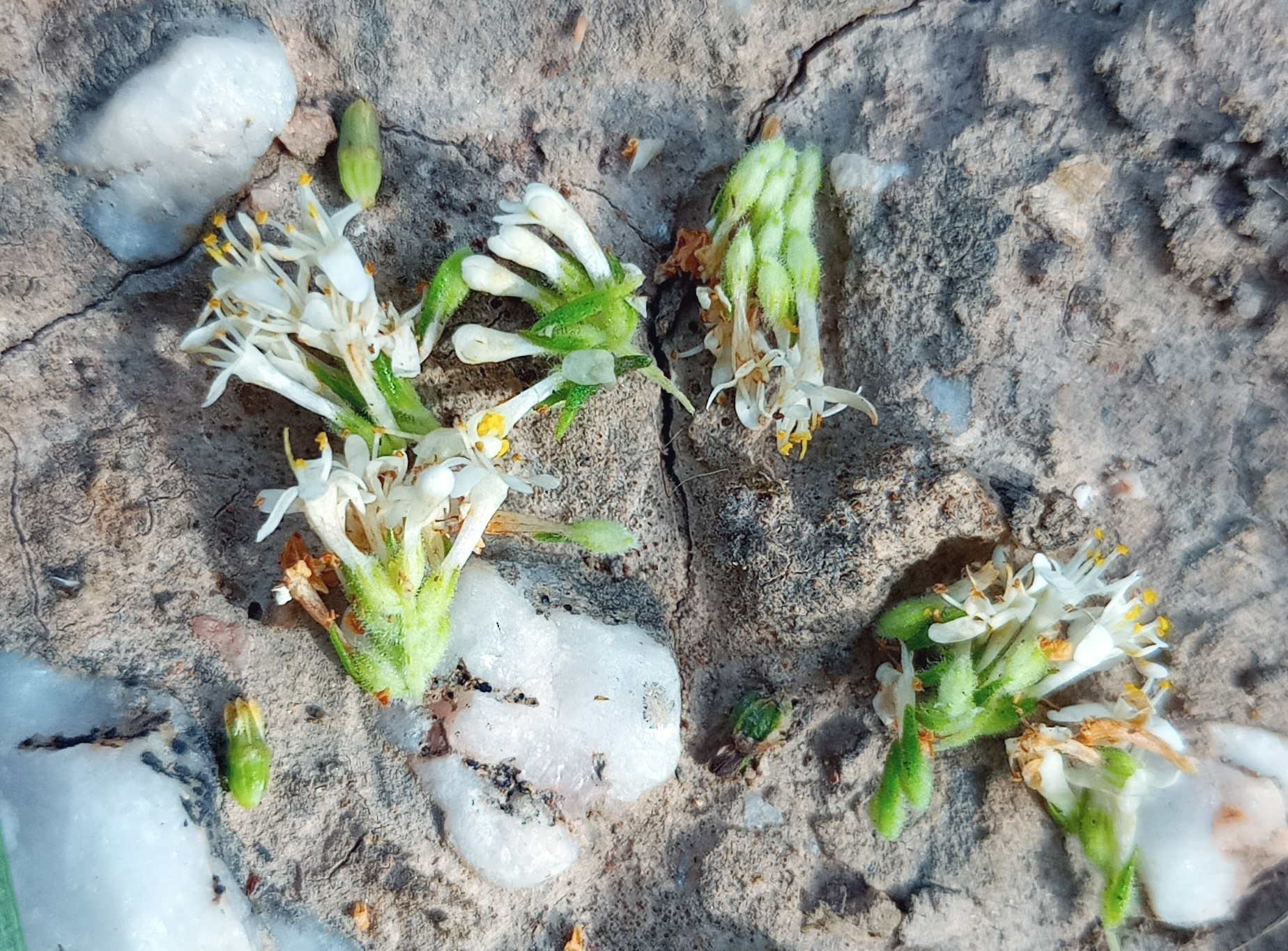
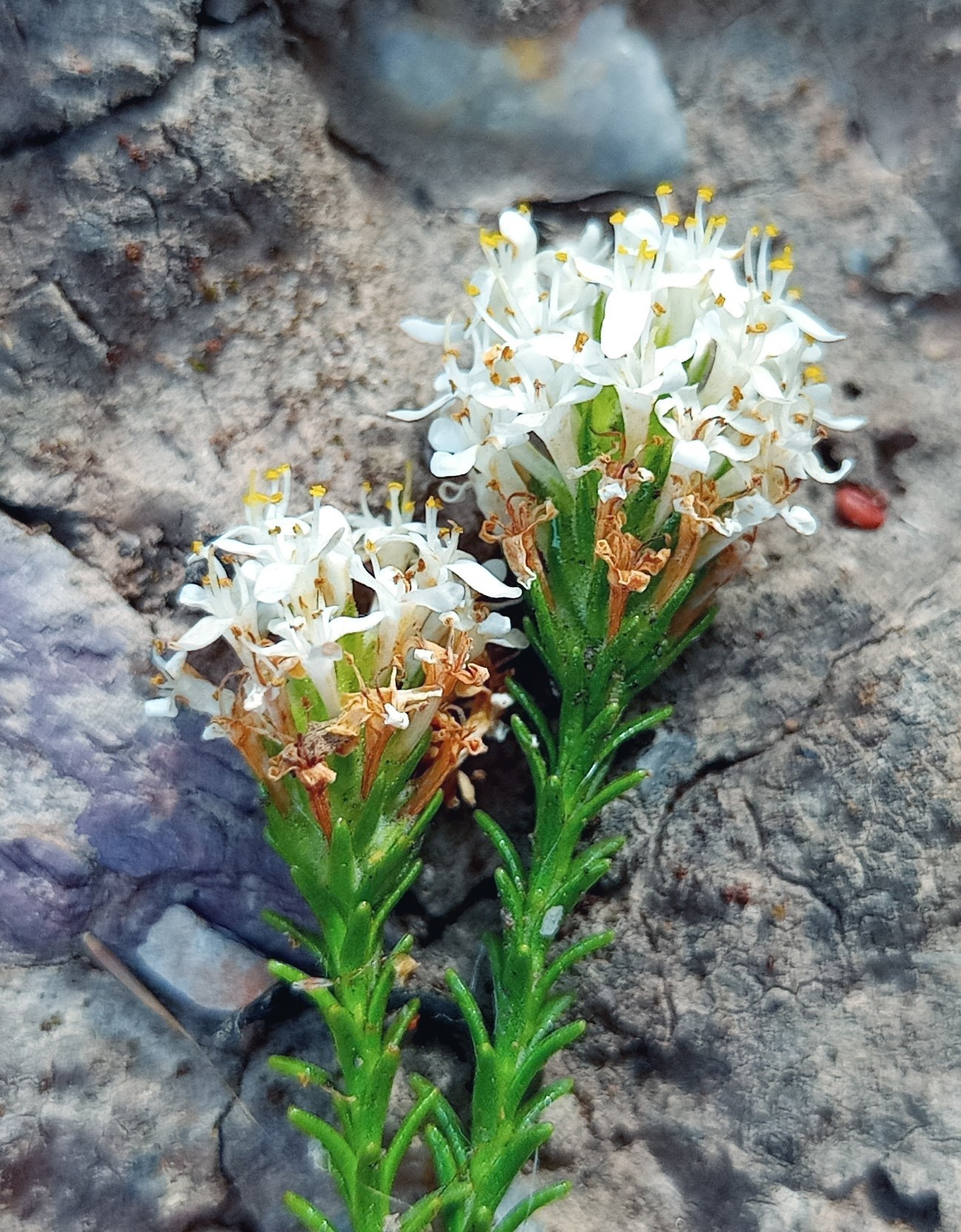
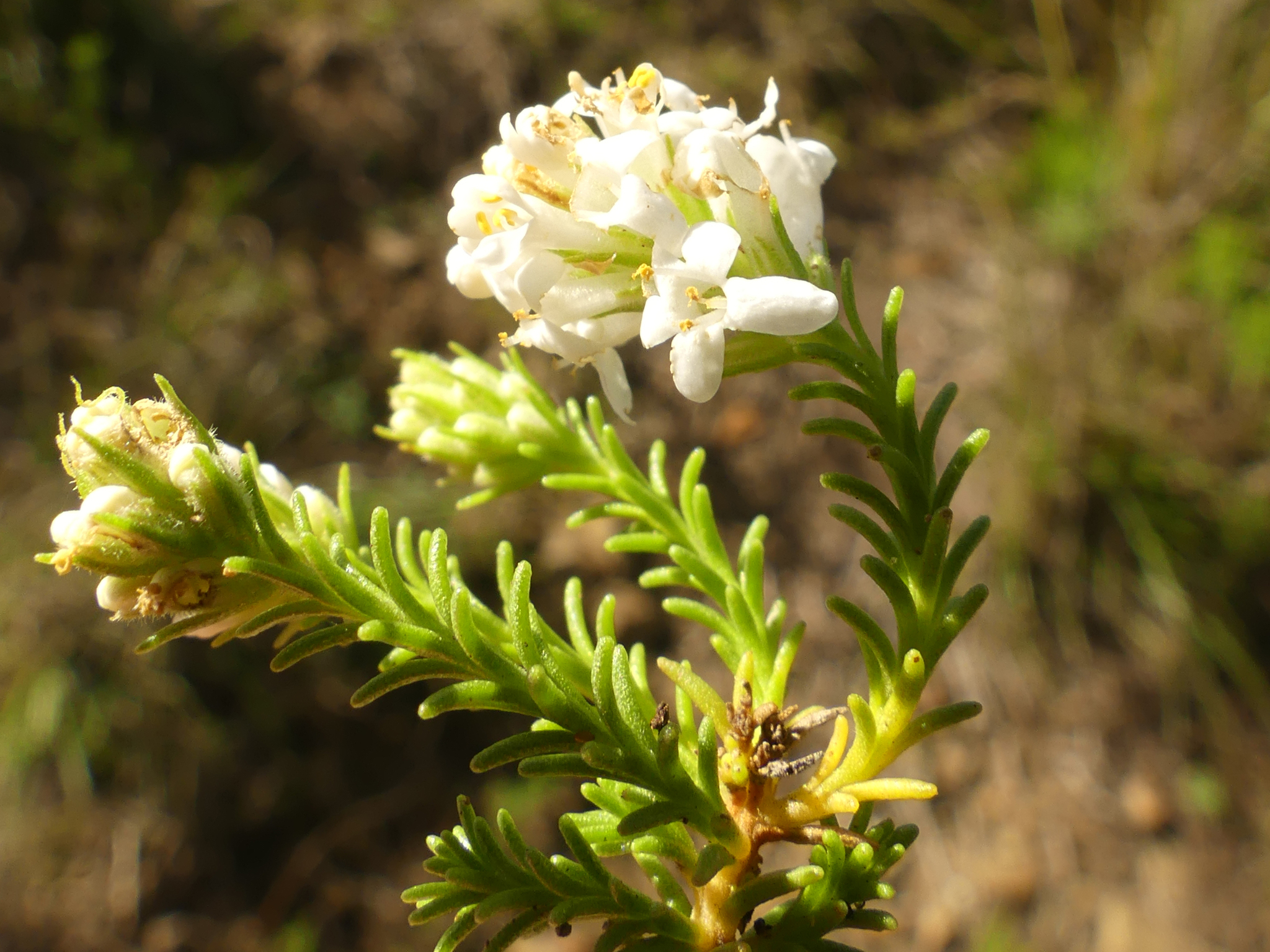
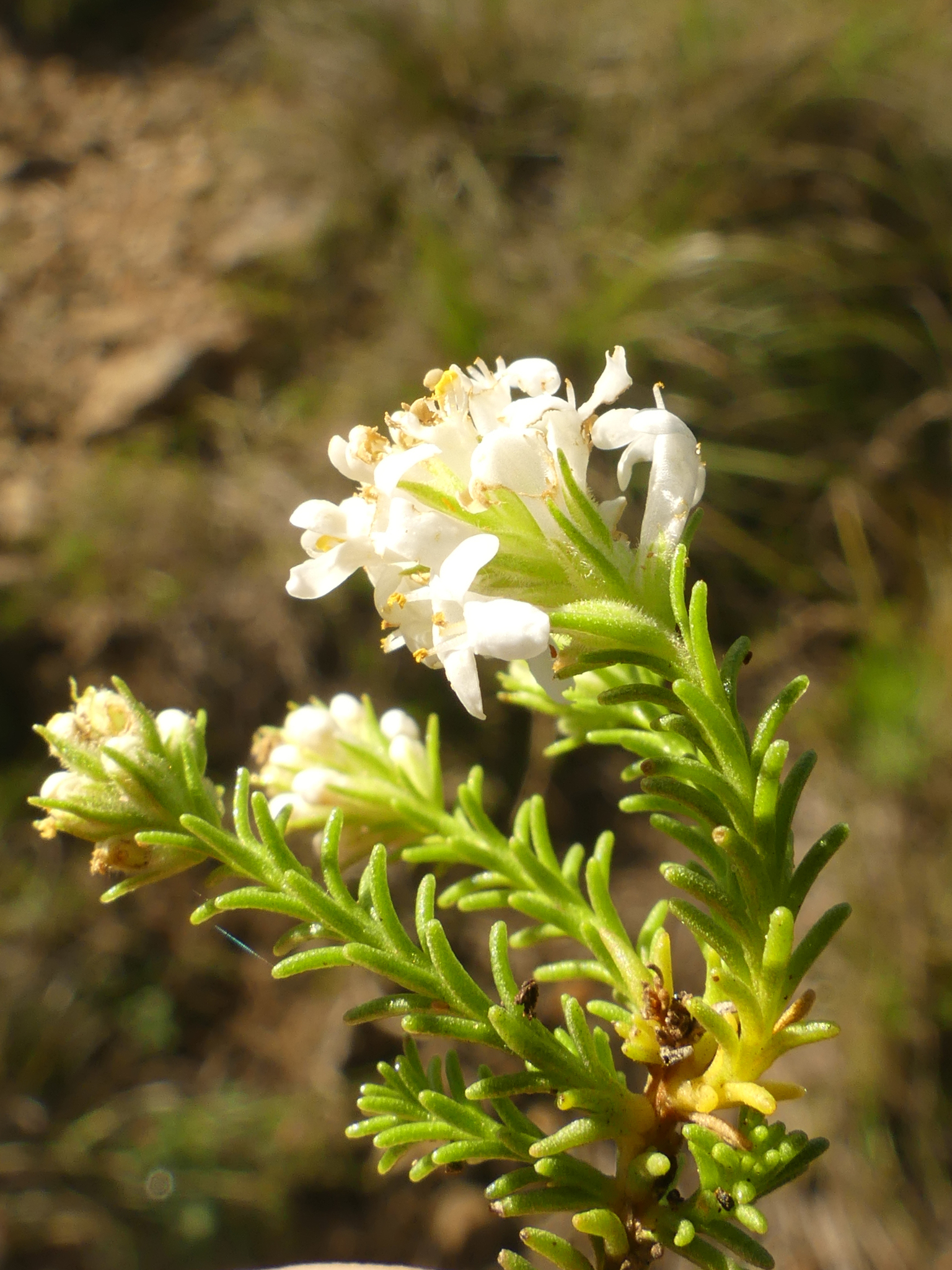
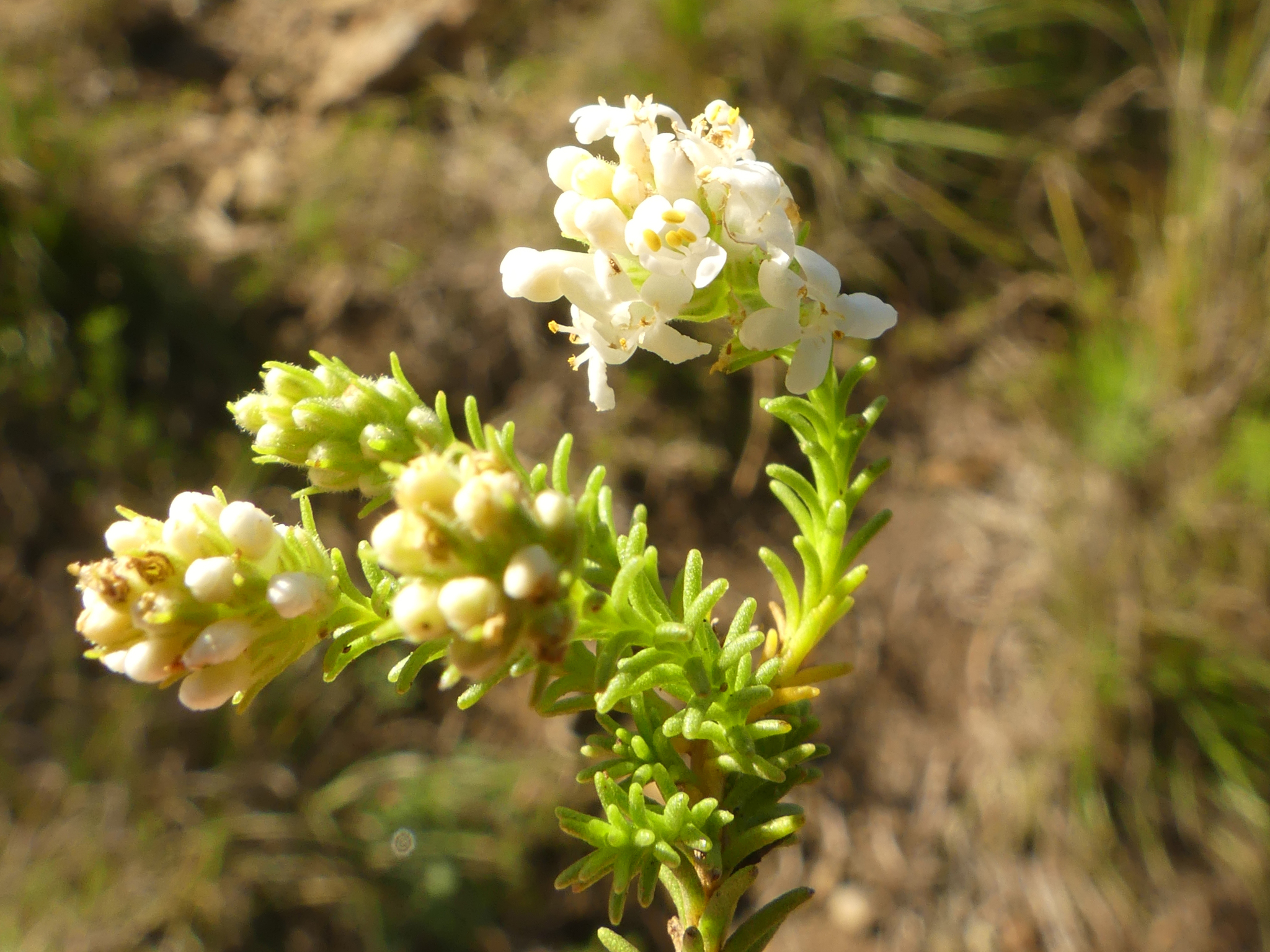
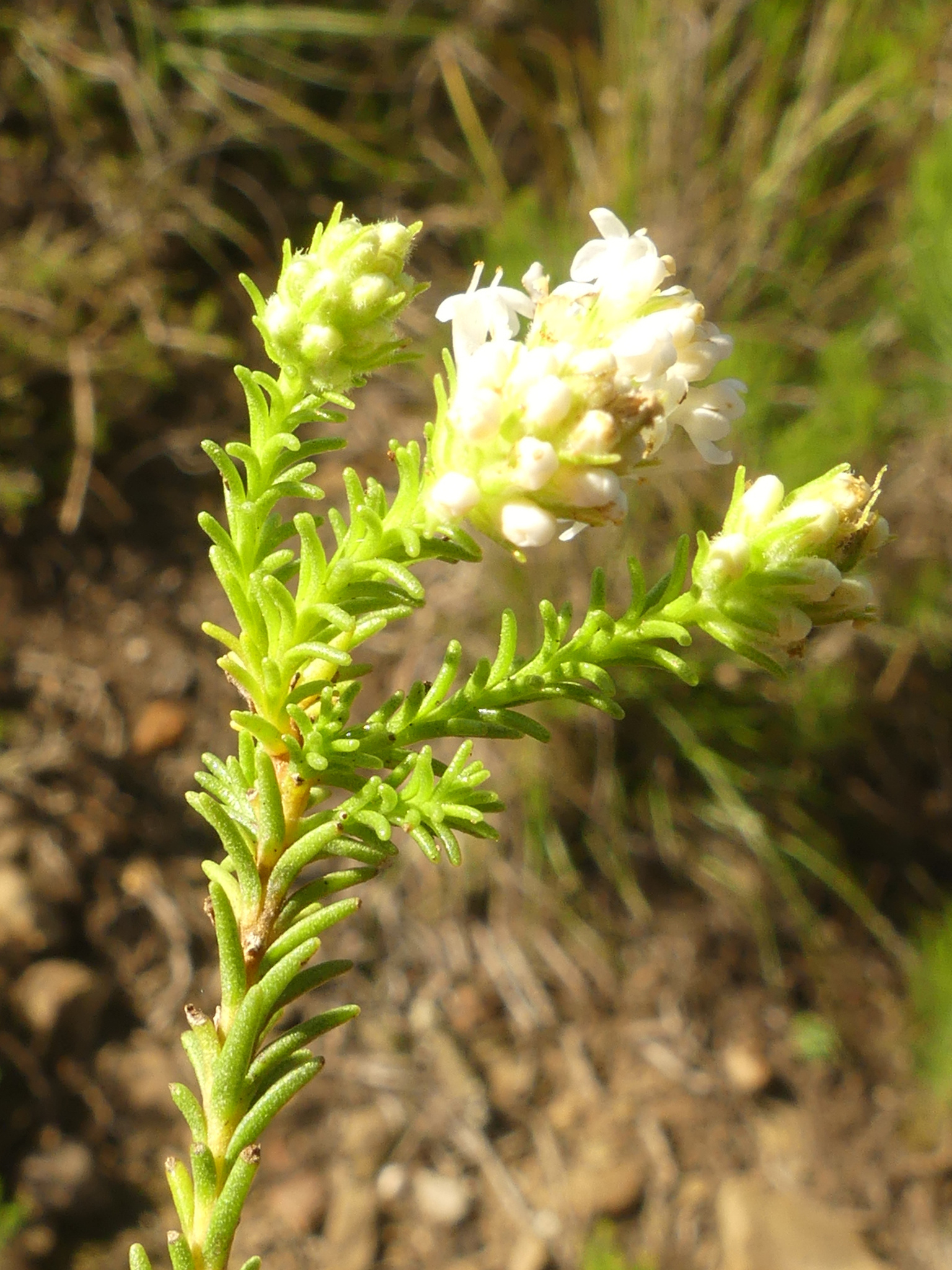
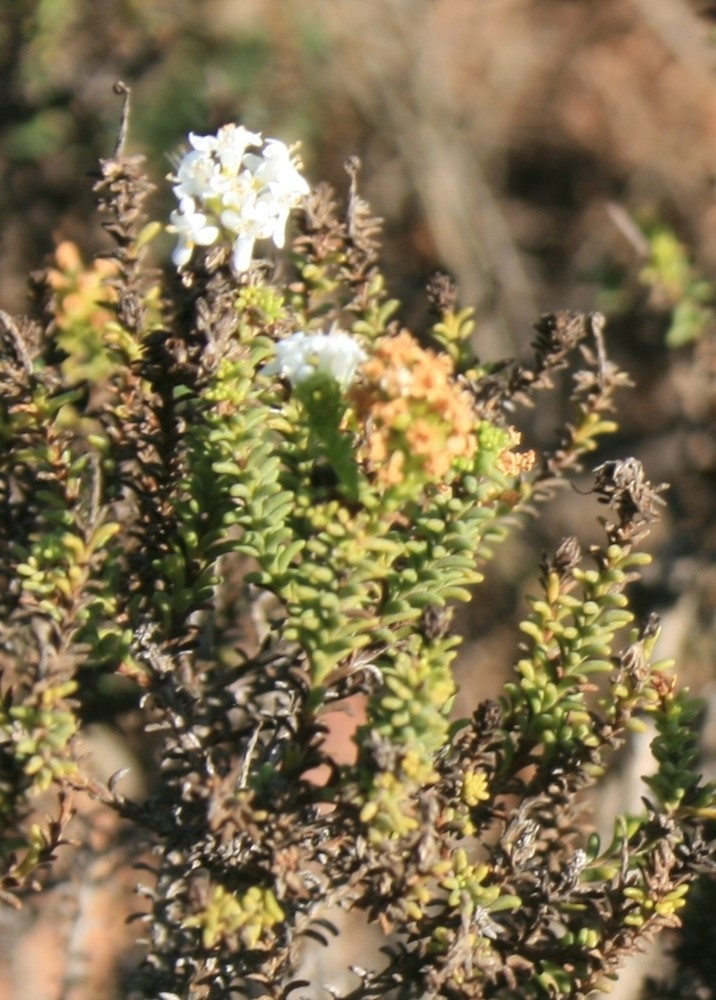
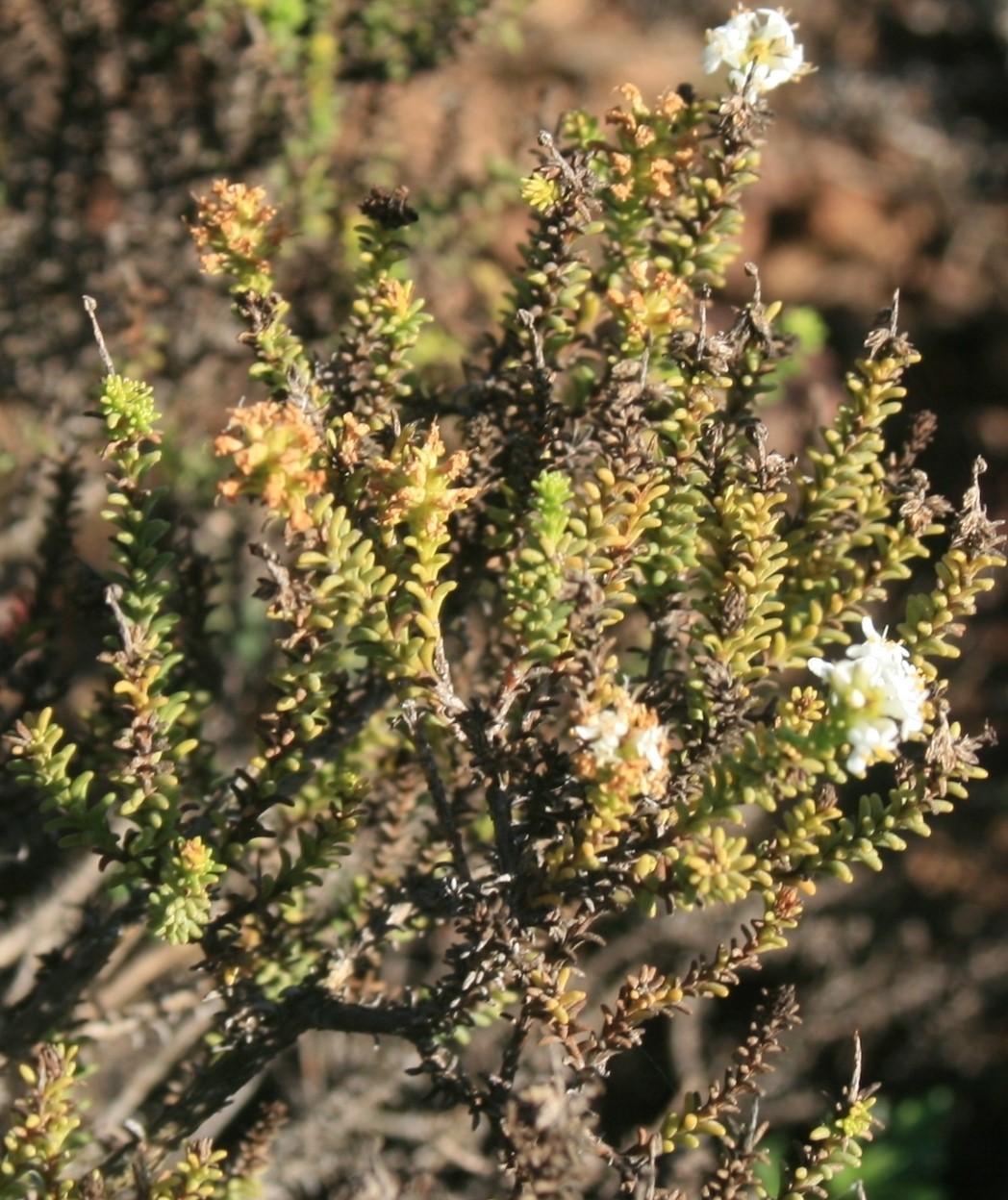
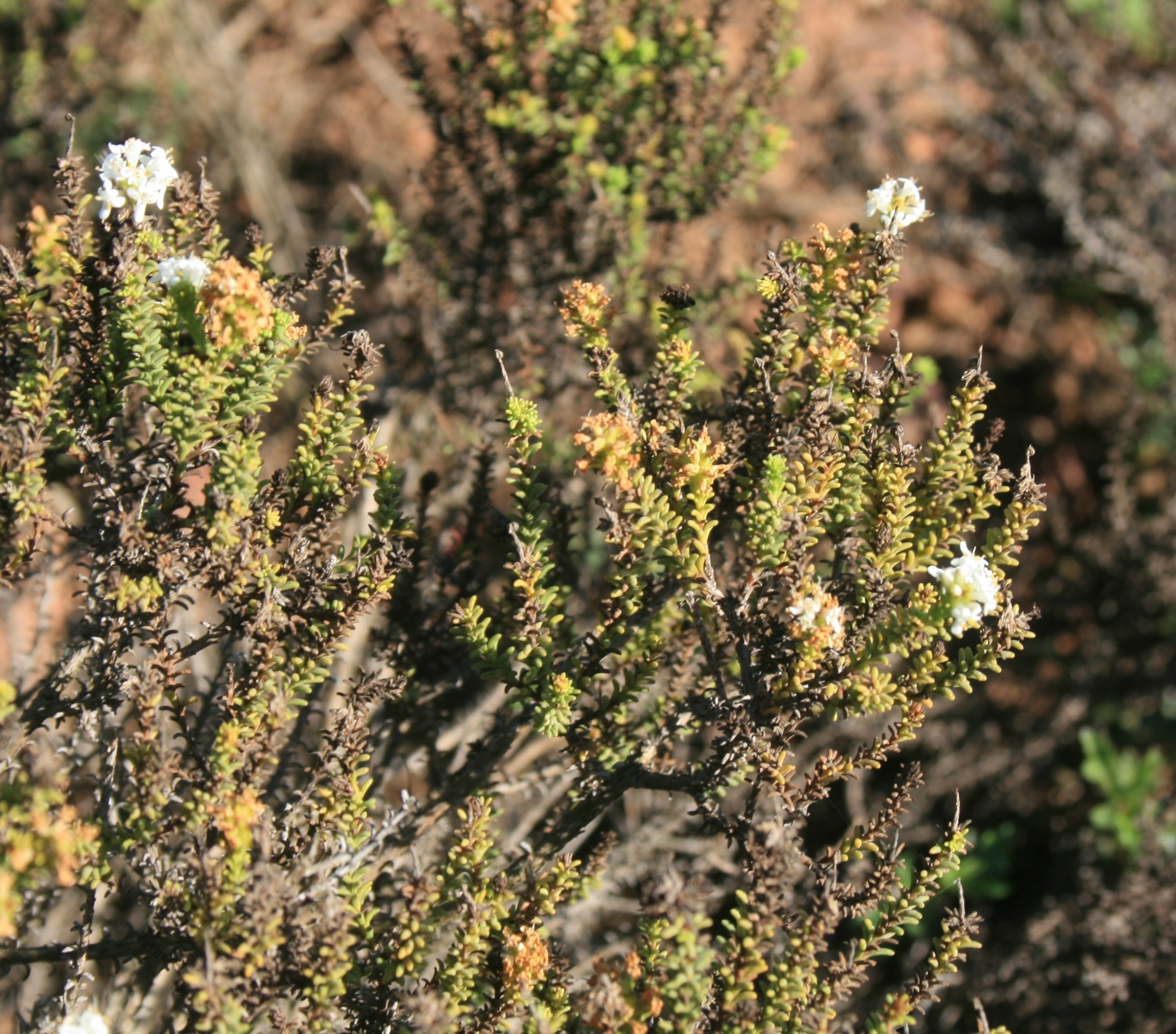
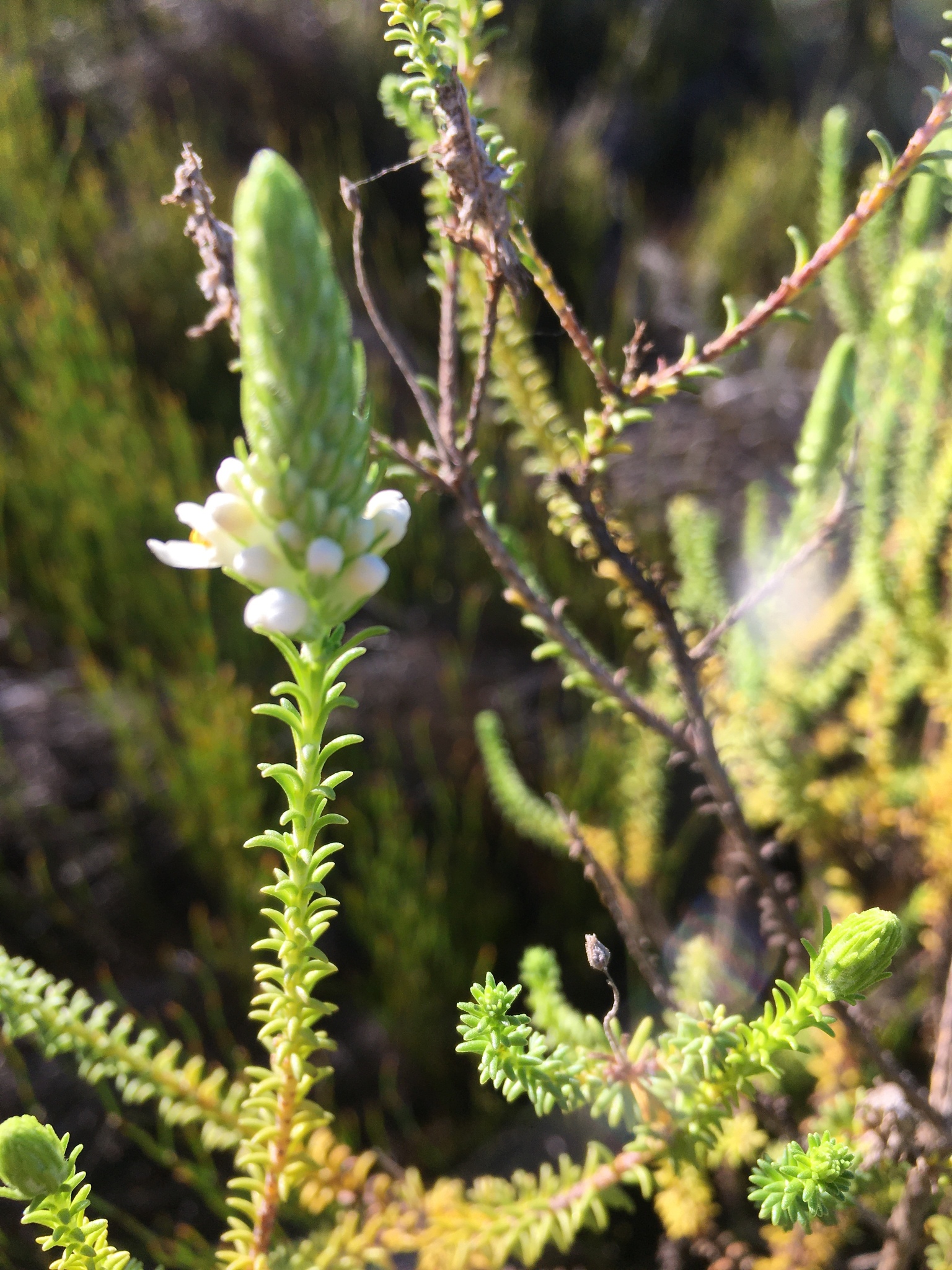
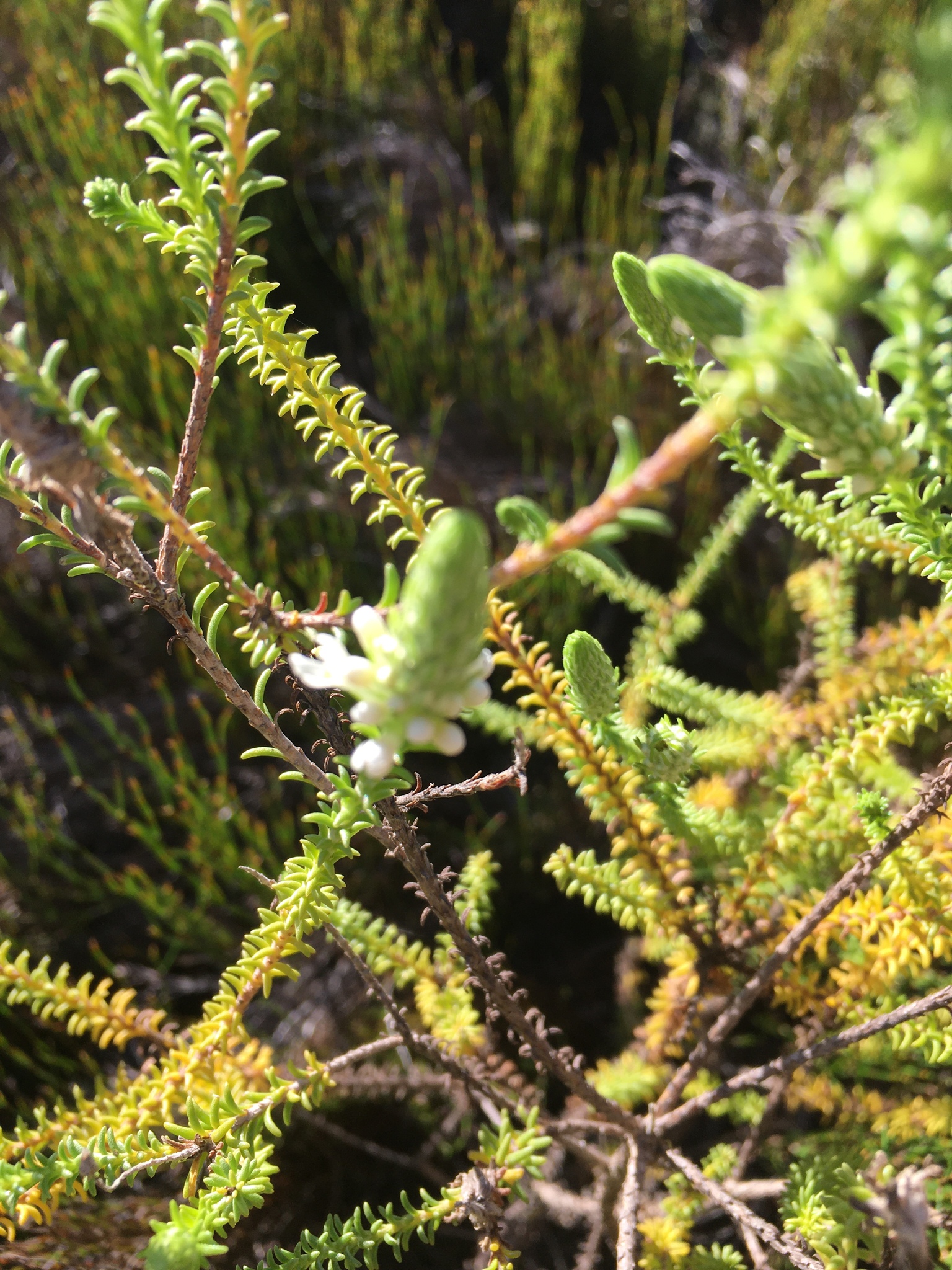
Dwarf rounded woody shrublet c. 100-250 mm tall, virgately very well branched, only old main stems nude, branches puberulous, hairs up to 0.1 mm long, closely leafy, dead leaves long persistent. Leaves opposite becoming alternate upwards, not fascicled, largest 2-3.8 x 0.4-0.8 mm, mostly strongly appressed, only old lowermost leaves sometimes ± spreading, linear-oblong, triquetrous, apex obtuse, base not narrowed, decurrent, margins entire, plane, texture thick, venation invisible, but lower surface distinctly longitudinally ridged when dry, glandular-punctate, sometimes oozing, otherwise glabrous except on decurrent part. Inflorescence a relatively few-flowered glomerule (raceme) c. 5-12 x 6-7 mm, not elongating in fruit, each solitary at tip of innumerable leafy branchlets, old fruiting glomerules overtopped by new growth. Bract adnate to pedicel and base of calyx, lowermost 3-4 x 0.8-1 mm, linear-lanceolate, obtuse, glandular-punctate, hairs up to 0.2-0.5 mm long on lower margins, 0.2-0.4 mm long on lower back together with minute glandular hairs, these also present on inner face. Pedicel c. 0.1-0.2 mm long. Calyx 1.8-2.6 mm long, campanulate, 5-lobed less than halfway to base, two anticous lobes very slightly broader than other three, hairs up to 0.25-0.4 mm long on margins and all over outside, minute glandular hairs also present both inside and outside. Corolla tube 2.5-3.5 mm long, funnel-shaped, limb 4-5 mm across lateral lobes, posticous lobes 1.4-1.8 x 0.8-1.1 mm, anticous lobe 2-2.5 x 1-1.2 mm, all lobes oblong-elliptic, white. Stamens: posticous filaments 1.7-2.2 mm long, anticous filaments 2-3.3 mm, all anthers far exerted. Stigma and style c. 3-4 mm long, style glabrous or with a very few minute globular glands and/or an occasional acute hair. Ovary c. 0.8 x 0.5 mm, glabrous or very nearly so. Cocci 1.7-2 x 1.4-1.5 mm, red-brown, smooth, inner face plane, only one third of coccus fertile, rest bone-hard tissue, pair of cocci held within the persistent calyx. From: Hilliard, OM. 1999. The Tribe Selagineae (Scrophulariaceae). Royal Botanic Garden, Edinburgh. [All rights reserved]
Dwarf, closely branched shrublet. Leaves not tufted, crowded, adpressed, linear, 2-4 mm long. Flowers on short spikes crowded together, white, calyx shaggy, cocci broad, with bony tissue filling one-third of the volume. From: Manning, JC; Goldblatt, P. 2012. Scrophulariaceae: Selago L. In: J Manning & P Goldblatt (eds), Plants of the Greater Cape Floristic Region 1: The Core Cape flora. Strelitzia 29: 754-761. South African National Biodiversity Institute, Pretoria. [CC BY]
Selago ramosissima is characterized by its closely branched habit, small leaves closely appressed to the stem, innumerable small inflorescences, shaggy calyx glandular inside as well as out, and relatively broad cocci composed of bone hard tissue flanking the small fertile part that constitutes only roughly one third of the coccus. Several species partially sympatric with S. ramosissima are similar in facies: S. thomii is distinguished by its less conspicuously hairy bracts and calyces, calyx tube always glabrous inside, the lobes either glabrous or with a few minute glands at their tips, and narrower cocci with the seed occupying the whole of the interior (this is visible very early on, when the ovary begins to swell after fertilisation). From: Hilliard, OM. 1999. The Tribe Selagineae (Scrophulariaceae). Royal Botanic Garden, Edinburgh. [All rights reserved]
Selago ramosissima is a constituent of stony karroid scrub. From: Hilliard, OM. 1999. The Tribe Selagineae (Scrophulariaceae). Royal Botanic Garden, Edinburgh. [All rights reserved]
Clay flats. From: Manning, JC; Goldblatt, P. 2012. Scrophulariaceae: Selago L. In: J Manning & P Goldblatt (eds), Plants of the Greater Cape Floristic Region 1: The Core Cape flora. Strelitzia 29: 754-761. South African National Biodiversity Institute, Pretoria. [CC BY]
Near the confluence of the Riviersonderend and the Breede river, this is the westernmost record of the species; the easternmost is from the environs of the Great Brak river, which discharges into the eastern part of Mossel Bay. From: Hilliard, OM. 1999. The Tribe Selagineae (Scrophulariaceae). Royal Botanic Garden, Edinburgh. [All rights reserved]
Riviersonderend to Great Brak River. From: Manning, JC; Goldblatt, P. 2012. Scrophulariaceae: Selago L. In: J Manning & P Goldblatt (eds), Plants of the Greater Cape Floristic Region 1: The Core Cape flora. Strelitzia 29: 754-761. South African National Biodiversity Institute, Pretoria. [CC BY]
September to October
0 to 150 m
This map contains point-based occurrences at different locations
Occurrence in the Flora of Southern Africa (FSA) countries and South African provinces. Residence status indicates if a taxon is indigenous, endemic, naturalised or invasive in a specific region. This data is based on specimen records and literature
FSA
SA
BOT
NAM
ESW
LES
WC
EC
NC
FS
GA
KZN
LP
MP
NW
Absent
Indigenous
Endemic
Naturalised
Invasive
Names and Sources
Selago ericina Drege
Classification
KINGDOM Plantae
SUBKINGDOM Phanerogamae
PHYLUM Anthophyta
ORDER Lamiales
FAMILY Scrophulariaceae
TRIBE Selagineae
GENUS Selago
SPECIES ramosissima
17 results for Selago ramosissima Rolfe
Barcode: PRE0155242-0 Collector(s) & number: Smit, 5 | 1938-1-
South Africa, Western Cape, RIVERSDALE
Data Resource: BODATSA View record
Barcode: PRE0155295-0 Collector(s) & number: Story, R, 2886 | 1947-9-1
South Africa, Western Cape, RIVERSDALE DIV.; GOURITZ RIVER BRIDGE NAT. RD.
Data Resource: BODATSA View record
Barcode: NBG0096580-0 Collector(s) & number: Zeyher, 3573 | --
South Africa, Western Cape, Swellendam Div. on mountain ridges along the lower part of the Riviersonderende.
Data Resource: BODATSA View record
Barcode: PRE0674750-0 Collector(s) & number: Fries, TCE, 1349 | 1930-9-24
South Africa, Western Cape, RIVERSDALE DIST.; ALBERTINIA.
Data Resource: BODATSA View record
Barcode: NBG1477076-0 Collector(s) & number: Burgers, 1321 | 1978-10-14
South Africa, Western Cape, S.W. Cape. Potberg; opposite Soutpan, near Melkhoutrivier.
Data Resource: BODATSA View record
Barcode: PRE0155291-0 Collector(s) & number: Galpin, EE, 4415 | 1897-9-25
South Africa, Western Cape, MOSSEL BAY DIV; GNEAR REAT BRAK RIVER
Data Resource: BODATSA View record
Barcode: PRE0155290-0 Collector(s) & number: Zeyher, CLP, 3573 | --
South Africa, Western Cape, SWELLENDAM DIST., RIVIER SONDER EINDE. MOUNTAIN RIDGE ALONG LOWER PART OF RIVER
Data Resource: BODATSA View record
This map contains point-based occurrences at different locations
1999
1901
FLORA CHAPTER
Selagineae Rolfe, RAIn: WT Thiselton-Dyer (ed.), Acanthaceae to Proteaceae. Flora Capensis 5: 95-180
Lovell Reeve & Co., London
No results found for Selago ramosissima Rolfe
Status and criteria
EN
Assessor(s)
Plantae Coordinator
JOURNAL ARTICLE
Manning, J.C. 2004. Hyacinthaceae: Ornithogalum laikipense, a synonym of Drimia macrocarpa. Bothalia. 34:112
JOURNAL ARTICLE
Manning, J.C. 2009. Hyacinthaceae: Nomenclatural corrections in Ornithogaloideae. Bothalia. 39:221-222
JOURNAL ARTICLE
Manning, J.C. 2013. ACANTHACEAE & LAMIACEAE: Nomeclatural corrections in Justicia and Leonotis. Bothalia. 43:221-222
JOURNAL ARTICLE
Manning, J.C. 2013. ASTERACEAE: Two new combinations in Caputia and Curio (Senecioneae). Bothalia. 43:93
JOURNAL ARTICLE
Manning, J.C. 2017. Nomenclatural adjustments in African plants 3. Bothalia. 47:1-2
JOURNAL ARTICLE
Manning, J.C. 2019. The genus Massonia Thunb. ex Houtt. (Hyacinthaceae: Scilloideae) in the Core Cape Floristic Region. South African Journal of Botany. 121:329-354
JOURNAL ARTICLE
Manning, J.C. 2019. The genus Massonia Thunb. ex Houtt. (Hyacinthaceae: Scilloideae) in the Core Cape Floristic Region. South African Journal of Botany. 121:329-354
JOURNAL ARTICLE
Manning, J.C. 2019. A new name in southern African Justicia L. (Acanthaceae). Bothalia. 49:1-2
JOURNAL ARTICLE
Manning, J.C. 2019. Systematics of the genus veltheimia (Hyacinthaceae: Scilloideae). South African Journal of Botany. 127:271-277
JOURNAL ARTICLE
Manning, J.C. 2020. Systematics of Ledebouria sect. Resnova (Hyacinthaceae: Scilloideae: Massonieae), with a new subtribal classification of Massonieae. South African Journal of Botany. 133:98-110
| Part(s) of plant used | Use(s) | Reference |
|---|
Coming soon...


