PLANTAE / PHANEROGAMAE / ANTHOPHYTA / LAMIALES / LENTIBULARIACEAE / UTRICULARIA / SCANDENS

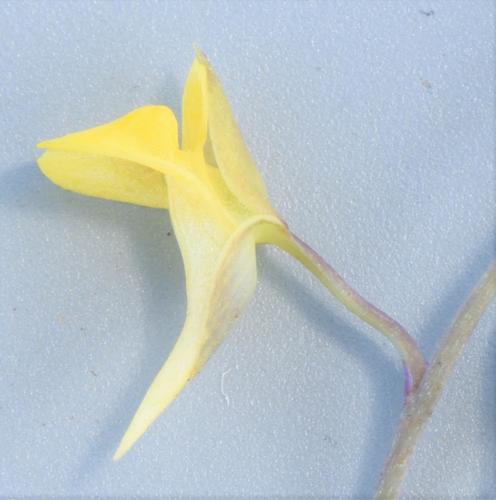
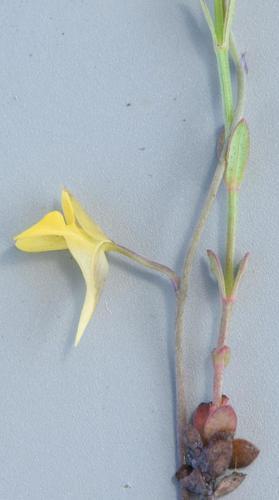
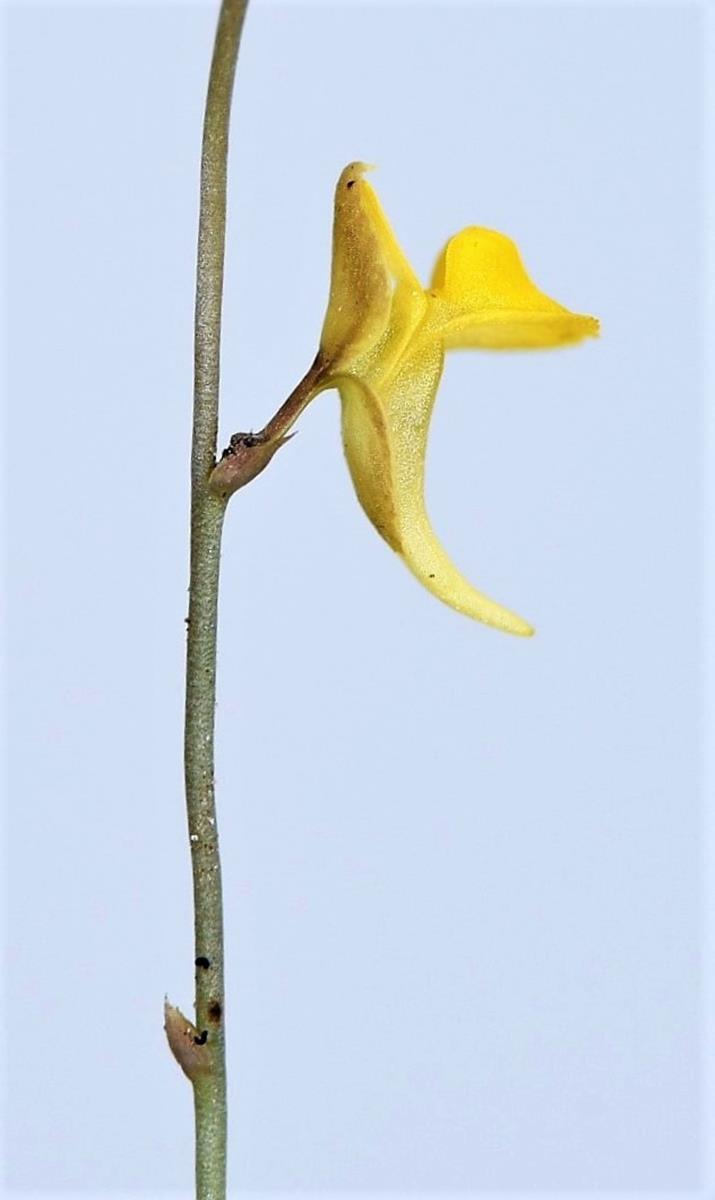
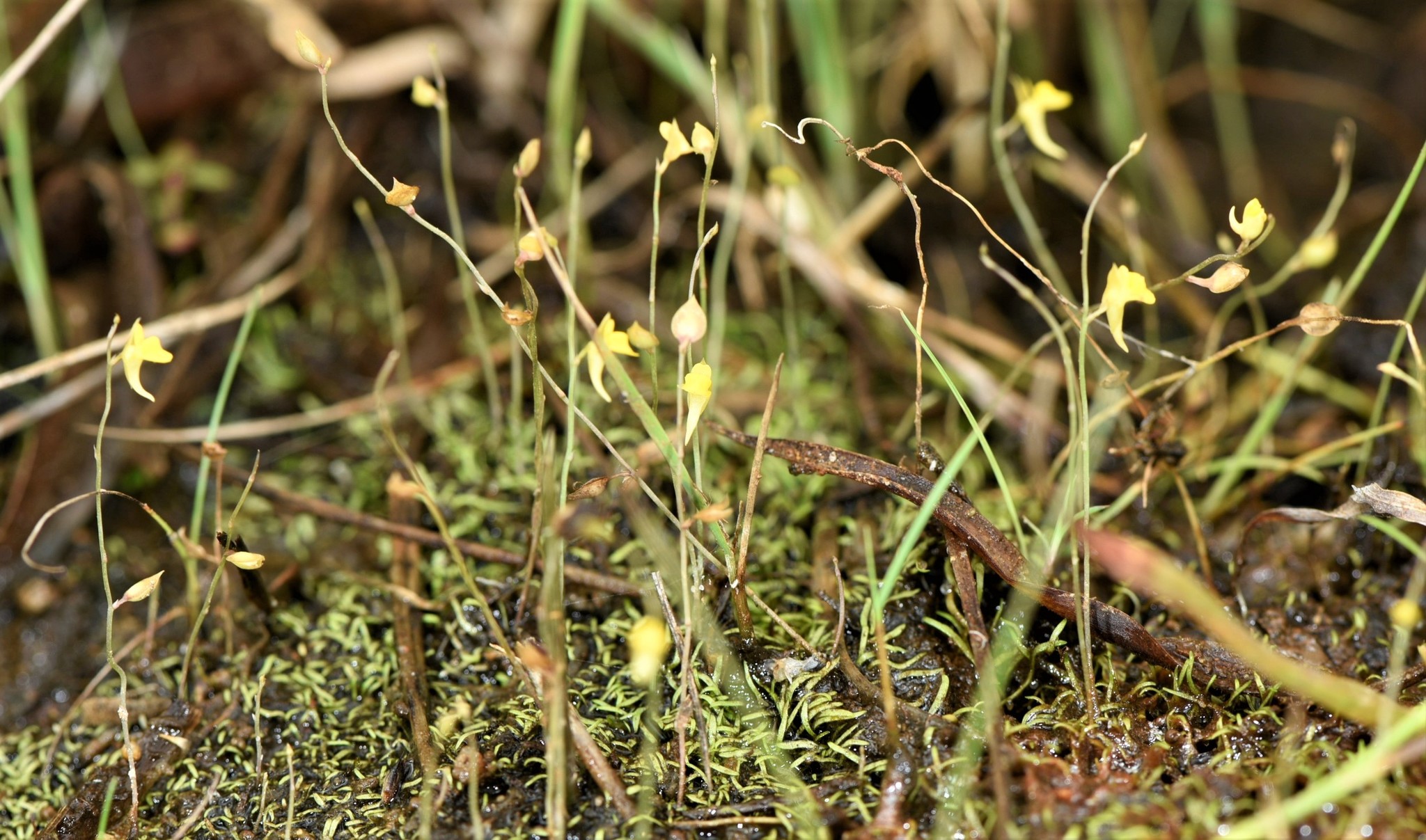
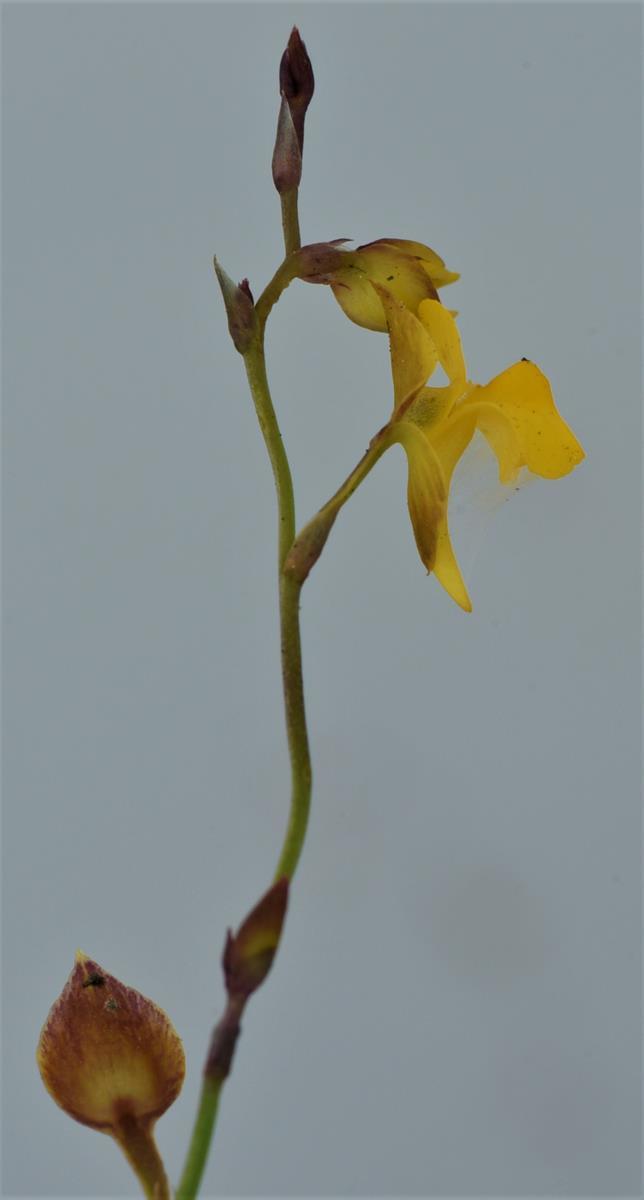
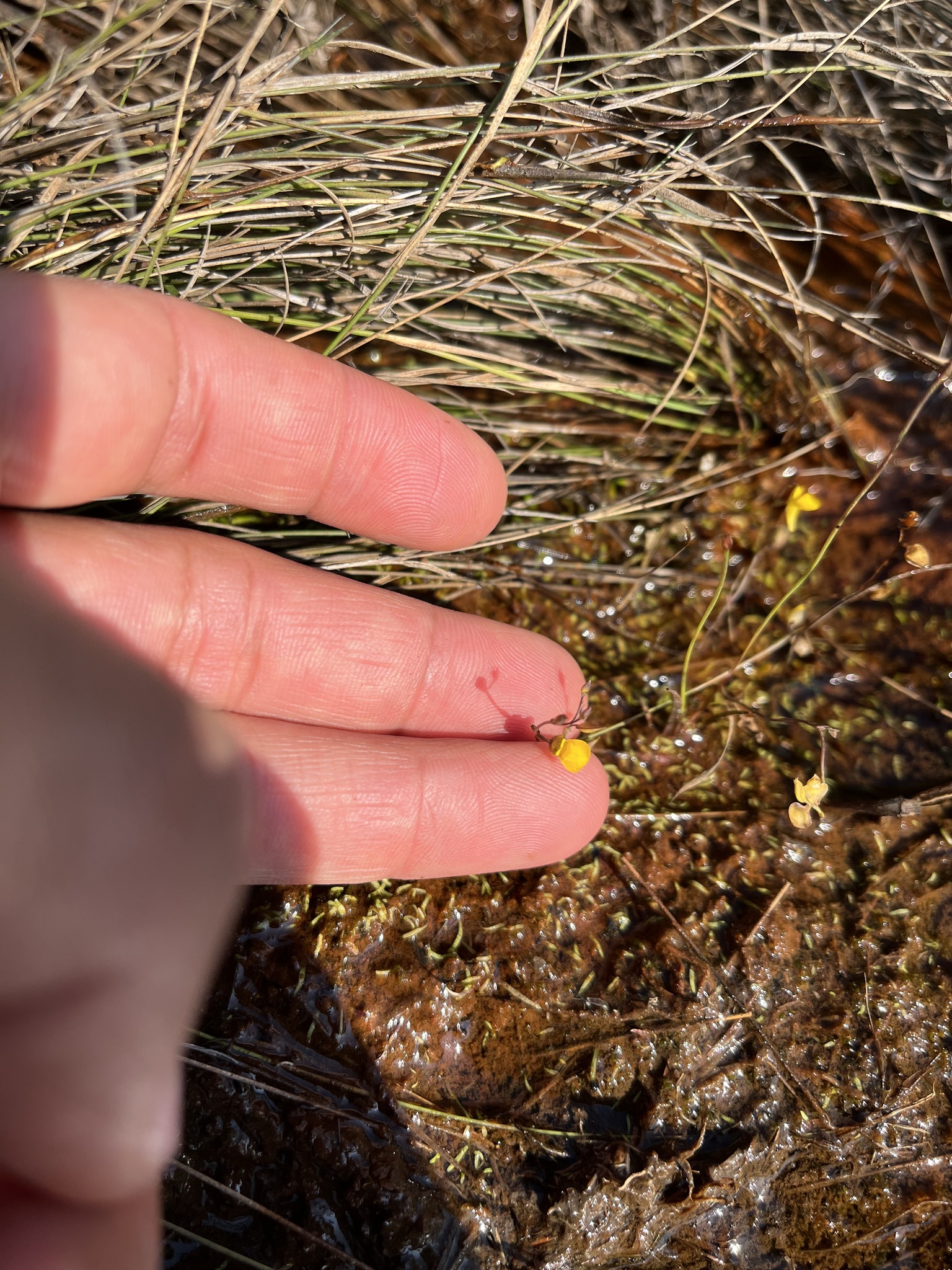
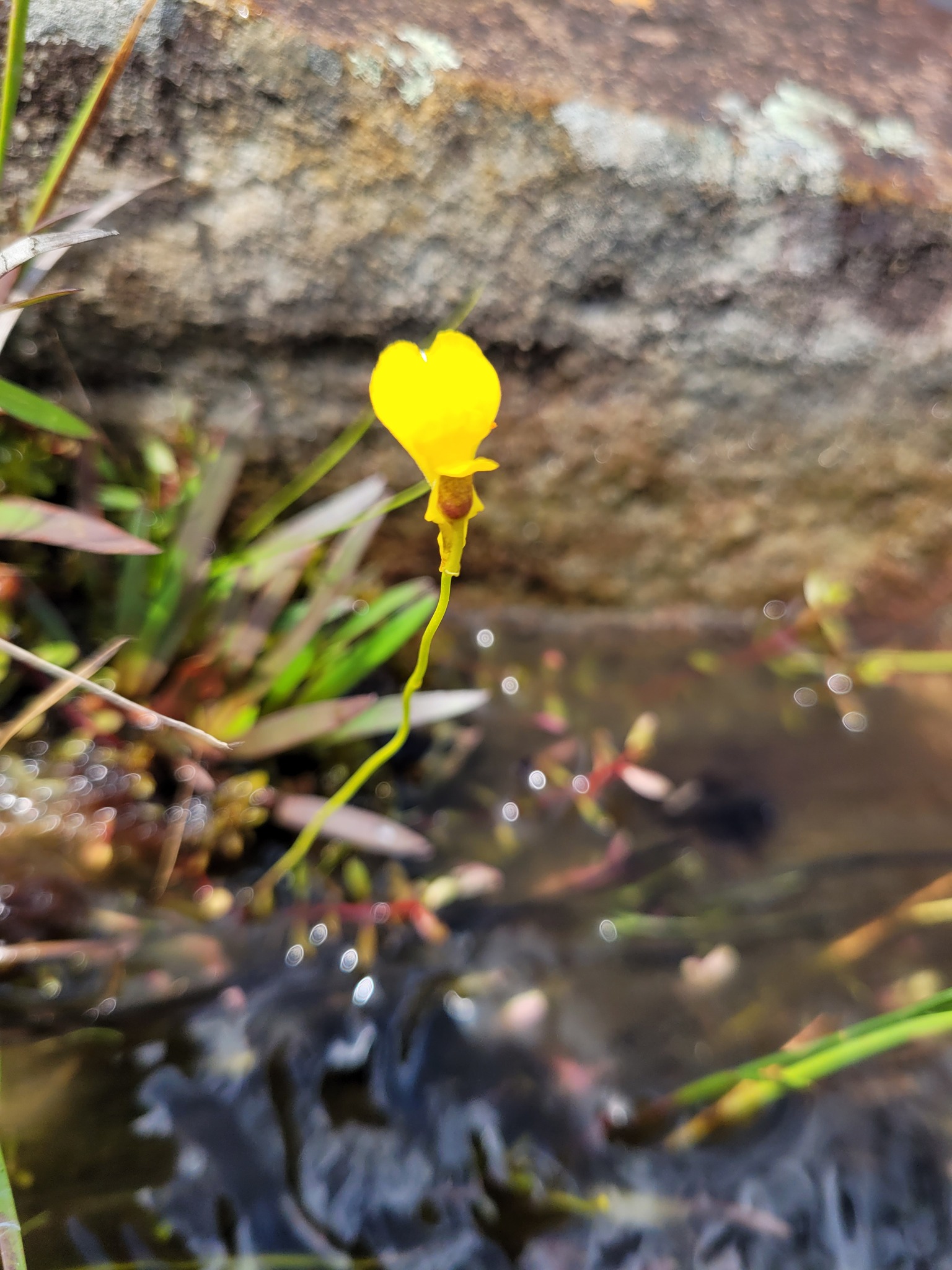
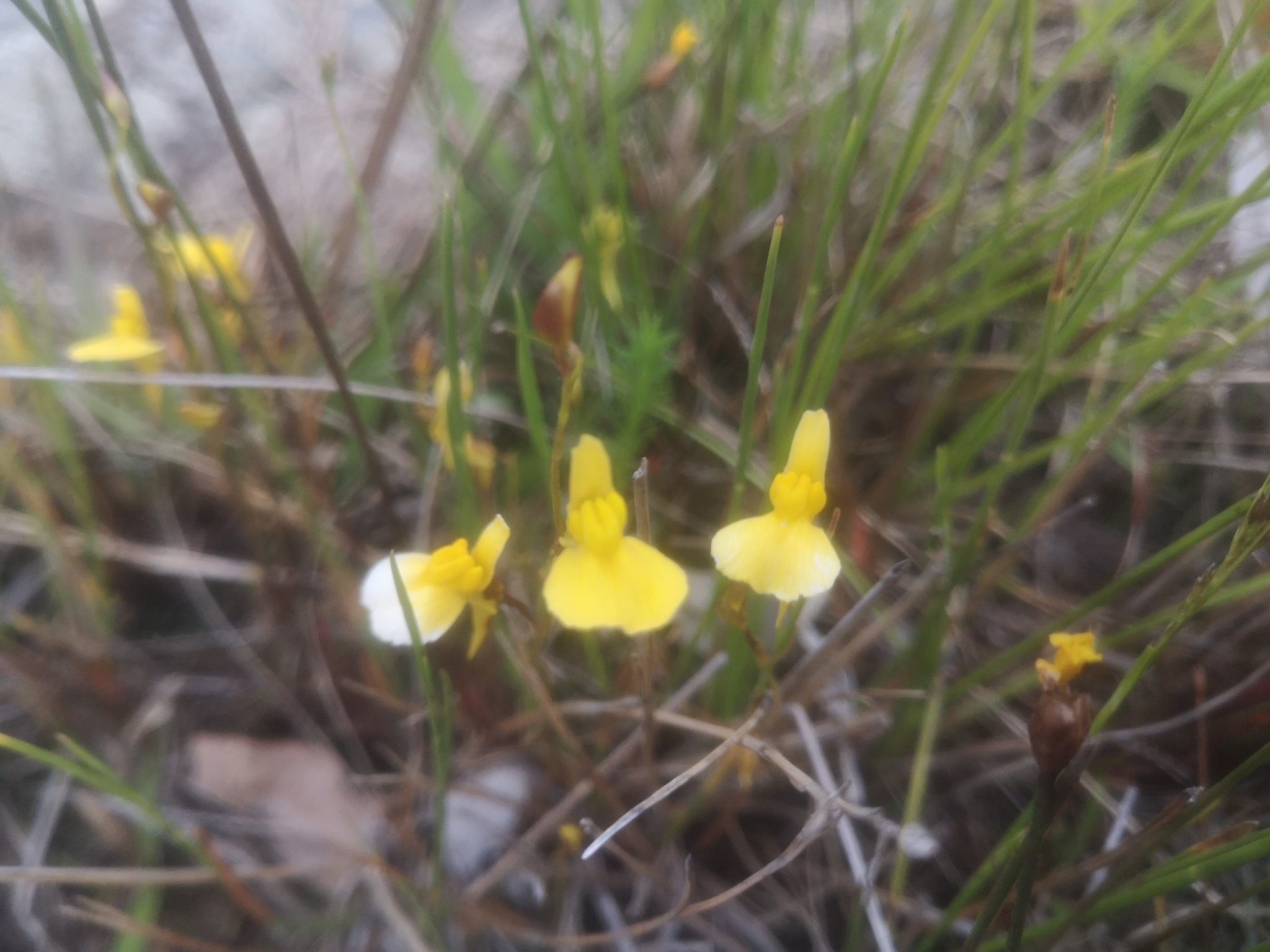
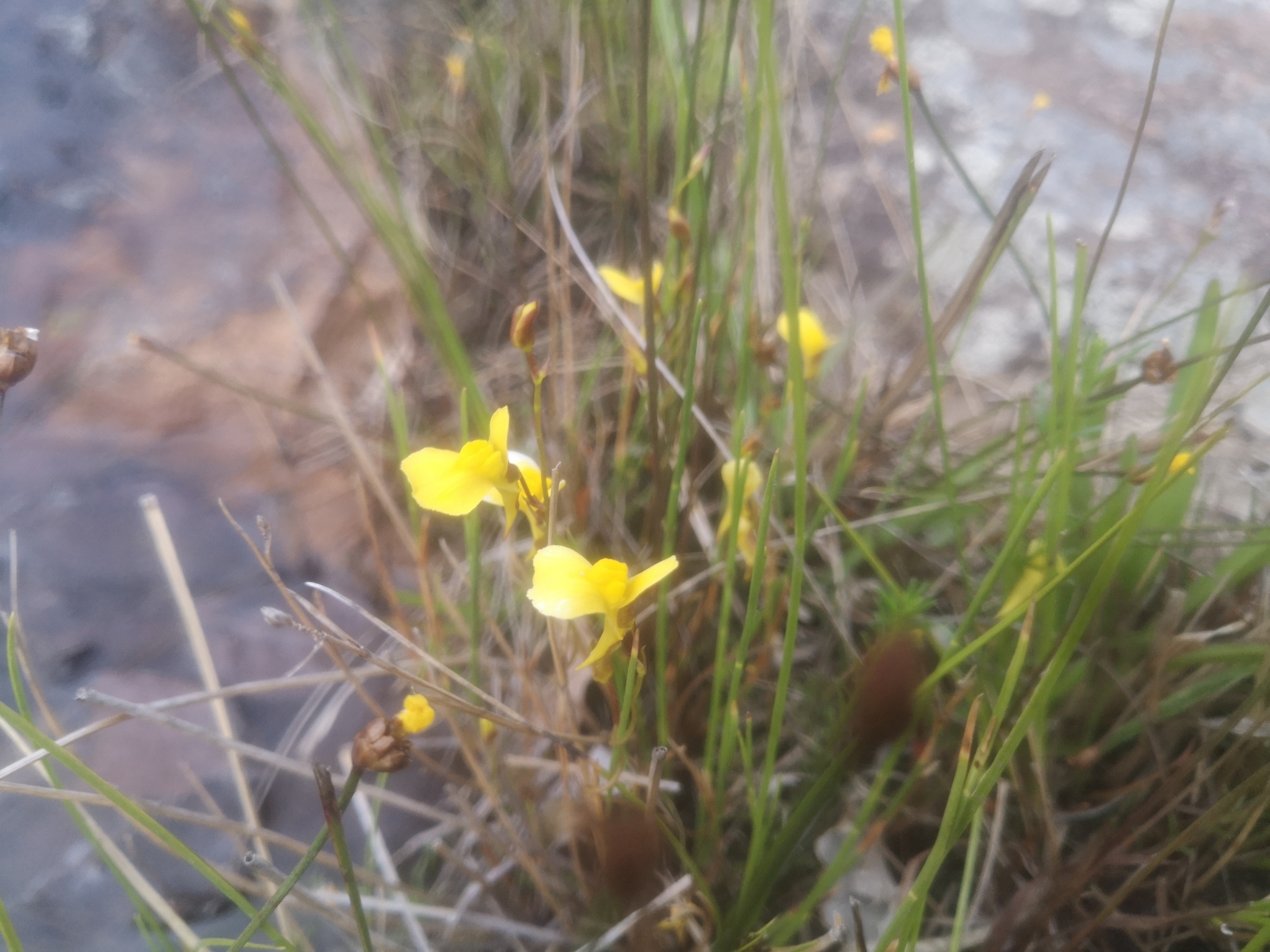
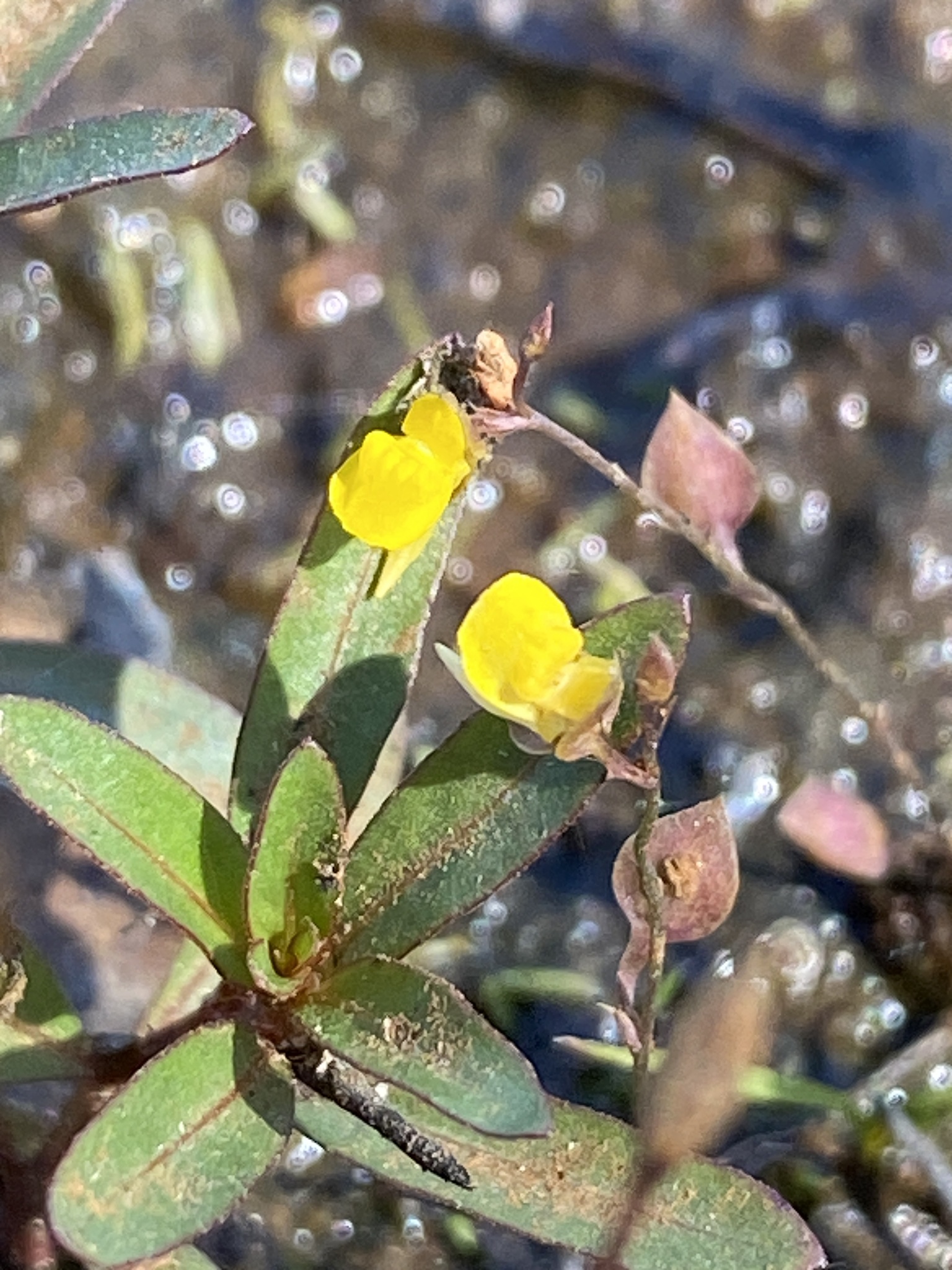
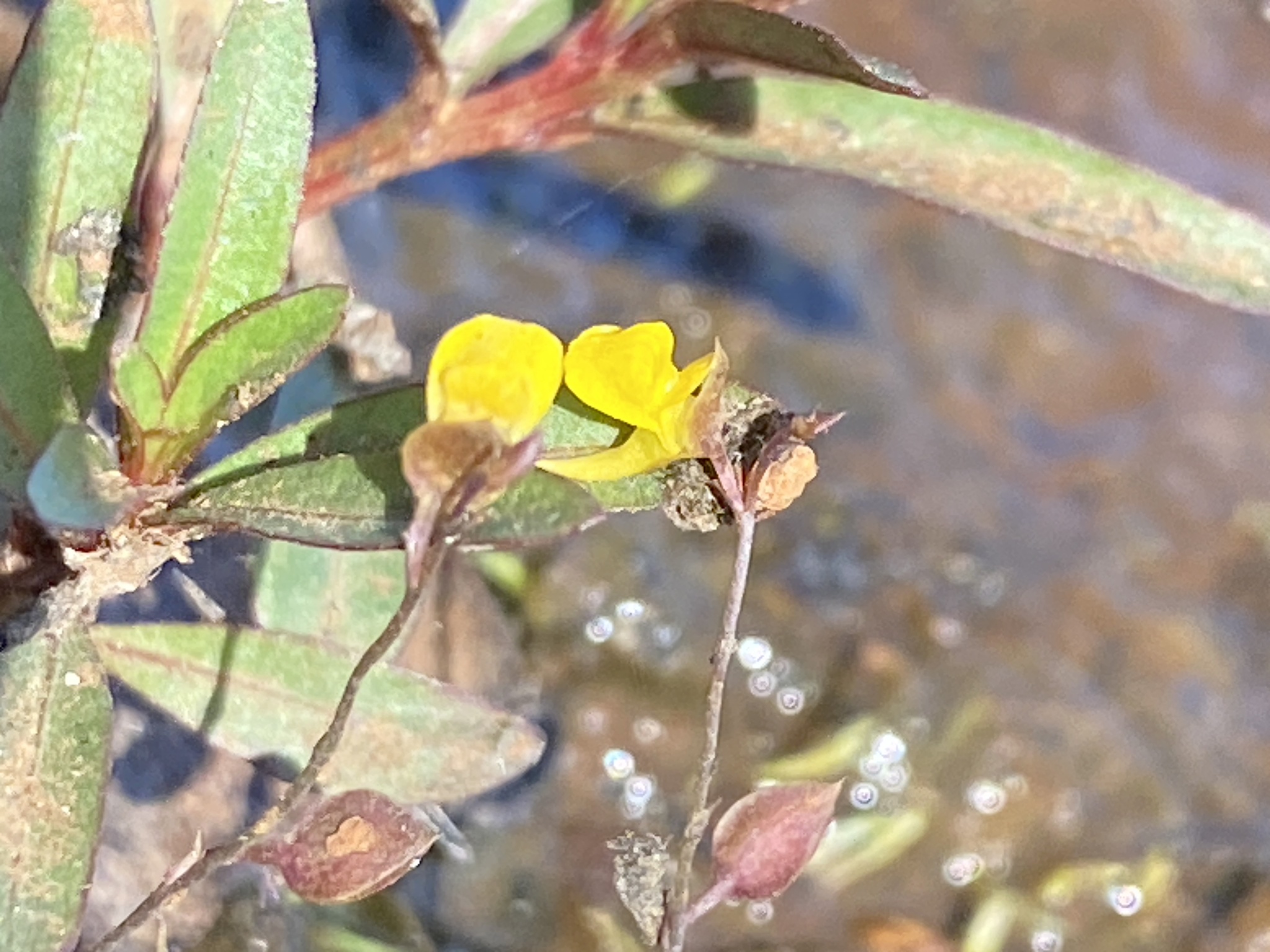
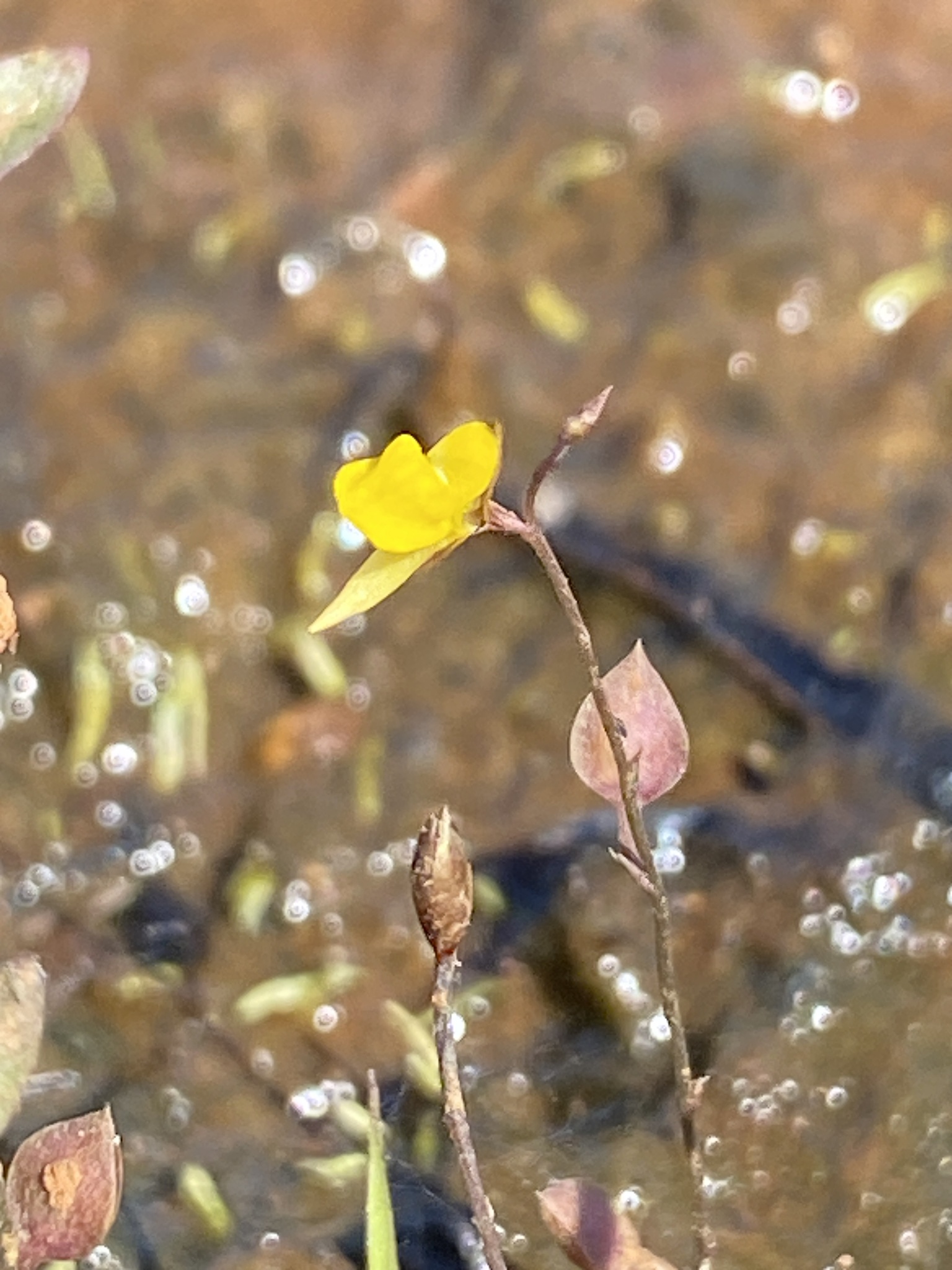
Small or sometimes very small, probably annual terrestrial. Rhizoids numerous, capillary, a few mm to a few cm long, c. 0.1 mm thick, bearing simple papillose branches up to 1.5 mm long. Stolons often numerous, capillary, sparsely branched, up to several cm long, c. 0.15 mm thick. Leaves few to many, petiolate, the lamina narrowly linear, with apex rounded or subacute, 0.5-1 mm wide, 1-nerved; total length up to 2 cm. Traps moderately numerous on the rhizoids, stolons and leaves, globose, shortly stalked, 0.5-1 mm long, the mouth basal with 2 dorsal, simple, subulate, glandular appendages and a single short to relatively long, truncate or apically ± bifid, glandular ventral appendage. Inflorescence erect or twining, solitary, simple, 3-35 cm long; peduncle somewhat angular, glabrous throughout or papillose below, 0.2-0.6 mm thick. Scales moderately numerous, similar to the bracts. Bracts basifixed, broadly ovate-deltoid, with apex acute or acuminate, 1-1.5 mm long. Bracteoles basifixed, narrowly linear or subulate, with apex acute, as long as or somewhat shorter than the bracts. Flowers 1-8, the raceme elongate and often bearing, on its axis, bracts subtending aborted or dormant buds alternating with those which subtend flowers; pedicels erect, filiform, relatively broadly winged, up to 1.5 cm long and 1 to 5 times as long as the flowering calyx. Calyx lobes subequal, the lower lobe slightly smaller, ovate, the upper lobe with apex acute or acuminate, the lower lobe with apex shortly and acutely bifid, 2-4 mm long at anthesis, up to 6 mm long in fruit. Corolla yellow, 0.5-1.5 cm long; upper lip constricted below the middle, the superior part oblong to transversely elliptic, with apex rounded or emarginate, the inferior part quadrate; lower lip limb circular or broadly obovate, the base distinctly swollen, with 2 or 4 rounded, longitudinal ridges, the apex rounded or obscurely 2-3 crenate; palate papillose; spur subulate, with apex acute, curved or straight, longer than and widely diverging from the lower lip. Filaments straight, c. 1 mm long, the anther thecae distinct. Ovary ovoid; style short; stigma lower lip semicircular, the upper lip similar but smaller. Capsule ovoid, dorsiventrally compressed, 2-2.5 mm long, the wall membranous, dehiscing by a single, ventral, longitudinal, marginally thickened slit. Seeds obliquely obovoid, c. 0.2 mm long, the testa cells elongate, with the anticlinal boundaries raised, straight or slightly sinuate, microscopically tuberculate, the periclinal walls concave, microscopically tuberculate. Collected in flower more or less throughout the year but probably mostly during and immediately after the wet season. From: Taylor, PG. 1989. The genus Utricularia- a taxonomic monograph. Kew Bull., Addit. Ser. 14: 1-736. [All rights reserved]
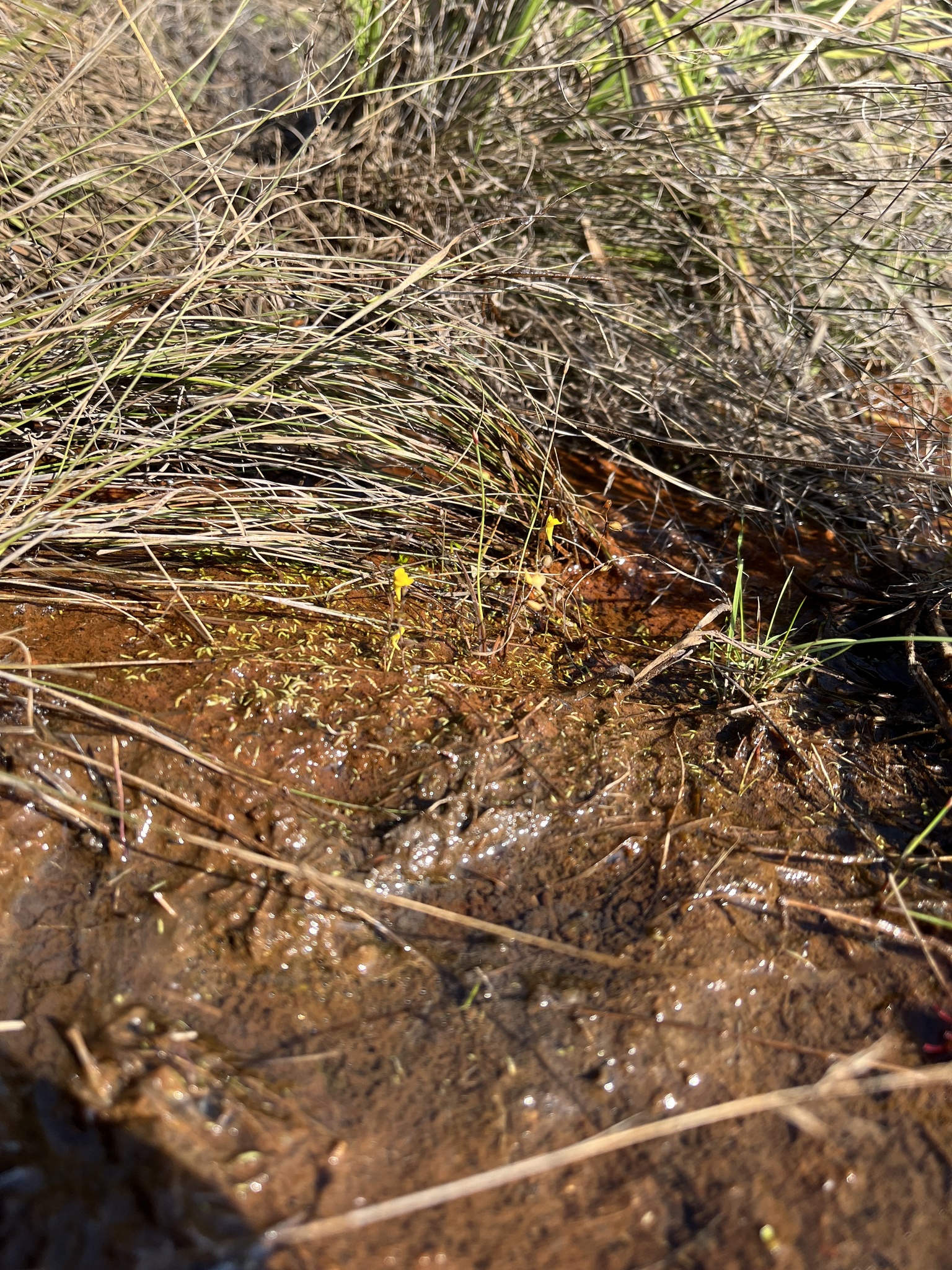
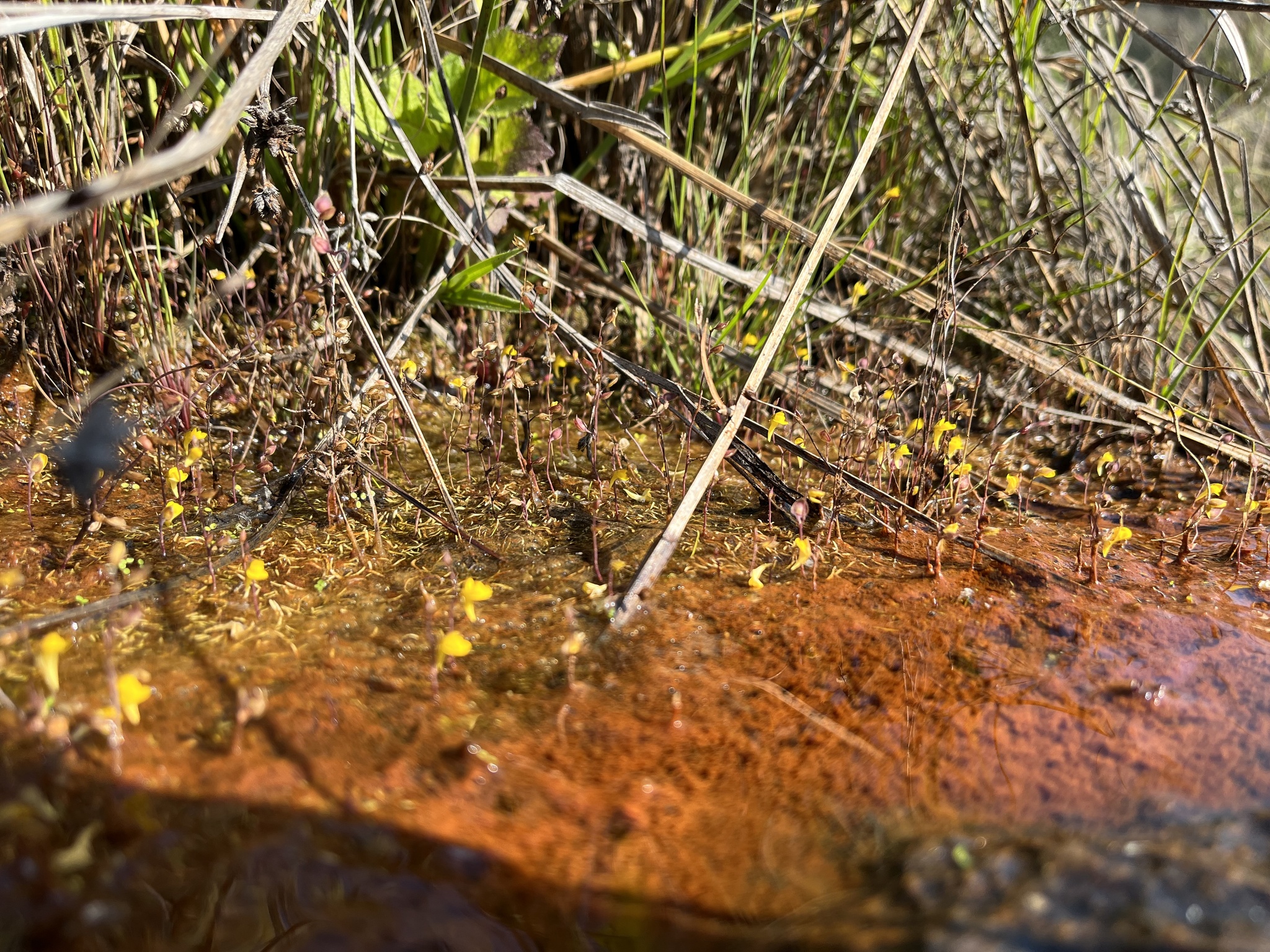
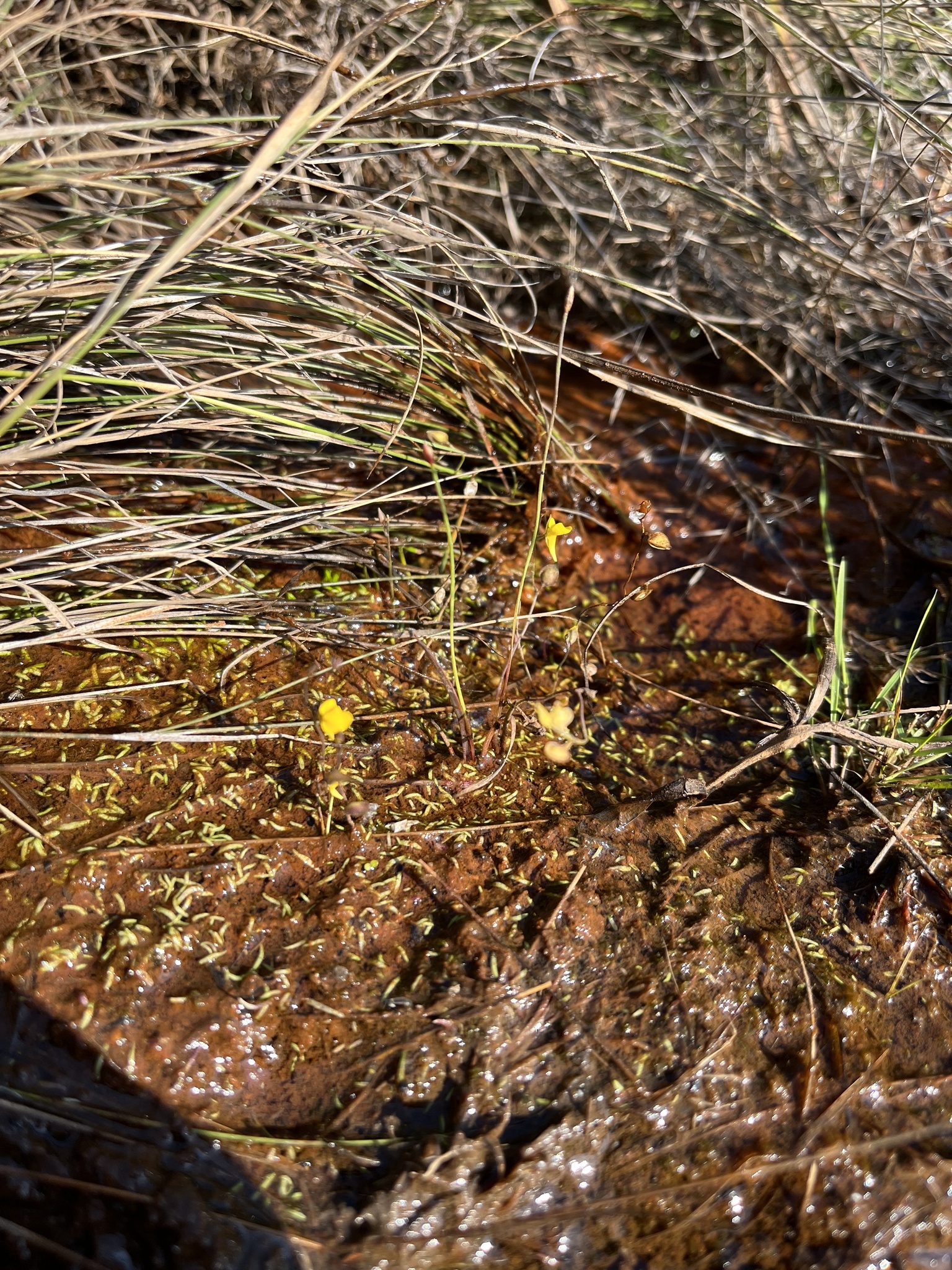
Bogs and wet grassland from near sea level to 2300 m alt. From: Taylor, PG. 1989. The genus Utricularia- a taxonomic monograph. Kew Bull., Addit. Ser. 14: 1-736. [All rights reserved]
Old World tropics: Africa (Guinée, Côte d’Ivoire, Nigeria, Cameroun, Zaïre, Central African Republic, Sudan, Ethiopia, Tanzania, Moçambique, Malawi, Zimbabwe, Zambia, Angola, Transvaal), Madagascar, India ([Maharashtra], Uttar Pradesh, Andhra Pradesh, Bihar, Orissa, Madhya Pradesh, Karnataka, Tamil Nadu, Kerala), Bangladesh, Ceylon, Nepal, Burma, Thailand, Vietnam, China (Yunnan, Guizhou), Peninsular Malaysia, New Guinea and Aru Island. From: Taylor, PG. 1989. The genus Utricularia- a taxonomic monograph. Kew Bull., Addit. Ser. 14: 1-736. [All rights reserved]
0 to 900 m
This map contains point-based occurrences at different locations
Occurrence in the Flora of Southern Africa (FSA) countries and South African provinces. Residence status indicates if a taxon is indigenous, endemic, naturalised or invasive in a specific region. This data is based on specimen records and literature
FSA
SA
BOT
NAM
ESW
LES
WC
EC
NC
FS
GA
KZN
LP
MP
NW
Absent
Indigenous
Endemic
Naturalised
Invasive

Names and Sources
Utricularia gibbsiae Stapf
Classification
KINGDOM Plantae
SUBKINGDOM Phanerogamae
PHYLUM Anthophyta
ORDER Lamiales
FAMILY Lentibulariaceae
GENUS Utricularia
SPECIES scandens
12 results for Utricularia scandens Benj.
Barcode: PRE0115059-0 Collector(s) & number: Breijer, HG, TRV 17918 | 1917-12-
South Africa, Mpumalanga, NELSPRUIT
Data Resource: BODATSA View record
Barcode: PRE0534616-0 Collector(s) & number: Smith, PA, 1461 | 1975-10-2
Botswana, NORTHERN DIST.; AT THE EASTERN END OF XAENGA ISLAND.
General notes: IN BARE SOIL AT RECEDING WATERS EDGE AT A GAME CROSSING IN THE PERMANENT SWAMPS.
Data Resource: BODATSA View record
Barcode: PRE0518439-0 Collector(s) & number: Smith, PA, 1772 | 1976-9-14
Botswana, NORTHERN ISLAND; GIDIBA ISLAND; JAO
Data Resource: BODATSA View record
Barcode: PRE0118475B-0 Collector(s) & number: Rogers, FA, 27285 | 1921-11-
South Africa, Western Cape, KNYSNA DIV.
Data Resource: BODATSA View record
Barcode: PRE0611195-0 Collector(s) & number: Kluge, JP, 2273 | 1980-5-2
South Africa, Mpumalanga, NELSPRUIT; LAEVELD BOT. TUIN
General notes: VLEIERIGE DELE OP GRANIETPLATE TUSSEN BIESIES.
Data Resource: BODATSA View record
This map contains point-based occurrences at different locations
1989
PERIODICAL/JOURNAL
The genus Utricularia- a taxonomic monograph Taylor, PGKew Bulletin. Additional Series 14: 1-736
1973
FLORA
Lentibulariaceae Taylor, PGFlora of Tropical East Africa Lentibulariaceae: 1-26
Crown Agents, London
No results found for Utricularia scandens Benj.
Status and criteria
NE
Assessor(s)
Plantae Coordinator
| Part(s) of plant used | Use(s) | Reference |
|---|
Coming soon...