
PLANTAE / PHANEROGAMAE / ANTHOPHYTA / ASPARAGALES / AMARYLLIDACEAE / HAEMANTHEAE / CLIVIA / MIRABILIS

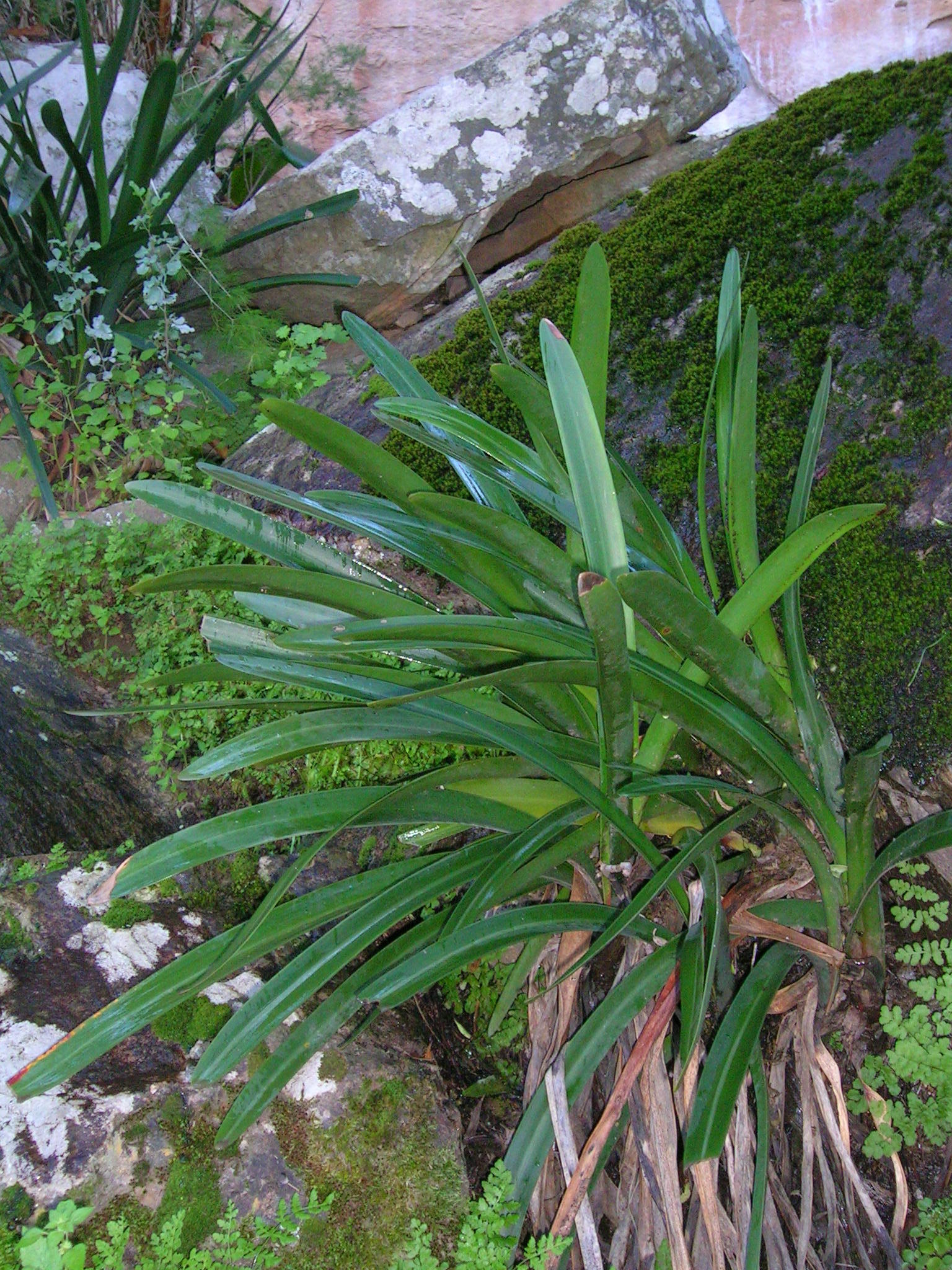
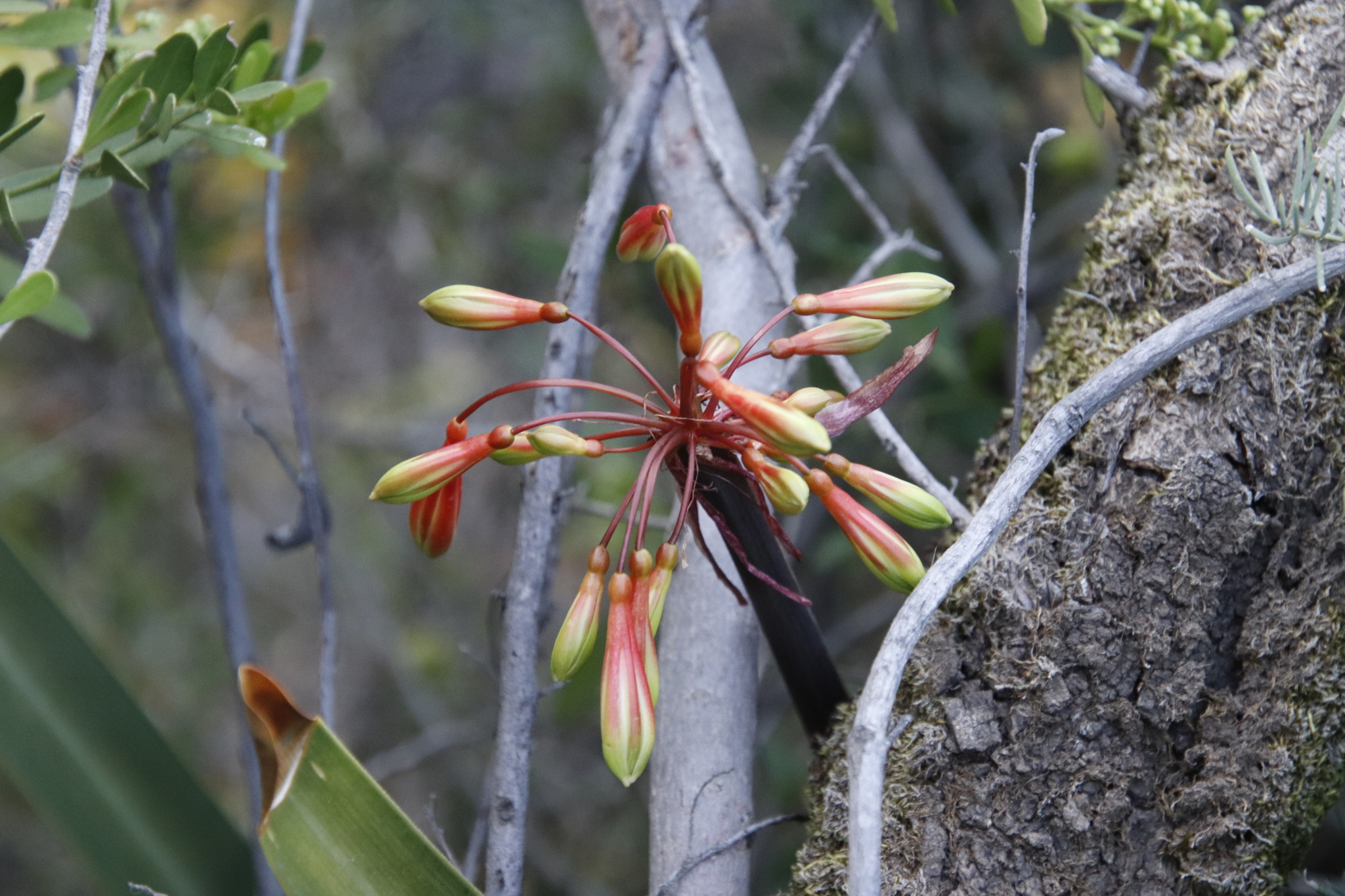
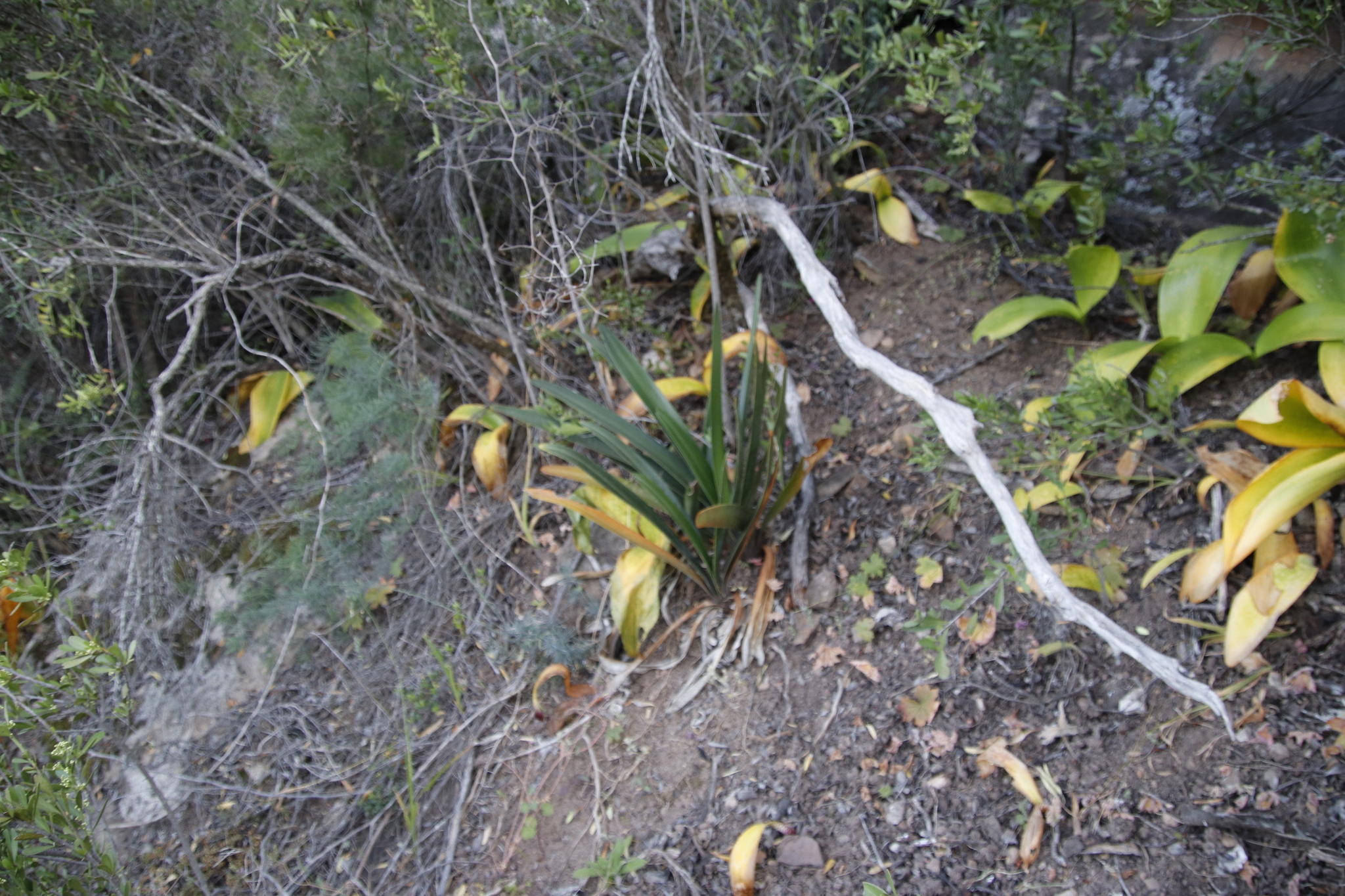
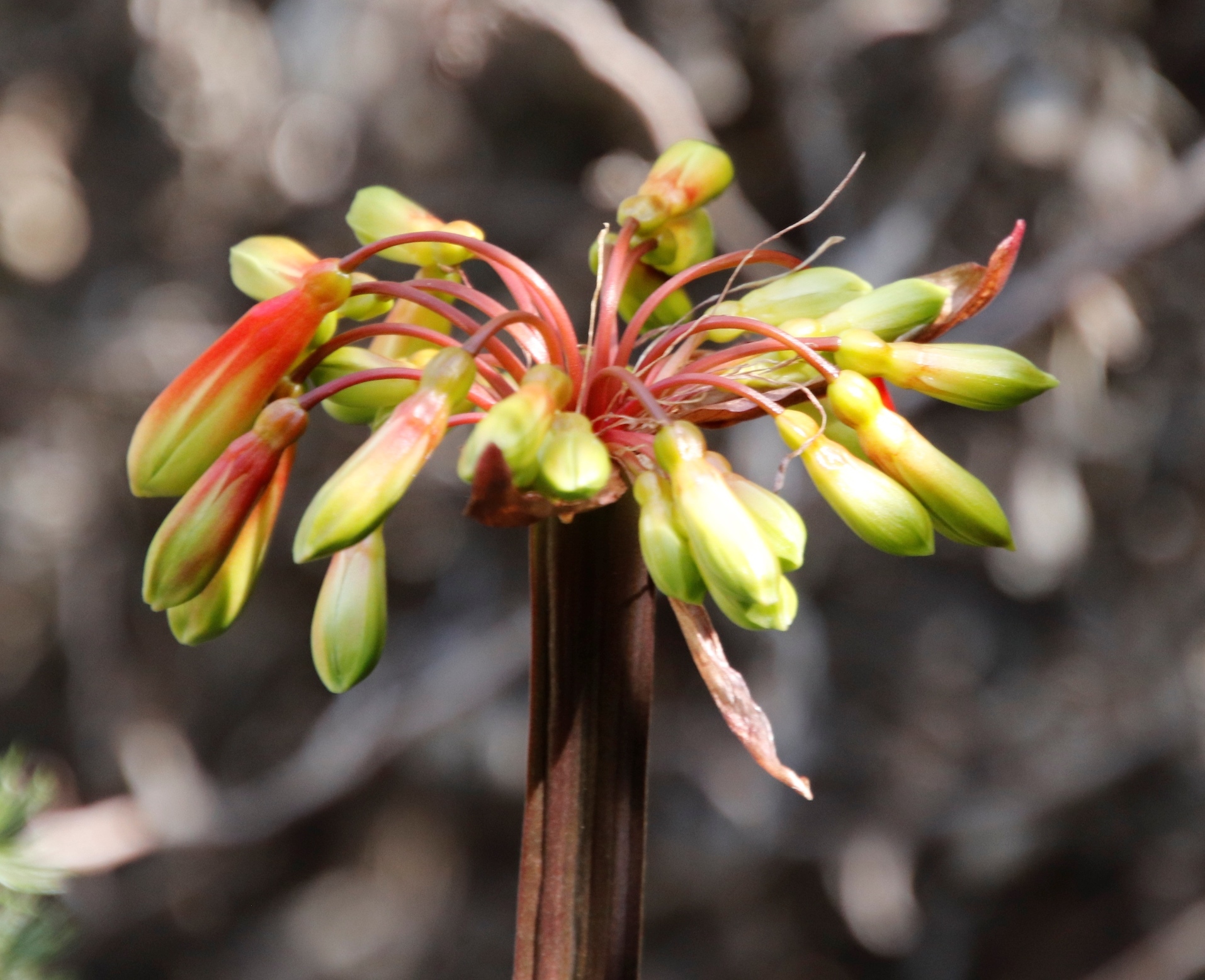
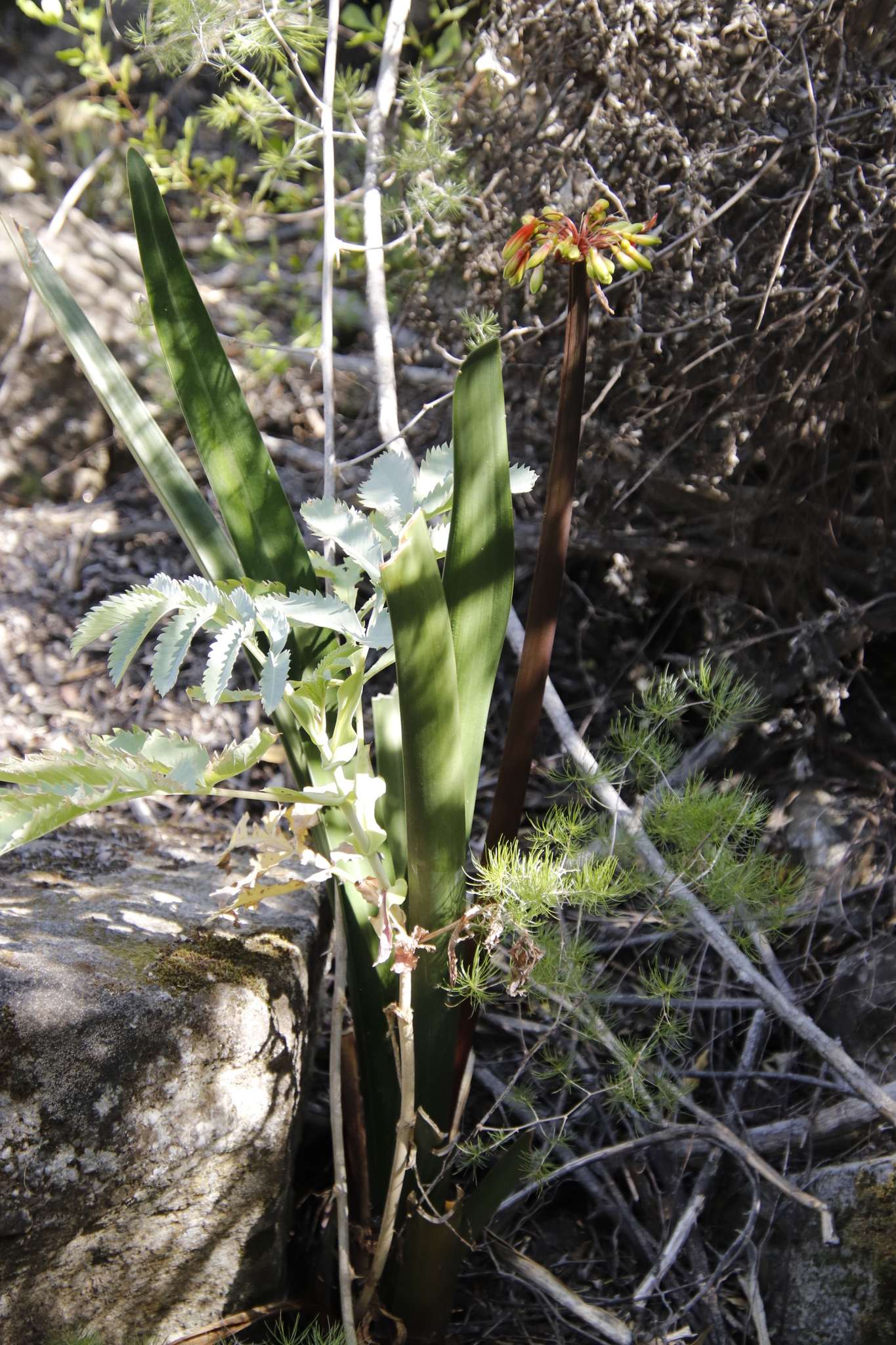
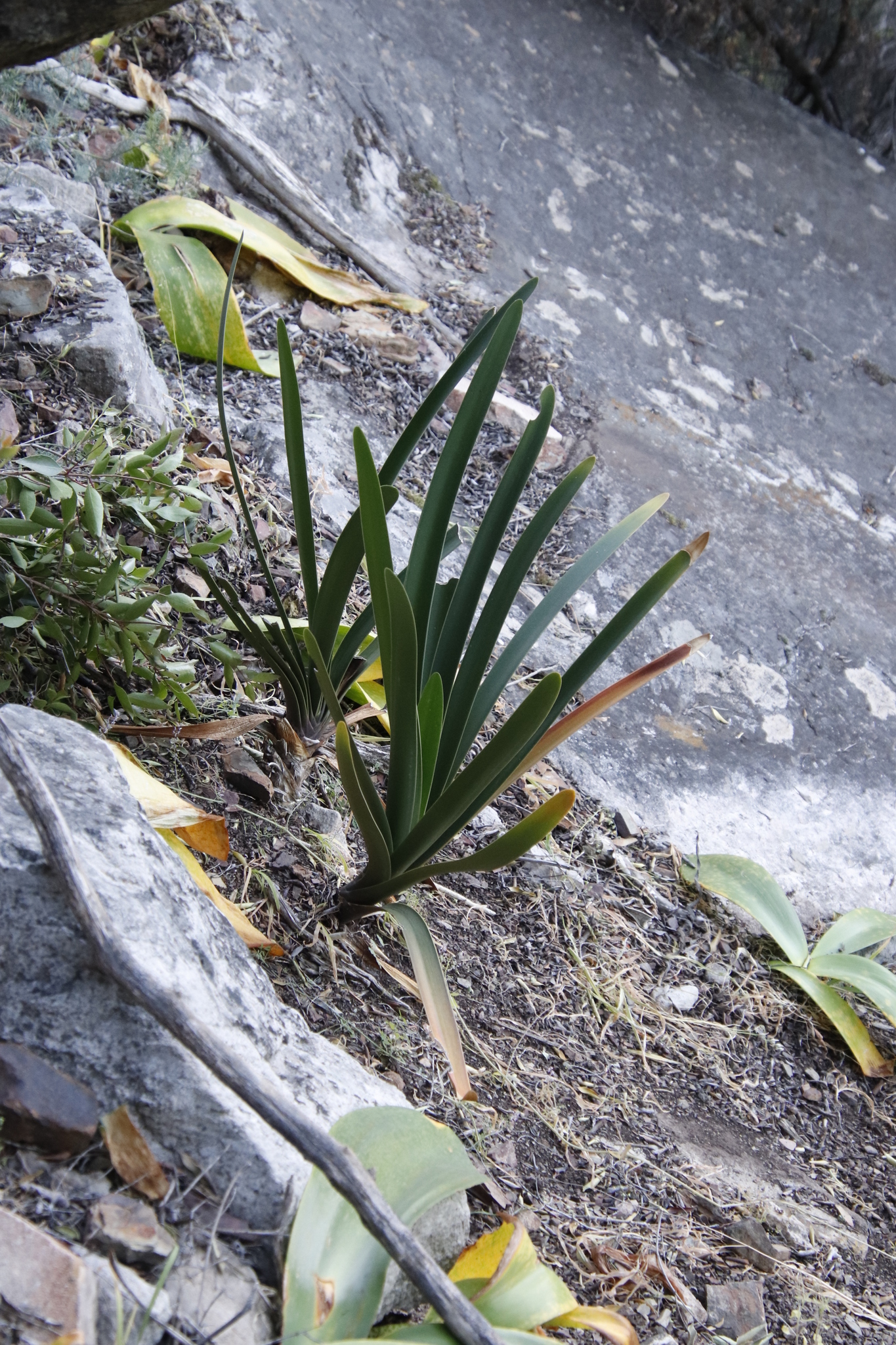
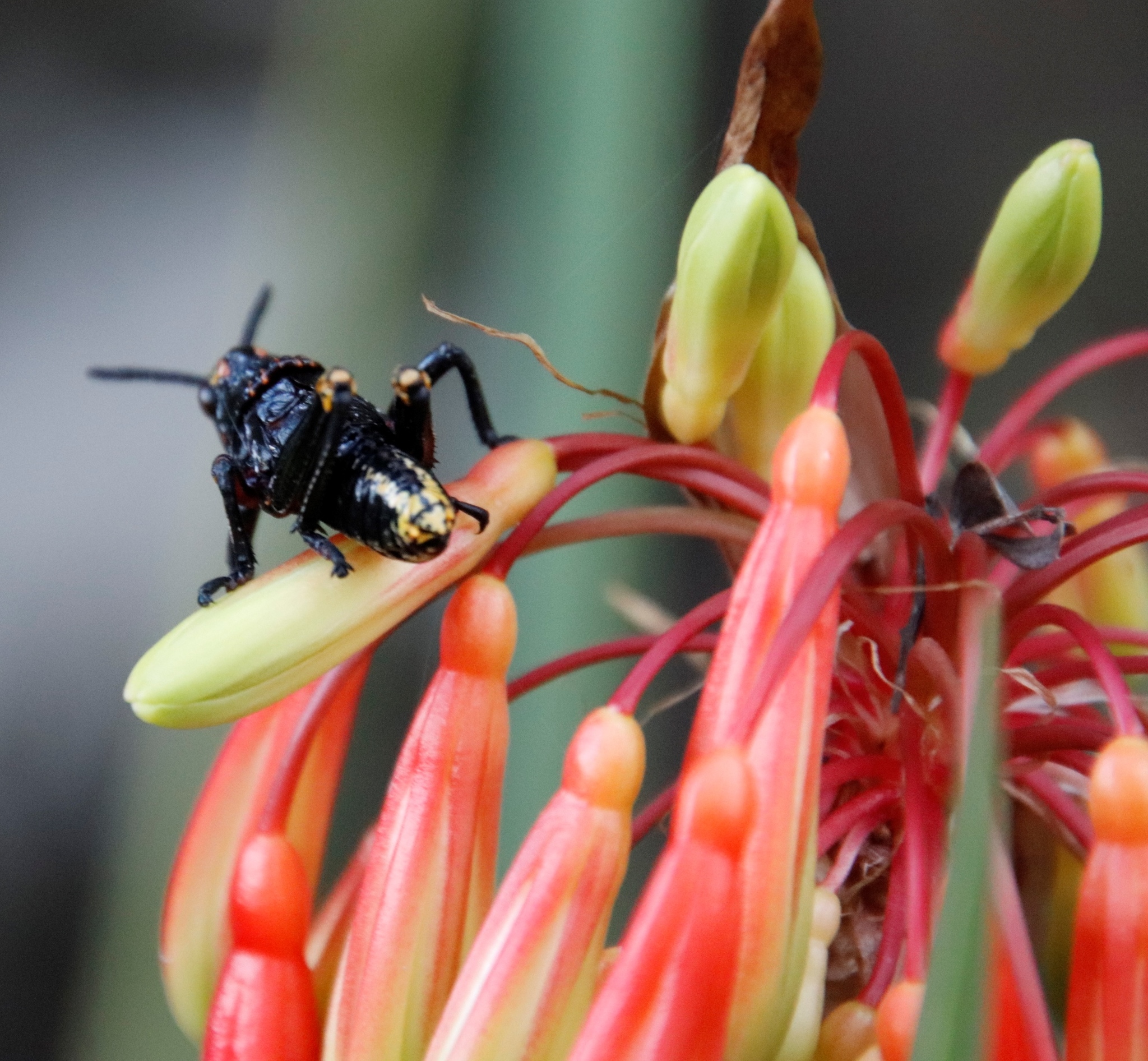
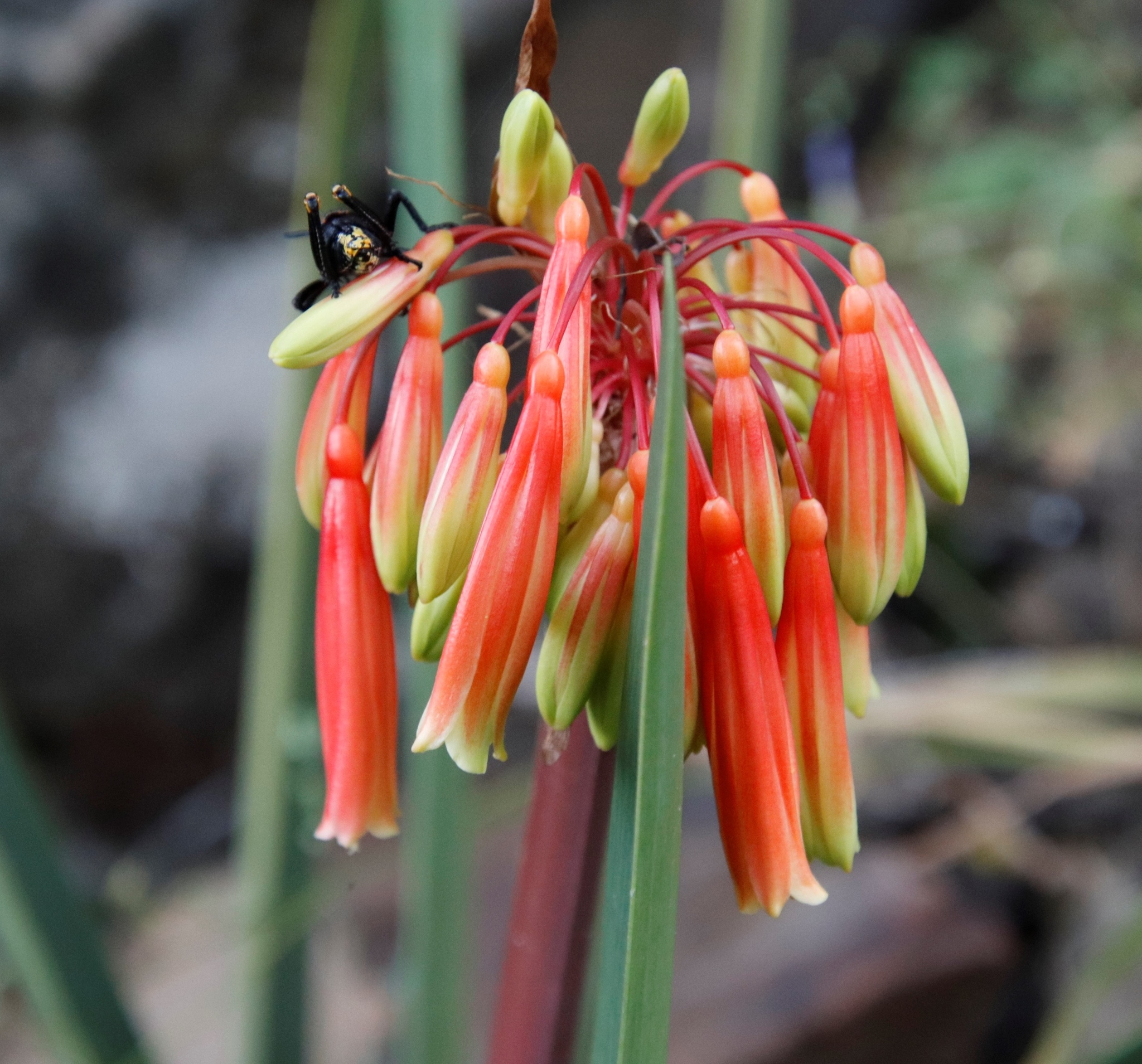
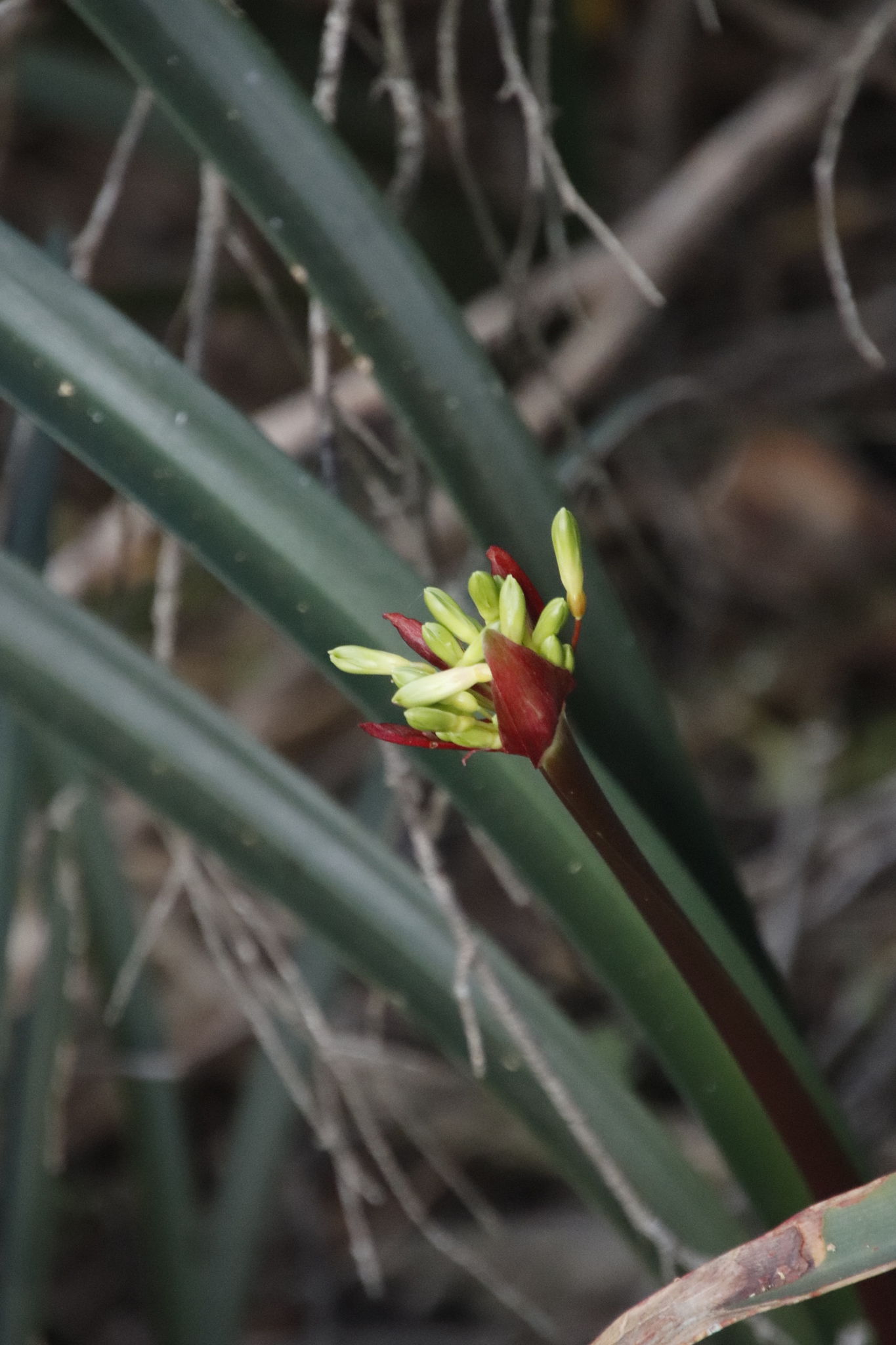
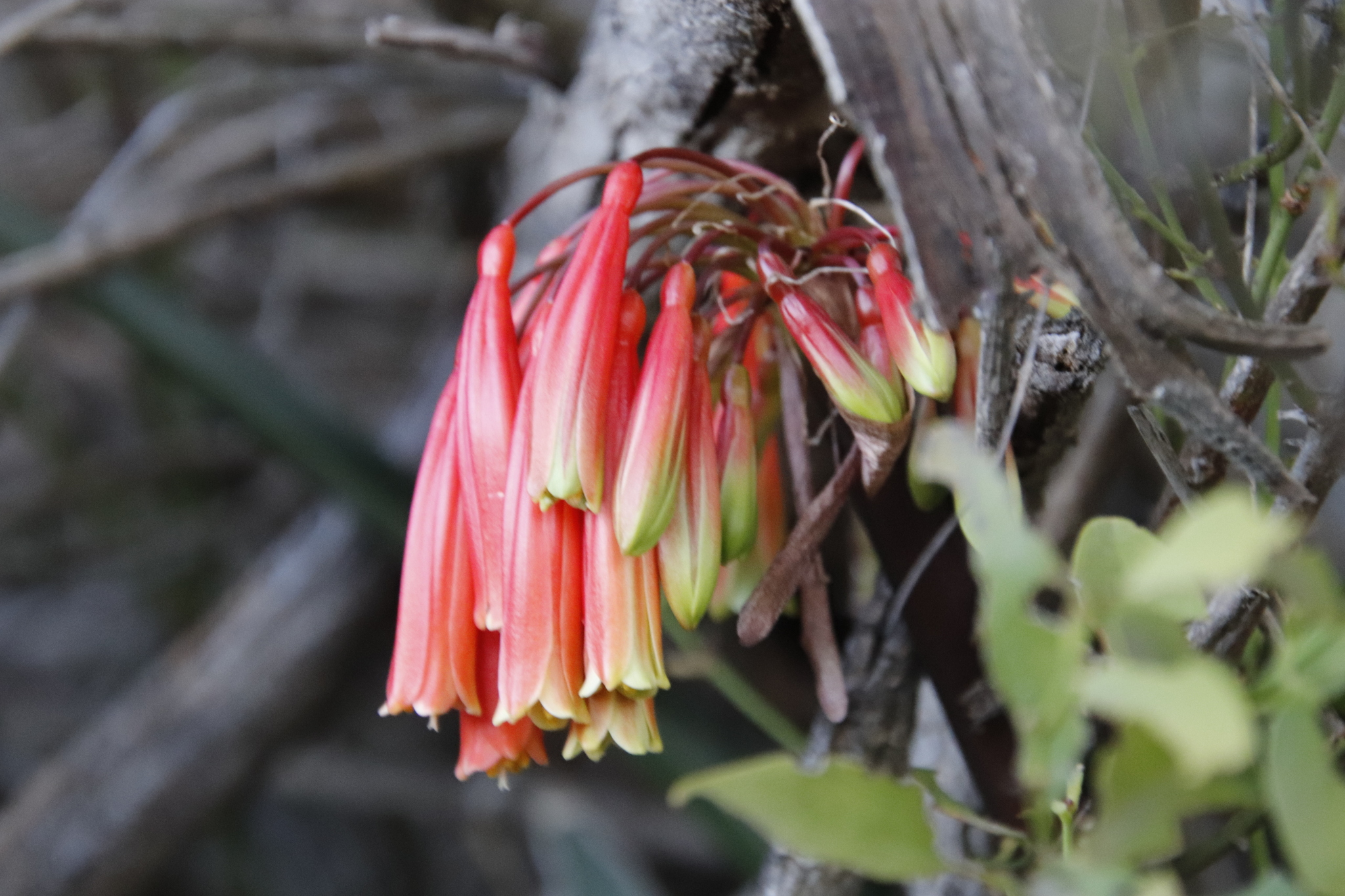
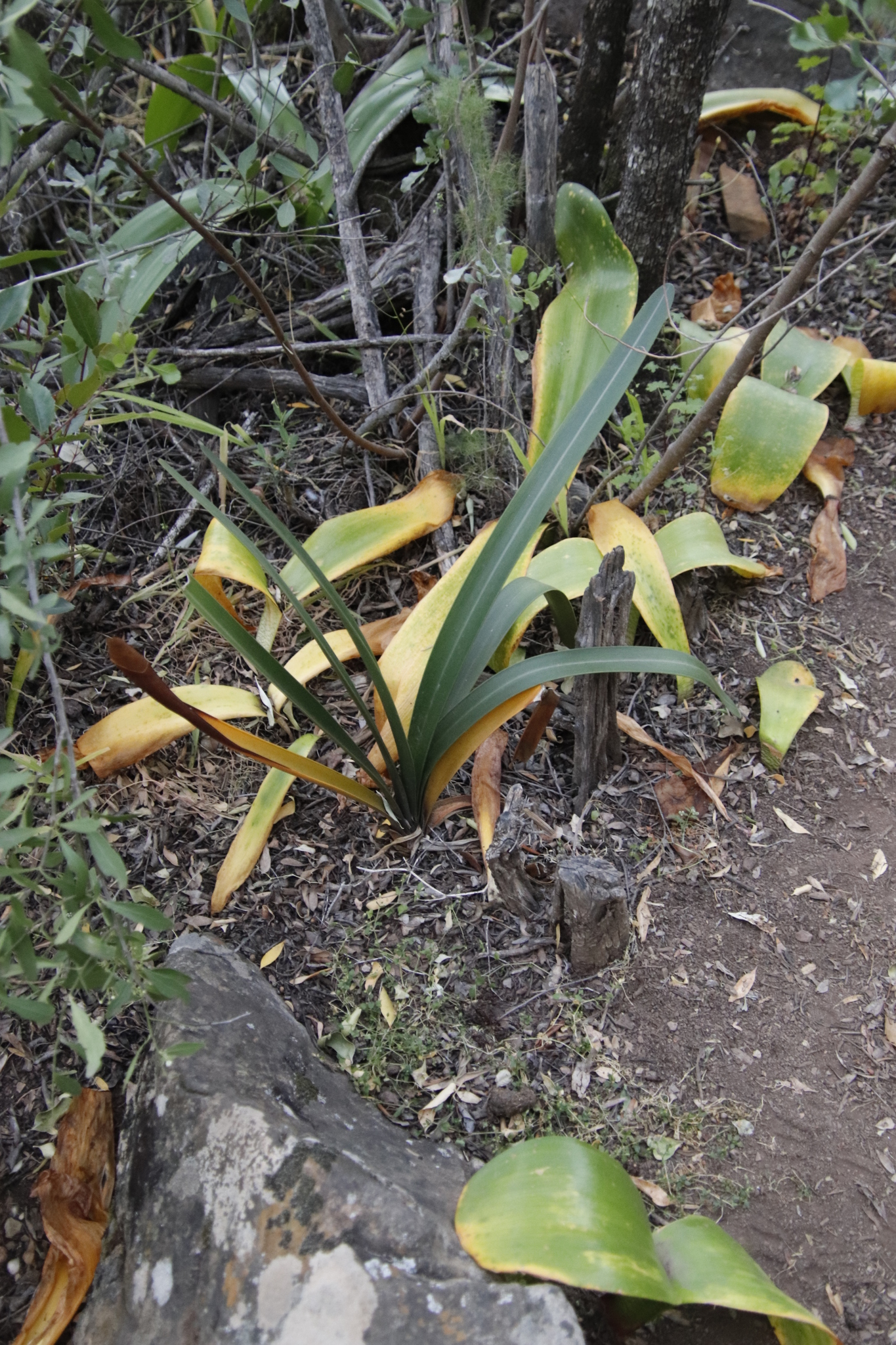
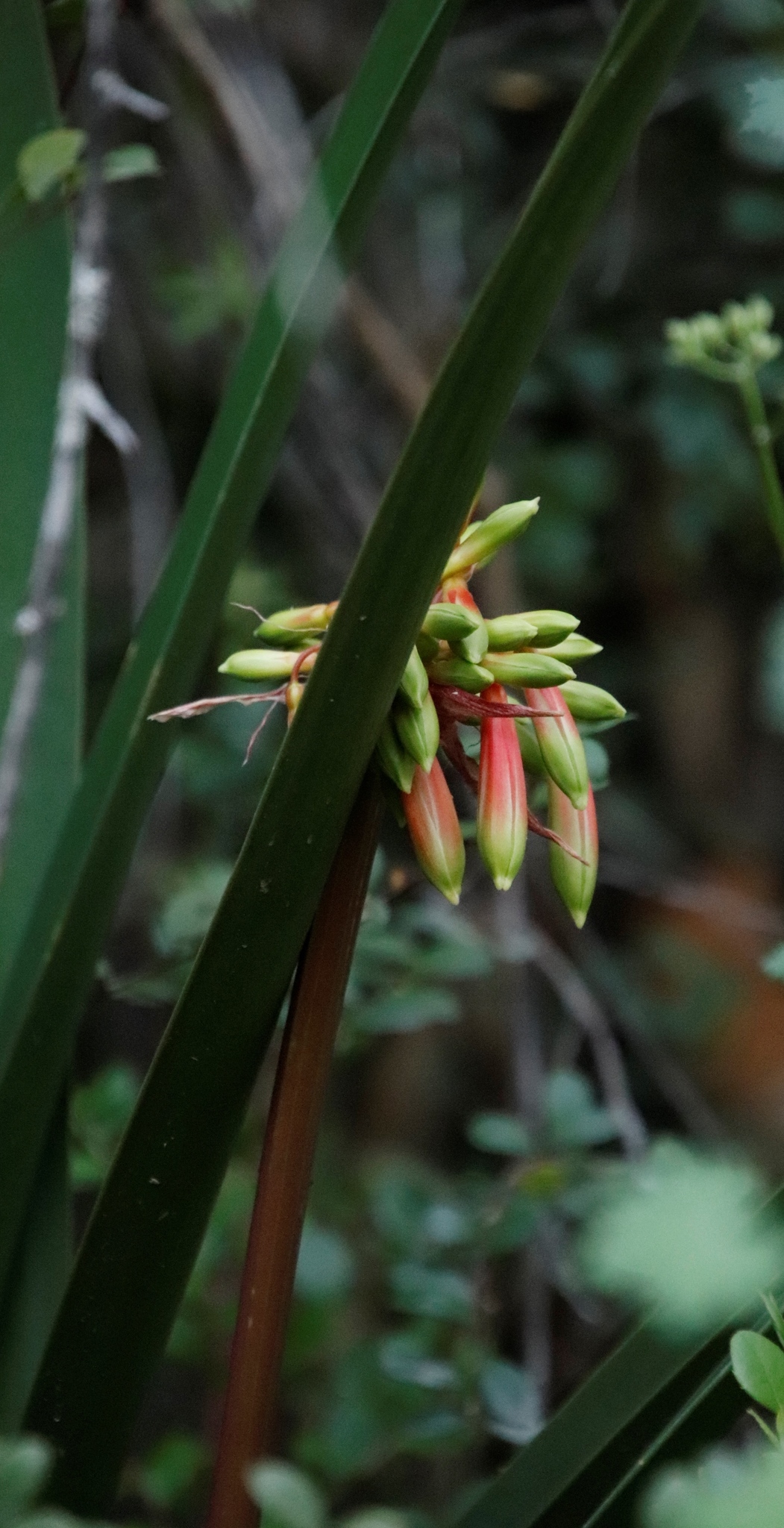
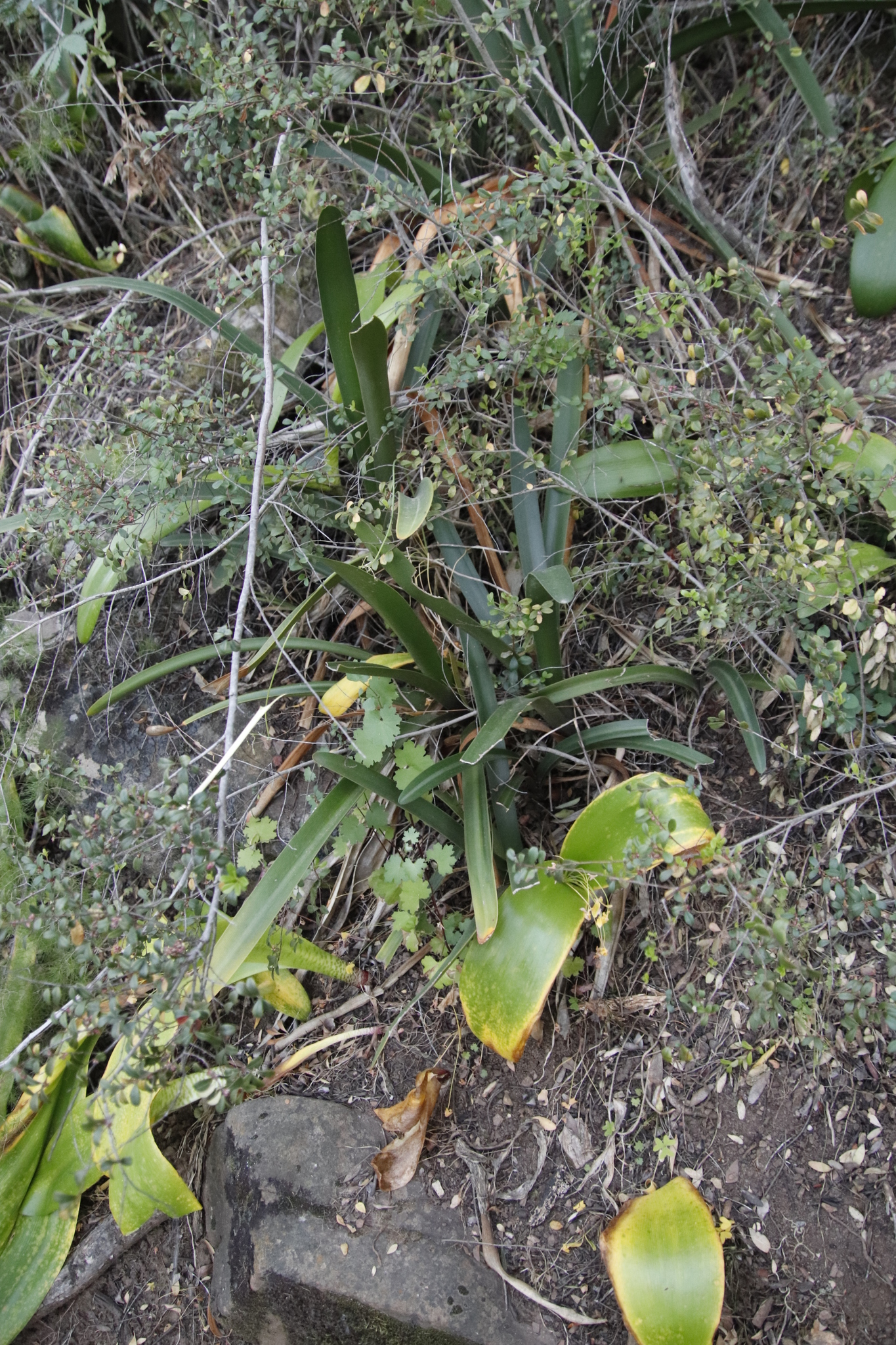
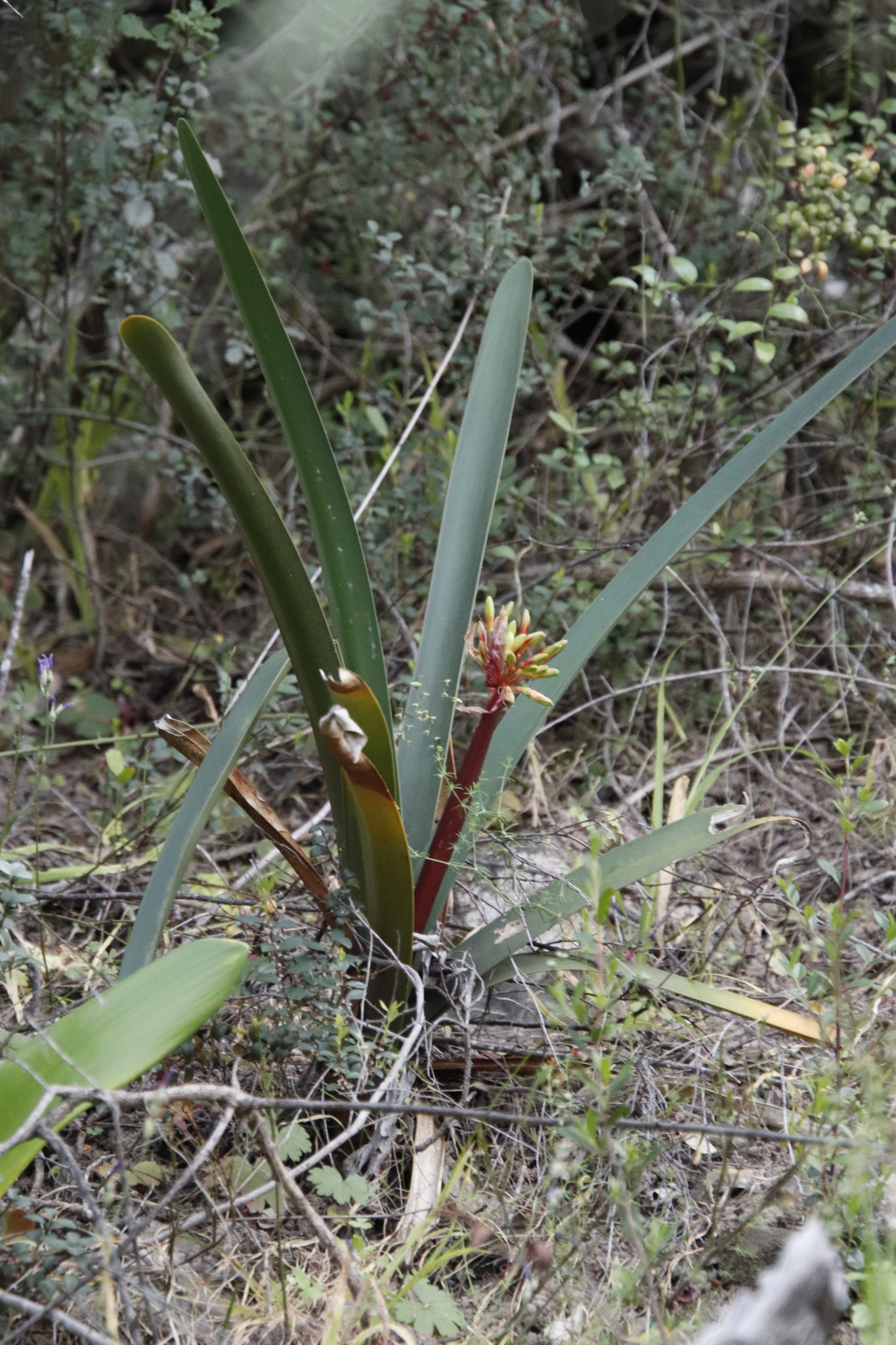
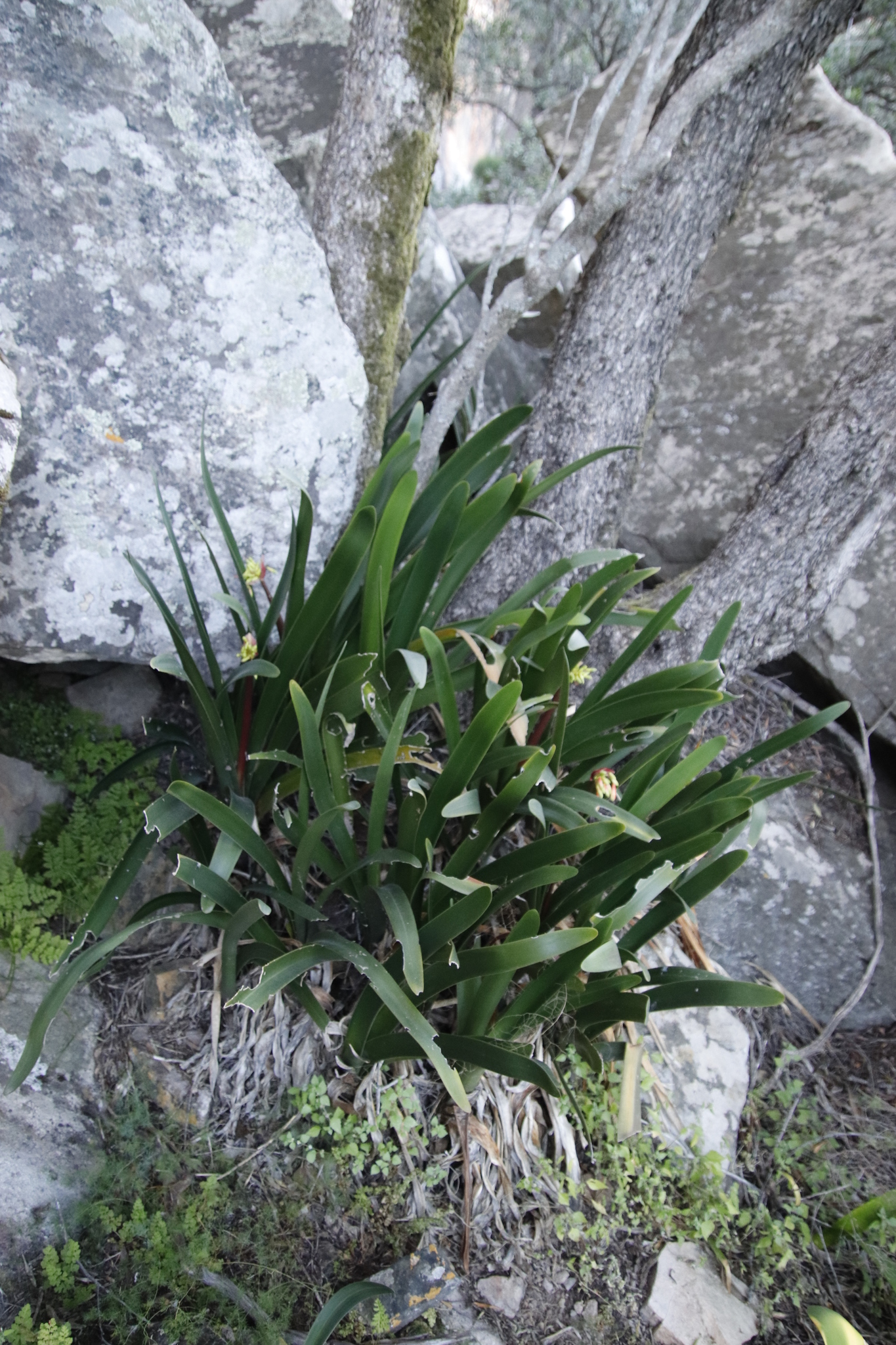
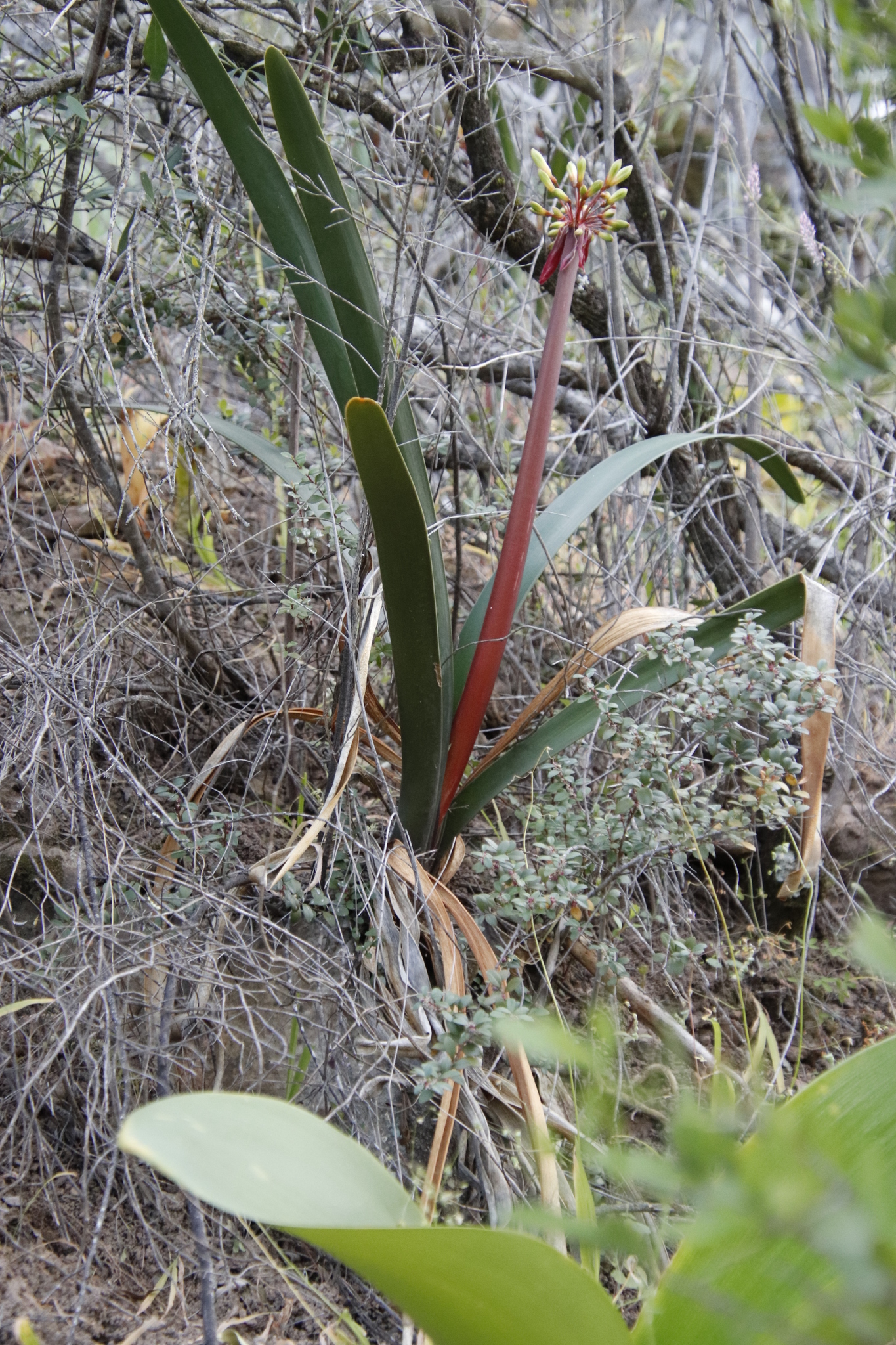
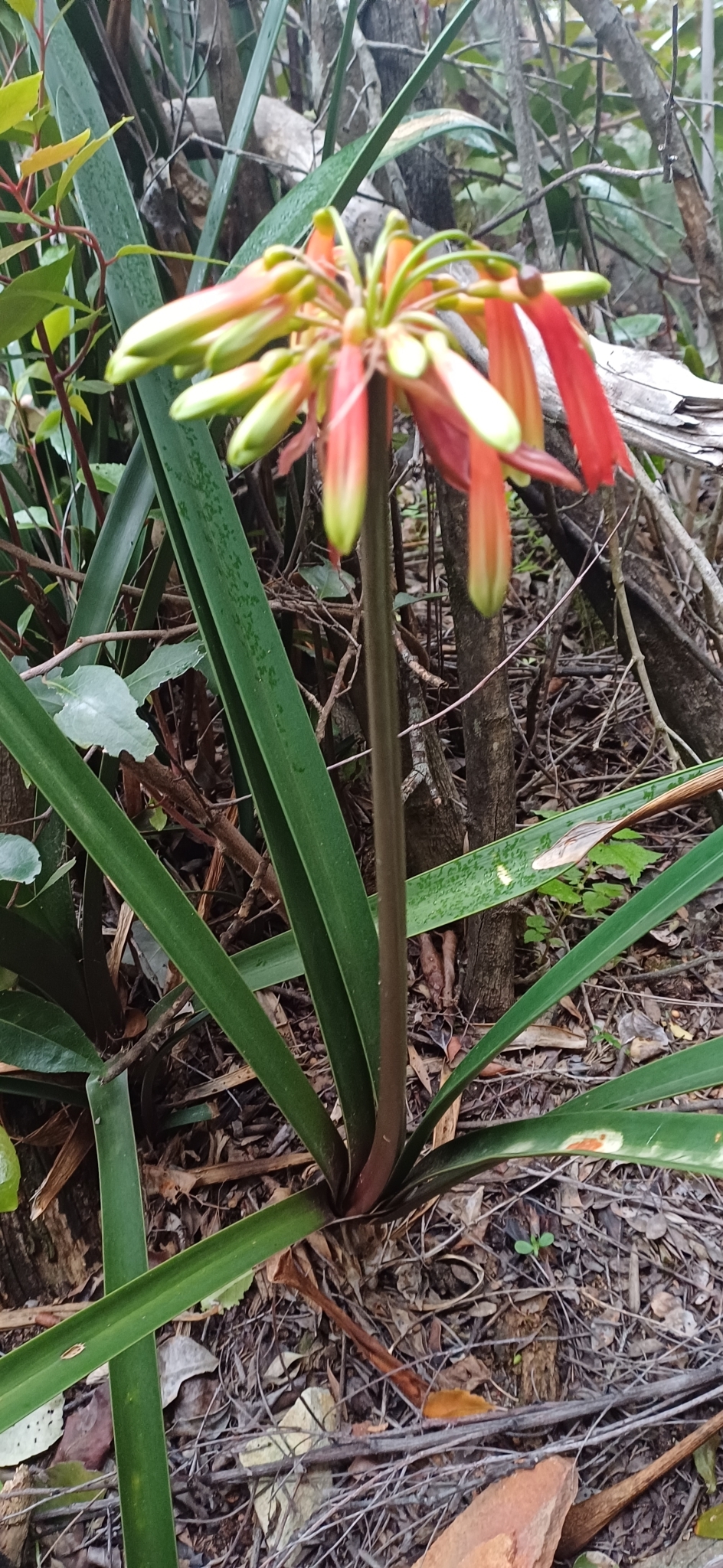
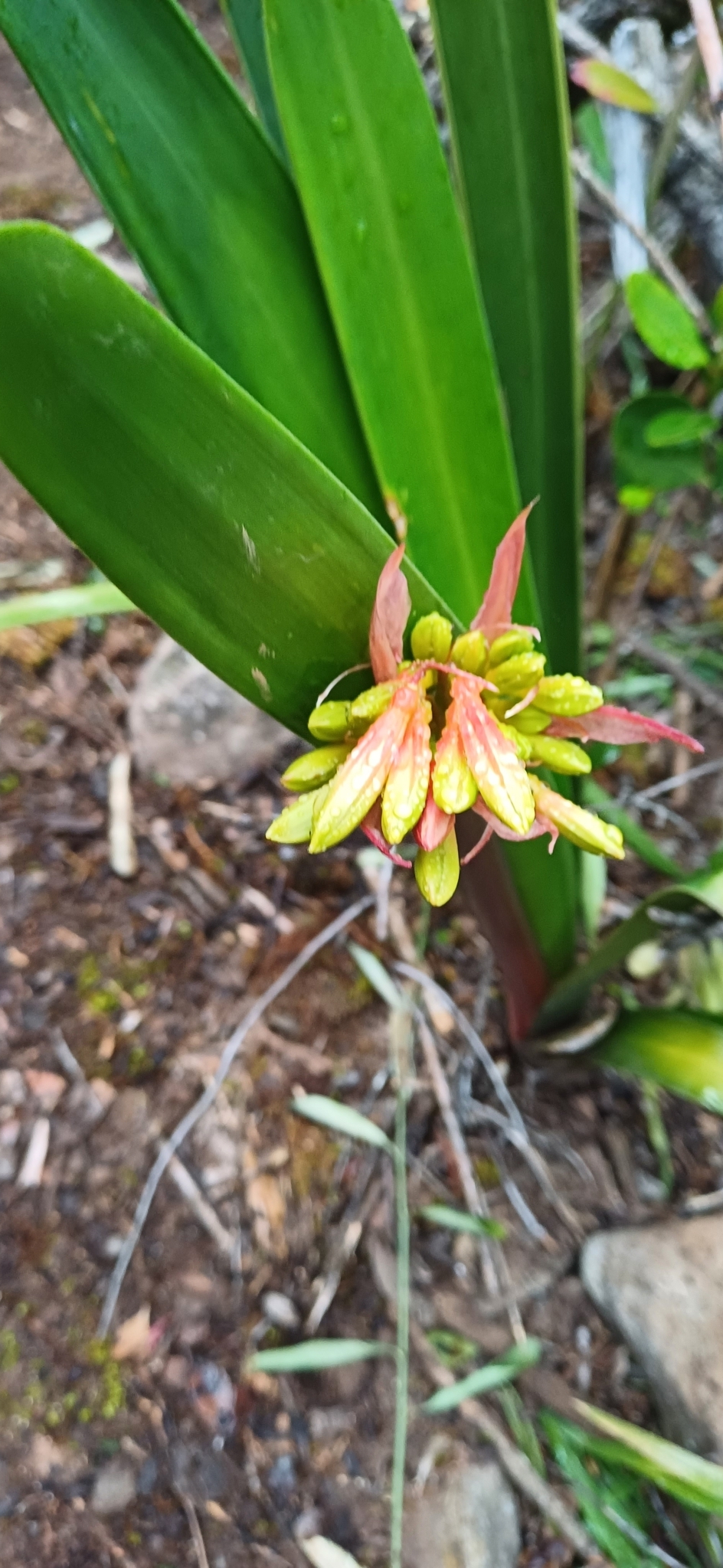
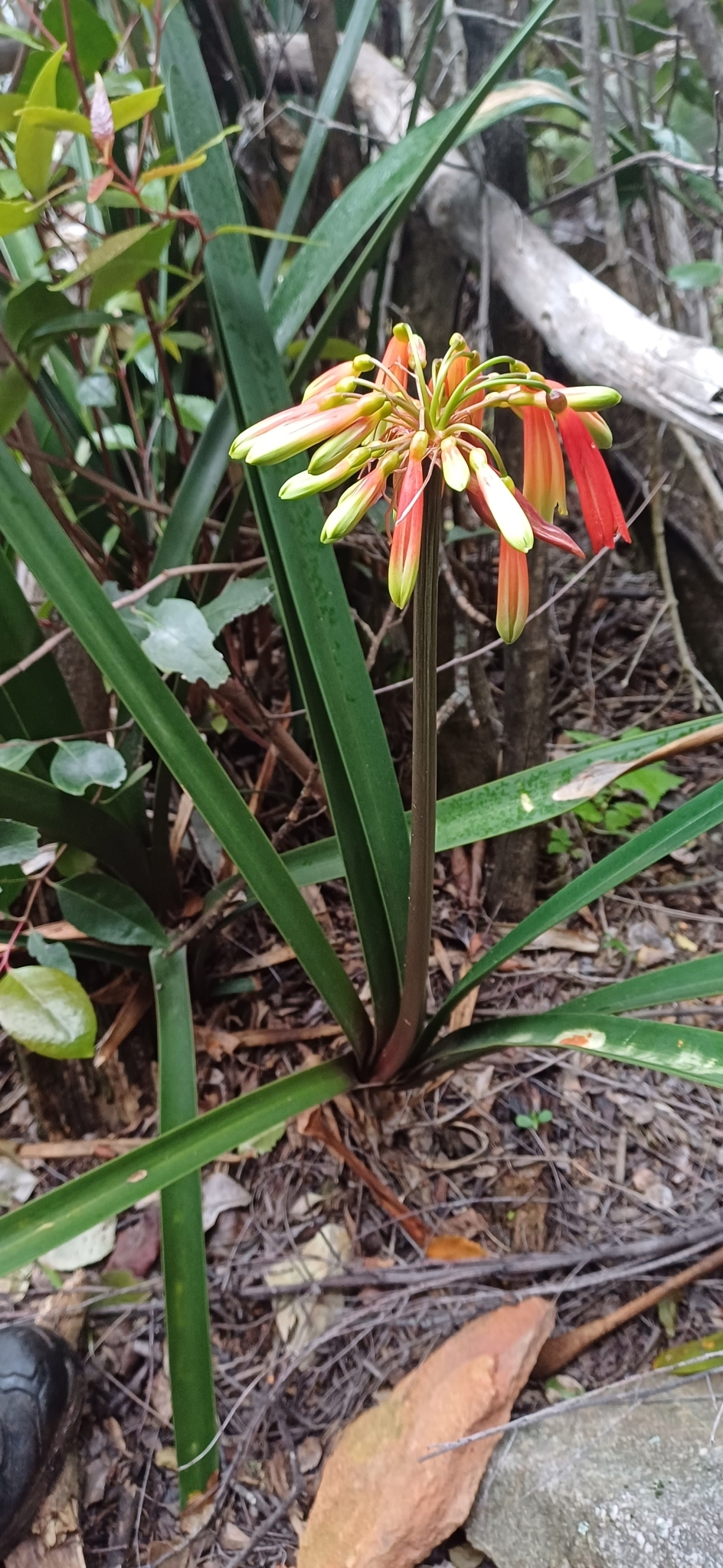
Stout, rhizomatous, solitary, evergreen perennial, 0.6-1.2 m tall; stem reduced to a vertical rhizome, up to 250 mm long terminating in a tuft of leaves. Root system massive, up to 0.7 m diam., horizontally spreading; roots perennial, very stout, fleshy, up to 20 mm diam., outer surface covered in a corky, velamen-like layer. Leaf sheath prominent, flushed deep carmine (RHS 183A greyed-purple). Leaves long-lived, stiffly erect, distichous, strap-shaped, 0.6-1.2 m long, 30-50 mm wide, flattened to slightly V-shaped with a distinct pale whitish grey striation in the midrib area on upper surface, striation becoming less distinct in older leaves, coriaceous, glabrous, deep dull green, flushed carmine-maroon at base, apex obtuse-acute; margins entire, cartilaginous, usually smooth, occasionally irregularly scabrous, becoming slightly revolute in old, mature leaves. Scape 300-800 mm long, broadly ancipitous, longitudinally ridged, 10-14 mm wide, glabrous, carmine-flushed. Inflorescence umbel-like, 20^1-8-flowered, subtended by 5-7 brownish/carmine, papyraceous spathe valves, narrowly cymbiform-acute, 35-50 x 10-15 mm; pedicels drooping, slender, 25-40 x 1.2 mm, orange-red, abruptly turning green in post-pollination phase. Perianth straight to imperceptibly curved, tubular, becoming progressively flared towards apex, 35-50 x 5 mm below ovary, 10-12 mm diam. at mouth, orange-red (RHS 32B) proximally, green-tipped (RHS 145A) distally on opening, the green changing to yellow (RHS 22B) distally, entire perianth becoming deep orange-red (RHS 33A) after anthesis; tepals fused distally to form a tube 10-15 mm long, outer tepals narrowly oblong, apices acute, inner tepals slightly wider, apices obtuse, outwardly flared. Stamens 6, dorsifixed, 2 mm long, very slightly exserted at anthesis; filaments 30 mm long, attached to tepals 10 mm above ovary; inwardly bowed proximally, adpressed around style at point of attachment forming a 10 mm long nectar well above ovary. Ovary ovoid, shiny, greenish yellow in bud, becoming orange-red at anthesis, changing to bright green in post-pollination phase; ovules 3 or 4 in each locule; style 40^45 mm long, terete, glabrous, tapering distally, included at anthesis, later elongating and becoming exserted 5-8 mm in post-pollination phase; stigma trilobed, lobes 0.4-1.0 mm long, penicillate at apex. Fruiting heads with 25-35 pendent berries. Berries irregularly oblong to ovoid, 10-30 x 10-15 mm, glebulose to submoniliform, often narrowed to a distinct neck above pedicel, apex often tapering to an eccentrically angled beak, containing (1)2-4(-7) gongyloid seeds projecting prominently and irregularly through thin pericarp; pericarp glossy, pale apple green, maturing through yellow, orange to pinkish red; mature berries red (RHS 40B eventually becoming RHS 45B). Seeds somewhat ovoid, slightly faceted, ± 10 mm diam., pearly white; embryo green. (Colour references according to Royal Horticultural Society colour chart). From: Rourke, JP. 2002. Clivia mirabilis (Amaryllidaceae: Haemantheae) a new species from Northern Cape, South Africa. Bothalia 32(1): 1-7. [CC BY]
Rhizomatous, evergreen perennial to 1.2 m, with long fleshy roots. Leaves 5-12, basally clustered, suberect, strap-shaped, channelled, dark maroon near base, often striped white along midrib. Flowers 20-35, in a terminal cluster, pendulous, tubular, scarlet, with green to yellow tips. Berries irregularly oblong, dark red. From: Snijman, DA. 2012. Amaryllidaceae. In: J Manning & P Goldblatt (eds), Plants of the Greater Cape Floristic Region 1: The Core Cape flora. Strelitzia 29: 53-62. South African National Biodiversity Institute, Pretoria. [CC BY]
Clivia mirabilis is distinguished by its straight, actinomorphic, bicolored (orange/yellow) tubular corolla, long drooping pedicels, 25-40 mm long, that are orange-red at anthesis and green when fruiting; the distinctive single median white striation on the upper surface of the leaves with smooth cartilaginous margins; and irregularly shaped glebulose-gongyloid berries. The basal part of the leaves forming the leaf sheath is flushed a deep carmine maroon, unlike any other Clivia except C. nobilis, which occasionally produces similarly coloured leaf bases. The orange-red coloration of the pedicels in this species during anthesis is a unique character in the genus Clivia. From: Rourke, JP. 2002. Clivia mirabilis (Amaryllidaceae: Haemantheae) a new species from Northern Cape, South Africa. Bothalia 32(1): 1-7. [CC BY]
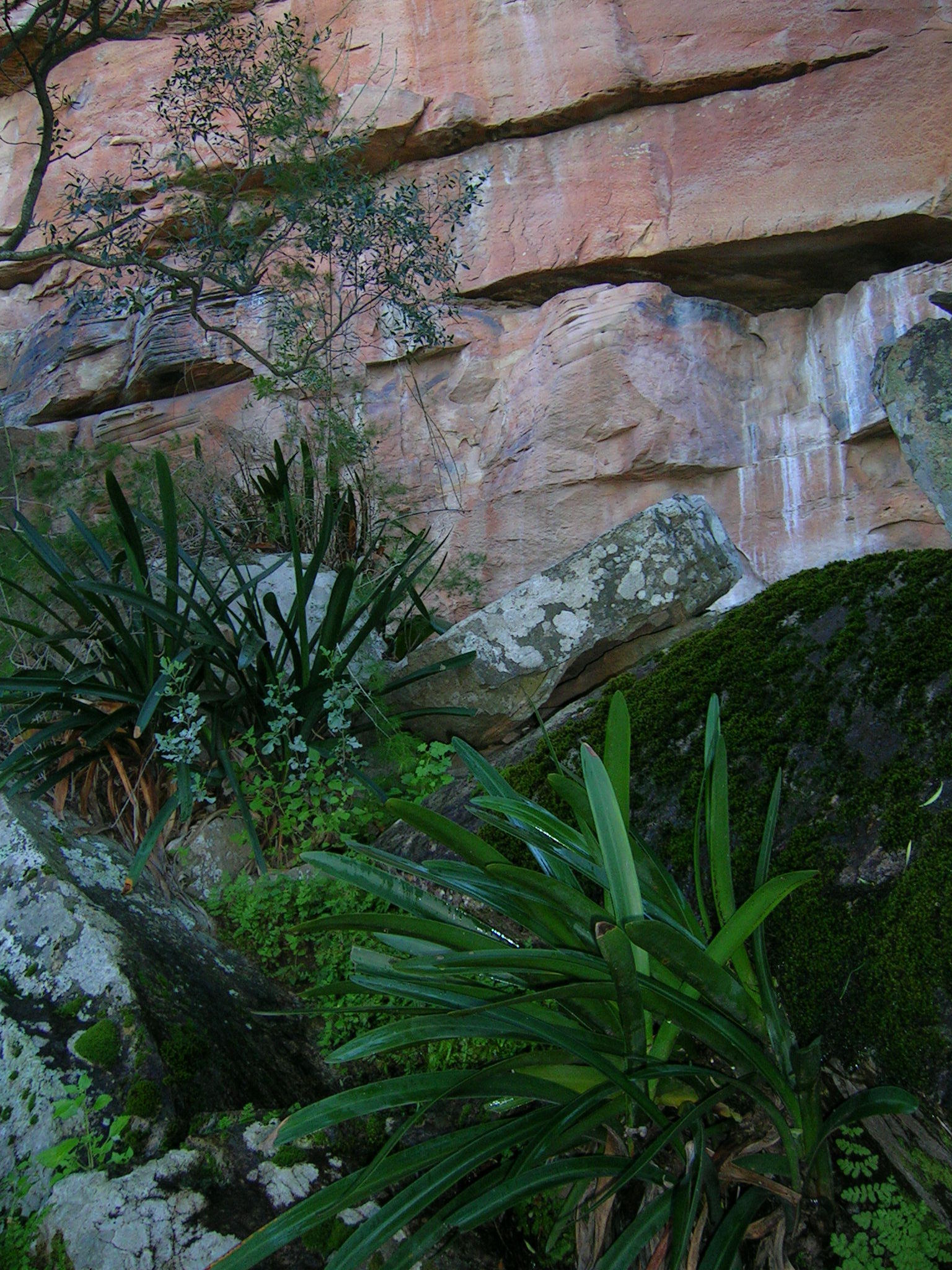
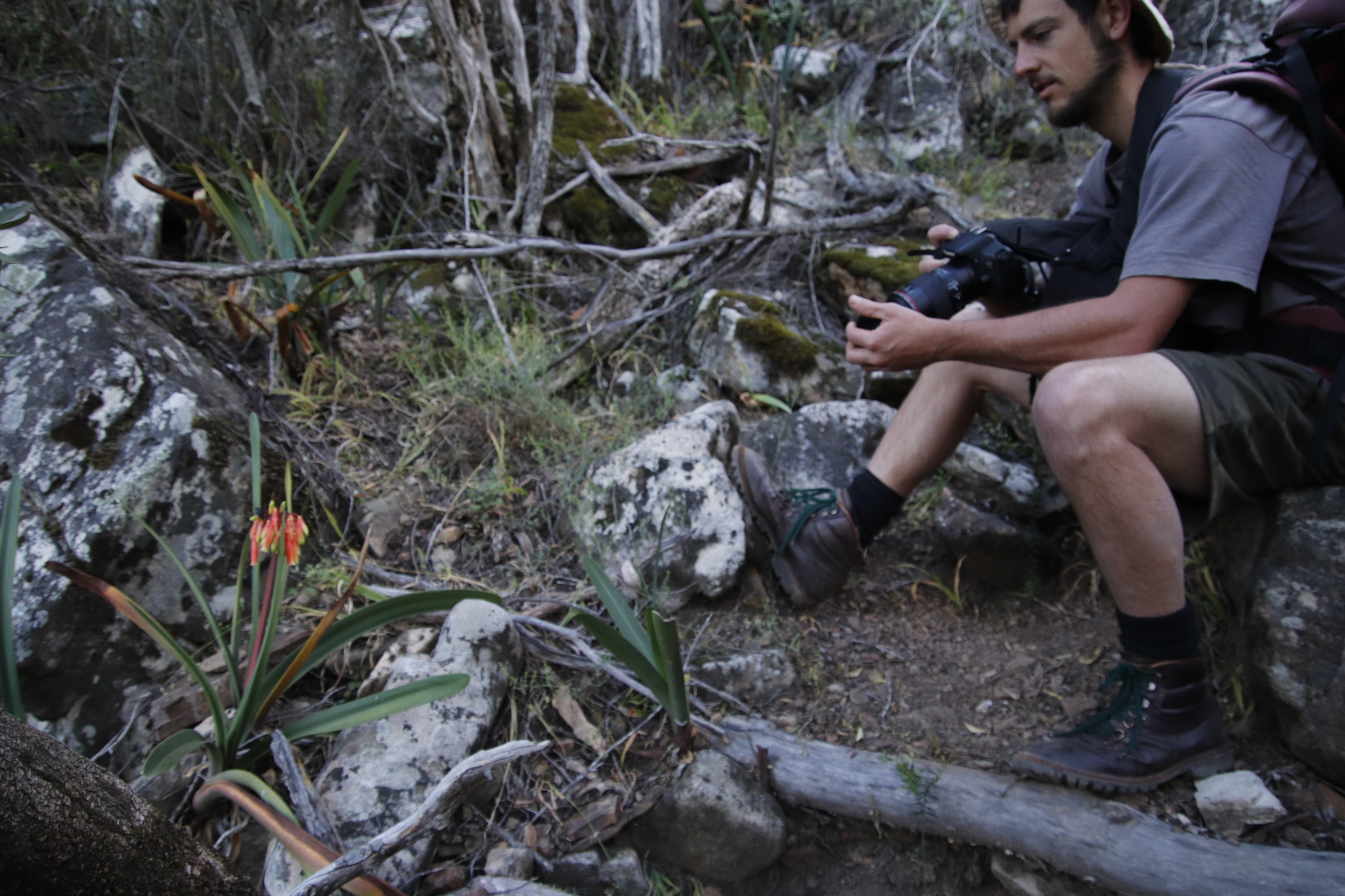
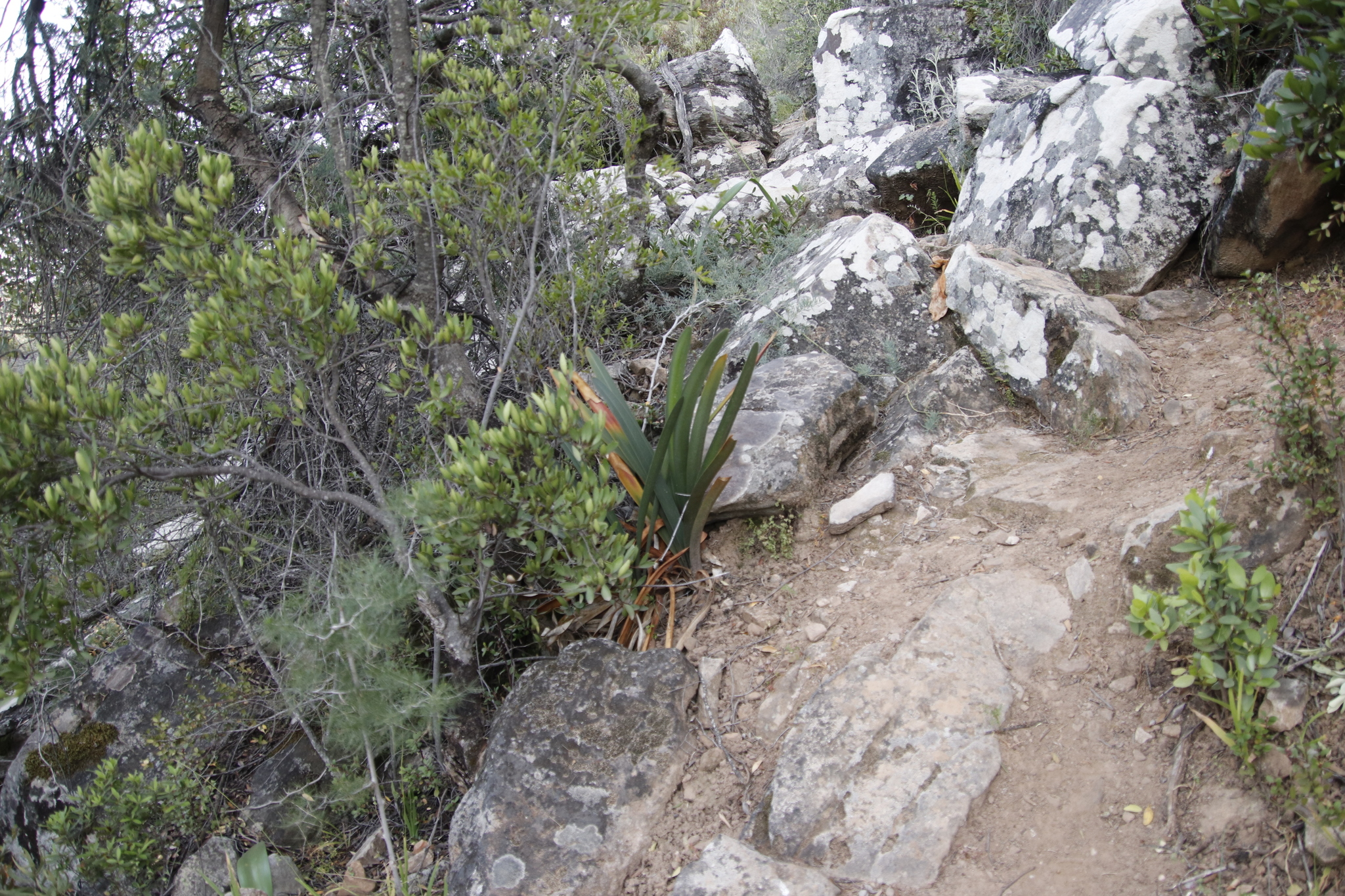
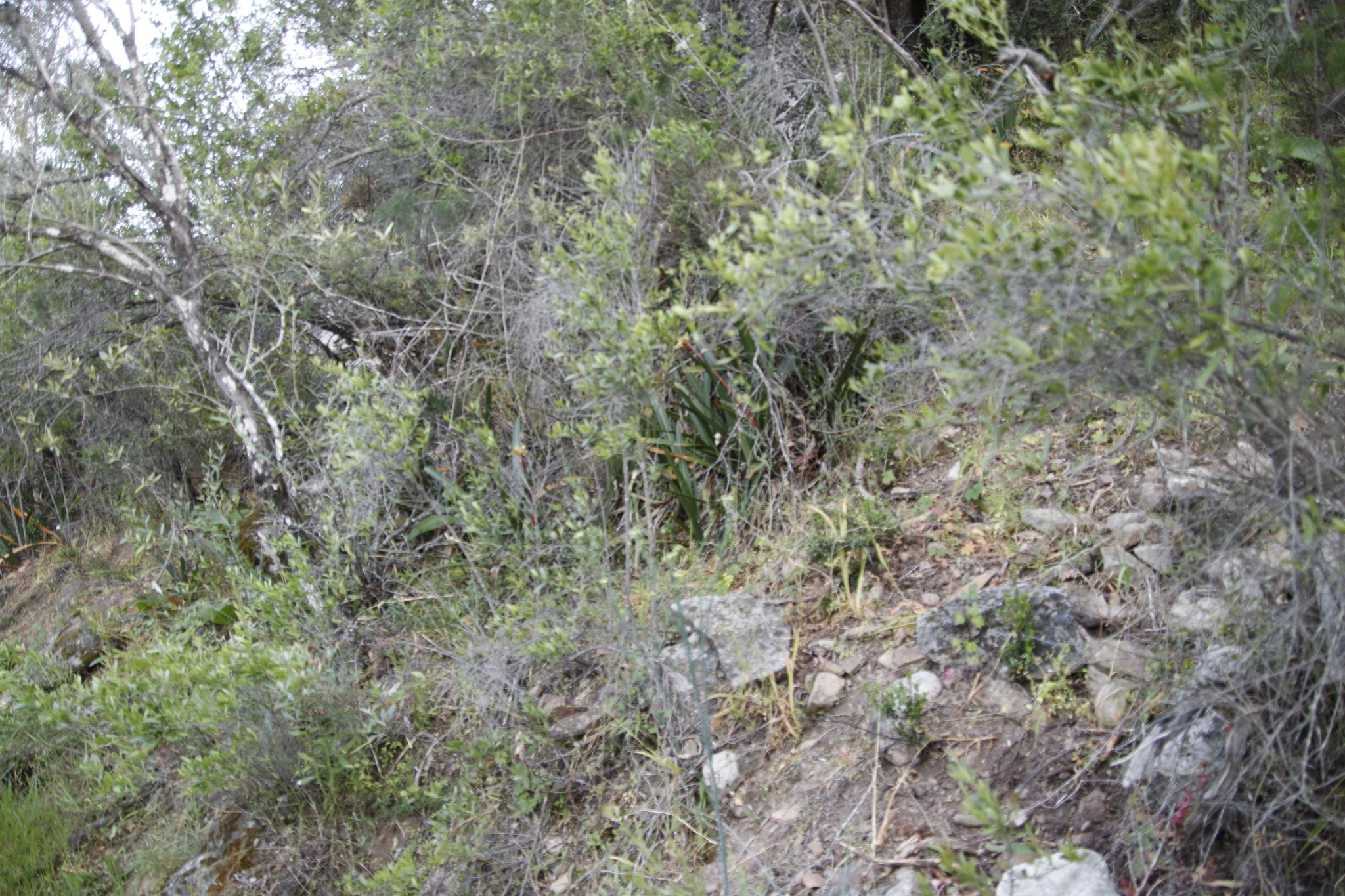
The margins of the Oorlogskloof Canyon are capped with 30 m cliffs of Peninsula Formation Sandstone. This has eroded to form coarse sandstone talus screes below the cliffs that are partly covered in a light woodland of relictual Afromontane evergreen forest elements, principally Olea europaea subsp. africana, Maytenus acuminata, M. oleoides, Cassine schinoides, Halleria lucida and Podocarpus elongatus with additional shade provided by outsize, (4 m tall) specimens of Phylica oleaefolia. Small groups of C. mirabilis grow rooted in humus between cracks in the sandstone talus of the rock scree, either as solitary individuals or in small groups. Occasionally some clumps occur in full sun but these tend to have shorter leaves and often show signs of water stress (dried leaf tips). However, the remaining leaves show no signs of sunburn, despite the intense insolation experienced for several months each year. The main population extends over several hectares and probably consists of well over 1 000 individuals. Due to the position of these two sites under the eastern cliffs of Oorlogskloof Canyon, most plants experience shade until about midmorning after which they are in direct sun. The area is characterized by a semi-arid Mediterranean climate with a strictly winter rainfall regime - exactly the opposite climatic conditions experienced by the other four species in this genus. The mean annual rainfall for Oorlogskloof is 414 mm, falling mainly between May and September. Vegetative growth is thus restricted to a brief winter growing period. Situated at 850-900 m, some 100 km inland from the coast, these populations are subject to brief but light frost in winter. From: Rourke, JP. 2002. Clivia mirabilis (Amaryllidaceae: Haemantheae) a new species from Northern Cape, South Africa. Bothalia 32(1): 1-7. [CC BY]
Shaded kloofs. From: Snijman, DA. 2012. Amaryllidaceae. In: J Manning & P Goldblatt (eds), Plants of the Greater Cape Floristic Region 1: The Core Cape flora. Strelitzia 29: 53-62. South African National Biodiversity Institute, Pretoria. [CC BY]
Eastern margin of the Oorlogskloof Canyon. North of Eland se Kliphuis adjacent to Agterstevlei Farm and a little further south around the Driefontein Waterfall. From: Rourke, JP. 2002. Clivia mirabilis (Amaryllidaceae: Haemantheae) a new species from Northern Cape, South Africa. Bothalia 32(1): 1-7. [CC BY]
Bokkeveld Escarpment. From: Snijman, DA. 2012. Amaryllidaceae. In: J Manning & P Goldblatt (eds), Plants of the Greater Cape Floristic Region 1: The Core Cape flora. Strelitzia 29: 53-62. South African National Biodiversity Institute, Pretoria. [CC BY]
October to November
0 to 600 m
This map contains point-based occurrences at different locations
 This is a sensitive species therefore data has been redacted, click here to login.
Occurrence in the Flora of Southern Africa (FSA) countries and South African provinces. Residence status indicates if a taxon is indigenous, endemic, naturalised or invasive in a specific region. This data is based on specimen records and literature
FSA
SA
BOT
NAM
ESW
LES
WC
EC
NC
FS
GA
KZN
LP
MP
NW
Absent
Indigenous
Endemic
Naturalised
Invasive


Names and Sources
Published in: Bothalia 32(1): 1 (2002)
Classification
KINGDOM Plantae
SUBKINGDOM Phanerogamae
PHYLUM Anthophyta
ORDER Asparagales
FAMILY Amaryllidaceae
TRIBE Haemantheae
GENUS Clivia
SPECIES mirabilis
19 results for Clivia mirabilis Rourke
Barcode: PRE0587582-1 Collector(s) & number: Rourke, JP, 2220 | 2001-10-18
General notes: On west facing scree slopes below cliff in light woodland. Growing between sandstone rocks in sun or partial shade. Common locally. Perianth orange with yellow end. Leaf with central white stripe. Altitude: ± 900m.
Data Resource: BODATSA View record
Barcode: NBG0207301-0 Collector(s) & number: Rourke, JP, 2220 | 2001-10-18
General notes: On west facing scree slopes below cliff in light woodland. Growing between sandstone rocks in sun or partial shade. Common locally. Perianth orange with yellow end. Leaf with central white stripe.
Data Resource: BODATSA View record
Barcode: PRE0587582-2 Collector(s) & number: Rourke, JP, 2220 | 2001-10-18
General notes: On west facing scree slopes below cliff in light woodland. Growing between sandstone rocks in sun or partial shade. Common locally. Perianth orange with yellow end. Leaf with central white stripe. Altitude: ± 900m.
Data Resource: BODATSA View record
Barcode: NBG0184720-2 Collector(s) & number: Rourke, JP, 2220 | 2001-10-18
General notes: On west facing scree slopes below cliff in light woodland. Growing between sandstone rocks in sun or partial shade. Common locally. Perianth orange with yellow end. Leaf with central white stripe.
Data Resource: BODATSA View record
Barcode: NBG0184717-1 Collector(s) & number: Pretorius, WAJ, 651 | 2000-11-10
General notes: Occasional in kloof on well-drained stony soil in closed woodland. Geophyte 0.8m tall. Flowers red. Local.
Data Resource: BODATSA View record
Barcode: NBG0184720-1 Collector(s) & number: Rourke, JP, 2220 | 2001-10-18
General notes: On west facing scree slopes below cliff in light woodland. Growing between sandstone rocks in sun or partial shade. Common locally. Perianth orange with yellow end. Leaf with central white stripe.
Data Resource: BODATSA View record
Barcode: NBG0191021-0 Collector(s) & number: Rourke, JP, 2254 | 2002-11-29
General notes: In clumps under Olea africana trees, growing around base of trunk. Occasional. Very local. About 200 plants seen. Corolla orange, yellow tipped. Growing in Bokkeveld shale soil of heavy clayish texture.
Data Resource: BODATSA View record
Barcode: NBG0184717-2 Collector(s) & number: Pretorius, WAJ, 651 | 2000-11-10
General notes: Occasional in kloof on well-drained stony soil in closed woodland. Geophyte 0.8m tall. Flowers red. Local.
Data Resource: BODATSA View record
Barcode: NBG0192805-0 Collector(s) & number: Pretorius, WAJ, s.n. | 2003-2-28
General notes: Fruiting inflorescences striped of seed showing secondary umbellula.
Data Resource: BODATSA View record
This map contains point-based occurrences at different locations
This is a sensitive species therefore data has been redacted, click here to login.
2016
2012
SERIES CHAPTER
Amaryllidaceae Snijman, DAIn: J Manning & P Goldblatt (eds), Plants of the Greater Cape Floristic Region 1: The Core Cape flora. Strelitzia 29: 53-62
South African National Biodiversity Institute, Pretoria
2002
PERIODICAL/JOURNAL
Clivia mirabilis (Amaryllidaceae: Haemantheae) a new species from Northern Cape, South Africa. Rourke, JPBothalia 32(1)1-7
No results found for Clivia mirabilis Rourke
Status and criteria
VU
Assessor(s)
Plantae Coordinator
| Part(s) of plant used | Use(s) | Reference |
|---|
Coming soon...


