
PLANTAE / PHANEROGAMAE / ANTHOPHYTA / LAMIALES / SCROPHULARIACEAE / HEMIMERIDEAE / DIASCIA / DECIPIENS

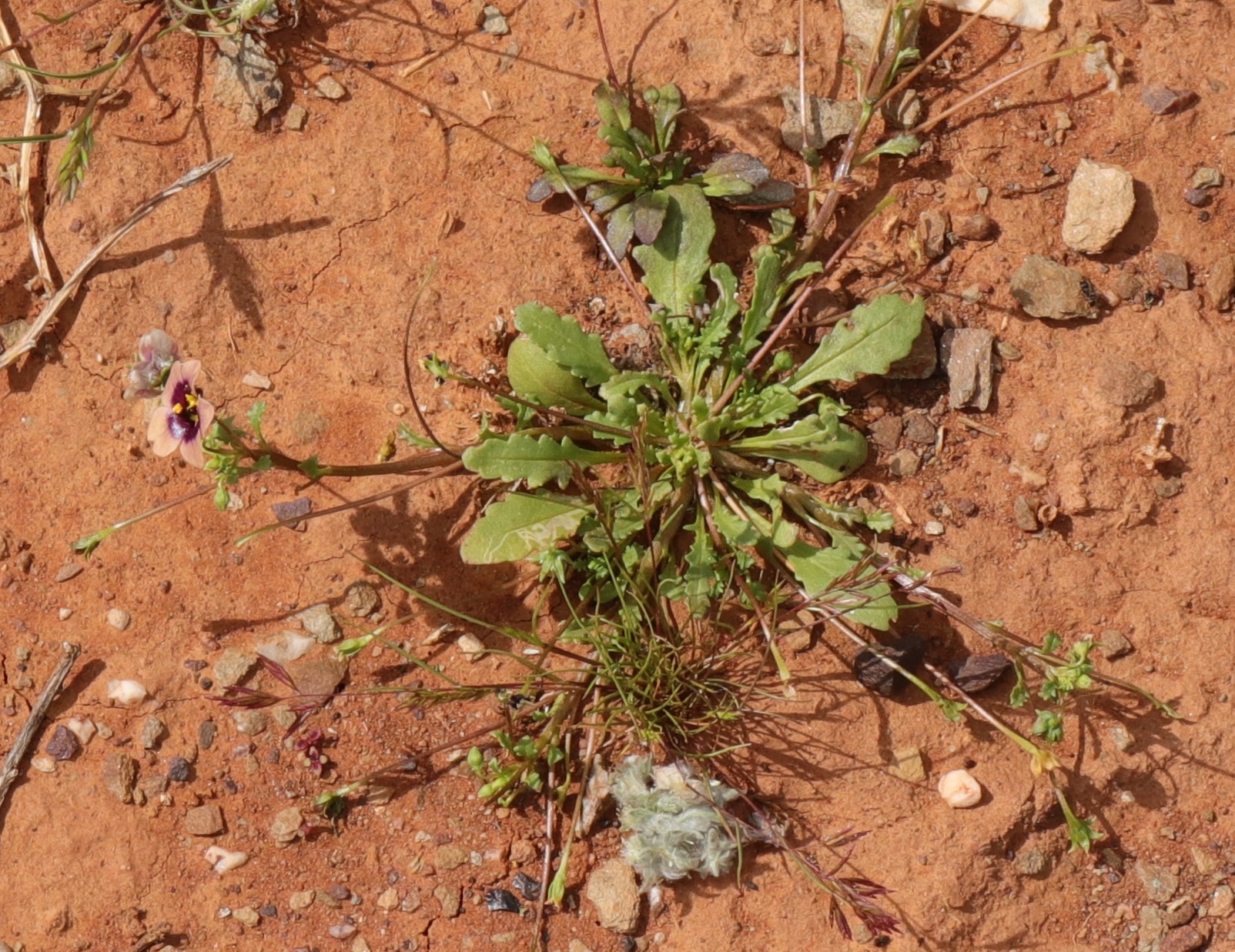
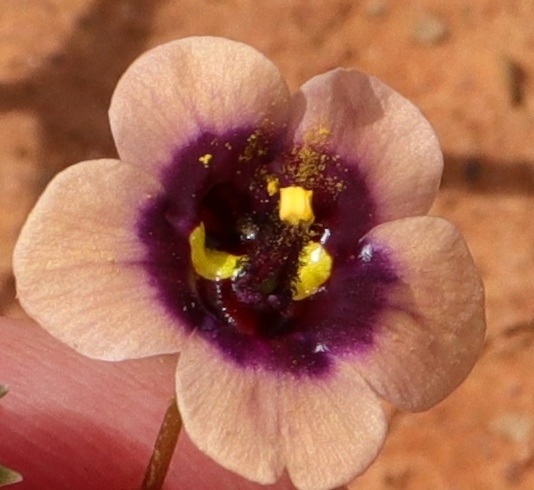
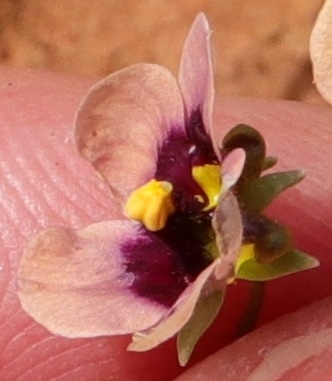
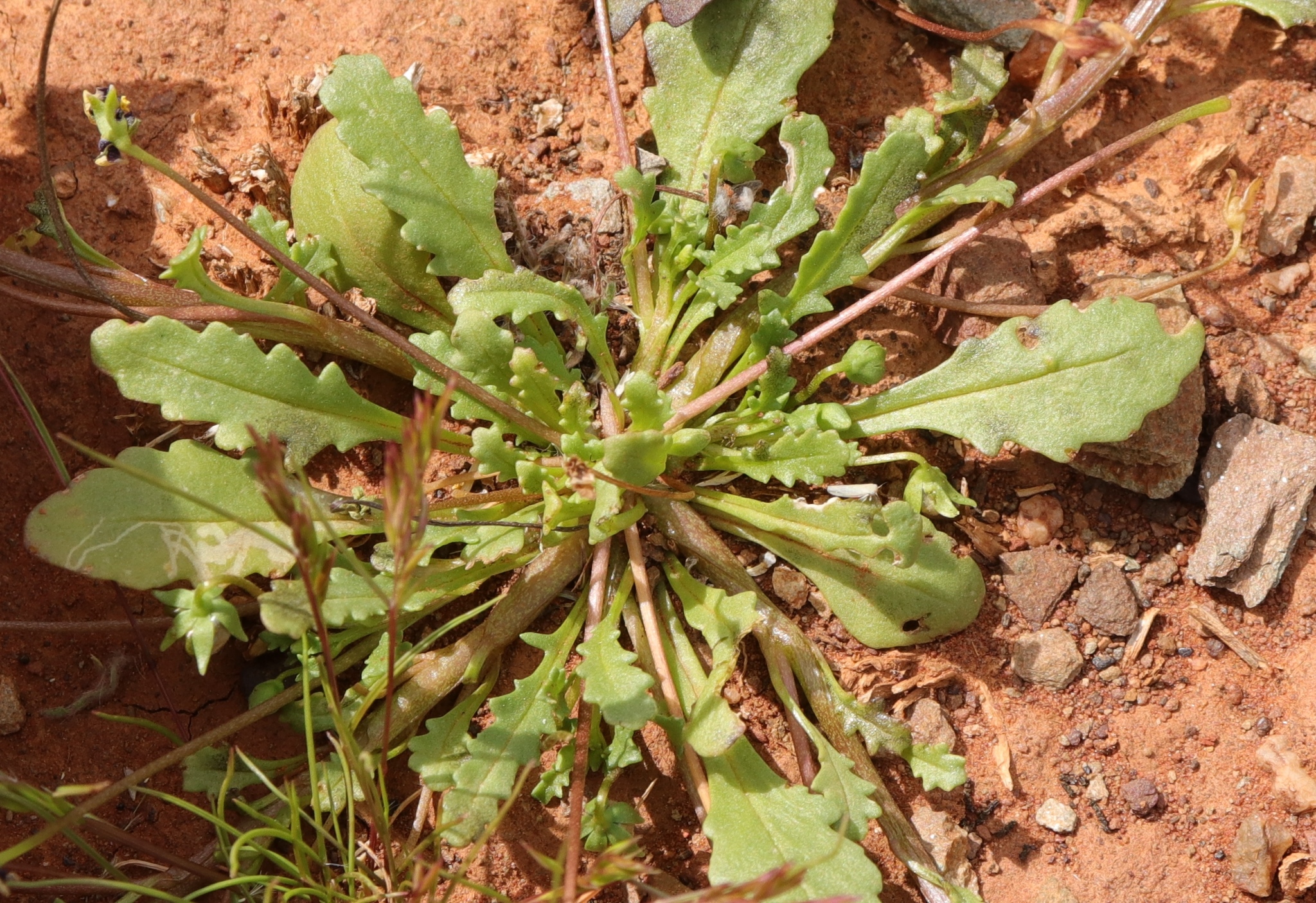
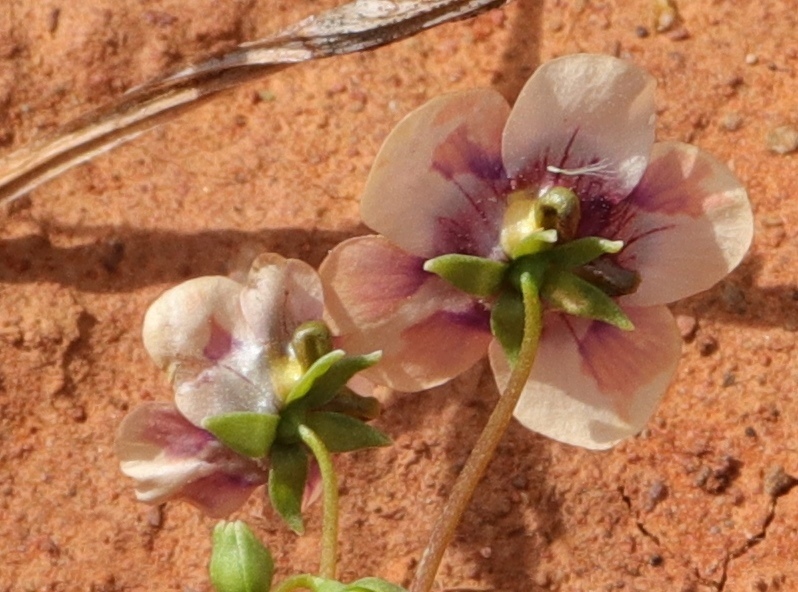
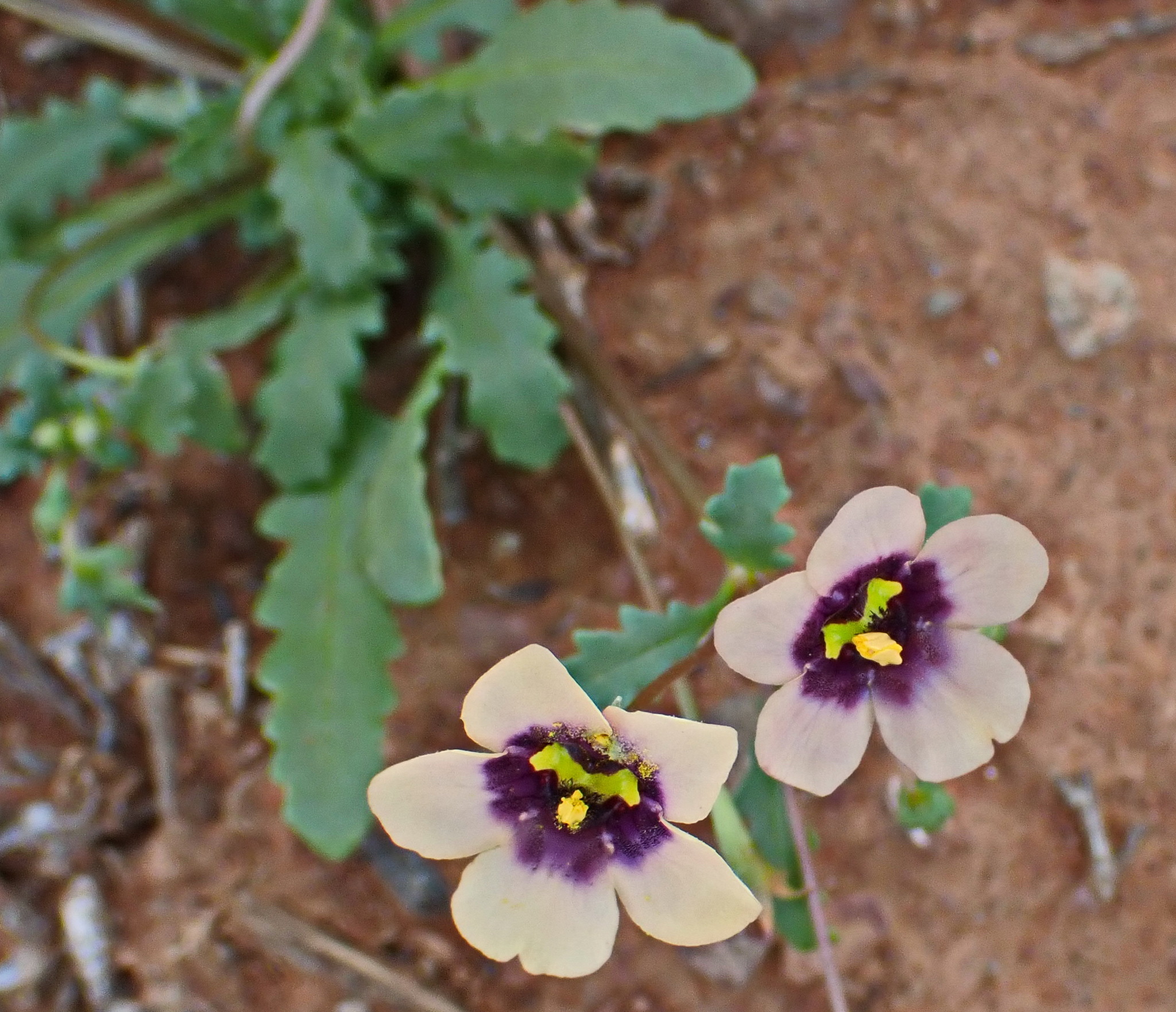
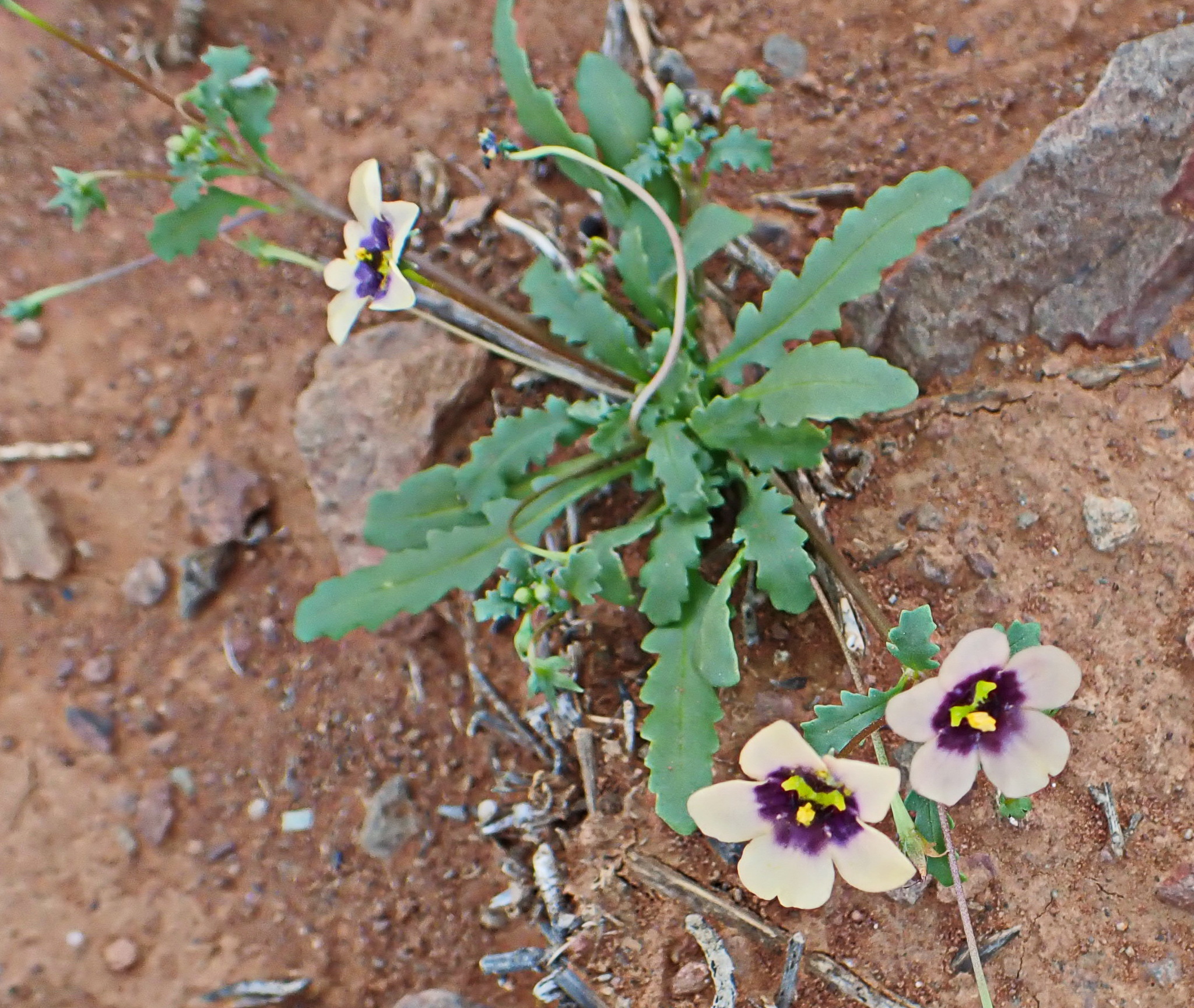
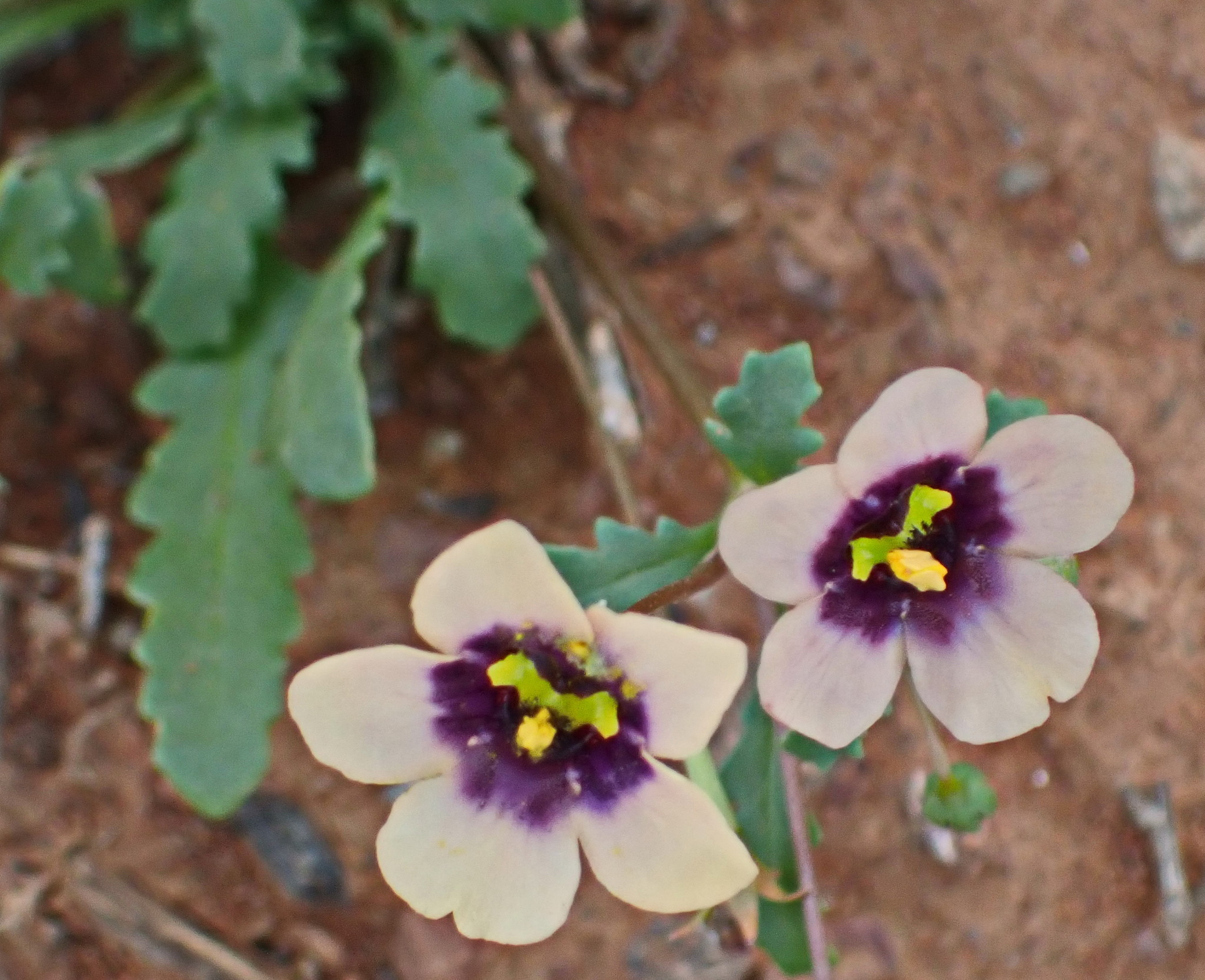
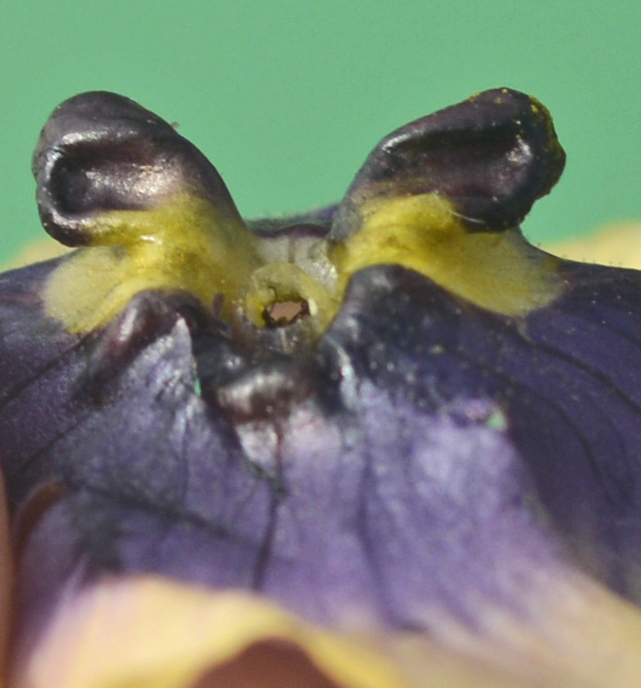
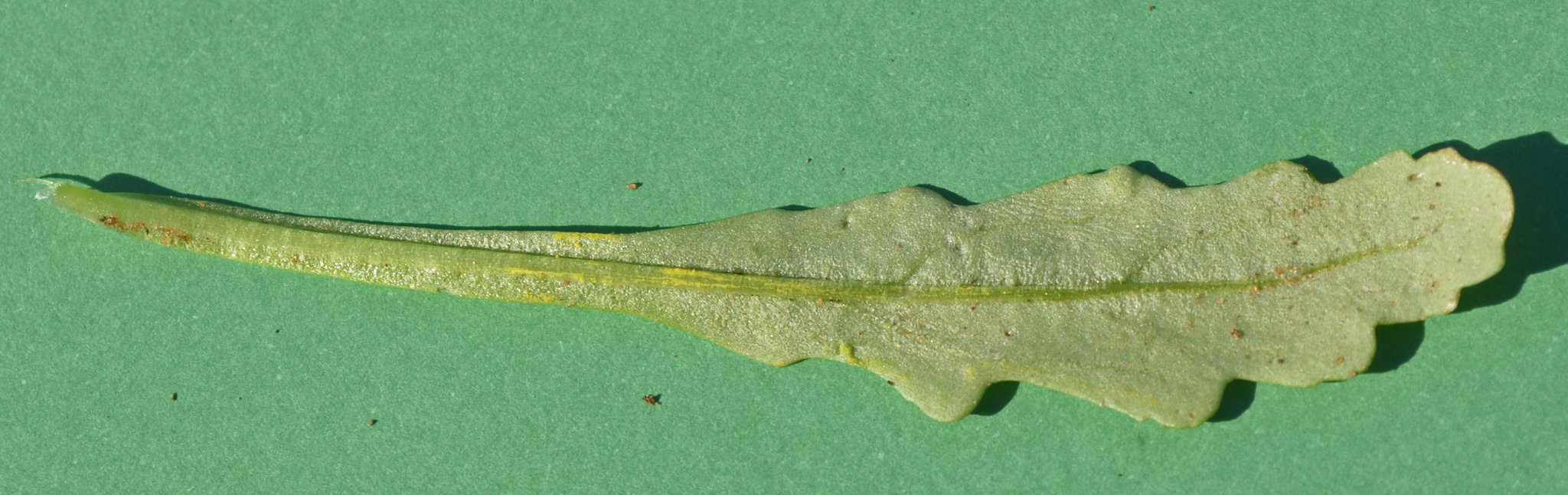
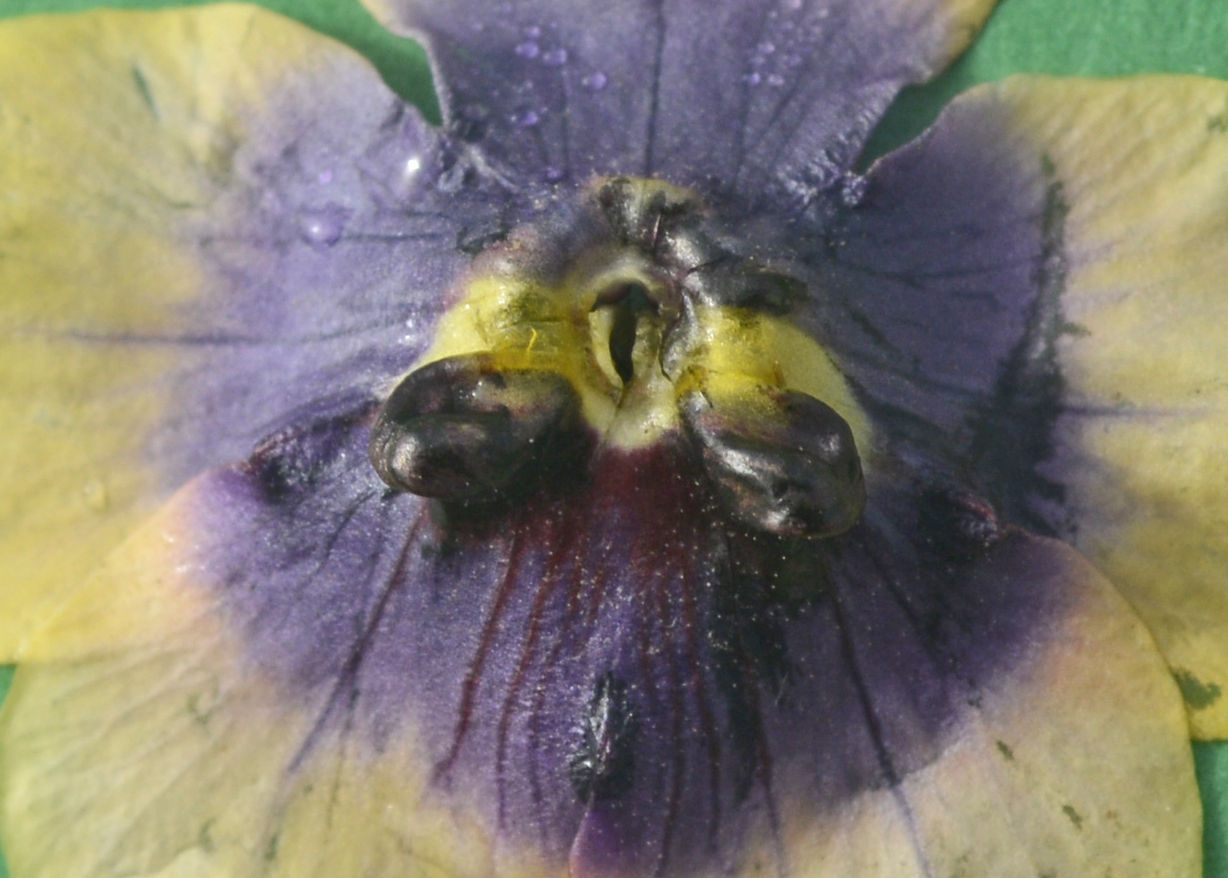
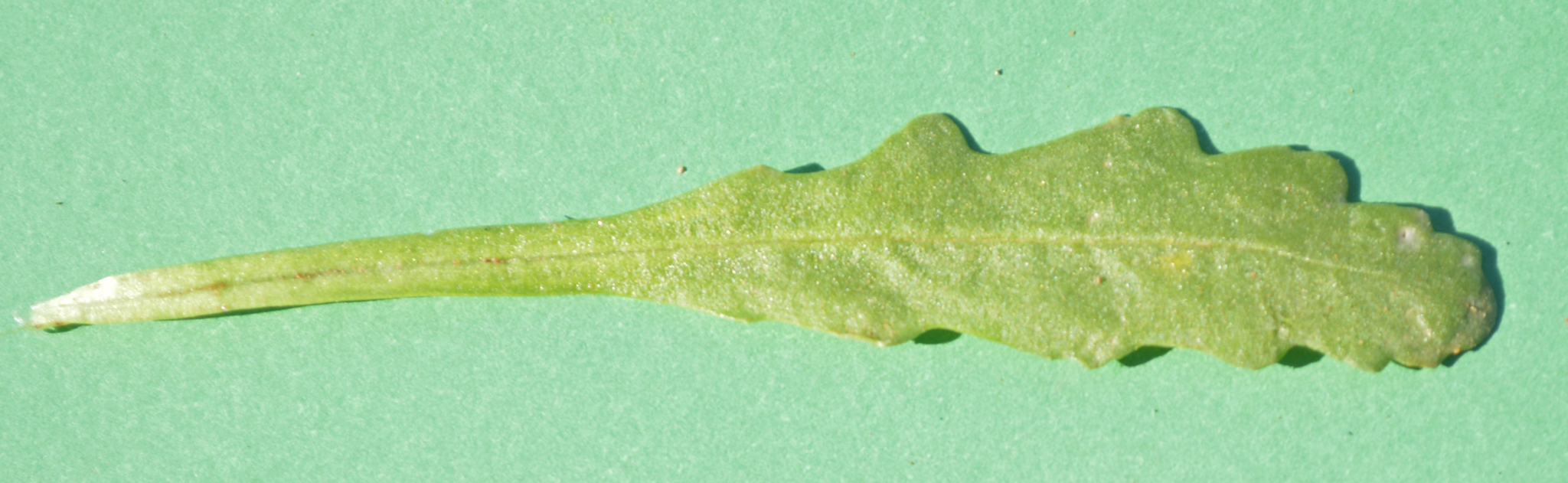
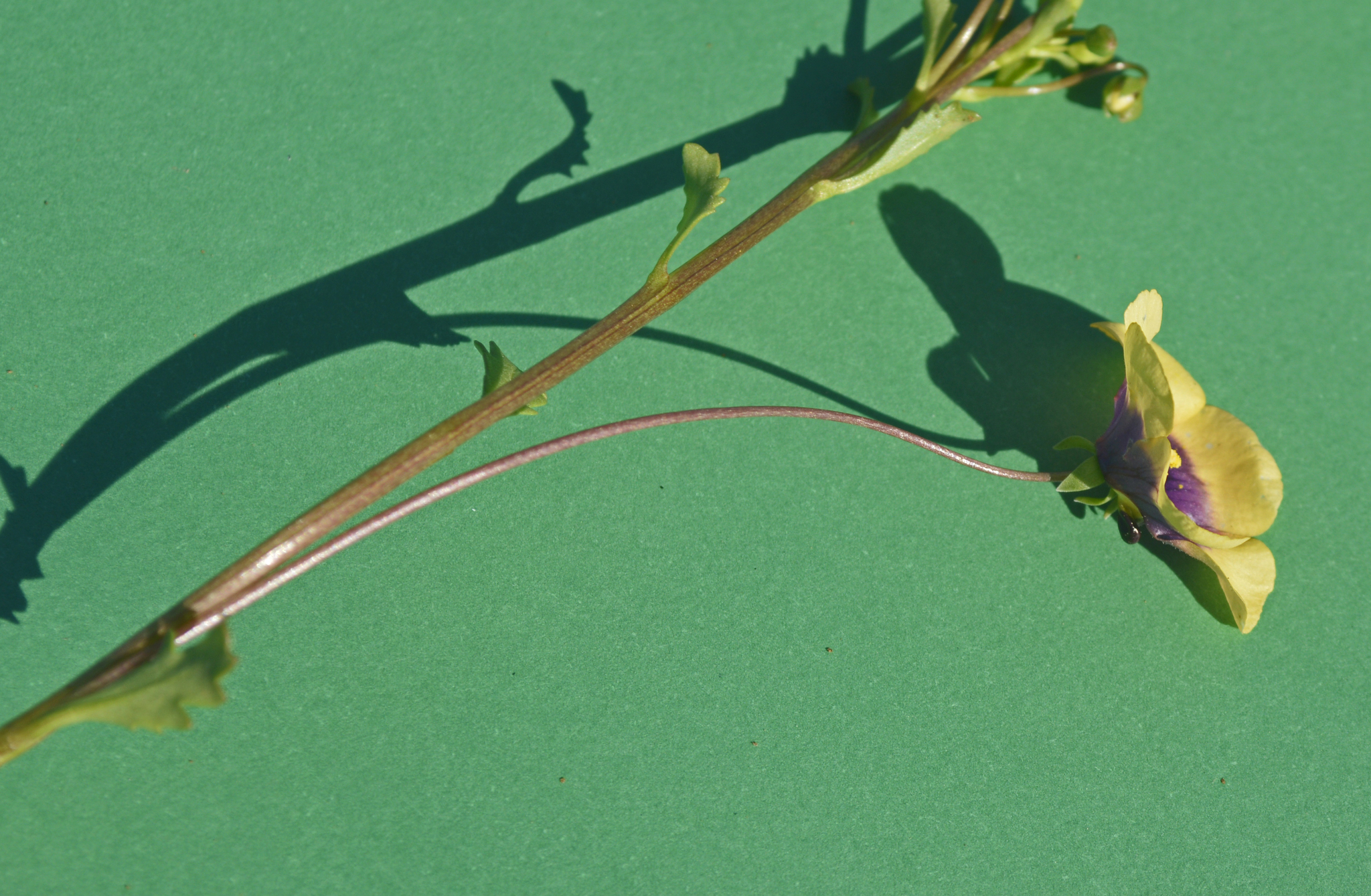
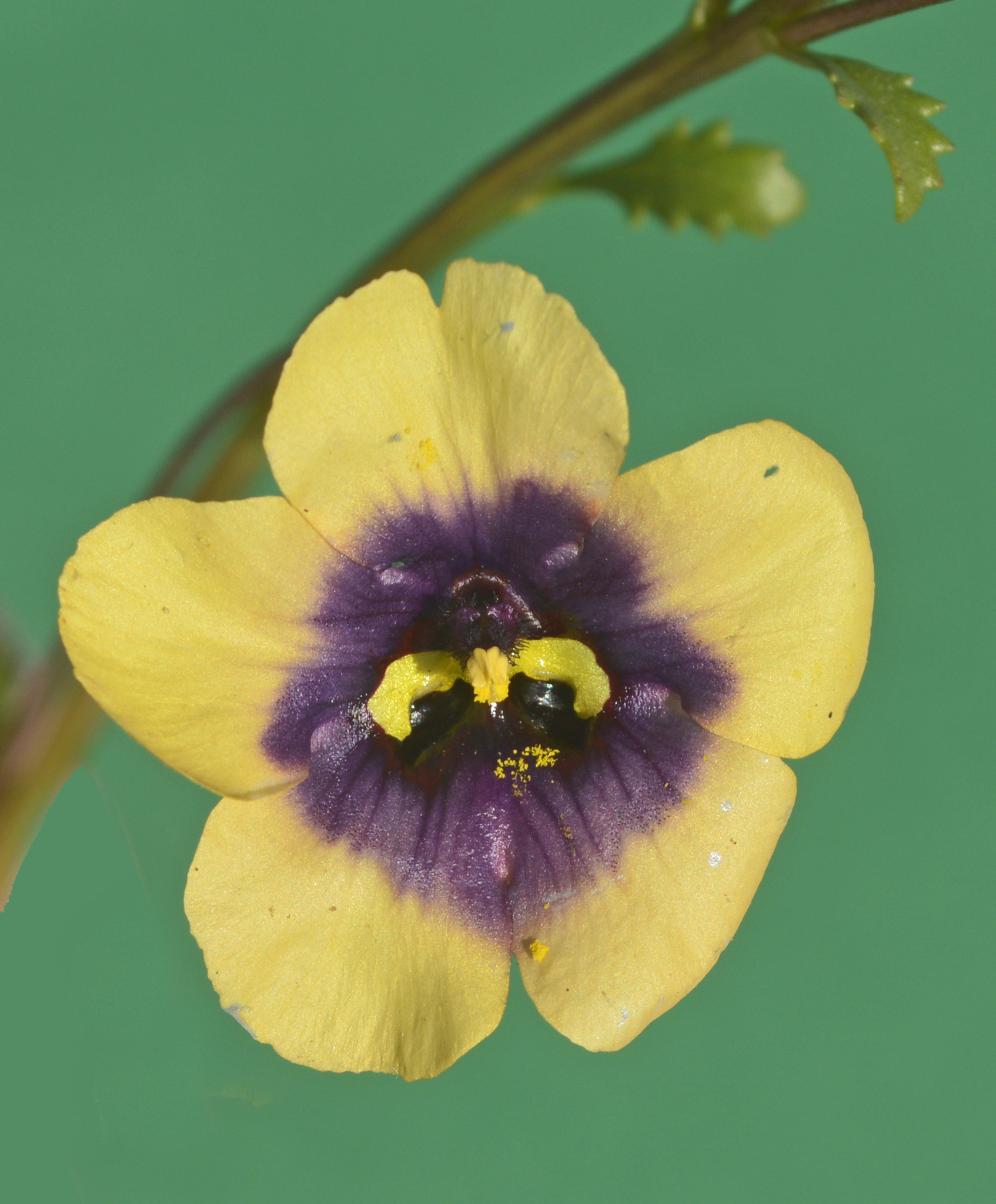
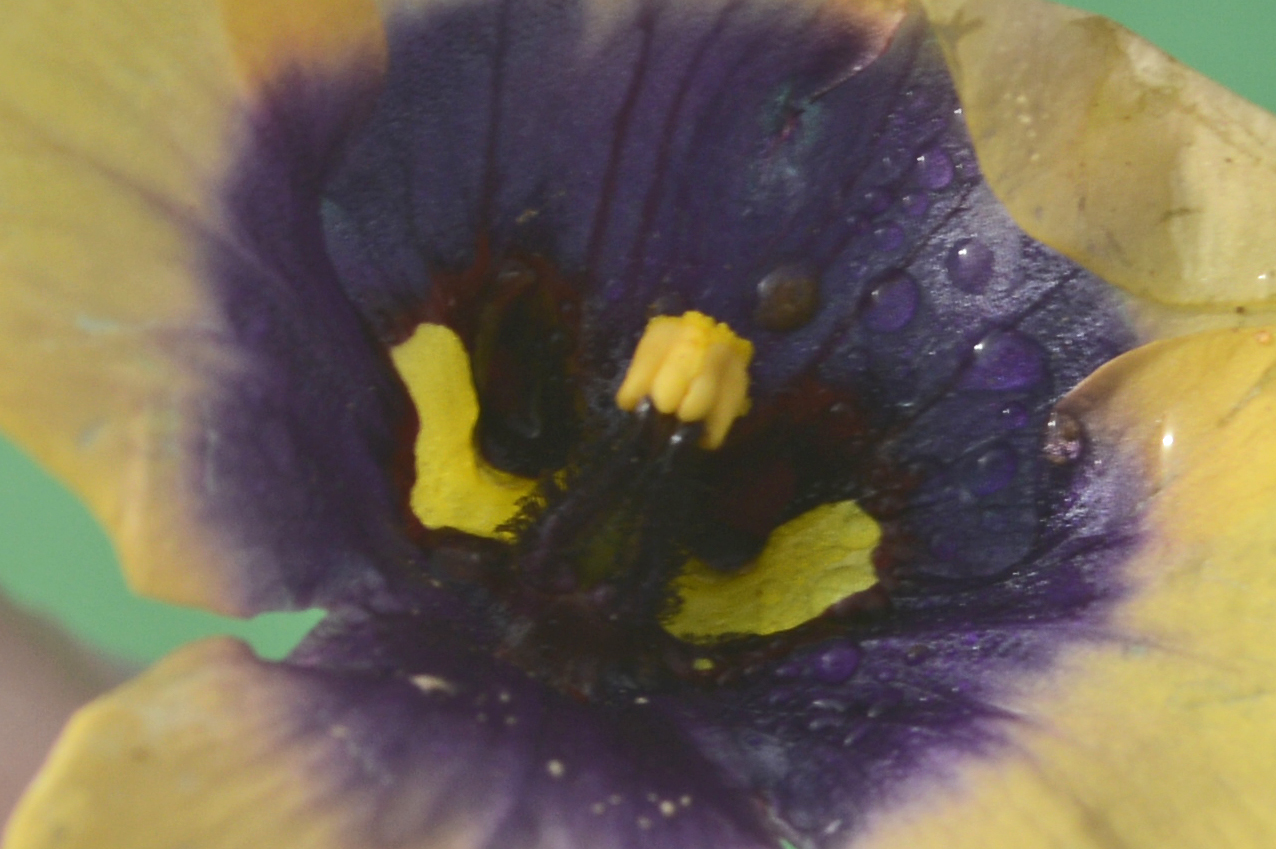
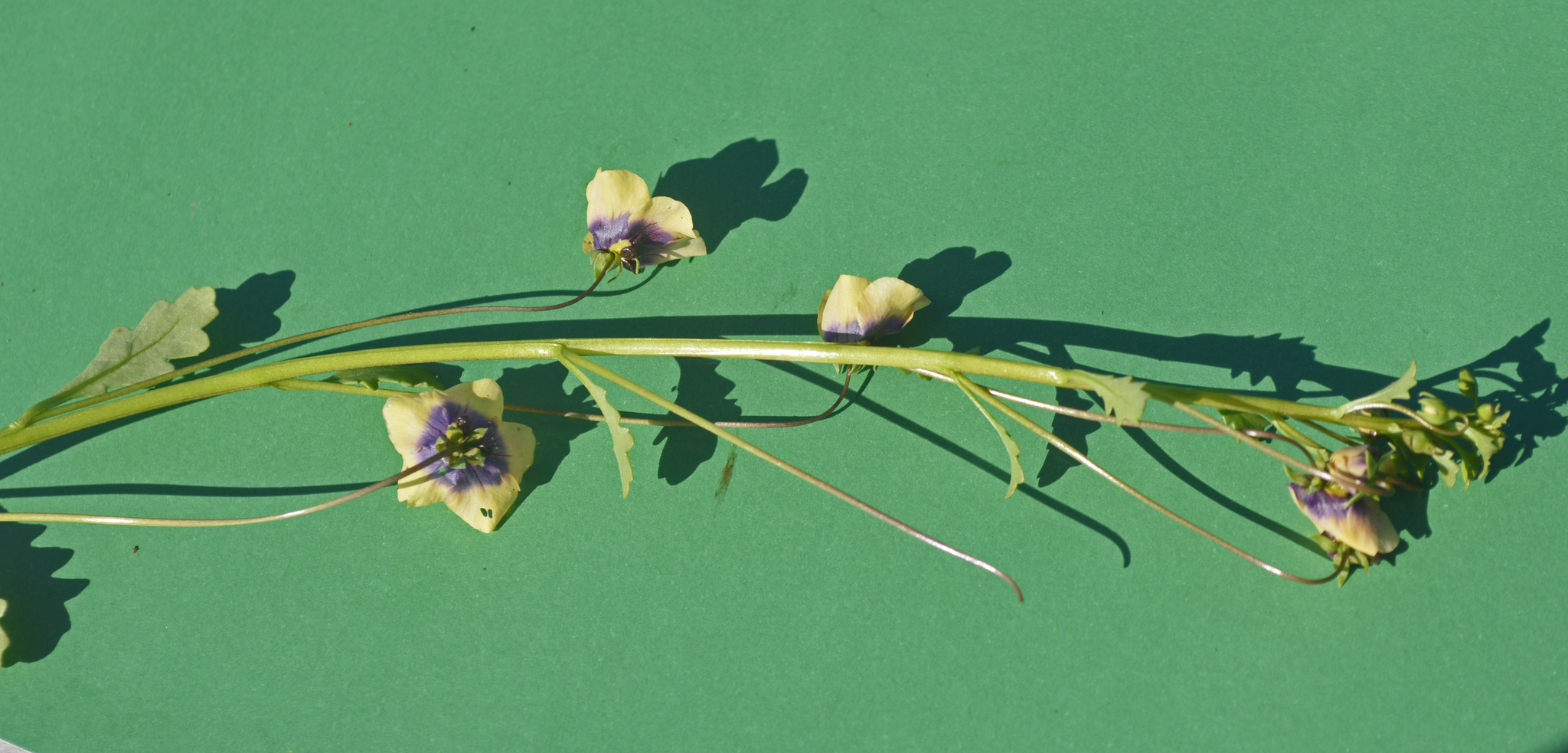
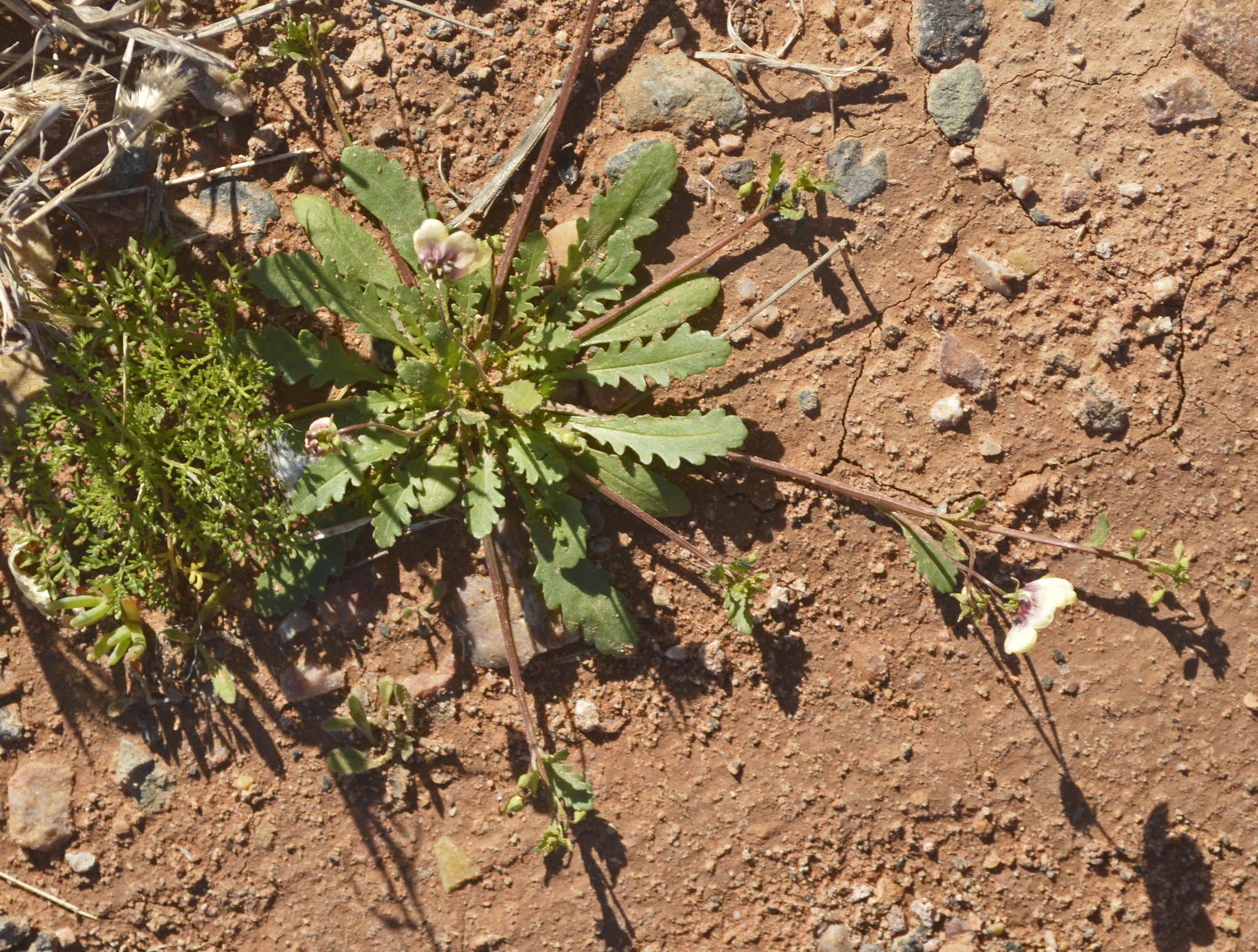
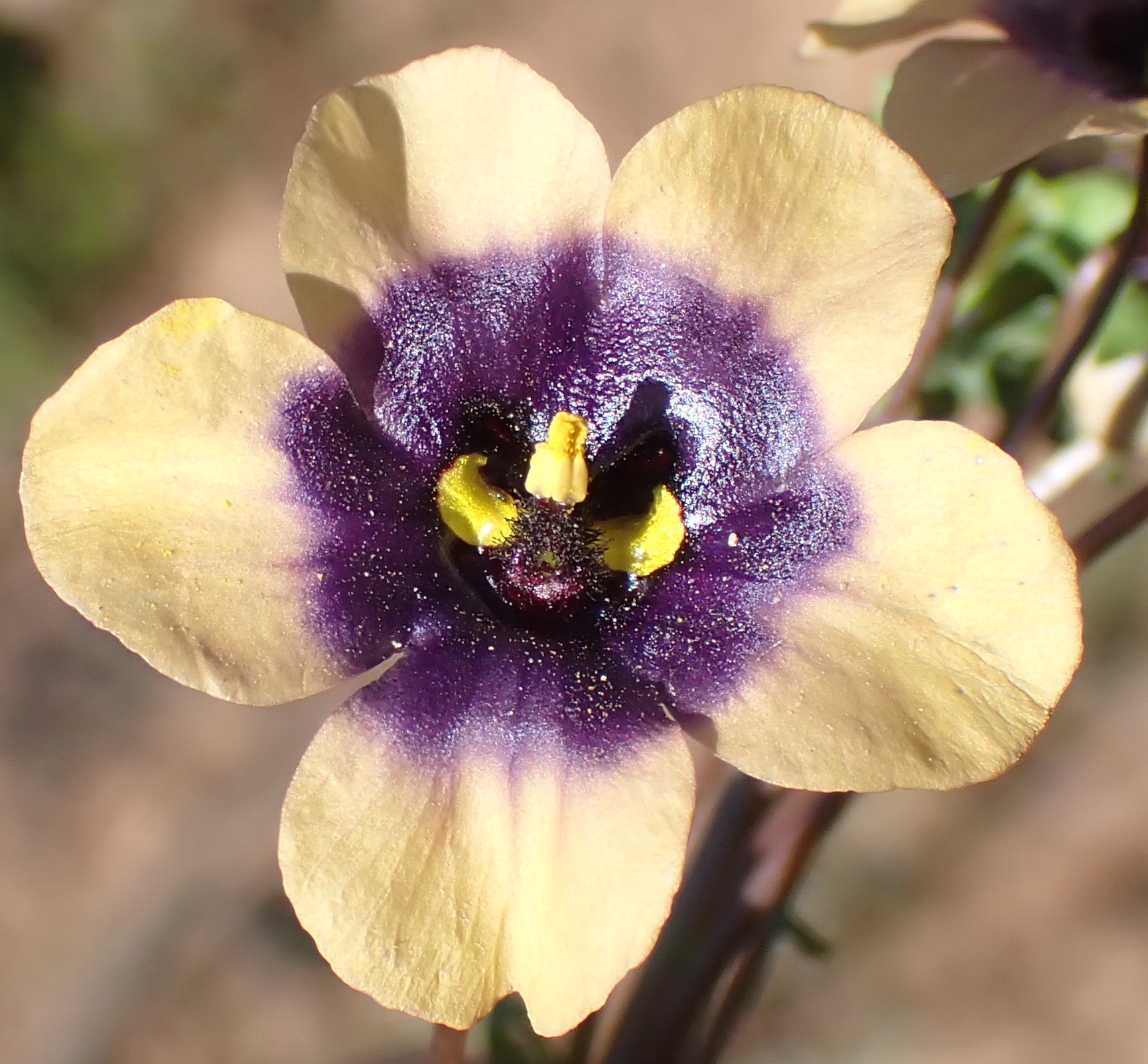
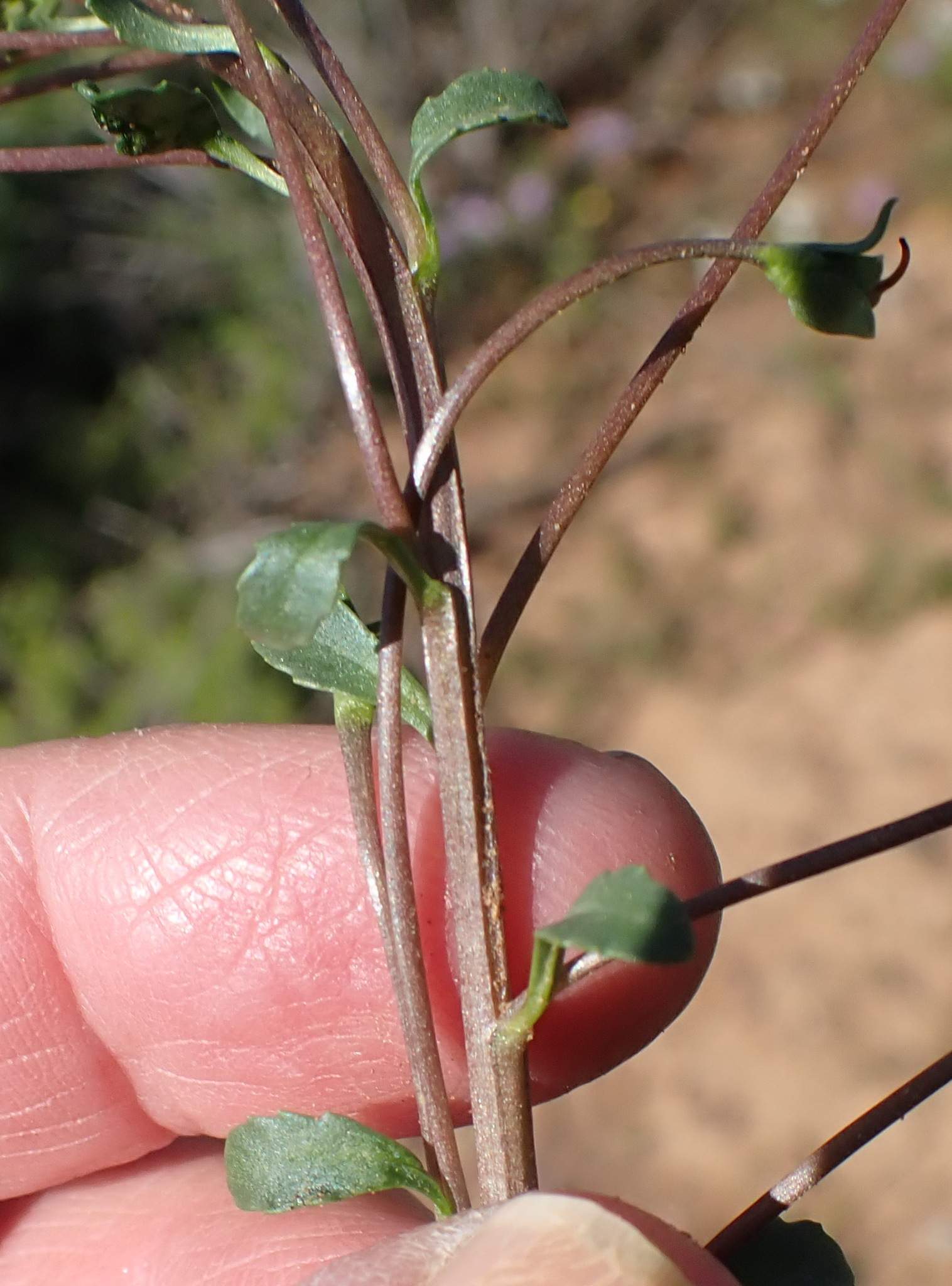
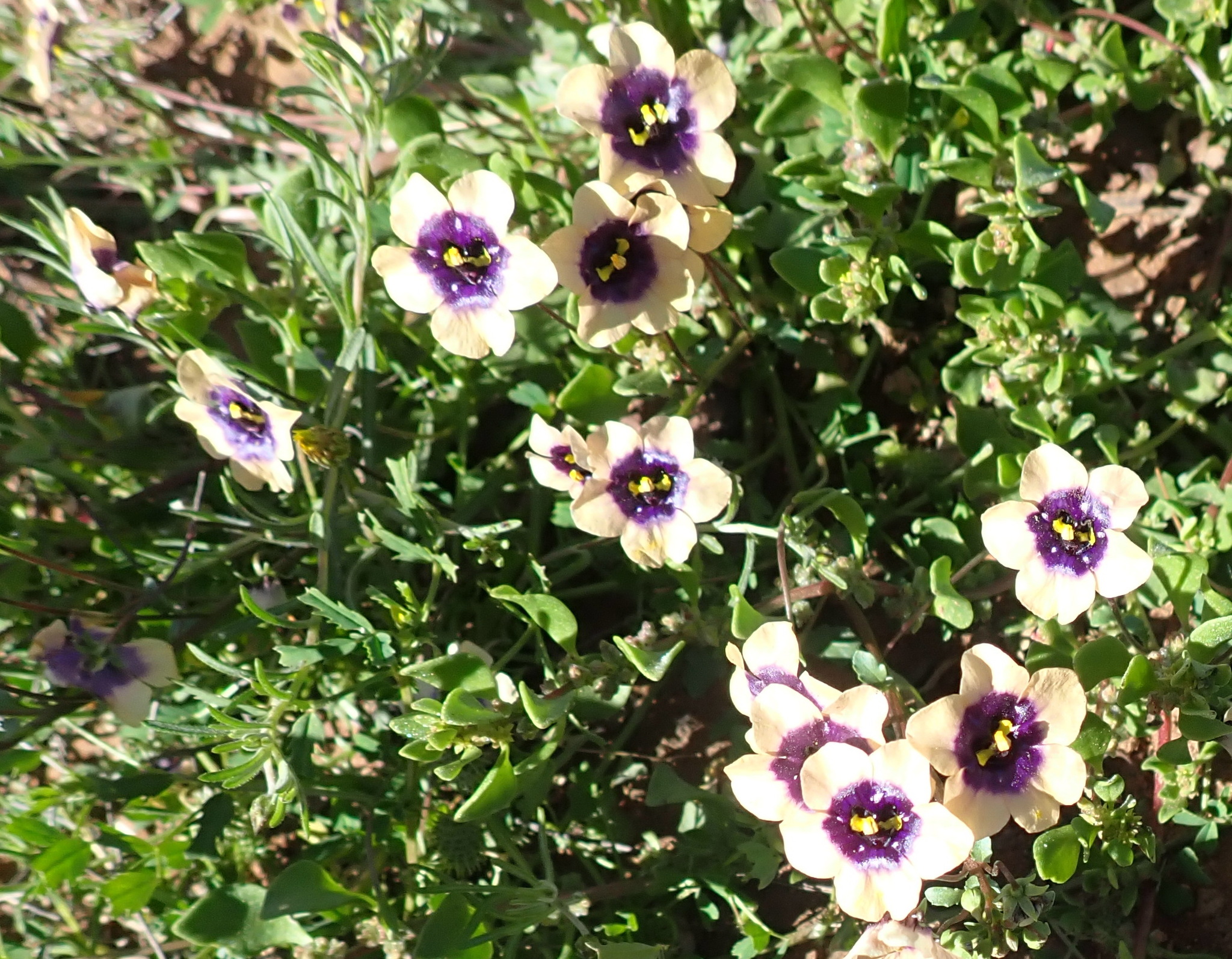
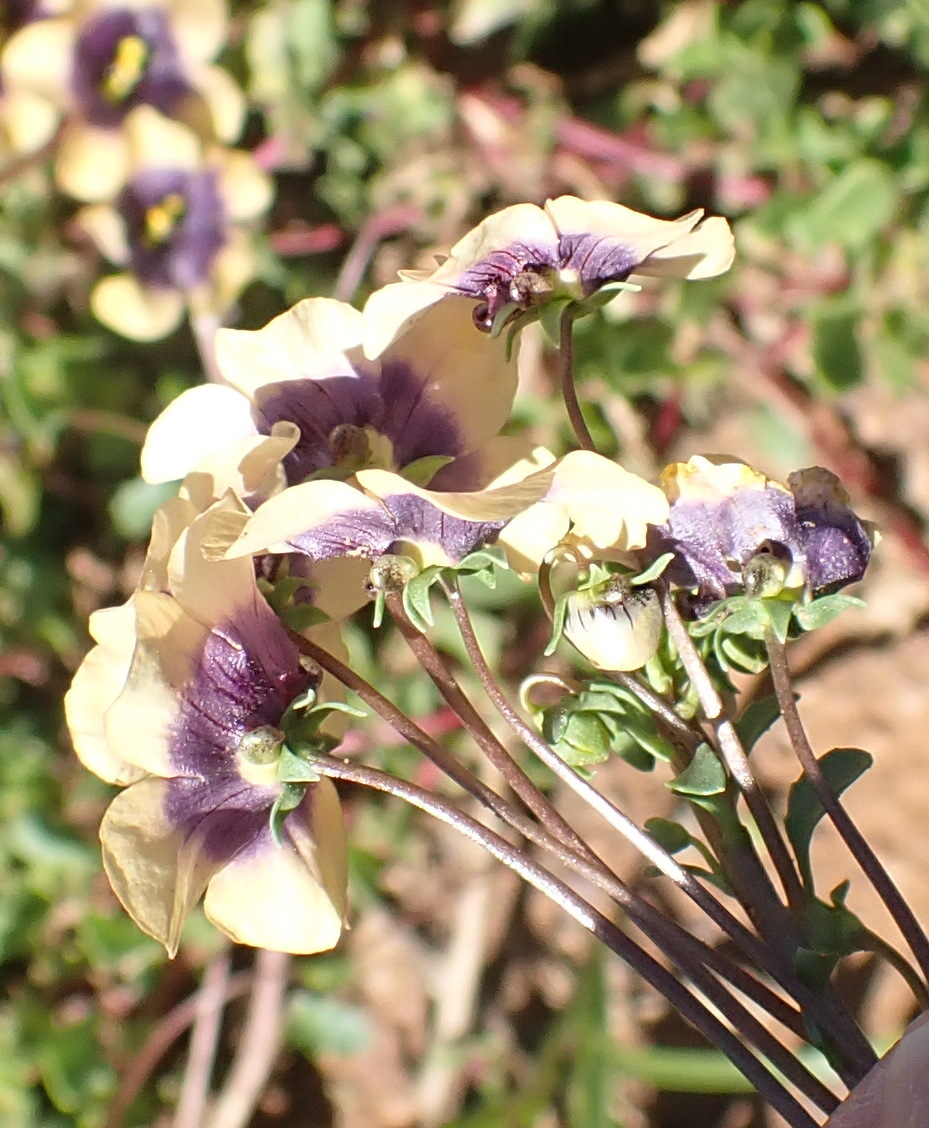
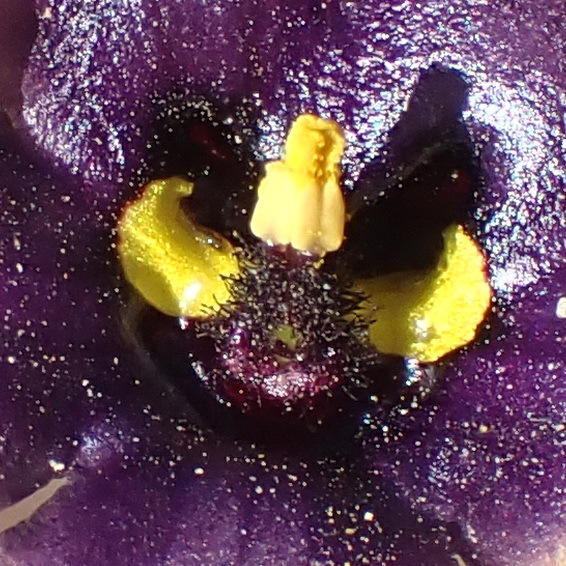
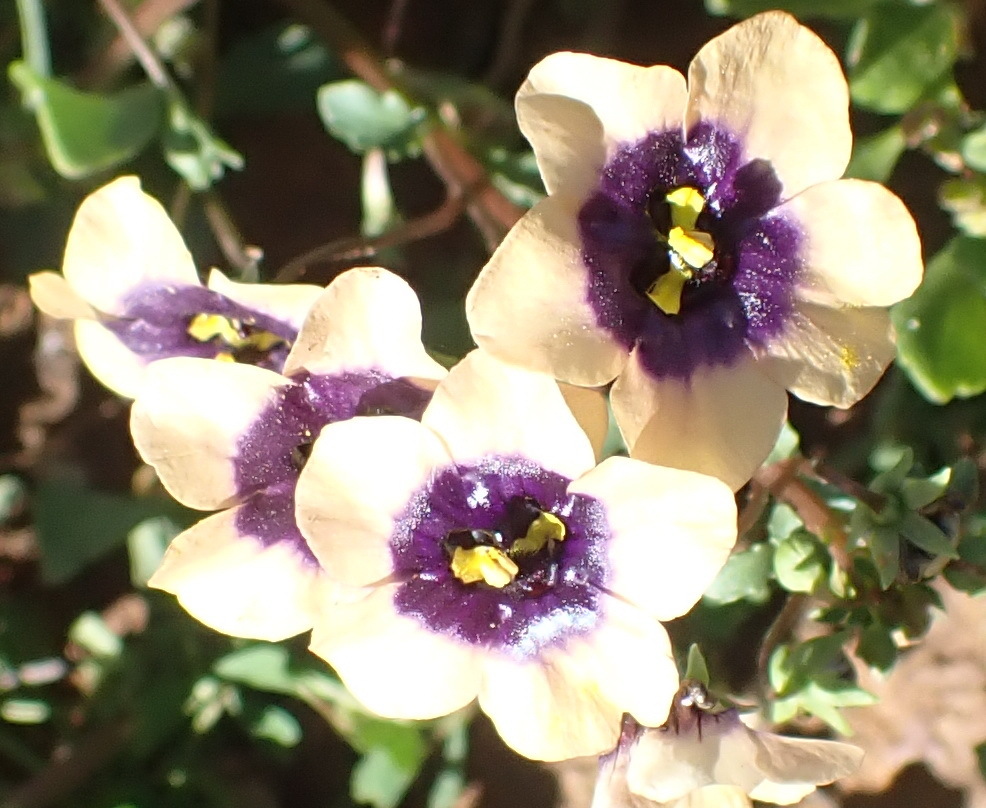
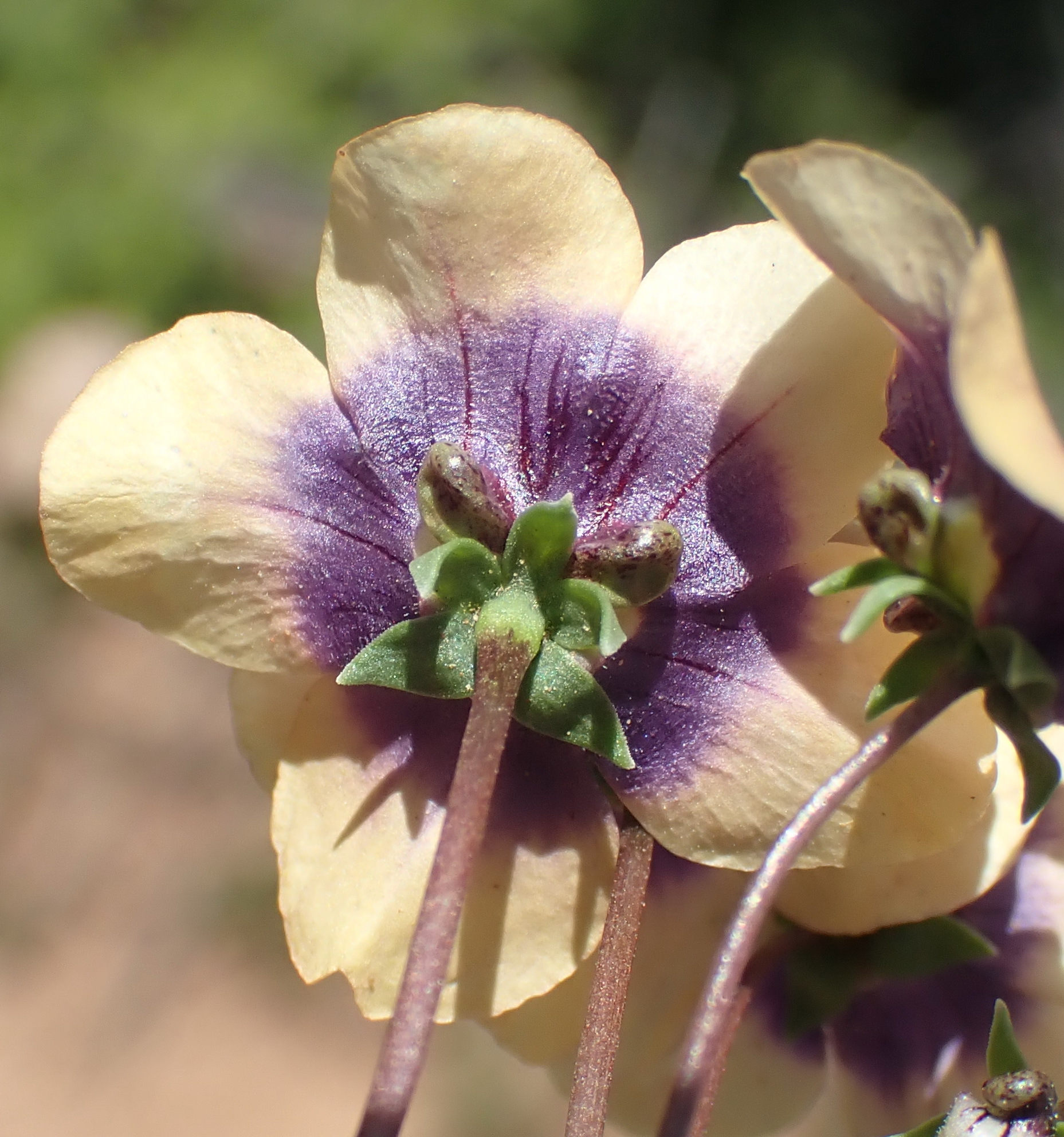
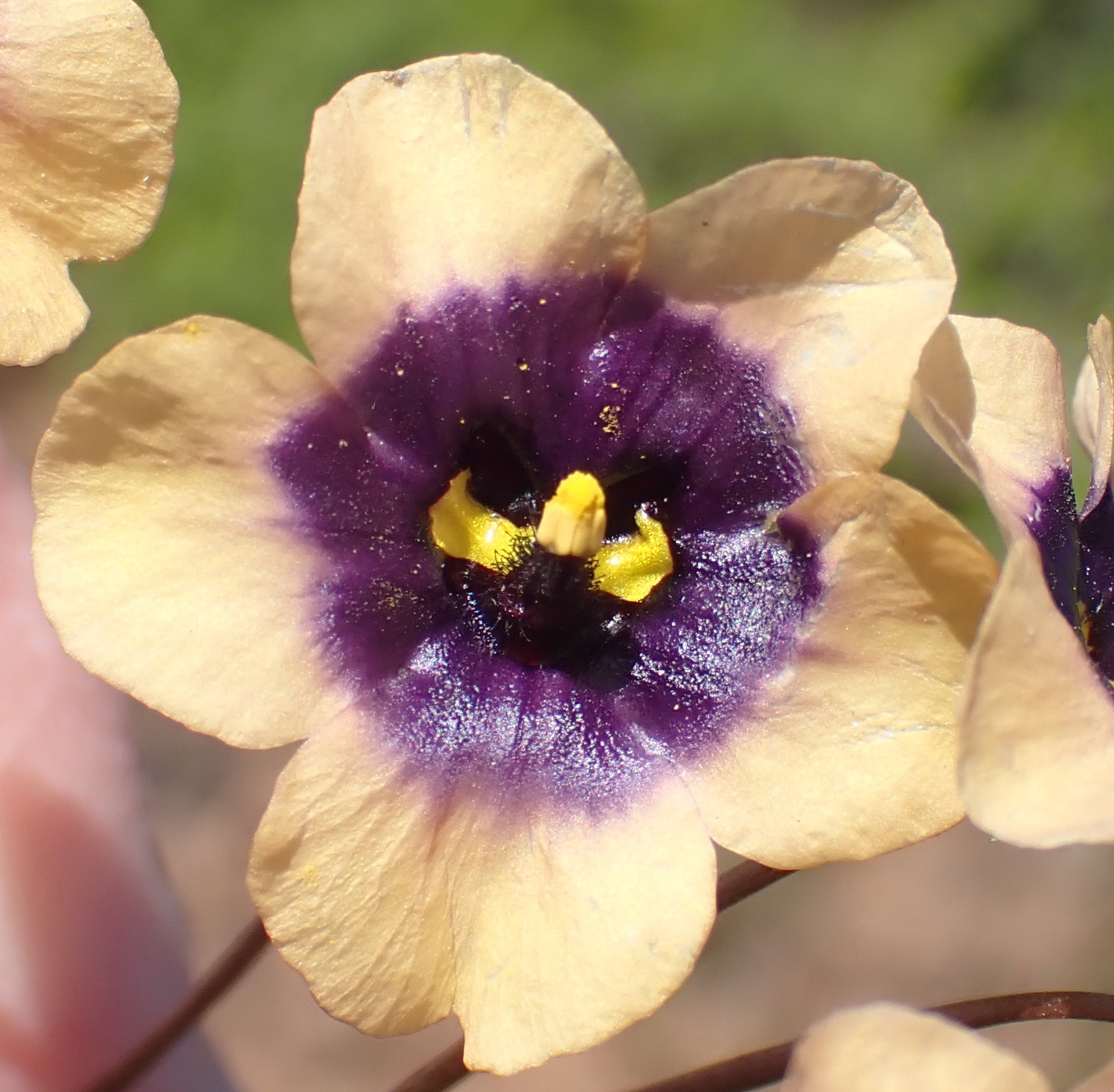
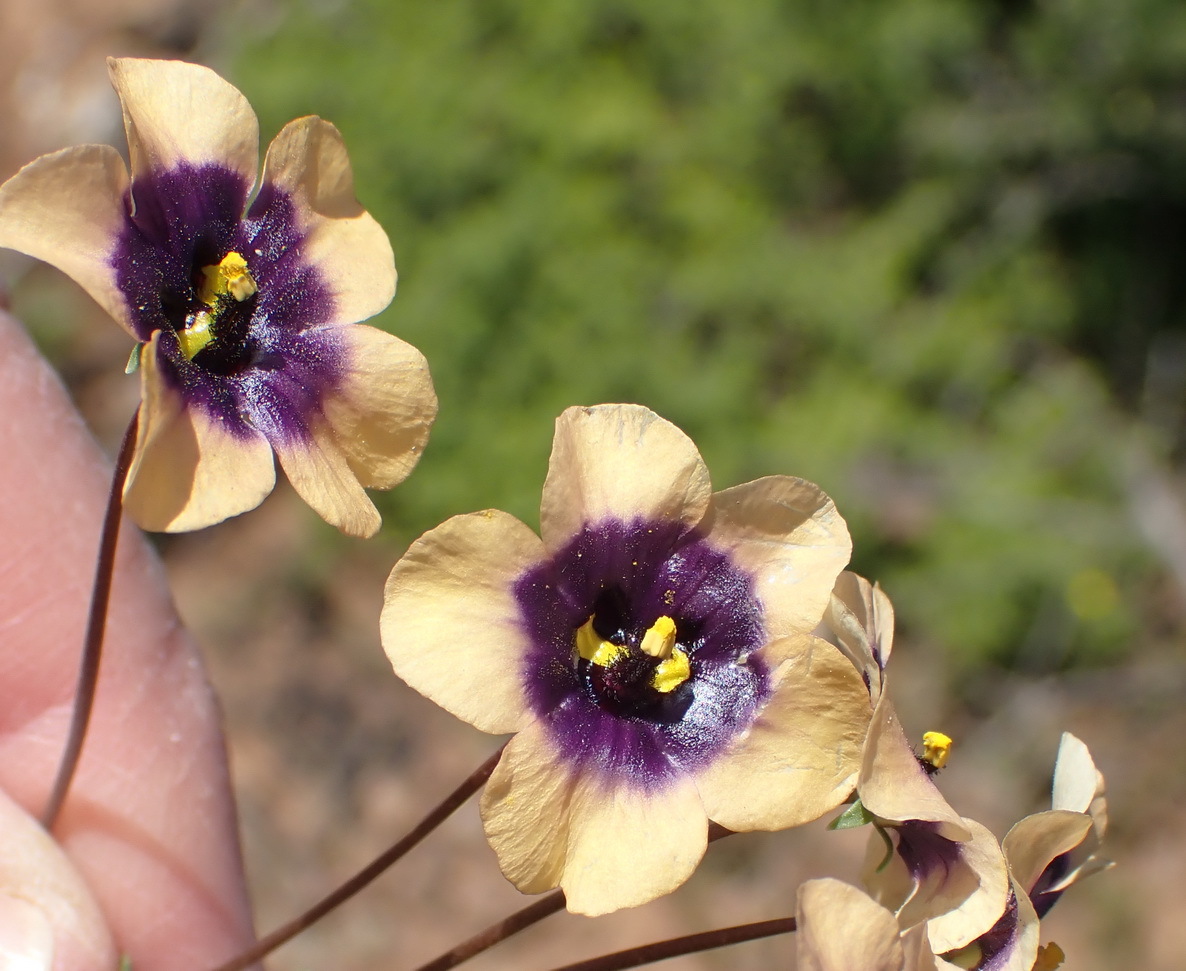
Annual herb, glabrous, simple or branching from the base. Leaves many in a basal rosette, simple, lamina ovate or elliptic to obovate, 8-55 mm long, apex rounded to acute, leaf base attenuate, margins entire, repand, sinuate or irregularly cleft, lobes up to 4 mm long, triangular to widely ovate, entire, rounded to acute, petioles up to ca. 18 mm. Flowers axillary, borne from the basal leaves or from decumbent (erect in early stages of elongation) lateral stems, stems up to 400 mm long, four-sided, up to 2.0 mm on a side, flowers with a faint sweet spicy scent, nodding in early bud, bracts opposite or alternate, becoming reduced upwards; pedicels 28-50 mm long, ascending, broadened and dorsiventrally flattened especially where attached to the flower, recurving in fruit. Calyx lobes five, the uppermost lobe longest and narrowest, ca. 3.0 x 1.0-1.2 mm, lanceolate, the two adjacent lobes more or less equal, ca. 3.0-3.5 x 1.0-1.2 mm, ovate, all three upper lobes acute and recurved or strongly reflexed, the lower two lobes more or less equal, ca. 3.0-3.5 x 1.2-1.7 mm, spreading or somewhat recurved, ovate, acute, all lobes scaberulus on inner margins. Corolla bilabiate ca. 12.5-22.0 x 14.0 -23.0 mm; upper lobes ca. 4.4-8.8 x 4.9-8.4 mm, widely ovate, rounded; lateral lobes ca. 5.0-9.5 x 5.6-8.5 mm, widely ovate, rounded, bases slightly oblique; lower lobe ca. 5.2-9.5 x 6.4-10.8 mm, broadly obcordate; all lobes pale orange-yellow with a purplish-red to purple base; purple portion covered with sessile or shortly stalked dark purple multicellular glandular trichomes; tube ca. 1.0-2.0 mm, distended at the base of upper corolla lobes to form two shallow sacs projecting backwards and to the side and recurved at the tips, sacs ca. 2.1-2.8 x 1.5 mm ovate in outline, very dark purple, with a dense patch of stalked multicellular trichome elaiophores at the opening on the lower side and scattered within especially where the sacs fold over near the tips; outer side of each sac opening with a falciform yellow patch that merges with a yellow horizontal stripe ca. 1 mm wide that spans the tube between the sacs, centre of tube with a ca. 0.75-1.5 mm boss bearing the stamens, mostly greenish-yellow, connected to the tube below the sinus of the upper lobes by a septum that separates the two sac openings. Stamens four, projecting upwards, anticous filaments ca. 2.5-3.0 mm long, curved, densely pubescent with long (ca. 0.5-0.7 mm) purplish trichomes on upper surface; posticous filaments ca. 2.0-2.7 mm long, nearly straight and covered with shorter (ca. 0.25 mm) purple trichomes, anthers ca. 0.7 mm long, reflexed, strongly cohering, yellow. Ovary ca. 1.5-2.0 x 1.0 mm, oblong-ovate in outline, style ca. 2.0 mm long, strongly curved upward from top of ovary; stigma capitate, surrounded by anthers, ovules ca. 40-70. Capsule ca. 6.0-9.0 x 3.5-4.2 mm, falciform-ovate in outline, more than twice as long as the calyx at maturity, seeds ca. 1.1-1.2 mm long, reticulate, embryo straight. From: Steiner, KE. 1992. Two new Diascia species (Scrophulariaceae) from the Little Karoo. S. African J. Bot. 58: 39-47. [Copyright held by the South African Association of Botanists (1992); http://www.sciencedirect.com/science/journal/02546299] [CC BY]
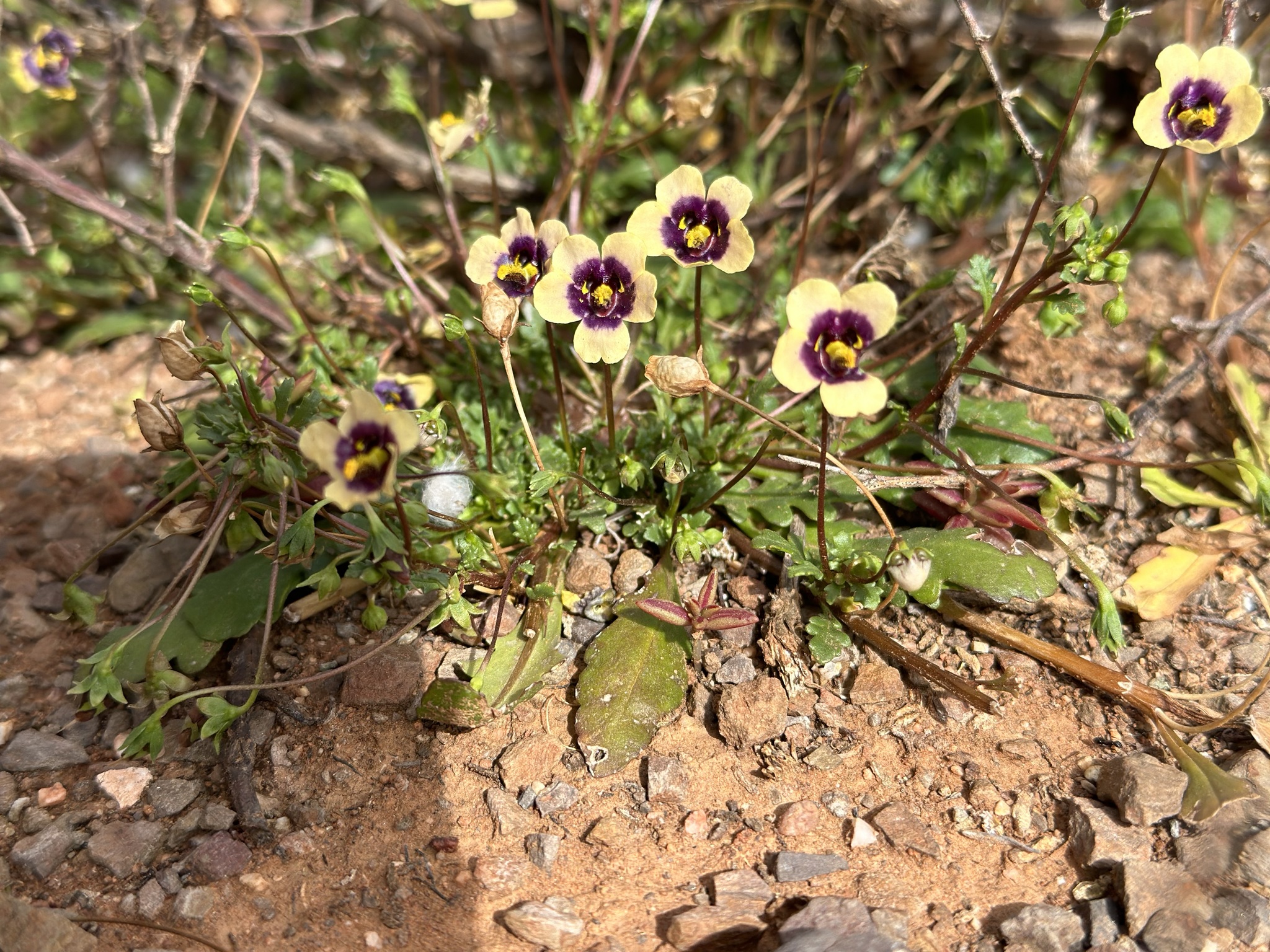
Annual herb, stems simple or branched from base, up to 400 mm high, erect to decumbent. Leaves ± ovate to obovate. Flowers axillary; pedicels 28-50 mm long, ascending, curving back in fruit. Corolla: all lobes light orange-yellow with base purplish red or purple. Sacs 2, in tube at base of upper lobes, well-developed, up to 2.8 mm long, projecting backwards and sideways and recurved at ends, ovate, dark purple; outside of each sac with a yellow patch and a yellow stripe between the 2. Flowering time May-Oct., mainly Aug. From: Smithies, SJ; Bredenkamp, CL; Magwaza, ZL. 2019. Scrophulariaceae s.l.?. In: CL Bredenkamp (ed.), A Flora of the Eastern Cape Province. Strelitzia 41(2): 1475-1538. South African National Biodiversity Institute, Pretoria. [CC BY]
Like D. bicolor but sacs deep violet, stamens erect and filaments with purple hairs. From: Steiner, KE. 2012. Scrophulariaceae: Diascia Link & Otto. In: J Manning & P Goldblatt (eds), Plants of the Greater Cape Floristic Region 1: The Core Cape flora. Strelitzia 29: 736-739. South African National Biodiversity Institute, Pretoria. [CC BY]
Diascia decipiens differs from D. cuneata and D. bicolor in having corolla lobes that are usually pale orange-yellow rather than pale yellow. It differs from D. cuneata by its larger flower size (>12 mm vs. <11 mm), the presence of well-developed sacs behind the upper corolla lobes that contain oil-secreting trichomes, and the absence of two patches of dark purple glands at the base of the lower corolla lobe. It is most easily confused with D. bicolor, but differs from that species in having stamens that project upwards, filaments with short purple rather than long yellow trichomes, a yellow band that spans the tube between the two sac openings, a style that is strongly curved upwards from the base, and sacs that diverge to the side and fold over at the tip instead of projecting upwards behind the upper corolla lobes. From: Steiner, KE. 1992. Two new Diascia species (Scrophulariaceae) from the Little Karoo. S. African J. Bot. 58: 39-47. [Copyright held by the South African Association of Botanists (1992); http://www.sciencedirect.com/science/journal/02546299] [CC BY]
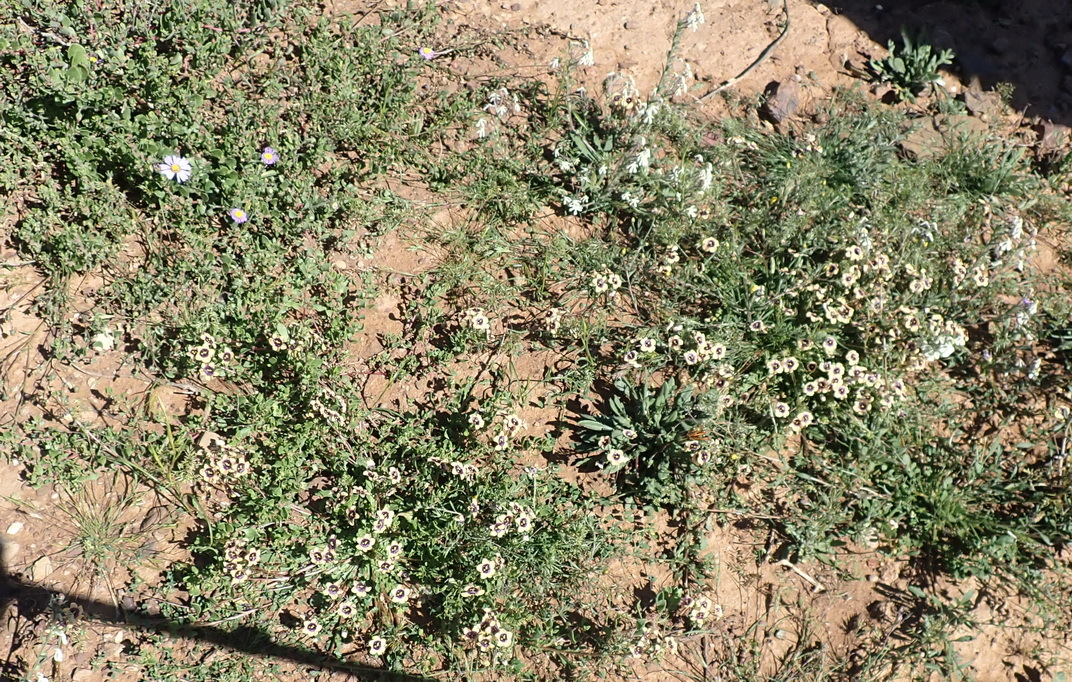
It occurs in heavy red clay soils or in silt deposits on the edge of drainage lines among short to moderately sized succulent karroid vegetation. Occasionally it occurs in sandy soils of dry streambeds. From: Steiner, KE. 1992. Two new Diascia species (Scrophulariaceae) from the Little Karoo. S. African J. Bot. 58: 39-47. [Copyright held by the South African Association of Botanists (1992); http://www.sciencedirect.com/science/journal/02546299] [CC BY]
In heavy red clay soil or silt, or in dry, sandy streambeds; Rainshadow Valley Karoo. From: Smithies, SJ; Bredenkamp, CL; Magwaza, ZL. 2019. Scrophulariaceae s.l.?. In: CL Bredenkamp (ed.), A Flora of the Eastern Cape Province. Strelitzia 41(2): 1475-1538. South African National Biodiversity Institute, Pretoria. [CC BY]
Succulent, karroid flats in clays and silts. From: Steiner, KE. 2012. Scrophulariaceae: Diascia Link & Otto. In: J Manning & P Goldblatt (eds), Plants of the Greater Cape Floristic Region 1: The Core Cape flora. Strelitzia 29: 736-739. South African National Biodiversity Institute, Pretoria. [CC BY]
Diascia decipiens, with one exception, appears limited to the drainage basin of the Olifants River from ca. 20 km west of Oudtshoom to near Toorwater. From: Steiner, KE. 1992. Two new Diascia species (Scrophulariaceae) from the Little Karoo. S. African J. Bot. 58: 39-47. [Copyright held by the South African Association of Botanists (1992); http://www.sciencedirect.com/science/journal/02546299] [CC BY]
Little Karoo. From: Steiner, KE. 2012. Scrophulariaceae: Diascia Link & Otto. In: J Manning & P Goldblatt (eds), Plants of the Greater Cape Floristic Region 1: The Core Cape flora. Strelitzia 29: 736-739. South African National Biodiversity Institute, Pretoria. [CC BY]
May to December
200 to 760 m
This map contains point-based occurrences at different locations
Occurrence in the Flora of Southern Africa (FSA) countries and South African provinces. Residence status indicates if a taxon is indigenous, endemic, naturalised or invasive in a specific region. This data is based on specimen records and literature
FSA
SA
BOT
NAM
ESW
LES
WC
EC
NC
FS
GA
KZN
LP
MP
NW
Absent
Indigenous
Endemic
Naturalised
Invasive
Names and Sources
Classification
KINGDOM Plantae
SUBKINGDOM Phanerogamae
PHYLUM Anthophyta
ORDER Lamiales
FAMILY Scrophulariaceae
TRIBE Hemimerideae
GENUS Diascia
SPECIES decipiens
27 results for Diascia decipiens K.E.Steiner
Barcode: PRE0164948-0 Collector(s) & number: Dahlstrand, KA, 1437 | 1970-10-19
South Africa, Western Cape, DE RUST; DOORNKRAAL FARM 3 MI. E. OF DE RUST
Data Resource: BODATSA View record
Barcode: NBG1469400-0 Collector(s) & number: Steiner, K, 2945 | 1995-6-28
South Africa, Western Cape, Ladismith. Calitzdorp-Oudtshoorn road (R62), 29.9 km E of Calitzdorp. Altitude: c. 230 m.
Data Resource: BODATSA View record
Barcode: NBG1469407-0 Collector(s) & number: Dahlstrand, KA, 2155 | 1971-9-30
South Africa, Western Cape, Oudtshoorn. The Hon. P. M. K. Le Roux Farm-Doornkraal. Altitude~400 m.
Data Resource: BODATSA View record
Barcode: PRE0754093-0 Collector(s) & number: Bester, SP, 4155 | 2003-6-2
South Africa, Eastern Cape, Gwarriepoort area. Farm Keurfontein, ca. 16 km SW from Willowmore.
Data Resource: BODATSA View record
Barcode: NBG1469405-0 Collector(s) & number: Steiner, K, 2550 | 1990-8-20
South Africa, Western Cape, Ladismith. Road 62, 20.2 km west of turnoff to Mossel Bay (R328)
Data Resource: BODATSA View record
Barcode: NBG1469403-0 Collector(s) & number: Steiner, K, 2546 | 1992-8-20
South Africa, Western Cape, Oudtshoorn. Road 62, 10.6 km south of Oudtshoorn (Voortrekker).
Data Resource: BODATSA View record
Barcode: NBG0149579-0 Collector(s) & number: Steiner, KE, 2134 | 1990-8-7
South Africa, Western Cape, Oudtshoorn. Locally common in hard - packed clay soil on roadside; Farm Buffelsklip, 33.6 km east of De Rust on road to Willowmore.
General notes: Plants drying out; corolla lobes ranging from bright yellow to orange yellow with purple bases, yellow band spanning with tube between the two spurs.
Data Resource: BODATSA View record
Barcode: NBG1469406-0 Collector(s) & number: Steiner, K, 2549 | 1992-8-20
South Africa, Western Cape, Oudtshoorn. Road 62, 15.2 km west of turnoff to Mossel Bay.
Data Resource: BODATSA View record
Barcode: PRE0164814-0 Collector(s) & number: Acocks, JPH, 20481 | 1959-5-21
South Africa, Western Cape, CALITZDORP DIV.; WYNANDS RIVER; 3 MI. WNW. OF WYNANDSRIVIER PO.
Data Resource: BODATSA View record
Barcode: NBG1469399-0 Collector(s) & number: Steiner, K, 2945A | 1995-6-28
South Africa, Western Cape, Ladismith. Calitzdorp-Oudtshoorn road (R62), 29.9 km E of Calitzdorp. Altitude: c. 230 m.
Data Resource: BODATSA View record
Barcode: NBG1469395-0 Collector(s) & number: Steiner, K, 2156 | 1990-8-8
South Africa, Western Cape, Oudtshoorn. Road to George (R29), 7 km south of Oudtshoorn (Voortrekker Street). Altitude: c. 370 m.
Data Resource: BODATSA View record
Barcode: PRE0164947-0 Collector(s) & number: Dahlstrand, KA, 2155 | 1971-9-30
South Africa, Western Cape, DE RUST; DOORNKRAAL FARM AT WATER RESERVOIR HILL
Data Resource: BODATSA View record
Barcode: NBG1469401-0 Collector(s) & number: Bayer, MB, 6348 | --
South Africa, Western Cape, Oudtshoorn. Welgdal, ± 10 km W Oudtshoorn.
Data Resource: BODATSA View record
Barcode: PRE0572331-0 Collector(s) & number: Acocks, JPH, 20481 | 1959-5-21
South Africa, Western Cape, CALITZDORP DIV.; WYNANDS RIVER; 3 MI. WNW. OF WYNANDSRIVIER PO.
Data Resource: BODATSA View record
Barcode: NBG1469396-0 Collector(s) & number: Steiner, K, 2130 | 1990-8-7
South Africa, Western Cape, Oudtshoorn. Farm Buffelsvallei, 12.4 km east of De Rust.
Data Resource: BODATSA View record
Barcode: NBG1469398-0 Collector(s) & number: Dean, S, s.n. | 1990-7-30
South Africa, Western Cape, Farm Lammerskraal. Altitude: c. 1070 m.
Data Resource: BODATSA View record
Barcode: NBG1469397-0 Collector(s) & number: Steiner, K, 2132 | 1990-8-7
South Africa, Western Cape, Oudtsoorn. Farm Diepkloof, 20.6 km east of De Rust.
Data Resource: BODATSA View record
Barcode: PRE0164968-0 Collector(s) & number: Thompson, MF, 1402 | 1971-10-5
South Africa, Cape Province, TOORWATER; SLOPES E. OF TOORWATER
Data Resource: BODATSA View record
Barcode: NBG1469404-0 Collector(s) & number: Steiner, K, 2548 | 1992-8-20
South Africa, Western Cape, Oudtshoorn. Road 62, 10.1 km west of turnoff to Mossel Bay (R328).
Data Resource: BODATSA View record
Barcode: PRE0785583-0 Collector(s) & number: Steiner, KE, 2134 | 1990-8-7
South Africa, Western Cape, Oudtshoorn. Farm Buffelsklip, 33.6km E of De Rust on road to Willowmore.
General notes: Hard-packed clay soil on roadside. Plants drying out, corolla lobes ranging from bright yellow to orange yellow with purple bases, yellow band spanning the tube between the two spurs. Locally common.
Data Resource: BODATSA View record
Barcode: NBG1469409-0 Collector(s) & number: Thompson, MF, 1402 | 1971-10-5
South Africa, Eastern Cape, Willowmore. Slopes of Toorwater.
Data Resource: BODATSA View record
Barcode: NBG1469402-0 Collector(s) & number: Steiner, K, 2539 | 1992-8-20
South Africa, Western Cape, Oudtshoorn, North St. near military installation on NW edge of town.
Data Resource: BODATSA View record
This map contains point-based occurrences at different locations
2019
SERIES CHAPTER
Scrophulariaceae s.l.? Smithies, SJ; Bredenkamp, CL; Magwaza, ZLIn: CL Bredenkamp (ed.), A Flora of the Eastern Cape Province. Strelitzia 41(2)1475-1538
South African National Biodiversity Institute, Pretoria
2012
SERIES CHAPTER
Scrophulariaceae: Diascia Link & Otto Steiner, KEIn: J Manning & P Goldblatt (eds), Plants of the Greater Cape Floristic Region 1: The Core Cape flora. Strelitzia 29: 736-739
South African National Biodiversity Institute, Pretoria
1992
PERIODICAL/JOURNAL
Two new Diascia species (Scrophulariaceae) from the Little Karoo Steiner, KESouth African Journal of Botany 58: 39-47
No results found for Diascia decipiens K.E.Steiner
Status and criteria
LC
Assessor(s)
Plantae Coordinator
JOURNAL ARTICLE
Townsend, A. 2001. Satyrium rhodanthum: mythed or missed!. Orchids South Africa. 32:68-73
JOURNAL ARTICLE
Townsend, C.C. 1982. A new species of African Celosiaand a new conspectus of Hermbstaedtia. Notes on Amaranthaceae: XIV. Kew Bulletin. 37:82-90
GENERIC
Townsend, C.C. 1988. Amaranthaceae. Edited by E. Launert. Flora Zambesiaca. Flora Zambesiaca Managing Committee. 9 (Part 1):28-133
JOURNAL ARTICLE
Townsend Peterson, A. and Kluza, D.A. 2003. New distributional modelling approaches for gap analysis. Animal Conservation. 6:47-54
JOURNAL ARTICLE
Triest, L. 1988. First Record of Najas Setacea (A. Br.) Rendle from Continental Africa. Bulletin Du Jardin Botanique National De Belgique. 58:260-261
GENERIC
Troupin, G. 1960. Menispermaceae. Edited by A.W. Exell and H. Wild. Flora Zambesiaca. Crown Agents for Oversea Governments and Administrations. 1 (Part 1):150-173
| Part(s) of plant used | Use(s) | Reference |
|---|
Coming soon...


