PLANTAE / PHANEROGAMAE / ANTHOPHYTA / LAMIALES / SCROPHULARIACEAE / LIMOSELLEAE / MANULEA / EXIGUA

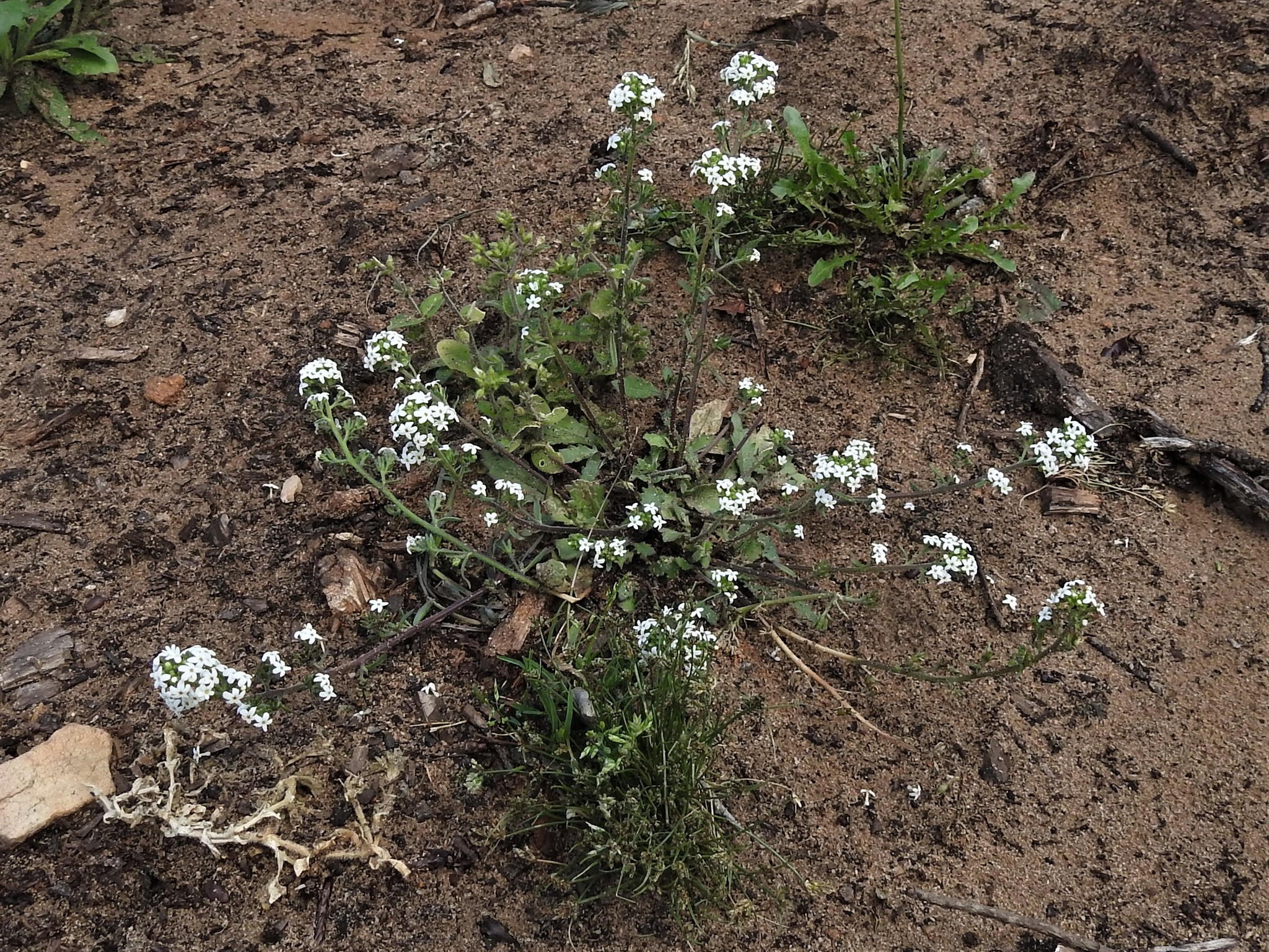
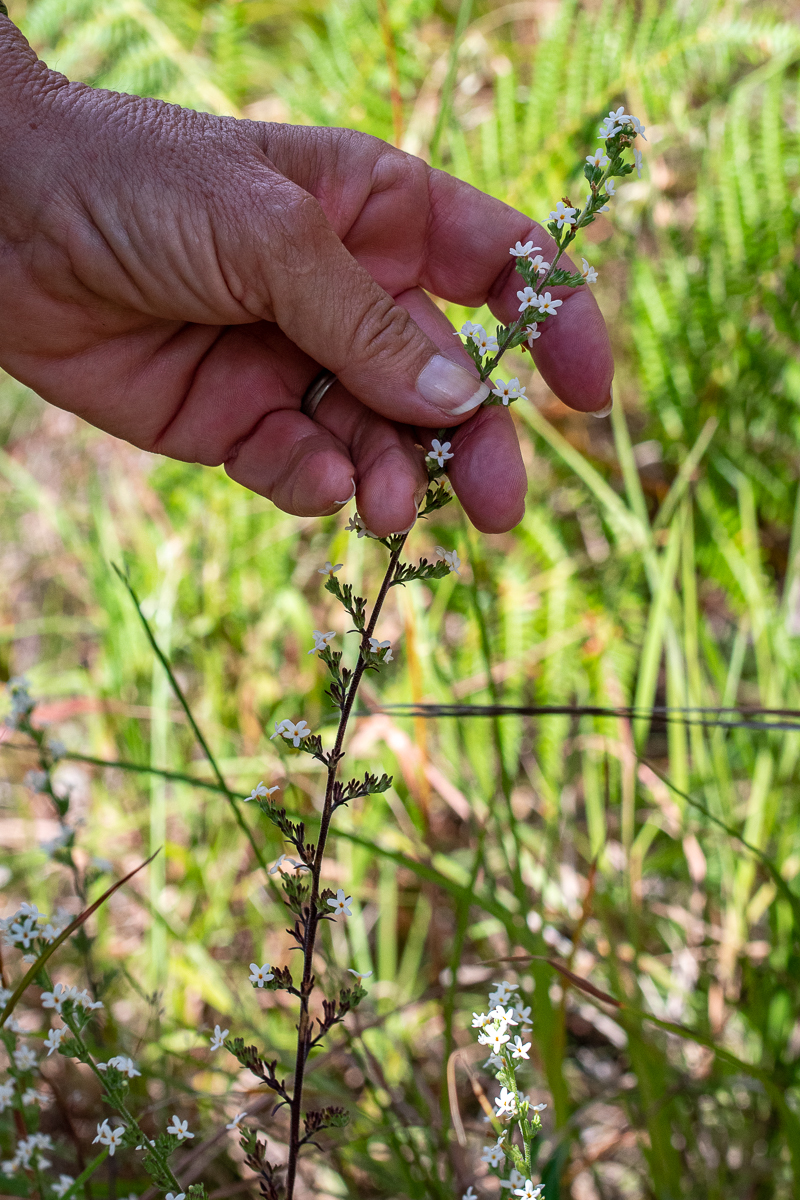
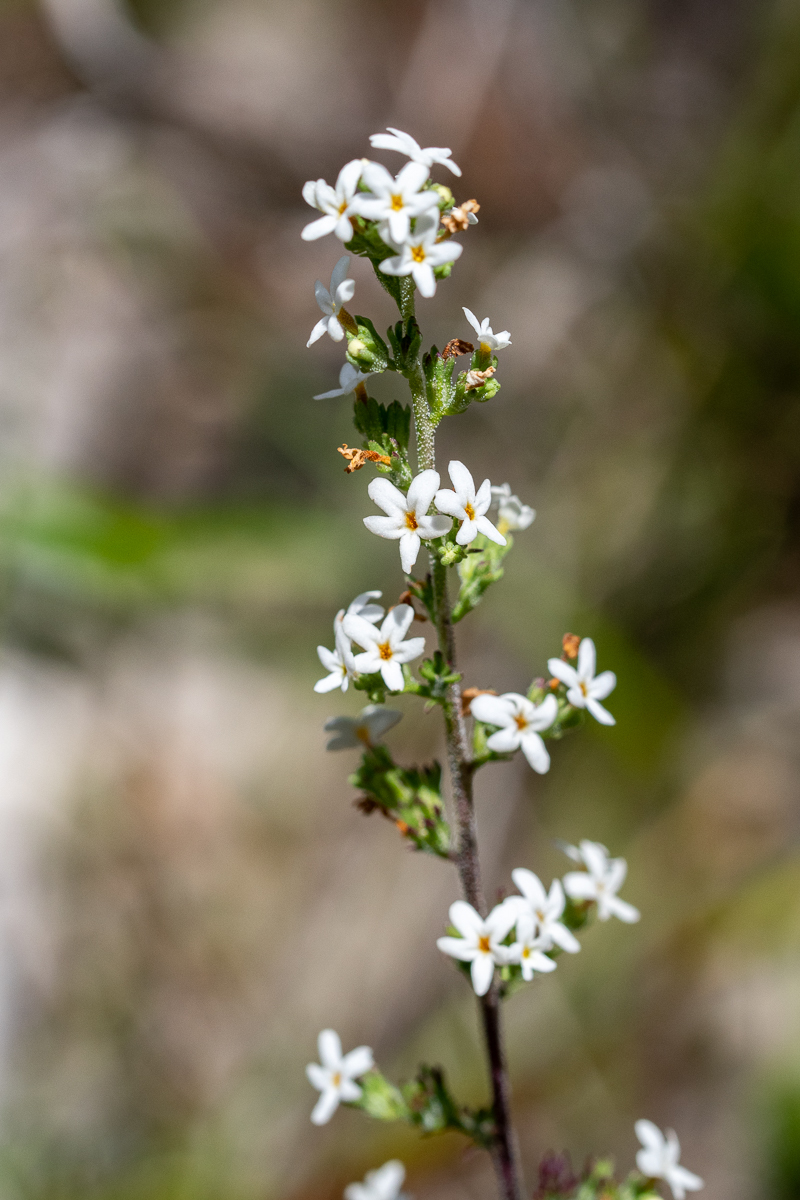
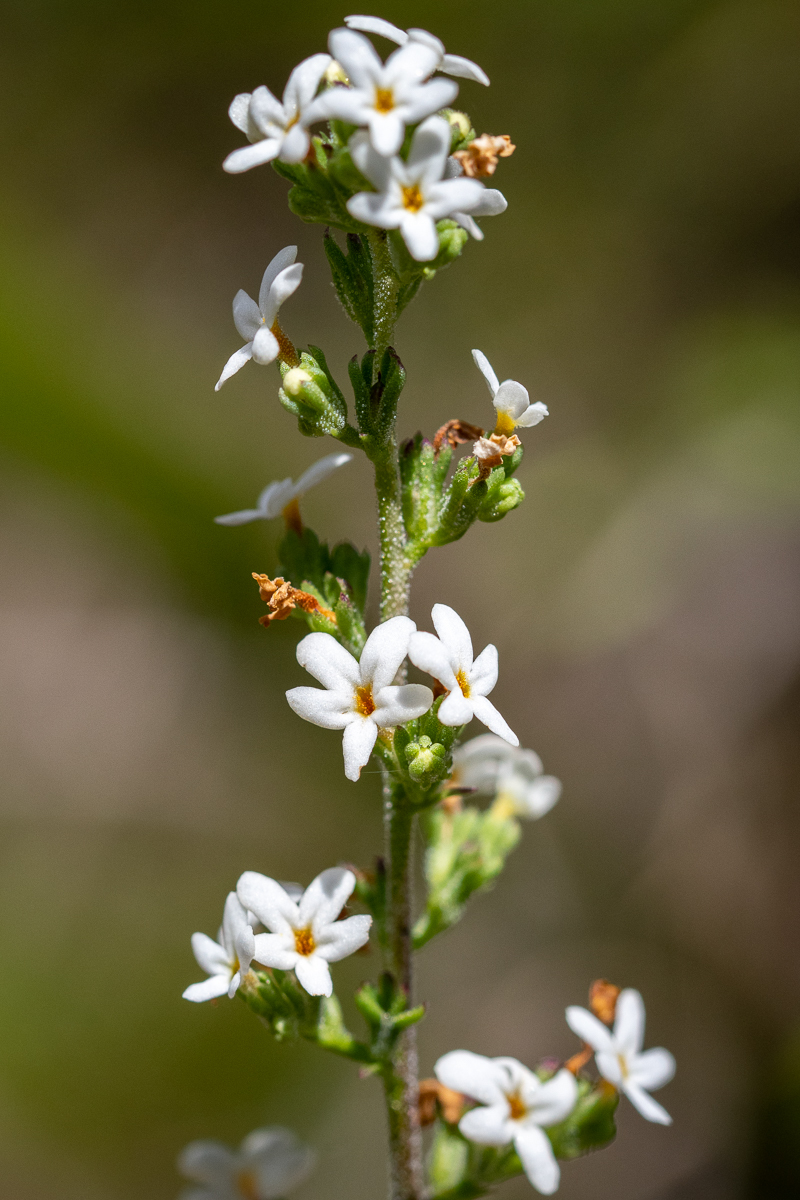
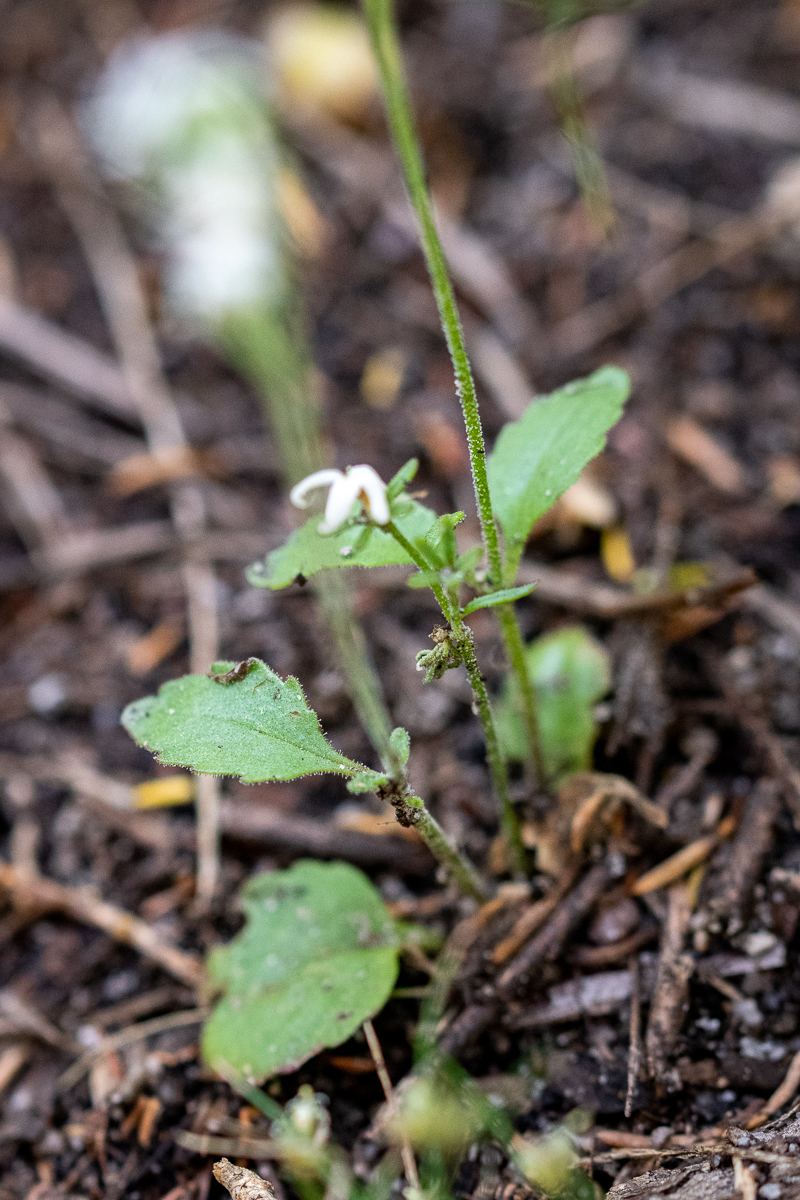
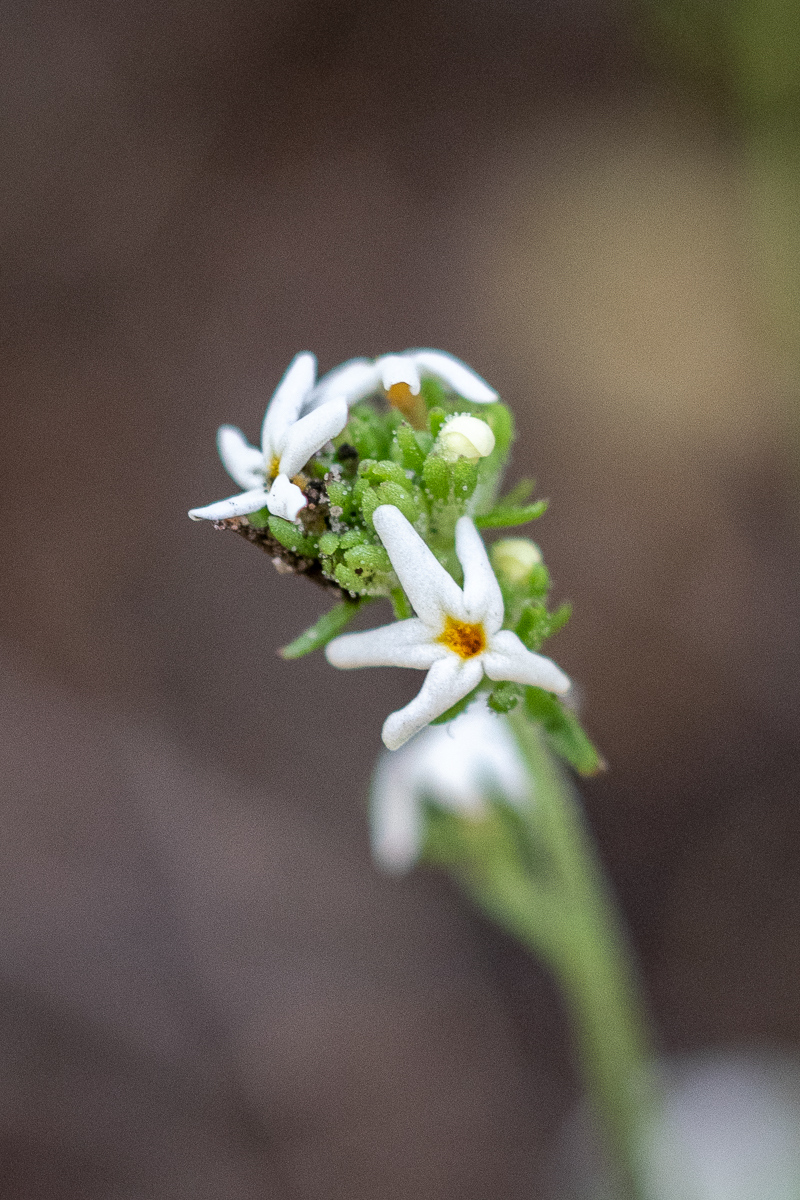
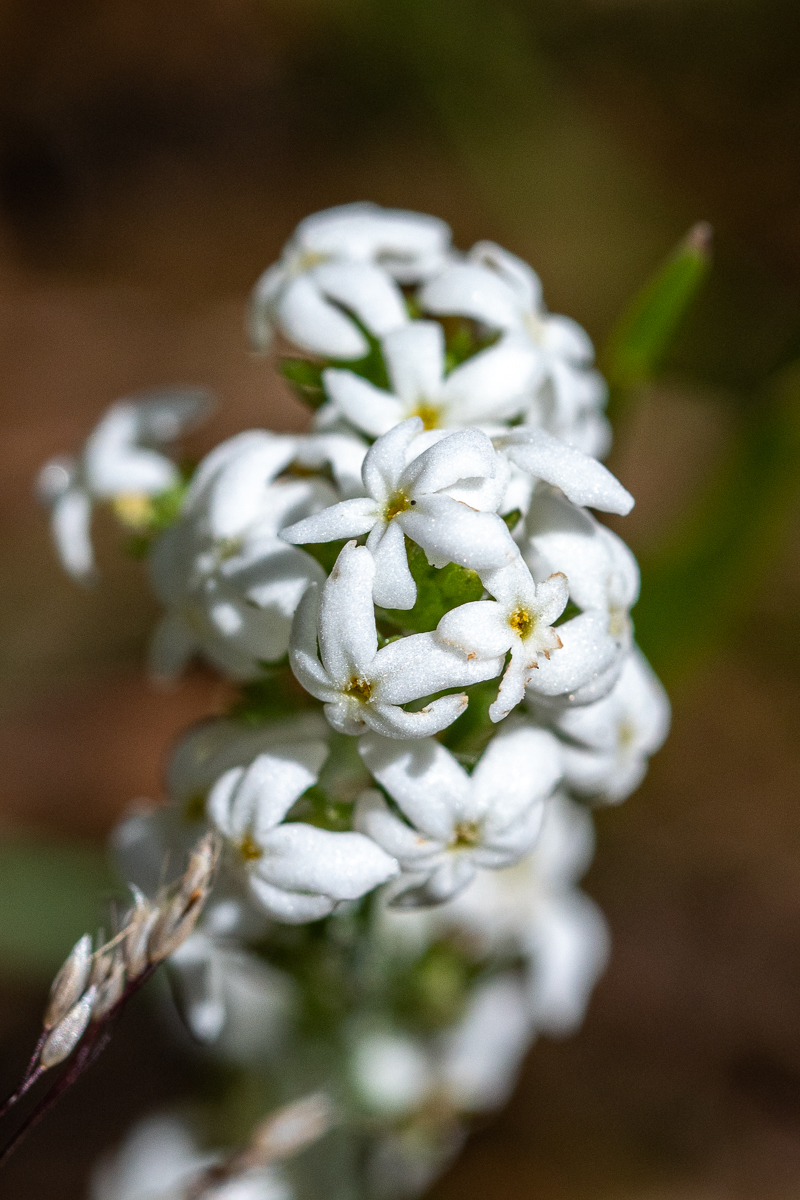
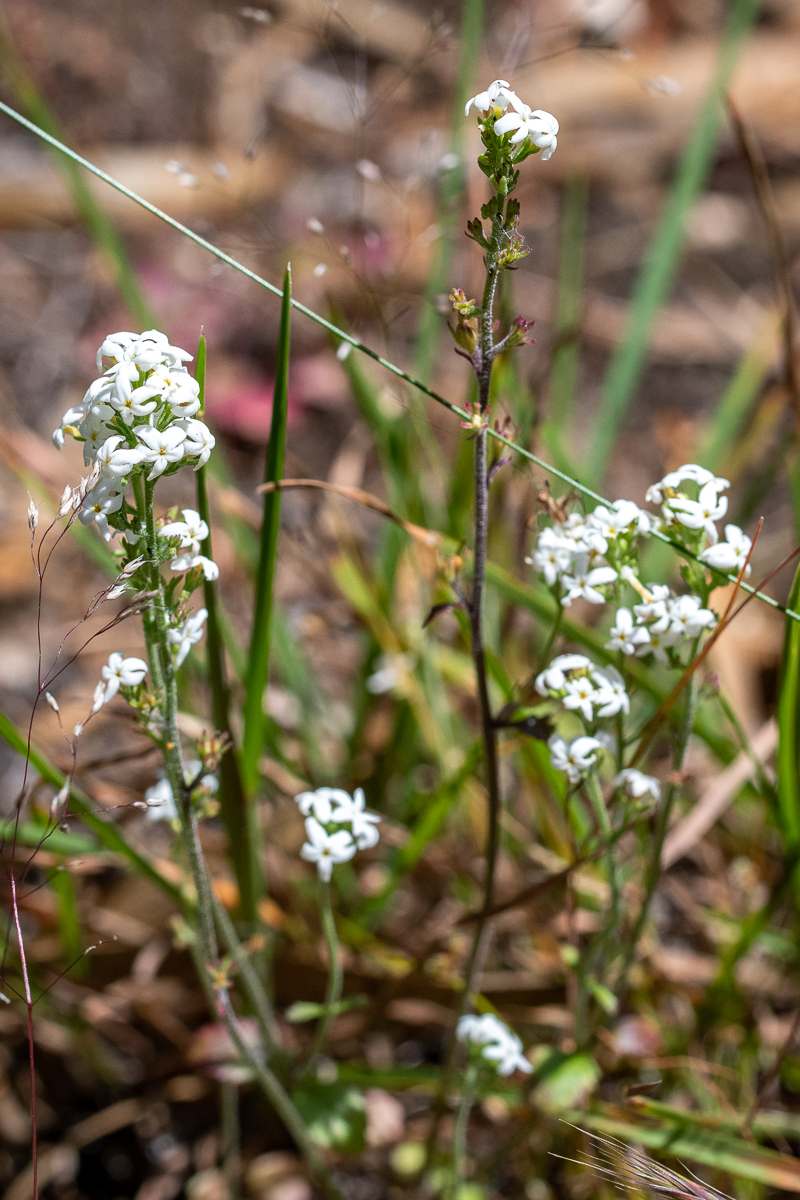
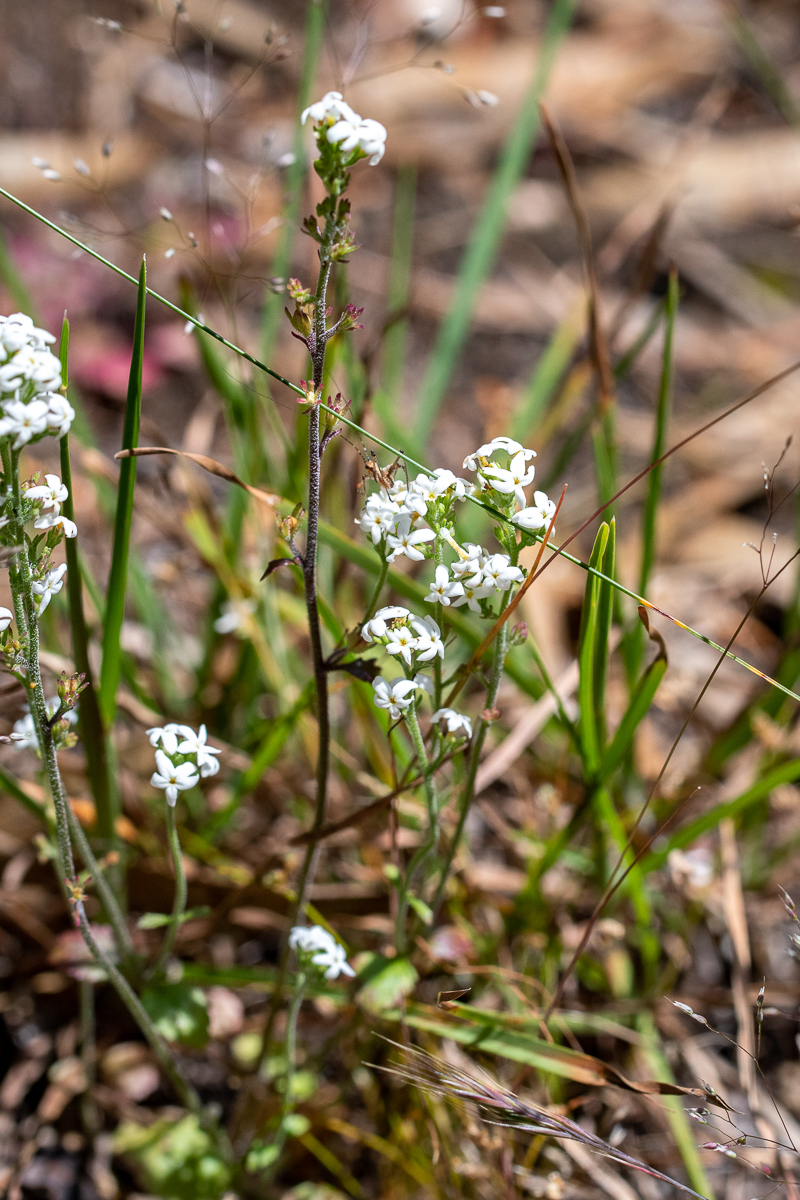
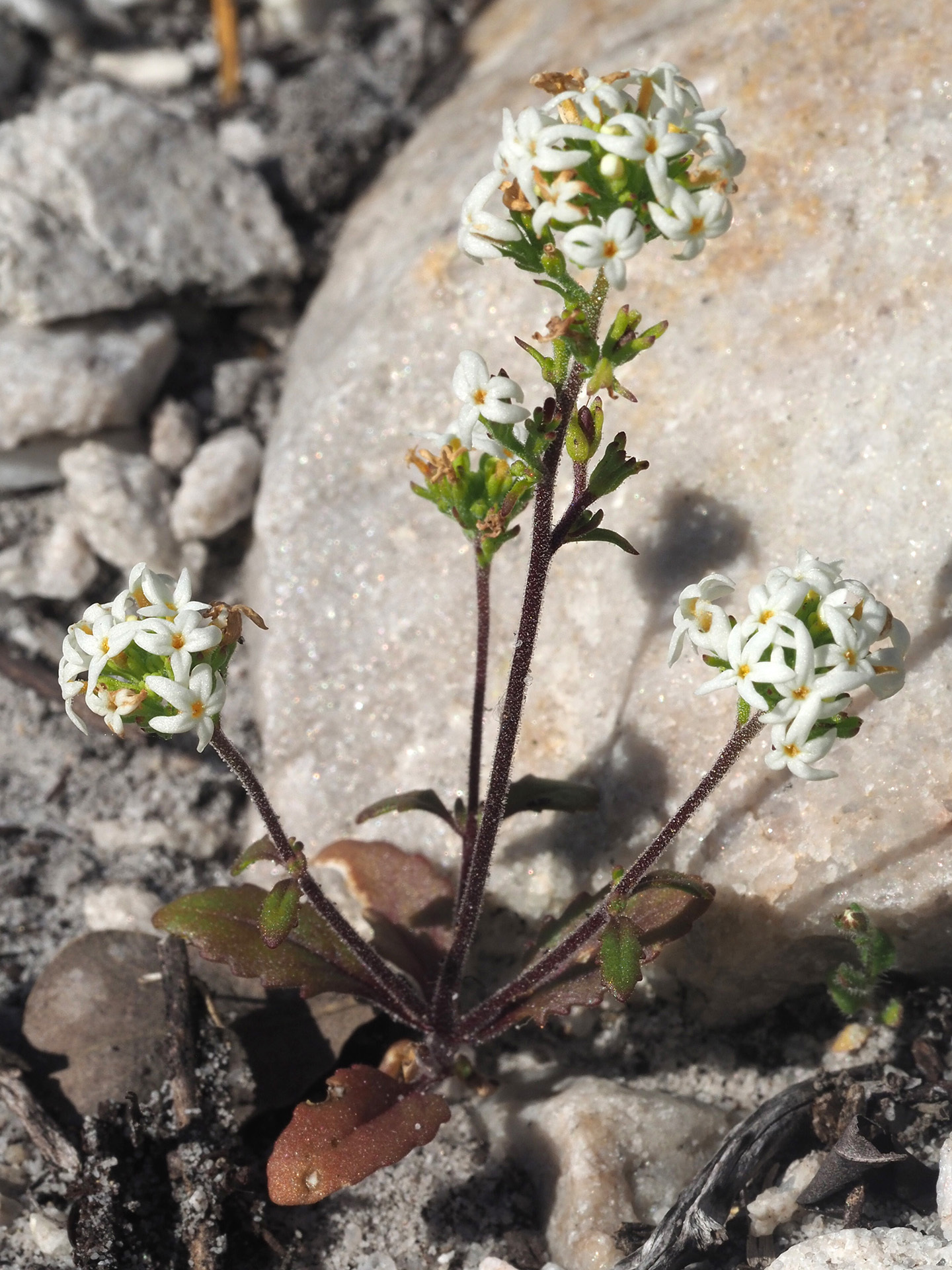
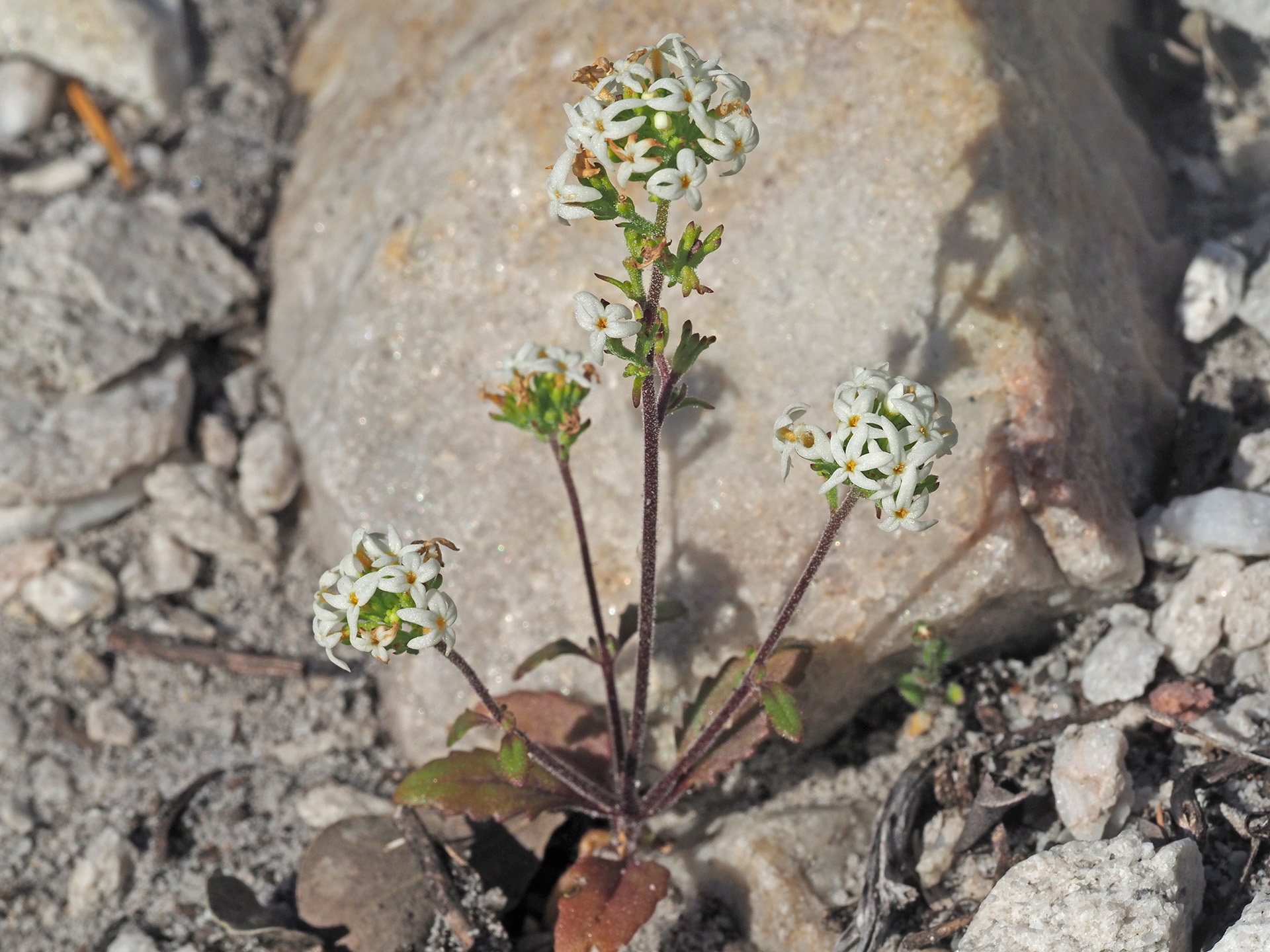
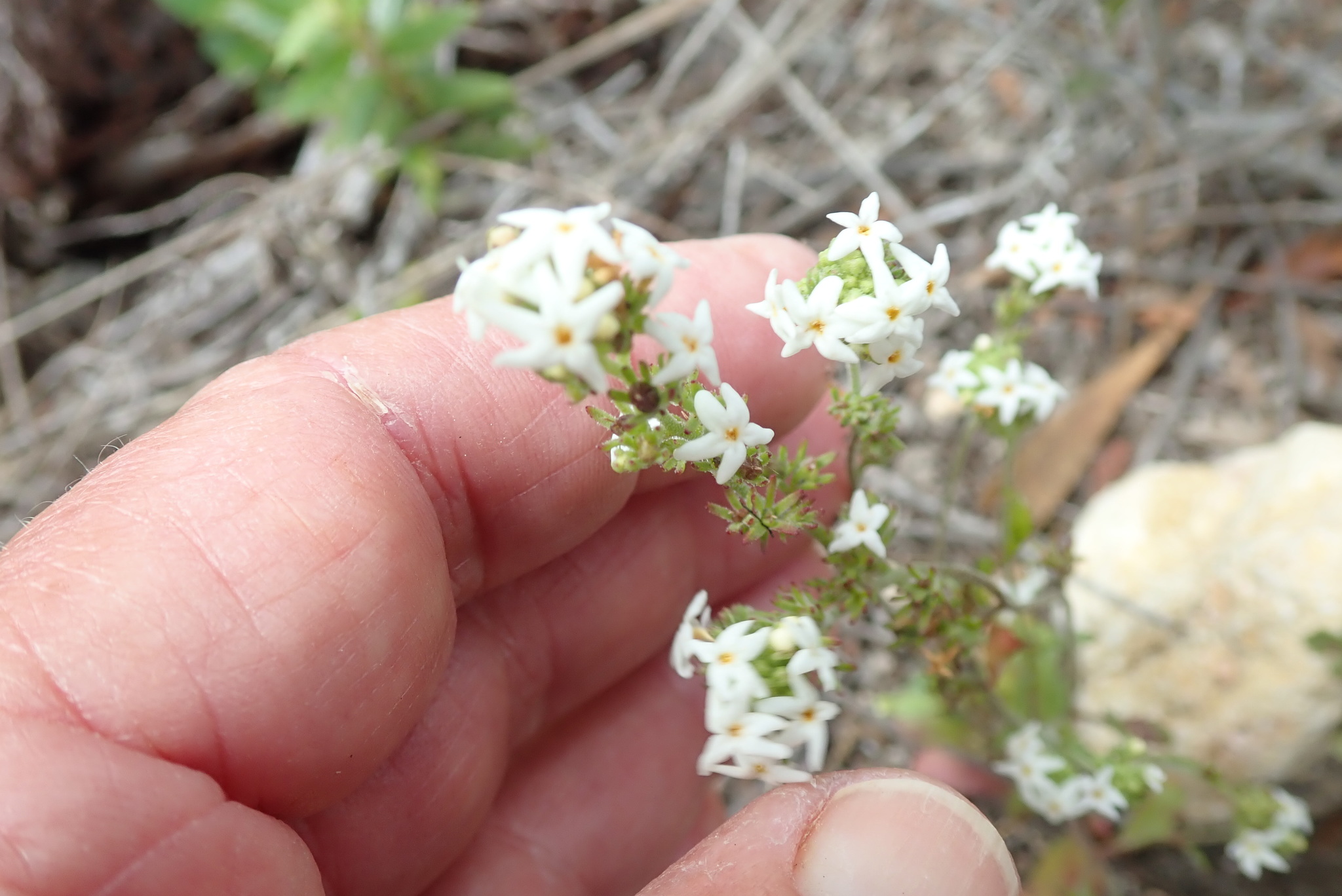
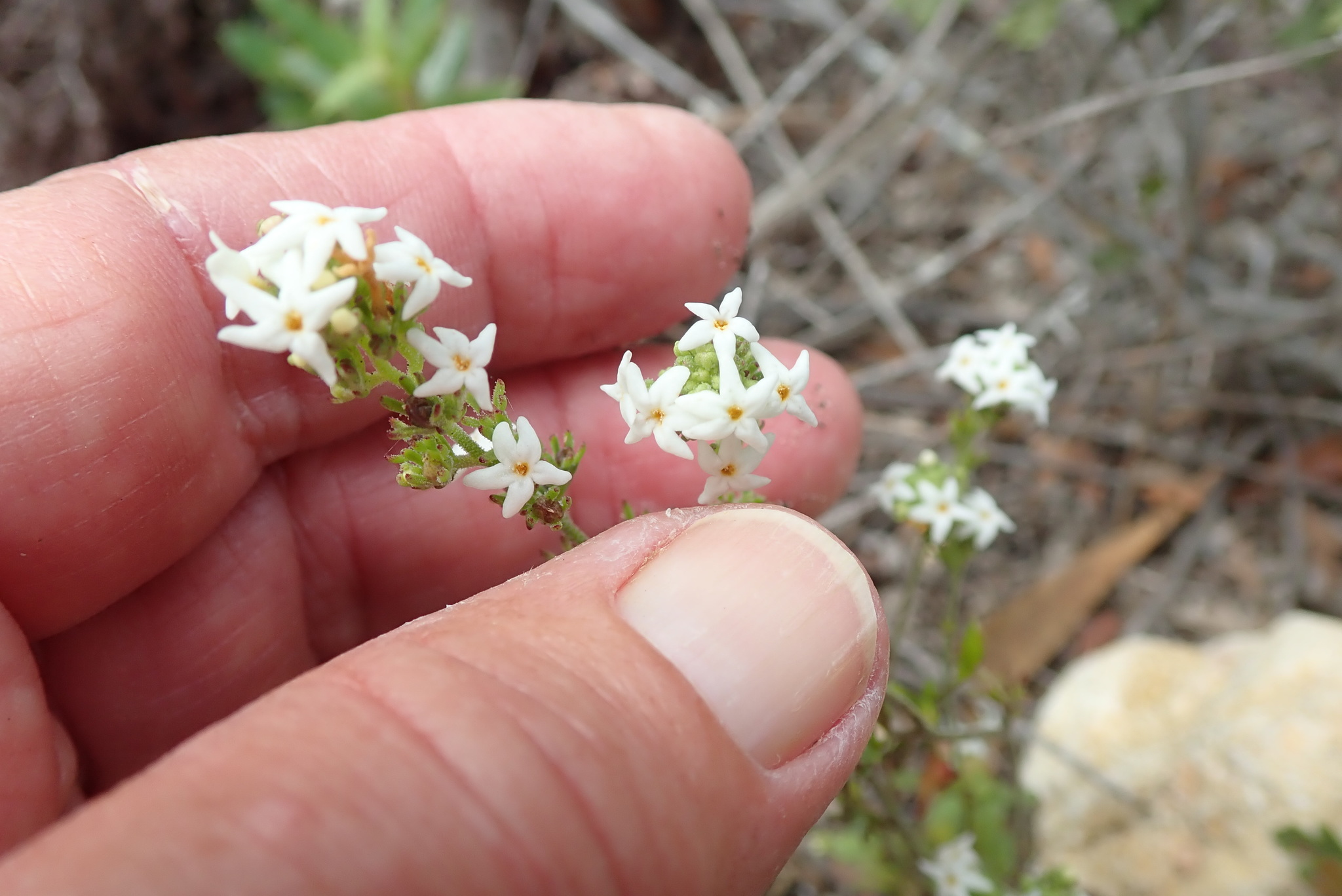
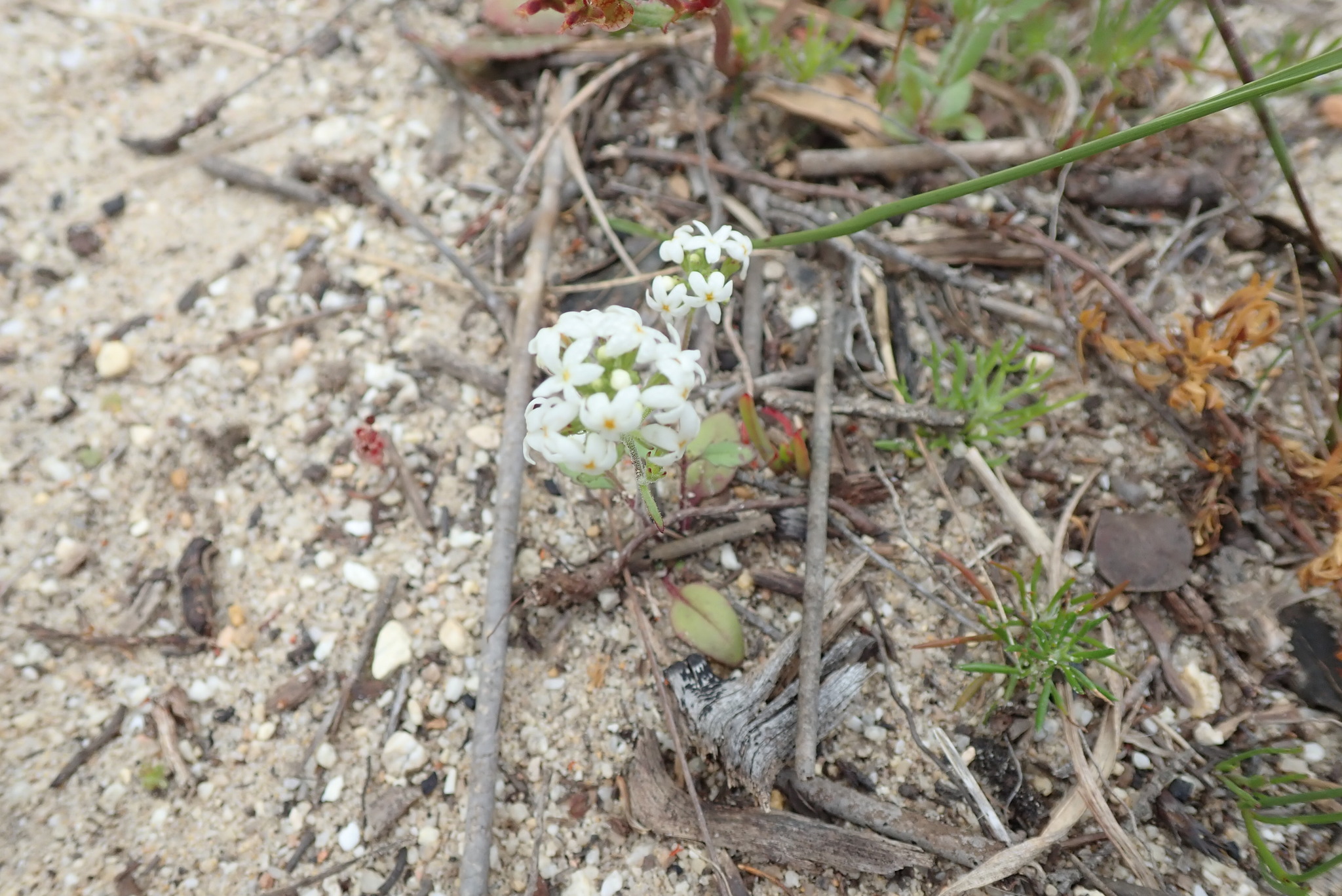
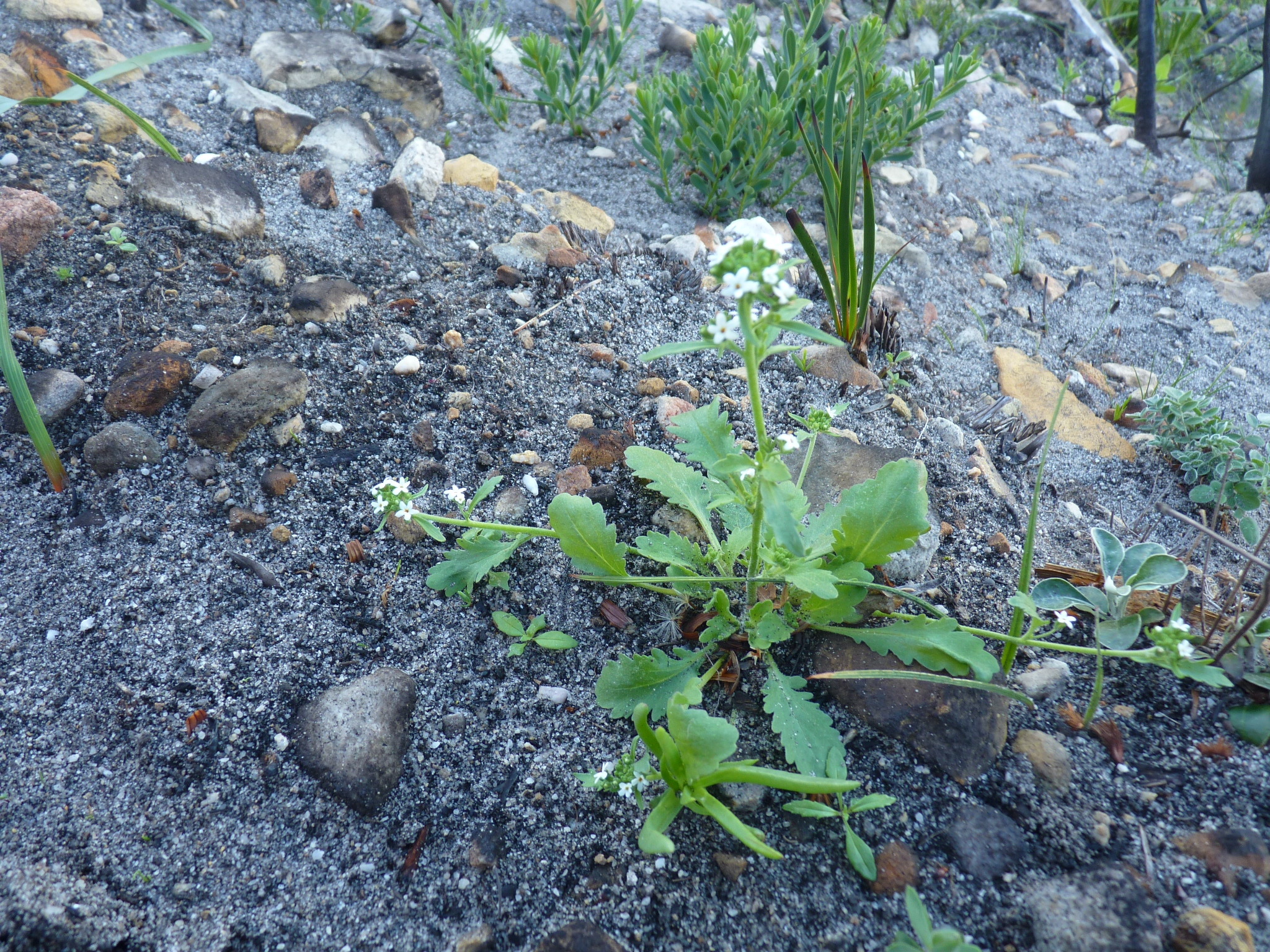
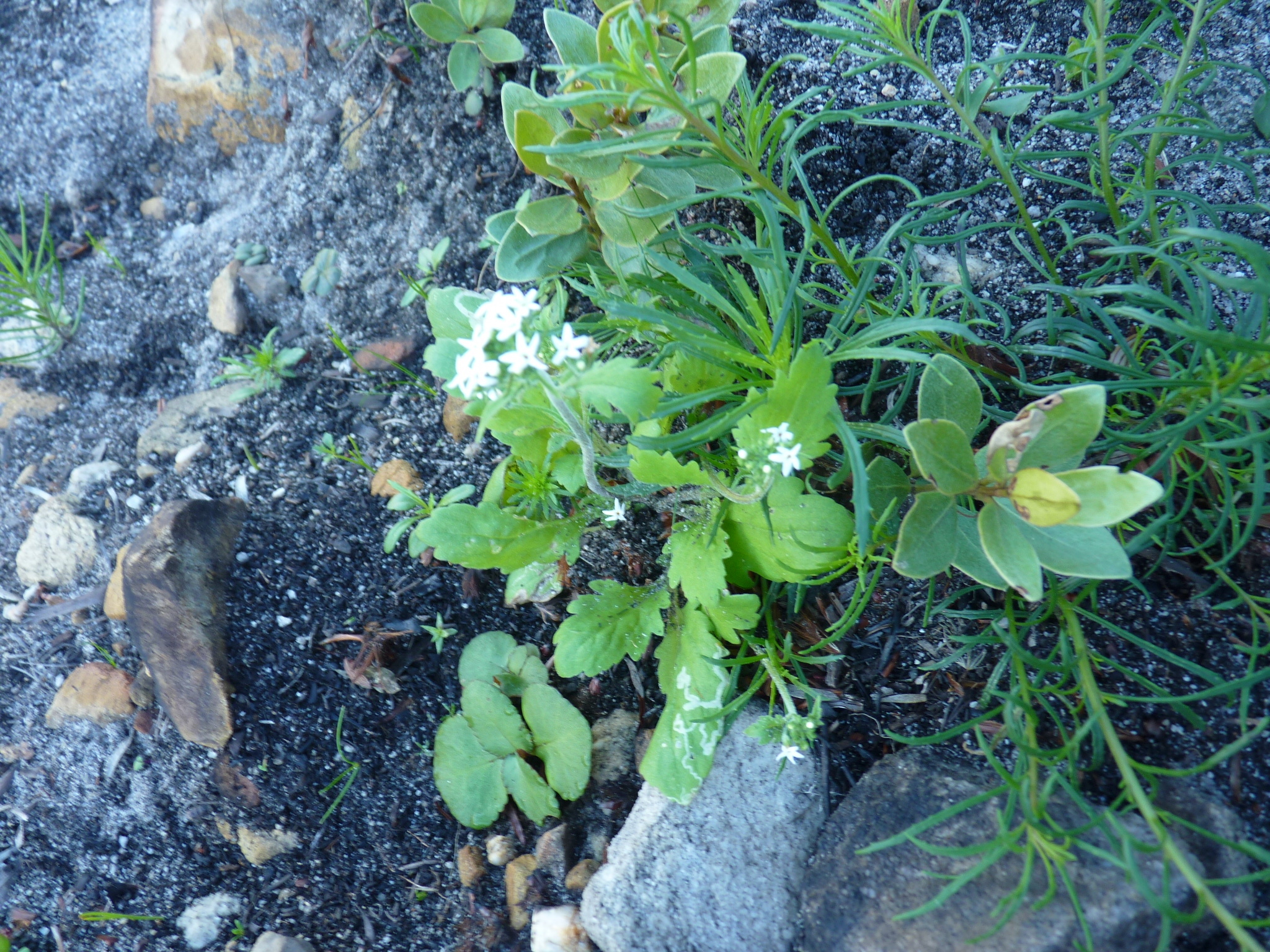
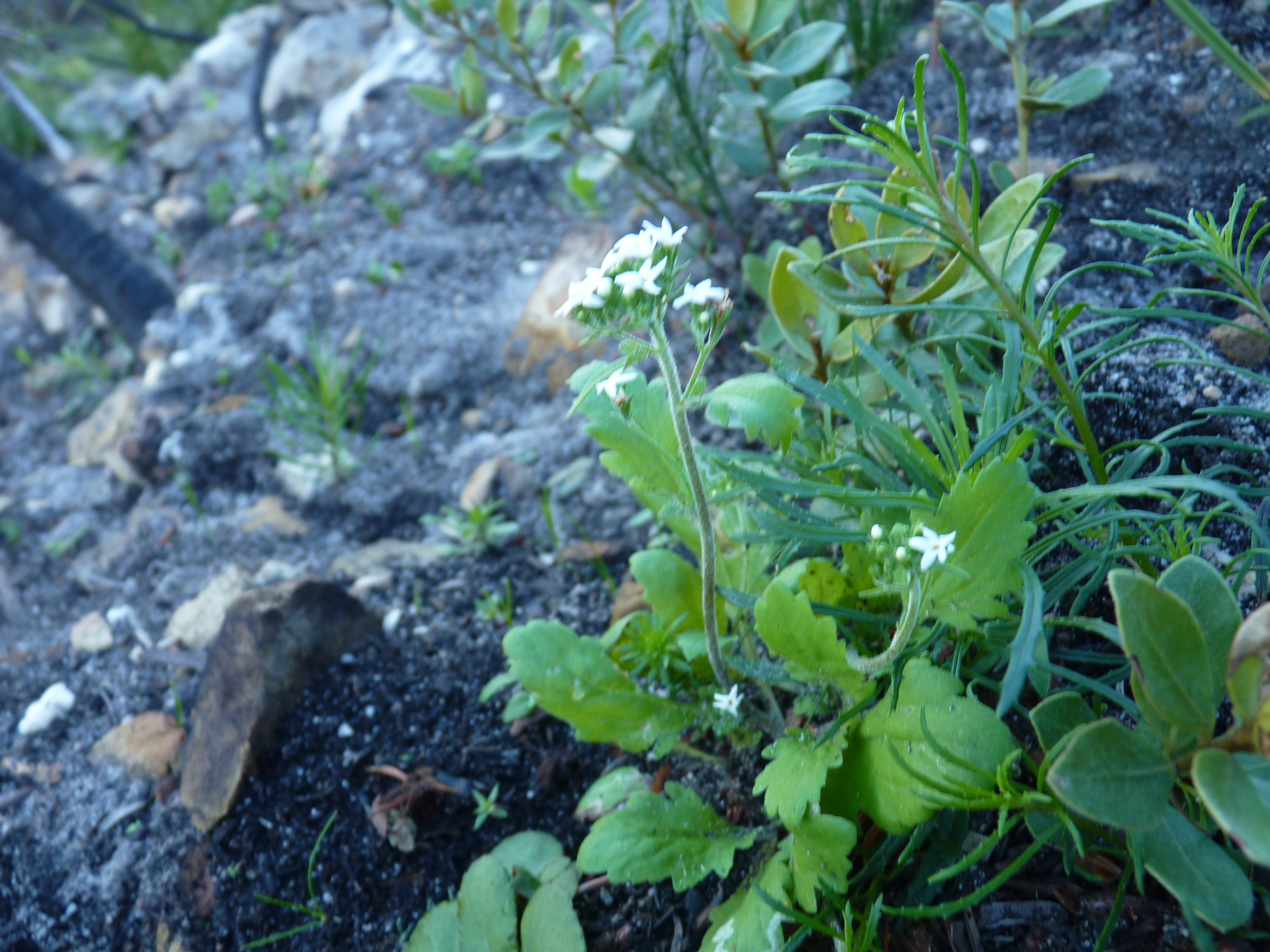
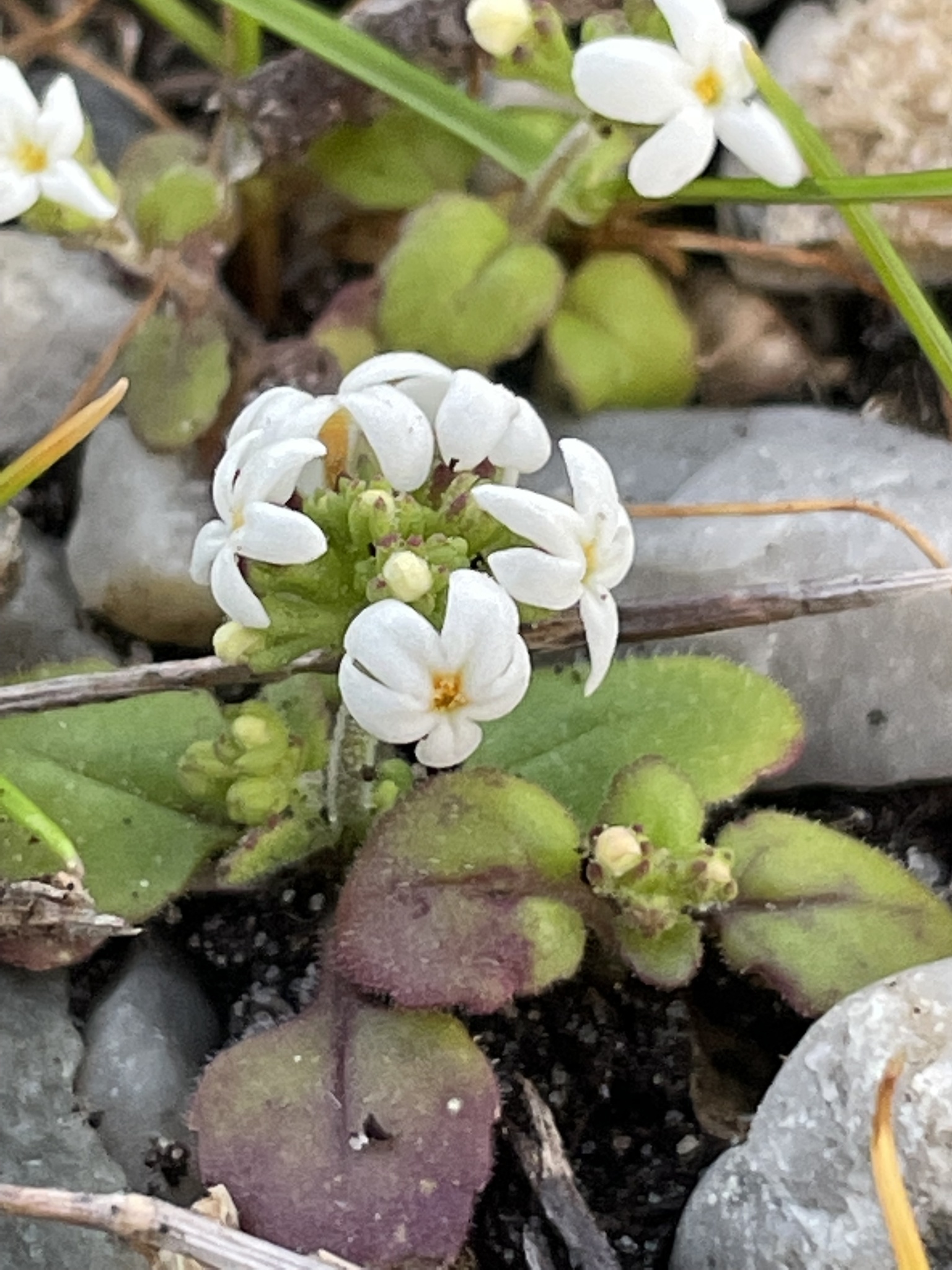
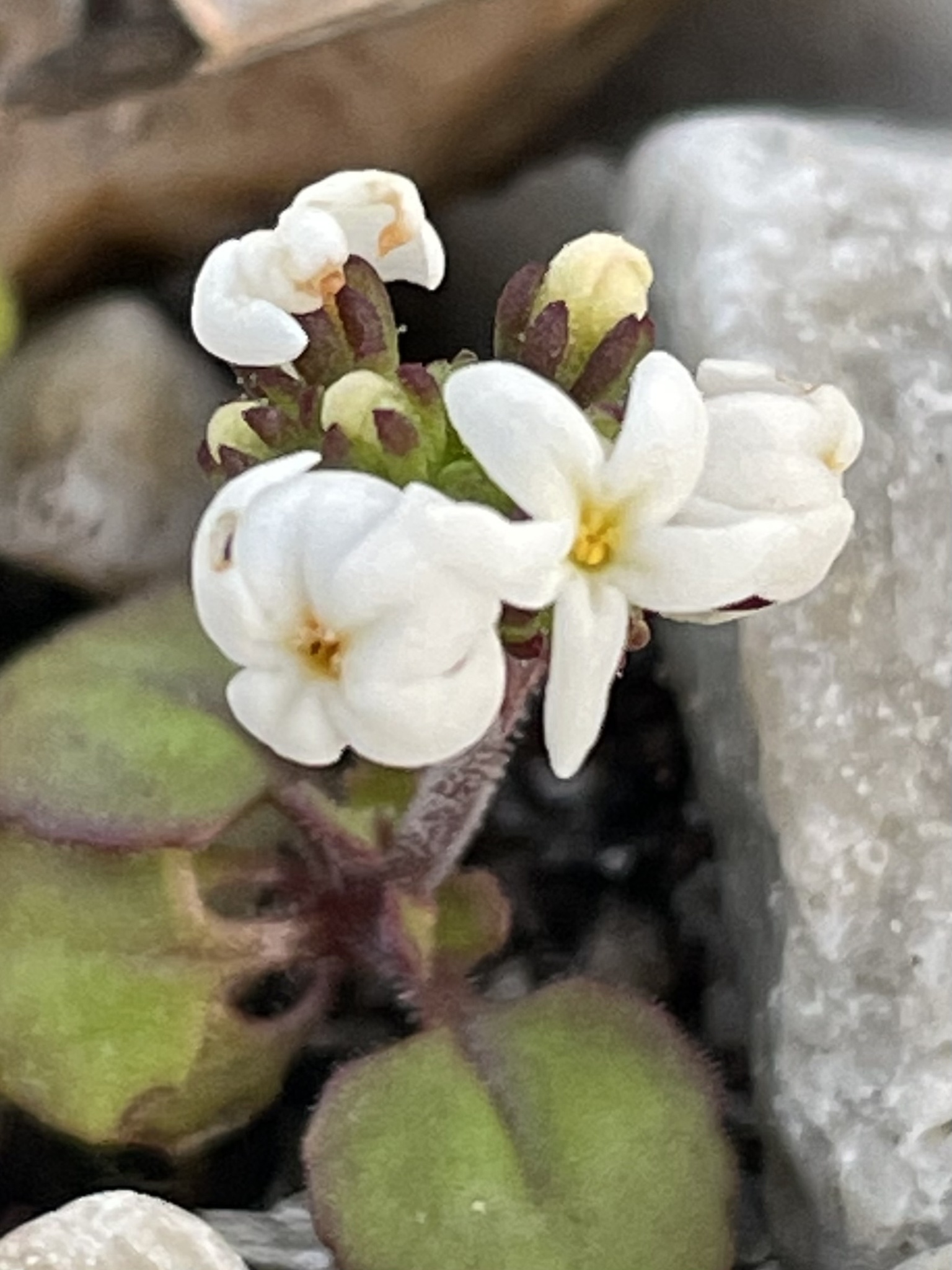
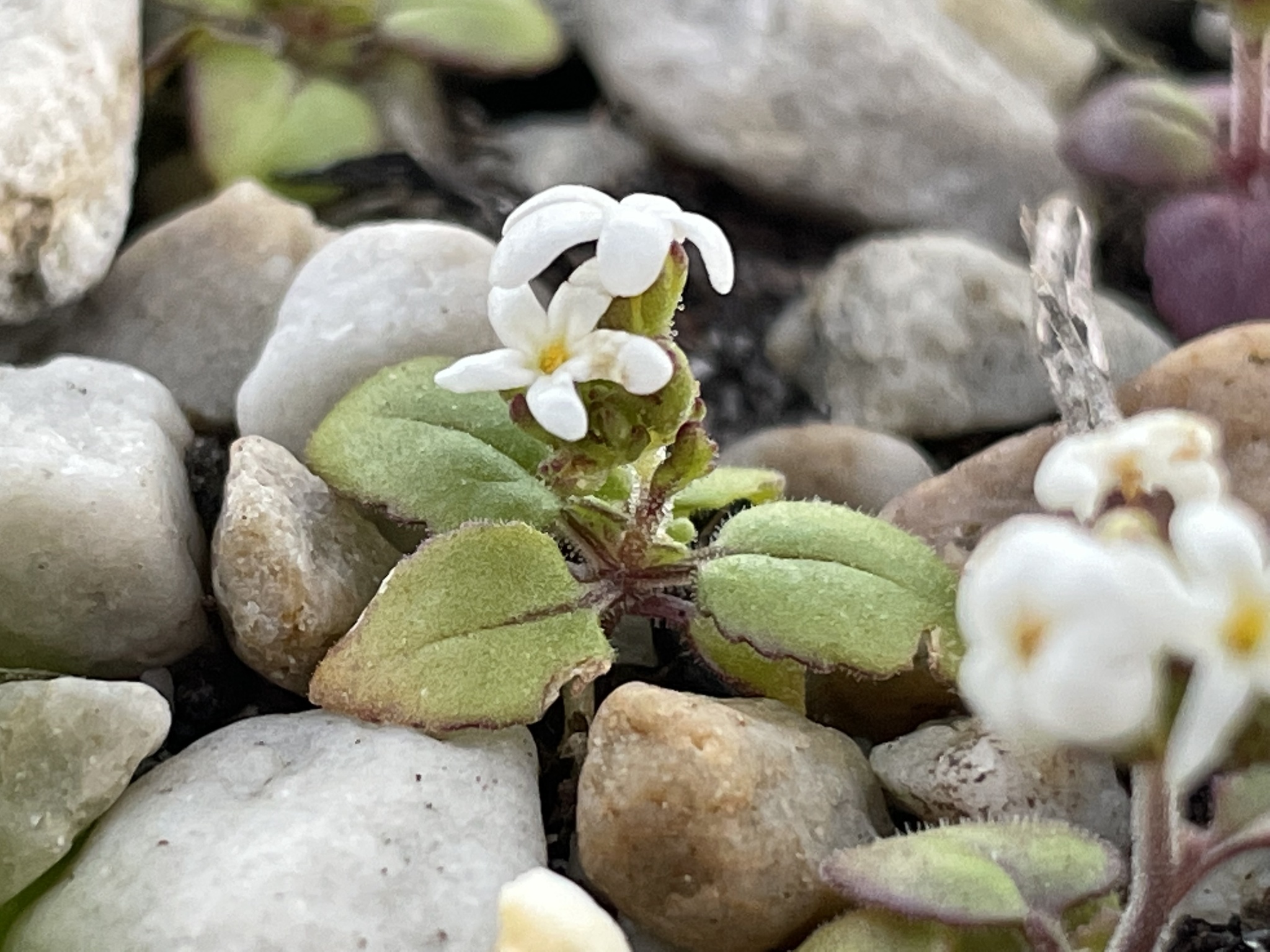
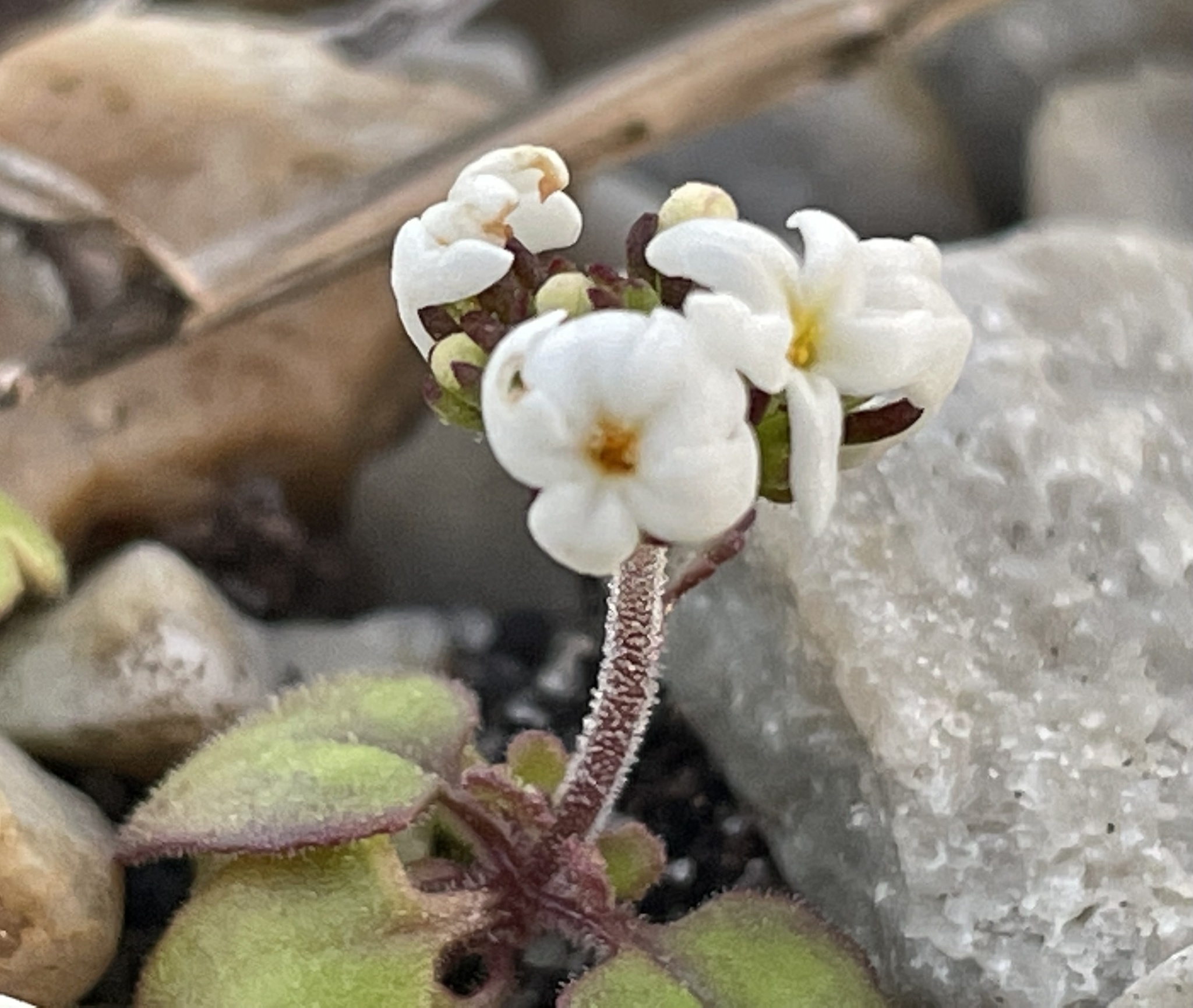
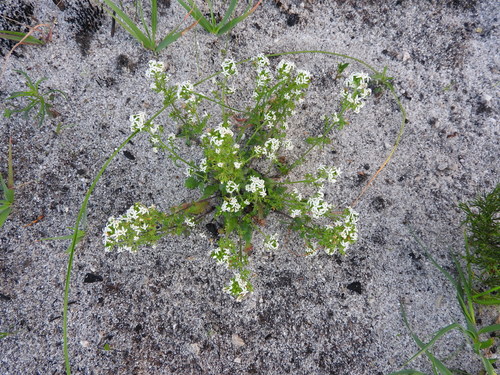
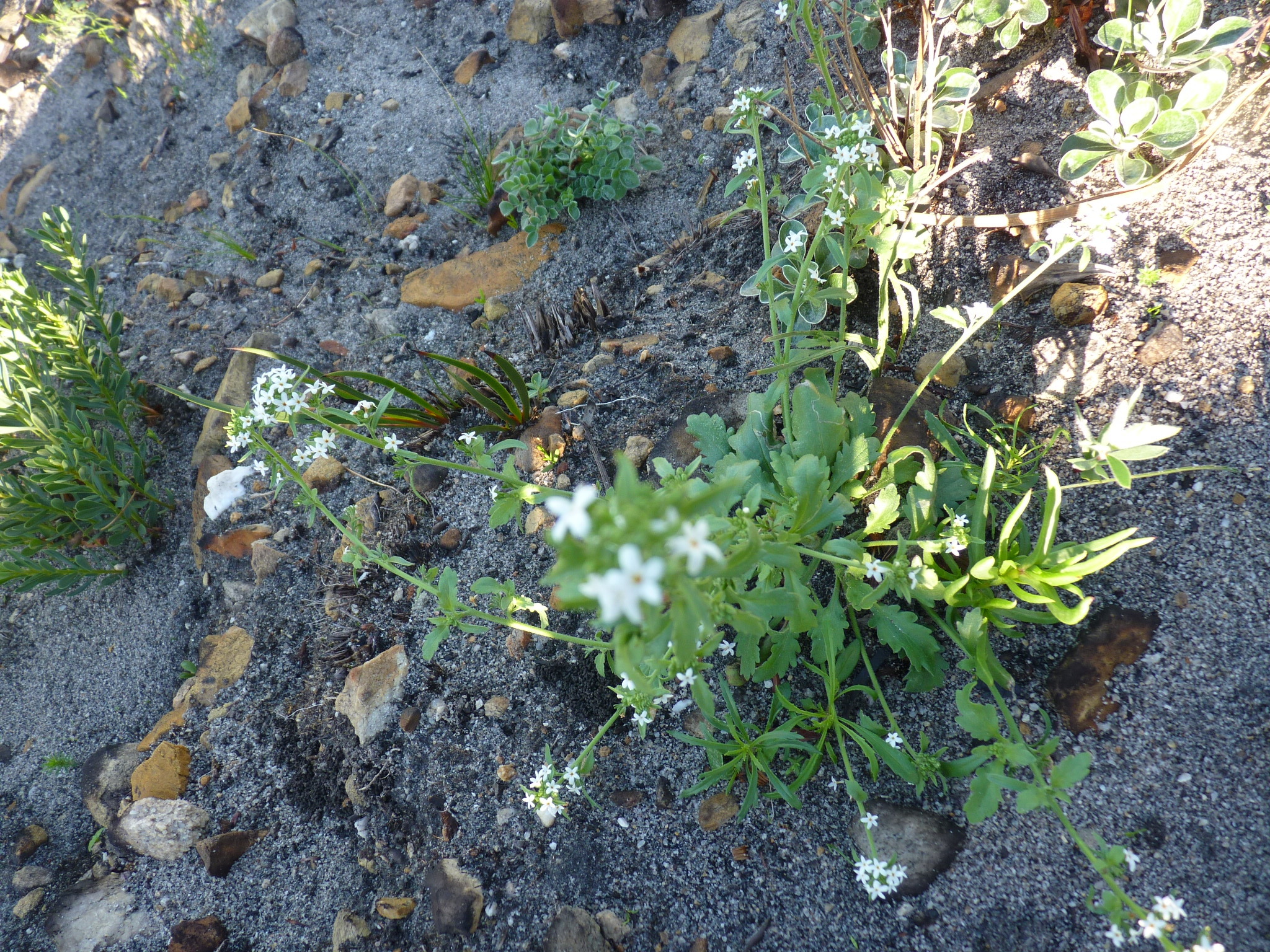
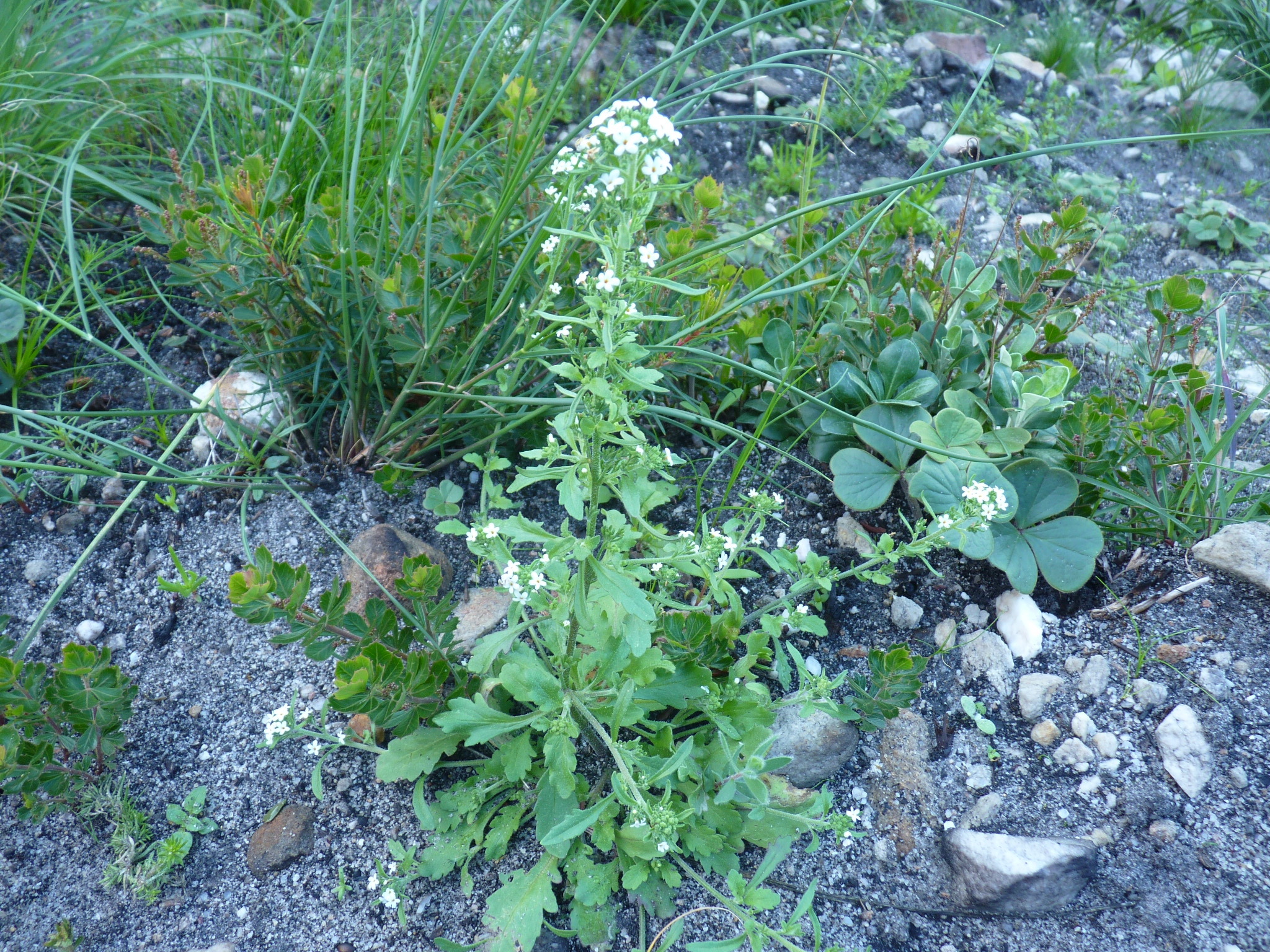
Annual herb, stems 1 to c. 12 tufted from the base, 25-370 mm long, main stem usually erect, laterals often decumbent or ascending, simple to branched, lowermost part glandular-puberulous, hairs up to 0.3-0.4 mm long, soon mixed with balloon-tipped hairs up to 0.3 mm long, apical cell round or elliptic and up to 0.2 mm in diam., these hairs rapidly dominant upwards, any glandular hairs up to 0.1 mm long and inconspicuous, leafy particularly near the base but a few distant leaves often straggling upwards, subtending any branches and passing into inflorescence bracts. Leaves (lower) opposite, bases connate, either opposite or alternate upwards, blade 5-60 x 3-35 mm, broadly to narrowly elliptic tapering to a flat petiolar part 4-25 mm long (roughly half length of blade), apex obtuse to subacute, margins coarsely serrate or doubly serrate, sometimes lobulate or nearly lyrate, both surfaces puberulous with balloon-and gland-tipped hairs up to 0.2-0.5 mm long. Flowers many in long terminal thyrses or sometimes racemes in flowering seedlings, the lowermost few flowers in thyrses often solitary, thyrses simple or ± panicled, cymules 2-11 -flowered, monochasial or dichasial. Bracts (lowermost) often leaflike albeit reduced in size, in small plants in particular commonly oblong-lanceolate, c. 3-13 x 0.2-1.5 mm. Peduncles or pedicels (lowermost) c. (1-)3-12 mm long. Calyx obscurely bilabiate, tube 0.2-0.75 mm long, lobes 1.5-3.6 x 0.3-0.8 mm, oblong, ± obtuse, margins glandular-puberulous, hairs up to 0.1 mm long, backs of lobes with balloon-tipped hairs up to 0.2 mm long, apical cell c. 0.1 mm in diameter, small glistening glands particularly on tube. Corolla tube 2.75-4 x 0.7-0.8 mm in throat, cylindric, expanded near apex, limb bilabiate, 3.5-6.5 mm across lateral lobes, posticous lobes 1.8-3.2 x 1-1.75 mm, anticous lobe 1.6-3 x 0.7-1.5 mm, all lobes broadly oblong-elliptic to lanceolate, apex obtuse to acute, margins flat, white, back of tube orange or yellow often marked with a dark violet patch, tube and backs of lobes puberulous with balloon-tipped hairs up to 0.1 mm long, inside with 3 or 4 longitudinal bands of clavate hairs. Stamens 4, anticous anthers 0.25-0.3 mm long, just included, posticous anthers 0.5-0.75 mm long, included, posticous filaments bearded. Stigma 0.6-1 mm long, included, tip occasionally bifid. Style 0.2-0.5 mm long, shorter than stigma. Ovary 0.8-1 x 0.5-0.8 mm. Capsules c. 2.5-3 x 1.5-2.2 mm. Seeds 0.5-0.8 x 0.3-0.5 mm, pallid or blue-violet. From: Hilliard, OM. 1994. The Manuleae: a tribe of Scrophulariaceae. Edinburgh University Press, Edinburgh. [All rights reserved]
Annual to 37 cm, shortly glandular-hairy below. Leaves toothed. Flowers in cymules, bilabiate, tube short and inflated above, white with back of tube orange. From: Manning, JC; Goldblatt, P. 2012. Scrophulariaceae: Manulea L. In: J Manning & P Goldblatt (eds), Plants of the Greater Cape Floristic Region 1: The Core Cape flora. Strelitzia 29: 745-747. South African National Biodiversity Institute, Pretoria. [CC BY]
Hiern (in Fl. Cap 4(2), 1904) confused M. exigua with M. minor, and the confusion has persisted until now. Both species have small white flowers, but M. exigua is easily distinguished by its more or less leafy stems and leaf-like bracts, much more deeply lobed and toothed leaves, conspicuous balloon-tipped hairs on the inflorescence axis, pedicels, calyx and corolla, and differently shaped corolla lobes. The relationship of M. exigua lies with M. cheiranthus, which it much resembles in its vegetative parts and in indumentum, but M. exigua has white (not yellow to orange or red-brown) flowers with a smaller limb (3.5-6.5 mm across the lateral lobes versus 5-16 mm), the lateral lobes set at right angles to the posticous lobes (not ascending), all lobes oblong-elliptic to shortly lanceolate, the apex obtuse to acute, margins plane (never long-lanceolate, subulate, margins revolute), the difference in shape reflected in the proportions of breadth to length (posticous lobes in M. exigua 1.8-3.2 x 1-1.75 mm versus 2.75-10 x 0.5-1.2 mm in M. cheiranthus). From: Hilliard, OM. 1994. The Manuleae: a tribe of Scrophulariaceae. Edinburgh University Press, Edinburgh. [All rights reserved]
Manulea exigua seems to grow mainly on sandy flats and slopes. Bare sandy stony ground. From: Hilliard, OM. 1994. The Manuleae: a tribe of Scrophulariaceae. Edinburgh University Press, Edinburgh. [All rights reserved]
Mainly sandy flats and slopes. From: Manning, JC; Goldblatt, P. 2012. Scrophulariaceae: Manulea L. In: J Manning & P Goldblatt (eds), Plants of the Greater Cape Floristic Region 1: The Core Cape flora. Strelitzia 29: 745-747. South African National Biodiversity Institute, Pretoria. [CC BY]
Manulea exigua appears to occupy a restricted area mainly in Caledon division. From: Hilliard, OM. 1994. The Manuleae: a tribe of Scrophulariaceae. Edinburgh University Press, Edinburgh. [All rights reserved]
Betty's Bay to Gansbaai. From: Manning, JC; Goldblatt, P. 2012. Scrophulariaceae: Manulea L. In: J Manning & P Goldblatt (eds), Plants of the Greater Cape Floristic Region 1: The Core Cape flora. Strelitzia 29: 745-747. South African National Biodiversity Institute, Pretoria. [CC BY]
July to September
0 to 1000 m
This map contains point-based occurrences at different locations
Occurrence in the Flora of Southern Africa (FSA) countries and South African provinces. Residence status indicates if a taxon is indigenous, endemic, naturalised or invasive in a specific region. This data is based on specimen records and literature
FSA
SA
BOT
NAM
ESW
LES
WC
EC
NC
FS
GA
KZN
LP
MP
NW
Absent
Indigenous
Endemic
Naturalised
Invasive
Names and Sources
Manulea minor auct.
Classification
KINGDOM Plantae
SUBKINGDOM Phanerogamae
PHYLUM Anthophyta
ORDER Lamiales
FAMILY Scrophulariaceae
TRIBE Limoselleae
GENUS Manulea
SPECIES exigua
20 results for Manulea exigua Hilliard
Barcode: PRE0235360-0 Collector(s) & number: Barker, WF, 1698 | 1942-9-29
South Africa, Western Cape, Caledon Dist.; Vogelklip.
Data Resource: BODATSA View record
Barcode: PRE0119425-0 Collector(s) & number: Rogers, FA, 26589 | 1921-11-
South Africa, Western Cape, HERMANUS
Data Resource: BODATSA View record
Barcode: NBG0249192-0 Collector(s) & number: Ebrahim, I, CR 3561 | 2008-10-19
South Africa, Western Cape, Hermanus. Fernkloof Nature Reserve. Klipspringer Path, burnt lower slopes. 34° 23.812'S, 19° 15.869'E.
General notes: Moderate hill slope. Well-drained, sand soil, sandstone. Fynbos. Dwarf shrub. Flowers present.
Data Resource: BODATSA View record
Barcode: NBG0200023-0 Collector(s) & number: Compton, RH, 23617 | 1952-9-24
South Africa, Western Cape, Caledon Div. Mossel River shore.
Data Resource: BODATSA View record
Barcode: NBG0169586-0 Collector(s) & number: Mostert, L, 166 | 1996-9-24
South Africa, Western Cape, Kleinmond. 25m West of Graves at Palmiet Strand.
General notes: Fynbos. Rocky. Sand. Sandstone. Well-drained. Full sun. Level slope.Undisturbed. Plant height 100mm. Small white flowers. Frequent.
Data Resource: BODATSA View record
Barcode: NBG0083116-0 Collector(s) & number: Compton, RH, 23617 | 1952-9-24
South Africa, Western Cape, Caledon Div. Mossel River shore.
Data Resource: BODATSA View record
Barcode: GHPG$0002294-0 Collector(s) & number: Mostert, L, 166 | 1996-12-24
South Africa, Western Cape, Hangklip subregion. Kleinmond, 25m. W. of graves at Palmiet Strand.
Data Resource: BODATSA View record
Barcode: PRE0858708-0 Collector(s) & number: Bester, SP, 10743 | 2011-8-24
South Africa, Western Cape, Hermanus District. Farm: Hemel en Aarde 585, scenic drive above Fernkloof Nature Reserve. 34°24'00.8"S 19°14'51.2"E.
Data Resource: BODATSA View record
Barcode: PRE0675788-0 Collector(s) & number: Goldblatt, P, 7035 | 1983-10-4
South Africa, Western Cape, CALEDON DIST.; EAST OF HERMANUS. SLOPES NR. RUBBISH DUMP
Data Resource: BODATSA View record
Barcode: PRE0858715-0 Collector(s) & number: Bester, SP, 10751 | 2011-8-24
South Africa, Western Cape, Caledon District; ca. 2.3 km ENE of Kleinmond. Farm: The Draay 563. 34°19'47.2"S 19°05'09.6"E.
General notes: Bioregion: Sandstone Fynbos. Vegetation type: Hangklip Sand Fynbos. Flowers white with yellow centre.
Data Resource: BODATSA View record
This map contains point-based occurrences at different locations
2012
SERIES CHAPTER
Scrophulariaceae: Manulea L. Manning, JC; Goldblatt, PIn: J Manning & P Goldblatt (eds), Plants of the Greater Cape Floristic Region 1: The Core Cape flora. Strelitzia 29: 745-747
South African National Biodiversity Institute, Pretoria
1994
1990
PERIODICAL/JOURNAL
More new names and combinations in Scrophulariaceae-Manuleae Hilliard, OMNotes from the Royal Botanic Garden, Edinburgh 46(3)337-342
No results found for Manulea exigua Hilliard
Status and criteria
VU
Assessor(s)
Plantae Coordinator
JOURNAL ARTICLE
Koopman, R. 2006. Why hello there, Lazarus. Veld & Flora. 92:188
JOURNAL ARTICLE
Koorbanally, N.A., Koorbanally, C., Harilal, A., Mulholland, D.A. and Crouch, N.R. 2004. Bufadienolides from Drimia robusta and Urginea epigea (Hyacinthaceae). Phytochemistry. 65:3069-3073
JOURNAL ARTICLE
Kornhall, P. and Bremer, B. 2005. New circumscription of the tribe Limoselleae (Scrophulariaceae) that includes the taxa of the tribe Manuleeae. Botanical Journal of the Linnean Society. 147:385-386
JOURNAL ARTICLE
Kose, L.S., Moteetee, A. and Van Vuuren, S. 2015. Ethnobotanical survey of medicinal plants used in the Maseru district of Lesotho. Journal of Ethnopharmacology. 170:184-200
JOURNAL ARTICLE
Kostermans, A.J.G.H. 1938. The African Lauraceae I (Revision of the Lauraceae IV). Bulletin du Jardin Botanique de l'État à Bruxelles. 15:73-108
JOURNAL ARTICLE
Koutnik, D.L. and O’Connor-Fenton, M. 1985. Lectotypification of the genus Delosperma (Mesembryanthemaceae). South African Journal of Botany. 51:197-198
| Part(s) of plant used | Use(s) | Reference |
|---|
Coming soon...