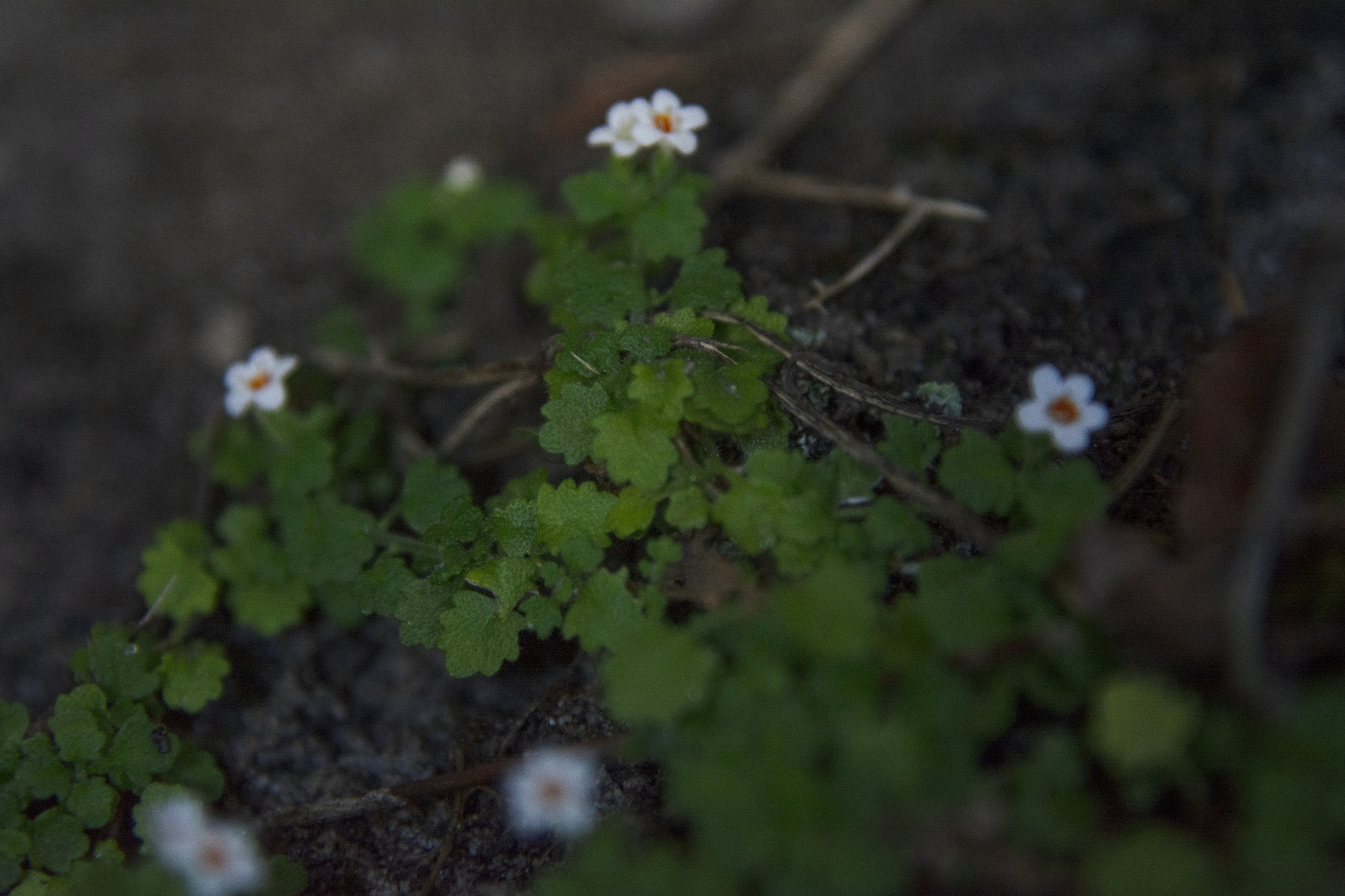
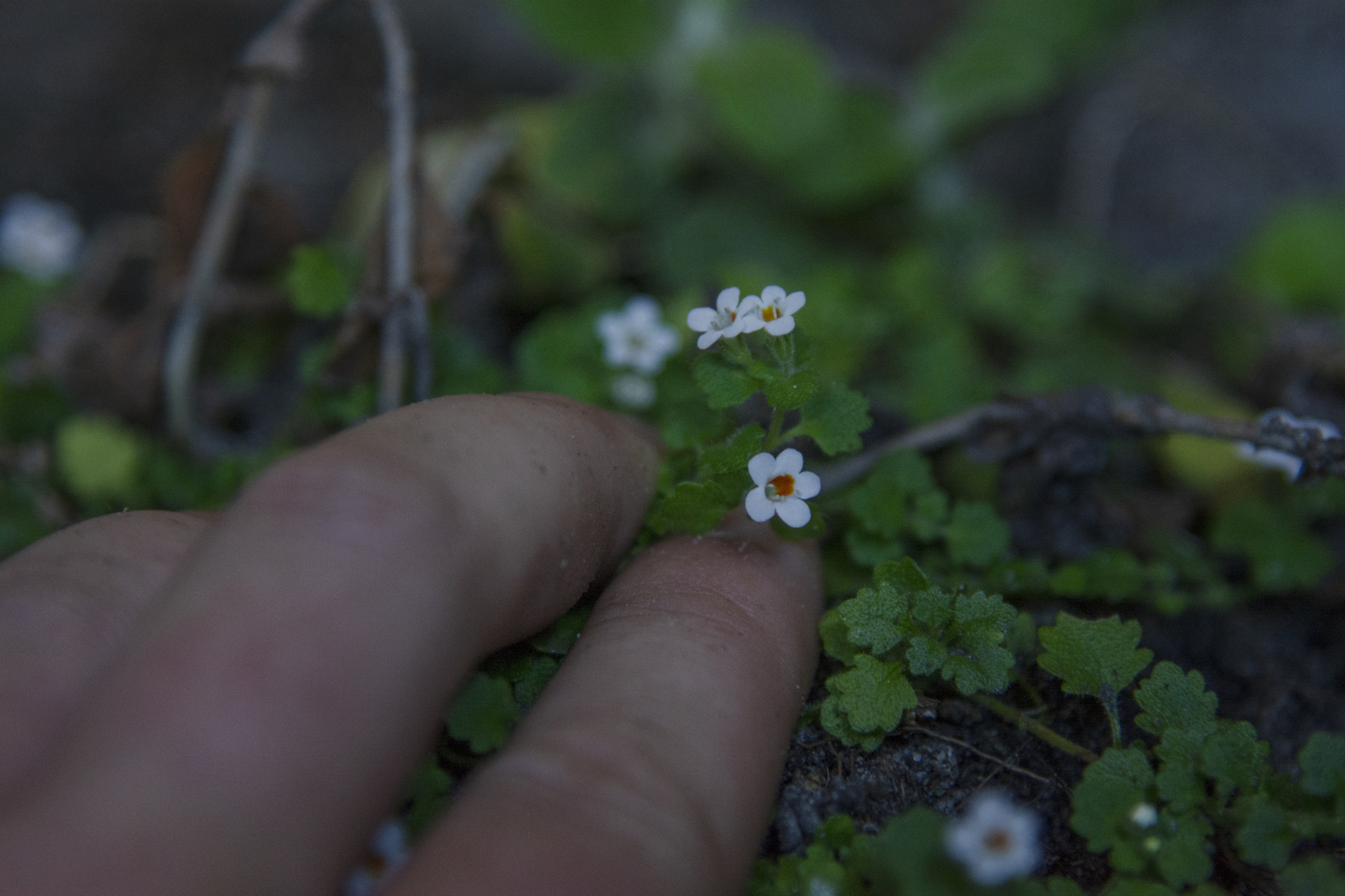
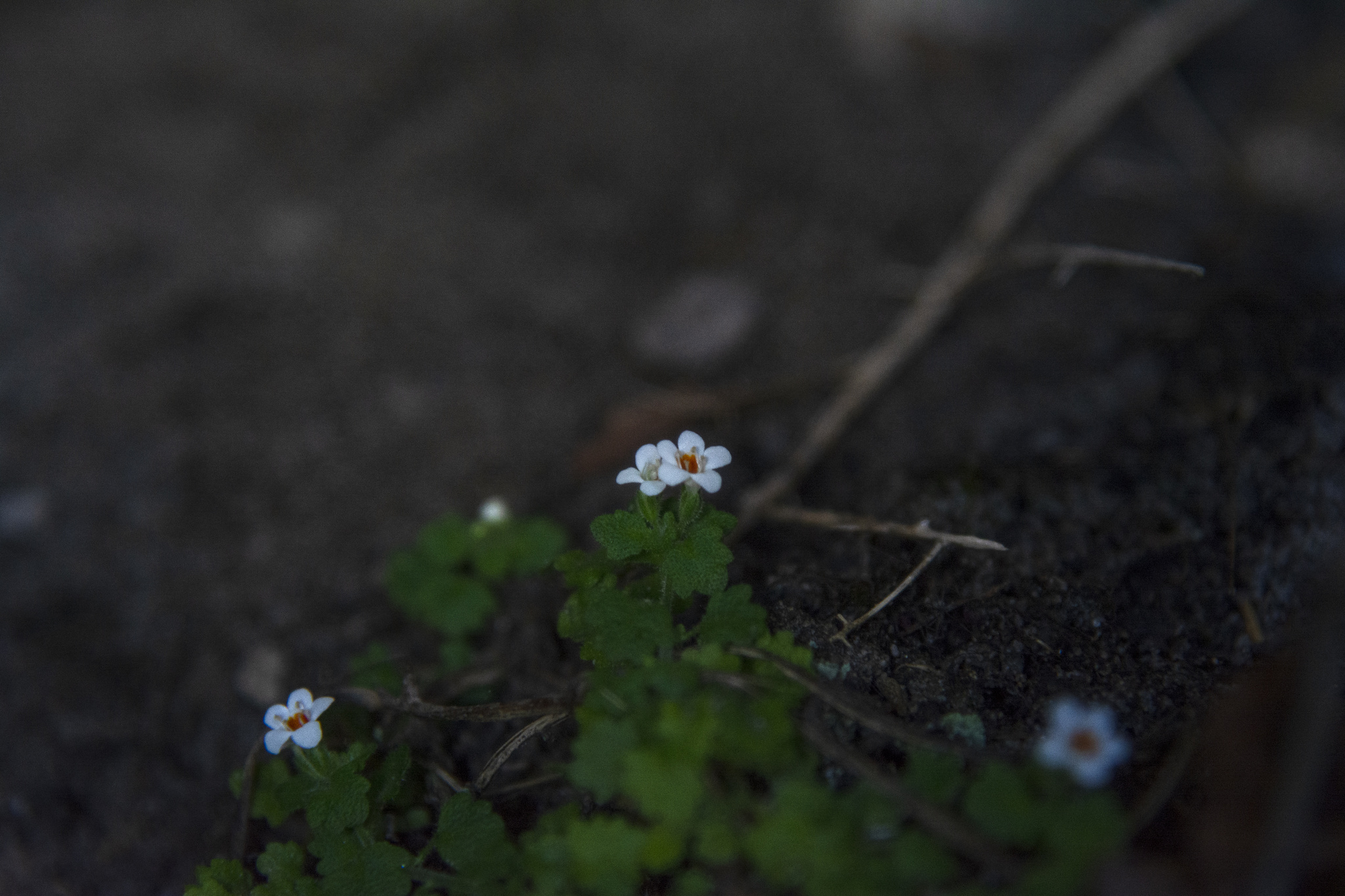
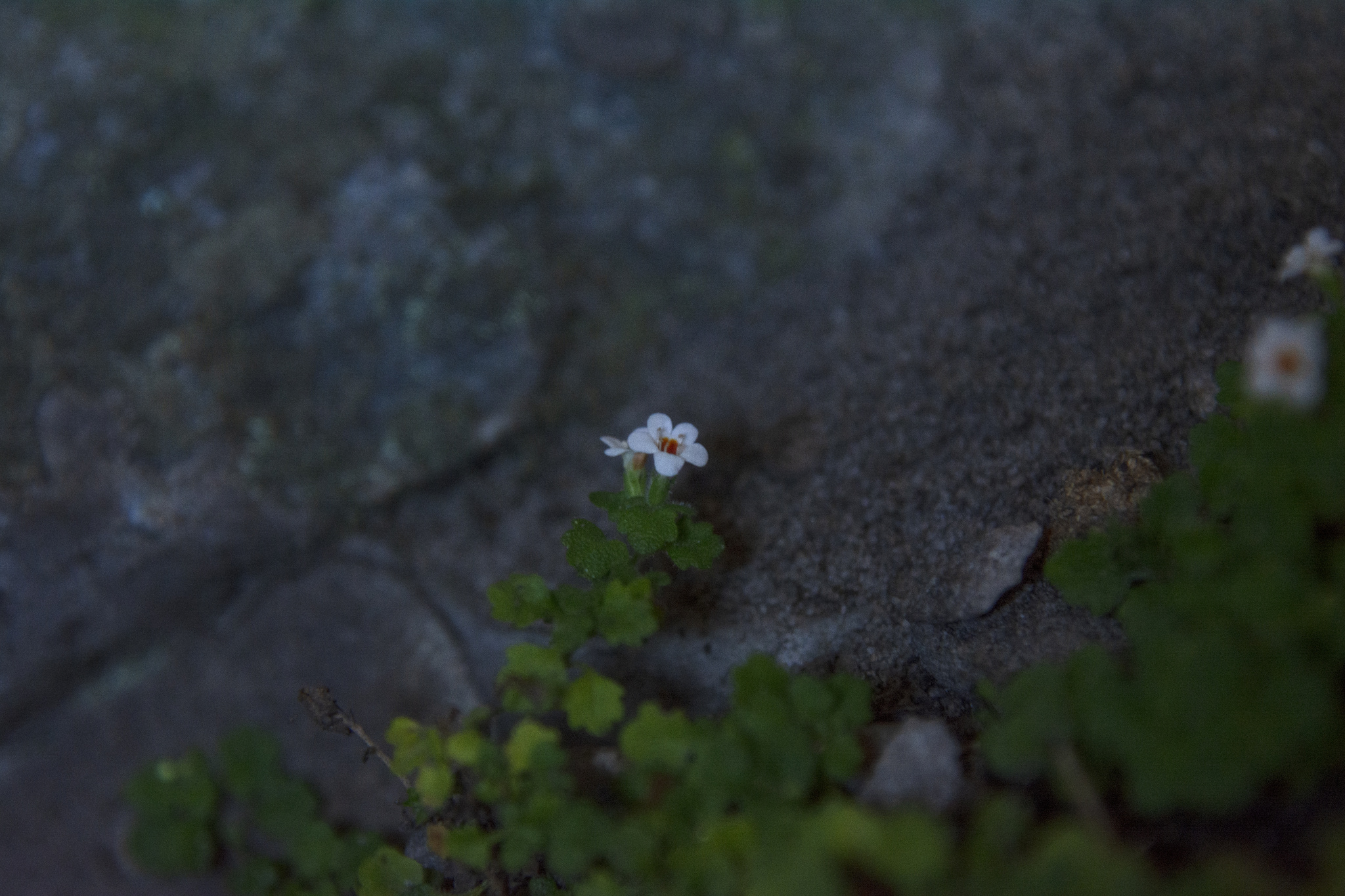
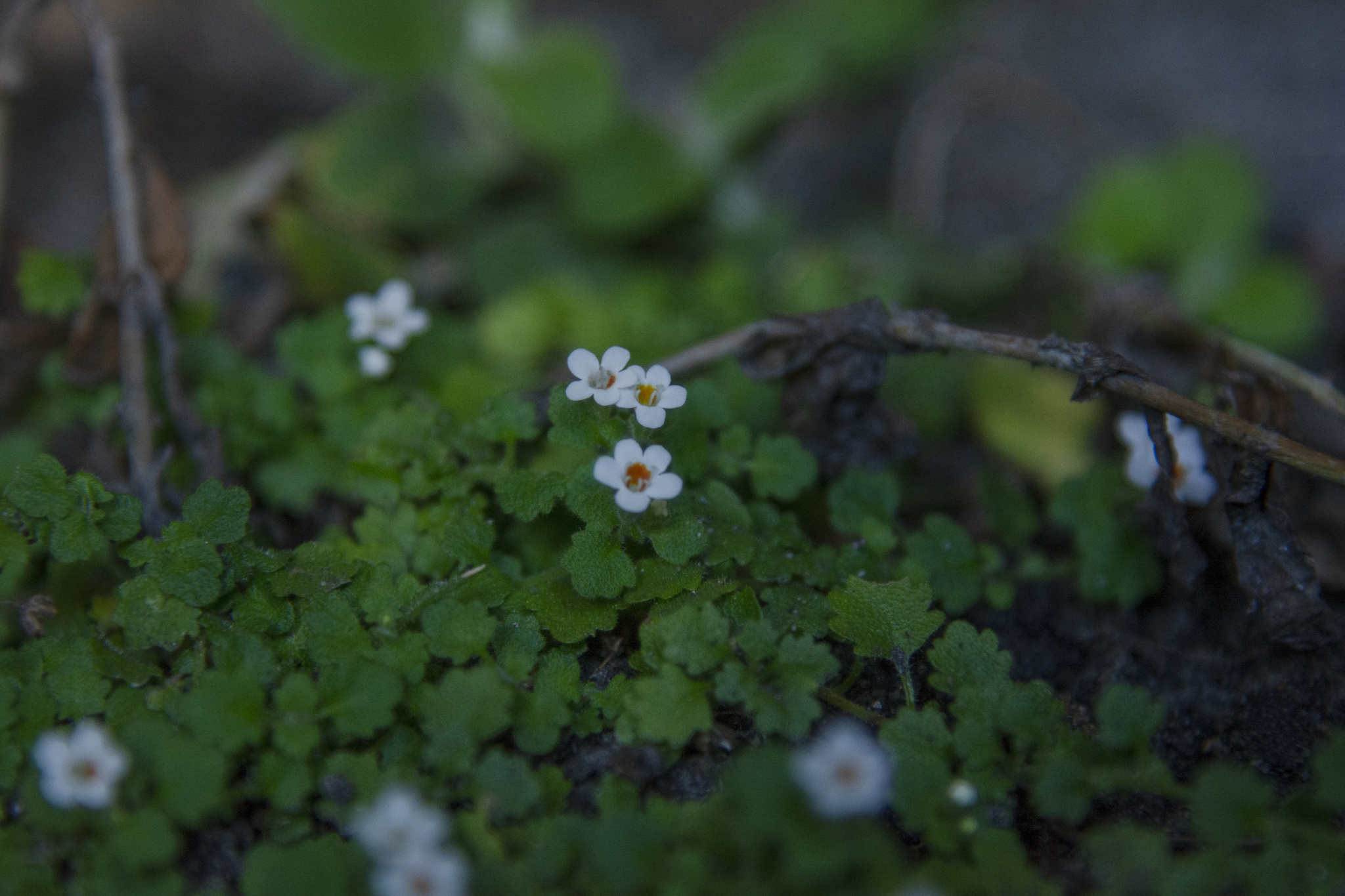
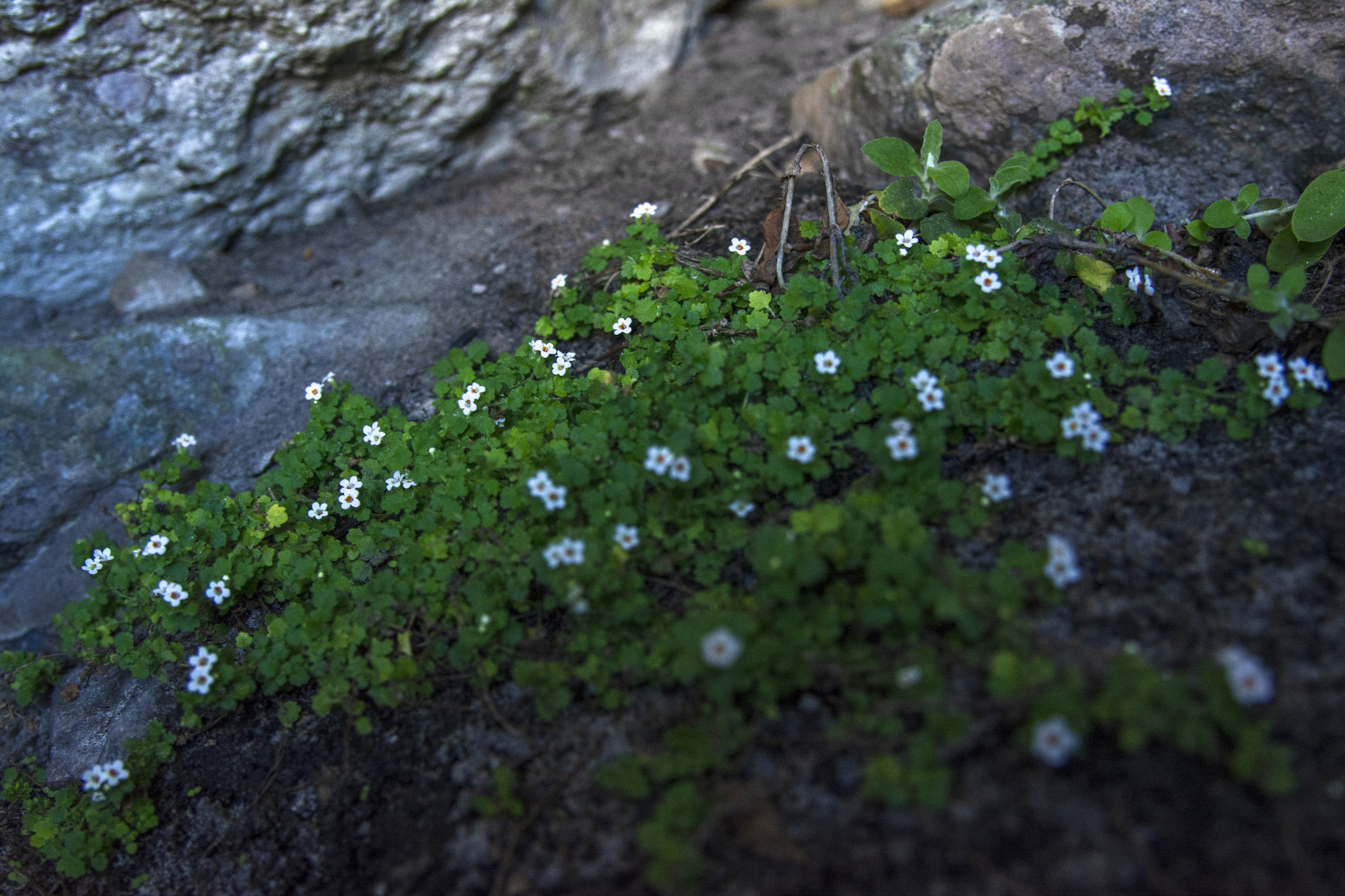
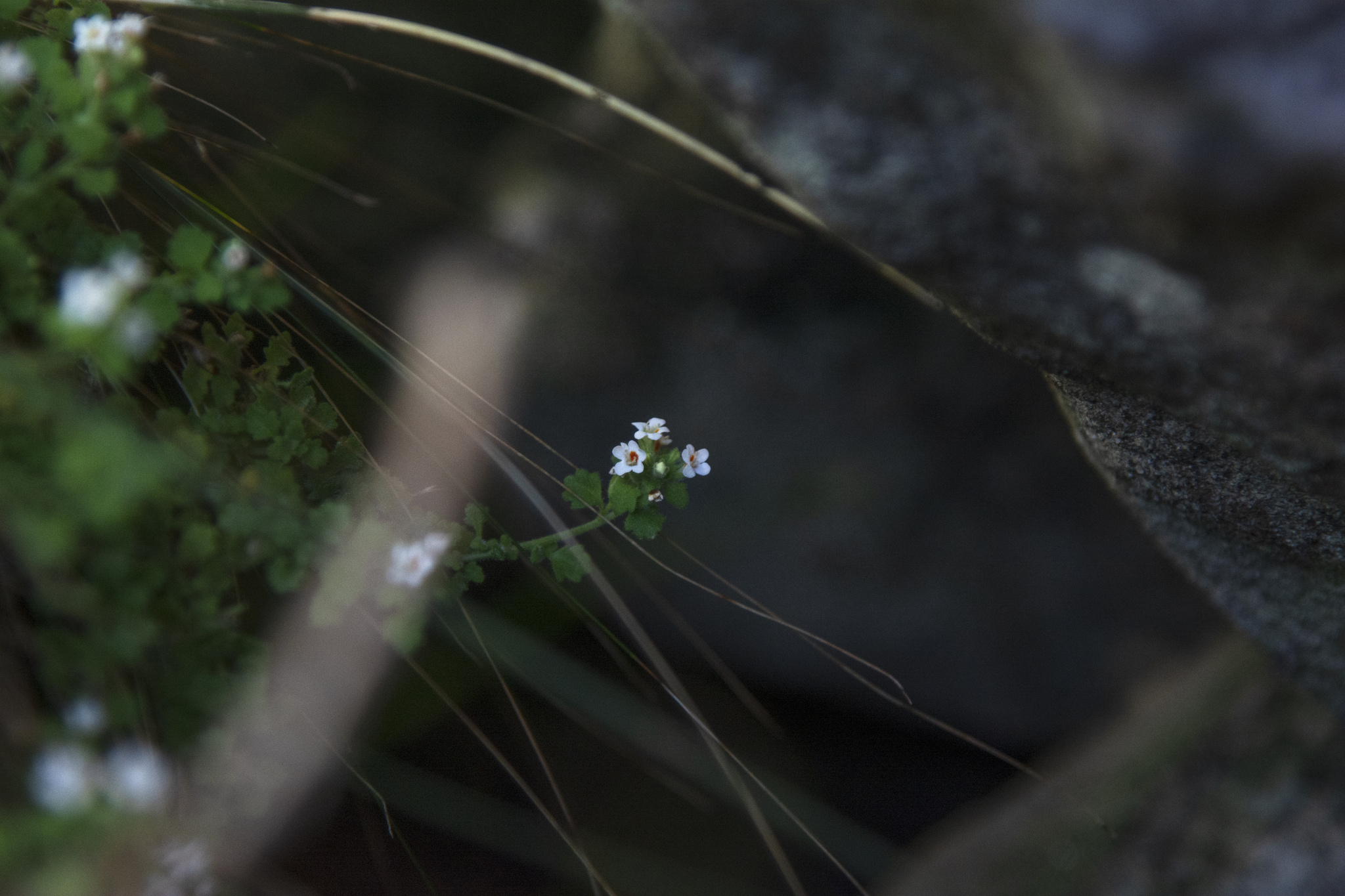
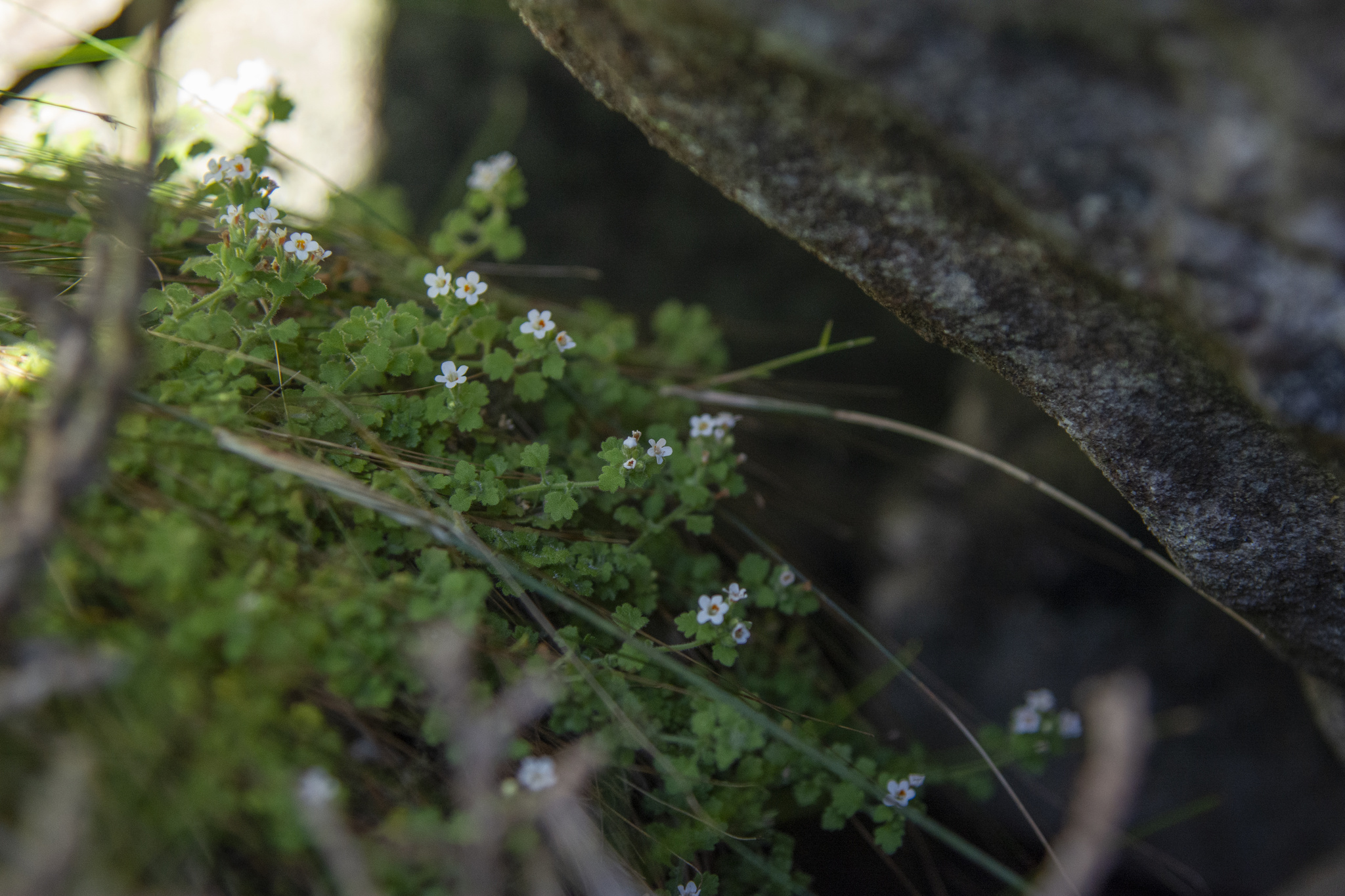
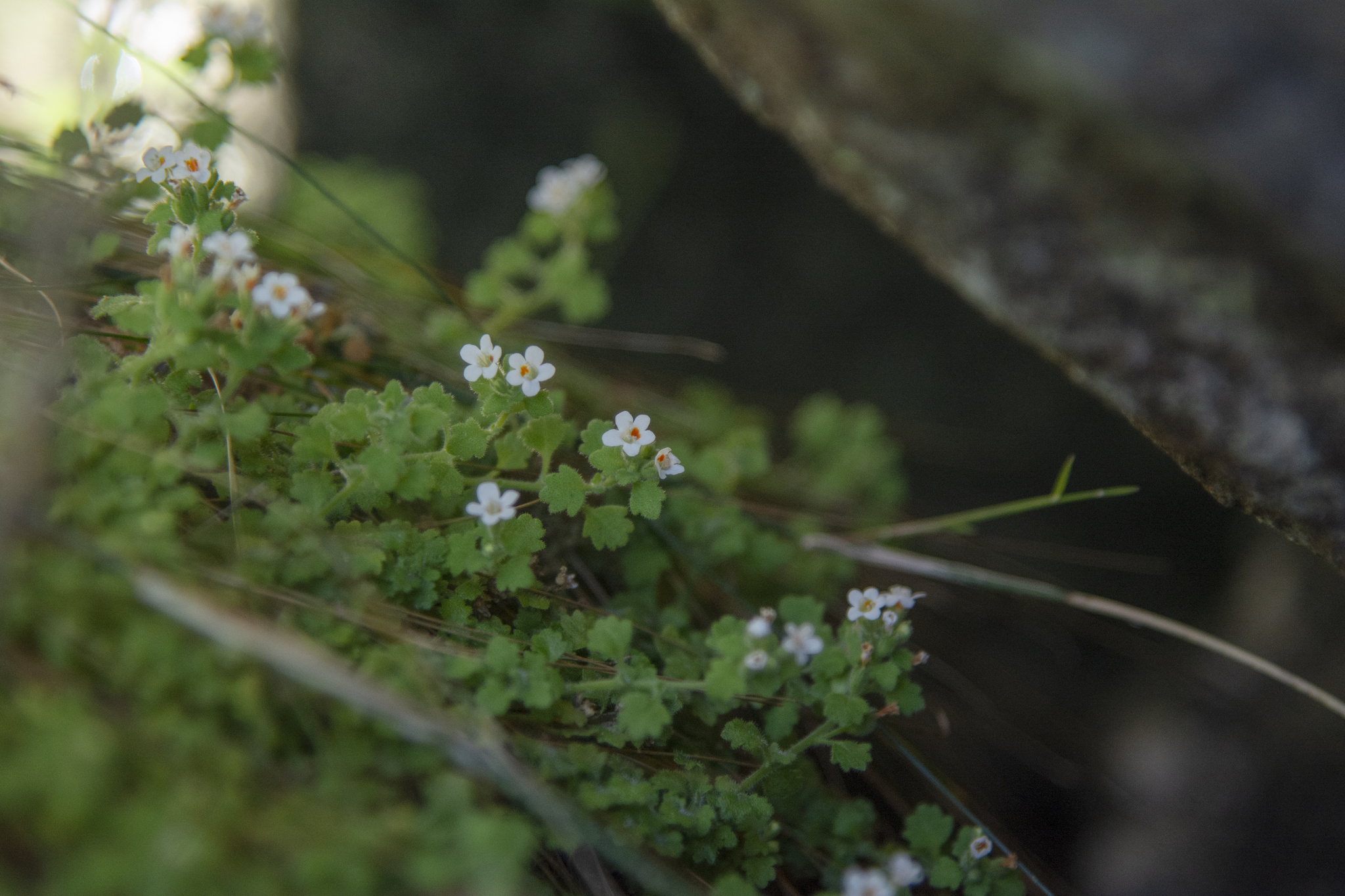
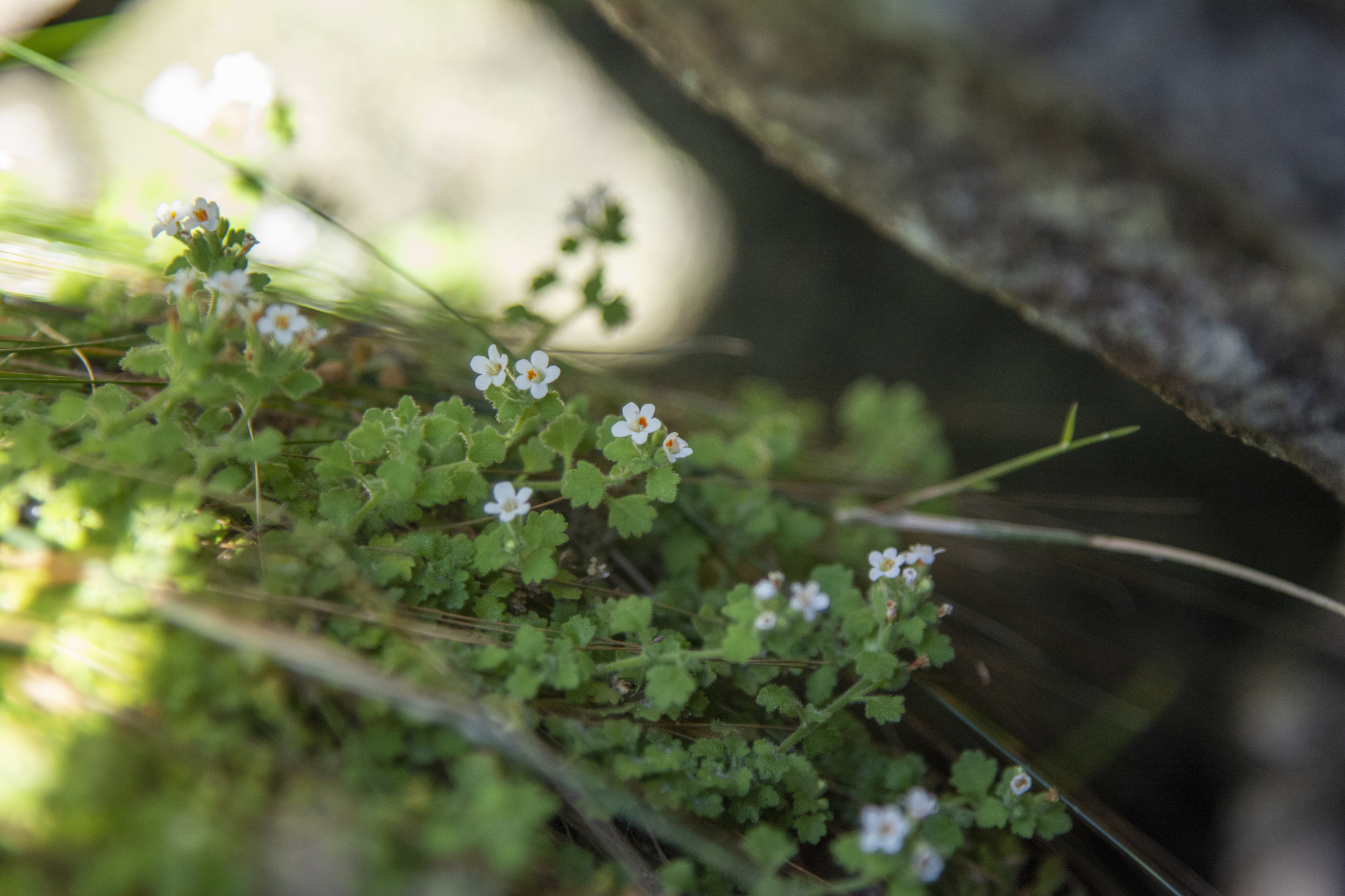
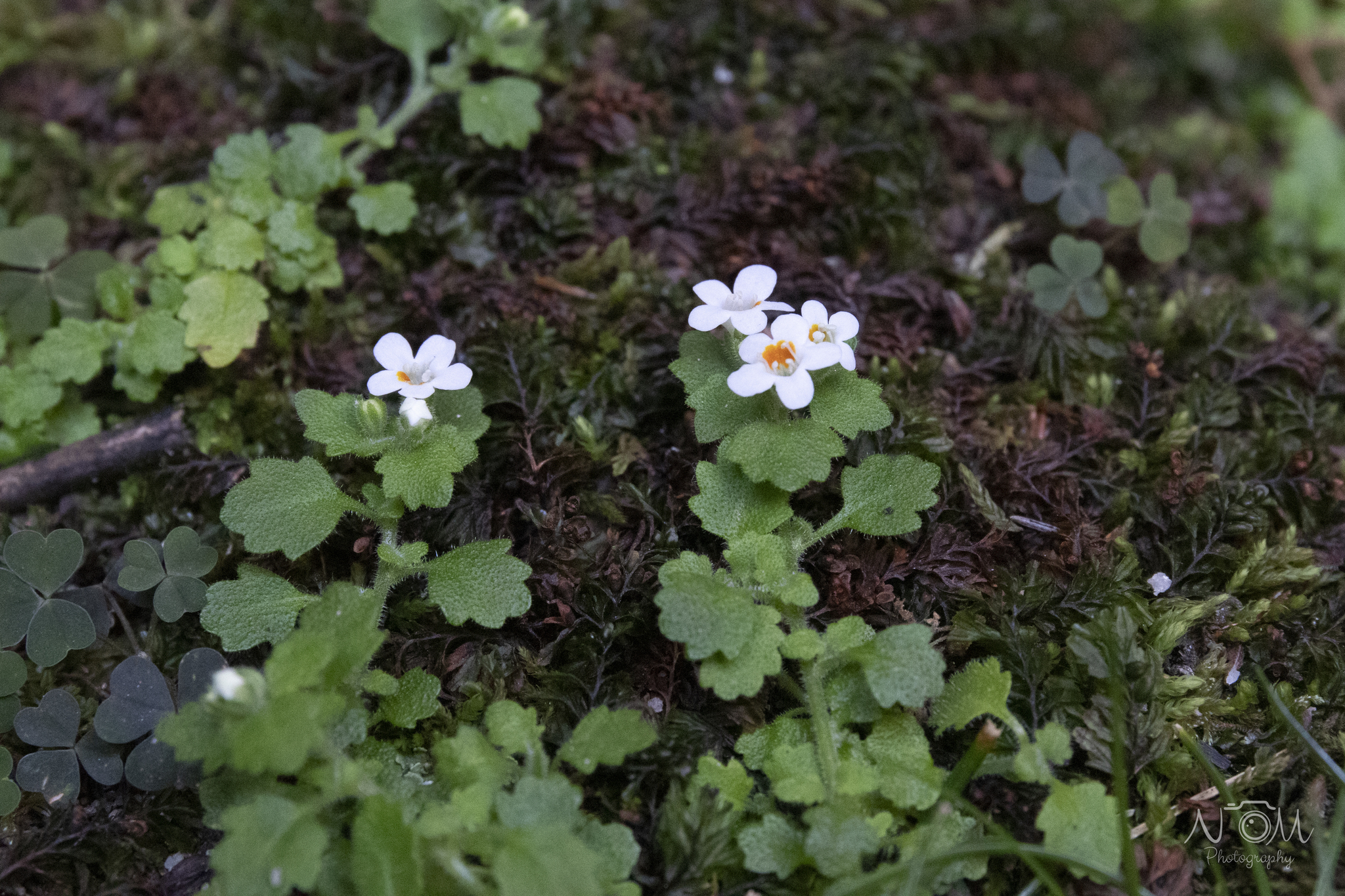
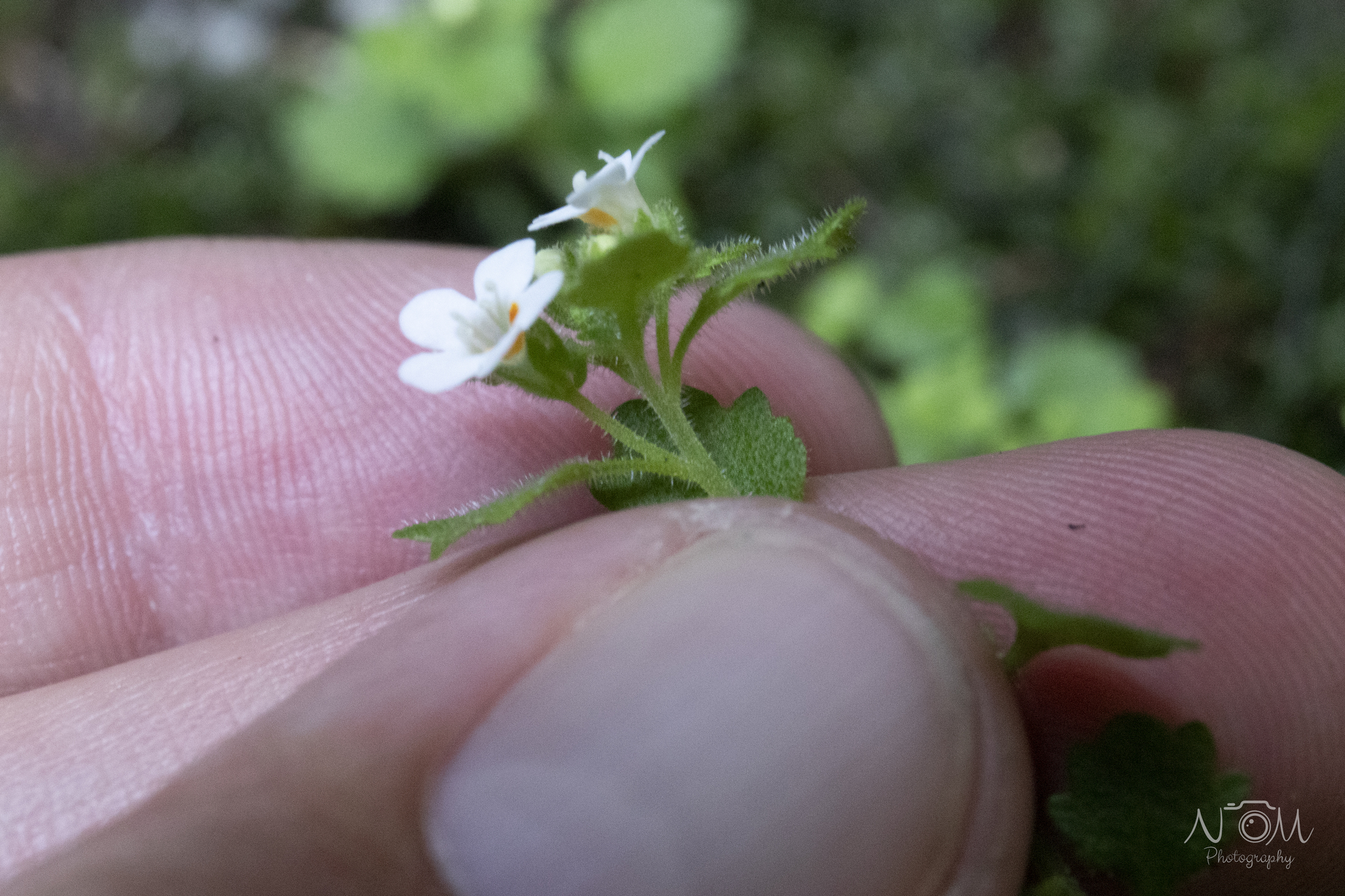
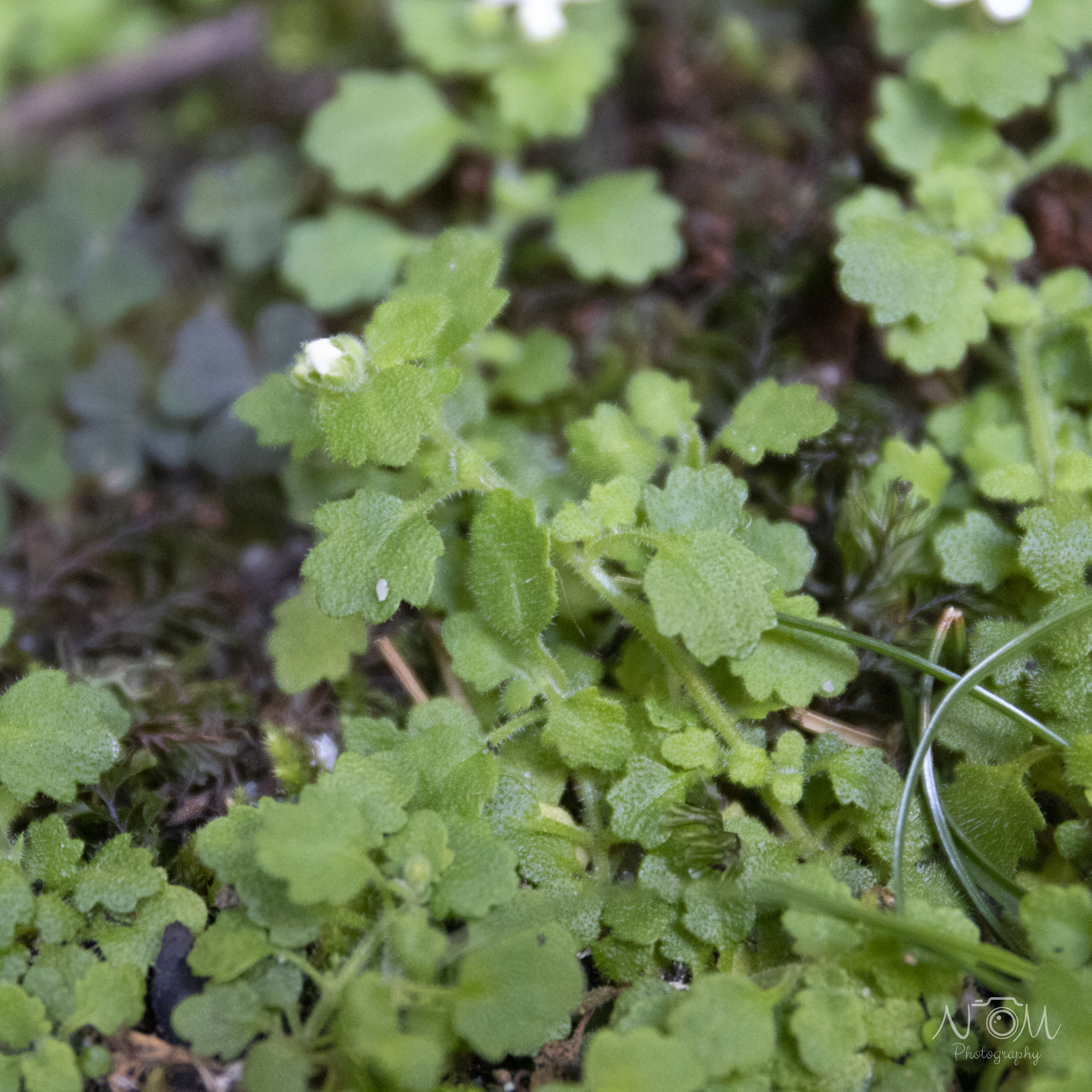
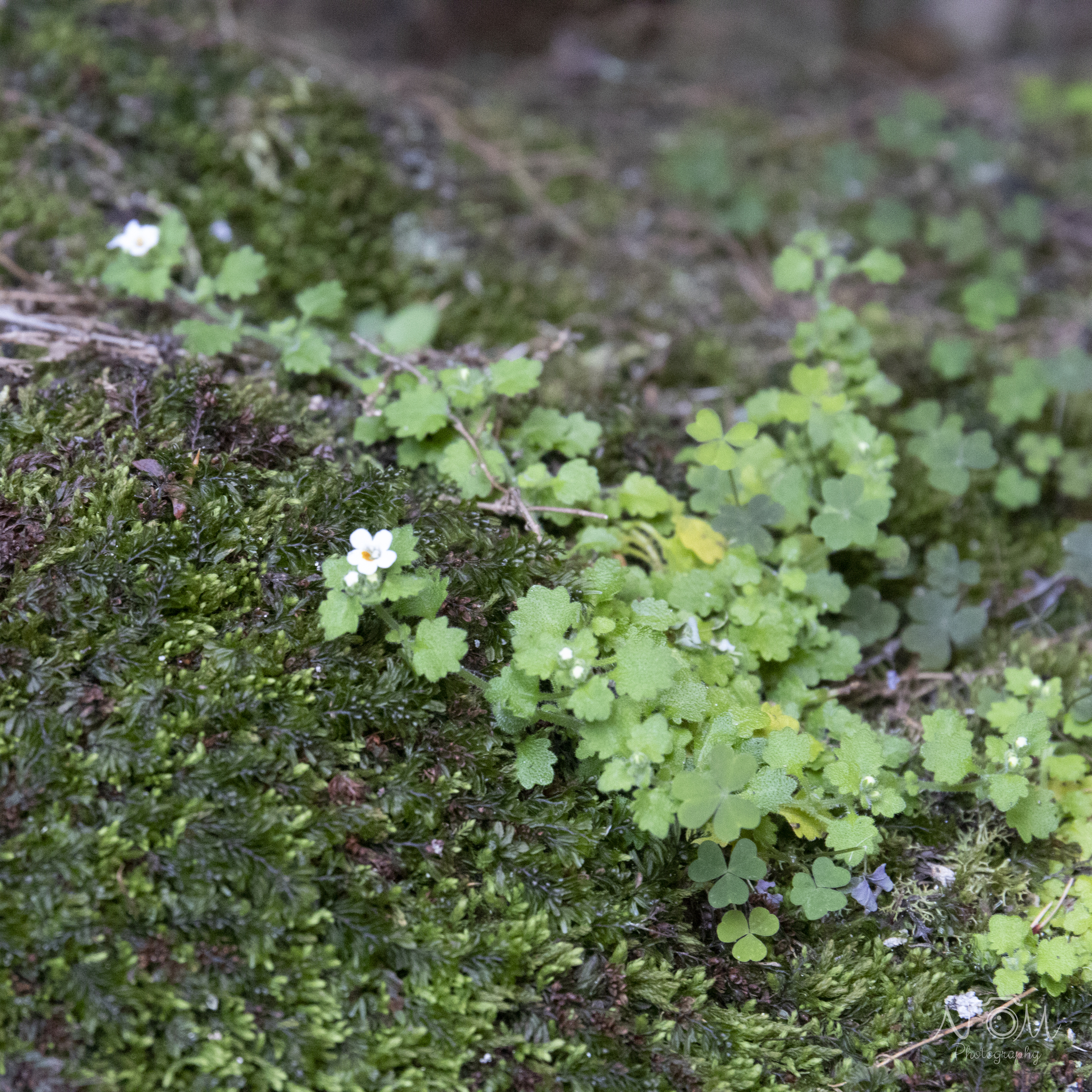
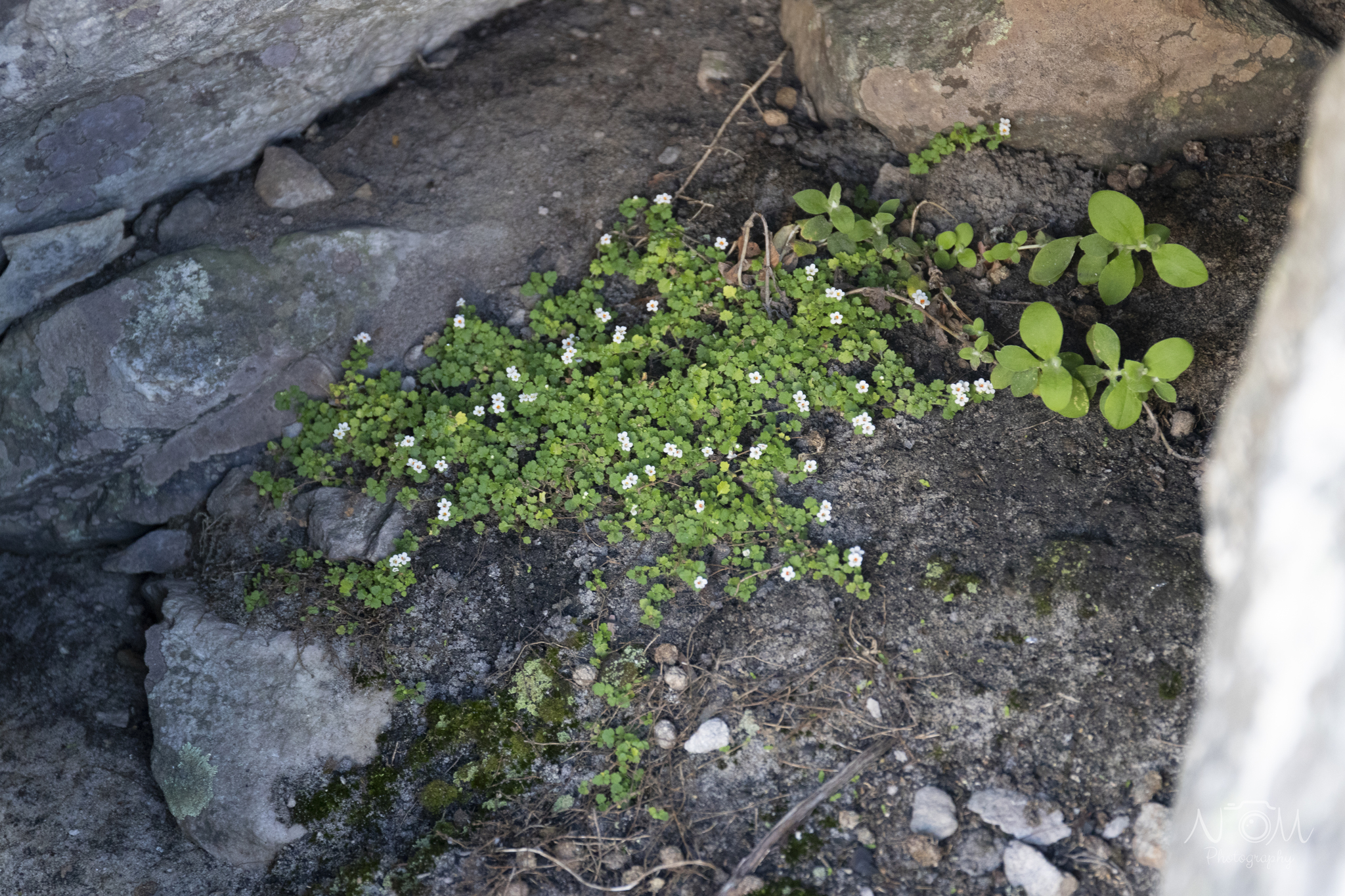
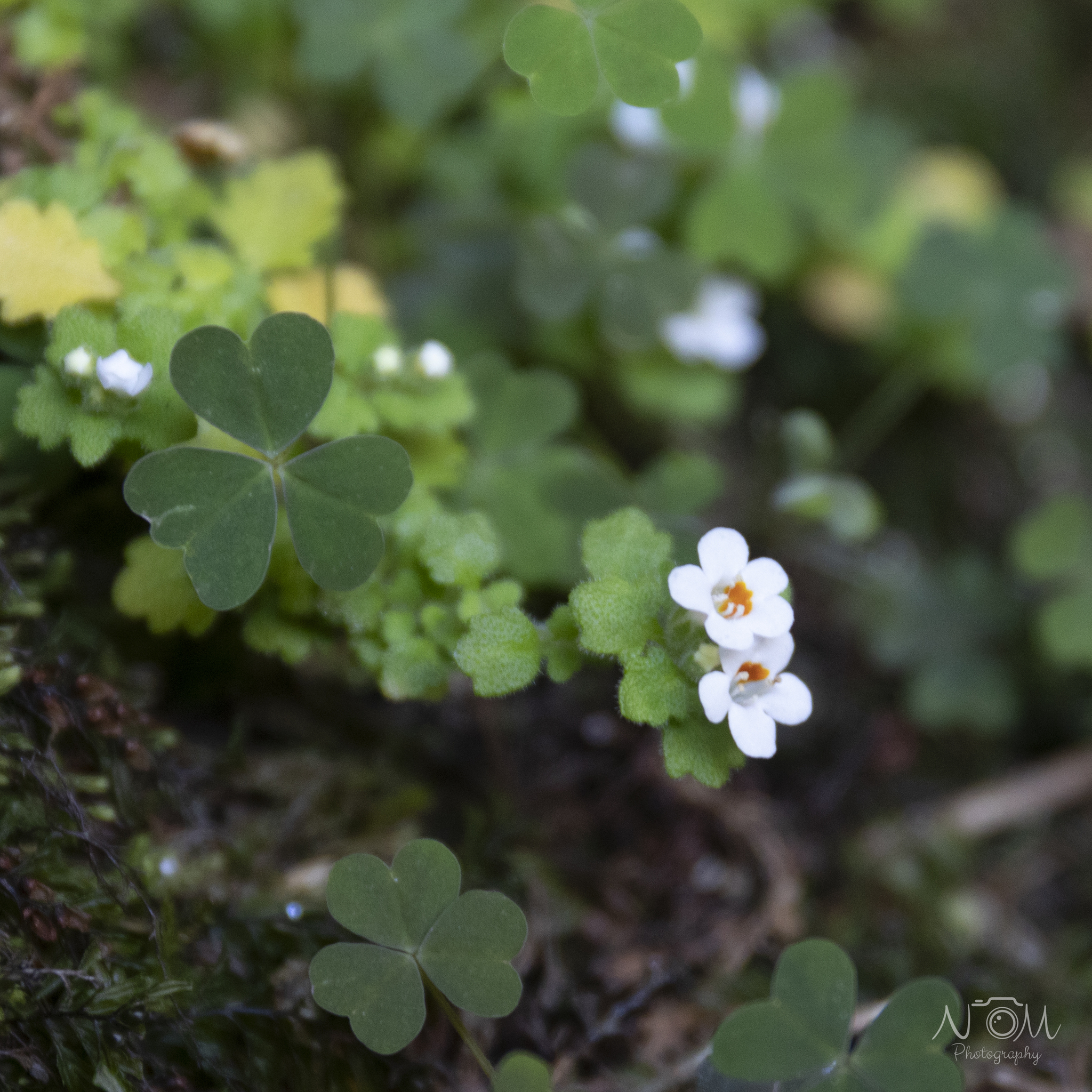
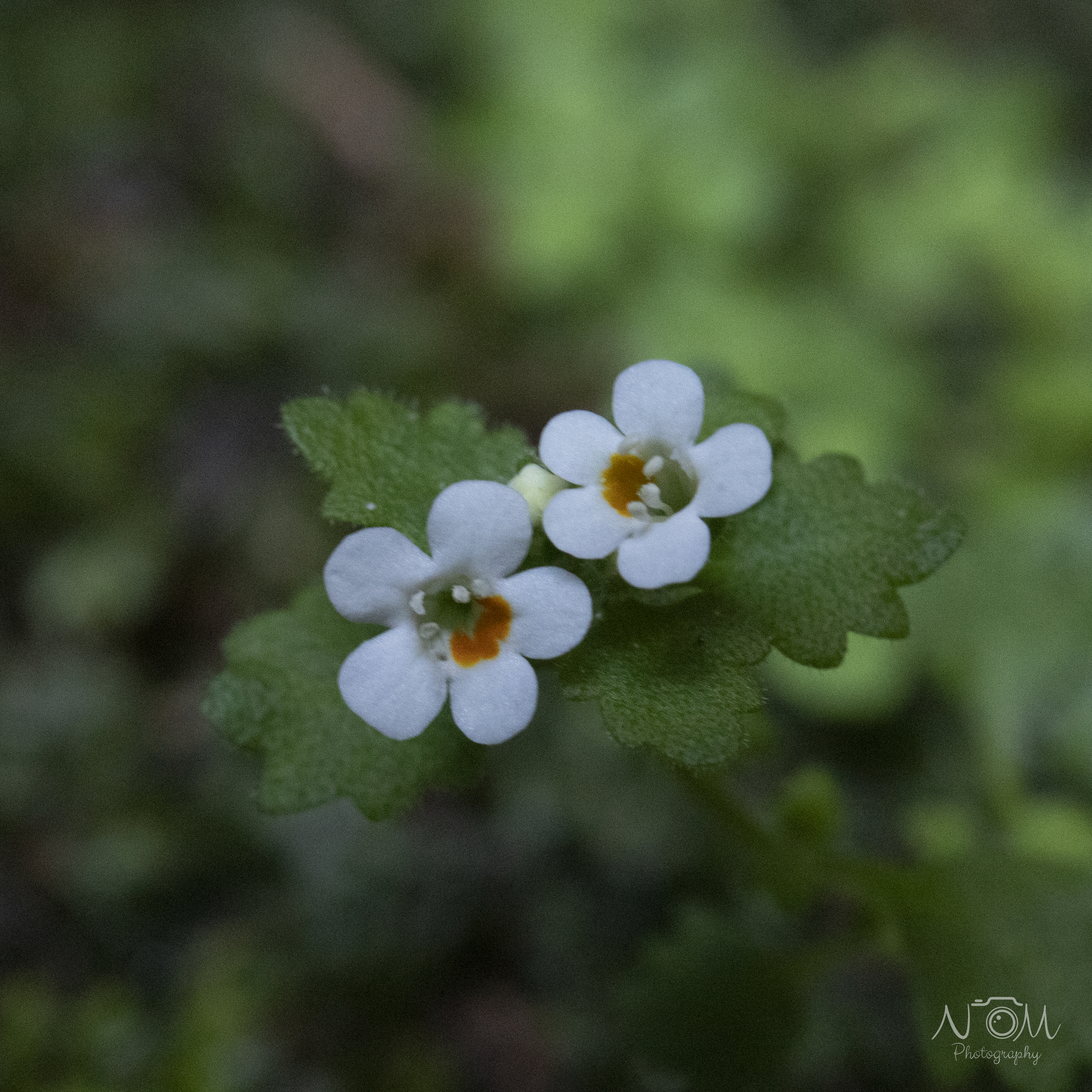
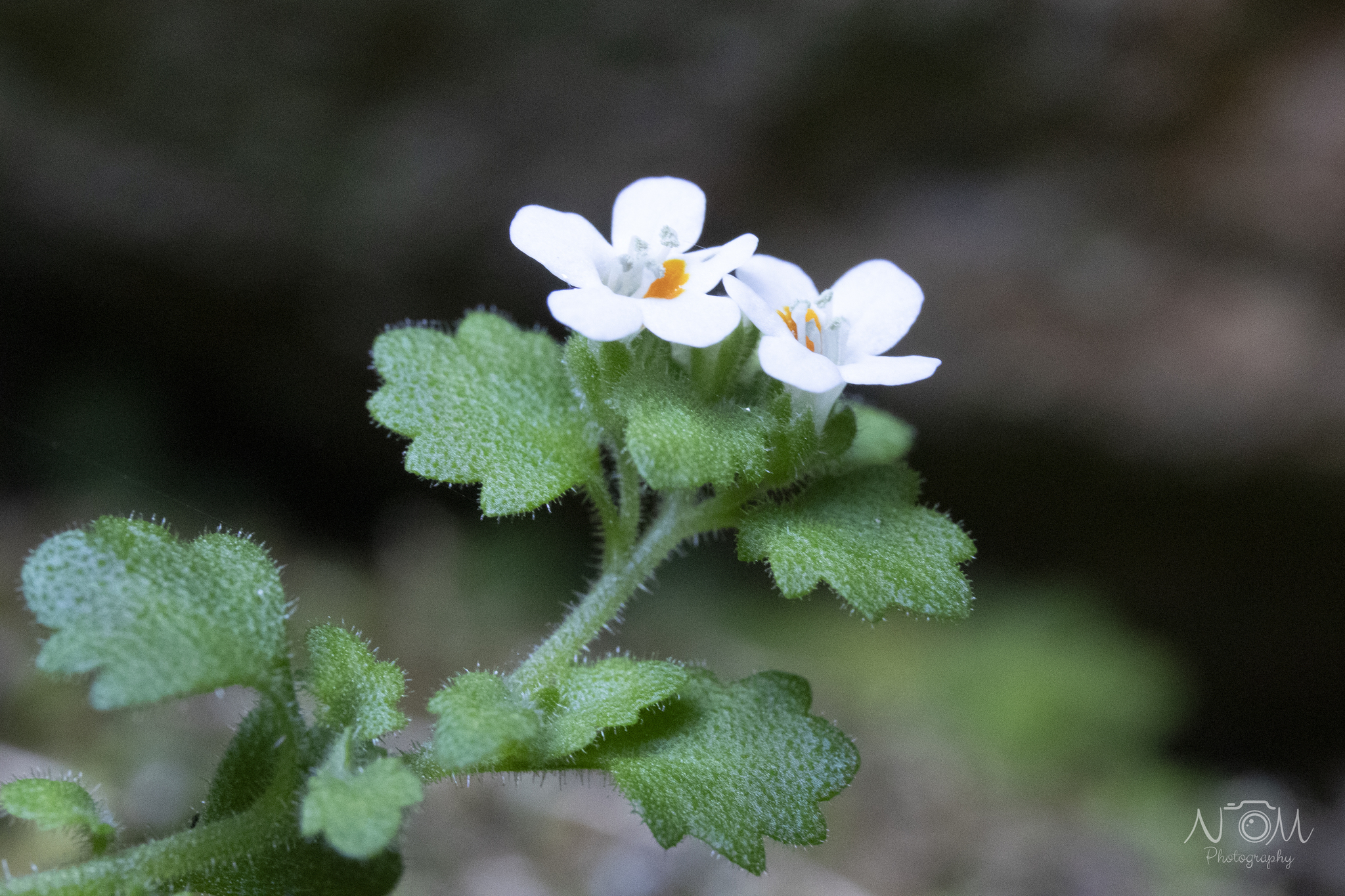
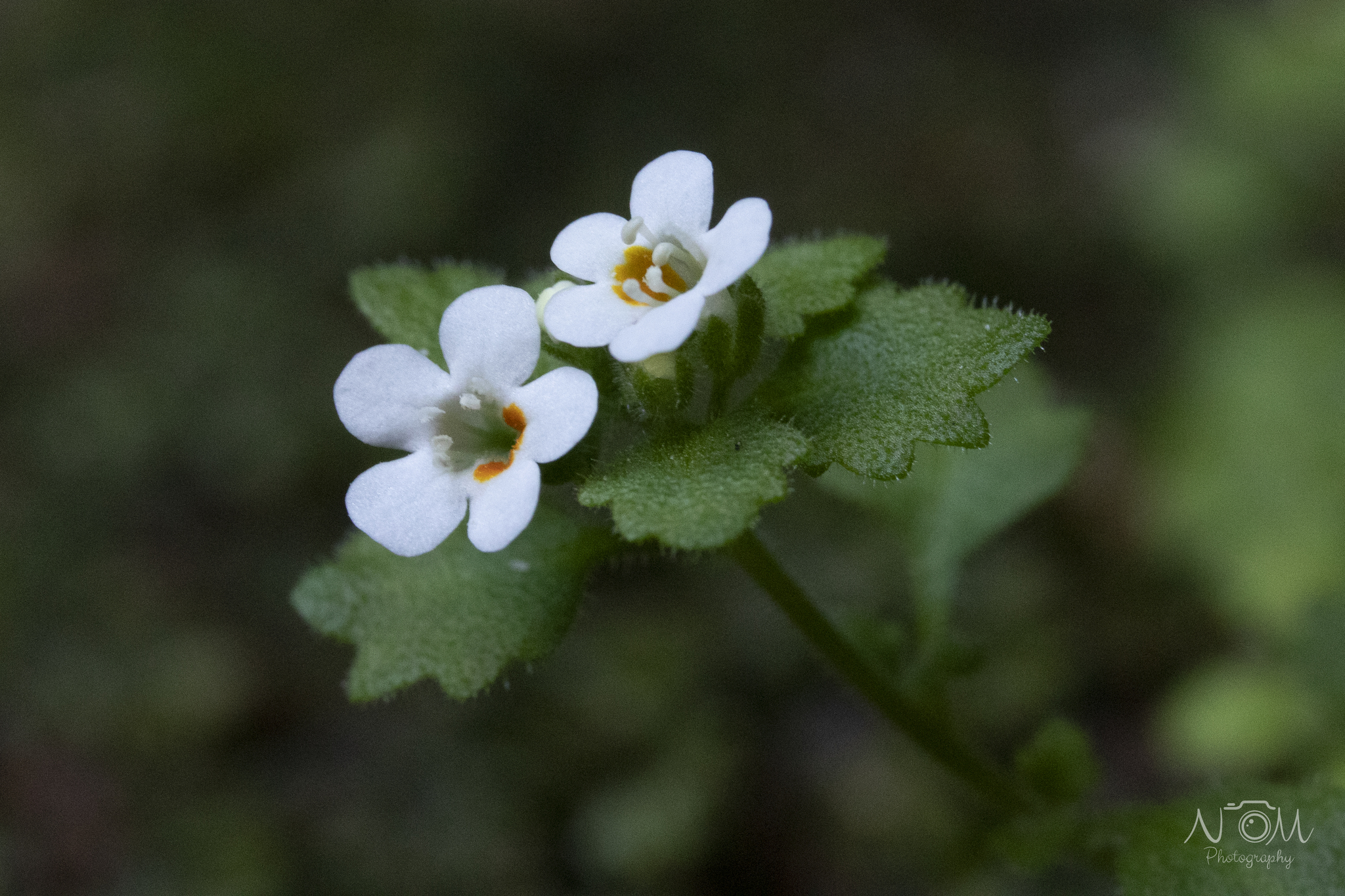
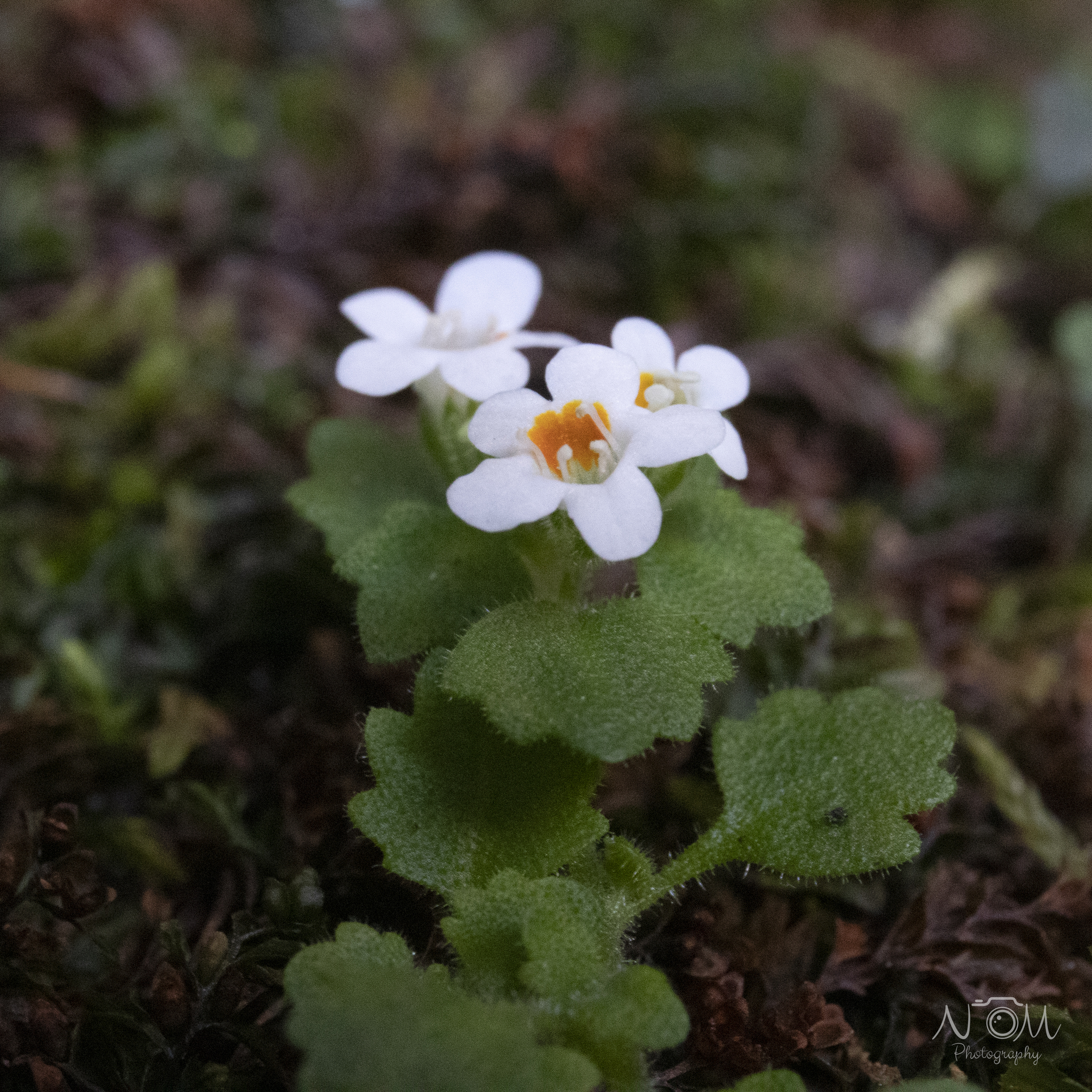
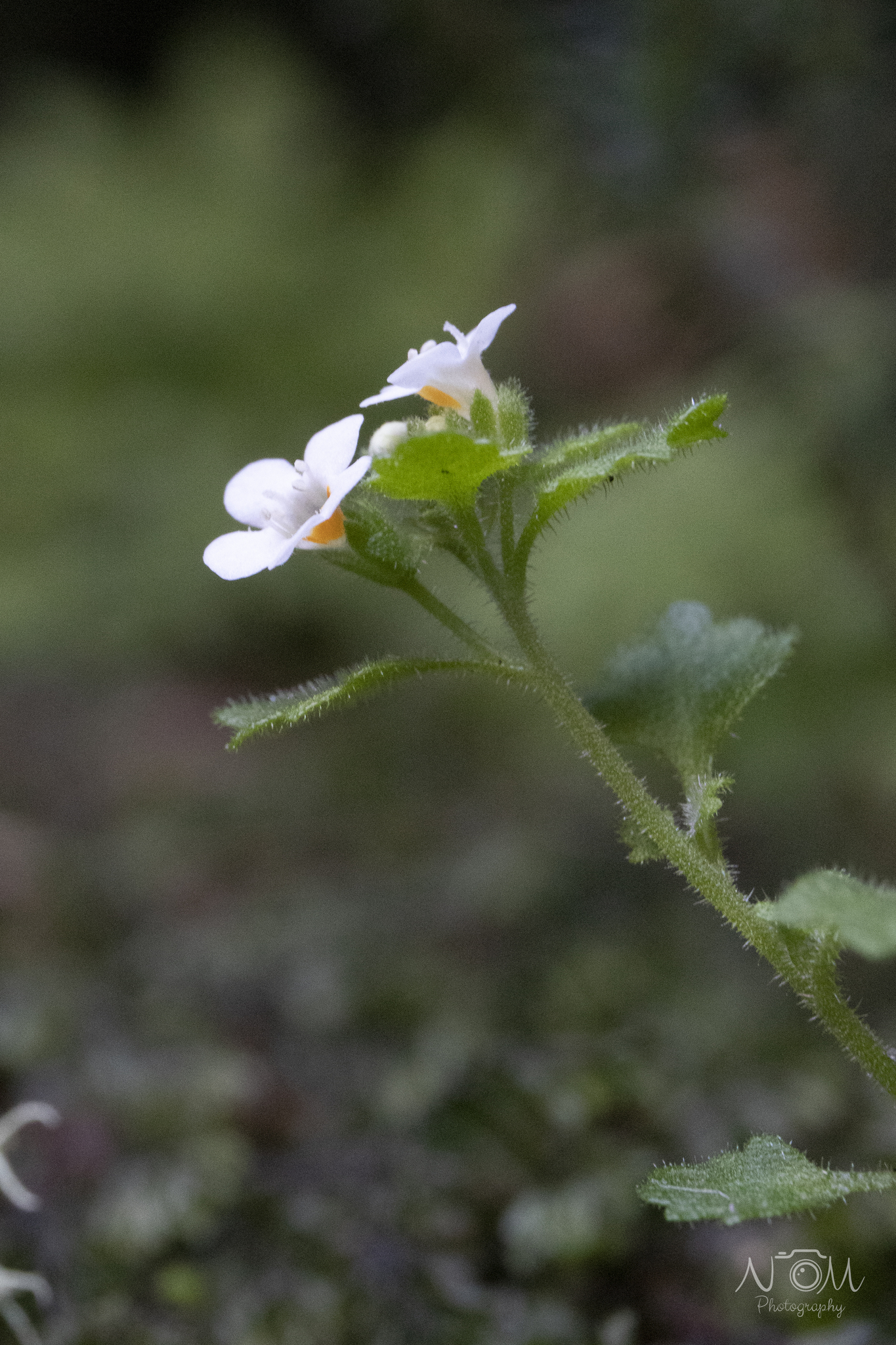
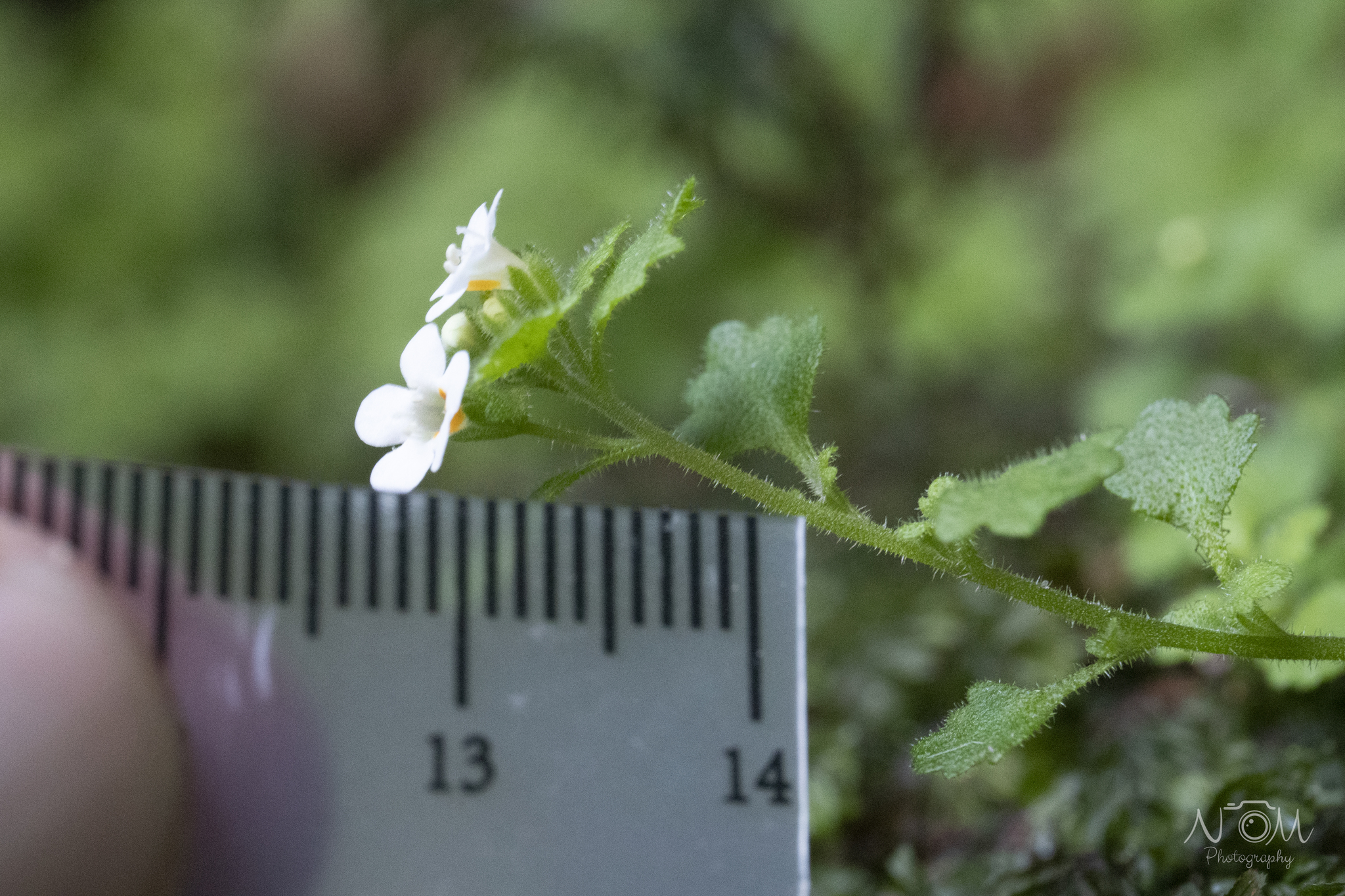
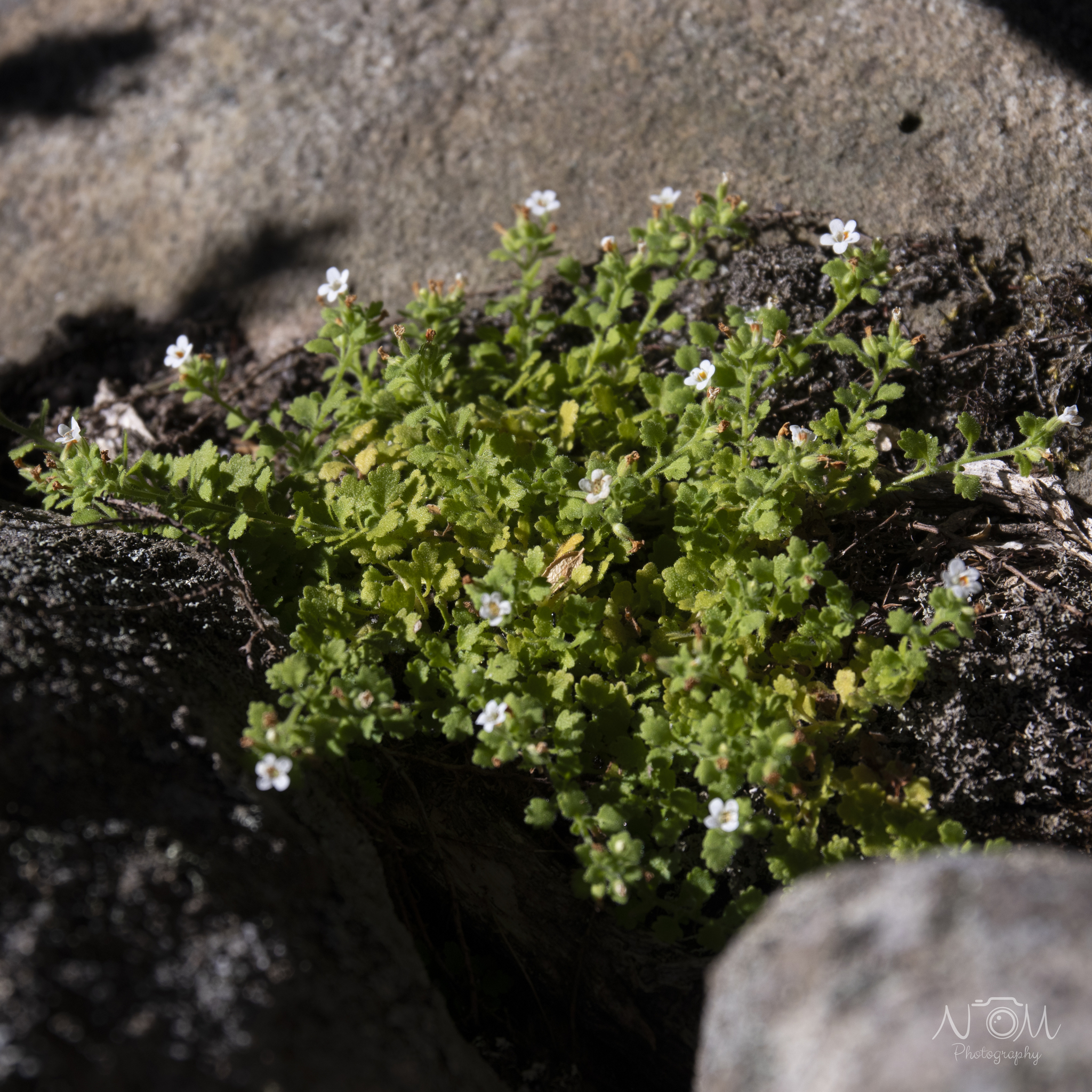
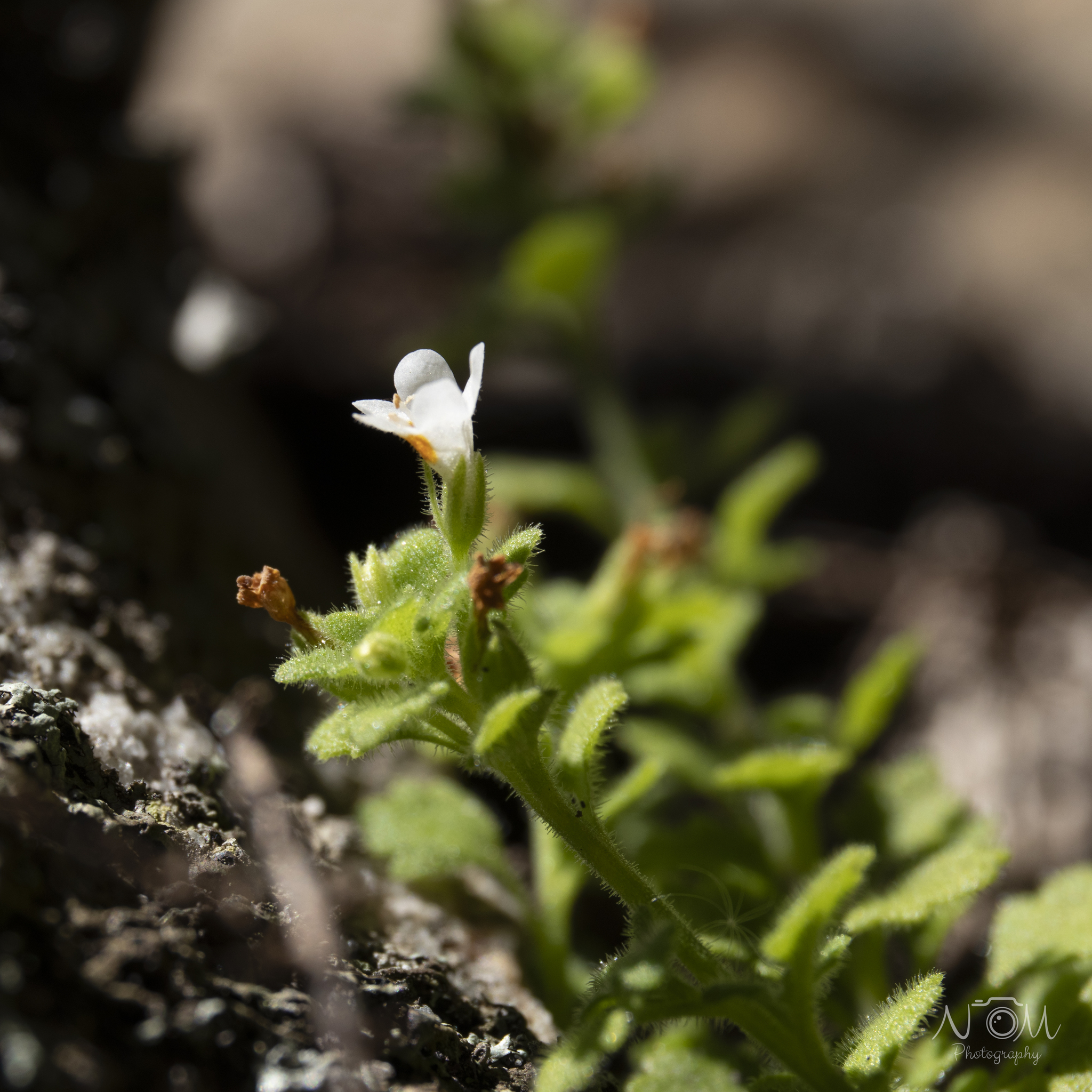
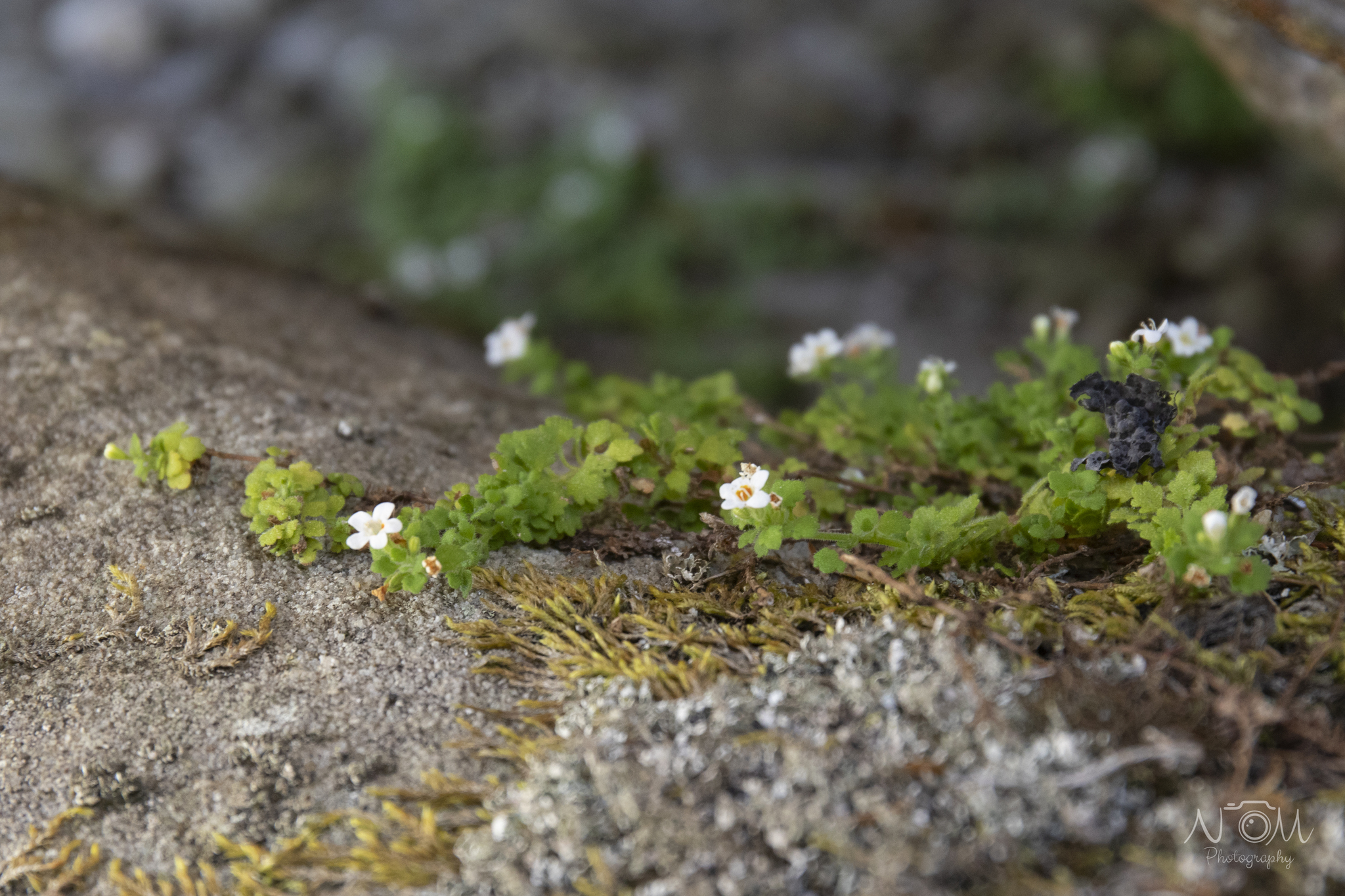
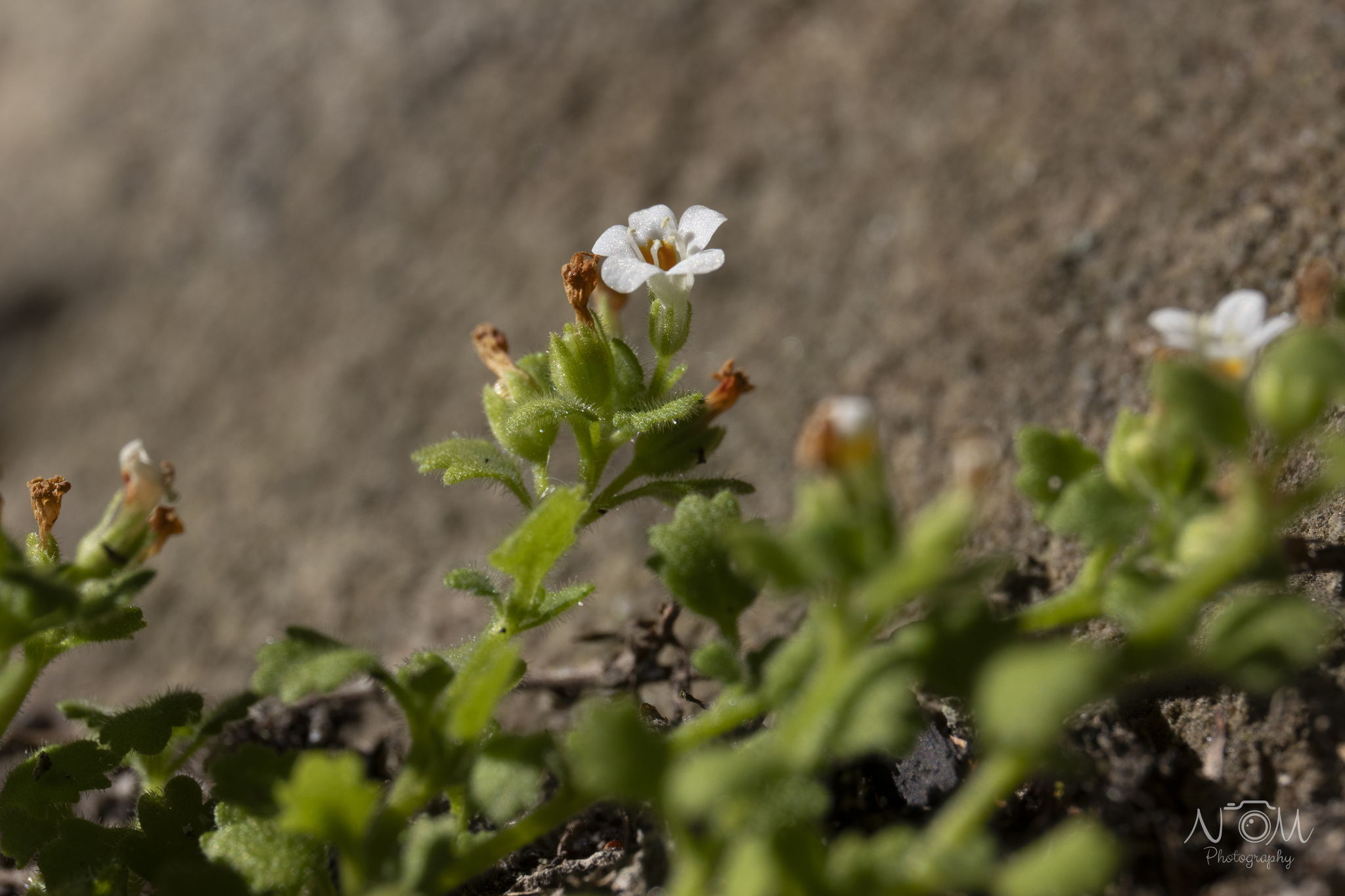
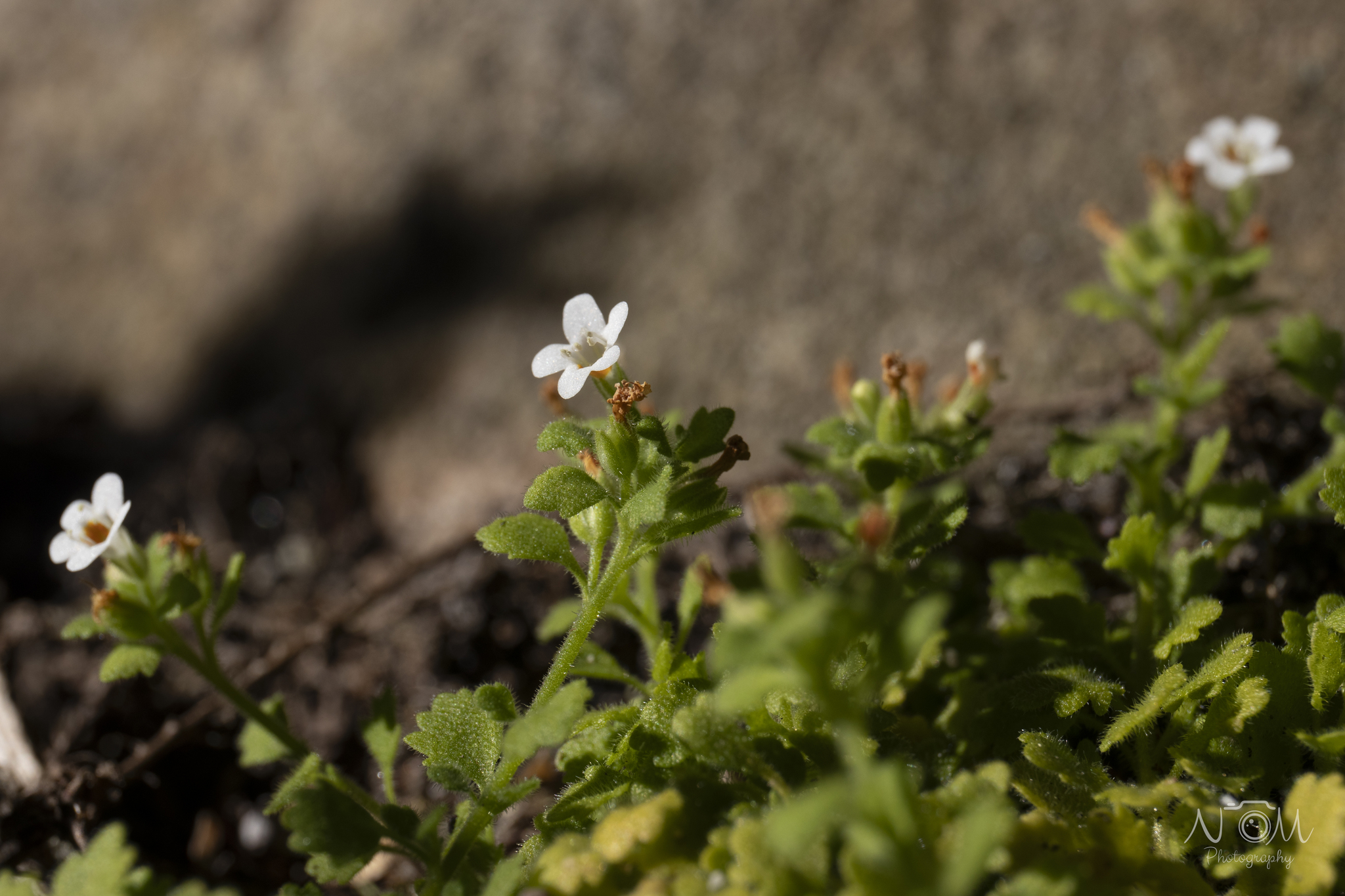
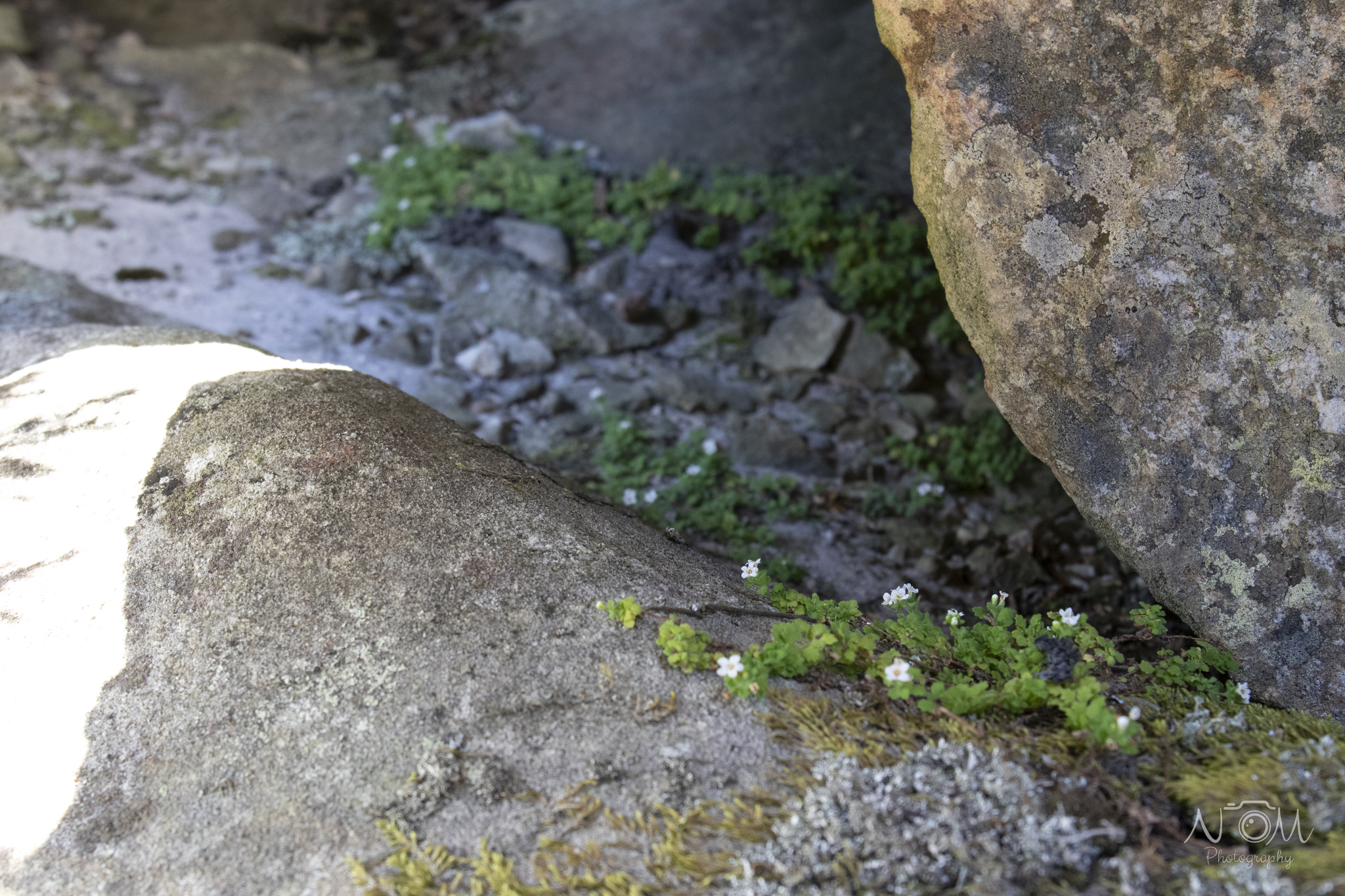
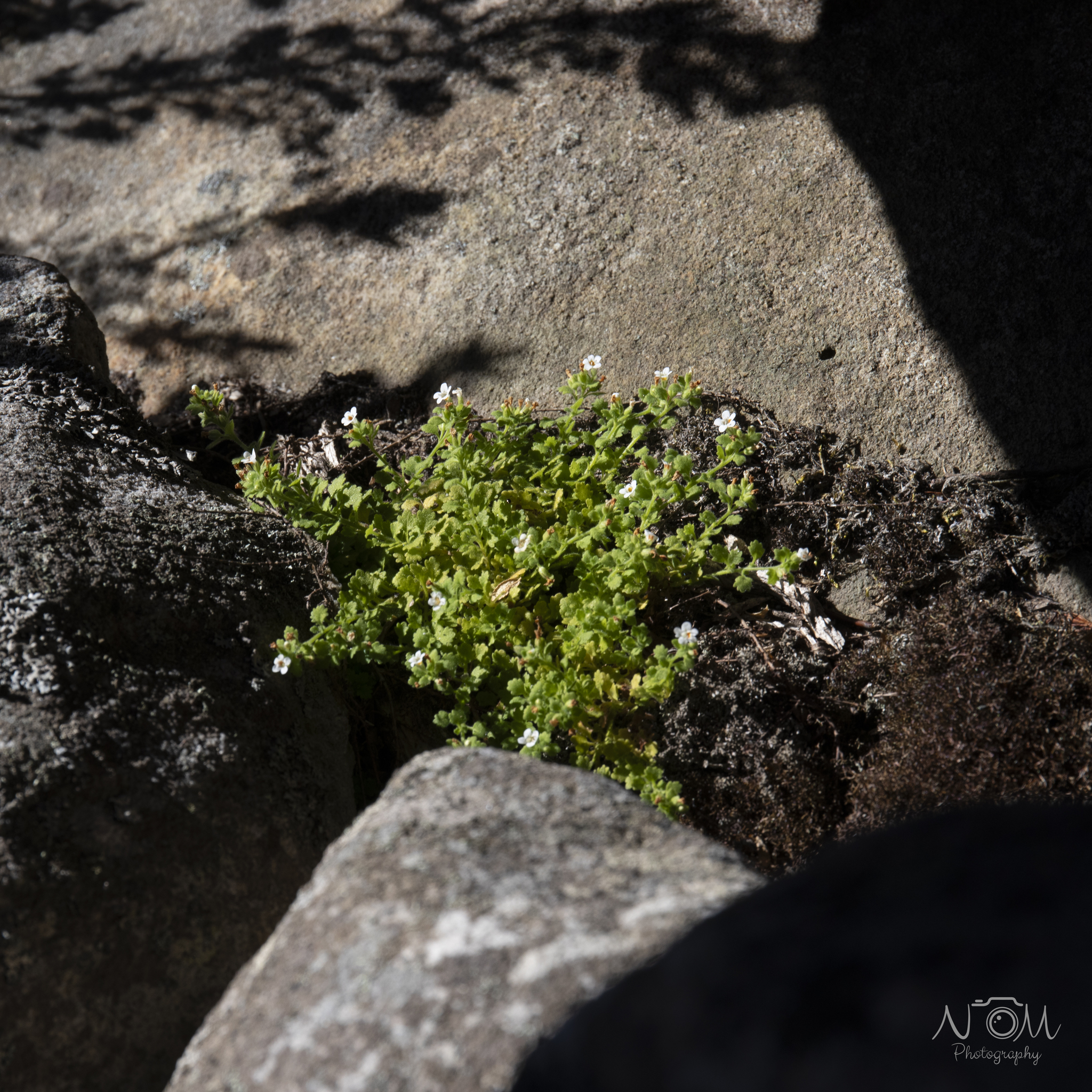
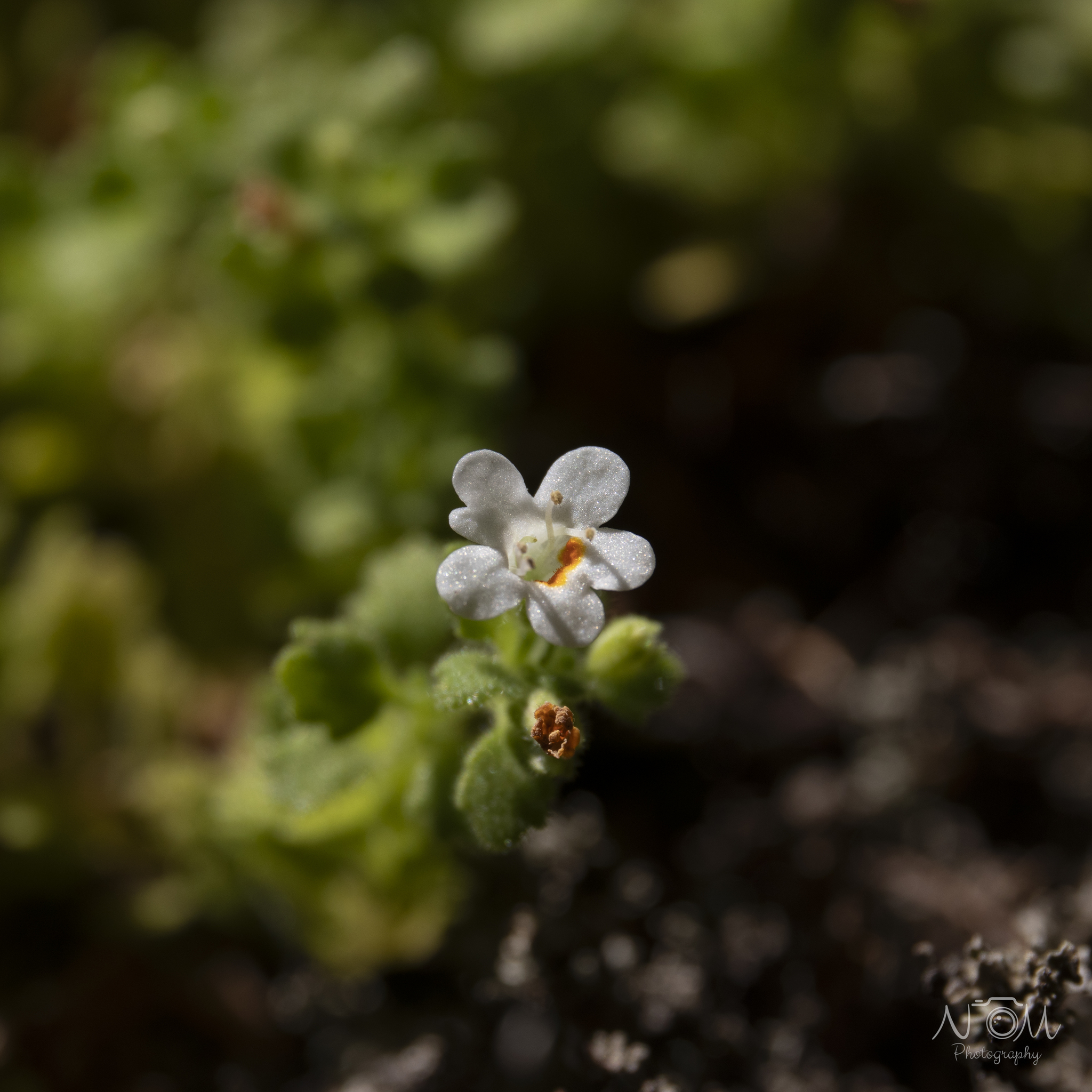
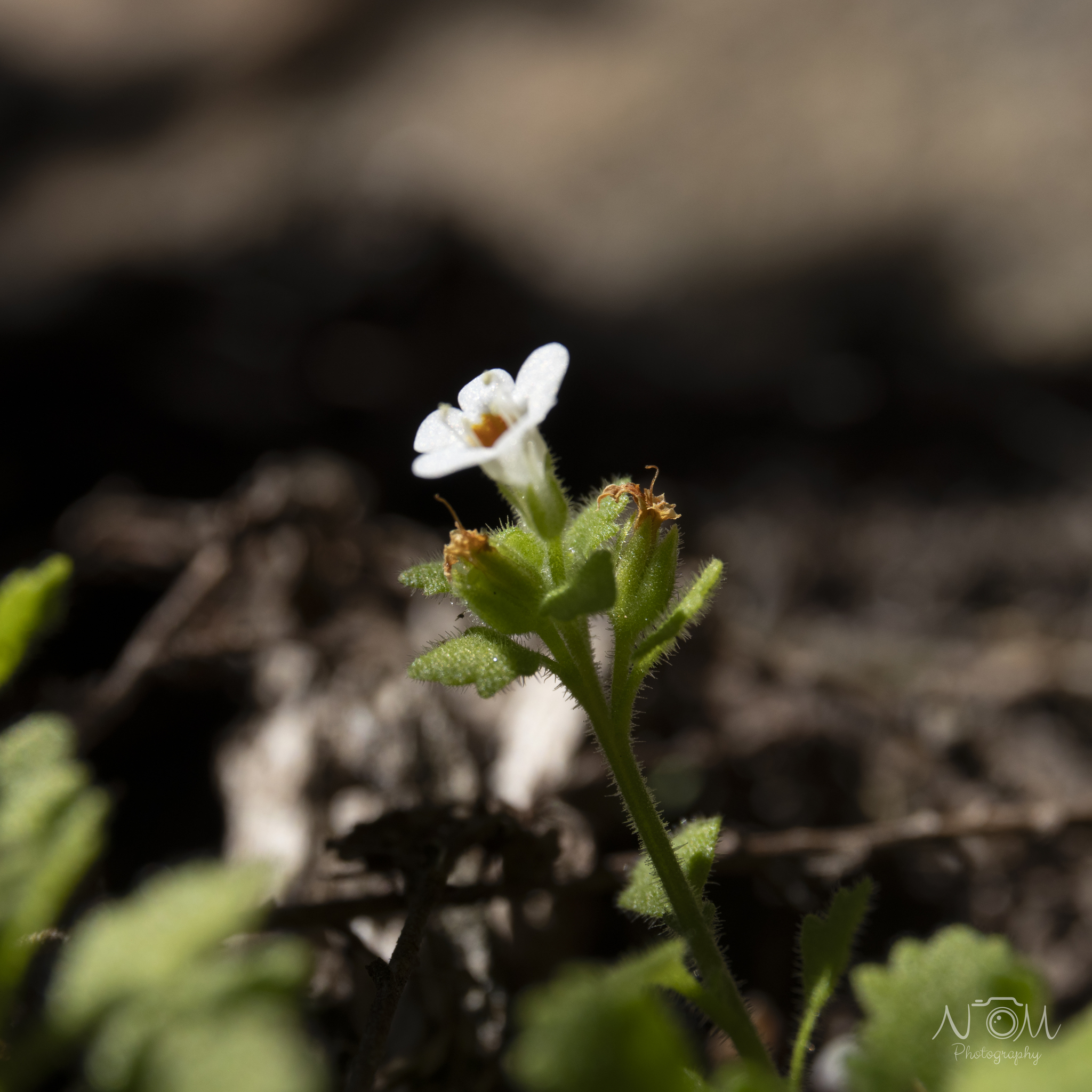
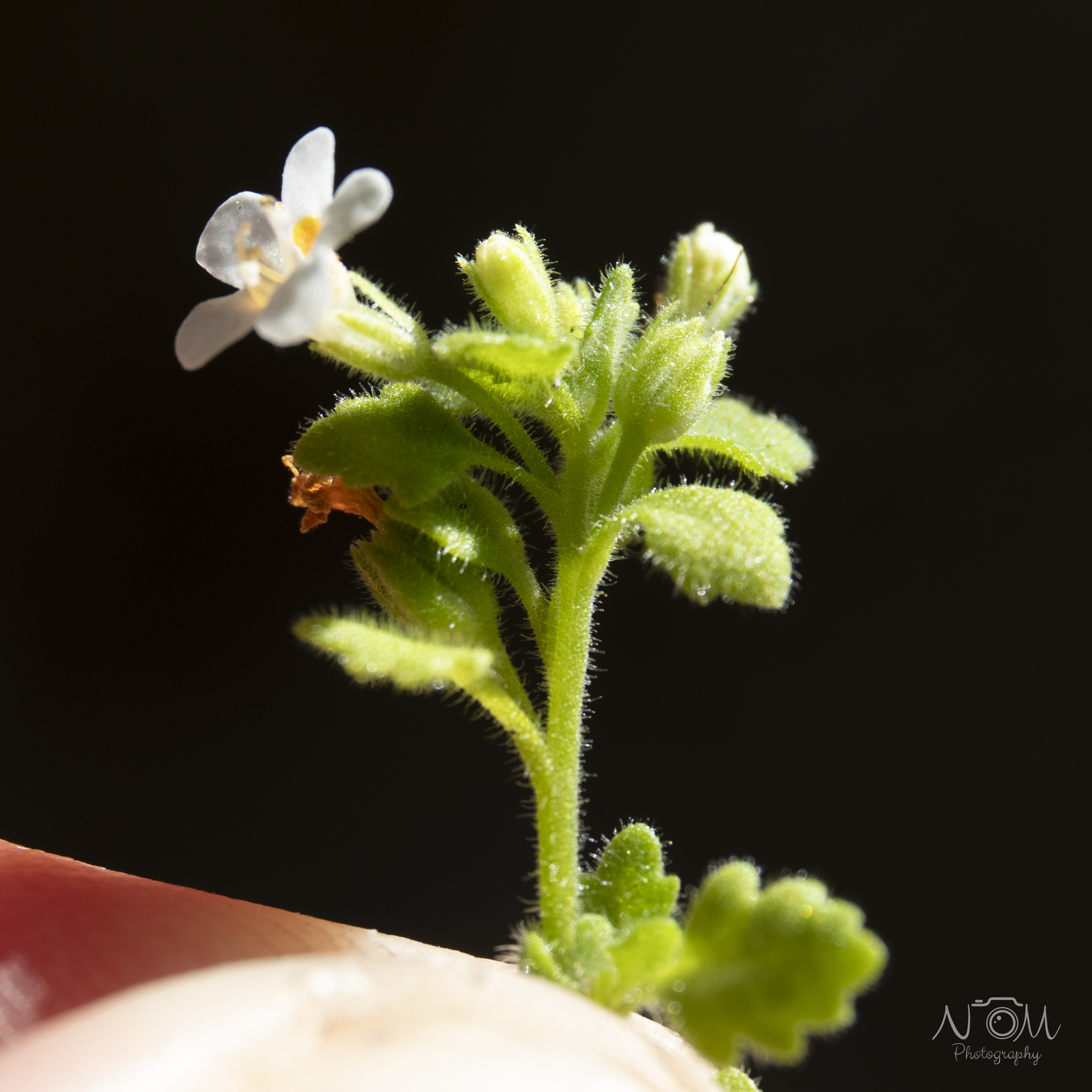
Perennial herb well branched from the base, branches rooting from lowermost nodes, up to 1 mm diam., prostrate or diffuse, leafy throughout, glandular-pubescent, hairs patent, up to 0.4-0.5 mm long. Leaves opposite below becoming alternate upwards and passing imperceptibly into floral bracts, blade of largest leaves c. 4-10 x 4-8 mm, ovate to rhomboid in outline, base cuneate and passing abruptly into a flat petiolar part c. 3-7 mm long, about equalling the blade or up to c. half its length, upper margins deeply and coarsely toothed, 2-3(-4) pairs each side, both surfaces glandular-pubescent, hairs up to 0.4-0.5 mm long. Flowers solitary in upper leaf axils forming long lax leafy racemes. Bracts leaf-like throughout, adnate to base of pedicel only. Pedicels: lower ones 2.5-6 mm long, slightly shorter upwards. Calyx obscurely bilabiate, tube 0.5-1.2 mm long, anticous lobes 1.8-2.5 x 0.6-0.9 mm, anticous lip split 1.5-2.6 mm, calyx glandular-pubescent all over. Corolla tube 3-4 mm long, cylindric in lower half and there 0.75-1 mm broad, abruptly expanded above, c. 1.5-2 mm across mouth, whole corolla glandular-puberulous outside, limb 4-6 mm across lateral lobes, posticous lobes 0.5-1.5 x 1-1.5 mm, anticous lobe 1.25-2 x 1.25-2 mm, all lobes subrotund, white with an orange patch at base of posticous lip and extending down back of tube, glabrous. Stamens 4, exserted, posticous filaments decurrent more than halfway down tube, all anthers 0.4-0.6 mm long. Style well exserted. Capsules 2.5-3 x 2-2.5 mm Seeds up to 8 in each loculus, 0.75-1 x 0.6 mm, obscurely or 4-angled, one face obscurely wrinkled, testa cream-coloured. Flowers can possibly be found in any month, but November to February may be the main season. From: Hilliard, OM. 1994. The Manuleae: a tribe of Scrophulariaceae. Edinburgh University Press, Edinburgh. [All rights reserved]
Glandular-hairy perennial with sprawling, rooting branches. Leaves opposite becoming alternate above and passing into bracts. Flowers solitary in upper axils on long pedicels, tube short and glandular-hairy, white with orange patch at base of lower lobes and down back of tube. From: Manning, JC; Goldblatt, P. 2012. Scrophulariaceae: Trieenea Hilliard. In: J Manning & P Goldblatt (eds), Plants of the Greater Cape Floristic Region 1: The Core Cape flora. Strelitzia 29: 761-762. South African National Biodiversity Institute, Pretoria. [CC BY]
It is easily recognized by its sprawling rooting branches with the flowers borne singly on long pedicels in all the upper leaf axils. These long pedicels (lower ones c. 2.5-6 mm) will at once distinguish T. longipedicellata from T. glutinosa (pedicels 1-3 mm), but it also differs in its inflorescences (flowers never running up into definite racemes), smaller flowers (corolla tube 3-4 mm long versus mostly 4-7.5 mm, anticous lobe 1.25-2 mm versus mostly 2.5-5 mm), glabrous at the base of the posticous lip (not with clavate hairs), and smaller, rounder capsules (2.5-3 x 2-2.5 mm versus 4-5 x 2.5-3 mm) with fewer seeds (up to 8 in each loculus versus many). The two species appear to be allopatric. The closest ally of T. longipedicellata may be T. schlechteri; they have similar flowers arranged in very lax inflorescences, but the bracts of T. schlechteri are never leaflike; they are linear and less than 1 mm broad. From: Hilliard, OM. 1994. The Manuleae: a tribe of Scrophulariaceae. Edinburgh University Press, Edinburgh. [All rights reserved]
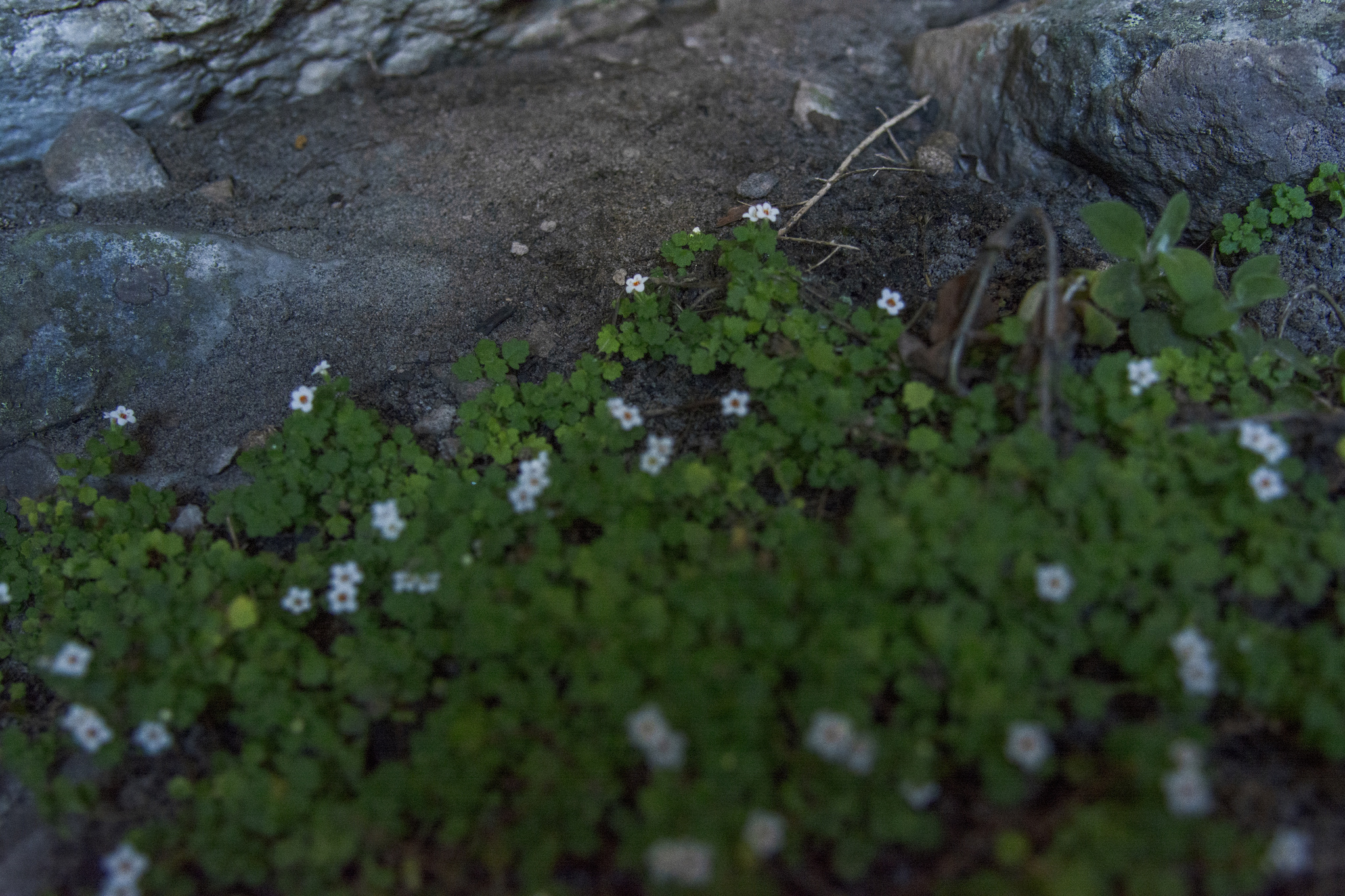
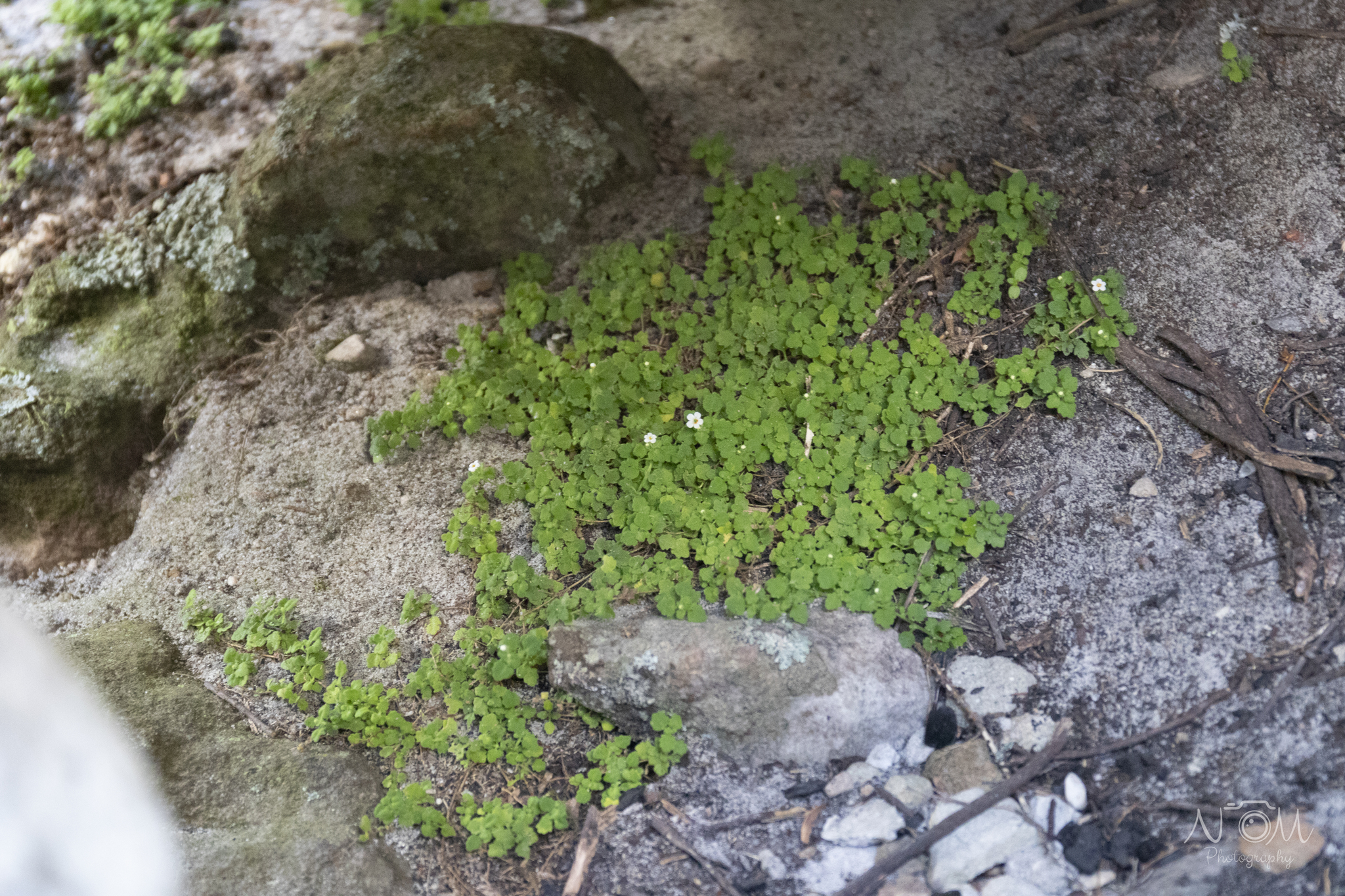
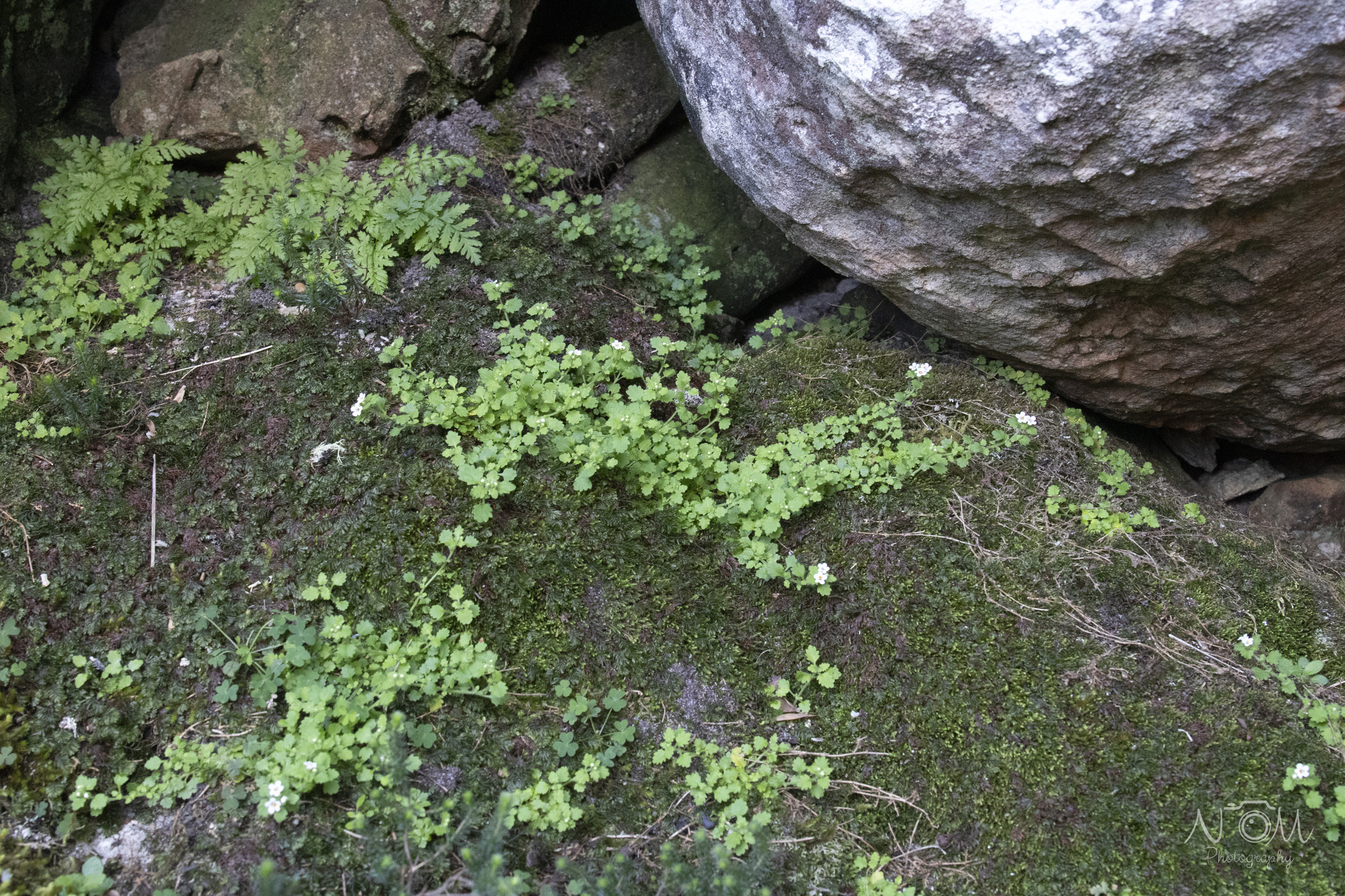
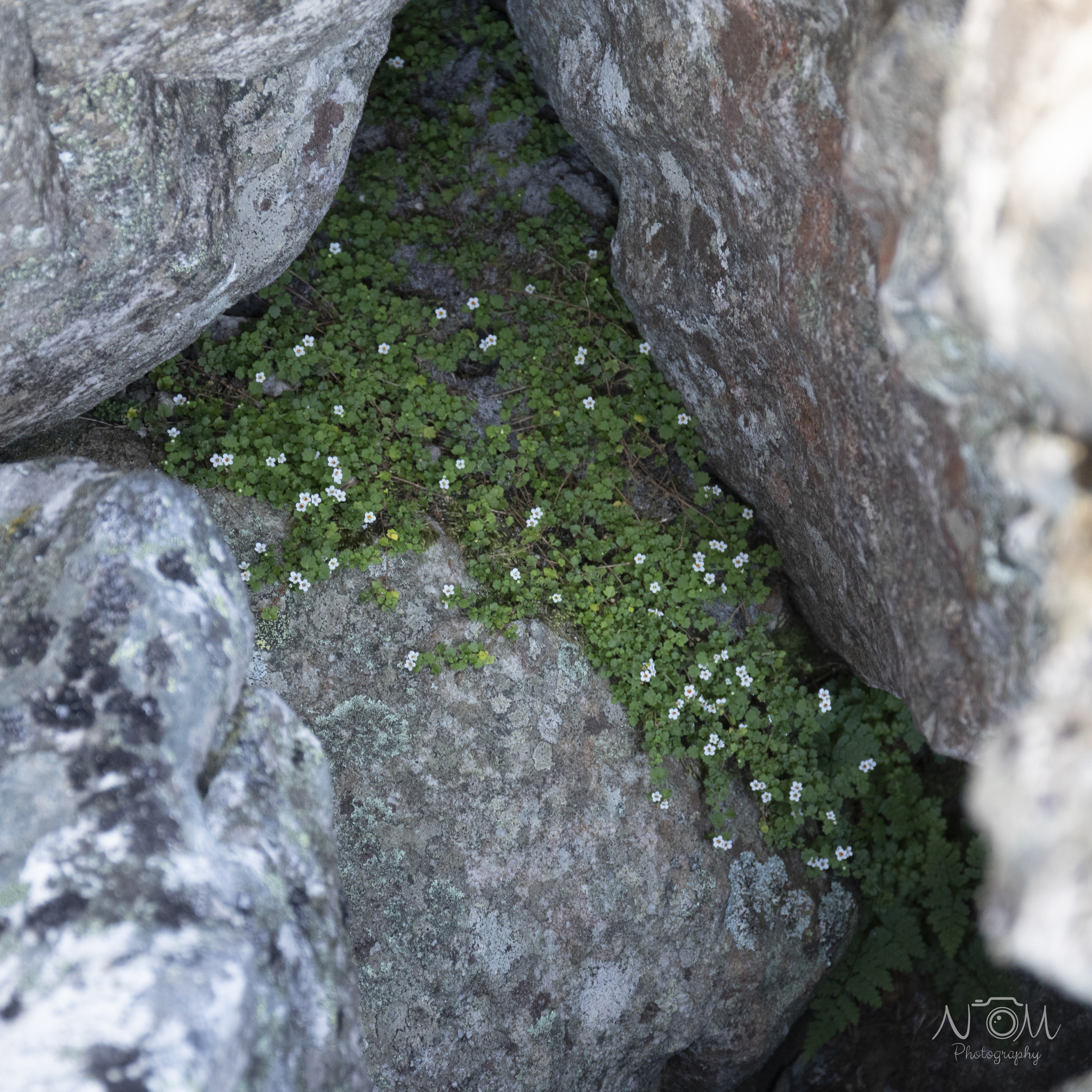
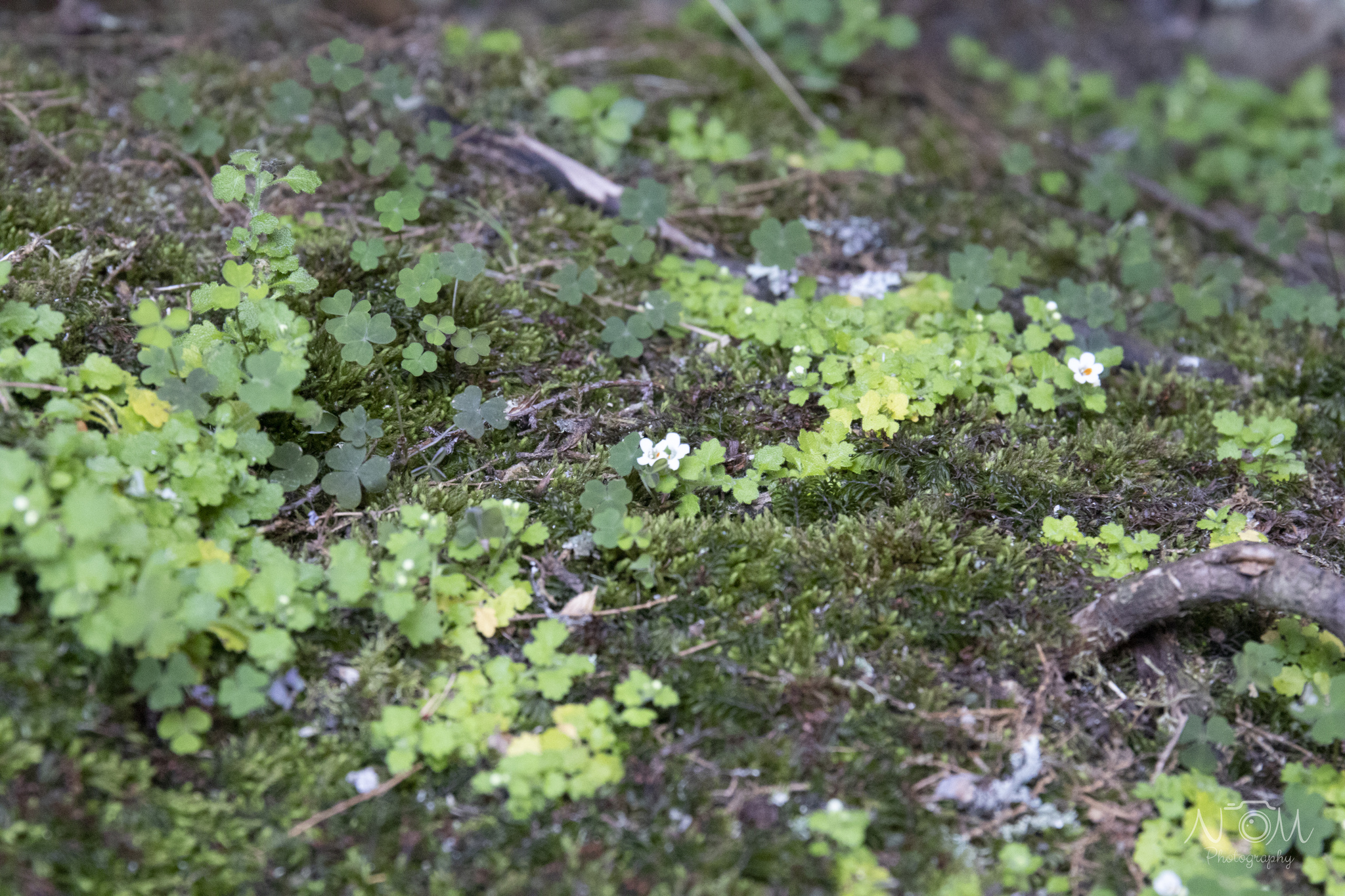
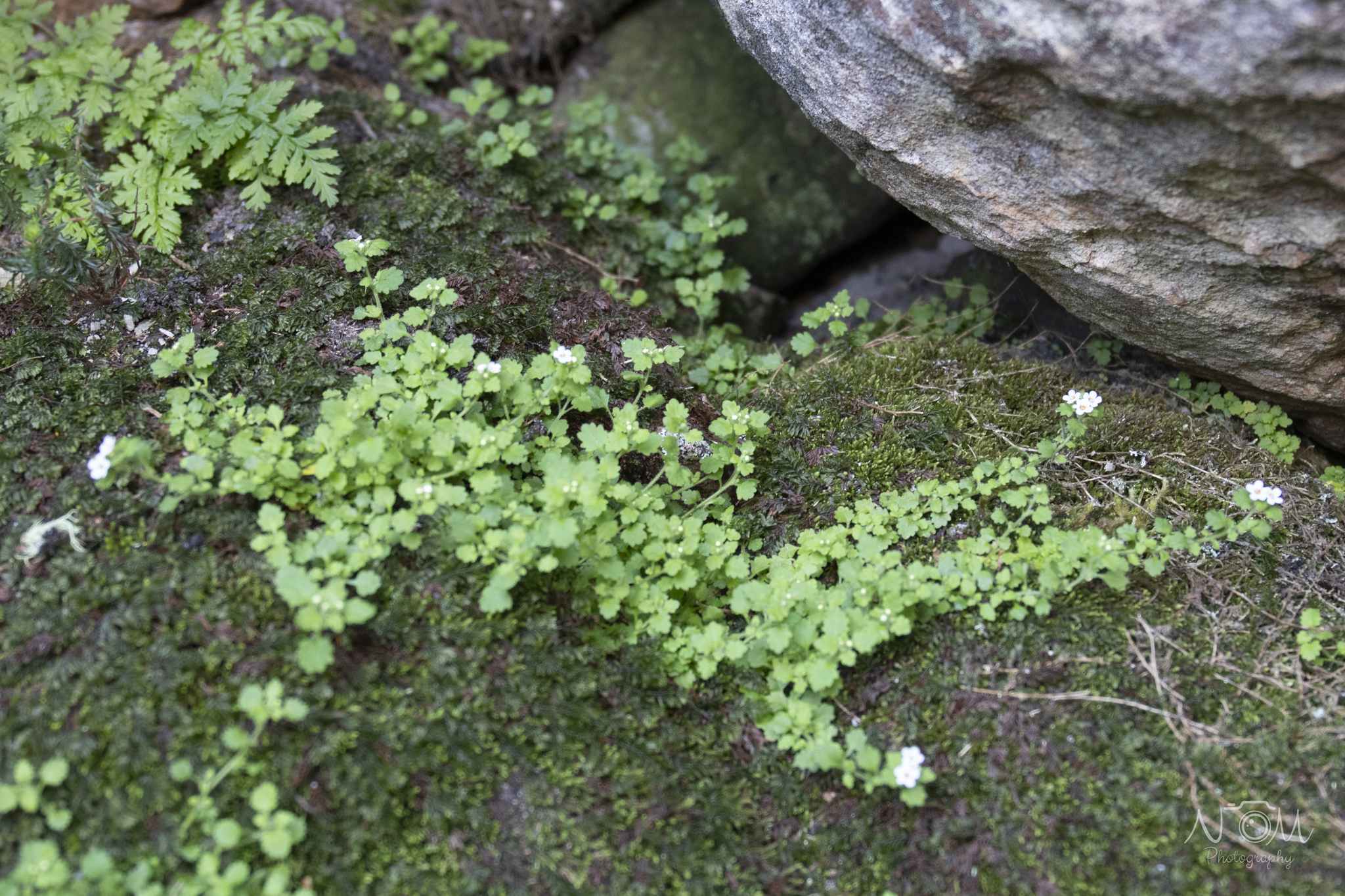
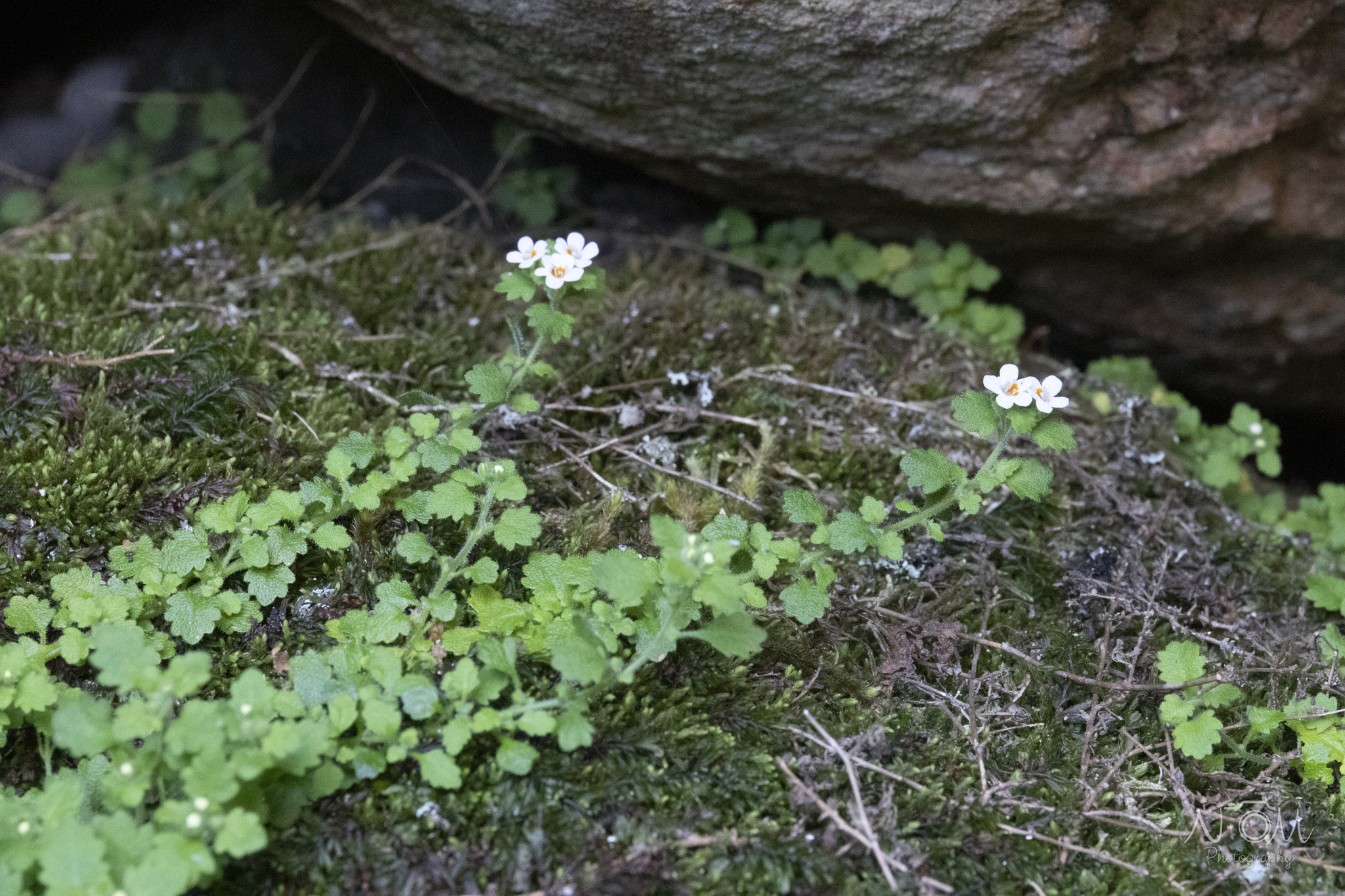
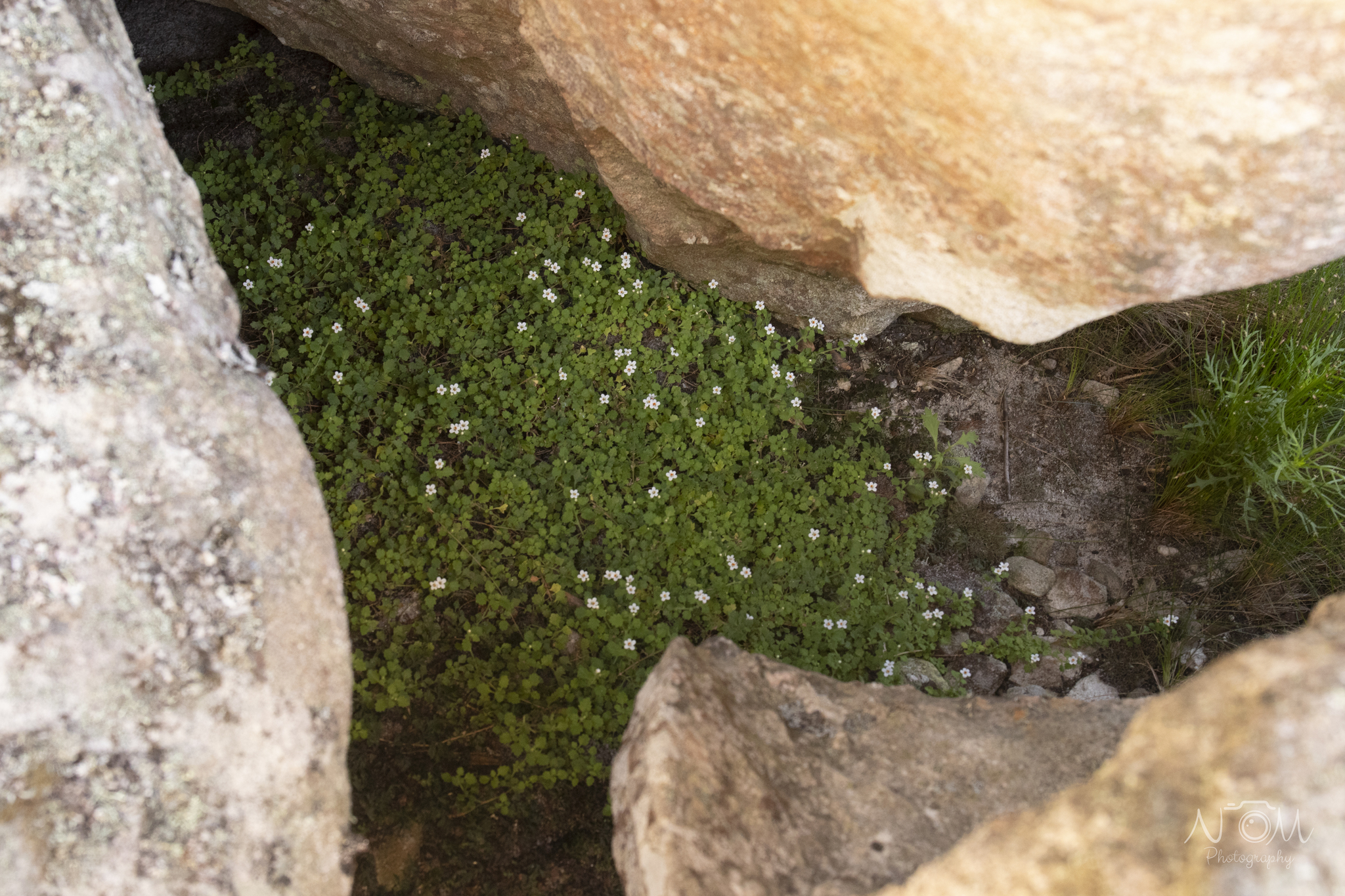
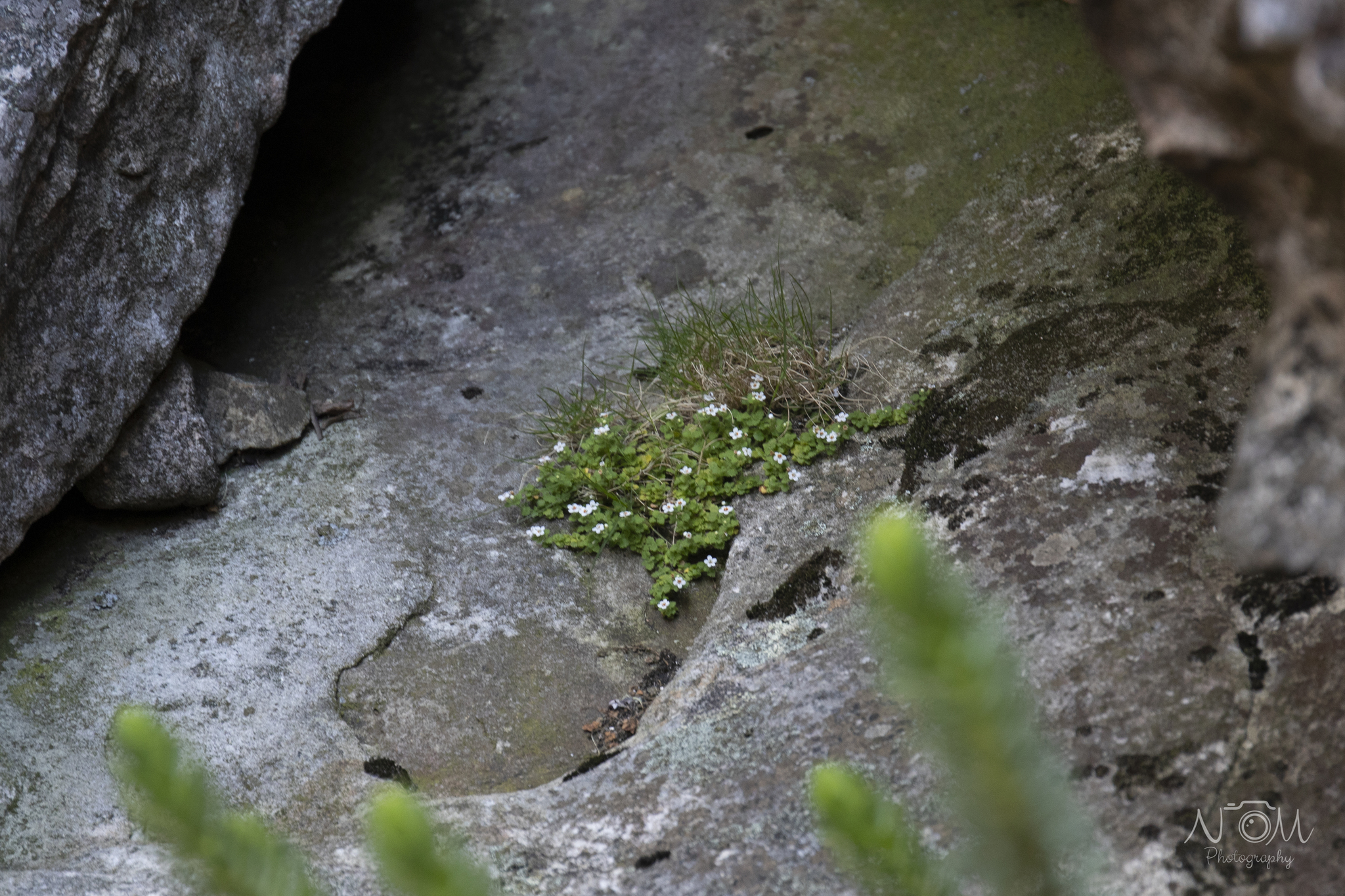
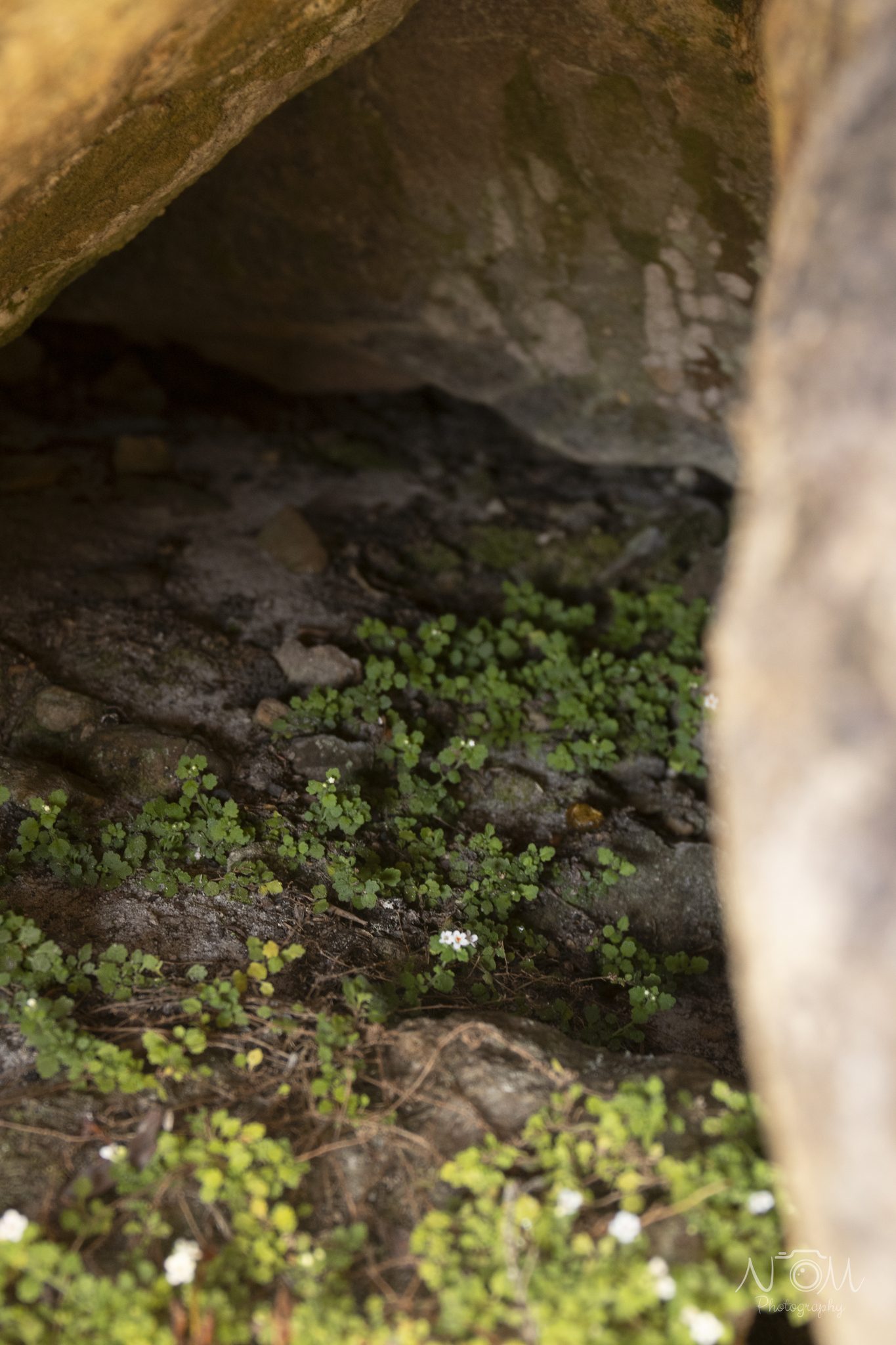
It grows on the damp shady floors of rock overhangs and under big boulders. From: Hilliard, OM. 1994. The Manuleae: a tribe of Scrophulariaceae. Edinburgh University Press, Edinburgh. [All rights reserved]
Damp places under sandstone overhangs. From: Manning, JC; Goldblatt, P. 2012. Scrophulariaceae: Trieenea Hilliard. In: J Manning & P Goldblatt (eds), Plants of the Greater Cape Floristic Region 1: The Core Cape flora. Strelitzia 29: 761-762. South African National Biodiversity Institute, Pretoria. [CC BY]
Trieenea longipedicellata is known from a few mountains in the S.W. Cape, lying between Paarl, Stellenbosch and Genadendal. From: Hilliard, OM. 1994. The Manuleae: a tribe of Scrophulariaceae. Edinburgh University Press, Edinburgh. [All rights reserved]
Paarl to Genadendal. From: Manning, JC; Goldblatt, P. 2012. Scrophulariaceae: Trieenea Hilliard. In: J Manning & P Goldblatt (eds), Plants of the Greater Cape Floristic Region 1: The Core Cape flora. Strelitzia 29: 761-762. South African National Biodiversity Institute, Pretoria. [CC BY]
November to February
1500 to 1980 m
This map contains point-based occurrences at different locations
Occurrence in the Flora of Southern Africa (FSA) countries and South African provinces. Residence status indicates if a taxon is indigenous, endemic, naturalised or invasive in a specific region. This data is based on specimen records and literature
FSA
SA
BOT
NAM
ESW
LES
WC
EC
NC
FS
GA
KZN
LP
MP
NW
Absent
Indigenous
Endemic
Naturalised
Invasive
Names and Sources
Classification
KINGDOM Plantae
SUBKINGDOM Phanerogamae
PHYLUM Anthophyta
ORDER Lamiales
FAMILY Scrophulariaceae
TRIBE Limoselleae
GENUS Trieenea
SPECIES longipedicellata
10 results for Trieenea longipedicellata Hilliard
Barcode: PRE0137236-0 Collector(s) & number: Wasserfall, E, 639 | 1943-11-21
South Africa, Western Cape, SLANGHOEK MT.; PAARL; WITTEBERG
Data Resource: BODATSA View record
Barcode: PRE0139471-0 Collector(s) & number: Esterhuysen, EE, 11236 | 1944-12-31
South Africa, Western Cape, Paarl Div.; Wemmershoek Peak.
General notes: Floor of shelter formed by huge boulders near summit.
Data Resource: BODATSA View record
Barcode: PRE0138311-0 Collector(s) & number: Marloth, HWR, 2494 | 1899-1-
South Africa, Western Cape, WORCESTER DIV.; DU TOITS PEAK
Data Resource: BODATSA View record
Barcode: NBG0047283-0 Collector(s) & number: Esterhuysen, EE, 11236 | 1944-12-31
South Africa, Western Cape, Paarl Div., Wemmershoek Peak.
General notes: Floor of shelter formed by huge boulders near summit. Flowers cream and orange.
Data Resource: BODATSA View record
Barcode: NBG0047284-0 Collector(s) & number: Esterhuysen, EE, 11236 | 1944-12-31
South Africa, Western Cape, Paarl Div.; Wemmershoek Peak.
General notes: Floor of shelter formed by huge boulders near summit. Flowers cream and orange.
Data Resource: BODATSA View record
Barcode: PRE0139468-0 Collector(s) & number: Esterhuysen, EE, 17807 | 1950-11-19
South Africa, Western Cape, WORCESTER; SLANGHOEK NEEDLE
Data Resource: BODATSA View record
This map contains point-based occurrences at different locations
2012
SERIES CHAPTER
Scrophulariaceae: Trieenea Hilliard Manning, JC; Goldblatt, PIn: J Manning & P Goldblatt (eds), Plants of the Greater Cape Floristic Region 1: The Core Cape flora. Strelitzia 29: 761-762
South African National Biodiversity Institute, Pretoria
1994
No results found for Trieenea longipedicellata Hilliard
Status and criteria
LC
Assessor(s)
Plantae Coordinator
JOURNAL ARTICLE
Hammer, S. 1994. A novel Neohenricia. Cactus and Succulent Journal. 66:54-84
JOURNAL ARTICLE
Hammer, S. 1994. Vlokia, a new genus in Aizoaceae. Cactus and Succulent Journal. 66:255-258
JOURNAL ARTICLE
Hammer, S. 1996. Notes on Conophytum ursprungianum Tischer. Mesemb Study Group Bulletin. 11:4-5
JOURNAL ARTICLE
Hammer, S. 1996. Part seven: up a sleeve: further observations on Cheiridopsis N.E.Br. and Odontophorus N.E.Br. (Aizoaceae). Piante Grasse Speciale. 15:1-97
JOURNAL ARTICLE
Hammer, S. 1997. New chrisogenic species of Conophytum from the Richtersveld. Cactus and Succulent Journal. 69:127-131
JOURNAL ARTICLE
Hammer, S. 1997. Unusual forms of Conophytum subfenestratum Schwantes. Aloe. 34:14-16
| Part(s) of plant used | Use(s) | Reference |
|---|
Coming soon...