PLANTAE / PHANEROGAMAE / ANTHOPHYTA / ASPARAGALES / HYPOXIDACEAE / PAURIDIA / MAXIMILIANI

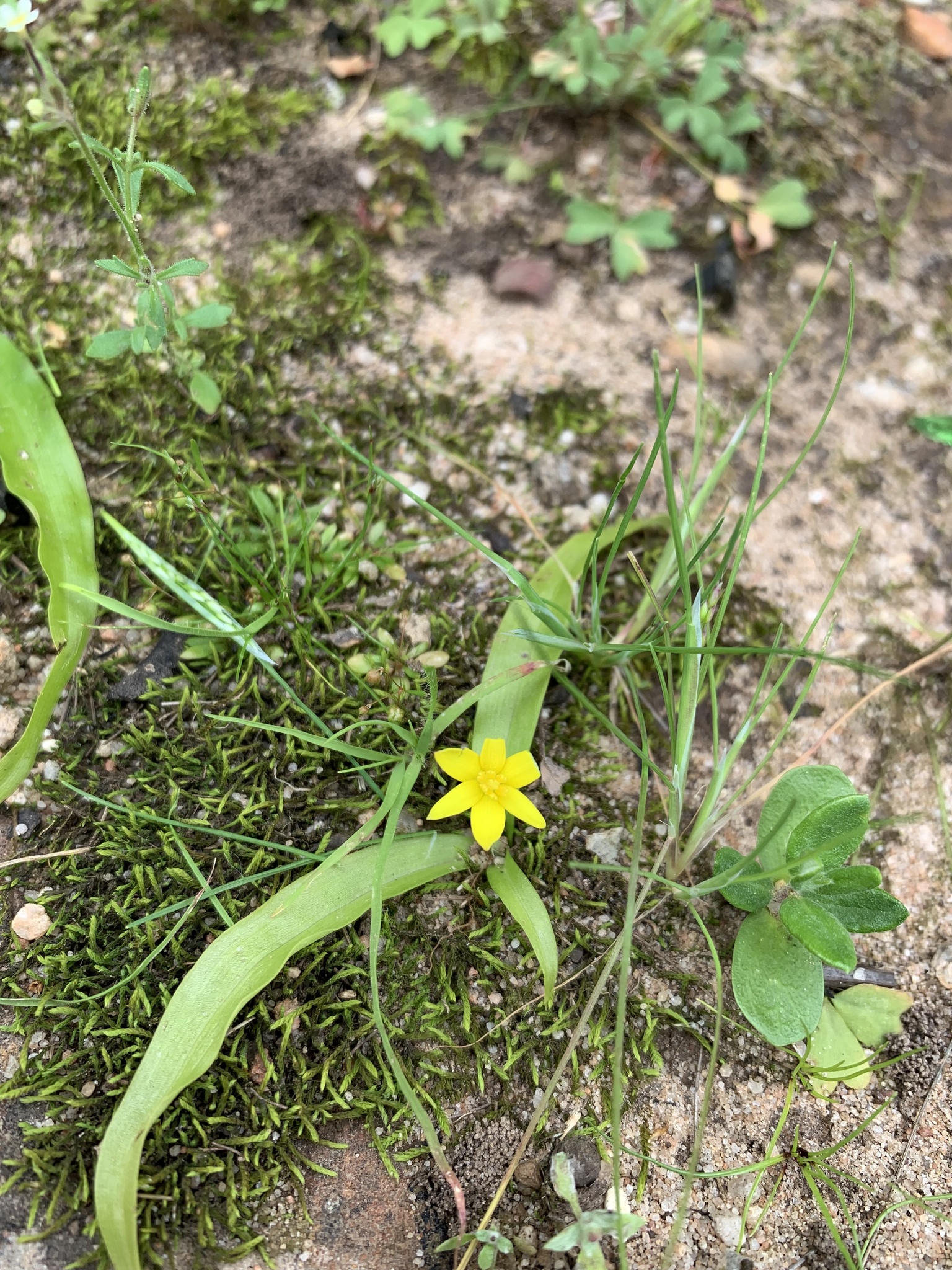
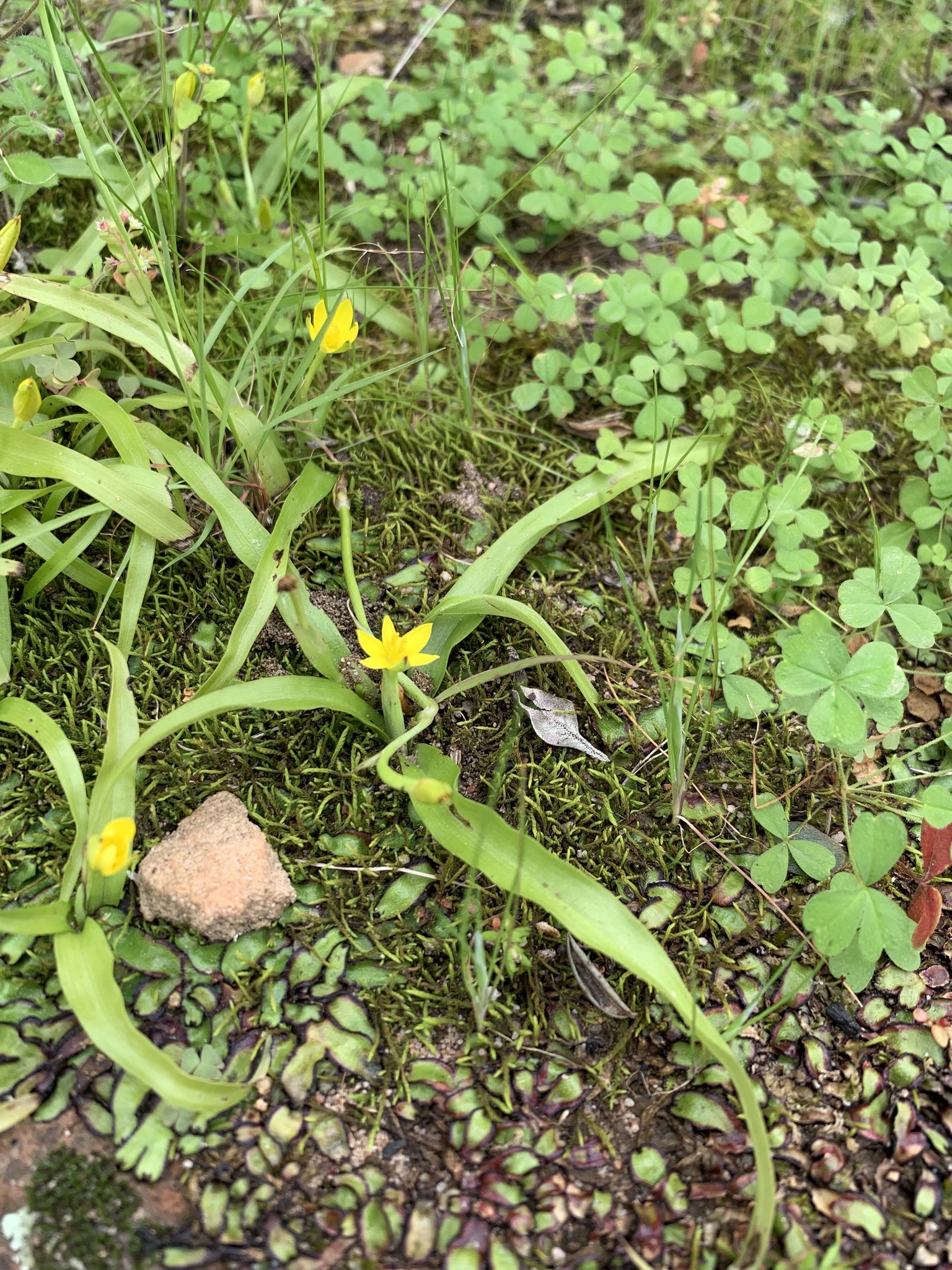
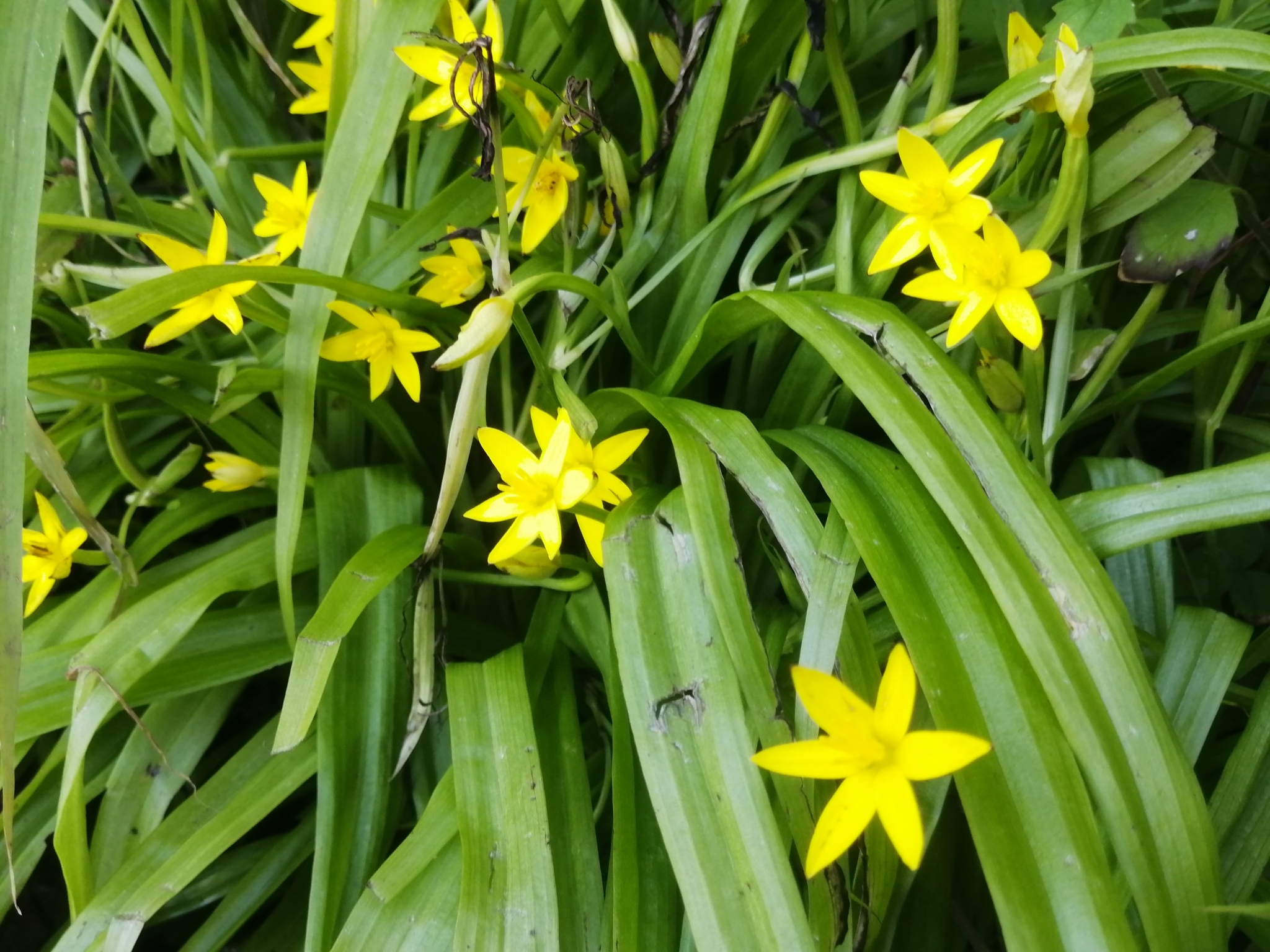
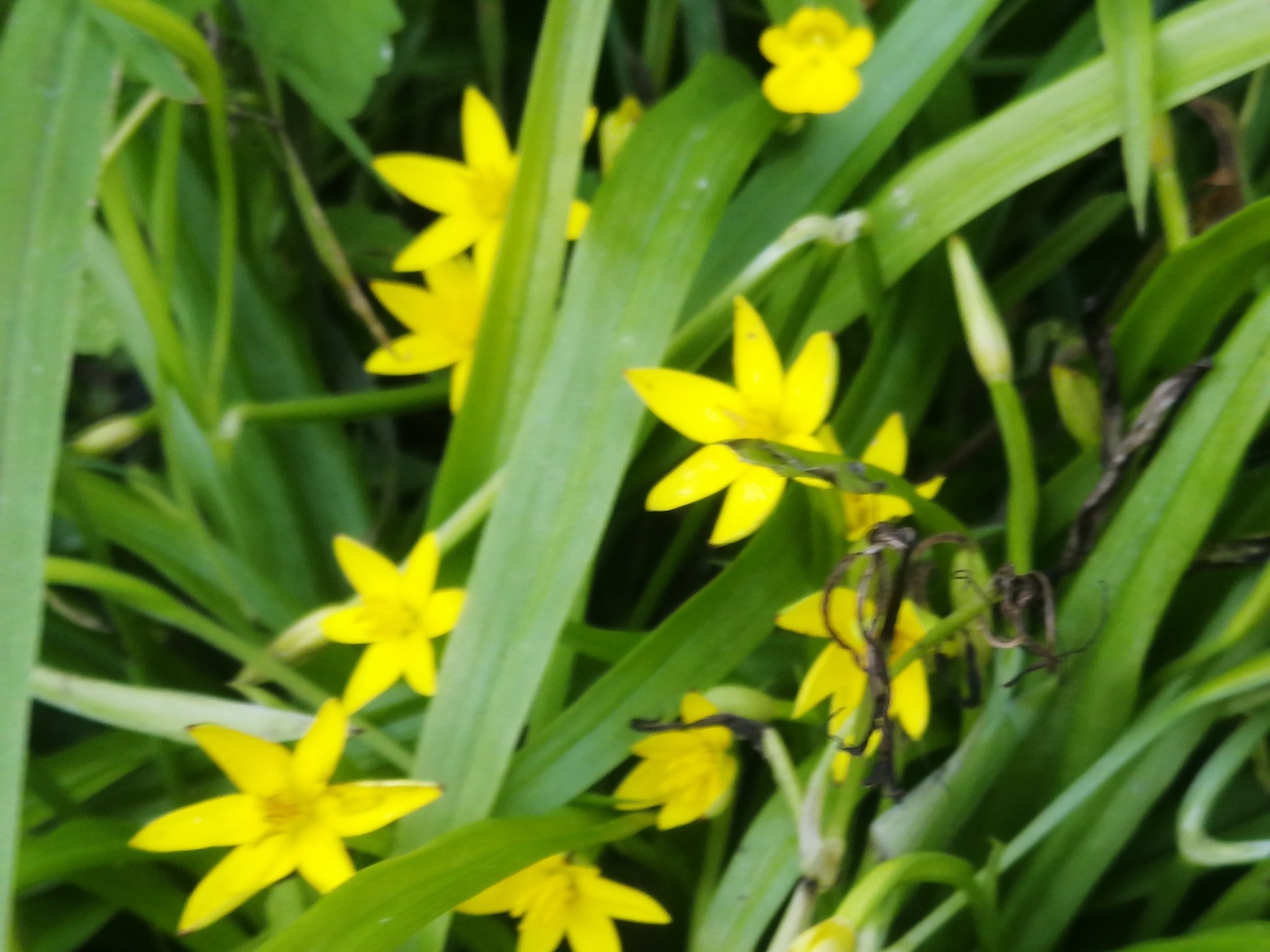
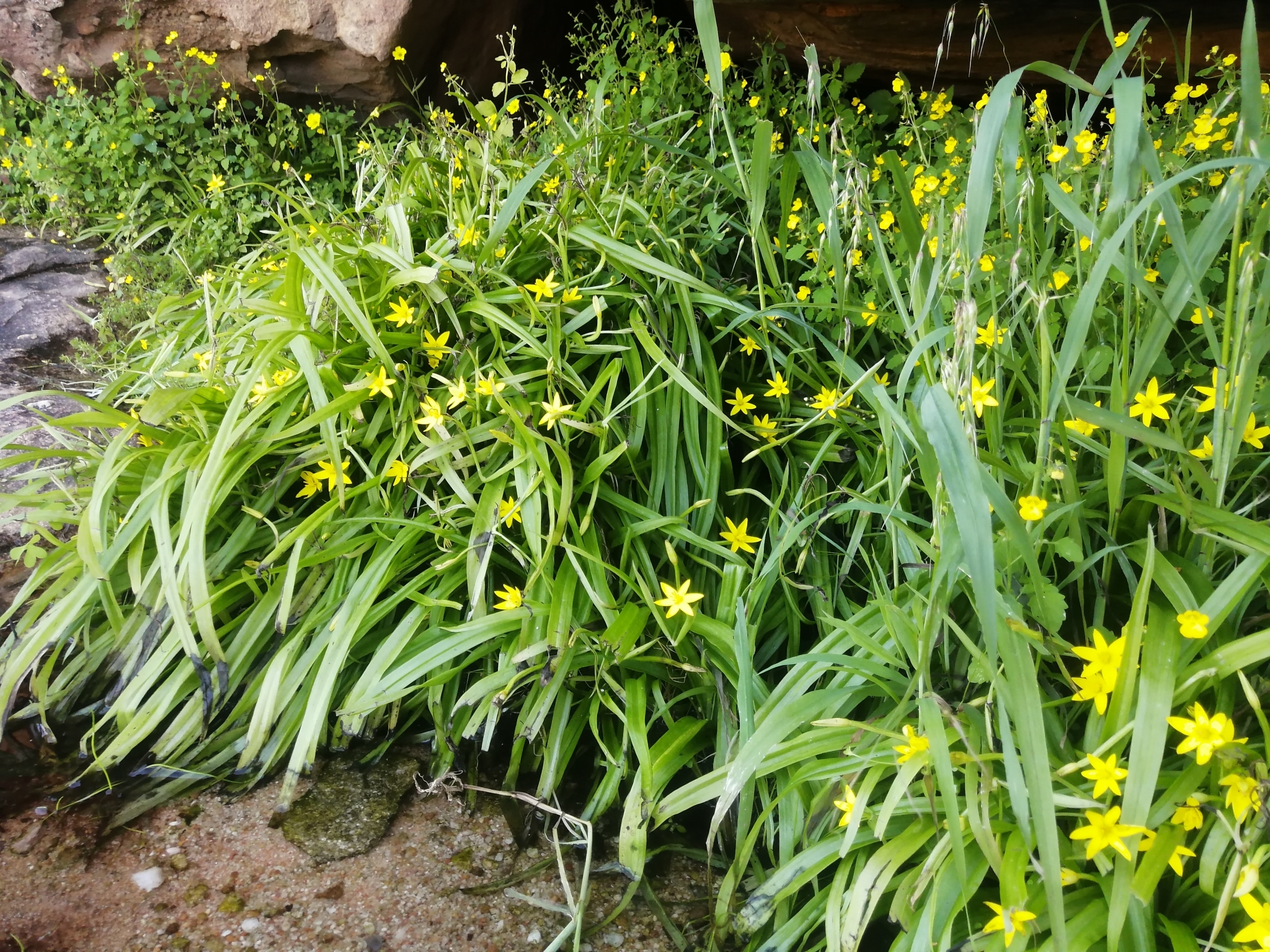
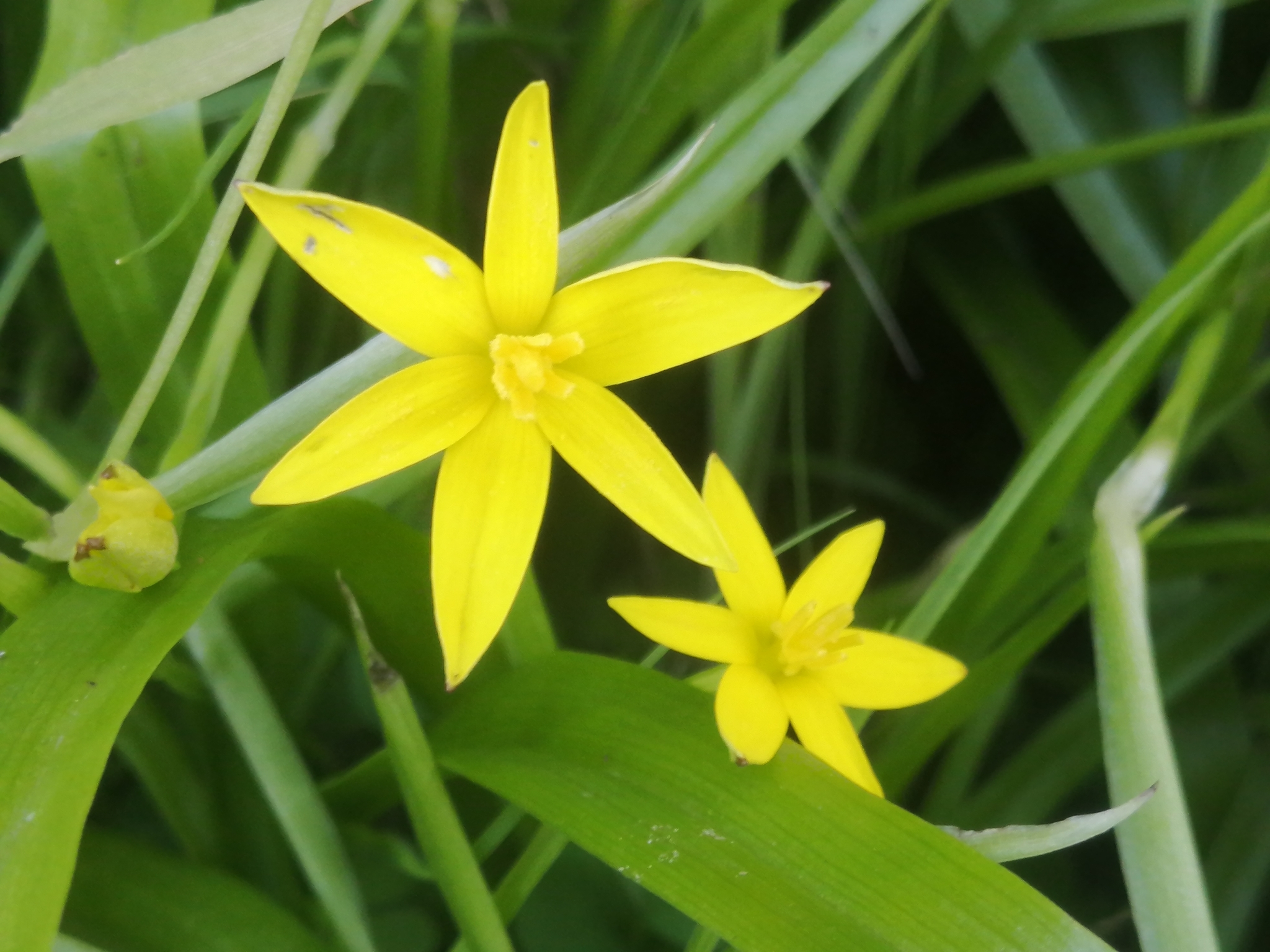
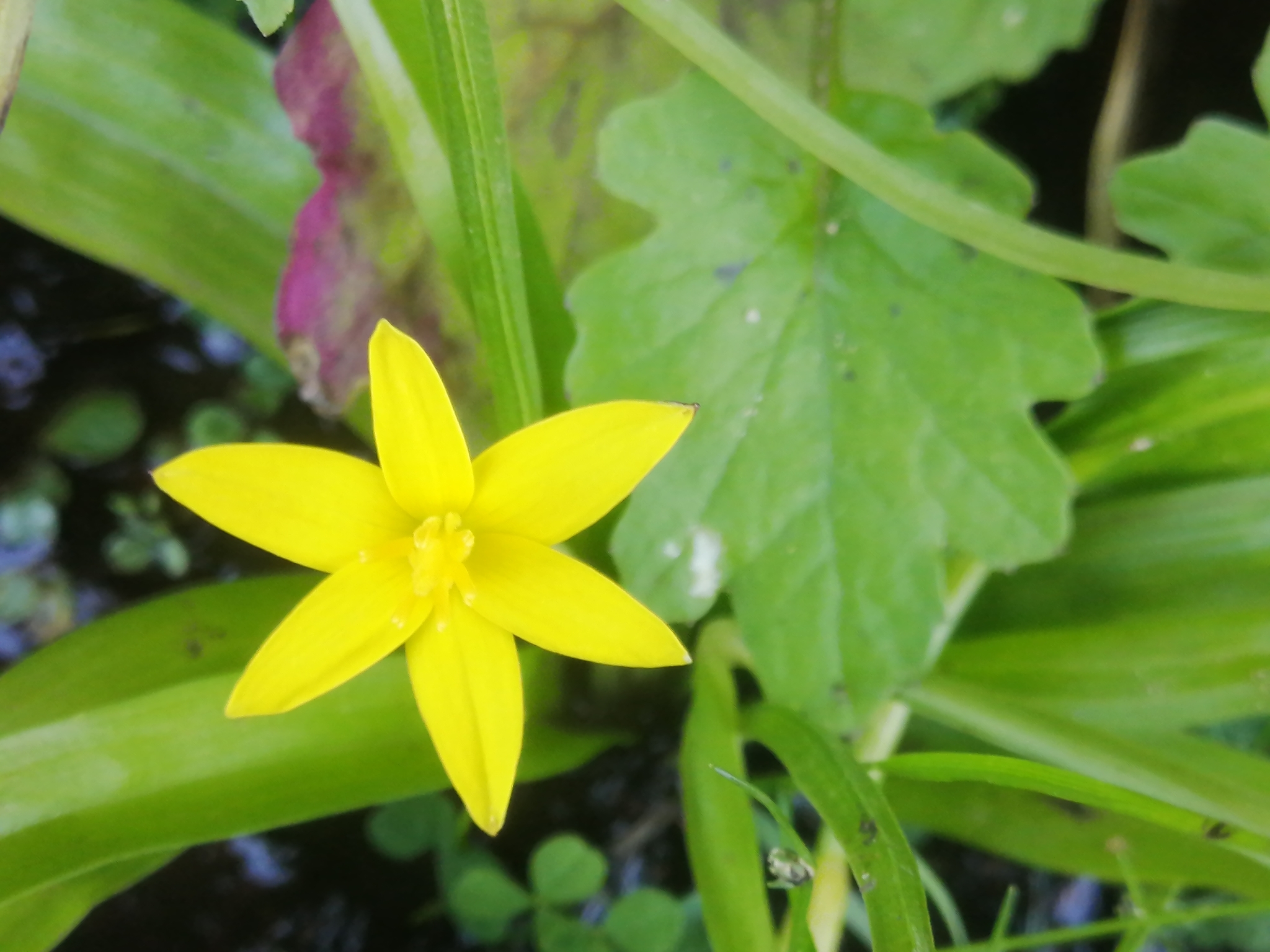
Plants 9-24 cm tall. Corm somewhat globose, 5-10 mm diam., fibreless, outer layers slightly brittle, dark brown; roots growing from corm distally, often tangled around corm. Cataphylls membranous, up to 15 mm long. Leaves 2-5, not sheathing at base, spreading to arched, lorate, 70-250 x 4-20 mm, attenuate proximally, tapering evenly upwards, carinate, pale green, thin-textured and brittle, margin minutely papillate. Inflorescences 1 or 2 in flower at a time, 2(3)-flowered, shorter or rarely as long as leaves; scape up to 100 x 1.5-3.0 mm, ancipitous, pale green, edges mostly hyaline; bracts 2, loosely clasping pedicels proximally or for most of length, lanceolate, 17-45 x 4-5 mm, more or less keeled, pale green, thin-textured, margin somewhat translucent. Flowers pedicellate, stellate, yellow, backed with green in outer whorl, unscented; pedicels spreading, more so in fruit, 13-45 x 1.0-1.5 mm, compressed, pale green; tepals 6, ovate-subacute, 7-9 mm long, outer 3-4 mm wide, minutely mucronate, inner 2.0-2.5 mm wide. Stamens 6, suberect proximally, spreading distally, equal or outer slightly shorter than inner, yellow; filaments 2.5-3.0 mm long, more or less as long as anthers, adnate to style for up to ca. 1.5 mm; anthers oblong, latrorse, ca. 2.5 x 0.7 mm, basal lobes 0.5 mm long; pollen yellow. Ovary elongated, usually uniformly narrow, trigonous, 13-30 x 1.5-2.0 mm, 1-locular, with 3 parietal placentae; style ca. 1.5 mm long; stigma branches erect, oblanceolate, ca. 3.5 x 0.7 mm, unequal, as long as or slightly exceeding stamens, yellow, with prominent basal lobes, up to 1 mm long, spreading between filaments, densely papillose. Capsules narrowly trigonous, up to 30 x 3 mm, dehiscence longitudinal close to septa. Seeds depressed ellipsoid, 0.5 x 0.4 mm; testa brownish black, of transversally widened cells, arranged in ca. 24 longitudinal ribs, outer periclinal cell walls smoothly convex. From: Snijman, DA. 2014. A taxonomic revision of the genus Pauridia (Hypoxidaceae) in southern Africa. Phytotaxa 182(1): 1-114. [All rights reserved]
Cormous geophyte to 15 cm, corm small, non-fibrous. Leaves 2-4, strap-shaped, curved, keeled, thin-textured. Flowers 2, stellate, yellow, with green beneath, ovary cylindrical, at least twice as long as tepals, triangular in t/s, unilocular, bracts 2, broad, spreading, capsule splitting open longitudinally. From: Snijman, DA. 2012. Hypoxidaceae. In: J Manning & P Goldblatt (eds), Plants of the Greater Cape Floristic Region 1: The Core Cape flora. Strelitzia 29: 115-119. South African National Biodiversity Institute, Pretoria. [CC BY] As: Spiloxene maximiliani (Schltr.) Garside
Pauridia maximiliani is a distinctive species, easily recognized by the strongly compressed, two-edged scape, by the narrow, elongated, sharply three-cornered ovary and the adnation of the staminal filaments to the style. Furthermore, the ovary is unilocular throughout, with parietal placentation, and the fruit reaches up to 30 mm long at maturity, exceeding all other species within Pauridia. Unlike the circumscissile fruit dehiscence in the majority of species the capsule of P. maximiliani opens septifragally, with long slits developing close to the septa and extending far down the narrow capsule. In the absence of flowers and fruits, the plants can be identified by the curved, pale green leaves, up to five in number, that are unusually brittle when handled. The only other species in which all six staminal filaments are adnate to the style is P. pusilla from the Gifberg and Matsikamma Mountains to the north of Clanwilliam. In every feature the plants of P. pusilla are diminutive in comparison to those of P. maximiliani and the stigma is maroon rather than plain yellow. Other species distinguished by an elongated, narrow ovary, up to five times or more longer than wide, are P. alba, P. aquatica, P. nana and P. umbraticola, but unlike P. maximiliani these have a predominantly three-locular ovary. The septa in P. alba and P. aquatica, however, have the habit of being incompletely fused distally, a condition which becomes more pronounced after anthesis. P. maximiliani is probably most closely allied to P. scullyi from Namaqualand with which it shares the derived, unilocular ovary, thin-textured leaves and broad inflorescence bracts. Unlike P. maximiliani, the inflorescence in P. scullyi may have two to as many as four or five flowers, the ovary is consistently shorter (3.5-10 mm long) and capsule dehiscence is circumscissile. From: Snijman, DA. 2014. A taxonomic revision of the genus Pauridia (Hypoxidaceae) in southern Africa. Phytotaxa 182(1): 1-114. [All rights reserved]
Found in shaded, moist overhangs of sandstone rocks. The species is presently known from less than seven localities, all within a few kilometers of each other. From: Snijman, DA. 2014. A taxonomic revision of the genus Pauridia (Hypoxidaceae) in southern Africa. Phytotaxa 182(1): 1-114. [All rights reserved]
Damp crevice?. From: Snijman, DA. 2012. Hypoxidaceae. In: J Manning & P Goldblatt (eds), Plants of the Greater Cape Floristic Region 1: The Core Cape flora. Strelitzia 29: 115-119. South African National Biodiversity Institute, Pretoria. [CC BY] As: Spiloxene maximiliani (Schltr.) Garside
Pauridia maximiliani is endemic to the Olifants River Valley, south of Clanwilliam, Western Cape. From: Snijman, DA. 2014. A taxonomic revision of the genus Pauridia (Hypoxidaceae) in southern Africa. Phytotaxa 182(1): 1-114. [All rights reserved]
Olifants River Valley. From: Snijman, DA. 2012. Hypoxidaceae. In: J Manning & P Goldblatt (eds), Plants of the Greater Cape Floristic Region 1: The Core Cape flora. Strelitzia 29: 115-119. South African National Biodiversity Institute, Pretoria. [CC BY] As: Spiloxene maximiliani (Schltr.) Garside
August to September
This map contains point-based occurrences at different locations
Occurrence in the Flora of Southern Africa (FSA) countries and South African provinces. Residence status indicates if a taxon is indigenous, endemic, naturalised or invasive in a specific region. This data is based on specimen records and literature
FSA
SA
BOT
NAM
ESW
LES
WC
EC
NC
FS
GA
KZN
LP
MP
NW
Absent
Indigenous
Endemic
Naturalised
Invasive
Names and Sources
Published in: Phytotaxa 116(1): 28 (2013)
Type: South Africa. [Western Cape], Olifantsrivier, 2 July 1896, R. Schlechter 7994 (BOL, lecto.; E, GRA, K000256006, NH, PRE, ZT, isolecto.) Lectotype designated by Snijman & Kocyan, Phytotaxa 116(1): 28 (2013).
Hypoxis maximiliani Schltr.
Published in: Bot. Jahrb. Syst. 27(1-2): 89 (1899)
Ianthe maximiliani (Schltr.) F.N.Williams
Published in: J. Bot. 39: 292 (1901)
Spiloxene maximiliani (Schltr.) Garside
Published in: J. Bot. 74: 268 (1936)
Classification
KINGDOM Plantae
SUBKINGDOM Phanerogamae
PHYLUM Anthophyta
ORDER Asparagales
FAMILY Hypoxidaceae
GENUS Pauridia
SPECIES maximiliani
8 results for Pauridia maximiliani (Schltr.) Snijman & Kocyan
Barcode: PRE0995119-0 Collector(s) & number: Le Maitre, DC, 475 | 1987-8-20
South Africa, Western Cape, Stellenbosch. Jonkershoek S.F., Swartboskloof, near guaging weir.
Data Resource: BODATSA View record
Barcode: NBG0210073-0 Collector(s) & number: Snijman, DA, 2125 | 2007-9-10
South Africa, Western Cape, On E bank of lower reaches of Clanwilliam dam. 32°17'07.2" S; 18°56'23.4" E.
Data Resource: BODATSA View record
Barcode: NBG0210072-0 Collector(s) & number: Snijman, DA, 2124 | 2007-9-10
South Africa, Western Cape, Along road to Cederberg Mountains from Farm Kriedouwkranz. 32°22'09.8" S; 18°59'11.7" E.
Data Resource: BODATSA View record
Barcode: NBG1561865-0 Collector(s) & number: Helme, NA, 5733 | 2008-10-25
South Africa, Western Cape, Pakhuis Pks, ± 5 km NW Kliphuis, 2 km north Pulpit Pk.
Data Resource: BODATSA View record
Barcode: NBG0128862-0 Collector(s) & number: Snijman, DA, 815 | 1984-8-10
South Africa, Western Cape, Clanwilliam. Opposite farm Klein Remhoogte.
General notes: Growing in rock crevices. In cool, shaded, moist habitat. Ovary triangular in cross section, splitting open lengthwise when mature. Corm smooth with roots growing from above. Style branches adnate, tailed at the base; tails extending between filaments. Placentation parietal unilocalar.
Data Resource: BODATSA View record
Barcode: NBG0280277-0 Collector(s) & number: Snijman, DA, 2386 | 2013-9-12
South Africa, Western Cape, Clanwilliam Dist. Along road to Cederberg Mountains, from Farm Kriedouwkrantz. 32°22'09.8"S 18°59'11.7"E.
Data Resource: BODATSA View record
This map contains point-based occurrences at different locations
2014
PERIODICAL/JOURNAL
A taxonomic revision of the genus Pauridia (Hypoxidaceae) in southern Africa Snijman, DAPhytotaxa 182(1)1-114
2013
PERIODICAL/JOURNAL
The genus Pauridia (Hypoxidaceae) amplified to include Hypoxis sect. Ianthe, Saniella and Spiloxene, Kocyan, A; Snijman, DAPhytotaxa 116(1)19-33
2012
SERIES CHAPTER
Hypoxidaceae Snijman, DAIn: J Manning & P Goldblatt (eds), Plants of the Greater Cape Floristic Region 1: The Core Cape flora. Strelitzia 29: 115-119
South African National Biodiversity Institute, Pretoria
2000
SERIES
Cape Plants. A conspectus of the Cape flora of South Africa Goldblatt, P; Manning, JCStrelitzia 9: 1-743
South African National Biodiversity Institute; Missouri Botanical Garden, Pretoria; Missouri
No results found for Pauridia maximiliani (Schltr.) Snijman & Kocyan
Status and criteria
LC
Assessor(s)
Plantae Coordinator
THESIS
Watson CRB. 1987. The comparative ecology of two small mammal communities in the Kruger National Park. M.Sc. Thesis.. University of Pretoria
JOURNAL ARTICLE
Westlin-van Aarde LM. 1989. Pre-and post-natal development of pouched mice, <i>Saccostomus campestris</i>. Journal of Zoology. 218:497–501
BOOK
Monadjem, A., Taylor, P.J., Cotterill, F.P.D. and Schoeman M.C. 2010. Bats of Southern and Central Africa: a biogeographic and taxonomic synthesis. University of Witwatersrand Press
JOURNAL ARTICLE
Meester JAJ, Rautenbach IL, Dippenaar NJ, Baker CM 1986. Classification of southern African mammals. Transvaal Museum Monographs. 5:1–359
JOURNAL ARTICLE
Schoeman MC, Jacobs DS 2008. The relative influence of competition and prey defenses on the phenotypic structure of insectivorous bat ensembles in southern Africa. PLoS One. 3:e3715
REPORT
Driver A, Sink KJ, Nel JN, Holness S, van Niekerk L, Daniels F, Jonas Z, Majiedt PA, Harris L, Maze K 2012. National Biodiversity Assessment 2011: An Assessment of South Africa’s Biodiversity and Ecosystems. Synthesis Report. South African National Biodiversity Institute and Department of Environmental Affairs
| Part(s) of plant used | Use(s) | Reference |
|---|
Coming soon...