
ANIMALIA / CNIDARIA / SCYPHOZOA / SEMAEOSTOMEAE / PELAGIIDAE / CHRYSAORA / FULGIDA

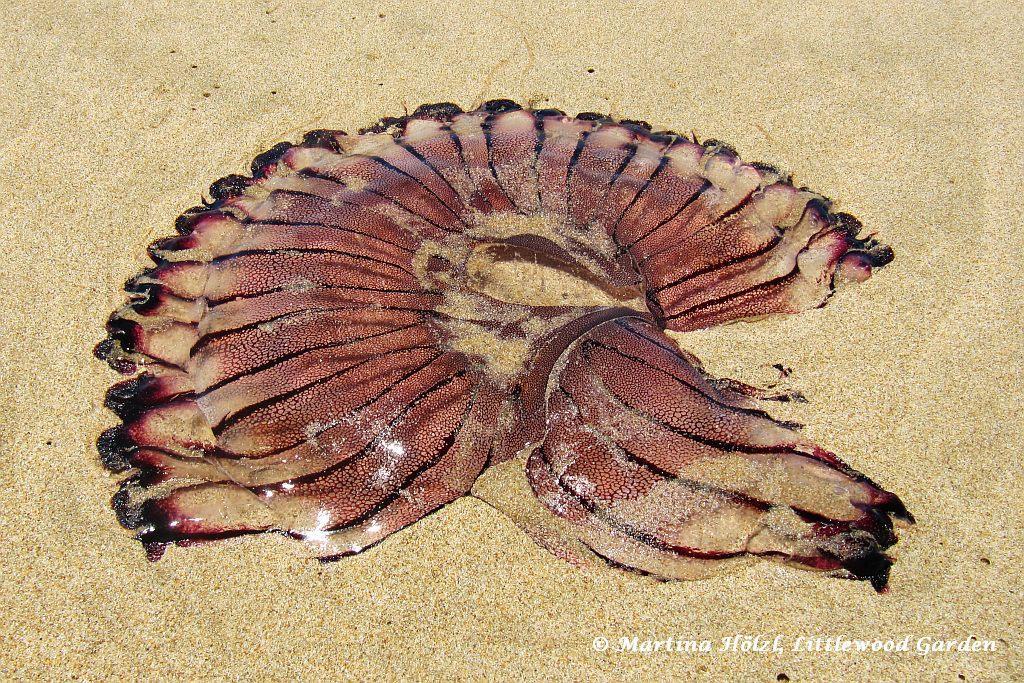
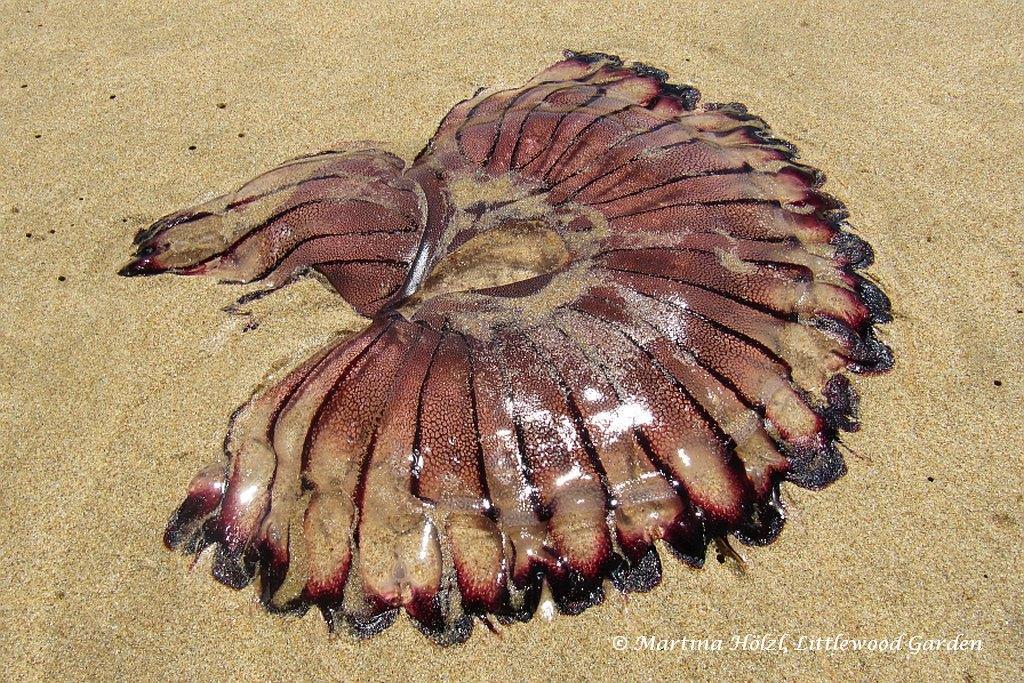
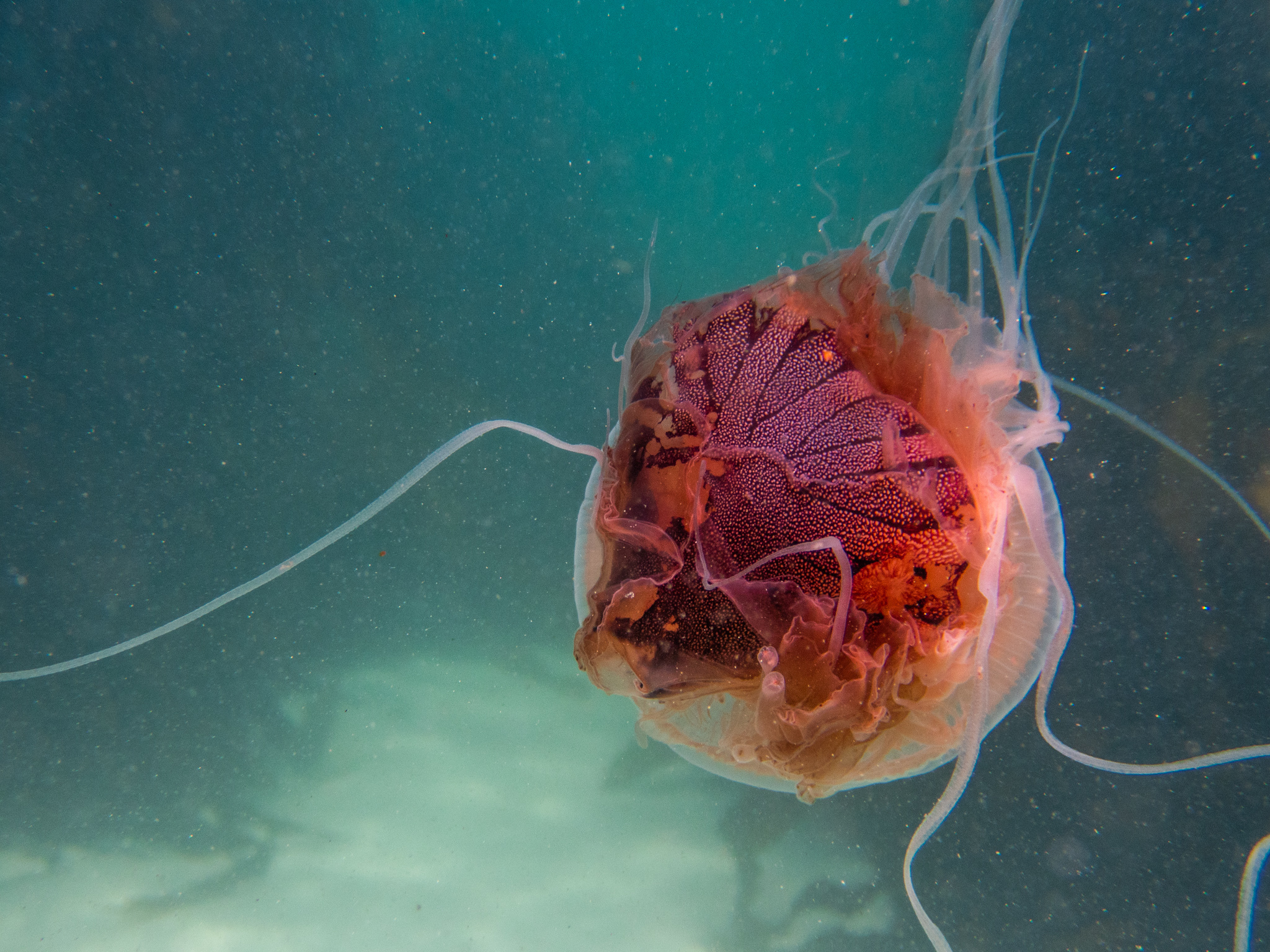
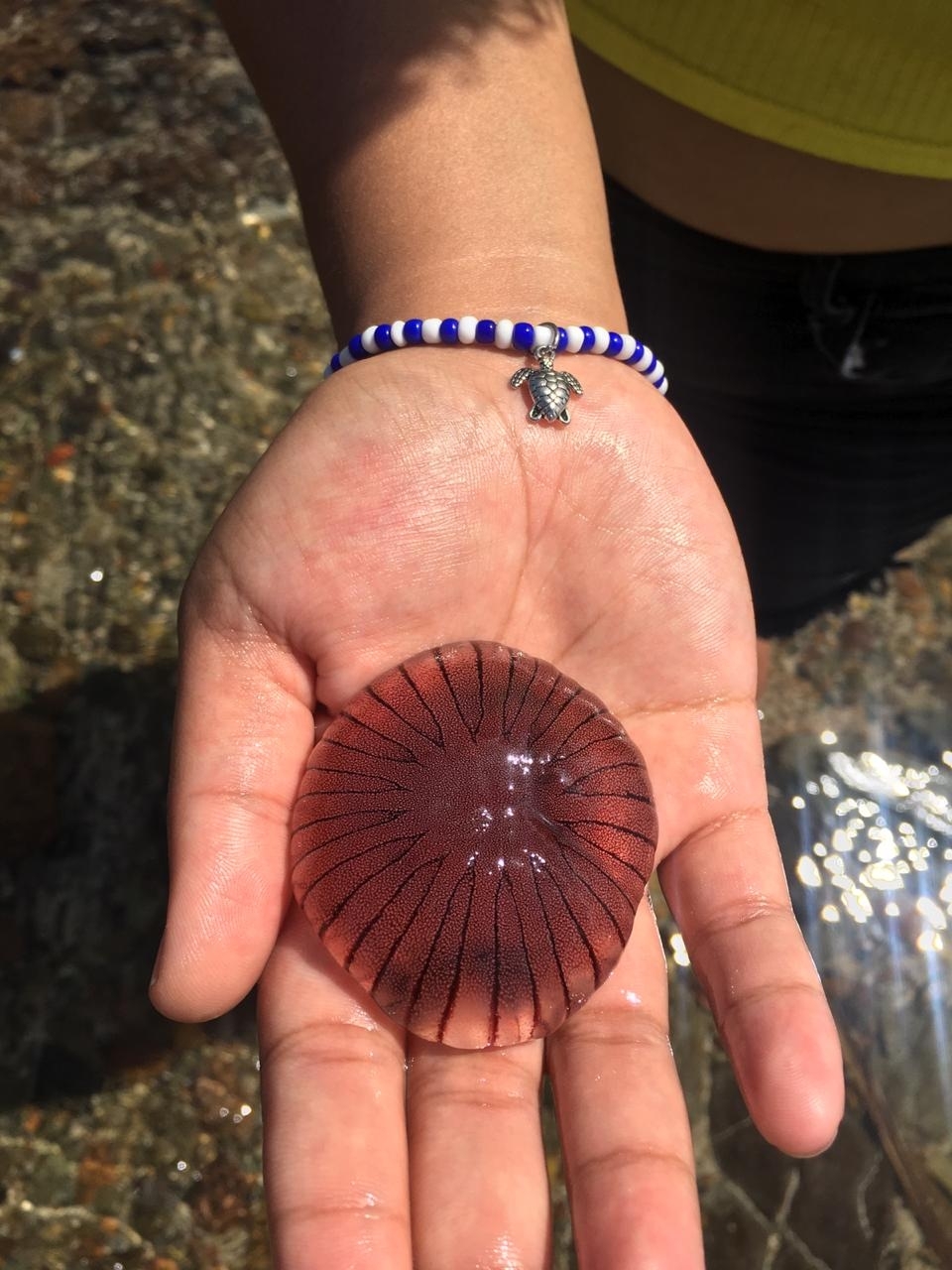
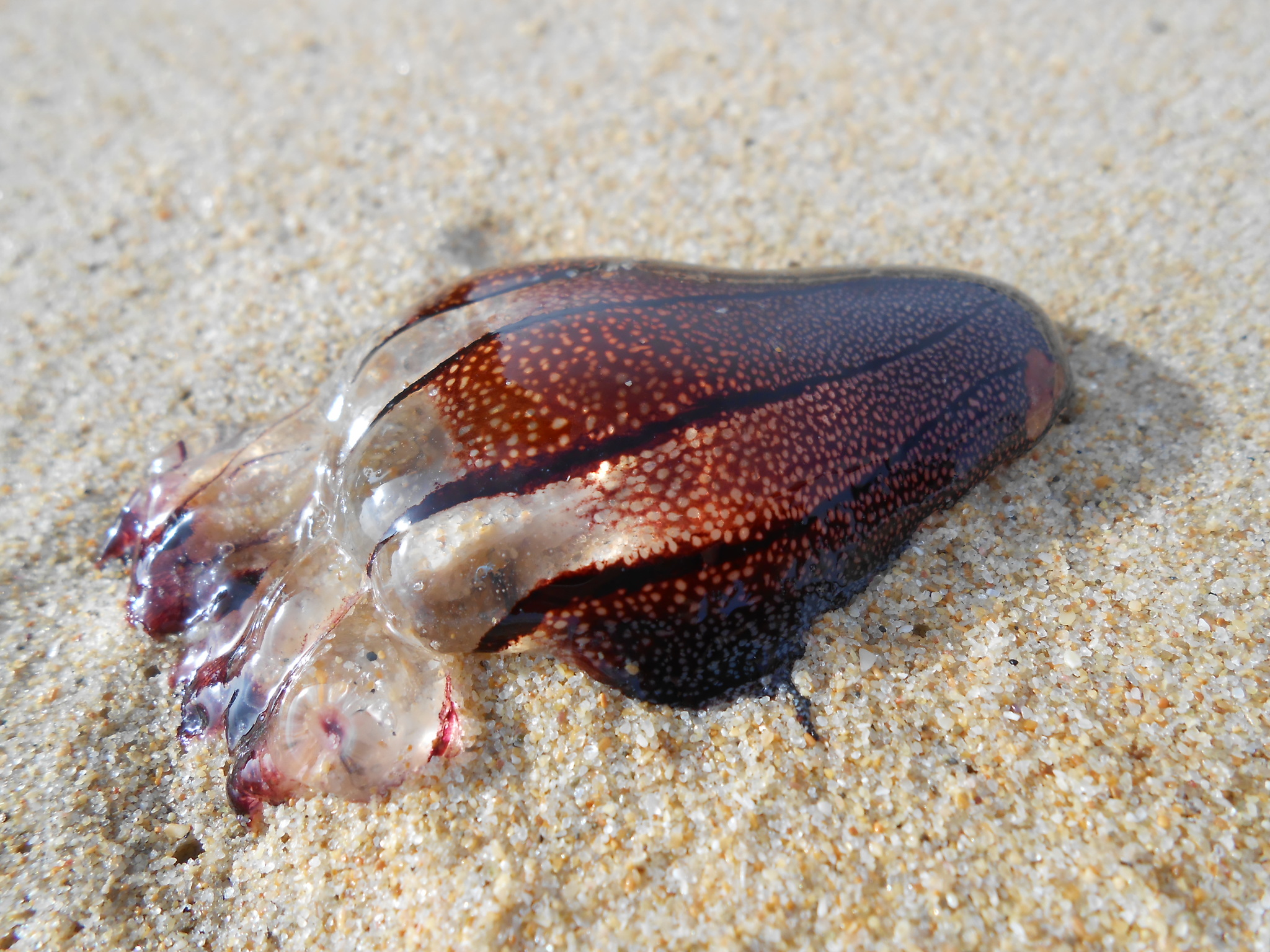
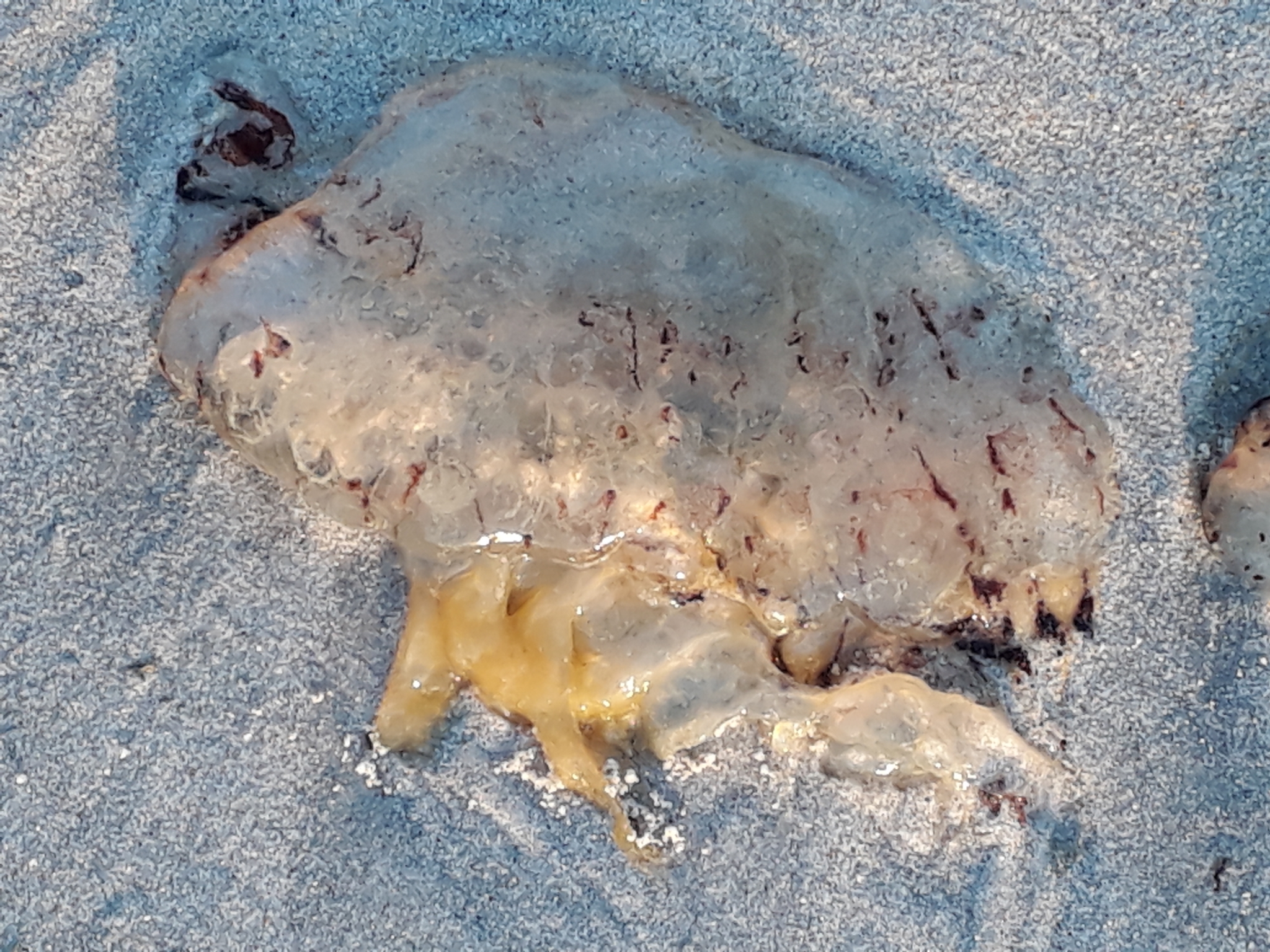
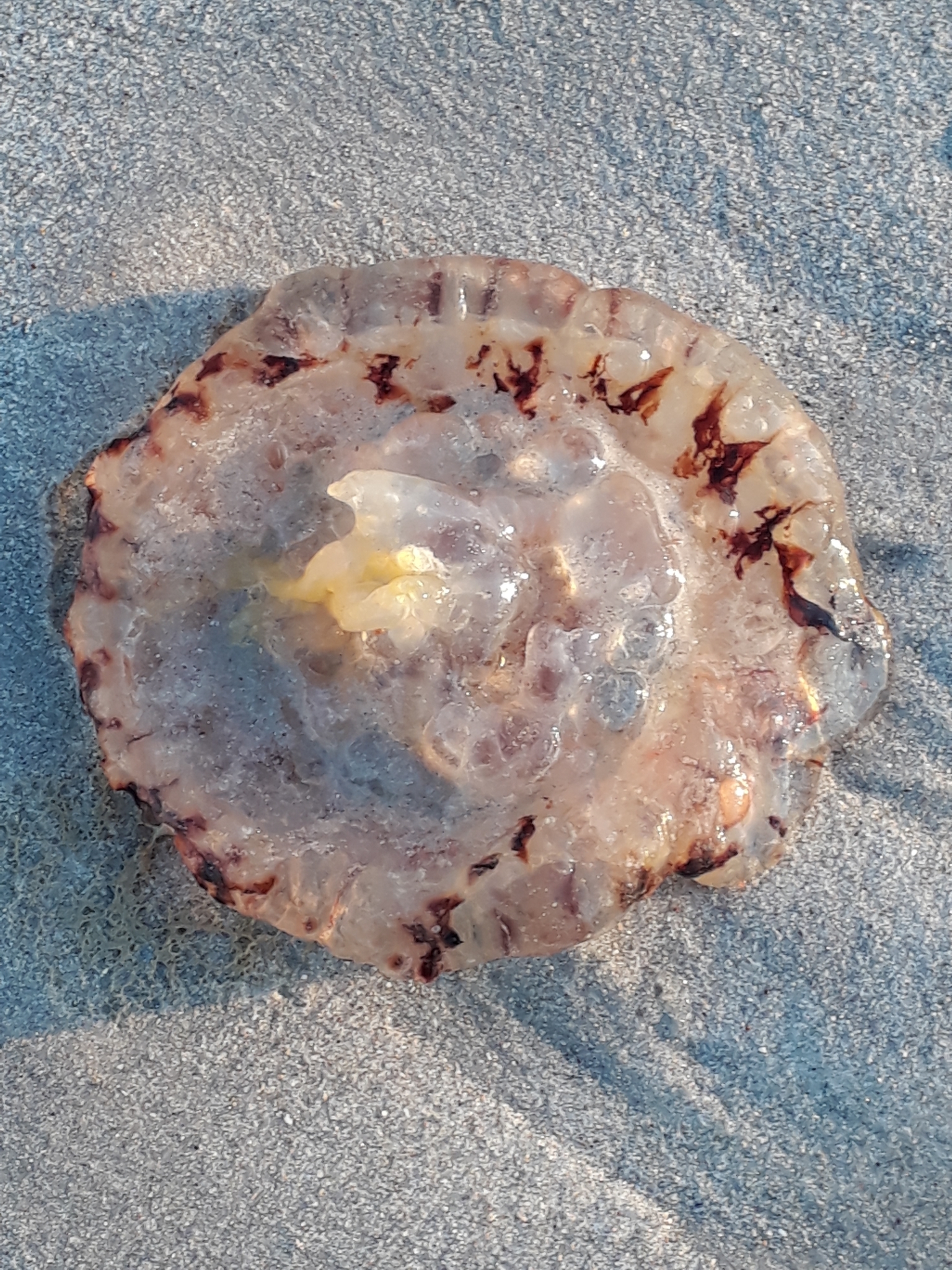
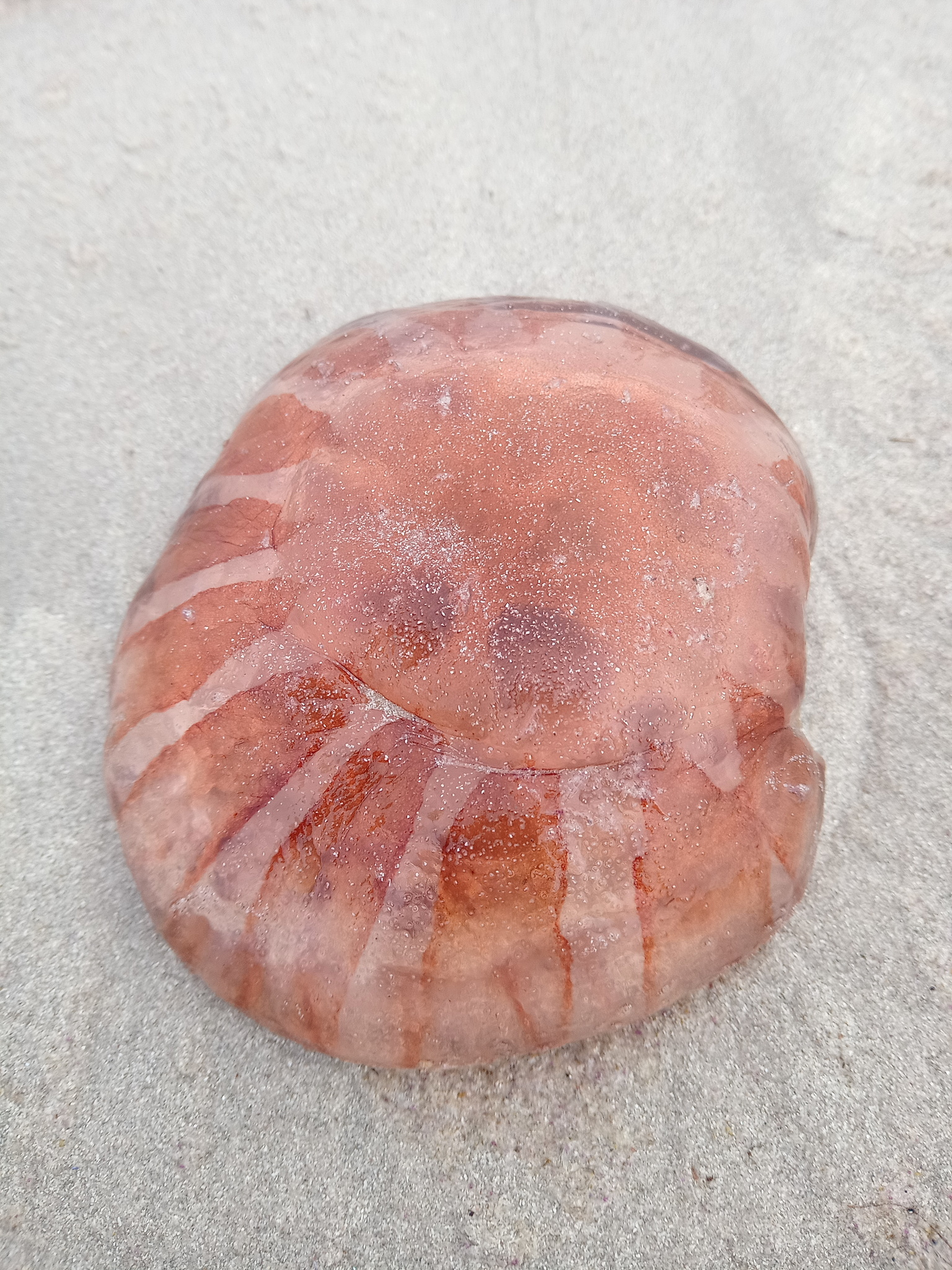
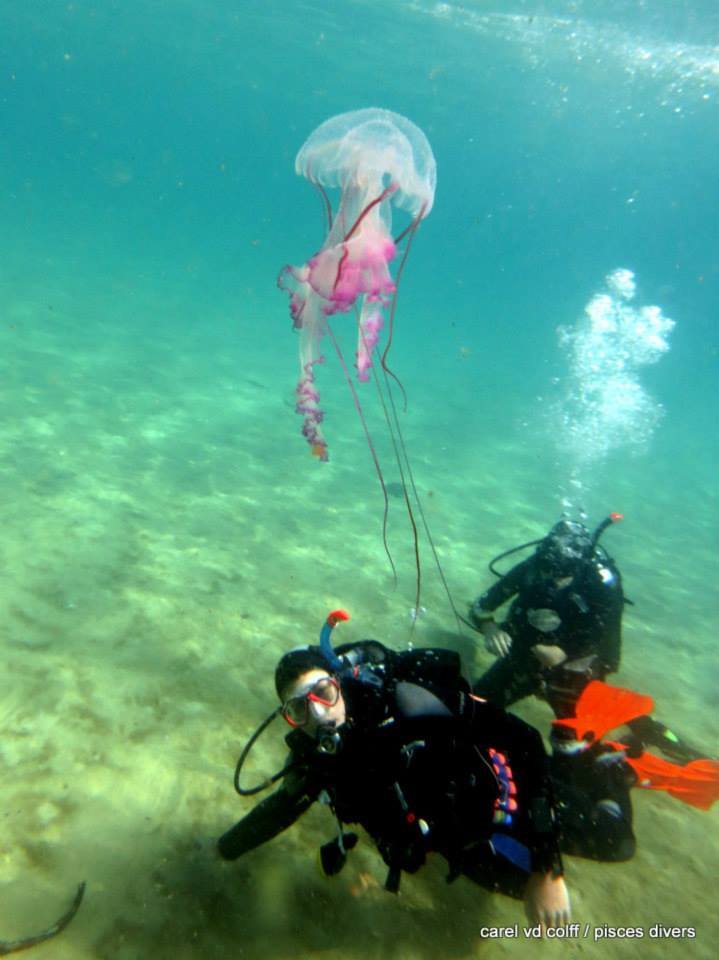
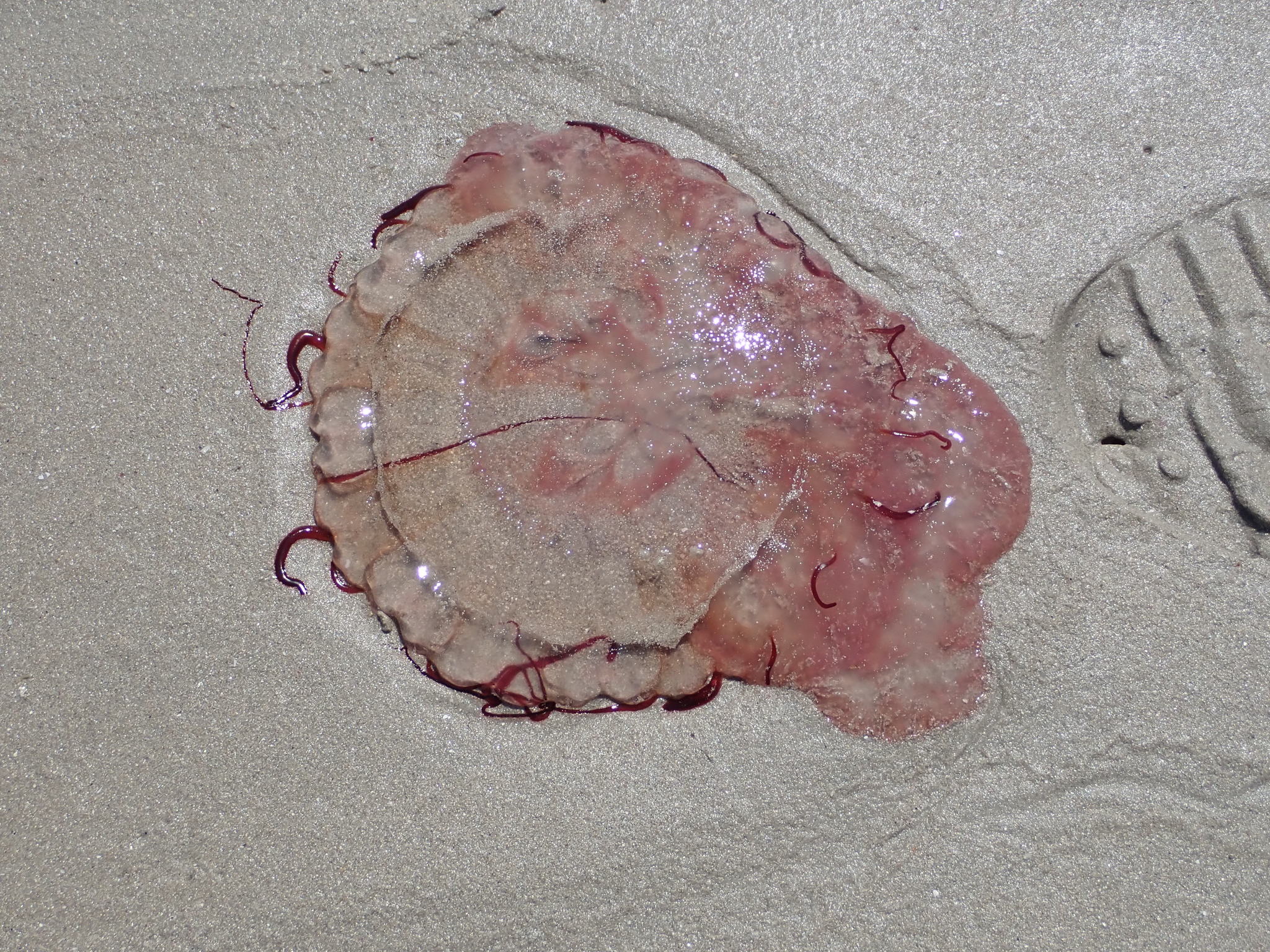
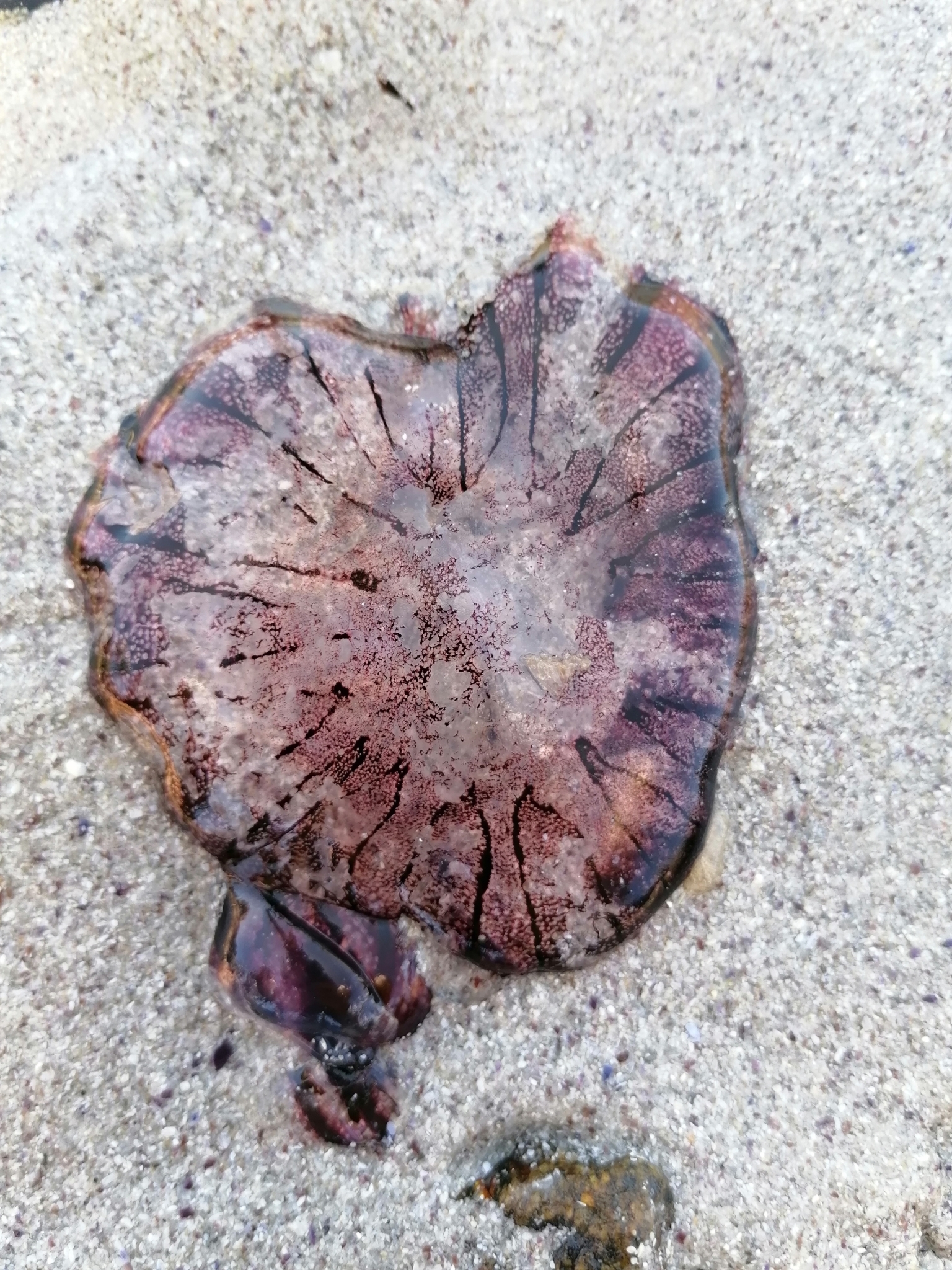
Robust pelagiid reaching up to 80 cm in diameter as medusa. Adults with 24, thread-like tentacles (3 per octant); 8 of which (1 per octant) persistent on capture; 32 approximately quadrangular marginal lappets (4 per octant); with gastrovascular canals. Quadralinga absent. Oral arms voluminously spiraled proximally. The species is defined by thread-like nature of marginal tentacles, lappets with canals and form of the oral arms. Colours vary with age; juveniles rose pink, without bell markings, but with maroon tentacles; adults with rose pink base to bell, red/brown compass marks, maroon tentacles and orange/brown oral arms.
Endemic to the Benguela ecosystem.
Angola to Western Agulhas Bank
All size classes present throughout the year off Namibia, suggesting that the life span is greater than 12 months. Populations off Namibia attain greatest numbers during winter and spring. Larger individuals tend to be found more commonly further offshore than smaller ones, and slightly deeper, though present throughout the water column. Less common off South Africa, where it is most abundant during summer and autumn.
Feeds on zooplankton and benthic micro-crustaceans. Hosts often significant numbers of parasitic hyperiid amphipods.
Sexes of medusae separate, apparently releasing gametes in the water. The polyp (known from laboratory cultures) produces new polyps mostly by stolon budding, but can also proliferate by direct budding, splitting and podocyst formation; medusae are released by polydisc strobilation following a drop in water temperature below 14 Celcius.
Inshore, Offshore (>30m), Pelagic, Planktonic
This map contains point-based occurrences at different locations
Occurrence in African countries and South African provinces. Residence status indicates if a taxon is indigenous, endemic, or alien in a specific region. This data is based on specimen records and literature.
FSA
SA
BOT
NAM
ESW
LES
WC
EC
NC
FS
GA
KZN
LP
MP
NW
Absent
Indigenous
Endemic
Naturalised
Invasive
Names and Sources
| Common Name | Language |
|---|---|
| Compass Redjelly | En |
| Purple Redjelly | En |
| Benguela Compass Jellyfish |
Classification
KINGDOM Animalia
PHYLUM Cnidaria
CLASS Scyphozoa
ORDER Semaeostomeae
FAMILY Pelagiidae
GENUS Chrysaora
SPECIES fulgida
No results found for Chrysaora fulgida (Reynaud, 1830)
None at present, caught as by-catch of commercial fisheries.
10 results for Chrysaora fulgida (Reynaud, 1830)
This map contains point-based occurrences at different locations
2001
JOURNAL ARTICLE
Biometry and size distribution of Chrysaora hysoscella (Cnidaria, Scyphozoa) and Aequorea aequorea (Cnidaria, Hydrozoa) off Namibia with some notes on their parasite Hyperia medusarumBuecher, Emmanuelle, Sparks, Conrad, Brierley, Andrew, Boyer, Helen, Gibbons, Mark. 2001. Biometry and size distribution of Chrysaora hysoscella (Cnidaria, Scyphozoa) and Aequorea aequorea (Cnidaria, Hydrozoa) off Namibia with some notes on their parasite Hyperia medusarum Vol. 23 pp.1073–1080.
2007
JOURNAL ARTICLE
A note on the diet and feeding of Chrysaora hysoscella in Walvis Bay Lagoon, Namibia, during September 2003Flynn, BA, Gibbons, MJ. 2007. A note on the diet and feeding of Chrysaora hysoscella in Walvis Bay Lagoon, Namibia, during September 2003 Vol. 29 pp.303–307.
2012
JOURNAL ARTICLE
Temporal and spatial patterns in the abundance of jellyfish in the northern Benguela upwelling ecosystem and their link to thwarted pelagic fishery recoveryFlynn, BA, Richardson, AJ, Brierley, AS, Boyer, DC. 2012. Temporal and spatial patterns in the abundance of jellyfish in the northern Benguela upwelling ecosystem and their link to thwarted pelagic fishery recovery Vol. 34 pp.131–146.
2010
JOURNAL ARTICLE
Revision of the genus Chrysaora Péron & Lesueur, 1810 (Cnidaria: Scyphozoa)Morandini, Andre, Marques, Antonio. 2010. Revision of the genus Chrysaora Péron & Lesueur, 1810 (Cnidaria: Scyphozoa) Vol. 2464 pp.1–97.
1896
JOURNAL ARTICLE
Retili et Anfibi raccolti a Kazungula e sulla strada da Kazungula a Buluwaio dal Re.Peracca, M.. 1896. Retili et Anfibi raccolti a Kazungula e sulla strada da Kazungula a Buluwaio dal Re. Vol. (11): 255. Torino. Western Cape pp.1-4.
1992
JOURNAL ARTICLE
Medusae (Hydrozoa, Scyphozoa, Cubozoa) of the Benguela Current (southeastern Atlantic)Gili, Josep, Pagès, Francesc, Bouillon, Jean. 1992. Medusae (Hydrozoa, Scyphozoa, Cubozoa) of the Benguela Current (southeastern Atlantic) Vol. 56 pp.1–64.
2013
JOURNAL ARTICLE
Jellyfication of marine ecosystems as a likely consequence of overfishing small pelagic fishes: lessons from the BenguelaRoux, Jean-Paul, van der Lingen, Carl, Gibbons, Mark, Moroff, Nadine, Shannon, Lynne, Smith, Anthony, Cury, Philippe. 2013. Jellyfication of marine ecosystems as a likely consequence of overfishing small pelagic fishes: lessons from the Benguela Vol. 89 pp.249–284.


