
PLANTAE / PHANEROGAMAE / ANTHOPHYTA / FABALES / FABACEAE / PAPILIONOIDEAE / PSORALEEAE / PSORALEA / PSORALEA / MUIRII

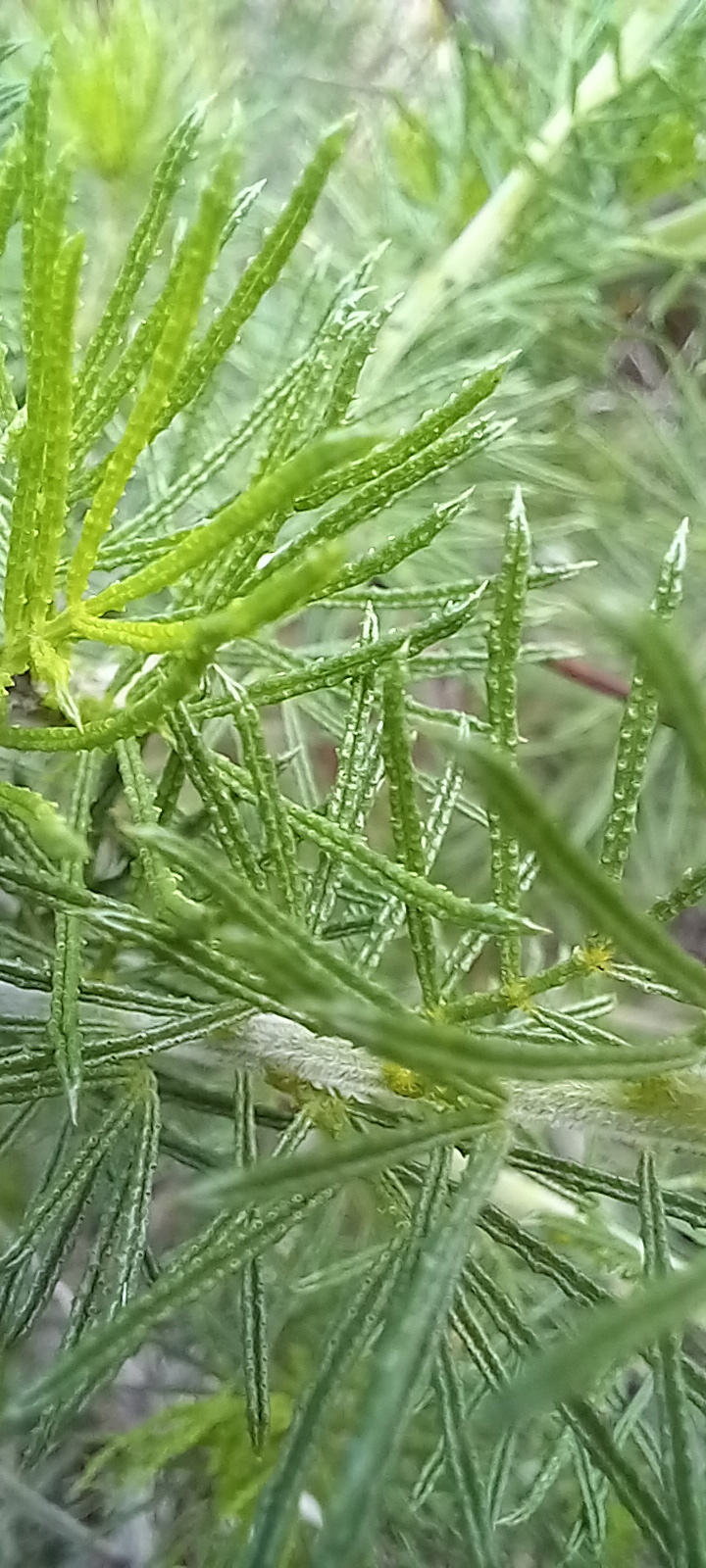
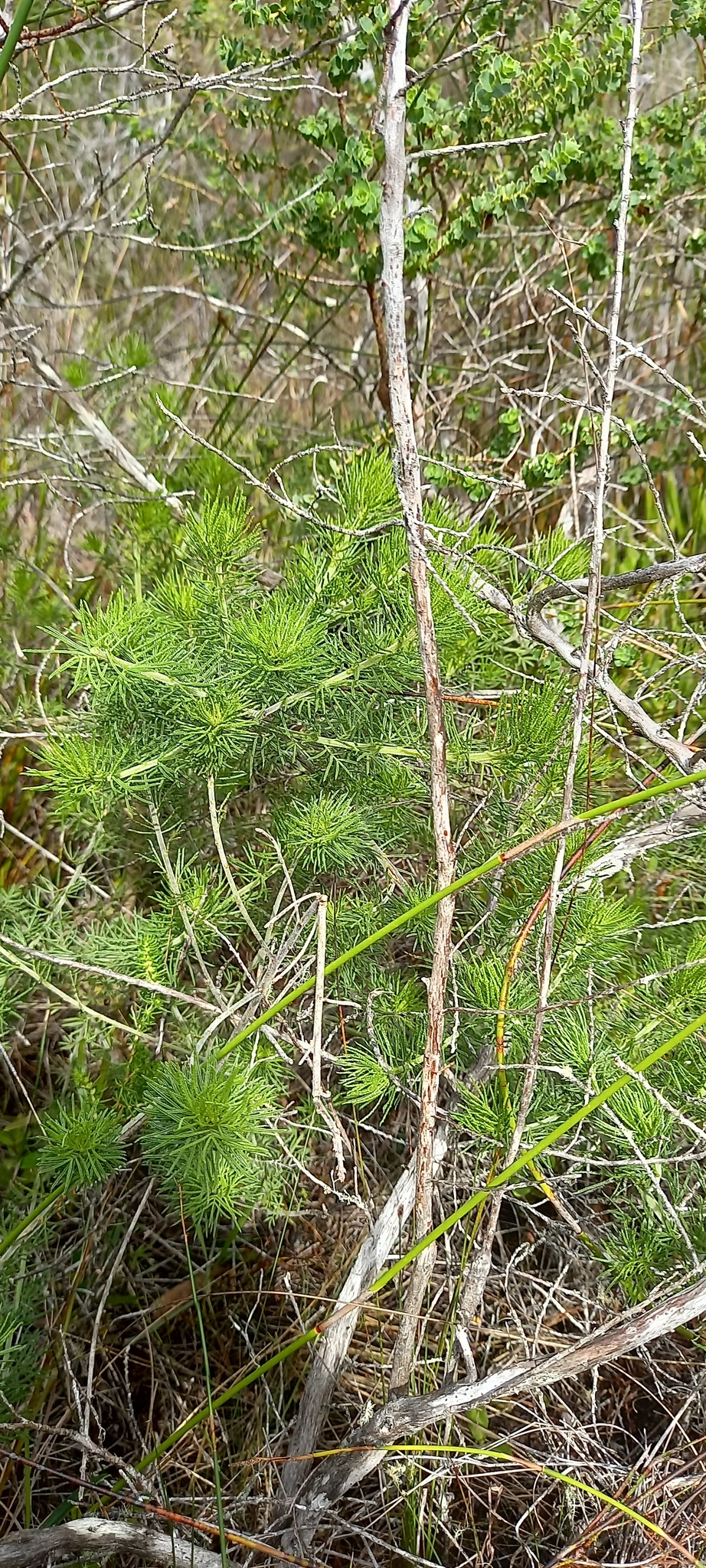
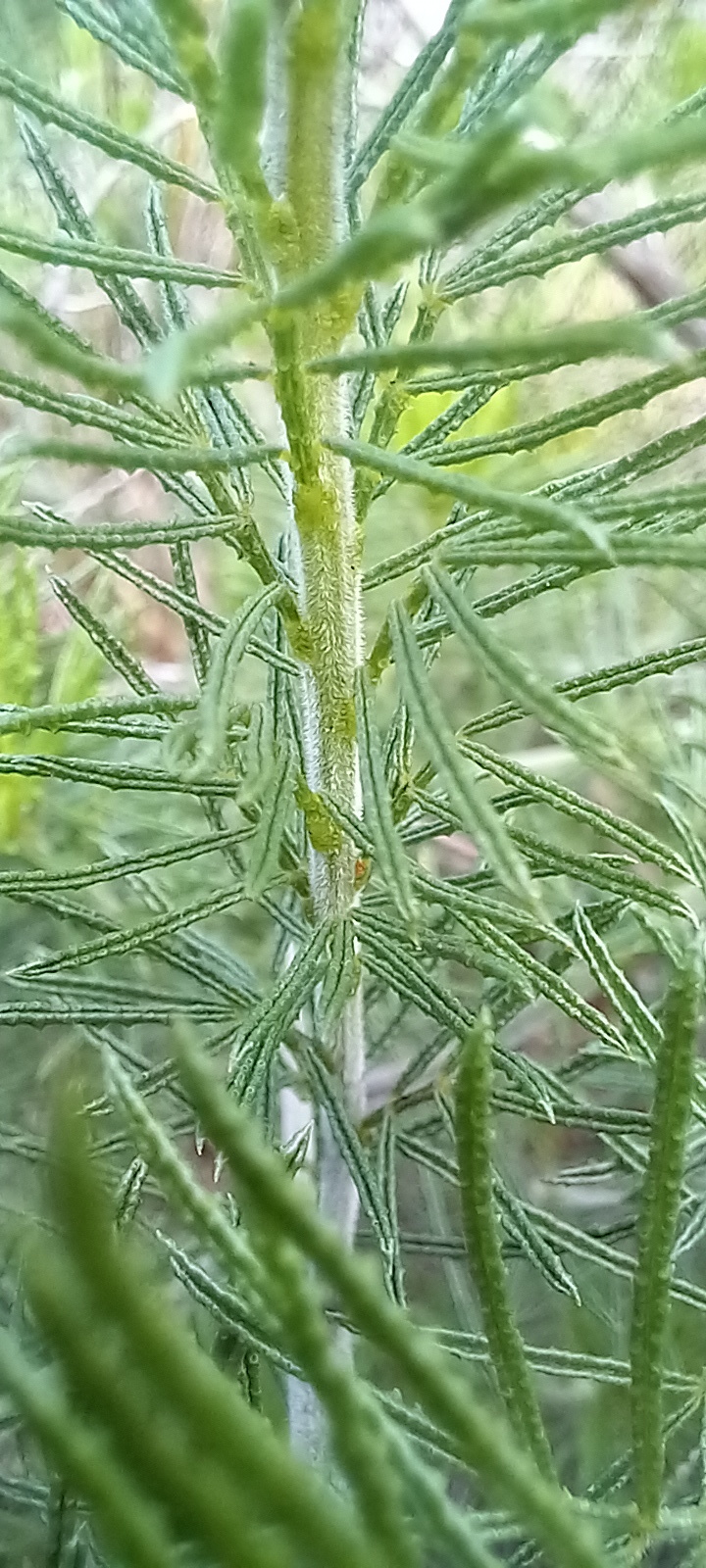
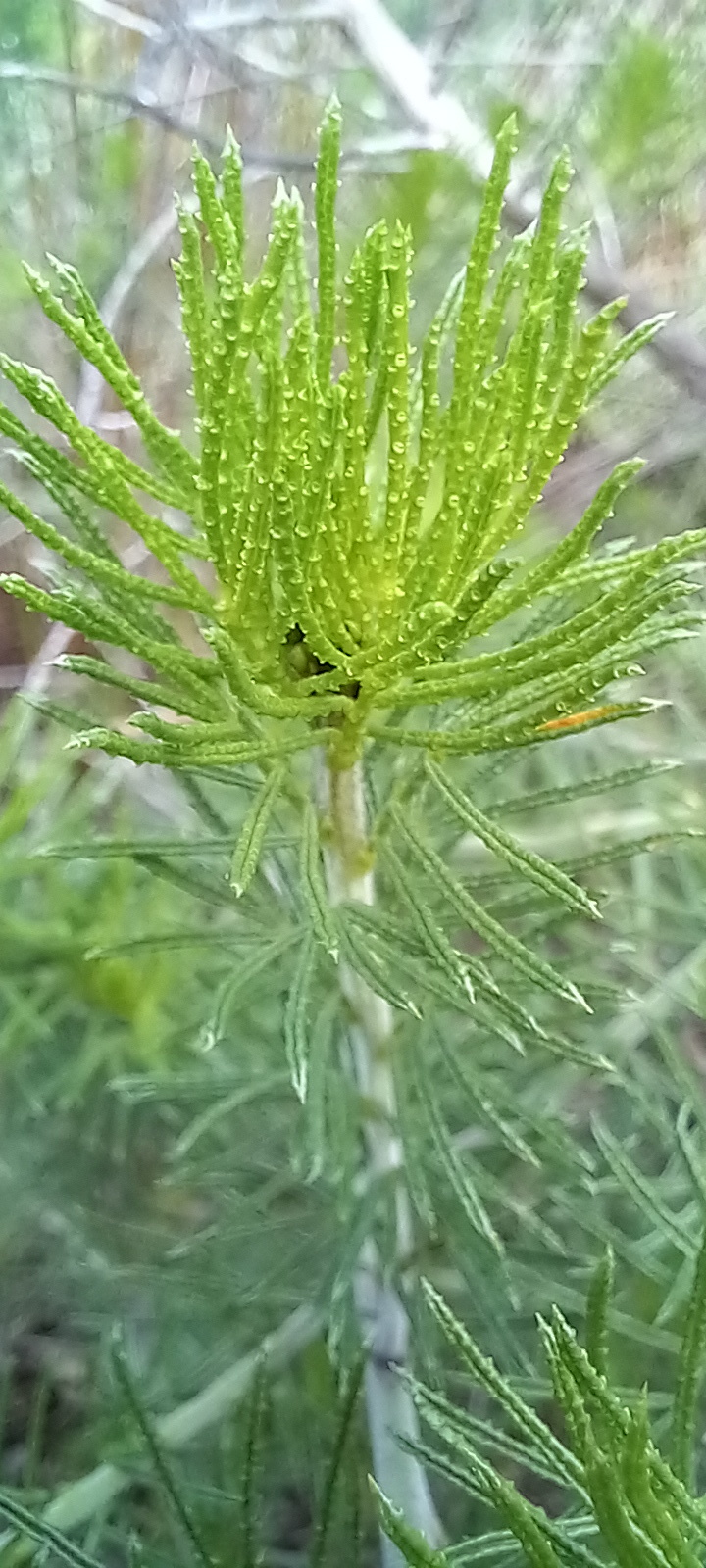
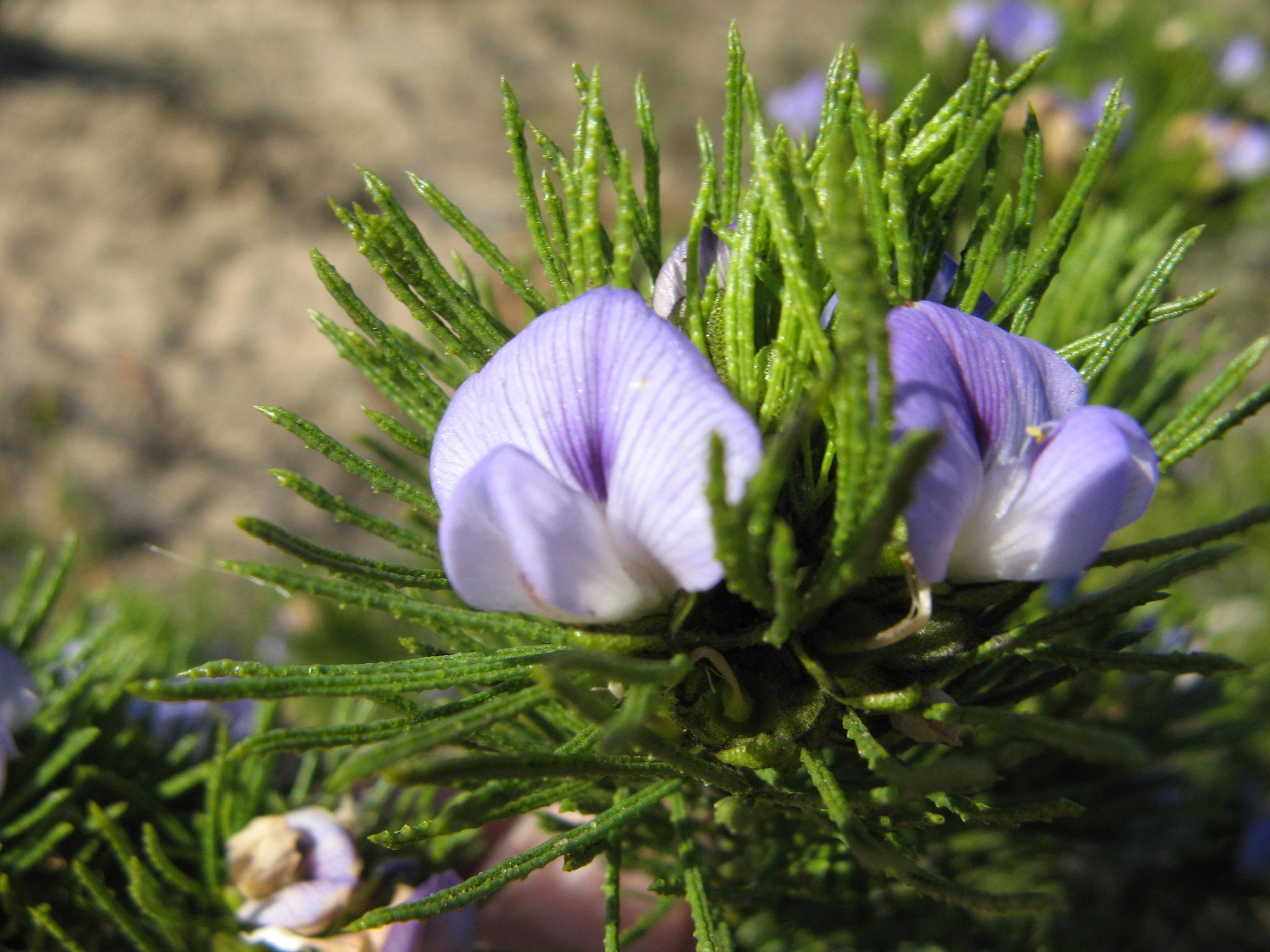
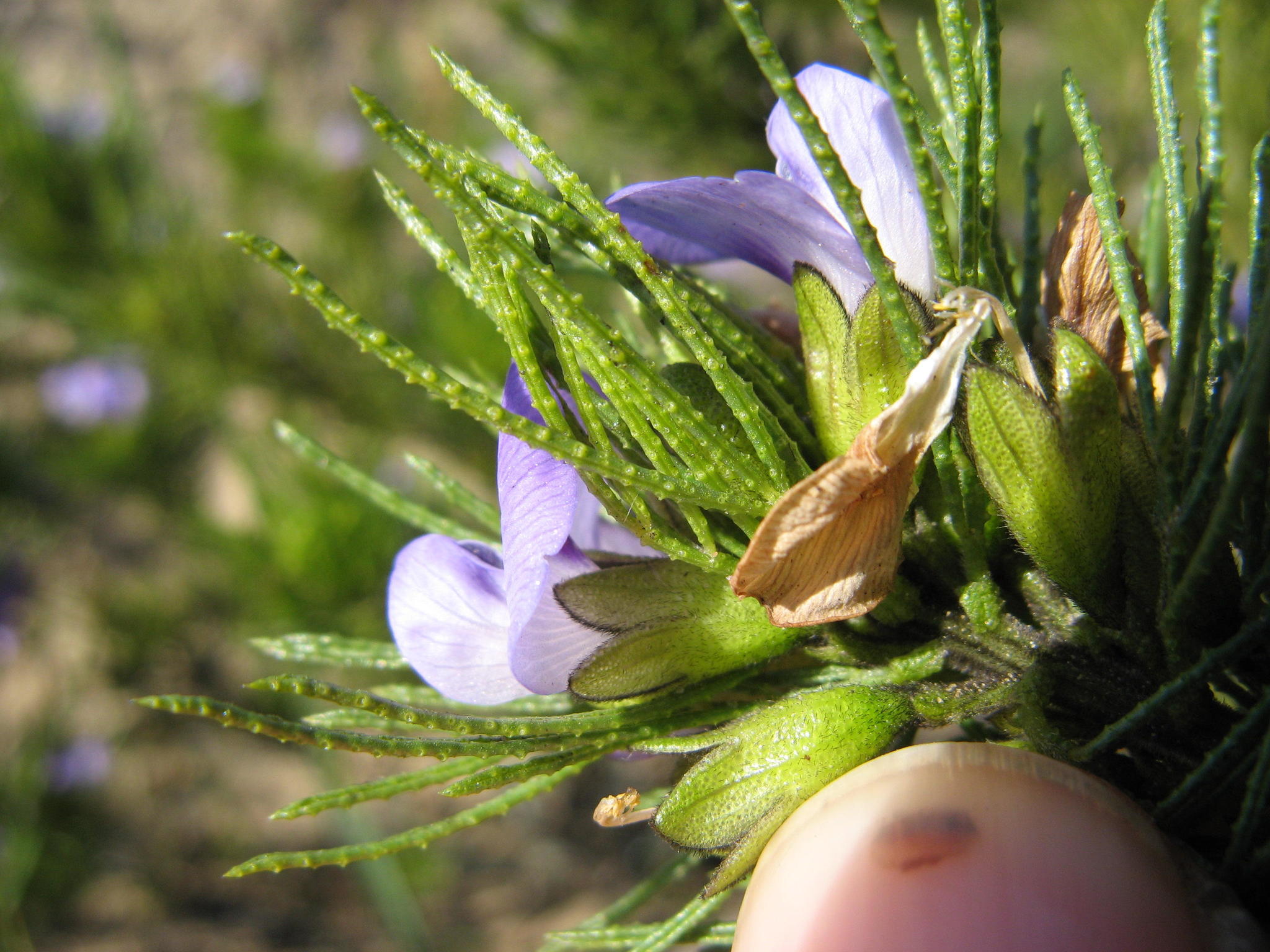
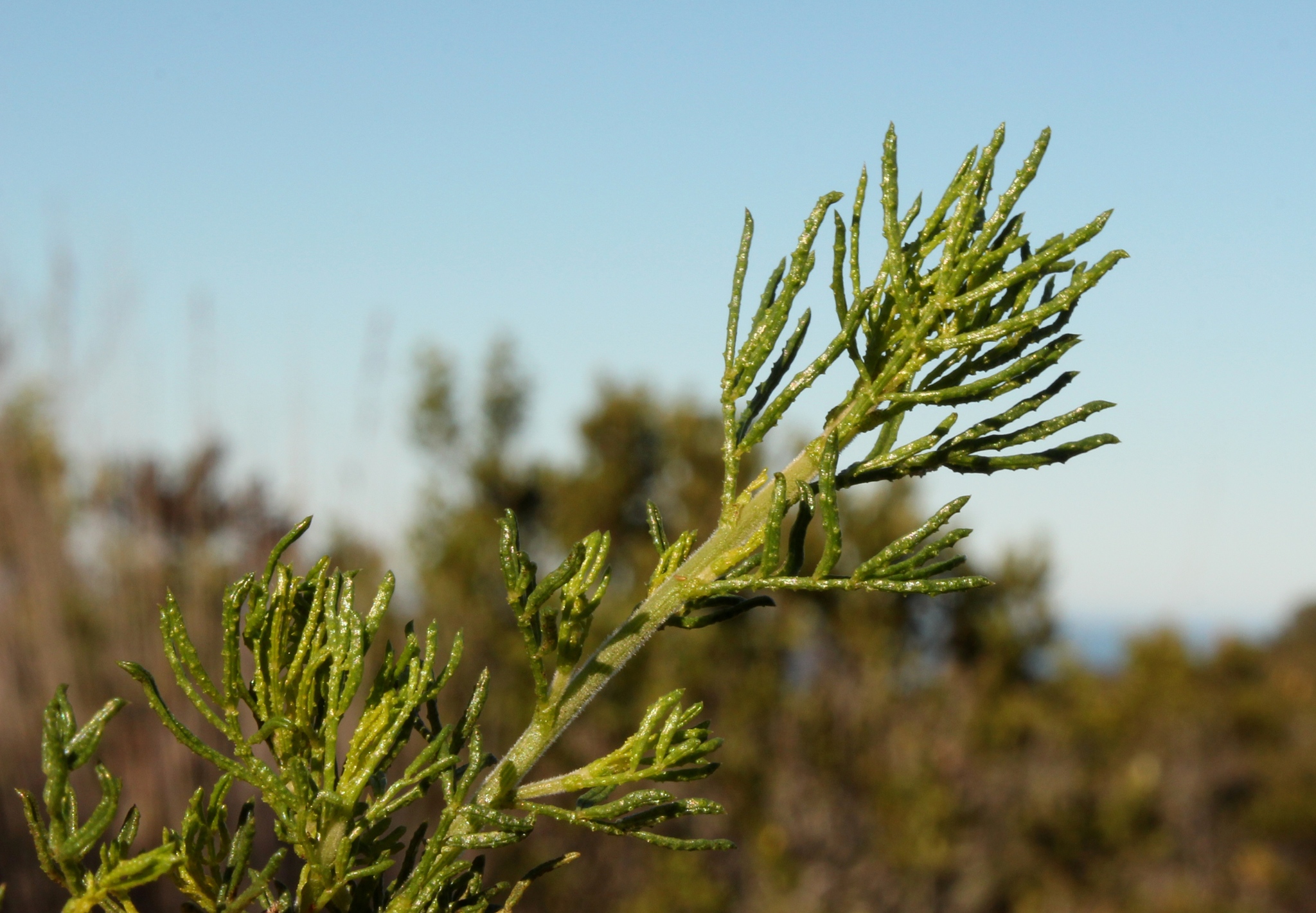
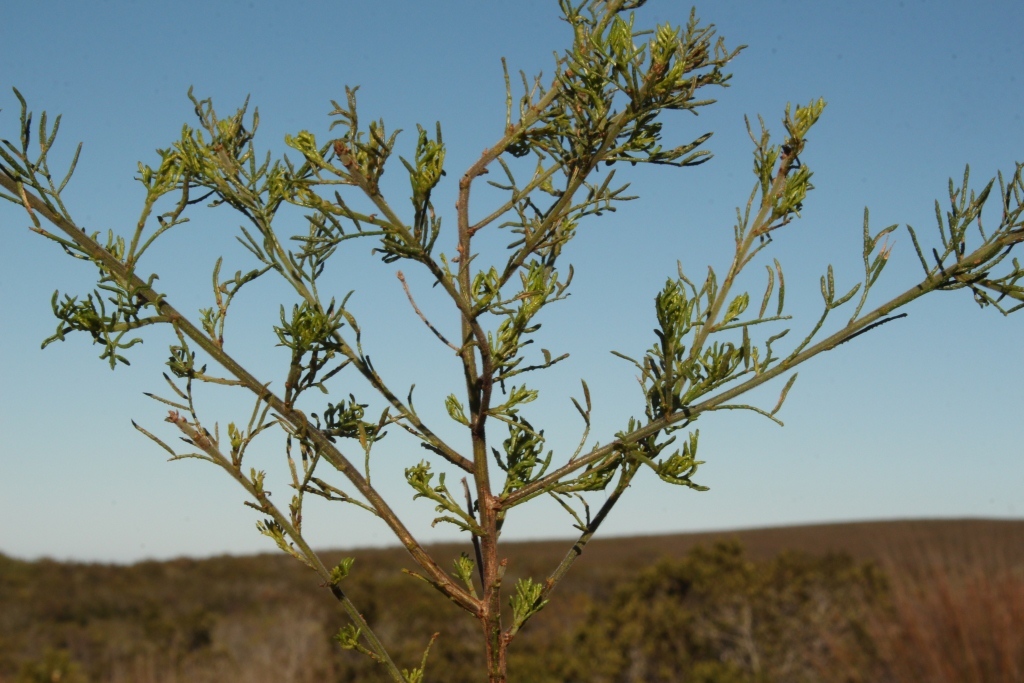
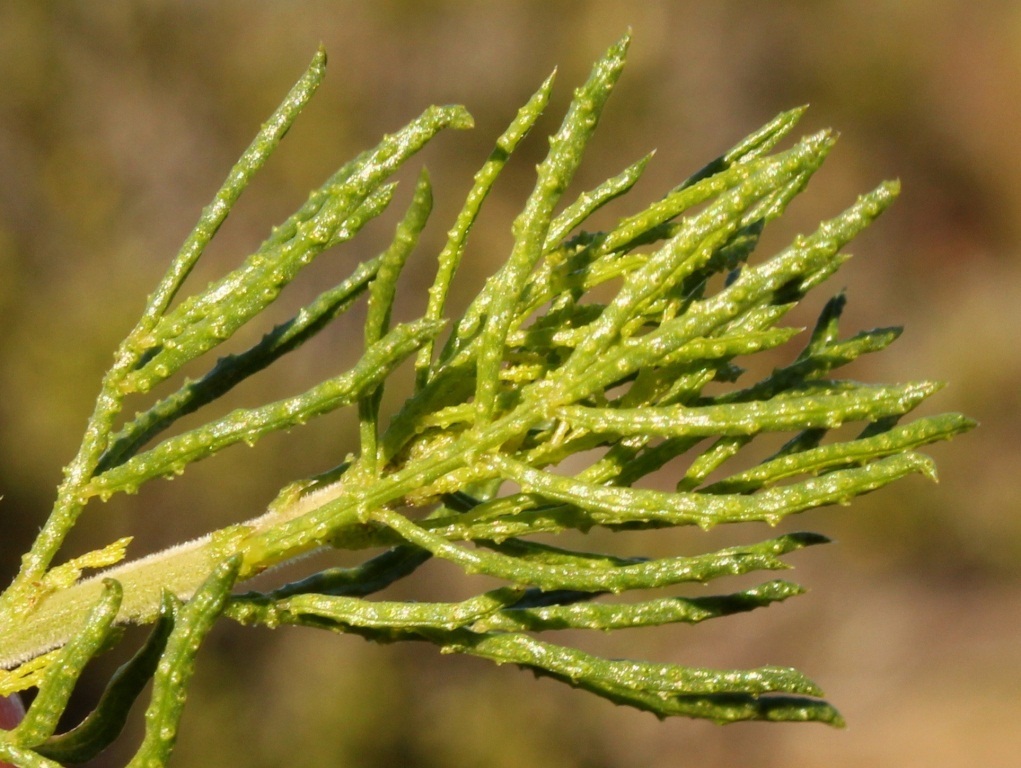
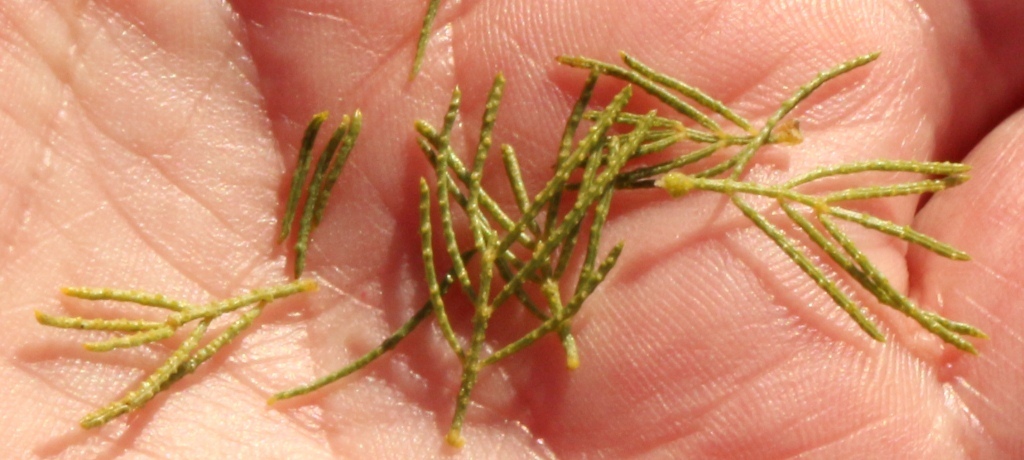
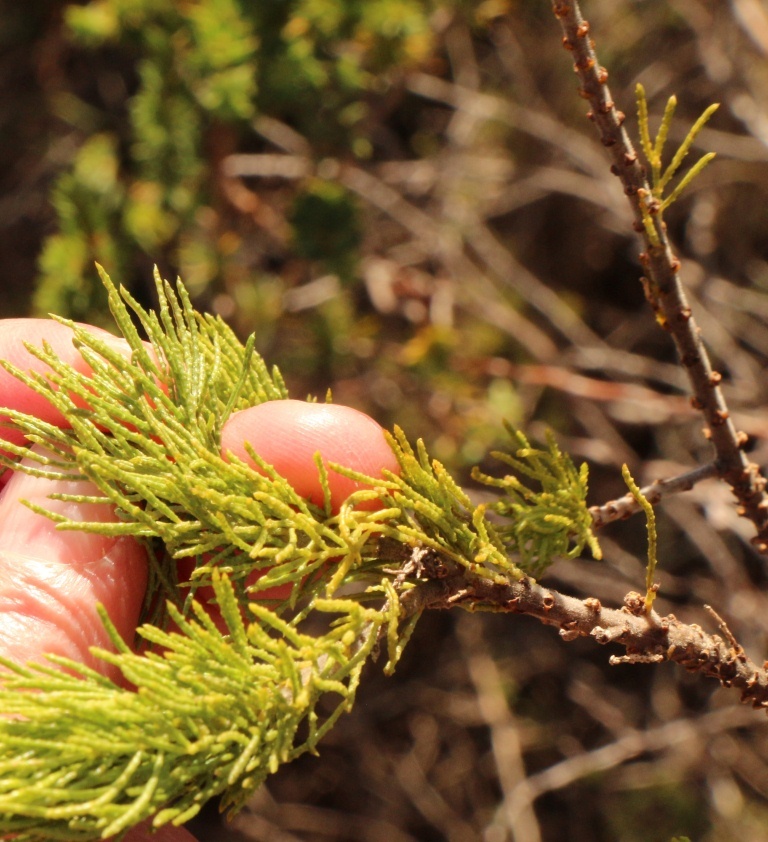
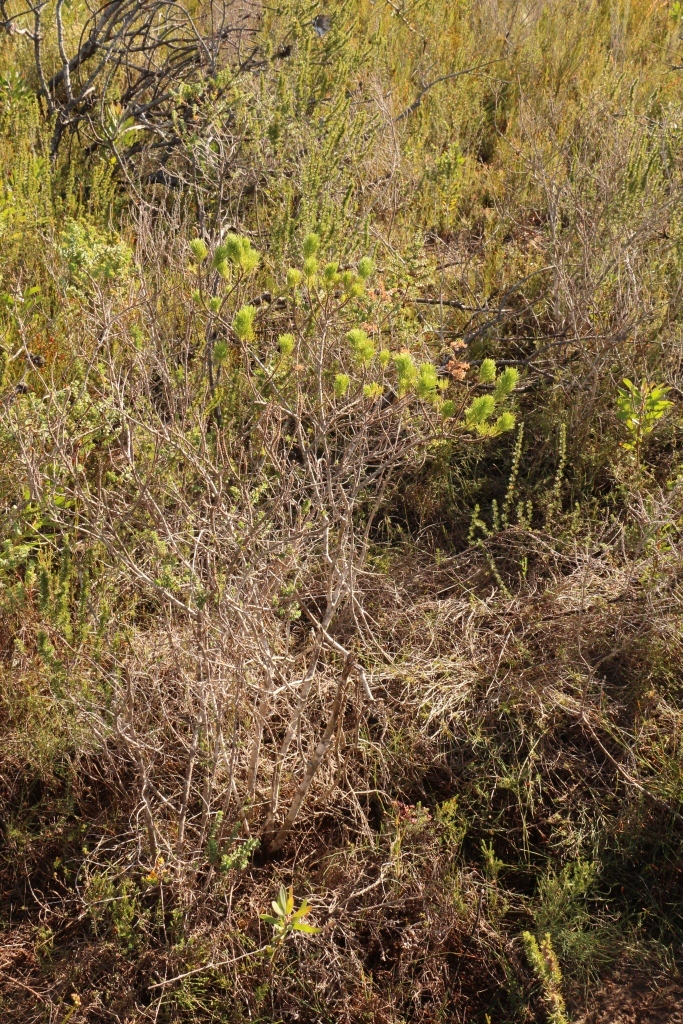
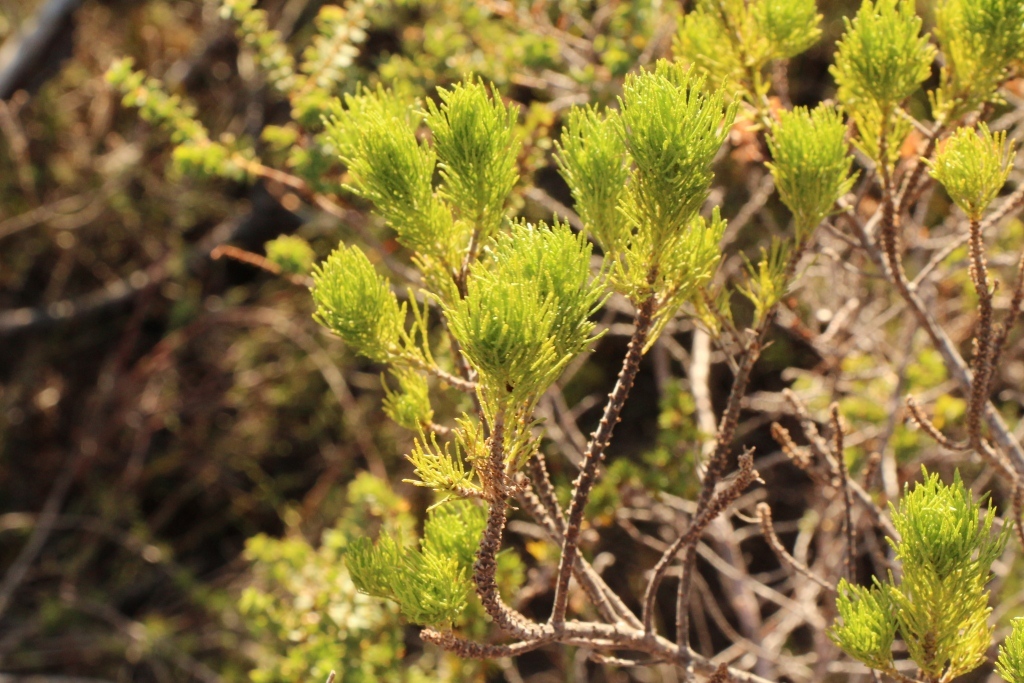
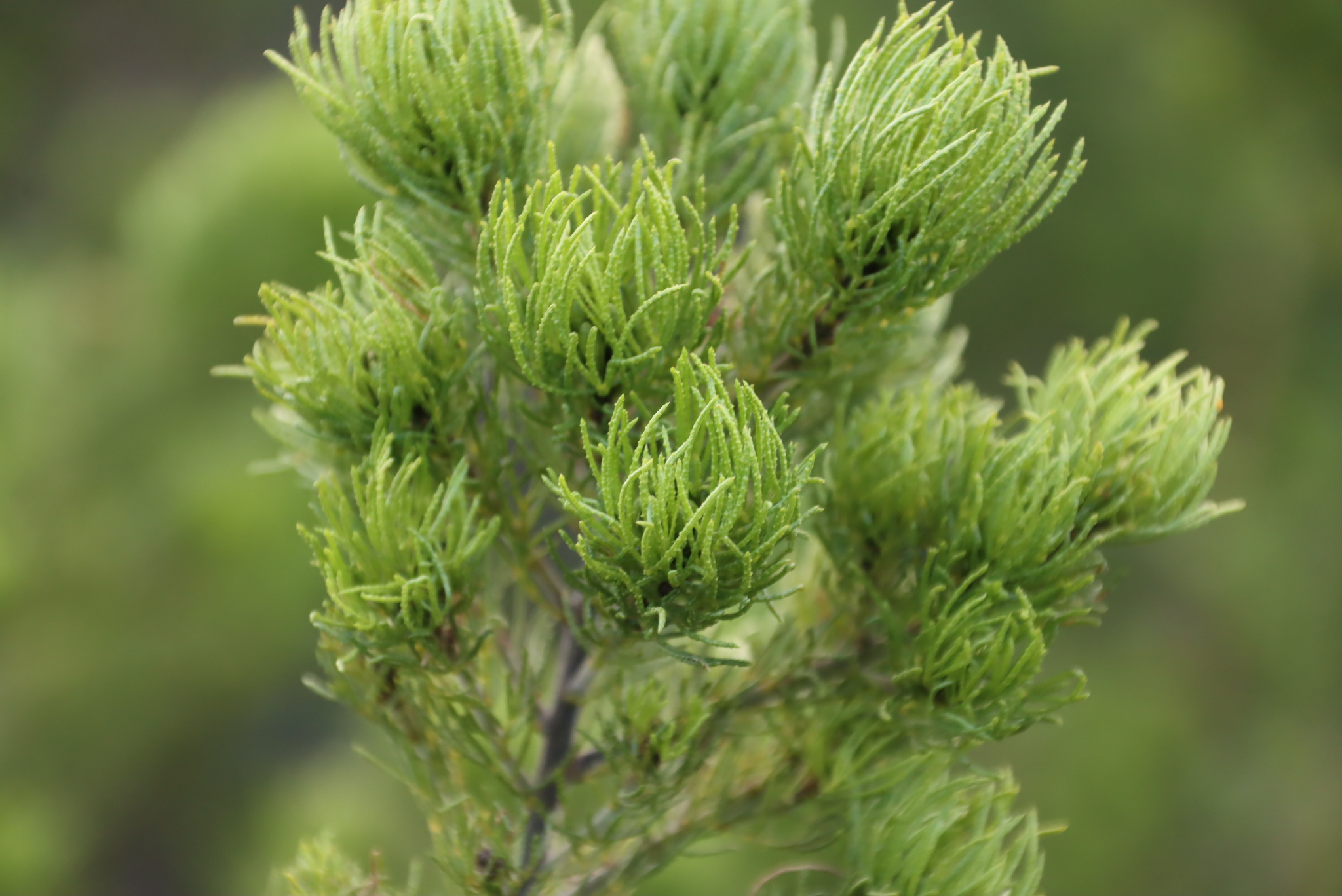
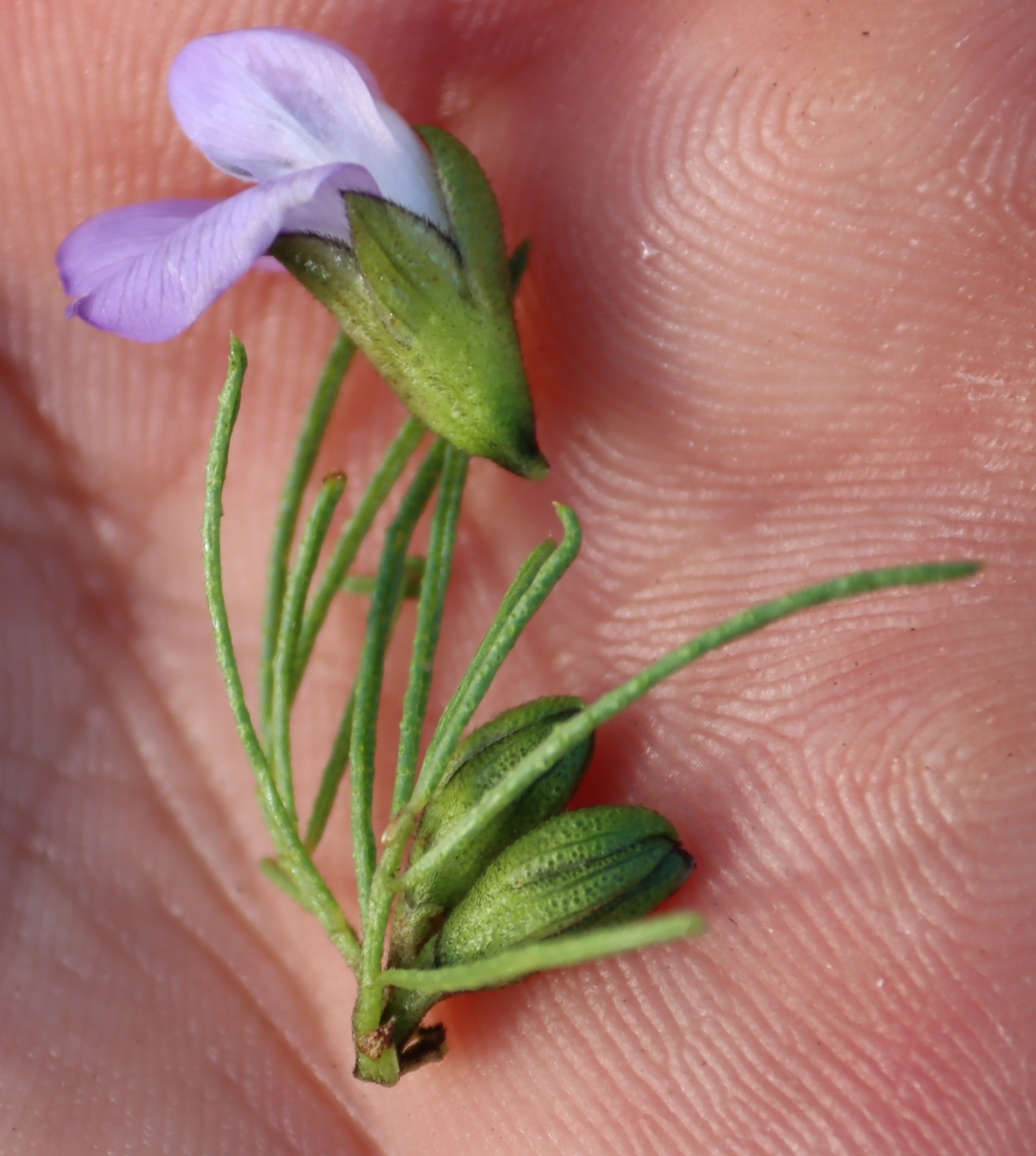
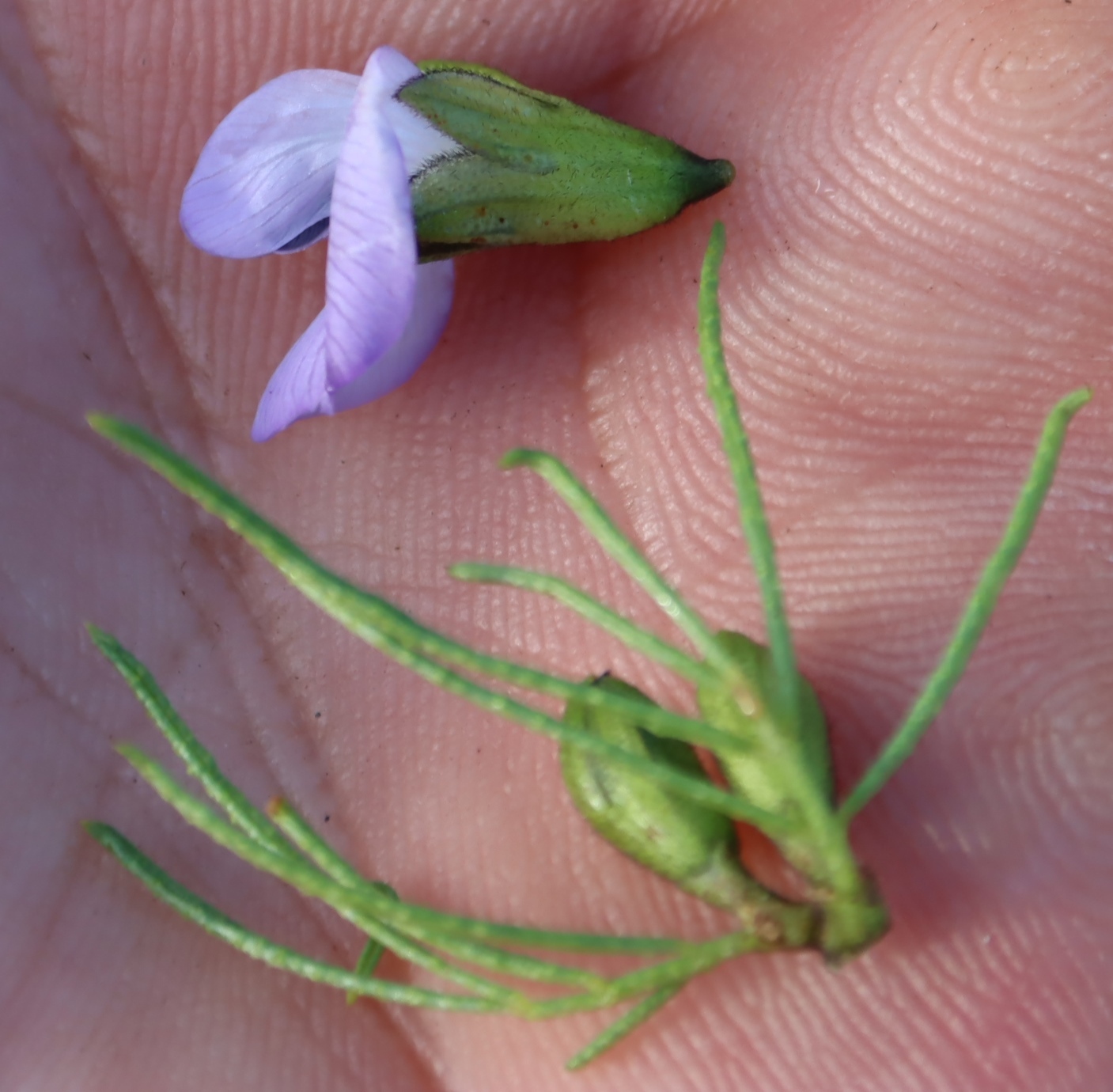
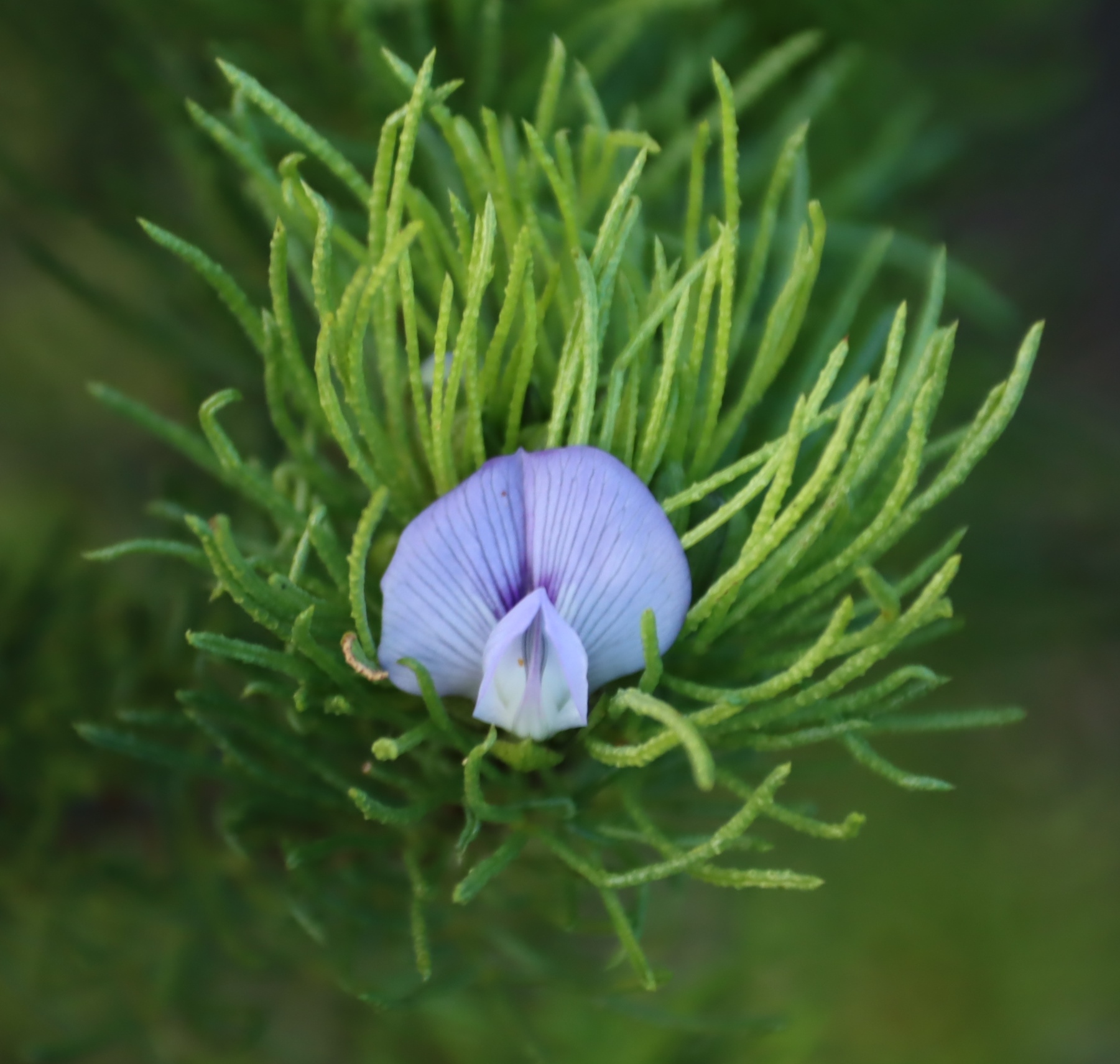
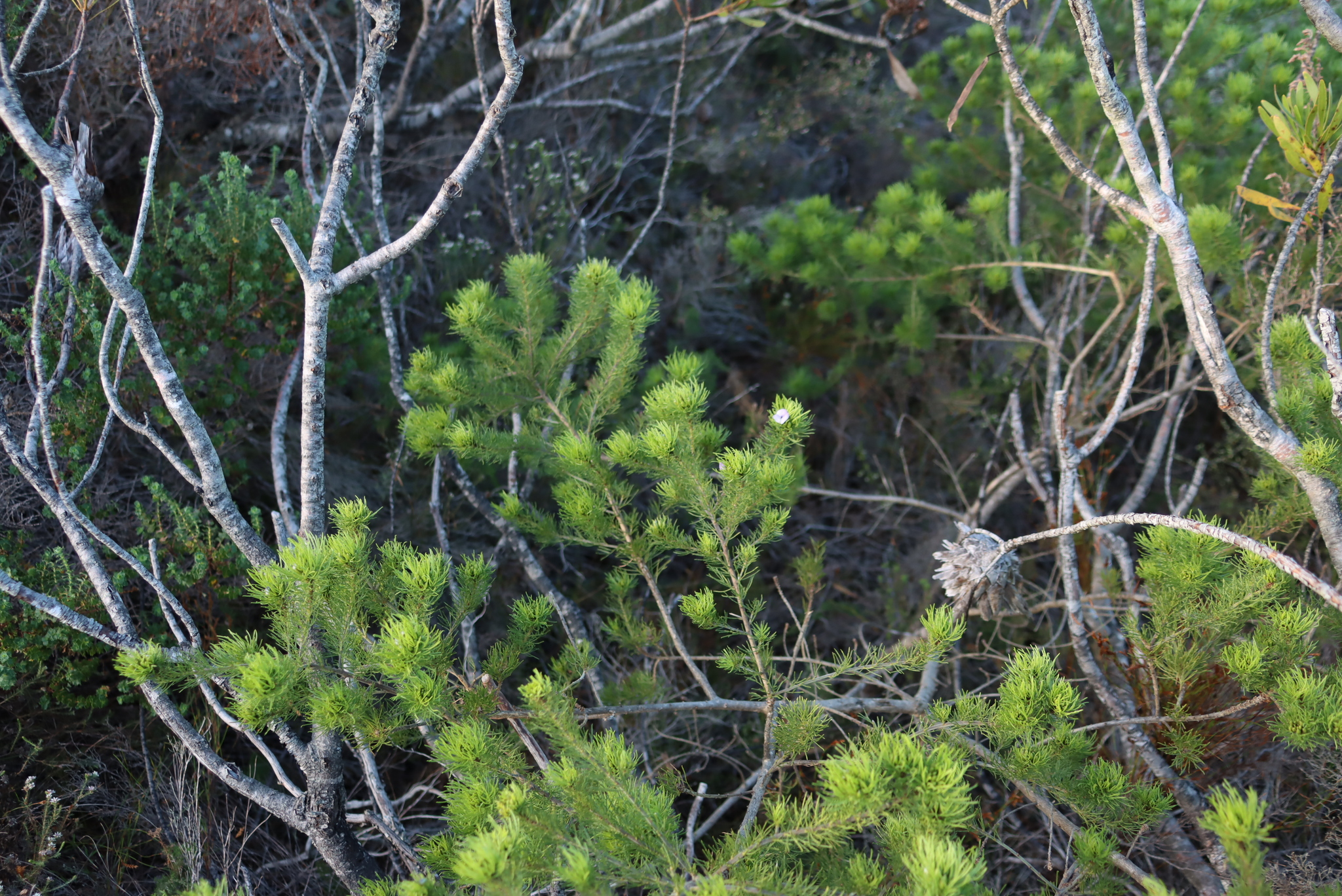
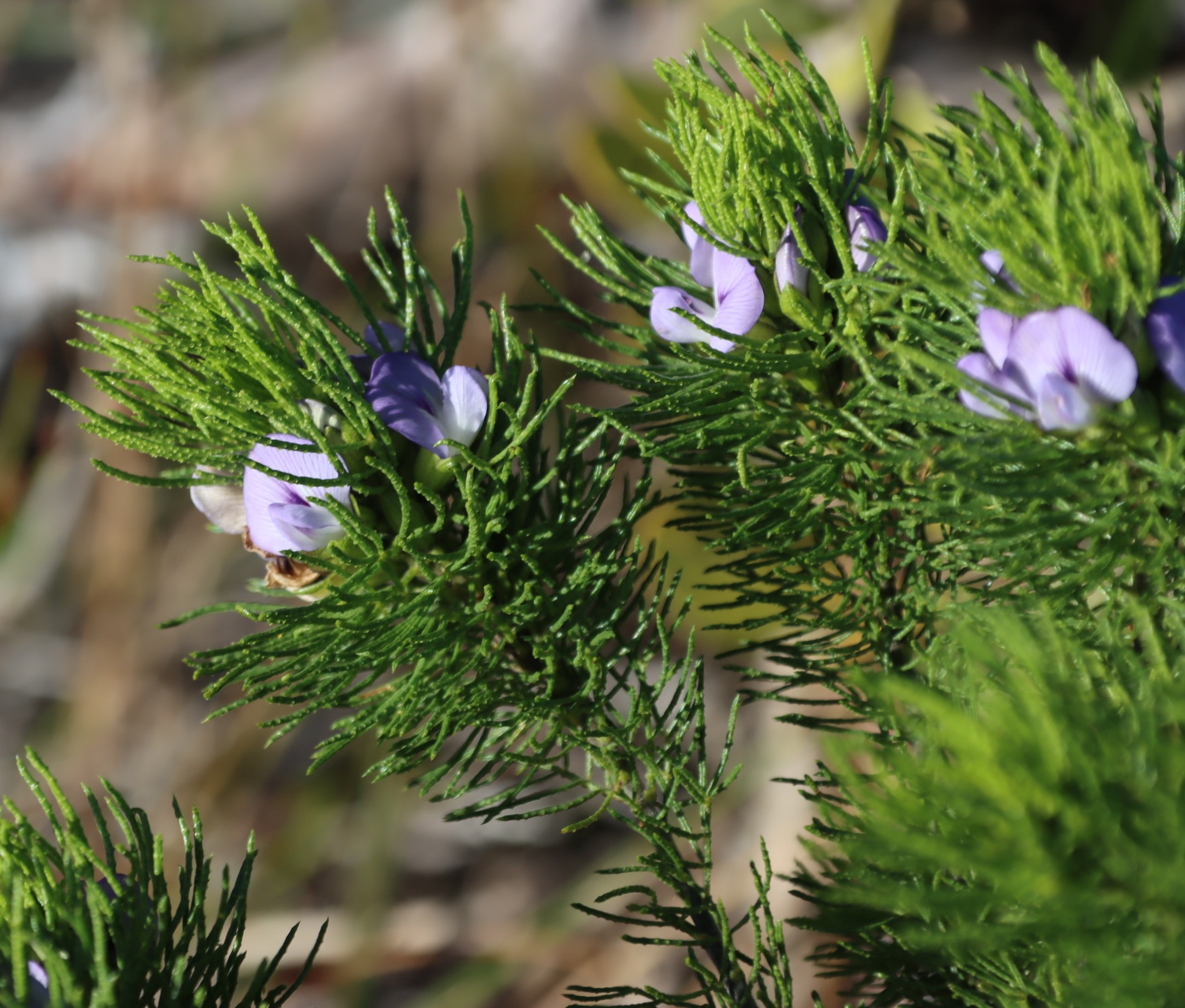
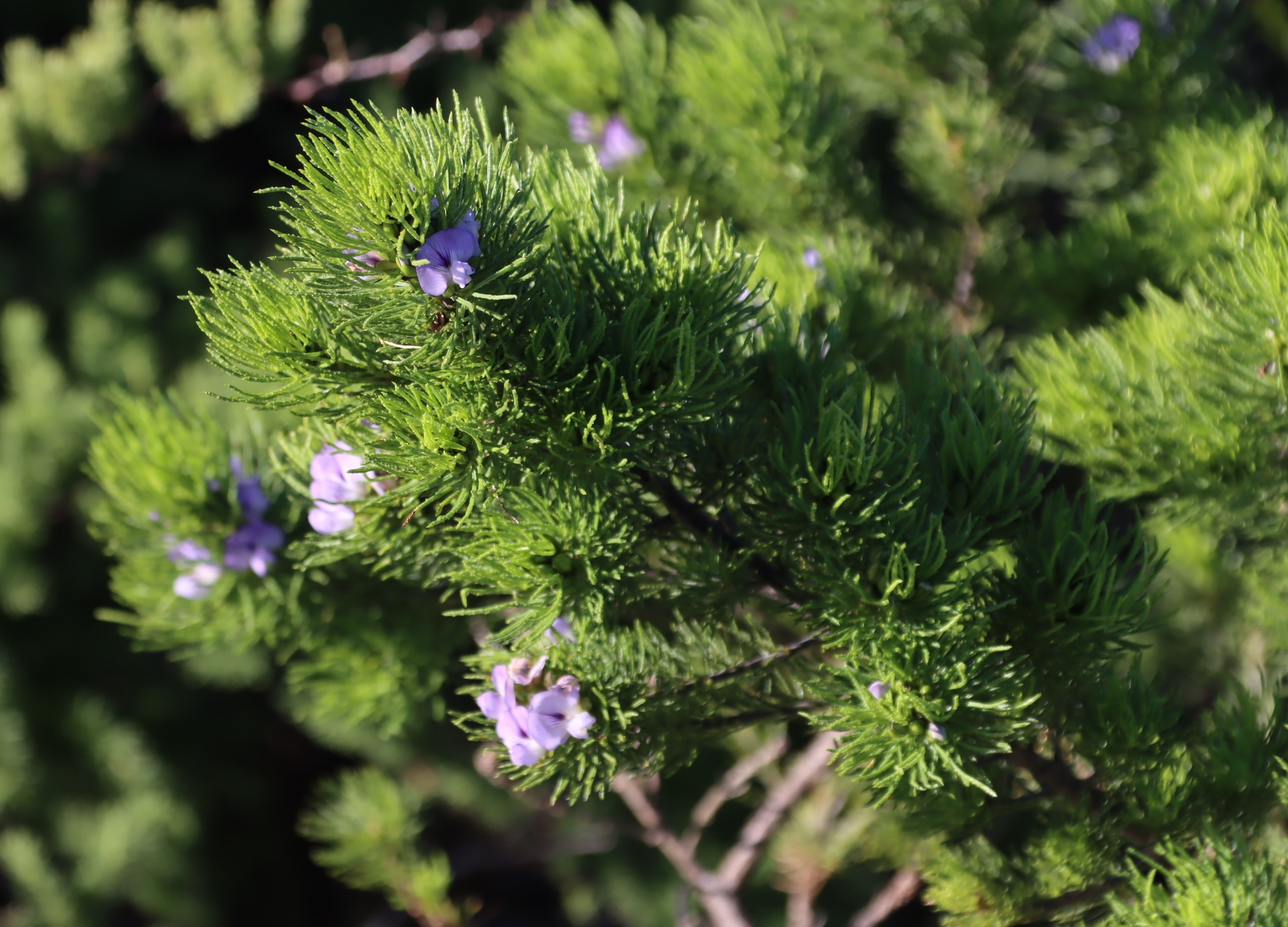
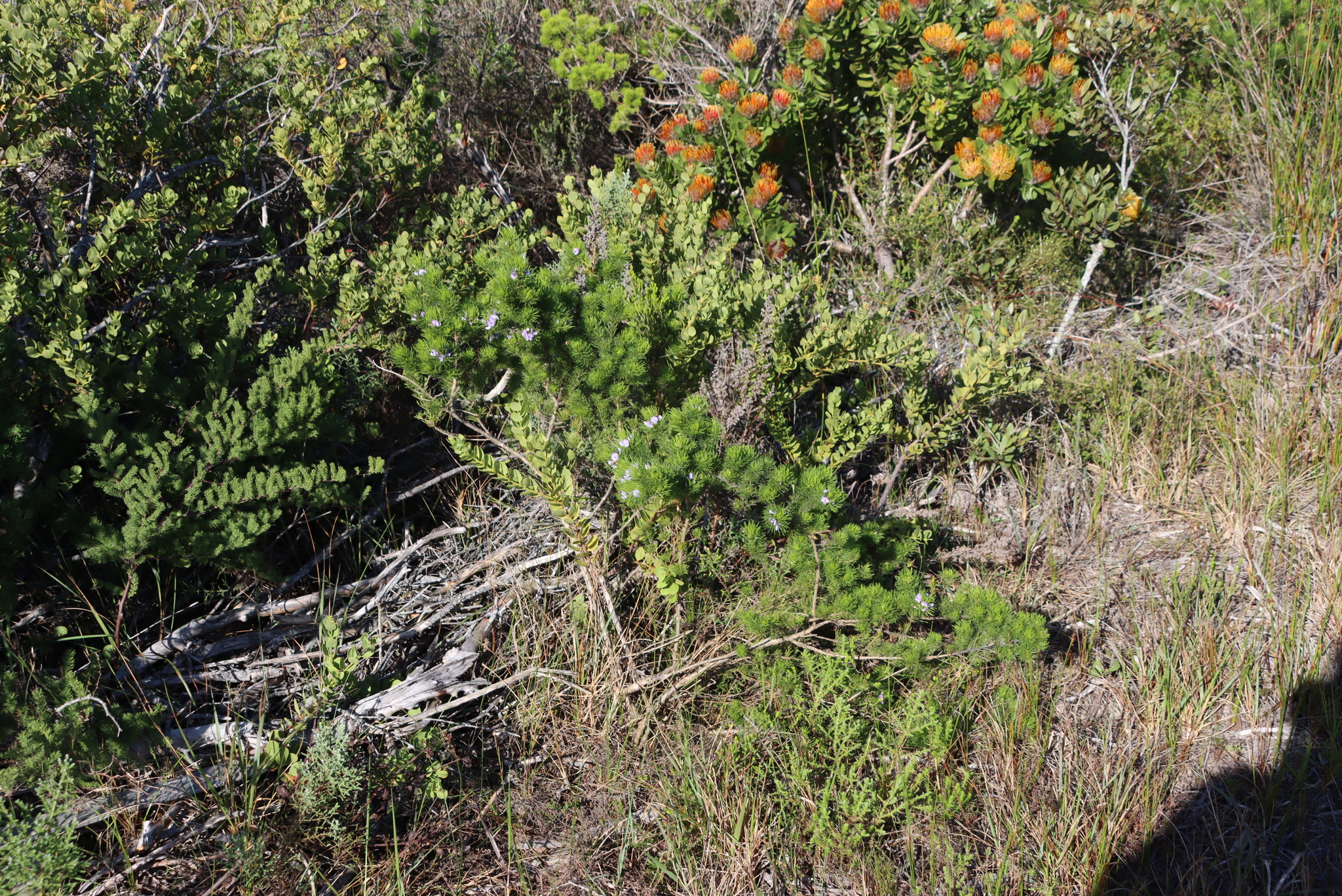
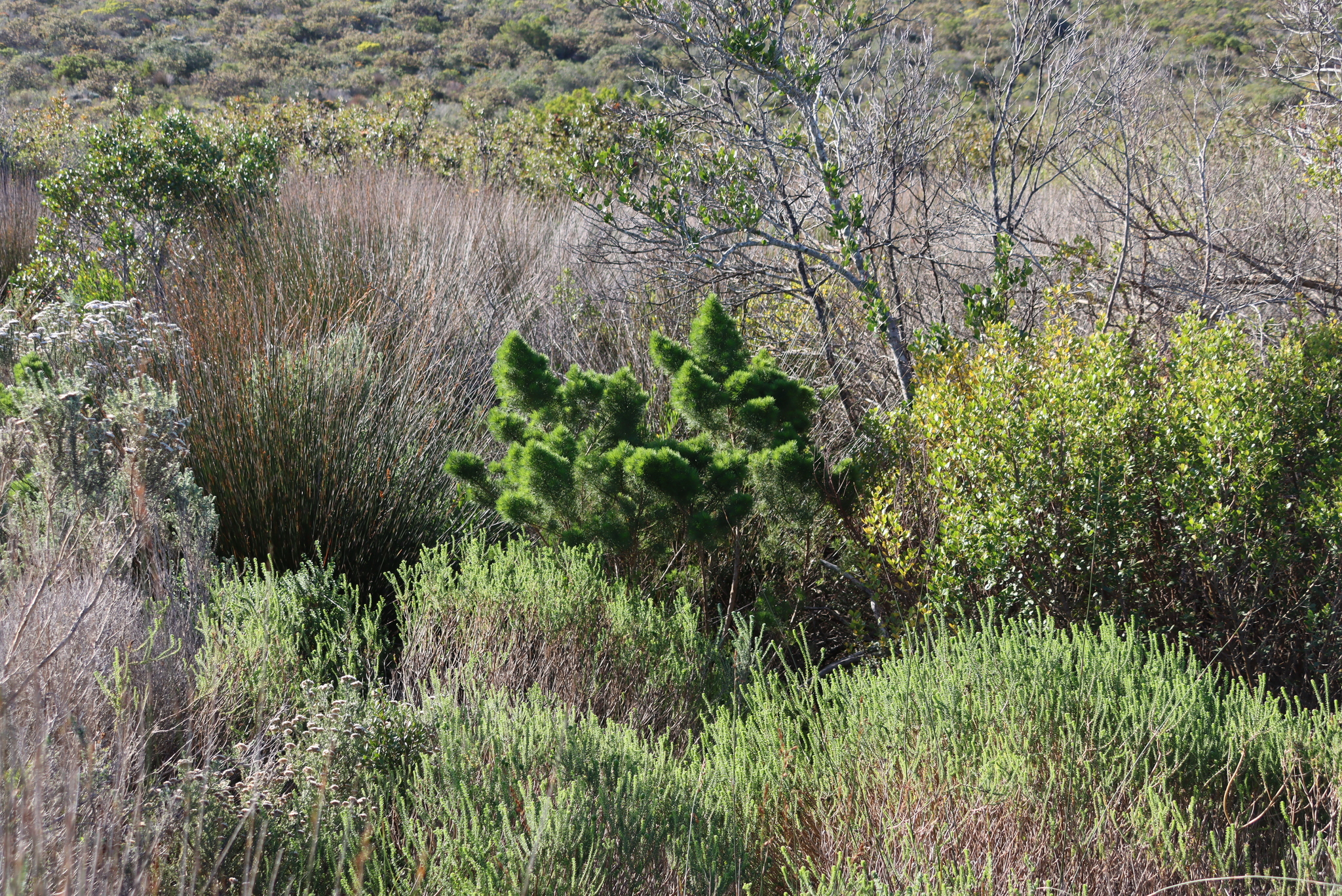
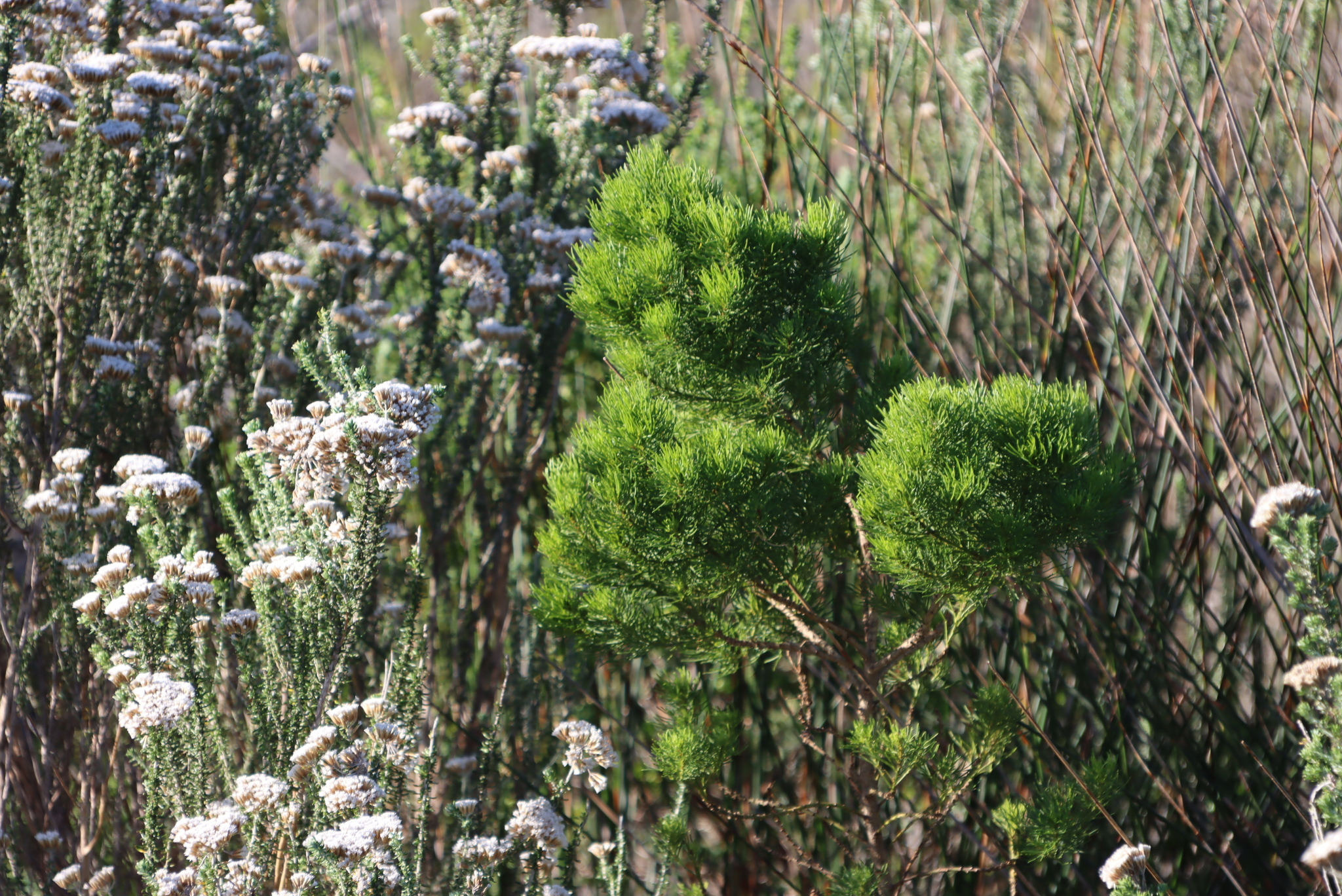
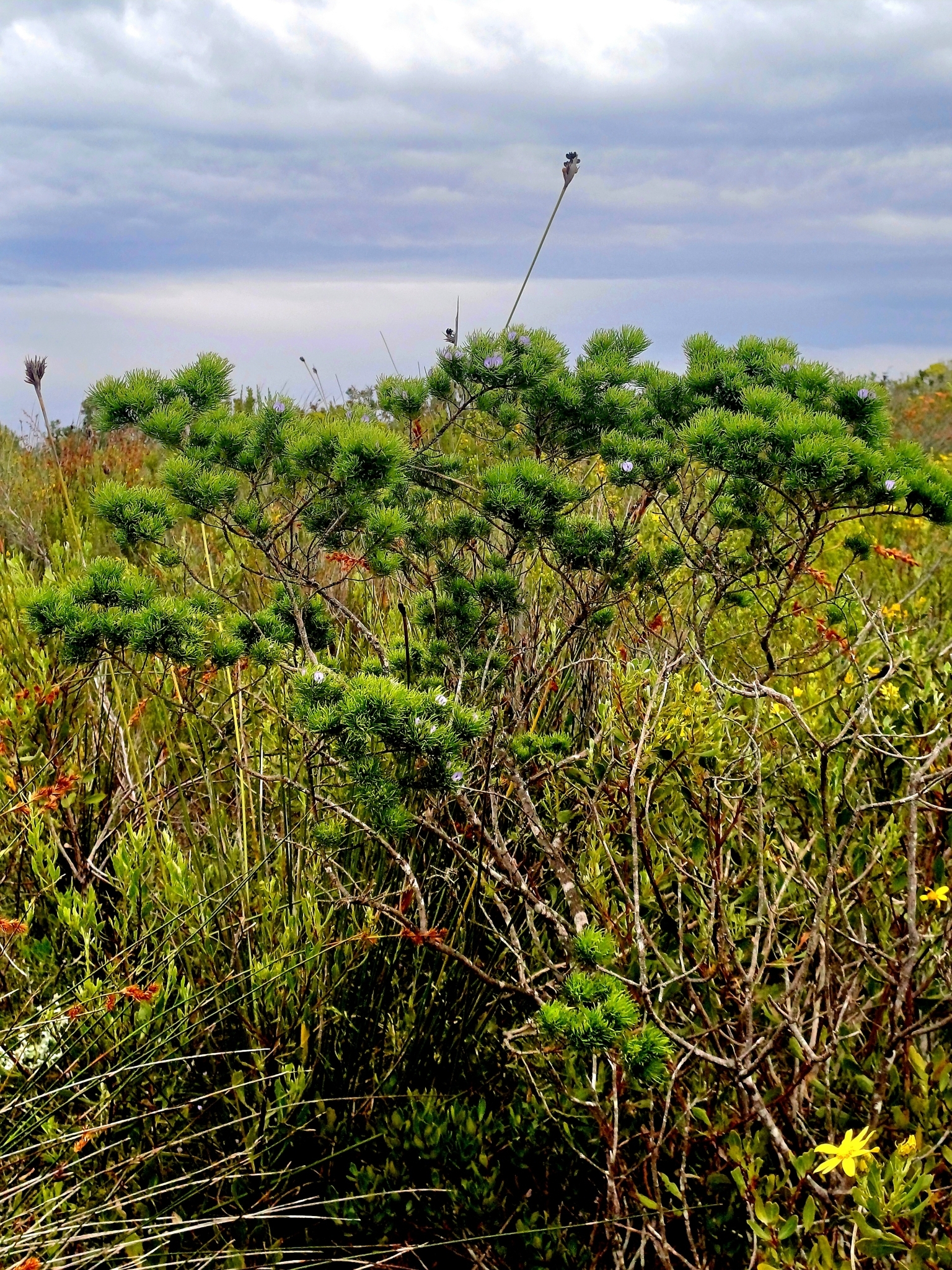
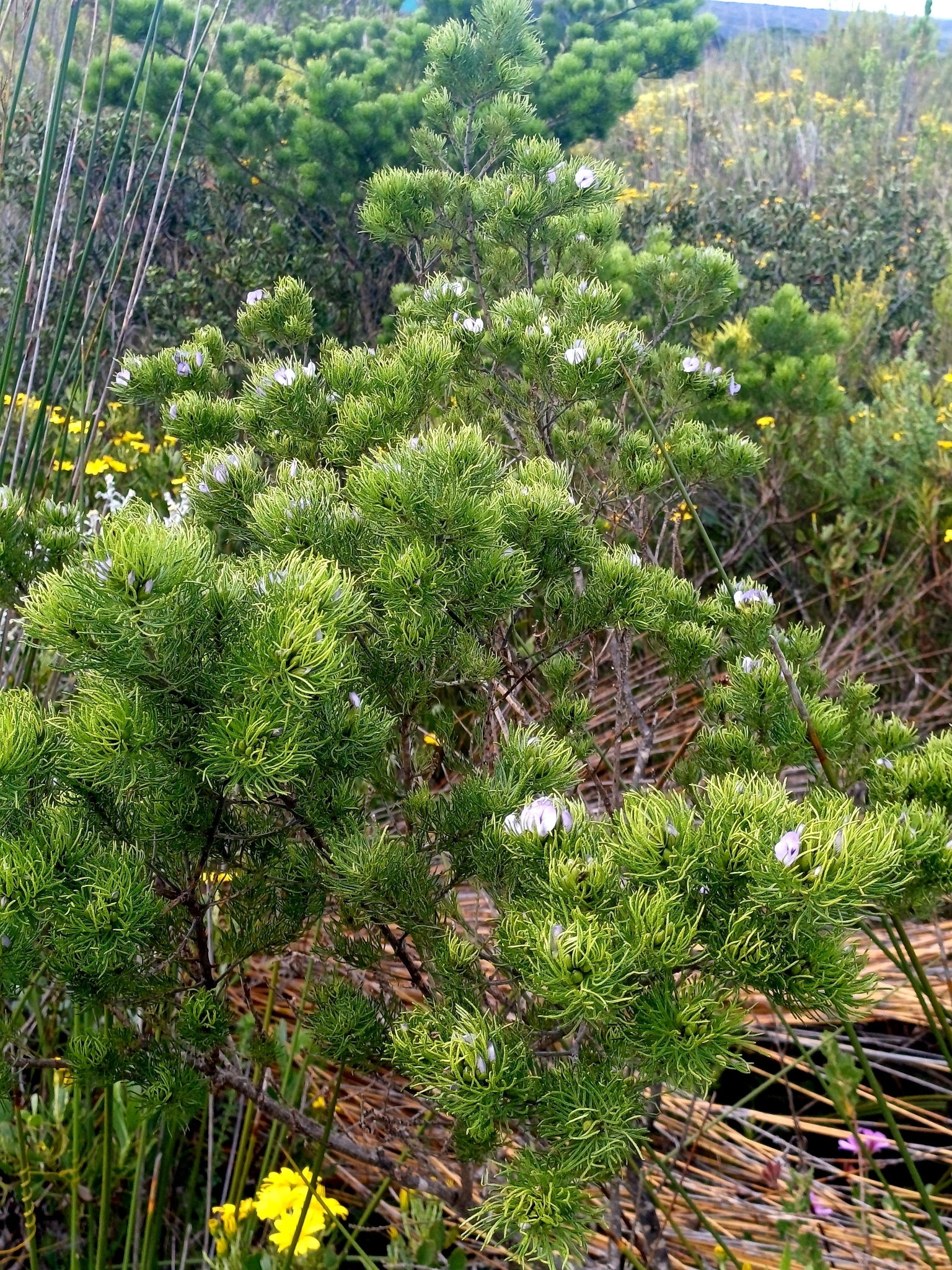
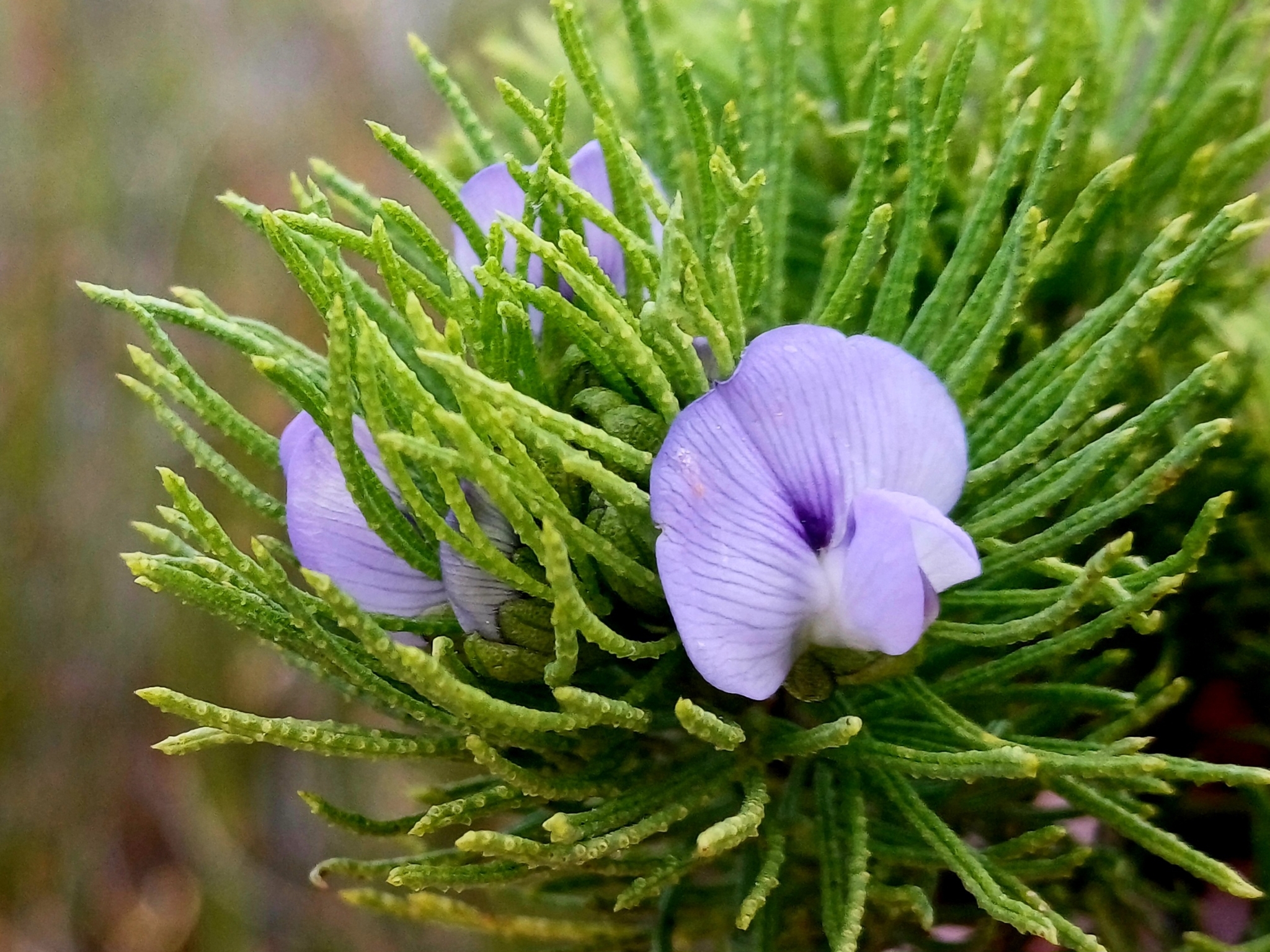
Robust resprouting shrub up to 1.5(2) m tall. Stems many, sub-erect to erect, multi-branched from near the base, rigid, rough, mostly bare except for leafy upper parts, branching at or near the base; young stems green to blackish and finely pubescent, older stems glabrous, grey with dull white storied lenticels giving a striped appearance; stipule scars prominent. Seasonal shoots rough, blackish, hairy. Leaves 5-7-foliolate, crowded at the ends of bare branches, erect, petiolate, with raised glands; leaflets 9-11 x 0.3-0.4 mm, linear lanceolate, glabrous, densely glandular, raised and prominent; terminal leaflet shortest or about the same length as the laterals, basal pair longest, apex of leaflets acute, three uppermost pinnately inserted; petioles 2-3 mm long; rachis 10 mm long; stipules 0.7-2 x 1-1.5 mm, poorly developed but persistent, shorter than the petiole, glabrous. Inflorescences axillary, borne in uppermost 5-9 axils of seasonal shoots, pseudocapitate, congested, 1(2) flowers per axil, pedunculate, pedicels absent; peduncles stout and rigid, 3-4 mm long; cupulum trilobed, glabrous, lobes poorly developed. Flowers 12-14 mm long, mauve. Calyx 5-7 mm long, tube 3-4 x 3.5 mm; lobes equally developed, shorter than the calyx tube, oblong-ovate, sub-acute or rounded at the apex, margins ciliate; glabrous, with dense glands, variable in size, equally distributed across the tube and lobes; ribs present, distinctly thickened. Standard petal 10 x 9 mm, sub-orbicular, pale to dark mauve with purplish veins and a small central violet nectar guide, auricles well-developed, apex emarginate; claw 2-3 mm long. Wing petals 10-14 x 4 mm, cultrate, mauve; auricles well developed, sculpturing present, upper basal and upper left central comprised of 7-9 transcostal lamellae; claw 3-4 mm long. Keel 11-12 x 3-4 mm; claw 5-7 mm long. Androecium 10 mm long, tenth stamen slightly attached, fenestrate. Pistil 11 mm long, ovary 2 mm long, glabrous but with a few small stalked glands; style 6 mm long, straight, then upcurved, swollen beyond point of flexure, height of curvature 3 mm long. Fruits 4-5 x 2.5-3.0 mm, oblong, coarsely reticulate, membranous, black. Seeds 2-4 x 2 mm, blackish grey. From: Bello, A; Stirton, CH; Chimphango, SBM; Muasya, AM. 2017. Taxonomic revision of African Psoralea pinnata species complex (Psoraleeae, Leguminosae). S. African J. Bot. 112: 128-179. [Copyright held by the South African Association of Botanists (2017); http://www.sciencedirect.com/science/journal/02546299] [CC BY]
Psoralea muirii has been confused with P. pinnata in habit but differs in being a robust sub-erect to erect resprouting shrub to 1.5(2) m tall (versus erect reseeding shrub to small tree up to 5 m tall), 5-7-foliolate with linear lanceolate prominently warty leaves (versus 7-9-foliolate linear villoso-pubescent smooth leaves), stipules 0.7-2.0 mm long, glabrous (versus 3-4 mm long, hairy, persistent becoming woody), mauve flowers solitary borne in upper 5-9 axils of seasonal flowering shoots (versus mauve or pale 1-6 blue flowers borne in axils along the length of seasonal flowering shoots). The coastal species P. muirii can be confused when dried with the montane P. kougaensis as both have prominent warty leaf glands which, though similar in the fresh state, shrivel differently when dried. They are allopatric. From: Bello, A; Stirton, CH; Chimphango, SBM; Muasya, AM. 2017. Taxonomic revision of African Psoralea pinnata species complex (Psoraleeae, Leguminosae). S. African J. Bot. 112: 128-179. [Copyright held by the South African Association of Botanists (2017); http://www.sciencedirect.com/science/journal/02546299] [CC BY]
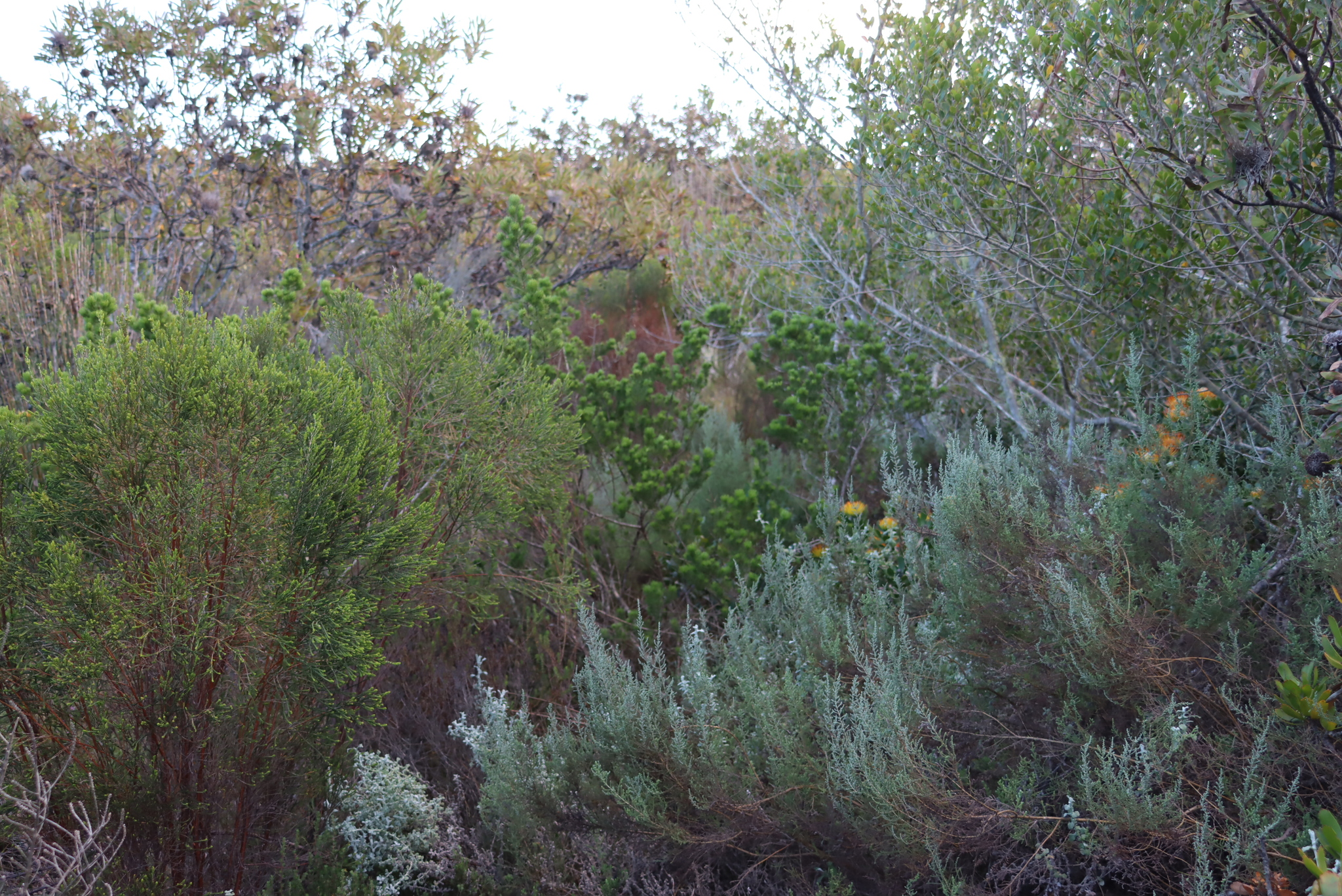
Psoralea muirii is found in the Albertinia Sandstone Fynbos, Canca Limestone Fynbos, and Kouga Grassy Sandstone Fynbos vegetation types (FFd 9, FFl 3 and FFs 28). It favours limestone derived soils. From: Bello, A; Stirton, CH; Chimphango, SBM; Muasya, AM. 2017. Taxonomic revision of African Psoralea pinnata species complex (Psoraleeae, Leguminosae). S. African J. Bot. 112: 128-179. [Copyright held by the South African Association of Botanists (2017); http://www.sciencedirect.com/science/journal/02546299] [CC BY]
Psoralea muirii is a lowland fynbos species occurring mainly between Albertinia and Still Bay and less frequently towards the Gouritz River. However, recently it was observed further west towards Mossel Bay. From: Bello, A; Stirton, CH; Chimphango, SBM; Muasya, AM. 2017. Taxonomic revision of African Psoralea pinnata species complex (Psoraleeae, Leguminosae). S. African J. Bot. 112: 128-179. [Copyright held by the South African Association of Botanists (2017); http://www.sciencedirect.com/science/journal/02546299] [CC BY]
350 to 400 m
This map contains point-based occurrences at different locations
Occurrence in the Flora of Southern Africa (FSA) countries and South African provinces. Residence status indicates if a taxon is indigenous, endemic, naturalised or invasive in a specific region. This data is based on specimen records and literature
FSA
SA
BOT
NAM
ESW
LES
WC
EC
NC
FS
GA
KZN
LP
MP
NW
Absent
Indigenous
Endemic
Naturalised
Invasive

Names and Sources
Published in: S. African J. Bot. 112: 145 (2017)
Type: South Africa, Western Cape, Riversdale: Aasvogelberg, near Albertinia, 19 Nov 1914, J. Muir 1850 (PRE, holo.; BOL, iso.)
Classification
KINGDOM Plantae
SUBKINGDOM Phanerogamae
PHYLUM Anthophyta
ORDER Fabales
FAMILY Fabaceae
SUBFAMILY Papilionoideae
TRIBE Psoraleeae
GENUS Psoralea
SUBGENUS Psoralea
SPECIES muirii
15 results for Psoralea muirii C.H.Stirt. & Muasya
Barcode: PRE0782746-0 Collector(s) & number: Vlok, JHJ, 1675 | 1986-10-26
South Africa, Western Cape, Uniondale. Lower Northern slope of Potjiesrivierhoogte.
Data Resource: BODATSA View record
Barcode: NBG0210258-0 Collector(s) & number: Hugo, L, 1247 | 1978-9-25
South Africa, Western Cape, Riversdale. Hectorskraal.
General notes: Alt. ca. 500 ft. Limestone ridge. Dense vegetation. Flowers blue. Bushes up to 1½ m. Rare.
Data Resource: BODATSA View record
Barcode: PRE0551921-0 Collector(s) & number: Hugo, L, 1334 | 1978-9-27
South Africa, Western Cape, PRINCE ALFREDS PASS; DONKERHOEK NECK
Data Resource: BODATSA View record
Barcode: PRE0550552-0 Collector(s) & number: Hugo, L, 1247 | 1978-9-25
South Africa, Western Cape, HECTORSKRAAL
Data Resource: BODATSA View record
Barcode: NBG0267921-0 Collector(s) & number: De Villiers, U, SB 344 | 2001-9-18
South Africa, Western Cape, Jongensgat Private Nature Reserve, between Still Bay and Jongensfontein. 34°24'S 21°24'E.
General notes: Partial to wet or marshy places. 'Digbaard Bloukeurtjie'.
Data Resource: BODATSA View record
Barcode: PRE0856648-0 Collector(s) & number: Jacobsen, NHG, 6503 | 2009-9-25
South Africa, Eastern Cape, Humansdorp District. Farm No. 484, near Storms River Bridge.
General notes: Rare, only a single plant recorded along wetlands in the area. Det. Note: [Psoralea muirii C.H. Stirt (ined). = Psoralea pinnata L.]
Data Resource: BODATSA View record
This map contains point-based occurrences at different locations
2022
PERIODICAL/JOURNAL
Phylogenetic relationships and biogeography of Psoraleeae (Fabaceae) Bello, A; Stirton, CH; Chimphango, SBM; Muasya, AMBotanical Journal of the Linnean Society 200: 39-74
2017
PERIODICAL/JOURNAL
Taxonomic revision of African Psoralea pinnata species complex (Psoraleeae, Leguminosae) Bello, A; Stirton, CH; Chimphango, SBM; Muasya, AMSouth African Journal of Botany 112: 128-179
2012
SERIES CHAPTER
Fabaceae: Psoralea L. Stirton, CH; Schutte, ALIn: J Manning & P Goldblatt (eds), Plants of the Greater Cape Floristic Region 1: The Core Cape flora. Strelitzia 29: 571-576
South African National Biodiversity Institute, Pretoria
No results found for Psoralea muirii C.H.Stirt. & Muasya
Status and criteria
EN
Assessor(s)
Plantae Coordinator
| Part(s) of plant used | Use(s) | Reference |
|---|
Coming soon...


