ANIMALIA / ARTHROPODA / INSECTA / ORTHOPTERA / TETTIGONIIDAE / CERESIA / PULCHRIPES
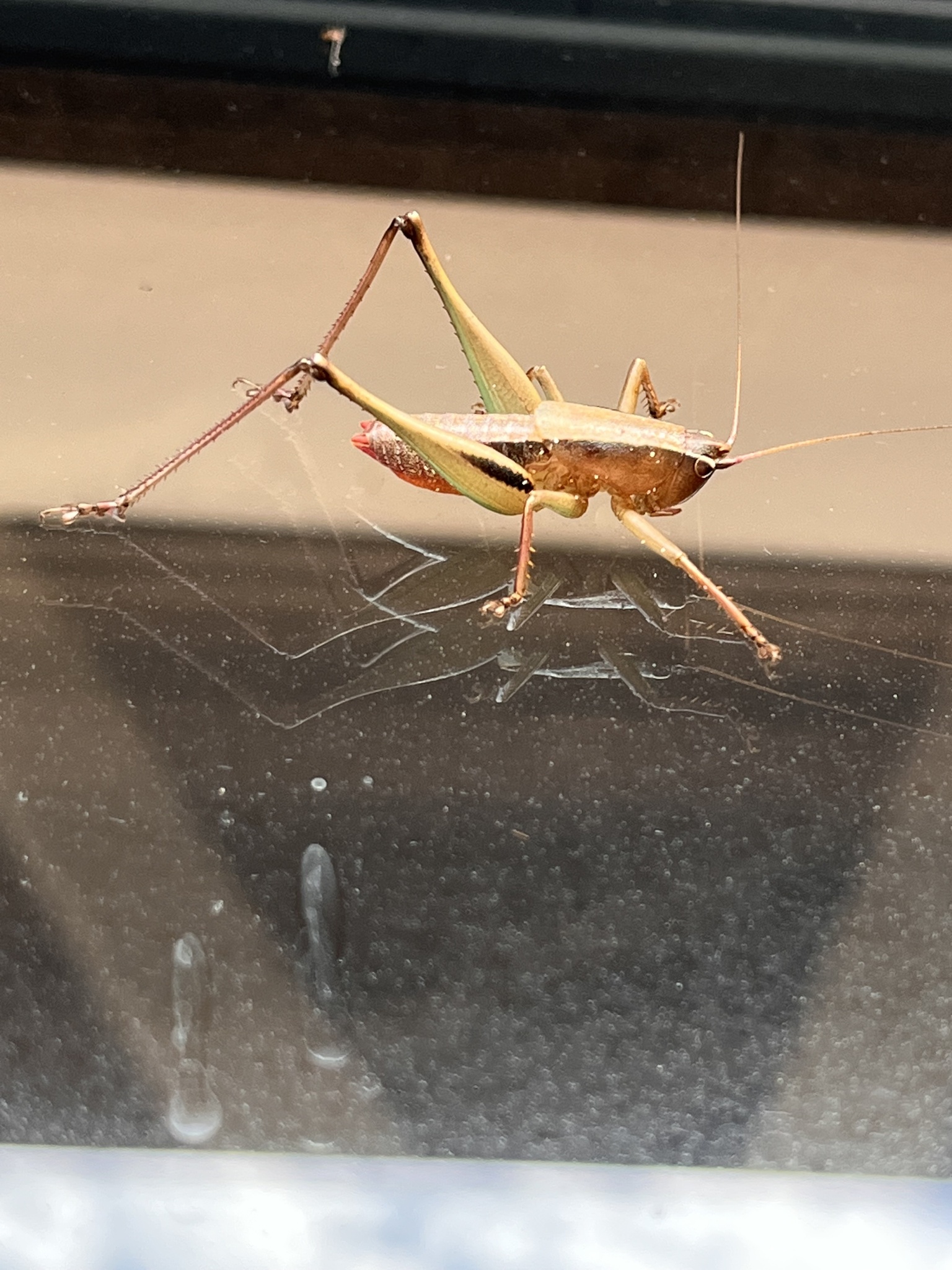
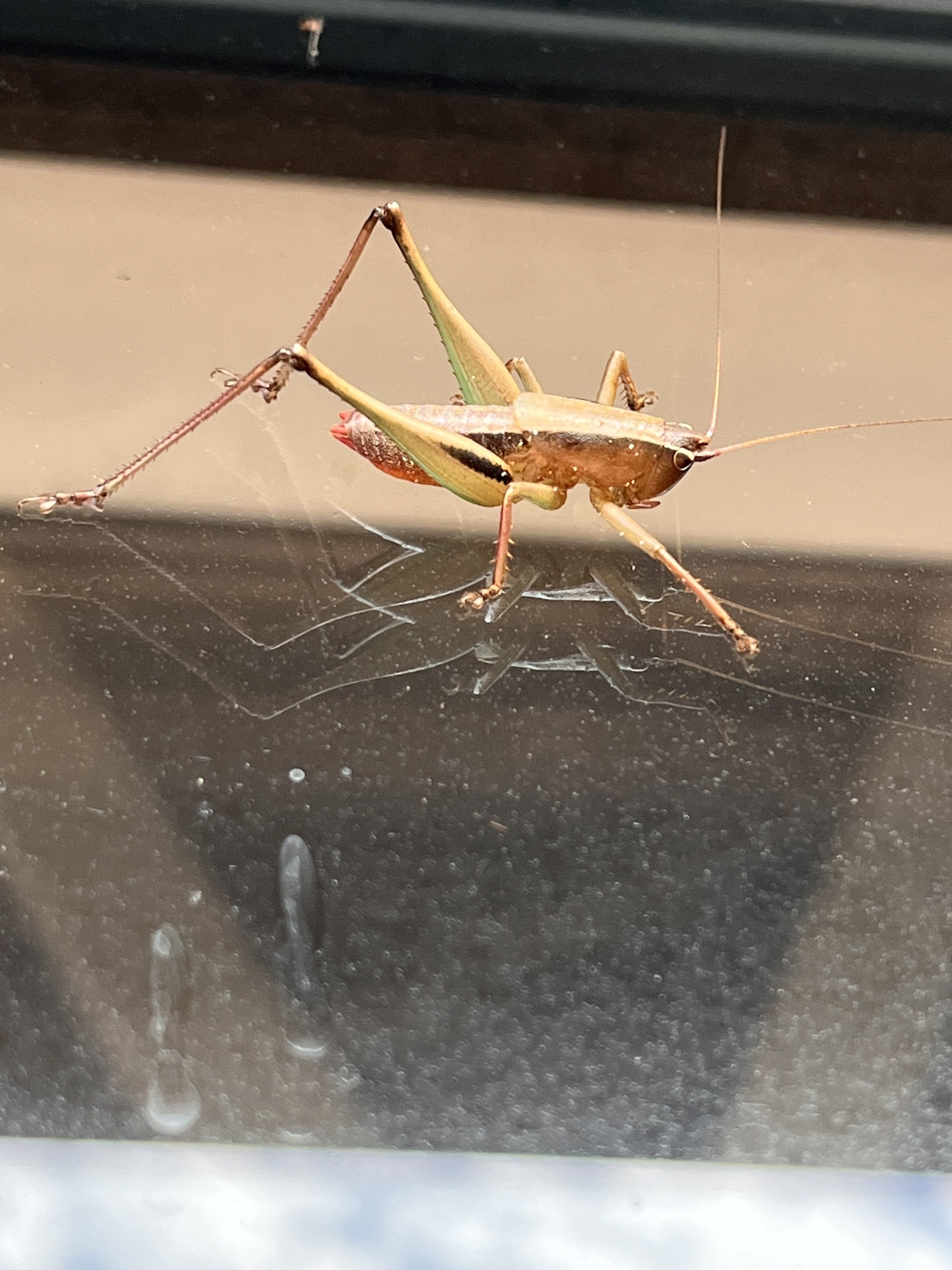
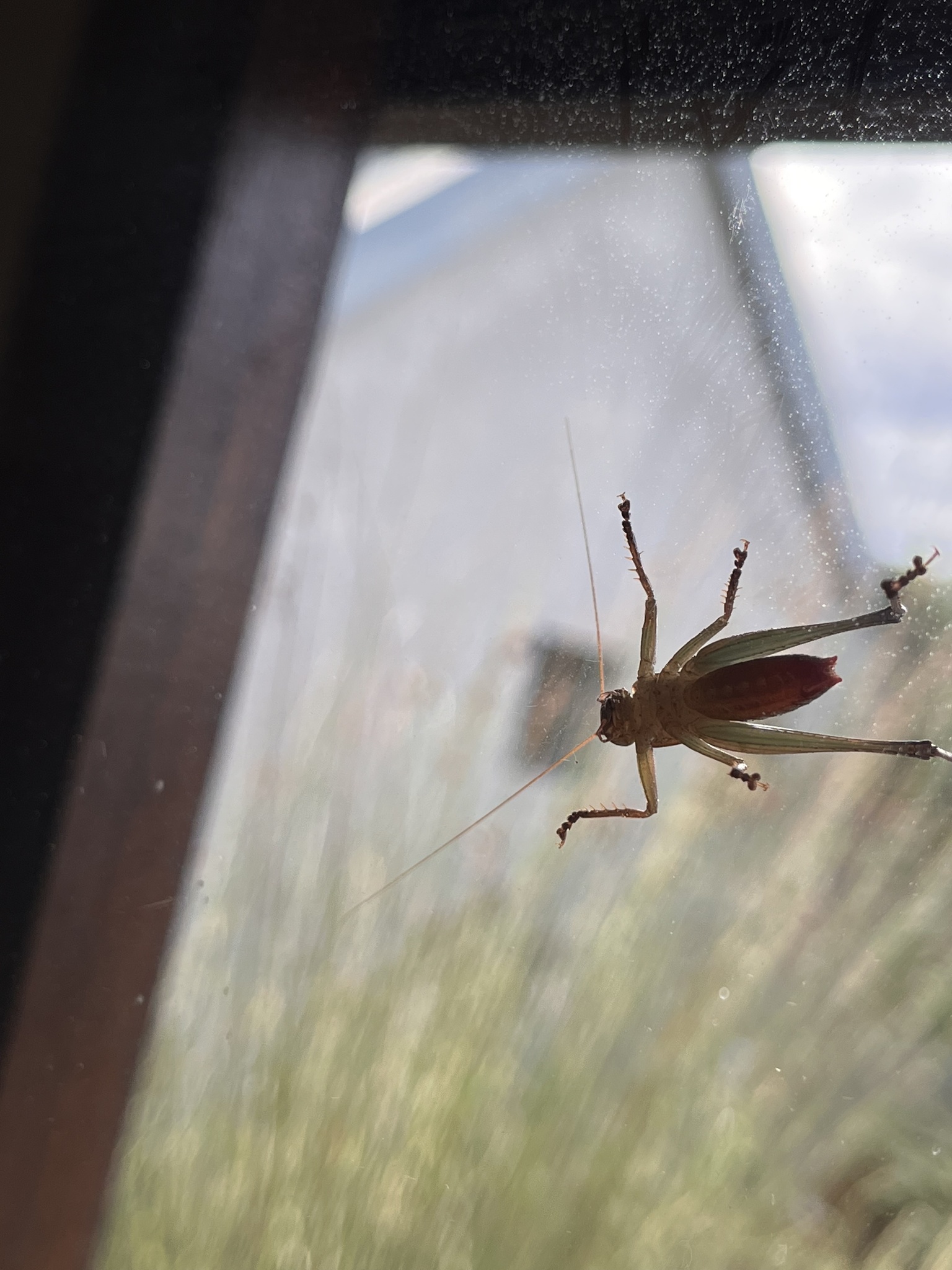
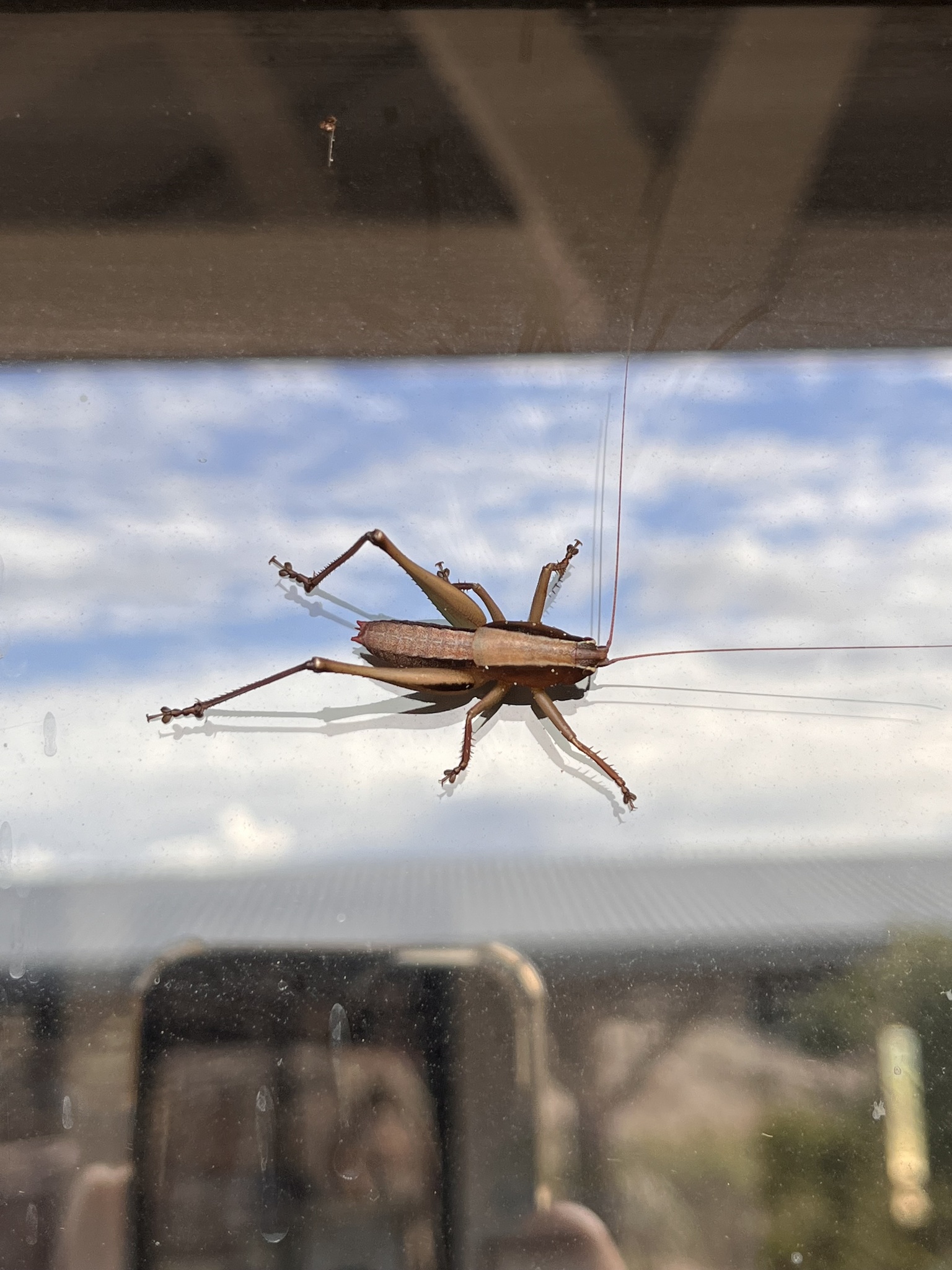
Péringuey (1916) described this species as follows: Male: Stramineous with a fusco-aeneous band on each side of the vertex and faint one on the upper part of the deflexed side; abdomen sprinkled with minute fusco-aeneous spots; the basal lateral abdominal band is obsolete, hind femora green underneath and with a conspicuous black band on the upper outer side; hind femora green underneath and with a conspicuous black band on the upper outer side; hind tibiae plainly roseate; the pronotum and abdomen are longer and little narrower than in the other species included in the second group of the genus, and the elytra are visible under the apex of the pronotum; in the anterior tibiae the upper on the outer side is wanting; and those on the single row under the femora number four. Length of body: male, 24 mm, pronotum 12 mm; of the hind femur 22.5 mm; of hind tibiae 20 mm.
Unknown.
Unknown
South Africa
The Common Ceresia (Ceresia pulchripes) is an endemic to the Fynbos biome of Western Cape, South Africa, and it has been collected from Villiersdorp to Clanwilliam. It is found from sea level to elevations of 1200 m (Bazelet & Naskrecki 2014).
Katydids are small-bodied insects that are adapted for fast-movement (Rentz 2010).
Herbivore - Folivore (leaf-eating)
Katydids feed on leaves, fruits, seeds and flowers. They are also specialised to feed on nectar and pollen. Herbivorous species feed on a wide variety of grasses and foliage of shrubs and trees. Many species are opportunistic and feed on any food source available. Some even feed on the dead animals. It is common to find a katydid feeding on a roadkill of their own kind or other insects. Head structures usually indicate the feeding habits of these insects, with rounded heads as characteristic for leaf-eaters. The slanted heads either crack the seeds or eat tough fruits or chew on wood. Others with projecting mouthparts are flower feeders (Rentz 2010).
Reproduction in katydids is facilitated by communication. Usually the male produces a calling song heard by the receptive female who comes to the source of the song. Female katydids are reported to be choosy about which males to mate with by selecting the heaviest and fittest males. The male transfers the spermatophore which contains the sperm package to the female. With the spermatophore, the male also provides a nuptial meal (gooey white portion called spermatophylax) which is then eaten by the female. This is nourishment for the mother and eggs. As such the male has contributed to the development of the offspring. As the female eats, the sperm move into the spermatheca, which is the internal structure near the tip of the abdomen. As the eggs are laid, they pass through the spermatheca and are fertilised (Rentz 2010).
Unknown
Fynbos
This map contains point-based occurrences at different locations
Occurrence in African countries and South African provinces. Residence status indicates if a taxon is indigenous, endemic, or alien in a specific region. This data is based on specimen records and literature.
FSA
SA
BOT
NAM
ESW
LES
WC
EC
NC
FS
GA
KZN
LP
MP
NW
Absent
Indigenous
Endemic
Naturalised
Invasive
Names and Sources
| Common Name | Language |
|---|---|
| Common Ceresia, Shieldbacks | En |
Classification
KINGDOM Animalia
PHYLUM Arthropoda
CLASS Insecta
ORDER Orthoptera
FAMILY Tettigoniidae
GENUS Ceresia
SPECIES pulchripes
No results found for Ceresia pulchripes (Péringuey, 1916)
Unknown
2 results for Ceresia pulchripes (Péringuey, 1916)
This map contains point-based occurrences at different locations
1916
JOURNAL ARTICLE
Descriptions of new and little-known Orthoptera in the collection of the South African MuseumPÉRINGUEY, L.. 1916. Descriptions of new and little-known Orthoptera in the collection of the South African Museum Vol. 15(5) pp.401-452.
1870
JOURNAL ARTICLE
"On a new species of roller (Coracias) from the Zambesi".TRIMEN, R.. 1870. "On a new species of roller (Coracias) from the Zambesi". Vol. 29(5). London. pp.238.
1928
JOURNAL ARTICLE
Notes on the types of Orthoptera described by Dr. L. PeringueyUvarov, BP. 1928. Notes on the types of Orthoptera described by Dr. L. Peringuey Vol. 25. Cape Town. South African Museum,1898-2004 pp.341--357.
2014
TECHNICAL REPORT
The IUCN Red List of Threatened Species. Version 2014.Naskrecki, P, Bazelet, CS. 2014. The IUCN Red List of Threatened Species. Version 2014.. IUCN.
Status and criteria
LC
Assessor(s)
Corinna Bazelet
Reviewer(s)
Mark Bushell