PLANTAE / PHANEROGAMAE / ANTHOPHYTA / SAPINDALES / RUTACEAE / AURANTIOIDEAE / CLAUSENEAE / ADENANDRA / VILLOSA / ORBICULARIS

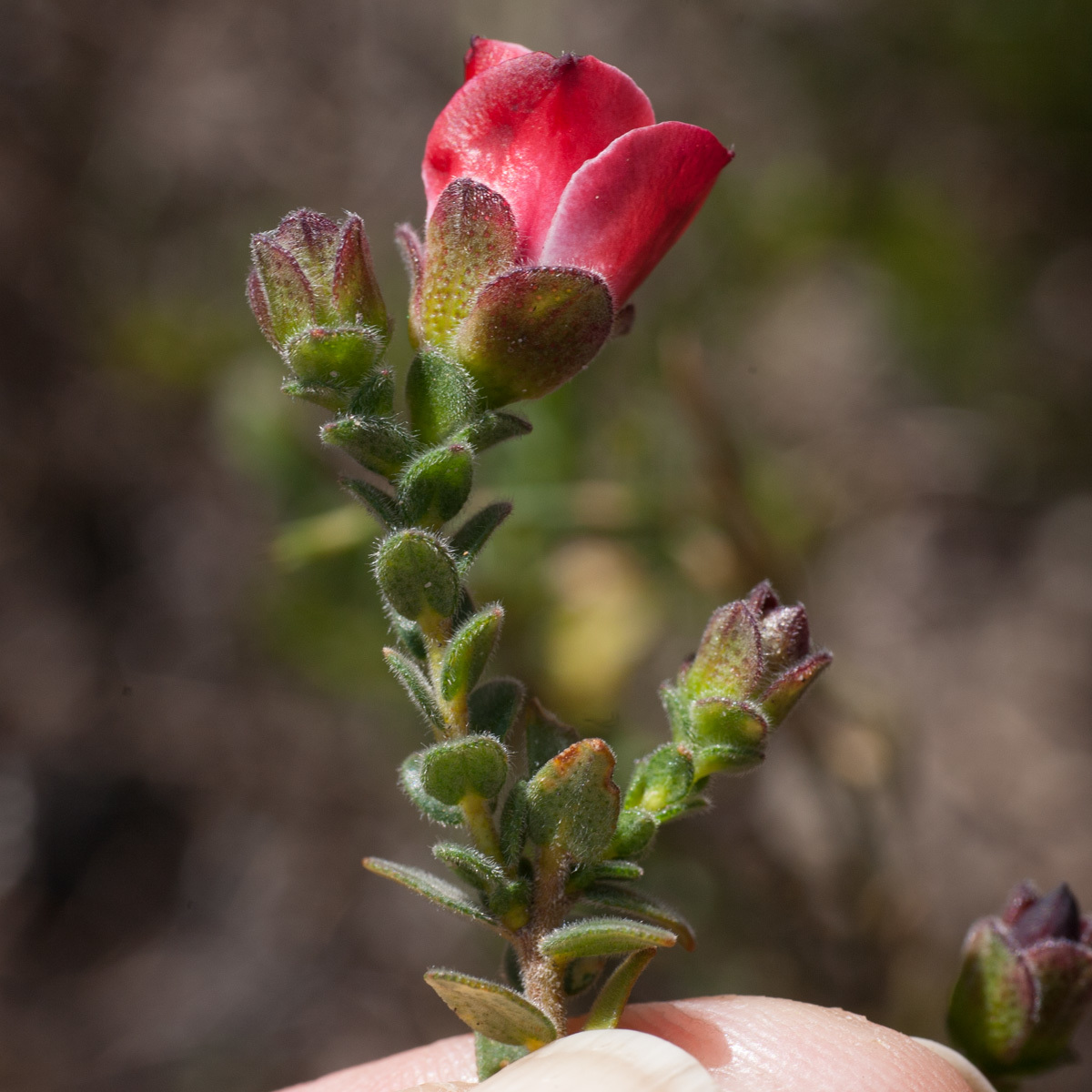
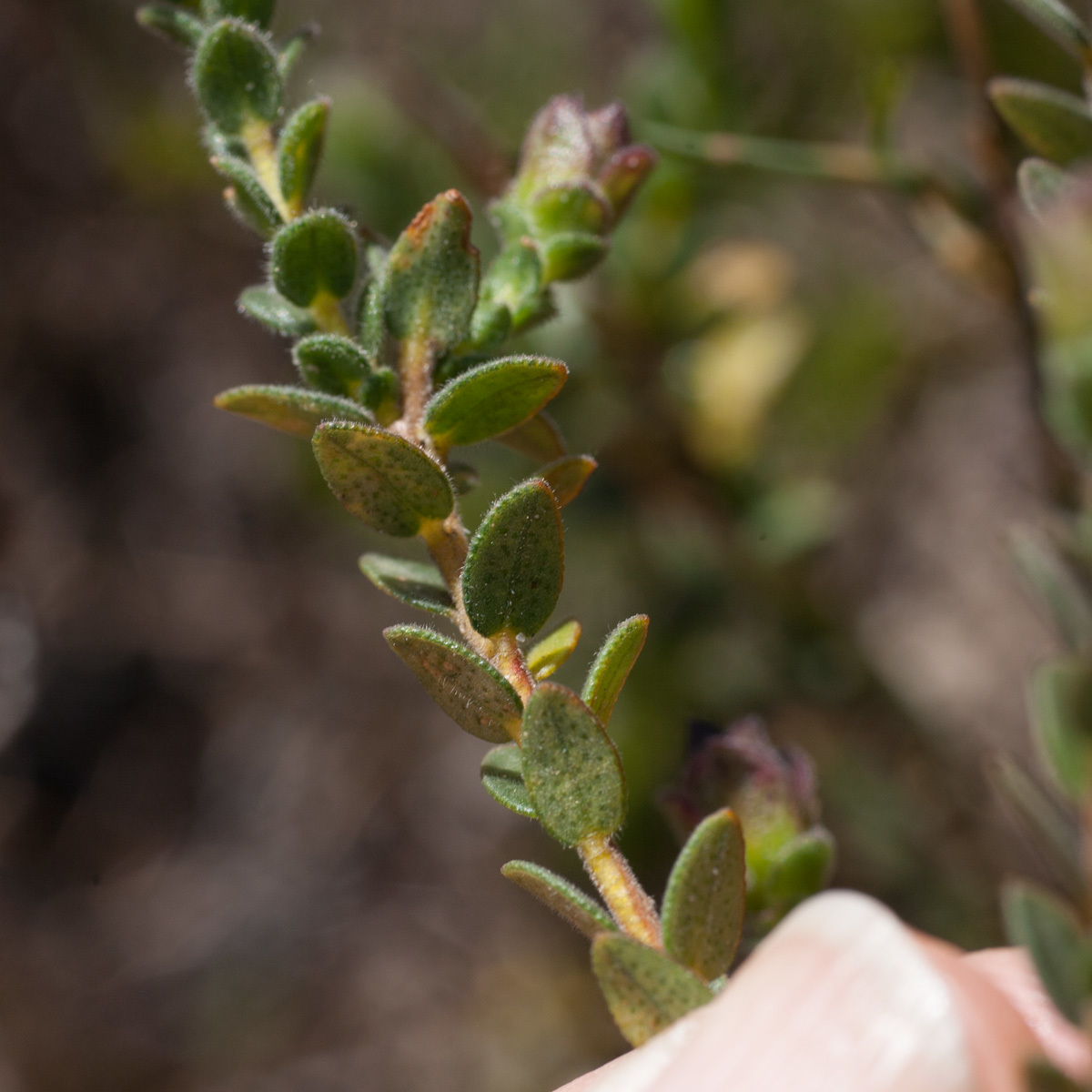
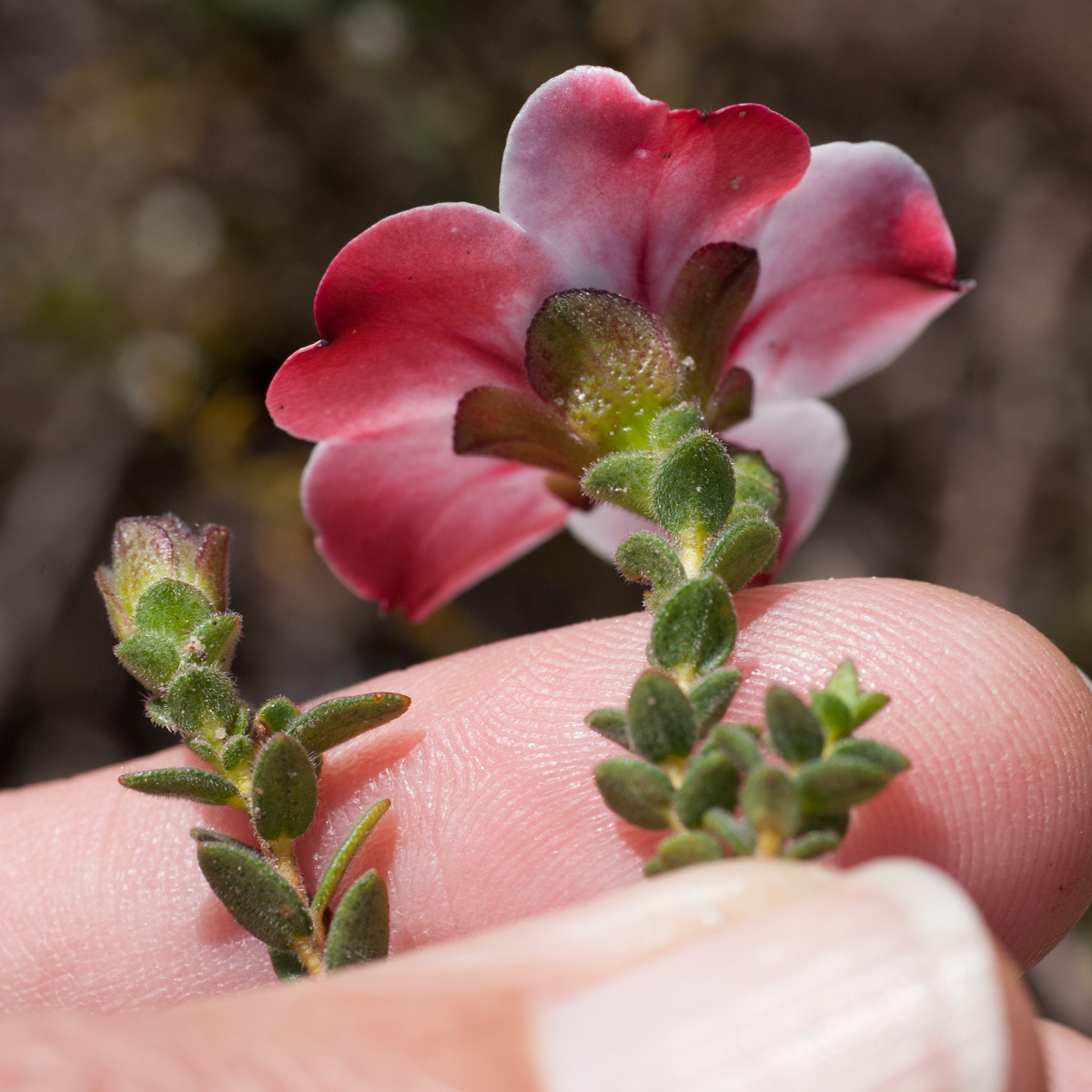
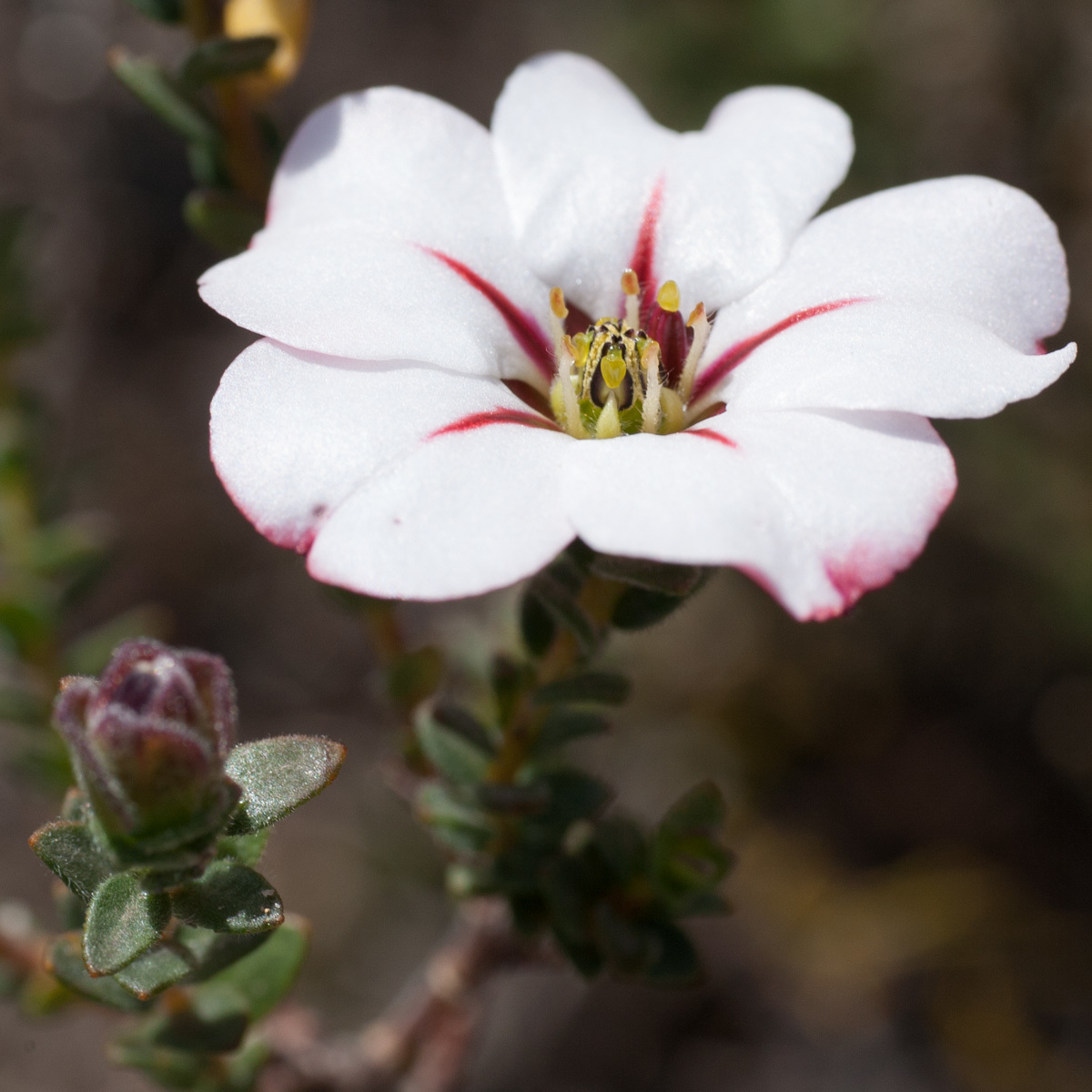
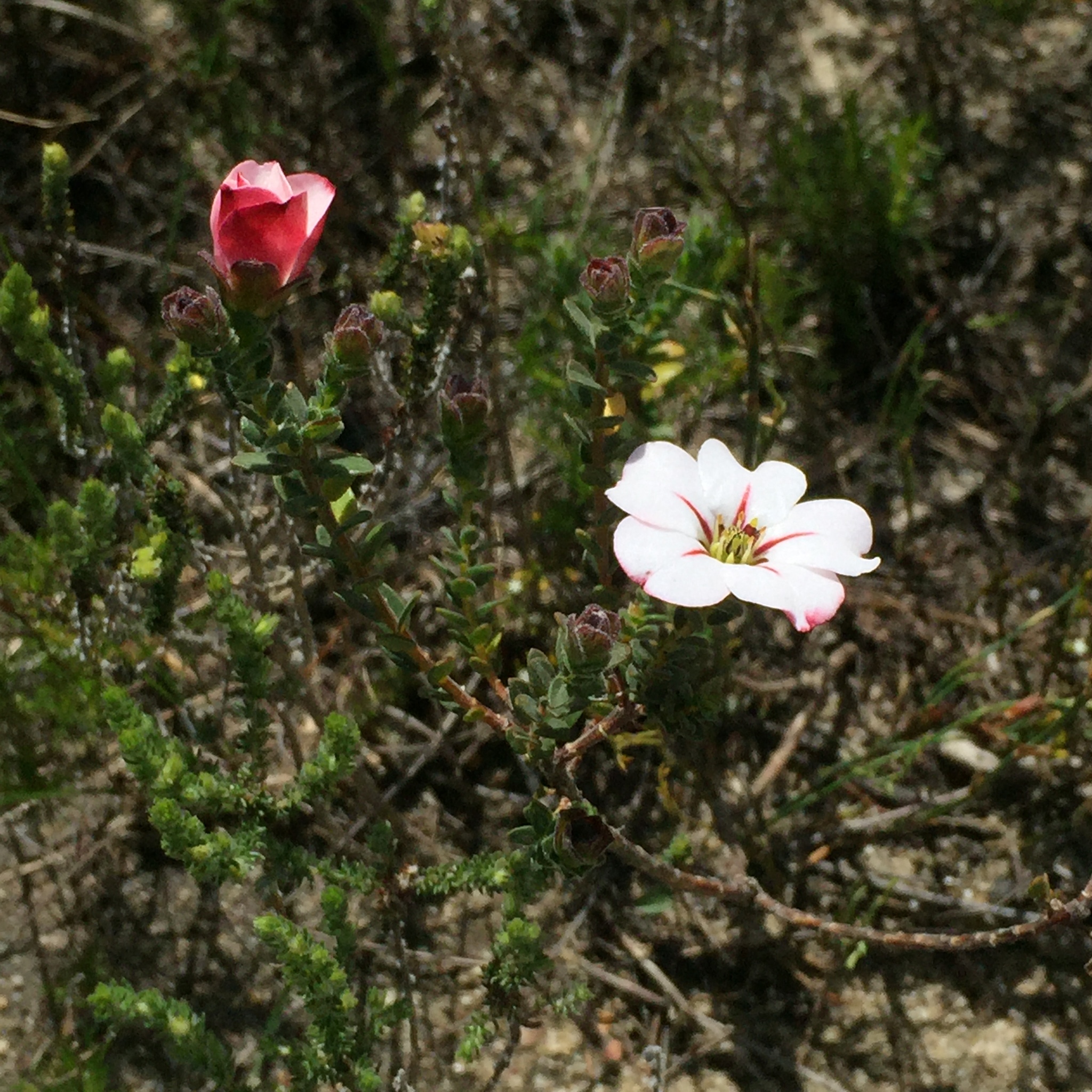
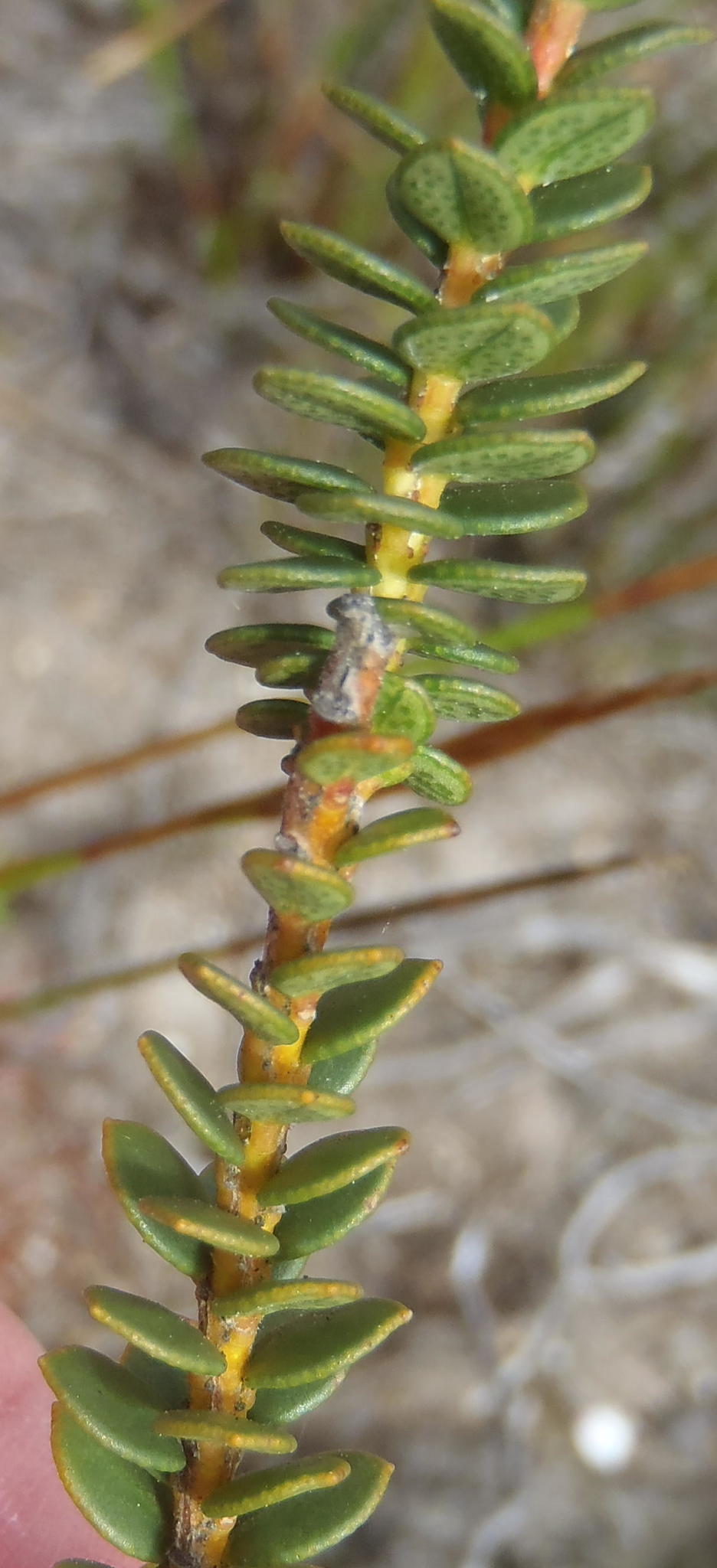
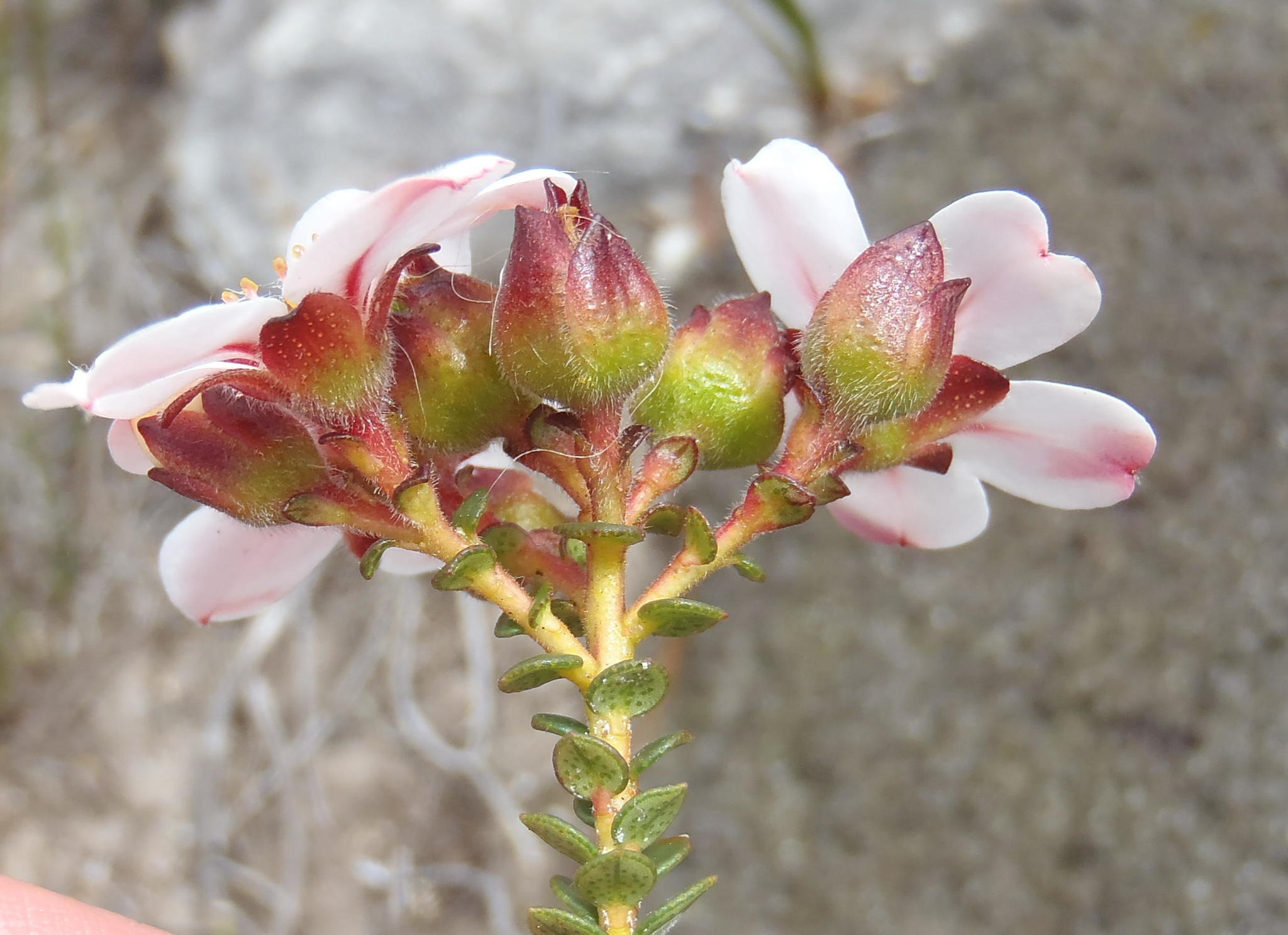
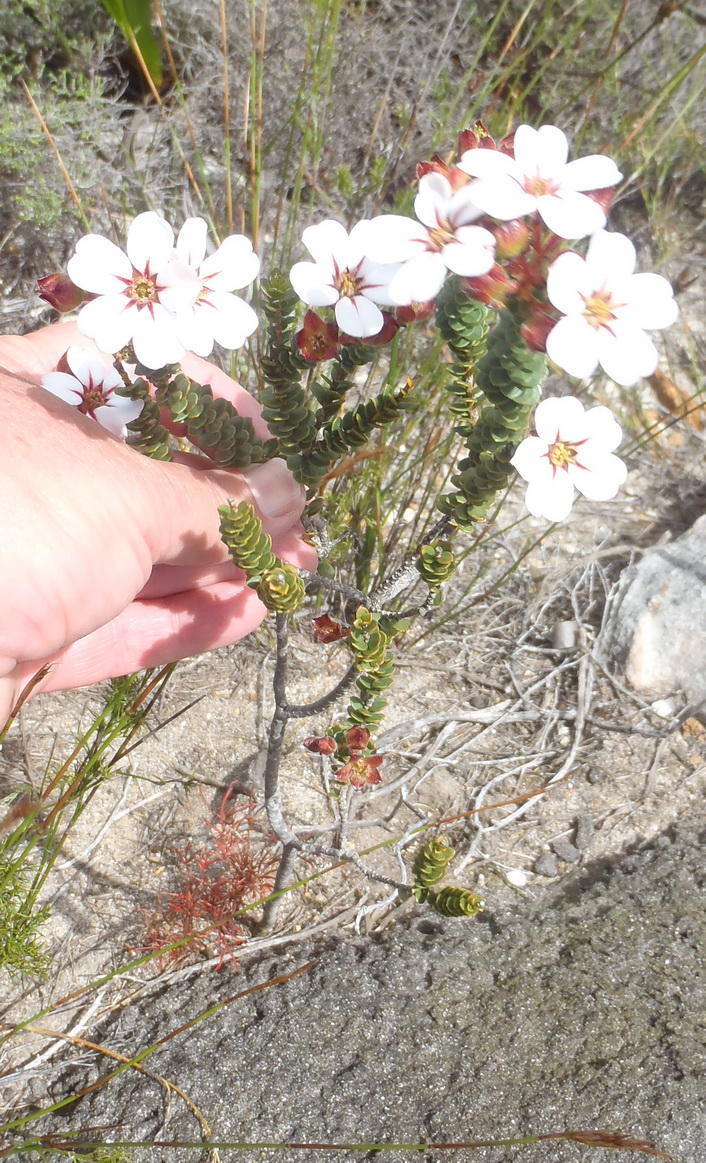
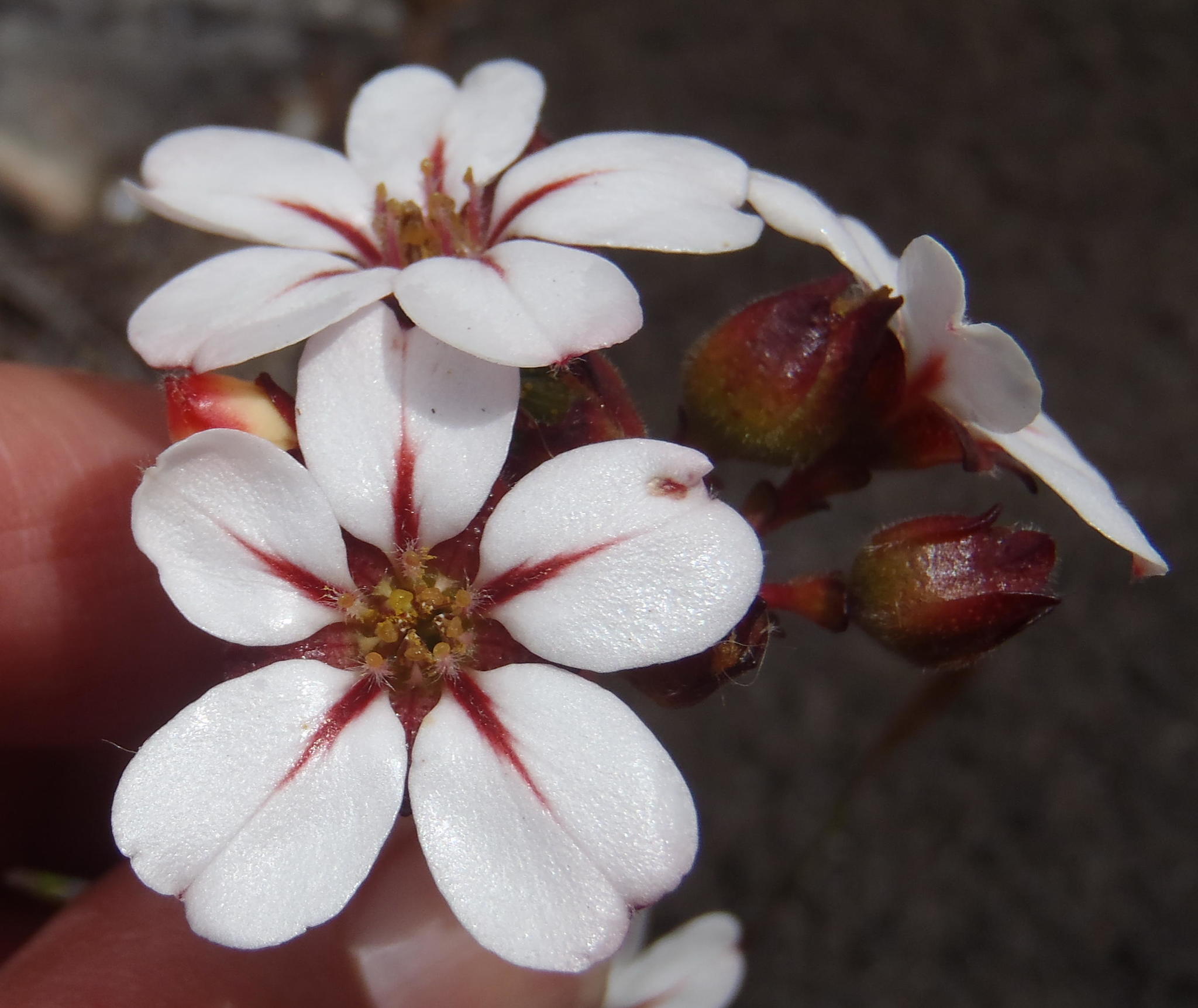
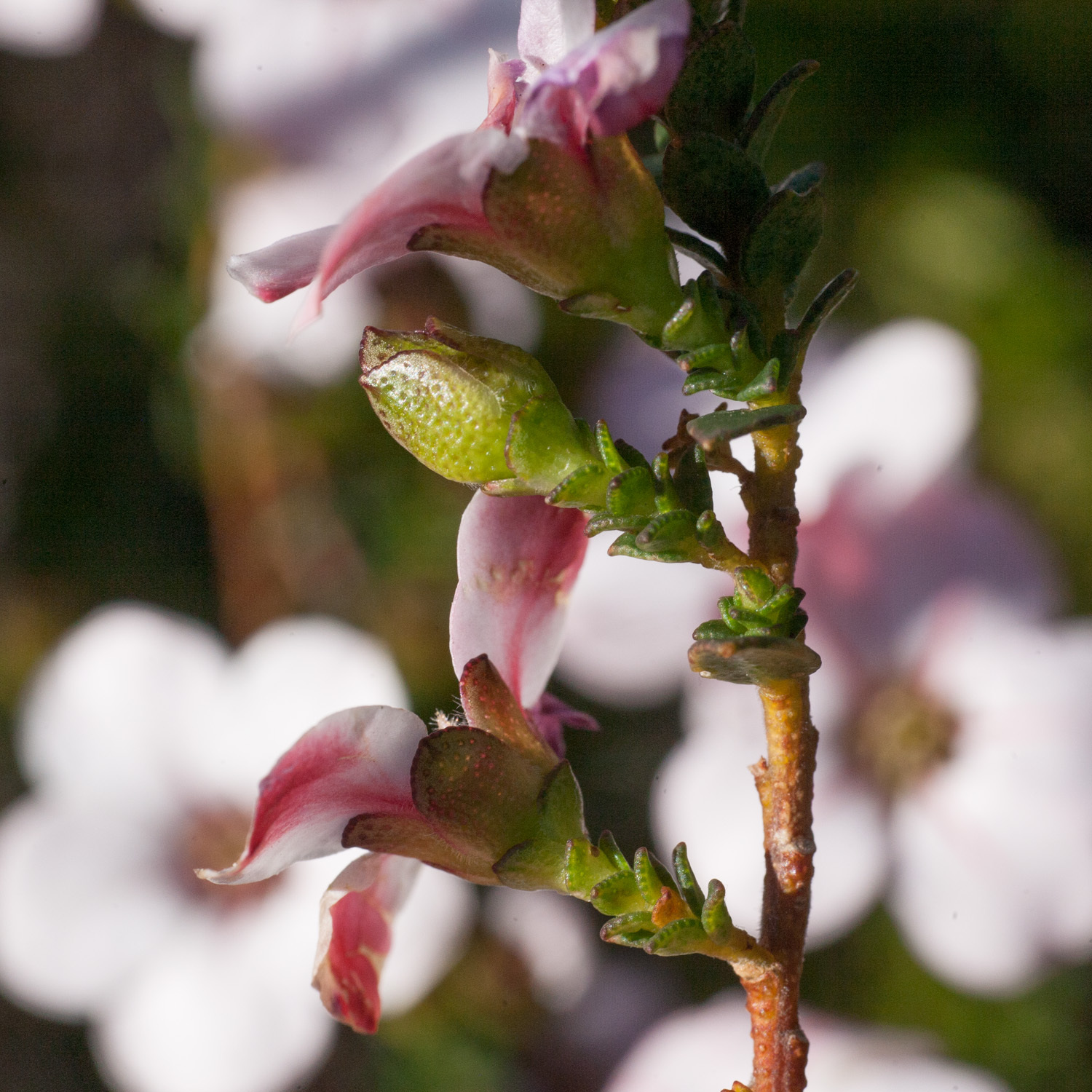
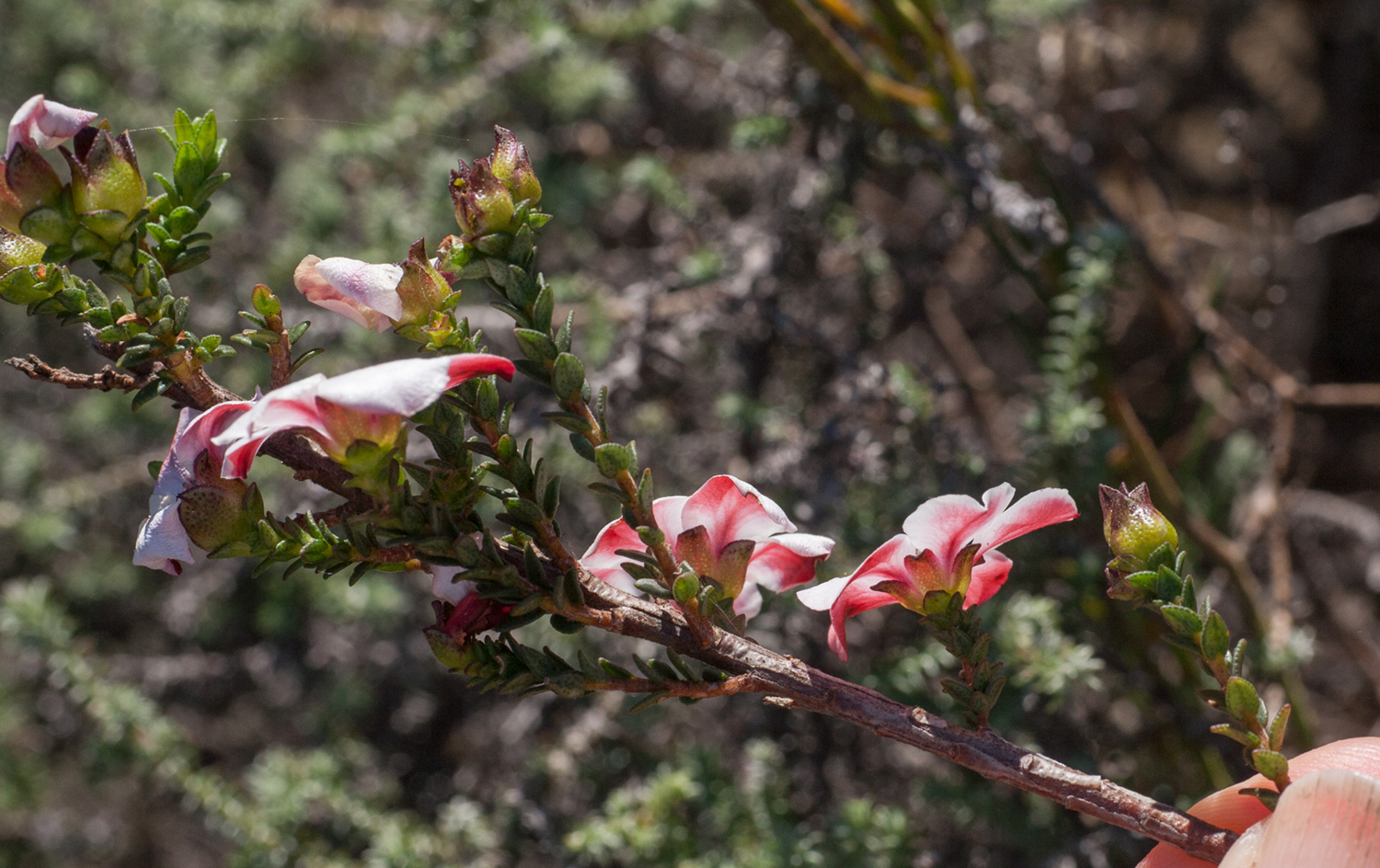
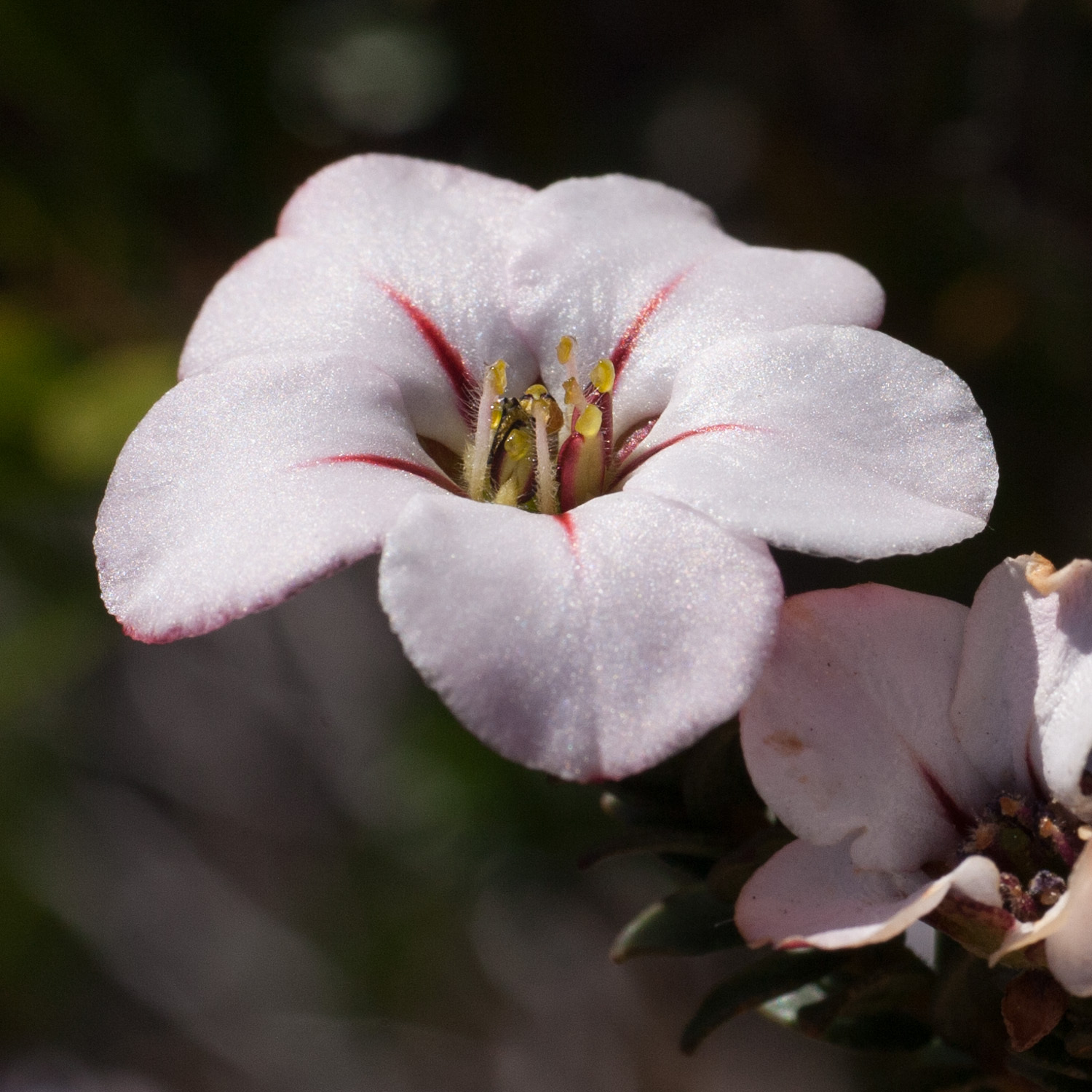
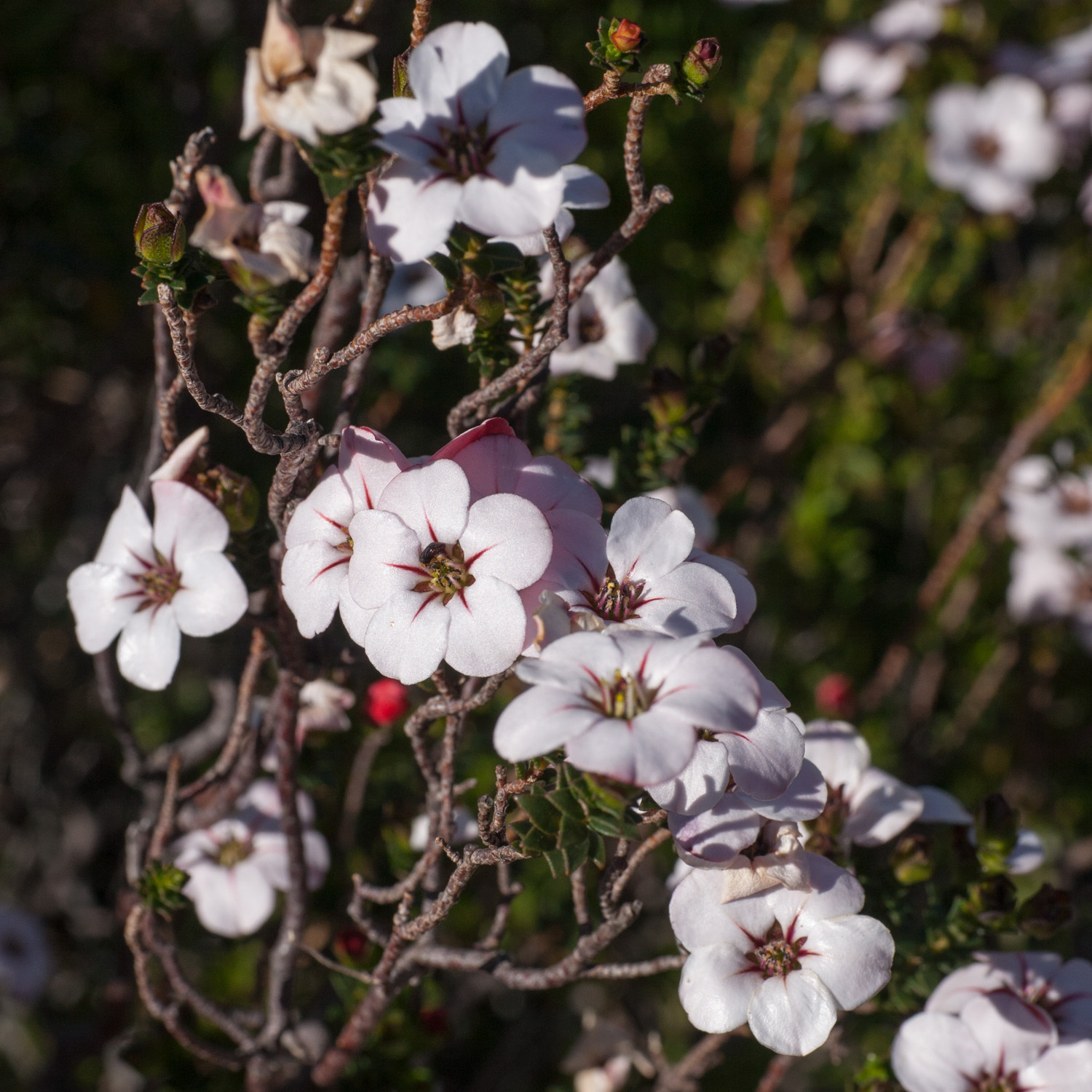
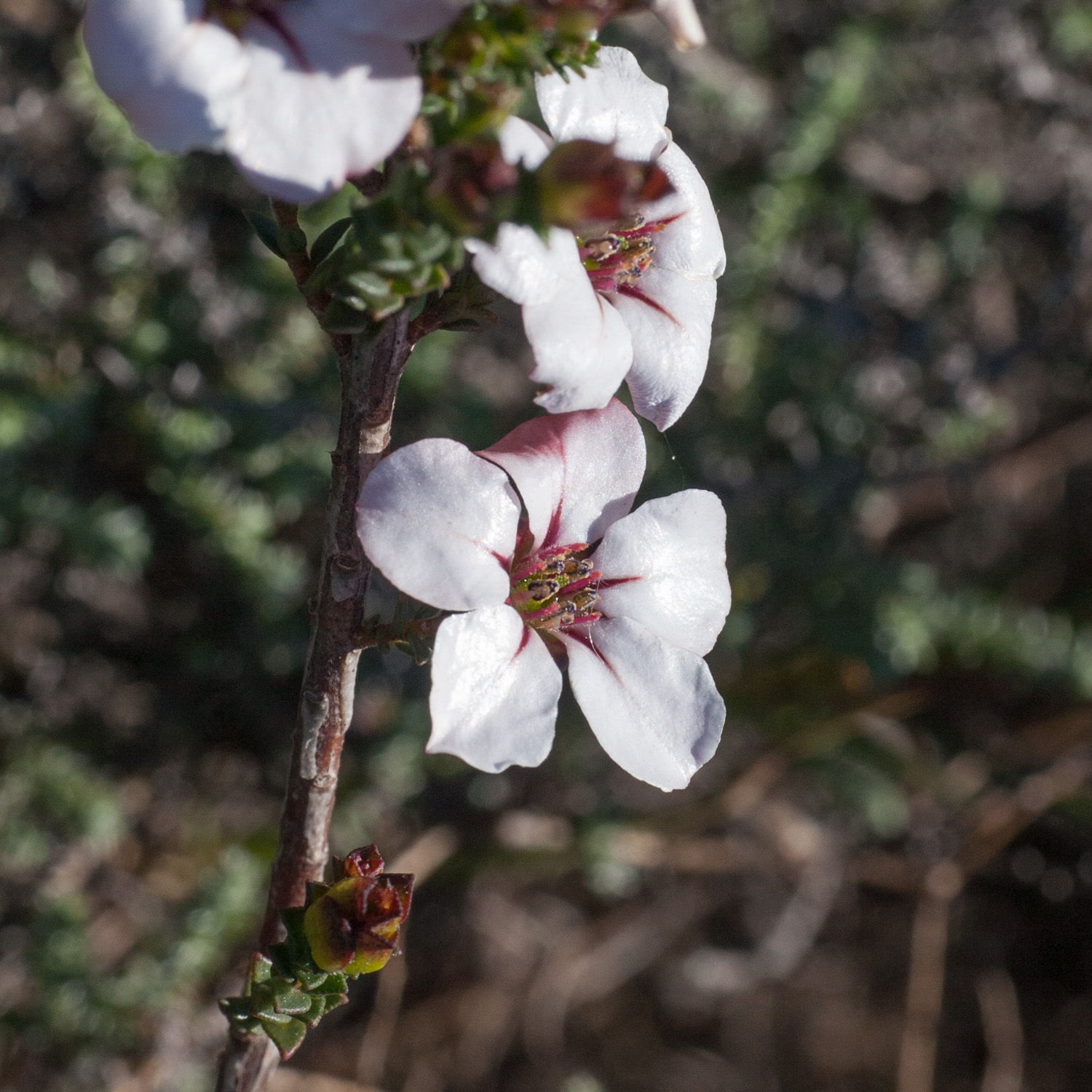
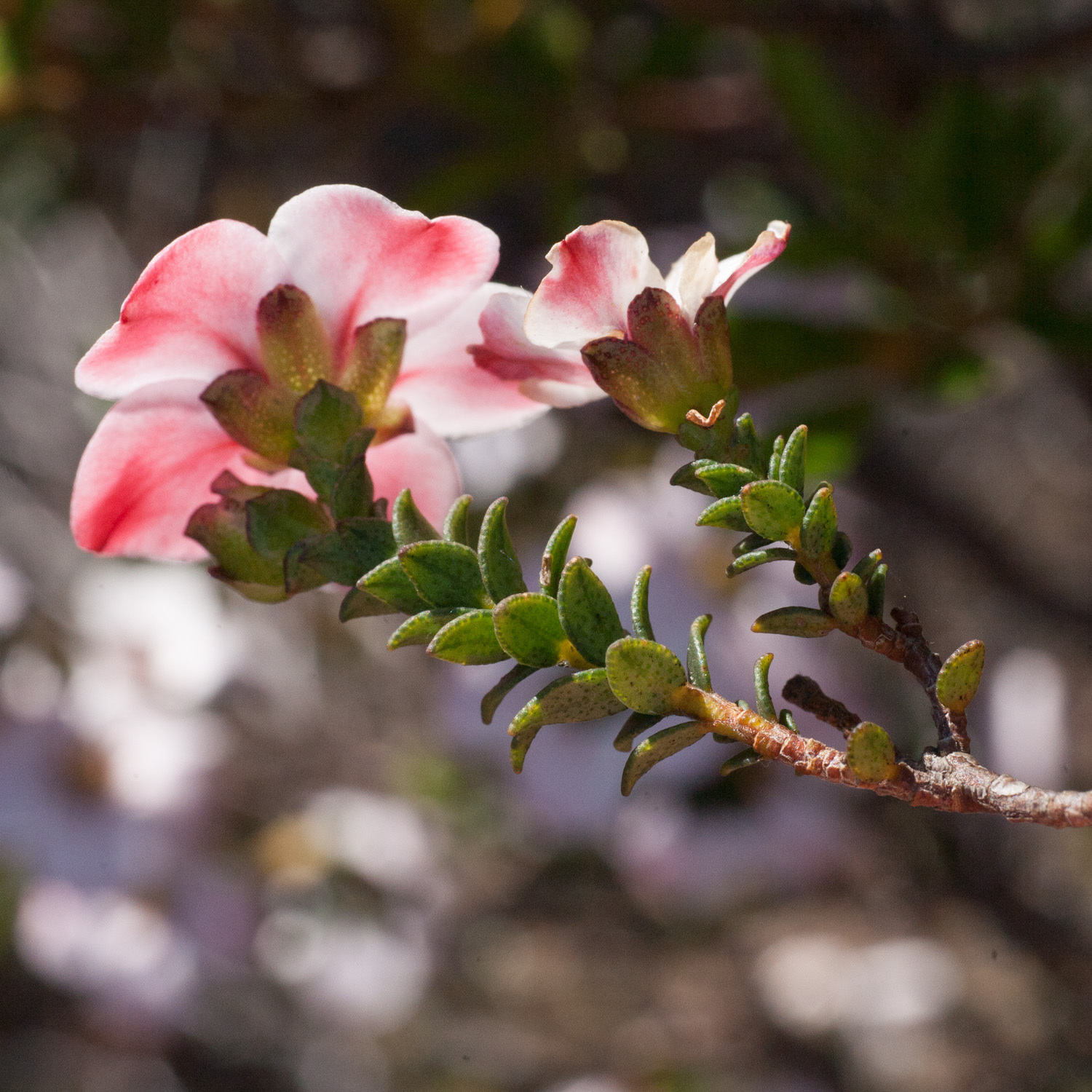
An ascending to erect, slender, rather much branched shrublet, 30-60 cm high, with more or less spreading branches. Young branches puberulent, light brown to reddish-brown, soon defoliated, glabrescent, ash-grey, and marked with leaf-scars. Leaves erecto-patent, sparsely to rather densely set, loosely imbricated or not; petiole appressed, 0.5-1 mm long, yellowish; blade elliptic to ovate or broadly oblong, 3.5-6.5 x 2.4-3.8 mm (occasionally more elongate), obtuse to moderately acute, usually glabrous, with slightly thickened, usually smooth margins, above smooth, below with 15-40 rather prominent glandular dots. Uppermost leaves gradually becoming smaller but hardly changed in shape, not forming an involucre (i.e., reaching only to the base of the calyx). Flowers subsessile, solitary or in 2-3-flowered terminal heads (sometimes a branched system of inflorescences with small-leaved secondary branchlets at the end of main branches). Bracts similar to the uppermost leaves, elliptic, 2.4-4.0 x 1.7-2.6 mm, moderately acute, usually glabrous, often reddish along the upper margin. Bracteoles elliptic to cuneate, 3.4-4.5 x 2.5-3.2 mm, moderately acute, ± convex, ciliate and with scarious margins in the lower half, ± reddish towards the apex. Calyx 5.5-8.5 mm, divided to c. 80%, usually glabrous; segments ovate to elliptic, 4.0-6.5 x 3.2-4.2 mm, broadly overlapping, obtuse to moderately acute, glandular punctate, lower half ciliate, upper half becoming purple, often obtusely carinate towards the apex. Petals flushed with pink to brick-red outside, white inside; claw 2.5-3.5 mm long, rather abruptly expanding into the limb; the latter broadly obovate to orbicular or roundedly quadrangular, 6.5-9.5 x 6.5-7 mm, sometimes faintly ciliate, obtuse to mucronulate. Staminodes tapering, 3.0-3.6 mm, patently pilose, upper part gently incurved, tipped by a discoid, somewhat concave gland, c. 0.5 x 0.4 mm across. Stamens: filaments subulate, c. 1.5 mm long at anthesis and c. 0.6 mm broad at the base, patently pilose, slightly incurved; anthers narrowly ovoid, dorsifixed, versatile, 1.8-2.4 x 1.0-1.3 mm, brown, usually glabrous, tipped by a stipitate, ovoid, concave to cupular gland, c. 0.8 x 0.6 mm across. Ovary globose, upper part papillate (from pale, stipitate glands), c. 1.2 mm across; style c. 1 mm at anthesis, stout, recurved; stigma capitate to discoid, brown. Mature capsule only slightly shorter than the calyx, rugose, somewhat papillate in the upper part, greenish to light brown. Seeds ovoid, 3.2-3.8 x 1.8-2.1 mm. From: Strid, PAK. 1972. Revision of the genus Adenandra (Rutaceae). Opera Bot. 32: 1-112. [All rights reserved]
Typical specimens are found in the Steenbras and Gordon's Bay area. These are characterized by short and broad, more or less obtuse, conspicuously glandular-punctate leaves, subsessile, often solitary flowers, broad calyx segments, and nearly orbicular petal limbs. In leaf-shape ssp. orbicularis shows a certain similarity to ssp. sonderi, occurring in the southern half of the Cape Peninsula on the opposite side of False Bay. From: Strid, PAK. 1972. Revision of the genus Adenandra (Rutaceae). Opera Bot. 32: 1-112. [All rights reserved]
Mountain slopes at low to moderate altitudes, apparently on soils of the Table Mountain Series. From: Strid, PAK. 1972. Revision of the genus Adenandra (Rutaceae). Opera Bot. 32: 1-112. [All rights reserved]
Restricted to the coastal areas of Somerset West, Strand, and Caledon Divisions approximately from Sir Lowry's Pass to Pringle Bay. From: Strid, PAK. 1972. Revision of the genus Adenandra (Rutaceae). Opera Bot. 32: 1-112. [All rights reserved]
August to November
30 to 520 m
This map contains point-based occurrences at different locations
Occurrence in the Flora of Southern Africa (FSA) countries and South African provinces. Residence status indicates if a taxon is indigenous, endemic, naturalised or invasive in a specific region. This data is based on specimen records and literature
FSA
SA
BOT
NAM
ESW
LES
WC
EC
NC
FS
GA
KZN
LP
MP
NW
Absent
Indigenous
Endemic
Naturalised
Invasive
Names and Sources
Published in: Opera Bot. 32: 60 (1972)
Adenandra amoena (Lodd.) Bartl. & H.L.Wendl.
Adenandra pubescens Sond.
Classification
KINGDOM Plantae
SUBKINGDOM Phanerogamae
PHYLUM Anthophyta
ORDER Sapindales
FAMILY Rutaceae
SUBFAMILY Aurantioideae
TRIBE Clauseneae
GENUS Adenandra
SPECIES villosa
SUBSPECIES orbicularis
6 results for Adenandra villosa (P.J.Bergius) Licht. ex Roem. & Schult. subsp. orbicularis Strid
Barcode: PRE0353073-0 Collector(s) & number: Dahlgren, RMT, 2057 | 1965-8-6
South Africa, Western Cape, STRAND DIST.; SIR LOWRYS PASS; JUST SE. OF TOP OF SIR LOWRYS PASS
Data Resource: BODATSA View record
Barcode: PRE0265898-0 Collector(s) & number: Esterhuysen, EE, 19174 | 1951-9-16
South Africa, Western Cape, CALEDON DIV.; HANGLIP; NR. HANGLIP LOWER SLOPES OF PRINGLE E. PK.
Data Resource: BODATSA View record
Barcode: PRE0265896-0 Collector(s) & number: De Villiers, J, PRE 31546 | 1943-10-30
South Africa, Western Cape, SOMERSET WEST DIST.; GORDONS BAY
Data Resource: BODATSA View record
This map contains point-based occurrences at different locations
1972
PERIODICAL/JOURNAL
Revision of the genus Adenandra (Rutaceae) Strid, PAKOpera Botanica a Societate Botanica Lundensi 32: 1-112
No results found for Adenandra villosa (P.J.Bergius) Licht. ex Roem. & Schult. subsp. orbicularis Strid
Status and criteria
NT
Assessor(s)
Plantae Coordinator
| Part(s) of plant used | Use(s) | Reference |
|---|
Coming soon...