PLANTAE / PHANEROGAMAE / ANTHOPHYTA / ASPARAGALES / AMARYLLIDACEAE / HAEMANTHEAE / HAEMANTHUS / HAEMANTHUS / NORTIERI

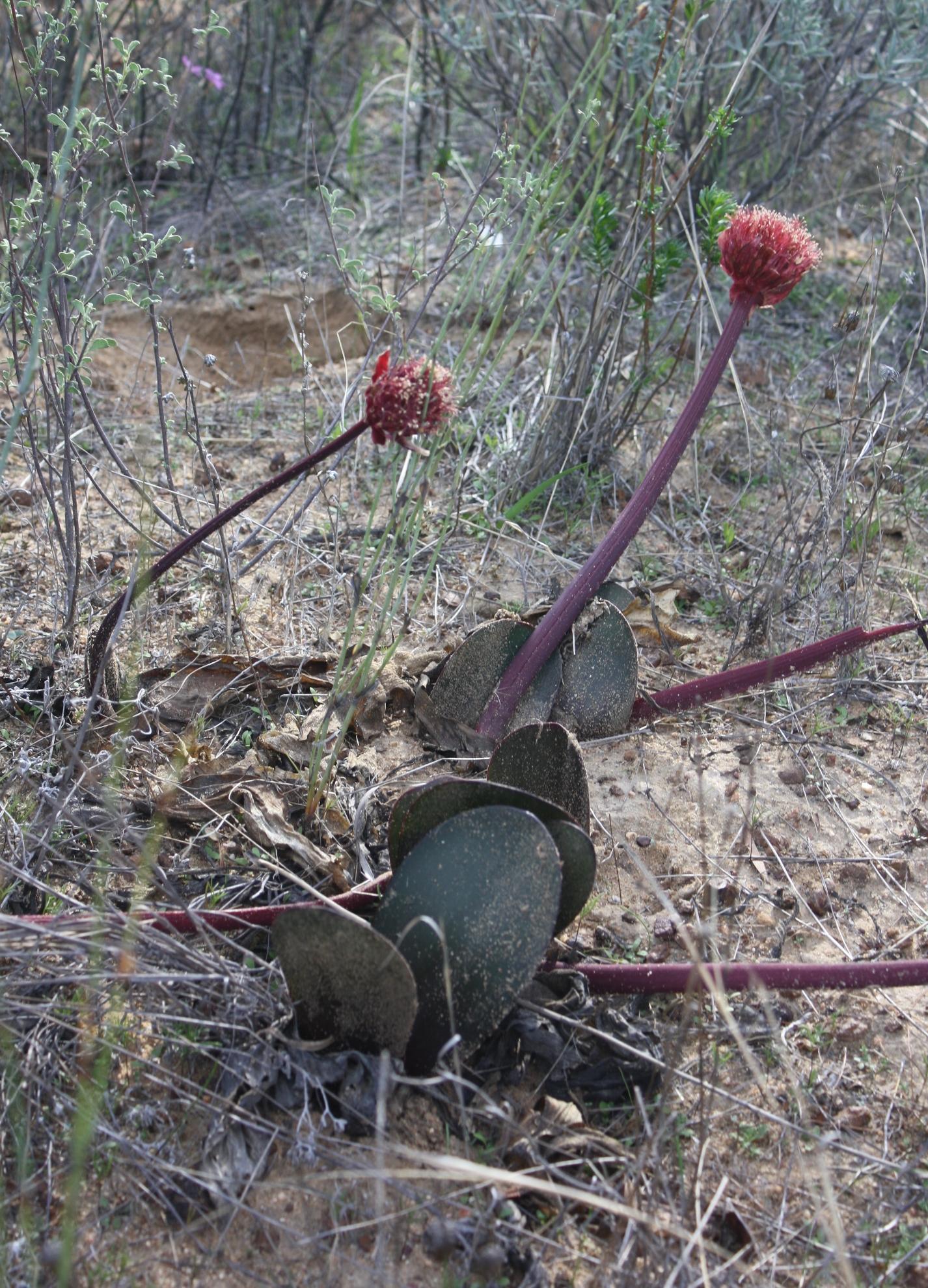
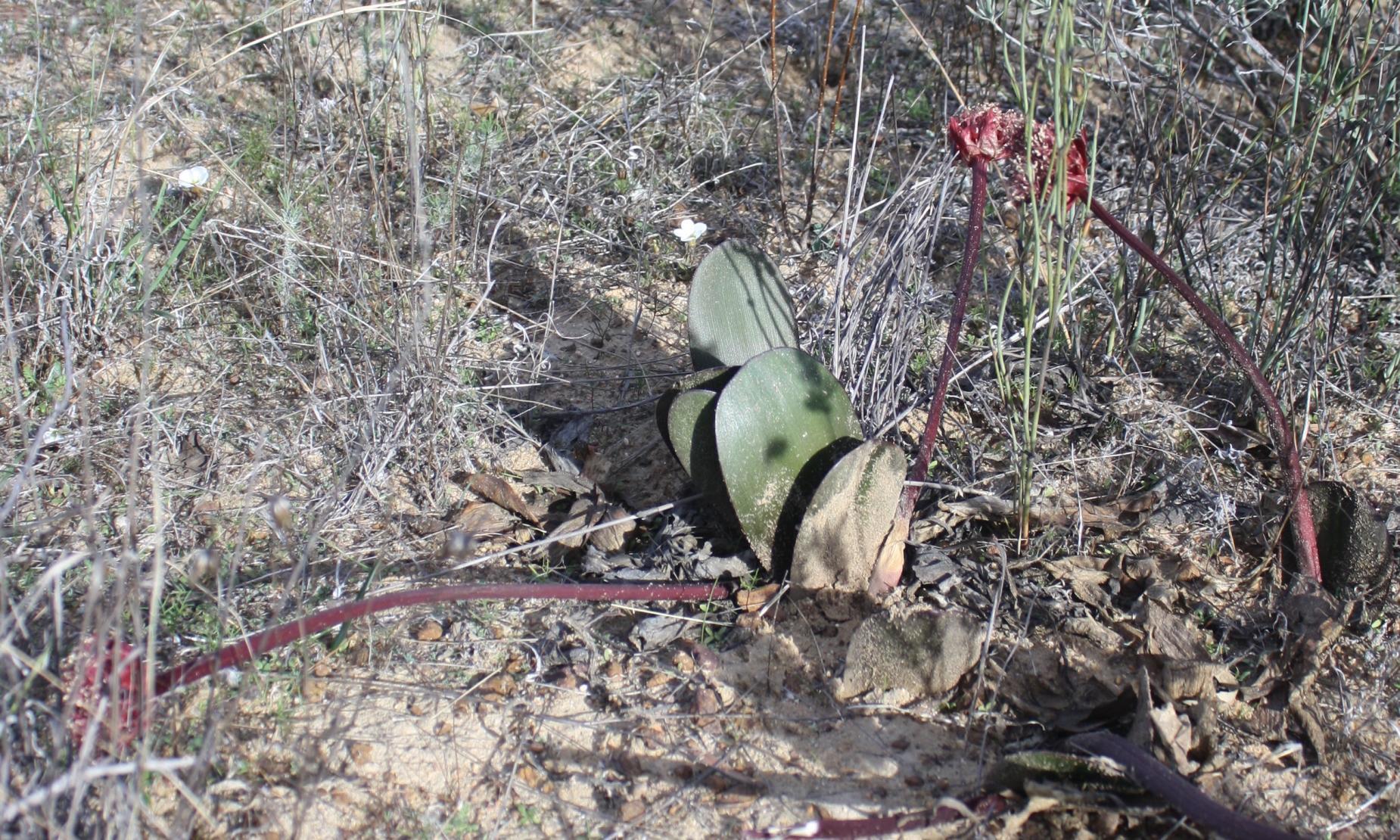
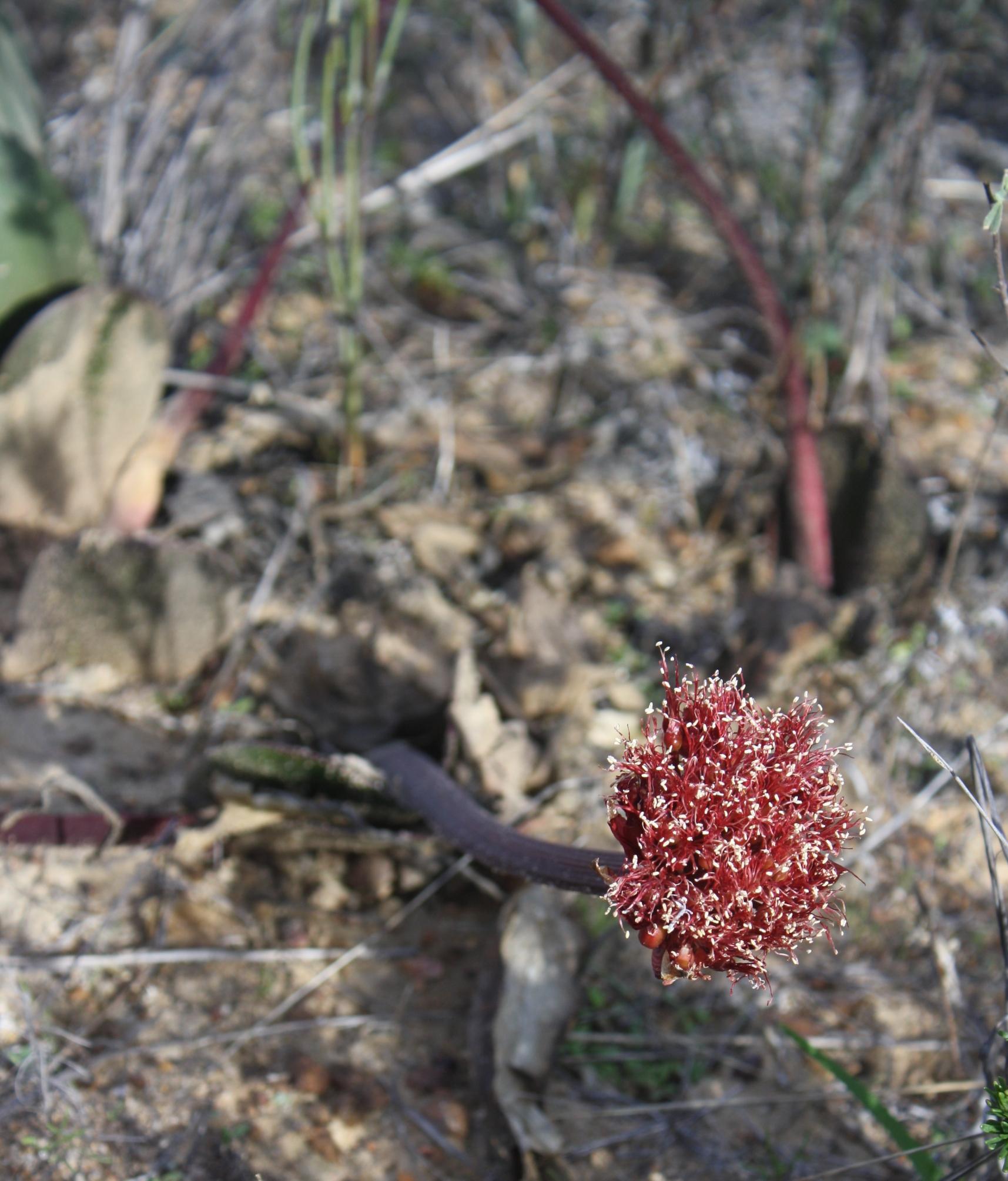
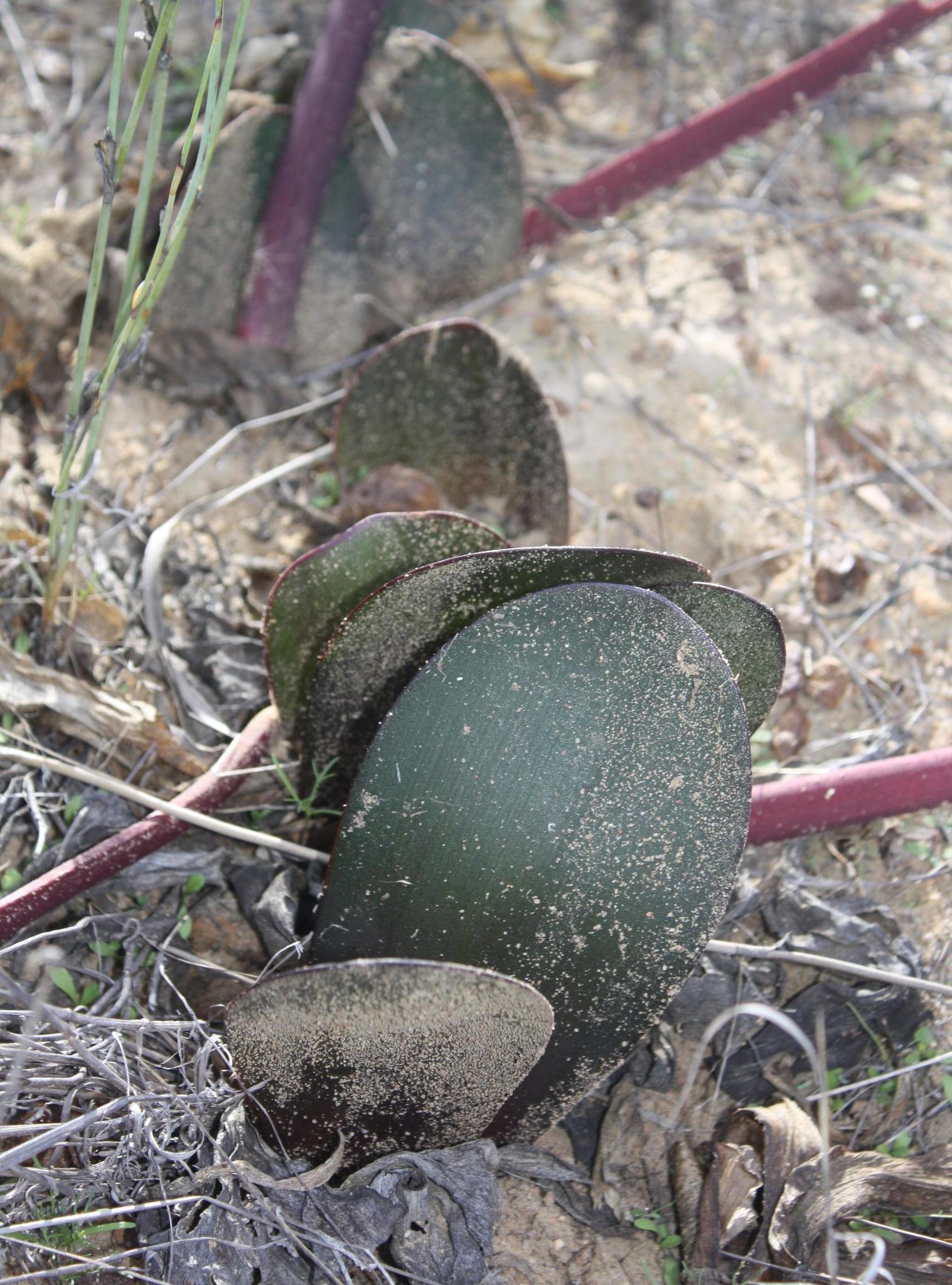
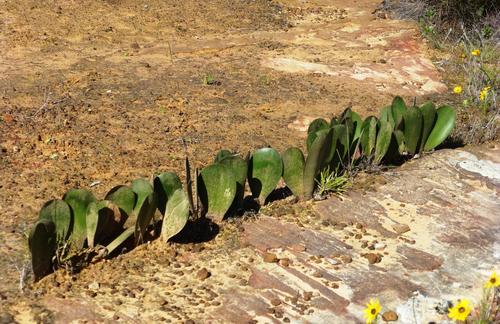
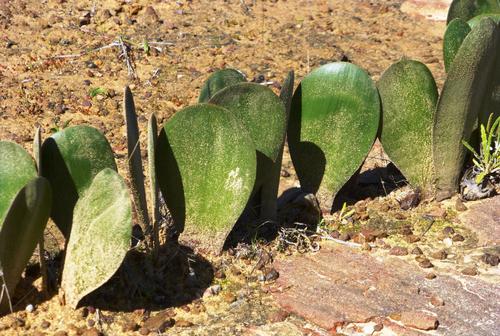
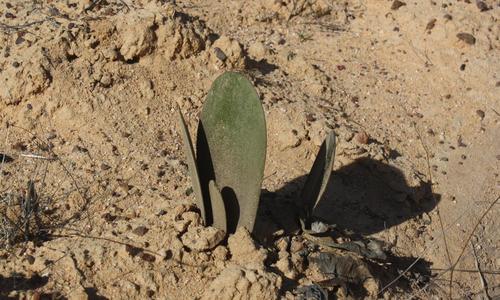
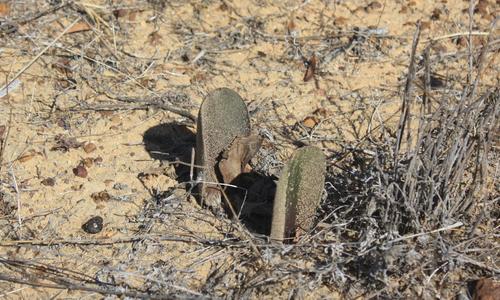
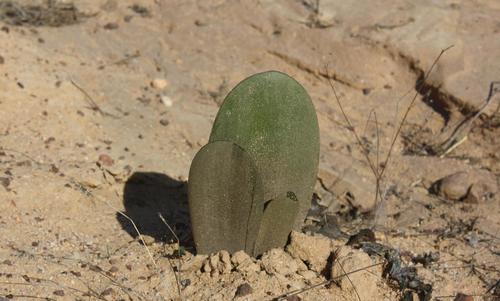
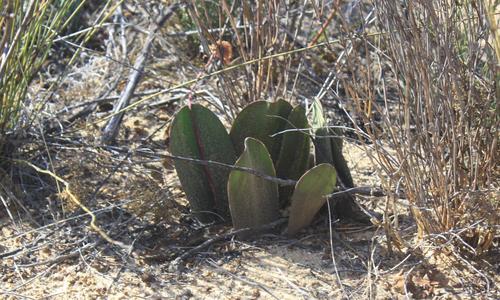
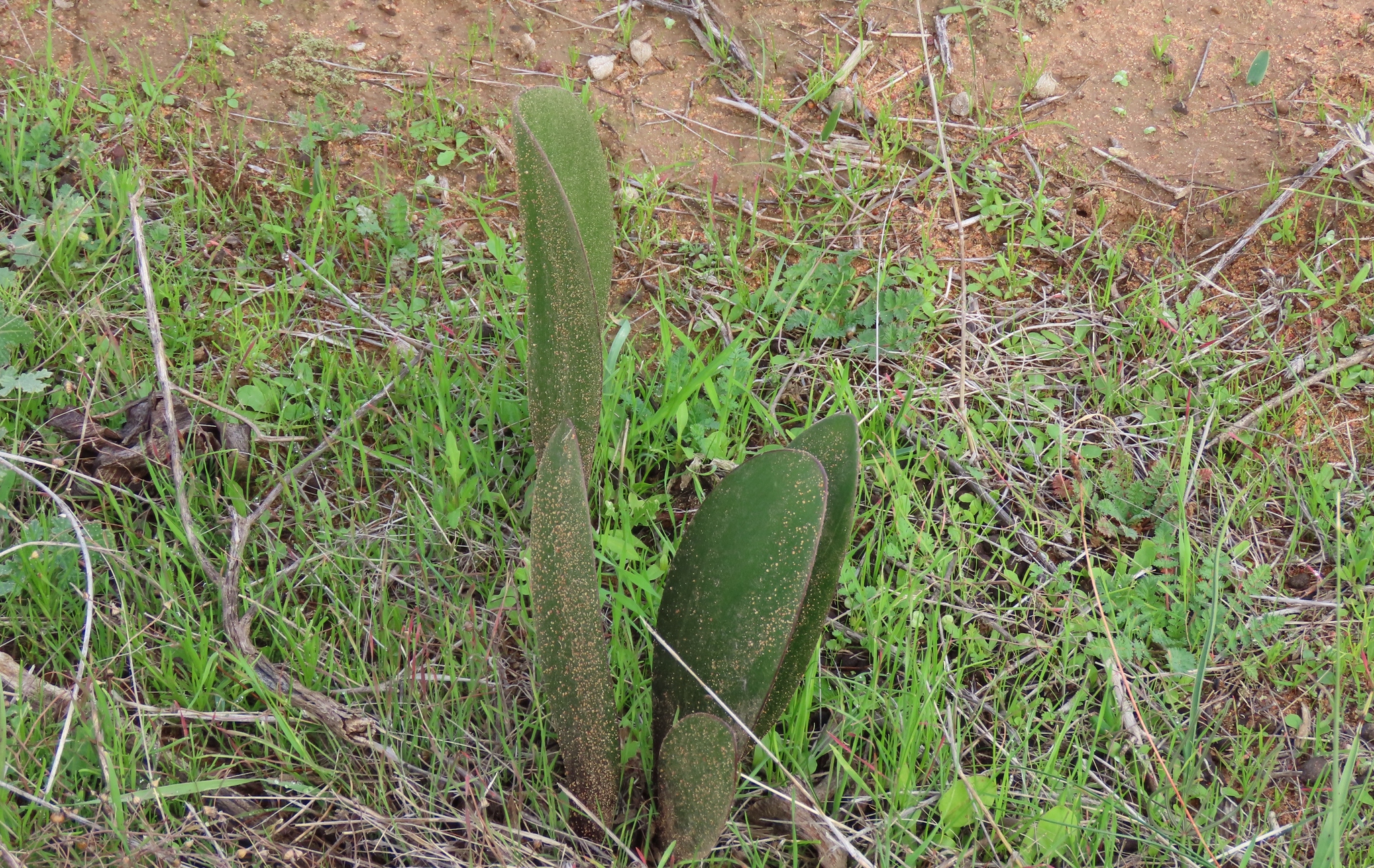
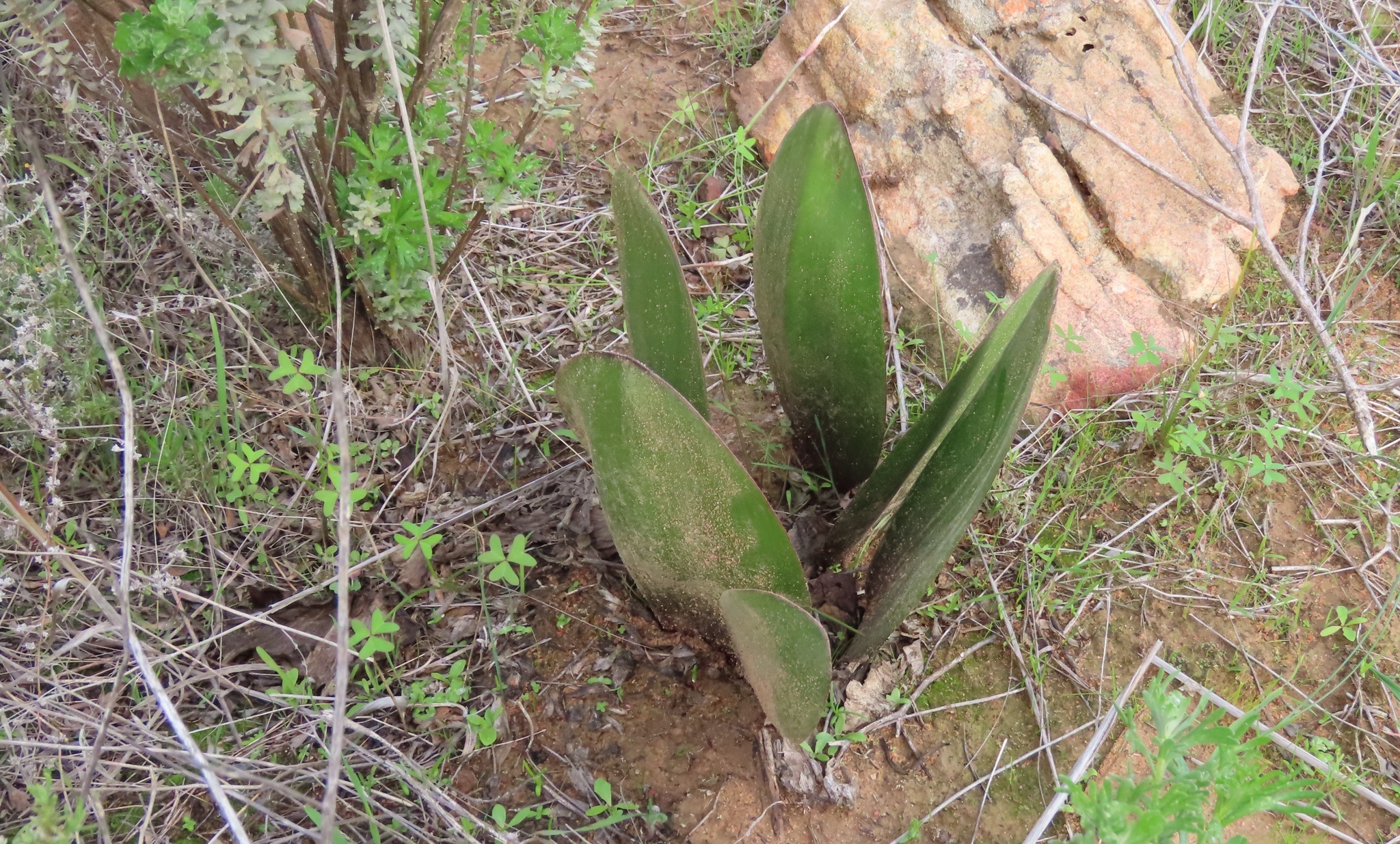
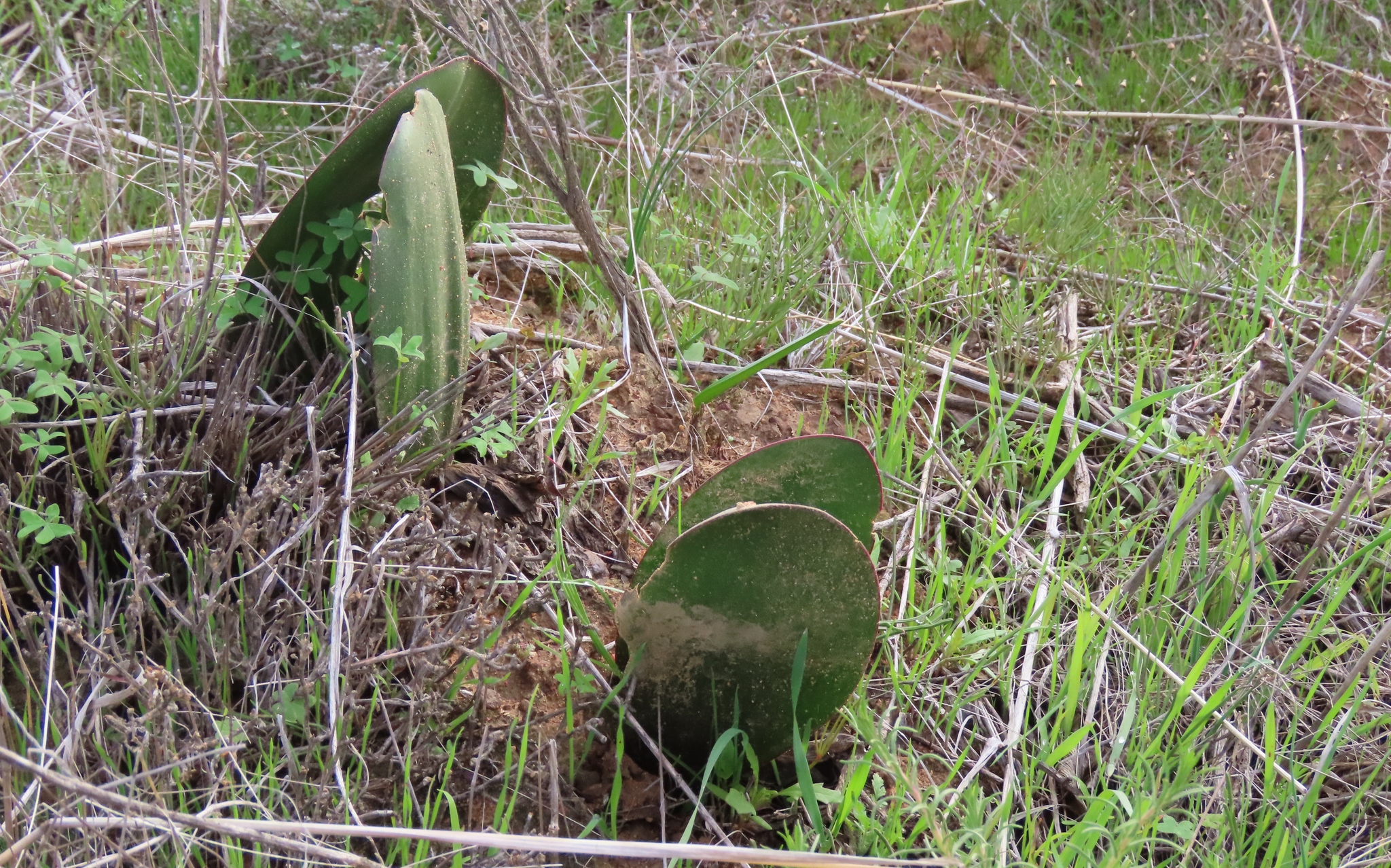
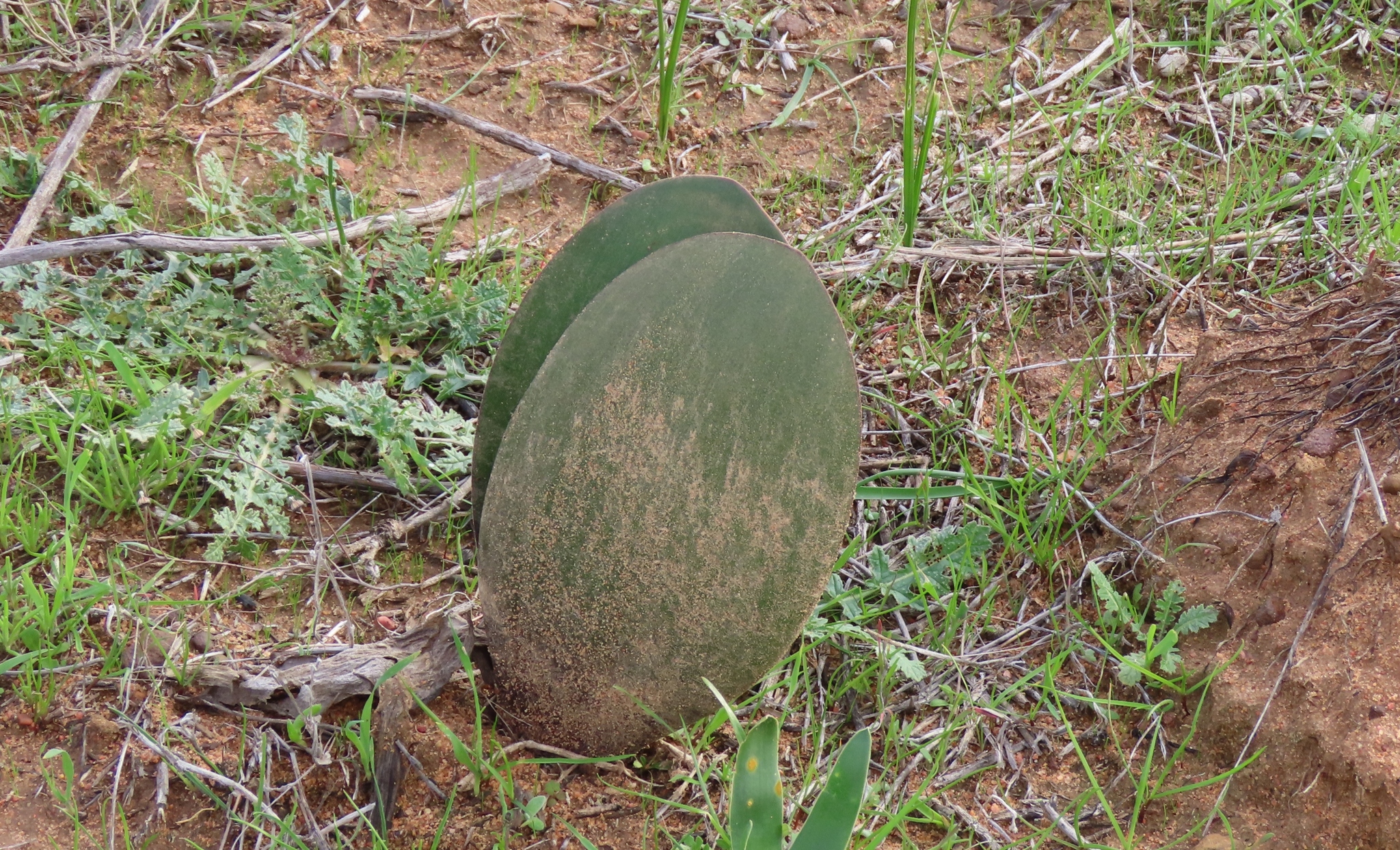
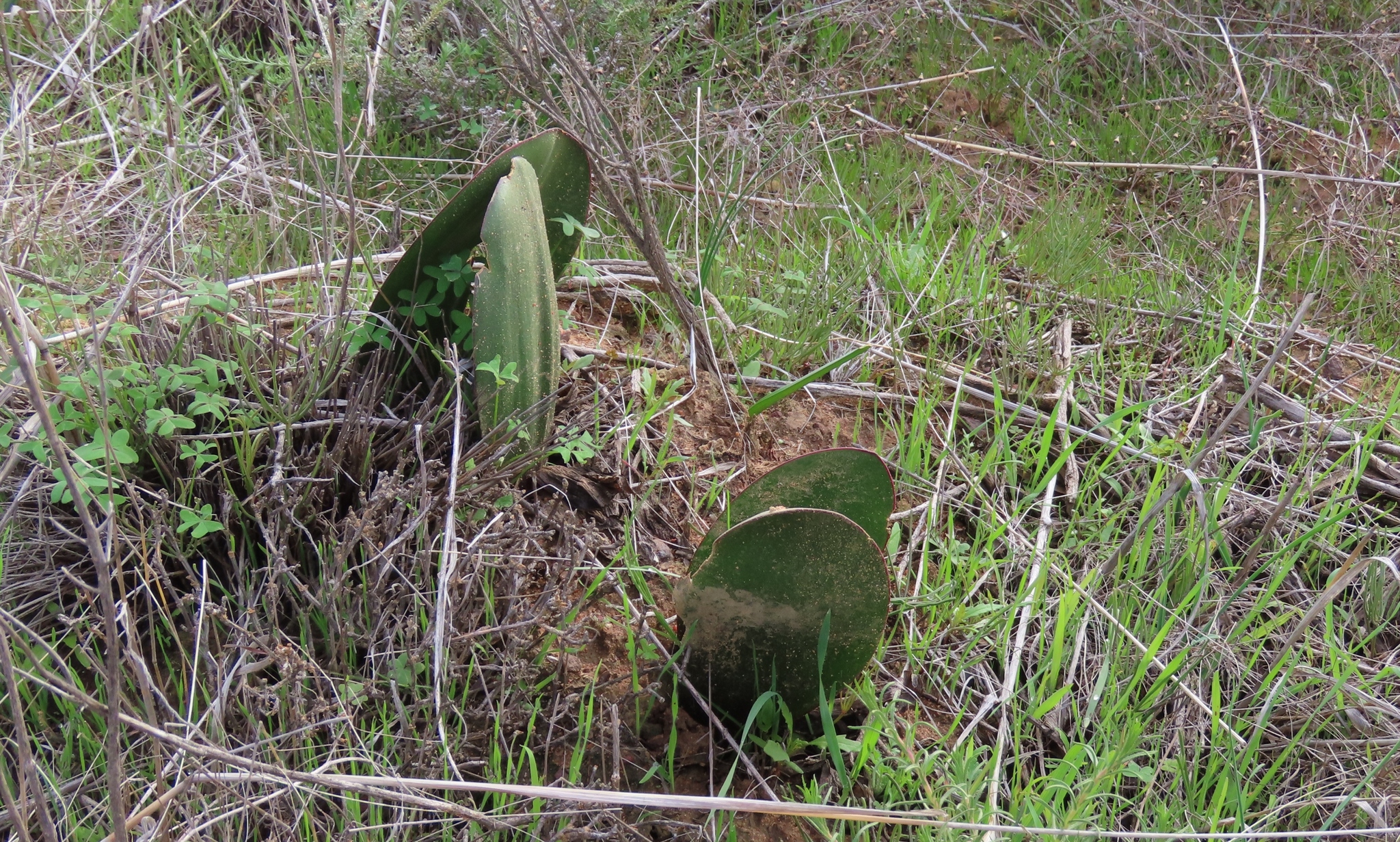
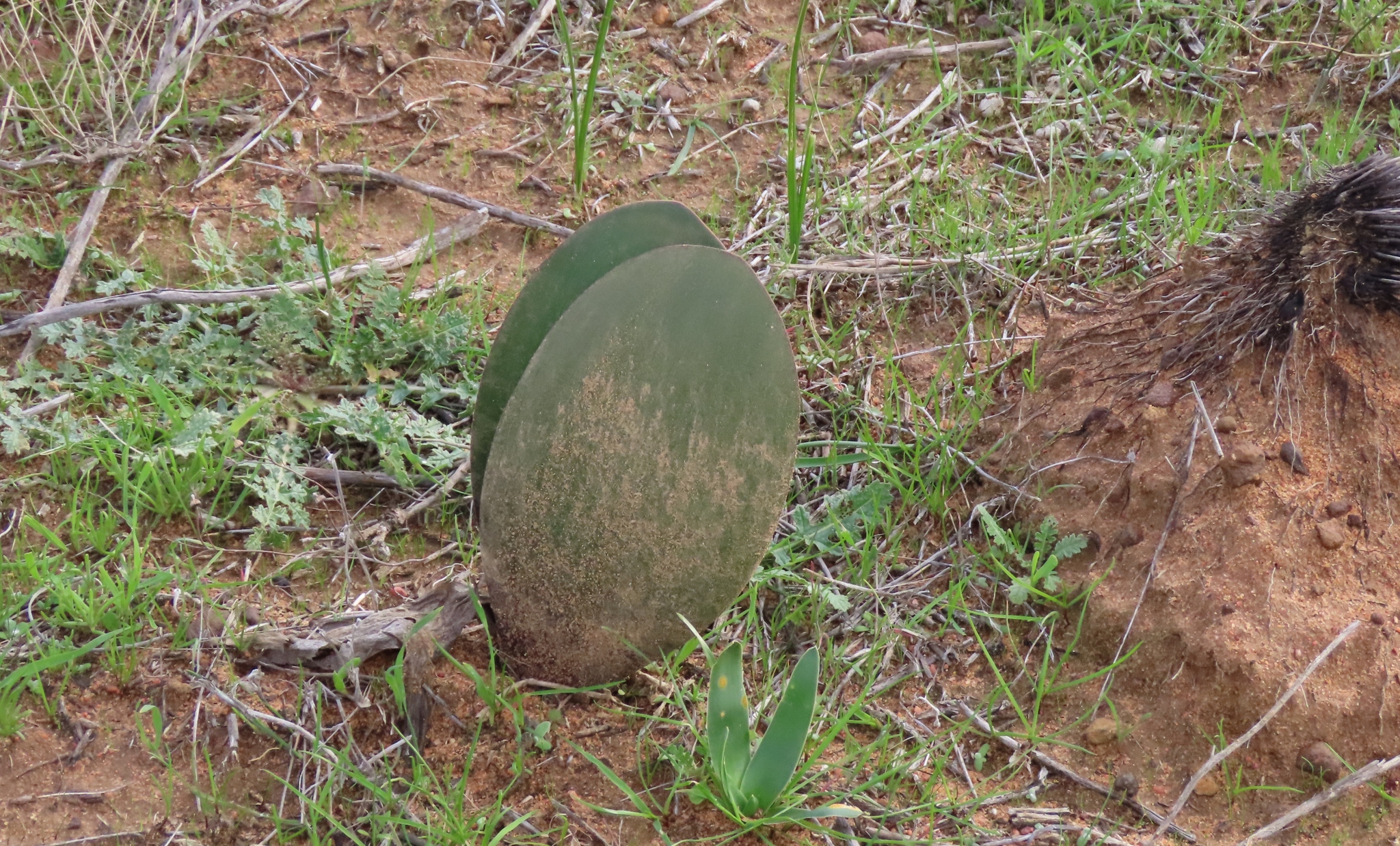
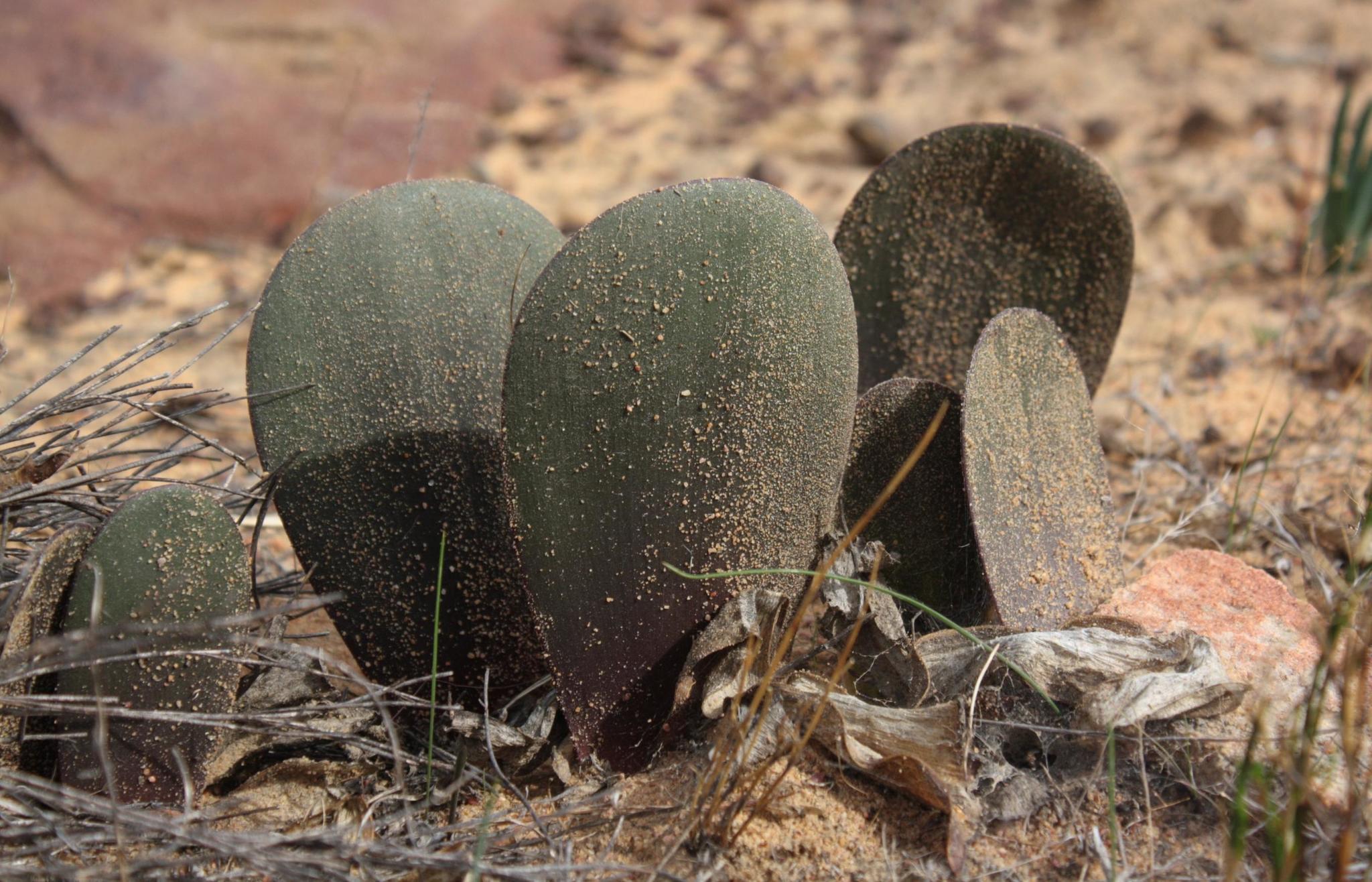
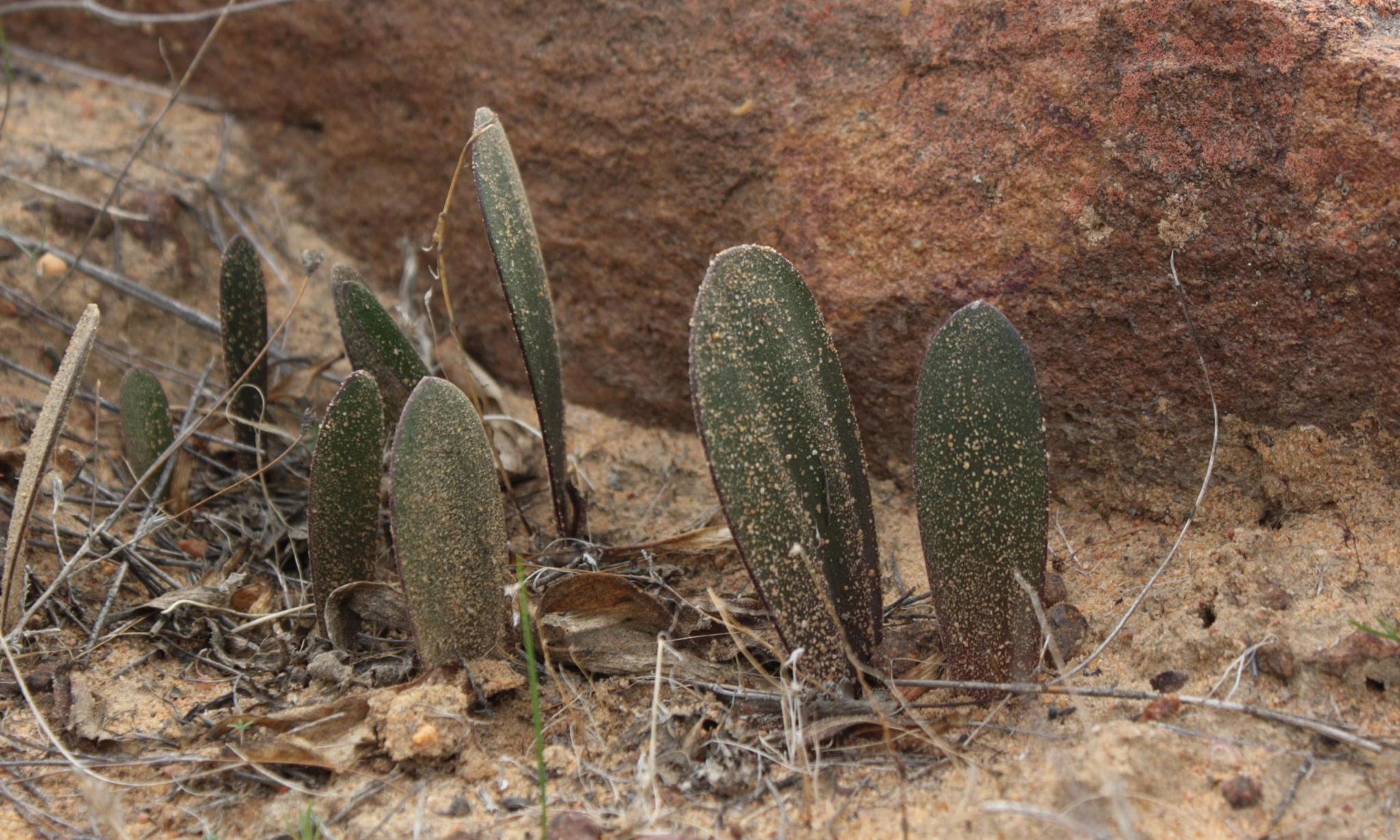
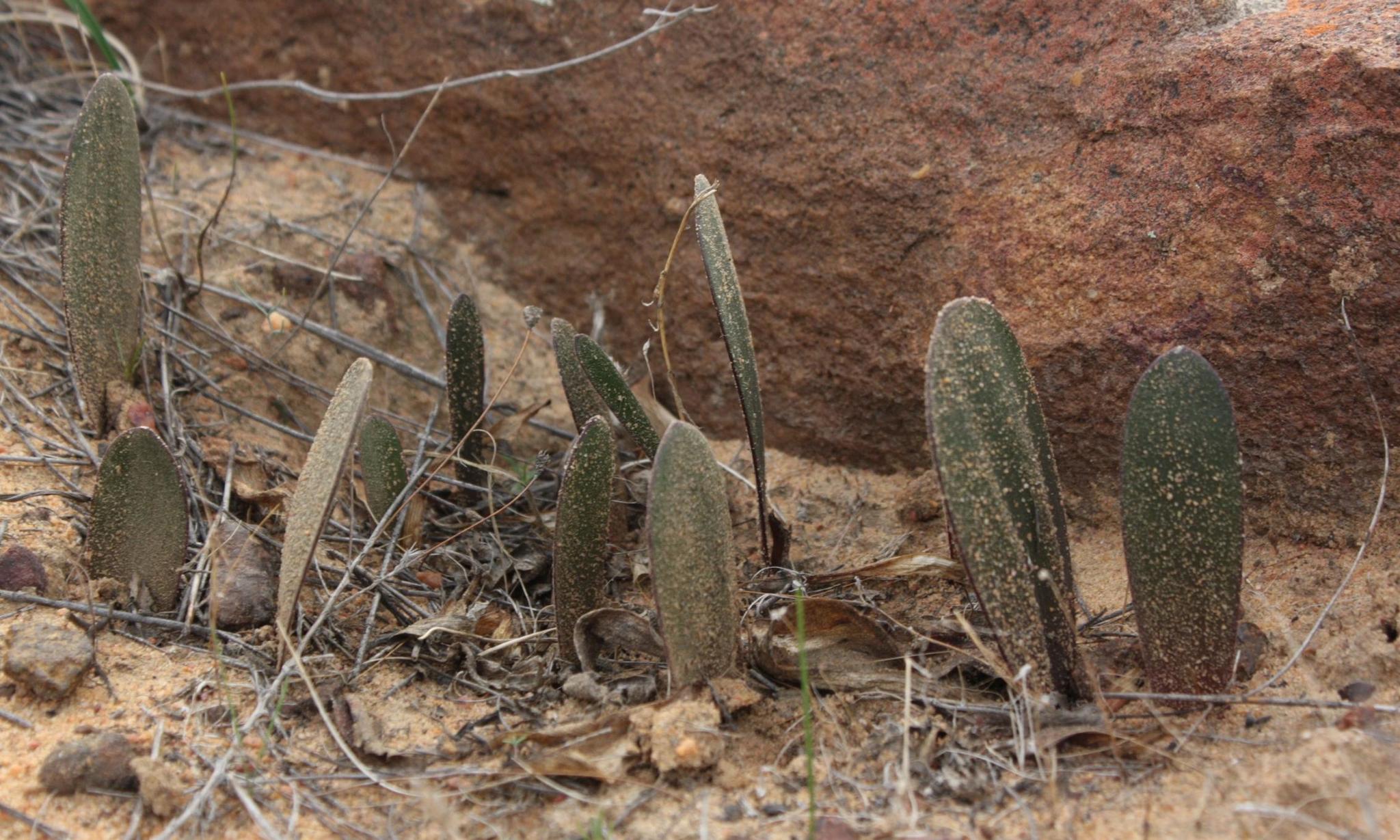
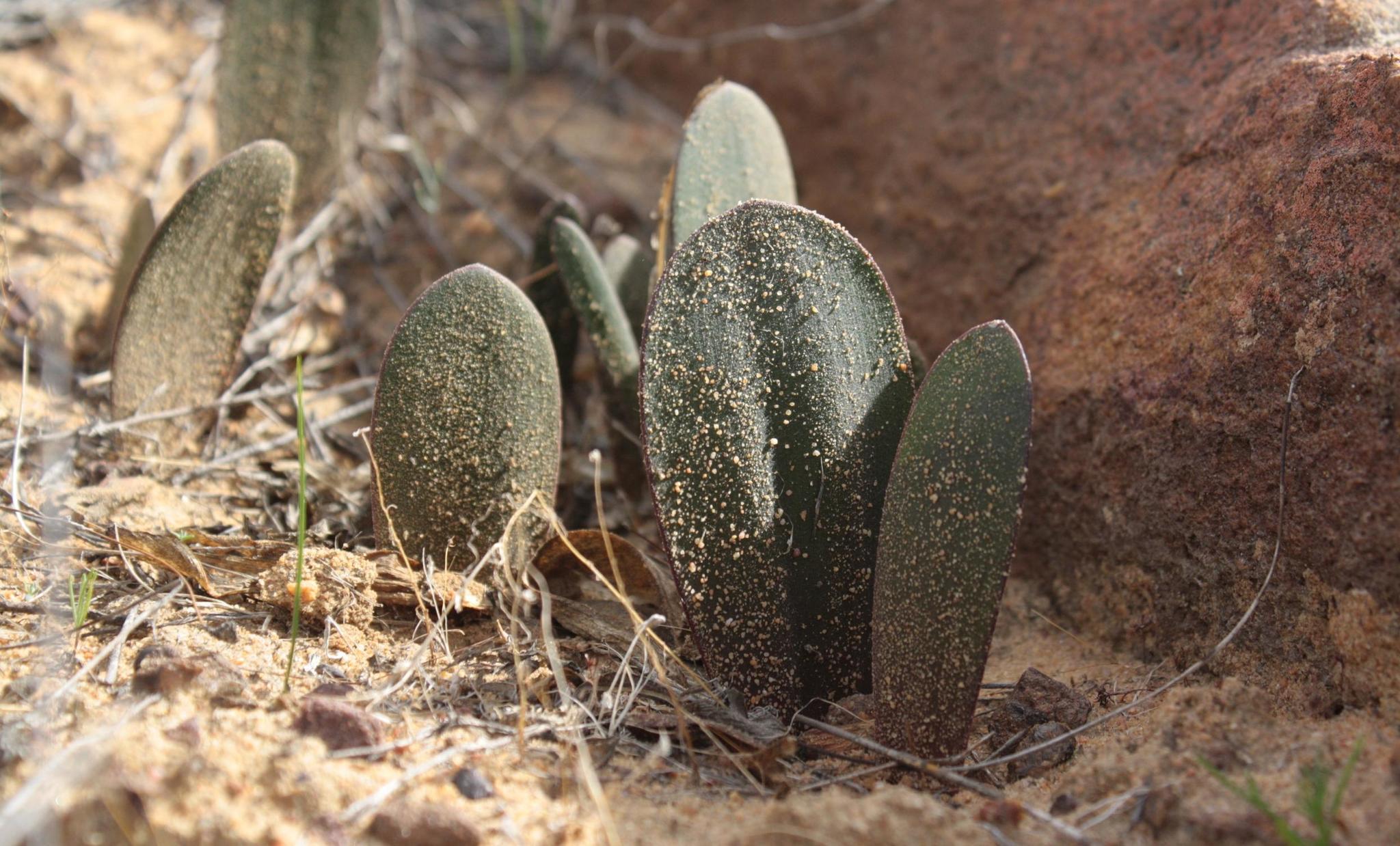
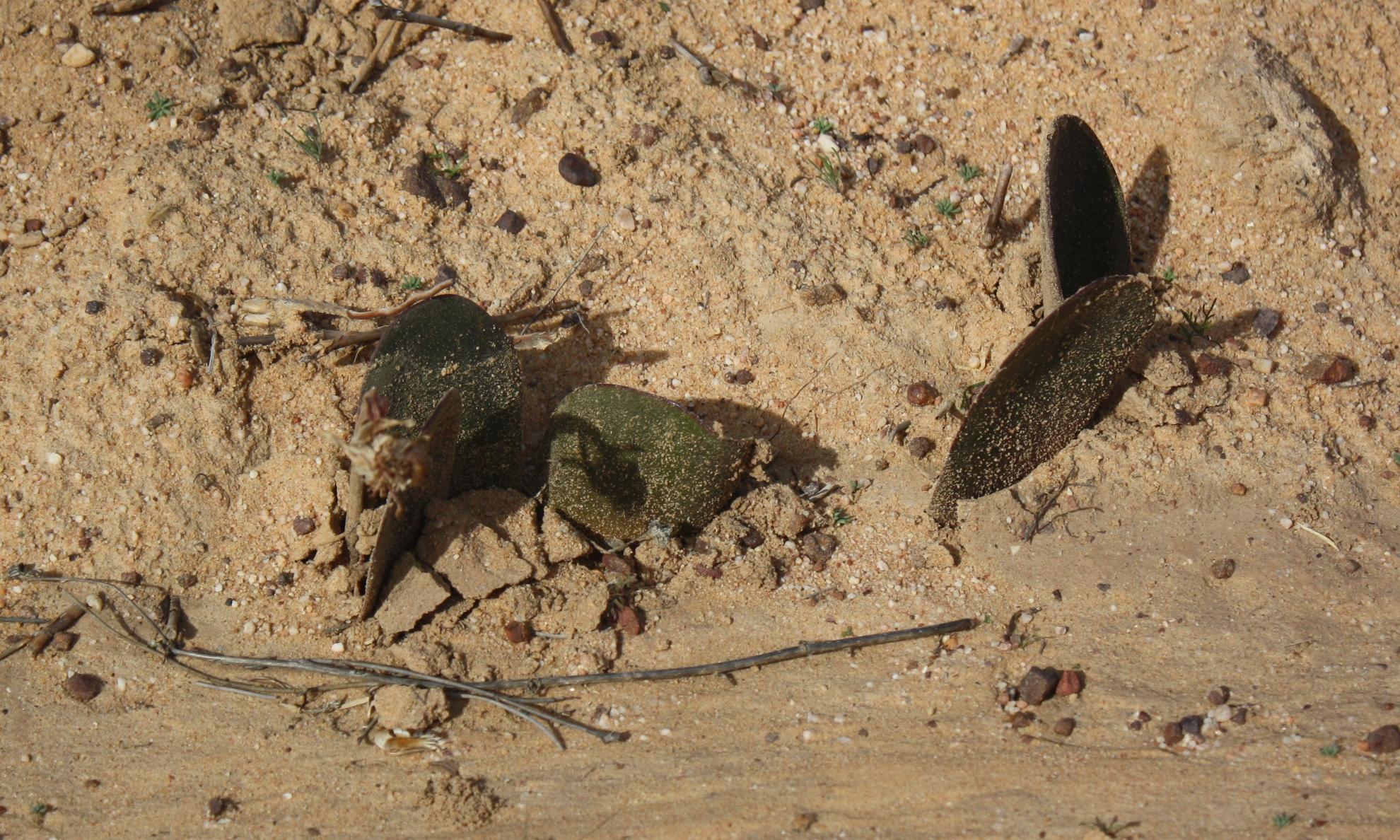
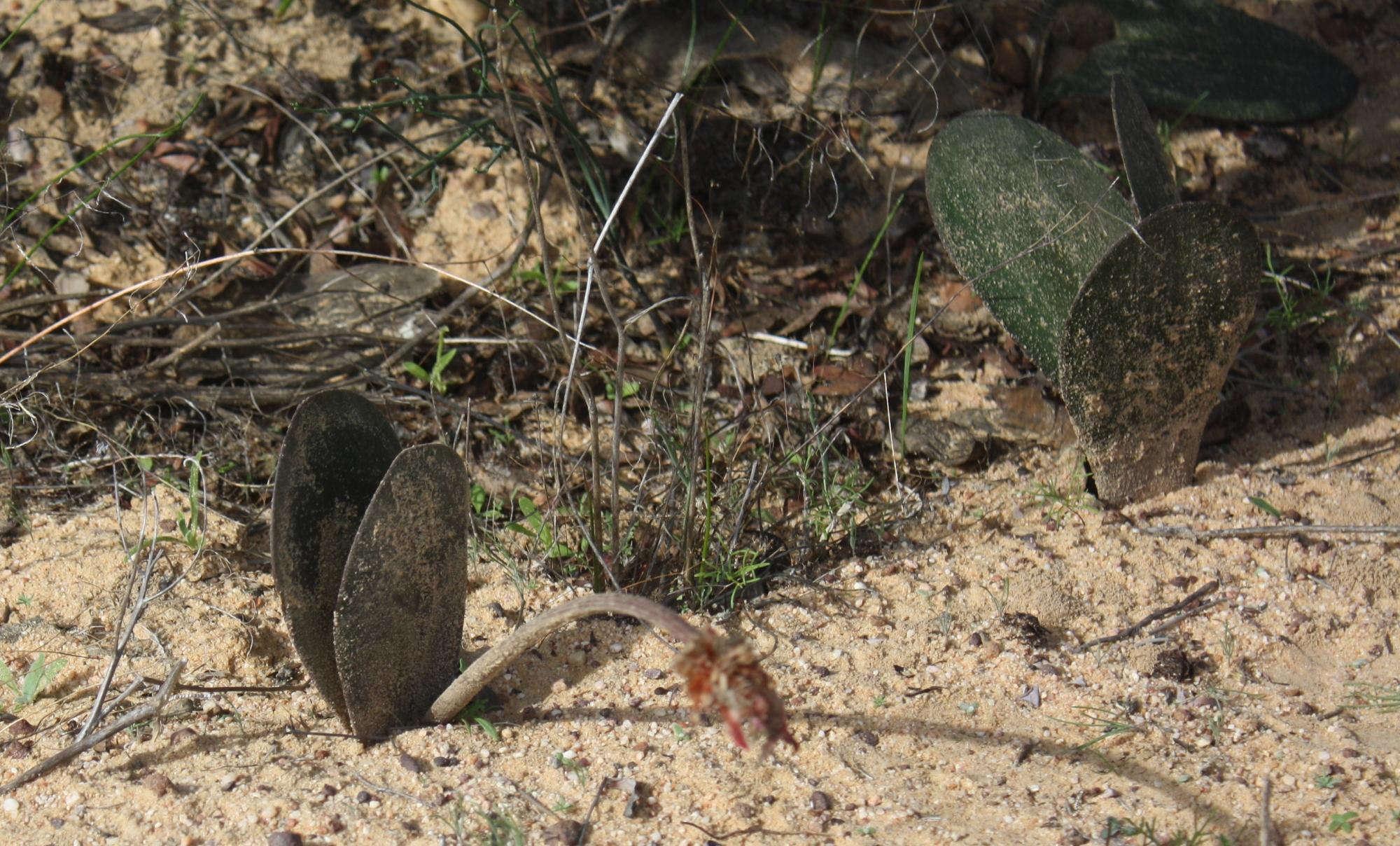
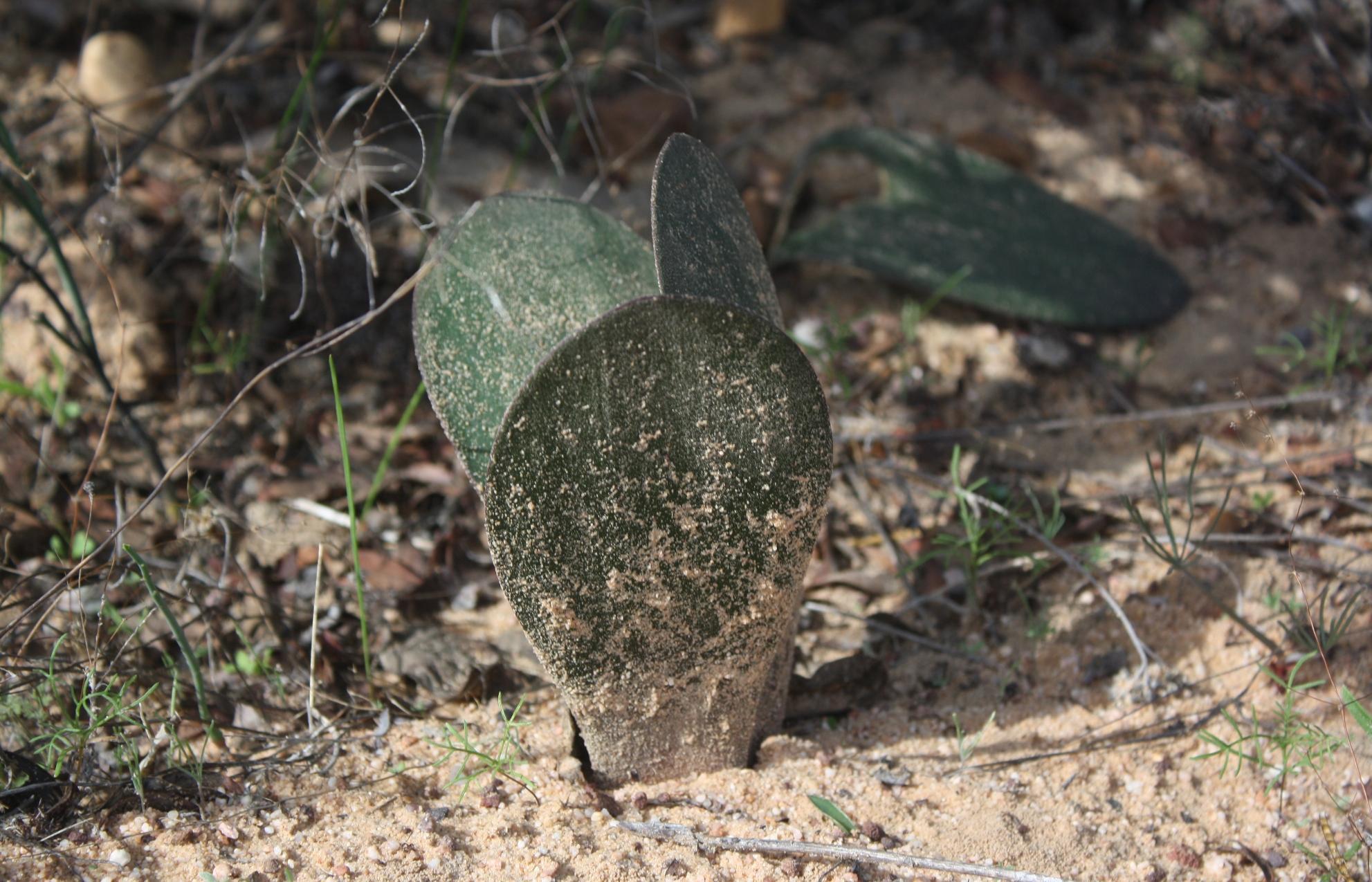
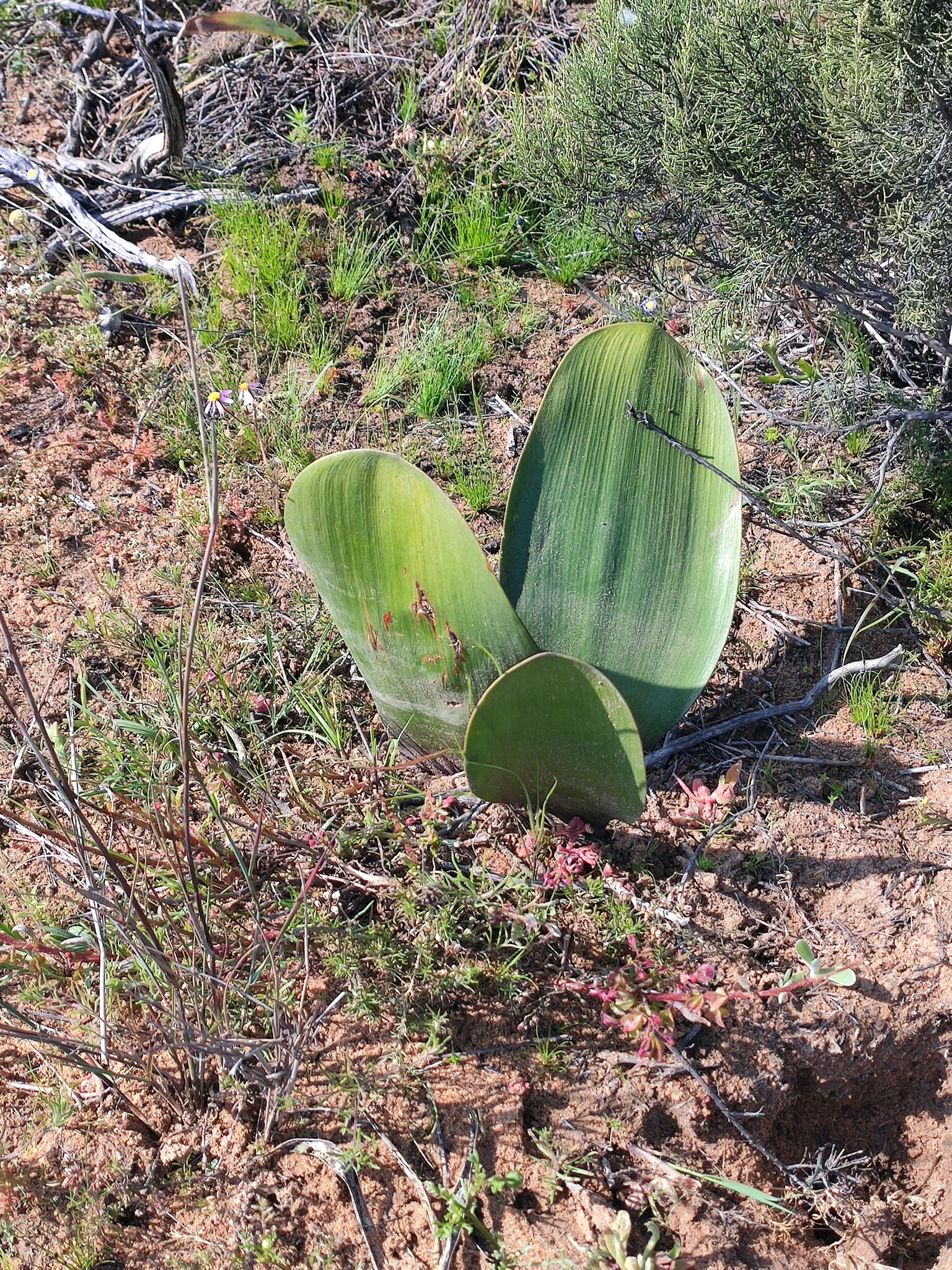
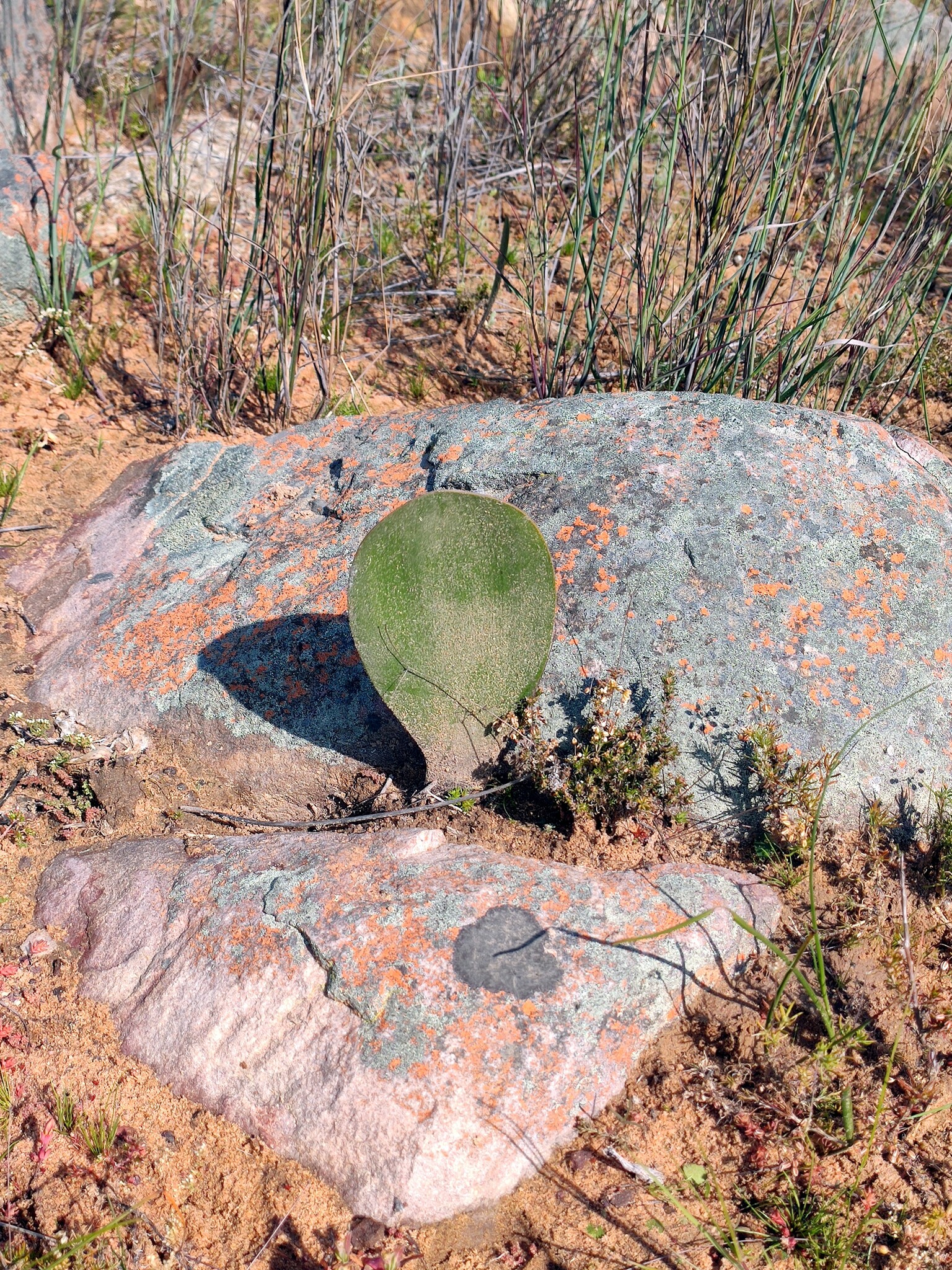
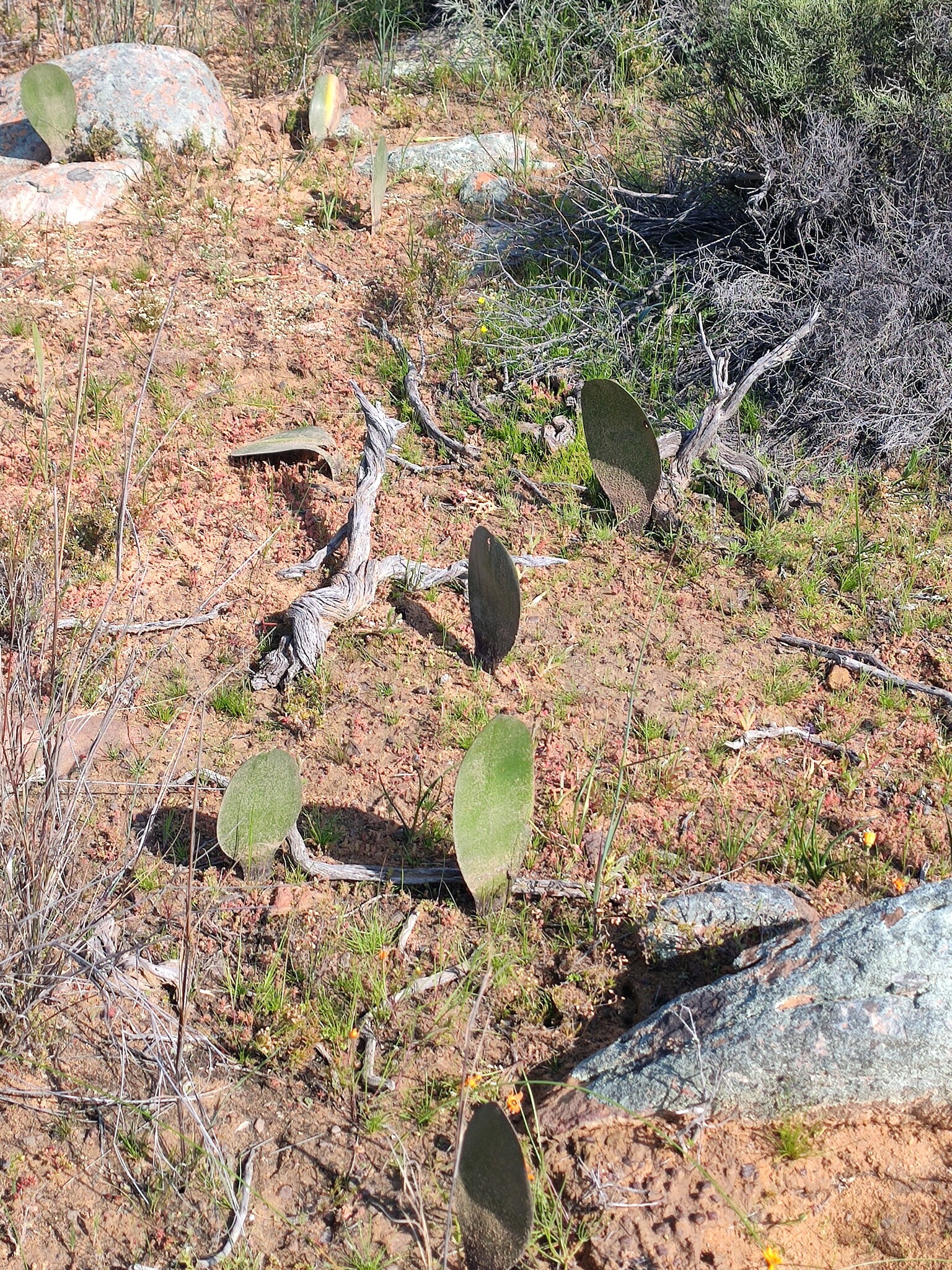
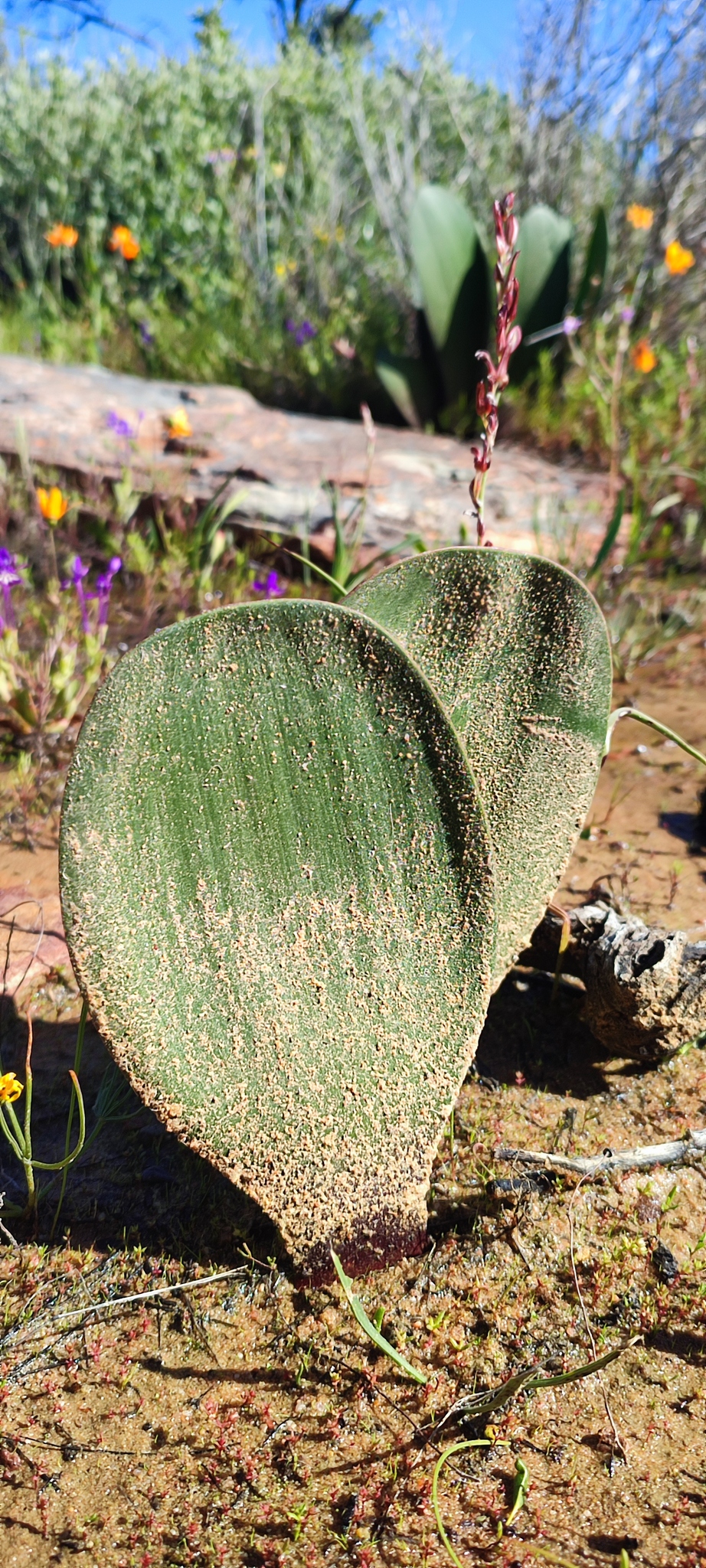
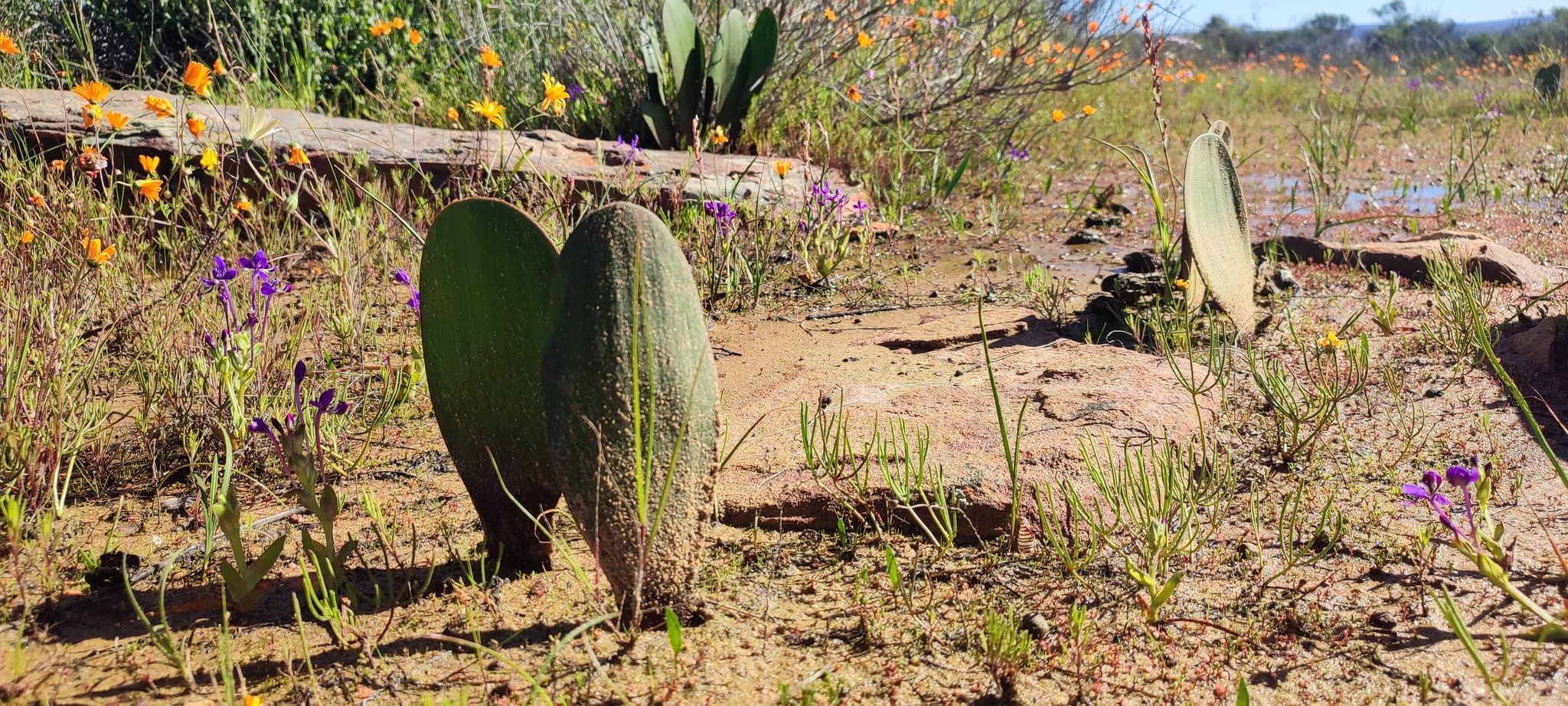
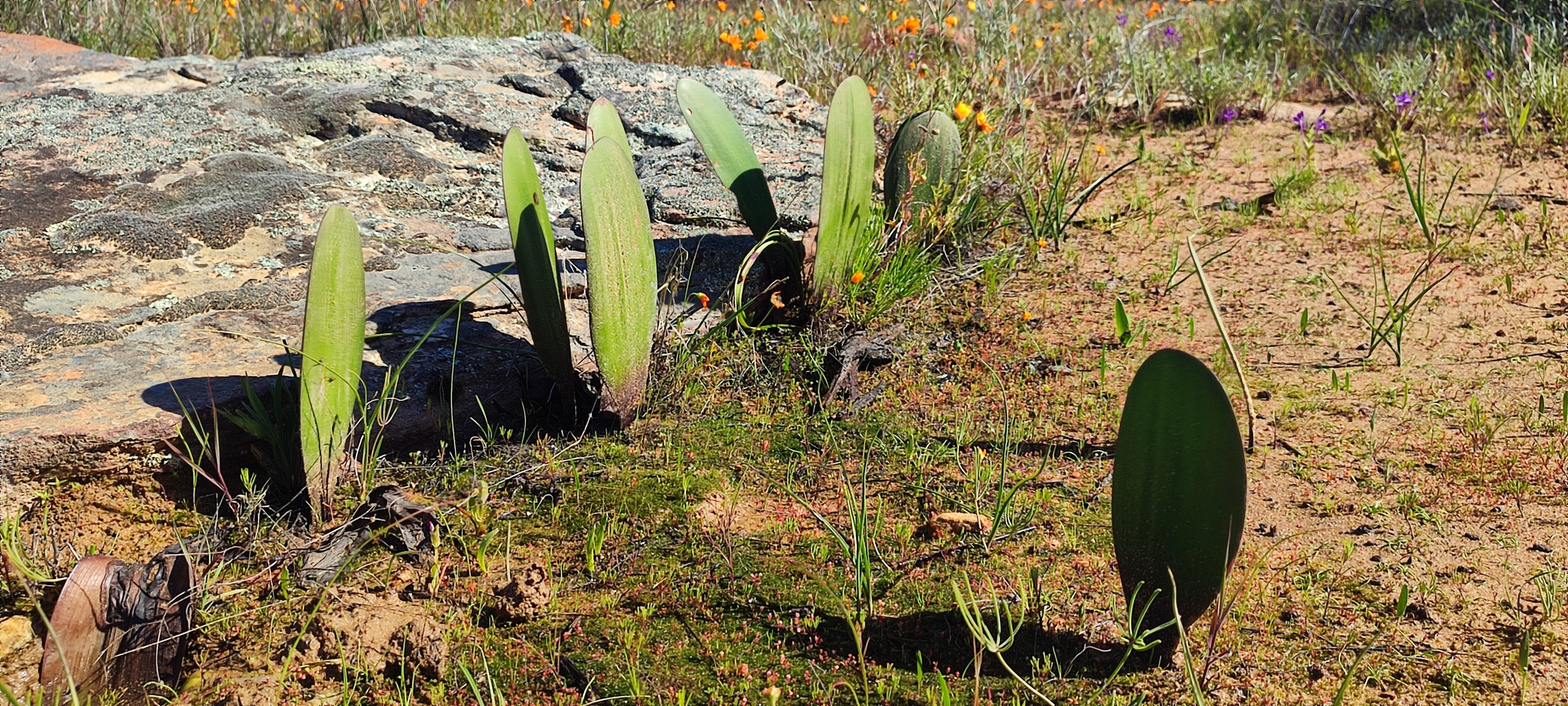
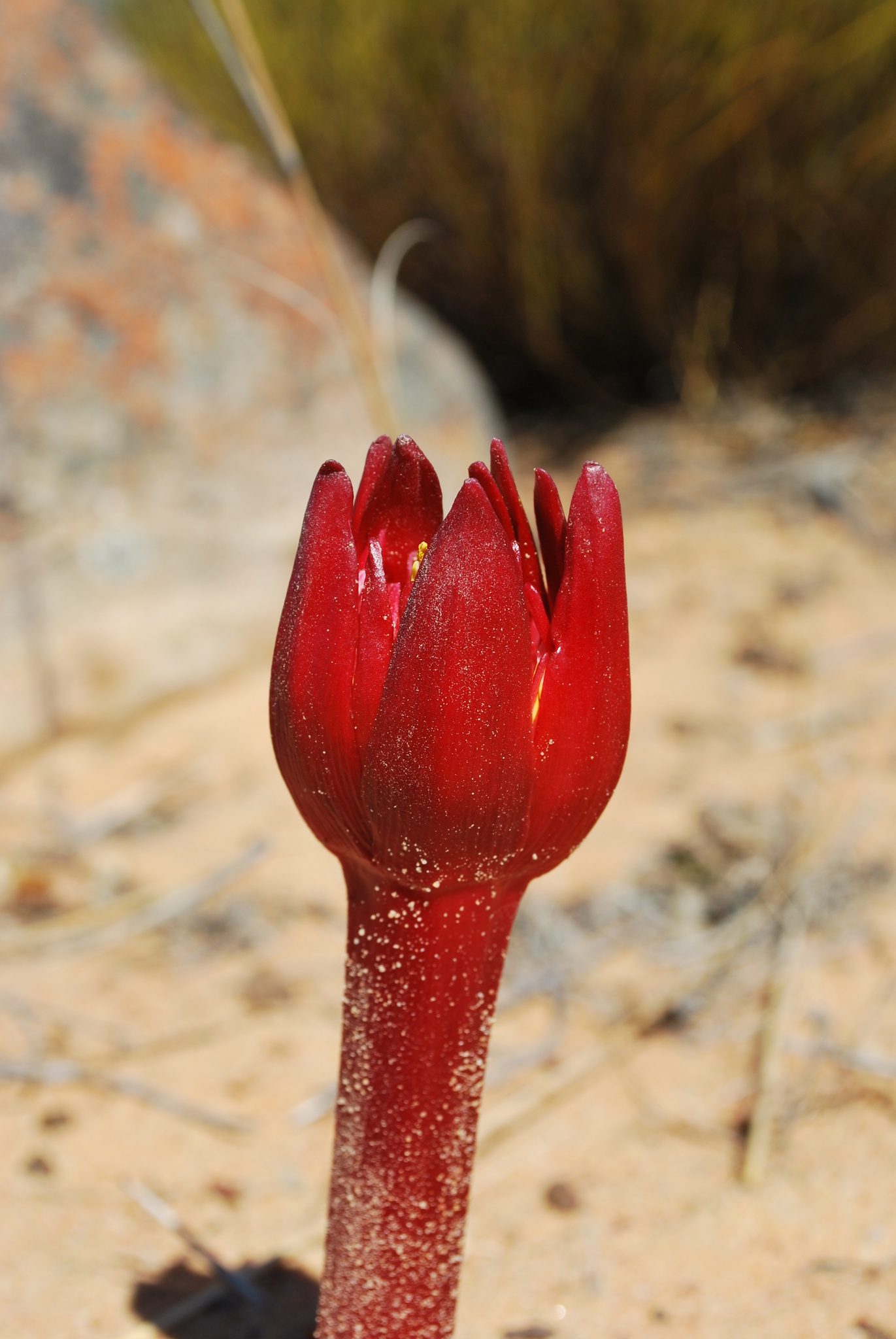
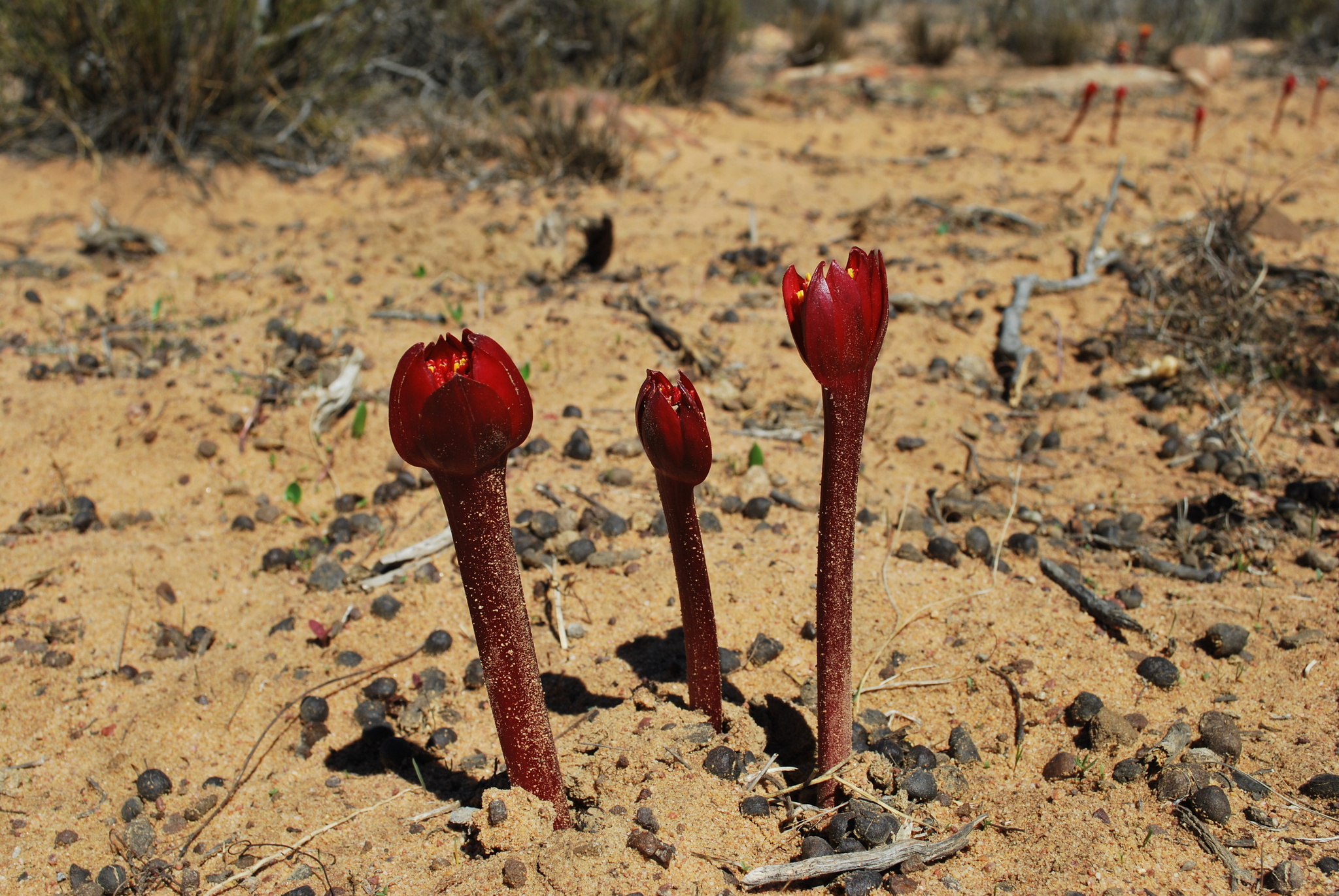
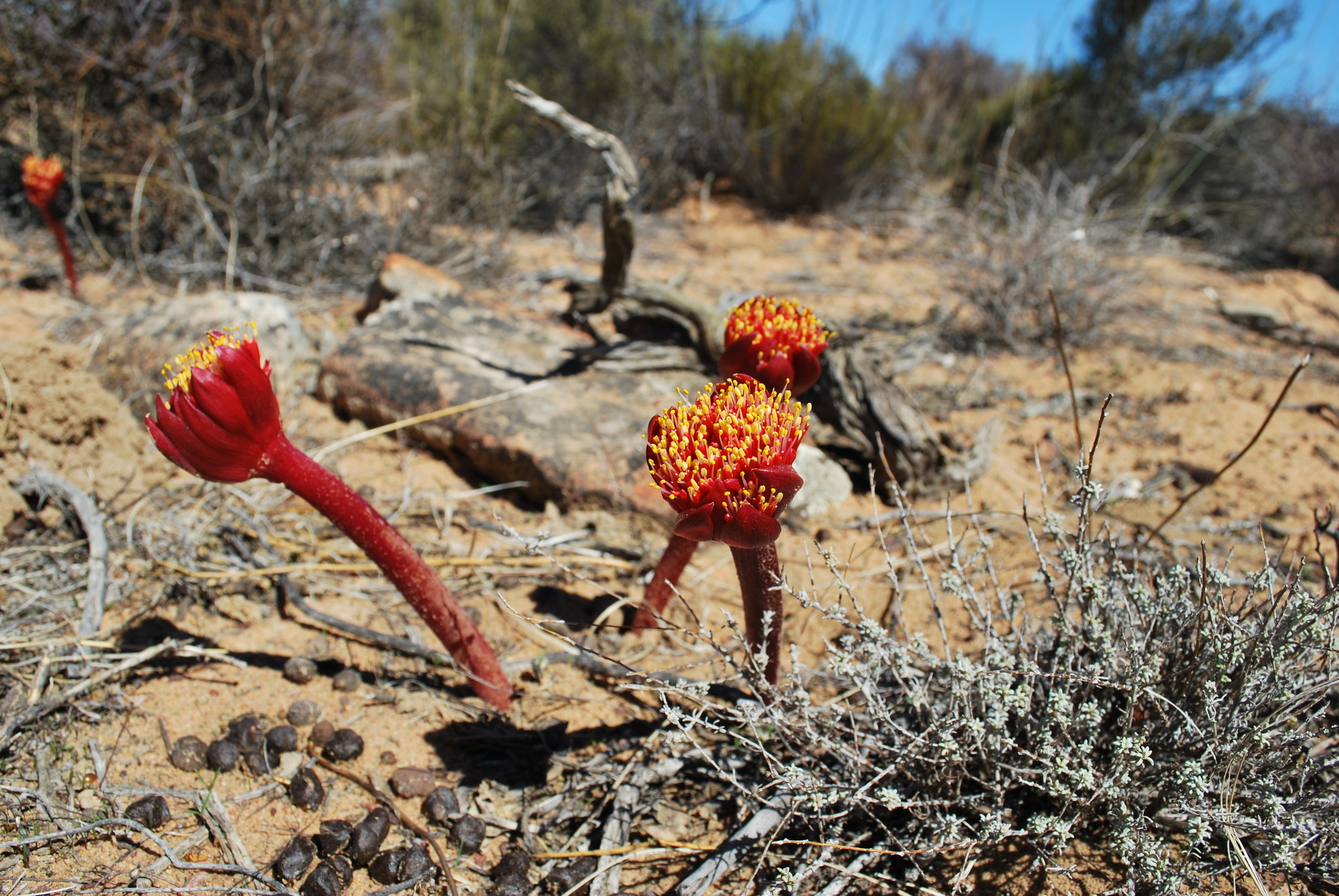
Bulbs clumped, obovoid-globose, medianly compressed, up to 100 mm across, tunics unequal, in overlapping horizontal layers, cream-coloured, covered with dark brown papery remains. Leaf solitary or rarely 2, erect, appearing after the inflorescence; blade obovate to broadly spathulate, 130-200 mm long, 40-150 mm wide above, narrowed to 15-50 mm at the base, flat, thick and leathery; both surfaces dull green, flushed with red towards the base, somewhat scabrid and sticky to the touch; margin red or green; apex obtuse. Peduncle stout, slightly compressed, up to 300 mm long, 80-150 mm across greatest diam., deep red, immaculate, somewhat scabrid to the touch, especially towards the base. Umbel compact, narrowly to broadly cyathiform, 30-70 mm across. Spathe valves 5-8, erect, longer than or equalling the flowers, ovate-lanceolate, 20-50 mm long, 6-25 mm wide, red to deep dusky-rose, somewhat leathery; tips acuminate. Flowers 40-60, pale scarlet, paler towards the tube. Pedicels 10-15 mm long, rosy. Perianth 14-18 mm long; tube 2-3 mm long, widening gradually upwards; segments erect, narrowly oblong, 11-16 mm long, 1-1.5 mm broad; tips obtuse. Filaments exserted by up to 11 mm, reddish with white tips. Anthers 1.5-2 mm long, yellow. Ovary subglobose, about 2 mm diam., green with a reddish blush. Style as long as the stamens. Berries spheroid, about 10 mm diam., reddish-maroon. Seeds ovoid, about 5 mm diam., dark wine-coloured. From: Snijman, DA. 1984. A revision of the genus Haemanthus L. (Amaryllidaceae). J. S. African Bot.: 1-139. [CC BY]
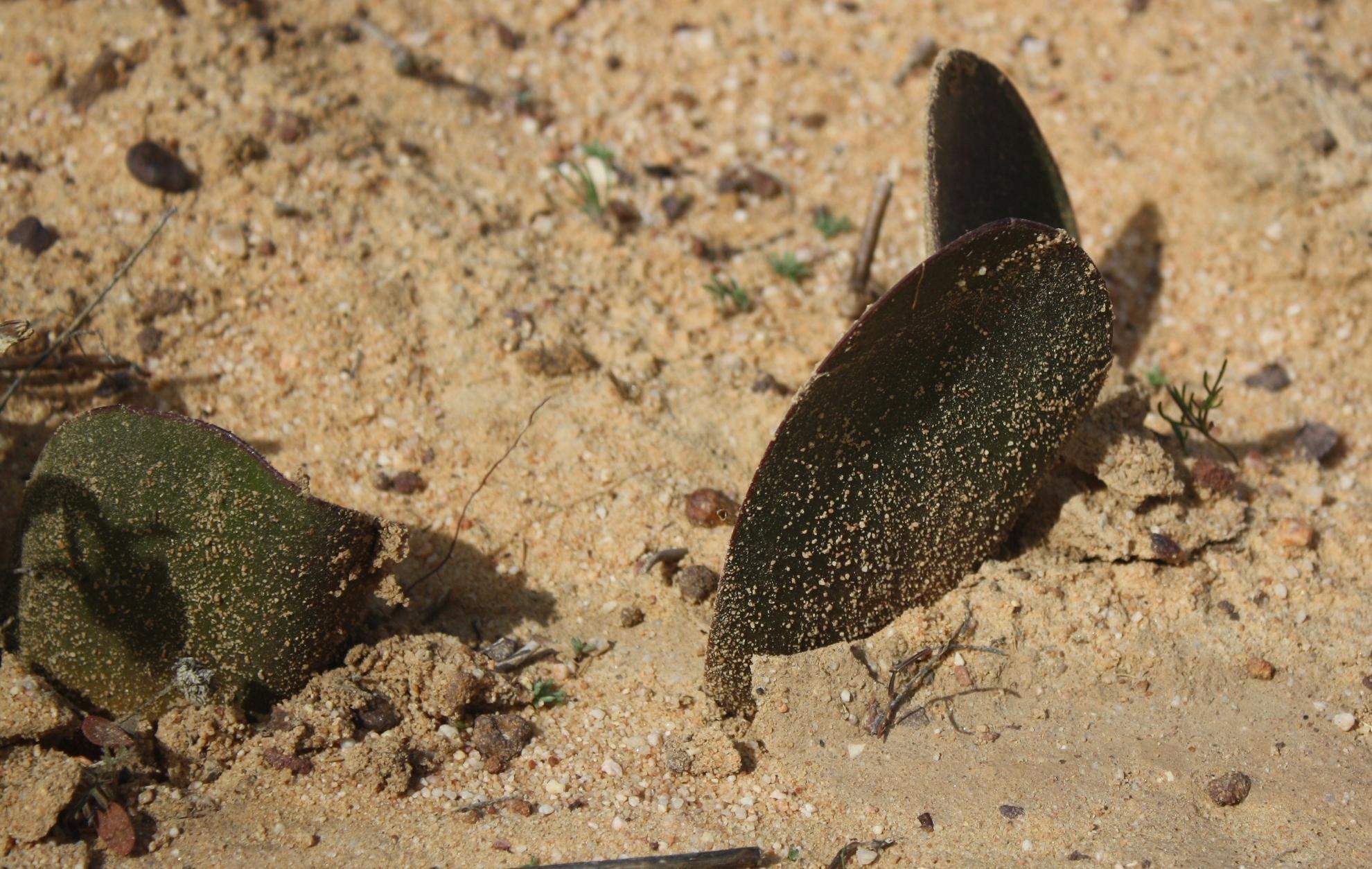
Bulbous geophyte to 30 cm. Leaf solitary, dry at flowering, erect, broadly elliptical, narrowly strap-shaped near base, rough, leathery, sticky, often collecting sand. Flowers in a compact head, on a hispid scape, deep red, bracts 5-8, acuminate, red, leathery. From: Snijman, DA. 2012. Amaryllidaceae. In: J Manning & P Goldblatt (eds), Plants of the Greater Cape Floristic Region 1: The Core Cape flora. Strelitzia 29: 53-62. South African National Biodiversity Institute, Pretoria. [CC BY]
Haemanthus nortieri is very distinctive. The leaves are mostly solitary and are thick leathery and erect. Unlike any other species in the genus they are rough and somewhat sticky to the touch. Many herbarium specimens consequently have particles of sand adhering to the leaves. The bulbs are typically compressed in the median plane and have tunics which die down horizontally. The inflorescences are deep red and are characterised by 5-8, erect, very acuminate, ovate-lanceolate spathe valves and unmarked, somewhat hispid peduncles. The only other solitary-leafed species is H. unifoliatus. From: Snijman, DA. 1984. A revision of the genus Haemanthus L. (Amaryllidaceae). J. S. African Bot.: 1-139. [CC BY]
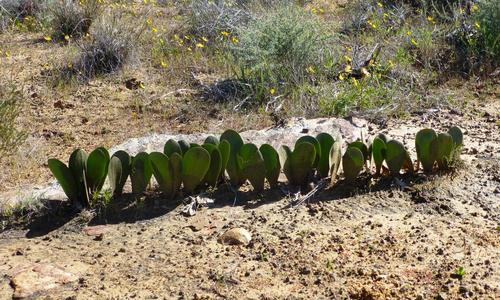
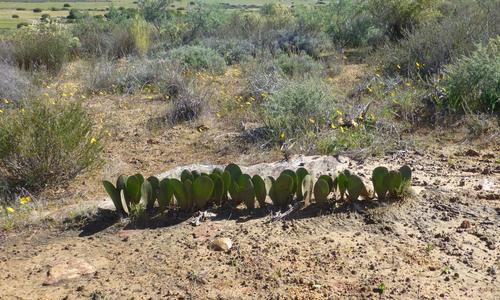
The bulbs form clumps in deep yellowish sandy soil amongst flat Table Mountain Sandstone rocks; in seasonally wet seepage areas. The associated vegetation is dominated by Willdenowia lucaeana and Leucospermum praemorsum. From: Snijman, DA. 1984. A revision of the genus Haemanthus L. (Amaryllidaceae). J. S. African Bot.: 1-139. [CC BY]
Seasonal washes. From: Snijman, DA. 2012. Amaryllidaceae. In: J Manning & P Goldblatt (eds), Plants of the Greater Cape Floristic Region 1: The Core Cape flora. Strelitzia 29: 53-62. South African National Biodiversity Institute, Pretoria. [CC BY]
Known only from the Nardouwsberge, in the Western Cape Province. From: Snijman, DA. 1984. A revision of the genus Haemanthus L. (Amaryllidaceae). J. S. African Bot.: 1-139. [CC BY]
Nardouw Mtns. From: Snijman, DA. 2012. Amaryllidaceae. In: J Manning & P Goldblatt (eds), Plants of the Greater Cape Floristic Region 1: The Core Cape flora. Strelitzia 29: 53-62. South African National Biodiversity Institute, Pretoria. [CC BY]
February to April
0 to 400 m
This map contains point-based occurrences at different locations
 This is a sensitive species therefore data has been redacted, click here to login.
Occurrence in the Flora of Southern Africa (FSA) countries and South African provinces. Residence status indicates if a taxon is indigenous, endemic, naturalised or invasive in a specific region. This data is based on specimen records and literature
FSA
SA
BOT
NAM
ESW
LES
WC
EC
NC
FS
GA
KZN
LP
MP
NW
Absent
Indigenous
Endemic
Naturalised
Invasive

Names and Sources
Published in: J. S. African Bot. 3: 103 (1937)
Classification
KINGDOM Plantae
SUBKINGDOM Phanerogamae
PHYLUM Anthophyta
ORDER Asparagales
FAMILY Amaryllidaceae
TRIBE Haemantheae
GENUS Haemanthus
SUBGENUS Haemanthus
SPECIES nortieri
21 results for Haemanthus nortieri Isaac
Barcode: NBG0152207-0 Collector(s) & number: Snijman, DA, 1322 | 1993-8-31
General notes: Along seasonal stream. Locally abundant in sand between scattered rocks and overlaying loose gravel. Leaves solitary, erect, dark green with red basally. Covered with sand grains.
Data Resource: BODATSA View record
Barcode: NBG0195593-0 Collector(s) & number: Snijman, DA, 1911 | 2003-8-21
General notes: Bulbs in leaf; ±40 plants seen. The driest year in many years with no rain having fallen until August. Leaf solitary or rarely 2 per bulb. Dark green but reddish at base, collecting soil particles. Leaf erect.
Data Resource: BODATSA View record
Barcode: PRE0644773-0 Collector(s) & number: Nortier, P, PRE 60981 | 1981-2-3
Data Resource: BODATSA View record
Barcode: NBG0191675-2 Collector(s) & number: Rourke, JP, 1071 | --
General notes: Leaf solitary, erect, green, flushed with maroon towards the base, psammophorous. Painted by Vicki Thomas for Flowering Plants of Africa. NBG 1087/84. Leaves ex hort NBG 13-11-2002.
Data Resource: BODATSA View record
Barcode: NBG0066662-1 Collector(s) & number: Nortier, P, s.n. | 1943-2-11
General notes: Bracts dark red, flowers red, stamens white. Mature leaf: June 1943. Fruits 23/3/44.
Data Resource: BODATSA View record
Barcode: NBG0195592-0 Collector(s) & number: Snijman, DA, 1912 | 2003-8-21
General notes: Along seasonal watercourse in flat rocks. ±400 plants seen in population. Growing in clumps of 10-30 individuals. Leaves erect, solitary or rarely 2 per bulb; dark green, reddish towards base.
Data Resource: BODATSA View record
Barcode: NBG0066662-2 Collector(s) & number: Nortier, P, s.n. | 1943-2-11
General notes: Bracts dark red, flowers red., stamens white. Mature leaf: June 1943. Fruits 23/3/44.
Data Resource: BODATSA View record
Barcode: NBG0191675-1 Collector(s) & number: Rourke, JP, 1071 | --
General notes: Painted by Vicki Thomas for Flowering Plants of Africa. NBG 1087/84. Fl. ex NBG March 2002.
Data Resource: BODATSA View record
Barcode: NBG0167137-0 Collector(s) & number: Lavranos, JJ, s.n. | 1996-3-21
General notes: Scape and and scabrid, striated, rhubarb red, spathe valves 9, thin-textured, suberect, flowers coral red. Inflorescence severely damaged by grazing cows.
Data Resource: BODATSA View record
Barcode: NBG0202715-0 Collector(s) & number: Rourke, JP, 1071 | --
General notes: Grown from seed collected from Rourke 1071. Flowered at Kirstenbosch Botanic Garden in March 2002. Published in Flowering Plants of Africa 69 : t 2003 (2005).
Data Resource: BODATSA View record
Barcode: NBG0087428-0 Collector(s) & number: Rourke, JP, 1071 | 1968-8-13
General notes: Coarse gritty white TMS on wet seepage areas, very local. Plants bear a single erect leaf. Peduncle maroon, scabrid. Bracts 6, leathery, deep dusky rose. Flowers pale scarlet, pedicels deep rose. Flowers coll. N.Du Plessis Hort. 8/3/79.
Data Resource: BODATSA View record
This map contains point-based occurrences at different locations
This is a sensitive species therefore data has been redacted, click here to login.
2016
2012
SERIES CHAPTER
Amaryllidaceae Snijman, DAIn: J Manning & P Goldblatt (eds), Plants of the Greater Cape Floristic Region 1: The Core Cape flora. Strelitzia 29: 53-62
South African National Biodiversity Institute, Pretoria
No results found for Haemanthus nortieri Isaac
Status and criteria
EN
Assessor(s)
Plantae Coordinator
| Part(s) of plant used | Use(s) | Reference |
|---|
Coming soon...