PLANTAE / PHANEROGAMAE / ANTHOPHYTA / ASTERALES / ASTERACEAE / ASTEROIDEAE / ANTHEMIDEAE / LIDBECKIA / PINNATA

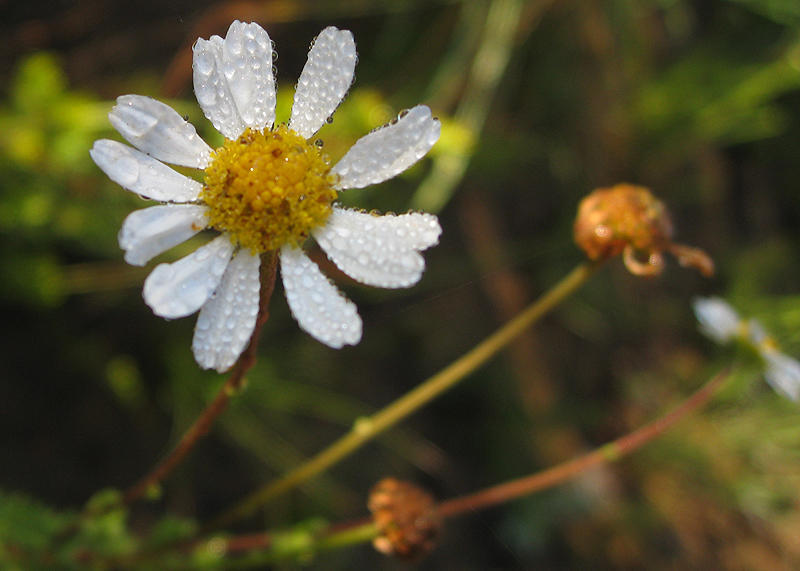
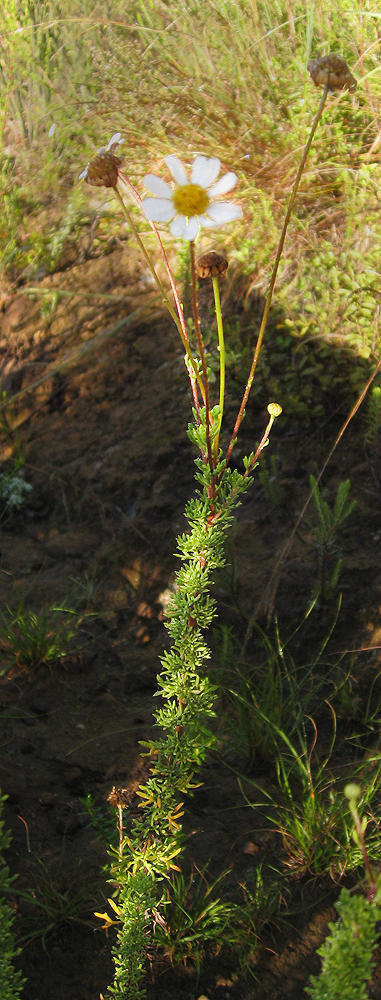
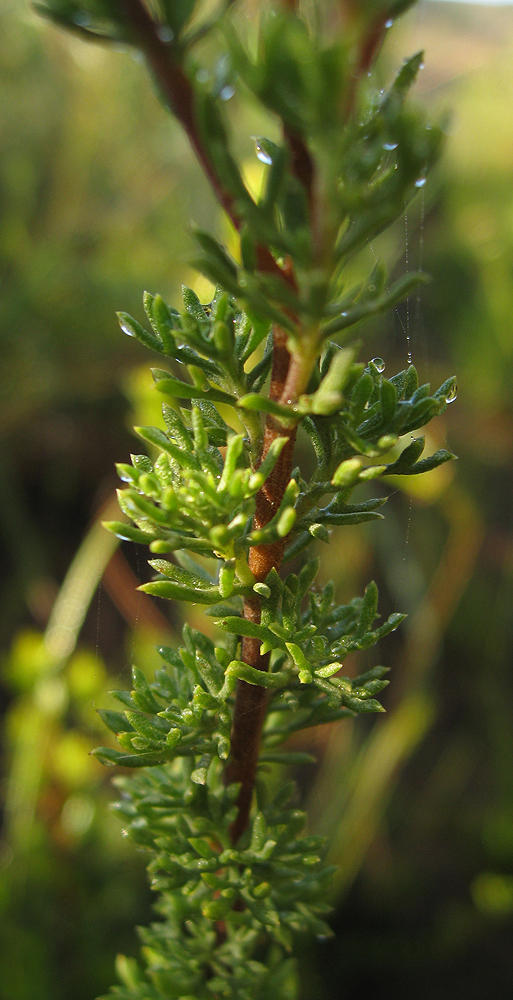
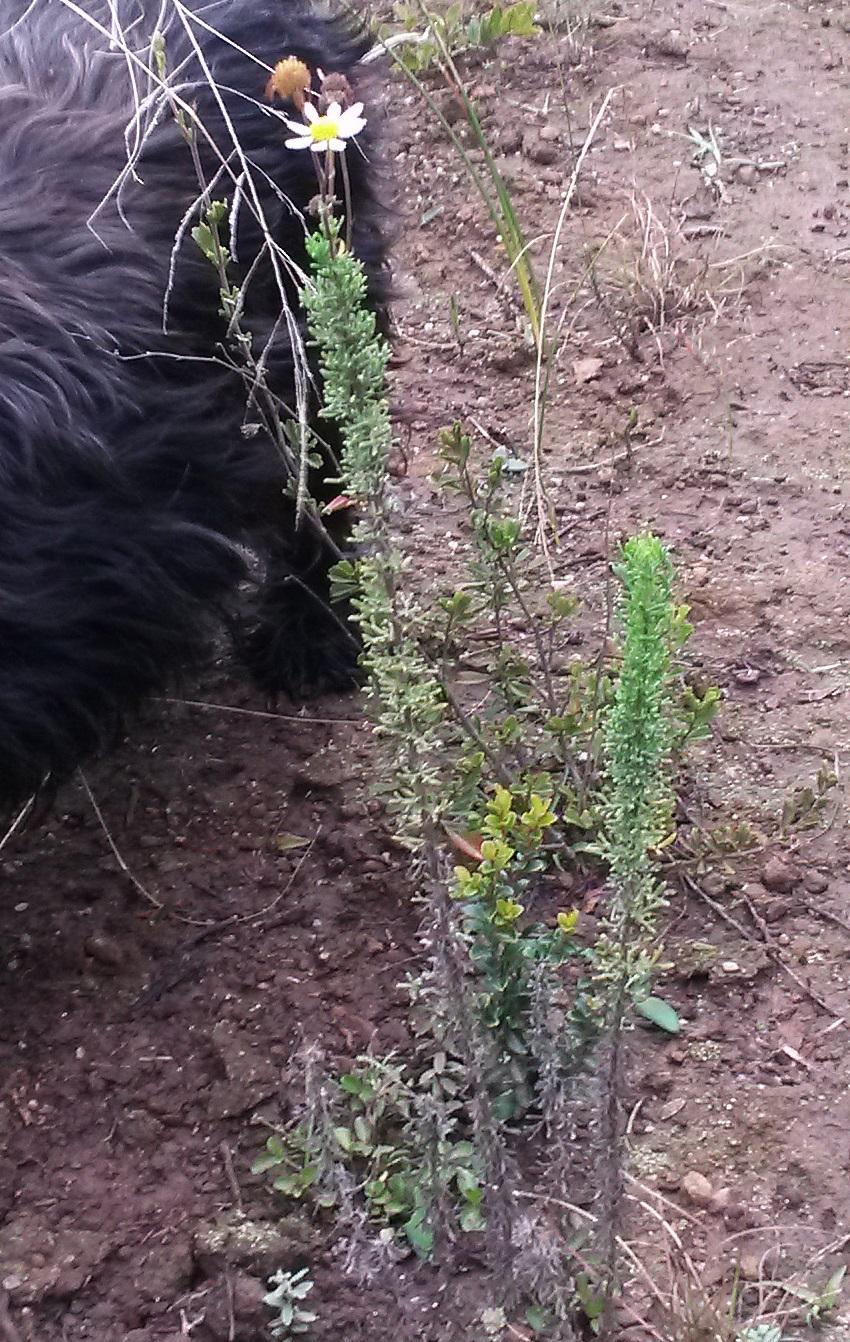
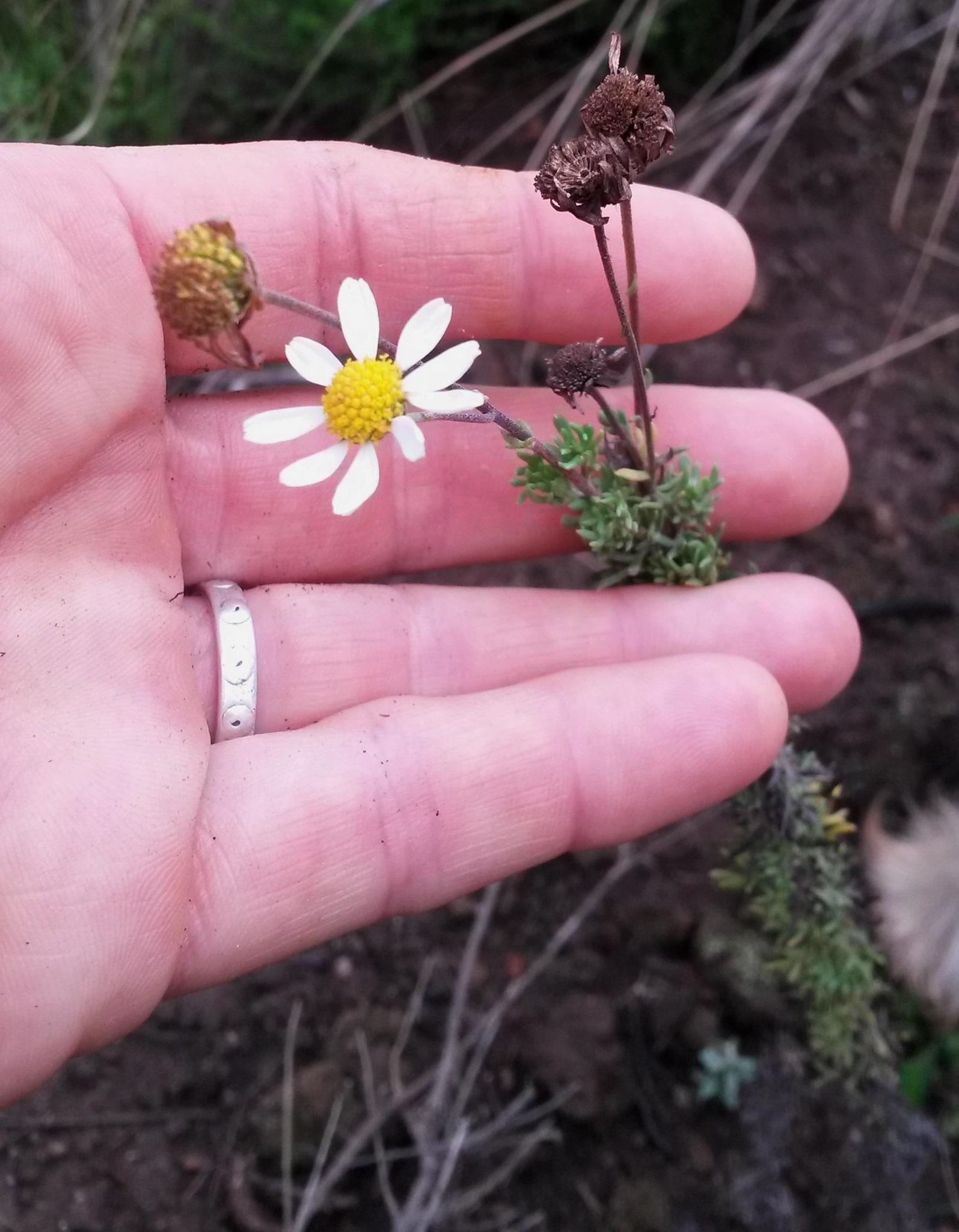
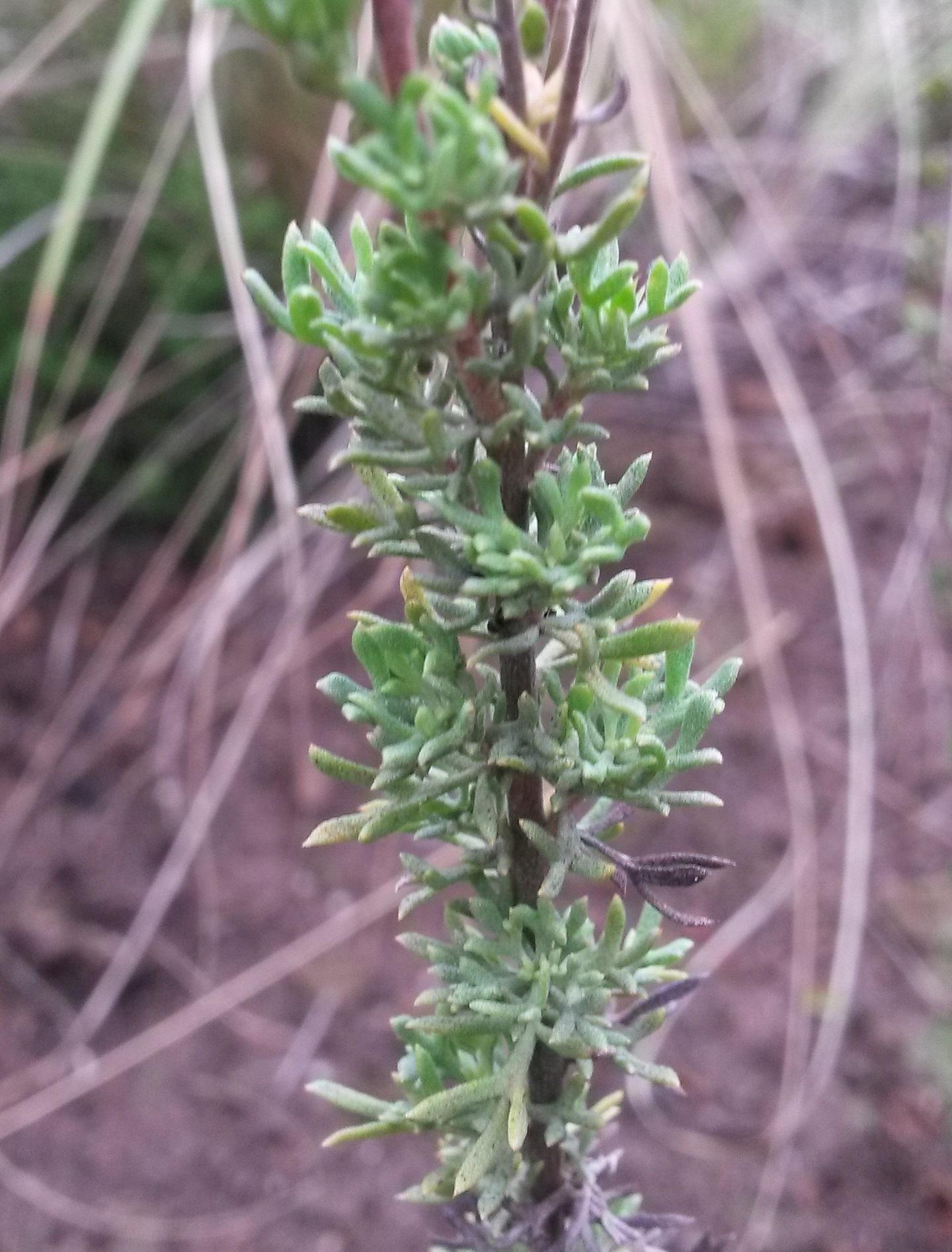
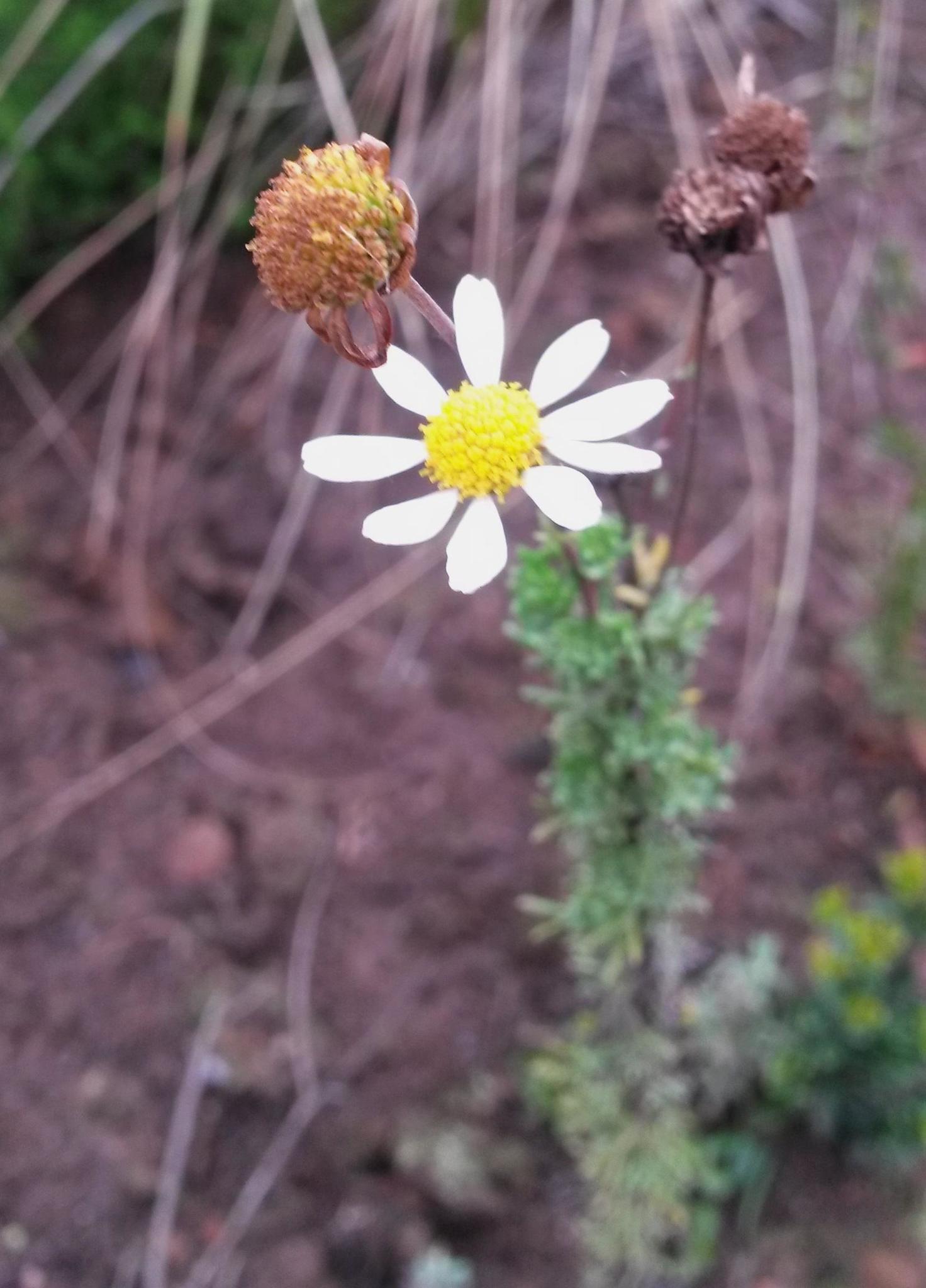
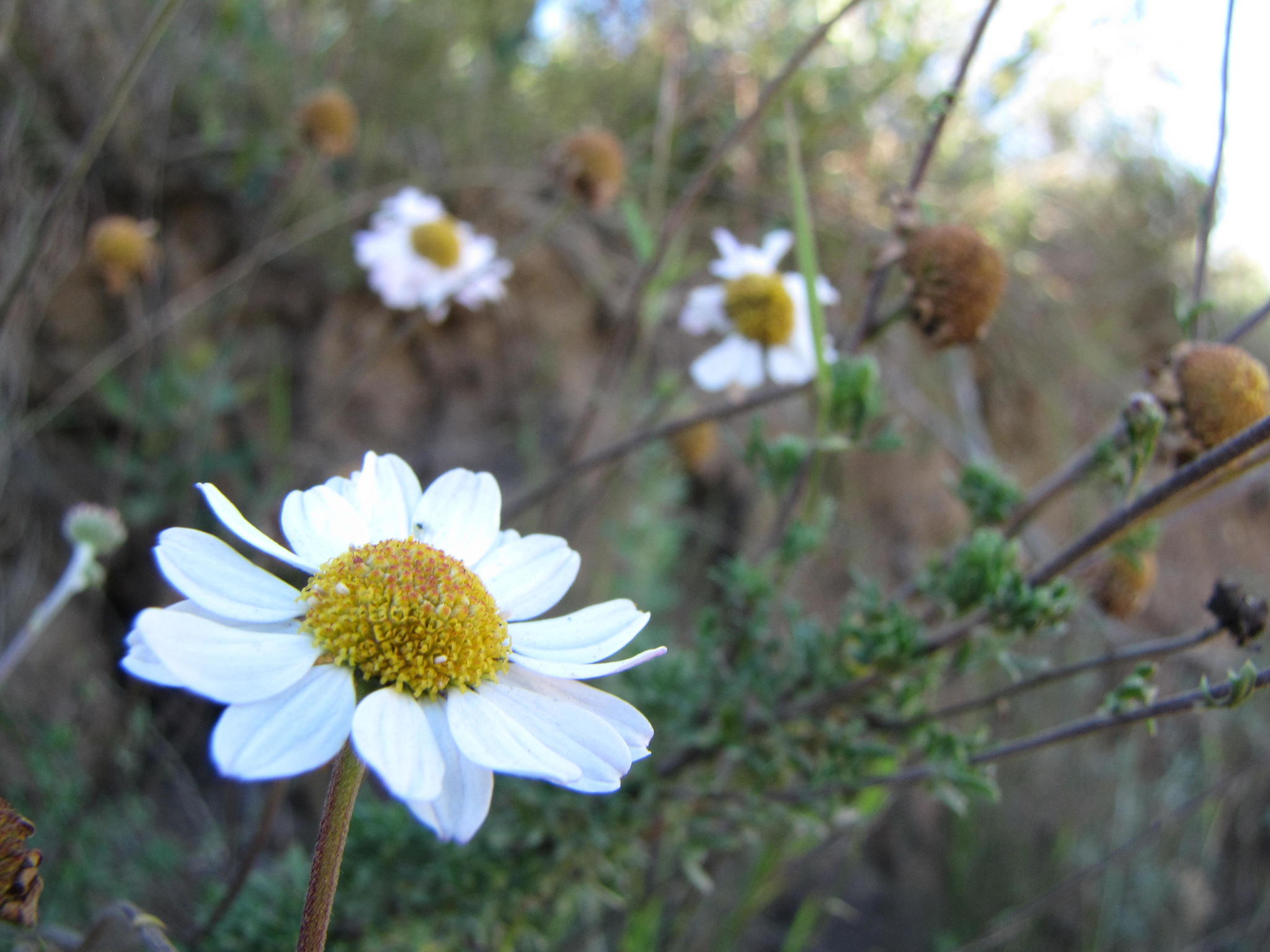
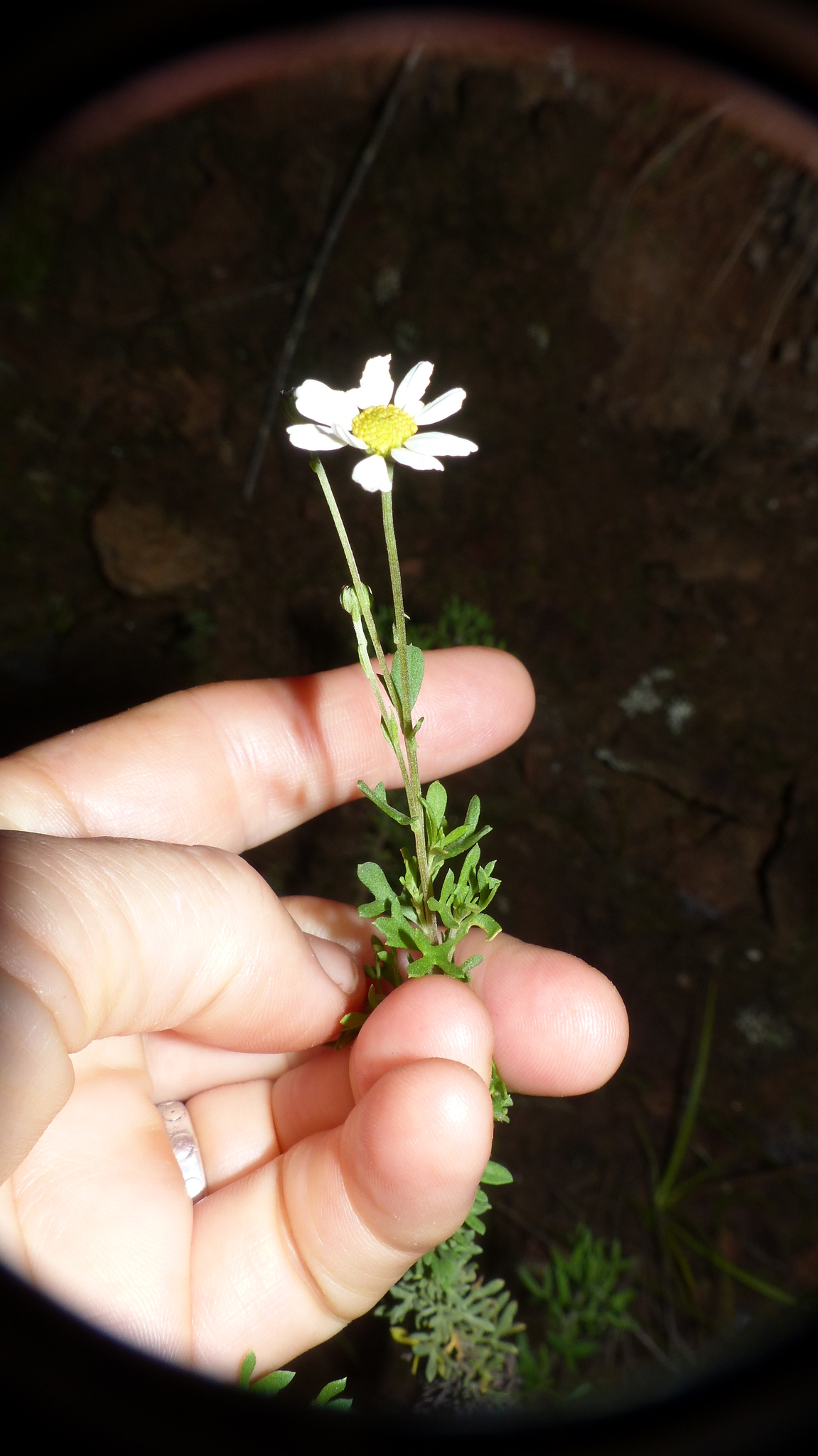
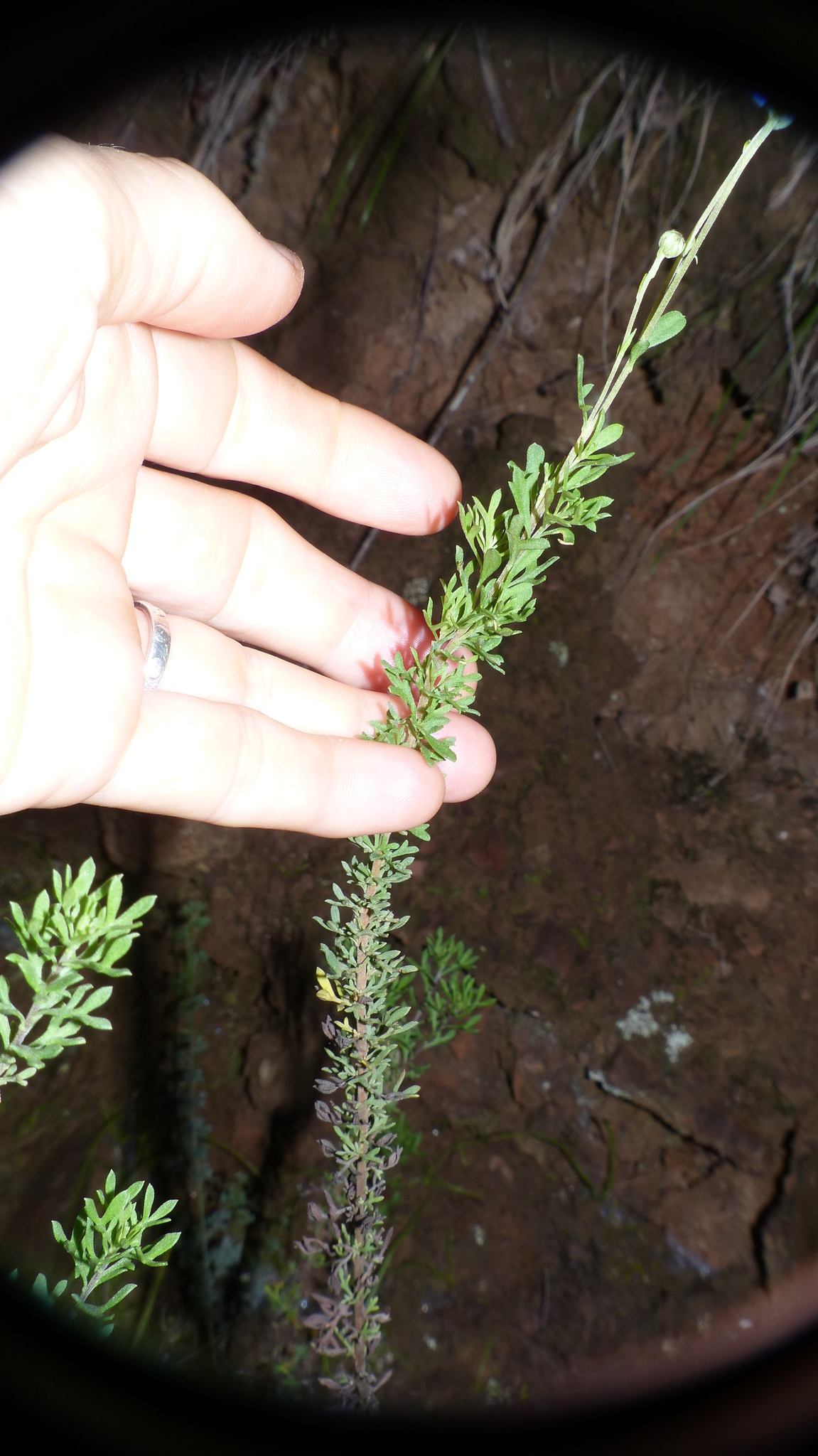
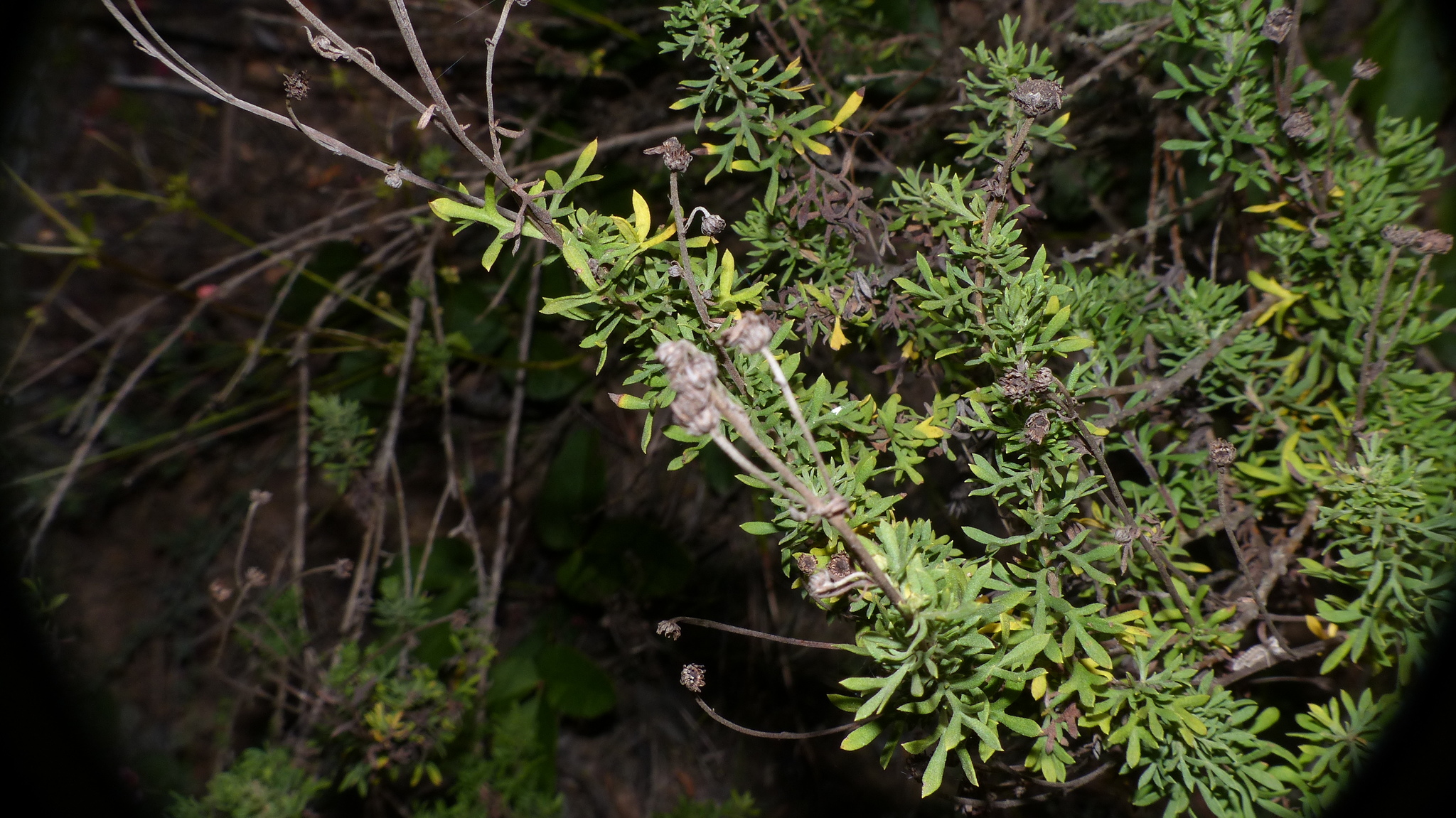
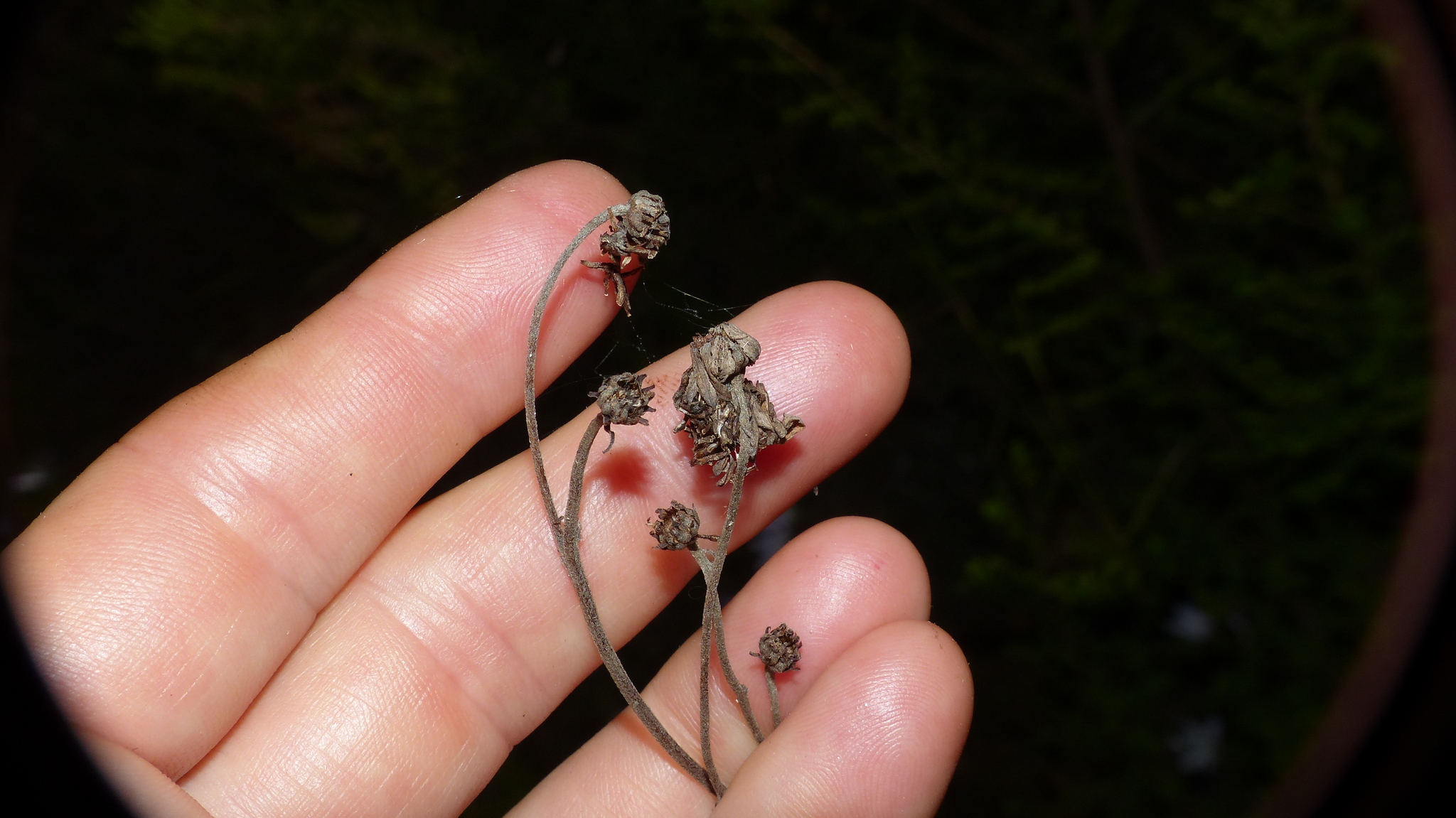
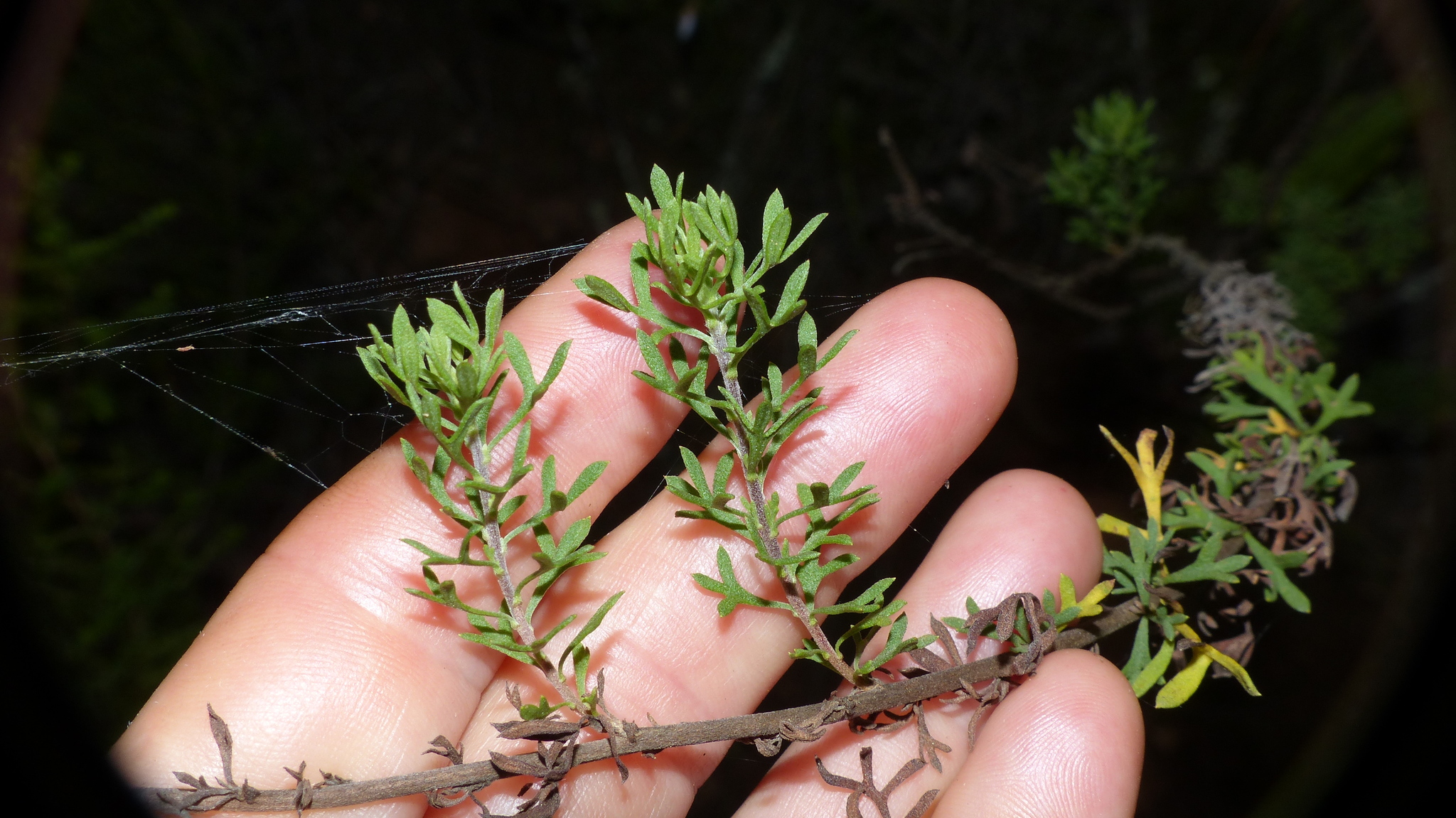
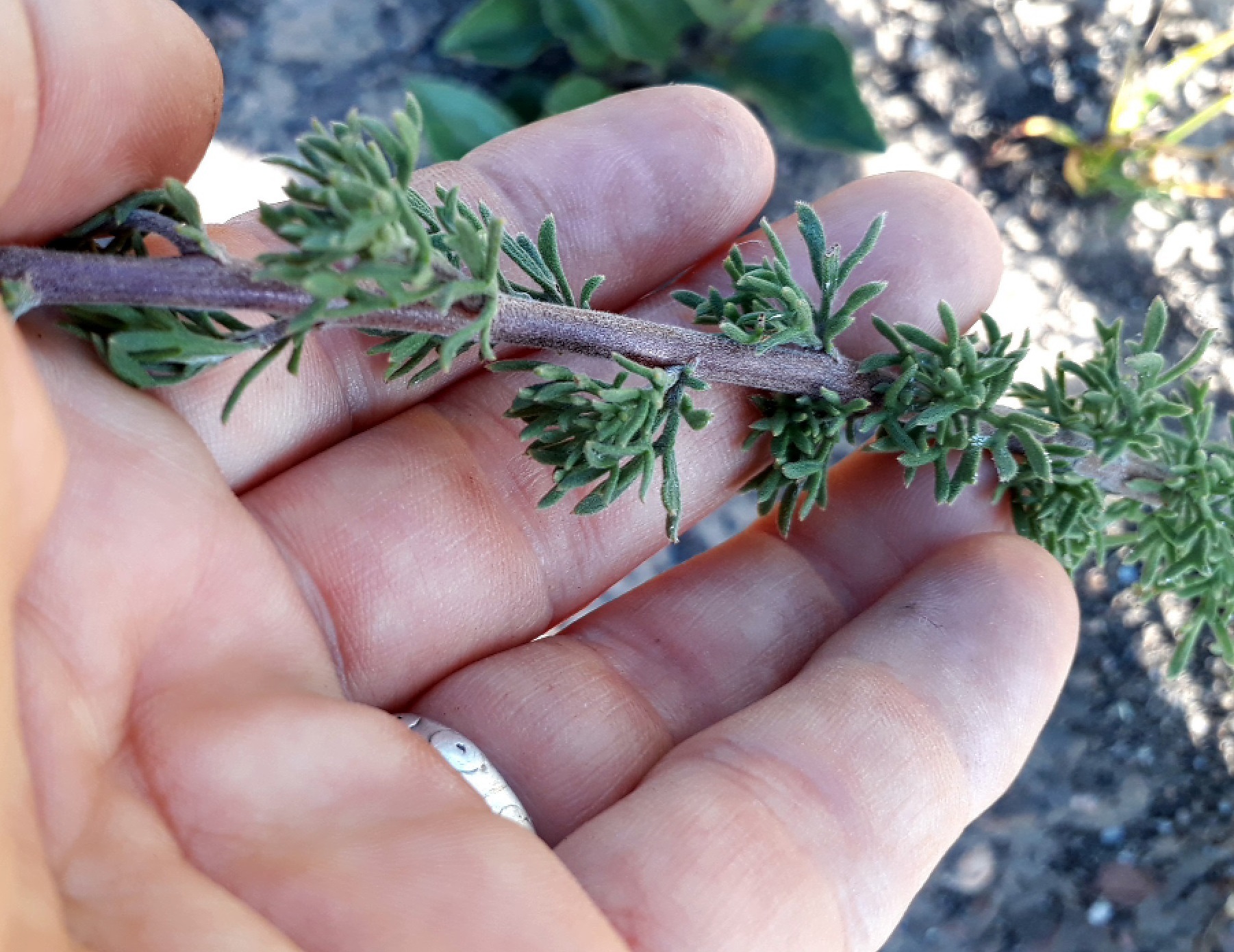
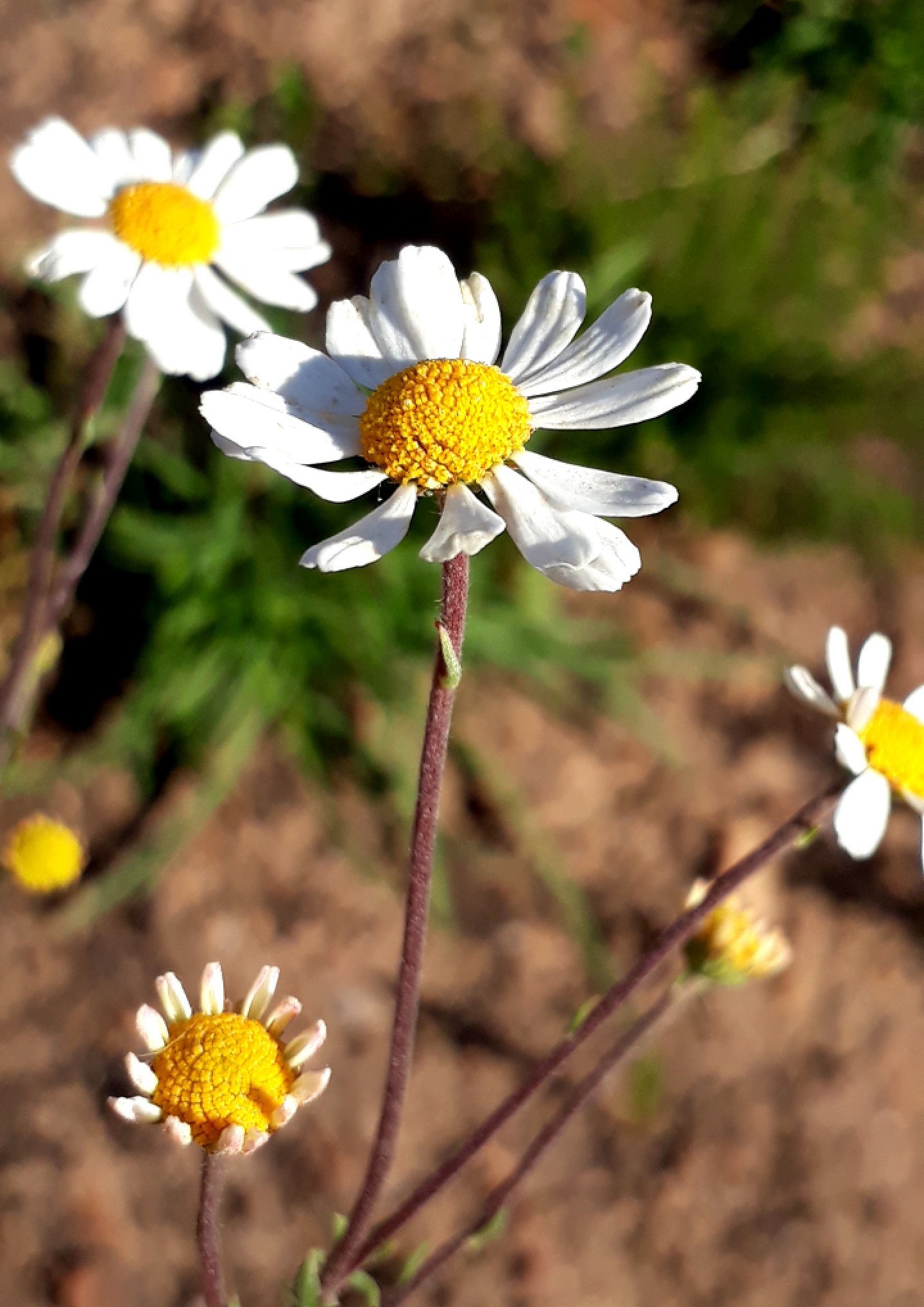
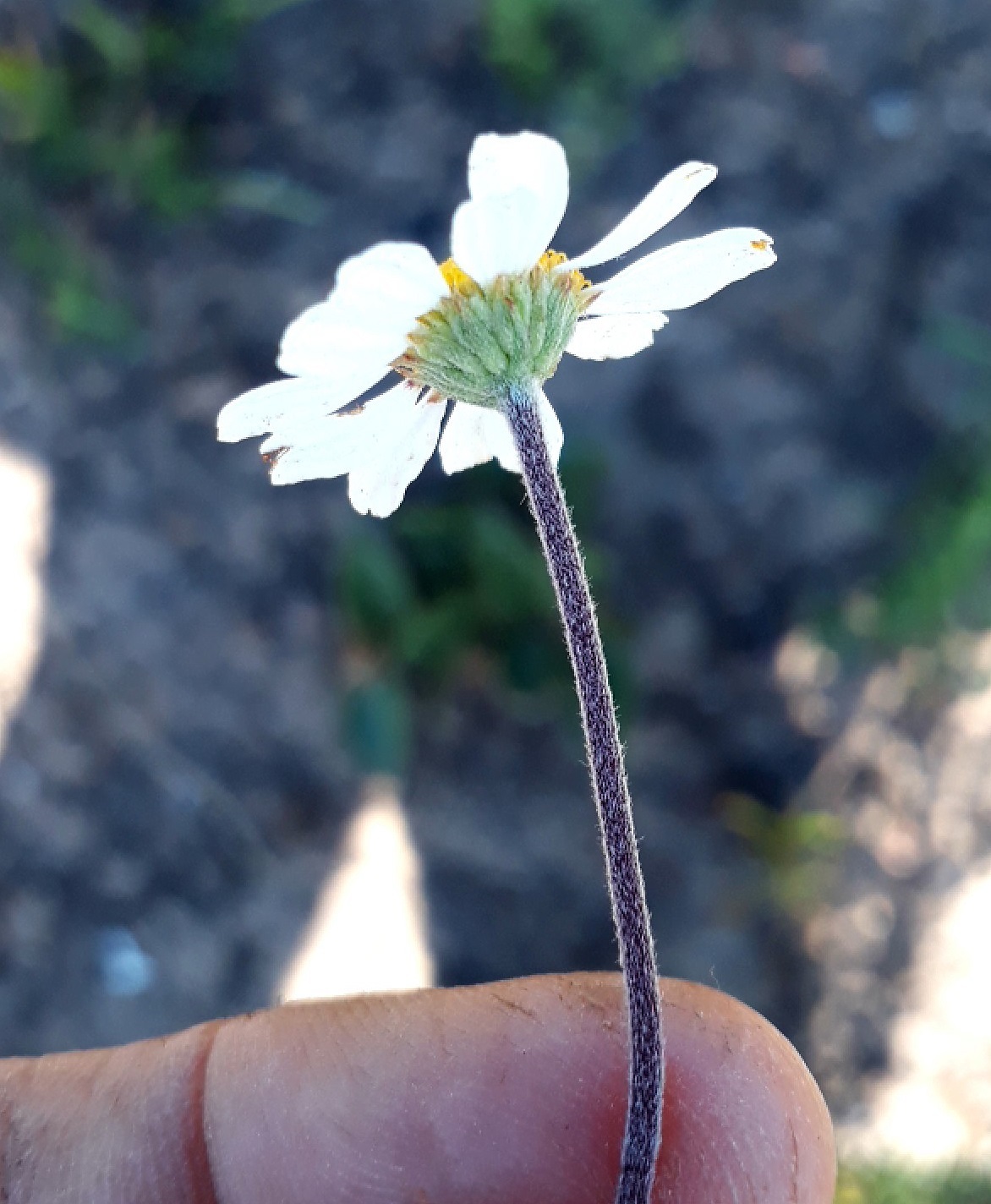
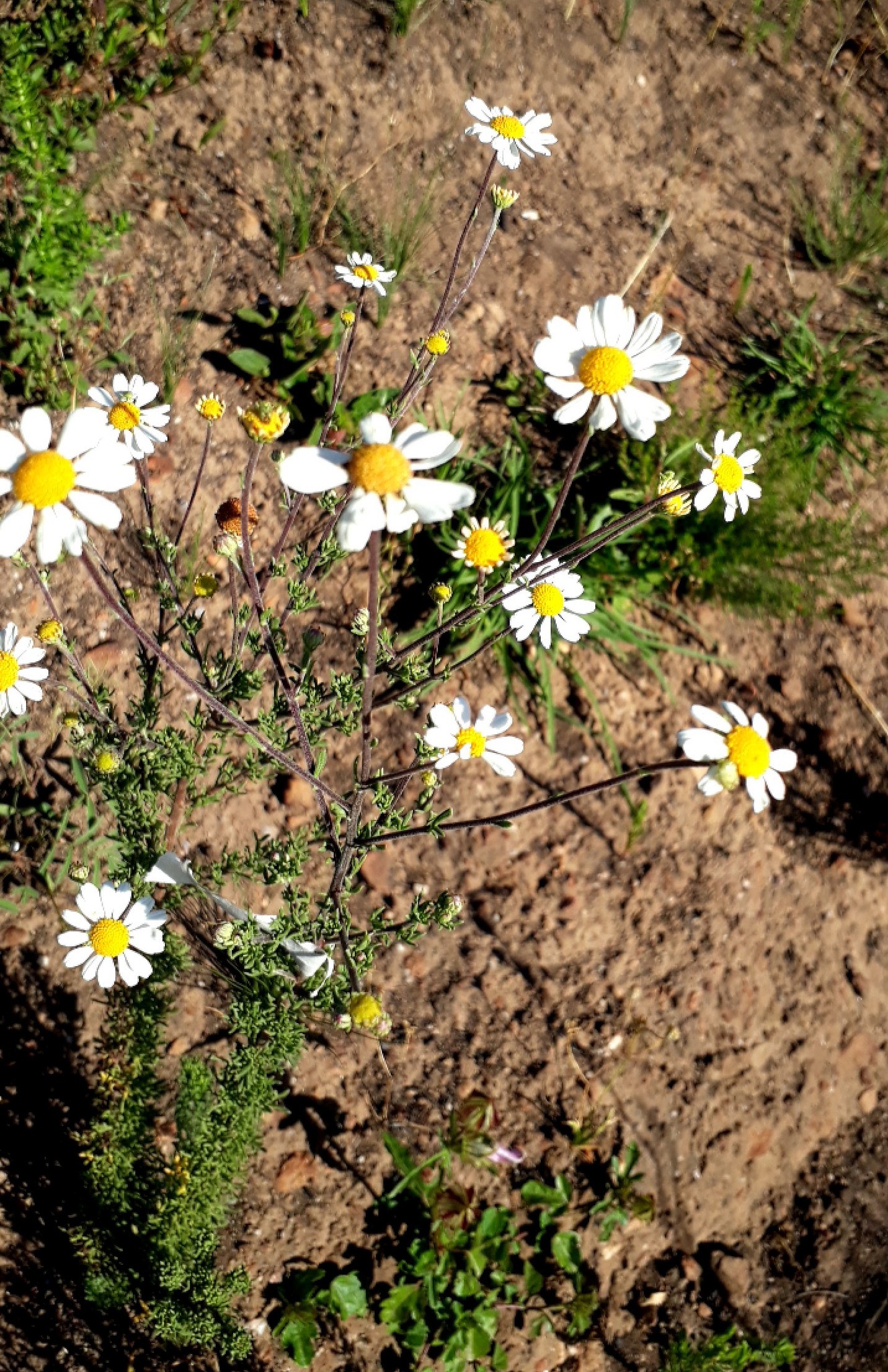
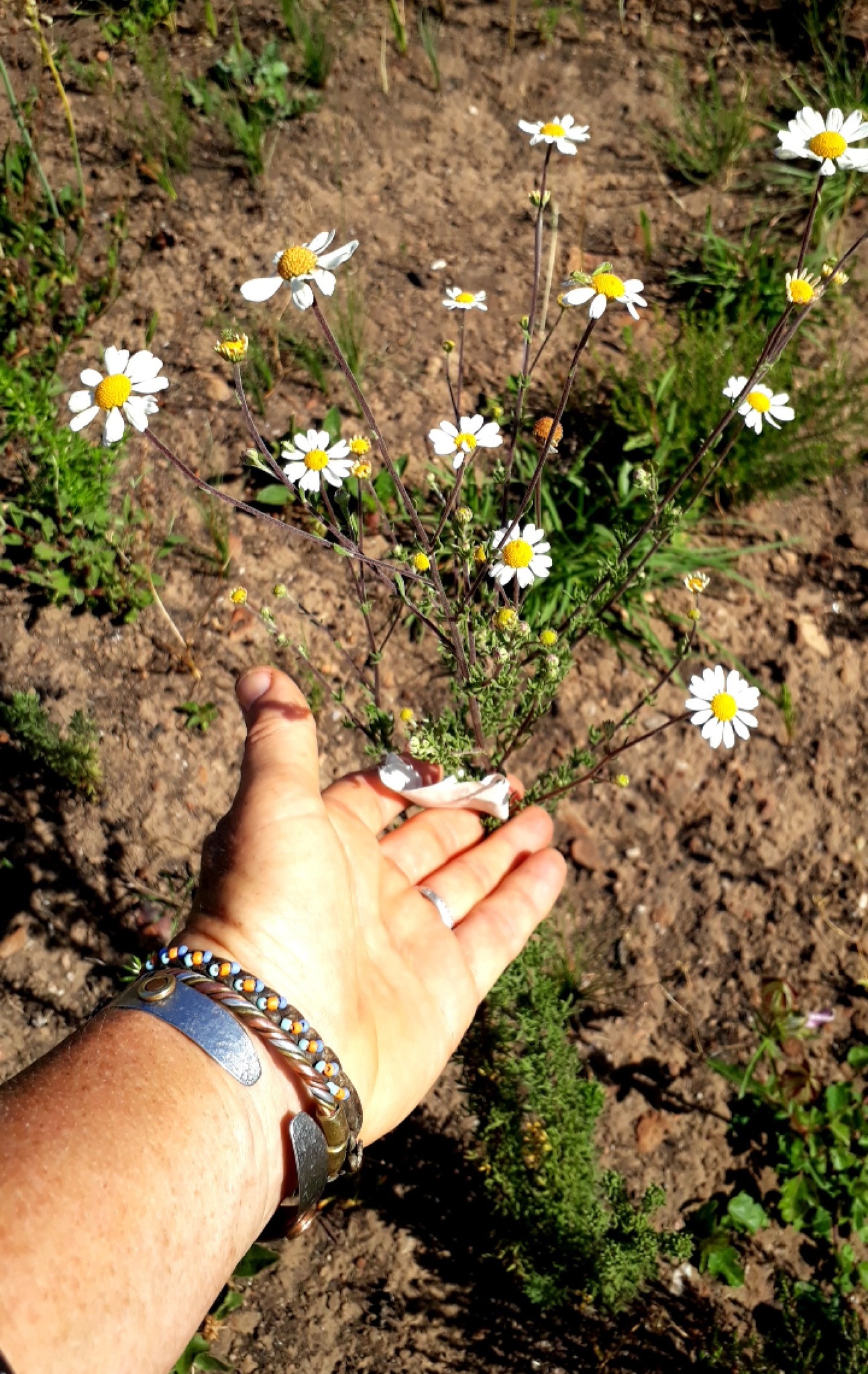
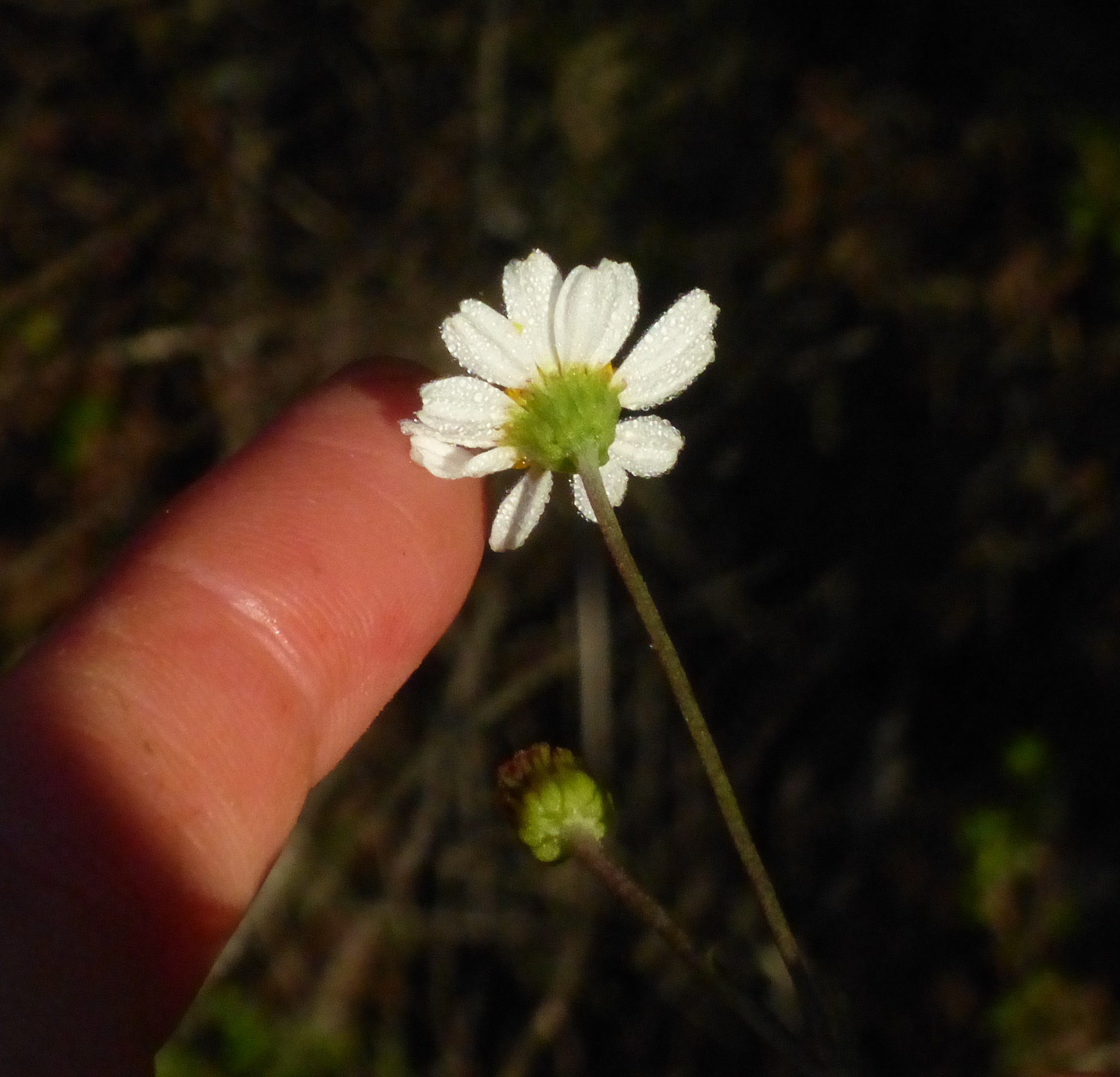
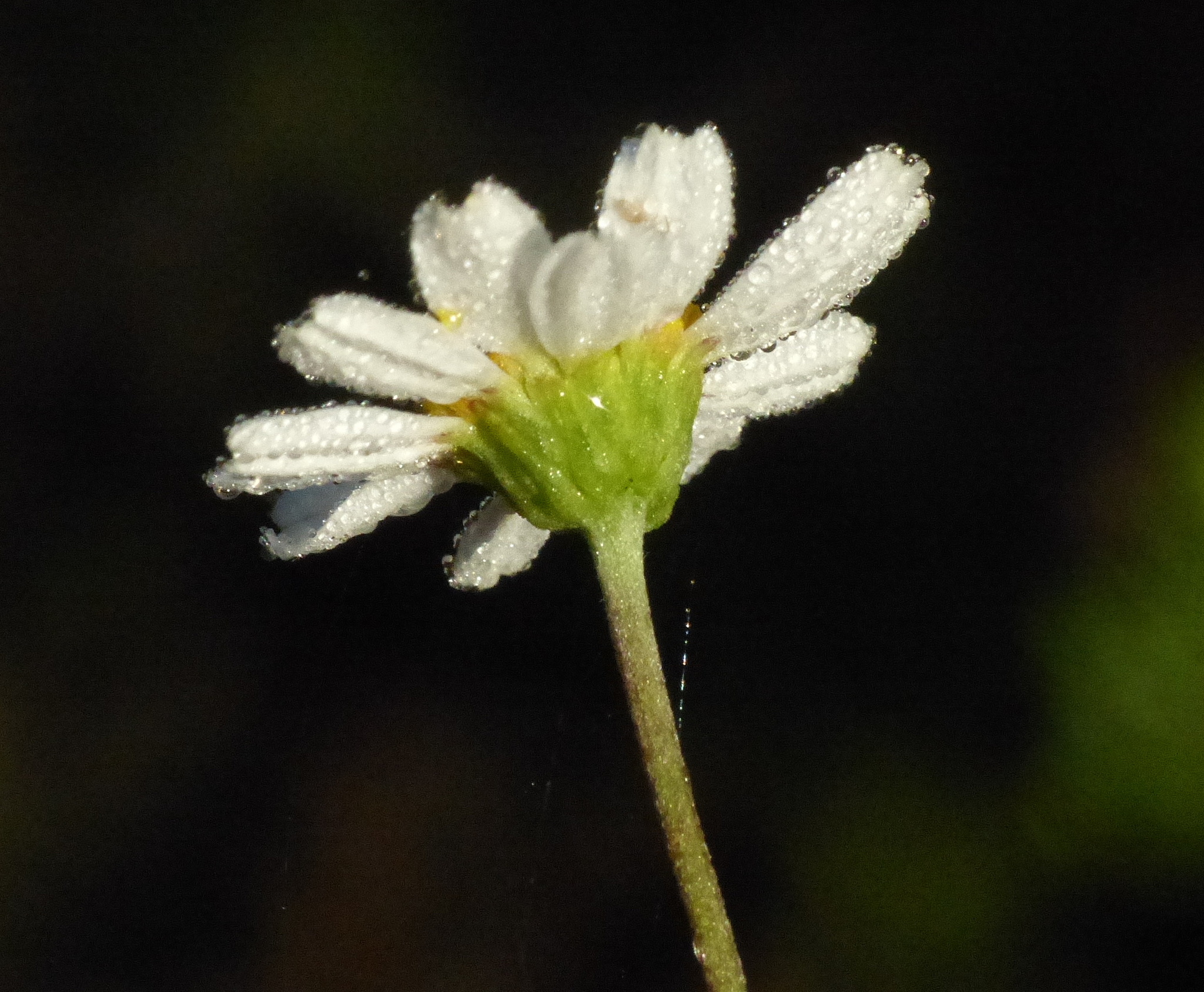
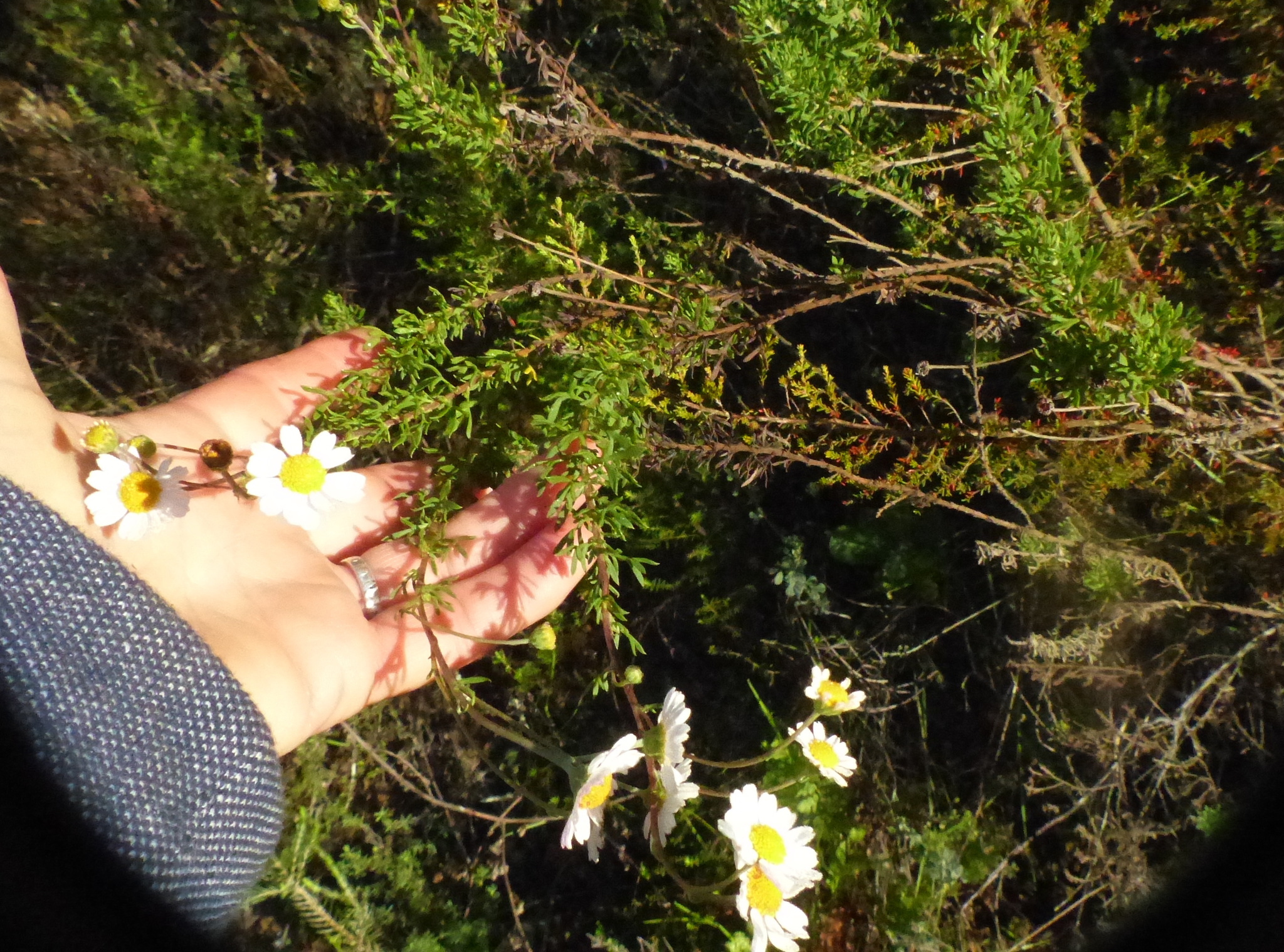
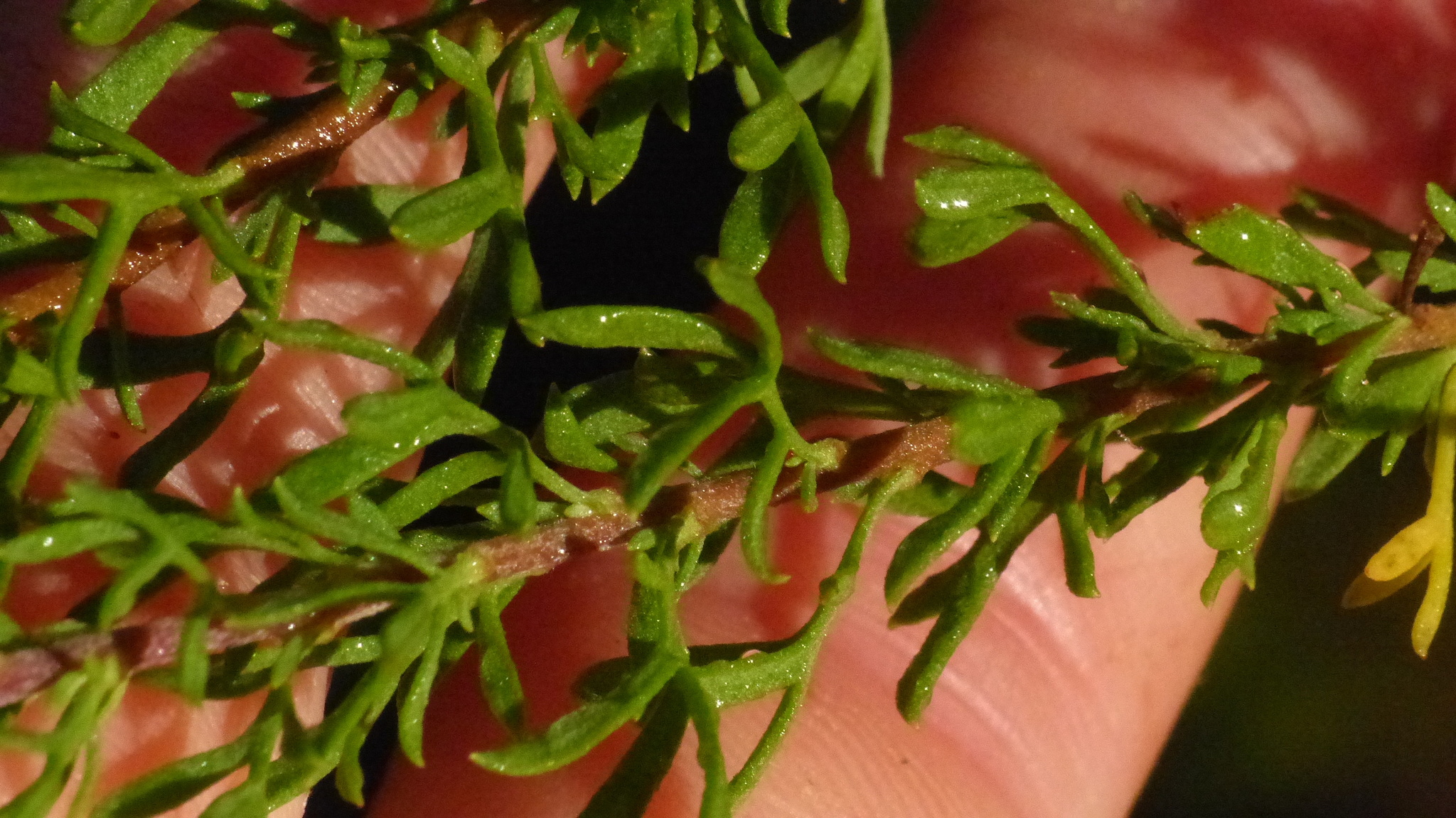
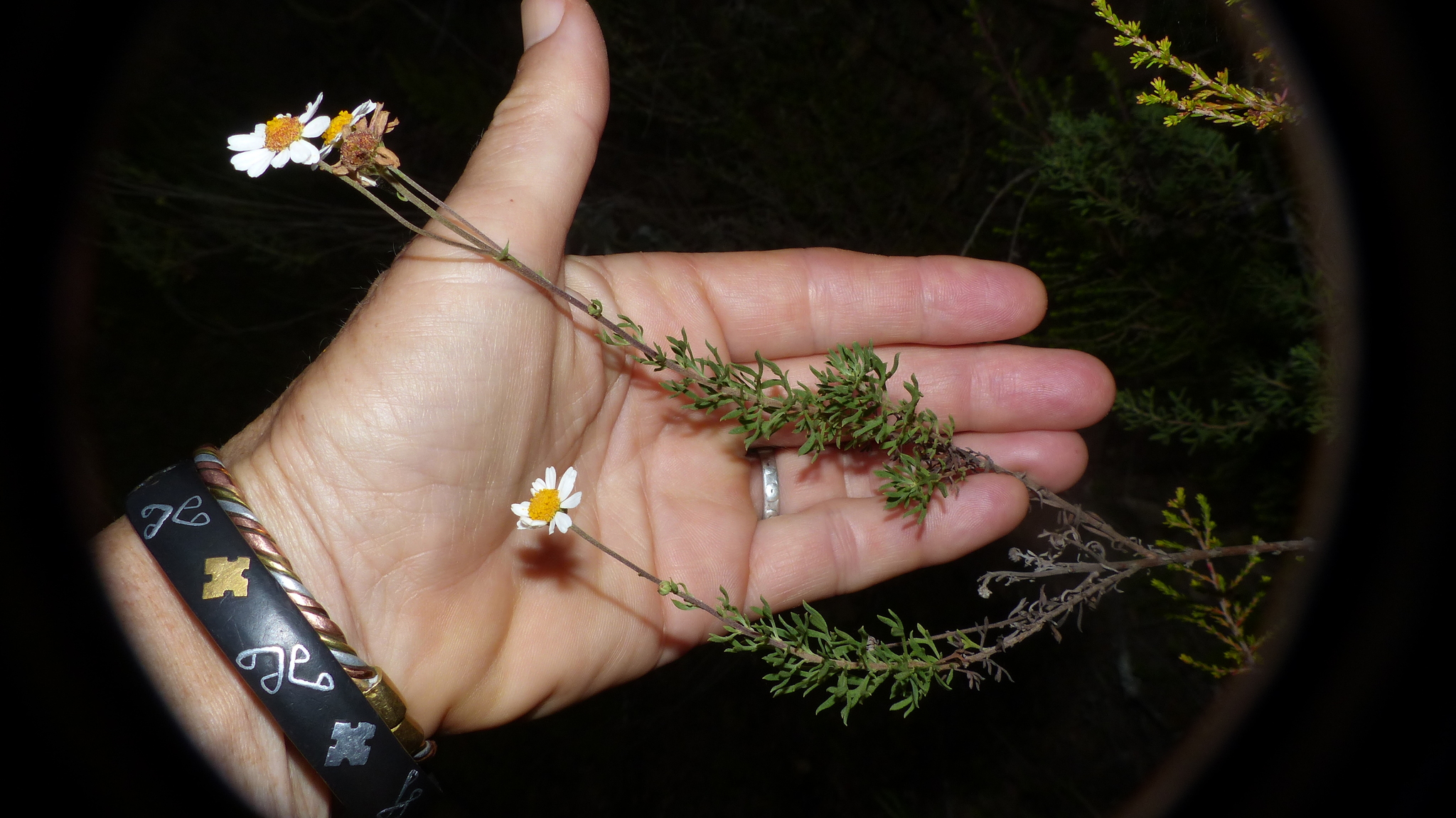
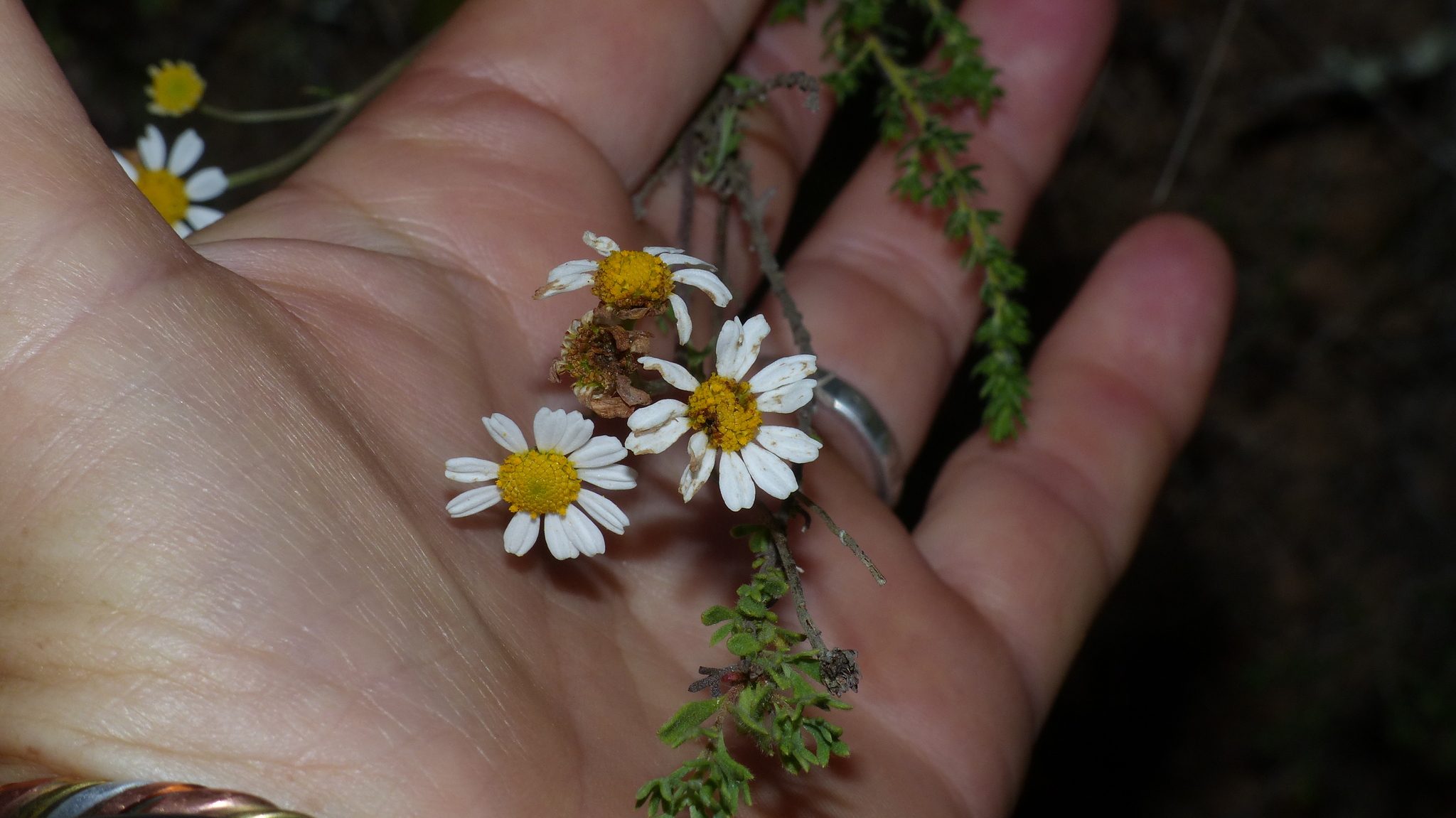
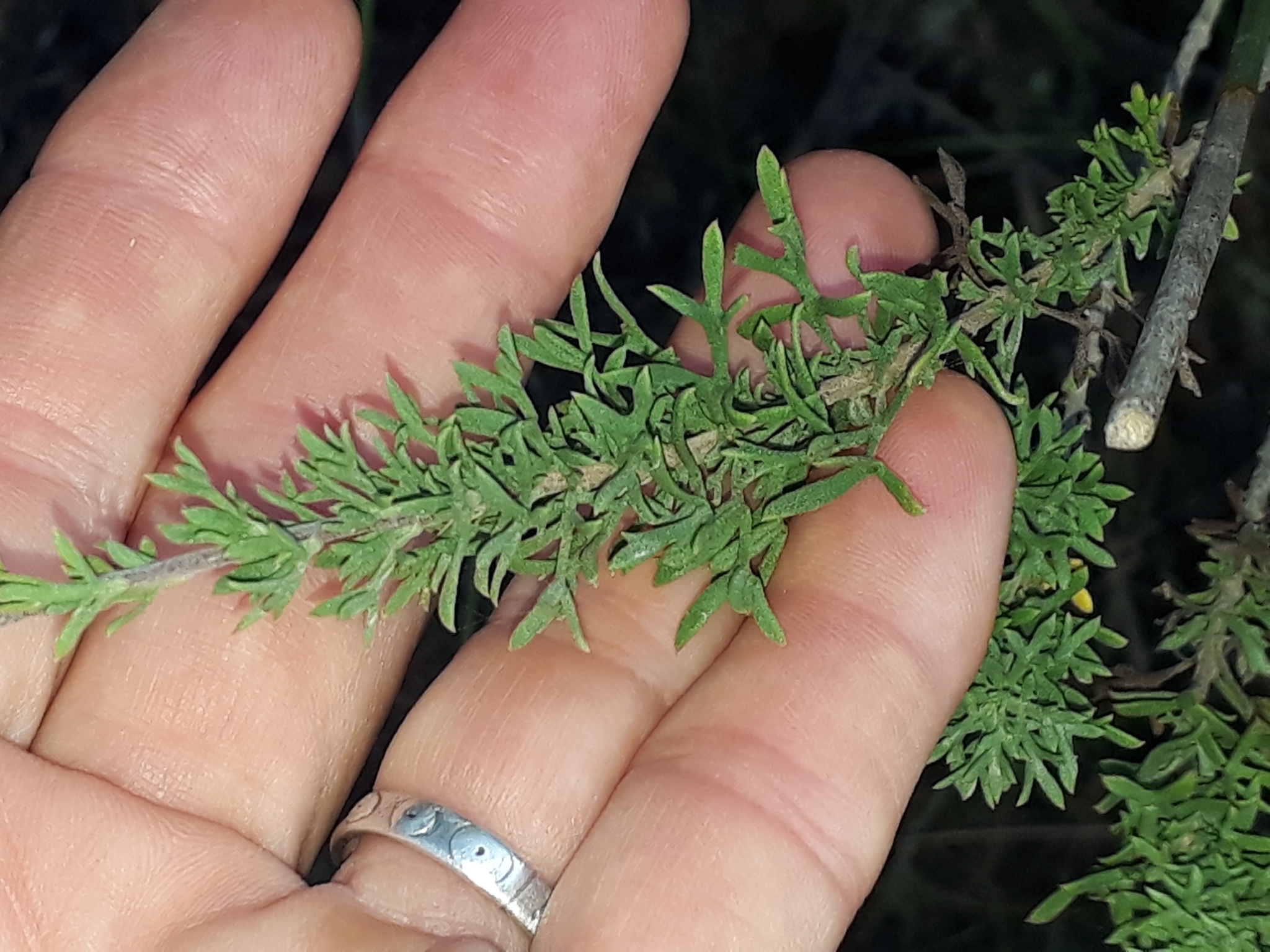
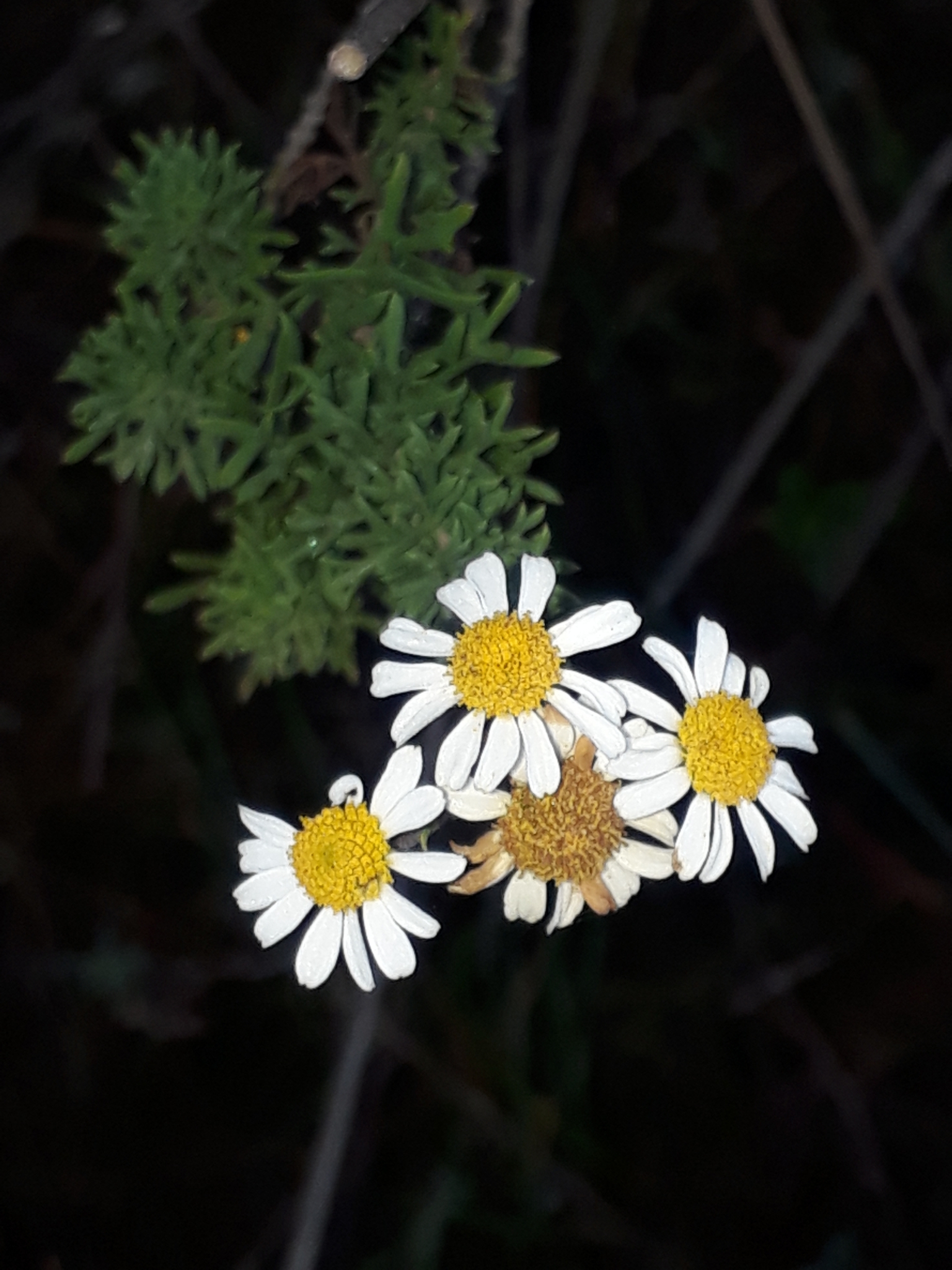
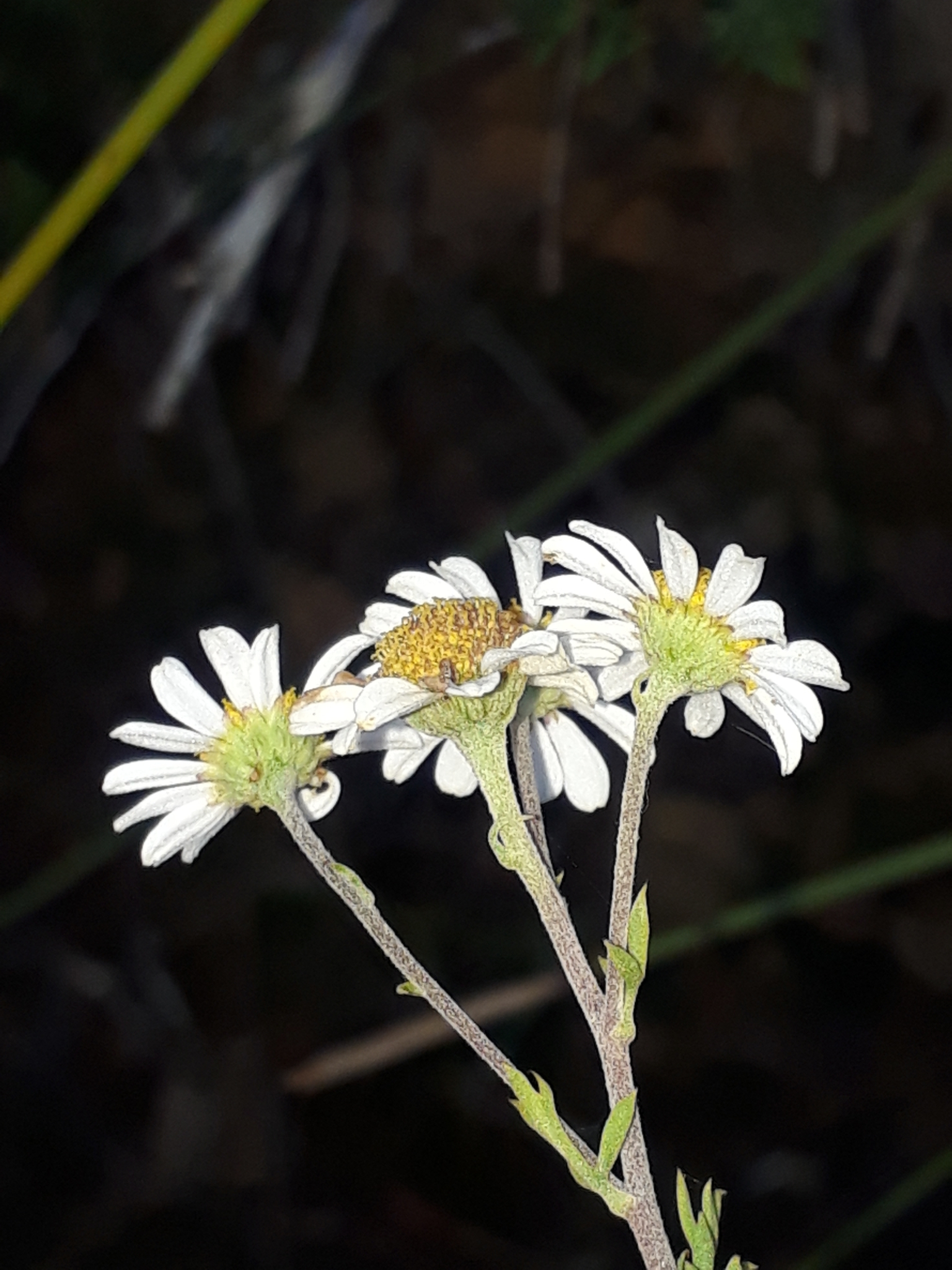
Slender, erect, ± single-stemmed shrublet up to 400 mm high; branches closely leafy above, becoming leafless below, densely appressed-pubescent or felted. Leaves alternate, developing axillary tufts, sessile, 3 or 5 pinnatisect with terminal lobe and 1 or 2 pairs of lateral lobes, cuneate to obovate in outline, 6-12 x 4-12 mm, narrowed to a petiole-like base, densely appressed-sericeous and gland-dotted, lobes linear to oblong, 1.5-5.0 x 0.5-1.5 mm, mucronulate, margins and midrib thickened beneath. Capitula pedunculate, solitary or up to 3 in loose terminal corymbs, radiate, 15-20 mm diam. across rays; peduncle 60-120 mm long, ± leafless or with 1 or 2 scattered, leaf-like bracts, appressed-pubescent. Involucre shallowly campanulate, ±7 mm diam.; involucral bracts 3-seriate, lanceolate, ±3 x 1 mm, appressed-pubescent, with small, purple, fimbriate, papery tips and margins, outermost series acute, middle series obtuse with more conspicuous papery tips, inner series slightly shorter and broader, pubescent only along midline. Receptacle conical, areolate, puberulous, epaleate. Ray florets 15-18, white, female, split to base and without corolla tube, oblong, 6-7 x 2.5-3.0 mm, papillose above with scattered glistening glands, thinly sericeous beneath with numerous glistening glands; ovary ovate, compressed, 1.8 x 0.8 mm, margins narrowly winged and ± sericeous distally on shoulders, inner face keeled, with glistening glands on both faces; style ±1 mm long, branches linear, 0.5 mm long, truncate and penicillate with marginal stigma; pappus 0. Disc florets yellow, 4-lobed, 0.8 mm long, covered with glistening glands, tube compressed and 4-ribbed with lateral ribs narrowly winged, inflated above; anthers obtuse with suborbicular apical appendage; ovary narrowly ovoid, 1.8 mm long, 4-ribbed with marginal ribs narrowly winged distally, with glistening glands on outer face only; style ±1.8 mm long, branches linear, 0.5 mm long, truncate and penicillate with marginal stigma; pappus 0. Cypselas unknown. From: Manning, JC; Goldblatt, P. 2012. Taxonomic notes. In: J Manning & P Goldblatt (eds), Plants of the Greater Cape Floristic Region 1: The Core Cape flora. Strelitzia 29: 785-821. South African National Biodiversity Institute, Pretoria. [CC BY]
Distinguished by its smaller, 3 or 5-sect leaves, 6-12 mm long, with linear or oblong lobes 0.5-1.5 mm wide, and densely appressed-pubescent on both surfaces, and by its relatively smaller heads, 15-20 mm across the rays. L. quinqueloba has distinctive, petiolate, sub-palmately lobed leaves with a russet, villous pubescence on the vegetative parts, and L. pectinata has larger, 7 or 5-sect, subglabrous leaves, mostly 15-25 mm long, with villous margins and aristate lobes. Both species have larger heads, 25-40 mm across the rays. From: Manning, JC; Goldblatt, P. 2012. Taxonomic notes. In: J Manning & P Goldblatt (eds), Plants of the Greater Cape Floristic Region 1: The Core Cape flora. Strelitzia 29: 785-821. South African National Biodiversity Institute, Pretoria. [CC BY]
The species favours richer soils derived from shale or granite at the renosterveld/fynbos ecotone and is recorded as rare and localized. From: Manning, JC; Goldblatt, P. 2012. Taxonomic notes. In: J Manning & P Goldblatt (eds), Plants of the Greater Cape Floristic Region 1: The Core Cape flora. Strelitzia 29: 785-821. South African National Biodiversity Institute, Pretoria. [CC BY]
Currently known from just three scattered localities along the southern foothills of the Langeberg, 200-500 m, from near Robertson in the west to Mossel Bay in the east. From: Manning, JC; Goldblatt, P. 2012. Taxonomic notes. In: J Manning & P Goldblatt (eds), Plants of the Greater Cape Floristic Region 1: The Core Cape flora. Strelitzia 29: 785-821. South African National Biodiversity Institute, Pretoria. [CC BY]
March to August
200 to 500 m
This map contains point-based occurrences at different locations
Occurrence in the Flora of Southern Africa (FSA) countries and South African provinces. Residence status indicates if a taxon is indigenous, endemic, naturalised or invasive in a specific region. This data is based on specimen records and literature
FSA
SA
BOT
NAM
ESW
LES
WC
EC
NC
FS
GA
KZN
LP
MP
NW
Absent
Indigenous
Endemic
Naturalised
Invasive

Names and Sources
Published in: Strelitzia 29: 796 (2012)
Classification
KINGDOM Plantae
SUBKINGDOM Phanerogamae
PHYLUM Anthophyta
ORDER Asterales
FAMILY Asteraceae
SUBFAMILY Asteroideae
TRIBE Anthemideae
GENUS Lidbeckia
SPECIES pinnata
14 results for Lidbeckia pinnata J.C.Manning & Helme
Barcode: NBG0154346-0 Collector(s) & number: Watson, LE, 94-119 | 1994-11-27
South Africa, Western Cape, Mossel Bay Div. Near Brandwag, 3 km along the dirt track travelling west from Brandwag.
Data Resource: BODATSA View record
Barcode: NBG0035664-2 Collector(s) & number: Barker, WF, 8927 | 1959-4-4
South Africa, Western Cape, Mossel Bay Dist. Berg Pass.
General notes: Flowers white. Receptacle without palaea. Pappus none. Rays female, disc hermaph. 4-parted. Leaves 3-5 fid.
Data Resource: BODATSA View record
Barcode: NBG0035664-1 Collector(s) & number: Barker, WF, 8927 | 1959-4-4
South Africa, Western Cape, Mossel Bay Dist. Berg Pass.
General notes: Flowers white. Receptacle without palaea. Pappus none. Rays female, disc hermaph. 4-parted. Leaves 3-5 fid.
Data Resource: BODATSA View record
Barcode: NBG0035664-3 Collector(s) & number: Barker, WF, 8927 | 1959-4-4
South Africa, Western Cape, Mossel Bay Dist. Berg Pass.
General notes: Flowers white. Receptacle without palaea. Pappus none. Rays female, disc hermaph. 4-parted. Leaves 3-5 fid.
Data Resource: BODATSA View record
Barcode: NBG0198108-0 Collector(s) & number: Helme, NA, 2698 | 2003-7-7
South Africa, Western Cape, Robertson. ±10 km NW of Robertson on south slopes of Tierberg above Sandrivier Farm.
General notes: Alt. 500 m. Fynbos biome. Moderate, hill slope. Well-drained, loamy soil. Granite. Partial shade. S aspect. No biotic effect seen. Herb. Rays white, discs yellow. Tall, gangly. Flowers present. Plant height 0.40 m. Very rare and local. Granite Fynbos/Renosterveld ecotone. Veld >15 years old.
Data Resource: BODATSA View record
This map contains point-based occurrences at different locations
2012
SERIES CHAPTER
Asteraceae: Lidbeckia P.J.Bergius Manning, JC; Goldblatt, PIn: J Manning & P Goldblatt (eds), Plants of the Greater Cape Floristic Region 1: The Core Cape flora. Strelitzia 29: 393-393
South African National Biodiversity Institute, Pretoria
2012
SERIES CHAPTER
Taxonomic notes Manning, JC; Goldblatt, PIn: J Manning & P Goldblatt (eds), Plants of the Greater Cape Floristic Region 1: The Core Cape flora. Strelitzia 29: 785-821
South African National Biodiversity Institute, Pretoria
No results found for Lidbeckia pinnata J.C.Manning & Helme
Status and criteria
EN
Assessor(s)
Plantae Coordinator
| Part(s) of plant used | Use(s) | Reference |
|---|
Coming soon...