PLANTAE / PHANEROGAMAE / ANTHOPHYTA / ASTERALES / ASTERACEAE / ASTEROIDEAE / GNAPHALIEAE / METALASIA / ALBESCENS

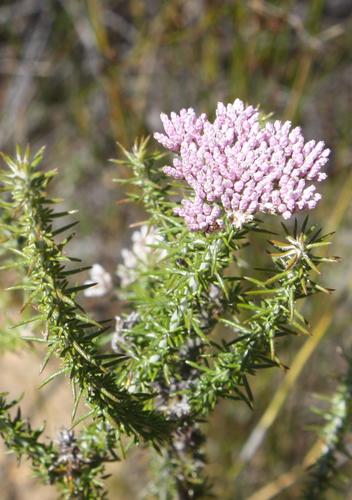
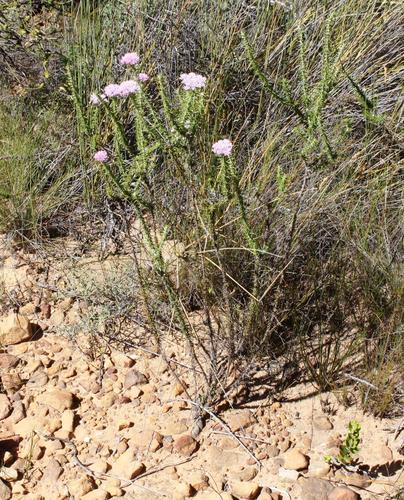
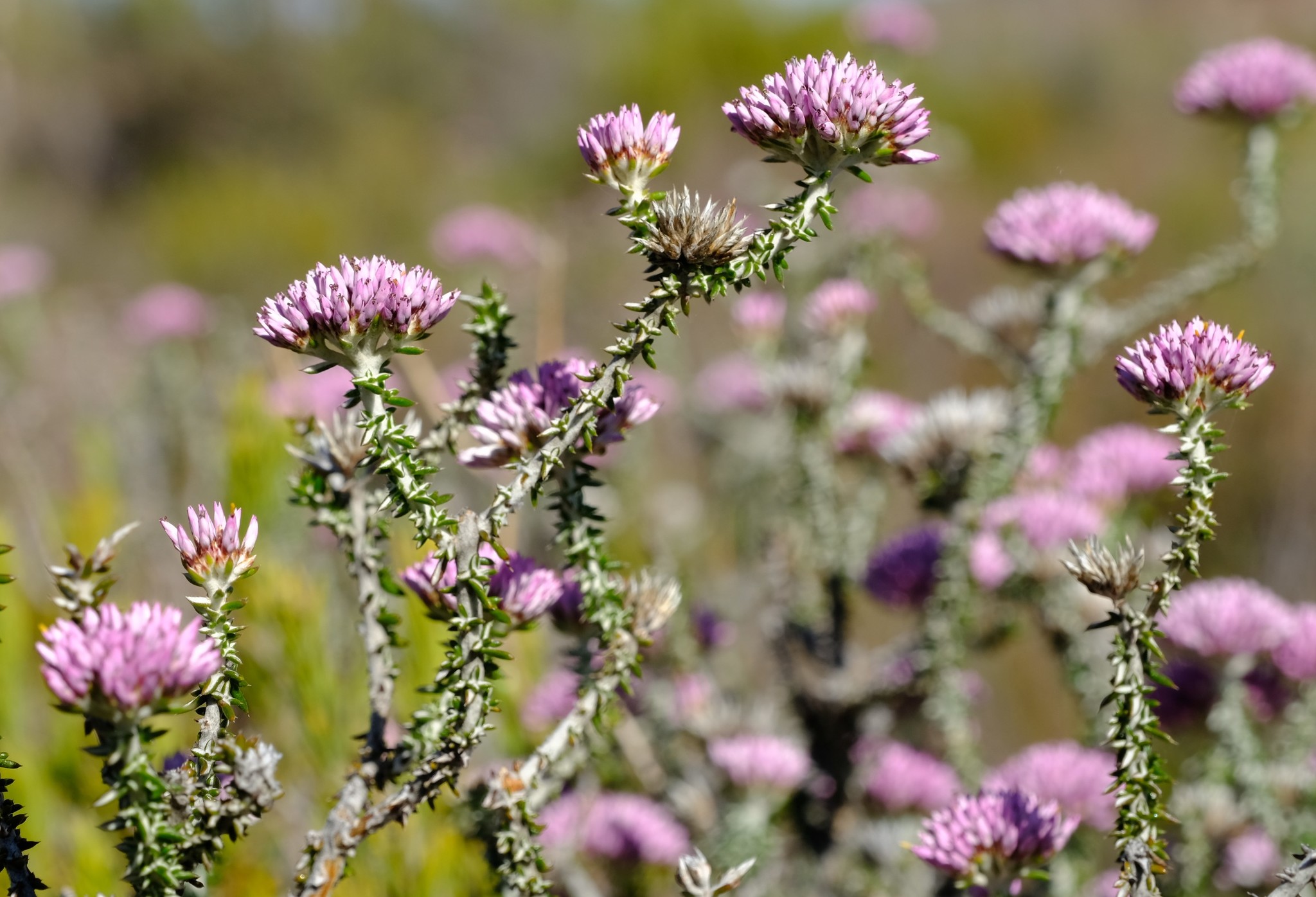
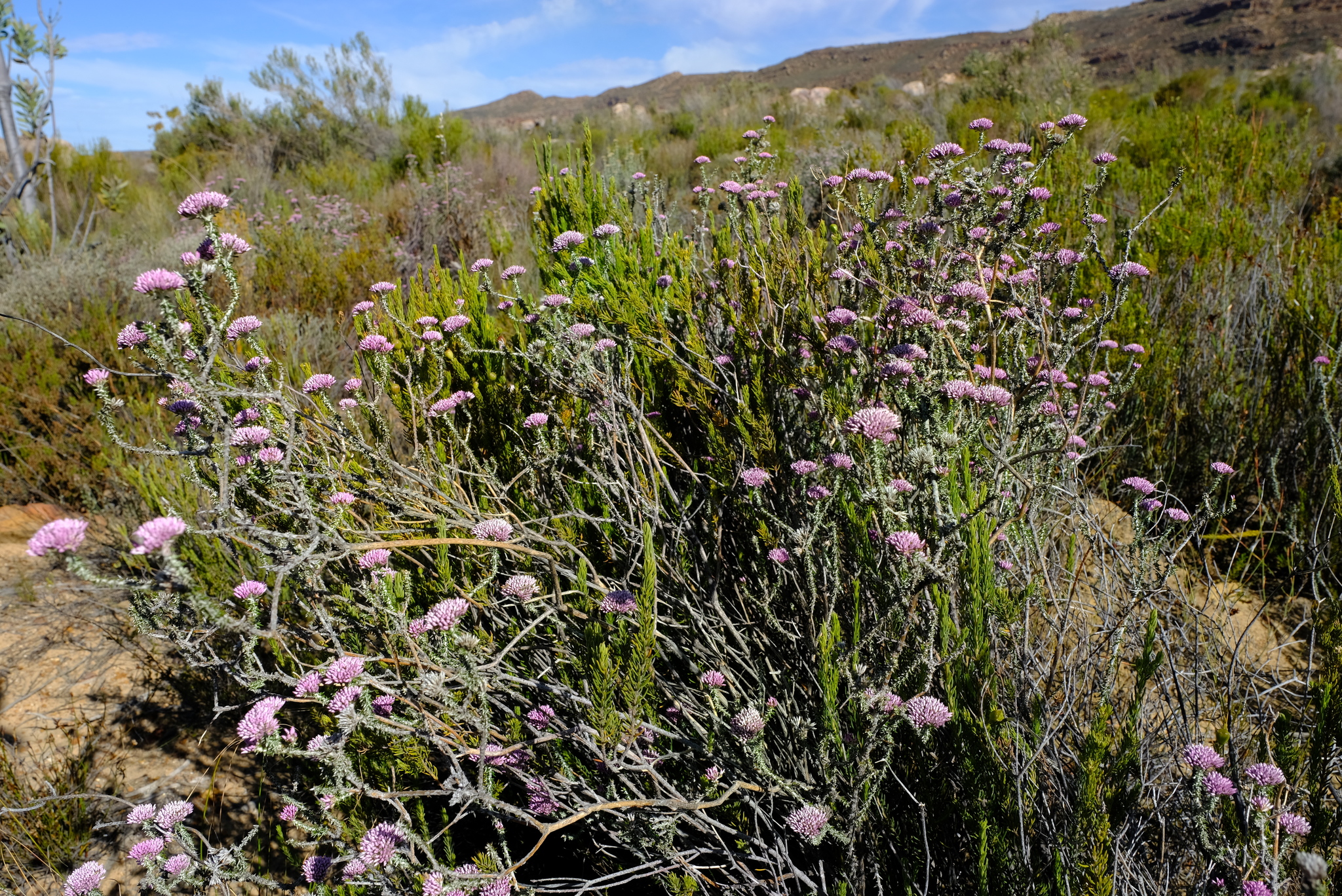
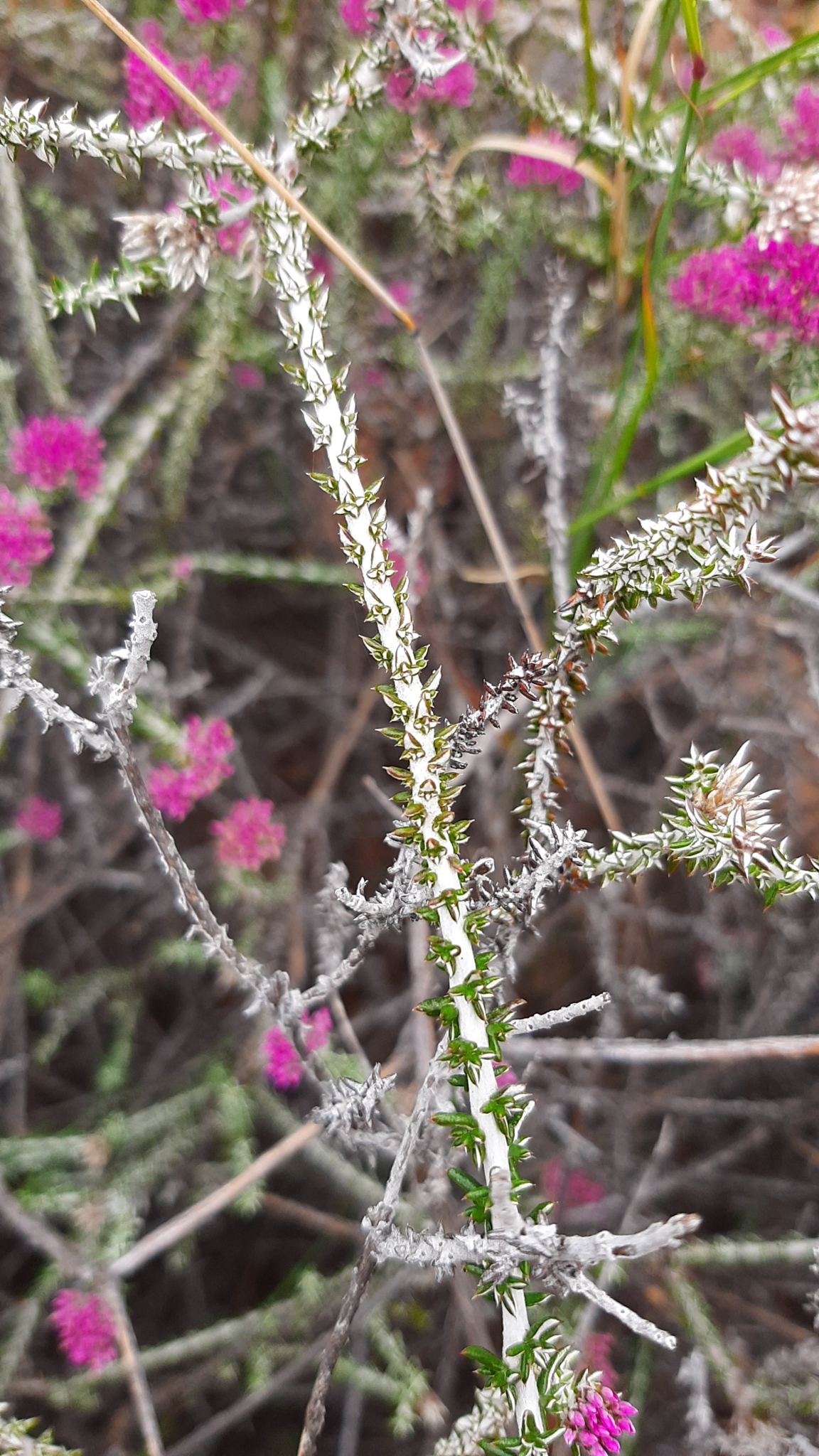
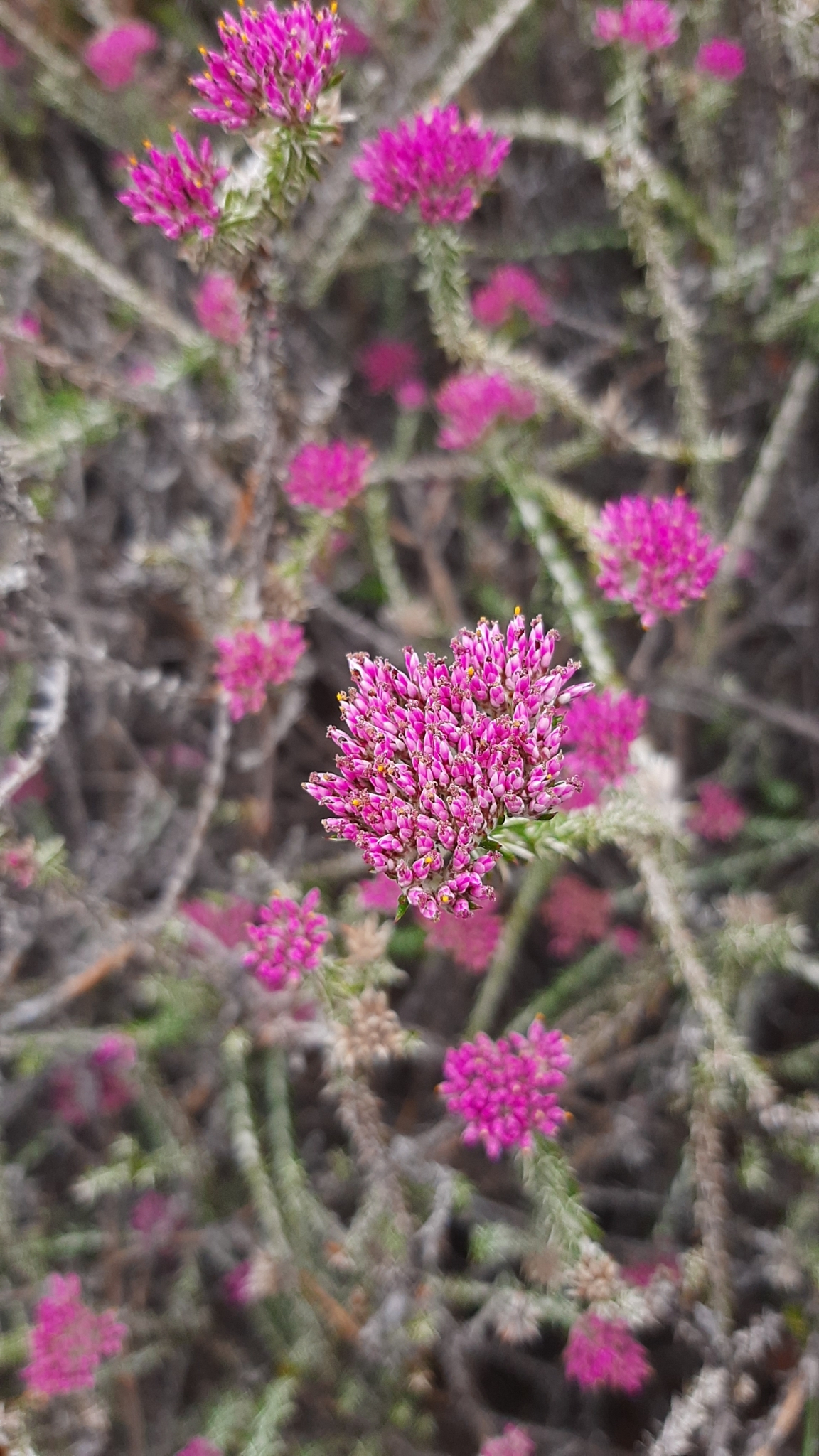
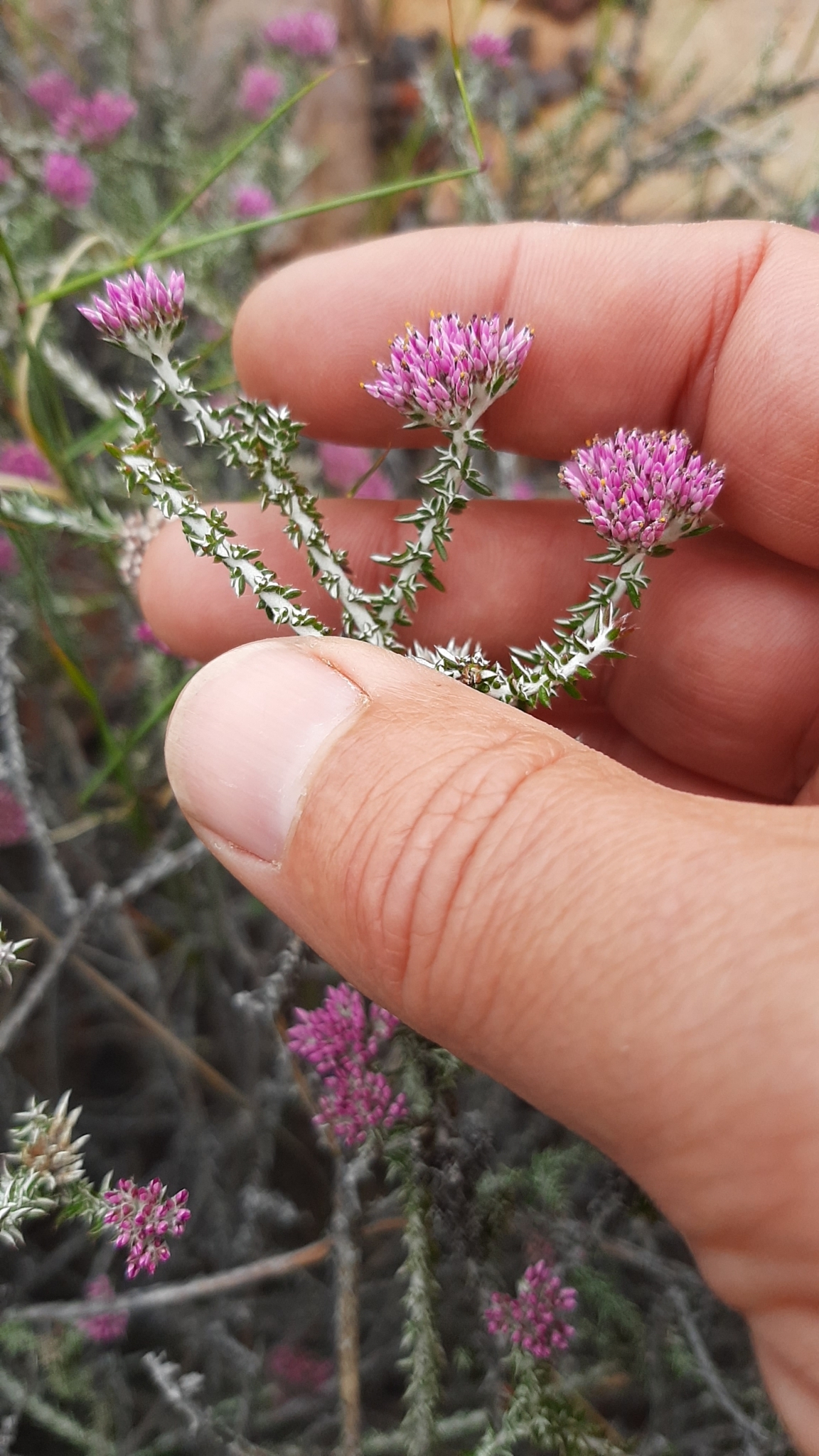
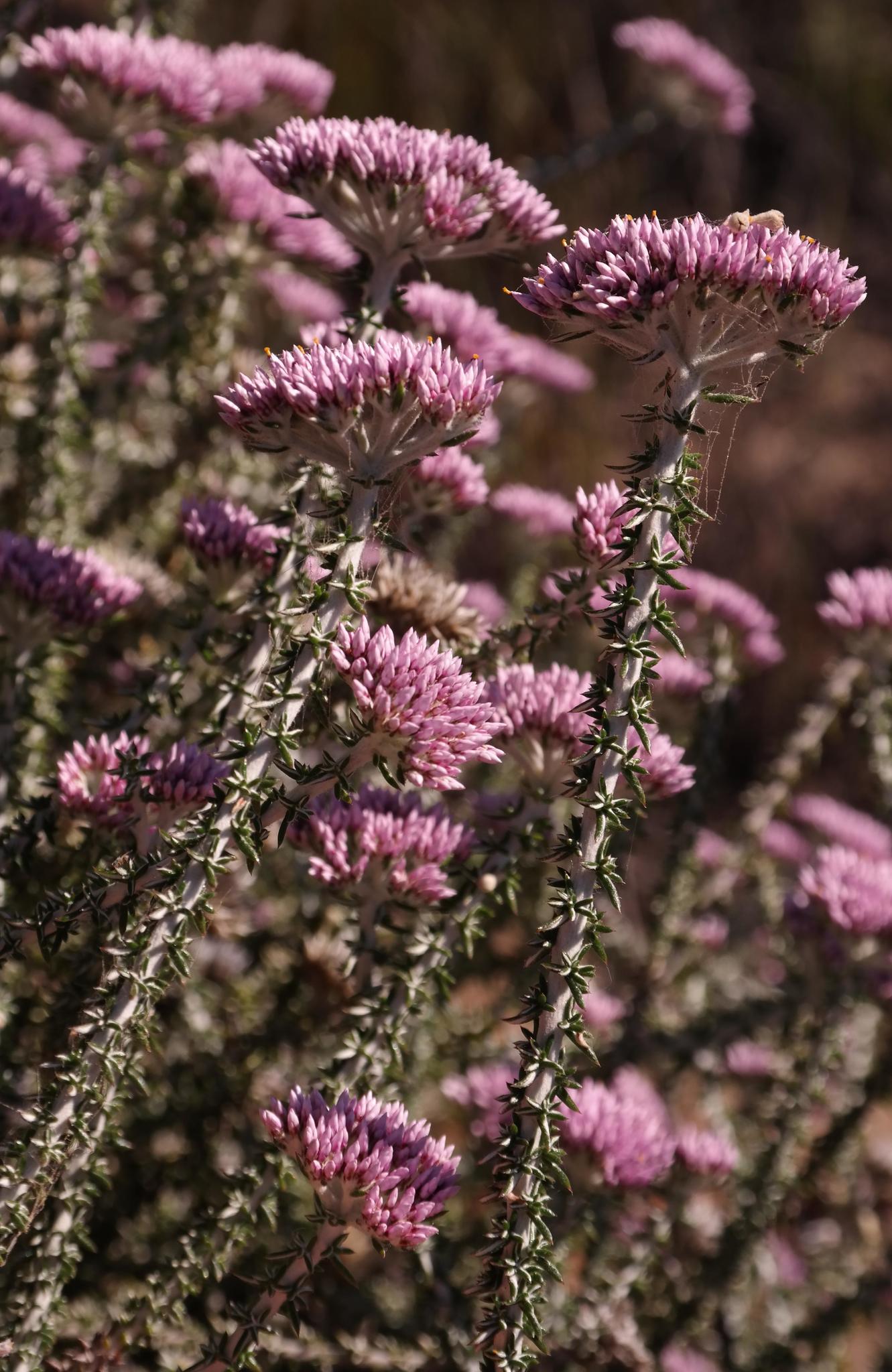
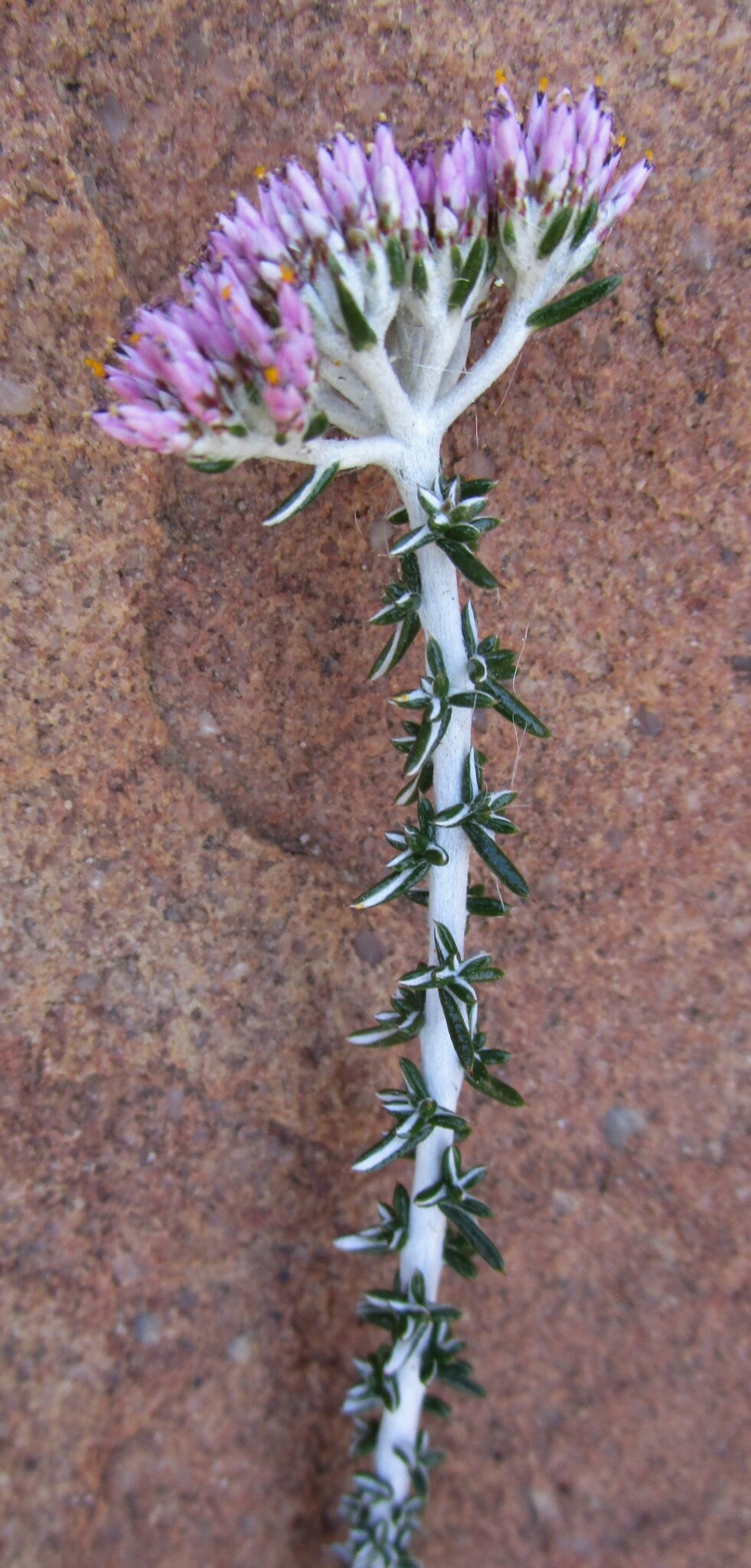
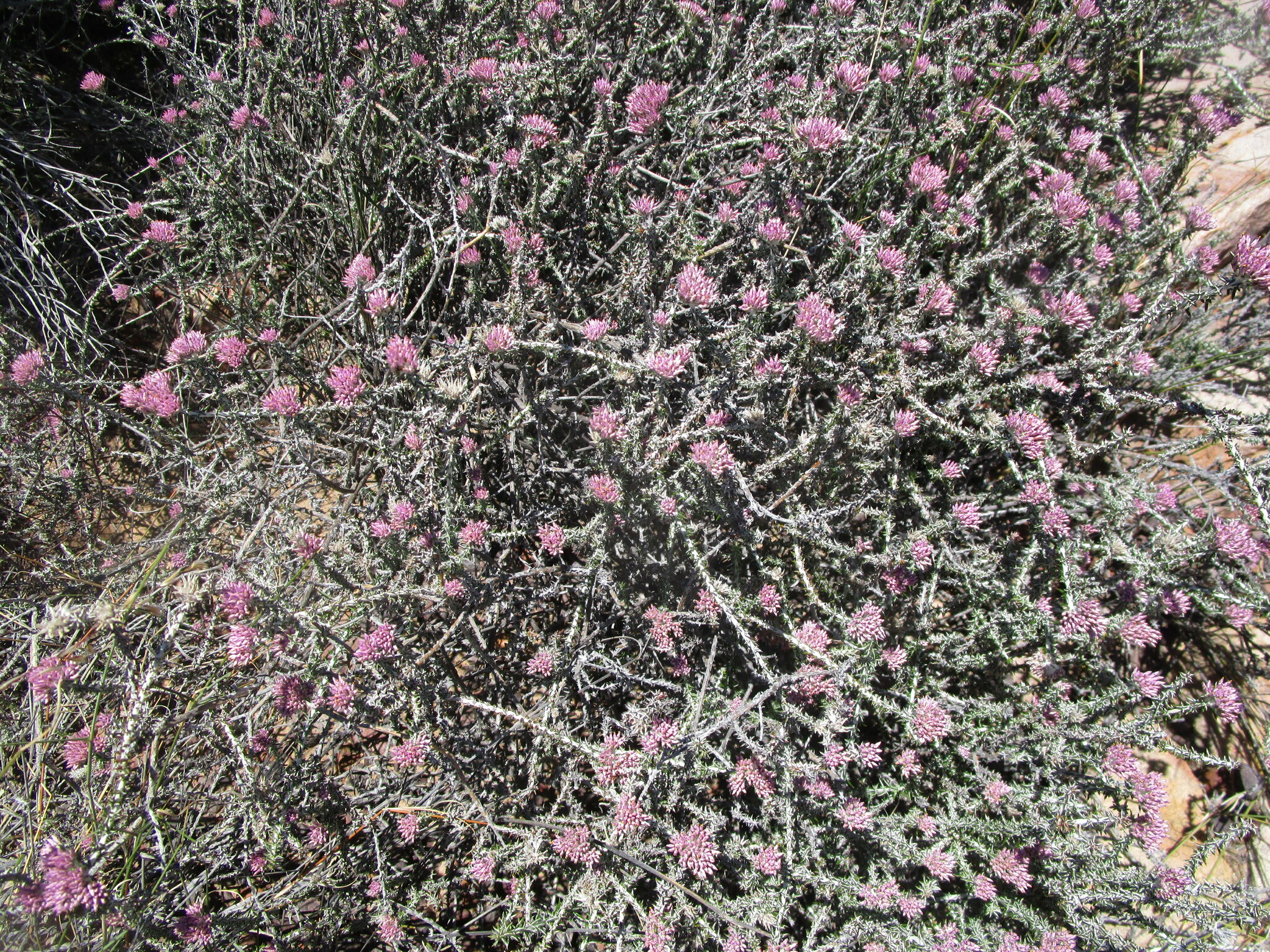
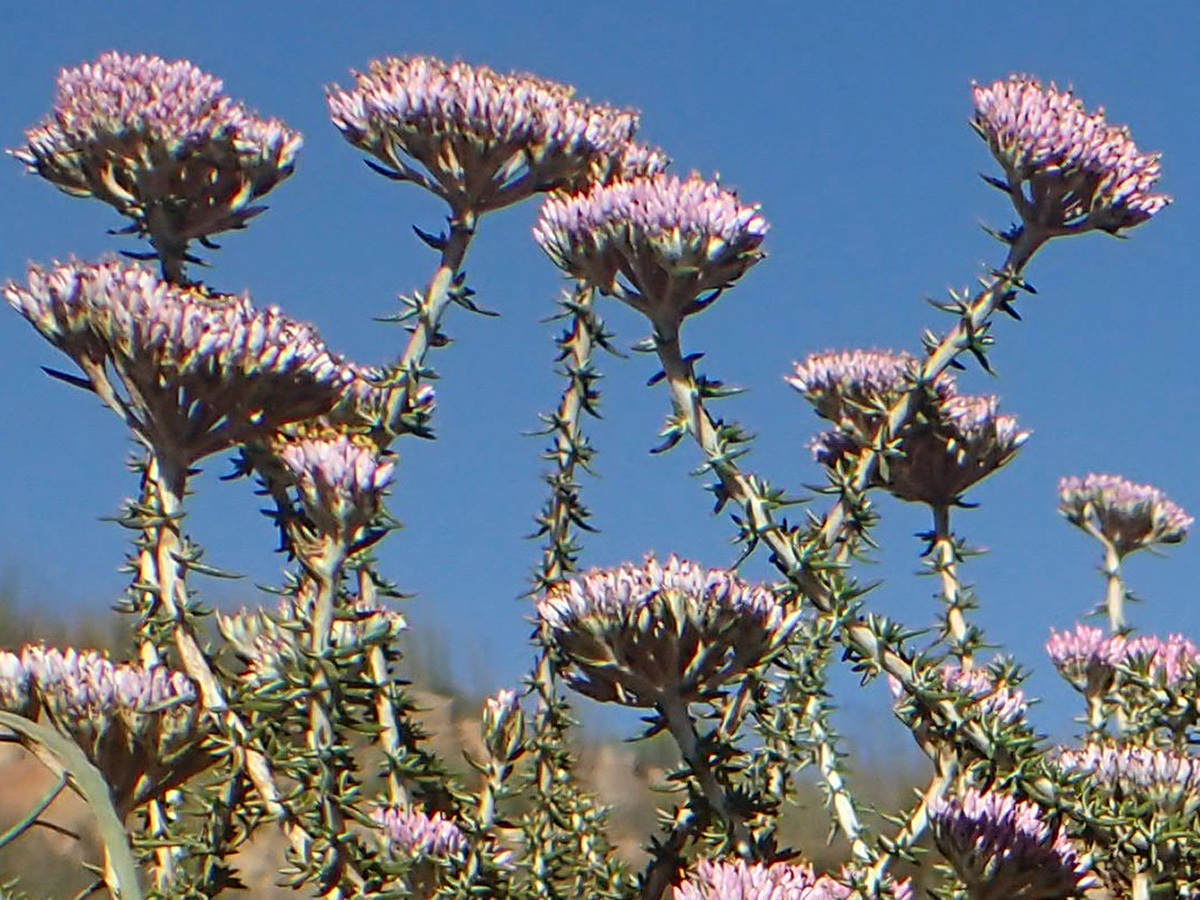
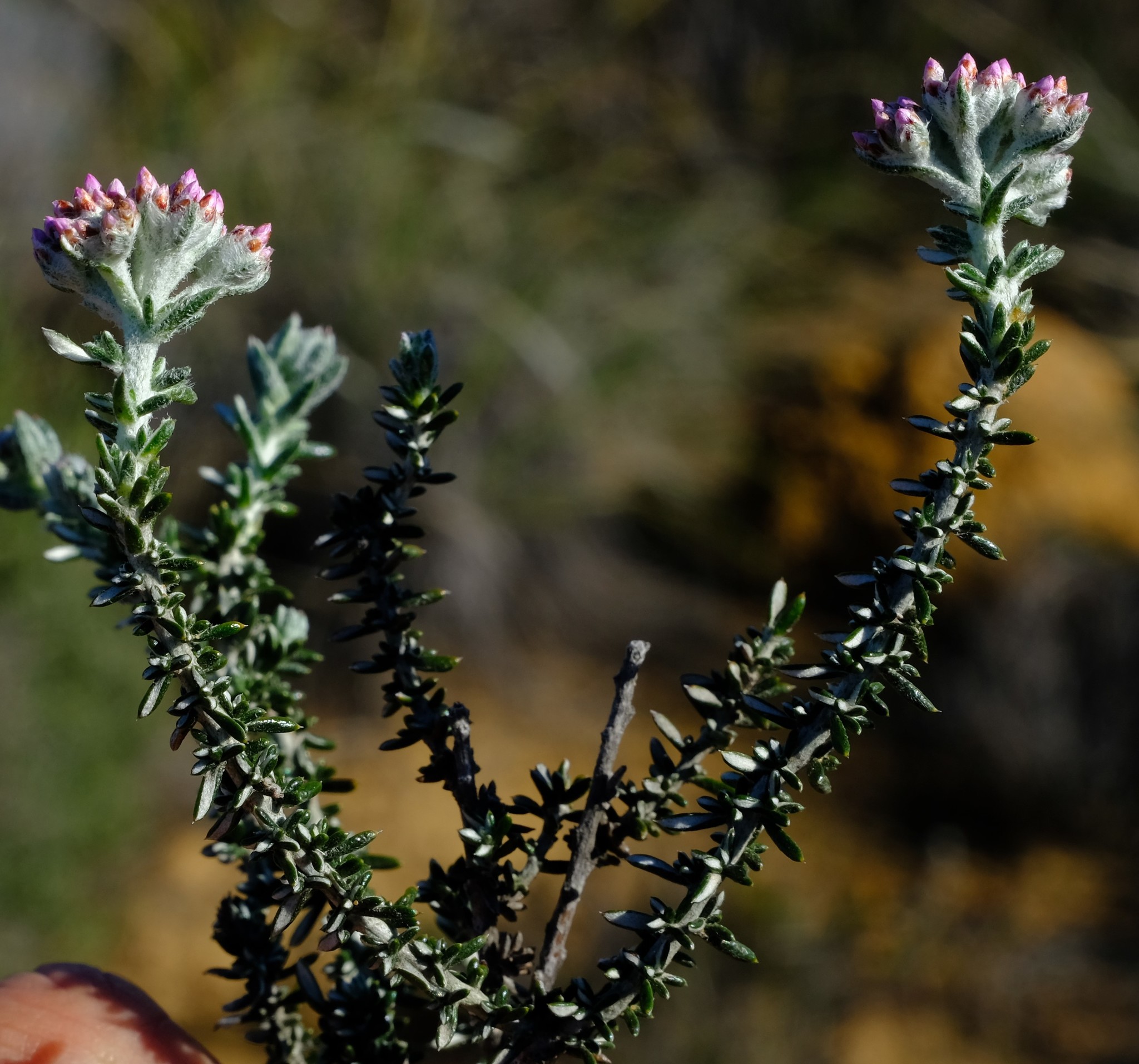
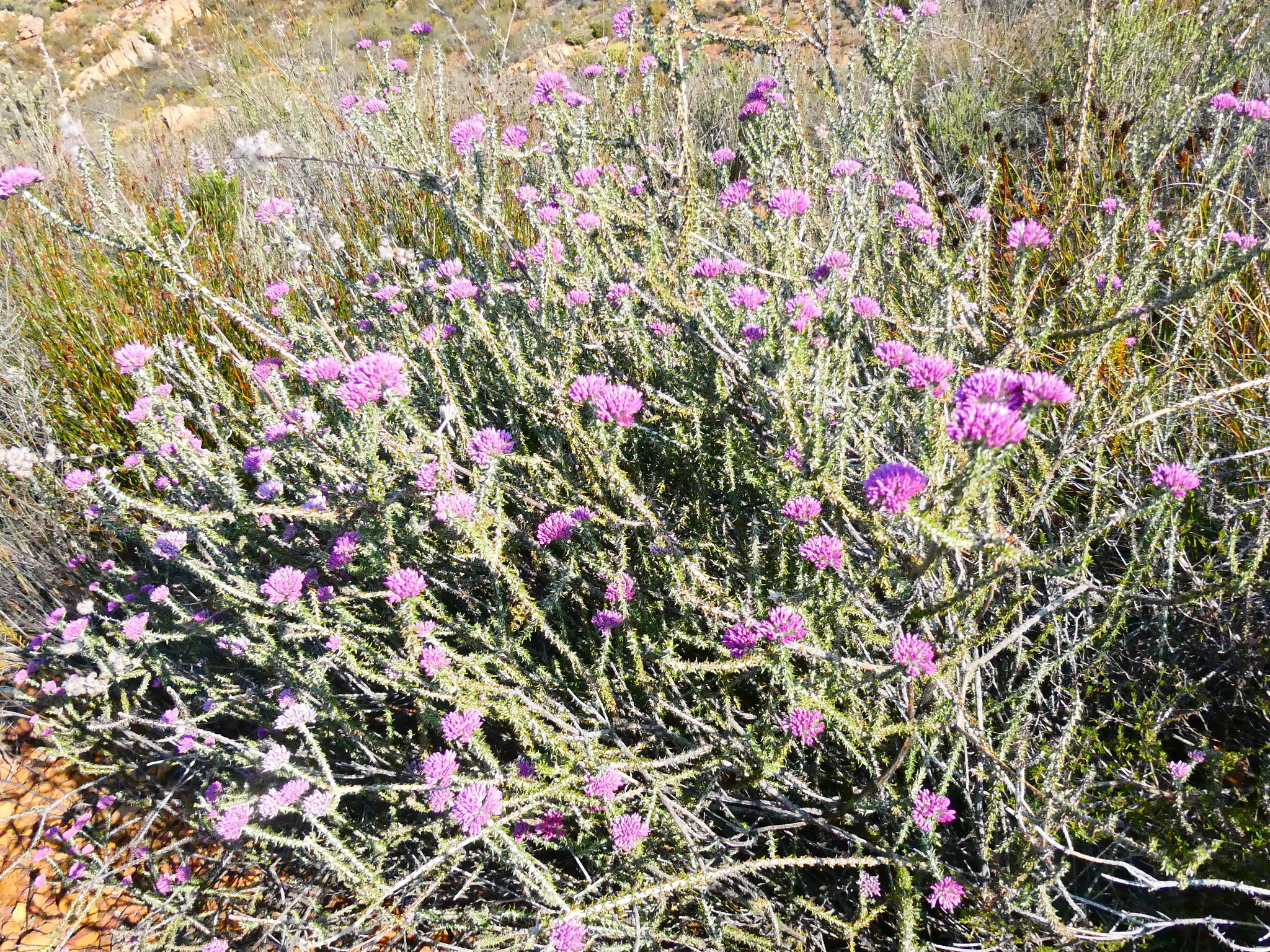
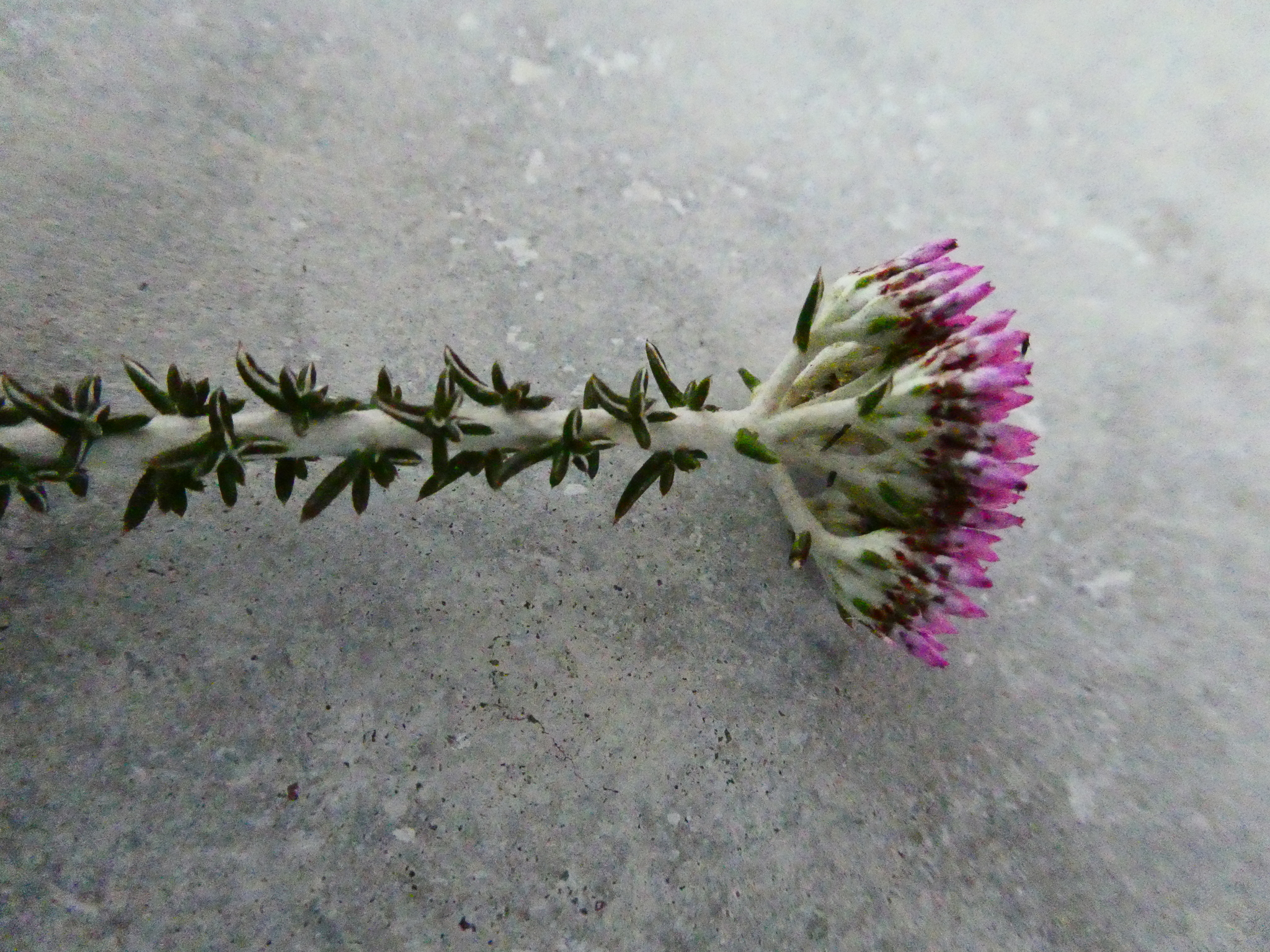
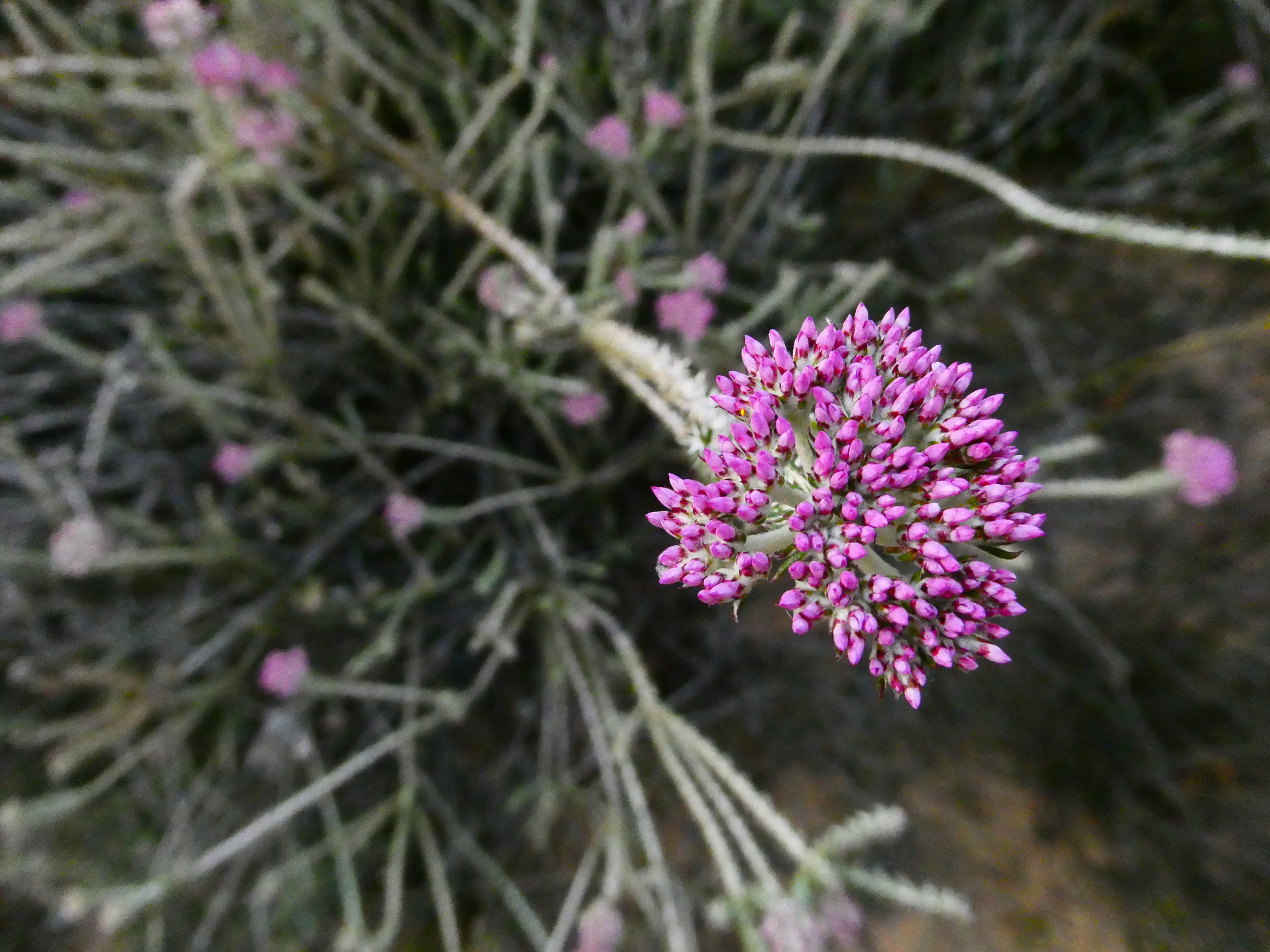
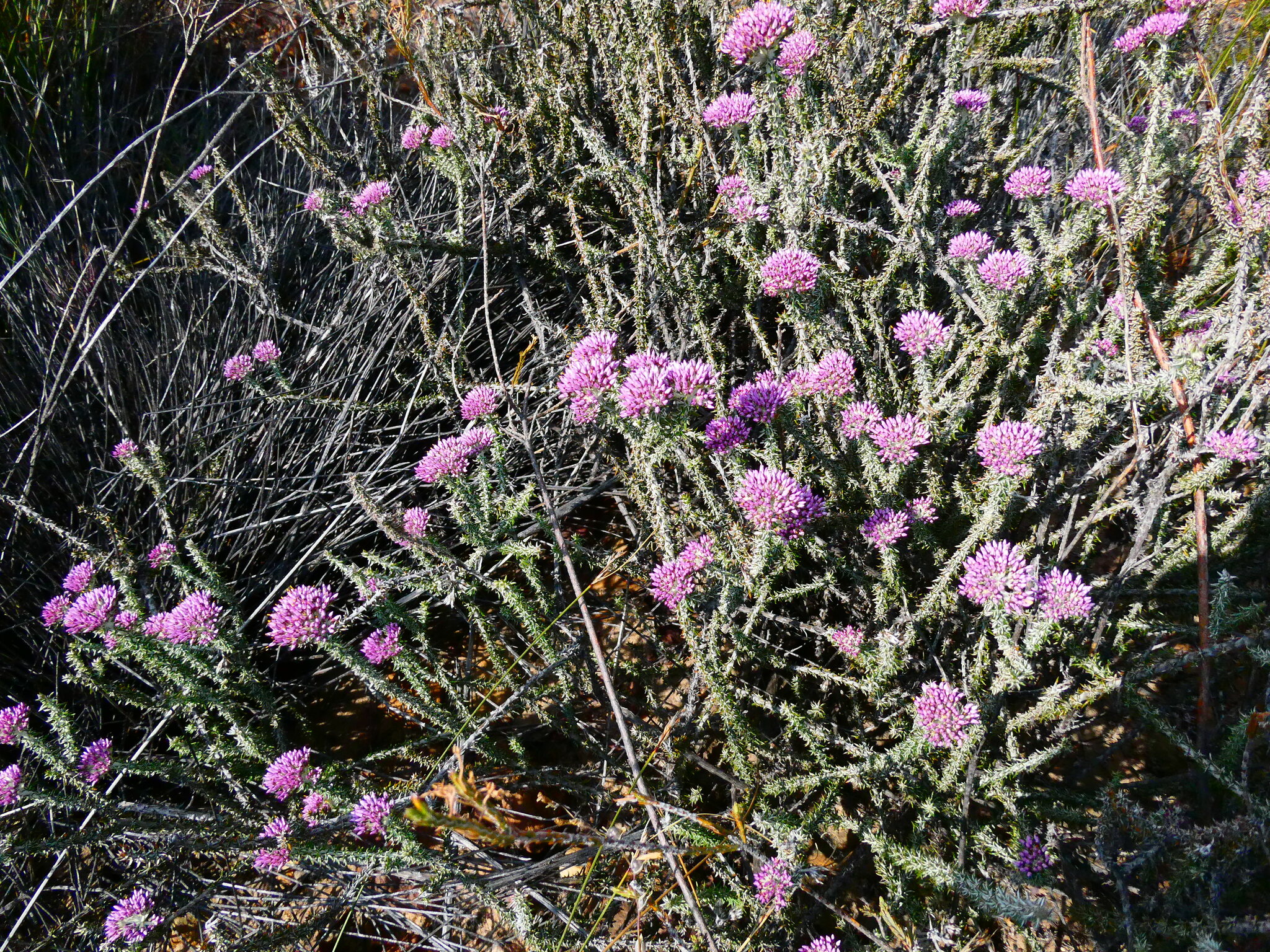
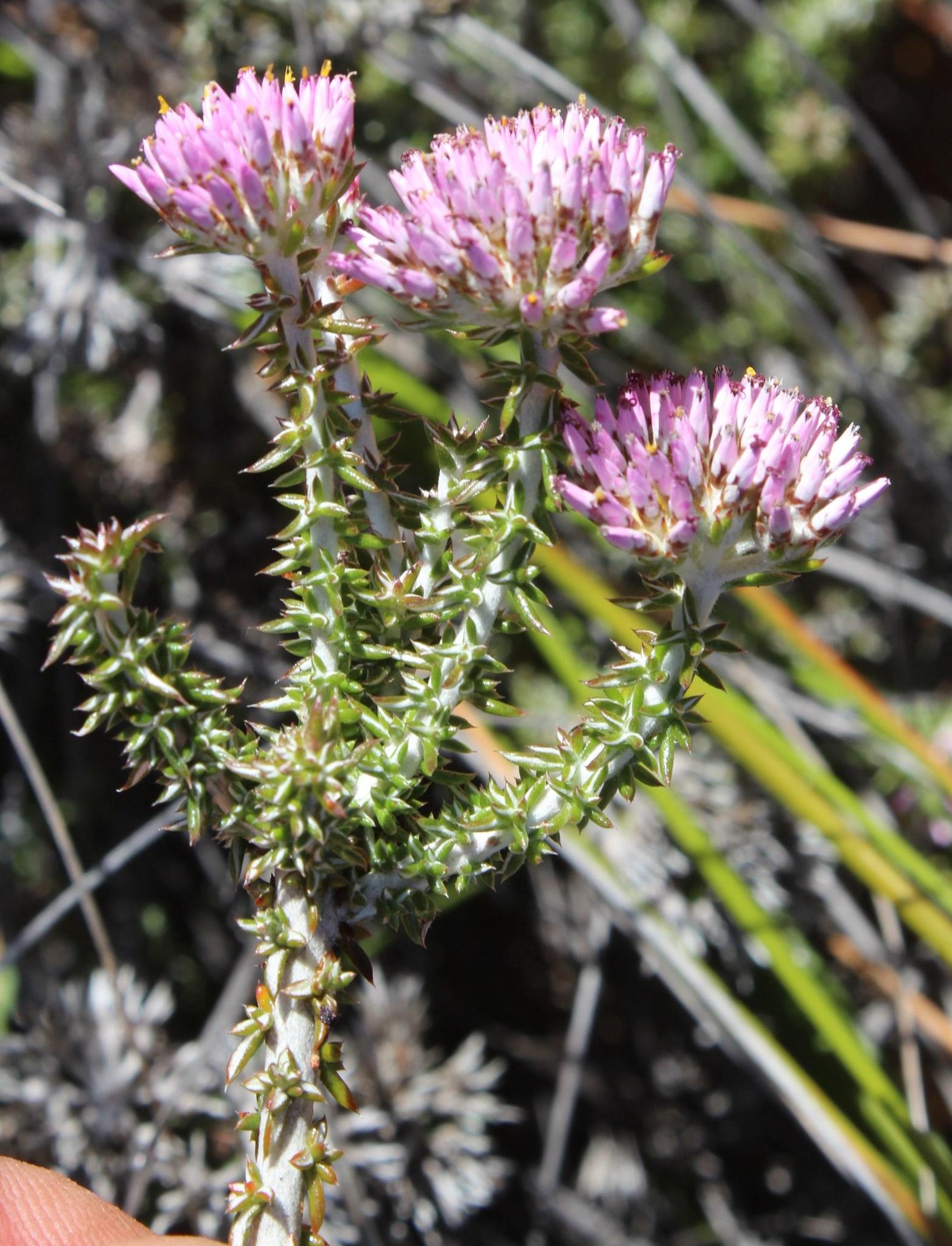
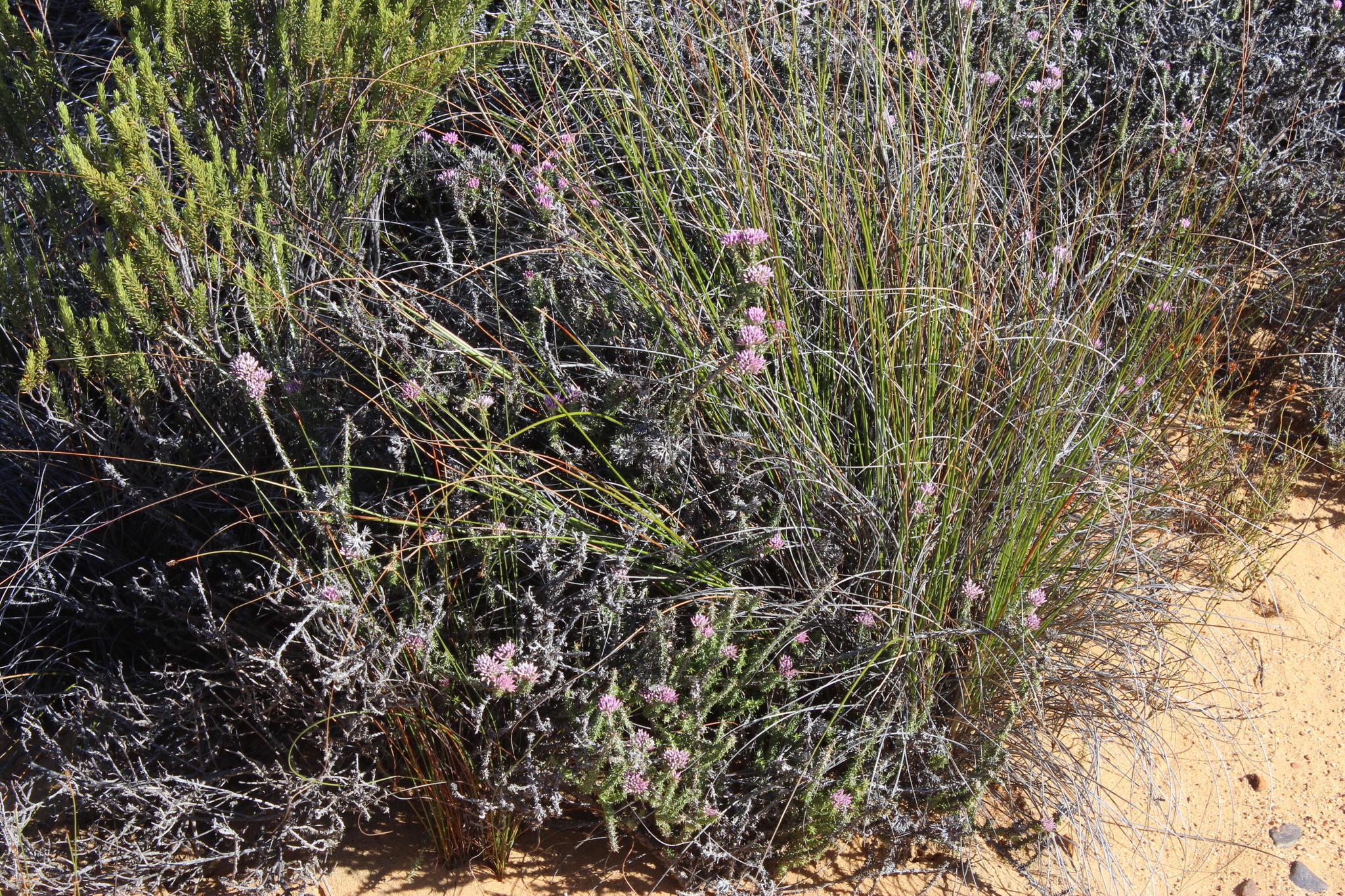
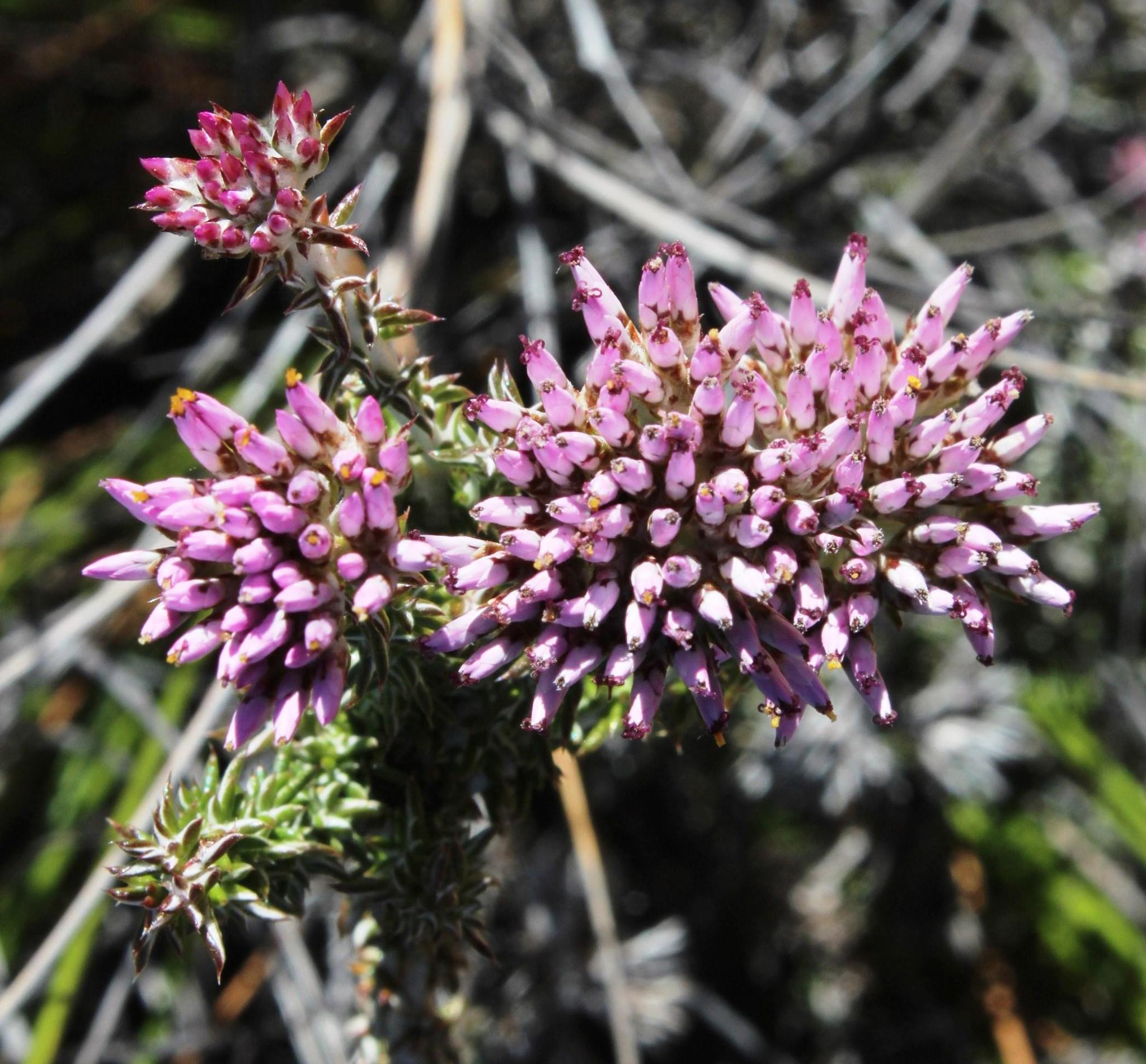
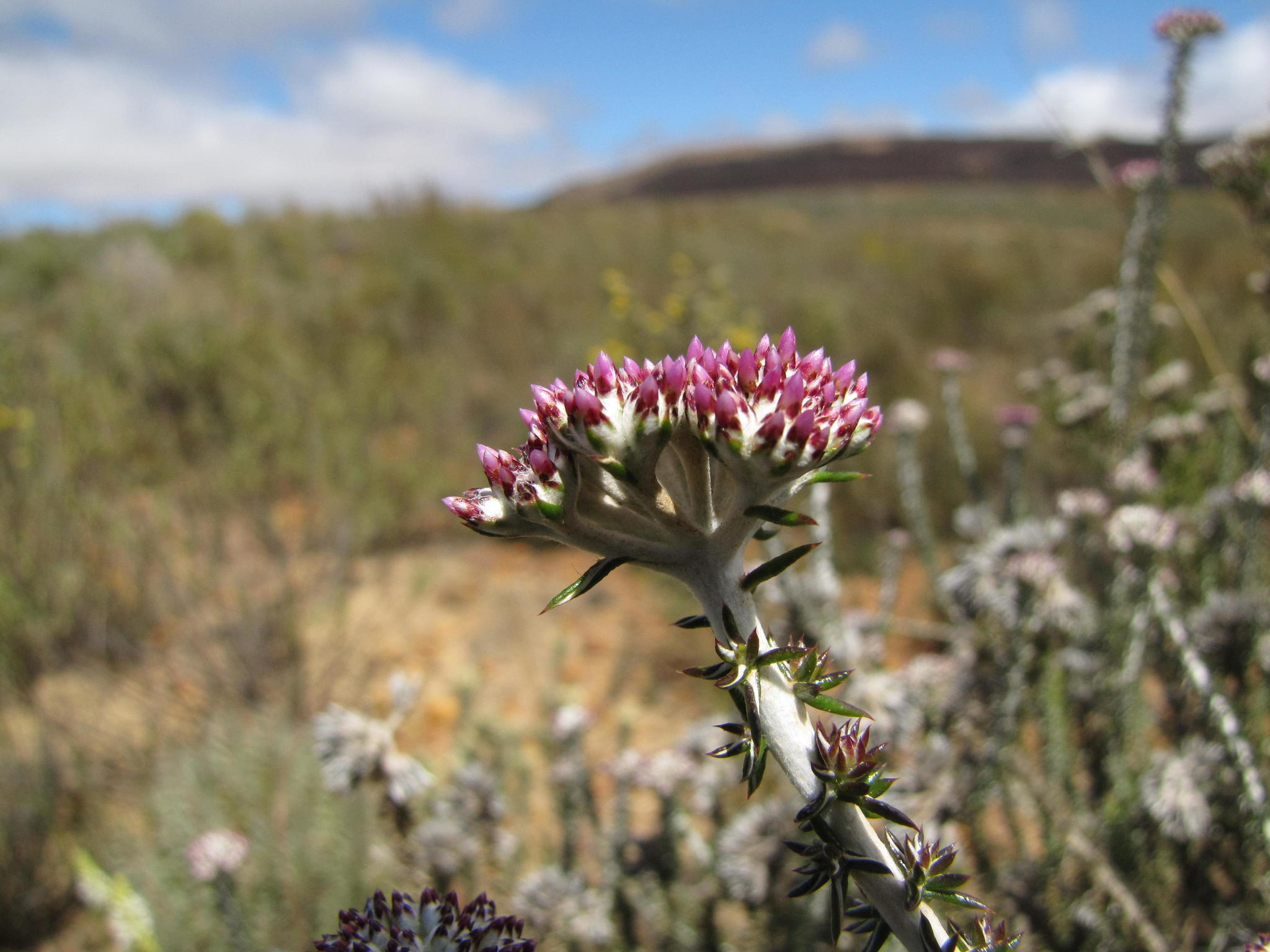
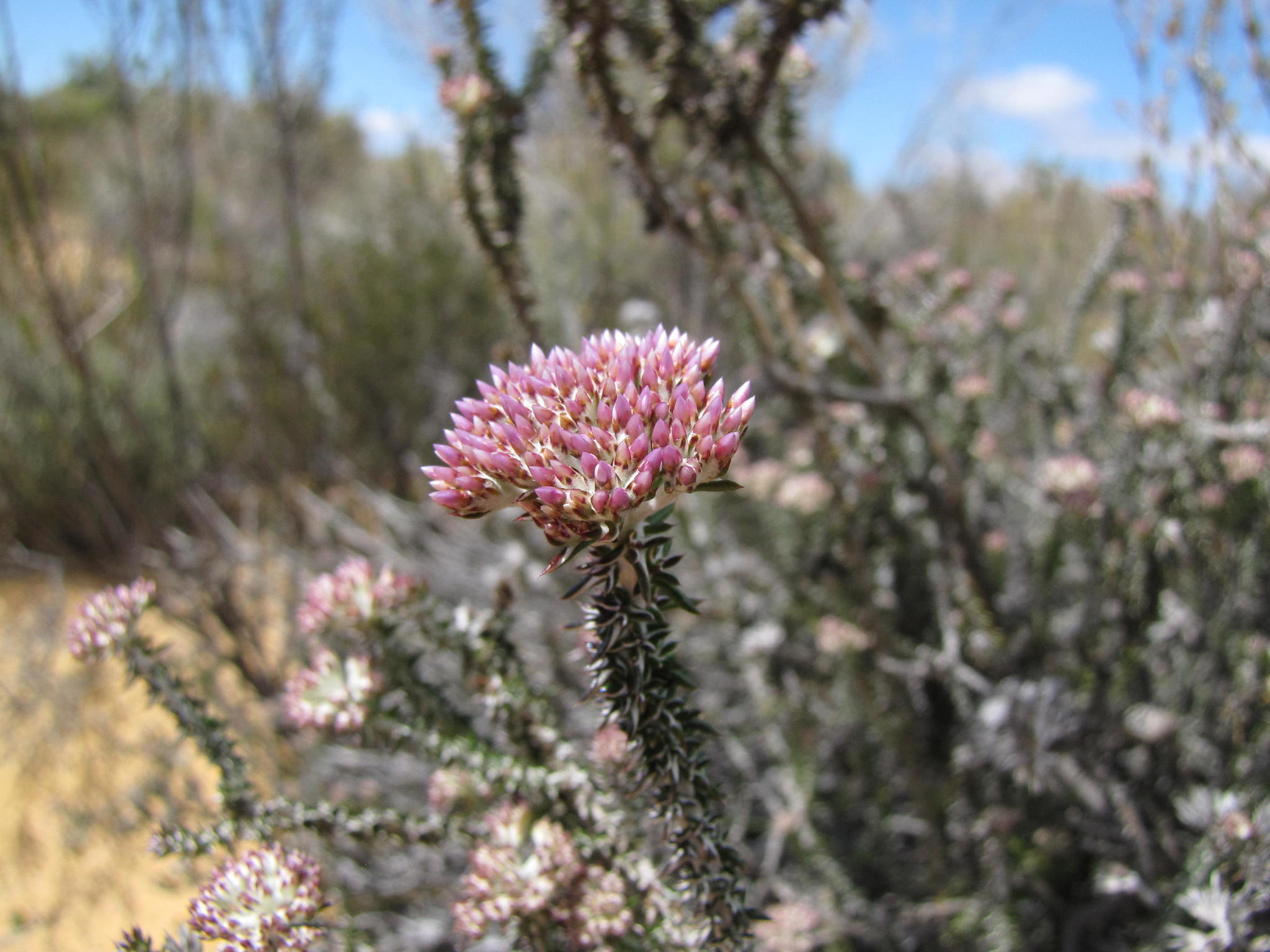
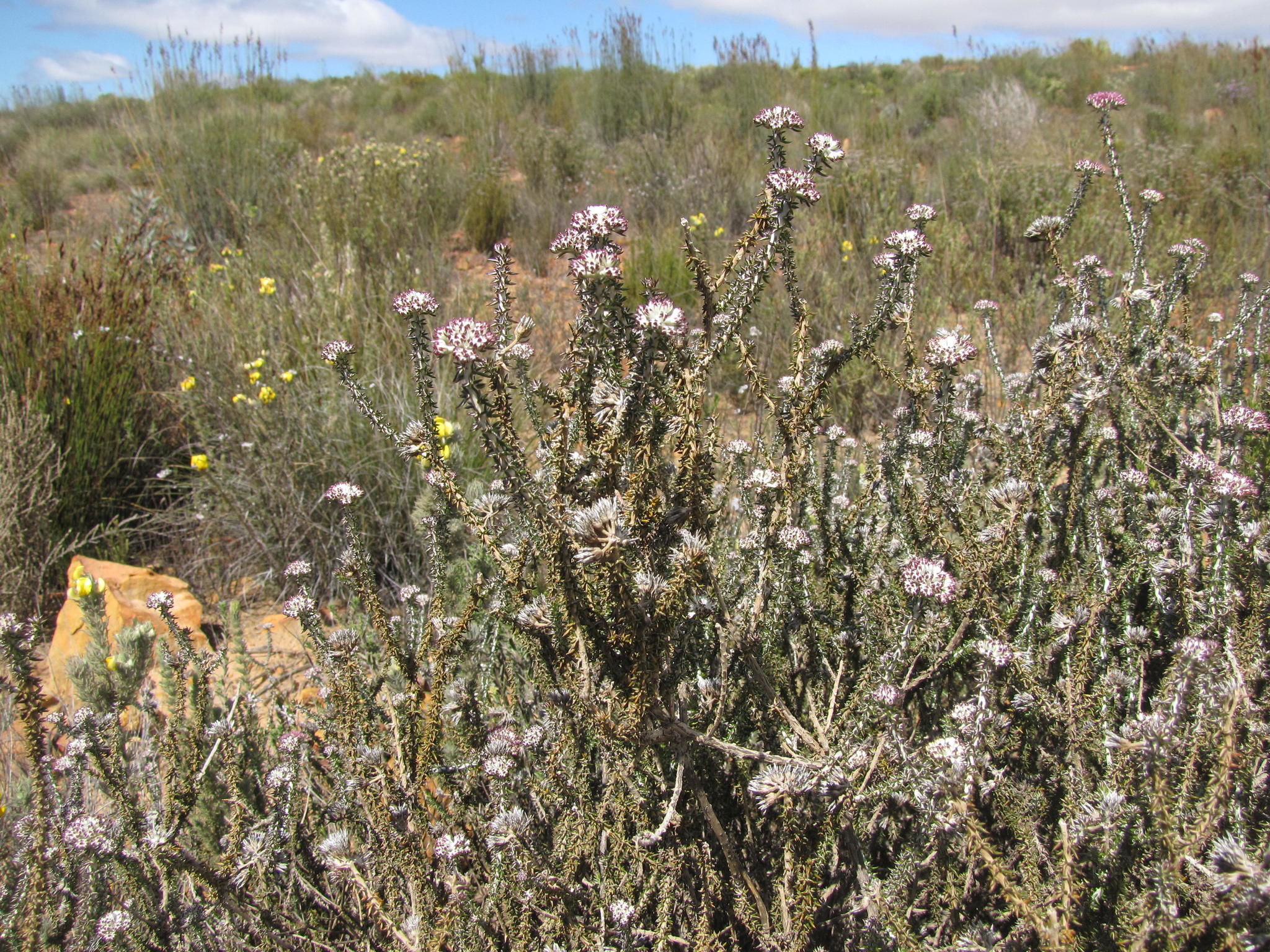
Erect shrublet, sparingly branched, up to 0.8 m high. Branches ascending, young very densely whitish-tomentose, older becoming slightly less tomentose with tomentum persistent for 3-4 seasons, with indistinct leaf-scars. Foliage dense. Leaves declinate or sometimes spreading, straight but generally with tips slightly curved inwards, with axillary brachyblasts about half as long as the subtending leaf, involute to highly involute, narrowly triangular to lanceolate, 1.7-6.5 x 0.6-1.4 mm, acute, slightly twisted to half-twisted, glabrous, sometimes carinate, midvein sometimes invisible. Synflorescenses 20-40 mm wide, dense, conspicuously branched, with numerous capitula arranged in 8-15 branched clusters, each containing 5 to numerous capitula. Peduncles 3-10 mm long. Capitula 3(-4)-flowered, sessile, often slightly fused by hairs or free from one another, lower half of each capitulum hairy. Involucre narrowly cyathiform to very narrowly campanulate, apically 1-1.5 mm wide, up to 3 mm wide at anthesis. Involucral bracts in 4-5 series, gradually longer inwards, outermost about half as long as the innermost, outermost subfoliaceous with a scarious lamina, those inwards petaloid, outermost narrowly lanceolate to oblanceolate, those inwards narrowly obovate to narrowly oblanceolate, all except outermost usually with narrow to broad hyaline margins, all acute to rounded and obtuse, all slightly apiculate, outermost with interlocking hairs reaching above the middle of the bract, those inwards less hairy to glabrous, all apically erect, outermost reddish, those inwards reddish above the stereome but otherwise pink and soon fading, innermost with a stereome about 1.3-2.5 times as long as the lamina. Corolla narrowly cylindrical, usually slightly widened above the middle, 3.6-3.9 mm long; lobes erect. Anthers apically rounded or sometimes almost truncate and then sometimes slightly notched. Cypselas brown (only very immature cypselas seen). Pappus bristles with a serrate and narrow or sometimes broader shaft, apically flat and serrate to entire, slightly thickened towards the very apex, acute to very acute. From: Karis, PO. 1989. Systematics of the genus Metalasia (Asteraceae-Gnaphalieae). Opera Bot. 99: 1-150. [All rights reserved]
Densely white-woolly shrublet to 80 cm. Leaves reflexed, twisted, 2-6 mm long, with axillary tufts. Flower heads discoid, several in terminal clusters, 3(4)-flowered, bracts erect, inner petaloid, pink. From: Manning, JC; Goldblatt, P. 2012. Asteraceae: Metalasia R.Br. In: J Manning & P Goldblatt (eds), Plants of the Greater Cape Floristic Region 1: The Core Cape flora. Strelitzia 29: 395-398. South African National Biodiversity Institute, Pretoria. [CC BY]
M. albescens is recognized by its densely and persistently whitish-tomentose branches; short leaves; pink 3-flowered capitula; and acute to very acute pappus bristles. M. albescens is strikingly similar to M. fastigiata, but the latter species mostly has longer leaves that are more twisted; 5-flowered capitula; involucral bracts in series of 5-7 rather than 4-5; and less acute, often obtuse pappus bristles. Another species with 3-flowered, pink capitula is M. erubescens. It is distinguished by its less tomentose branches; often erect-spreading leaves, which are usually curved outwards; inner and innermost involucral bracts, which have a transverse ridge subapically; and also by less acute pappus bristles. M. seriphiifolia also has 3-flowered, pink and generally free capitula, but it is more slender, and has longer, more twisted leaves. M. phillipsii is also more slender, has less tomentose branches, smaller synflorescenses, and less acute and narrower pappus bristles. From: Karis, PO. 1989. Systematics of the genus Metalasia (Asteraceae-Gnaphalieae). Opera Bot. 99: 1-150. [All rights reserved]
It grows in rocky or sandy places. From: Karis, PO. 1989. Systematics of the genus Metalasia (Asteraceae-Gnaphalieae). Opera Bot. 99: 1-150. [All rights reserved]
Sandstone slopes. From: Manning, JC; Goldblatt, P. 2012. Asteraceae: Metalasia R.Br. In: J Manning & P Goldblatt (eds), Plants of the Greater Cape Floristic Region 1: The Core Cape flora. Strelitzia 29: 395-398. South African National Biodiversity Institute, Pretoria. [CC BY]
A poorly collected species occurring in the southern Cedarberg area. From: Karis, PO. 1989. Systematics of the genus Metalasia (Asteraceae-Gnaphalieae). Opera Bot. 99: 1-150. [All rights reserved]
S Cedarberg. From: Manning, JC; Goldblatt, P. 2012. Asteraceae: Metalasia R.Br. In: J Manning & P Goldblatt (eds), Plants of the Greater Cape Floristic Region 1: The Core Cape flora. Strelitzia 29: 395-398. South African National Biodiversity Institute, Pretoria. [CC BY]
December
700 to 800 m
This map contains point-based occurrences at different locations
Occurrence in the Flora of Southern Africa (FSA) countries and South African provinces. Residence status indicates if a taxon is indigenous, endemic, naturalised or invasive in a specific region. This data is based on specimen records and literature
FSA
SA
BOT
NAM
ESW
LES
WC
EC
NC
FS
GA
KZN
LP
MP
NW
Absent
Indigenous
Endemic
Naturalised
Invasive

Names and Sources
Classification
KINGDOM Plantae
SUBKINGDOM Phanerogamae
PHYLUM Anthophyta
ORDER Asterales
FAMILY Asteraceae
SUBFAMILY Asteroideae
TRIBE Gnaphalieae
GENUS Metalasia
SPECIES albescens
18 results for Metalasia albescens P.O.Karis
Barcode: NBG0027344-0 Collector(s) & number: Wagener, GEH, 277 | 1944-1-
South Africa, Western Cape, Clanwilliam Dist. Matjesriver, Cederberg.
Data Resource: BODATSA View record
Barcode: PRE0822259-0 Collector(s) & number: Meyer, JJ, 822 | 1994-10-12
South Africa, Western Cape, Wes Kaap: Citrusdal; Plaas Kromrivier, Suid van Dwarsrivierberg.
General notes: Fynbos. Sandgrond. Goeie dreinering. Vol son. Steil Wes helling. Lig bewei. Plant hoogte: 50 cm. Blomme pienk. Redelik volop.
Data Resource: BODATSA View record
Barcode: PRE0861667-0 Collector(s) & number: Koekemoer, M, 3956 | 2010-10-9
South Africa, Western Cape, Cederberg. On plateau NW of Wolfberg Arch.
General notes: Cederberg Sandstone Fynbos. In short restio veld. Slope: none.
Data Resource: BODATSA View record
Barcode: NBG0234202-0 Collector(s) & number: Taylor, HC, 11411 | 1985-10-23
South Africa, Western Cape, Kromriver/Breekkrans boundary gate.
General notes: Alt. c. 1000 m. Stony sandy ridge of dry Protea laurifolia Veld. Shrub, 5 m+, twigs divaricate, flat pink heads. cf. T.7494 seriphiifolia. cf. T.10761 agathosmoides. Fairly frequent.
Data Resource: BODATSA View record
Barcode: NBG1494990-0 Collector(s) & number: Hitchcock, A, AH3050 | 2013-11-5
South Africa, Western Cape, Cedarberg Wilderness Area - Matjiesrivier - common along roadsides and in wild undisturbed areas.
General notes: General notes: Passerinum glomerata, Pelargonium magentum, Helichrysum moeserianum, Euryops wagerii.
Data Resource: BODATSA View record
Barcode: PRE0725209-0 Collector(s) & number: Taylor, HC, 11411 | 1985-10-23
South Africa, Western Cape, CEDARBERG; BREEKKRANS/KROMRIVER; BOUNDARY GATE STONY SANDY RIDGE
Data Resource: BODATSA View record
Barcode: NBG0190735-0 Collector(s) & number: Lechmere-Oertel, R, 702 | 1997-10-2
South Africa, Western Cape, Cedarberg. Matjiesrivier Nature Reserve. Hill behind house.
General notes: Acocks veld type. Fynbos. Ridge. Well-drained; yellow-brown sandy stony soil. Slope: level. Disturbance: unknown. Widespread occasional. Evergreen perennial erect dwarf shrub. Flower colour: purple. No fruit. Plant height: 1.00m.
Data Resource: BODATSA View record
Barcode: PRE0521913-0 Collector(s) & number: Hugo, L, 724 | 1976-10-16
South Africa, Northern Cape, BETW. MATJIES RIVER & DWARS RIVER ON RD.FROM ALGERIA FOR. STA. TO CERES
Data Resource: BODATSA View record
This map contains point-based occurrences at different locations
2012
SERIES CHAPTER
Asteraceae: Metalasia R.Br. Manning, JC; Goldblatt, PIn: J Manning & P Goldblatt (eds), Plants of the Greater Cape Floristic Region 1: The Core Cape flora. Strelitzia 29: 395-398
South African National Biodiversity Institute, Pretoria
1989
PERIODICAL/JOURNAL
Systematics of the genus Metalasia (Asteraceae-Gnaphalieae) Karis, POOpera Botanica a Societate Botanica Lundensi 99: 1-150
No results found for Metalasia albescens P.O.Karis
Status and criteria
LC
Assessor(s)
Plantae Coordinator
| Part(s) of plant used | Use(s) | Reference |
|---|
Coming soon...