ANIMALIA / CHORDATA / ACTINOPTERYGII / ELOPIFORMES / MEGALOPIDAE / MEGALOPS / CYPRINOIDES

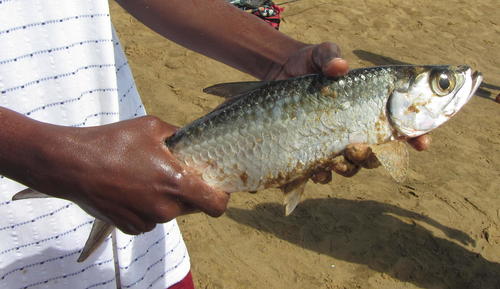
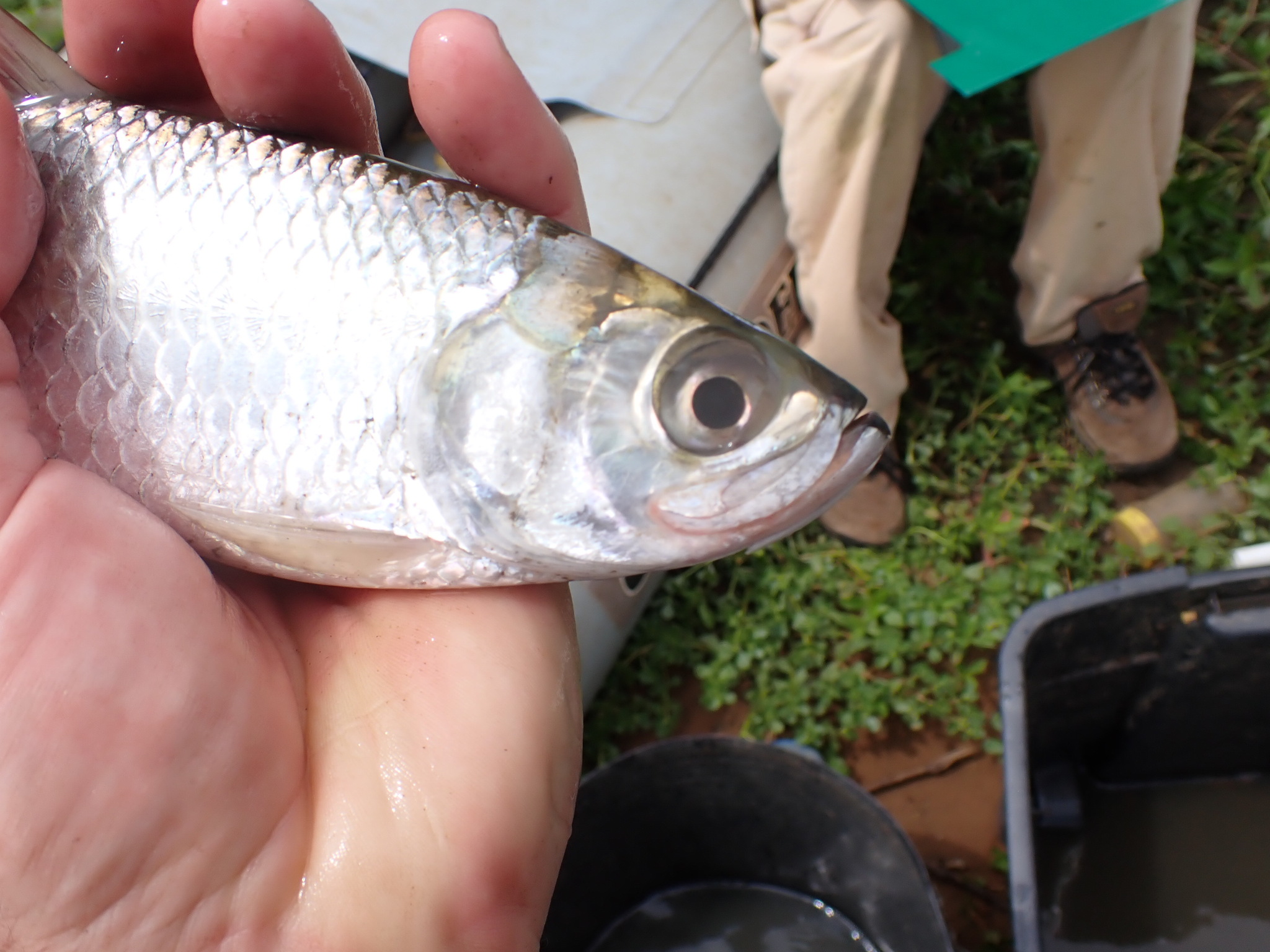
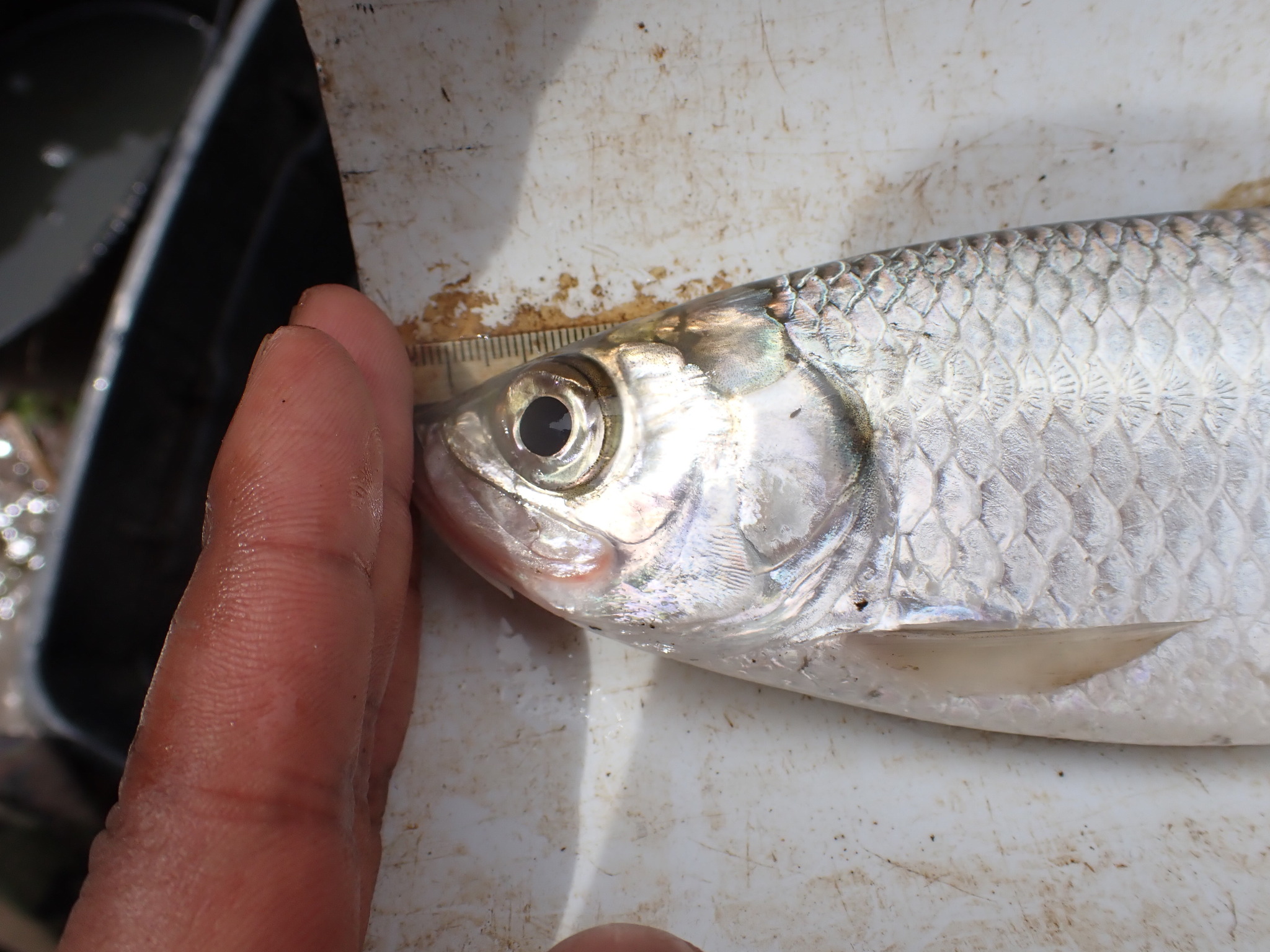
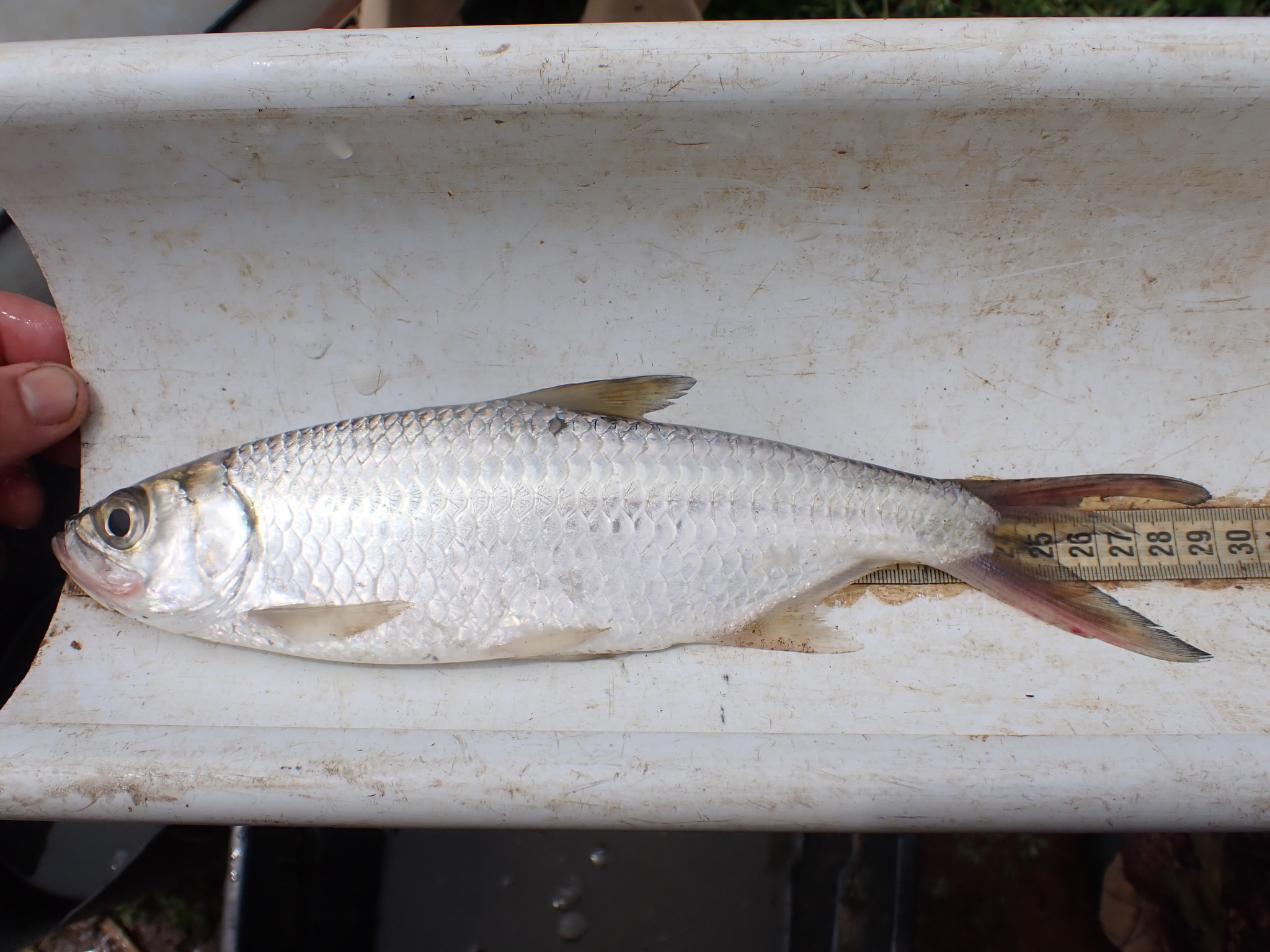
Oxeye tarpon are elongate and compressed fish with a distinctively pitched dorsal profile and a gently rounded belly. The body is silvery with a blue green back and white belly. The caudal fin is large and deeply forked. The dorsal fin has a noticeable elongated last ray (Van der Elst 1993).
No data
Unknown
No data
Tropical Indo-West Pacific species extending into the sub-tropical waters of SA (Whitefield 1998). Red Sea south to SA (Smith 2003), eastwards to Hawaii (Whitehead 1984).
EC, KZN, MOZ Occurs along the East African coast down to KZN (van der Elst 1993), occasionally being found as far south as Algoa Bay (Smith 2003). Recorded from as far inland as Malawi and Zimbabwe (Skelton 1993) and to a depth of 50m (Pusey et al. 2004).
Movement of oxeye tarpon is unknown. Juveniles appear to remain in estuaries (or connected freshwater bodies) until reaching maturity (Mann and van der Elst 2000). Adults presumably migrate out to sea to spawn and may re-enter estuaries once spawning is complete (Harris and Cyrus 1995). However, Harris and Cyrus (1997) classify this species as a facultative catadromous species implying flexibility in movement behaviour and habitat usage.
Carnivore - Invertivore (invertebrate-eating)
Adults are diurnal (Coates 1987), voracious feeders that prey on small pelagic fish, fry of larger species and shrimps (van der Elst 1993), crustaceans (Fischer et al. 1990) and terrestrial insects (Coates 1987).
Oxeye tarpon are gonochorists that practice external fertilisation (Coates 1987). Spawning season is unknown but they spawn at sea (Whitfield 1998, Froese and Pauly 2012). The reach maturity at approximately 2 years (Pusey et al. 2004) when they are 25-30cm SL; India; approximate length at first maturity (Talwar and Jhingran 1991, Pusey et al. 2004).
Amphidromous
Inshore
This map contains point-based occurrences at different locations
Occurrence in African countries and South African provinces. Residence status indicates if a taxon is indigenous, endemic, or alien in a specific region. This data is based on specimen records and literature.
FSA
SA
BOT
NAM
ESW
LES
WC
EC
NC
FS
GA
KZN
LP
MP
NW
Absent
Indigenous
Endemic
Naturalised
Invasive
Names and Sources
| Common Name | Language |
|---|---|
| Bastard Mullet | En |
| Oxeye | En |
| Oxeye Tarpon | En |
| Osoog-Tarpon | Af |
| Osoogtarpon | En |
| Indopacific Tarpon | En |
| Indo-pacific Tarpon |
Classification
KINGDOM Animalia
PHYLUM Chordata
CLASS Actinopterygii
ORDER Elopiformes
FAMILY Megalopidae
GENUS Megalops
SPECIES cyprinoides
No results found for Megalops cyprinoides (Broussonet, 1782)
Although relatively seldom caught, M. cyprinoides is sought after for its fighting qualities and is targeted by anglers using light spinning or fly tackle (van der Elst 1993). Occasionally caught in the illegal gill-net fishery in St Lucia (Mann 1995) and in the beach-seine fishery in Durban (B. Mann, ORI, pers. obs.) but is considered to be of poor eating quality (van der Elst 1993).
2 results for Megalops cyprinoides (Broussonet, 1782)
This map contains point-based occurrences at different locations
2016
REPORT
Megalops cyprinoidesothers, and, Adams, A., Guindon, K., Horodysky, A.. 2016. Megalops cyprinoides.
1987
JOURNAL ARTICLE
Observations on the biology of tarpon, Megalops cyprinoides (Broussonet)(Pisces: Megalopidae), in the Sepik river, northern Papua New GuineaCoates, David. 1987. Observations on the biology of tarpon, Megalops cyprinoides (Broussonet)(Pisces: Megalopidae), in the Sepik river, northern Papua New Guinea Vol. 38 pp.529–535.
1990
JOURNAL ARTICLE
Fichas FAO de identificaçao de espécies para actividades de pesca. Guia de campo das espécies comerciais marinhas e de águas salobras de MoçambiqueSchneider, W, Poutiers, JM, Fischer, W, Sousa, I, Silva, C, De Freitas, A, Borges, TC, Feral, JP, Massinga, A. 1990. Fichas FAO de identificaçao de espécies para actividades de pesca. Guia de campo das espécies comerciais marinhas e de águas salobras de Moçambique.
2015
WEB PROJECT PAGE
FishBaseFroese, R, Pauly, D. 2015. FishBase.
1995
JOURNAL ARTICLE
Occurrence of fish larvae in the St Lucia Estuary, KwaZulu-Natal, South AfricaCyrus, DP, Harris, SA. 1995. Occurrence of fish larvae in the St Lucia Estuary, KwaZulu-Natal, South Africa Vol. 16 pp.333–350.
2013
JOURNAL ARTICLE
Southern African Marine Linefish Species ProfilesMann, B.Q. 2013. Southern African Marine Linefish Species Profiles pp.343.
2000
BOOK CHAPTER
Trachinotus africanusvan der Elst, RP., Mann, BQ.. 2000. Trachinotus africanus Vol. 7. Durban. Oceanographic Research Institute, pp.23-24.
2004
BOOK
Freshwater fishes of north-eastern AustraliaPusey, Brad, Kennard, Mark, Arthington, Angela. 2004. Freshwater fishes of north-eastern Australia. CSIRO publishing.
1993
JOURNAL ARTICLE
A complete guide to the freshwater fishes of southern AfricaSkelton, P. 1993. A complete guide to the freshwater fishes of southern Africa pp.121.
2003
JOURNAL ARTICLE
Family No. 38: AlbulidaeSmith, MM., Heemstra, PC.. 2003. Family No. 38: Albulidae pp.157–158.
1991
BOOK
Inland fishes of India and adjacent countriesTalwar, Purnesh, Jhingran, Arun. 1991. Inland fishes of India and adjacent countries Vol. 2. CRC Press.
1993
JOURNAL ARTICLE
A guide to the common sea fishes of southern Africa (3rd edition)van der Elst, R.P.. 1993. A guide to the common sea fishes of southern Africa (3rd edition) pp.398p.
1984
BOOK CHAPTER
ElopidaeFischer, W., Bianchi, G., Whitehead, PJP.. 1984. Elopidae Vol. 2. Rome. FAO.
1998
JOURNAL ARTICLE
Biology and ecology of fishes in southern African estuariesWhitfield, Alan. 1998. Biology and ecology of fishes in southern African estuaries.
2002
PAPER
Field guide to the freshwater fishes of AustraliaAllen, , Midgley, , Allen, . 2002. Field guide to the freshwater fishes of Australia. Western Australia.. Western Australian Museum, Perth pp.394.
Status and criteria
NE
Assessor(s)
Animalia Coordinator
Reviewer(s)
Animalia Coordinator