
ANIMALIA / CHORDATA / ACTINOPTERYGII / PERCIFORMES / CARANGIDAE / CARANX / IGNOBILIS

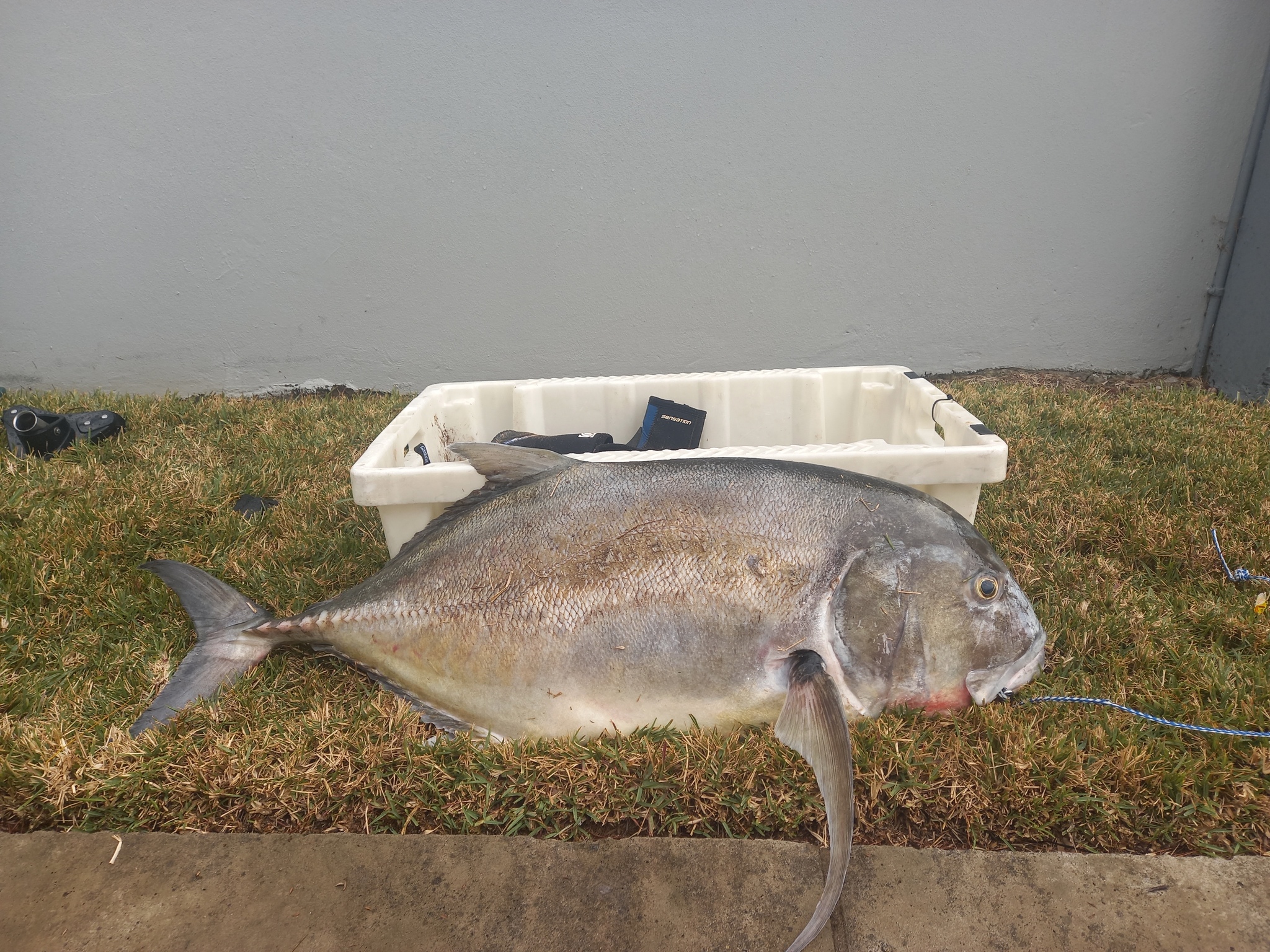
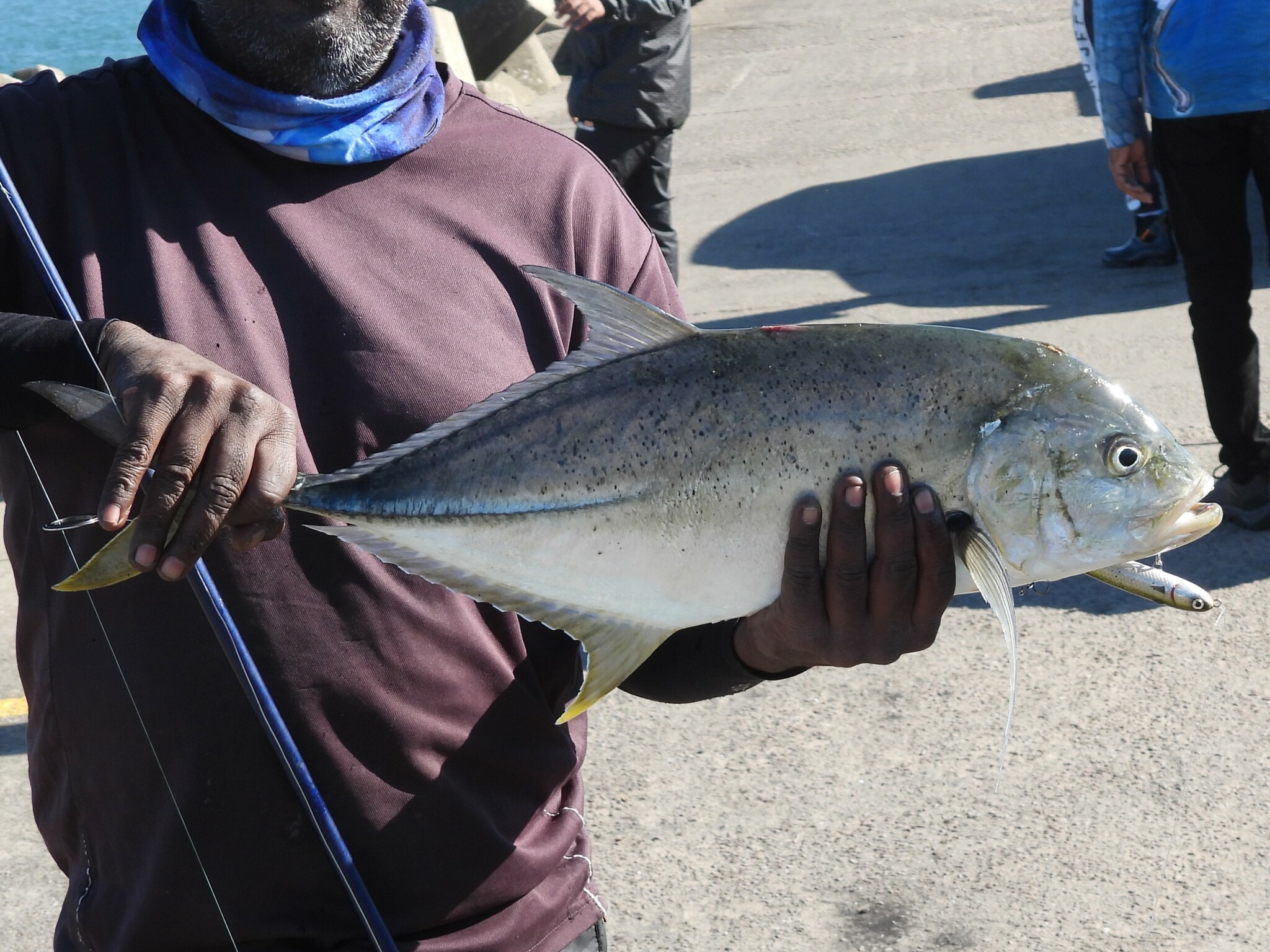
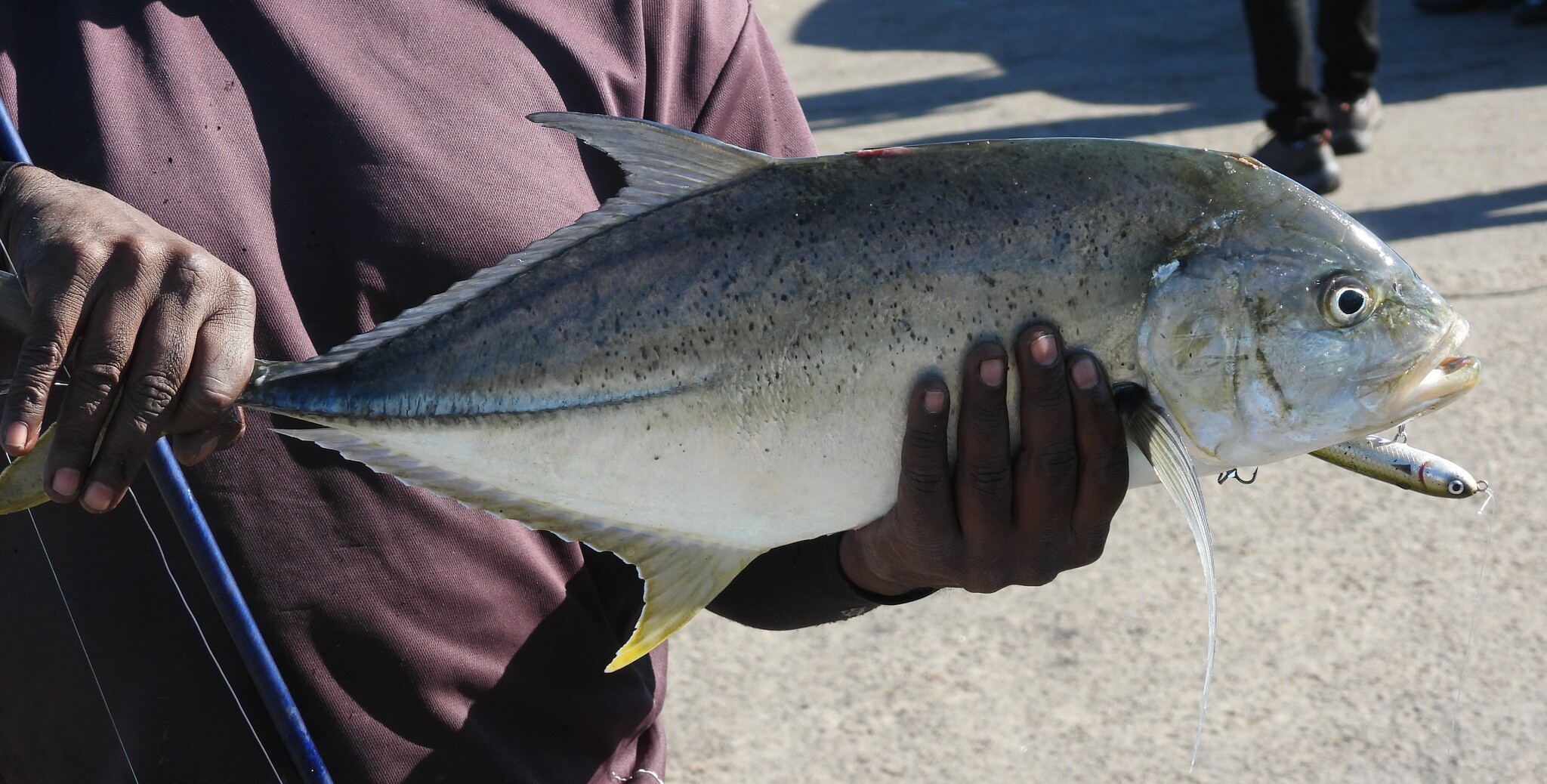
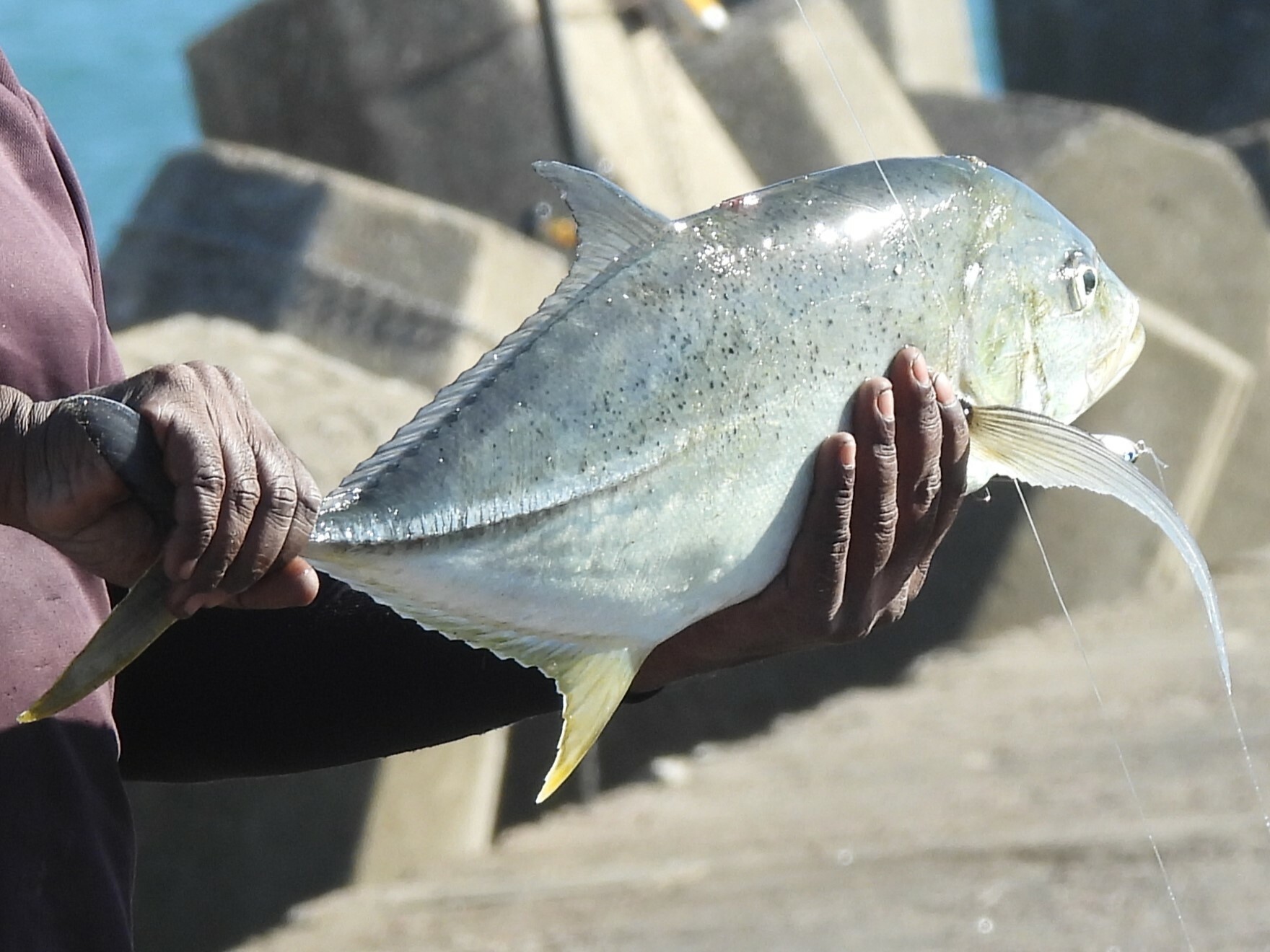
Giant kingfish have a robust body with a characteristic dome shaped forehead. The head and body are silvery grey with white below and occasionally with numerous small black spots on the body. The fins are usually dark grey but fish from turbid waters often have yellow fins. Adult males can be completely black. Giant kingfish can grow up to at least 1.6 m and weigh 80 kg (Heemstra and Heemstra 2004).
Widespread in Indo-West and Central Pacific, Red Sea down to SA, extending eastwards to Hawaii and Marquesas islands (Smith-Vaniz 1984, Smith-Vaniz 2003, Heemstra and Heemstra 2004, Froese and Pauly 2012).
Algoa Bay northwards (Smith-Vaniz 2003, Heemstra and Heemstra 2004) but less common in Eastern Cape waters south of the former Transkei (B. Mann, ORI, pers. obs.).
Adults appear to be fairly wide ranging at times (Wetherbee et al. 2004, Meyer et al. 2007). Of the 102 recaptures recorded on the ORI Tagging Project, the mean distance moved is 14 km and it has been suggested the adults may occupy large home ranges for extended periods (B. Mann, ORI, pers. obs). However, adults are also more abundant off KZN during the summer months suggesting a southward range expansion (ORI Tagging Project, unpublished data).
Giant kingfish are active predators which usually feed during the day. Their main food is fish but they will also take squid, mantis shrimps and other crustaceans (Smith-Vaniz 1984, van der Elst 1993).Juveniles have a a similar diet to adults (Smith 1992).
Giant kingfish are ggonochoristic, broadcast spawners (Sudekum et al. 1991).Spawning usually takes place on the seaward side of inshore reefs and over offshore banks (Myers 1999).Spawning season is in summer in Kwa-Zulu Natal (van der Elst 1993, Whitfield 1998) and other tropical areas such as Zanzibar, Hawaii and the Philippines where it appears likely that males and females aggregate in sex-specific shoals (Williams 1965, Sudekum et al. 1991). Big shoals of large individuals in daisy-chain formation have been reported from southern Mozabique and from the Mtentu Estuary (Eastern Cape), but it is not certain whether this is spawning related. Giant kingfish mature at an average age of 3 to 3.5 years (Sudekum et al. 1991, van der Elst 1993) when they reach 60-65cm FL (van der Elst and Adkin 1991, van der Elst 1993).
Inshore, Offshore (>30m)
This map contains point-based occurrences at different locations
Occurrence in African countries and South African provinces. Residence status indicates if a taxon is indigenous, endemic, or alien in a specific region. This data is based on specimen records and literature.
FSA
SA
BOT
NAM
ESW
LES
WC
EC
NC
FS
GA
KZN
LP
MP
NW
Absent
Indigenous
Endemic
Naturalised
Invasive
Click on images to enlarge
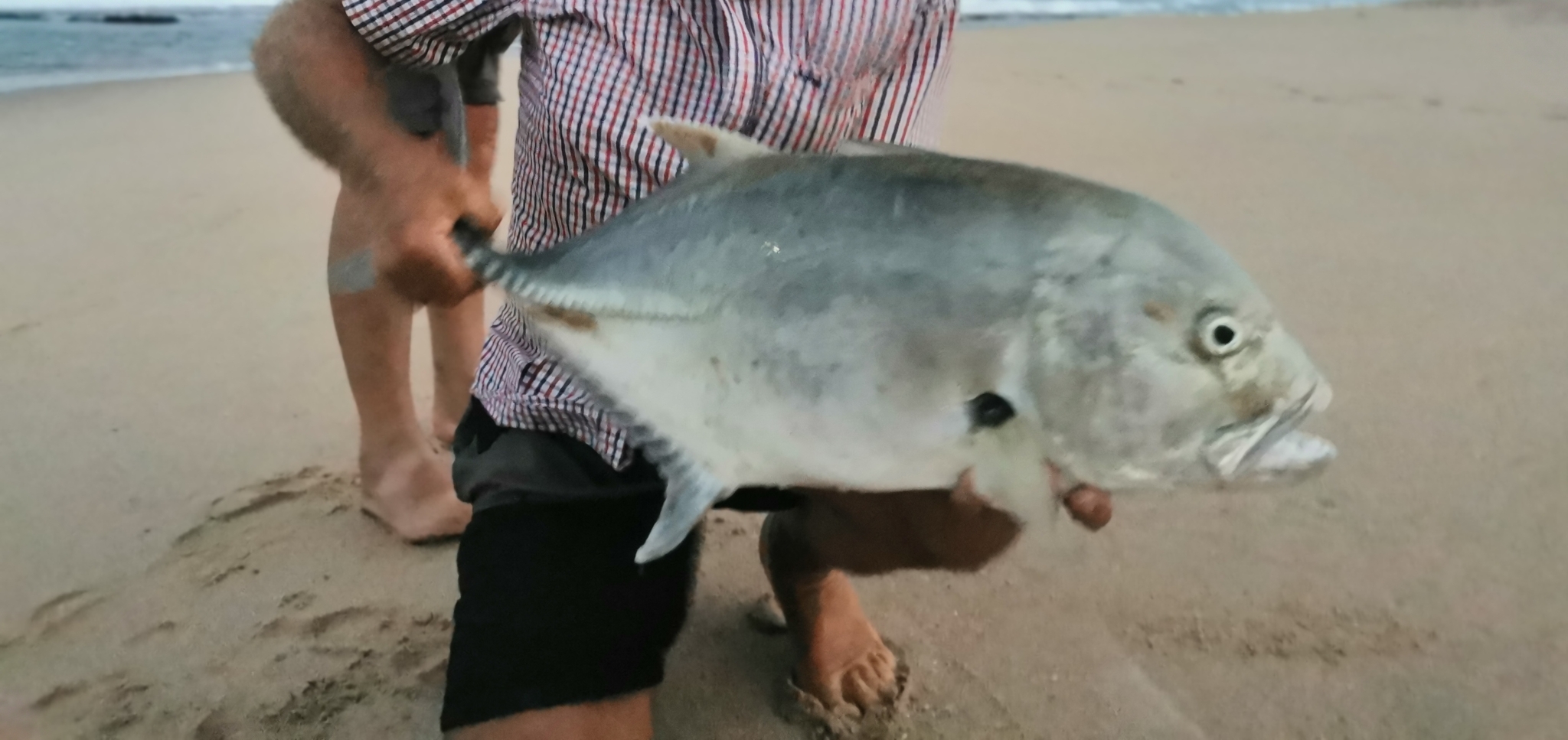
Caranx ignobilis (Forsskål, 1775)
| Kingdom | animalia |
|---|---|
| Phylum | chordata |
| Class | actinopterygii |
| Order | perciformes |
| Family | carangidae |
| Genus | caranx |
| Species | ignobilis |
Important recreational gamefish, caught by shore anglers, ski-boat anglers and spearfishers, highly sought after as a trophy fish (van der Elst 1993) but nowadays large specimens are often released. Of little commercial value locally but is harvested in the artisanal trap fishery within Kosi Bay (Kyle 1986).


