ANIMALIA / CHORDATA / ACTINOPTERYGII / PERCIFORMES / DINOPERCIDAE / DINOPERCA / PETERSI

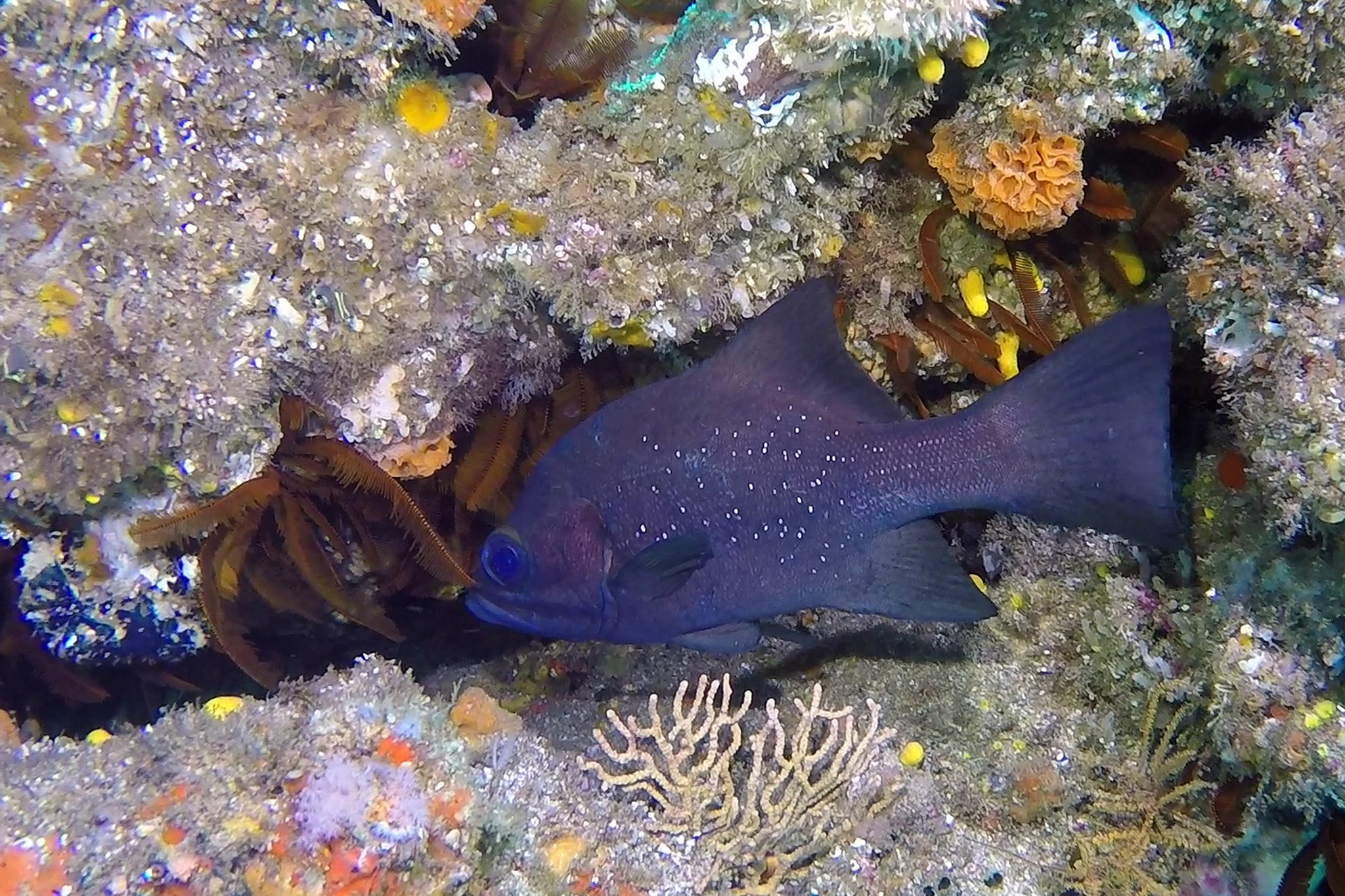
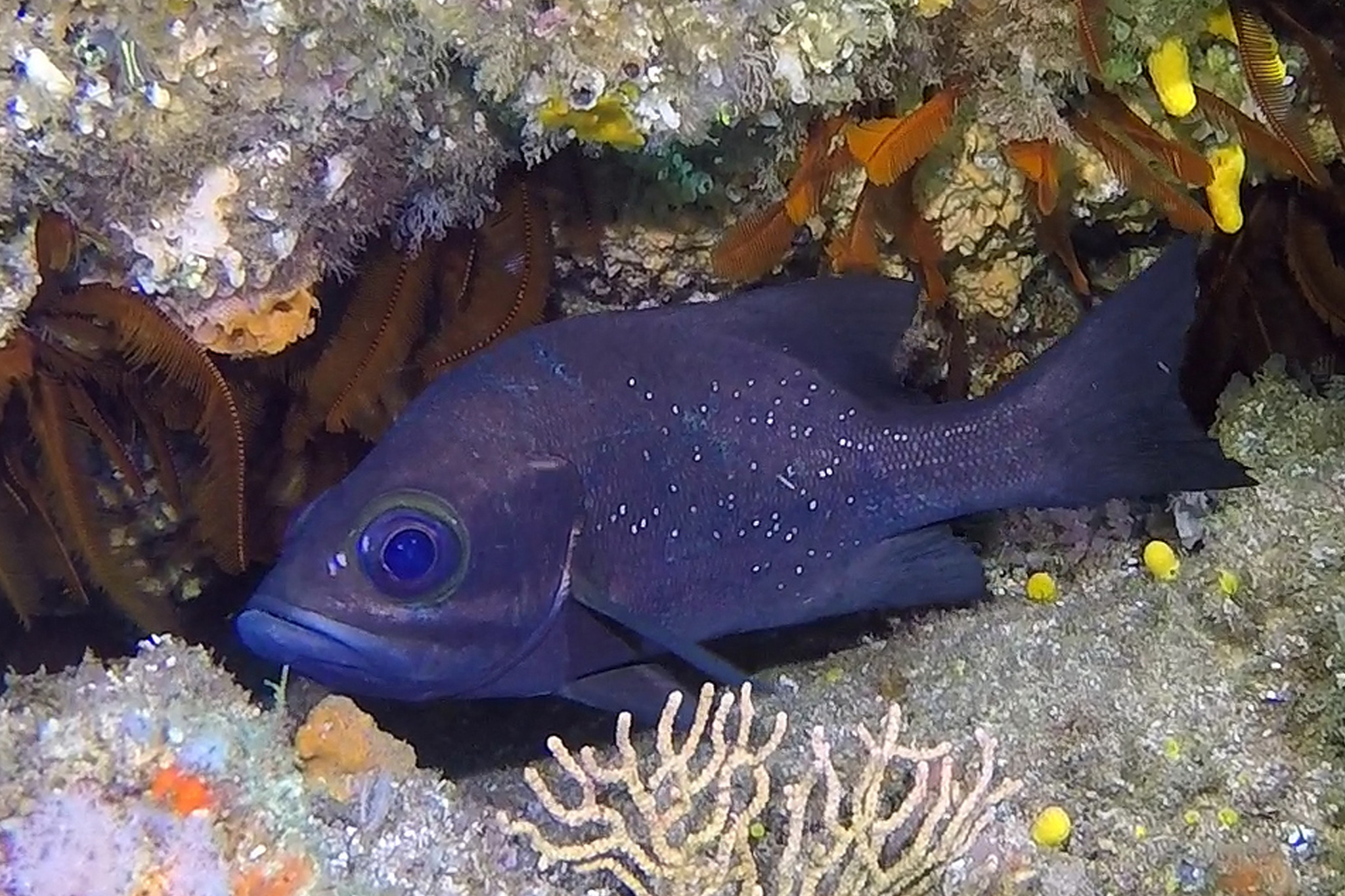
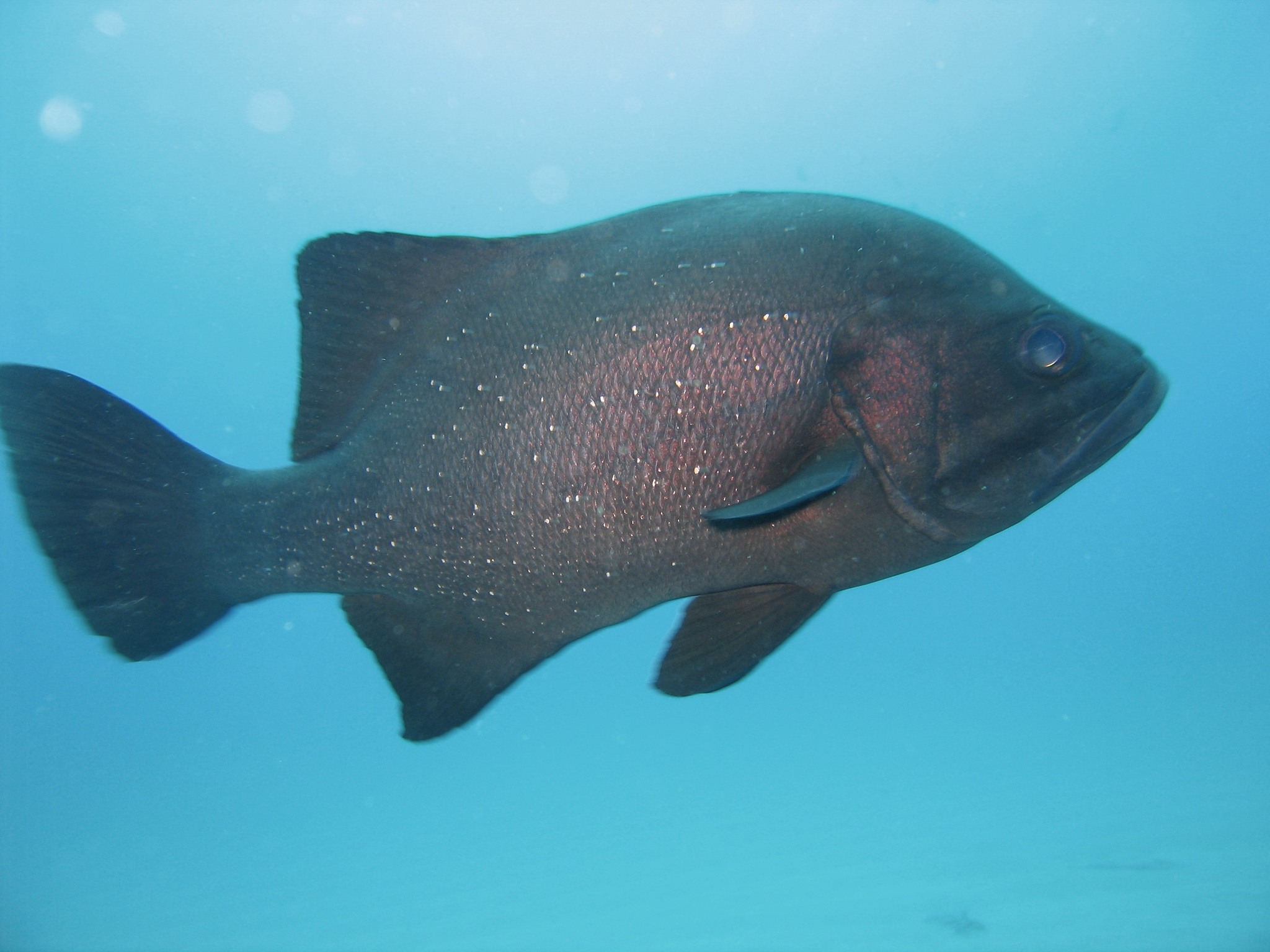
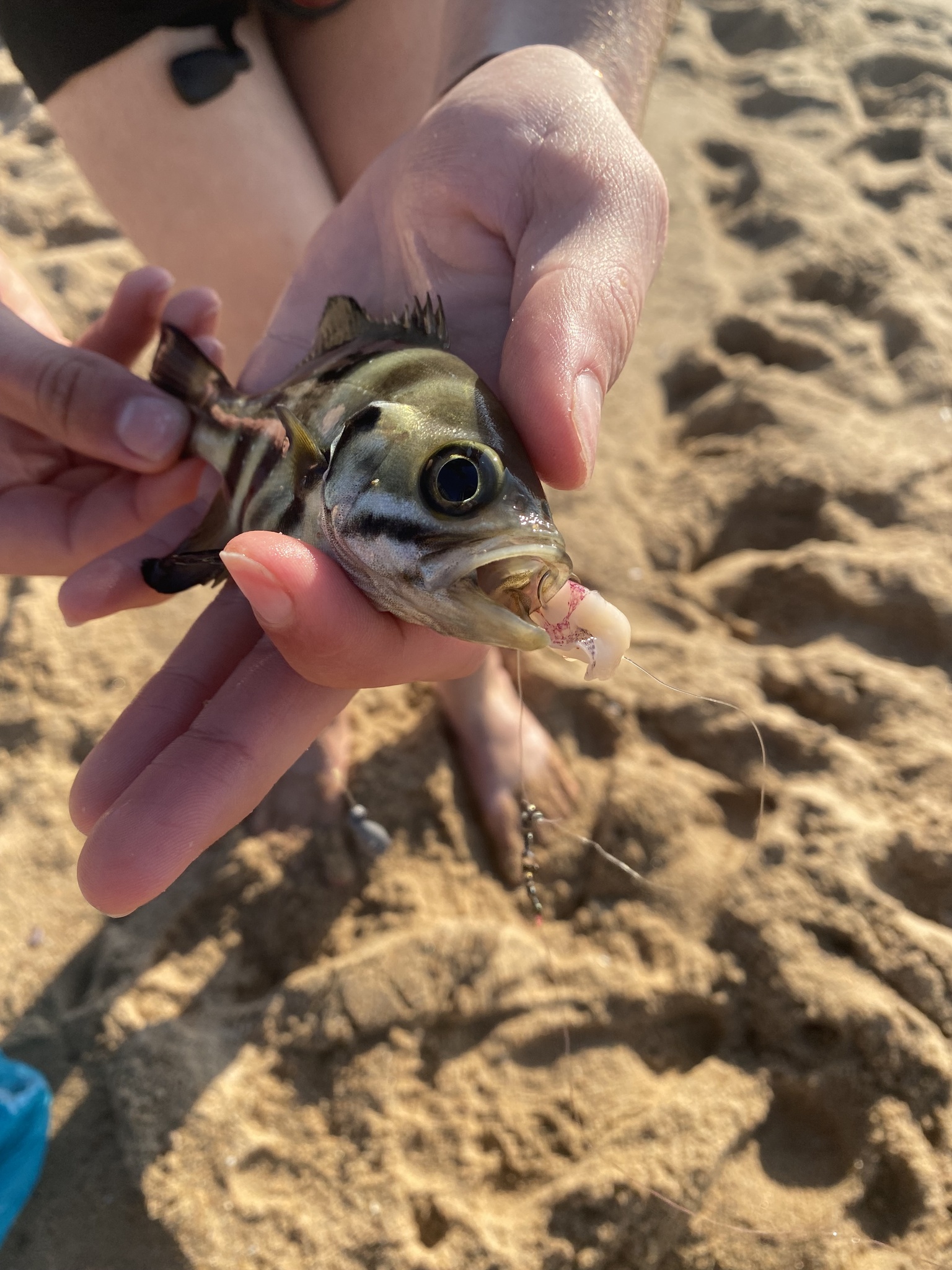
Cave bass have a dark brown head, body and fins with white specks on the body. These spots fade in large adults. The lower part of the head is pale with a dark moustache shaped marking across the cheek. Small juveniles have a silvery body and black markings, marking on the dorsal make it appear to be two separate fins.
Western Indian Ocean including Pakistan, southern Oman, Kenya, MOZ and eastern seaboard of SA (Smith and Heemstra 1991, Randall 1995).
In southern Africa cave bass are found south to Mossel Bay (Smith and Heemstra 1991, Heemstra and Heemstra 2004).
Cave bass are highly resident species but a very small proportion (<5%) appears to be more nomadic with movements of up to 90km (Mann 2012).
Adult cave bass feed on crustaceans such as shrimps, mantis shrimps, crabs as well as small fish (van der Elst 1988, Heemstra and Heemstra 2004) but the diet of juveniles in not known.
The specific reproductive style of cave bass is unknown. They have been reported to spawn in winter in KZN (van der Elst 1988) but most eggs are found in southern KZN during December to April (Connell 2012). Spawning take place off KZN in shelf waters at 20-30m depth (van der Elst 1988, Connell 2012). Average age at maturity is not known and the average length at maturity is estimated to be ~30cm TL (van der Elst 1988).
Inshore, Offshore (>30m)
This map contains point-based occurrences at different locations
Occurrence in African countries and South African provinces. Residence status indicates if a taxon is indigenous, endemic, or alien in a specific region. This data is based on specimen records and literature.
FSA
SA
BOT
NAM
ESW
LES
WC
EC
NC
FS
GA
KZN
LP
MP
NW
Absent
Indigenous
Endemic
Naturalised
Invasive
Click on images to enlarge
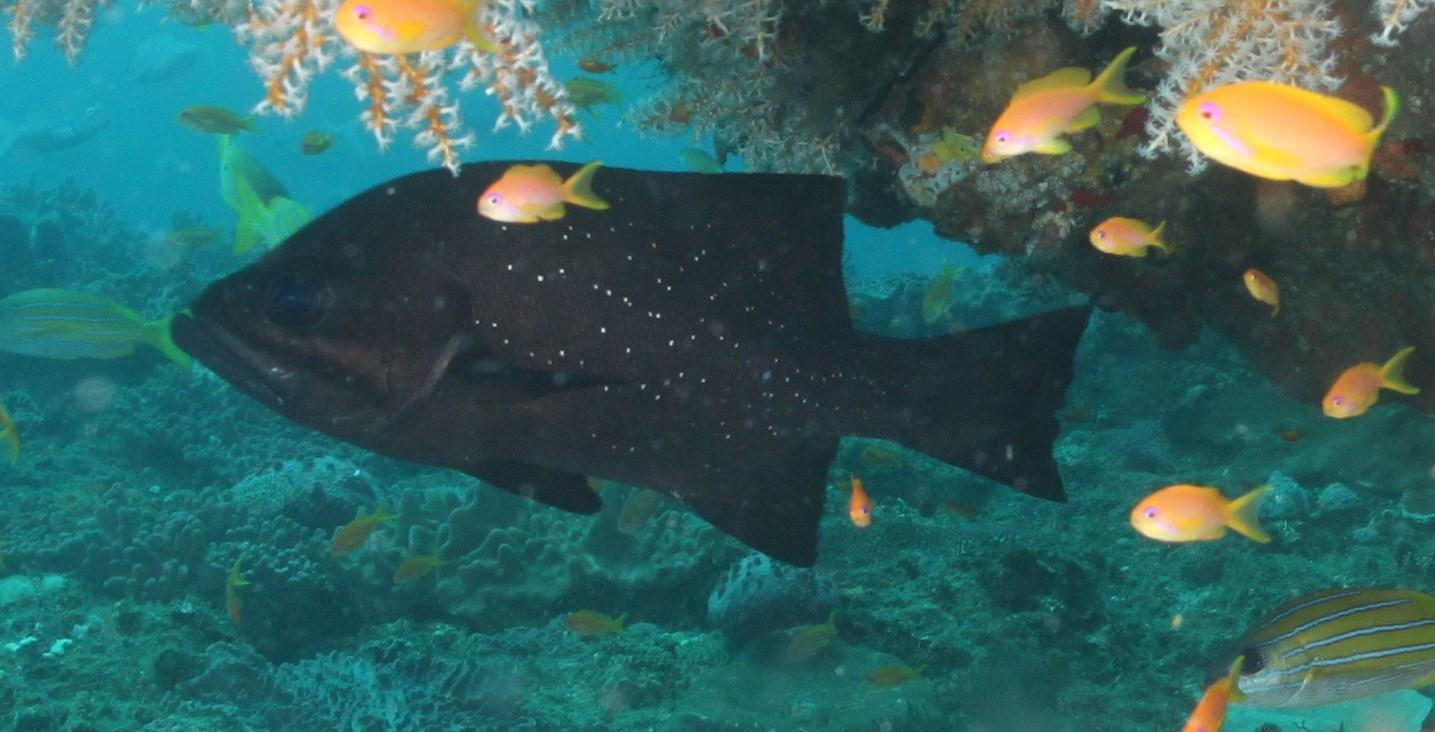
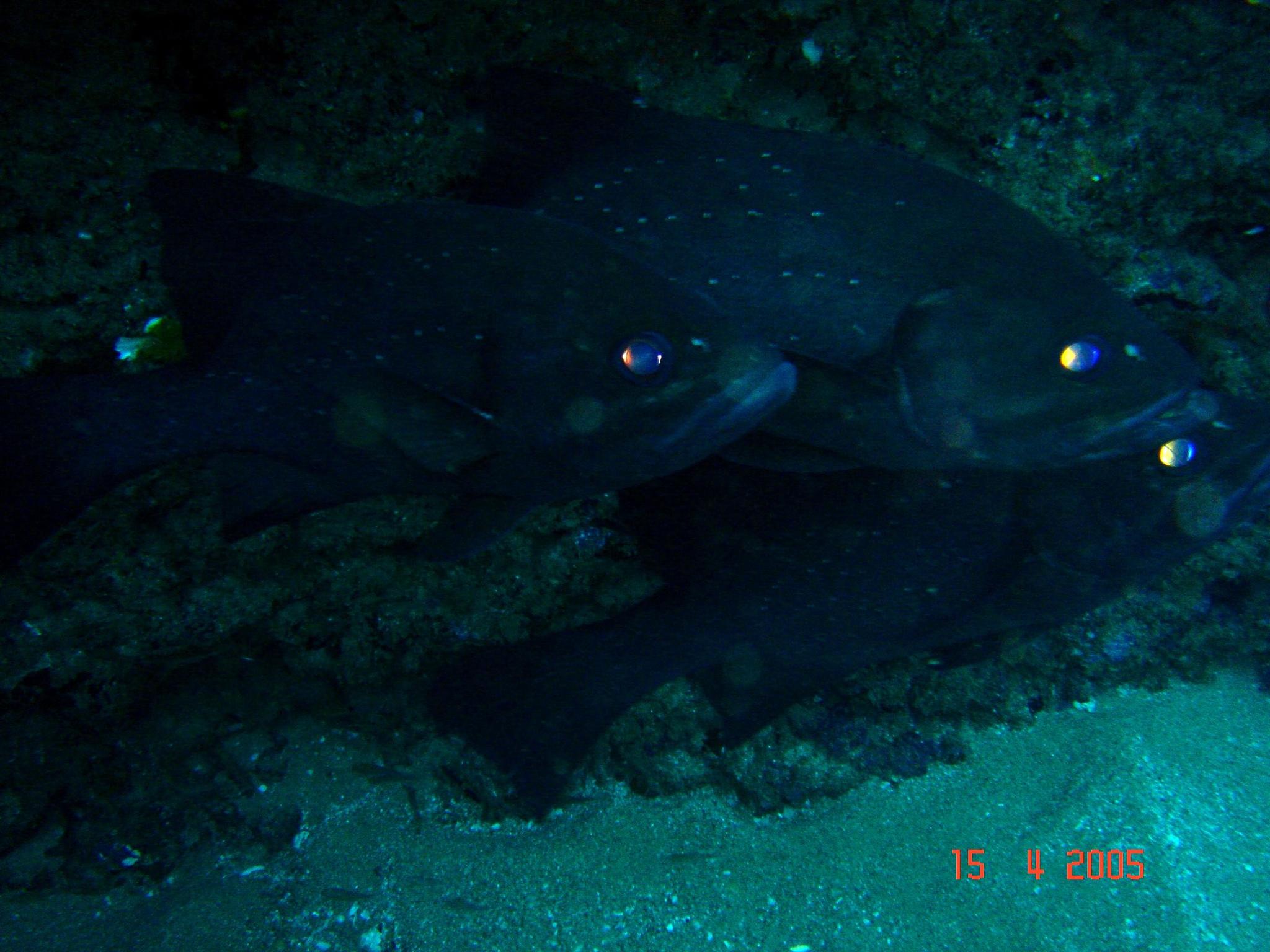
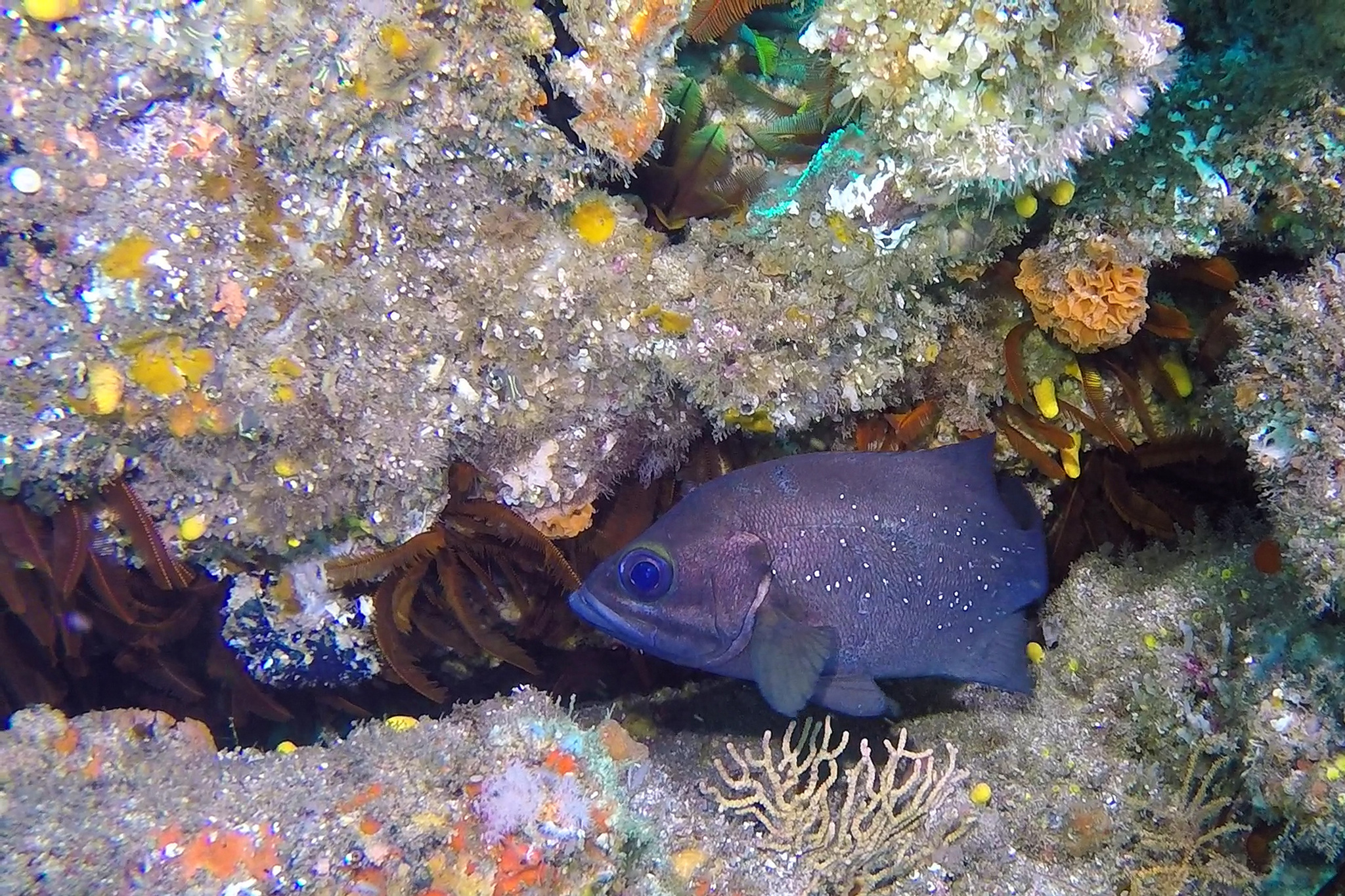
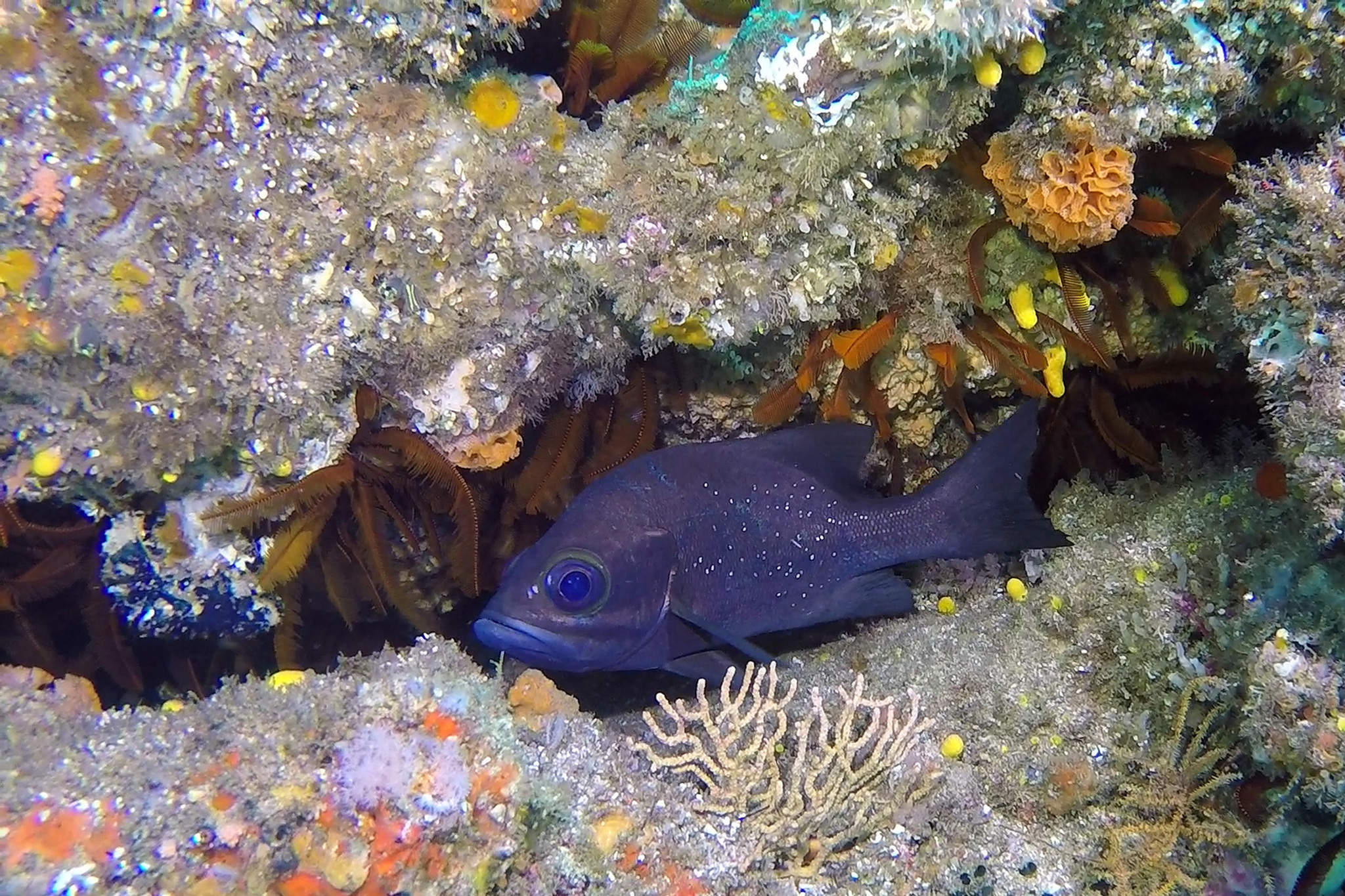
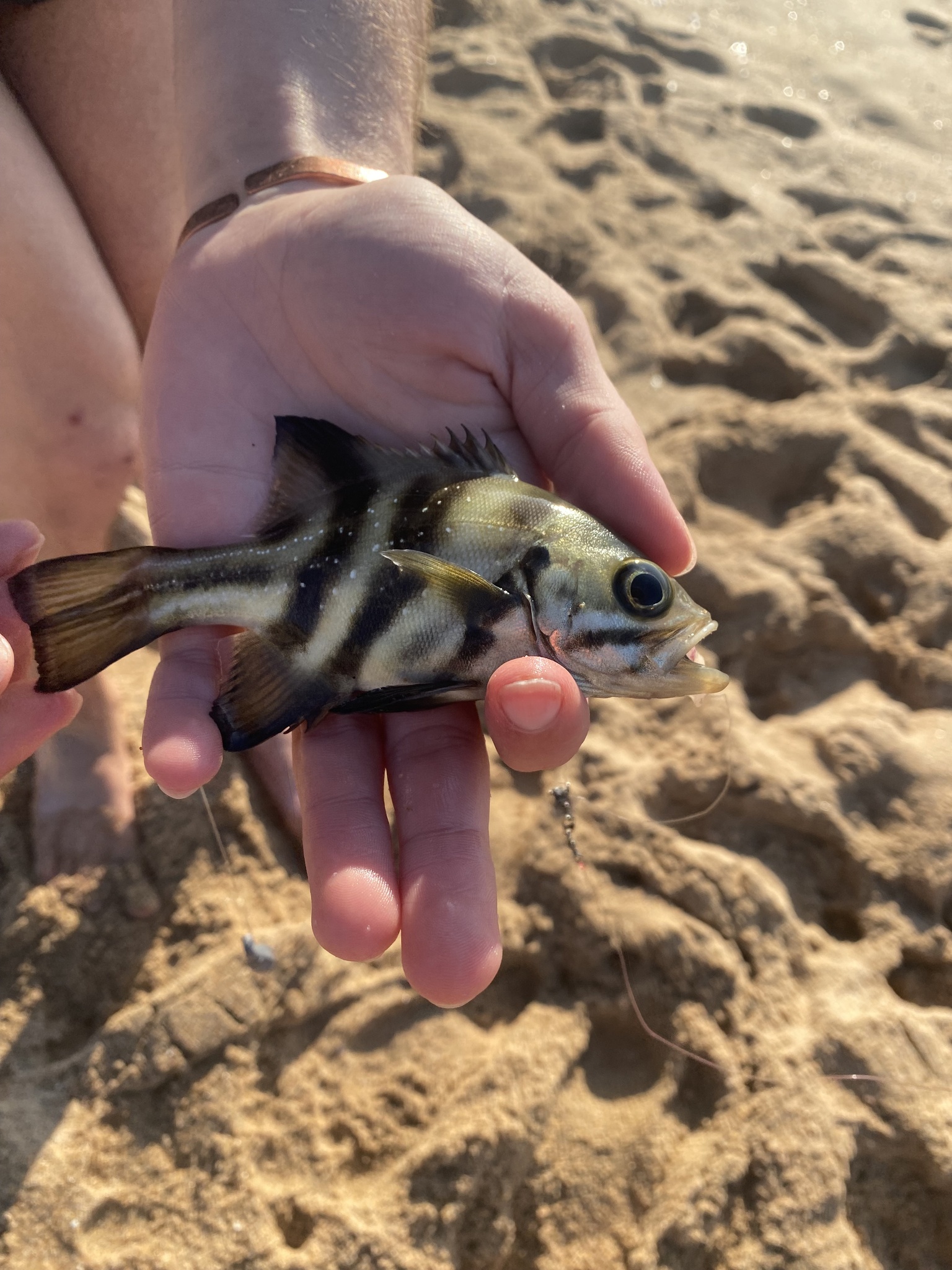
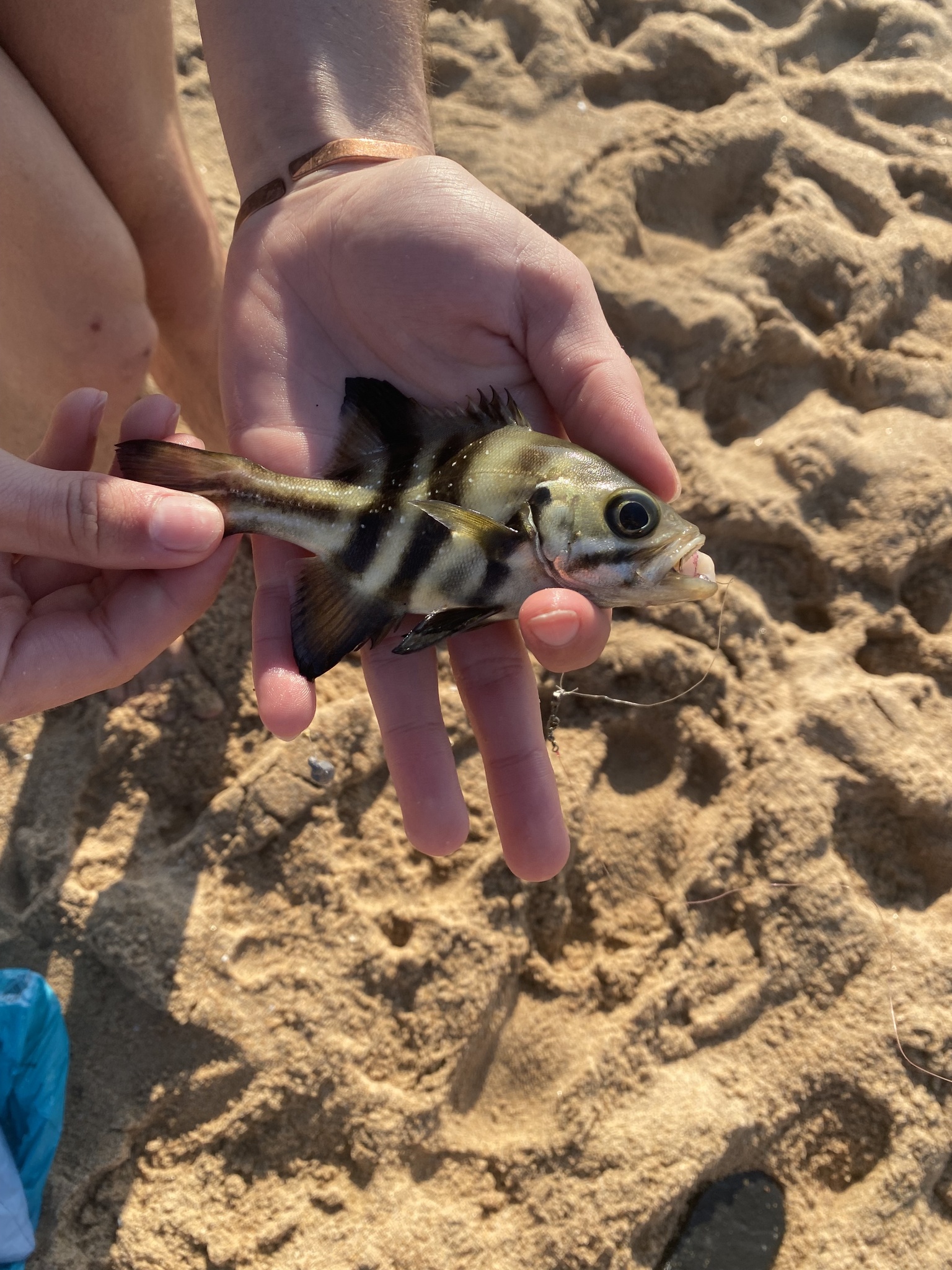
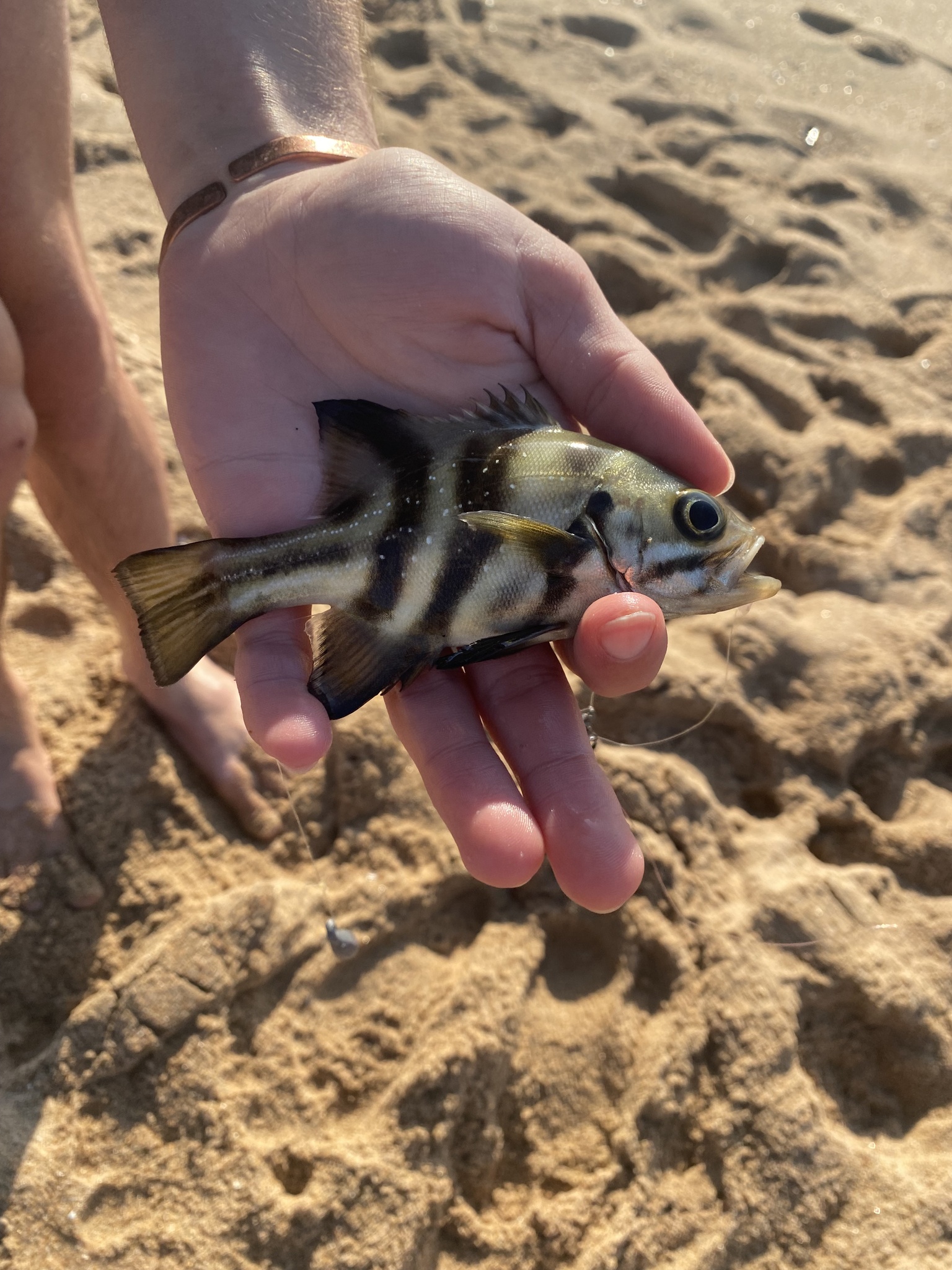
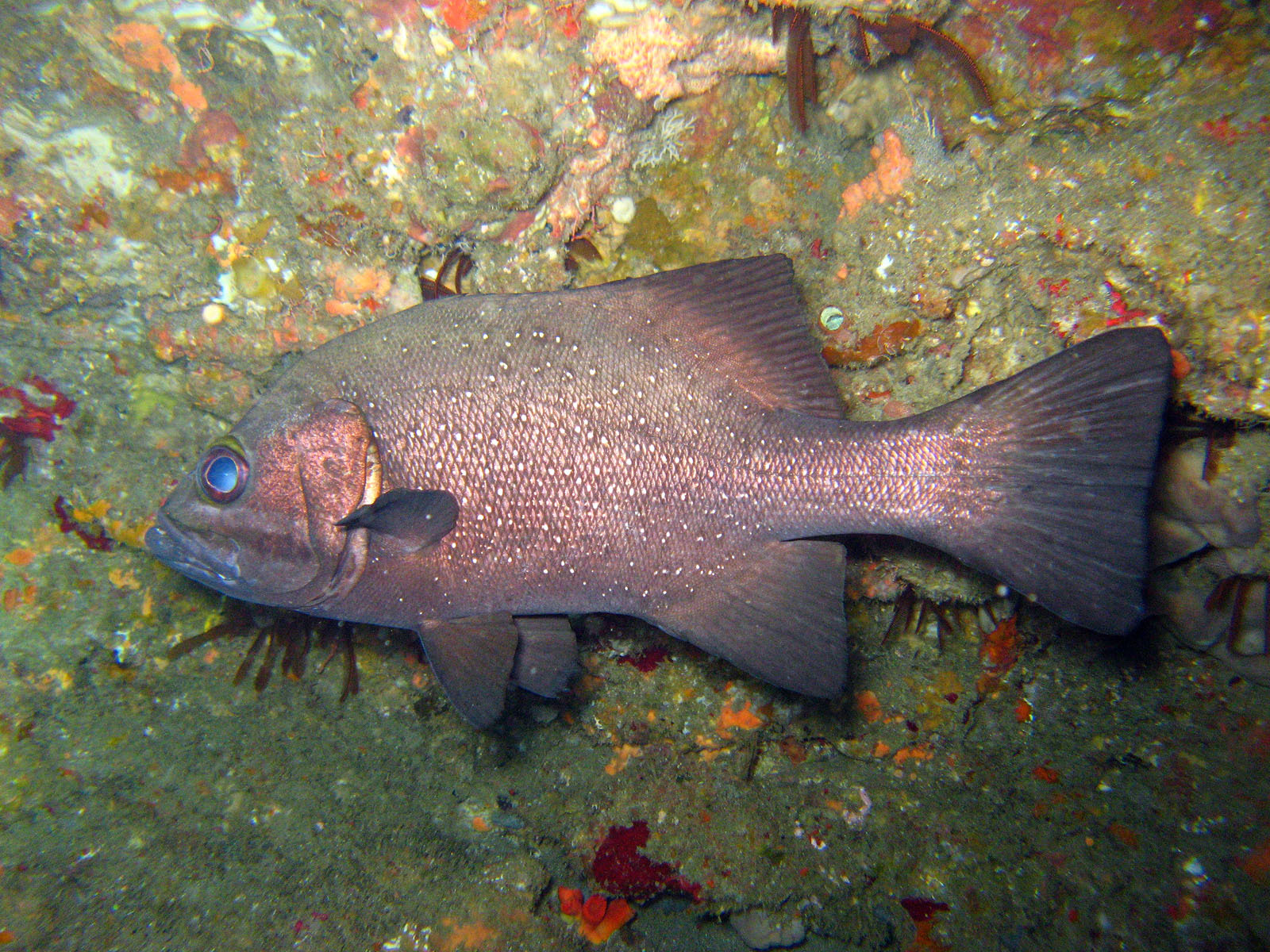
Dinoperca petersi (Day, 1875)
| Kingdom | animalia |
|---|---|
| Phylum | chordata |
| Class | actinopterygii |
| Order | perciformes |
| Family | dinopercidae |
| Genus | dinoperca |
| Species | petersi |
| Date | Place | Data Resource | Link |
|---|---|---|---|
| 2015-10-06 | KwaZulu-Natal | iNaturalist | View |
| 2006-06-14 | KwaZulu-Natal, South Africa | iNaturalist | View |
| 2022-11-29 | KwaZulu-Natal, South Africa | iNaturalist | View |
| 2007-11-29 | KwaZulu-Natal | iNaturalist | View |
| 2023-07-13 | KwaZulu-Natal | iNaturalist | View |
| 2008-04-02 | KwaZulu-Natal | iNaturalist | View |
Cave bass form a minor part of catches in all fisheries where they occur (Dunlop 2011), except for subsistence fishing for which the contribution is not known. Frequently taken by spearfishers in KZN (Mann et al. 1997a).