
ANIMALIA / CHORDATA / ACTINOPTERYGII / PERCIFORMES / SCIAENIDAE / ATRACTOSCION / AEQUIDENS

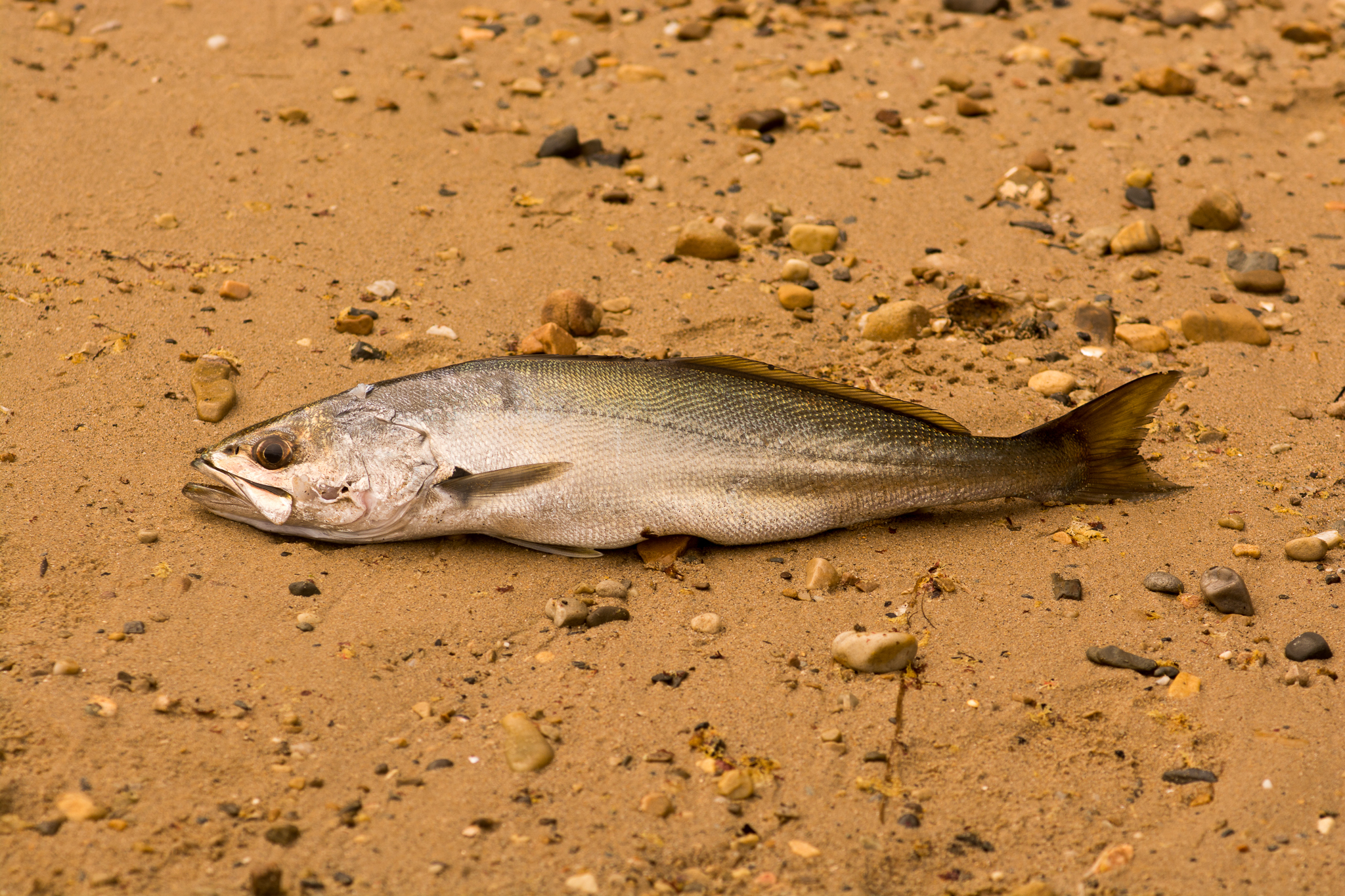
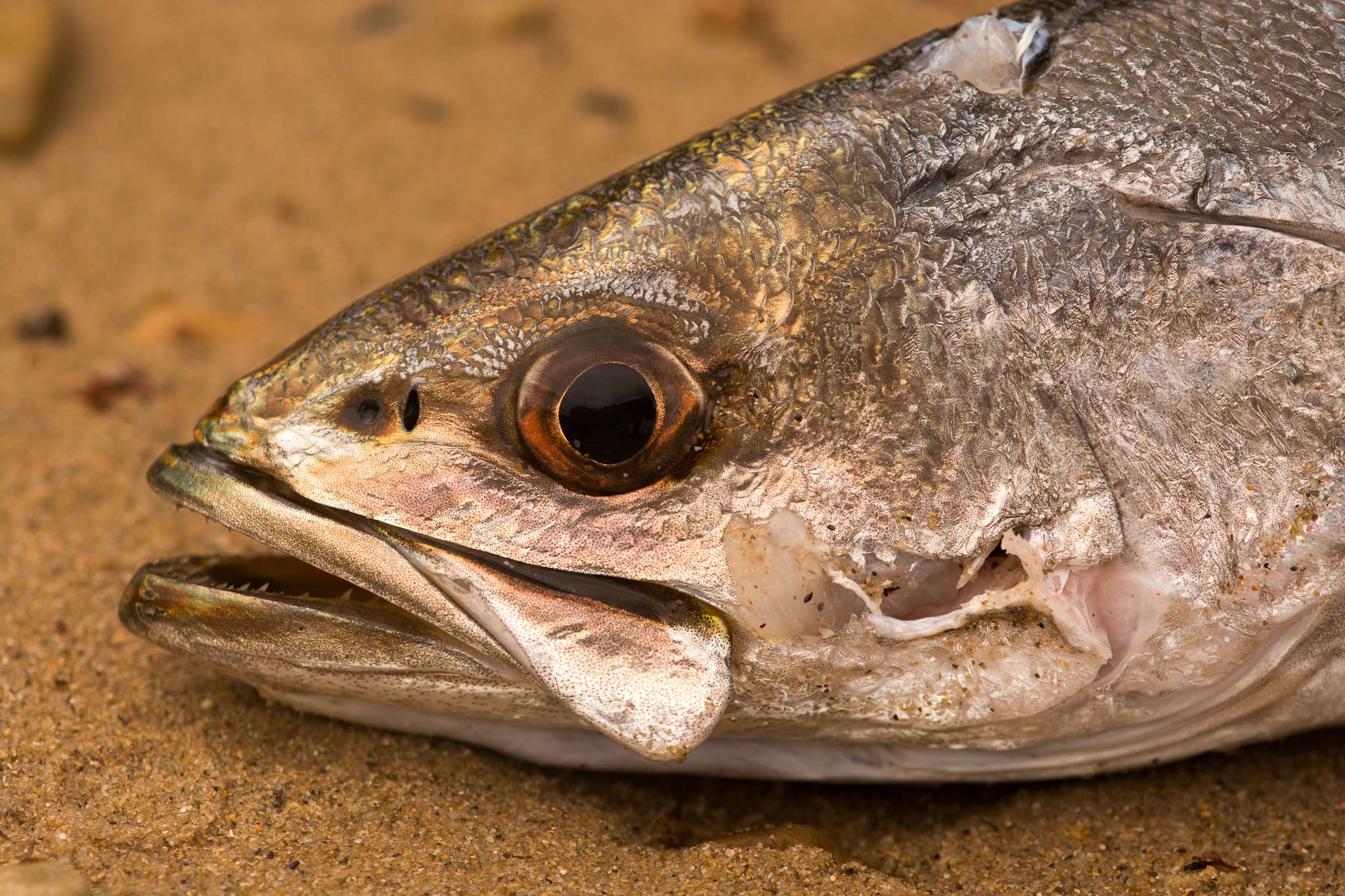
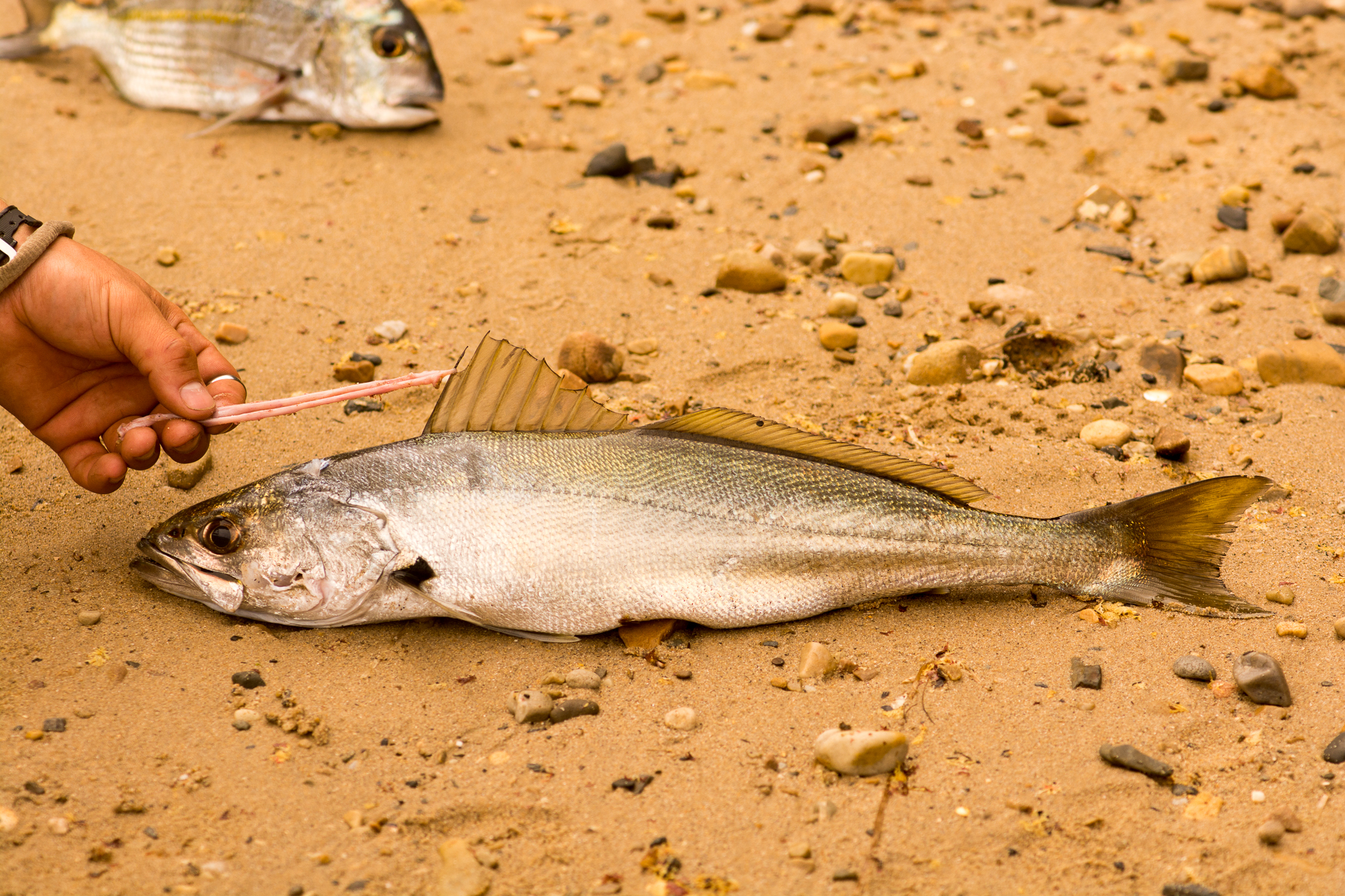
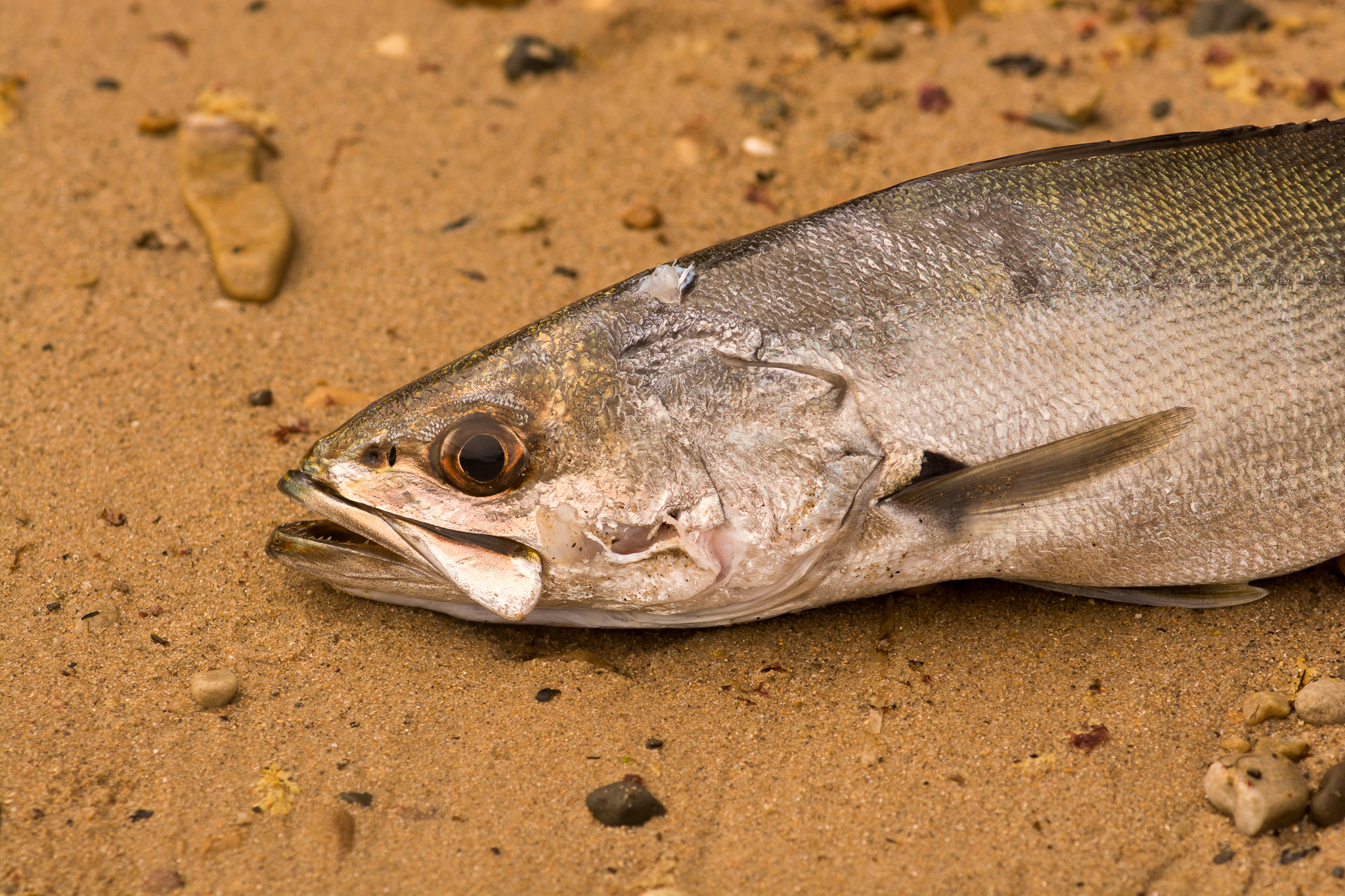
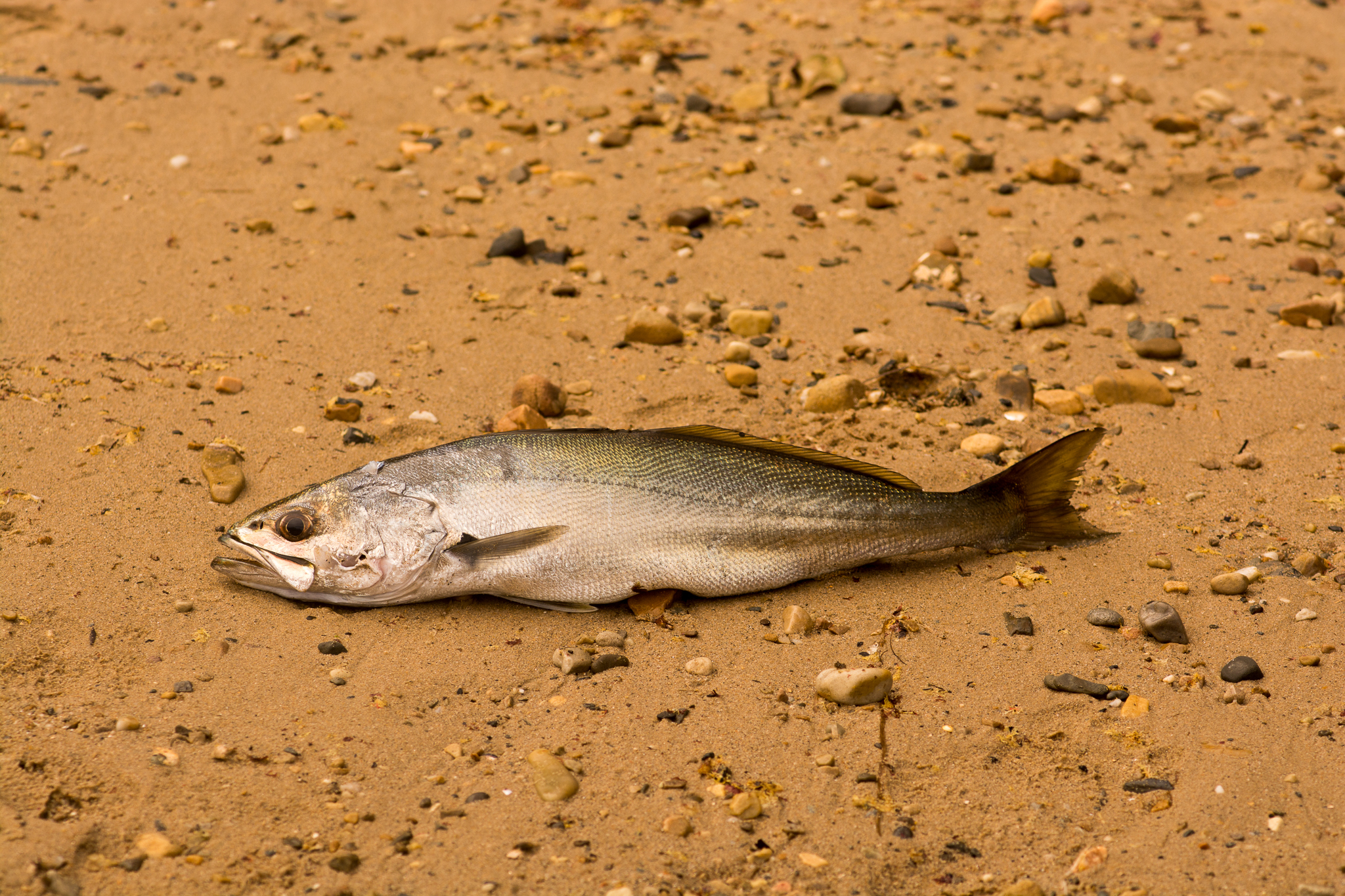
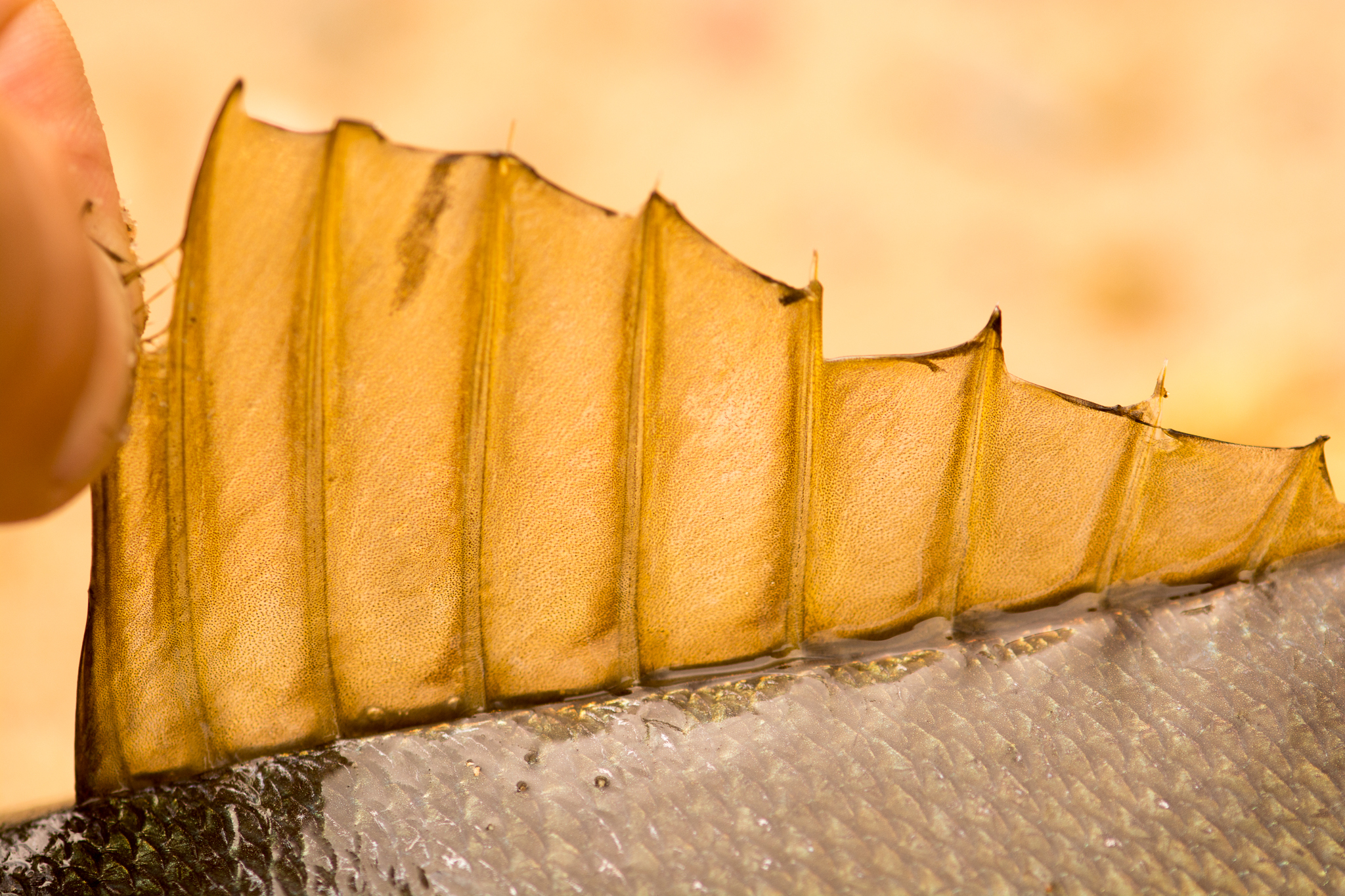
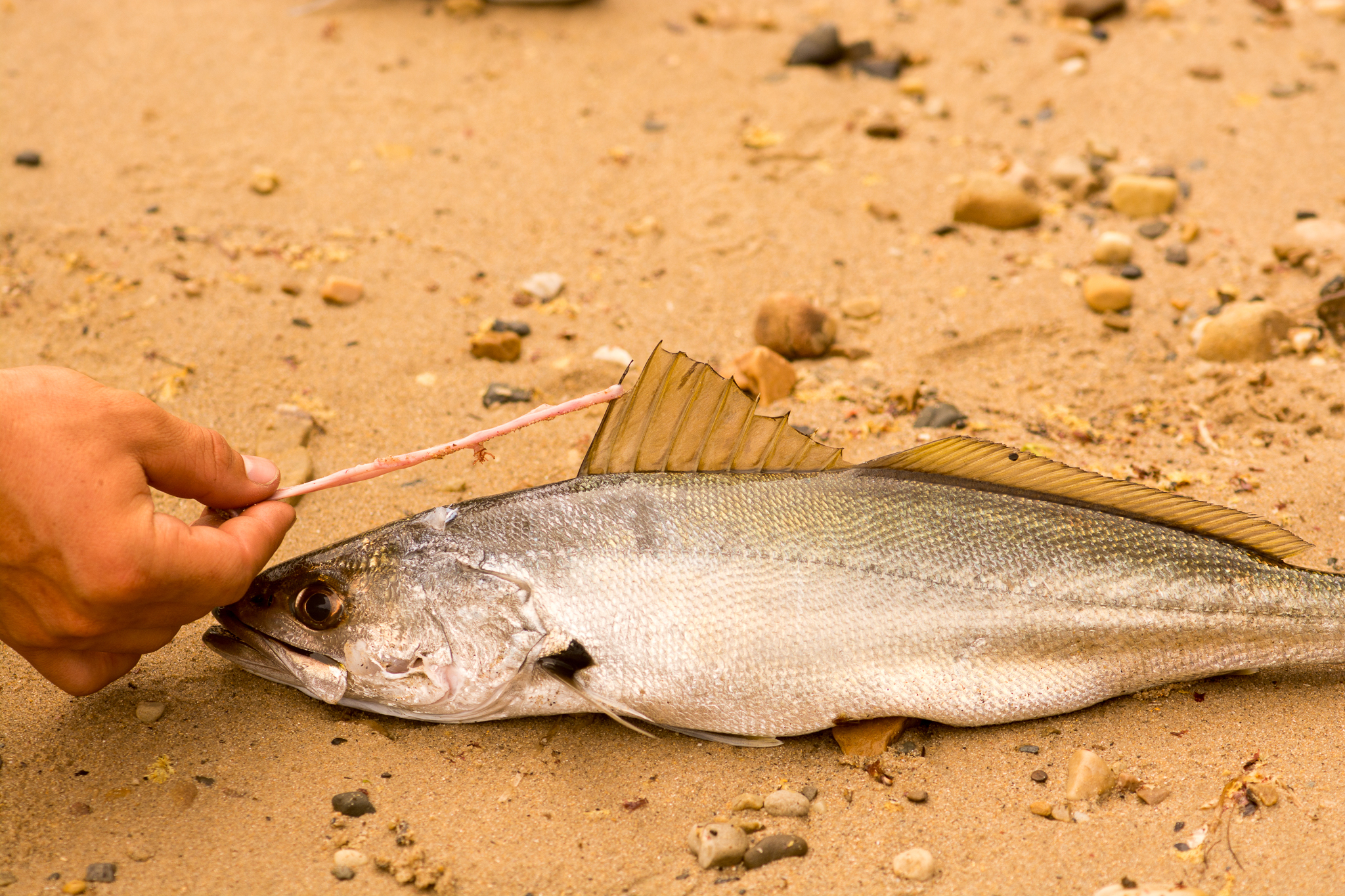
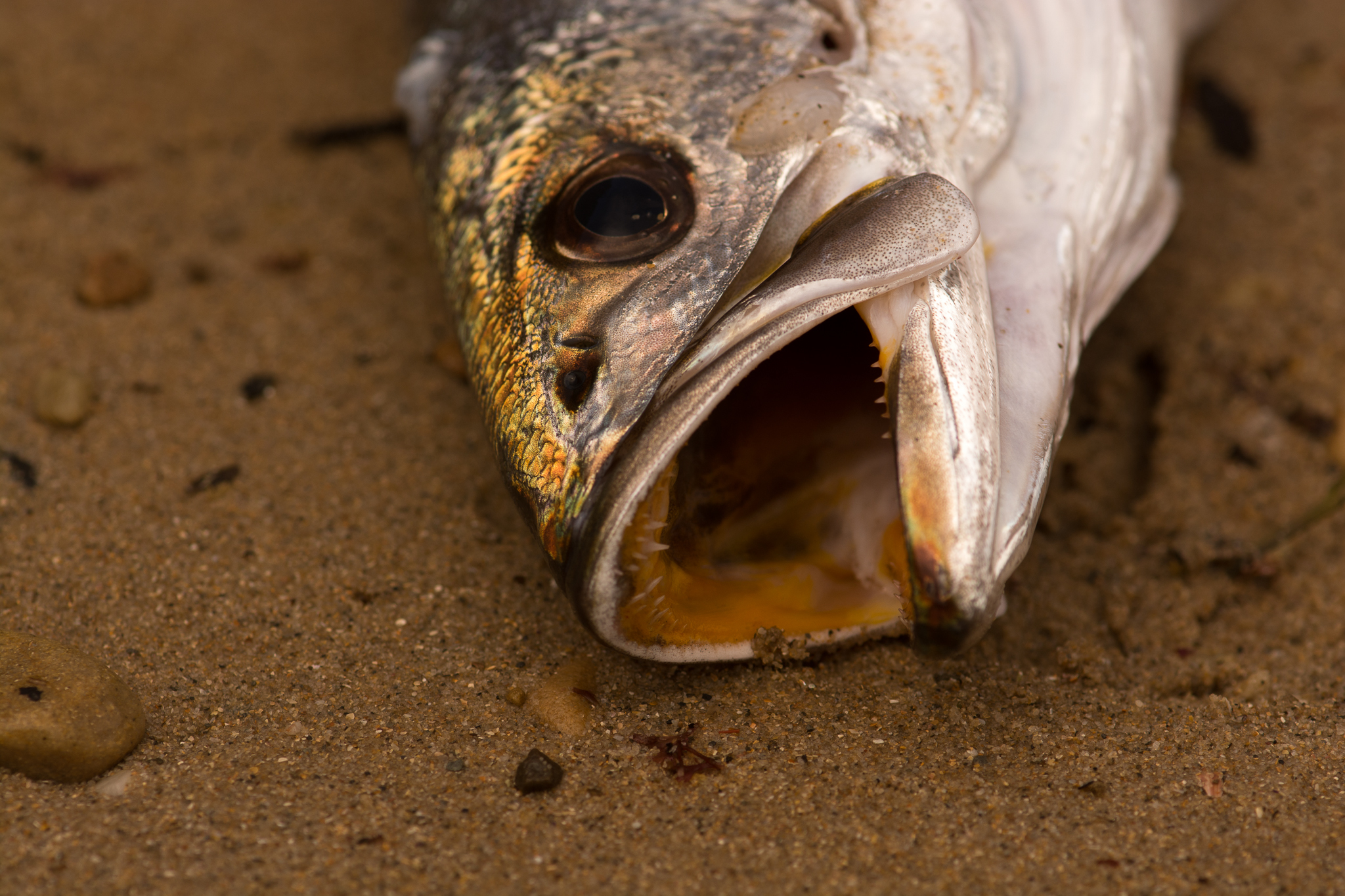
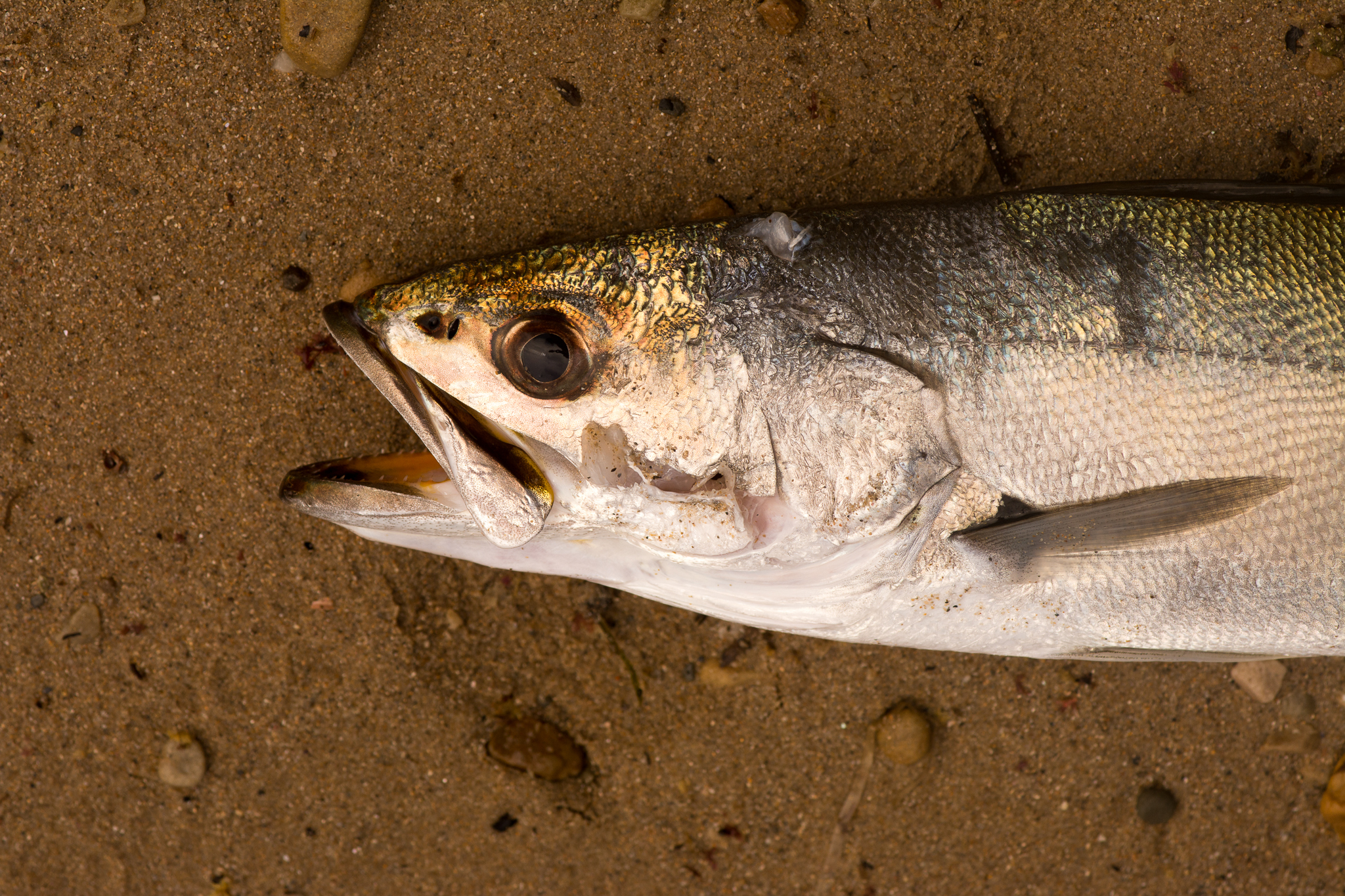
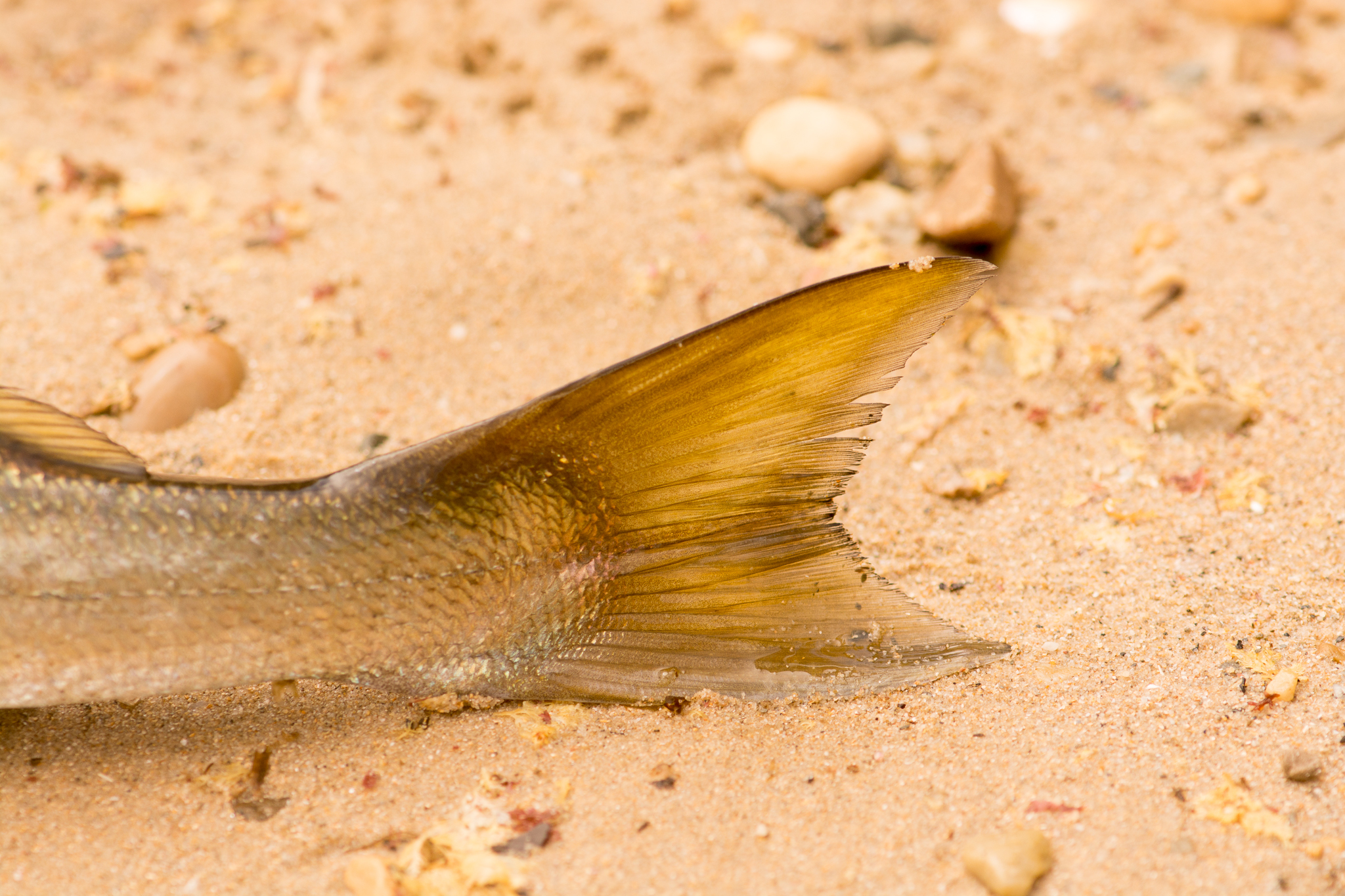
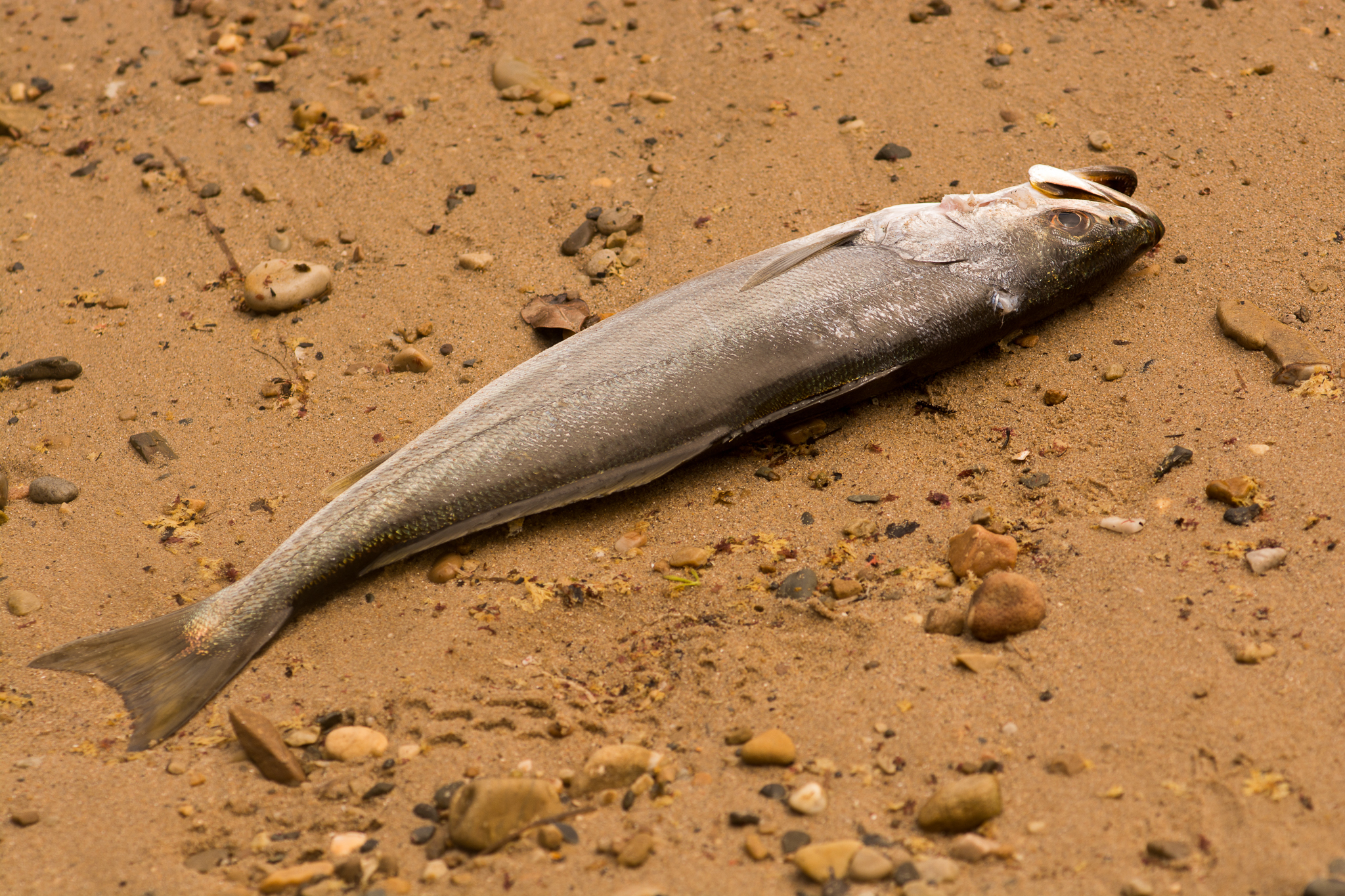
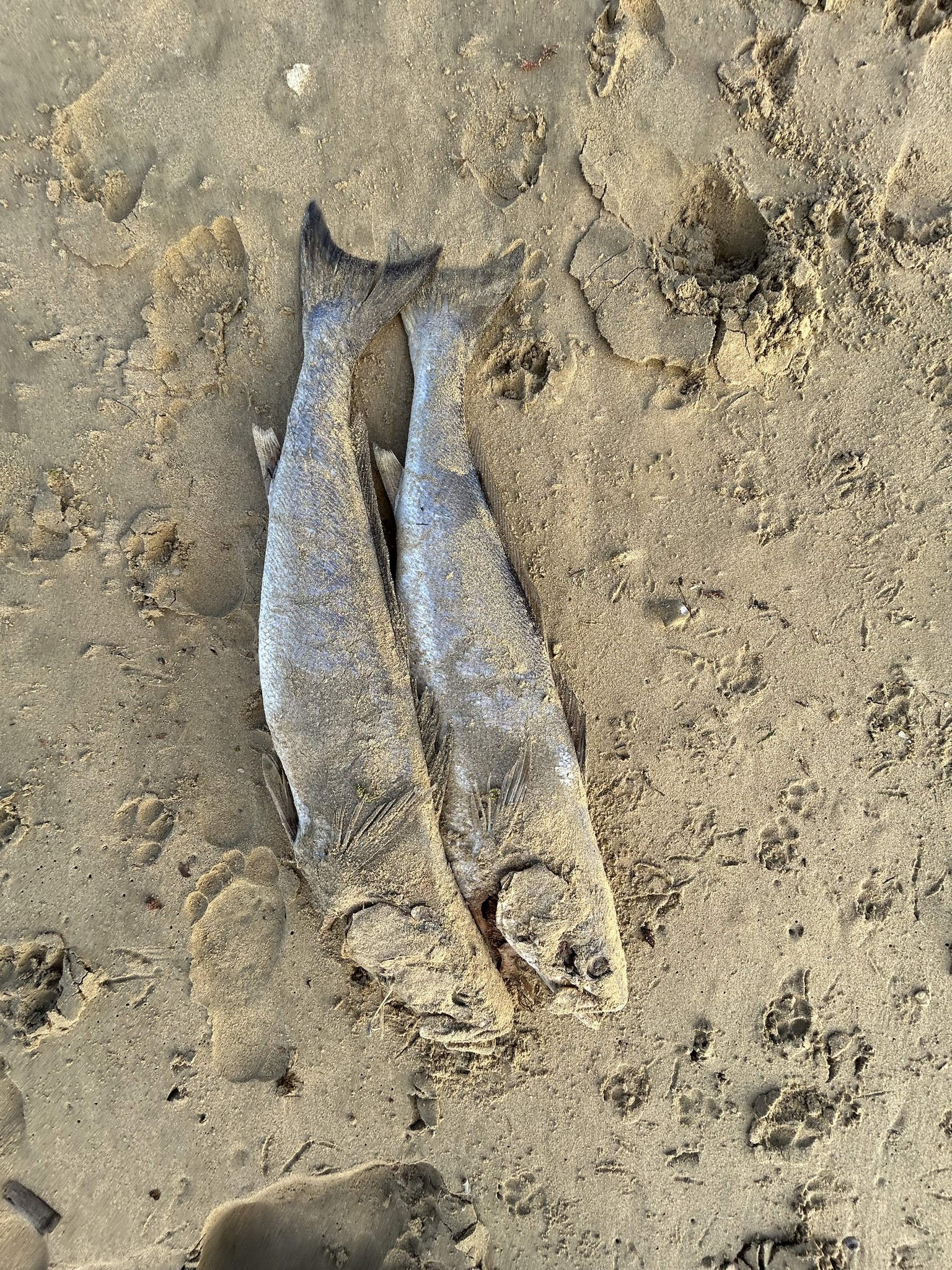
Geelback have a distinct concave tail, with upper and lower rays longer than middle rays. The mouth is large and the lower jaw projects. The body is silvery with a coppery sheen dorsally and white below. The pectoral fin auxillary flap s black and the inside of the mouth and gill cavity are yellow (Heemstra and Heemstra 2004).
Gulf of Guinea to Angola, False Bay to southern Mozambique, NW Africa and SE Australia (Fischer and Bianchi 1984, Heemstra and Heemstra 2004).
Cape Point to southern Mozambique separated from stock off Angola by cool waters off the west coast of SA and southern Namibia (Griffiths and Hecht 1995b).
Geelbek are migratory species that undertake a seasonal migration from the Western Cape to KZN where they spawn in spring (Garratt 1988, Griffiths and Hecht 1995b).
Adults are piscivores that mainly eat sardines, mackerel and massbanker and juveniles prefer smaller prey such as mysids and later anchovies (Griffiths 1988).
Geelbek are gonochorists (Griffiths and Hecht 1995b) that spawn from august to November with a peak from September to October (Garratt 1988, Griffiths and Hecht 1995b, Connell 2012). Spawning takes place in KZN waters mainly over offshore reefs in depths of 40-60m (Griffiths and Hecht 1995b, Connell 2012). Age at 50% maturity for combined sexes in SA is 5 years (Griffiths and Hecht 1995b) and length at 50% maturity is 900mm FL; SA (Griffiths and Hecht 1995b).
Inshore, Offshore (>30m)
This map contains point-based occurrences at different locations
Occurrence in African countries and South African provinces. Residence status indicates if a taxon is indigenous, endemic, or alien in a specific region. This data is based on specimen records and literature.
FSA
SA
BOT
NAM
ESW
LES
WC
EC
NC
FS
GA
KZN
LP
MP
NW
Absent
Indigenous
Endemic
Naturalised
Invasive
Names and Sources
| Common Name | Language |
|---|---|
| Cape Cob | En |
| Geelbeck Croaker | En |
| Geelbek | Af |
| Cape Salmon | |
| Silver Jewfish | |
| Corvina | |
| Teraglin |
Classification
KINGDOM Animalia
PHYLUM Chordata
CLASS Actinopterygii
ORDER Perciformes
FAMILY Sciaenidae
GENUS Atractoscion
SPECIES aequidens
No results found for Atractoscion aequidens (Cuvier, 1830)
Important catch of the boat-based commercial and recreational linefishery. Catches per area are seasonal as adult fish undertake an annual spawning migration to KZN (Sauer et al. 1997, Donovan 2010). Also taken as bycatch by the inshore demersal trawl fishery (Attwood et al. 2011).
2 results for Atractoscion aequidens (Cuvier, 1830)
This map contains point-based occurrences at different locations
2011
JOURNAL ARTICLE
Bycatch in South Africa's inshore trawl fishery as determined from observer recordsAttwood, Colin, Petersen, Samantha, Kerwath, Sven. 2011. Bycatch in South Africa's inshore trawl fishery as determined from observer records Vol. 68 pp.2163–2174.
2012
REPORT
Marine fish eggs and larvae off the east coast of South AfricaConnell, A.D.. 2012. Marine fish eggs and larvae off the east coast of South Africa.
2010
BOOK
A retrospective assessment of the Port Alfred linefishery with respect to the changes in the South African fisheries management environmentDonovan, Bruce. 2010. A retrospective assessment of the Port Alfred linefishery with respect to the changes in the South African fisheries management environment.
2015
REPORT
Atractoscion aequidensFennessy, S., Larson, H.. 2015. Atractoscion aequidens.
1984
BOOK
FAO Species Identification Sheets for Fishery Purposes: Western Indian Ocean (fishing Area 51)Fischer, W, Bianchi, Gabriella. 1984. FAO Species Identification Sheets for Fishery Purposes: Western Indian Ocean (fishing Area 51). Food and Agriculture Organization of the United Nations.
1988
JOURNAL ARTICLE
Notes on seasonal abundance and spawning of some important offshore linefish in Natal and Transkei waters, southern AfricaGarratt, PA. 1988. Notes on seasonal abundance and spawning of some important offshore linefish in Natal and Transkei waters, southern Africa Vol. 7 pp.1–8.
1995
JOURNAL ARTICLE
On the life-history of Atractoscion aequidens, a migratory sciaenid off the east coast of southern AfricaGriffiths, MH, Hecht, T. 1995. On the life-history of Atractoscion aequidens, a migratory sciaenid off the east coast of southern Africa Vol. 47 pp.962–985.
2004
BOOK
Coastal fishes of Southern AfricaHeemstra, P, Heemstra, E. 2004. Coastal fishes of Southern Africa. Grahamstown. NISC pp.488.
2013
JOURNAL ARTICLE
Southern African Marine Linefish Species ProfilesMann, B.Q. 2013. Southern African Marine Linefish Species Profiles pp.343.
1997
JOURNAL ARTICLE
An evaluation of attitudes and responses to monitoring and management measures for the South African boat-based linefisherySauer, WHH, Lamberth, SJ, Mann, BQ, Brouwer, SL, Erasmus, C, Penney, AJ, Stewart, TJ. 1997. An evaluation of attitudes and responses to monitoring and management measures for the South African boat-based linefishery Vol. 18 pp.147–163.
Status and criteria
NE
Assessor(s)
Sean Fennessy
Reviewer(s)
Animalia Coordinator


