
ANIMALIA / CHORDATA / ACTINOPTERYGII / PERCIFORMES / SPARIDAE / CHRYSOBLEPHUS / GIBBICEPS

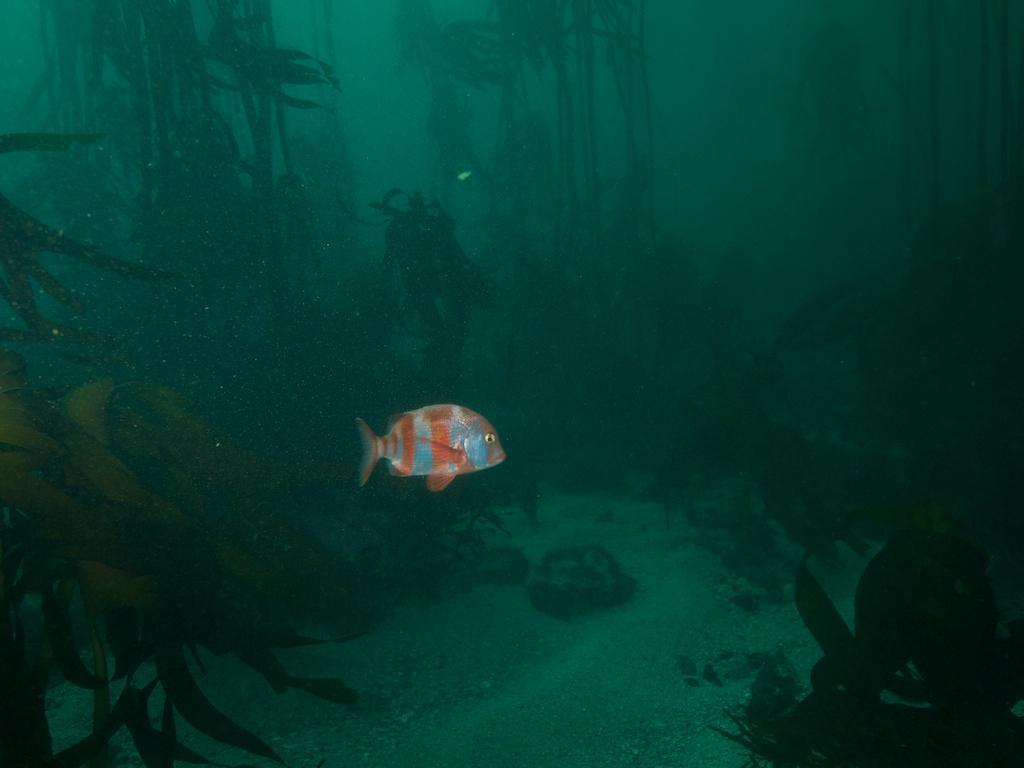
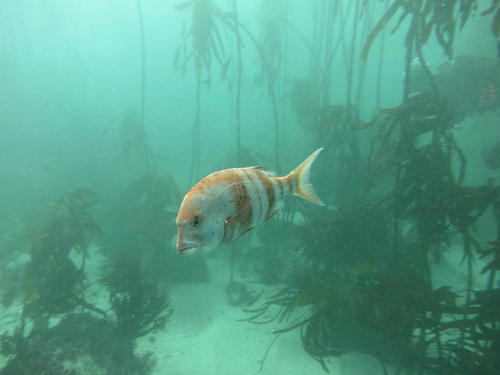
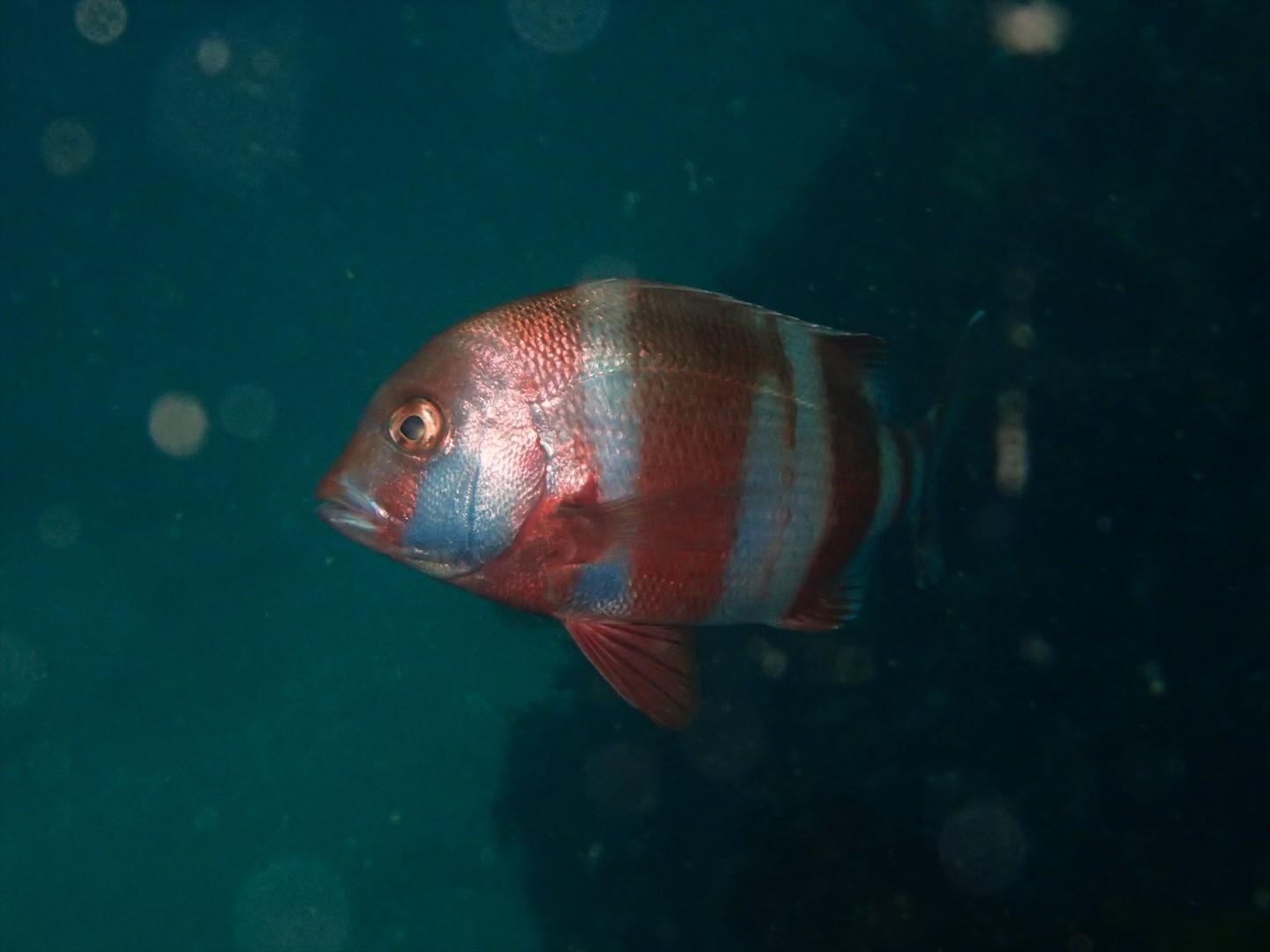
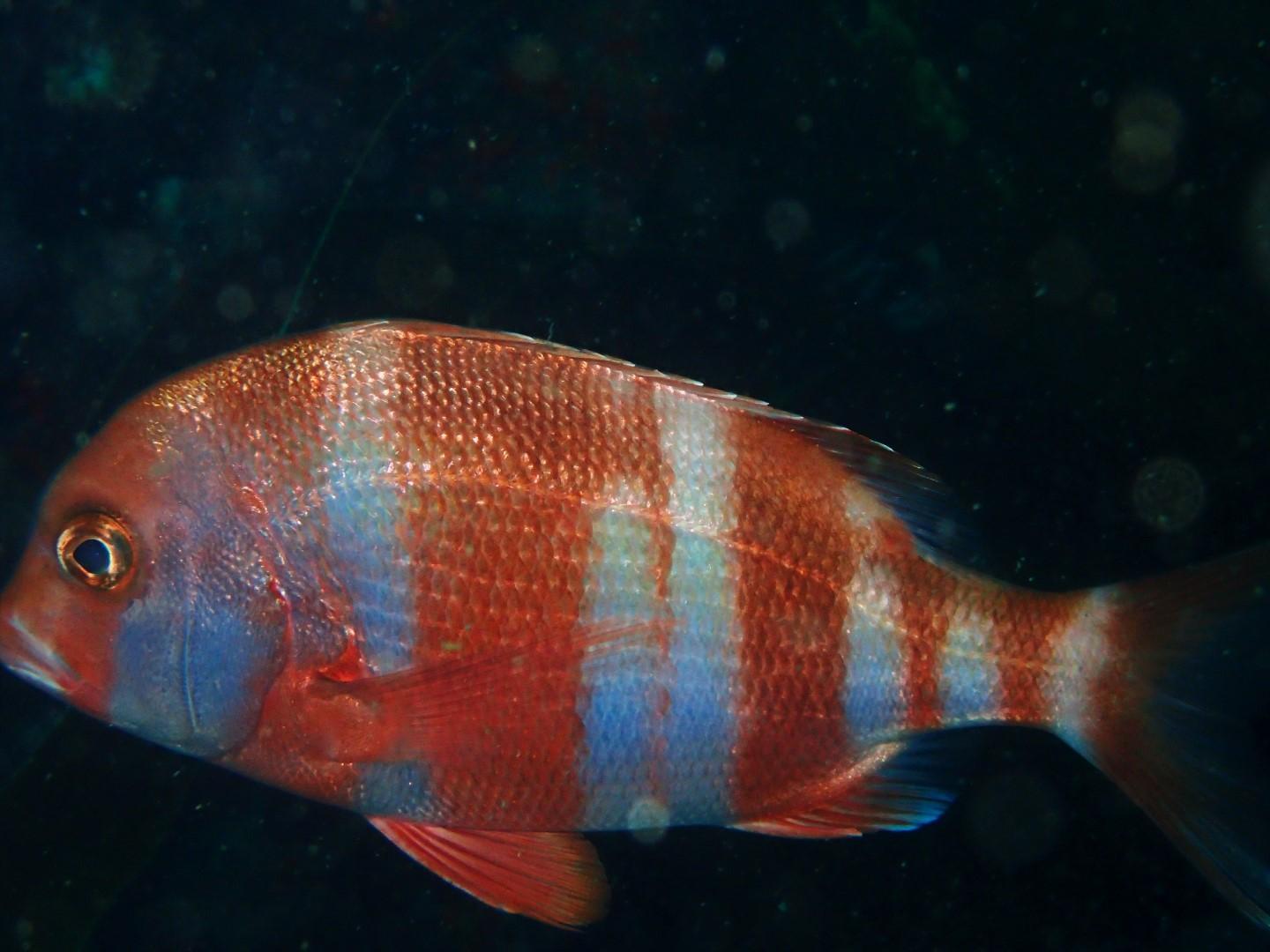
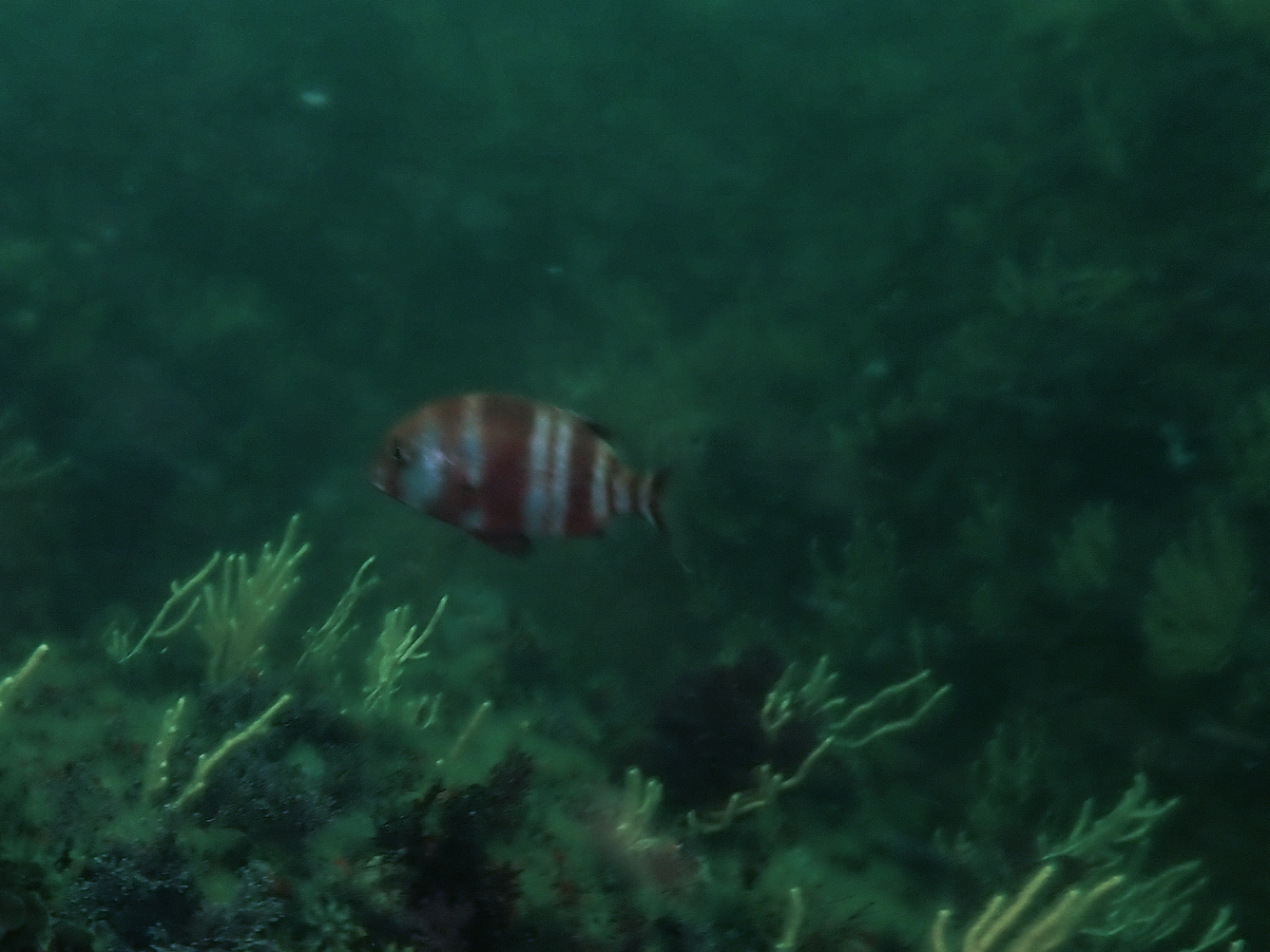
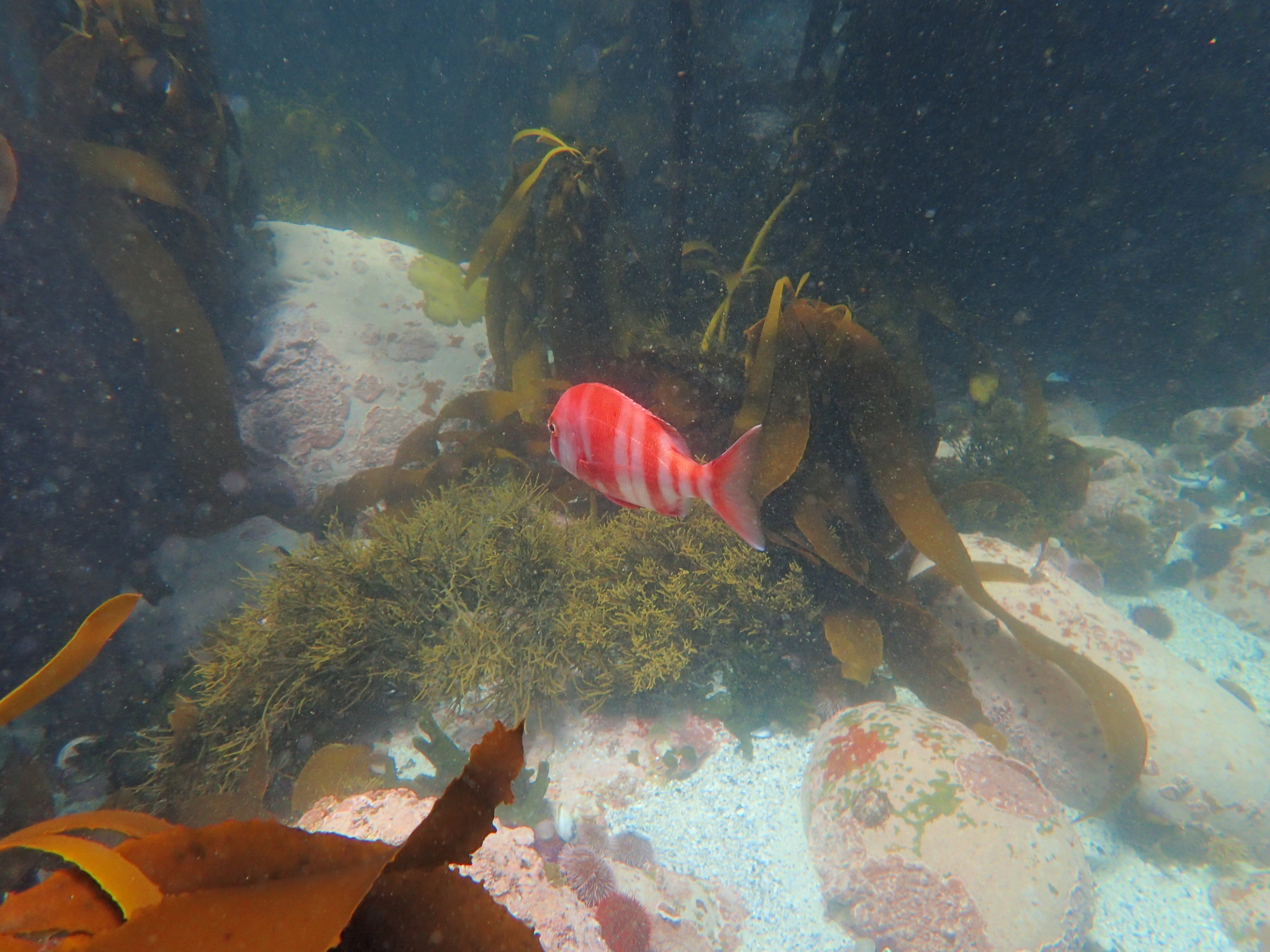
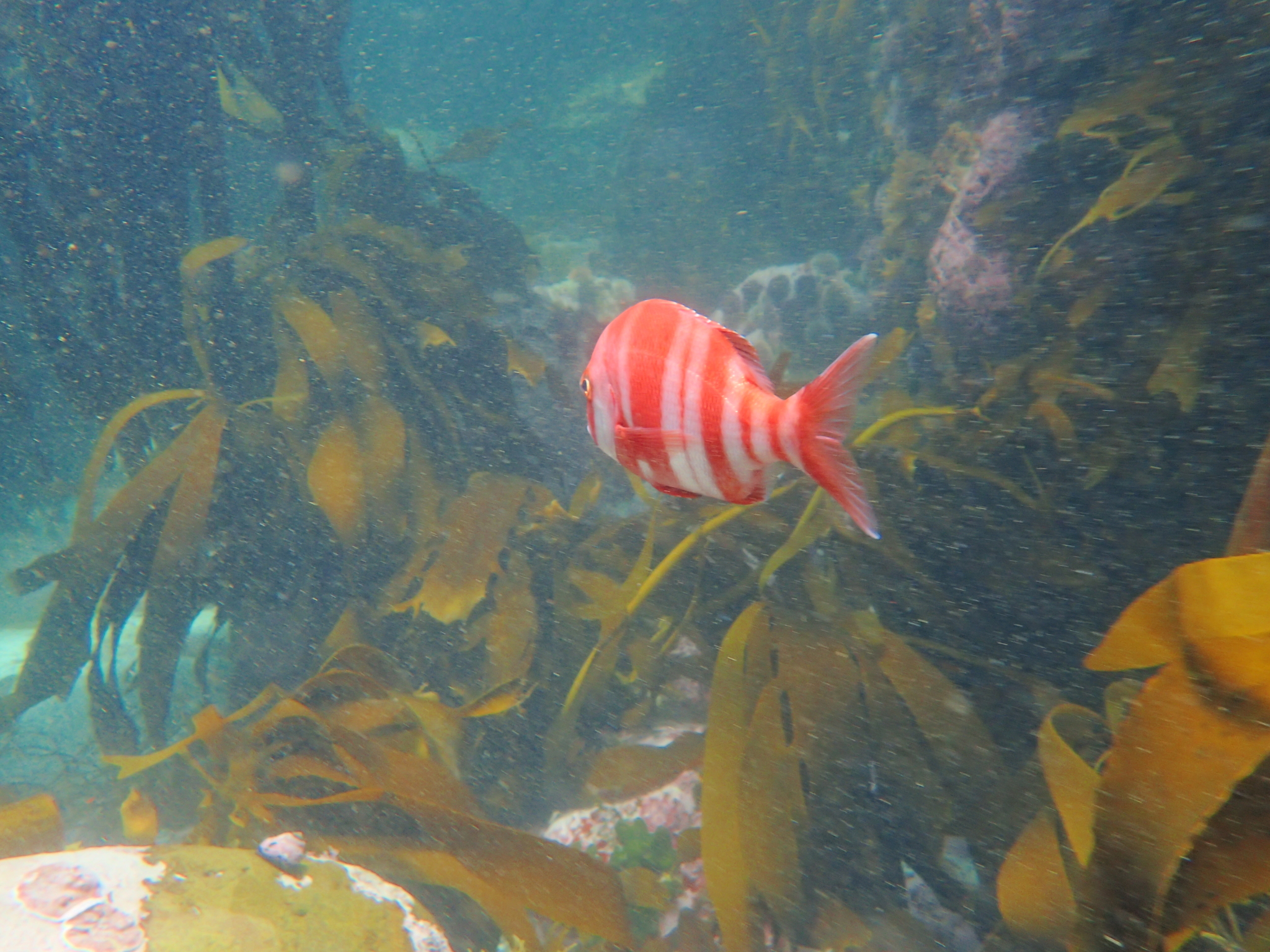
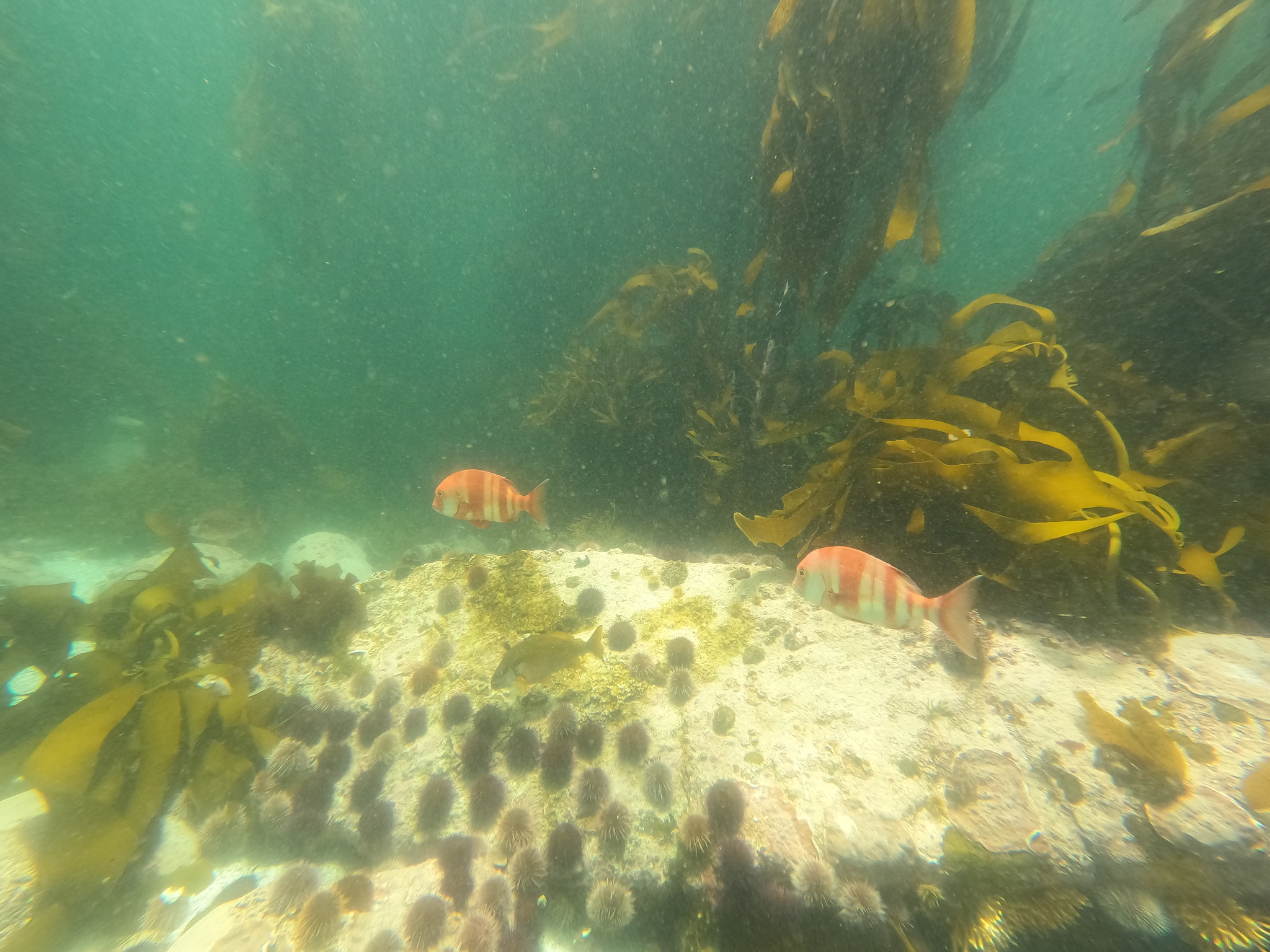
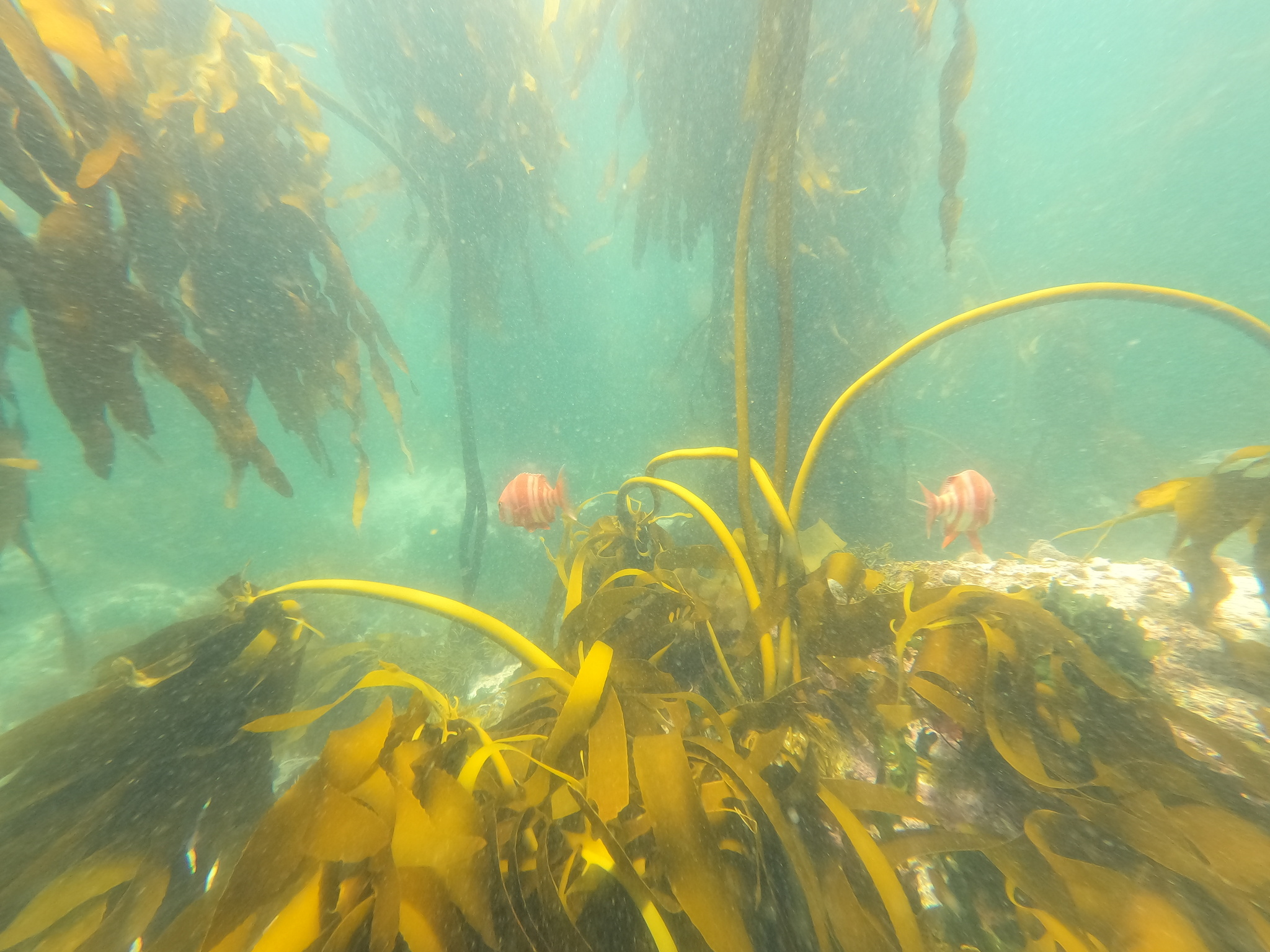
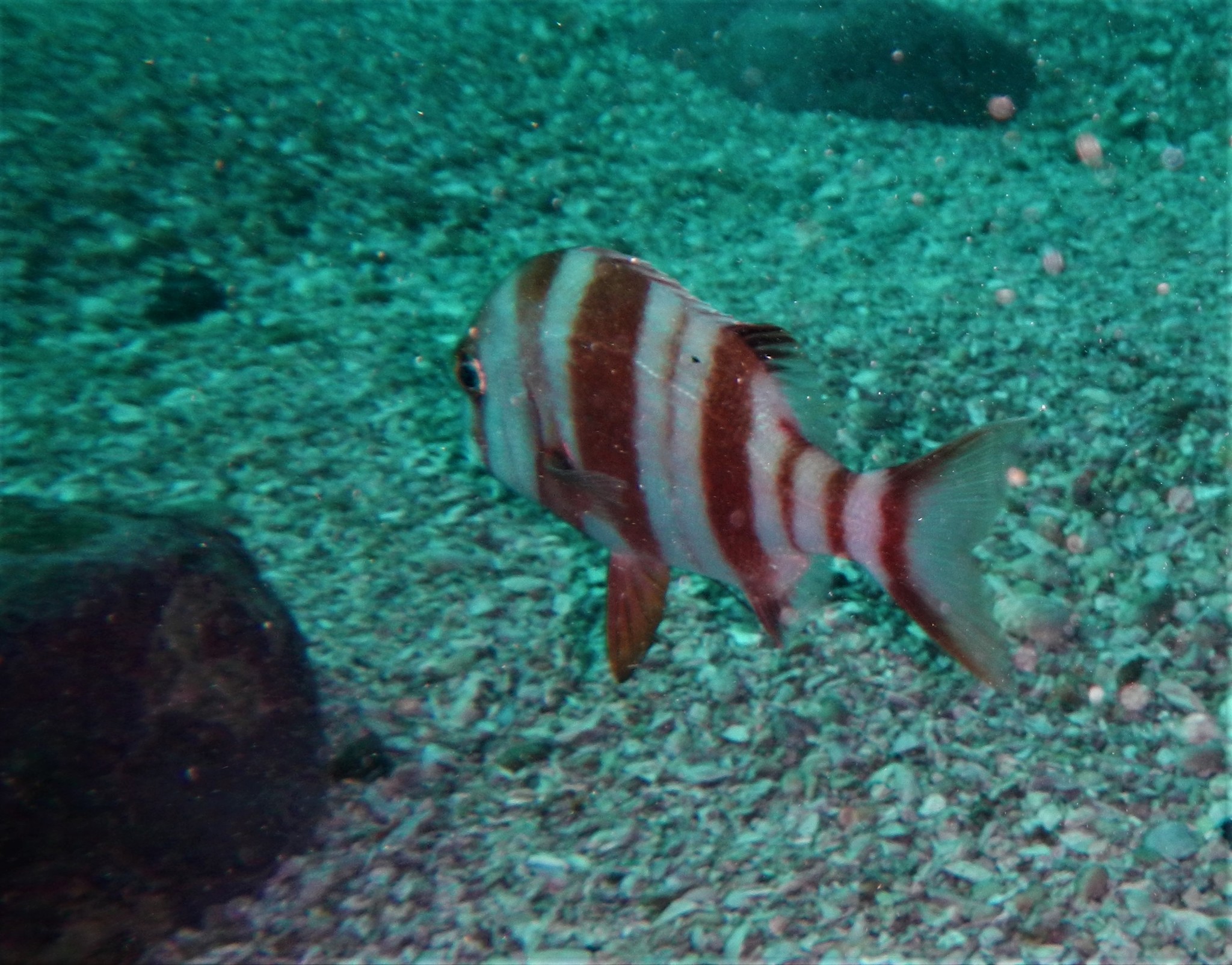
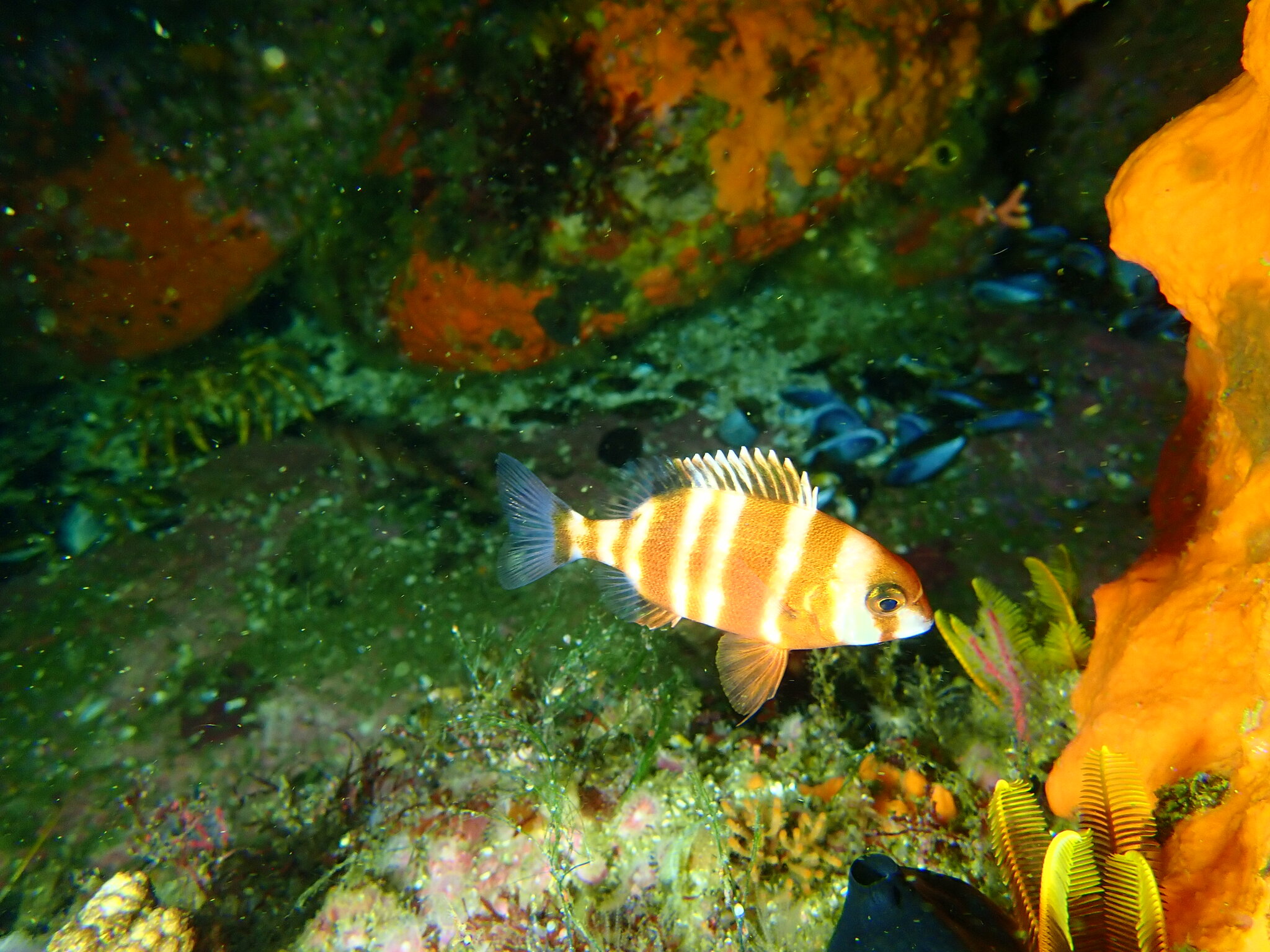
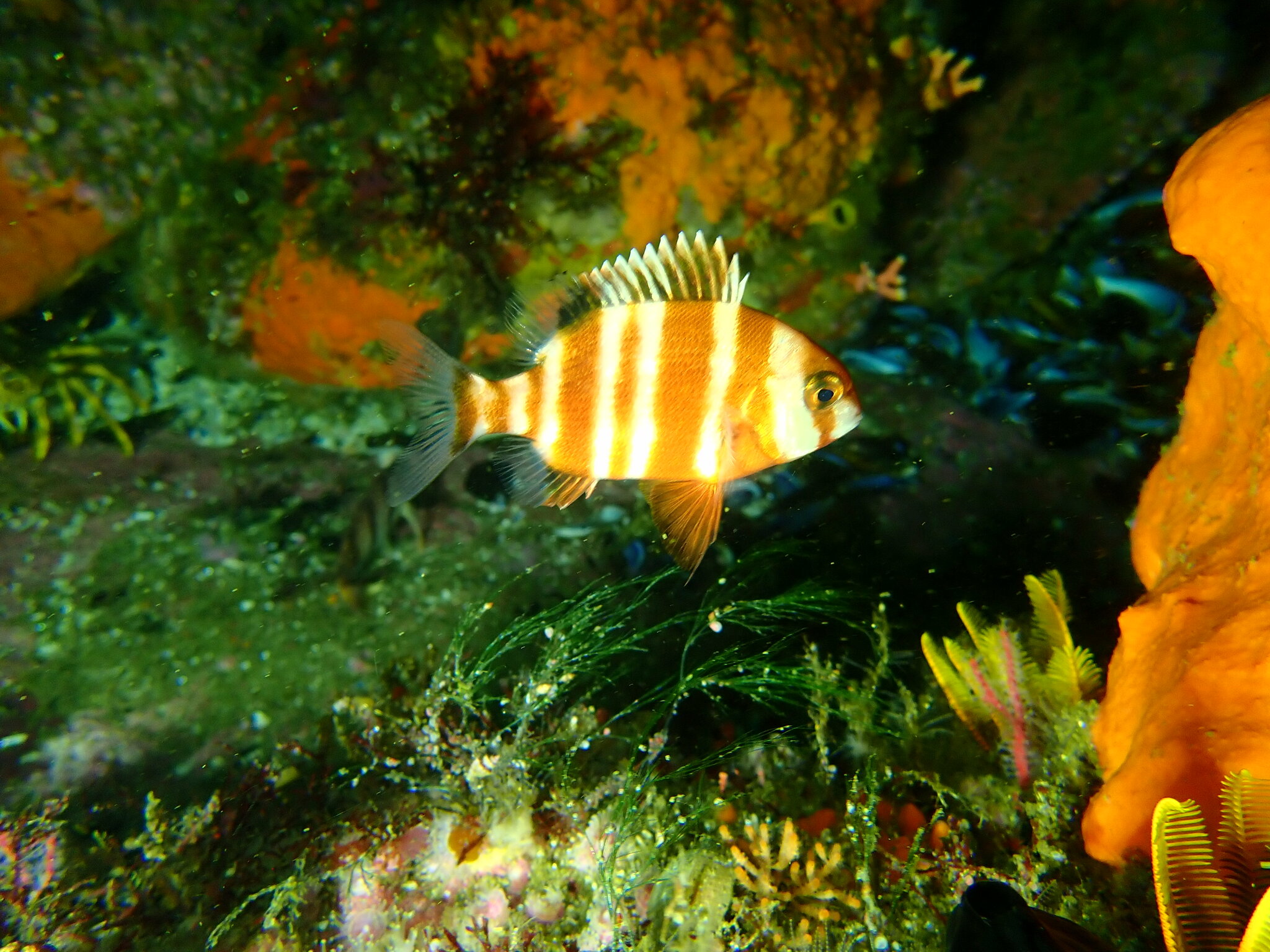
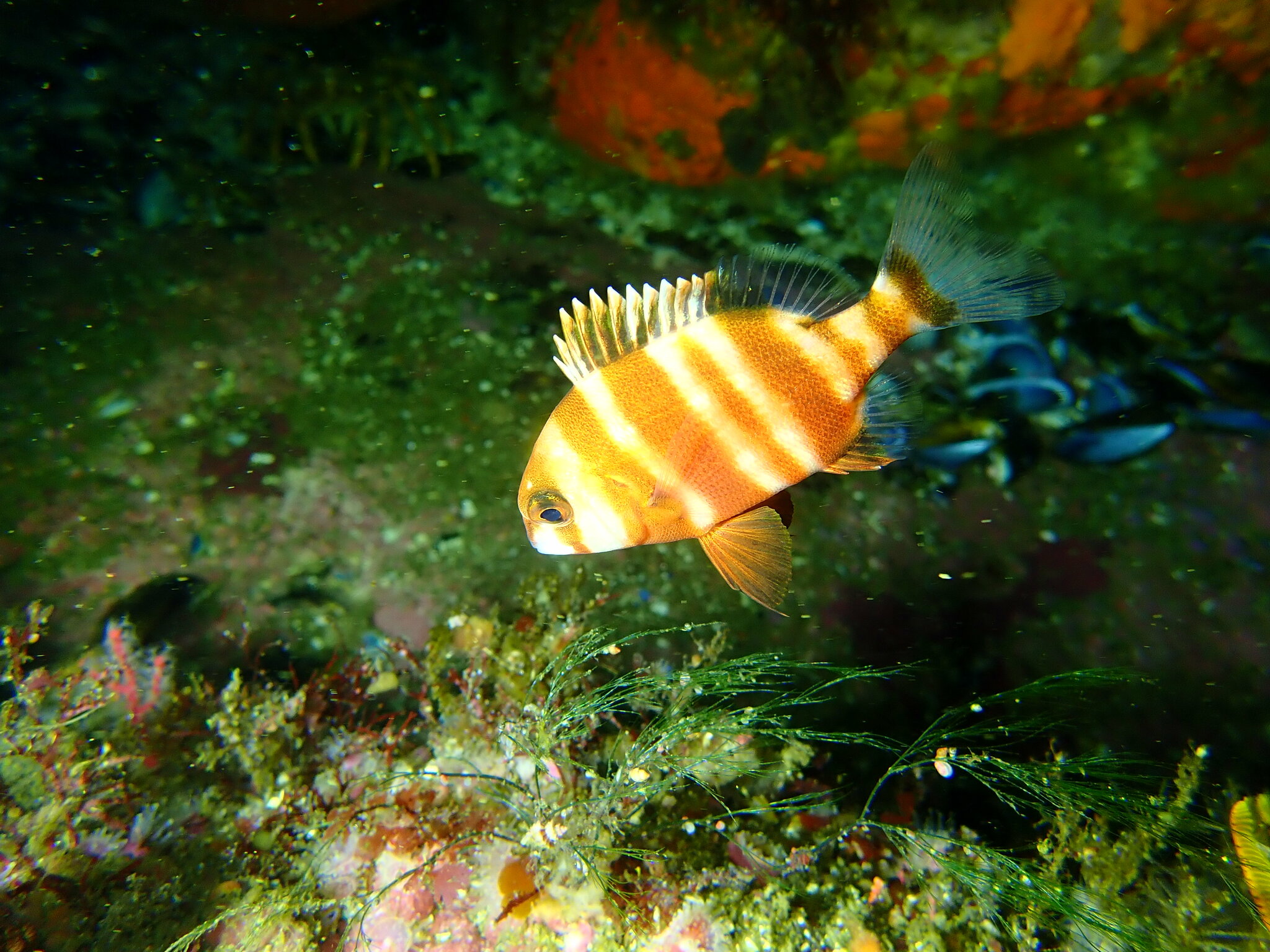
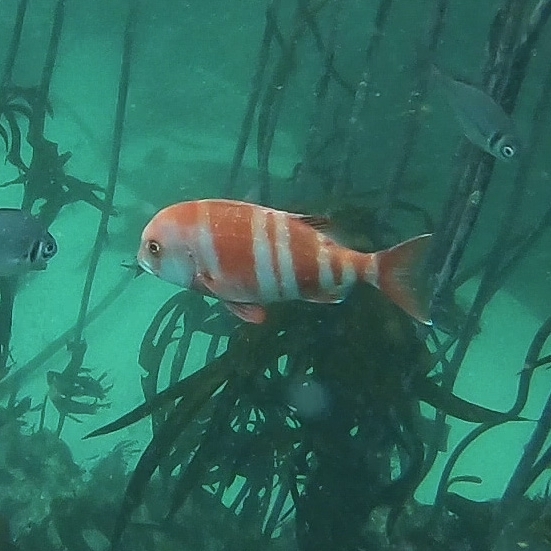
Head and body are reddish orange dorsally and silvery white below with irregular black spots scattered over the body. Some individuals have 5 -7 red bars on the body. The soft dorsal and anal membranes are often blackish. Large adult makes often develop a bulbous forehead. Body depth is greater than the head and is 2 – 2.4 times the SL. The dorsal fin has 11-12 spines and 10-11 rays. The anal fin has 7-9 rays. The pectoral fins are longer than the head and have 17 rays. Jaws have 4-6 slender canines and 3 or more series of small molars behind. There are 52-55 lateral line scales. Interorbital area, pre-opercule margin and base of soft dorsal and anal fins are scaly (Heemstra and Heemstra 2004).
Endemic to South Africa and only found from Cape Point to East London (Fischer and Bianchi 1984, Smith and Heemstra 1986). Red stumpnose have been recorded as far north as Margate on the KZN south coast (Heemstra and Heemstra 2004). It must be noted that this could be due to confusion with a similar species C. anglicus which is also sometimes referred to using the common name "red stumpnose" (B. Mann, ORI, pers. comm.).
As above, Red stumpnose are most abundant in the South West Cape from Cape Point to Arniston, in the South East Cape from Jefferys Bay to East London and in the southern Transkei (NMLS, unpubl. data).
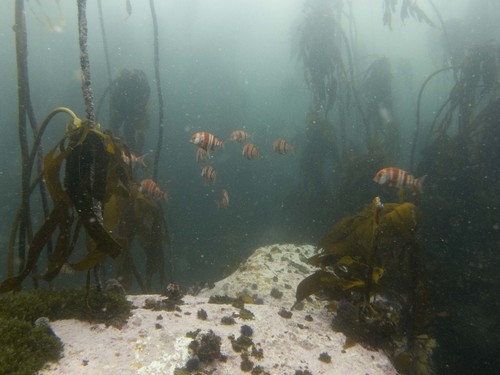
Red stumpnose are extremely resident (Wilke and Griffiths 1999) and may form seasonal aggregations (NMLS, unpubl. data).
Adult red stumpnose usually feed on a variety of reef invertebrates such as ophiuroids, gastropods and polychaete worms (van Zyl 2013), but also take sea urchins, octopus and crabs (Heemstra and Heemstra 2004).Juveniles prefer softer prey such as malacostraca. As they grow their diet shifts to contain more hard prey gastropods (van Zyl 2013).
Red stumpnose are late gonochorists (sensu rudimentary hermaphrodite) that produce small pelagic eggs (Buxton 1985, van Zyl 2013). They spawn from October to January both in the South Eastern Cape (CD Buxton, DIFS, unpubl. data) and on the central Agulhas Bank, with the peak season in December (van Zyl 2013). Males reach sexual maturity at an average age of 2.2 years when they are 212 mm FL and females at 3.9 years when they reach a length of 249mm FL (M. van Zyl, UCT, unpubl. data).
Offshore (>30m)
This map contains point-based occurrences at different locations
Occurrence in African countries and South African provinces. Residence status indicates if a taxon is indigenous, endemic, or alien in a specific region. This data is based on specimen records and literature.
FSA
SA
BOT
NAM
ESW
LES
WC
EC
NC
FS
GA
KZN
LP
MP
NW
Absent
Indigenous
Endemic
Naturalised
Invasive
Names and Sources
| Common Name | Language |
|---|---|
| Red Stumpnose | En |
| Red Stumpnose Seabream | En |
| Miss Lucy | En |
| Rooistompneus | Af |
Classification
KINGDOM Animalia
PHYLUM Chordata
CLASS Actinopterygii
ORDER Perciformes
FAMILY Sparidae
GENUS Chrysoblephus
SPECIES gibbiceps
No results found for Chrysoblephus gibbiceps (Valenciennes, 1830)
Seasonal component of the commercial linefishery, especially on the Agulhas Banks (Crawford and Crous 1982, van der Elst 1993). Also taken by the recreational skiboat fishery and spearfishery (Smale and Buxton 1985, Brouwer 1997, Mann et al. 1997b). Incidental catches taken by inshore trawlers operating in the Mossel Bay to Cape Infanta area (van der Elst 1993, Attwood et al. 2011).
10 results for Chrysoblephus gibbiceps (Valenciennes, 1830)
This map contains point-based occurrences at different locations
2011
JOURNAL ARTICLE
Bycatch in South Africa's inshore trawl fishery as determined from observer recordsAttwood, Colin, Petersen, Samantha, Kerwath, Sven. 2011. Bycatch in South Africa's inshore trawl fishery as determined from observer records Vol. 68 pp.2163–2174.
1998
JOURNAL ARTICLE
An assessment of the South African east coast linefishery from Kei Mouth to Stil BayBrouwer, Stephen. 1998. An assessment of the South African east coast linefishery from Kei Mouth to Stil Bay.
Unpublished
REPORT
South coast reef fish projectBuxton, CD. Unpublished. South coast reef fish project.
1984
JOURNAL ARTICLE
A preliminary investigation of the marine ichthyofauna in the Tsitsikamma Coastal National ParkSmale, MJ, Buxton, CD. 1984. A preliminary investigation of the marine ichthyofauna in the Tsitsikamma Coastal National Park Vol. 27 pp.13–24.
1982
JOURNAL ARTICLE
Trends in commercial handline catches of redfishes along the southern Cape coast, Republic of South AfricaCrawford, RJ, Crous, HB. 1982. Trends in commercial handline catches of redfishes along the southern Cape coast, Republic of South Africa Vol. 25 pp.13–31.
1984
BOOK CHAPTER
FAO species identification sheets for fishery purposesBianchi, G, Fischer, W. 1984. FAO species identification sheets for fishery purposes Vol. 1. Rome. DANIDA.
2004
BOOK
Coastal fishes of Southern AfricaHeemstra, P, Heemstra, E. 2004. Coastal fishes of Southern Africa. Grahamstown. NISC pp.488.
2013
BOOK
Southern African Marine Linefish Species ProfilesMann, Bruce. 2013. Southern African Marine Linefish Species Profiles. South African Association for Marine Biological Research.
1997
JOURNAL ARTICLE
An evaluation of participation in and management of the South African spearfisherySauer, WHH, Lamberth, SJ, Mann, BQ, Scott, GM, Mann-Lang, JB, Brouwer, SL, Erasmus, C. 1997. An evaluation of participation in and management of the South African spearfishery Vol. 18 pp.179–193.
2014
REPORT
Chrysoblephus gibbicepsMann, B.Q., Buxton, C.D., Pollard, D., Carpenter, K.E.. 2014. Chrysoblephus gibbiceps.
1985
JOURNAL ARTICLE
Aspects of the recreational ski-boat fishery off the Eastern Cape, South AfricaSmale, MJ, Buxton, CD. 1985. Aspects of the recreational ski-boat fishery off the Eastern Cape, South Africa Vol. 3 pp.131–144.
2003
BOOK
Smith's Sea FishesSmith, JLB, Heemstra, P. 2003. Smith's Sea Fishes. Cape Town. Struik Publishers pp.1047.
1993
BOOK
A guide to the common sea fishes of southern AfricaVan der Elst, Rudy. 1993. A guide to the common sea fishes of southern Africa. Struik.
2013
THESIS
Life history study of red stumpnose (Chrysoblephus gibbiceps), a South African endemic seabreamVan Zyl, Megan. 2013. Life history study of red stumpnose (Chrysoblephus gibbiceps), a South African endemic seabream. University of Cape Town.
1999
CONFERENCE PAPER
Movement patterns of offshore linefish based on tagging resultsGriffiths, MH, Wilke, CG. 1999. Movement patterns of offshore linefish based on tagging results.
Status and criteria
NE
Assessor(s)
Animalia Coordinator
Reviewer(s)
Animalia Coordinator


