
PLANTAE / PHANEROGAMAE / ANTHOPHYTA / FABALES / FABACEAE / PAPILIONOIDEAE / PSORALEEAE / PSORALEA / OTHOLOBIUM / TRIANTHA

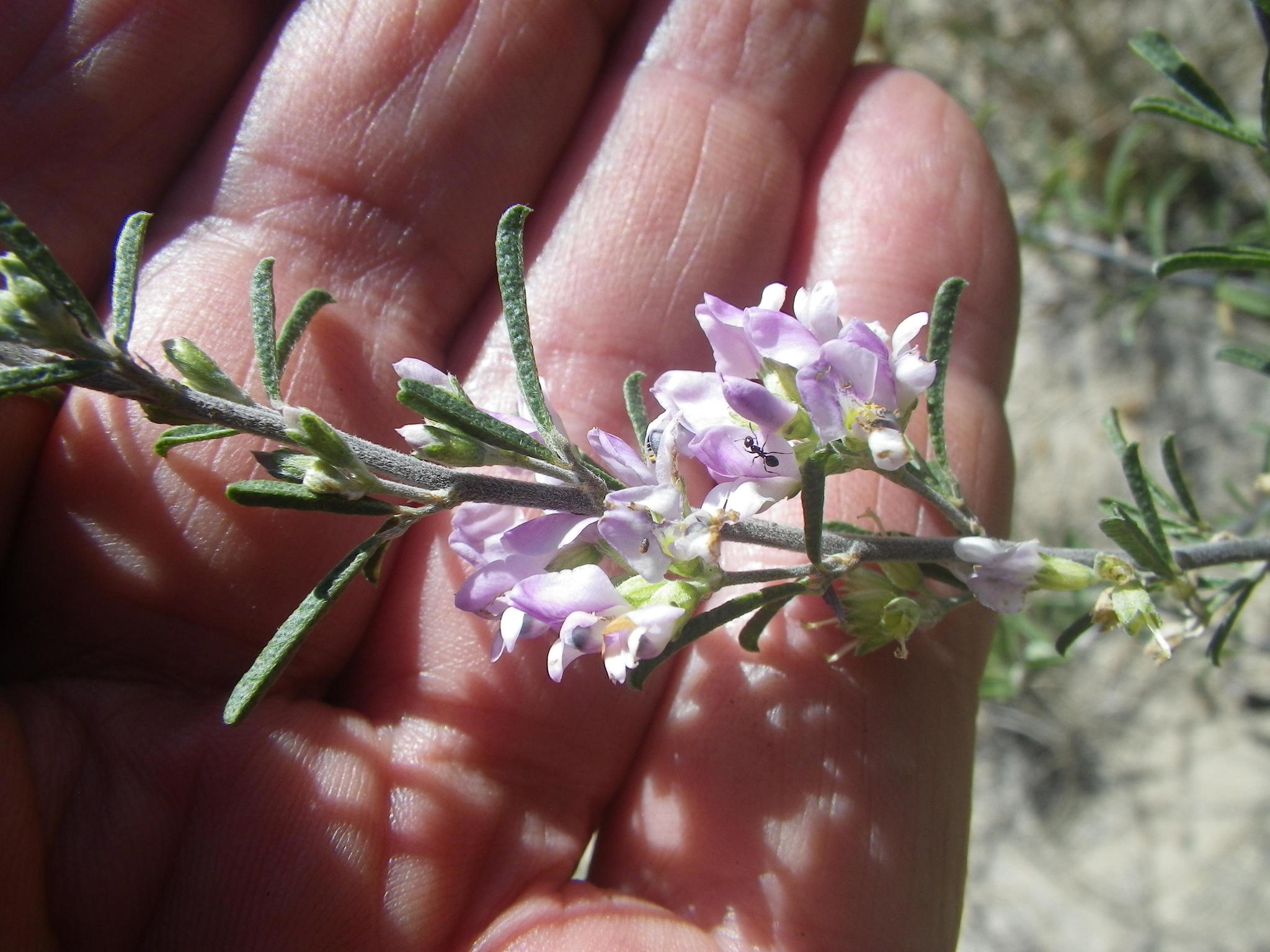
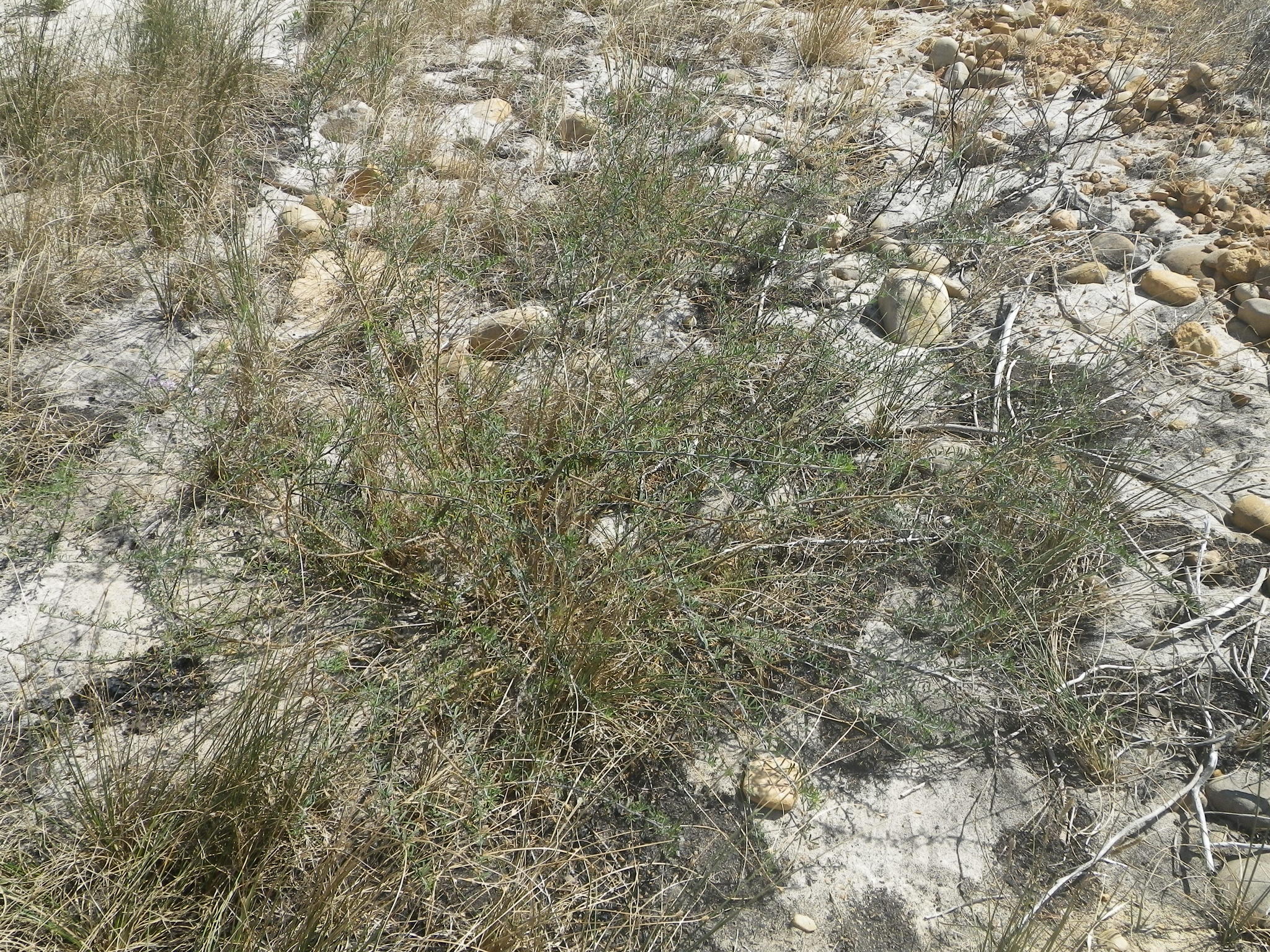
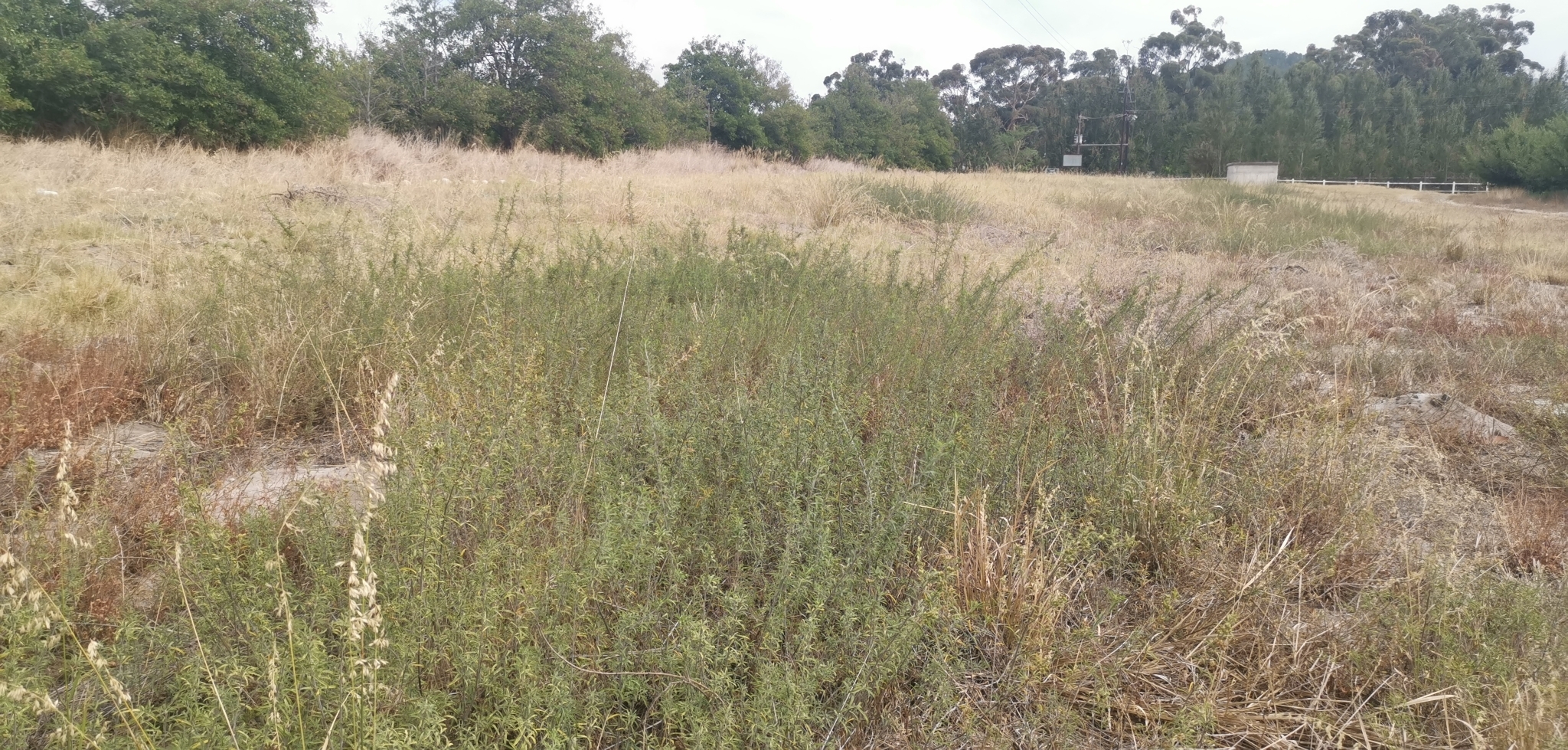
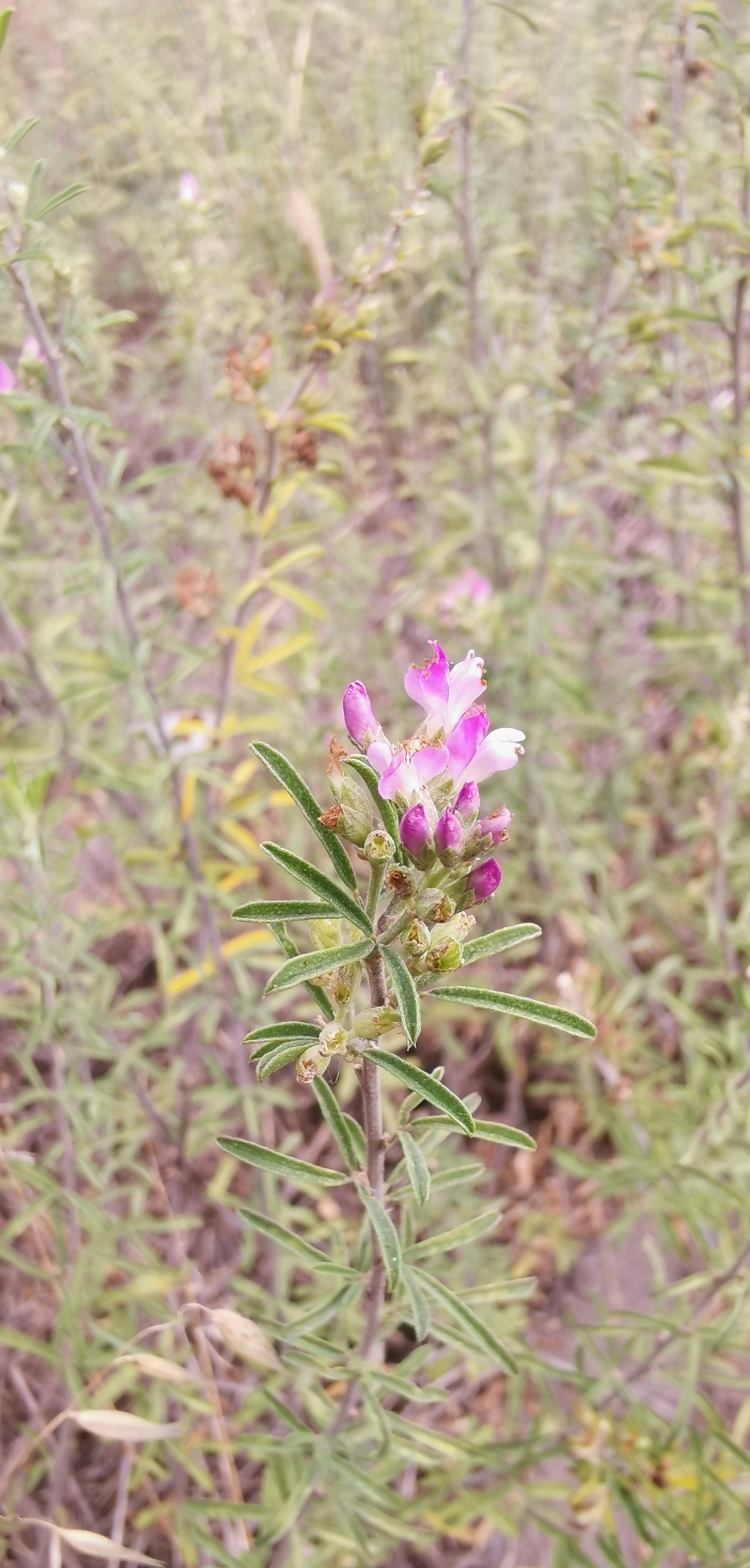
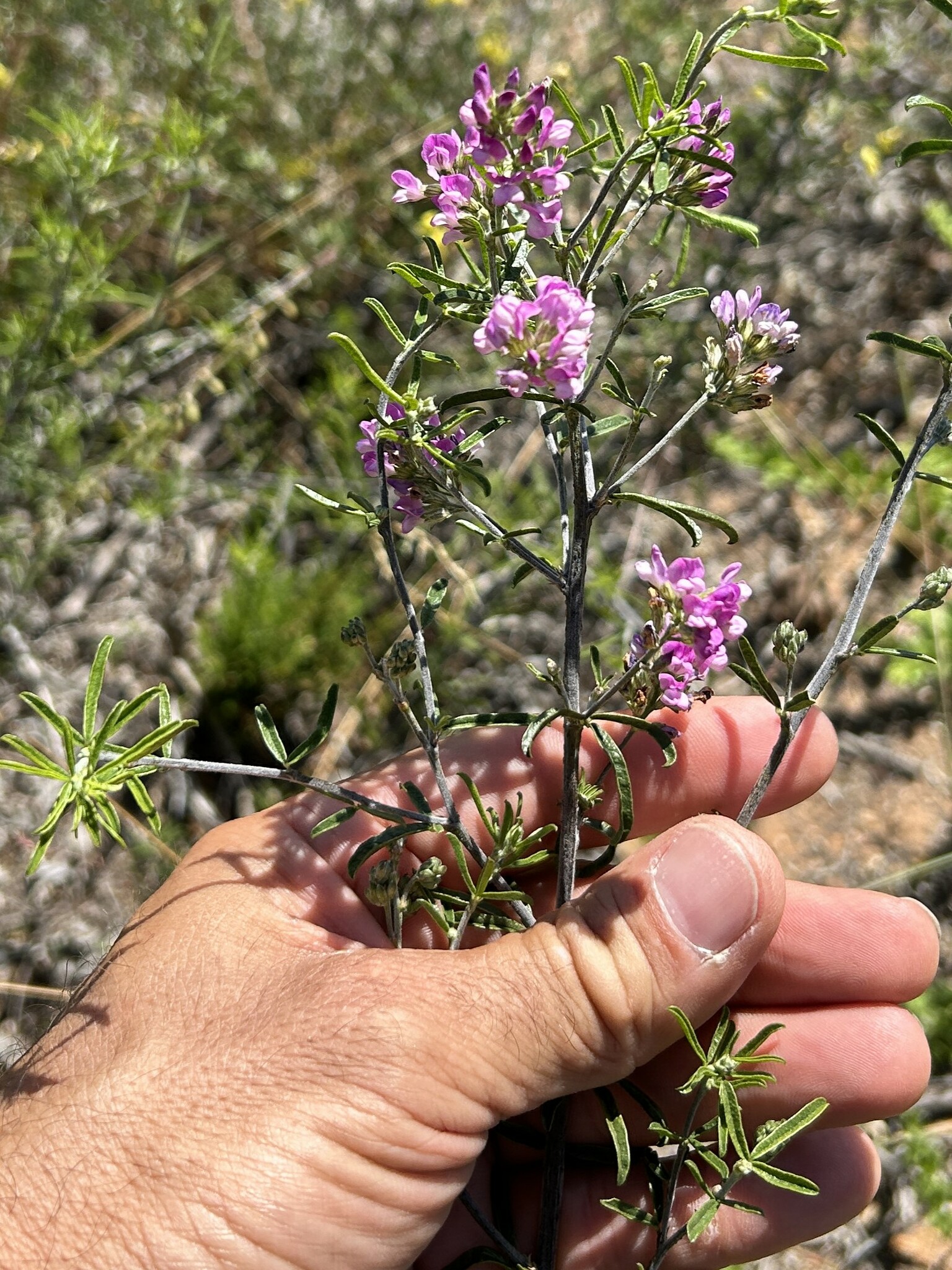
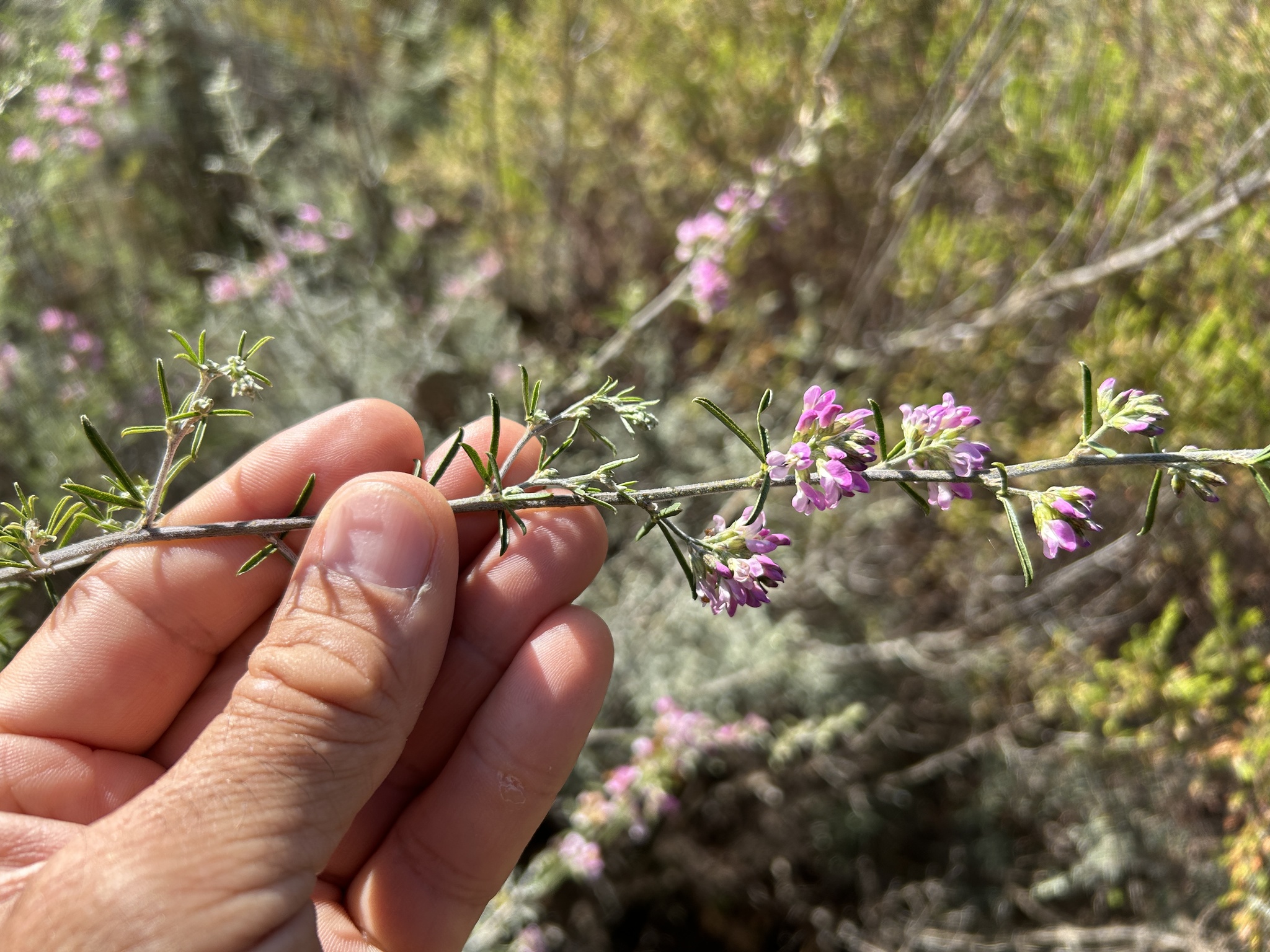
An erect or diffuse shrub, 60 cm to 1 m high, with densely pubescent spreading branches. Leaves pinnately trifoliolate: leaflets linear-spathulate, recurved-mucronate, glabrescent, the medial 2-2.5 cm long, the lateral rather shorter. Stipules small, acuminate. Flowers pink, in 3- to 6-flowered axillary and terminal racemules, the lower shortly pedunculate. Calyx sparsely pubescent, 6 mm long, the deltoid teeth shorter than the tube. Standard 9 mm long, longer, than the purple-tipped keel: blade roundish. From: Adamson, RS; Salter, TM (eds). 1950. Flora of the Cape Peninsula. Juta, Johannesburg. [All rights reserved]
Slender shrub to 2 m. Leaves 3-foliolate, leaflets linear-oblanceolate, glabrescent; stipules glandular. Flowers pale mauve, calyx adpressed-hairy and glandular, accrescent. From: Stirton, CH; Schutte, AL. 2012. Fabaceae: Otholobium C.H.Stirt. In: J Manning & P Goldblatt (eds), Plants of the Greater Cape Floristic Region 1: The Core Cape flora. Strelitzia 29: 566-569. South African National Biodiversity Institute, Pretoria. [CC BY] As: Otholobium trianthum (E.Mey.) C.H.Stirt.
A slender shrub up to 1.2 m [as '4 ft.'] Stems erect, tomentulose. Leaves trifoliolate, petiolate, stipulate; petioles about 6 mm long; leaflets 0.5-2.5 cm long, up to 6 mm broad, linear, spathulate, recurved mucronate, thick, glabrous, nigro-punctate. Stipules about 2.5 mm long, acuminate. Flowers axillary, crowded. Pedicels 0.5-1 cm long. Calyx-tube 2 mm long, 4-6 mm in diameter, pubescent, grandular; lobes lanceolate, pubescent, pilose on the inner surface; upper and lateral lobes 1-2 mm long, 0.5-1 mm broad. Vexillum 4-8 mm long, 4-6.5 mm broad, obovate, with a linear claw 1.5-2 cm long; alae 4-6 mm long, 1.5-2.5 mm broad, with a linear claw 2-3 mm long; carina 2.5-3 mm long, 1.5-2 mm broad, with a linear claw 2.5-3 mm long. Ovary glabrous or thinly pilose; style 3-4 mm long, filiform. From: Forbes, HML. 1937. The genus Psoralea Linn. Bothalia 3: 116-136. [CC BY]
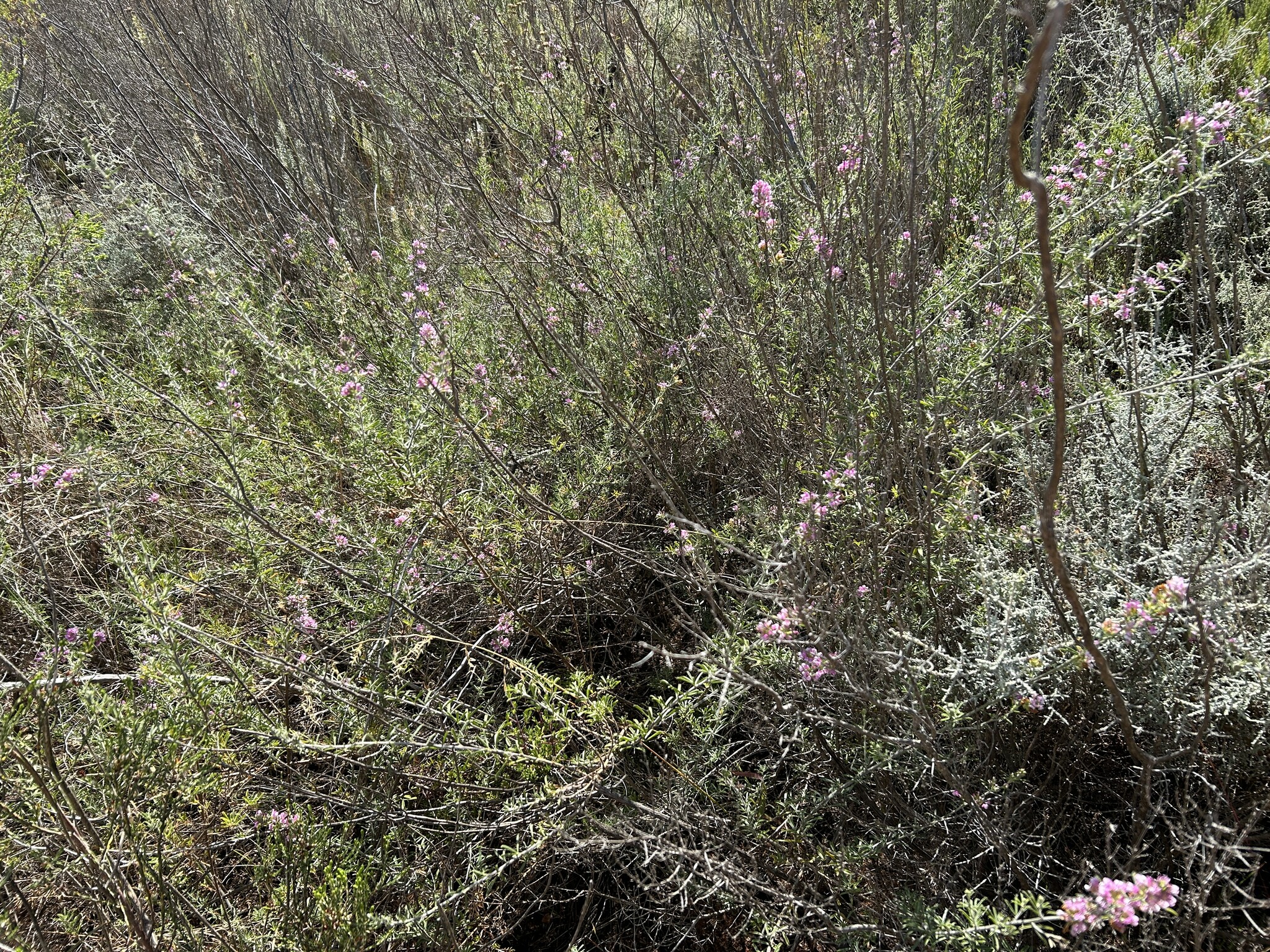
Lowland and mountain fynbos, 100-500 m. From: Stirton, CH; Schutte, AL. 2012. Fabaceae: Otholobium C.H.Stirt. In: J Manning & P Goldblatt (eds), Plants of the Greater Cape Floristic Region 1: The Core Cape flora. Strelitzia 29: 566-569. South African National Biodiversity Institute, Pretoria. [CC BY] As: Otholobium trianthum (E.Mey.) C.H.Stirt.
Edinburgh Estate, Claremont. From: Adamson, RS; Salter, TM (eds). 1950. Flora of the Cape Peninsula. Juta, Johannesburg. [All rights reserved]
Clanwilliam to Franschhoek. From: Stirton, CH; Schutte, AL. 2012. Fabaceae: Otholobium C.H.Stirt. In: J Manning & P Goldblatt (eds), Plants of the Greater Cape Floristic Region 1: The Core Cape flora. Strelitzia 29: 566-569. South African National Biodiversity Institute, Pretoria. [CC BY] As: Otholobium trianthum (E.Mey.) C.H.Stirt.
November to February
This map contains point-based occurrences at different locations
Occurrence in the Flora of Southern Africa (FSA) countries and South African provinces. Residence status indicates if a taxon is indigenous, endemic, naturalised or invasive in a specific region. This data is based on specimen records and literature
FSA
SA
BOT
NAM
ESW
LES
WC
EC
NC
FS
GA
KZN
LP
MP
NW
Absent
Indigenous
Endemic
Naturalised
Invasive
Names and Sources
Published in: Comm. Pl. Afr. Austr.: 88 (1836)
Type: South Africa, ‘Locos humidis ad Bergrivier’, Drège s.n. (K, lecto.; BM, BOL, G, OXF, P, W, isolecto.)
Lotodes triantha (E.Mey.) Kuntze, as 'trianthum'
Published in: Revis. Gen. Pl. 1: 194 (1891)
Otholobium trianthum (E.Mey.) C.H.Stirt.
Published in: S. African J. Bot. 52(1): 4 (1986)
Psoralea triflora Poir.
Published in: Encycl. [J. Lamarck & al.] 5: 683 (1804)
Classification
KINGDOM Plantae
SUBKINGDOM Phanerogamae
PHYLUM Anthophyta
ORDER Fabales
FAMILY Fabaceae
SUBFAMILY Papilionoideae
TRIBE Psoraleeae
GENUS Psoralea
SUBGENUS Otholobium
SPECIES triantha
8 results for Psoralea triantha E.Mey.
Barcode: PRE0427330-0 Collector(s) & number: Leipoldt, CL, 632 | -12-
South Africa, Western Cape, CLANWILLIAM
Data Resource: BODATSA View record
Barcode: PRE0427335-0 Collector(s) & number: Leipoldt, CL, PRE 55222 | 1926-2-
South Africa, Western Cape, MEIRINGS POORT
Data Resource: BODATSA View record
Barcode: PRE0427334-0 Collector(s) & number: van Breda, APP, 235 | 1949-1-29
South Africa, Western Cape, CLANWILLIAM DIST.; ELANDSFONTEIN
Data Resource: BODATSA View record
Barcode: PRE0430657-0 Collector(s) & number: Marloth, HWR, 9439 | 1920-1-
South Africa, Western Cape, GROOT DRAKENSTEIN; PAARL DIV.
Data Resource: BODATSA View record
Barcode: PRE0458795-0 Collector(s) & number: Leighton, FM, 21512 | 1934-12-
South Africa, Western Cape, CEDARBERG
Data Resource: BODATSA View record
This map contains point-based occurrences at different locations
2022
PERIODICAL/JOURNAL
Phylogenetic relationships and biogeography of Psoraleeae (Fabaceae) Bello, A; Stirton, CH; Chimphango, SBM; Muasya, AMBotanical Journal of the Linnean Society 200: 39-74
2012
SERIES CHAPTER
Fabaceae: Otholobium C.H.Stirt. Stirton, CH; Schutte, ALIn: J Manning & P Goldblatt (eds), Plants of the Greater Cape Floristic Region 1: The Core Cape flora. Strelitzia 29: 566-569
South African National Biodiversity Institute, Pretoria
1986
PERIODICAL/JOURNAL
Notes on the genus Otholobium (Psoraleeae, Fabaceae) Stirton, CHSouth African Journal of Botany 52: 1-6
1950
1937
No results found for Psoralea triantha E.Mey.
| Part(s) of plant used | Use(s) | Reference |
|---|
Coming soon...


