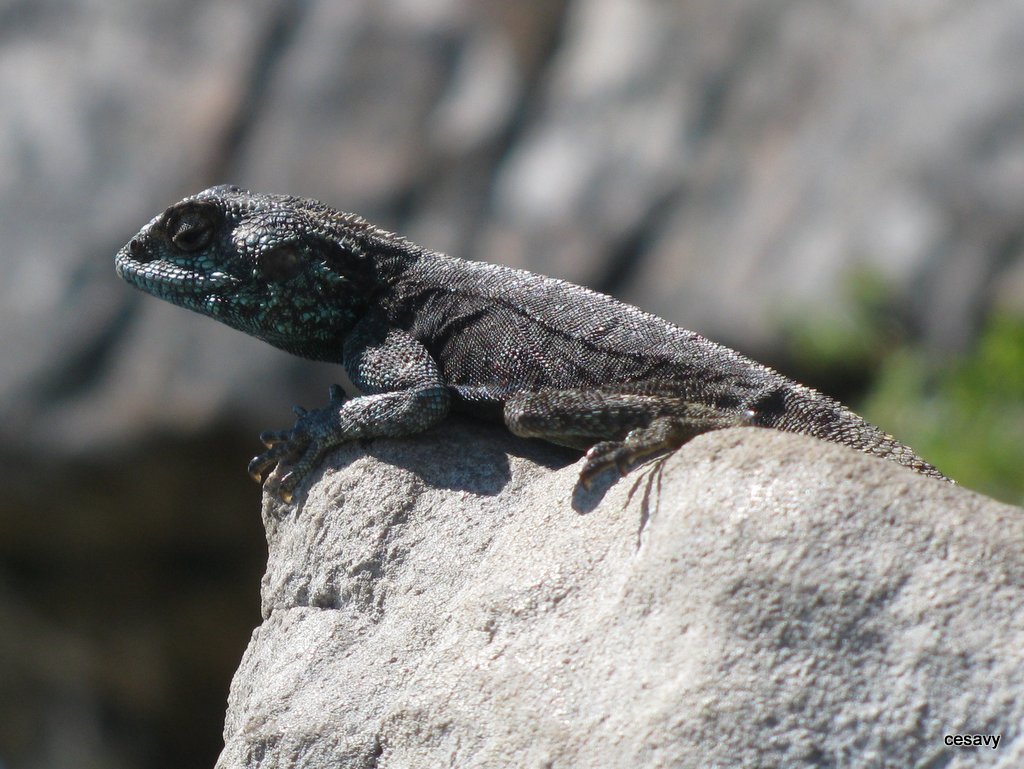
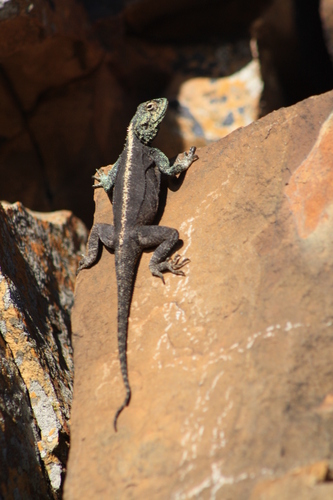
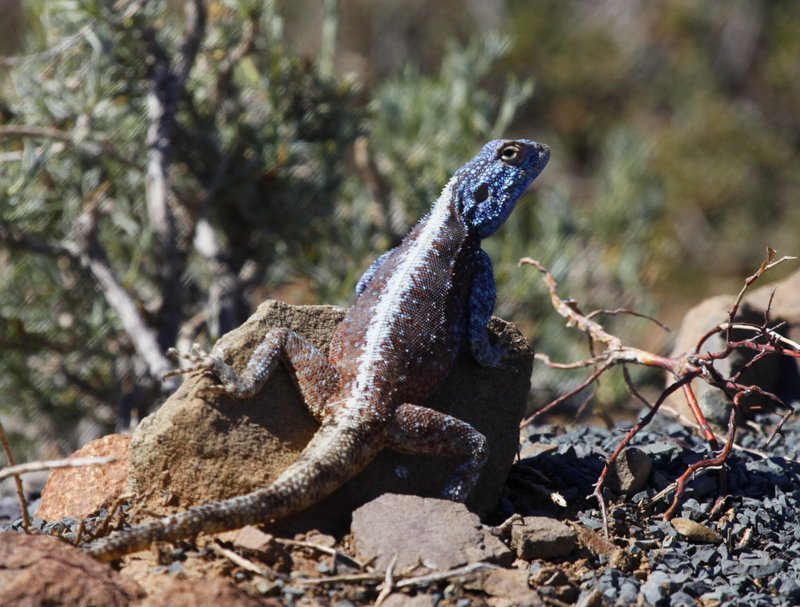
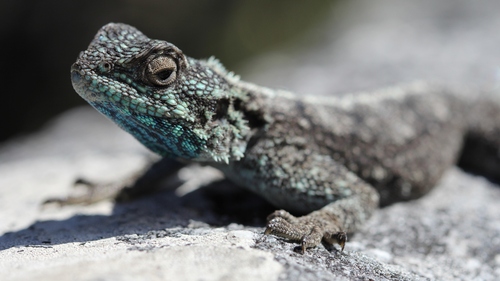
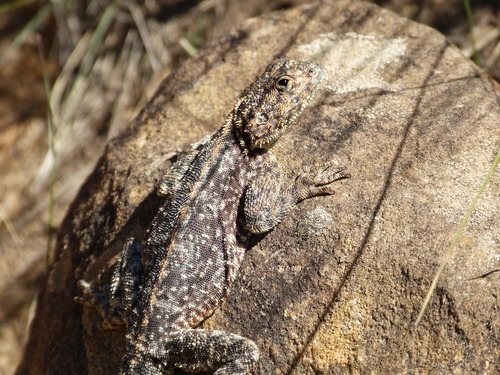
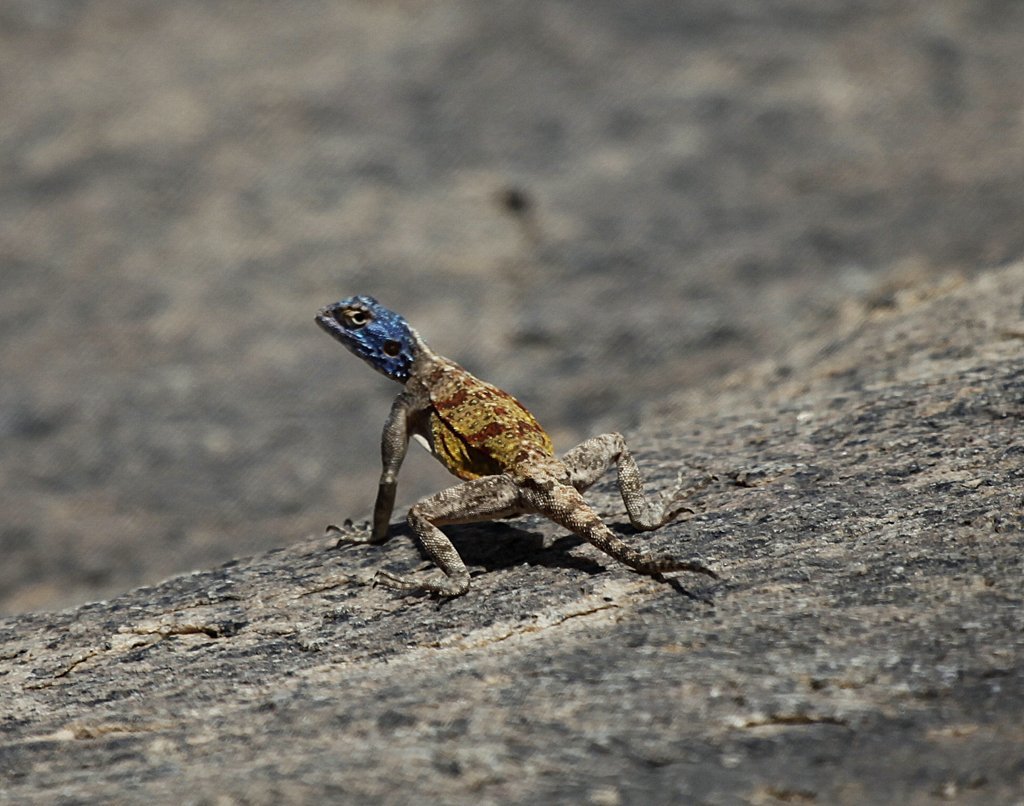
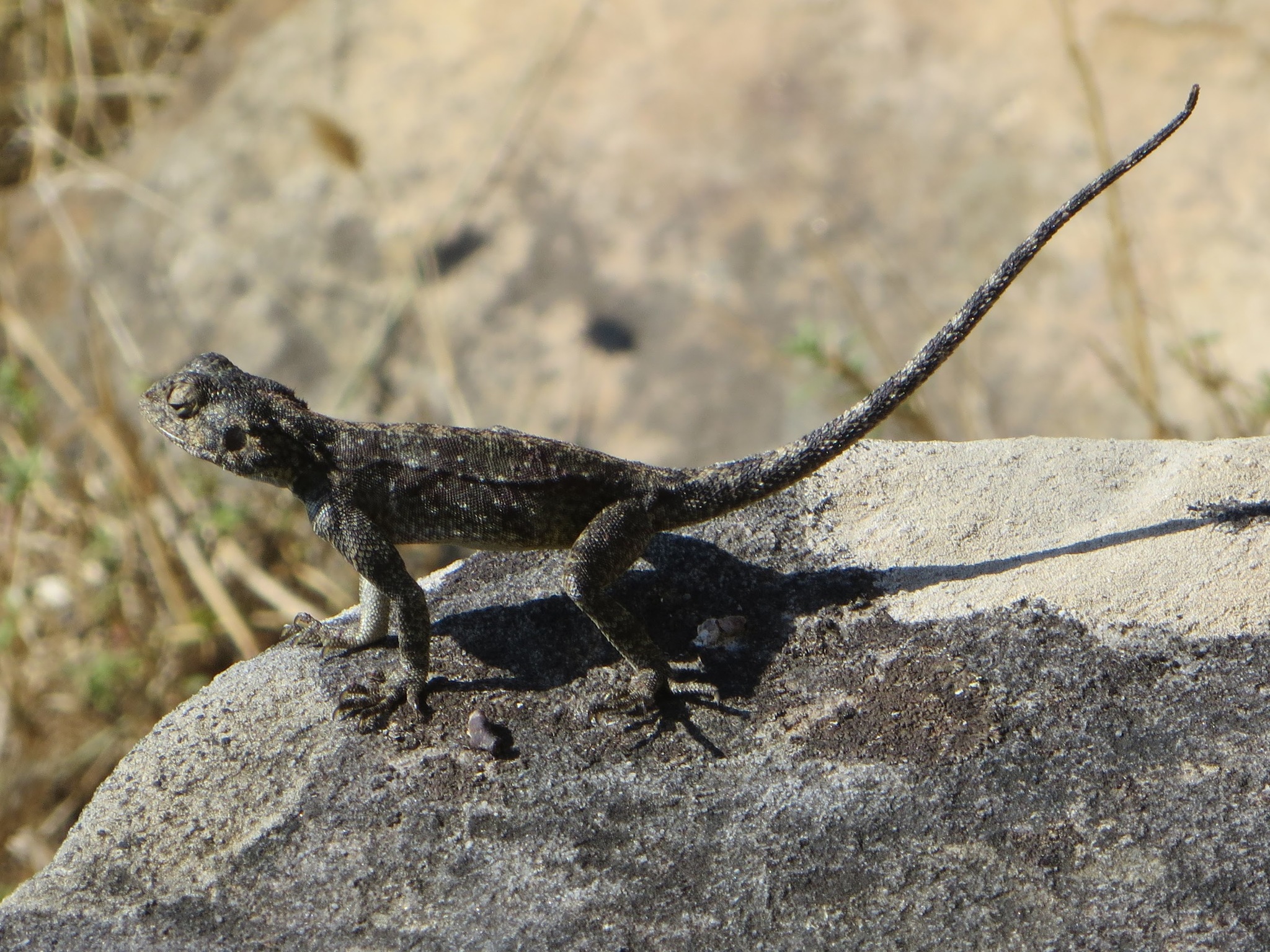
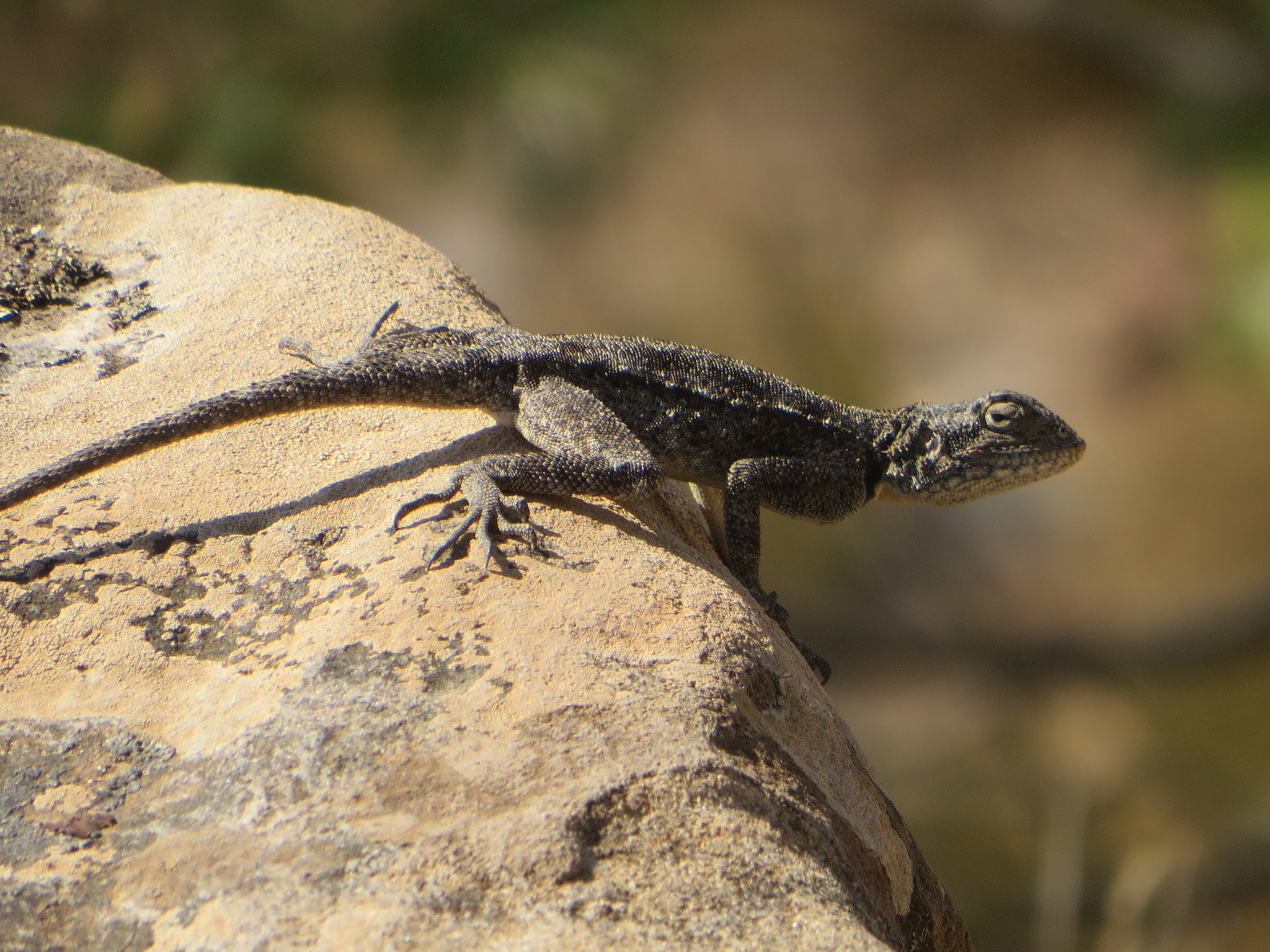
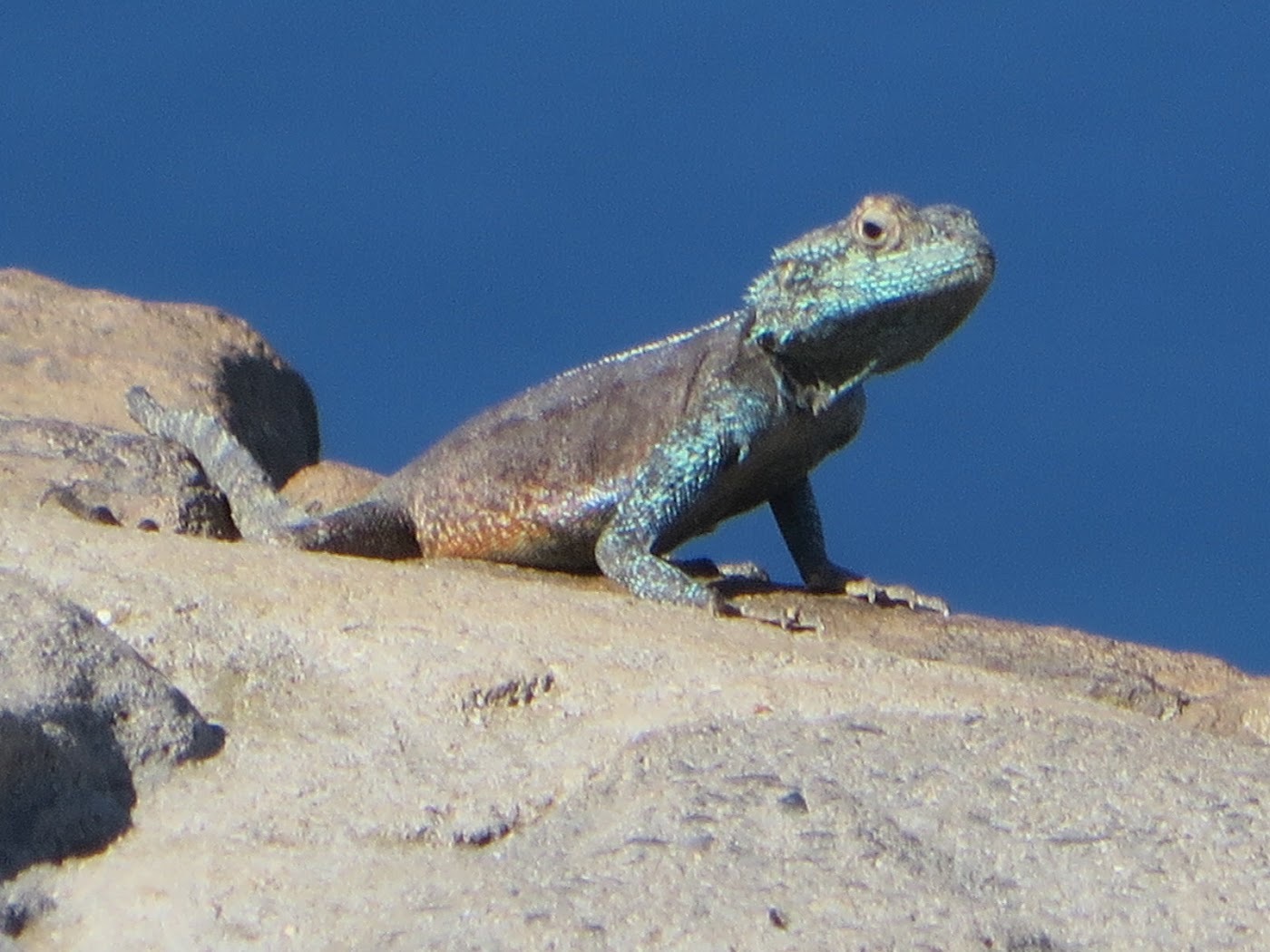
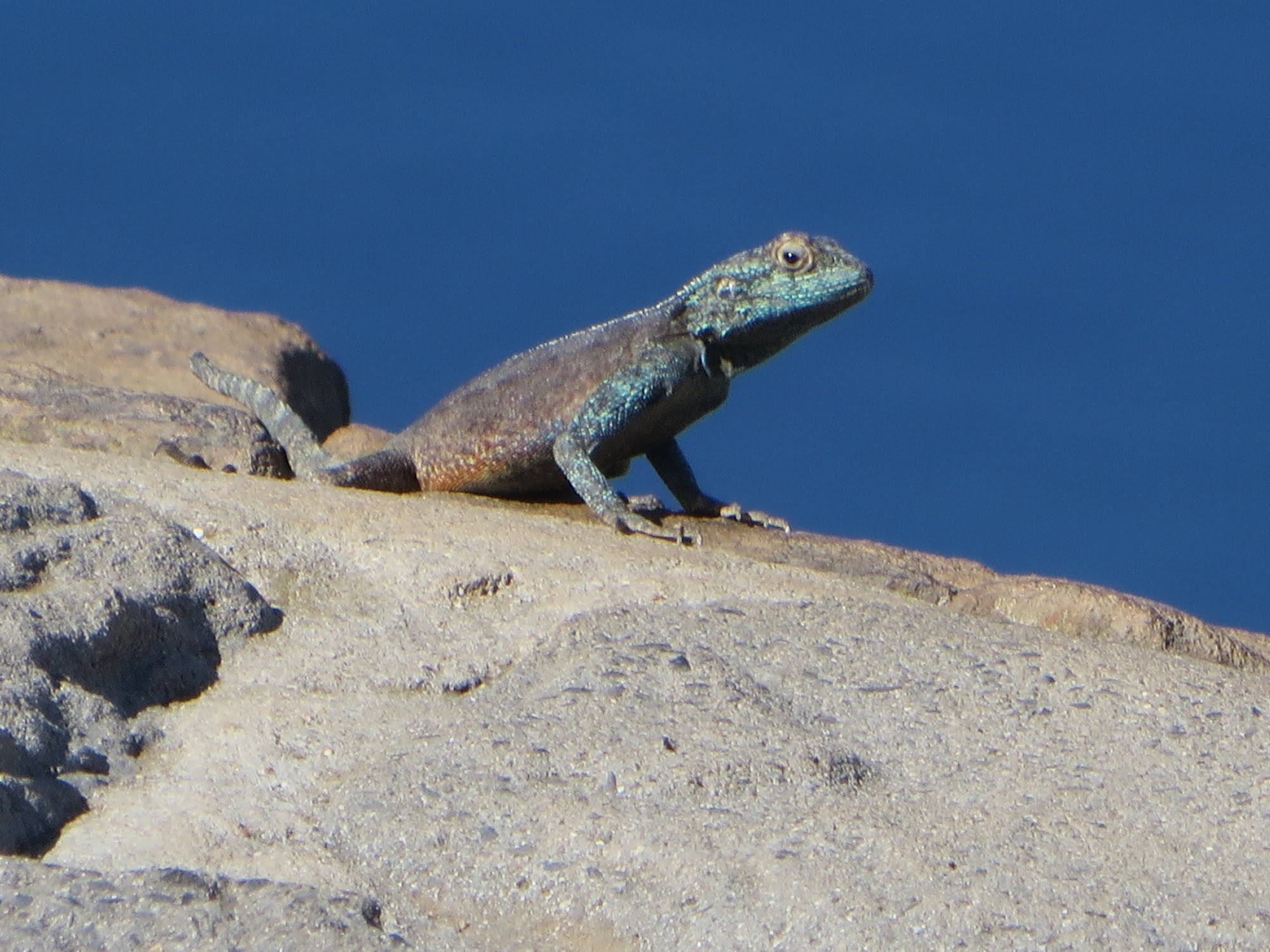
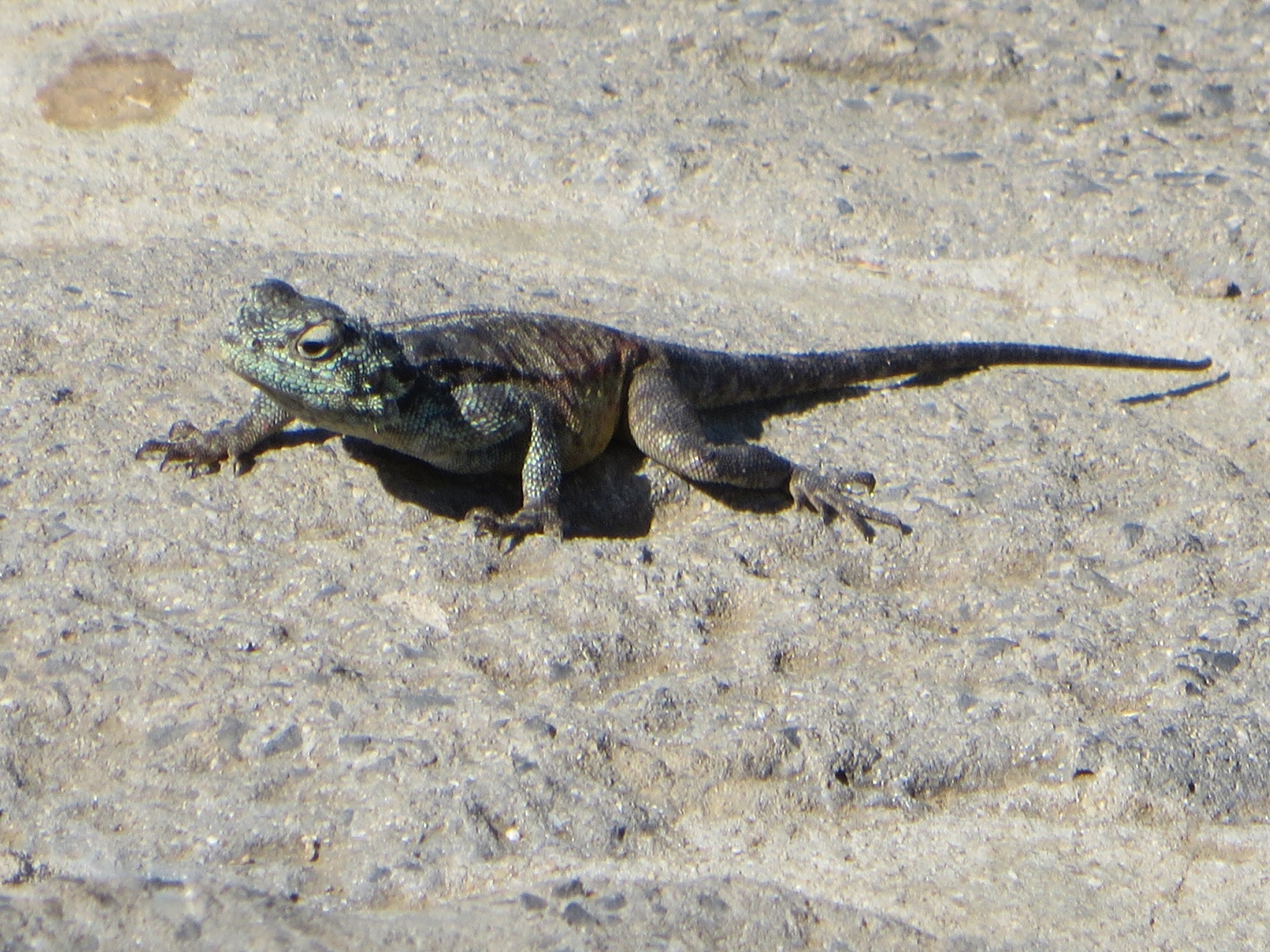
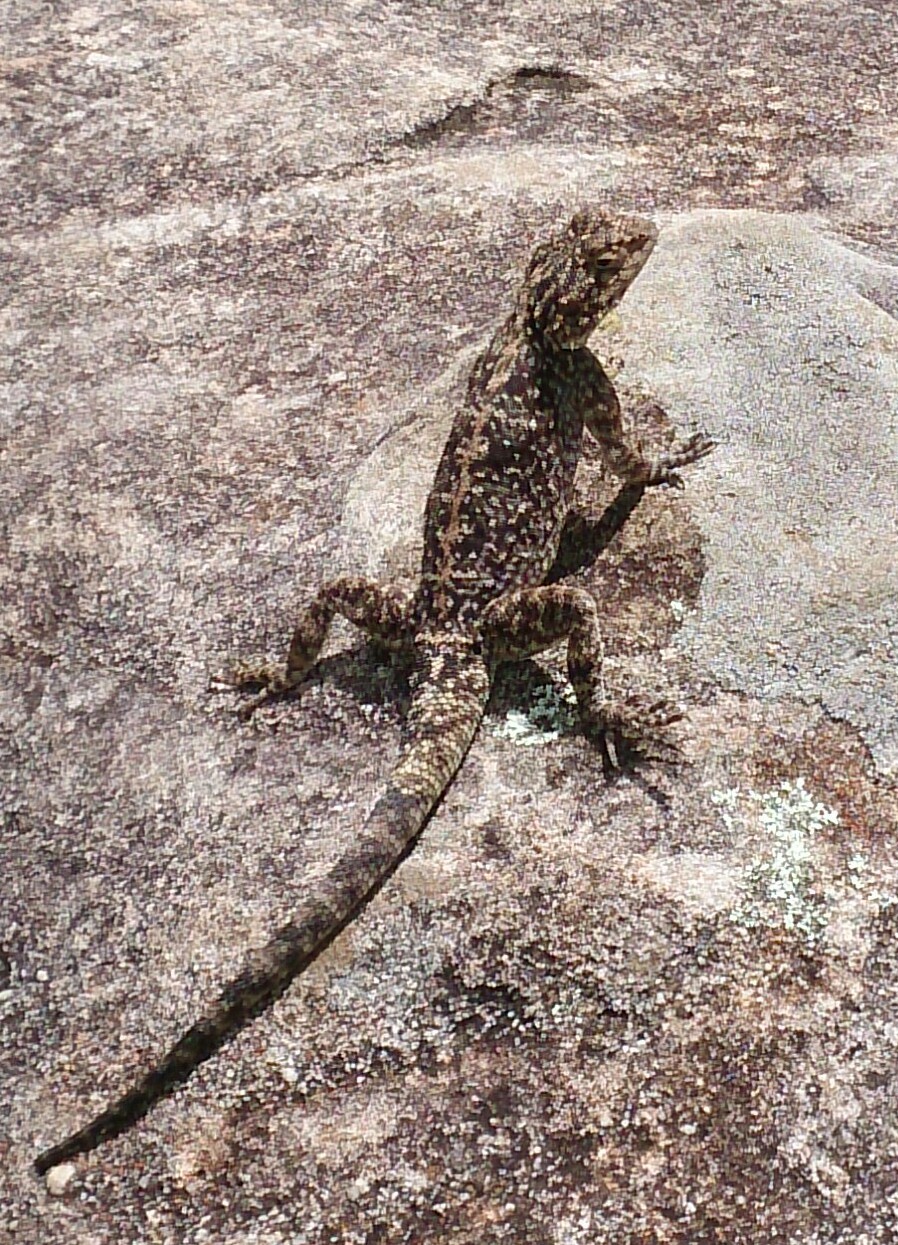
Boulenger (1885) re-described this species as follows: The head is moderate and depressed in shape. It has tubular nostril, pierced in a small convex nasal upon the canthus rostralis. Upper head-scales are smooth or feebly keeled, occipital is slightly enlarged. Group of small spines covered the posterior sides of the head together with the neck. The ear-opening is larger than the eye-opening. Male lack a regular gular pouch. Body is much depressed, covered with small imbricate keeled scales, with the largest on the vertebral line and they sometimes intermixed with scattered enlarged ones. Distinct curved fold occurs along each side of the back. a short nuchal crest; no distinct dorsal crest; ventral scales small and smooth. Limbs are moderate with a tibia of equal length with the skull (to occiput). The third finger very slightly shorter than fourth. fourth toe slightly longer than third, fifth extending beyond first. Tail length is nearly as twice as the length from gular fold to vent. The vent is roundish in the female whilst in male is strongly compressed and crested also covered with equal strongly keeled scales forming distinct annuli. Male with a row of anal pores. Olive-brown above, spotted or speckled with black, some- times nearly black; a lighter, yellowish-brown vertebral band; lower surfaces with distinct dark network or lines, which appear blackish blue in the breeding male.
Male Southern Rock Agamas have a white vertebral stripe (Alexander and Marais, 2007).
Syntypes: MNHN-RA 2604-2605, MNHN-RA 2604A and MNHN-RA 2605A (syntypes reported from BMNH are in error, fide I. Ineich, pers. comm.) Holotype: BMNH 1946.8.27.94-96 (95.10.19.57) [microterolepis] Lectotype: ZMB 42887 (designated by DENZER et al. 1997), ad. Ex., "Mpome", leg. A. & M. Krothe. Paralectotype: ZMB 42888, juv. Ex., same as lectotype; Terra typica: Mpome, Transvaal [micropholis]
This information was extracted from Tolley et al. (2023): Although not formally elevated, A. atra knobeli from Namibia has been treated as a full species (Matthee and Flemming, 2002; Swart et al., 2009). Subsequent phylogenetic studies show that A. knobeli is not valid (Nielsen, 2016), and it therefore must be treated as a junior synonym of A. atra. Agama atra can be confused with A. anchietae, possibly resulting in incorrect distribution mapping in some areas of the Northern Cape province where they presumably co-occur.
Botswana, Lesotho, Namibia, South Africa
This species occurs throughout most of South Africa, extending into southern Namibia, Lesotho and marginally into southern Botswana. There are gaps in the distribution in northeast KwaZulu-Natal province and the Kalahari region. Records from Eswatini are considered doubtful (Boycott 1992a) and are therefore not included as part of the distribution (Tolley et al., 2023).
In general, lizards can sprint, crawl, climb, jump, and glide. When sprinting on four legs, lizards often move their forefeet diagonally in unison—the right forefoot with the left hand and the left forefoot with the right hand. The body's bent is simultaneously reversed. The shoulders, hips, and other joints in the legs as well as the bending of the back all contribute to moving the feet forward. Leg and back muscles work together to power running (Alexander, 2012).
Carnivore - Insectivore (insect-eating)
Southern rock agama is diurnal, ambush predator that feeds mainly on ants and termites, although beetles and grasshoppers are also taken; and they may feed on plant material (Branch, 1998). Coastal populations may also eat various intertidal arthropods (Branch, 1998; Cooper, 2005).
Information below is extracted from Branch (1998): Egg development in Southern Rock Agamas starts in August-September. Gravid females, bulging with eggs, bask to speed the formation of yolk from the fat stores laid down in the previous autumn. The first clutch of 7-18 oval, soft-shelled eggs is laid in October-November in a shallow hole dug in damp soil; a second clutch is usually laid in January-February. It may take over 3 hours for the female to dig the nest hole, lay her eggs and then refill and camouflage the site. Incubation takes 2-3 months.
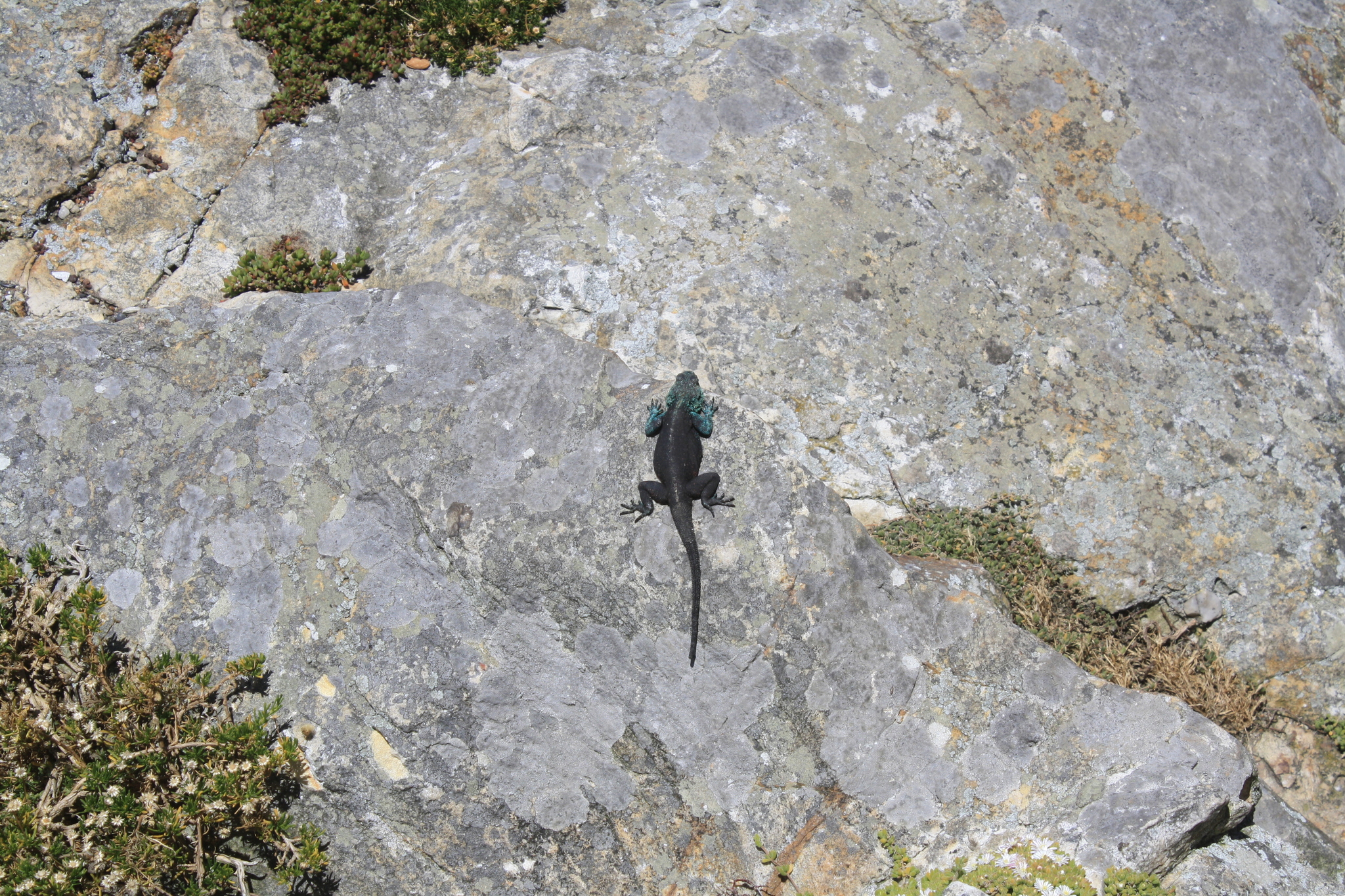
The Southern Rock Agama forms dense colonies of up to 165 specimen per hectare. Both male and female form hierarchies and maintain territories. In the territories there is always a dominant male or female. Dominant males perch on the highest point of their territory, nodding their brightly coloured head as a signal for lesser males to stay clear. In times of danger, they hug the rock they are on and their bright head fades and becomes camouflaged against the lichen-covered rock. If this fails, they quickly scamper off, leaping from boulder to boulder to shelter in a deep crack (Branch, 1998). All agamas are diurnal and spend the night sleeping in their retreats (Alexander and Marais, 2007).
Albany Thicket, Desert, Fynbos, Grassland, Indian Ocean Coastal Belt, Nama Karoo, Savanna Moist, Savanna: Arid, Succulent Karoo
This map contains point-based occurrences at different locations
Occurrence in African countries and South African provinces. Residence status indicates if a taxon is indigenous, endemic, or alien in a specific region. This data is based on specimen records and literature.
FSA
SA
BOT
NAM
ESW
LES
WC
EC
NC
FS
GA
KZN
LP
MP
NW
Absent
Indigenous
Endemic
Naturalised
Invasive
Names and Sources
| Common Name | Language |
|---|---|
| Southern African Rock Agama, Southern Rock Agama | EN |
| Suidelike Rotskoggelmander | En |
| South African Rock (Or Mountain) Agama | EN |
| Southern Rock Agama | EN |
No results found for Agama atra Daudin, 1802
No Data.
20 results for Agama atra Daudin, 1802
This map contains point-based occurrences at different locations
2005
JOURNAL ARTICLE
Duration of movement as a lizard foraging movement variableCooper, W.. 2005. Duration of movement as a lizard foraging movement variable Vol. 61 (4) pp.363-372.
1998
BOOK
Field Guide to Snakes and Other Reptiles of Southern AfricaBranch, B.. 1998. Field Guide to Snakes and Other Reptiles of Southern Africa. Cape Town. Struik Publishers.
2002
JOURNAL ARTICLE
Population fragmentation in the southern rock agama, Agama atra: more evidence for vicariance in Southern AfricaMatthee, C., Flemming, A.. 2002. Population fragmentation in the southern rock agama, Agama atra: more evidence for vicariance in Southern Africa Vol. 11 pp.465–471.
2009
JOURNAL ARTICLE
Climate change drives speciation in the southern rock agama (Agama atra) in the Cape Floristic Region, South AfricaMatthee, C., Tolley, K., Swart, B.. 2009. Climate change drives speciation in the southern rock agama (Agama atra) in the Cape Floristic Region, South Africa Vol. 36 pp.78–87.
1978
JOURNAL ARTICLE
The Squamata (Reptilia) of the Orange Free State, South AfricaDe Waal, S.. 1978. The Squamata (Reptilia) of the Orange Free State, South Africa Vol. 11 pp.1-160.
1885
BOOK
Catalogue of the lizards in the British museum (Natural history)Boulenger, G.. 1885. Catalogue of the lizards in the British museum (Natural history). London. British Museum (Natural History). Department of Zoology pp.450.
2012
JOURNAL ARTICLE
Locomotion of ReptilesAlexander, R.. 2012. Locomotion of Reptiles Vol. 121 pp.1-4.
2023
BOOK
Conservation status of the reptiles of South Africa, Eswatini and LesothoTolley, K., Burger, M., Alexander, G., Pietersen, D., Conradie, W., Weeber, J.. 2023. Conservation status of the reptiles of South Africa, Eswatini and Lesotho Vol. Suricata 10. Pretoria. South African National Biodiversity Institute.
2007
BOOK
A Guide to the Reptiles of Southern AfricaAlexander, G., Marias, J.. 2007. A Guide to the Reptiles of Southern Africa. Cape Town. Struik Publishers.
1989
TECHNICAL REPORT
The distribution and conservation status of reptiles and amphibians in the Transvaal. Final Report Project TN 6/4/1/30Jacobsen, N.. 1989. The distribution and conservation status of reptiles and amphibians in the Transvaal. Final Report Project TN 6/4/1/30. Pretoria. Chief Directorate of Nature and Environmental Conservation.
2016
THESIS
The biotic effects of tertiary geoclimatic change in the southern hemisphereNielsen, S.. 2016. The biotic effects of tertiary geoclimatic change in the southern hemisphere Vol. PhD. University of Mississippi.
1992
THESIS
A Herpetofaunal Survey of SwazilandBoycott, R.. 1992. A Herpetofaunal Survey of Swaziland. Durban. University of Natal.
Status and criteria
LC
Assessor(s)
Atherton de Villiers
Contributors
Stuart Nielsen
Reviewer(s)
Nicolas Telford