
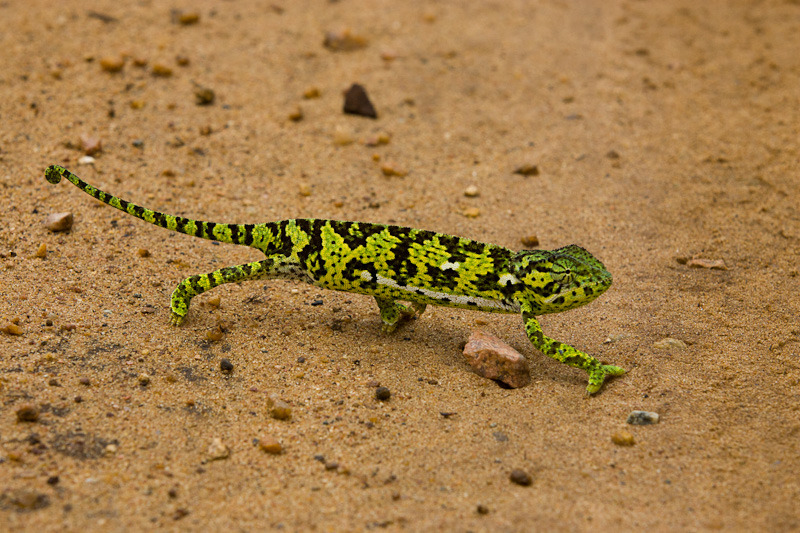
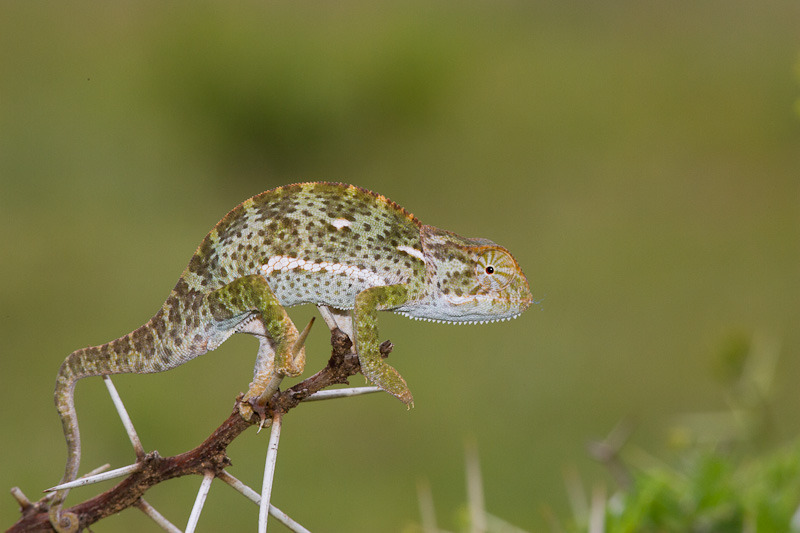
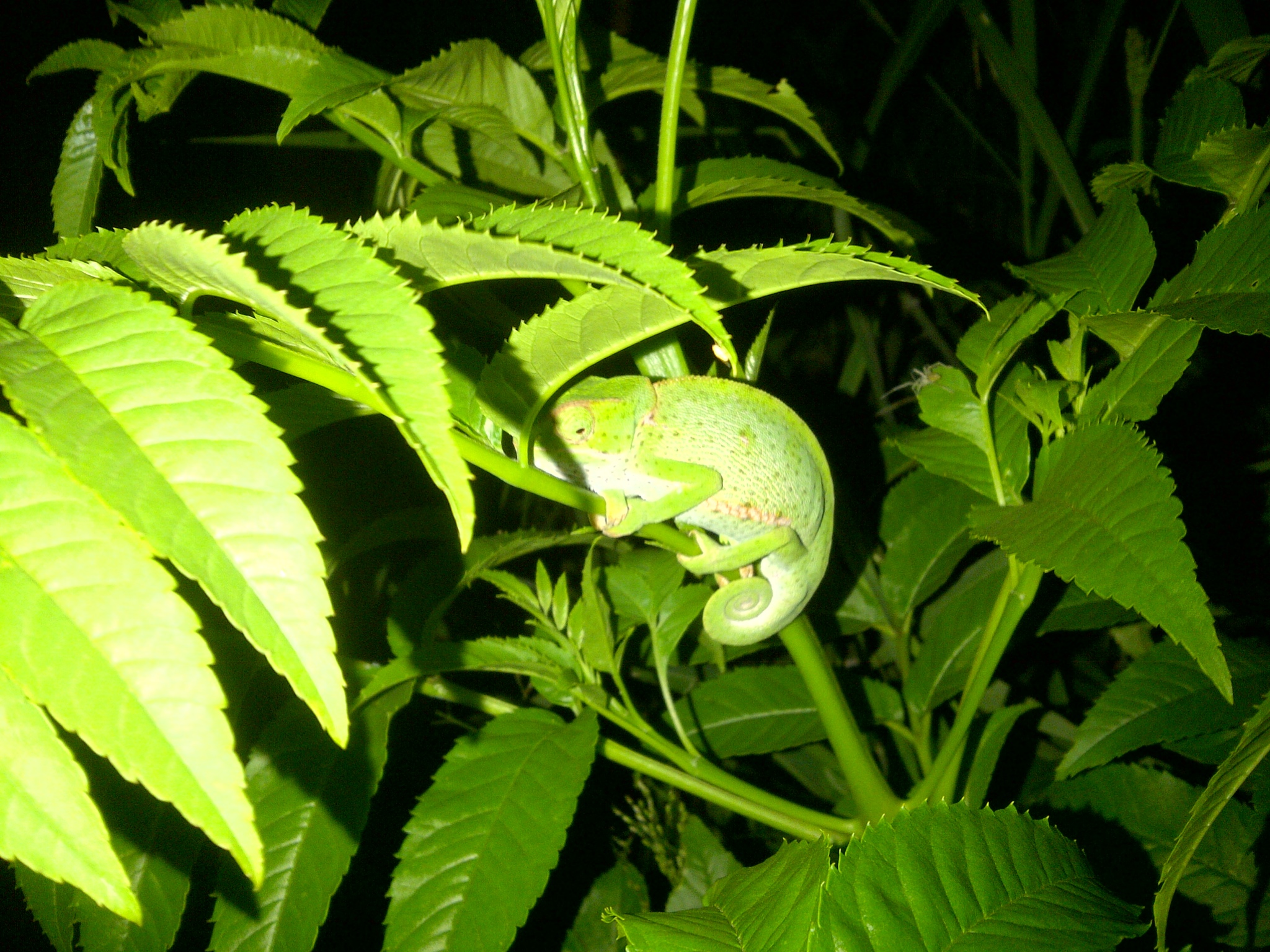
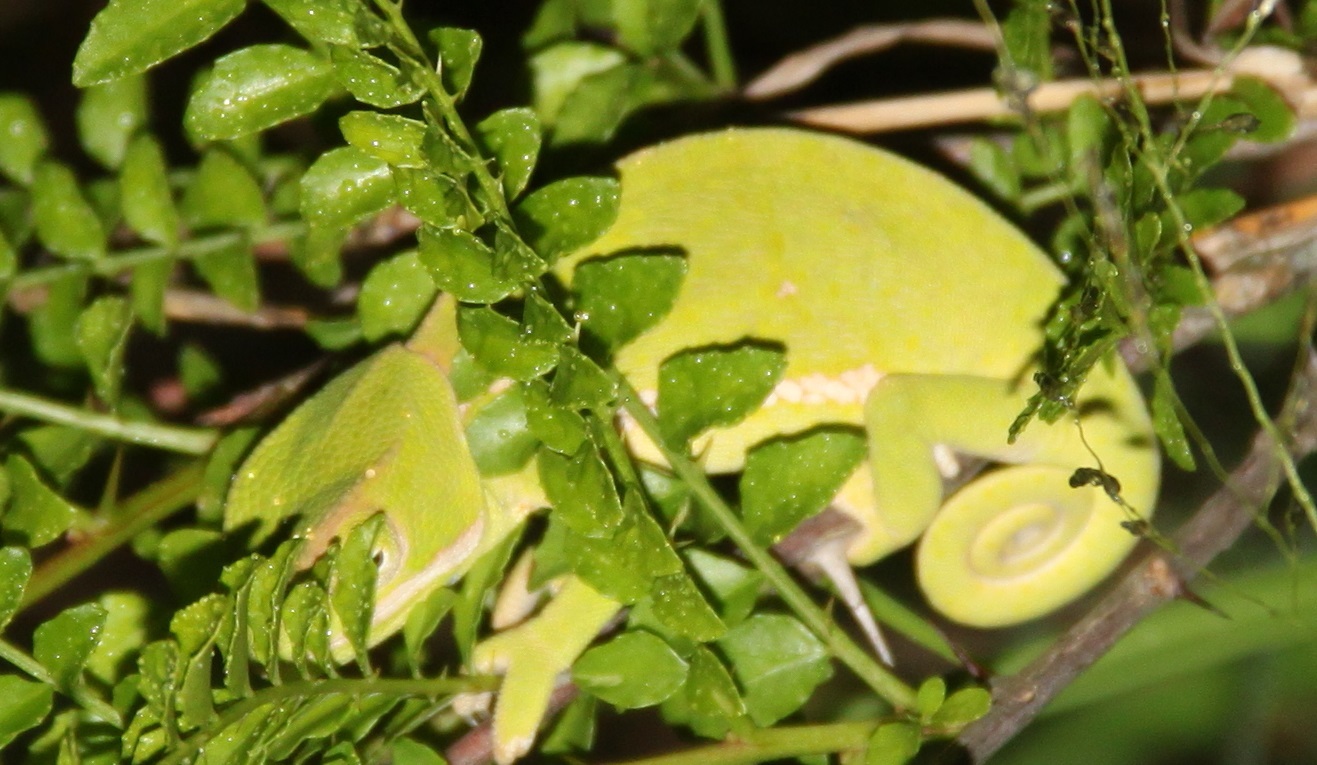
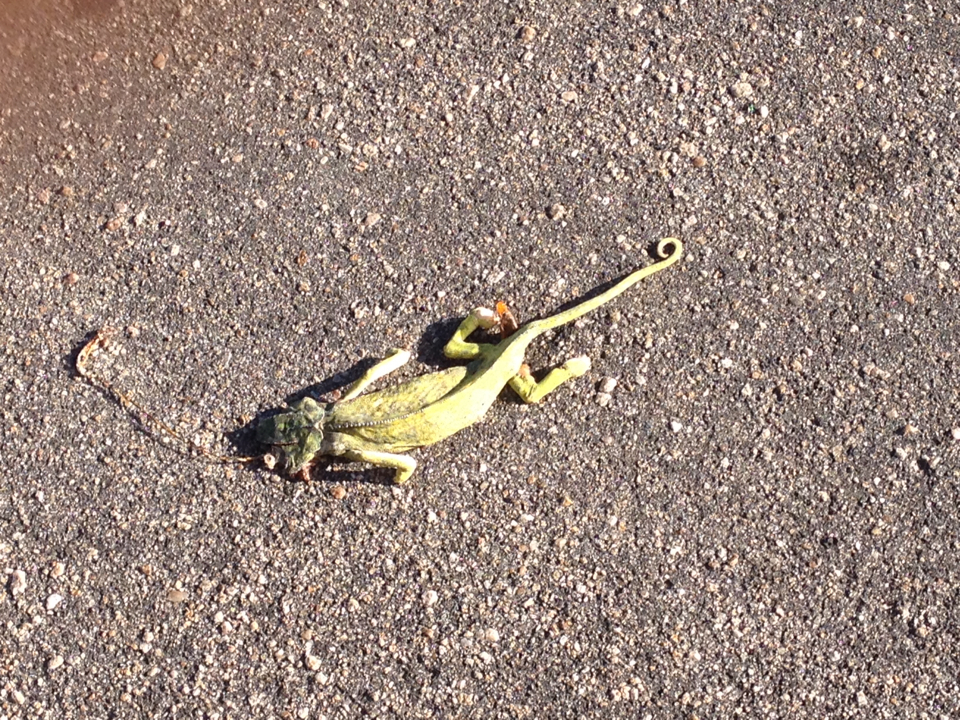
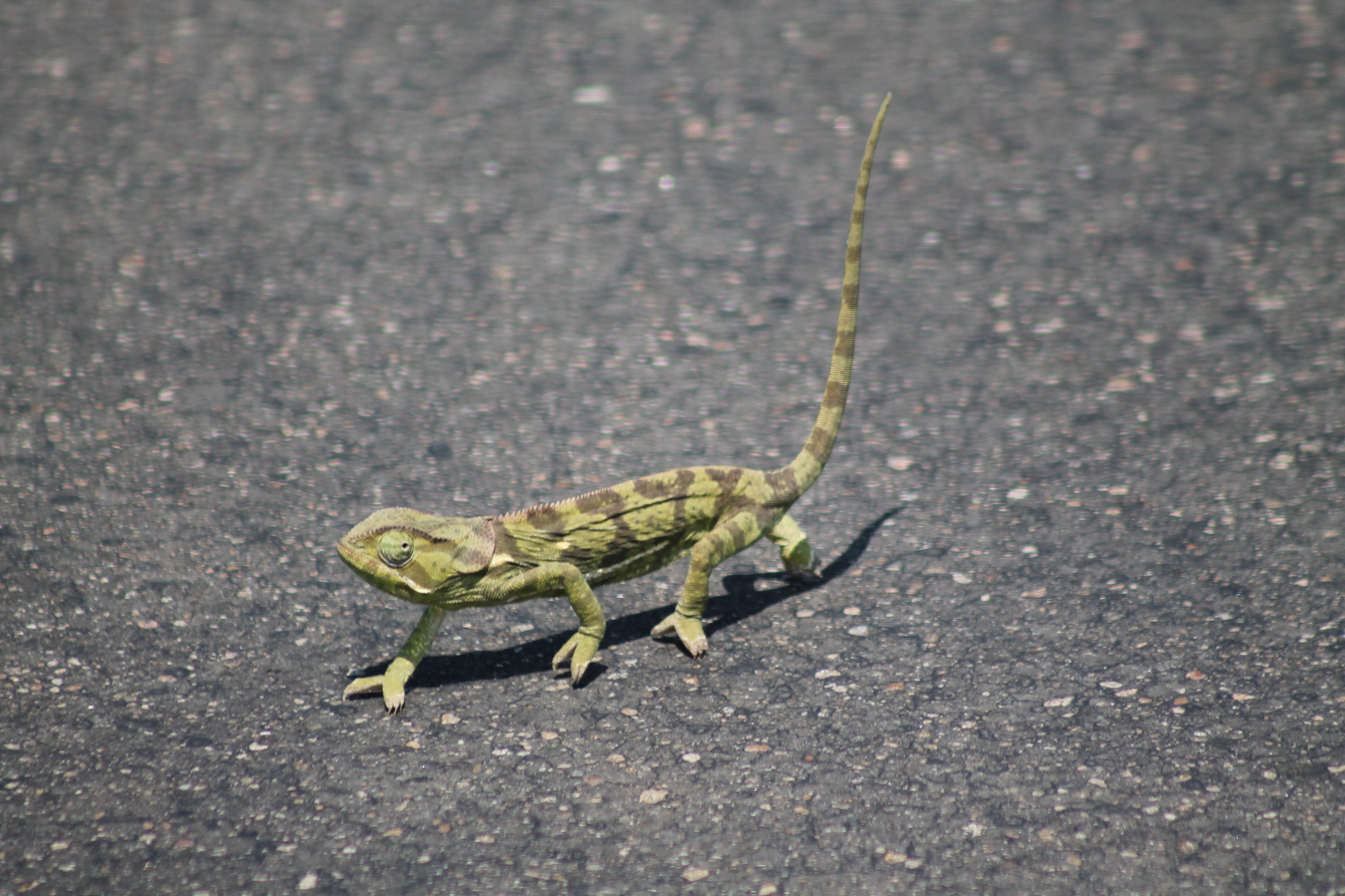
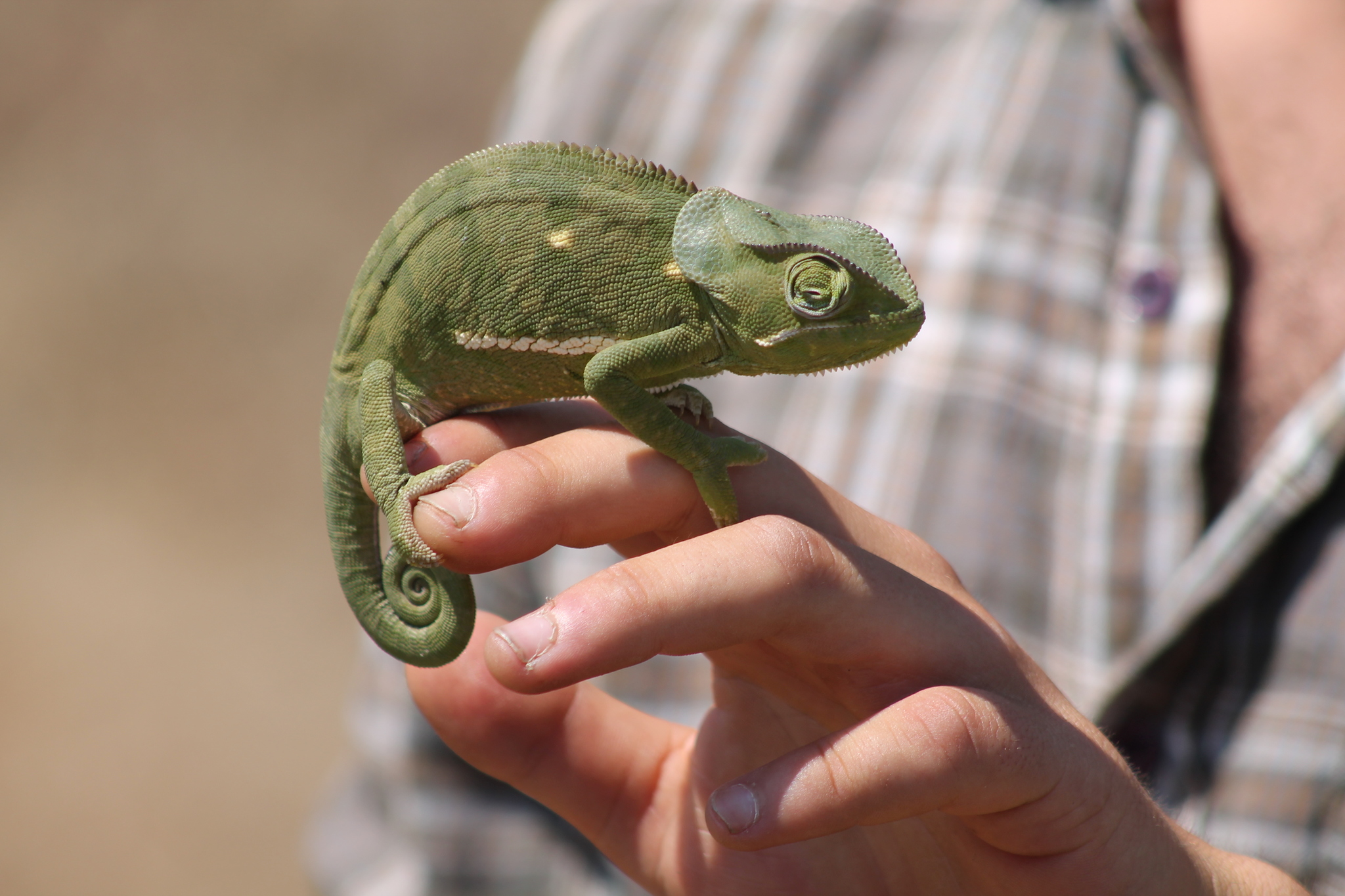
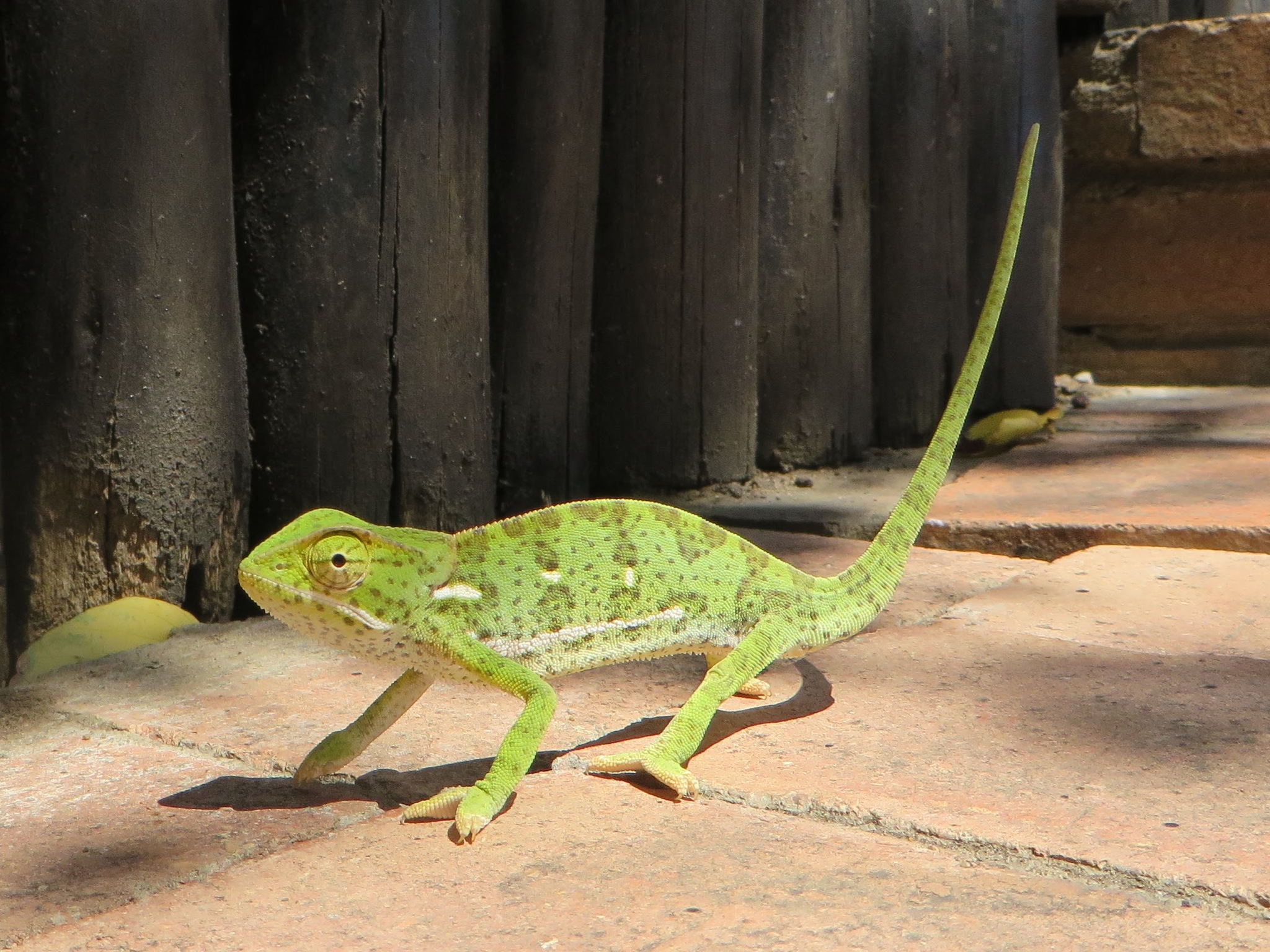
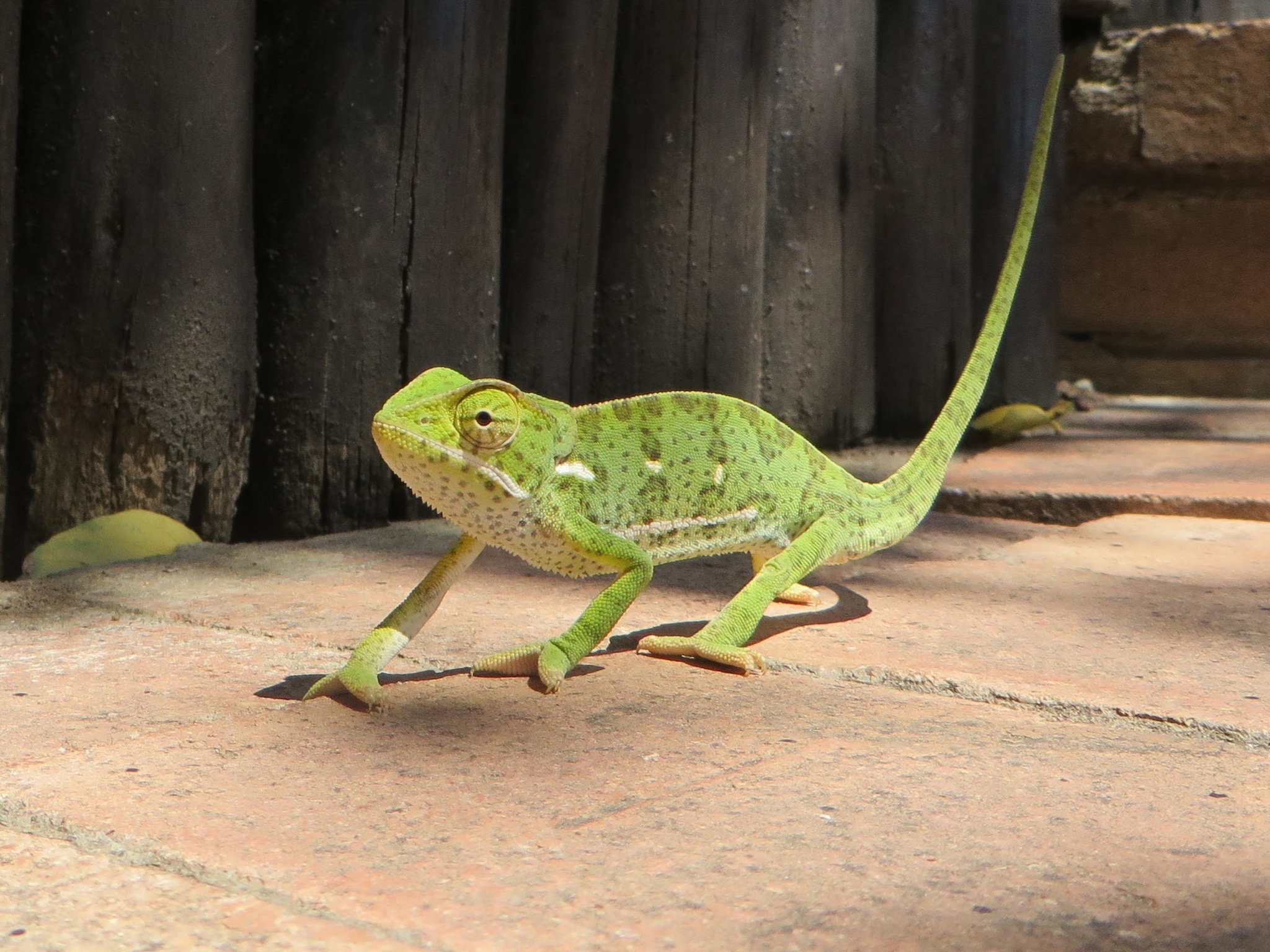
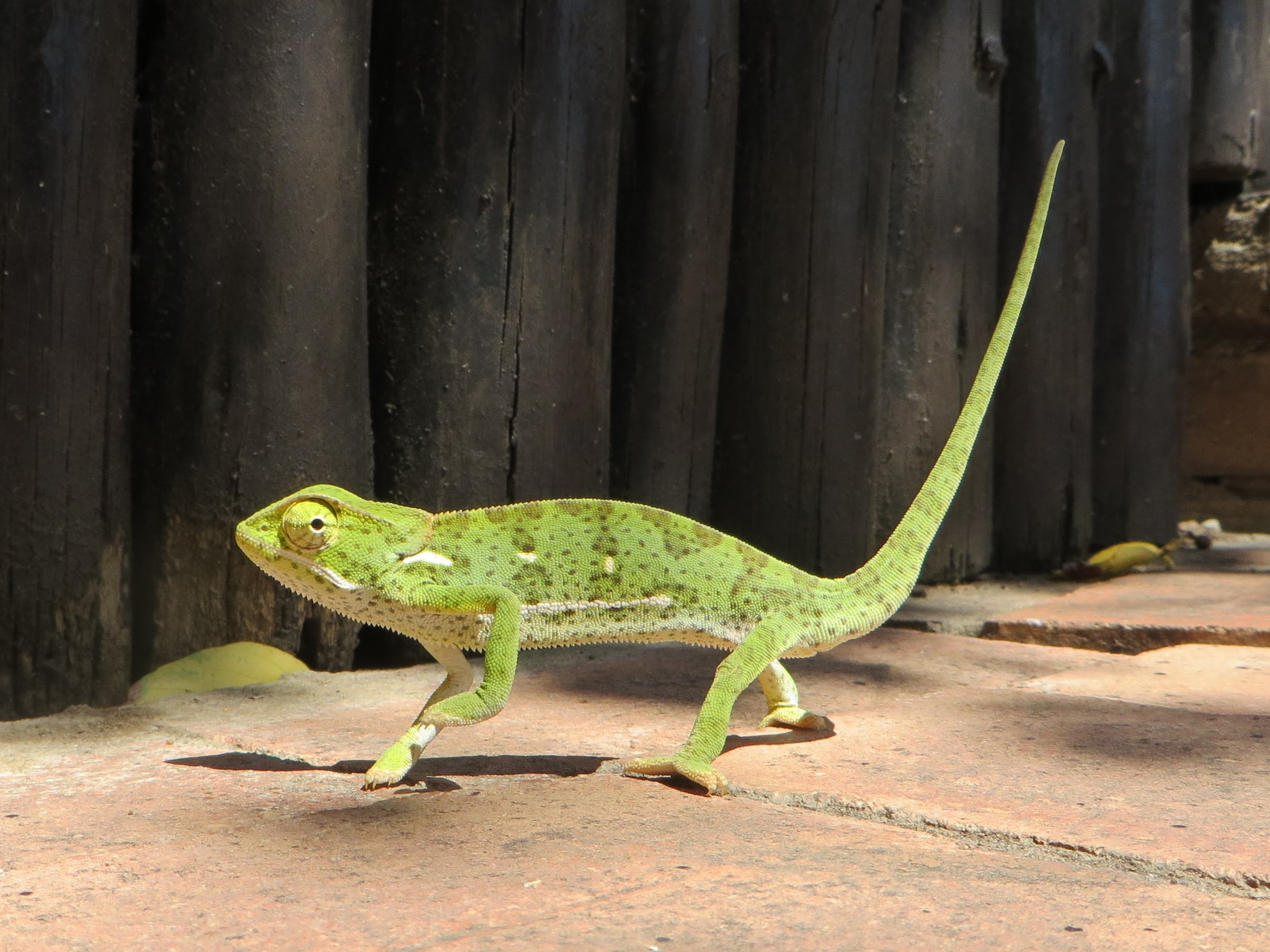
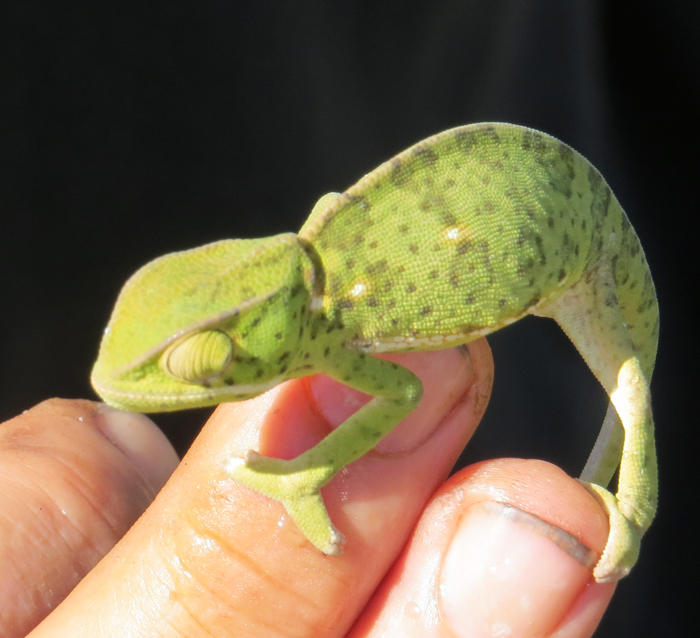
Description was extracted from Tolley and Burger (2007); One of the larger chameleons in southern Africa, reaching 35 cm (TL). The tail is as long as or longer than the body and is strongly prehensile. The chameleon is characterised by a skin flap that extends from the casque over the neck. The size of this flap varies according to geographic location, tending to be smaller in the southern part of its range. The casque is raised slightly and the top of the head is concave with a centre ridge. The deep throat grooves are colured bright orange, or sometimes yellow, contrasting against the bright green of the skin. A series of bright white triangular scales extends from the gular, past the throat and all the way down the belly to the cloaca. The tightly packed spiny tubercles of the dorsal crest are green in colour, conical in shape and regularly spaced. These spines become progressively smaller proceeding down the back, disappearing entirely towards the tail. The flanks are smooth and lack enlarged tubercles. The body colouration is usually a bright lime green and can exhibit intense patterns of dark barring or spotting when disturbed. Coloration is some individuals can be yellowish-green, brownish-green or even orange. The flanks are marked with a distinct white lateral stripe, but the size and shape of this stripe varies from one individual to the next. One or two other smaller white patches may be present above the white stripe, nearer to the shoulder. The lips are usually lined with white.
No separate diagnostic description was provided. Refer to the morphological description.
Type locality: Gabon (formerly part of French Congo) Holotype: BMNH 1946.8.13.75, female
This information was extracted from Tolley et al. (2023): A number of subspecies of Chamaeleo dilepis (C. d. dilepis, C. d. idjwiensis, C. d. isabellinus, C. d. martensi, C. d. petersii, C. d. ruspolii) are recognised, partly due to morphological variation across the very large geographic range (Klaver and Böhme, 1997; Nečas, 2004). The validity of these subspecies is unclear, and a detailed taxonomic revision of the species complex would be informative. A preliminary phylogenetic analysis suggests that there is species-level diversity within C. dilepis (Main et al., 2018, 2022). Included in the C. dilepis species complex are C. roperi and C. quilensis, but their taxonomic statuses also require further investigation. Tilbury (2018) considered all of the above-mentioned taxa, as well as C. angusticoronatus, as variants of a polymorphic C. dilepis.
Congo, Angola, Cameroon, Congo, Equatorial Guinea, Gabon, Kenya, Malawi (Shire Highlands), Namibia, Nigeria, South Africa, Eswatini, Botswana, Somalia, Tanzania, Uganda, Democratic Republic of the Congo, Zambia, Burundi, Uganda, E Zaire, Tanzania (Pemba Island), Mozambique, Central African Republic , Ethiopia, Zimbabwe, Republic of South Sudan.
The Flap-Neck Chameleon is the most widely distributed chameleon species, occuring throughout southern Africa and northward. In South Africa, it is found in the northern and eastern parts of the country, extending into the northeastern regions and southwards into KwaZulu-Natal province (Tolley and Burger, 2007; Tilbury, 2018).
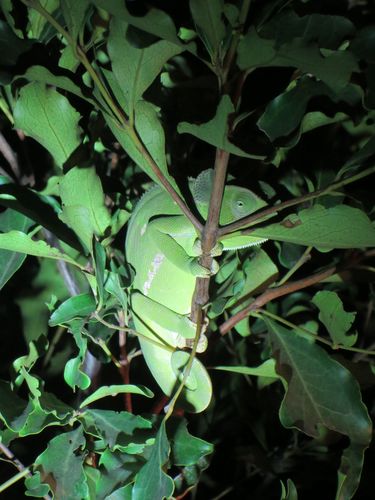
Chameleons are very slow-moving animals, walking and climbing, with at least one foot touching a surface (e.g., branch) at all times during movement. Their prehensile tail assists in locomotion by providing stability and balance when they move vertically through vegetation and between gap areas. Their fused digits on their feet aids in grasping branches without slipping (Tolley and Burger, 2007).
Carnivore - Insectivore (insect-eating)
Chameleons are primarily insectivores, using their long, projectile tongue to catch small insects like flies, grasshoppers, crickets, insect larvae and other small invertebrates. Water is required regularly and is licked from dew or raindrops on foliage (Tolley and Burger, 2007).
This information was extracted from Branch (1998): Males and females have slightly asynchronous reproductive cycles but breed during spring–summer (Reaney et al., 2012). Mating and egg-laying are energetic. In spring the male’s gular skin turns pearly-white, and the female permits approach. Introductions are minimal, and the female is taken more or less by storm. Mating may last up to an hour. Egg development takes 3-4 months. The female becomes bloated with 25-50 (max 65) small eggs (13-15 × 8-9 mm); during these times, she is dull-coloured and very aggressive. She constructs a tunnel (150-300 mm long) in damp soil, in which to lay her eggs in late summer (March-May in Maputaland). She may take up to 24 hours to complete laying. The eggs take approximately 150 days to hatch in captivity (27 degrees C) but may take up to 377 days in the wild when development is slowed during winter. Hatchlings measure about 45-50 mm TL.
like all chameleons, they are active during the day. They have the ability to change colour as a physiological response to external conditions such as light and temperature, when sick, stressed, males displaying when courting females, as a defense mechanism and camouflage (Tolley and Burger, 2007). When it senses danger, the Flap Neck Chameleon inflates its body, distends its throat, lifts its occipital flaps, and opens its mouth wide to reveal its red-orange lining (Branch, 1998).
Grassland, Savanna, Forest
This map contains point-based occurrences at different locations
Occurrence in African countries and South African provinces. Residence status indicates if a taxon is indigenous, endemic, or alien in a specific region. This data is based on specimen records and literature.
FSA
SA
BOT
NAM
ESW
LES
WC
EC
NC
FS
GA
KZN
LP
MP
NW
Absent
Indigenous
Endemic
Naturalised
Invasive
Names and Sources
Chamaeleo dilepis (Leach, 1819)
Chamaeleo angusticoronatus
Author: (Barbour, 1903)
Chamaeleo bilobus
Author: (Kuhl, 1820)
Chamaeleo capellii
Author: (Bocage, 1866)
Chamaeleo dilepas
Author: (Martin, 1838)
Chamaeleo planiceps
Author: (Merrem, 1820)
Chamaeleo dilepis
Author: (Gray, 1865)
| Common Name | Language |
|---|---|
| Flapneck Chameleon | EN |
No results found for Chamaeleo dilepis Leach, 1819
Chamaeleo dilepis is one of the most traded chameleon species (Jenkins et al., 2013), with over 178,000 live individuals exported for trade since 1975 (UNEP-WCMC, 2020). It is rarely legally exported from South Africa, with just over 600 individuals reported since 1975 and none reported in the last decade (UNEP-WCMC, 2020). The scale of the illegal trade is not known. The species has also been reported to be widely used in traditional medicine (Williams et al., 2016).
20 results for Chamaeleo dilepis Leach, 1819
This map contains point-based occurrences at different locations
2007
BOOK
Chameleons of Southern AfricaBurger, M., Tolley, K.. 2007. Chameleons of Southern Africa. Cape Town. Struik Publishers.
1998
BOOK
Field Guide to Snakes and Other Reptiles of Southern AfricaBranch, B.. 1998. Field Guide to Snakes and Other Reptiles of Southern Africa. Cape Town. Struik Publishers.
2018
BOOK
Chameleons of Africa - An Atlas including the chameleons of Europe, the Middle East and AsiaTilbury, C.. 2018. Chameleons of Africa - An Atlas including the chameleons of Europe, the Middle East and Asia. Frankfurt am Main. Chimaria.
2023
BOOK
Conservation status of the reptiles of South Africa, Eswatini and LesothoTolley, K., Burger, M., Alexander, G., Pietersen, D., Conradie, W., Weeber, J.. 2023. Conservation status of the reptiles of South Africa, Eswatini and Lesotho Vol. Suricata 10. Pretoria. South African National Biodiversity Institute.
2020
WEBSITE
CITES Trade DatabaseUNEP-WCMC, . 2020. CITES Trade Database. https:// trade.cites.org/. (Accessed: 15 September 2020).
2016
JOURNAL ARTICLE
Reptiles sold as traditional medicine in Xipamanine and Xiquelene Markets (Maputo, Mozambique)Alexander, G., Williams, V., Moshoeu, T.. 2016. Reptiles sold as traditional medicine in Xipamanine and Xiquelene Markets (Maputo, Mozambique) Vol. 112(7-8) pp.1-9.
2013
BOOK CHAPTER
Chameleon conservationTolley, K., Jenkins, R., Measey, G., Anderson, C.. 2013. Chameleon conservation. Berkeley. University of California Press pp.193-216.
2018
JOURNAL ARTICLE
Cryptic diversity in the common flap-necked chameleon Chamaeleo dilepis in South AfricaTolley, K., van Vuuren, B., Main, D.. 2018. Cryptic diversity in the common flap-necked chameleon Chamaeleo dilepis in South Africa Vol. 53(1) pp.11-16.
2022
JOURNAL ARTICLE
Out of southern Africa: origins and cryptic speciation in Chamaeleo, the most widespread chameleon genusTolley, K., van Vuuren, B., Tilbury, C., Main, D.. 2022. Out of southern Africa: origins and cryptic speciation in Chamaeleo, the most widespread chameleon genus Vol. 175 pp.107578.
2012
BOOK
Ecology of the Flap-necked chameleon Chameleo dilepis in southern AfricaReaney, L., Whiting, M., Yee, S., Losos, J.. 2012. Ecology of the Flap-necked chameleon Chameleo dilepis in southern Africa Vol. 532. Museum of Comparative Zoology pp.1-8.
Status and criteria
LC
Assessor(s)
Krystal Tolley
Reviewer(s)
Werner Conradie


