ANIMALIA / CHORDATA / REPTILIA / SQUAMATA / CHELONIIDAE / ERETMOCHELYS / IMBRICATA
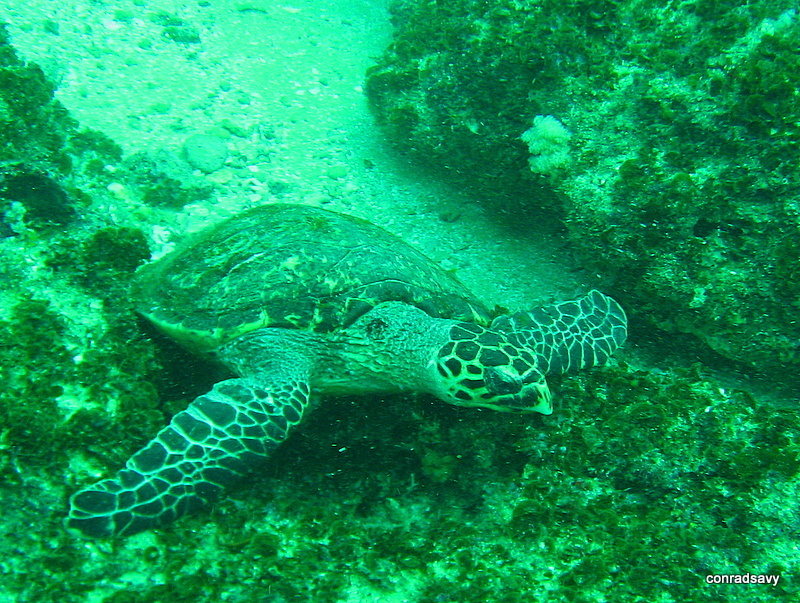
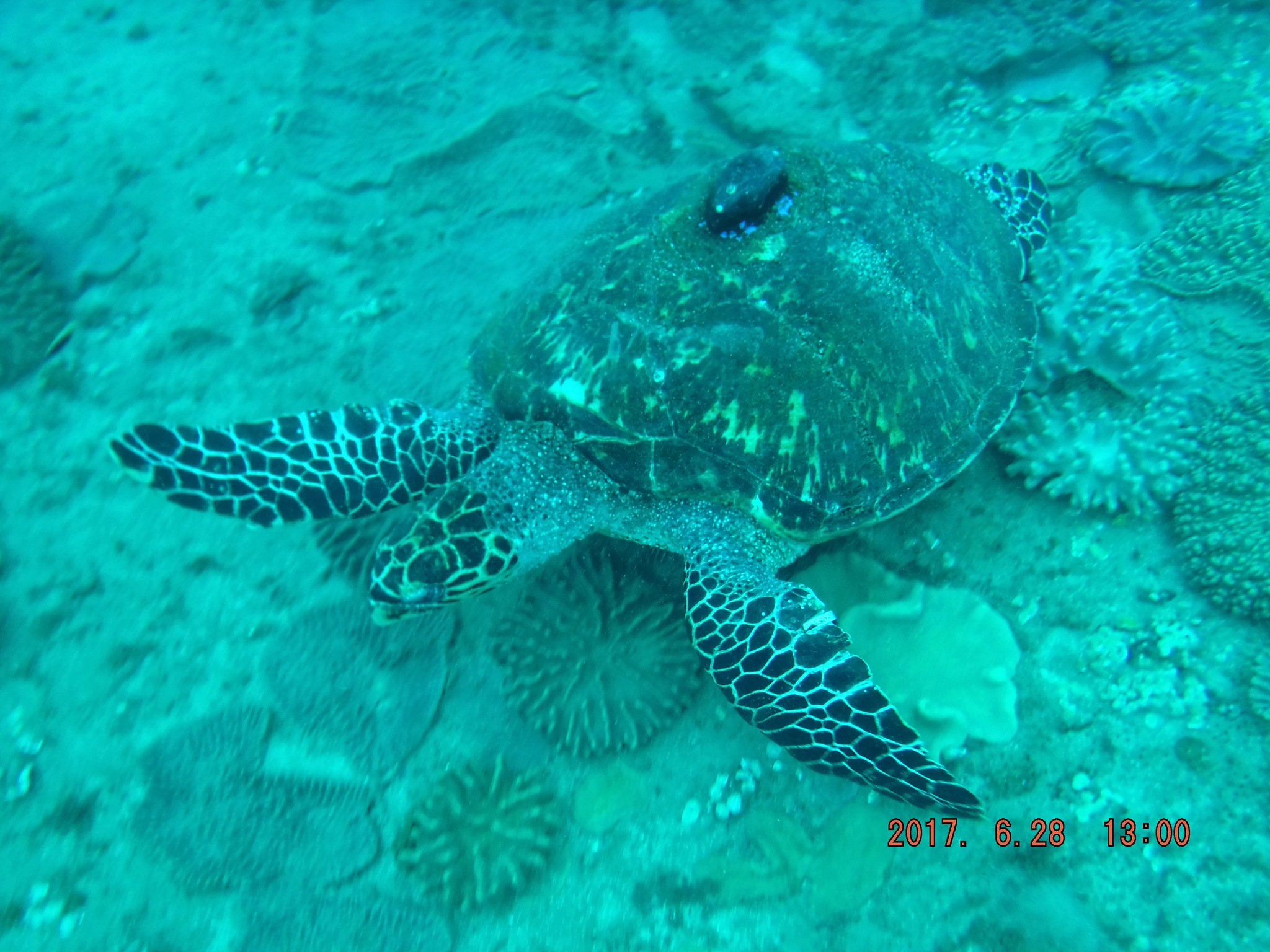
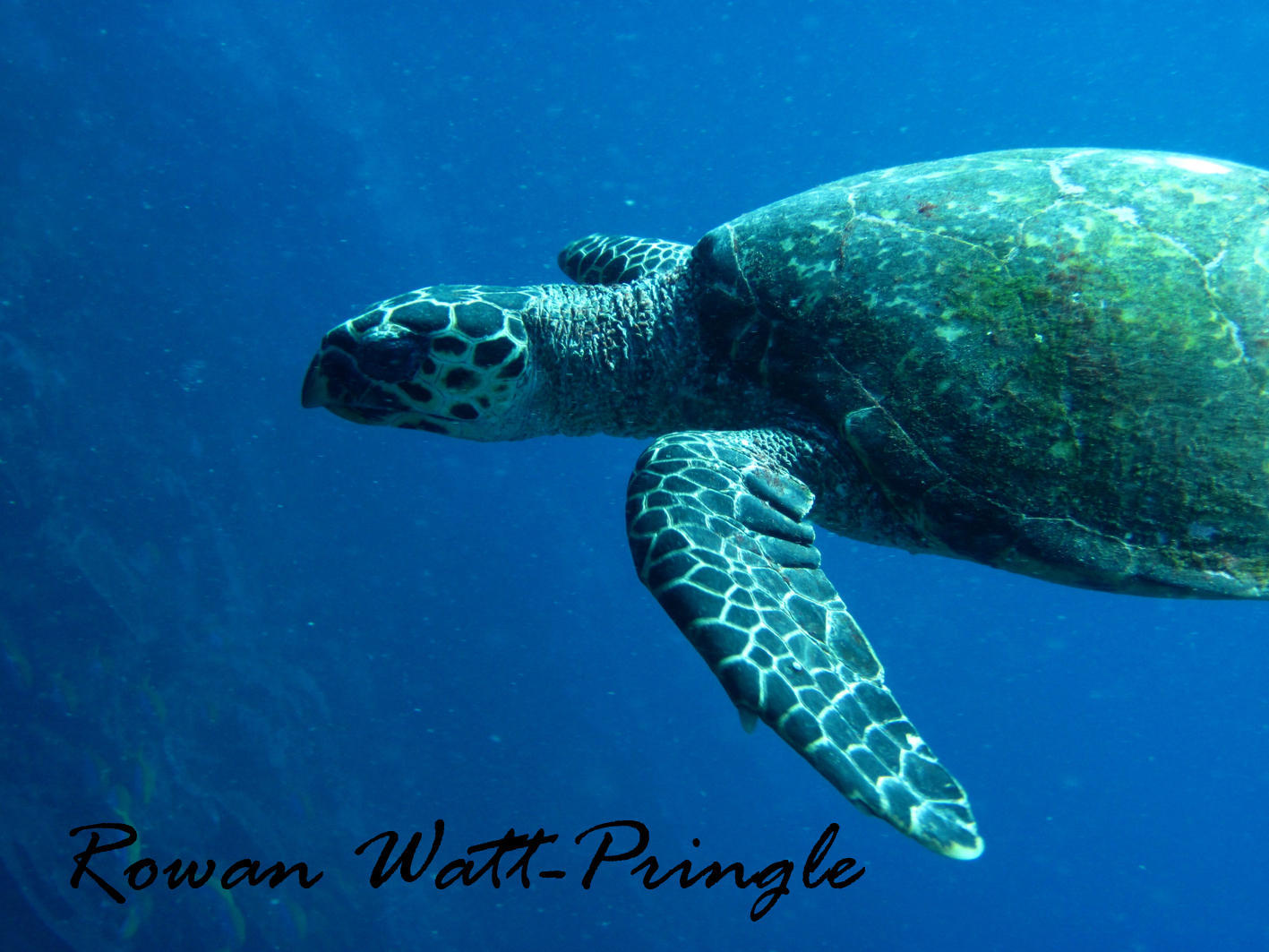
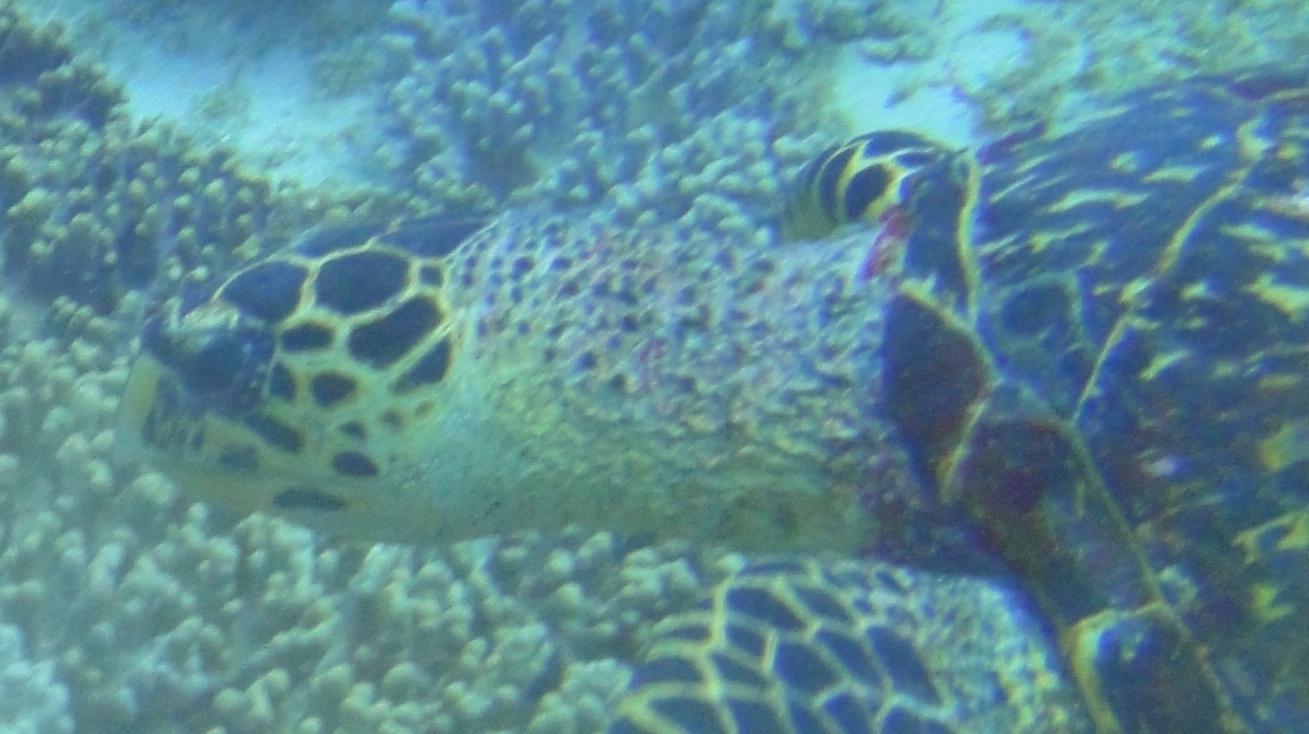
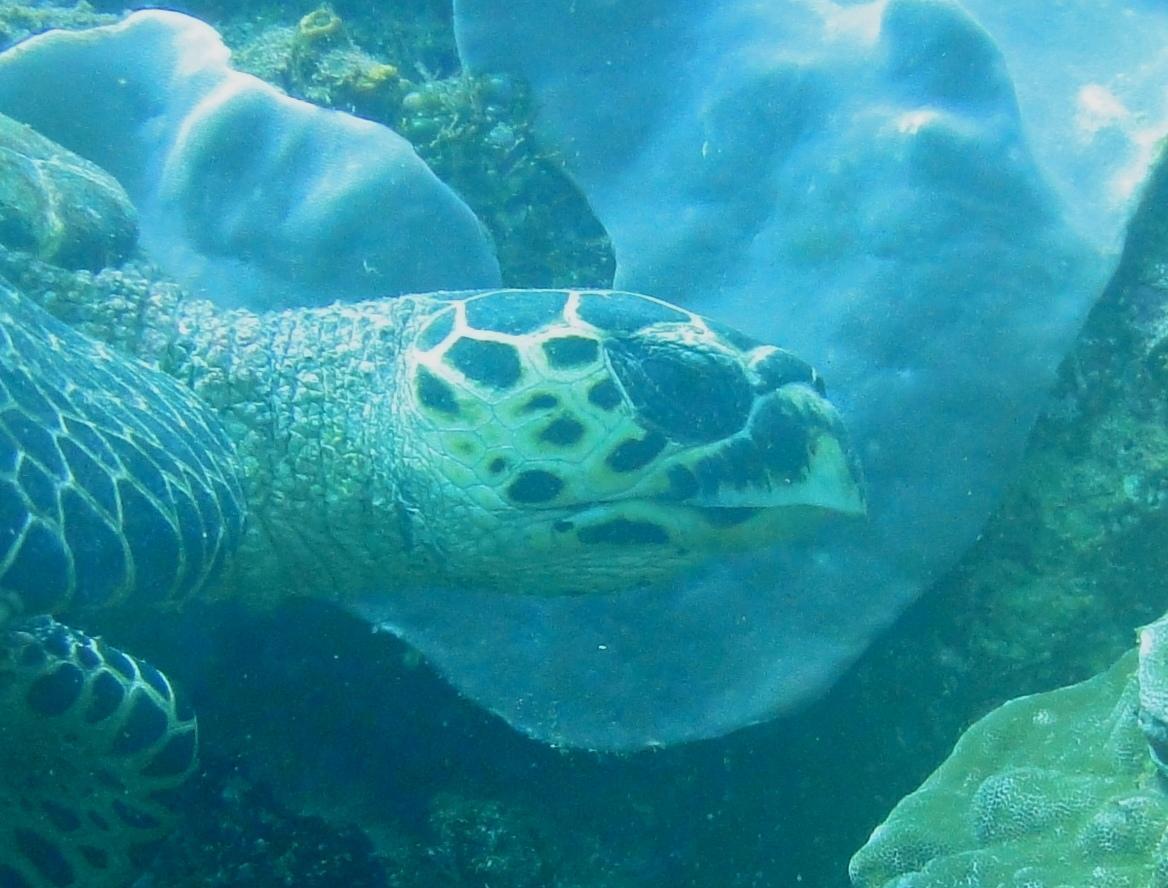
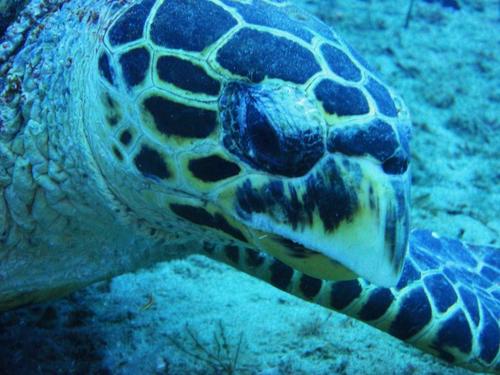
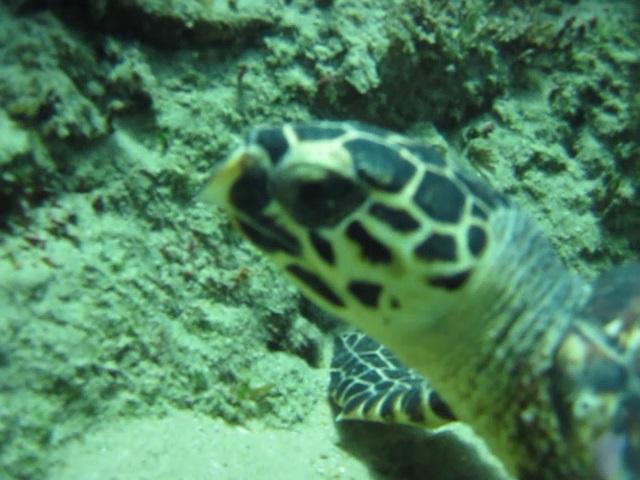
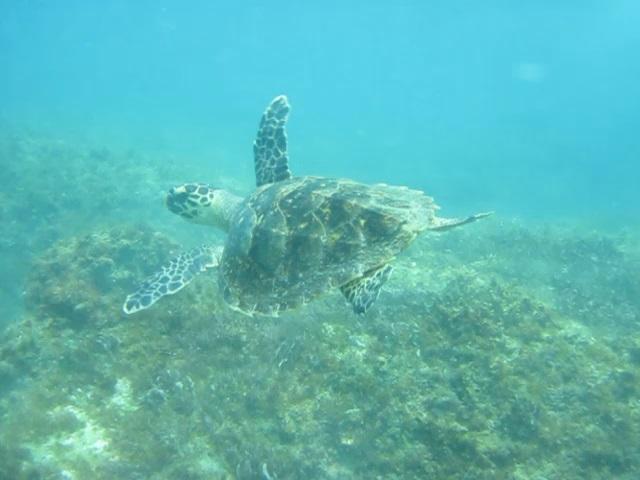
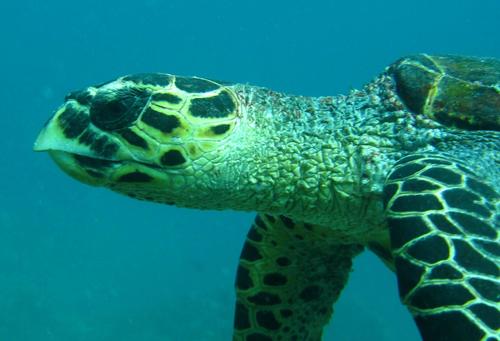
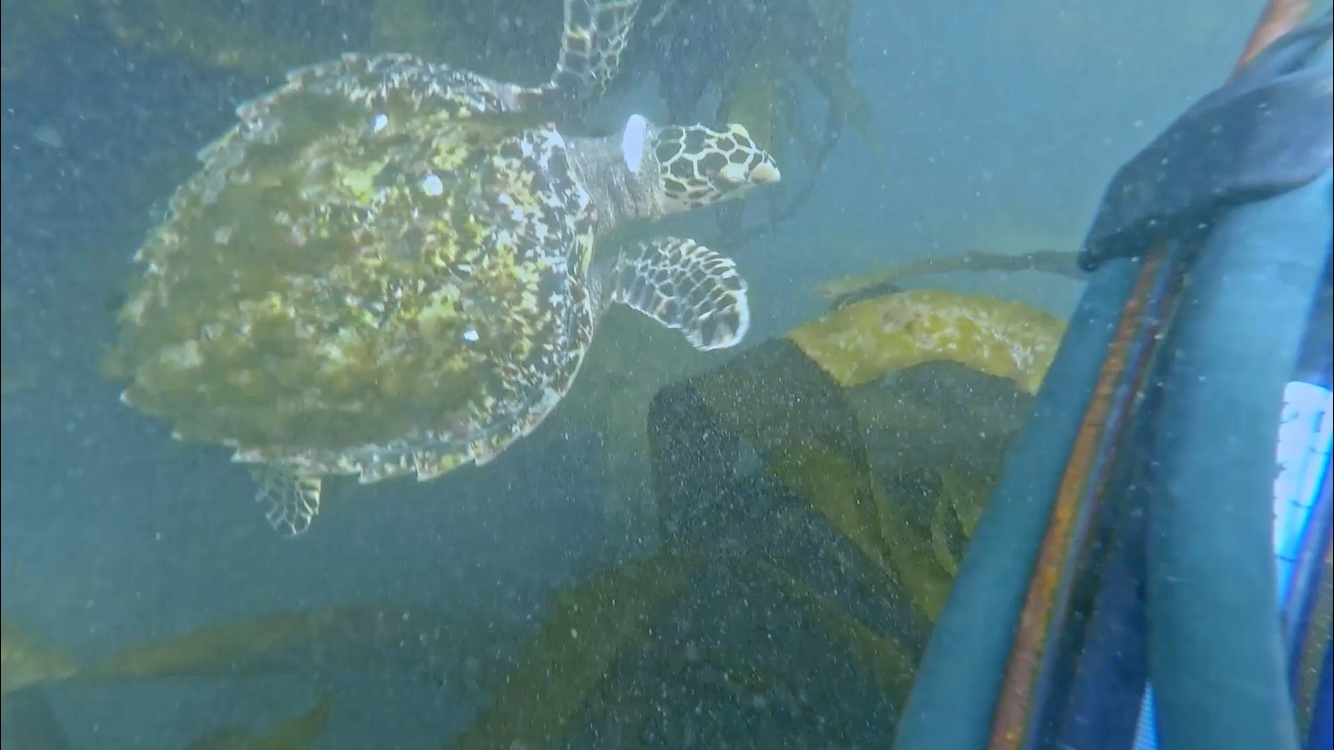
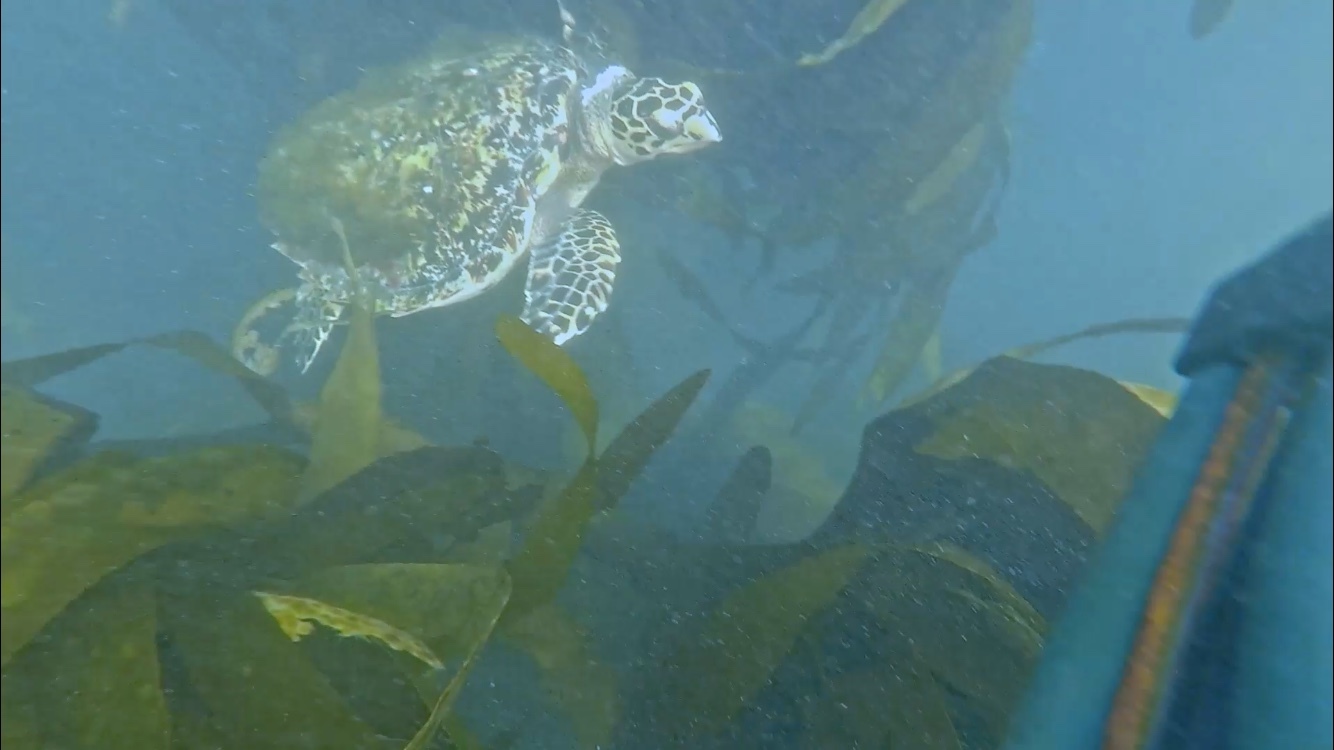
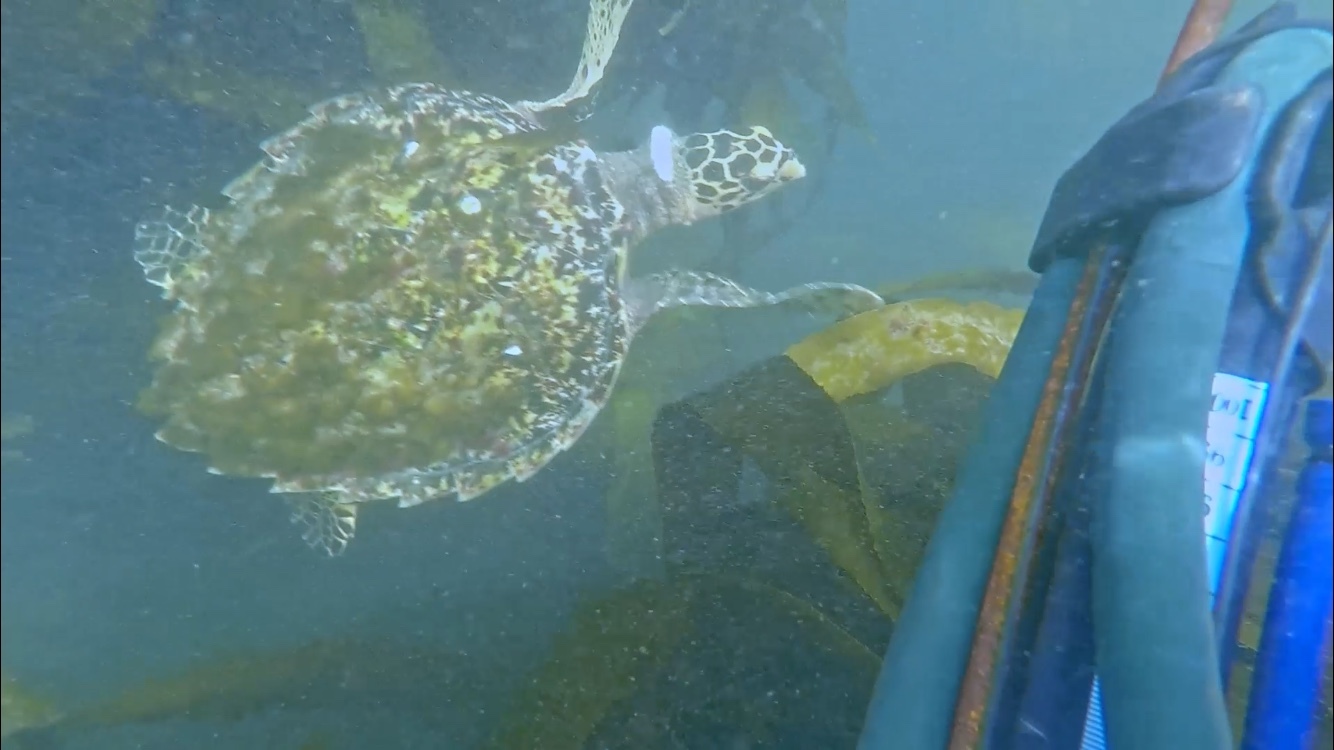
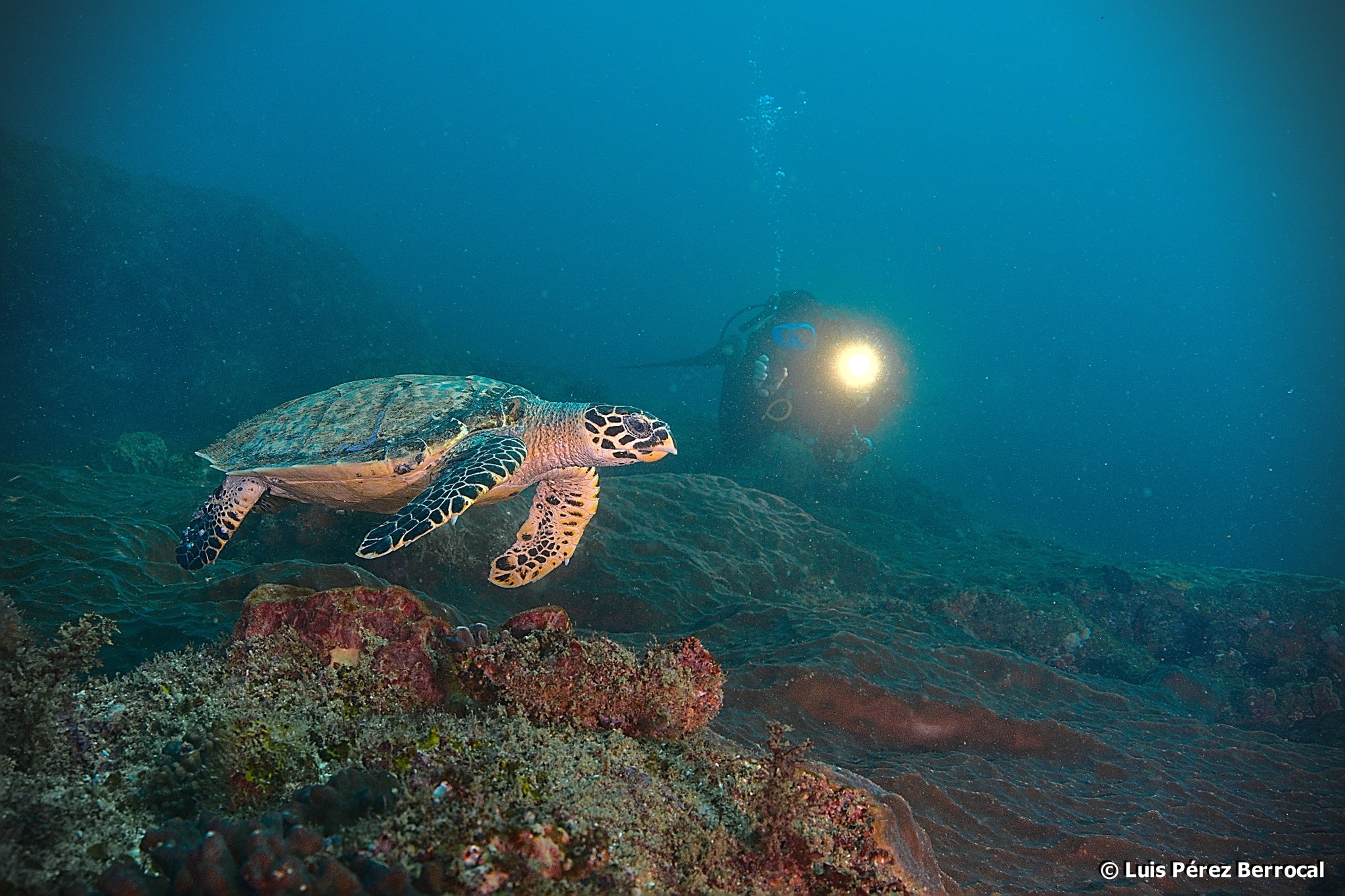
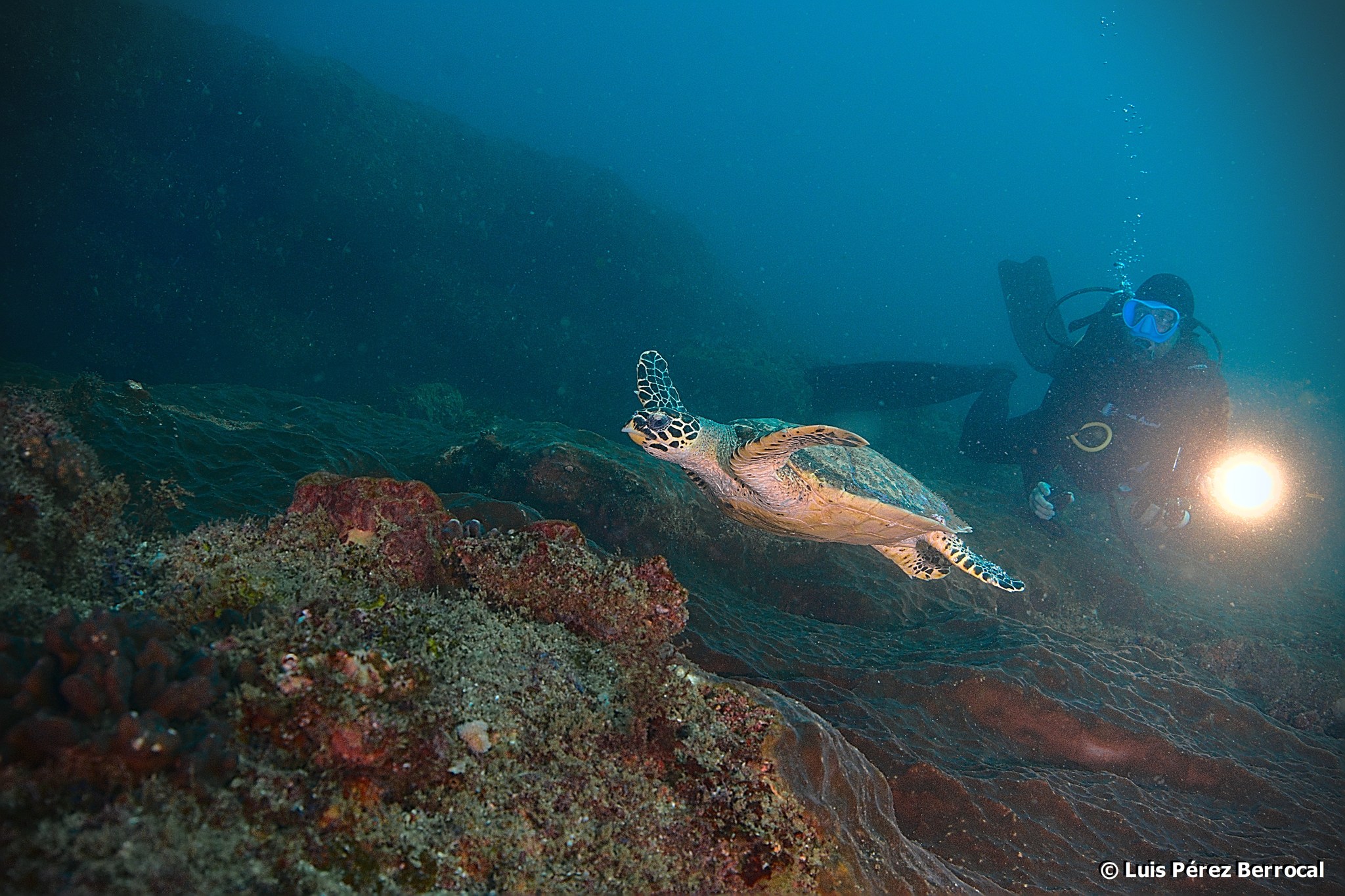
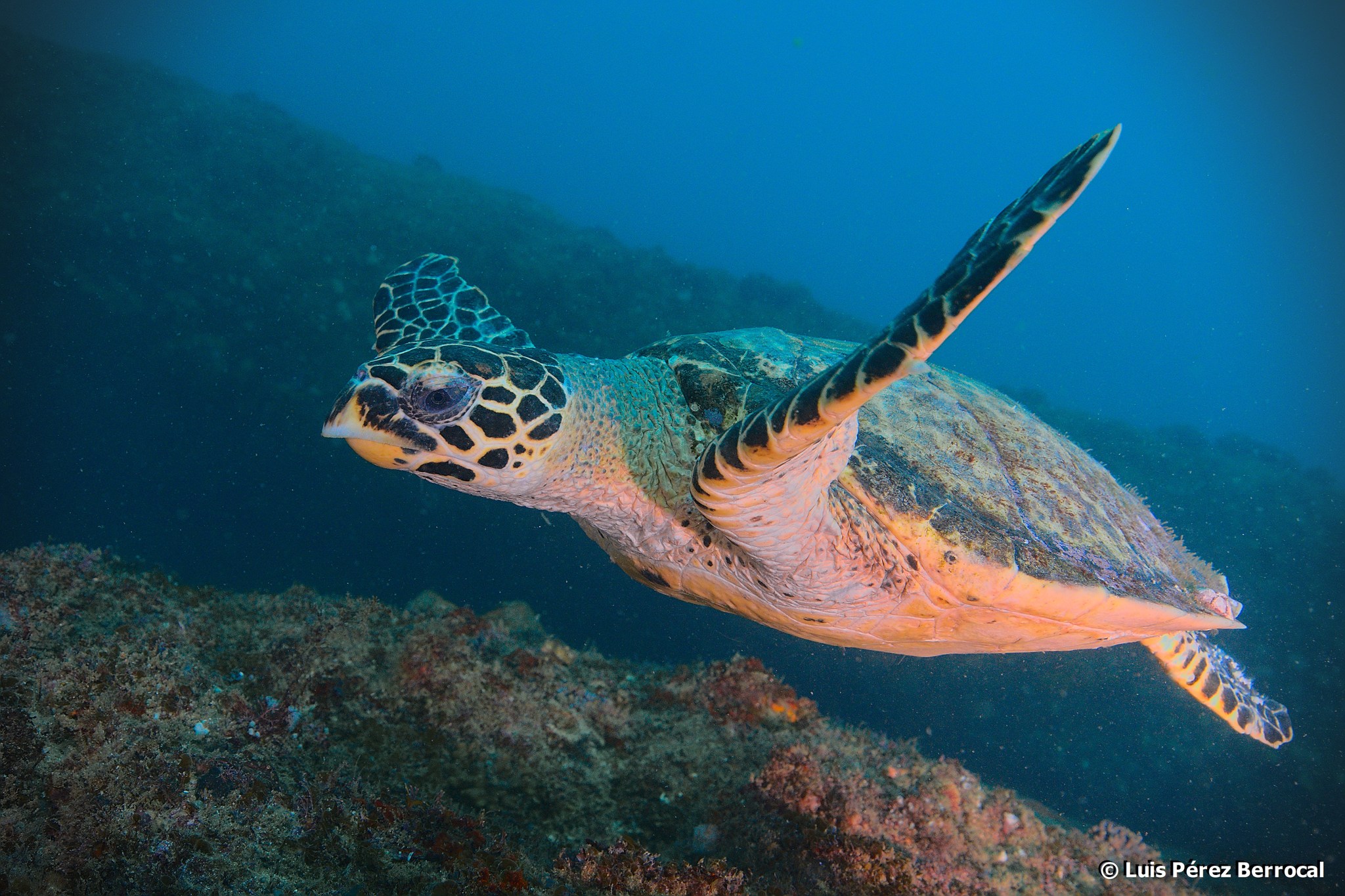
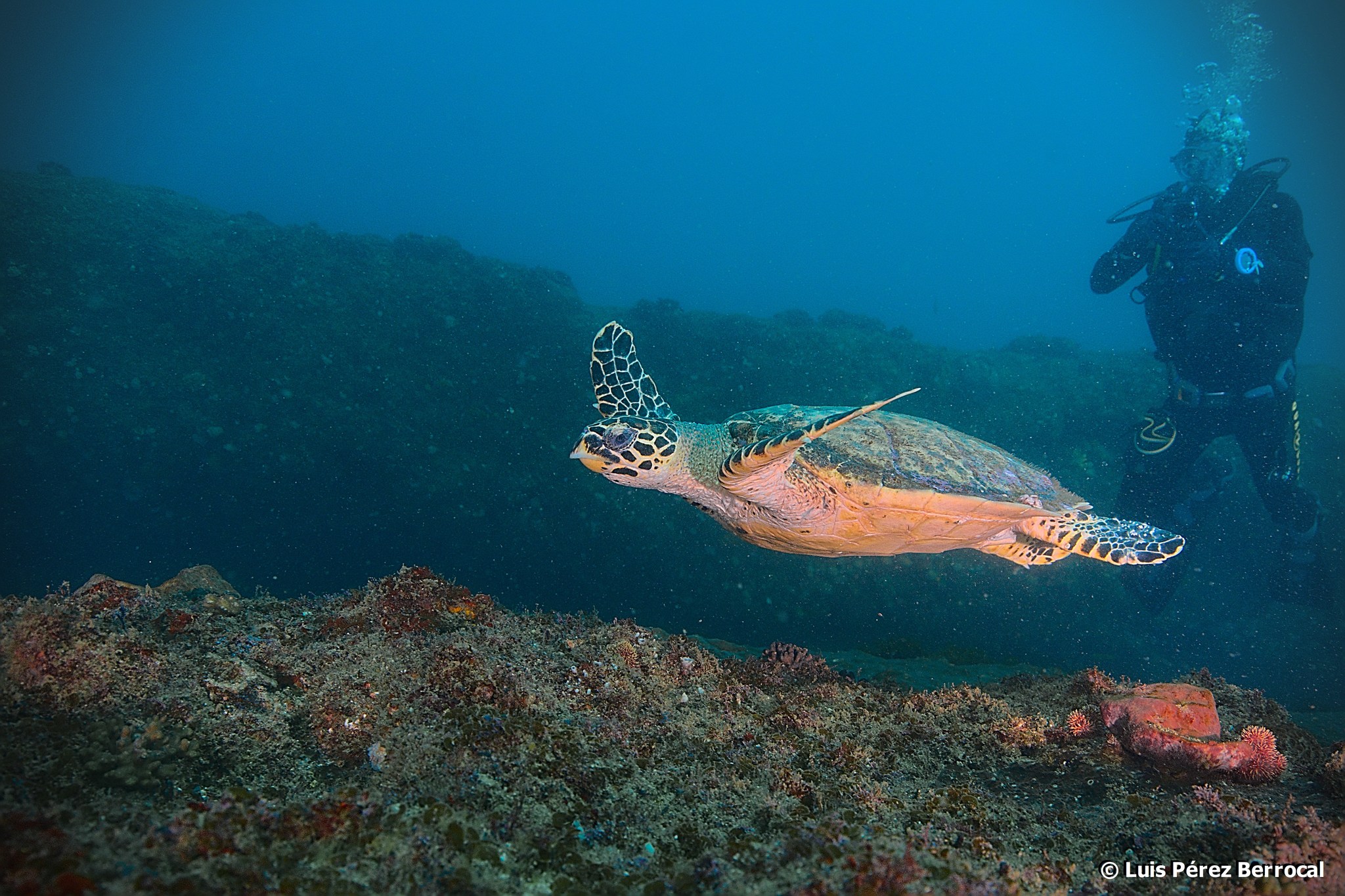
Alexander and Marias (2007) described the species as follows: Hawksbill turtles are relatively large with a maximum carapace length that is just over just over a meter. Females grow larger than males. The carapace (upper shell) is heart shaped and elongate with five vertebral and four pairs of costals shields. The nuchal scute is present and rarely divided. The scutes on the carapace overlap and there are 12-13 marginal scutes. The posterior marginal are strongly serrated. The common name “Hawksbill” is derived from the hooked beak that is formed by the upper jaw projecting strongly forward of the lower jaw. The head is long and tapered, with enlarged scales. The forelimbs are modified into large rigid flippers that are used for propulsion in water. The hind limbs are shorter than the forelimbs, are strongly webbed and are used primarily as rudders during swimming. there are two claws on each foot.
No separate diagnostic description was provided. Refer to the morphological description.
Holotype: UUZM (= ZIU) 130 (probably, fide COGGER 1983) Lectotype: SMF 7886 [bissa] Syntypes: MCZ R-1416 [squamata] Syntypes: USNM 257185, 257186 [Caretta rostrata]
No notable issues.
The information below was extracted from Mortimer & Donnelly (2008) Hawksbill has a circumglobal distribution throughout tropical and, to a lesser extent, subtropical waters of the Atlantic Ocean, Indian Ocean, and Pacific Ocean. Hawksbills are migratory and individuals undertake complex movements through geographically disparate habitats during their lifetimes. Hawksbill nesting occurs in at least 70 countries, although much of it now only at low densities. Their movements within the marine environment are less understood, but Hawksbills are believed to inhabit coastal waters in more than 108 countries.
South Africa coastal.
Green turtles undertake extensive migrations. Hatchlings lead a pelagic life for a year and then return to coastal estuaries and lagoons where they take shelter and change their diet from macro-plankton to marine algae and sea grasses (Hughes 1974).
Omnivore (eats plants, animals, fungi, bacteria)
They are predominantly sponge feeders but eat a variety of food items depending on the habitat and the availability of prey. Thus, they range from being strictly spongivores to soft coral feeders to omnivores. They may act as ecosystem agents by enhancing coral growth through reducing competitors of corals for space (Mortimer & Donnelly 2008).
The information below was extracted from NOAA fisheries (2022) Hawksbills are estimated to reach maturity between 20 to 35 years of age, depending upon a variety of factors, especially resource availability. Although life expectancy remains unconfirmed, they are long-lived and estimated to live 50 to 60 years. Every 1 to 5 years, female hawksbill turtles return to nest on beaches in the general areas where they hatched decades earlier. Hawksbills generally lay three to five nests per season, which each contain an average of 130 to 160 eggs. The nesting season varies by location, but in most places occurs between April and November of each year. Hawksbills typically nest at night on small and isolated “pocket” beaches, with little or no sand and a rocky approach. They usually nest high up on the beach under or in vegetation. After about two months of incubating in the warm sand, the eggs hatch, and the hatchlings make their way to the water. Hatchlings orient seaward by moving away from the darkest silhouette of the landward dune or vegetation to crawl towards the brightest horizon. On undeveloped beaches, this is toward the open horizon over the ocean.
No data.
Inshore, Offshore(>30m),Intertidal, Pelagic.
This map contains point-based occurrences at different locations
Occurrence in African countries and South African provinces. Residence status indicates if a taxon is indigenous, endemic, or alien in a specific region. This data is based on specimen records and literature.
FSA
SA
BOT
NAM
ESW
LES
WC
EC
NC
FS
GA
KZN
LP
MP
NW
Absent
Indigenous
Endemic
Naturalised
Invasive
Names and Sources
| Common Name | Language |
|---|---|
| Hawksbill imbricata | EN |
| Atlantic Hawksbill bissa | EN |
Classification
KINGDOM Animalia
PHYLUM Chordata
CLASS Reptilia
ORDER Squamata
FAMILY Cheloniidae
GENUS Eretmochelys
SPECIES imbricata
No results found for Eretmochelys imbricata (Linnaeus, 1766)
No data.
10 results for Eretmochelys imbricata (Linnaeus, 1766)
This map contains point-based occurrences at different locations
1758
BOOK
Systema naturæ per regna tria naturæ, secundum classes, ordines, genera, species, cum characteribus, differentiis, synonymis, locis.LINNAEUS, C.. 1758. Systema naturæ per regna tria naturæ, secundum classes, ordines, genera, species, cum characteribus, differentiis, synonymis, locis. pp.824.
2008
BOOK
Tortoises, Terrapins and Turtles of AfricaBranch, W. 2008. Tortoises, Terrapins and Turtles of Africa. Cape Town. Struik Publishers.
2004
BOOK
Sea turtles: a complete guide to their biology, behaviour, and conservation.Spotila, J. 2004. Sea turtles: a complete guide to their biology, behaviour, and conservation.. Baltimore and London. John Hopkins University Press.
1974
REPORT
The sea turtles of south-east Africa. II. The biology of the Tongaland loggerhead turtle Caretta caretta with comments on the leatherback turtle Dermochelys coriacea and the green turtle Chelonia mydas in the study regionHughes, G.. 1974. The sea turtles of south-east Africa. II. The biology of the Tongaland loggerhead turtle Caretta caretta with comments on the leatherback turtle Dermochelys coriacea and the green turtle Chelonia mydas in the study region. Durban. Oceanographic Research Institute pp.96 pp.
2008
SECTION IN BOOK
Eretmochelys imbricata.Mortimer, J., Donnelly, M. 2008. Eretmochelys imbricata.. The IUCN Red List of Threatened Species 2008.
2022
WEB SERVICE
Hawksbill Turtle _ NOAA FisheriesAnonymous, AA. 2022. Hawksbill Turtle _ NOAA Fisheries.
2007
BOOK
A Guide to Reptiles of Southern AfricaAlexander, G., Marais, J.. 2007. A Guide to Reptiles of Southern Africa. Cape Town. Struik Publishers.