ANIMALIA / CHORDATA / REPTILIA / SQUAMATA / COLUBRIDAE / DISPHOLIDUS / TYPUS
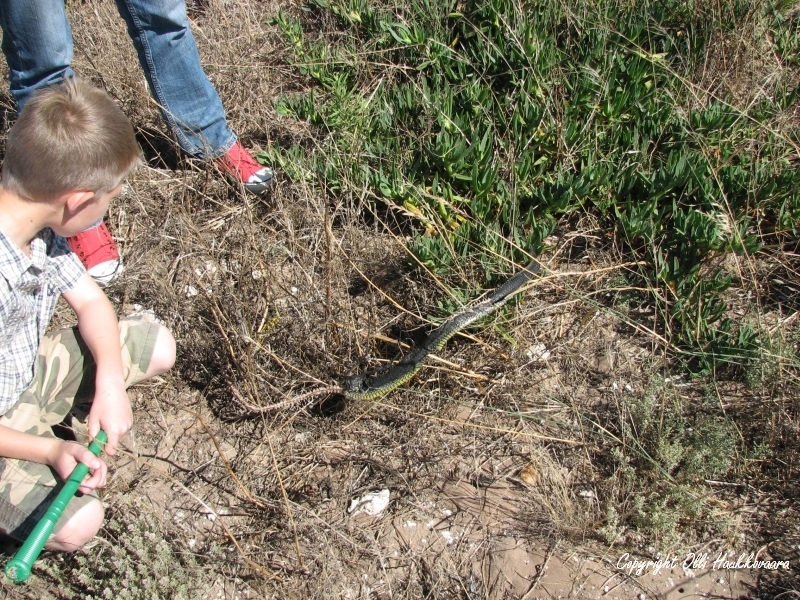
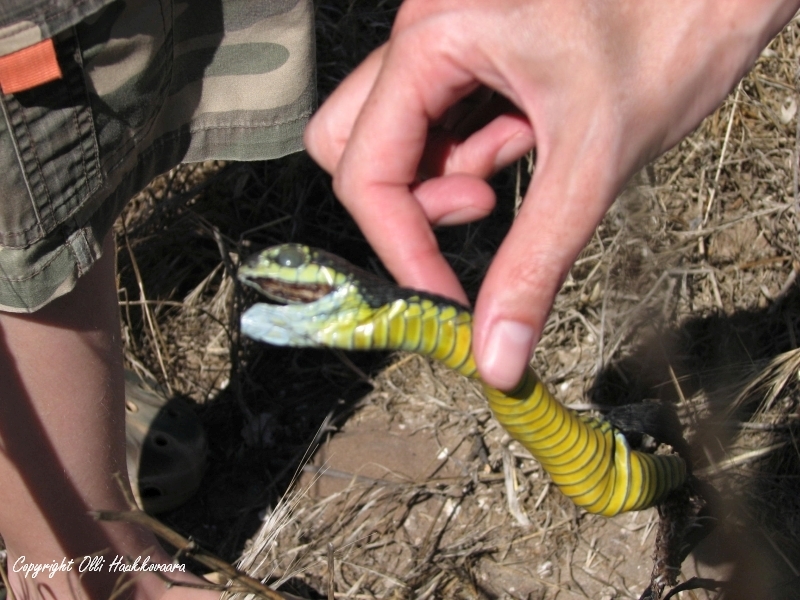
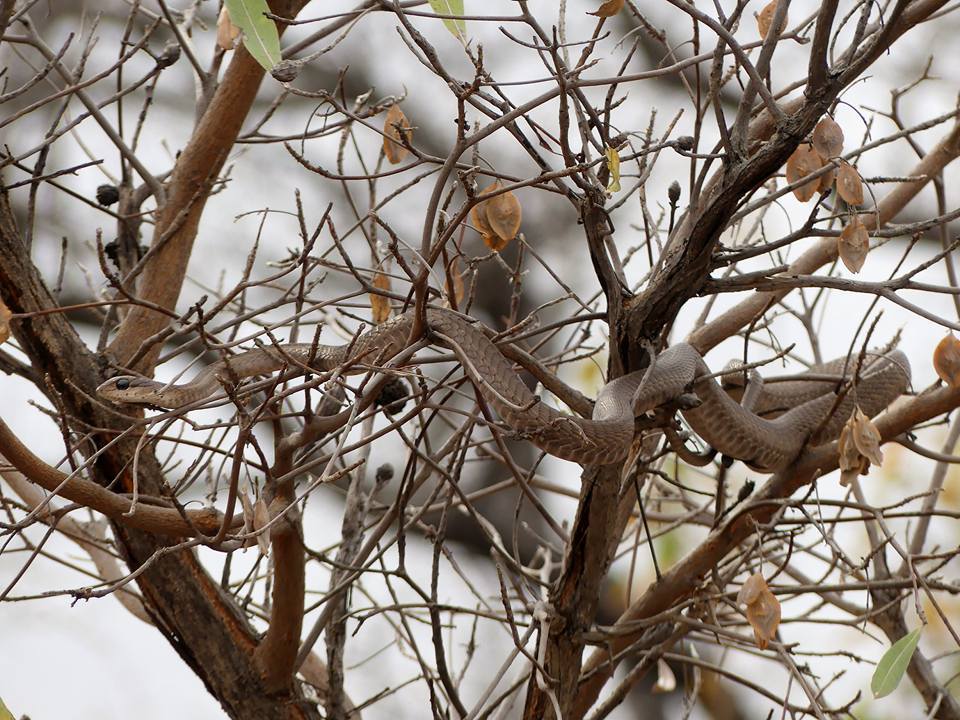
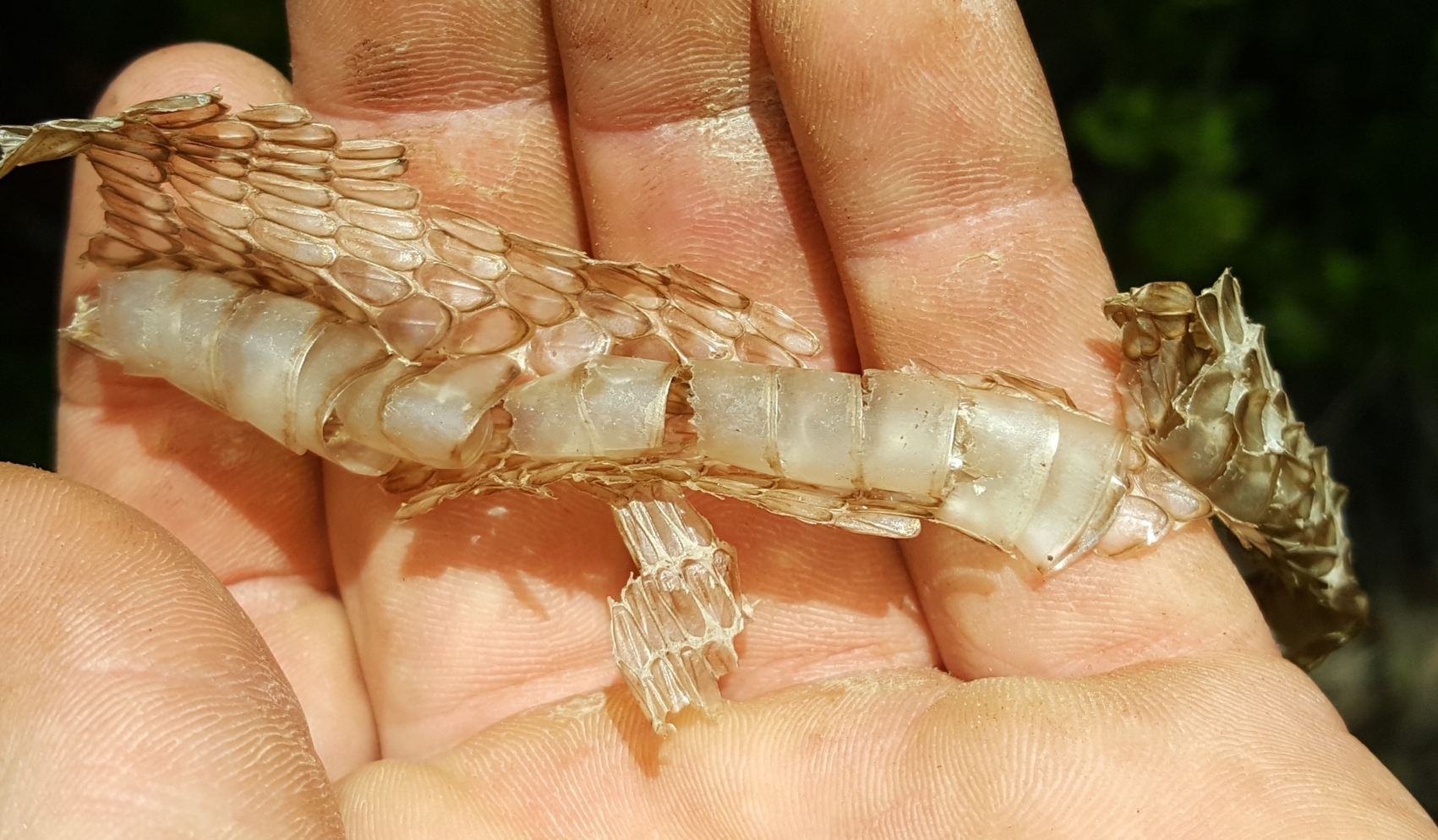
This information was extracted from Branch (1998): Dispholidus typus as a large snake with a distinct head, and very large eyes with round pupils, slightly lobed in the front, allowing binocular vision. An adult snake length is from 1.2 to 2 m. They are highly venomous and usually have three large immovable fangs near the back of the maxillary bone. The body scales are keeled. Midbody scales are in 17-21 rows, the anal shield is divided and subcaudals (104-142) are paired. Ventral scales 164-201. Coloration is very variable. Juveniles are twig-coloured, often with blue skin between the scales on the forebody; the head is dark brown above and white below. They have jewel-like, emerald-green eyes and a yellow throat. Adult females are light olive or brown, with white to brown bellies. Males are more brightly coloured, and occur in various colour phases. They may be leaf-green (and sometimes powder-blue), with a light green belly and occasionally black skin between the scales; or bright green or yellow with black-edged scales, giving a cross-barred appearance, with the head vermiculated in black; or black with dark grey, black-edged belly scales; or brick-red to rust-red, with an orange-pink belly. Hatchlings are dull grey to brown in colour, usually with a little blue and orange in the throat region, which is usually only visible when the neck is inflated. Hatchlings' eyes are a vivid emerald green colour darkening with age (Branch, 1998; Alexander and Marais, 2007).
No separate diagnostic description was provided. Refer to the morphological description.
Type locality: “Old Latakoo, South Africa” Holotype: NMSZ (formerly RSM) (FitzSimons 1937)
The information below was extracted from Tolley et al. (2023): Currently four subspecies of D. typus are recognised (D. t. typus, D. t. viridis, D. t. kivu- ensis, D. t. punctatus). However, a preliminary phylogenetic analysis shows there are most likely several distinct species (Eimermacher, 2012), but the geographic divide between these is uncertain. Broadley and Blaylock (2013) considered populations in (mainly) the Western and Eastern Cape provinces as being referable to D. t. typus, while populations elsewhere in the range (where males are usually mainly green dorsally) were treated as D. t. viridis.
Angola, Benin, Botswana, Cameroon, Central African Republic, Democratic Republic of the Congo, Eswatini, Ethiopia, Kenya, Malawi, Mozambique, Namibia, Nigeria, Rwanda, Senegal, Somalia, South Africa, Tanzania, Uganda, Togo, Zambia, Zimbabwe.
The Boomslang is widespread across most of sub-Saharan Africa. It occurs throughout the southern, eastern and north-central parts of South Africa and Eswatini (Branch, 1998) and is largely absent from much of the drier western parts of South Africa. It is not found on the grassy plains of the central Highveld or in Lesotho (Tolley et al., 2023).
The Boomslang is diurnal and almost exclusively arboreal. It is reclusive, and moves from branch to branch when pursued by anything too large to eat (Alexander and Marais, 2007).
Carnivore - Avivore (bird-eating)
The Boomslang is a diurnal predator, using its excellent vision to aid them in catching prey, which is primarily tiny vertebrates like chameleons and birds. Prey is actively pursued, sized and chewed to introduce the toxic venom, which quickly kills the victim (Branch, 1998).
This species is oviparous. Mating occurs in spring and females produce between 10-14 (occasionally up to 25) eggs laid in tree hollows or leaf litter in summer. Incubation takes 2-3 months (Branch, 1998).
The Boomslang is a very dangerous snake but shy. When it feels cornered, it will inflate its neck to expose the brightly coloured skin and may strike (Branch, 1998).
Grassland, Savanna, Fynbos, Forest
This map contains point-based occurrences at different locations
Occurrence in African countries and South African provinces. Residence status indicates if a taxon is indigenous, endemic, or alien in a specific region. This data is based on specimen records and literature.
FSA
SA
BOT
NAM
ESW
LES
WC
EC
NC
FS
GA
KZN
LP
MP
NW
Absent
Indigenous
Endemic
Naturalised
Invasive
Click on images to enlarge
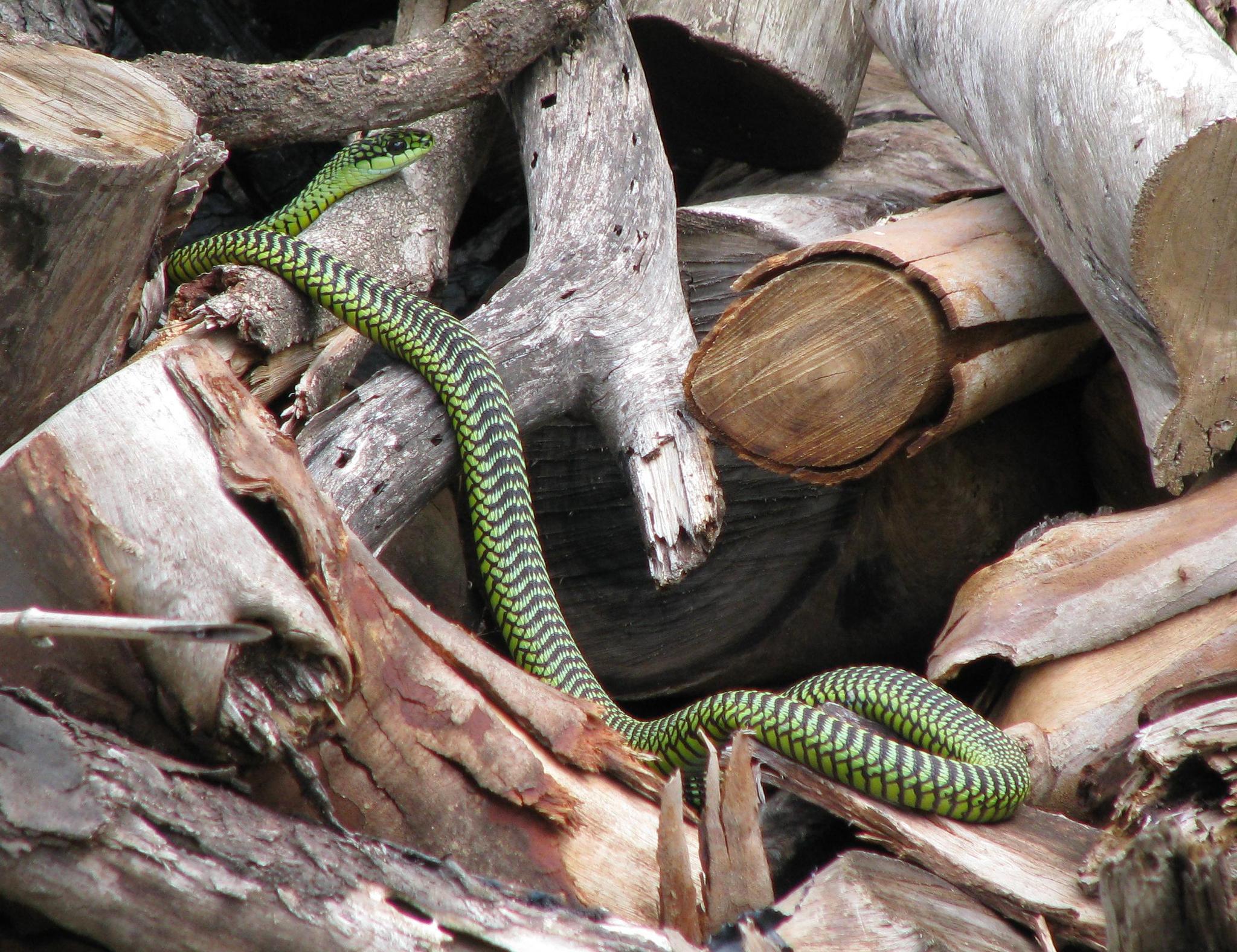
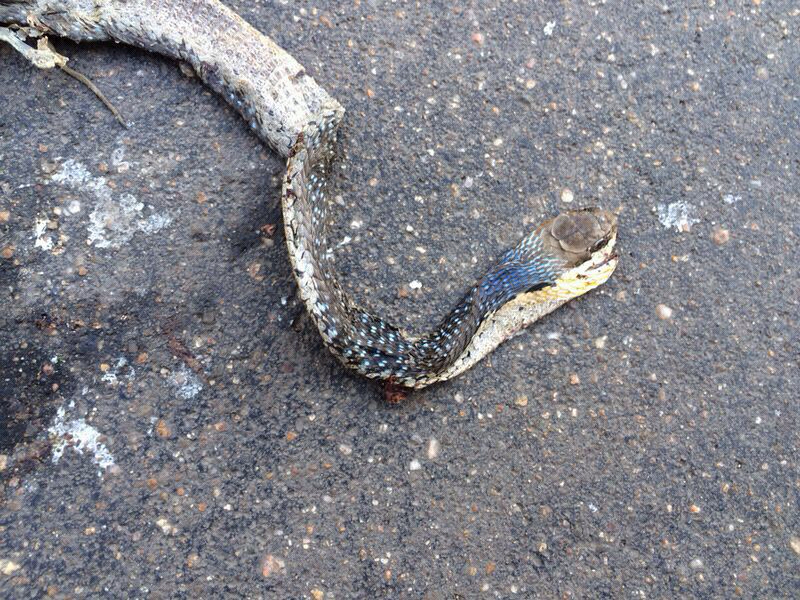
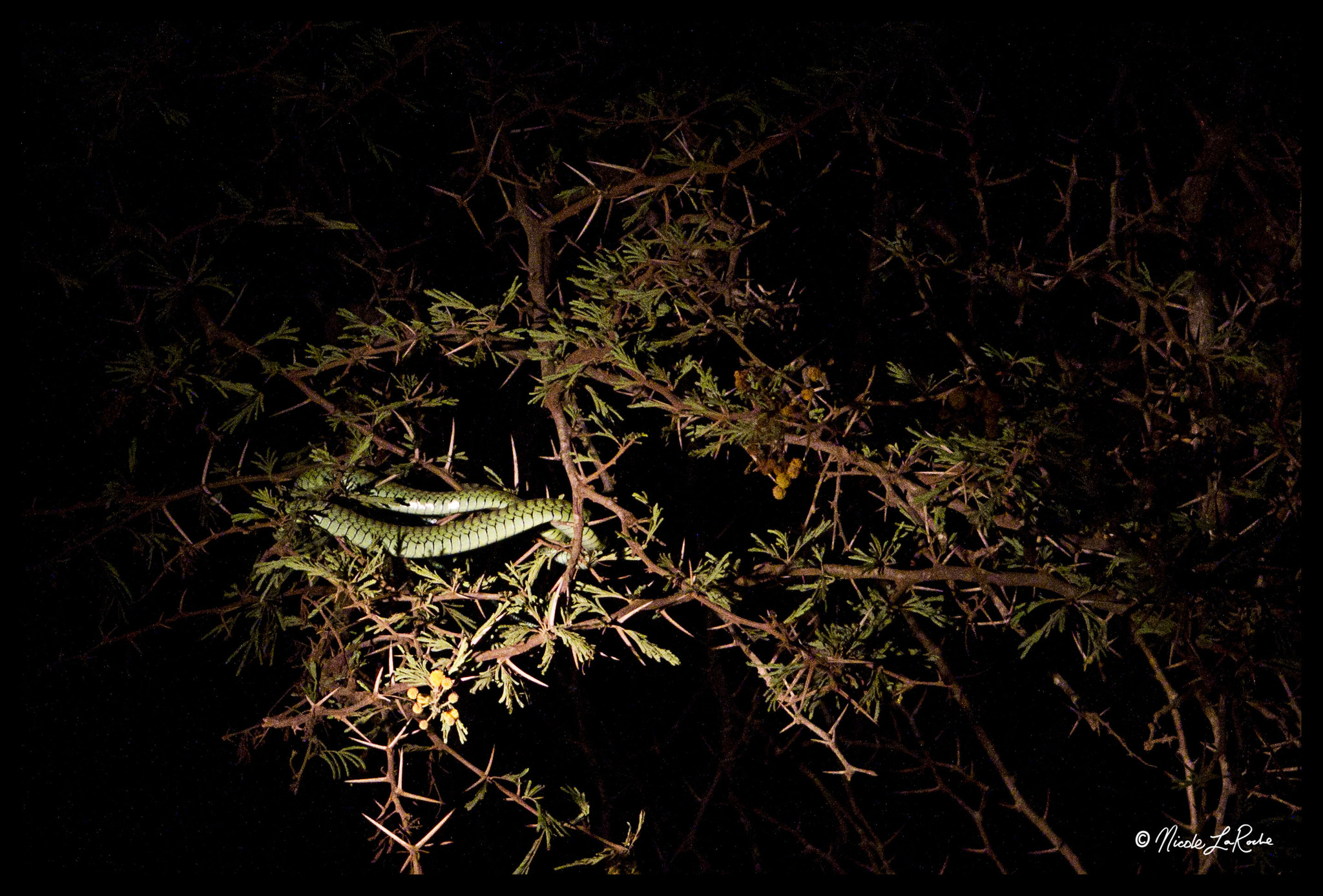
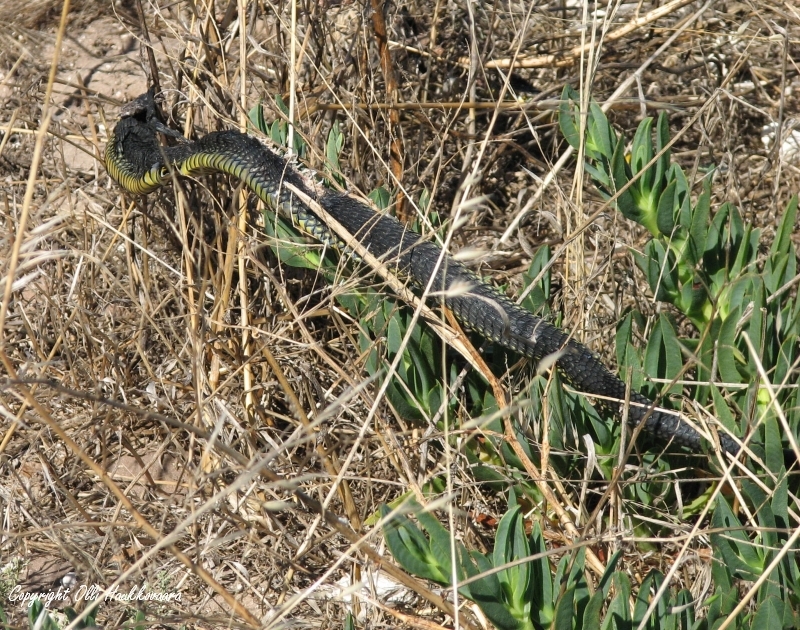
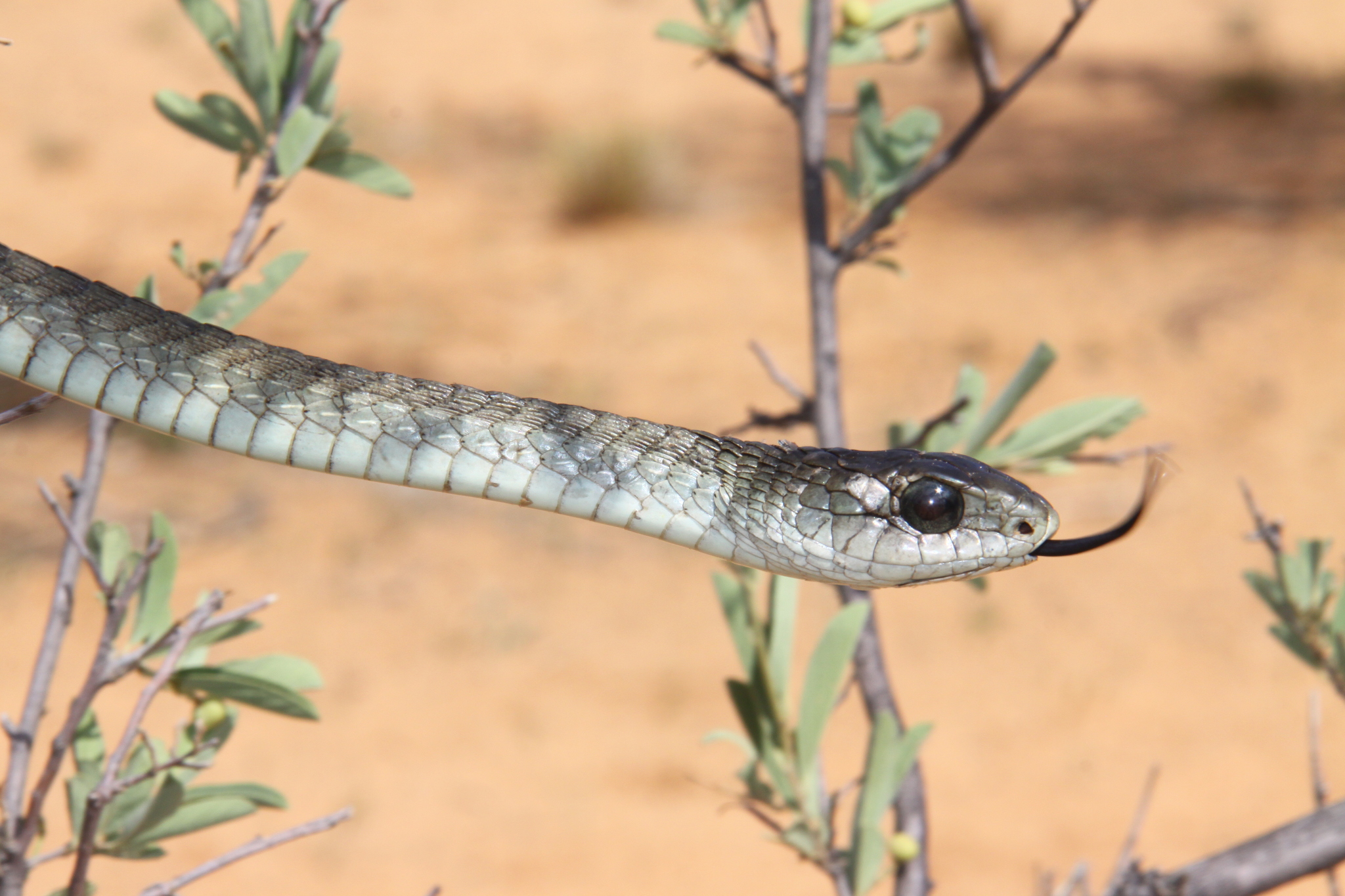
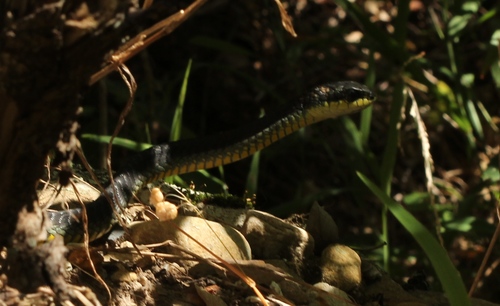
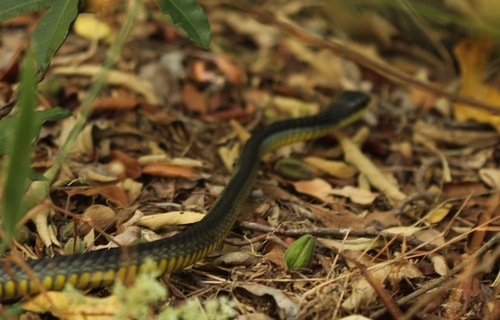
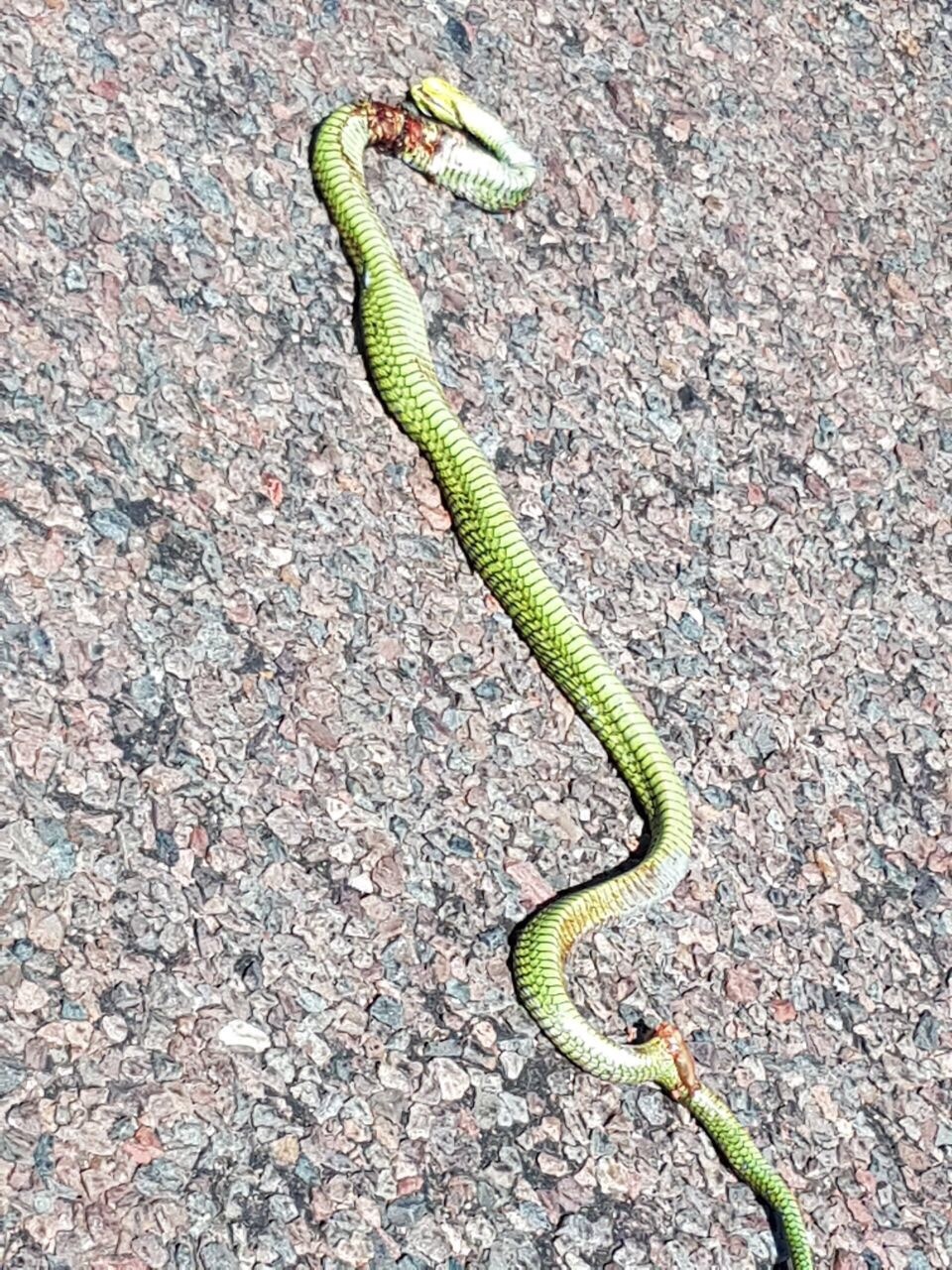
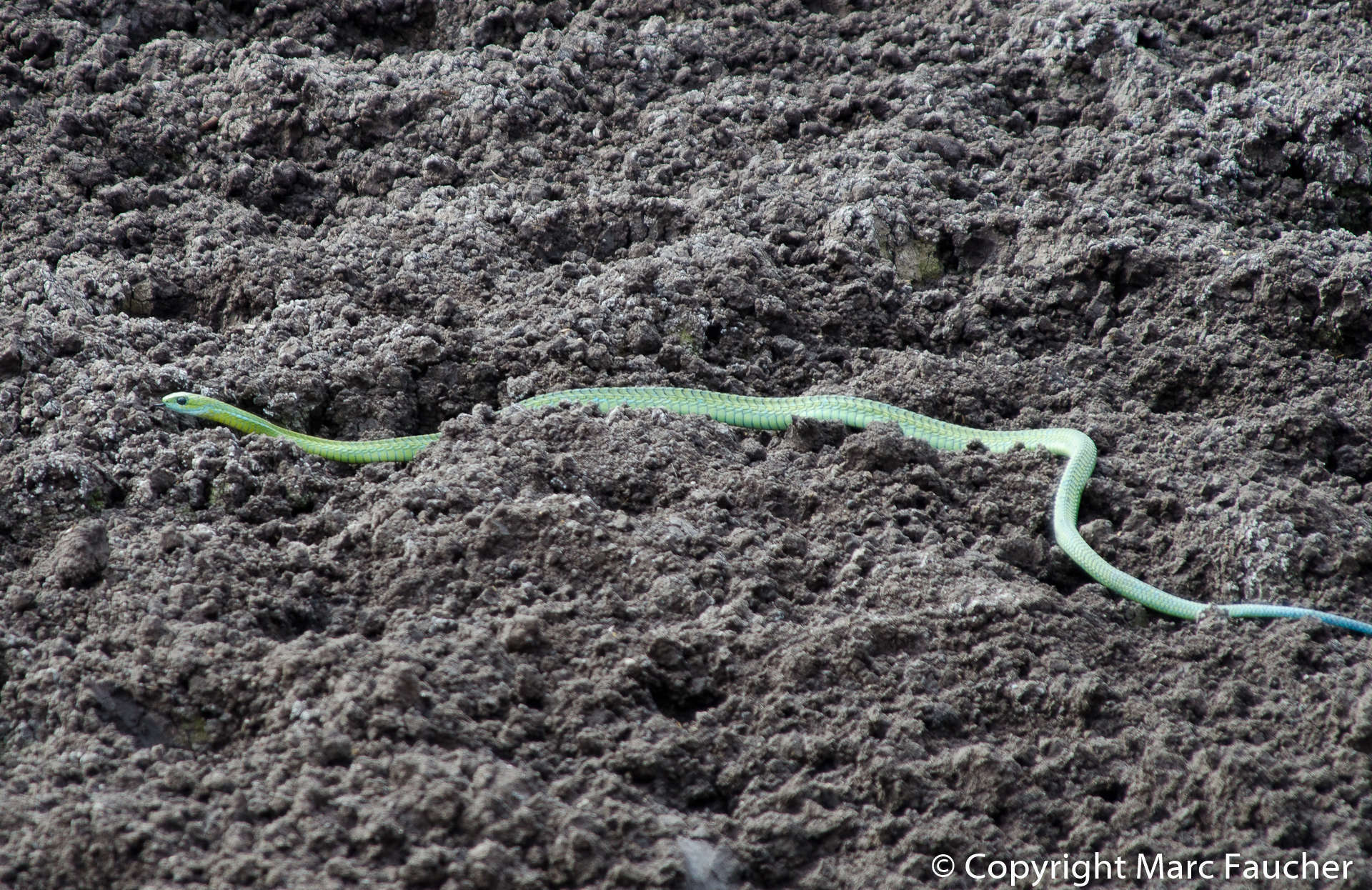
Dispholidus typus (Smith, 1828)
| Kingdom | animalia |
|---|---|
| Phylum | chordata |
| Class | reptilia |
| Order | squamata |
| Family | colubridae |
| Genus | dispholidus |
| Species | typus |
| Date | Place | Data Resource | Link |
|---|---|---|---|
| 2008-12-05 | Eastern Cape, South Africa | iNaturalist | View |
| 2014-05-03 | Mpumalanga, South Africa | iNaturalist | View |
| 2014-12-09 | Mpumalanga | iNaturalist | View |
| 2007-12-11 | Western Cape | iNaturalist | View |
| 2017-08-30 | Limpopo | iNaturalist | View |
| 2017-11-20 | Eastern Cape | iNaturalist | View |
| 2014-01-23 | North West | iNaturalist | View |
| 2017-12-12 | Western Cape, South Africa | iNaturalist | View |
| 2017-12-28 | Limpopo, South Africa | iNaturalist | View |
| 2012-04-19 | Limpopo | iNaturalist | View |
| Barcode | Collectors | Field Number | Date | Location | Link |
|---|---|---|---|---|---|
| 63550 | 1985/05/17 | South Africa, KwaZulu-Natal, Kwabonambi Forest Station | View | ||
| 64382 | 1986/03/18 | South Africa, Gauteng, Farm Boekenhoutskloofdrif, 286 | View | ||
| 65626 | 1962/01/01 | South Africa, KwaZulu-Natal, Hluhluwe Nat Res | View | ||
| 66852 | 1987/09/12 | South Africa, Limpopo, Giyani | View | ||
| 66522 | 1986/12/28 | South Africa, KwaZulu-Natal, Westville | View | ||
| 66852 | 1987/09/12 | South Africa, Limpopo, Giyani | View | ||
| 81477 | 1979/07/15 | South Africa, Gauteng, Farm Klipfontein port, 17 | View | ||
| 81497 | 1997/02/23 | South Africa, Mpumalanga, Swadini Reptile Park Hoedspruit, 5 km from | View | ||
| 80547 | 1996/10/23 | South Africa, Limpopo, Farm Derby, 203 | View | ||
| 84428 | 2000/04/27 | South Africa, , Timbatvati Picnic Site | View |
No data.