ANIMALIA / CHORDATA / REPTILIA / SQUAMATA / COLUBRIDAE / PHILOTHAMNUS / HOPLOGASTER
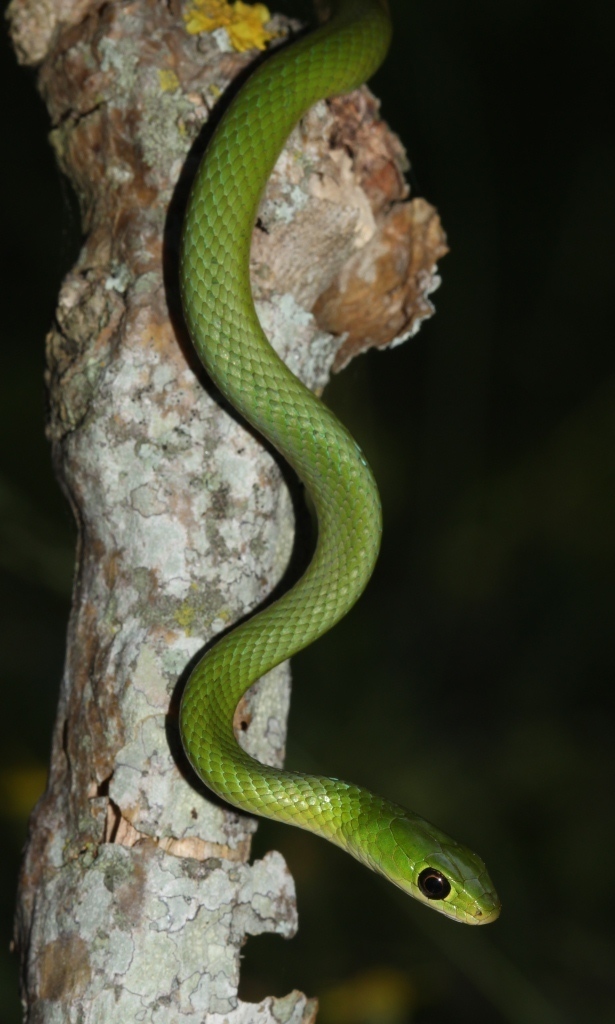
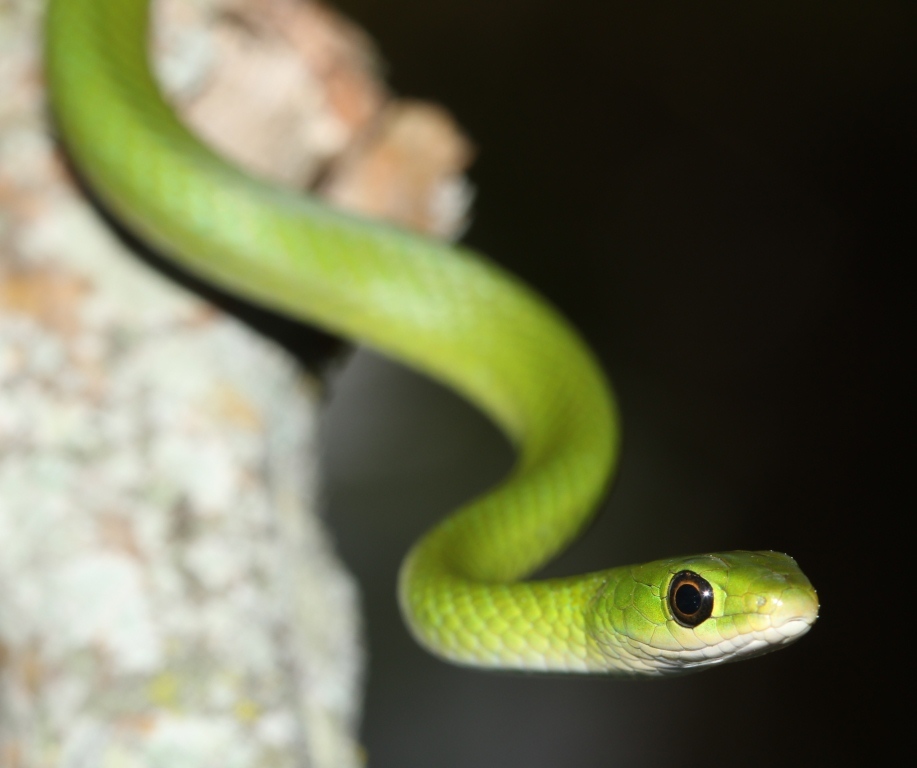
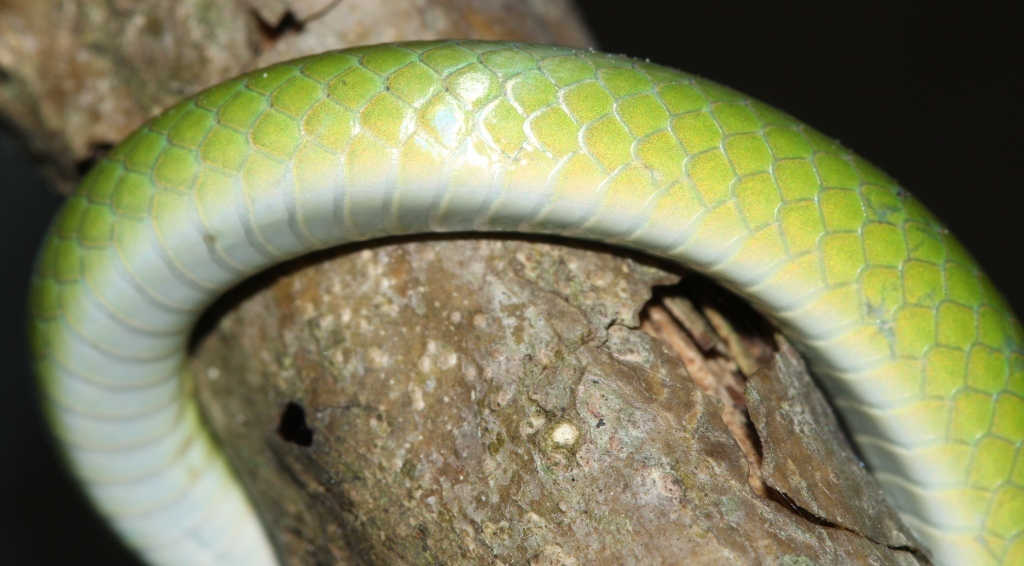
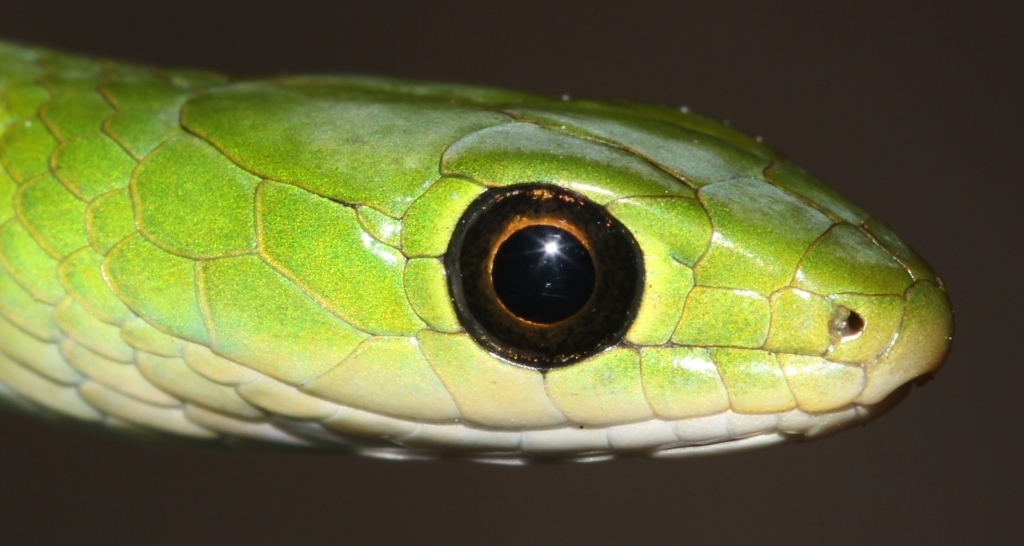
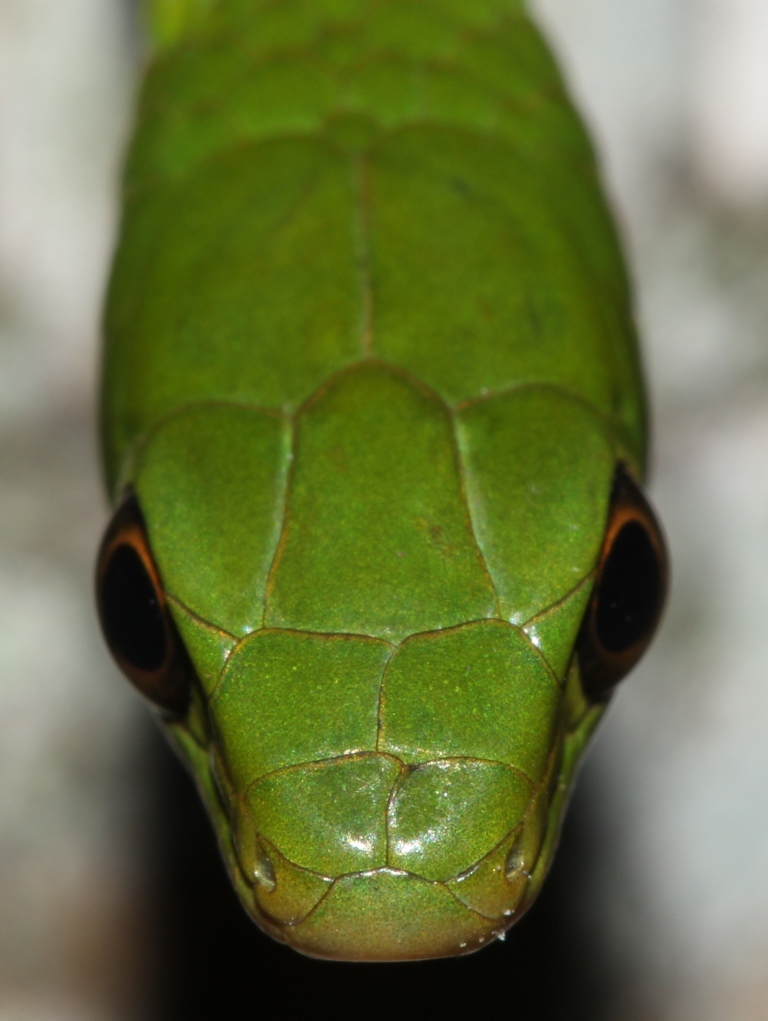
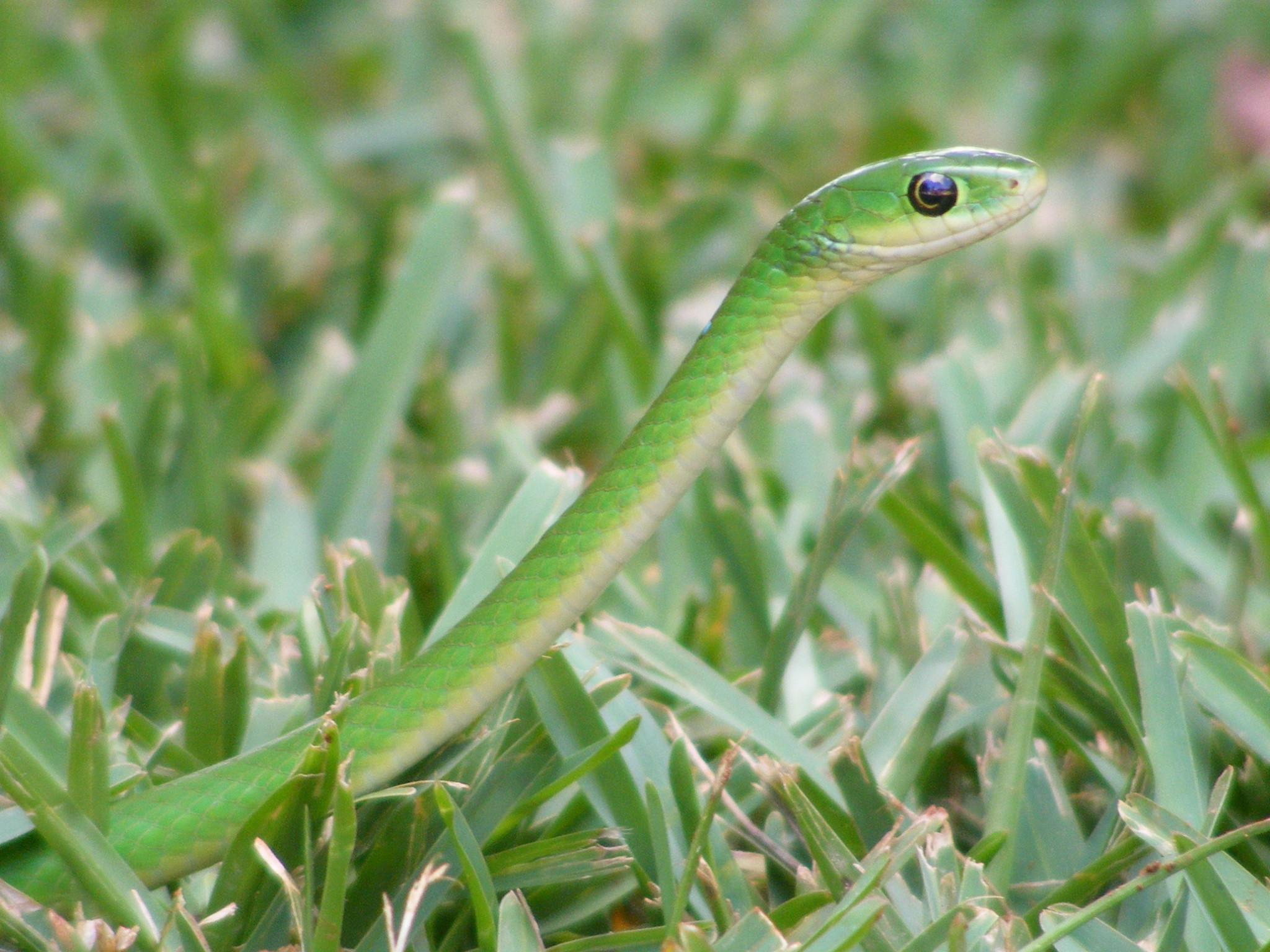
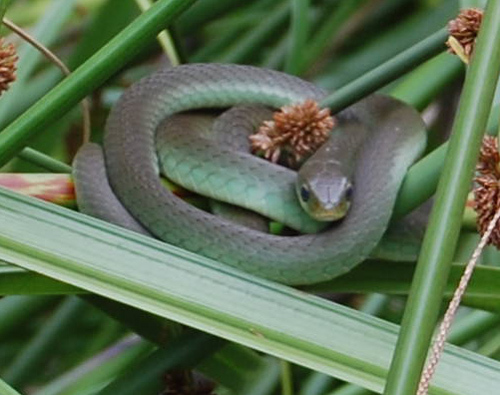
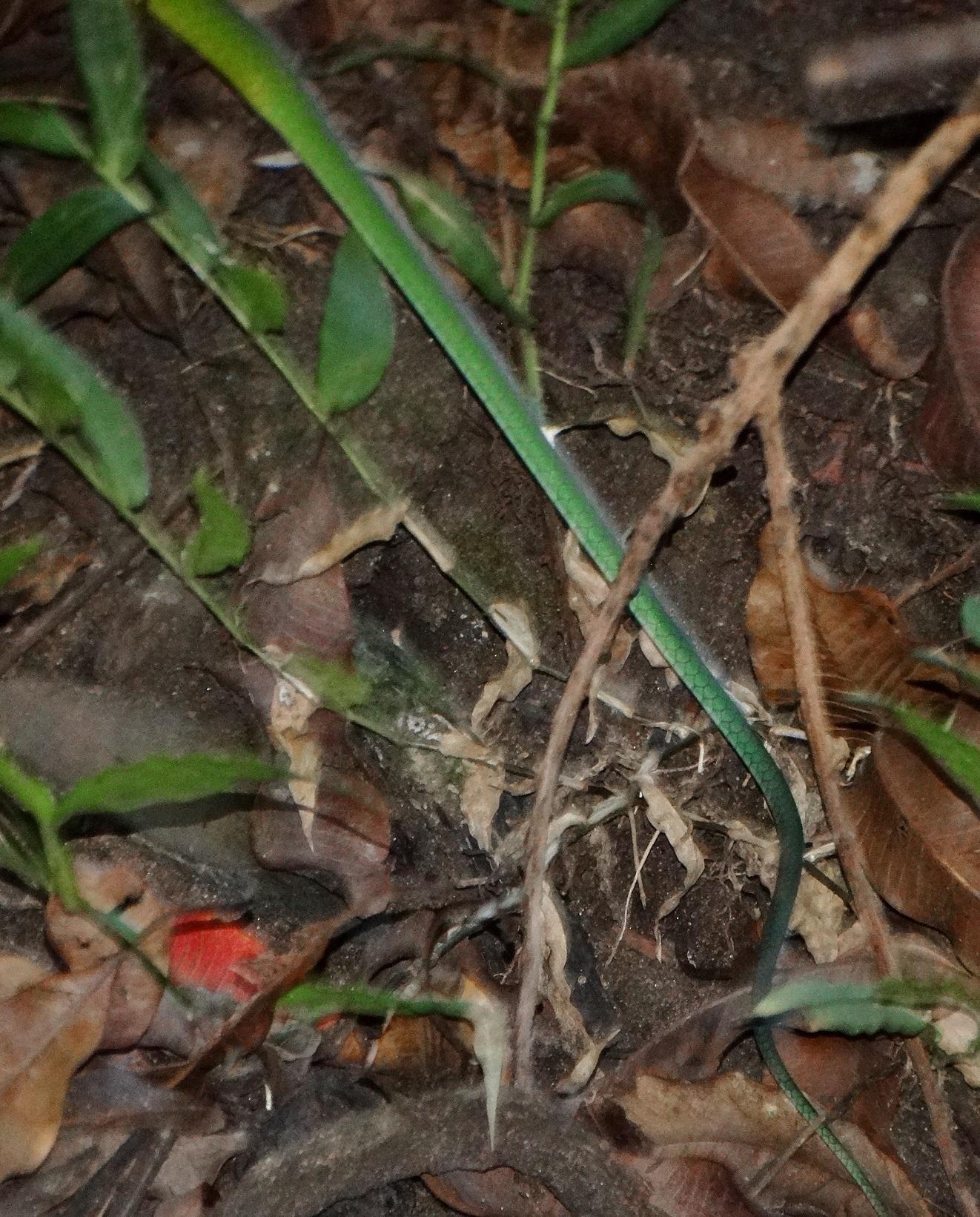
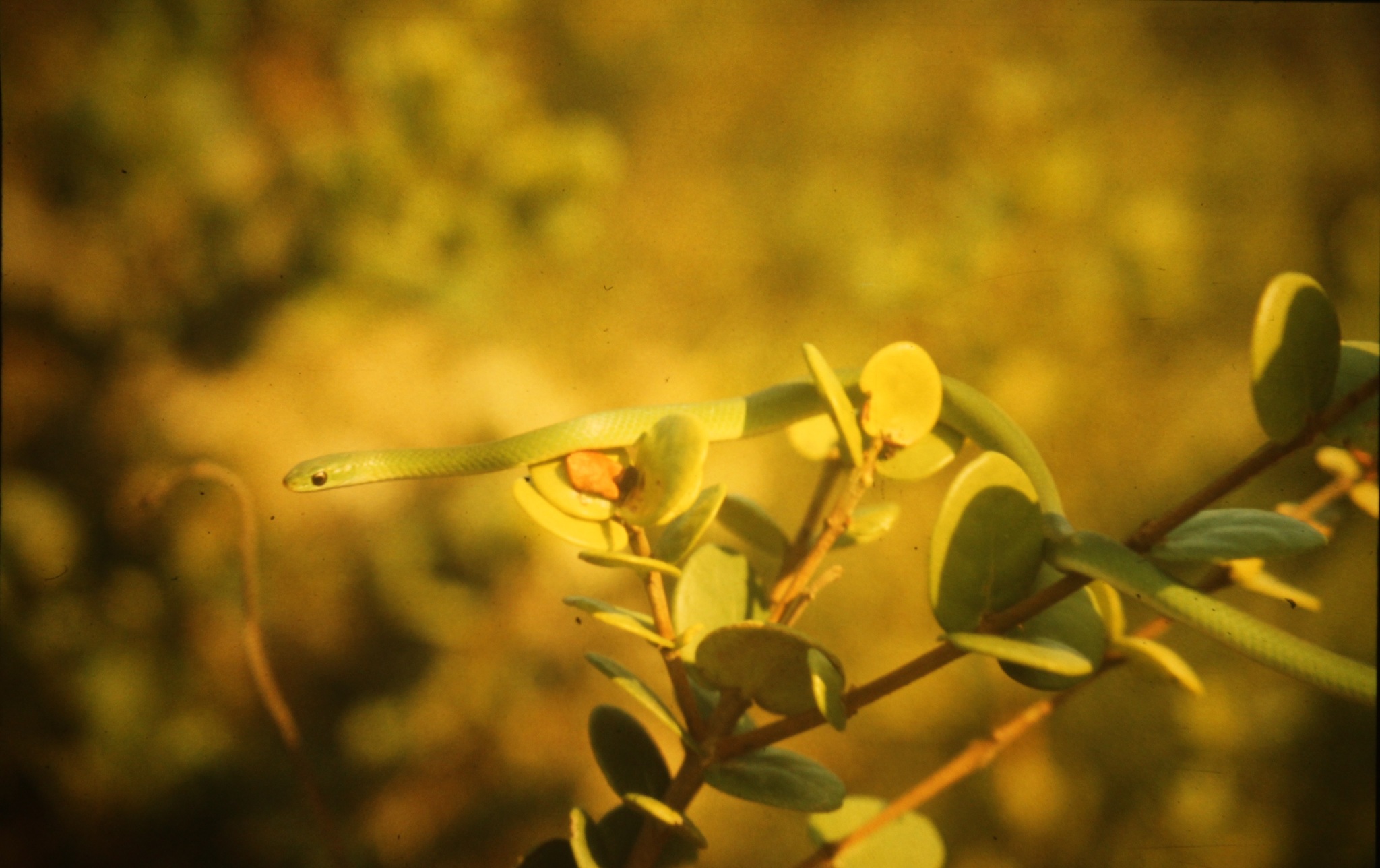
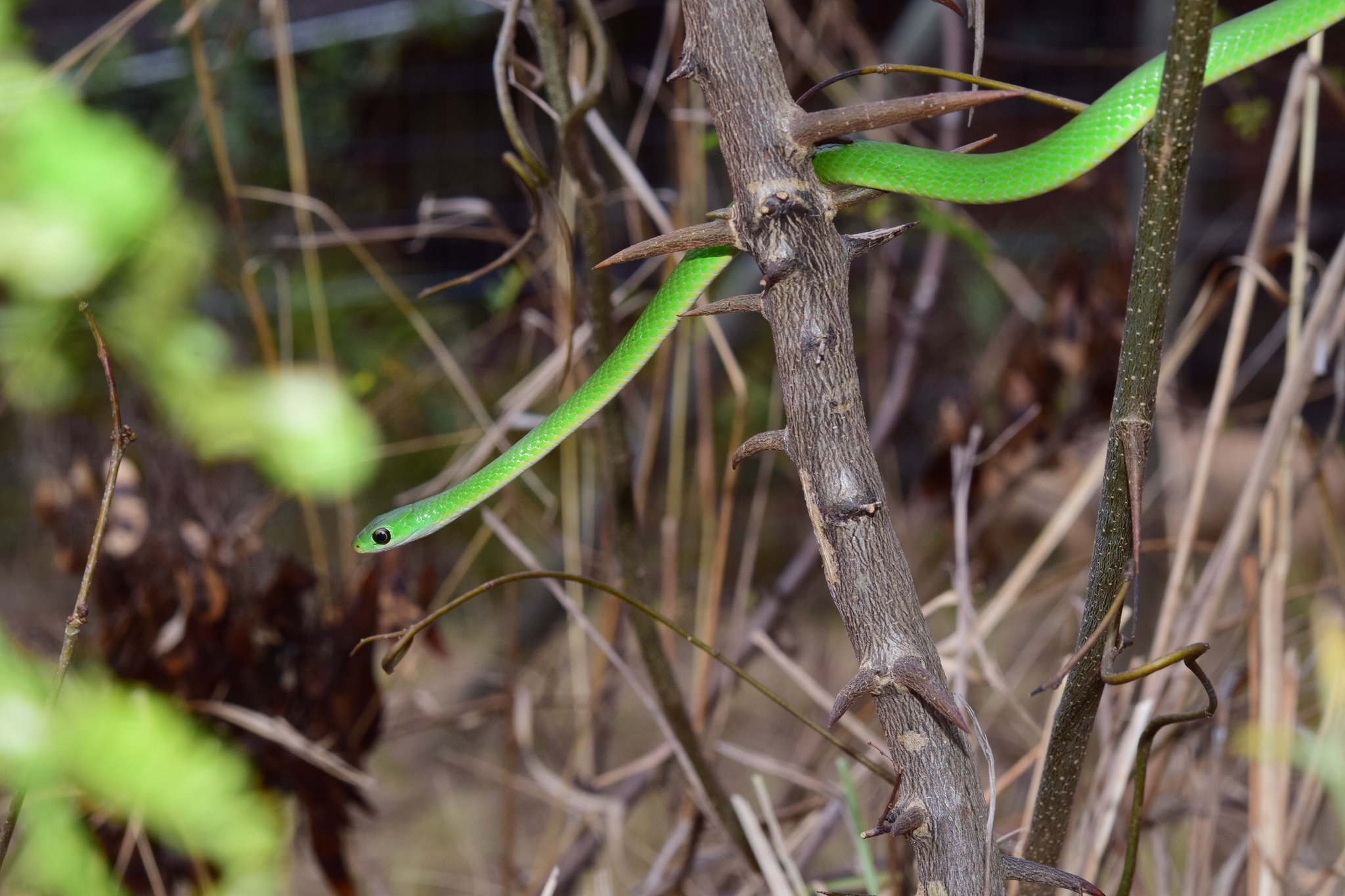
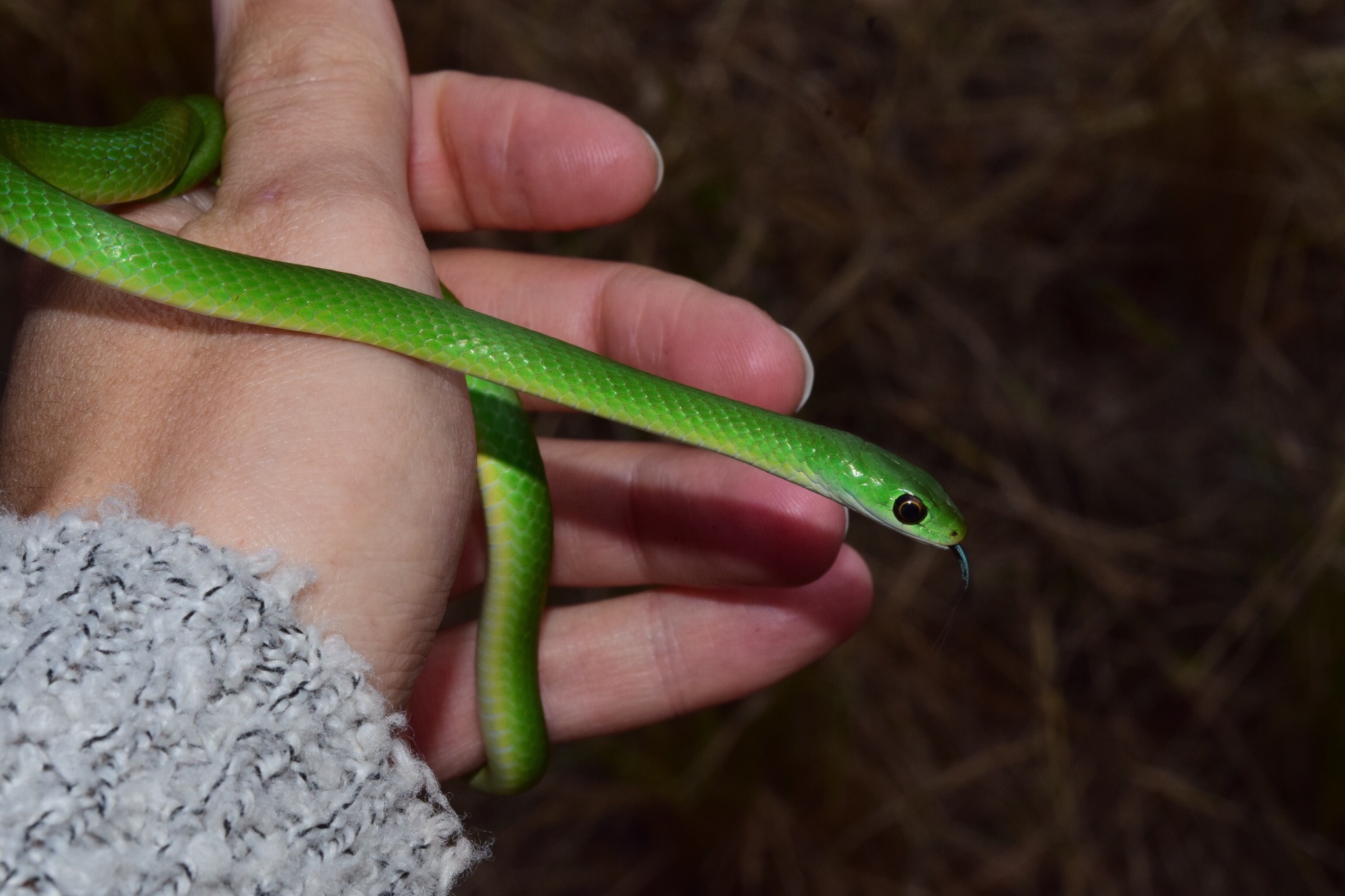
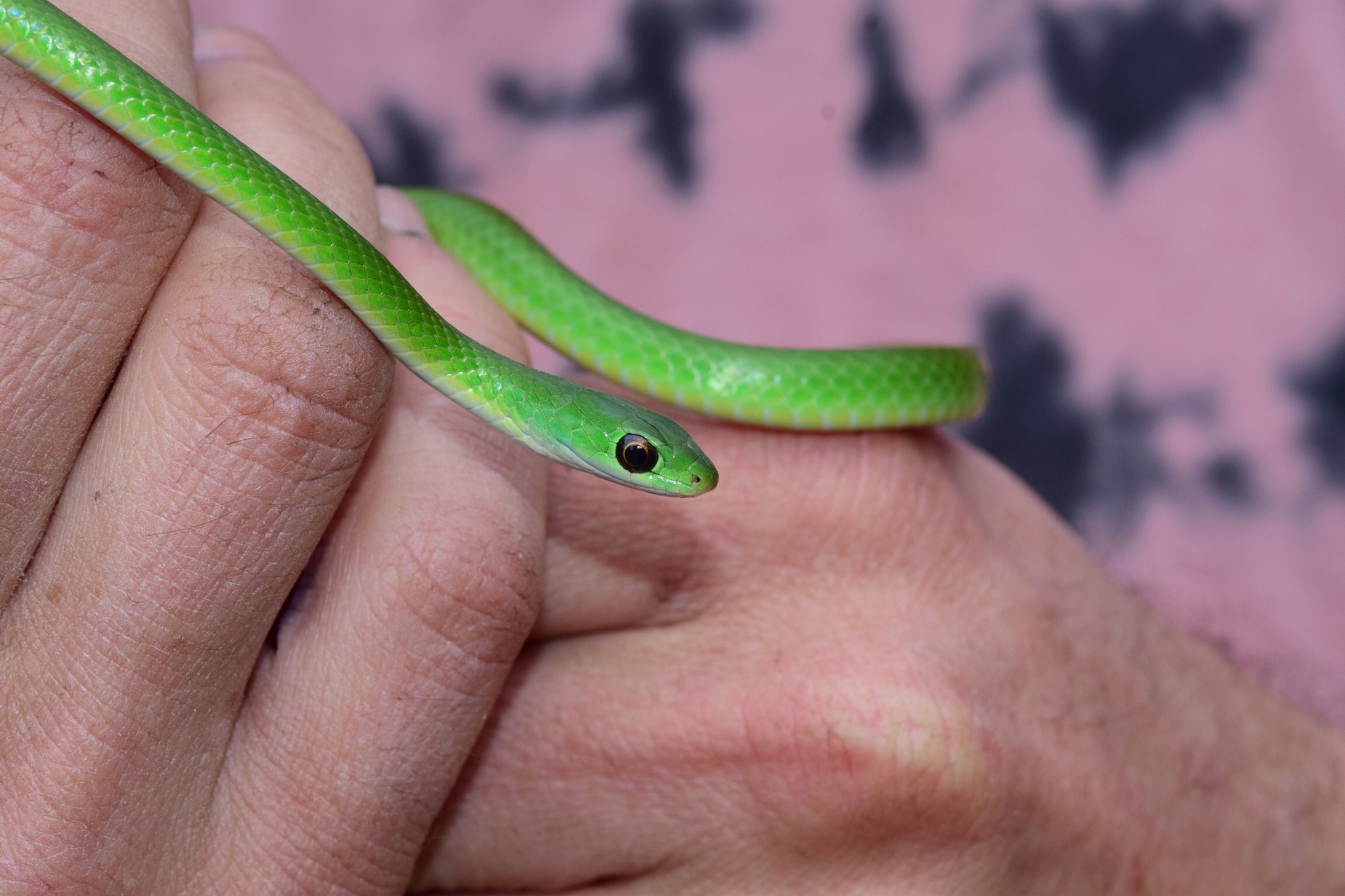
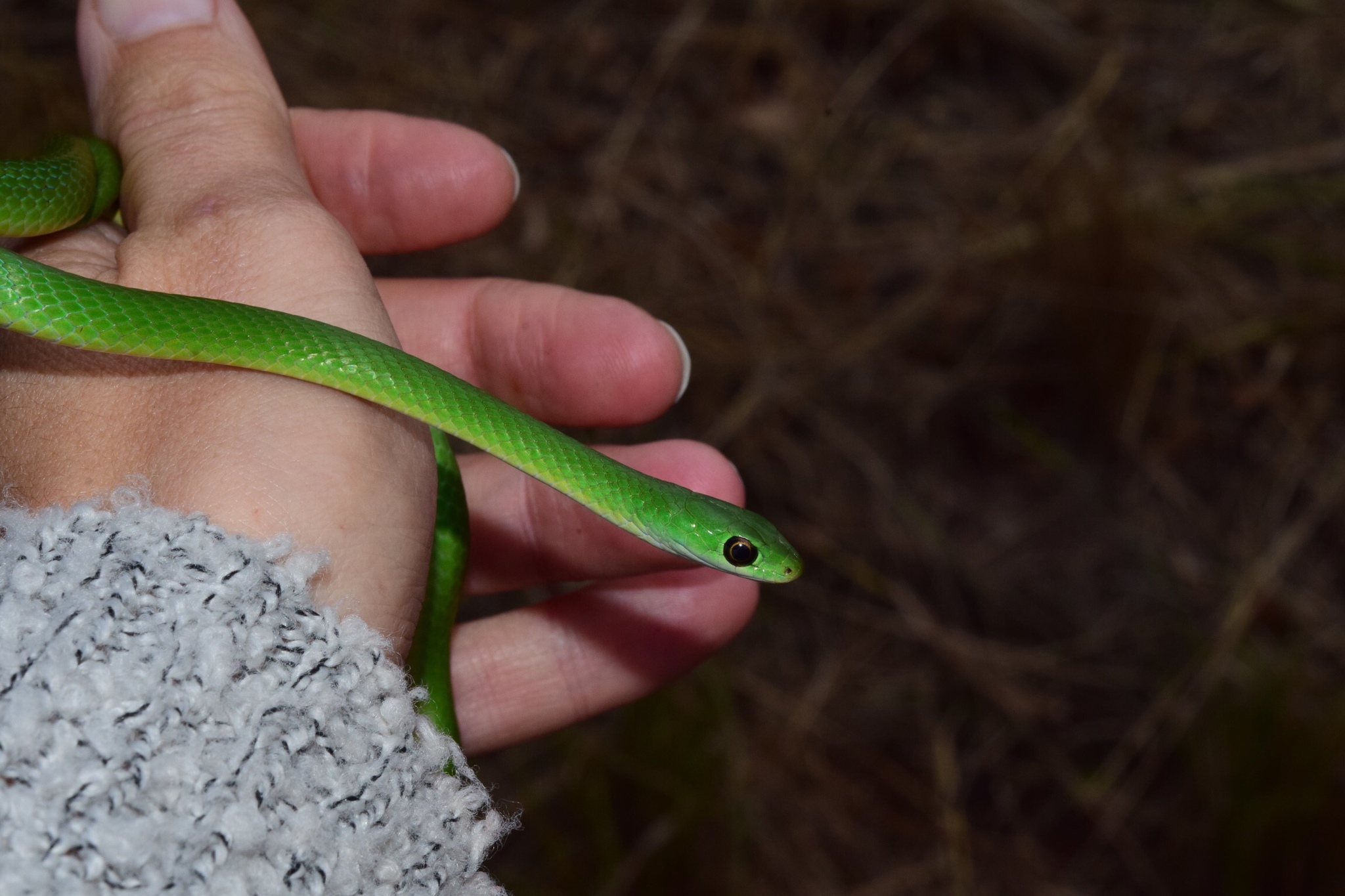
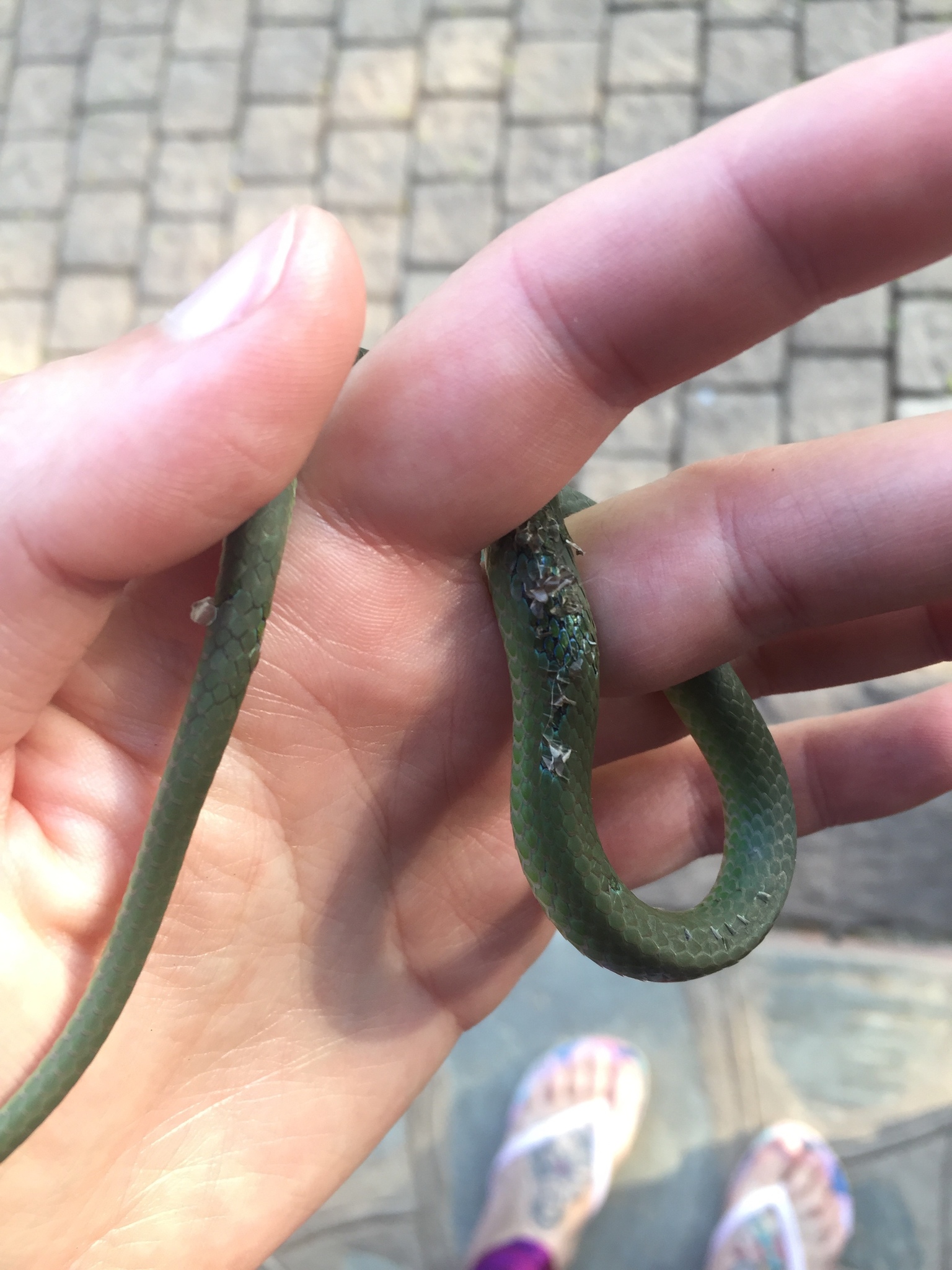
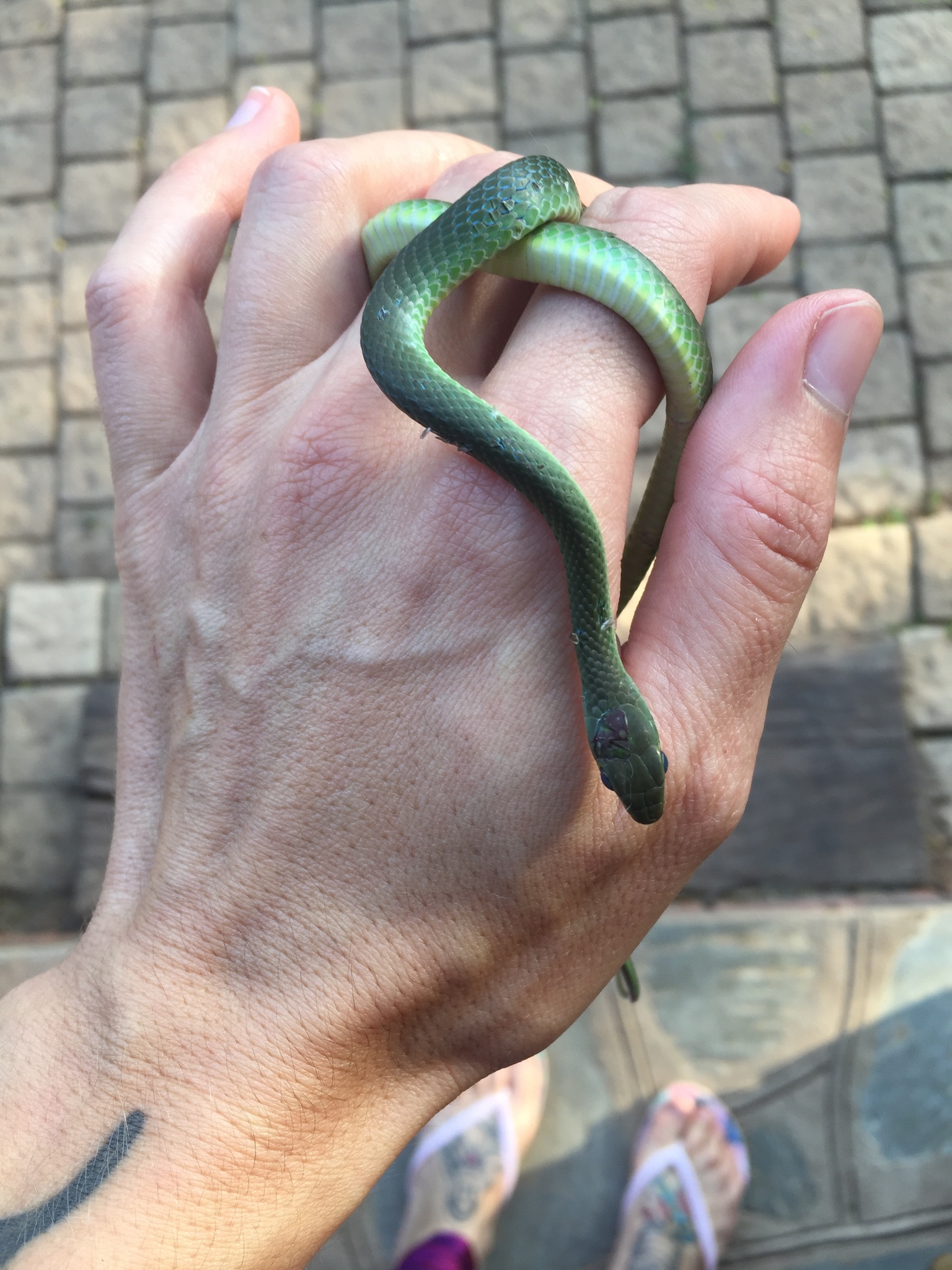
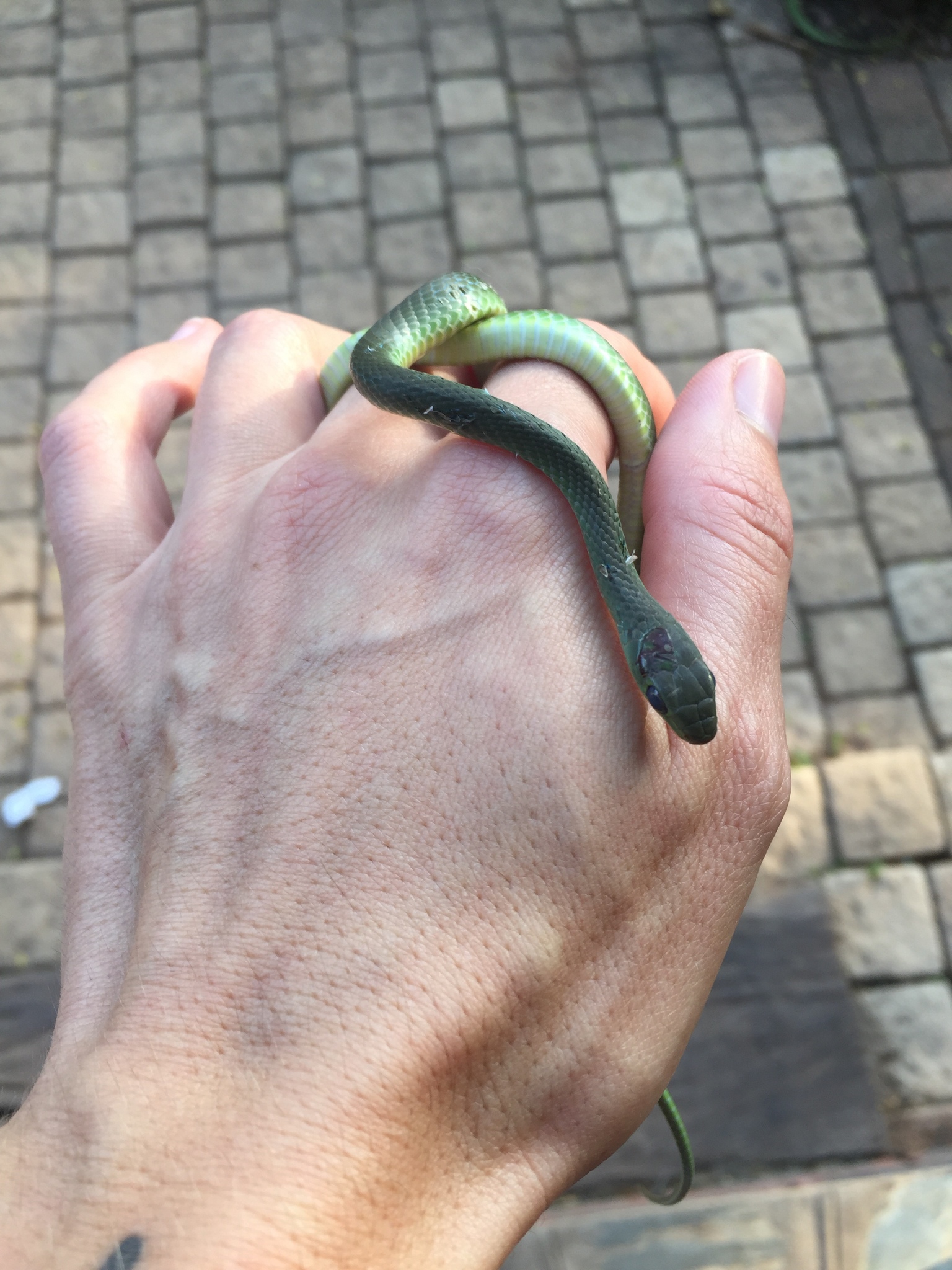
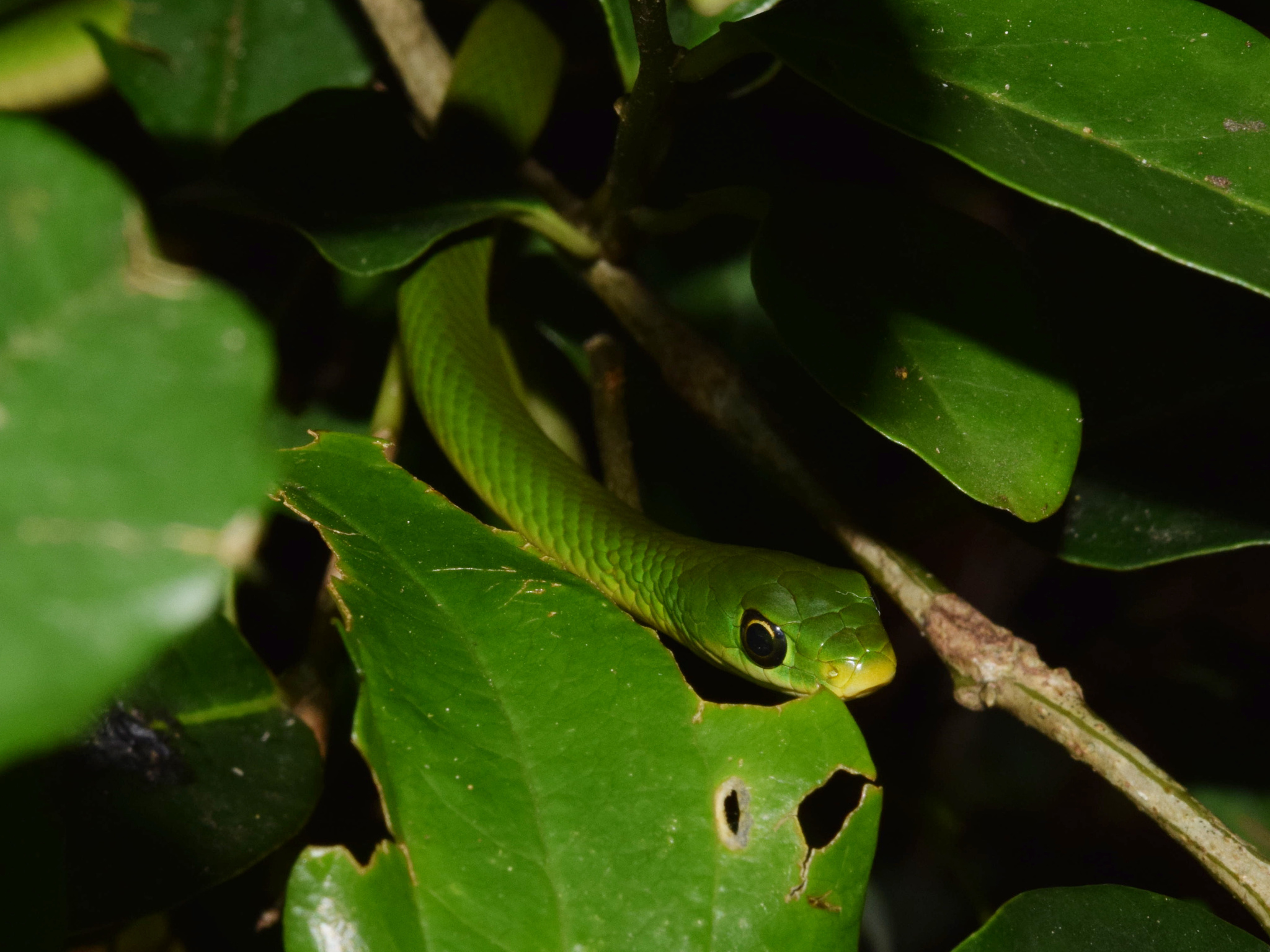
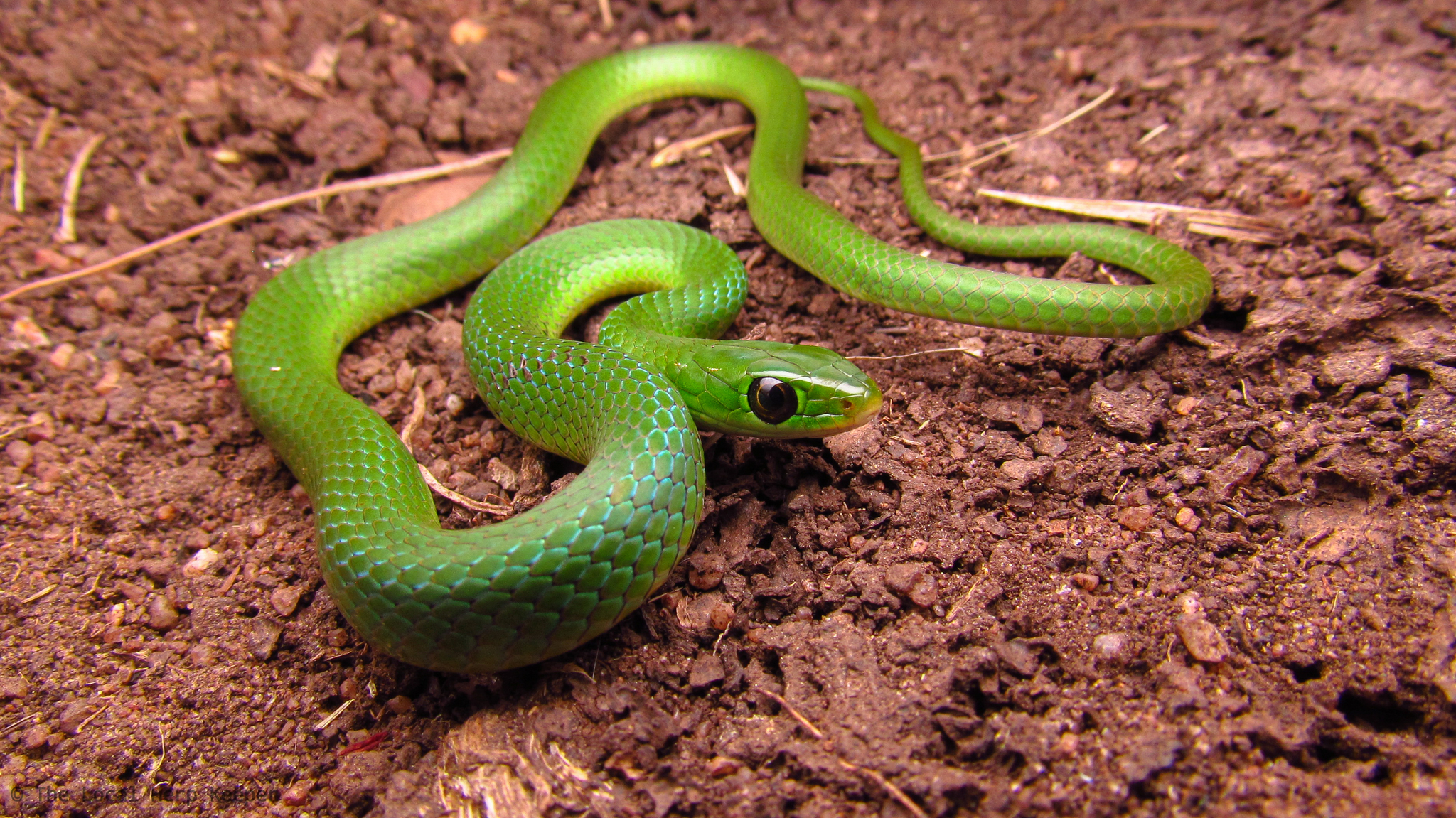
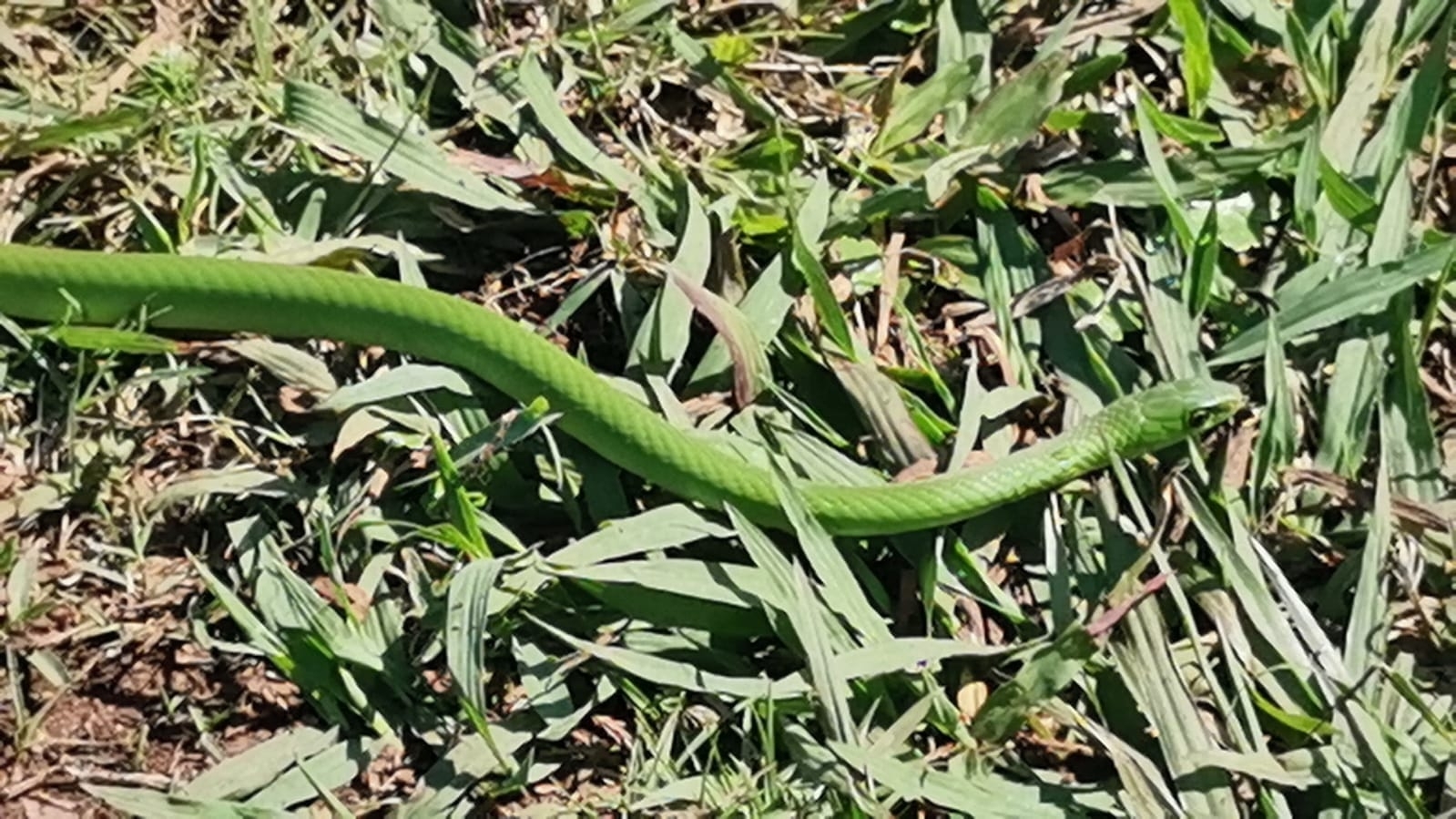
Gunther described this species as Ahaetulla hoplogaster: Ventral shields without any trace of lateral keels; upper labials eight, the fourth and fifth entering the orbit; one anteocular, two postoculars; six of the lower labials are in contact with the chin-shields; temporal shields 1+1. Ventral shields 150-156; anal bifid; subcaudals 94-105. The scales are smooth, without groove, arranged in fifteen series anteriorly, and in eleven posteriorly. The posterior maxillary teeth longest, in a continuous series with the others. Head rather small, body and tail moderately slender. Green, skin between the scales black, each scale with a white spot on the basal half of its outer margin.
No separate diagnostic description was provided. Refer to the morphological description.
Type locality: “Port Natal” = Durban, South Africa. Syntypes: BMNH 1946.1.6.1, BMNH 1946.1.6.6, and BMNH 1946.1.6.14, longest syntype 650–660 mm (T. Ayers).
No notable issues.
Zimbabwe, S Mozambique, Zimbabwe, Tanzania, Kenya, Malawi, E/S Democratic Republic of the Congo (Zaire), Rwanda, Burundi, Zambia, South Africa, Swaziland, Botswana, Namibia, Angola, Republic of South Sudan (RSS)
The Southeastern Green Snake occurs in the eastern part of the Atlas region, In Limpopo, Mpumalanga , Gauteng, Easten southwards down the Eastern Cape coast to the eastern parts of the Western Cape. It appears to exist as a sparse subpopulation in the provinces of the Eastern and Western Cape (Bates et.al., 2014).
Snakes have no limbs. They move by making looping motions with their bodies. Consequently, snakes move in a creeping or slithering manner.
Carnivore - Piscivore (fish-eating)
The Southeastern Green Snake forages near streams and vleis in reed beds. It primarily eats small frogs, fish, and occasionally lizards. The juveniles occasionally consume grasshoppers as food (Branch 1998).
Oviparous. The female lays 3-8 elongate eggs (25-34 ×8-12 mm) in early summer. The young measure 150-200 mm TL and are darker than the adults (Branch 1998).
The Southeastern Green Snake is an active snake it is an excellent swimmer and good climber at home in trees and shrubs (Bates et.al., 2014).
Savanna, Indian Ocean Coastal Belt, Grassland, Forests, Albany Thicket, Fynbos
This map contains point-based occurrences at different locations
Occurrence in African countries and South African provinces. Residence status indicates if a taxon is indigenous, endemic, or alien in a specific region. This data is based on specimen records and literature.
FSA
SA
BOT
NAM
ESW
LES
WC
EC
NC
FS
GA
KZN
LP
MP
NW
Absent
Indigenous
Endemic
Naturalised
Invasive
Names and Sources
| Common Name | Language |
|---|---|
| South Eastern Green Snake | En |
| Green Water Snake | En |
| Groenwaterslang | En |
Classification
KINGDOM Animalia
PHYLUM Chordata
CLASS Reptilia
ORDER Squamata
FAMILY Colubridae
GENUS Philothamnus
SPECIES hoplogaster
649 bp linear DNA
Accession: MH756552
No data.
20 results for Philothamnus hoplogaster (Günther, 1863)
This map contains point-based occurrences at different locations
1863
BOOK
On some species of tree-snakes (Ahaetulla).Günther, A.. 1863. On some species of tree-snakes (Ahaetulla). Vol. (3) 11 pp.283-28.
1998
BOOK
Field Guide to Snakes and other Reptiles of Southern Africa.Branch, W. 1998. Field Guide to Snakes and other Reptiles of Southern Africa.. Cape Town, South Africa. Struik Publishers.
1990
BOOK
Snakes of Southern AfricaBroadley,D, . 1990. Snakes of Southern Africa. Parklands, South Africa. Jonathan Ball and Ad. Donker Publishers.
2007
BOOK
A Guide to the Reptiles of SouthernAlexander, G, , Marias,J, . 2007. A Guide to the Reptiles of Southern. Cape Town, South Africa. Struik Publishers.
2004
BOOK
A Complete Guide to the Snakes of Southern Africa.Marais, J. 2004. A Complete Guide to the Snakes of Southern Africa.. Cape Town, South Africa. Struik Publishers.
2002
BOOK
A Field Guide to the Reptiles of East AfricaSpawls,R, , Ashe, J.. 2002. A Field Guide to the Reptiles of East Africa. San Diego, San Francisco, New York, Boston, London. Academic Press, Elsevier Science.
2014
BOOK
Atlas and Red List of the Reptiles of South Africa, Lesotho and SwazilandBates, M., Bauer, A., Marais, J., Burger, M., Alexander, G., de Villiers, M.. 2014. Atlas and Red List of the Reptiles of South Africa, Lesotho and Swaziland Vol. Suricata 1. Pretoria. South African National Biodiversity Institute pp..
Status and criteria
LC
Assessor(s)
Johan Marais
Reviewer(s)
Krystal Tolley