
ANIMALIA / CHORDATA / REPTILIA / SQUAMATA / COLUBRIDAE / TELESCOPUS / BEETZI
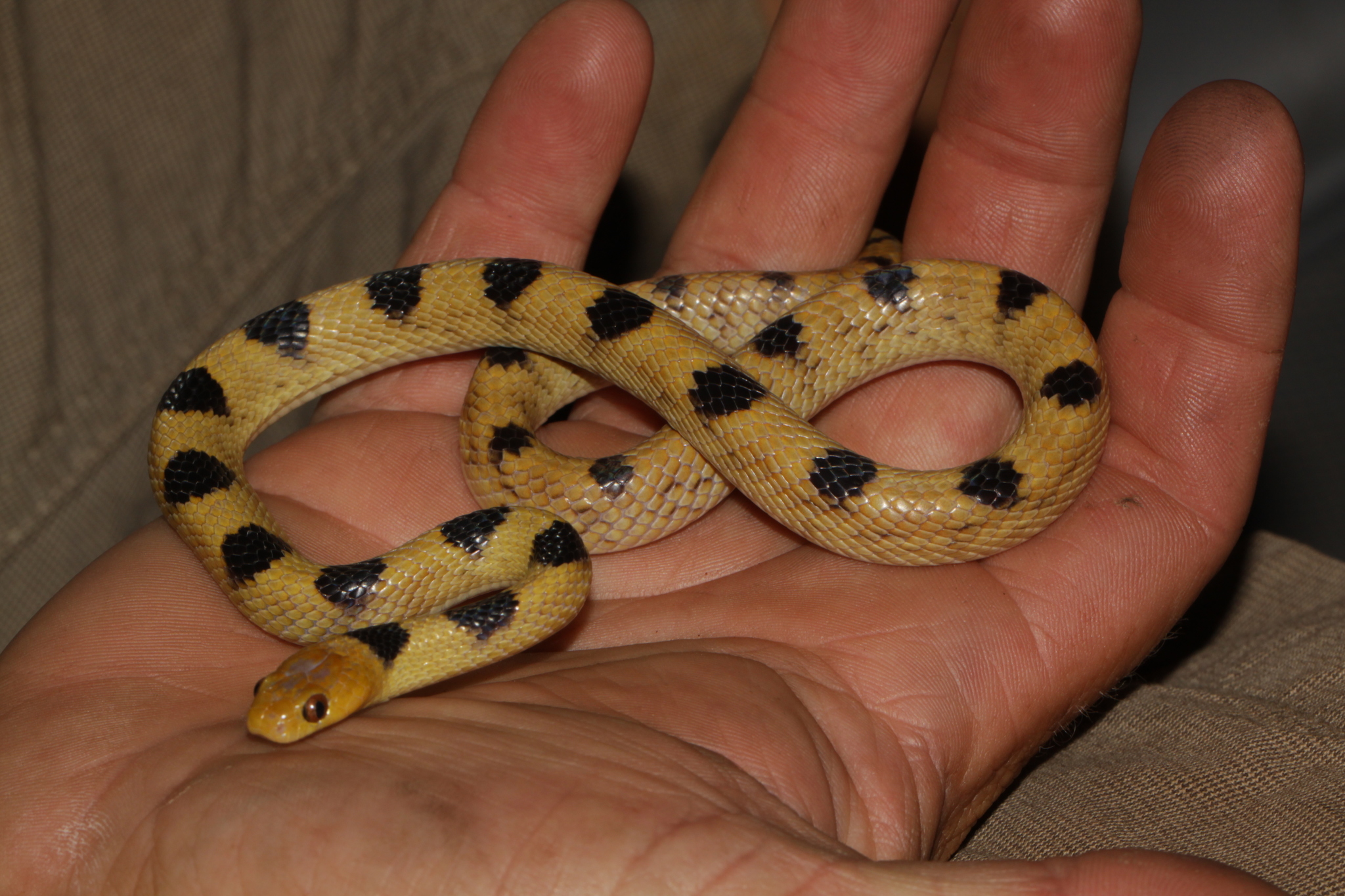
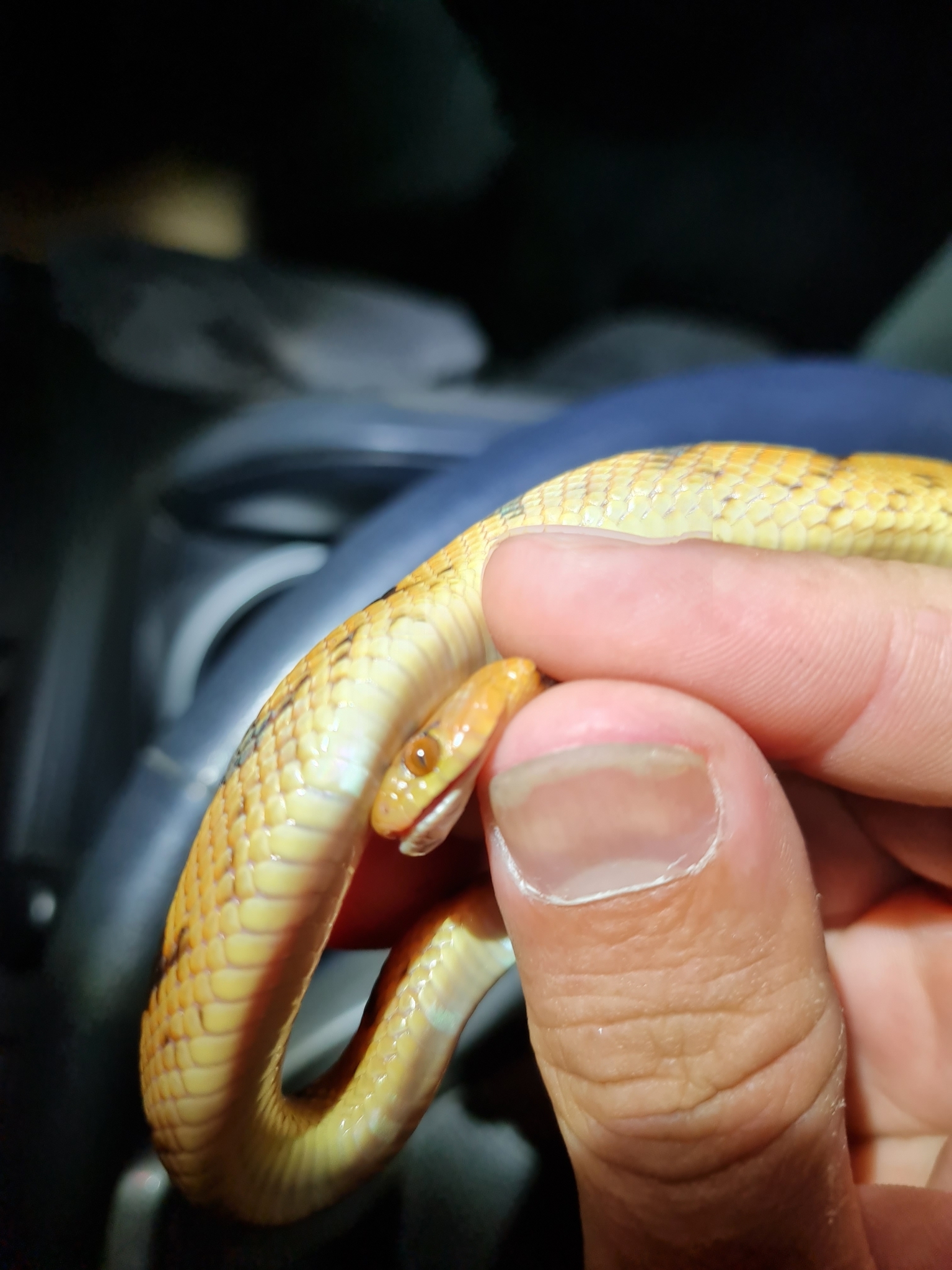
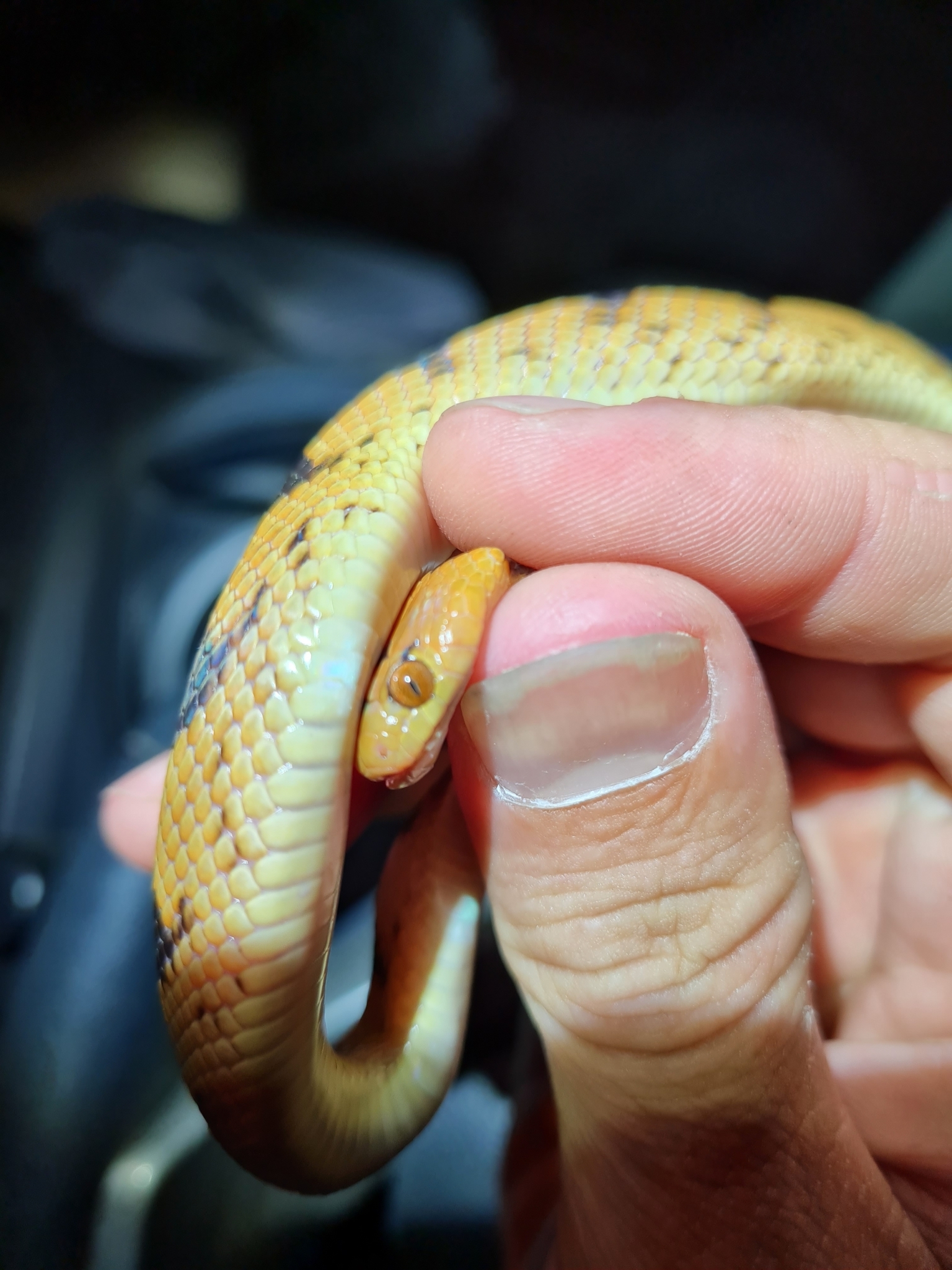
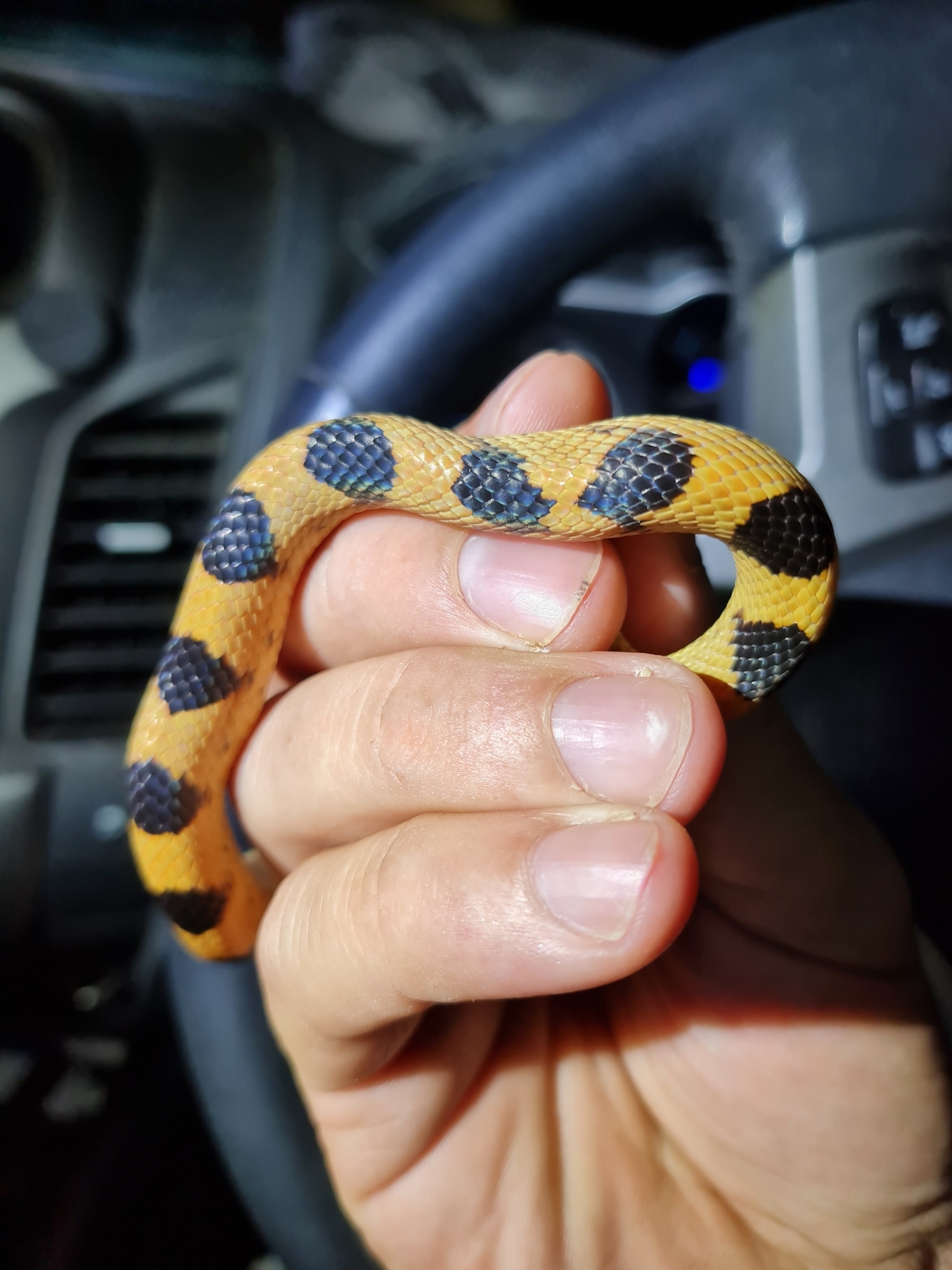
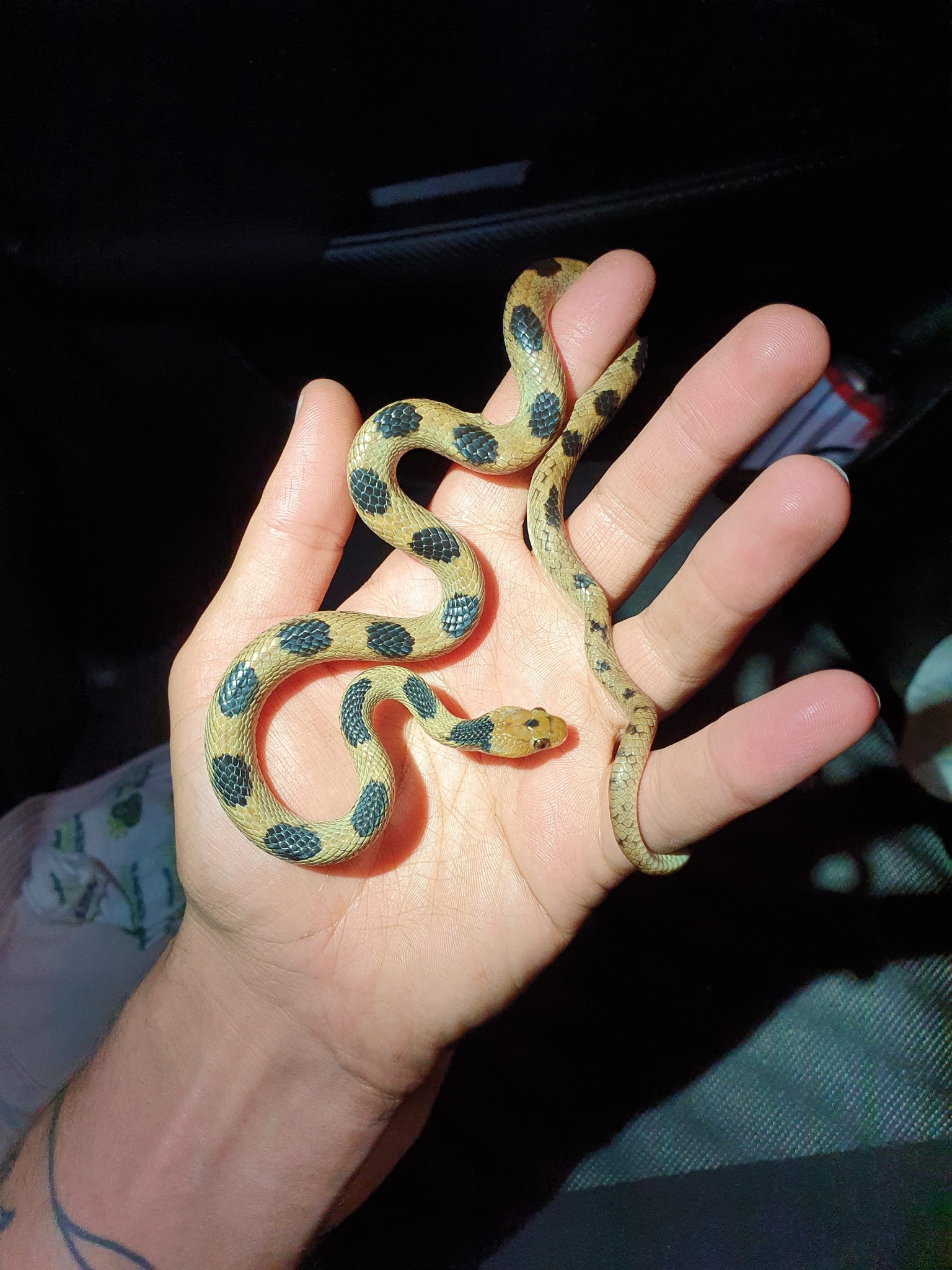
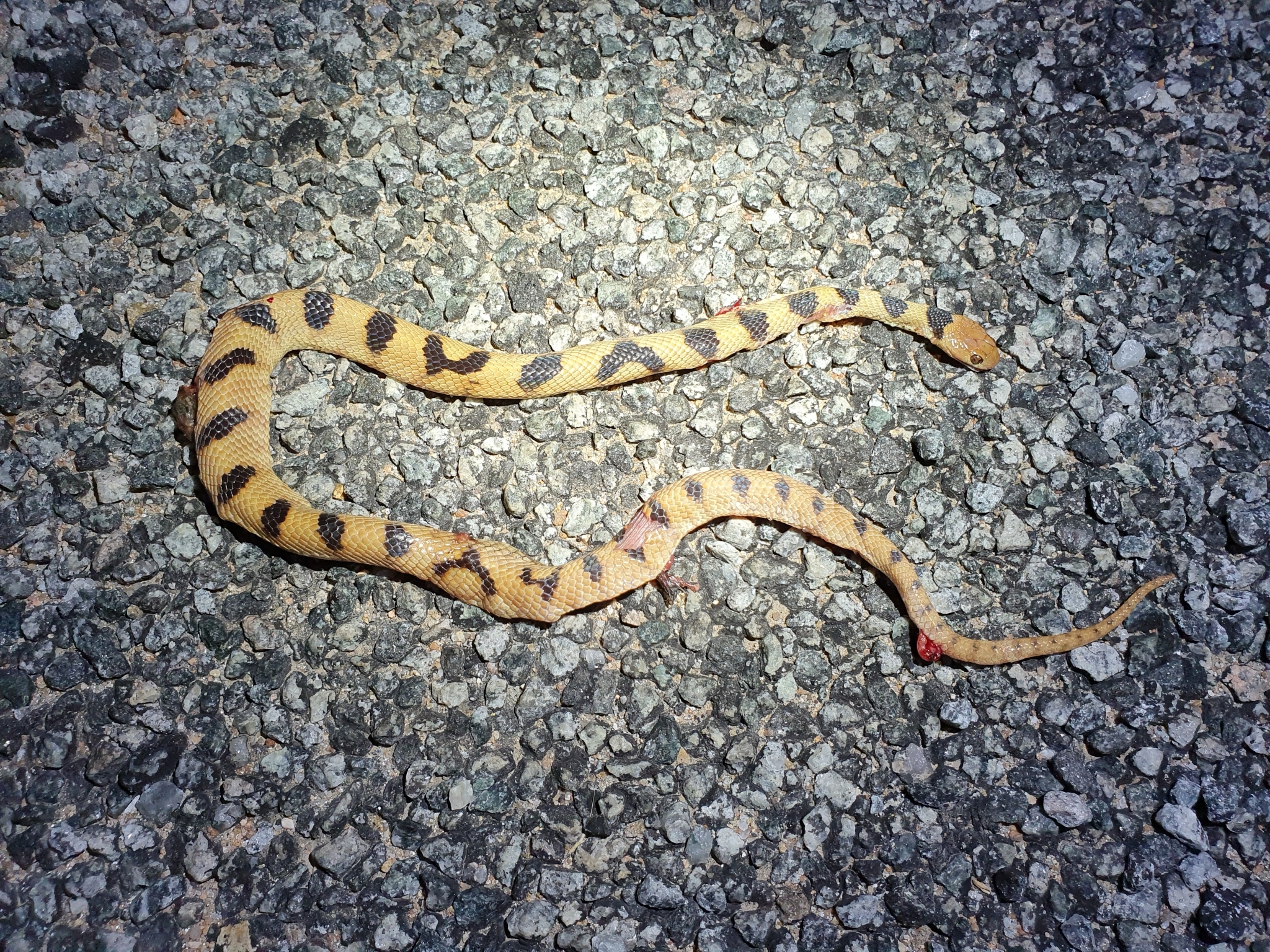
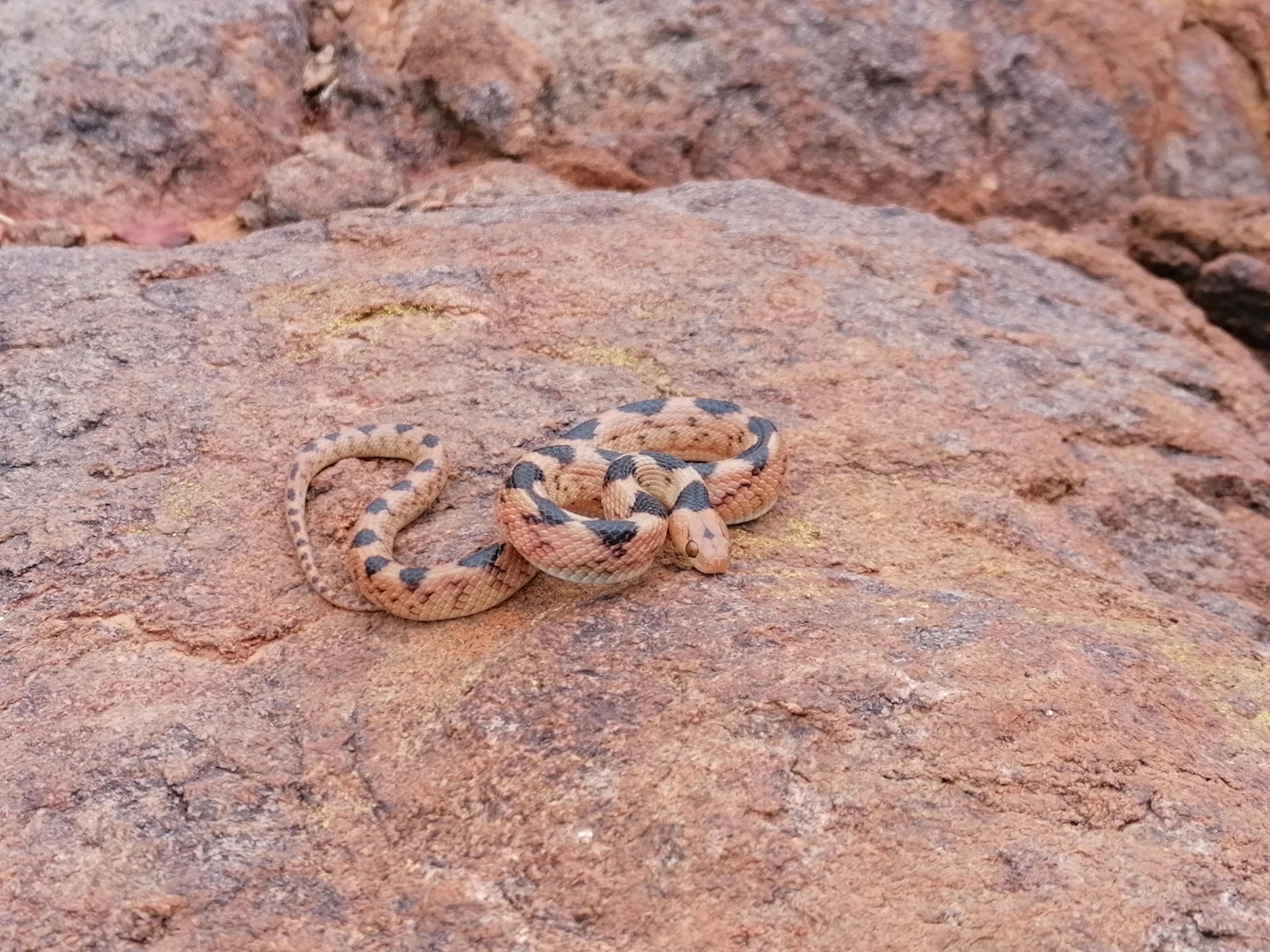
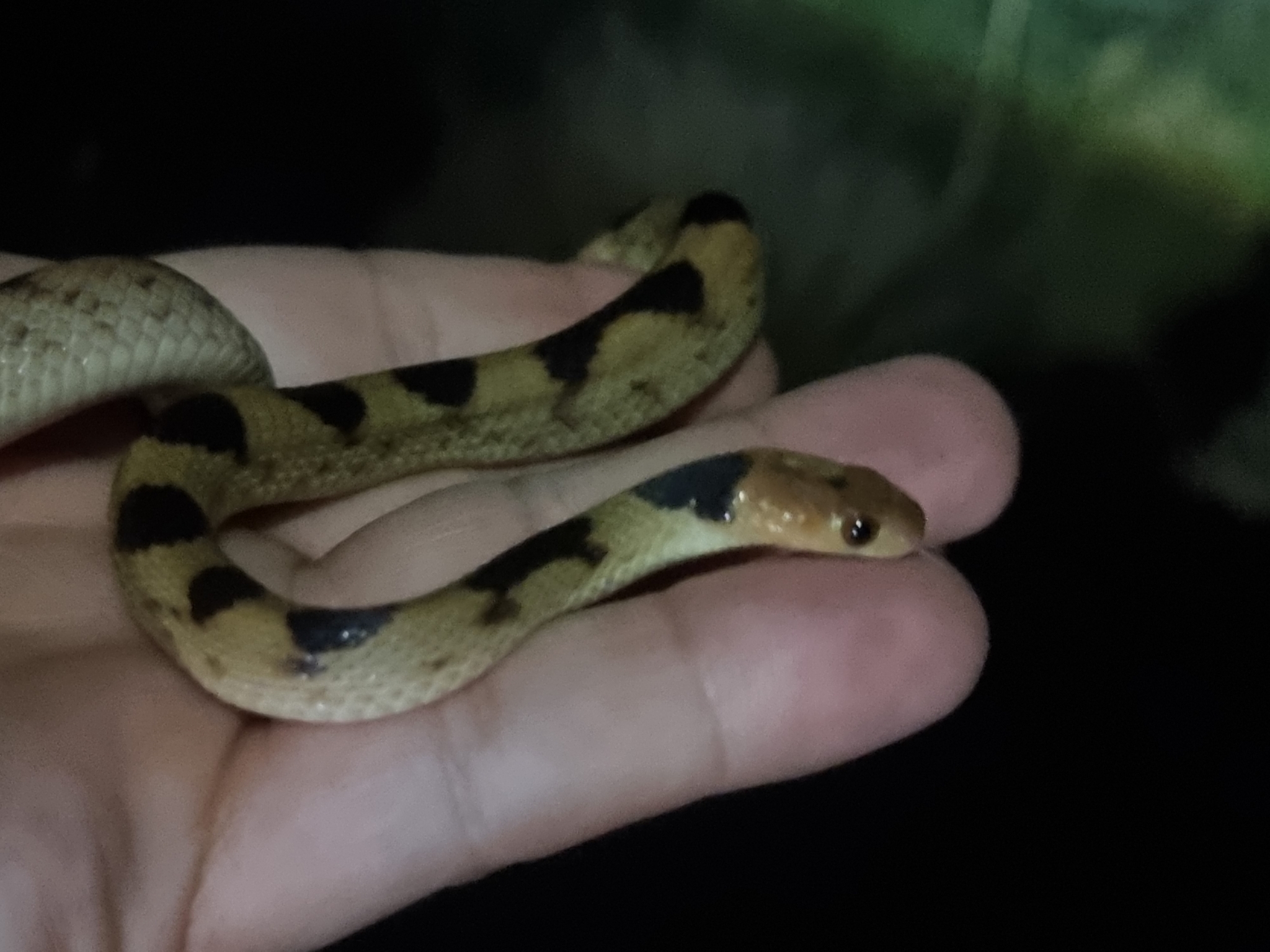
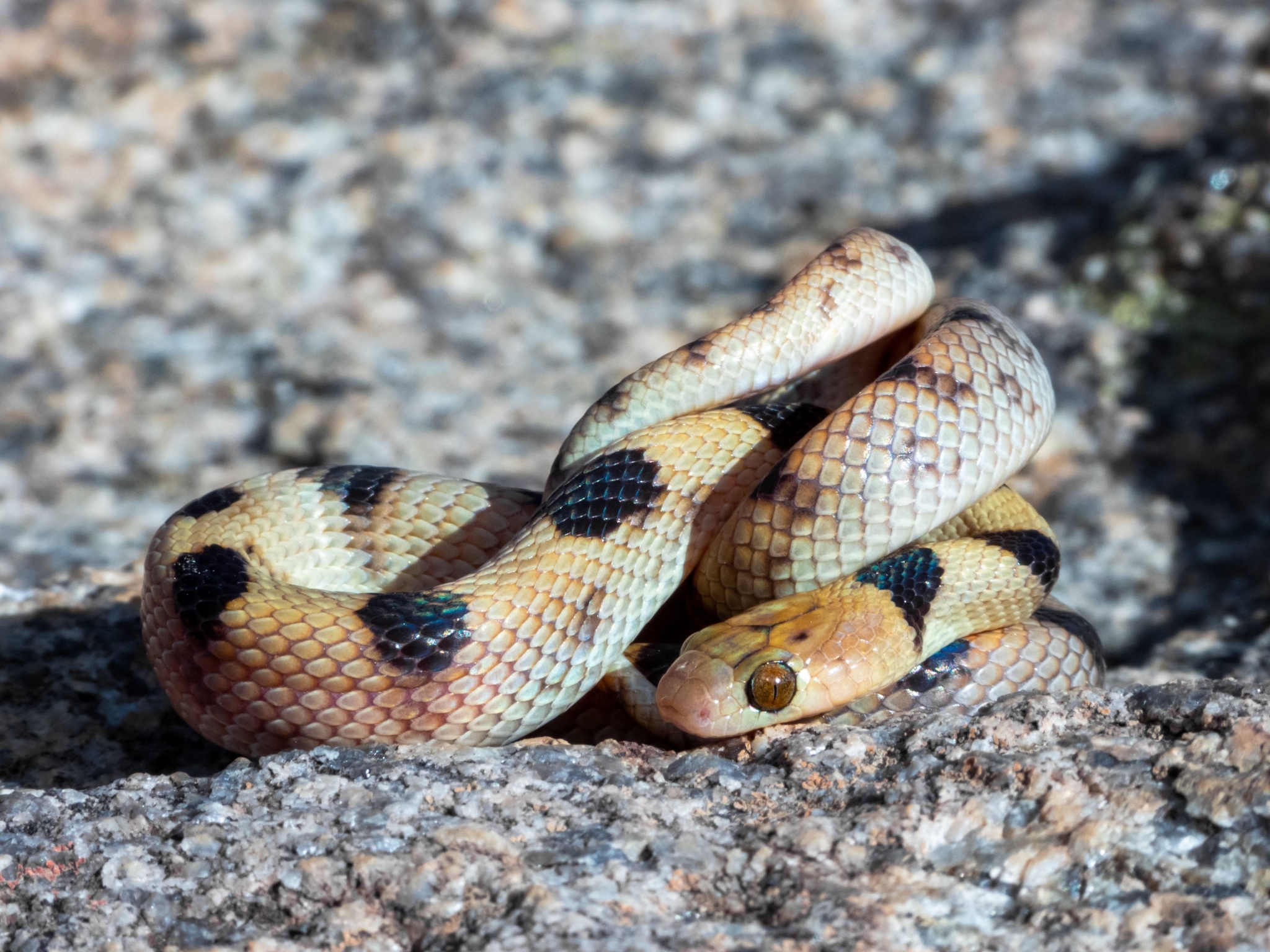
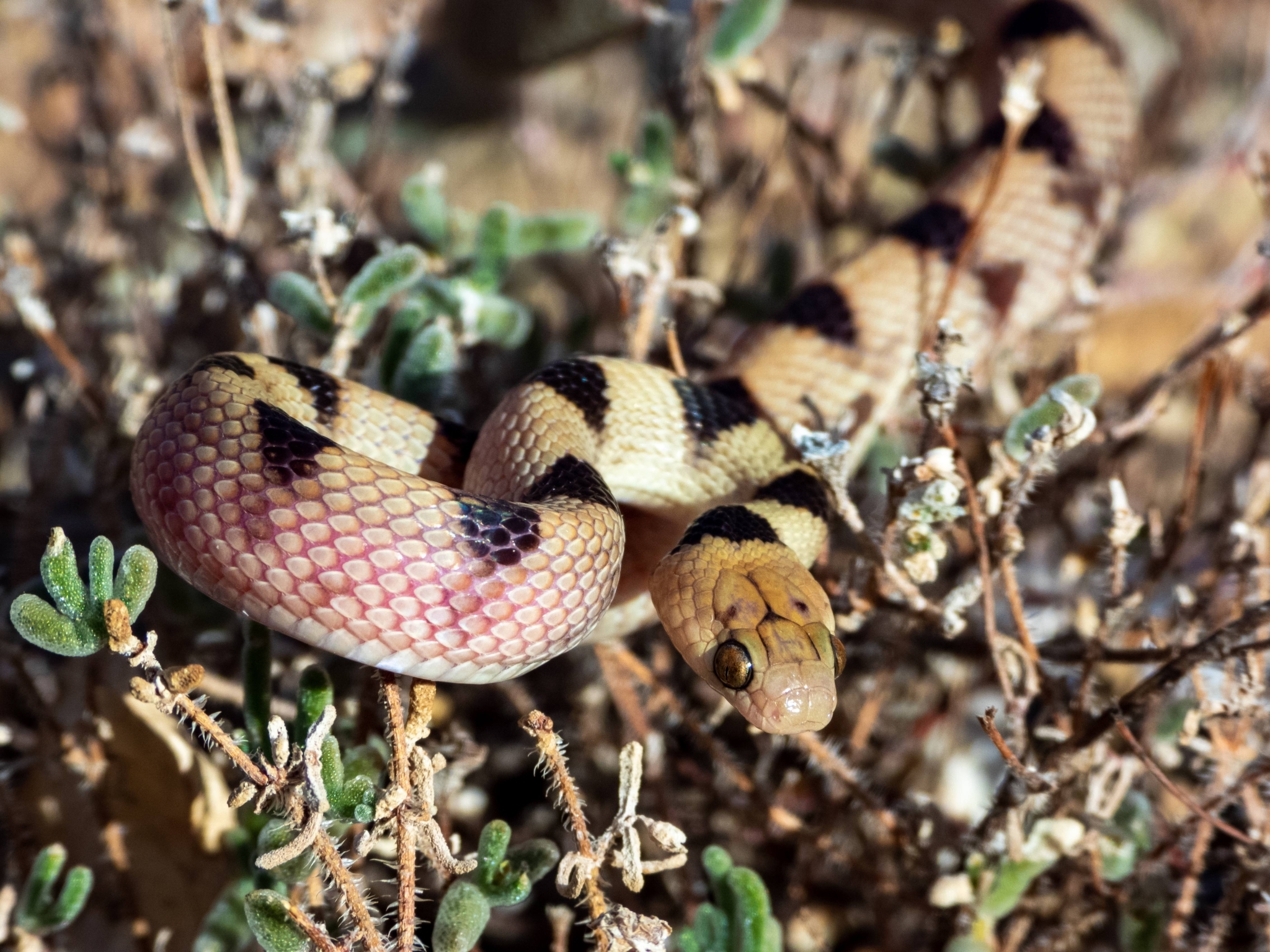
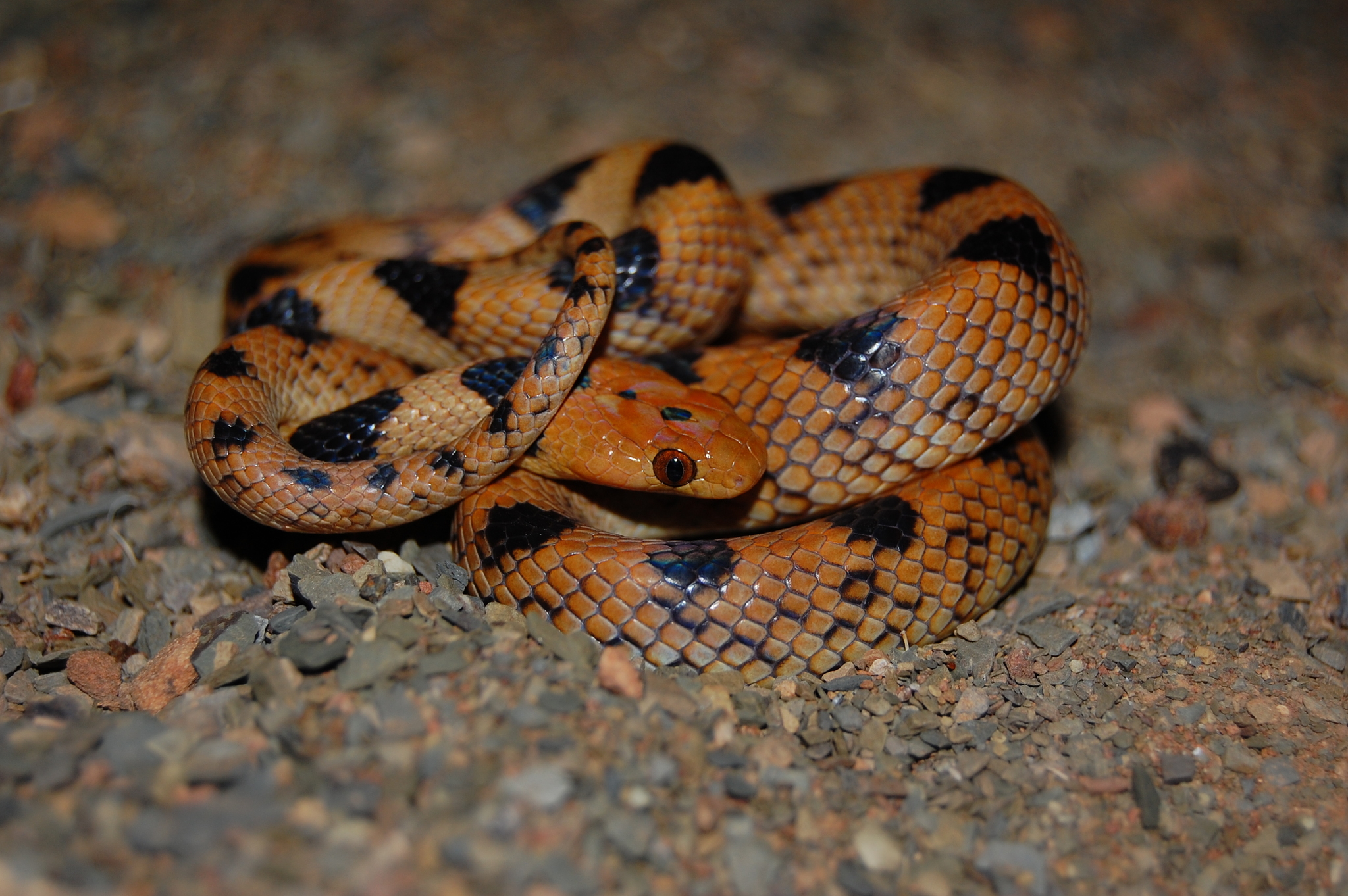
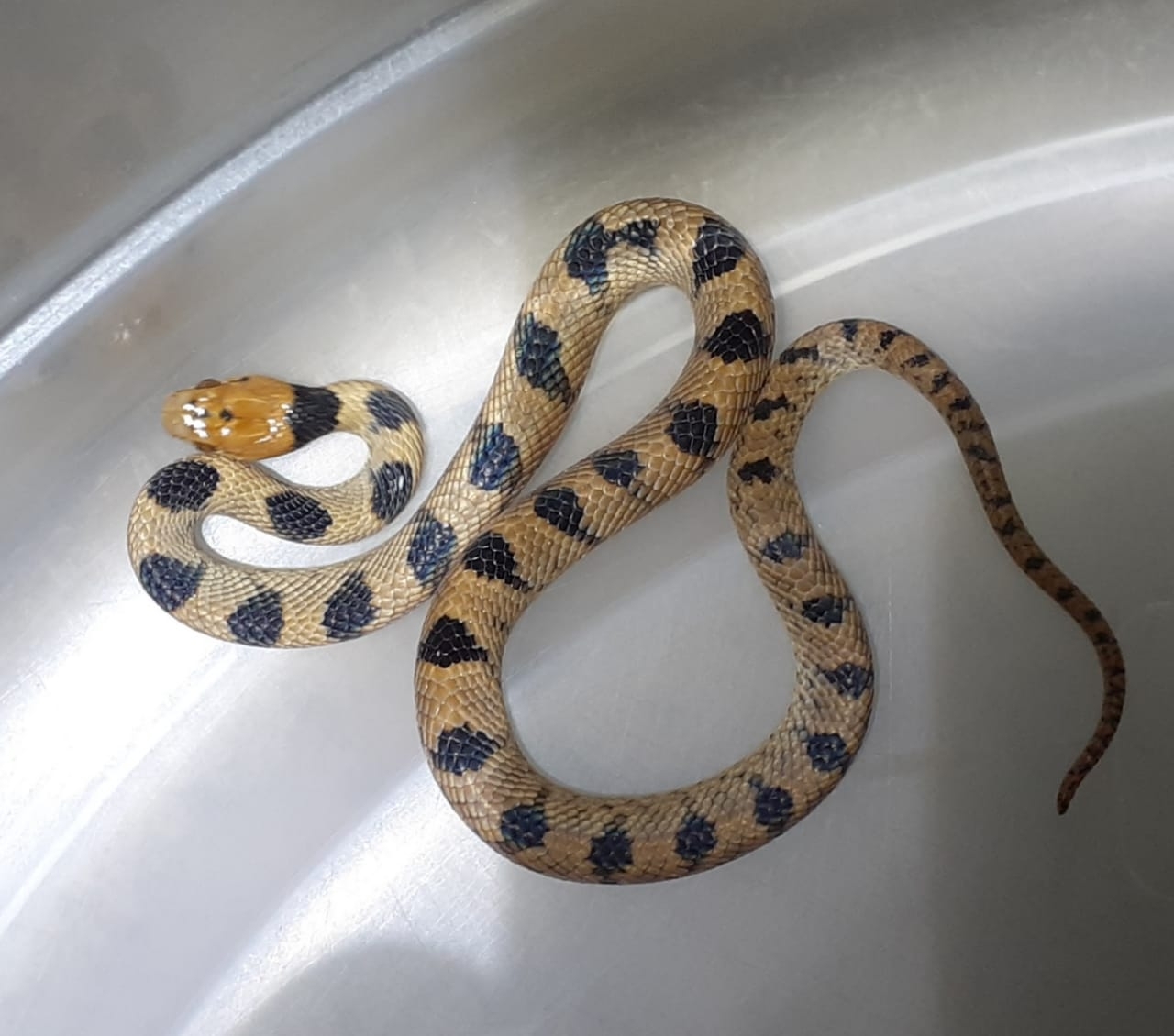
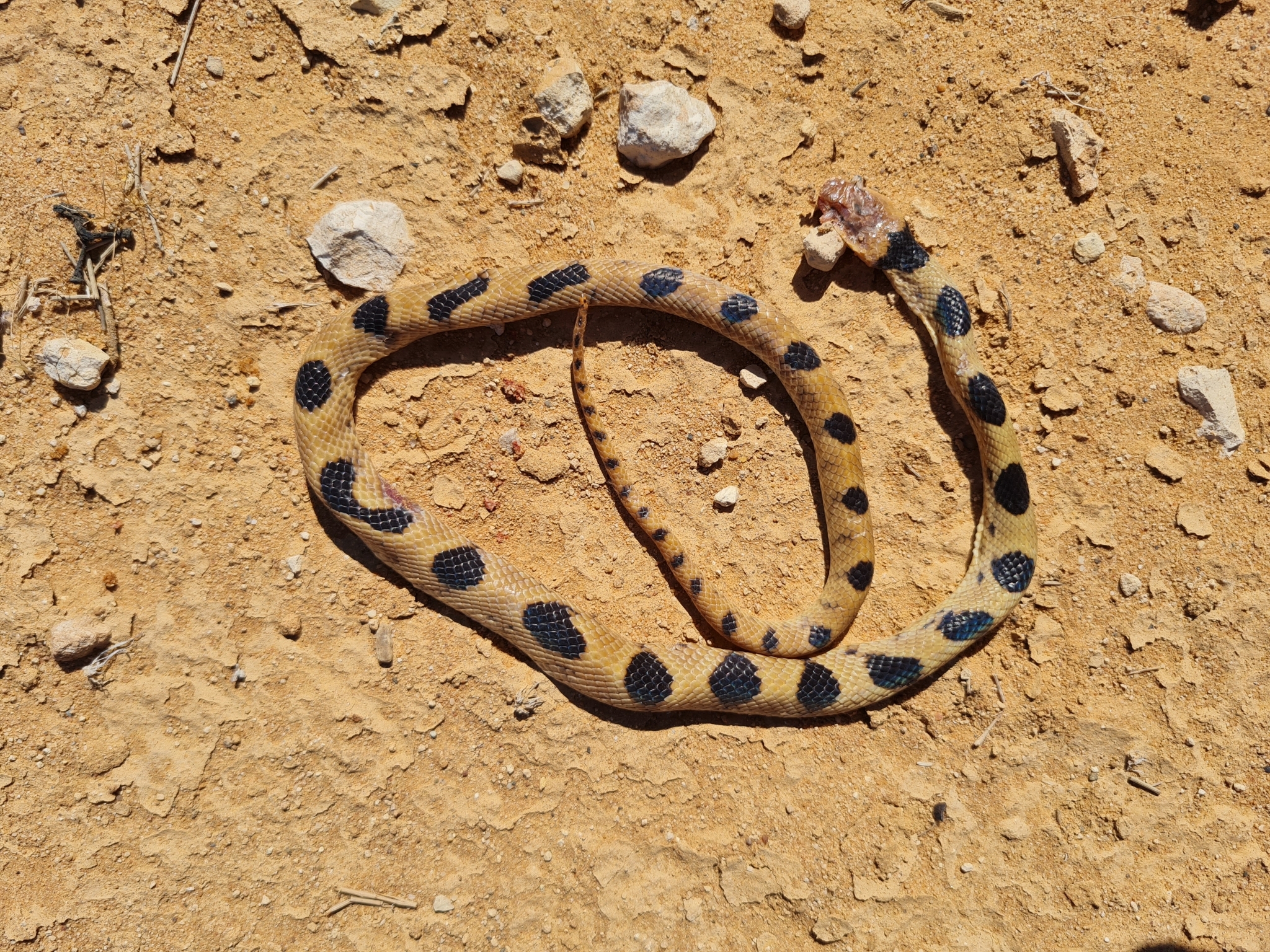
Barbour (1922) described this species as Tarbophis beetzi: Rostral perpendicular in profile; not visible from above and much wider than high; internasal broader than long, much shorter than the prefrontals ; frontal very slightly longer than broad, a little longer than its distance from tip of snout ; much shorter than the parietals ; nasal divided; loreal almost square; one preocular widely occluded from the frontal, two post-oculars; temporals 2+3; nine upper labials, of which the third, fourth and fifth enter the eye; four lower labials touch the anterior chin shields which are very large; posterior chin shields small and widely separated; scales in 21 rows; ventrals, 218; anal entire; subcaudals 46 pairs. Color: sandy buff above and below; the dorsal surface of the nape with a conspicuous crosswise marking, wider on the midline than laterally, also thirty-seven round, dark, middorsal spots on the body and many small flecks on the upper side of the tail. The sides of the body are very faintly clouded with dusky, the belly is immaculate. Length of body, 220 mm.; of tail, 31 mm.
Similar to T. semiannulatus, but differing in having 21 rows of scales instead of invariably having 19; in coloration, in having the anal entire and in several other minor features (Barbour, 1922).
Type locality: “Kolmanskop, Southwest Protectorate, Africa” Holotype: MCZ 16728
No taxonomic issues (Tolley et al., 2023).
Namibia, South Africa
This species is widespread in central and western South Africa, from Northern Cape province, marginally entering the northern Western Cape province and extreme western Free State province, extending northwards to central Namibia (Tolley et al., 2023).
Snakes have no limbs, but long backbones with many articulated ribs that are used for locomotion (Branch, 1998). Engaging the muscles attached to these rib bones allows snakes move in a typical slither fashion, but it also enables them to swim and climb. They use an undulating, side-to-side movement ('S' pattern or serpentine).
Carnivore - Avivore (bird-eating)
This snake emerges at night to feed on lizards (Branch, 1998).
This species is oviparous, with females laying 3-5 elongate eggs in December, which hatch after 80-90 days (Branch, 1998).
No Data.
Nama Karoo, Succulent Karoo
This map contains point-based occurrences at different locations
Occurrence in African countries and South African provinces. Residence status indicates if a taxon is indigenous, endemic, or alien in a specific region. This data is based on specimen records and literature.
FSA
SA
BOT
NAM
ESW
LES
WC
EC
NC
FS
GA
KZN
LP
MP
NW
Absent
Indigenous
Endemic
Naturalised
Invasive
Names and Sources
| Common Name | Language |
|---|---|
| Beetzs Tiger Snake, Namib Tiger Snake | En |
| Beetz se Tierslang | En |
| Namib Tiger Snake | En |
| Beetz`s Tiger Snake |
Classification
KINGDOM Animalia
PHYLUM Chordata
CLASS Reptilia
ORDER Squamata
FAMILY Colubridae
GENUS Telescopus
SPECIES beetzi
No results found for Telescopus beetzi (Barbour, 1922)
No data.
20 results for Telescopus beetzi (Barbour, 1922)
This map contains point-based occurrences at different locations
1998
BOOK
Field Guide to Snakes and Other Reptiles of Southern AfricaBranch, B.. 1998. Field Guide to Snakes and Other Reptiles of Southern Africa. Cape Town. Struik Publishers.
1922
JOURNAL ARTICLE
A new snake from Southwest AfricaBarbour, T.. 1922. A new snake from Southwest Africa Vol. 35 pp.229-230.
2023
BOOK
Conservation status of the reptiles of South Africa, Eswatini and LesothoTolley, K., Burger, M., Alexander, G., Pietersen, D., Conradie, W., Weeber, J.. 2023. Conservation status of the reptiles of South Africa, Eswatini and Lesotho Vol. Suricata 10. Pretoria. South African National Biodiversity Institute.
1978
JOURNAL ARTICLE
The Squamata (Reptilia) of the Orange Free State, South AfricaDe Waal, S.. 1978. The Squamata (Reptilia) of the Orange Free State, South Africa Vol. 11 pp.1-160.
Status and criteria
LC
Assessor(s)
Johan Marais
Reviewer(s)
Krystal Tolley


