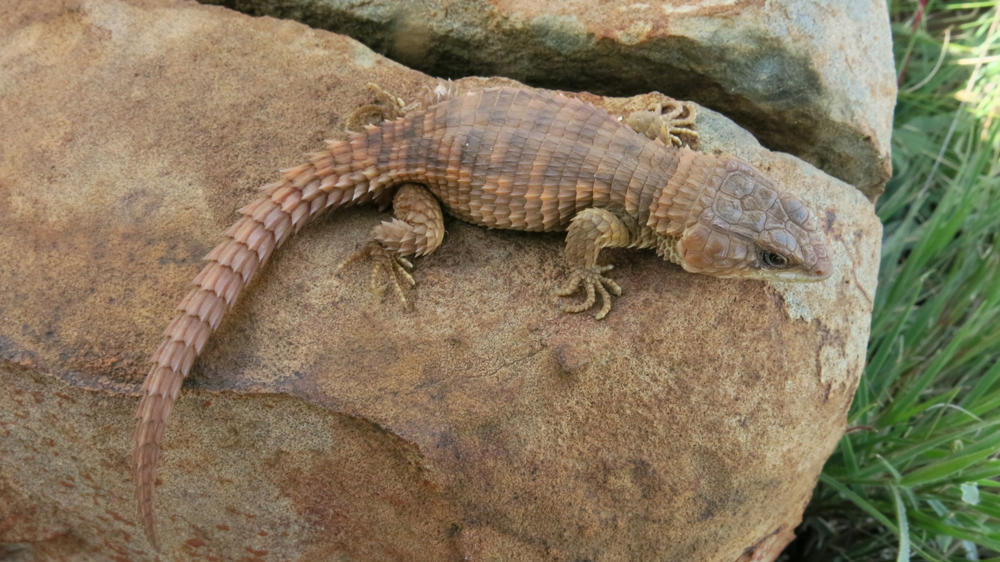
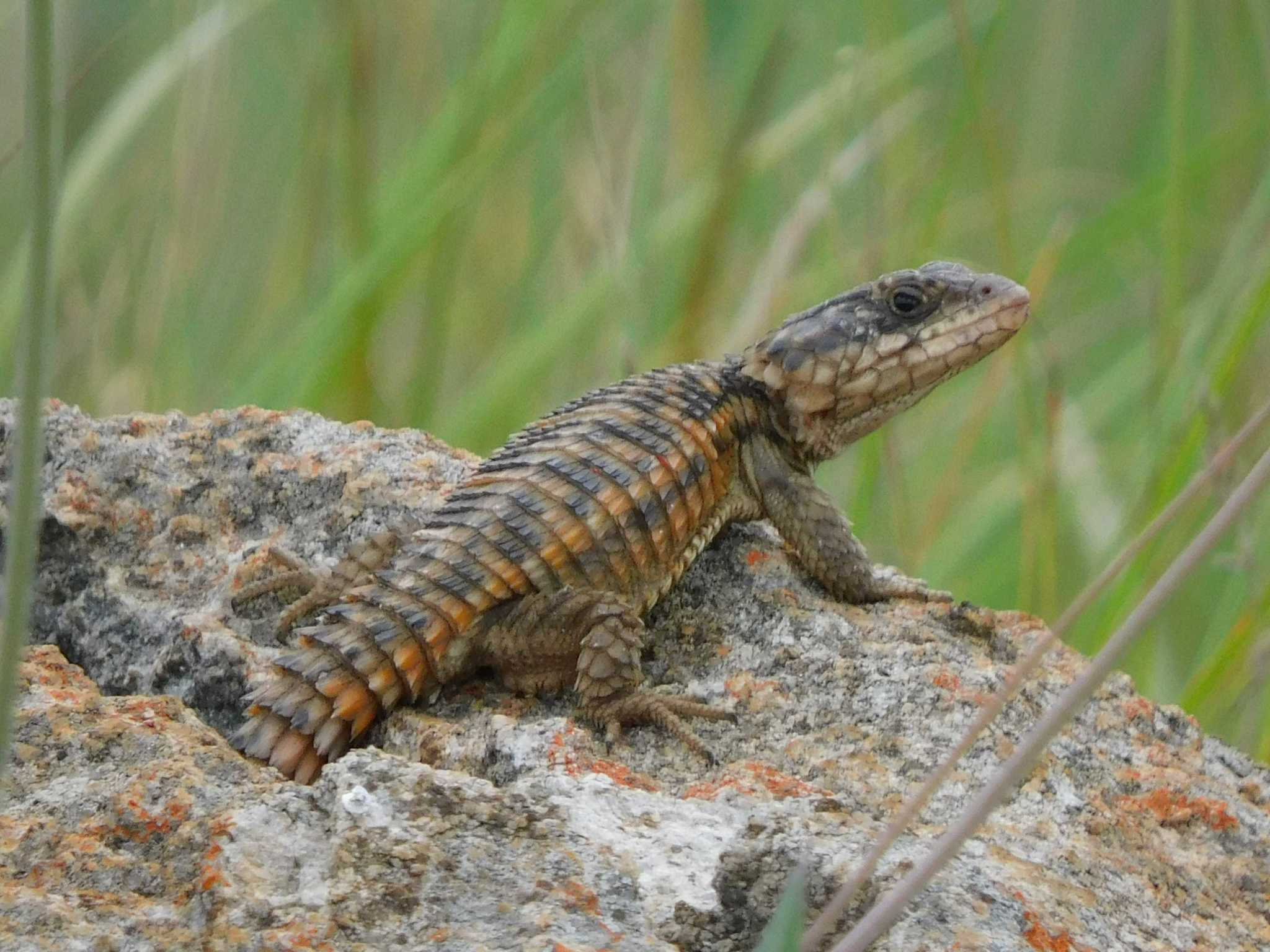
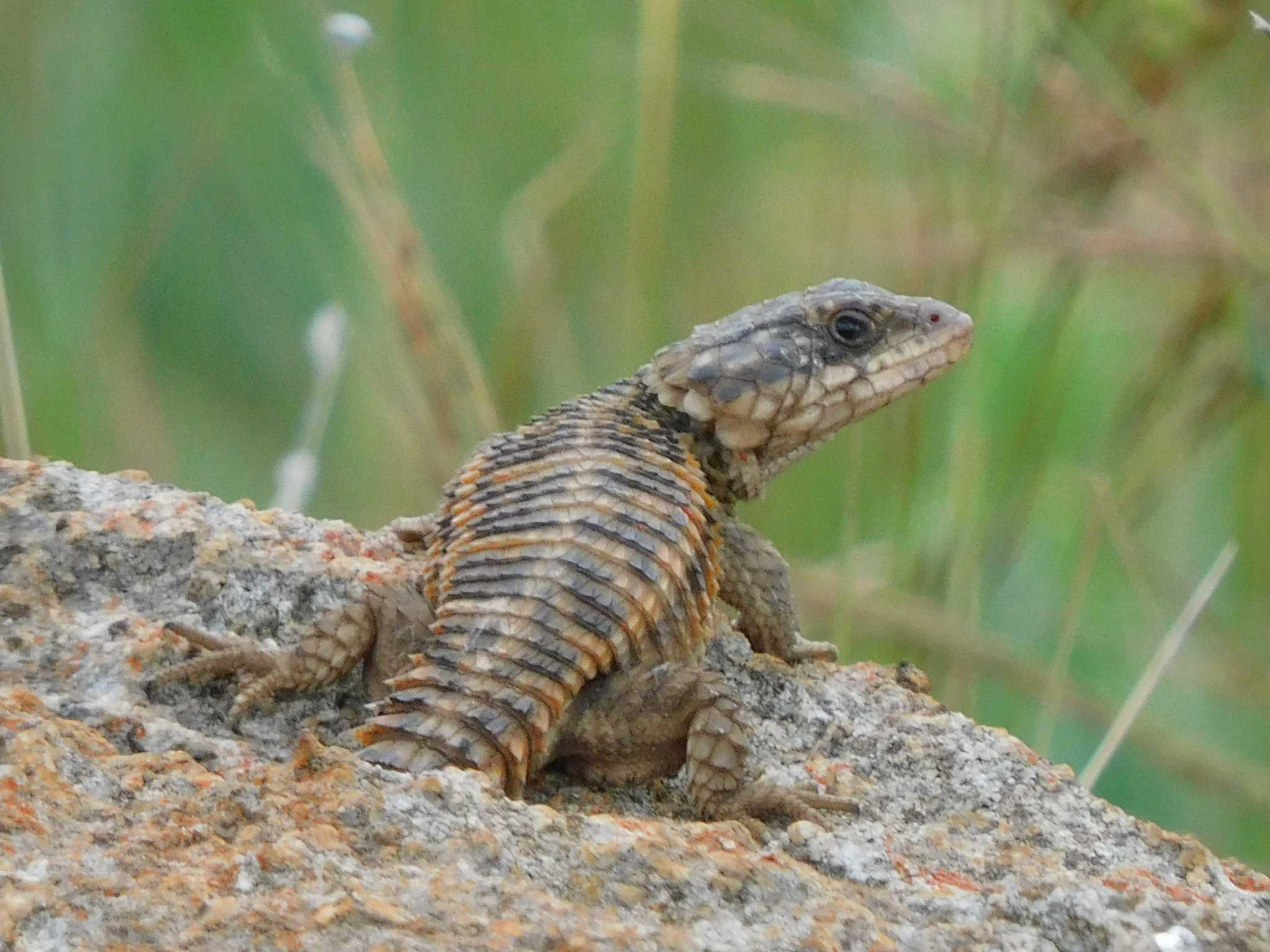
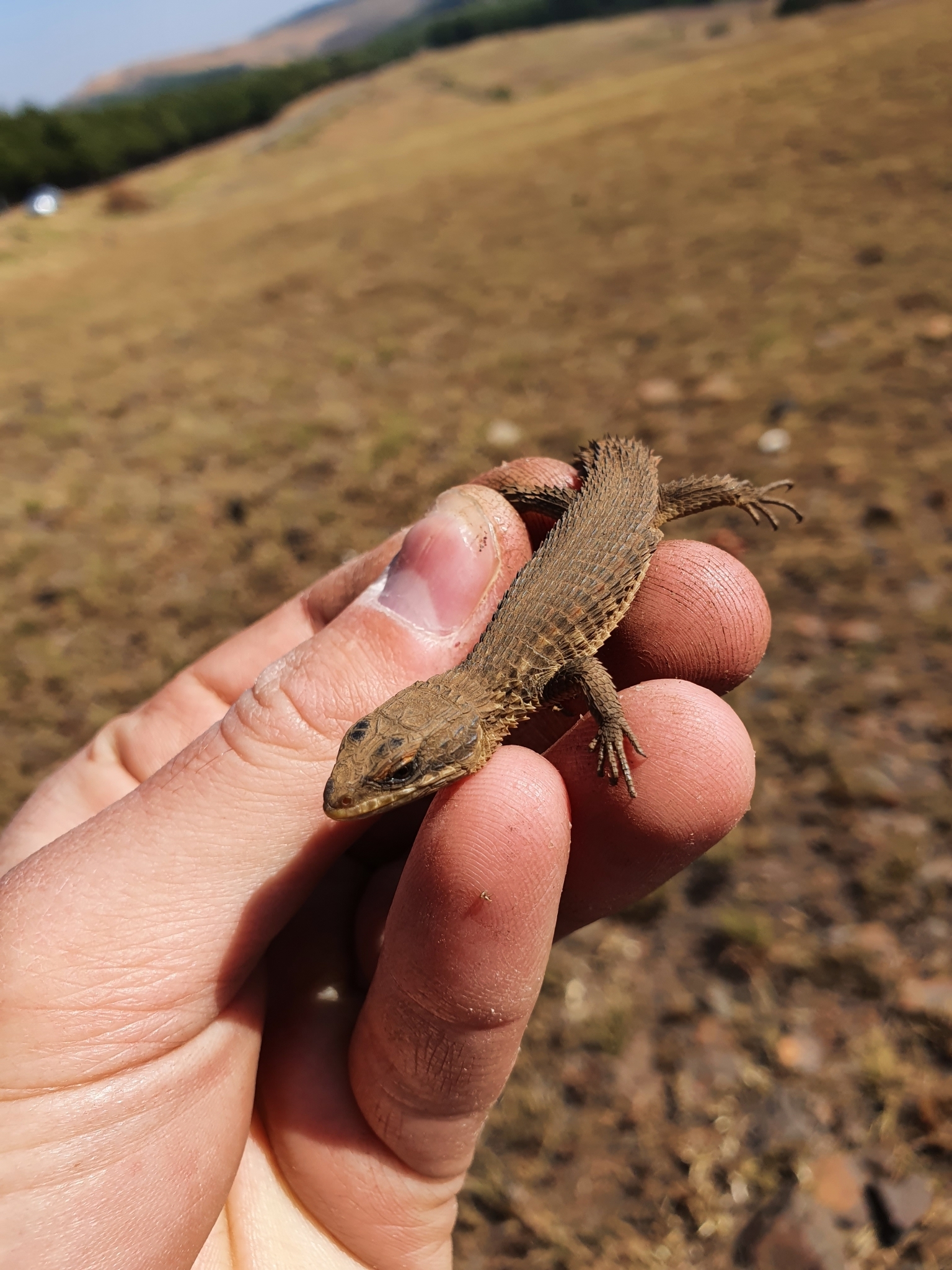
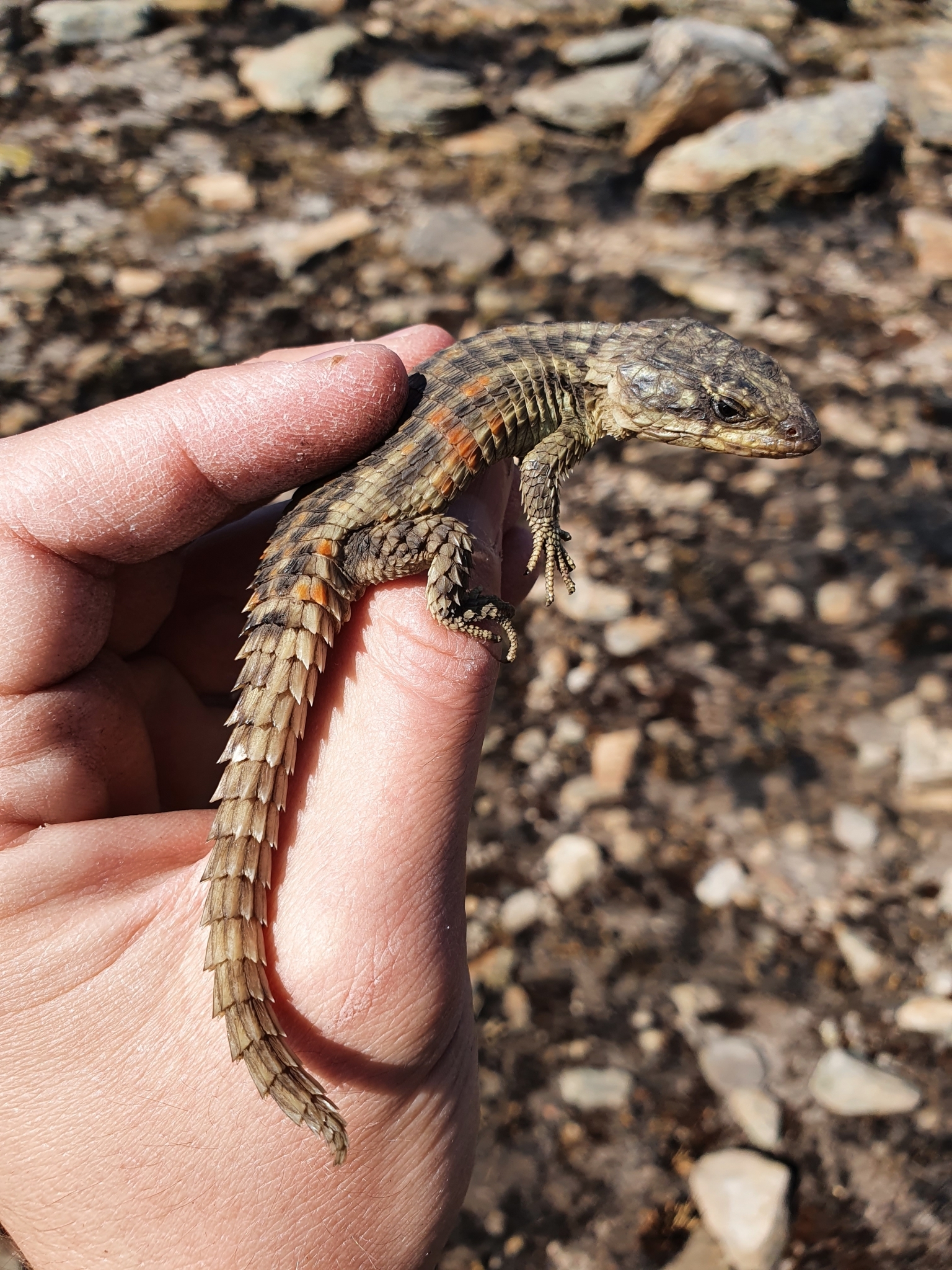
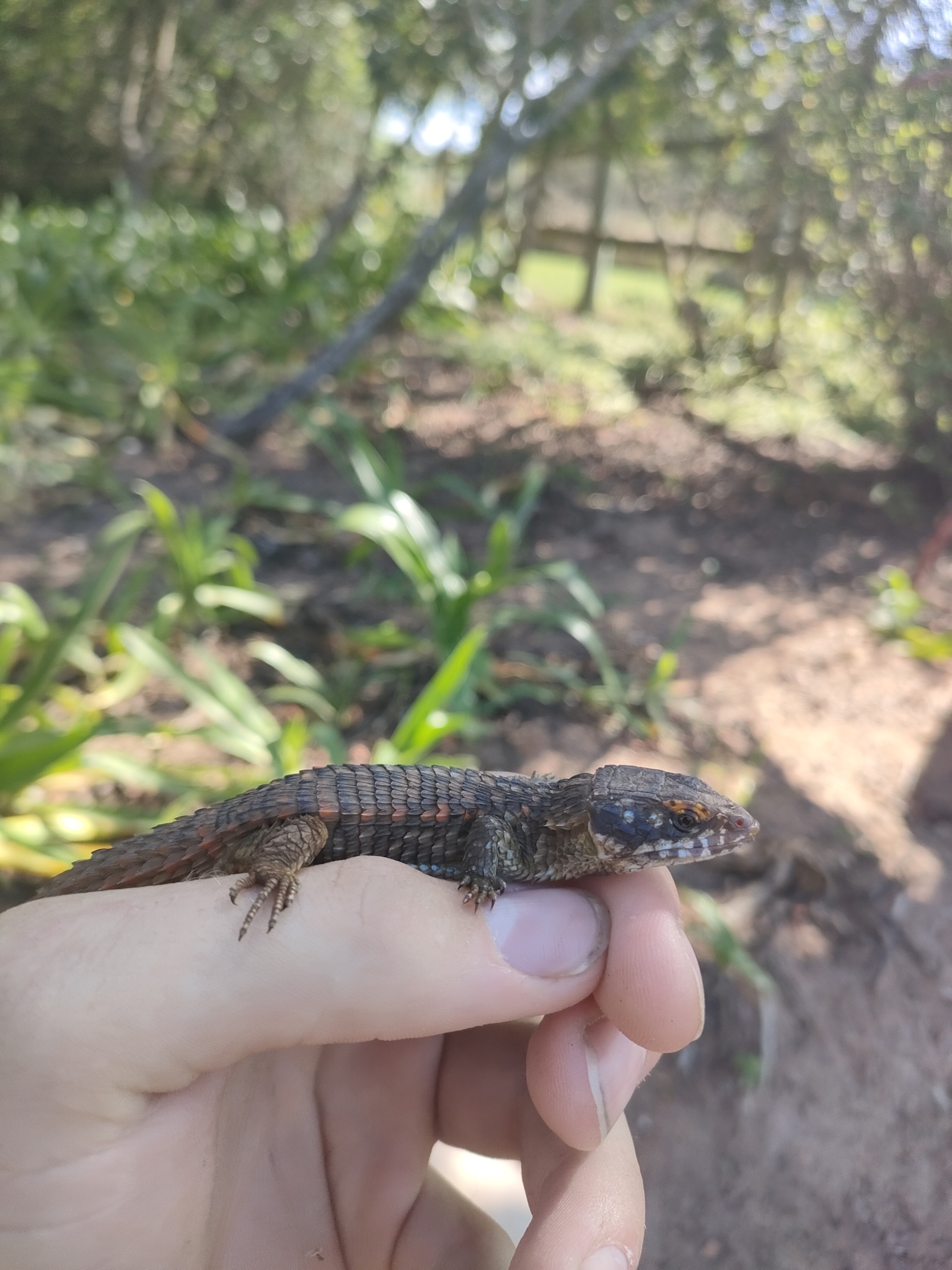
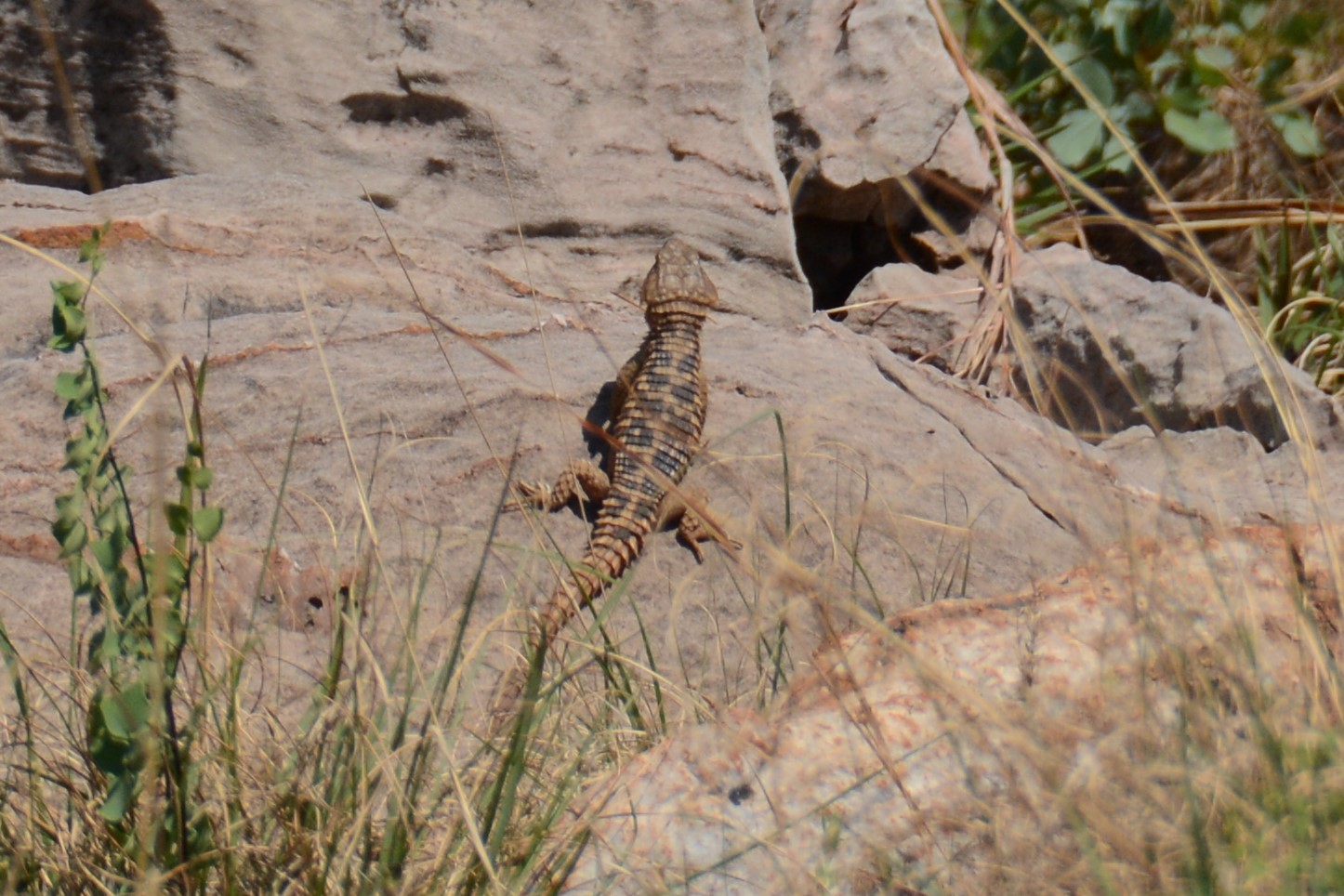
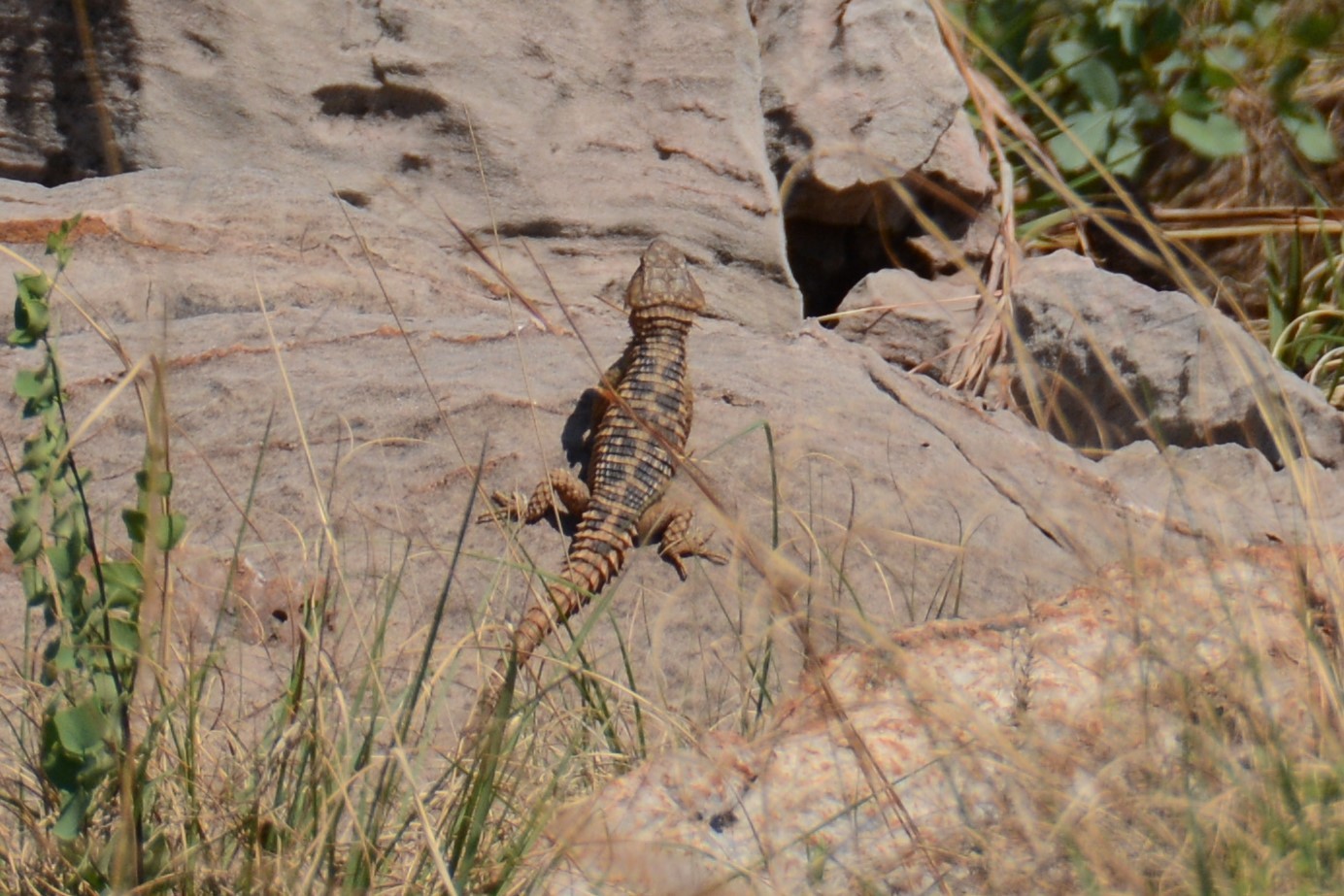
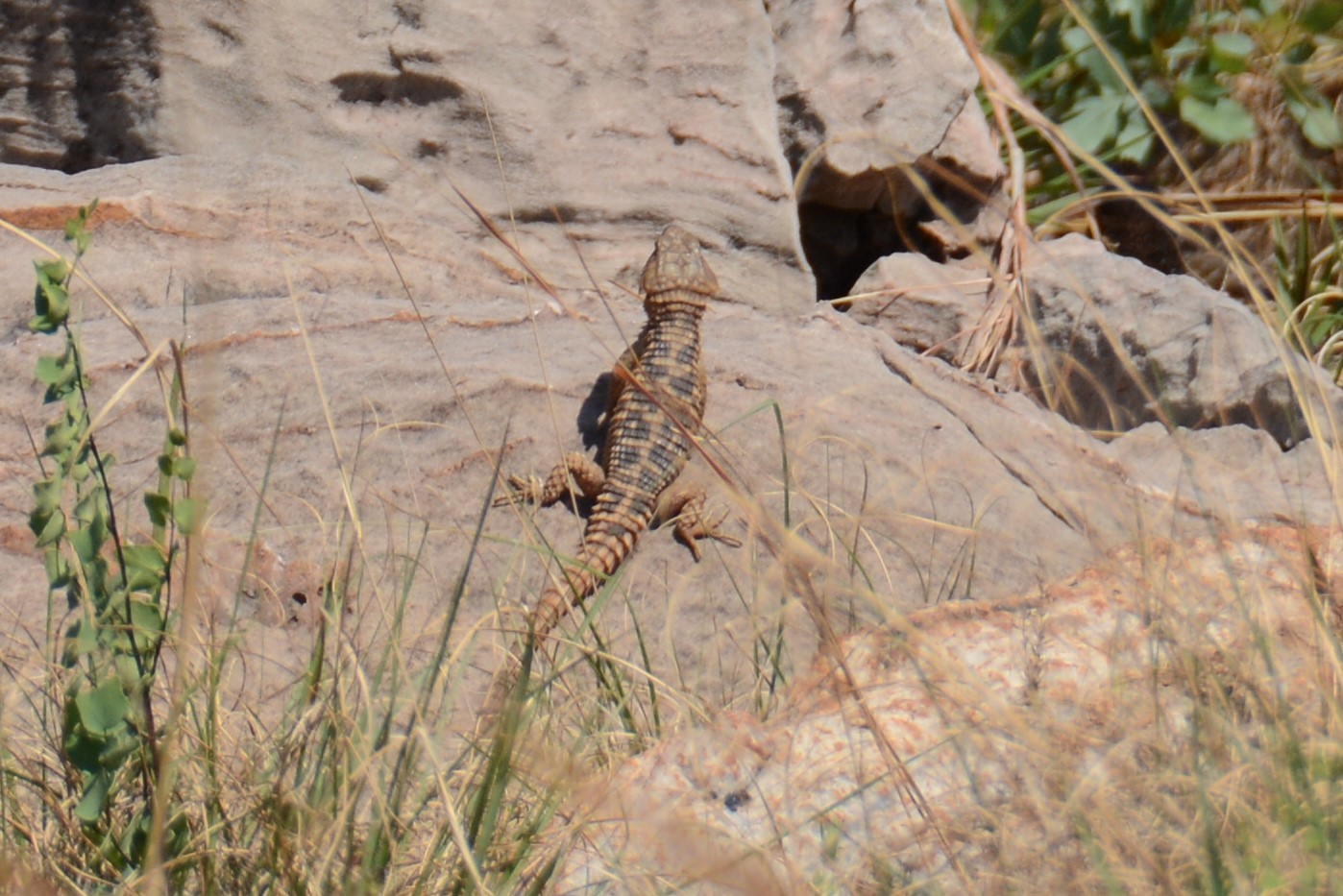
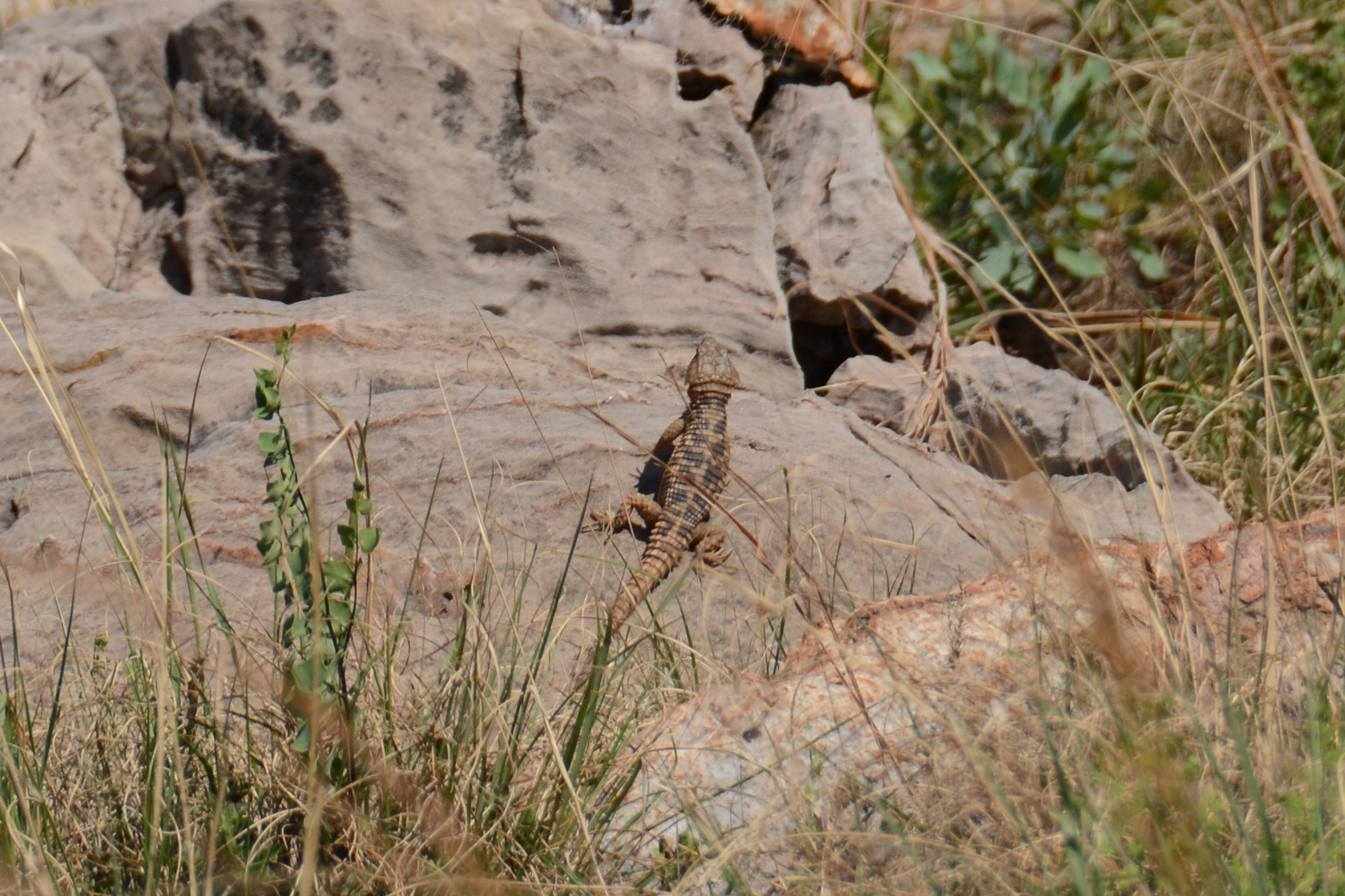
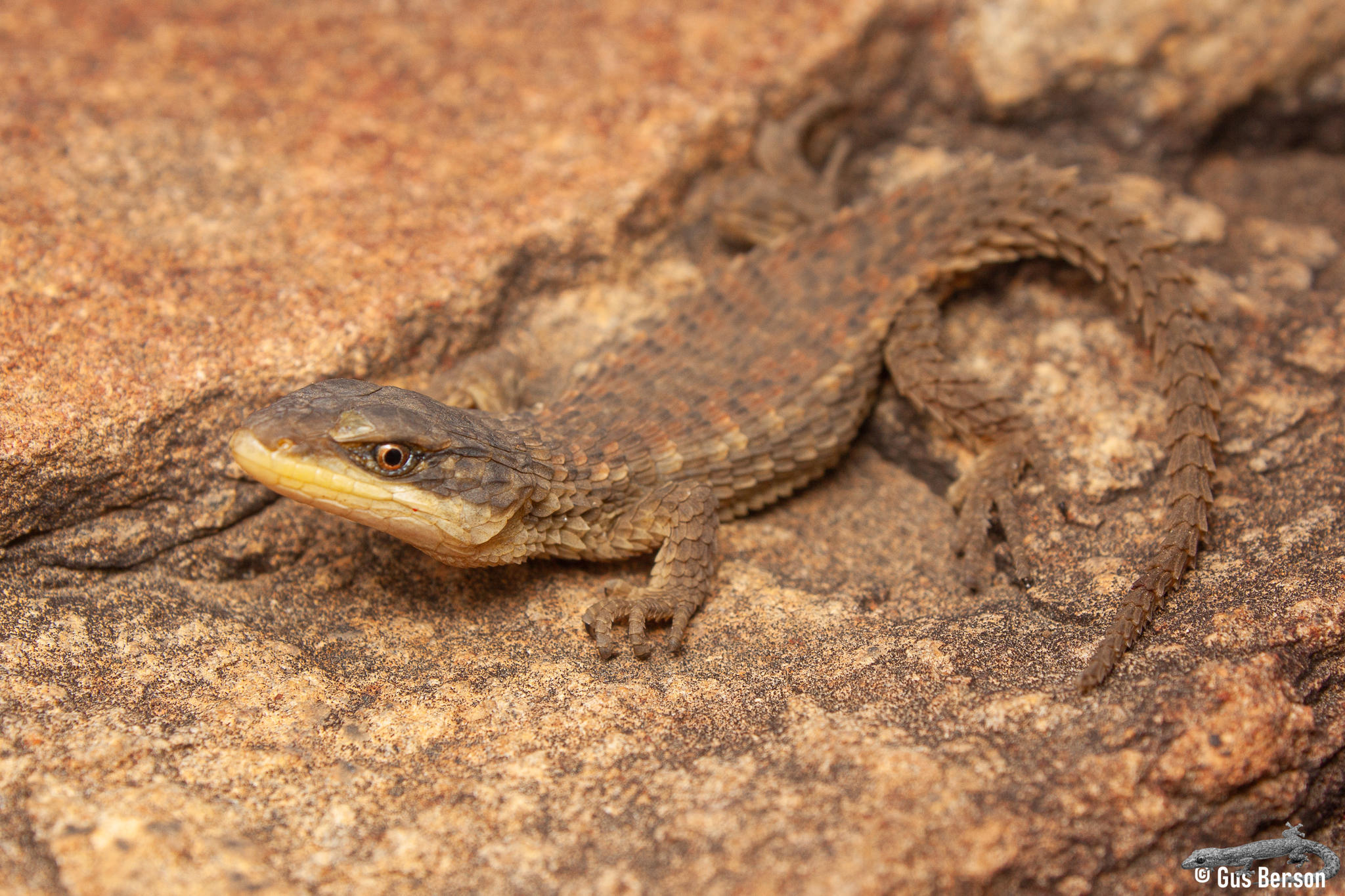
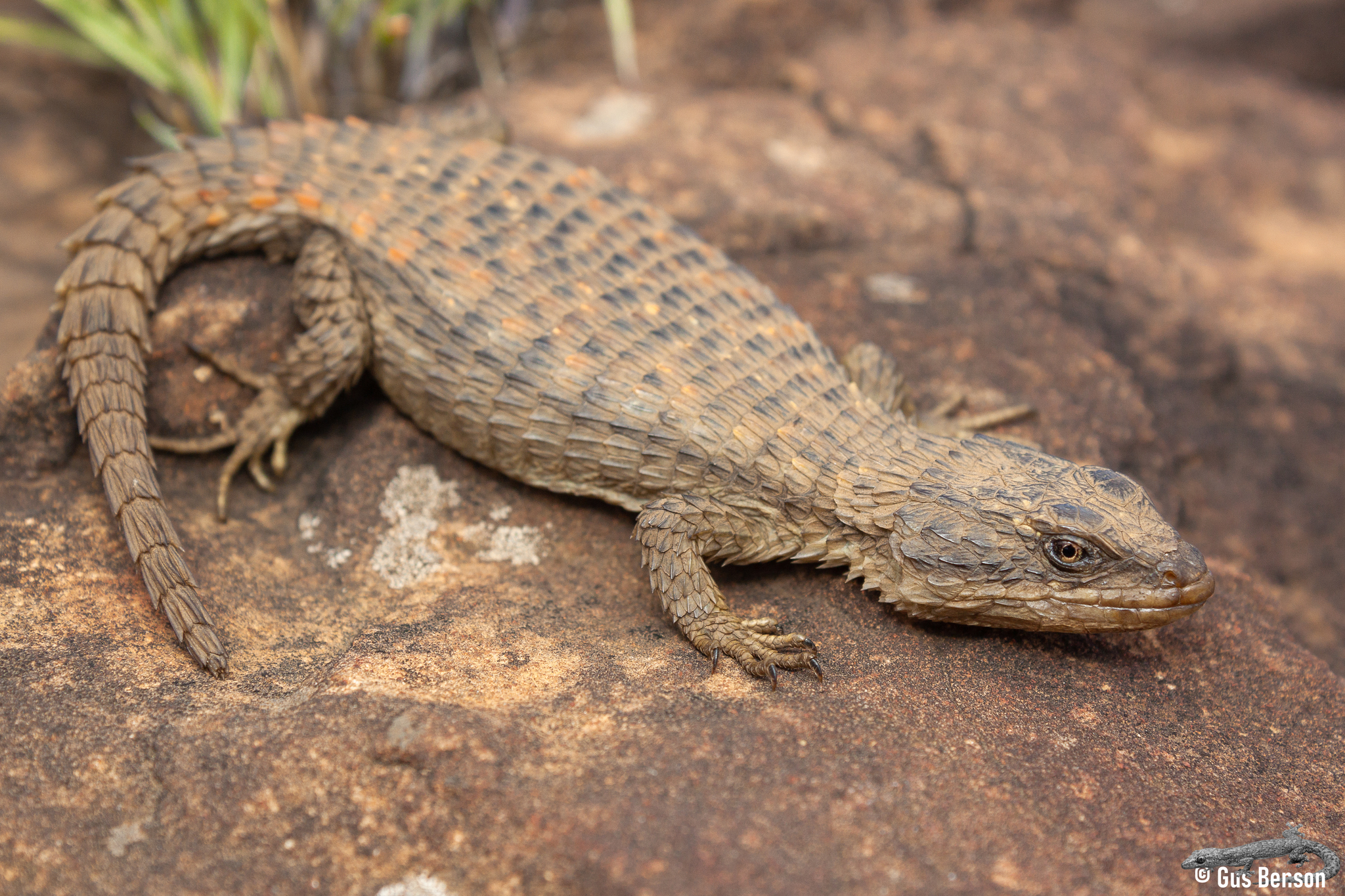
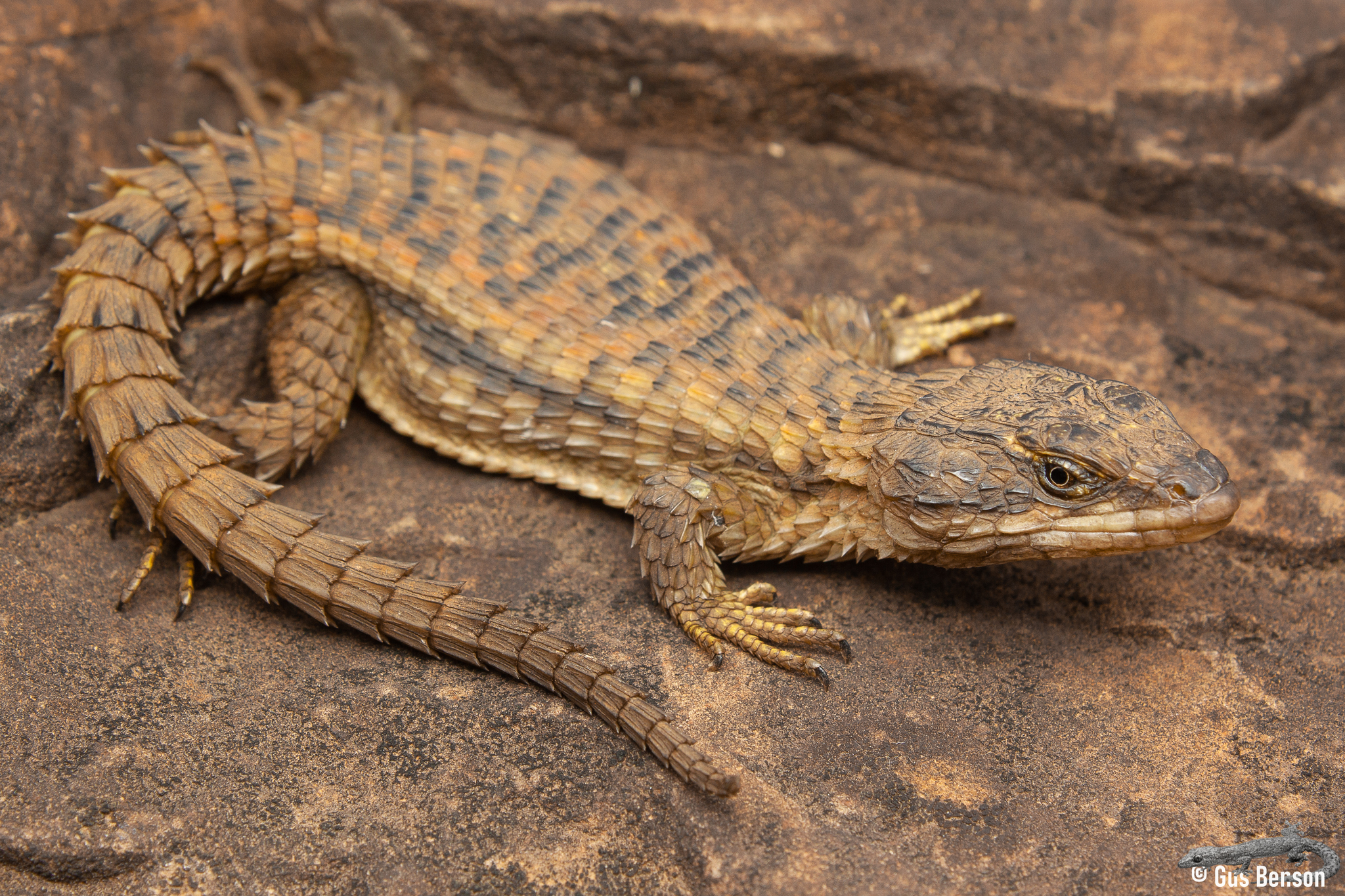
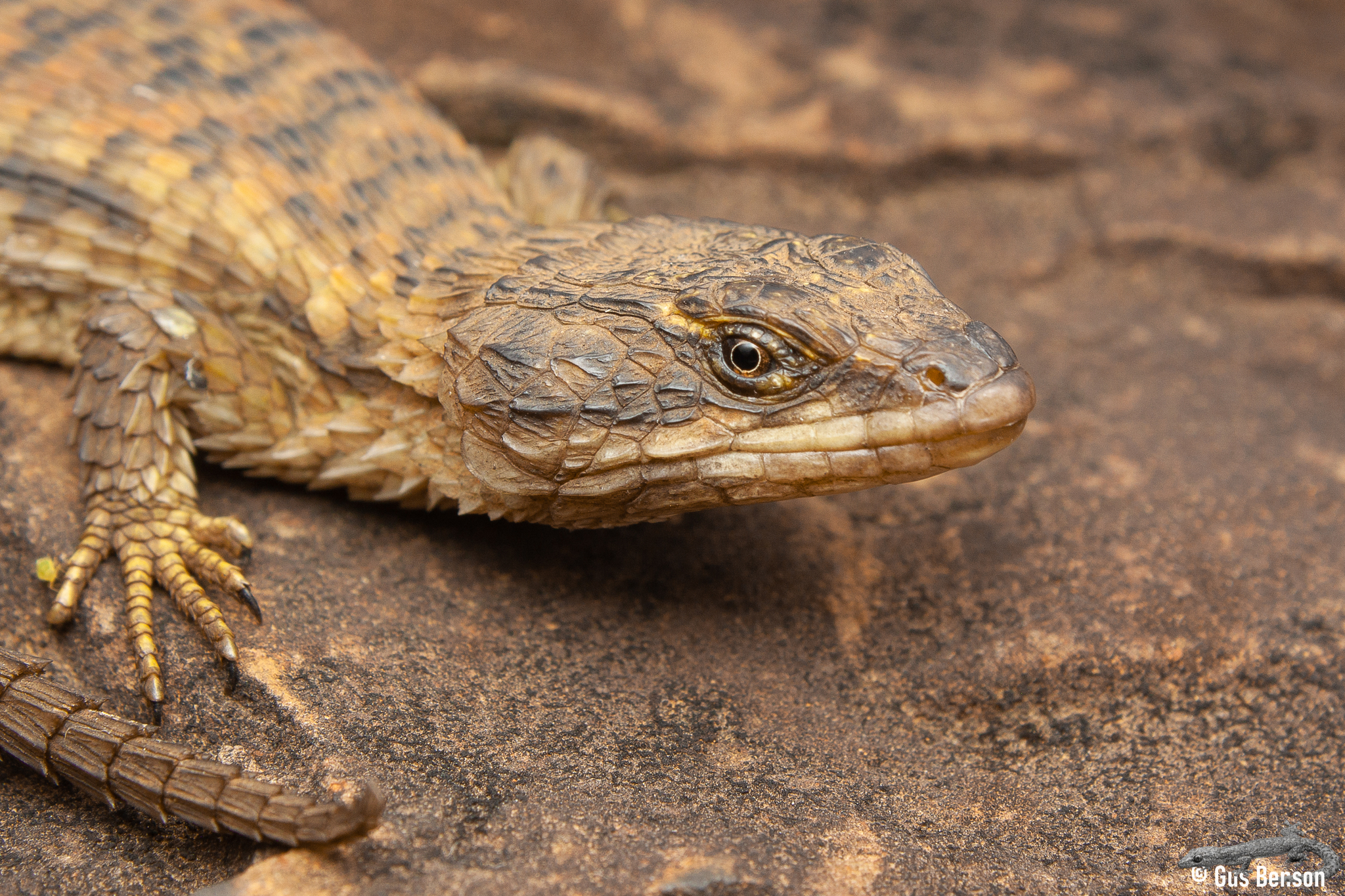
Reichenow (1887) described this species as Zonurus vittifer in Germany: Durch die sehr geringe Größe des Frontonasale von allen anderen Arten abweichend. Körperseiten mit denselben Schuppen bedeckt wie der Rücken. Keine Supranasalia. Unteres Augenlid undurchsichtig. Kopf stark depress, viel länger als breit. Nasalia breit, ziemlich in ihrer ganzen Breite an einander stoßend, da das Frontonasale nur wenig in den Hinterrand einspringt, wenig geschwollen, in ihrem hinteren Theile durchbohrt. Frontonasale sehr klein, vierseitig, von dem Rostrale durch die Nasalia getrennt, von den Praefrontalien eingeschlossen. Frontale hexagonal, vorn wenig breiter. Interparietale fiinf seitig, von den vier Parietalien eingeschlossen, mit seinem vorderen verschmälerten Theile die Frontoparietalia berührend. Hintere Parietalia nur wenig größer als die vorderen. Temporalia schwach gekielt, ohne Stacheln, in vier Reihen. Vier Supraocularia, drei Superciliaria, kein Zügelschild. Kehlschilder klein. Rücken- Schwanz- und Bauchschilder von gleicher Form wie bei Z. cordylus L.; die breiteste Querreihe der ersteren enthält 20 — 22 Schuppen, die Bauchschilder zählen bis zu 16 Längsreihen. Seitenfalten vorhanden. Drei große Praeanalschuppen. 7 — 8 Femoralporen. Oberseits schwarzbravm und gelblich variirend; längs der Rückenmitte eine auf dem hinteren Theile mehrfach unterbrochene gelbliche Binde. Länge des Exemplars von der Schnauzenspitze bis zum After 55, Schwanz 57, Kopf 17 mm. Translation: Distinguished from all other species by the very small size of the frontonasal. Body sides covered with the same scales as the back. No supranasalia. Lower eyelid opaque. Head strongly depressed, much longer than broad. Nasals broad, abutting each other almost in their entire width, as the frontonasal part only slightly projects into the posterior margin, little swollen, pierced in their posterior part. Frontonasals very small, quadrilateral, separated from the rostral by the nasals, enclosed by the praefrontals. Frontals hexagonal, a little broader in front. Interparietal fiinf-sided, enclosed by the four parietals, with its anterior narrowed part touching the frontoparietals. Posterior parietals only slightly larger than the anterior ones. Temporalia weakly keeled, without spines, in four rows. Supraocularia four, superciliaria three, wing shield absent. Throat shields small. Dorsal, caudal and ventral shields of the same shape as in Z. cordylus L.; the widest transverse row of the former containing 20-22 scales, the ventral shields counting up to 16 longitudinal rows. Lateral folds present. Three large praeanal scales. 7 - 8 femoral pores. Upper surface blackish brown and varying yellowish; along the middle of the back a yellowish band interrupted several times on the posterior part. Length of the specimen from tip of snout to anus 55, tail 57, head 17 mm.
No separate diagnostic description was provided. Refer to the morphological description.
Type locality: Transvaal, South Africa. Holotype: ZMB 10762
There is genetic and morphological structure within C. vittifer that could represent at least three species (De Waal, 1978; Stanley et al., 2011).
South Africa, Botswana, Eswatini, Mozambique
The species is widespread in the northeastern parts of South Africa, Eswatini, southeastern Botswana (Auerbach, 1987) and southern Mozambique in the Lebombo Mountains (Bates and Broadley, 2012).
These lizards are known to run and hide. When running on four legs, lizards often move their fore feet diagonally in unison—the right fore foot with the left hand and the left fore foot with the right hand. The body's bent is simultaneously reversed. The shoulders, hips, and other joints in the legs as well as the bending of the back all contribute to moving the feet forward. Leg and back muscles work together to power running (Alexander, 2012).
Carnivore - Insectivore (insect-eating)
Common Girdled Lizards feed on beetles and grasshoppers (Branch, 1998).
The Common Girdled Lizard is viviparous, producing one to four young in early summer (Branch, 1998).
No data.
Grassland, Savanna
This map contains point-based occurrences at different locations
Occurrence in African countries and South African provinces. Residence status indicates if a taxon is indigenous, endemic, or alien in a specific region. This data is based on specimen records and literature.
FSA
SA
BOT
NAM
ESW
LES
WC
EC
NC
FS
GA
KZN
LP
MP
NW
Absent
Indigenous
Endemic
Naturalised
Invasive
Names and Sources
| Common Name | Language |
|---|---|
| Common Girdled Lizard | En |
| Gewone Gordelakkedis | En |
| Transvaal Girdled Lizard | En |
490 bp linear DNA
Accession: HQ167572
489 bp linear DNA
Accession: HQ167571
This species is listed in CITES Appendix II. Wild caught individuals are regularly exported from South Africa for purposes of pet trade, most recently in 2015 (UNEP-WCMC, 2020). Overall a total of more than 7,000 animals removed from the wild in South Africa between 1982-2015. In the last decade, In the last decade, this figure totals around 2 000 individuals. In 2017, there was also an export of 64 wild-caught individuals from Namibia to South Africa for scientific purposes (UNEP-WCMC, 2020), despite Namibia not being within the species’ range. The latter individuals may have been of a similar species, C. machadoi, which occurs in northern Namibia and southwestern Angola (Tolley et al., 2023).
20 results for Cordylus vittifer (Reichenow, 1887)
Year
This map contains point-based occurrences at different locations
1887
JOURNAL ARTICLE
Neue Wirbelthiere des Zoologischen Museums in BerlinReichenow, A.. 1887. Neue Wirbelthiere des Zoologischen Museums in Berlin Vol. 10 pp.369- 372.
1998
BOOK
Field Guide to the Snakes and Other Reptiles of Southern AfricaBranch, B.. 1998. Field Guide to the Snakes and Other Reptiles of Southern Africa Vol. . Cape Town. Struik Publishers pp..
1978
JOURNAL ARTICLE
The Squamata (Reptilia) of the Orange Free State, South AfricaDe Waal, S.. 1978. The Squamata (Reptilia) of the Orange Free State, South Africa Vol. 11 pp.1-160.
1987
BOOK
The Amphibians and Reptiles of BotswanaAuerbach, R.. 1987. The Amphibians and Reptiles of Botswana. Botswana. Gaborone Printing Works.
2012
TECHNICAL REPORT
Geographic Distributions: Cordylus vittifer Reichenow, 1887Bates, M., Broadley, D.. 2012. Geographic Distributions: Cordylus vittifer Reichenow, 1887 Vol. 56 pp.34-35.
1989
TECHNICAL REPORT
The distribution and conservation status of reptiles and amphibians in the Transvaal. Final Report Project TN 6/4/1/30Jacobsen, N.. 1989. The distribution and conservation status of reptiles and amphibians in the Transvaal. Final Report Project TN 6/4/1/30. Pretoria. Chief Directorate of Nature and Environmental Conservation.
2020
WEBSITE
CITES Trade DatabaseUNEP-WCMC, . 2020. CITES Trade Database. https:// trade.cites.org/. (Accessed: 15 September 2020).
2012
JOURNAL ARTICLE
Locomotion of ReptilesAlexander, R.. 2012. Locomotion of Reptiles Vol. 121 pp.1-4.
2023
BOOK
Conservation status of the reptiles of South Africa, Eswatini and LesothoTolley, K., Burger, M., Alexander, G., Pietersen, D., Conradie, W., Weeber, J.. 2023. Conservation status of the reptiles of South Africa, Eswatini and Lesotho Vol. Suricata 10. Pretoria. South African National Biodiversity Institute.
2011
BOOK
Between a rock and a hard polytomy: Rapid radiation in the rupicolous girdled lizards (Squamata: Cordylidae)Jackman, T., Mouton, P., Branch, W., Stanley, E., Bauer, A.. 2011. Between a rock and a hard polytomy: Rapid radiation in the rupicolous girdled lizards (Squamata: Cordylidae) Vol. 58 pp.53-70.
Status and criteria
LC
Assessor(s)
Michael Bates
Reviewer(s)
Graham Alexander