ANIMALIA / CHORDATA / REPTILIA / SQUAMATA / CORDYLIDAE / NAMAZONURUS / PEERSI
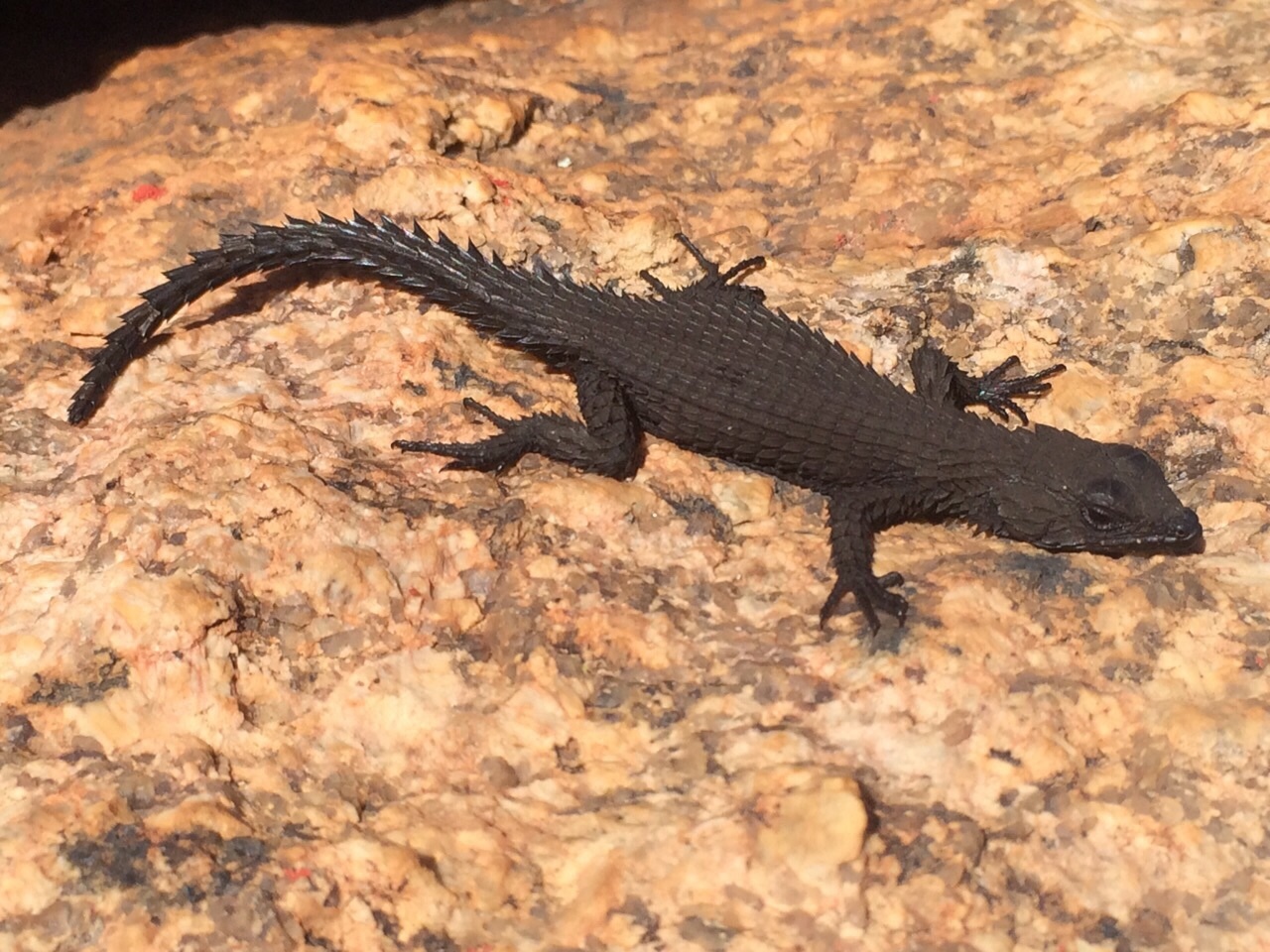
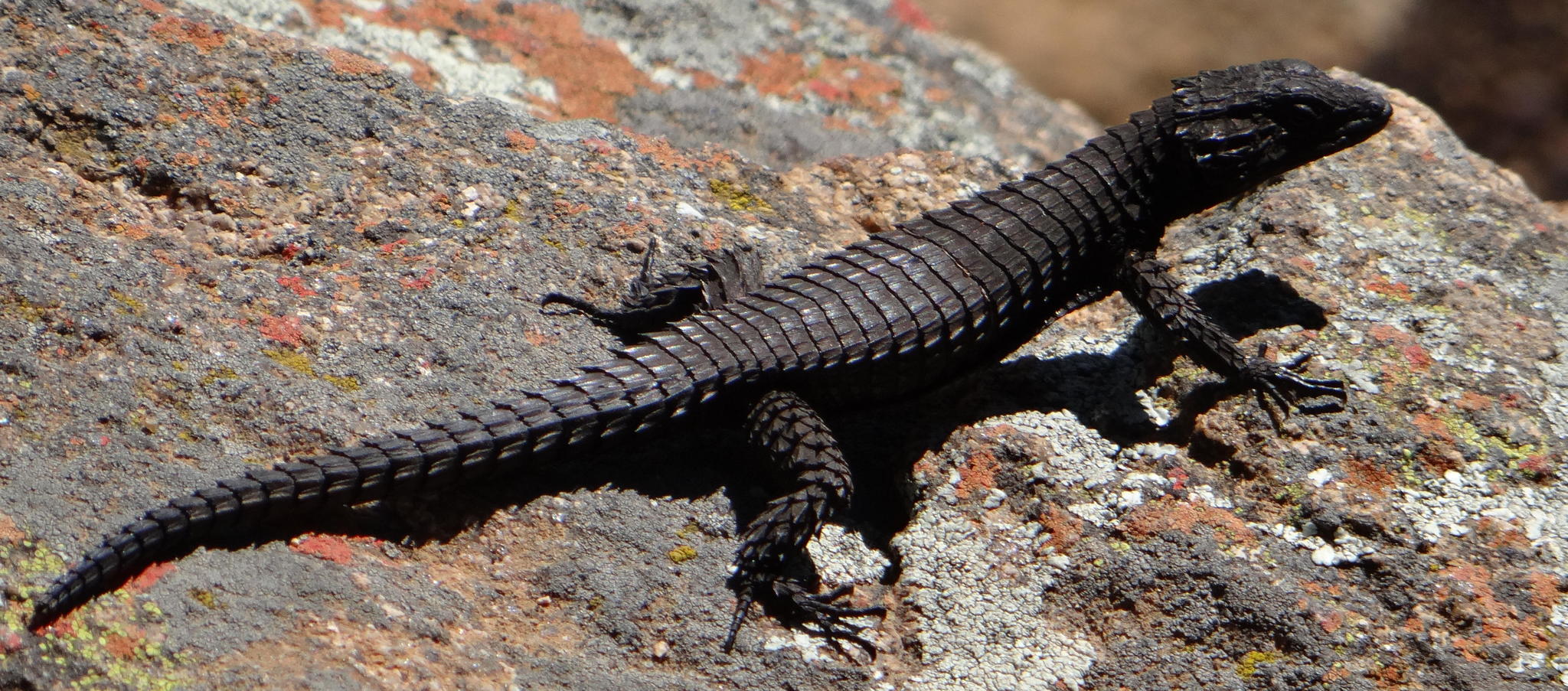
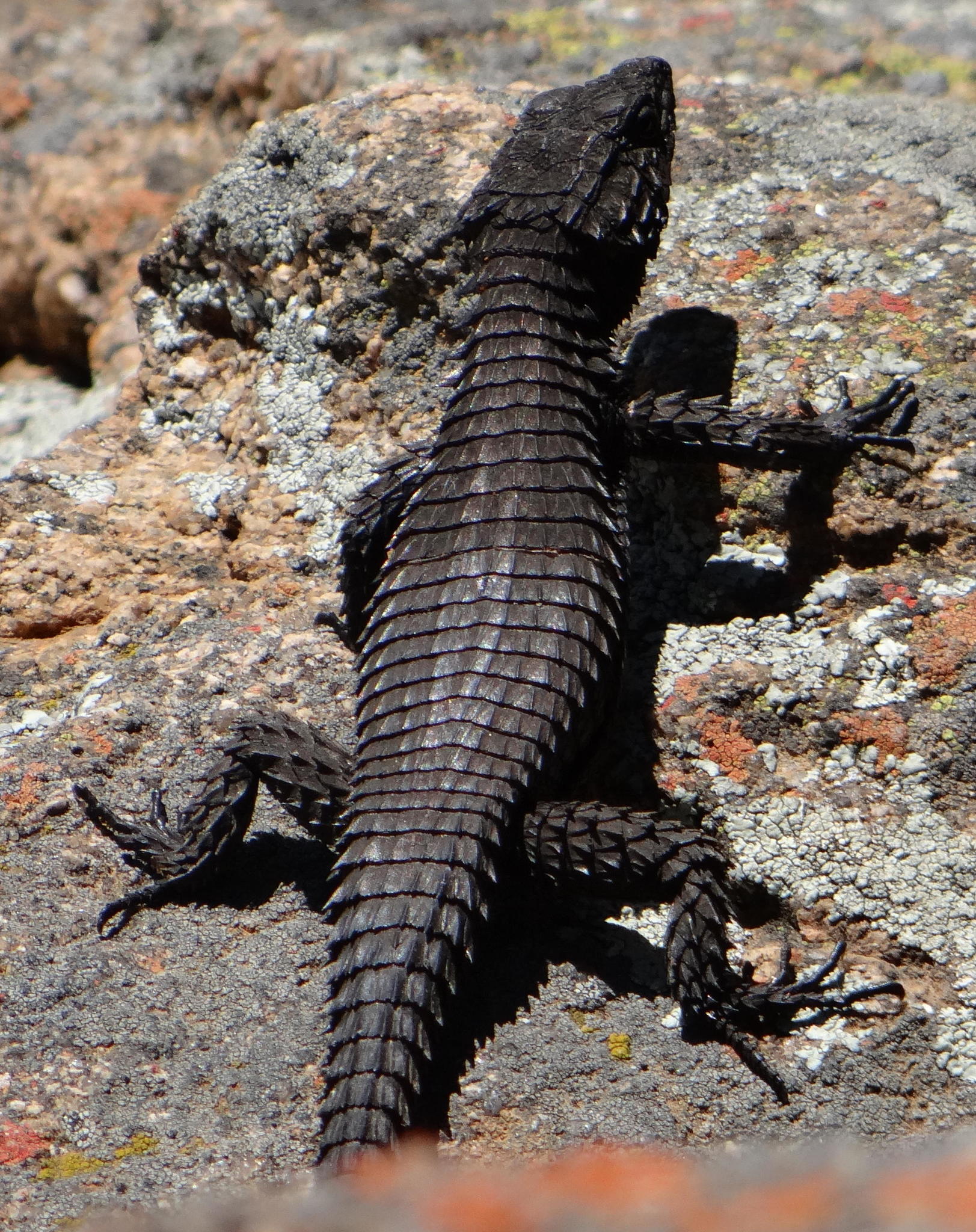
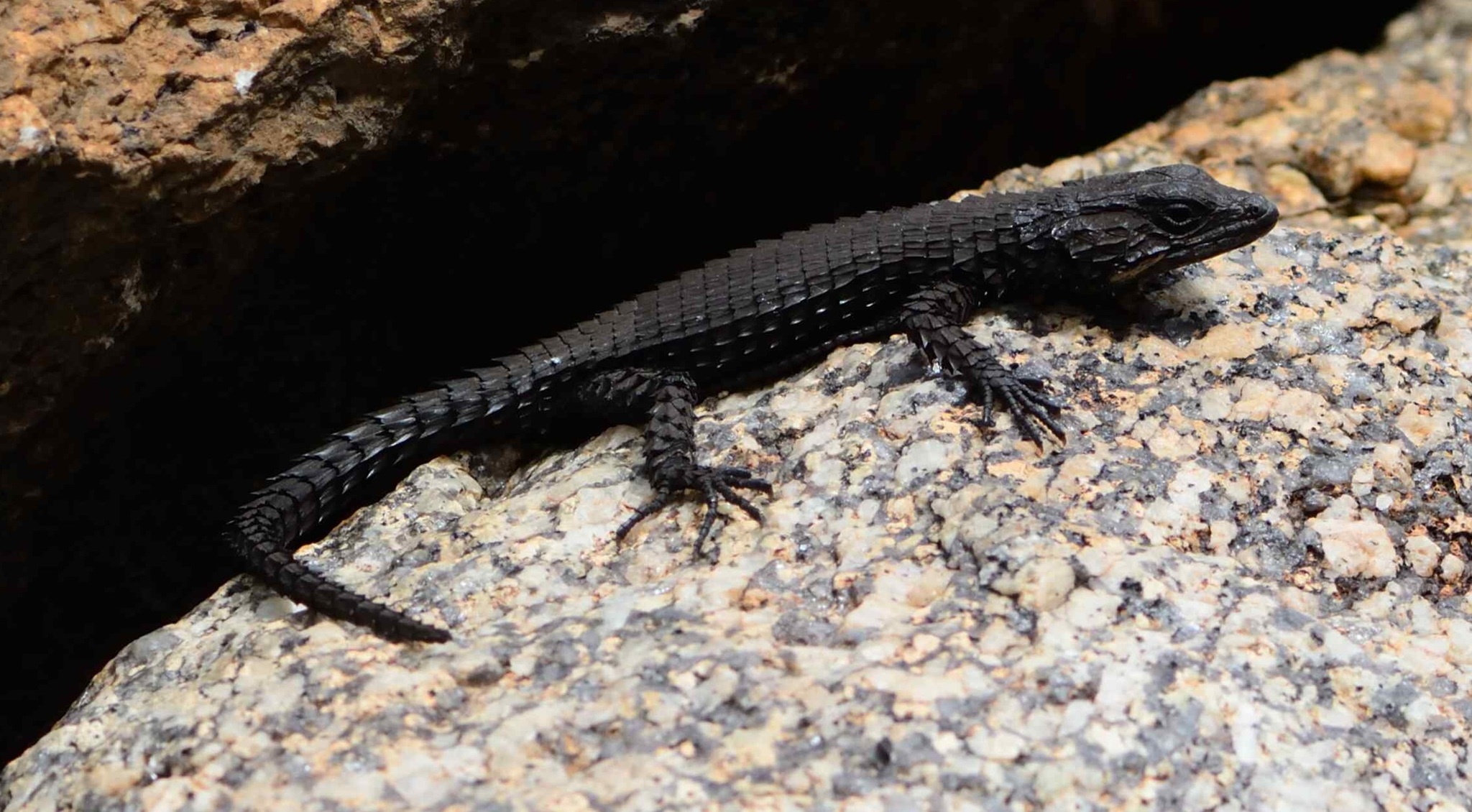
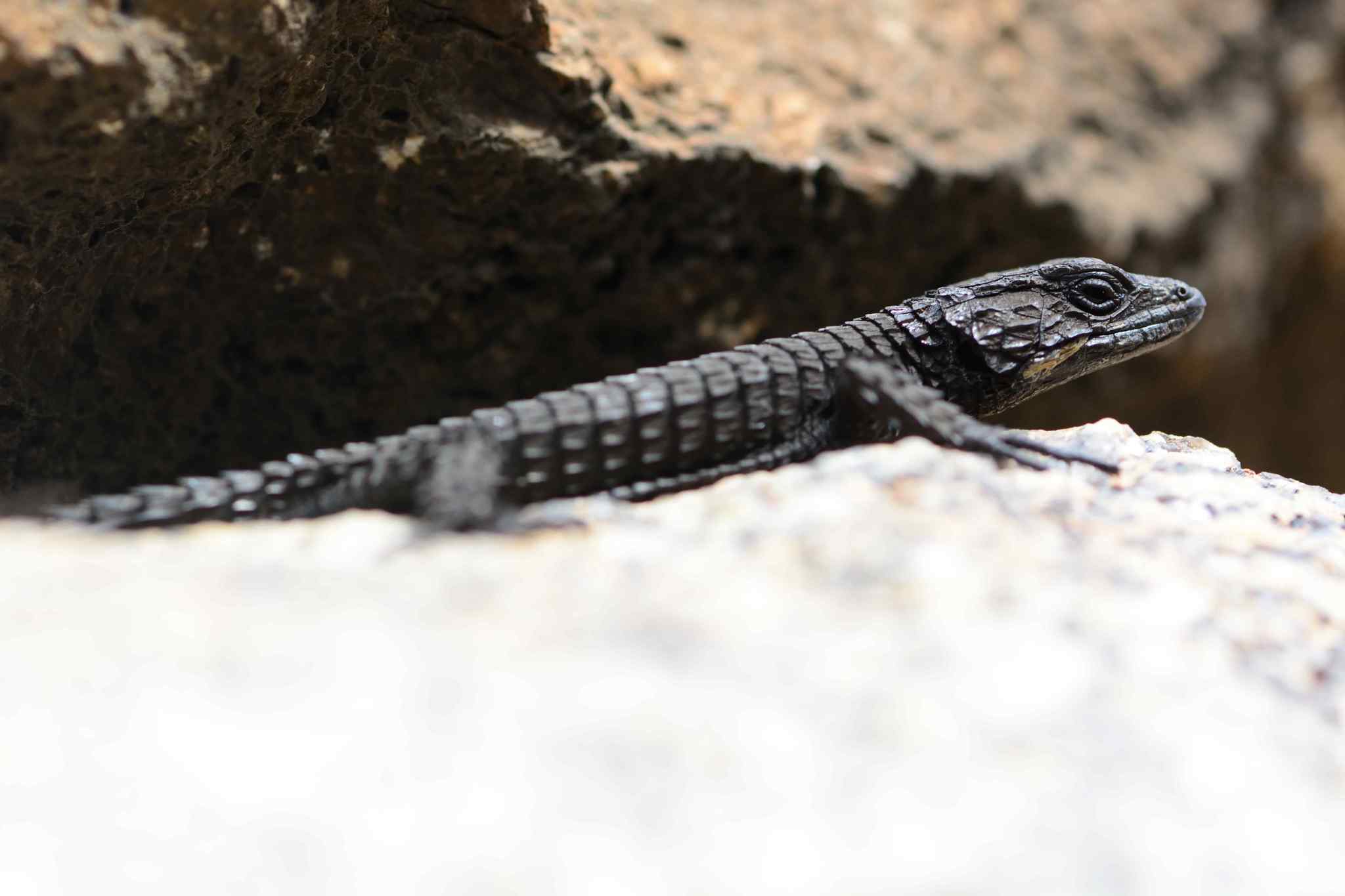
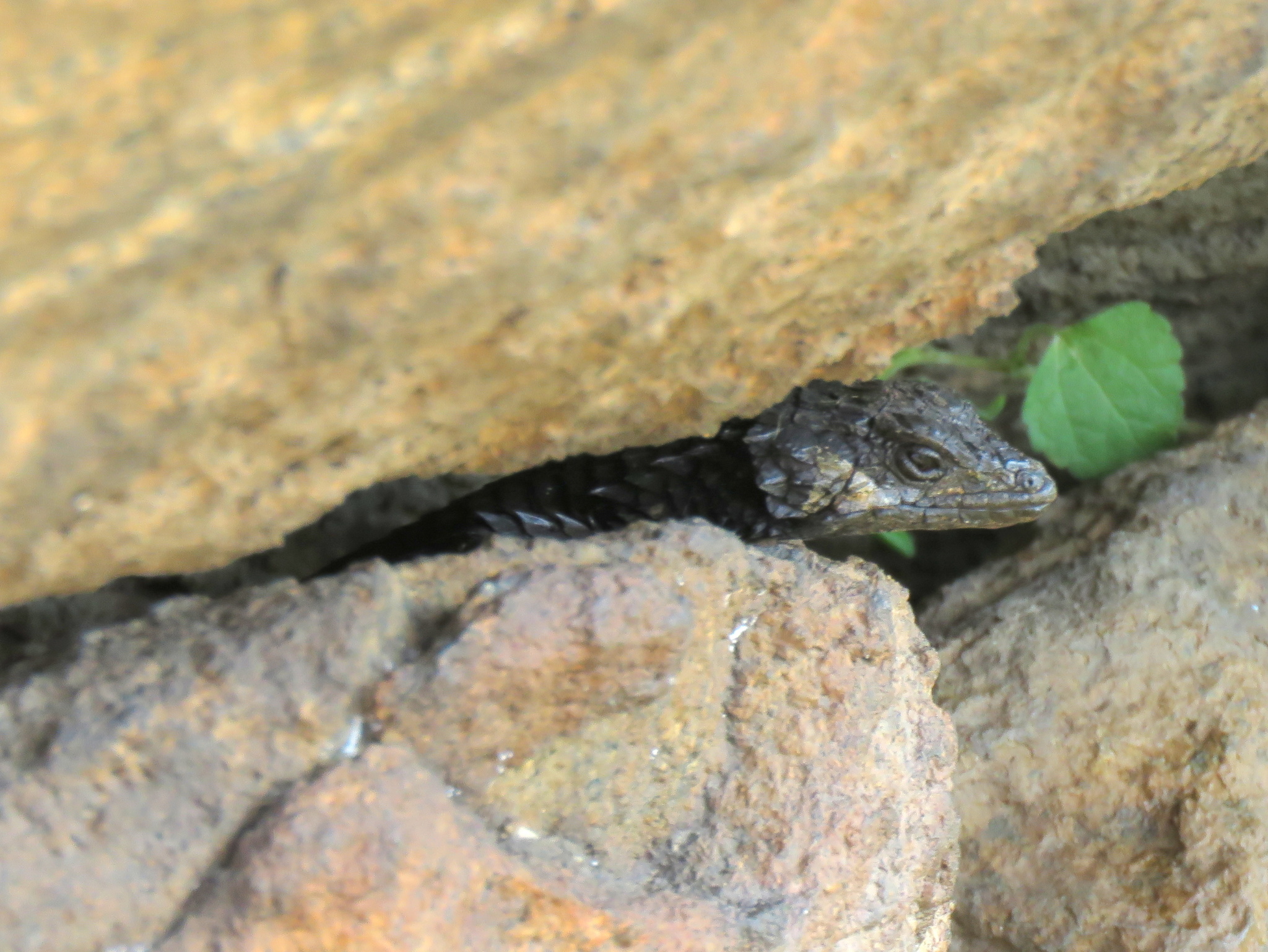
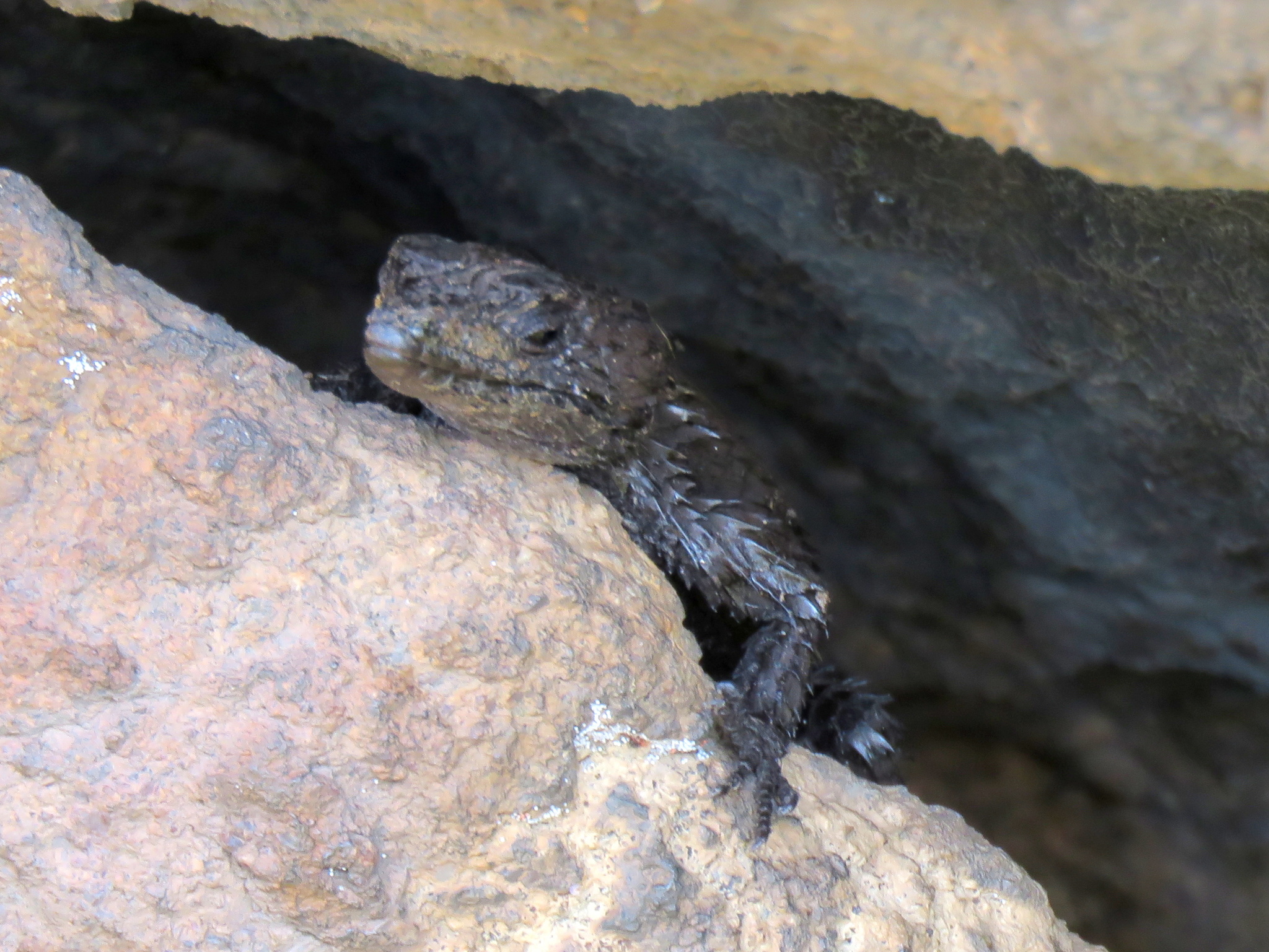
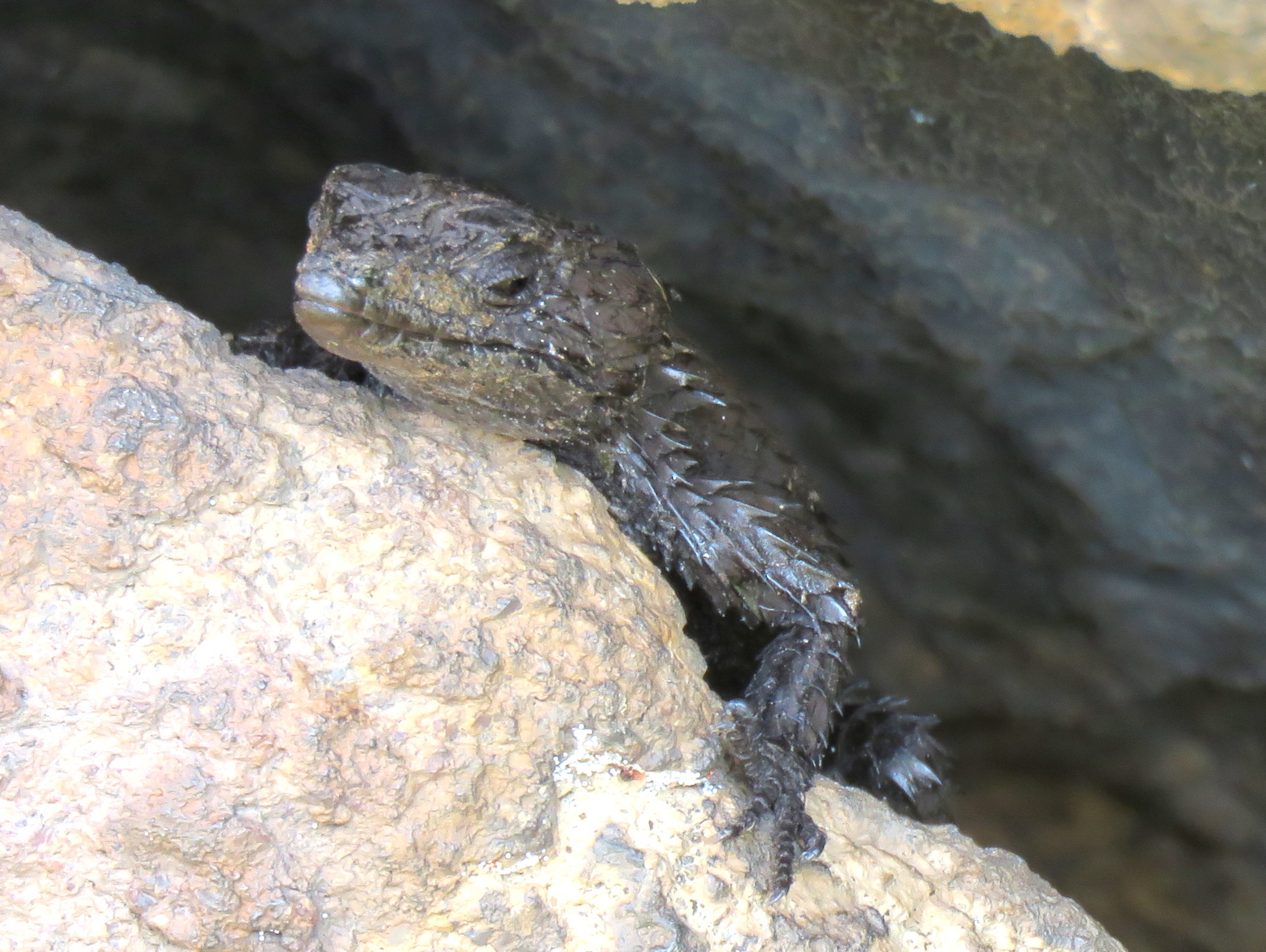
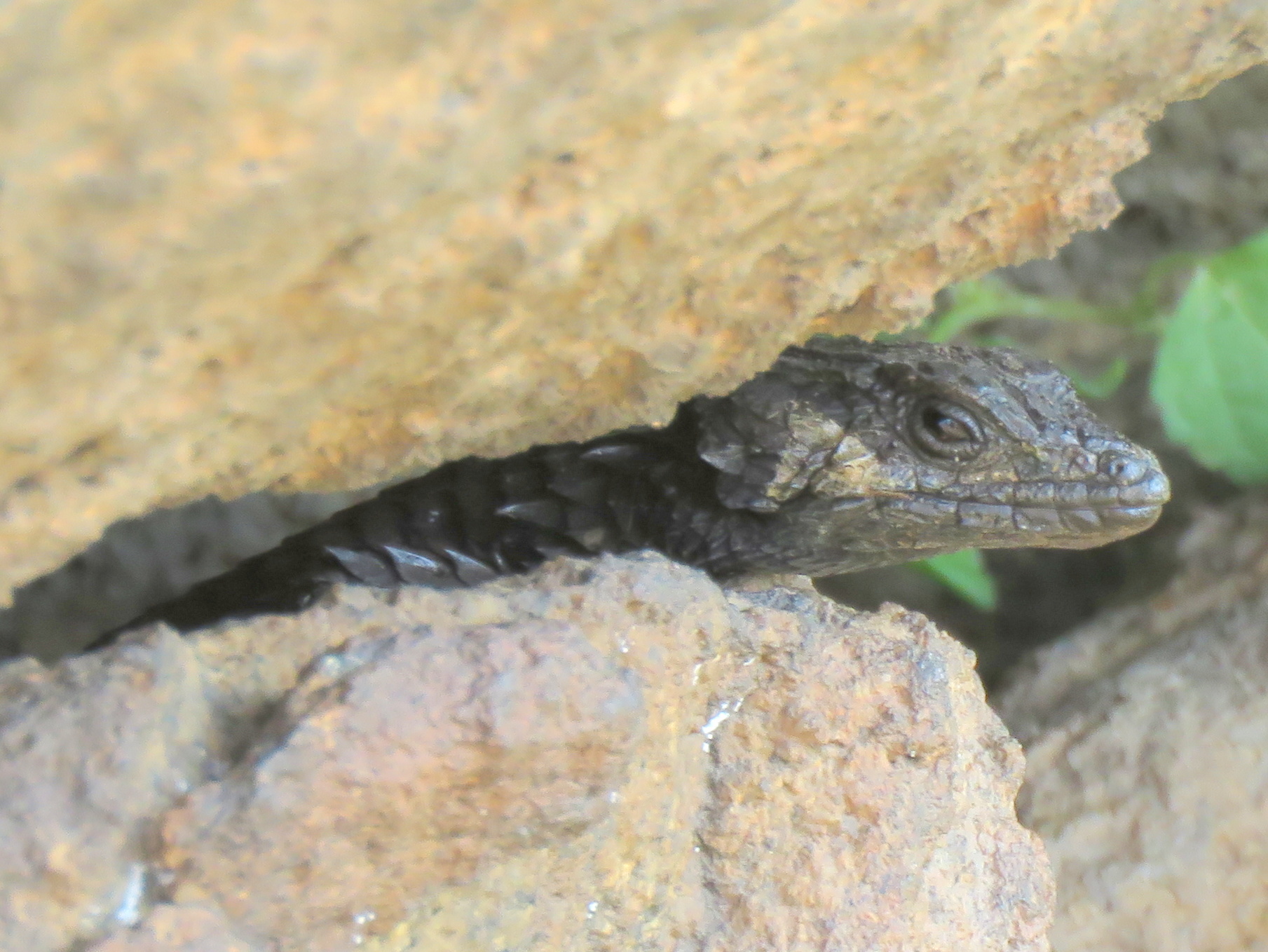
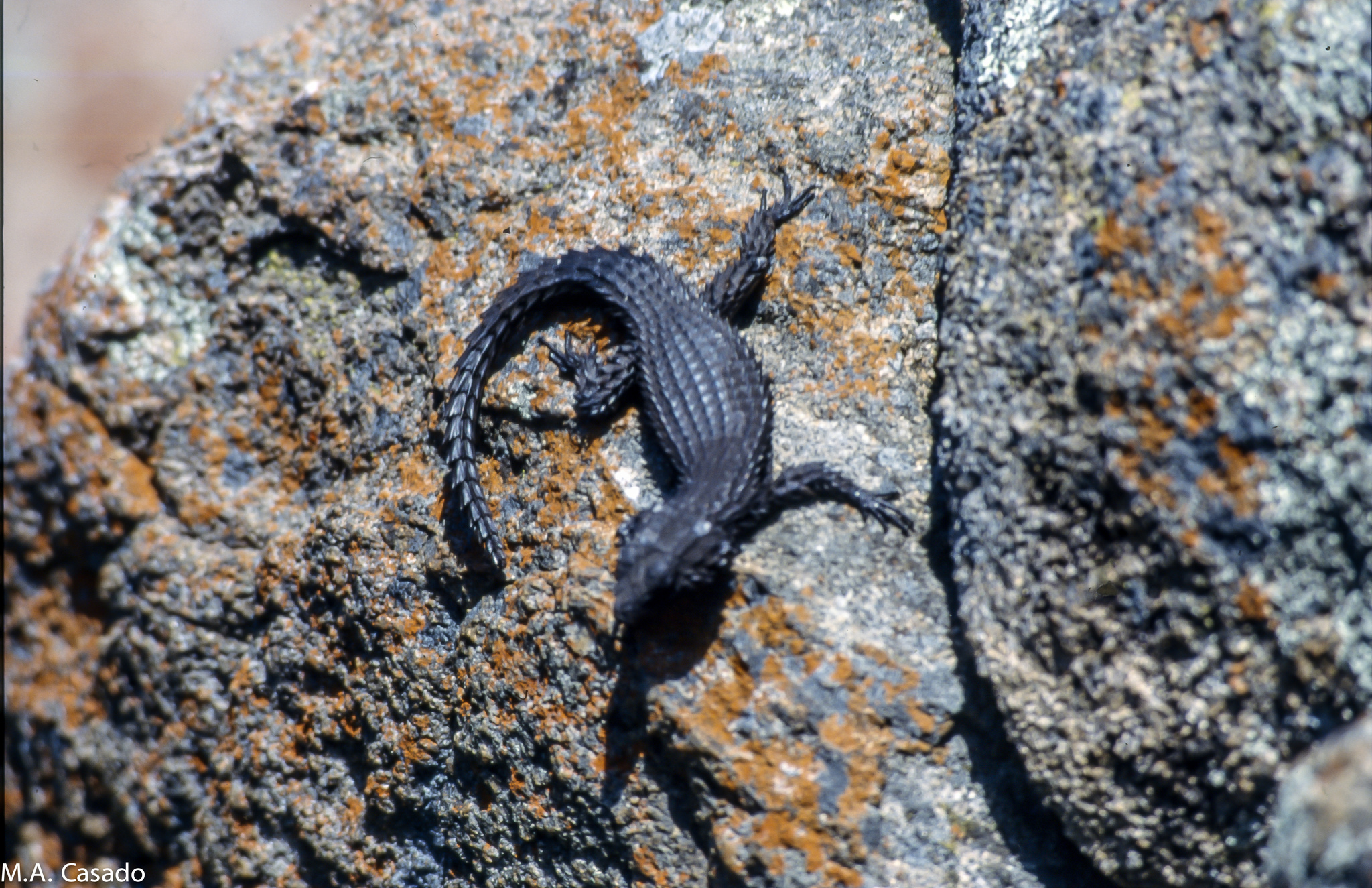
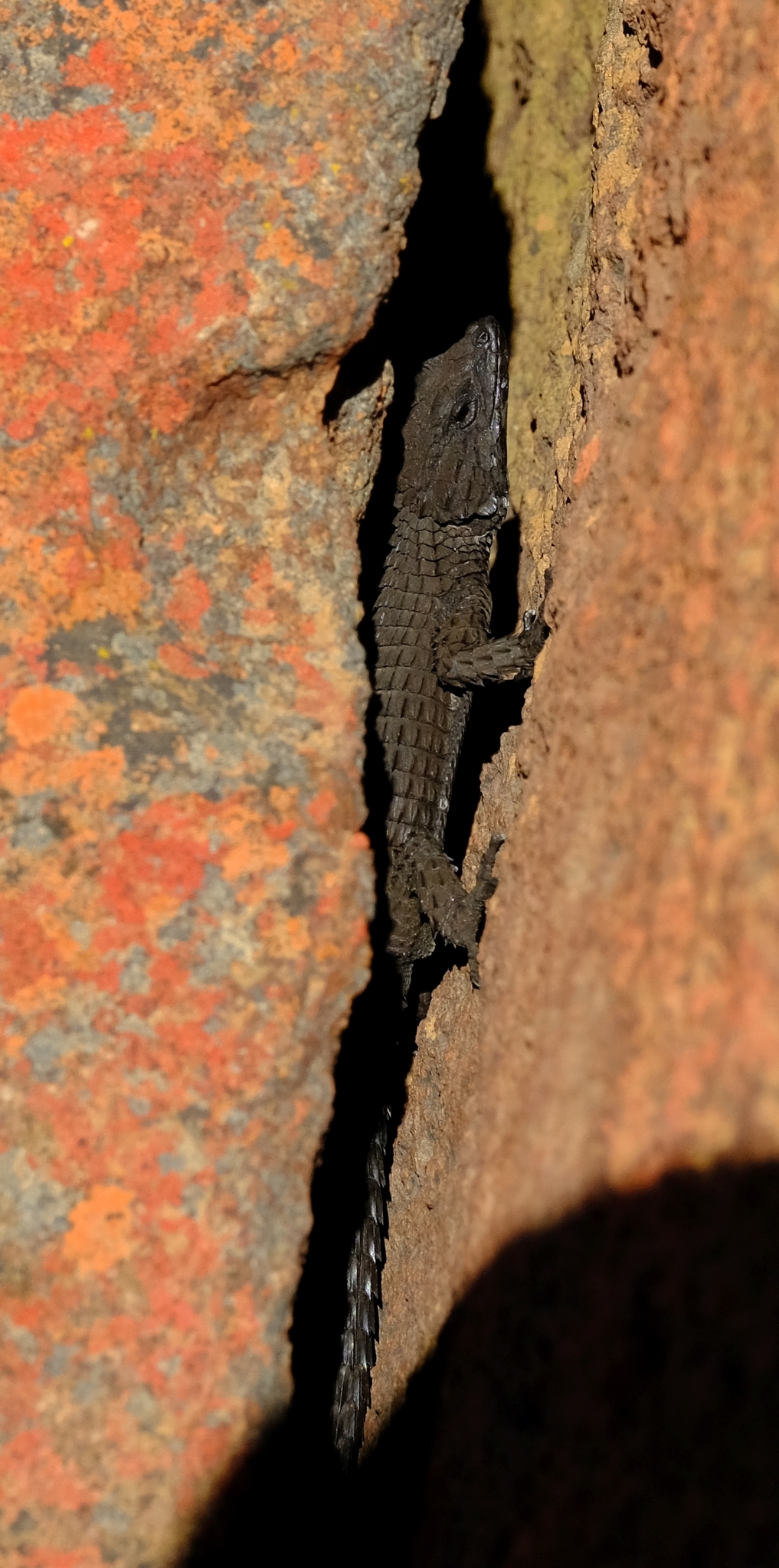
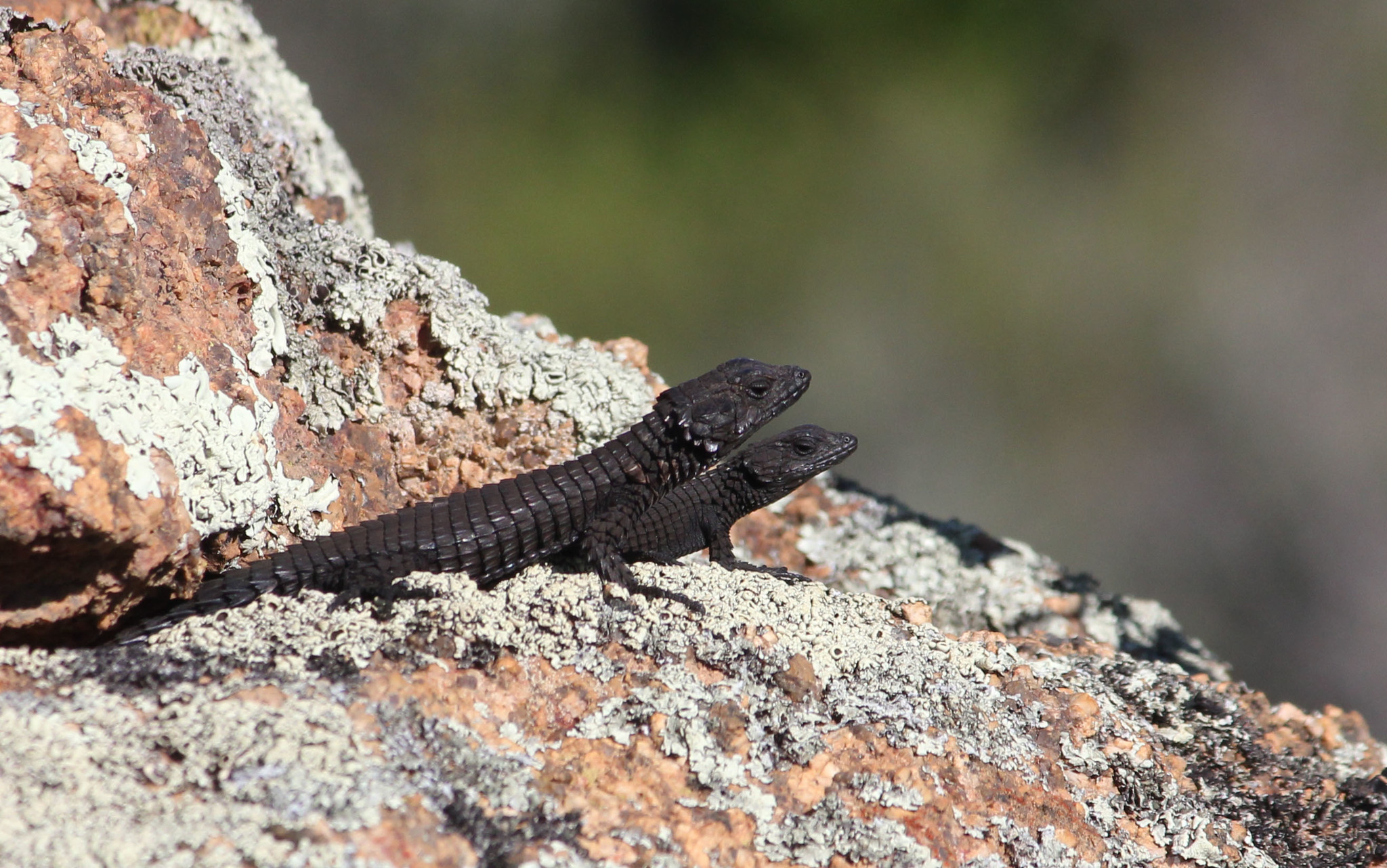
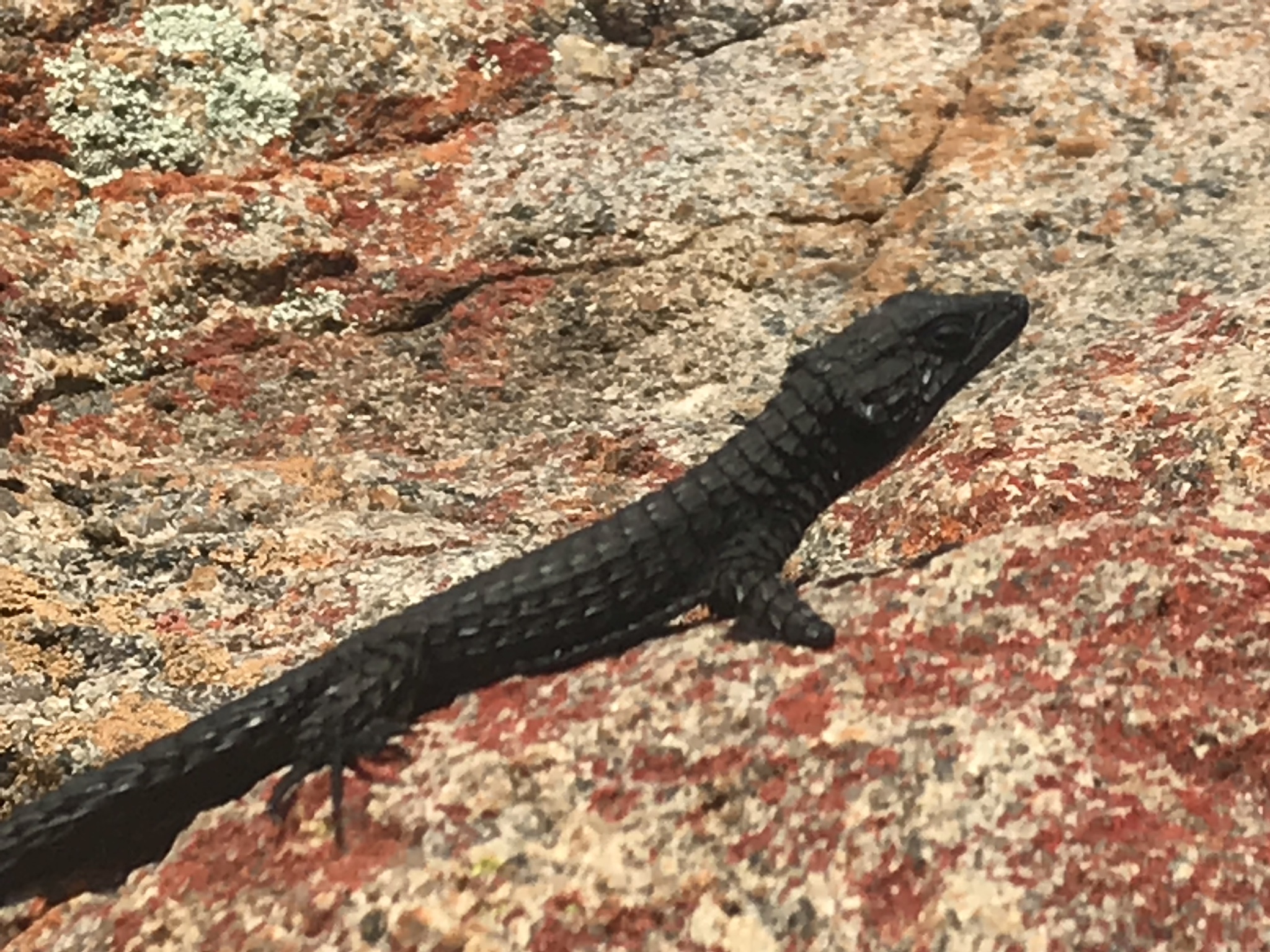
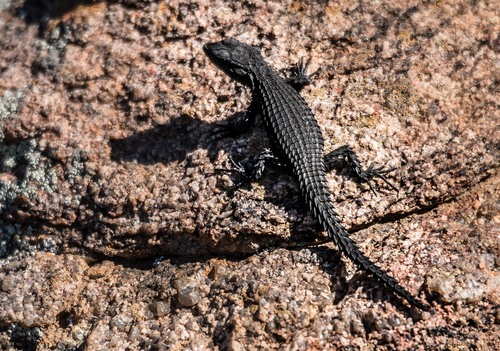
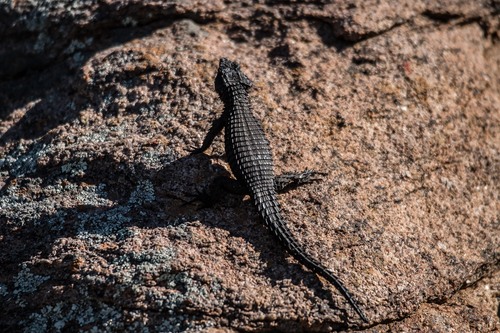
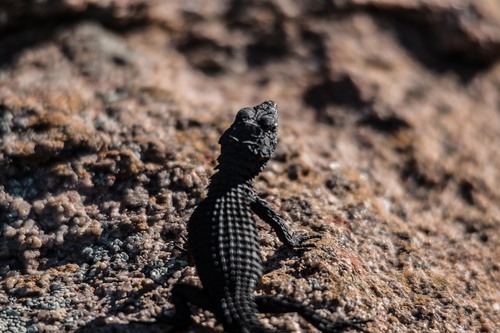
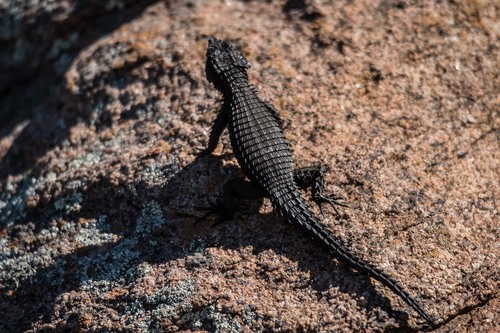
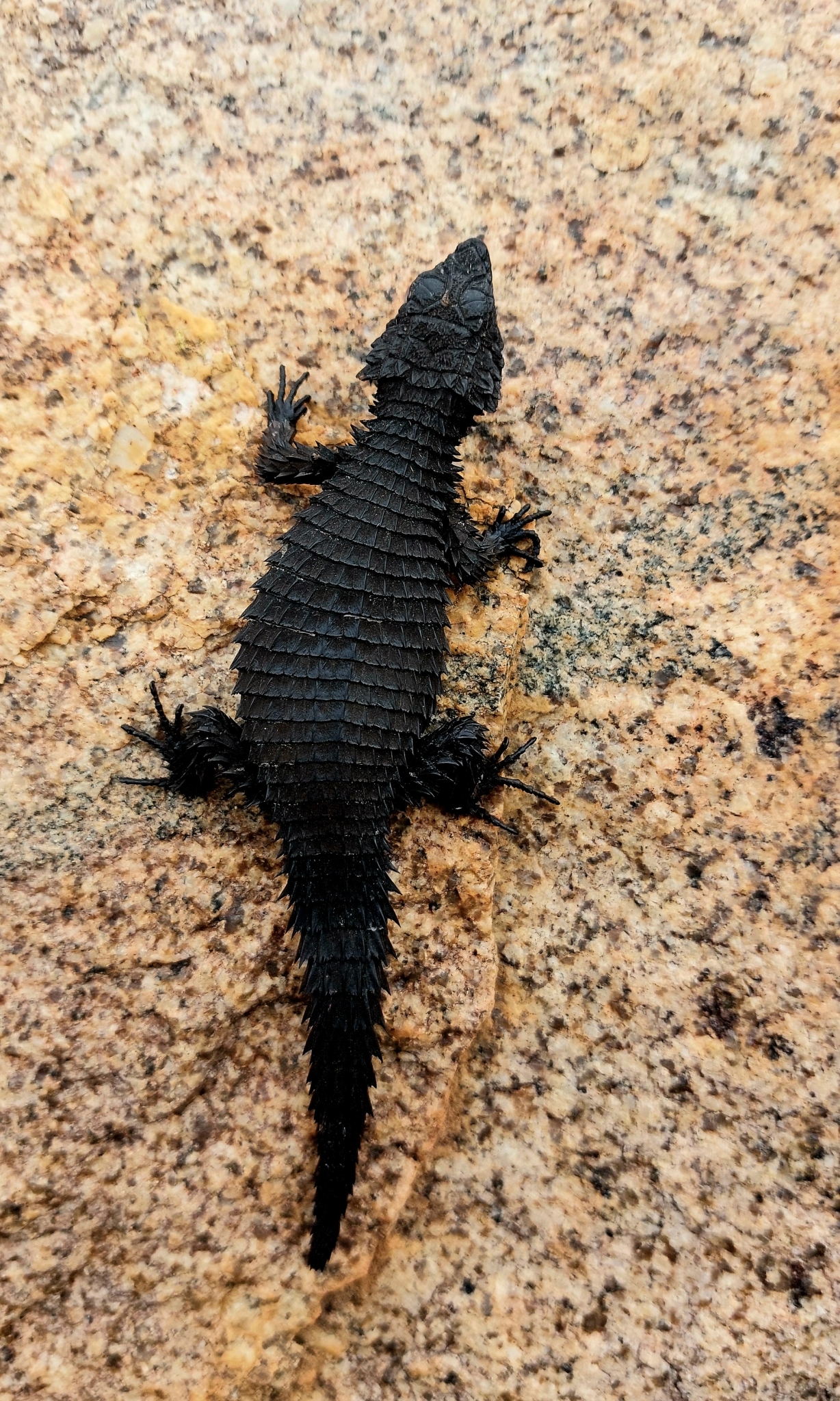
The description was extracted from Branch (1998): This small, thin lizard has a flattened body and a triangular, flat head with rough shields. The nasals are swollen and in contact, separating the rostral and frontonasal. The subocular borders the lip. The lower eyelids are opaque. There are six occipitals, the middle pair of which is often small. The dorsal scales are keeled on the back and moderately spiny on the flanks, in 22-24 transverse and 16 longitudinal rows. The ventrals are mostly smooth, and in 12 longitudinal rows. There is a pair of enlarged preanal plates, and both sexes have 9-12 large femoral pores on each thigh. The tail has whorls of large, spiny scales. The back and tail are jet-black. The belly is very dark purple-brown, with pale yellow femoral pores and glandular scales
No separate diagnostic description was provided. Refer to the morphological description.
Type locality: Garies, Little Namaqualand, South Africa. Holotype: SAM (South African Museum)
This species was previously included in the genus Cordylus, but with the erection of the genus Namazonurus (Stanley et al., 2011), there are no remaining taxonomic issues (Tolley et al., 2023).
South Africa
This species occurs in the Namaqualand region in the northwestern parts of South Africa in the Northern and Western Cape provinces (Tolley et al., 2023).
These lizards move by running and move their fore feet diagonally in unison—the right fore foot with the left hand and the left fore foot with the right hand. The body's bent is simultaneously reversed. The shoulders, hips, and other joints in the legs as well as the bending of the back all contribute to moving the feet forward. Leg and back muscles work together to power running (Alexander, 2012).
Carnivore - Insectivore (insect-eating)
Peers' Girdled Lizard feeds on large insects and caterpillars (Branch, 1998).
All Girdled Lizards are viviparous, giving birth to a few (1-6) large babies each year. Some live in diffuse colonies, in which the males are territorial during the breeding season. Although they usually have drab coloration, adult males do have active femoral and glandular pores, and appear to use chemical clues to signal status and territorial boundaries. Sexual maturity is reached 2-4 years, and they are long lived (up to 25 years is known in captivity) (Branch, 1998).
No data.
Fynbos, Succulent Karoo, Nama-Karoo
This map contains point-based occurrences at different locations
Occurrence in African countries and South African provinces. Residence status indicates if a taxon is indigenous, endemic, or alien in a specific region. This data is based on specimen records and literature.
FSA
SA
BOT
NAM
ESW
LES
WC
EC
NC
FS
GA
KZN
LP
MP
NW
Absent
Indigenous
Endemic
Naturalised
Invasive
Names and Sources
| Common Name | Language |
|---|---|
| Peers Nama Lizard, Peers'Girdled Lizard , Hewitt S Spmytail Lizard | En |
| Peers se Gordelakkedis | En |
| Peers' Girdled Lizard | En |
| Hewitts Spinytail Lizard | En |
Classification
KINGDOM Animalia
PHYLUM Chordata
CLASS Reptilia
ORDER Squamata
FAMILY Cordylidae
GENUS Namazonurus
SPECIES peersi
No results found for Namazonurus peersi (Hewitt, 1932)
This species is listed in CITES Appendix II, but only four wild-caught individuals have been exported from South Africa for the pet trade in 1992 (UNEP-WCMC, 2020), so the pet trade is not considered a threat. In 1989, 100 individuals were reportedly exported for trade from Tanzania, but this species does not occur there and the actual species in trade was therefore likely misidentified or purposely misrepresented.
10 results for Namazonurus peersi (Hewitt, 1932)
This map contains point-based occurrences at different locations
1932
JOURNAL ARTICLE
Some new species and subspecies of South African batrachians and lizardsHewitt, J.. 1932. Some new species and subspecies of South African batrachians and lizards Vol. 7(1). Pietermaritzburg pp.105-128.
2011
JOURNAL ARTICLE
Between a rock and a hard polytomy: rapid radiation in the rupicolous girdled lizards (Squamata: Cordylidae)Branch, W., Bauer, A., Stanley, E., Jackman, T., Mouton, P.. 2011. Between a rock and a hard polytomy: rapid radiation in the rupicolous girdled lizards (Squamata: Cordylidae) Vol. 58 pp.53–70.
1998
BOOK
Field Guide to Snakes and other Reptiles of Southern AfricaBranch, B.. 1998. Field Guide to Snakes and other Reptiles of Southern Africa. Cape Town. Struik Publishers.
2020
WEBSITE
CITES Trade DatabaseUNEP-WCMC, . 2020. CITES Trade Database. https:// trade.cites.org/. (Accessed: 15 September 2020).
2012
JOURNAL ARTICLE
Locomotion of ReptilesAlexander, R.. 2012. Locomotion of Reptiles Vol. 121 pp.1-4.
2023
BOOK
Conservation status of the reptiles of South Africa, Eswatini and LesothoTolley, K., Burger, M., Alexander, G., Pietersen, D., Conradie, W., Weeber, J.. 2023. Conservation status of the reptiles of South Africa, Eswatini and Lesotho Vol. Suricata 10. Pretoria. South African National Biodiversity Institute.
2005
THESIS
Aggregating behaviour in Peers’ Girdled Lizard, Cordylus peersiFell, R.. 2005. Aggregating behaviour in Peers’ Girdled Lizard, Cordylus peersi Vol. MSc. York. University of York.
Status and criteria
LC
Assessor(s)
Michael Bates
Reviewer(s)
Graham Alexander