
ANIMALIA / CHORDATA / REPTILIA / SQUAMATA / CORDYLIDAE / PLATYSAURUS / INTERMEDIUS
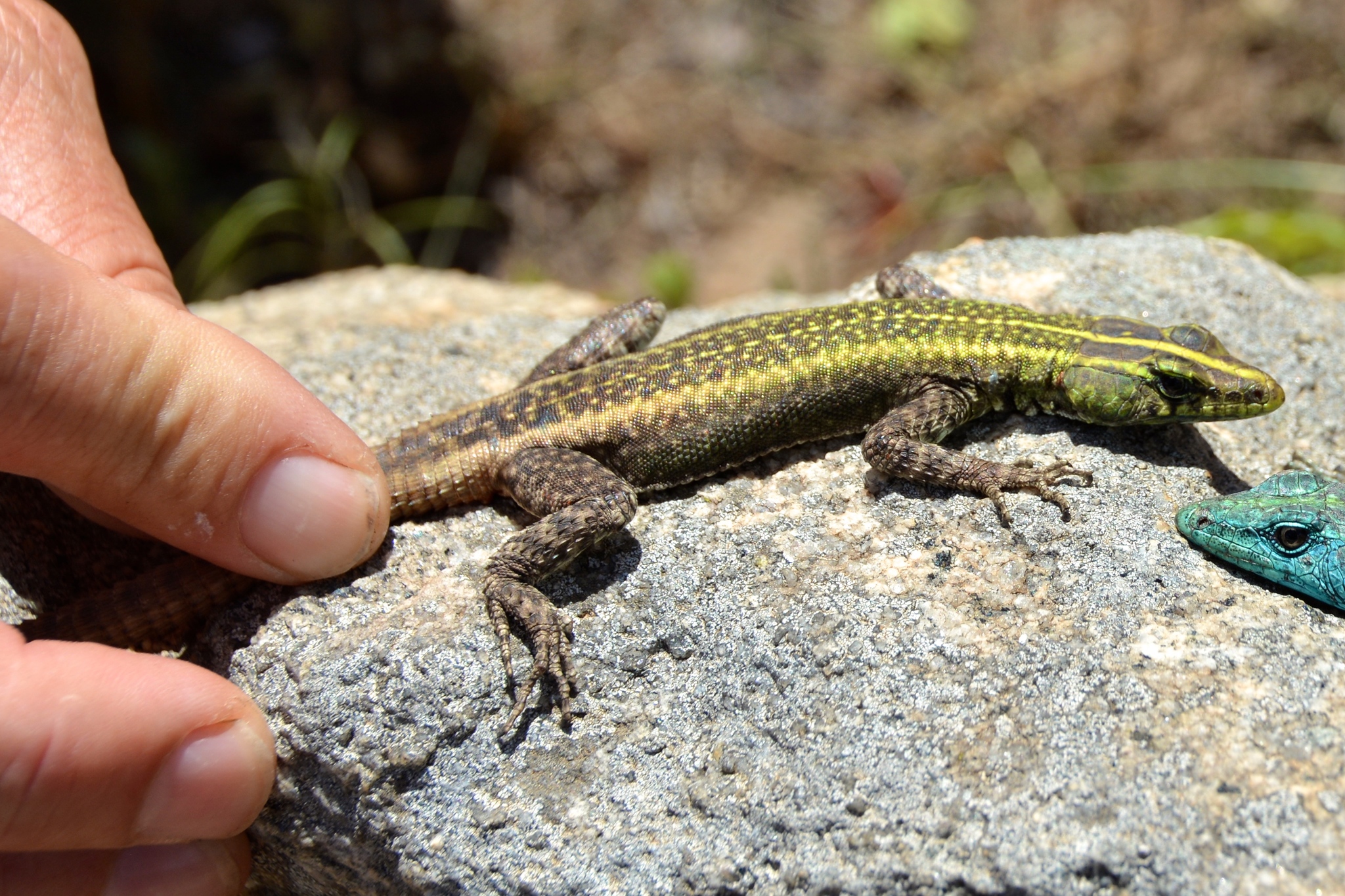
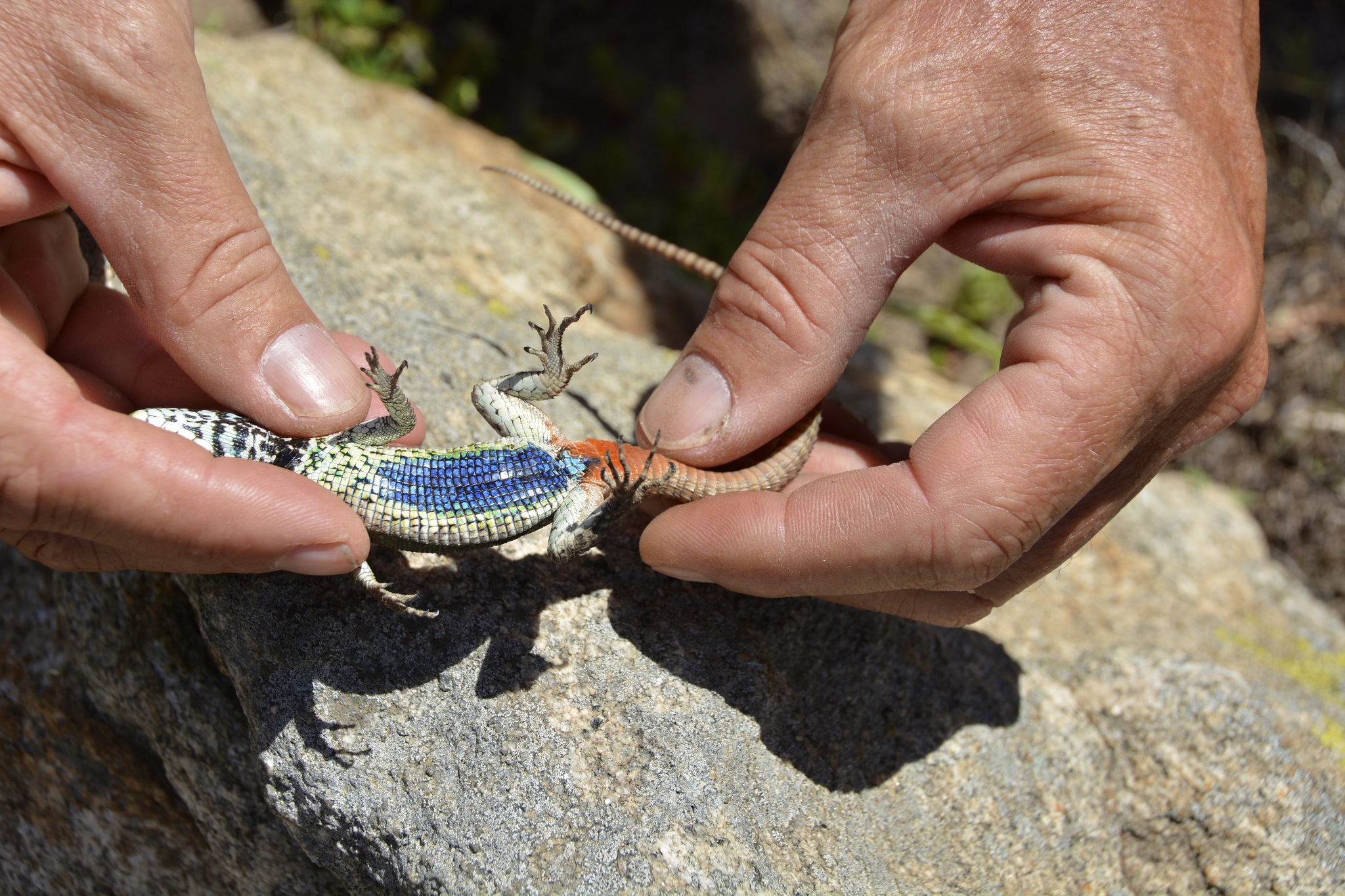
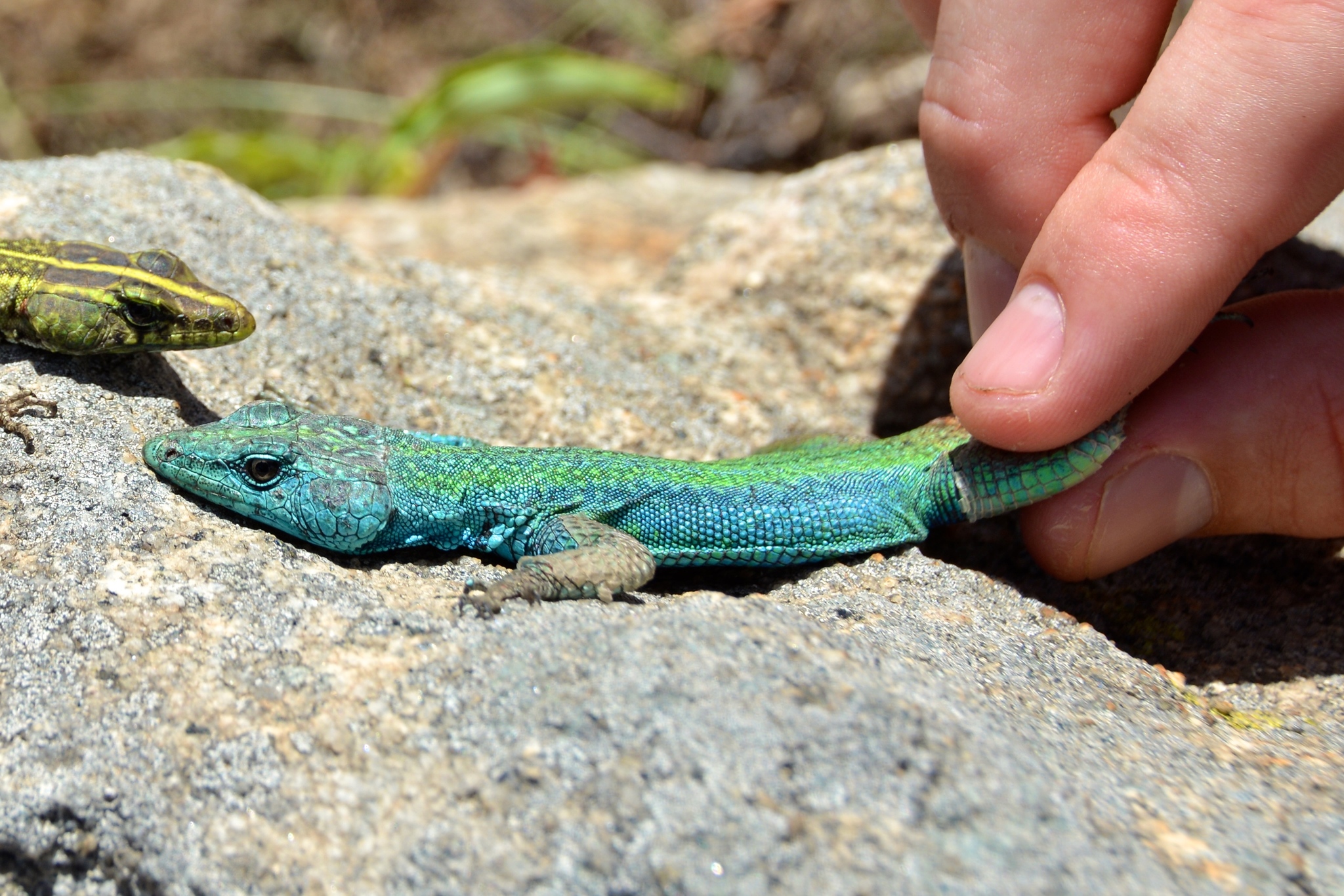
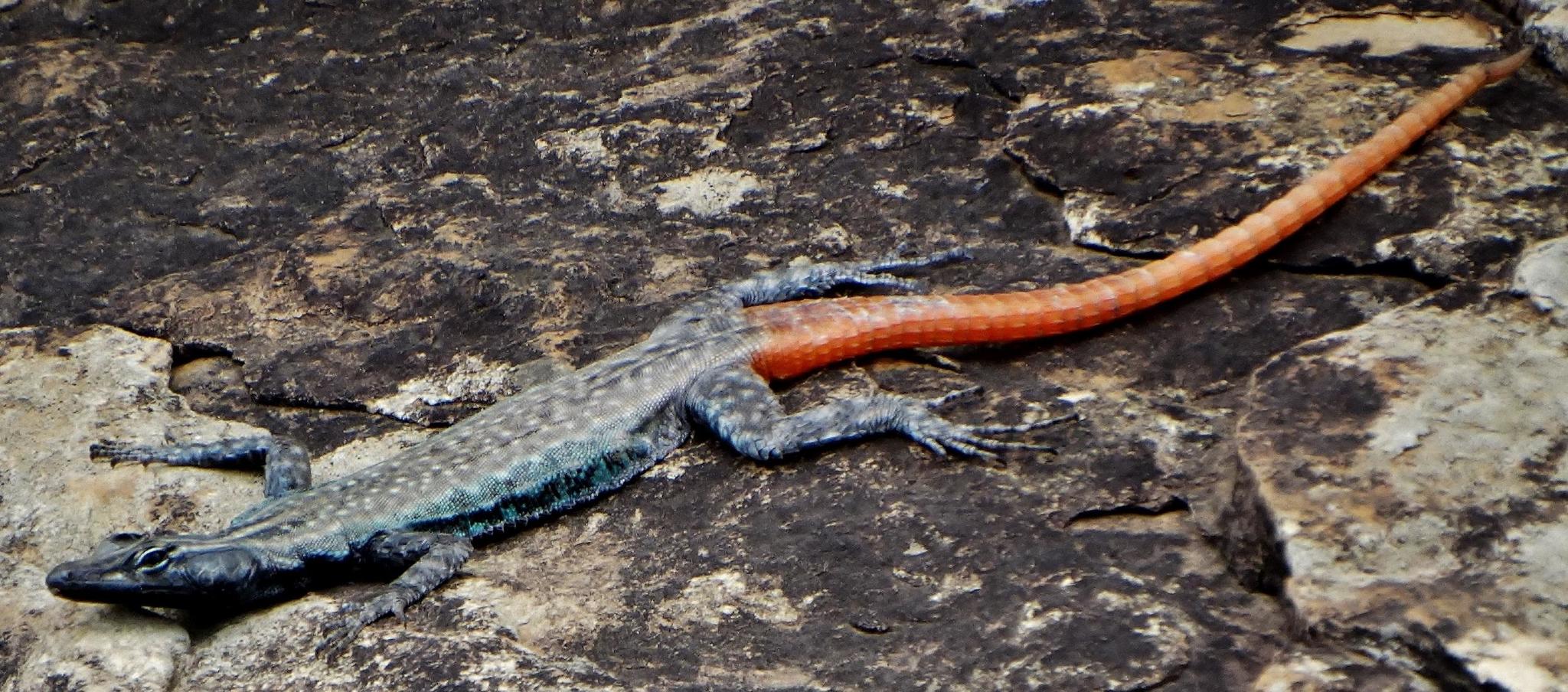
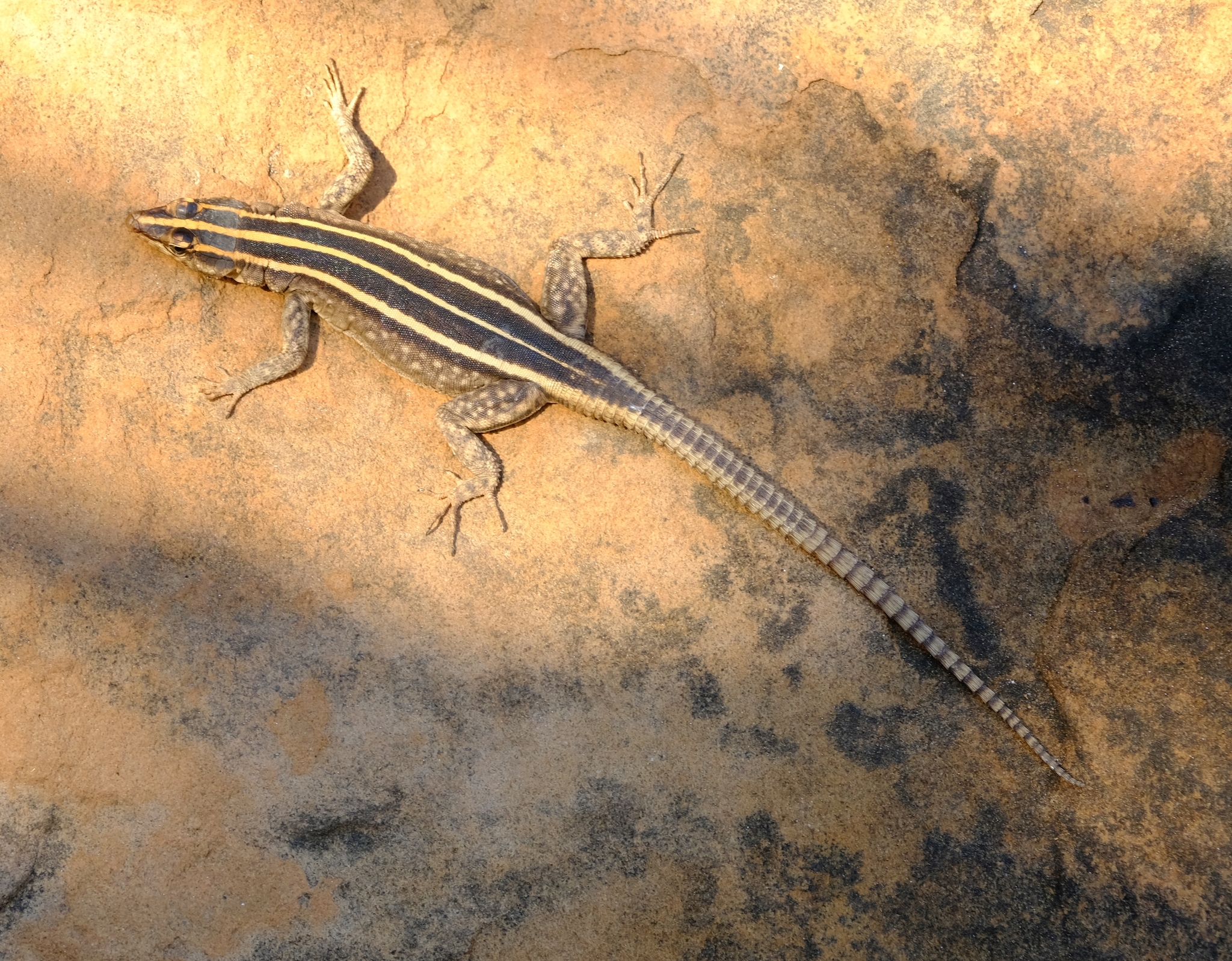
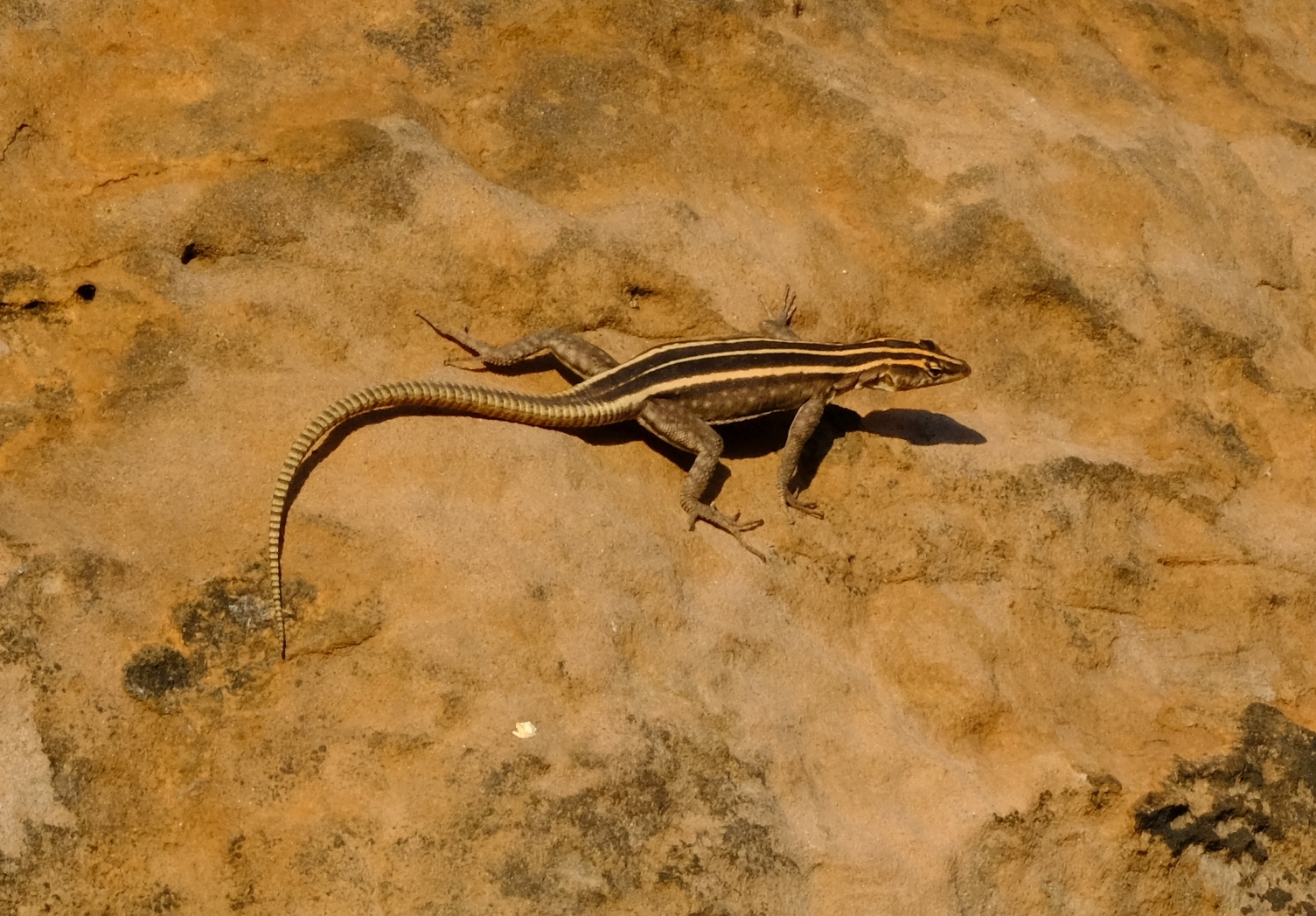
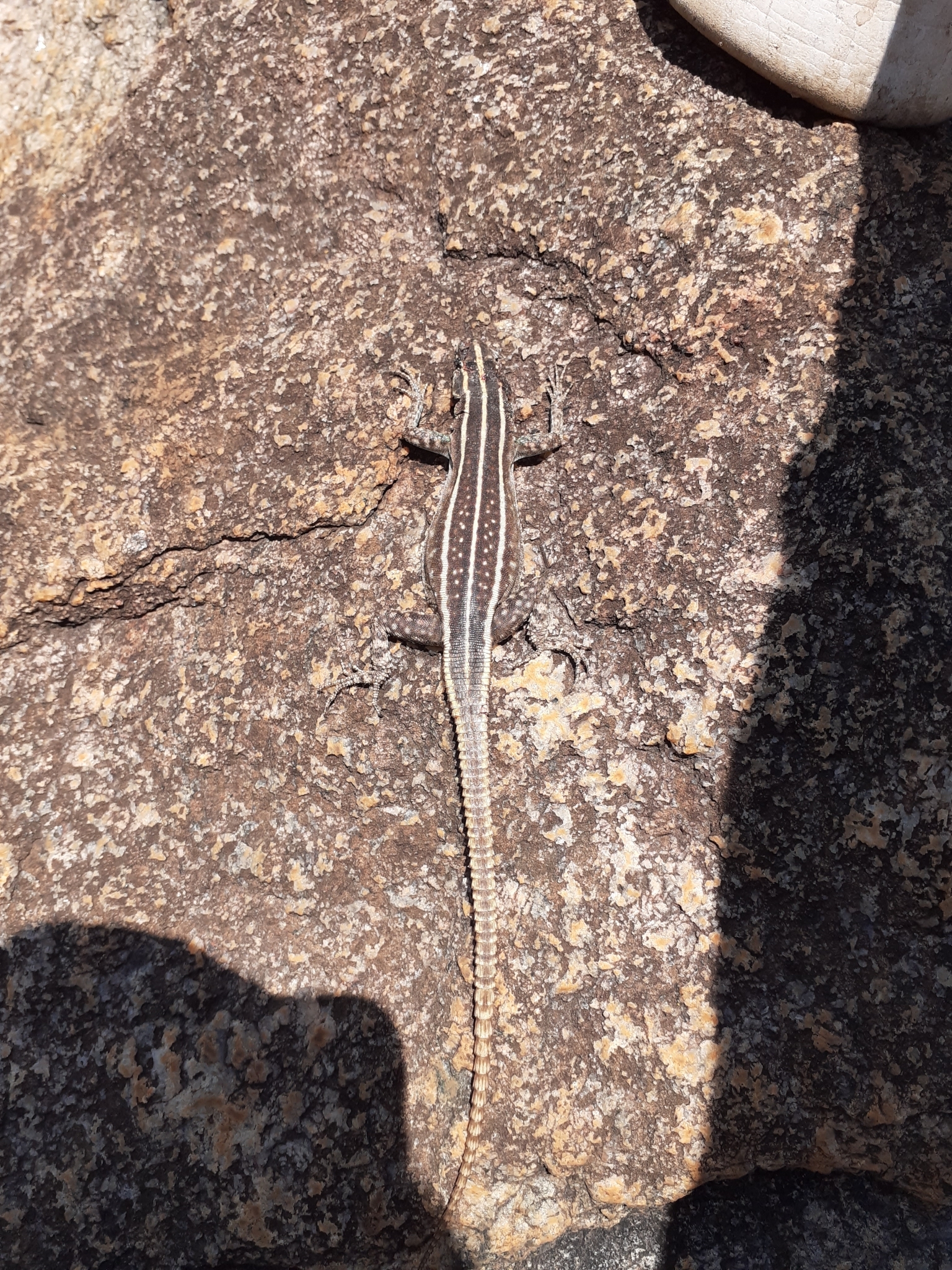
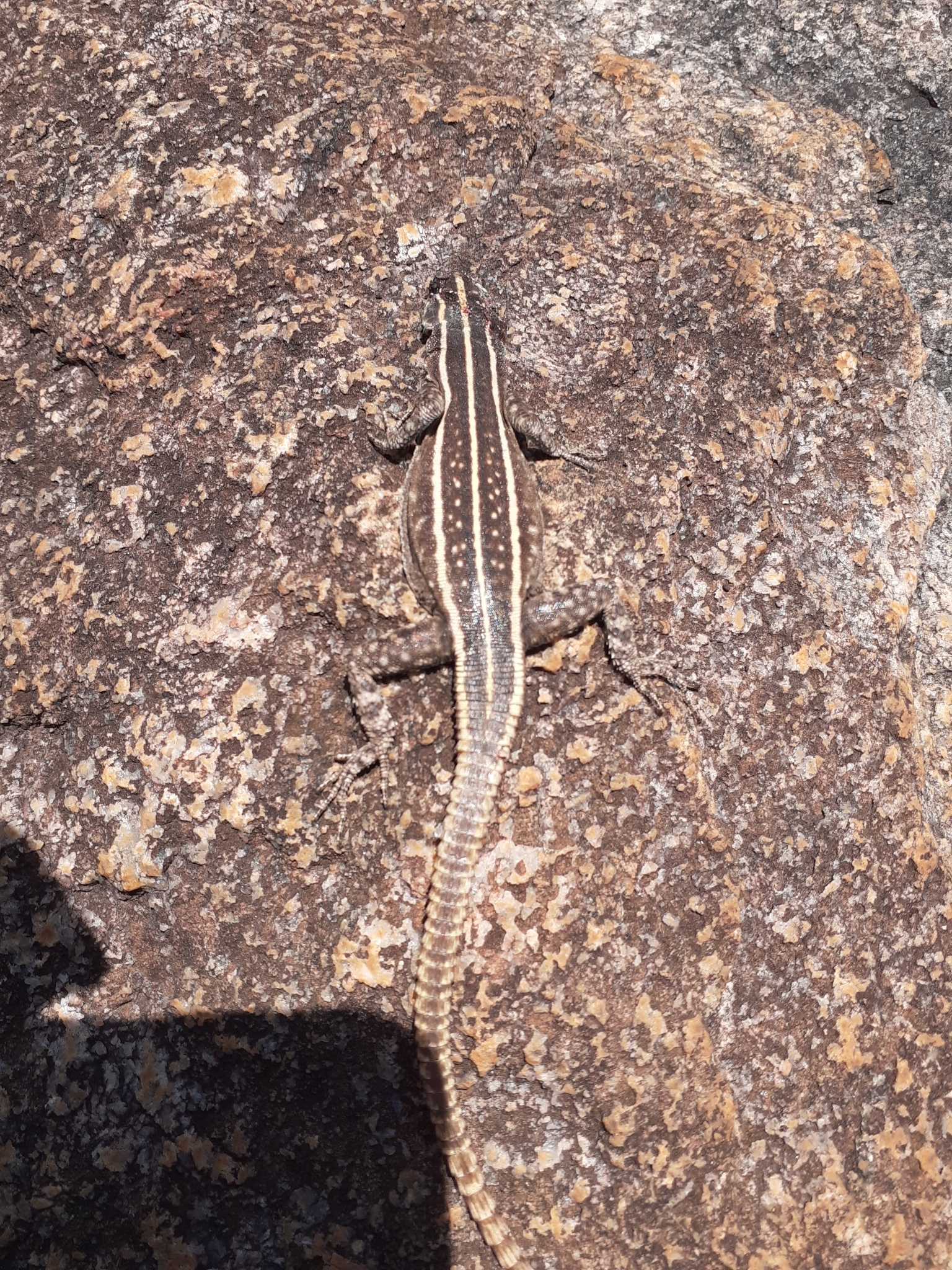
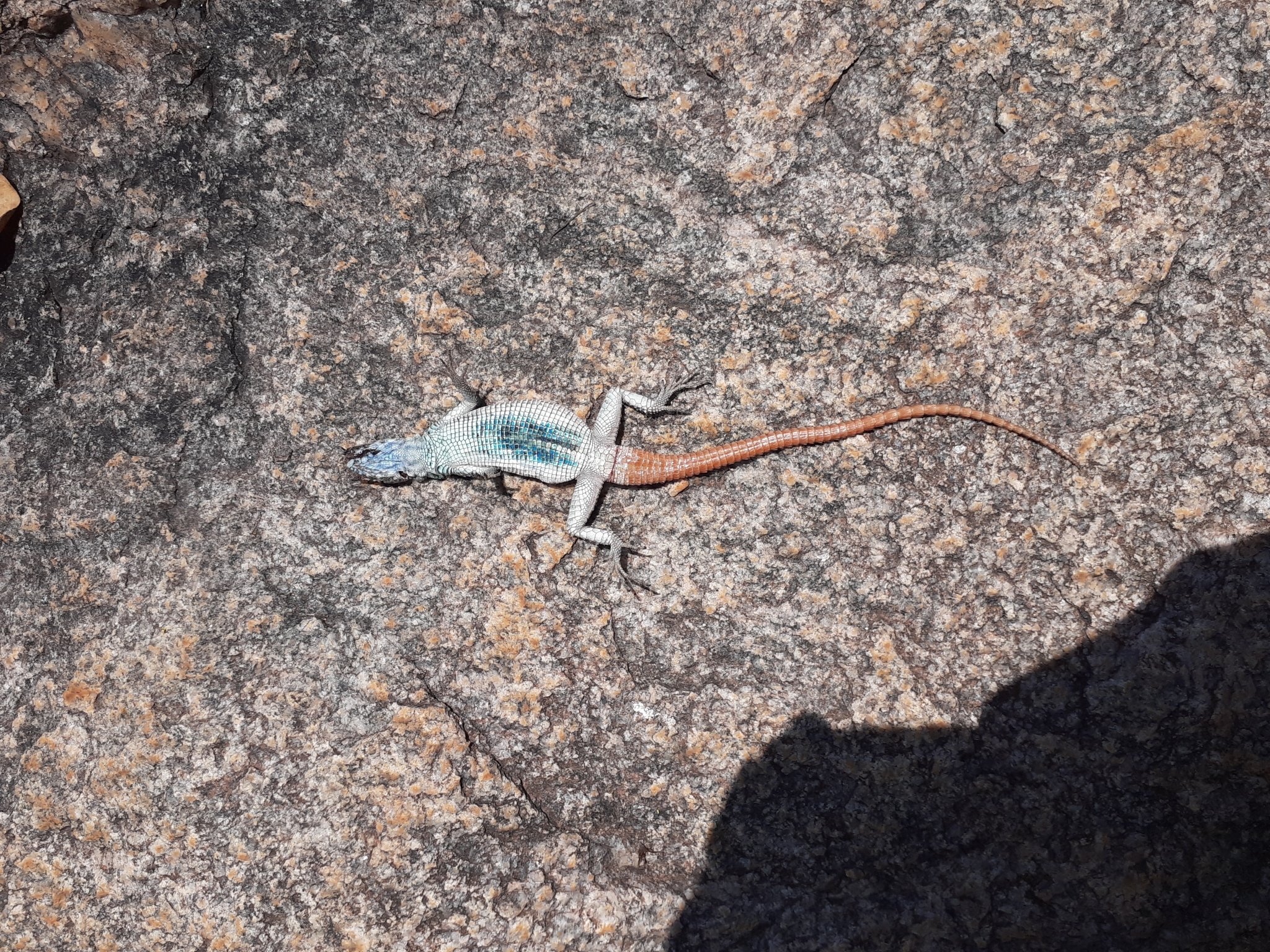
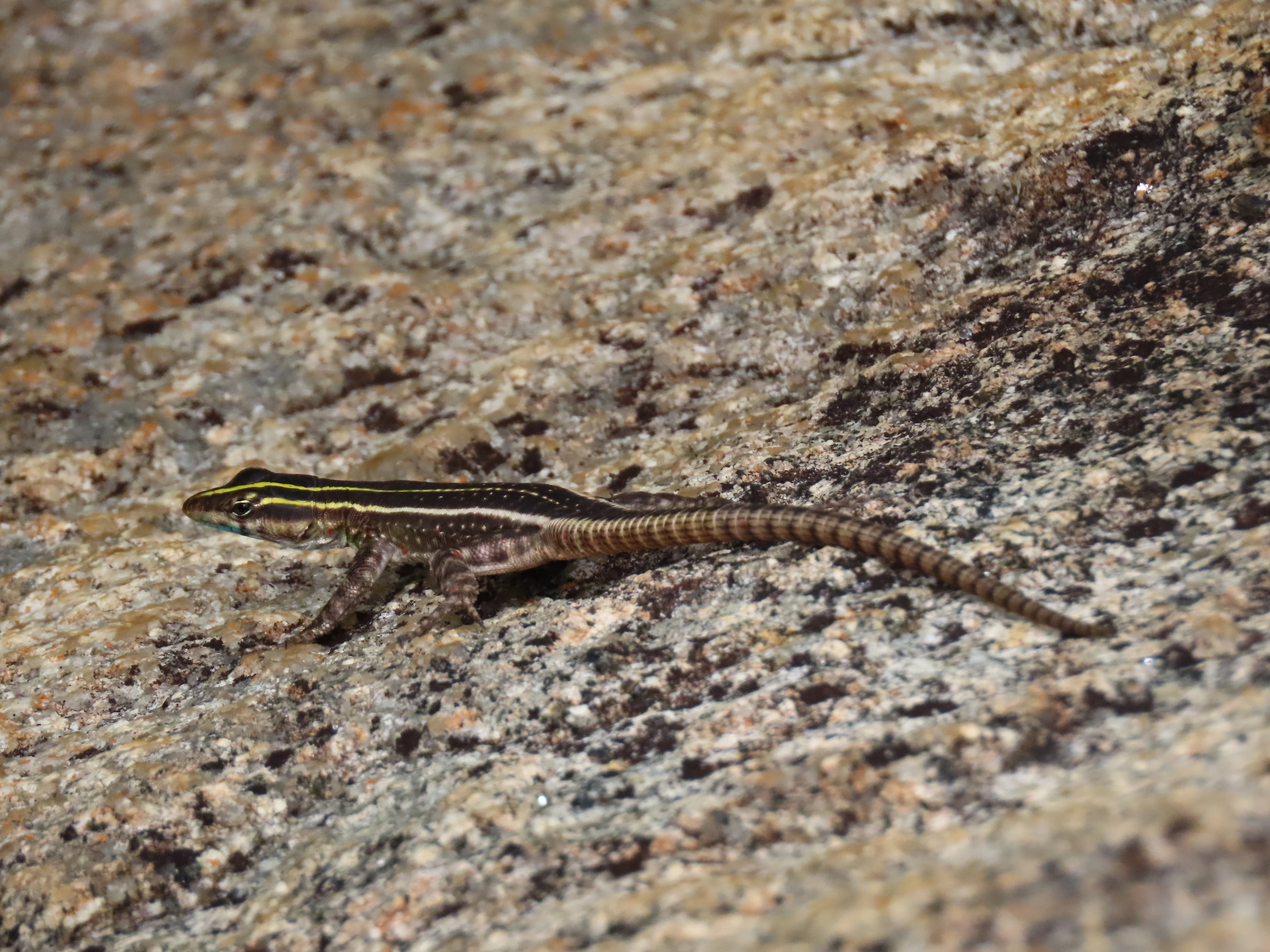
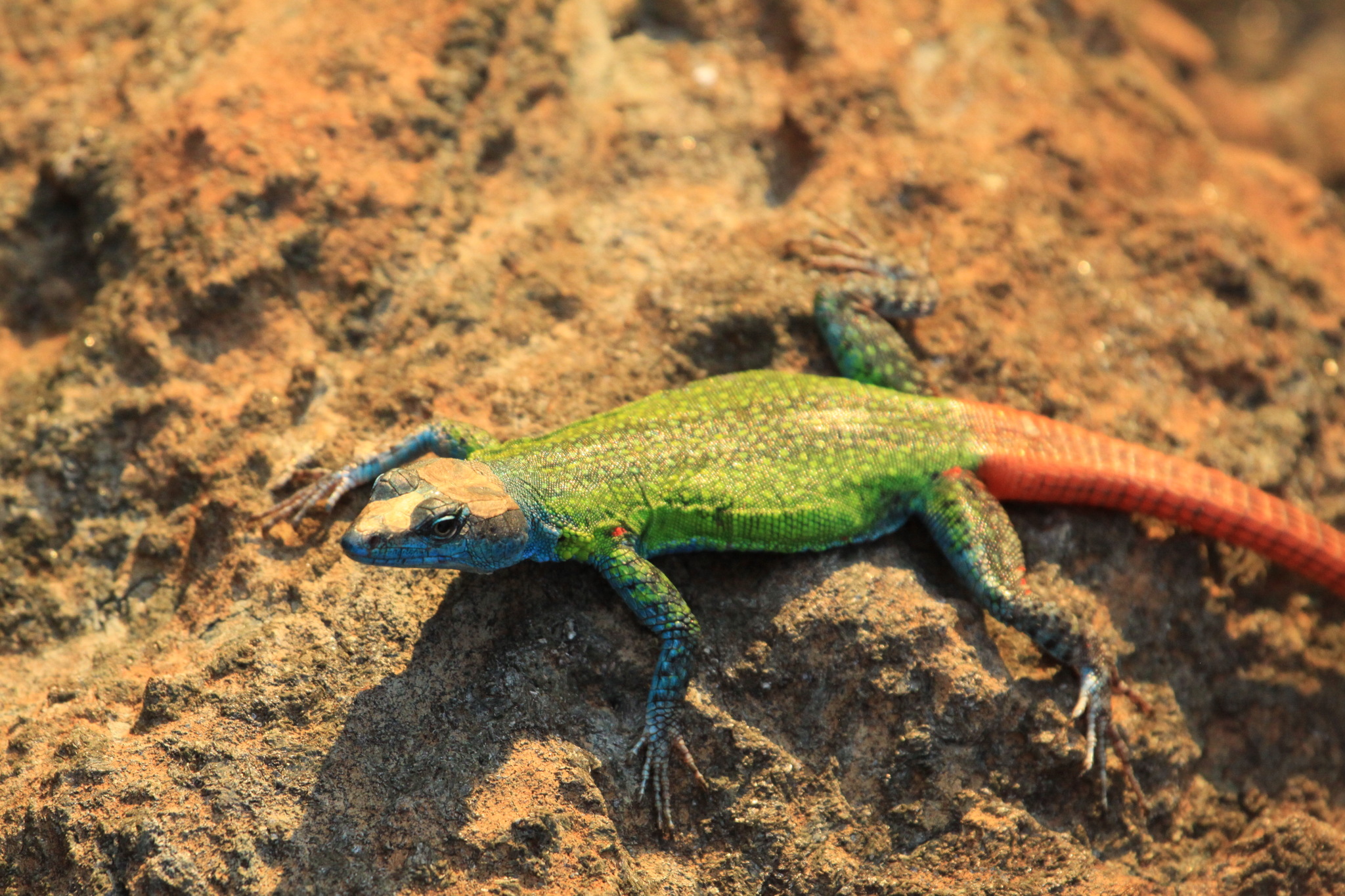
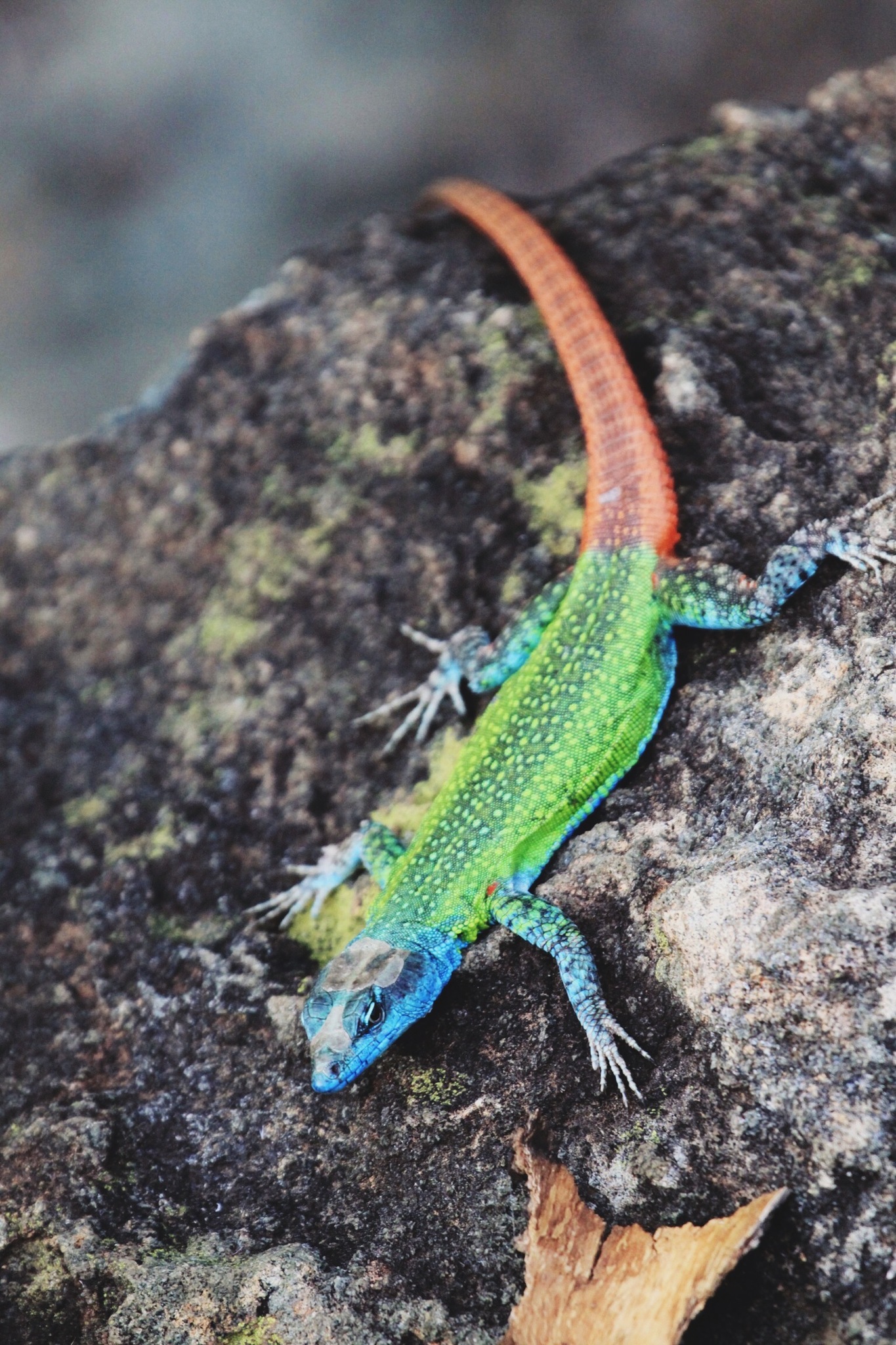
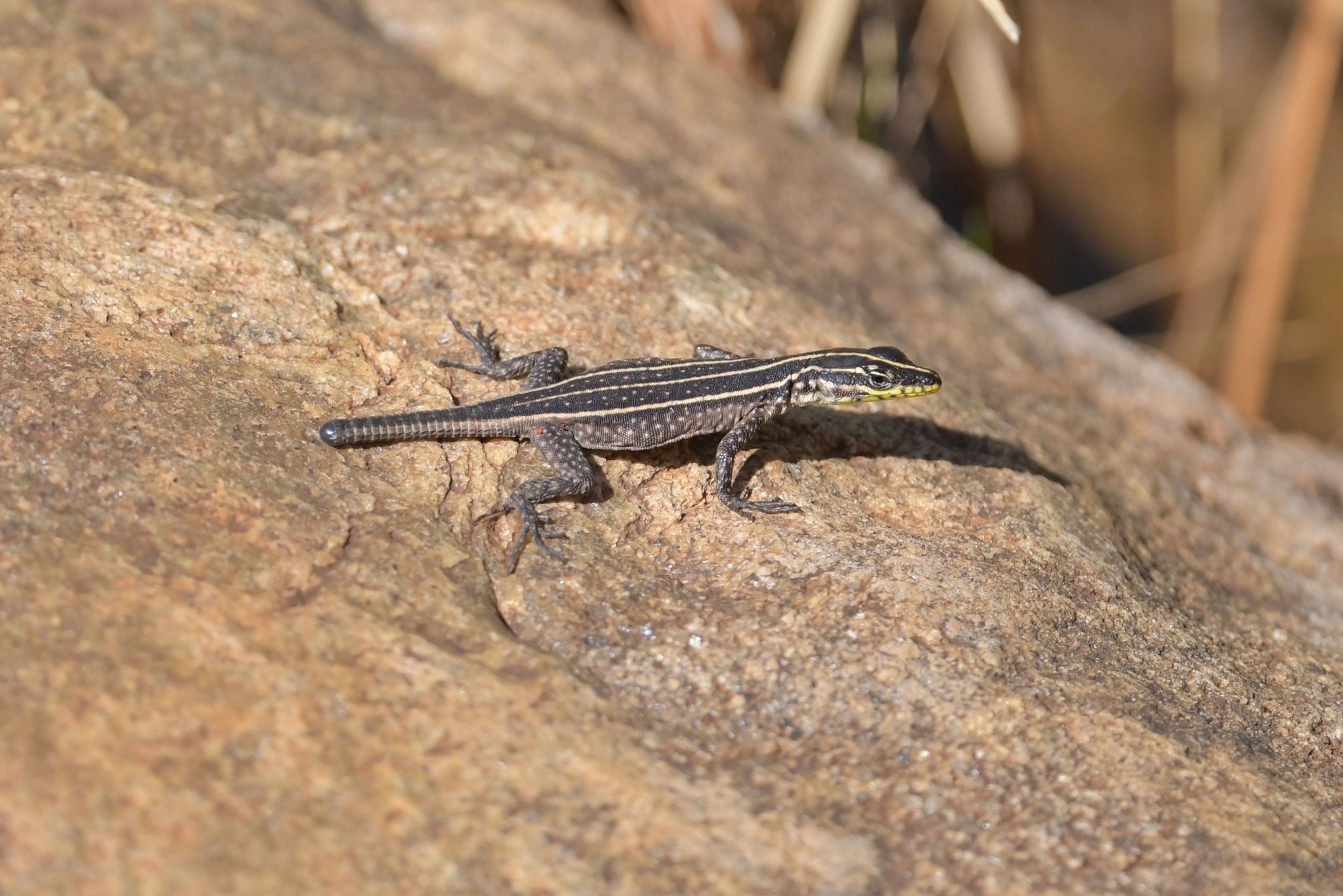
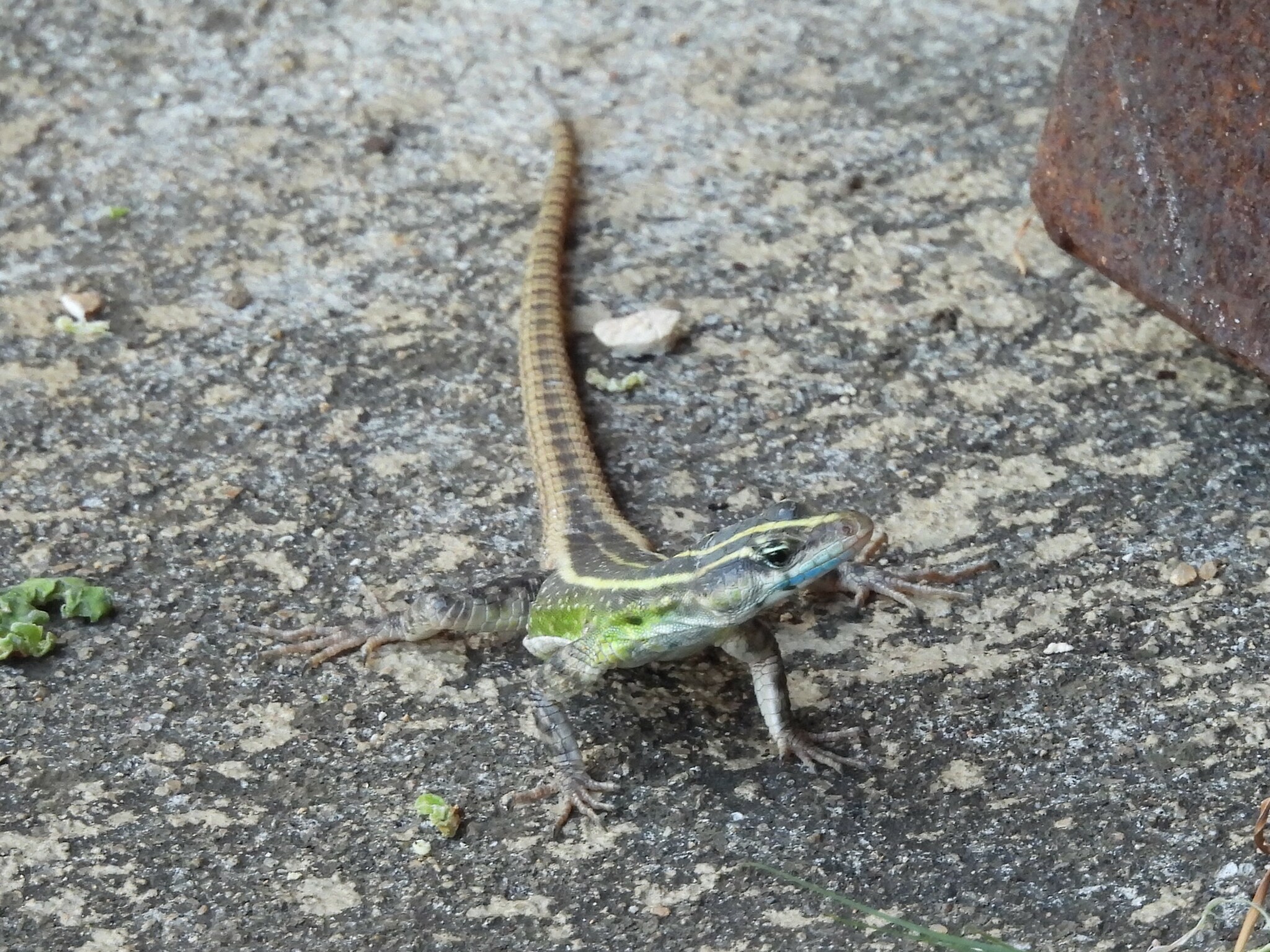
Matschie (1891) described this species in Germany as follows: Platysaurus squamis ventris 16 seriatis, dorsi squamis 80 seriatis, mentalihus mediis una serie amplificatis, scuto occipitali praesente. 2 ad., 1 juv. Alle drei Stücke unterscheiden sich von PI guttatus A. Sm. durch nur 16 Längsreihen von Bauchschuppen. PI. torquatus Ptrs. , mit welchem sie in dieser Beziehung übereinstimmen , zeigt 96 — 100 Längsreihen von Rückenschuppen und eine doppelte Reihe von vergrösserten Mentalschildern, während die vorliegenden Exemplare 80 Längsreihen von Rückenschuppen und nur eine mittlere Reihe von vergrösserten Mentalschildern, wie PI. guttatus, tragen. PI. capensis A. Sm. hat kein Occipitalschild. Die beiden rothgeschwänzten erwachsenen Stücke dürften Männchen sein. Das eine derselben zeigt drei verwaschene helle Linien auf der Oberseite des Kopfes und ist im Uebrigen dunkel gefärbt bis auf den Schwanz ; das zweite weist keine Spur einer Zeichnung auf. Der junge Platysaurus hat drei scharf hervortretende helle Linien auf dunklem Grunde auf Kopf und Rücken. Die Unterseite ist bei allen drei Stücken einfarbig. Ein dunkles Kehlband erscheint bei einem der rothschwänzigen Exemplare schwach angedeutet. DeepL Translation: Platysaurus squamis ventris 16 seriatis, dorsi squamis 80 seriatis, mentalihus mediis una serie amplificatis, scuto occipitali praesente. 2 adults, 1 juvenile All three specimens differ from PI guttatus A. Sm. by only 16 longitudinal rows of ventral scales. PI. torquatus Ptrs., with which they agree in this respect, shows 96 - 100 longitudinal rows of dorsal scales and a double row of enlarged mental scales, whereas the present specimens show 80 longitudinal rows of dorsal scales and only one middle row of enlarged mental scales, like PI. guttatus. PI. Capensis A. Sm. has no occipital shield. The two red-tailed adult specimens are probably males. One of them shows three blurred light-coloured lines on the upper side of the head and is otherwise dark coloured except for the tail; the second shows no trace of markings. The young Platysaurus has three sharply defined light-coloured lines on a dark background on the head and back. The underside of all three specimens is unicoloured. A dark throat band appears on one of the red-tailed specimens is faintly indicated.
This information was extracted from Fitzsimons (1948): Related to typical guttatus from the northern Transvaal, but distinguished therefrom by its smaller size, fewer transverse rows of ventrals and femoral pores, and the uniform dark colouring below.
Type locality: Station Mphome bei Hänertsburg im Districte Zoutpansberg, nördlich von Maraba’s Stadt (Transvaal)”. Lectotype: ZMB c. 3466 (52260), designated by BAUER et al. 1994. Holotype. DNMNH (= TM) 25201, an adult male [parvus] Holotype: NMZB (formerly UM = Umtali Museum) 33687, an adult. Collected by D. Müller, 8 September, 1980. [nigrescens] Holotype: NMZB (formerly UM/H = Umtali Museum) 1392, an adult male. Collected by D. G. Broadley, 4 Dec. 1961. [subniger] Holotype: DNMNH (= TM) 21716, adult male [natalensis] Holotype: MCZ 50655, adult female. Collected by Arthur Loveridge, January 31, 1949 [nyasae] Holotype: DNMNH (= TM) 18528, paratype: DNMNH (= TM) [rhodesianus] Holotype: DNMNH (= TM) 70018, adult male [inopinus]
This information was extracted from Tolley et al. (2023): Previous (Scott et al., 2004) and current (S. Keogh, unpubl. data 2018) phylogenetic studies suggest that the P. intermedius complex will undergo significant taxonomic change and some of the subspecies may be raised to full species. For example, a phylogeny (Scott et al. 2004) placed P. intermedius wilhelmi in a clade with P. lebomboensis, separate from P. i. intermedius. Furthermore, P. i. rhodesianus is in a clade with P. imperator and P. torquatus, rather than with P. i. intermedius and the other P. intermedius subspecies. In addition, P. i. rhodesianus is widespread, with some populations separated by significant physical barriers (e.g., the Limpopo River) that are expected to constrain gene flow. Also, a number of populations show significant morphological variation, suggesting that P. i. rhodesianus may represent a species complex.
Botswana, Eswatini, Malawi, Mozambique, South Africa, Zimbabwe
The Common Flat Lizard occurs across southern Africa in discrete populations that correspond with nine subspecies of which six occur in South Africa. Three of the subspecies occur only in northeastern South Africa (P. i. inopinus, P. i. parvus and P. i. wilhelmi), whereas P. i. natalensis is found in South Africa and Eswatini, P. i. intermedius occurs in South Africa and southern Mozambique, and P. i. rhodesianus occurs in northern Limpopo province, South Africa, eastern Botswana, southern Zimbabwe and parts of the Manica Plateau in Mozambique (Tolley et al., 2023).
In general, lizards can sprint, crawl, climb, jump, and glide. When running on four legs, lizards often move their fore feet diagonally in unison—the right fore foot with the left hand and the left fore foot with the right hand. The body's bent is simultaneously reversed. The shoulders, hips, and other joints in the legs as well as the bending of the back all contribute to moving the feet forward. Leg and back muscles work together to power running (Alexander, 2012).
Carnivore - Invertivore (invertebrate-eating)
The Common flat lizard feeds on small invertebrates (flies, beetles and larvae), although some also eat plant material (flower petals, young leaves, fruits and seeds) (Branch, 1998).
The Common flat lizard is oviparous, laying two elongate eggs in November-December in communal egg sites in a sun-warmed, soil-filled rock crack. The hatchlings emerge in late December-January (Branch, 1998).
Vegetation surrounding rock outcrops is frequently quite dense and juveniles may escape predators by running into it (Whiting et al., 2003).
Grassland, Savanna
This map contains point-based occurrences at different locations
Occurrence in African countries and South African provinces. Residence status indicates if a taxon is indigenous, endemic, or alien in a specific region. This data is based on specimen records and literature.
FSA
SA
BOT
NAM
ESW
LES
WC
EC
NC
FS
GA
KZN
LP
MP
NW
Absent
Indigenous
Endemic
Naturalised
Invasive
Names and Sources
Platysaurus intermedius (Matschie, 1891)
Platysaurus wilhelmi
Author: Hewitt, 1909
| Common Name | Language |
|---|---|
| Common Flat Lizard |
Classification
KINGDOM Animalia
PHYLUM Chordata
CLASS Reptilia
ORDER Squamata
FAMILY Cordylidae
GENUS Platysaurus
SPECIES intermedius
No results found for Platysaurus intermedius Matschie, 1891
No data.
20 results for Platysaurus intermedius Matschie, 1891
This map contains point-based occurrences at different locations
1998
BOOK
Field Guide to Snakes and Other Reptiles of Southern AfricaBranch, B.. 1998. Field Guide to Snakes and Other Reptiles of Southern Africa. Cape Town. Struik Publishers.
1891
JOURNAL ARTICLE
Ueber eine kleine Sammlung von Reptilien und Amphibien aus Süd-AfrikaMatschie, G.. 1891. Ueber eine kleine Sammlung von Reptilien und Amphibien aus Süd-Afrika Vol. 5(1890) pp.605-611.
2004
JOURNAL ARTICLE
Shifting sands and shifty lizards: molecular phylogeny and biogeography of African flat lizards (Platysaurus)Whiting, M., Scott, I., Keogh, J.. 2004. Shifting sands and shifty lizards: molecular phylogeny and biogeography of African flat lizards (Platysaurus) Vol. 31(2) pp.618-629.
2023
BOOK
Conservation status of the reptiles of South Africa, Eswatini and LesothoTolley, K., Burger, M., Alexander, G., Pietersen, D., Conradie, W., Weeber, J.. 2023. Conservation status of the reptiles of South Africa, Eswatini and Lesotho Vol. Suricata 10. Pretoria. South African National Biodiversity Institute.
2012
JOURNAL ARTICLE
Locomotion of ReptilesAlexander, R.. 2012. Locomotion of Reptiles Vol. 121 pp.1-4.
2003
BOOK CHAPTER
Evolution and maintainance of social status signaling badges: experimental manipulations in lizardsBateman, P., Whiting, M., Nagy, K.. 2003. Evolution and maintainance of social status signaling badges: experimental manipulations in lizards. Baltimore. Johns Hopkins University Press pp.47-82.
1948
JOURNAL ARTICLE
Notes on some reptiles and amphibians from the Darkensberg, together with a description of a new Platysaurus, from northern NatalFitzSimons, V.. 1948. Notes on some reptiles and amphibians from the Darkensberg, together with a description of a new Platysaurus, from northern Natal Vol. 21(1) pp.73-80.
Status and criteria
LC
Assessor(s)
Martin Whiting
Reviewer(s)
Graham Alexander


