
ANIMALIA / CHORDATA / REPTILIA / SQUAMATA / CORDYLIDAE / PLATYSAURUS / MINOR
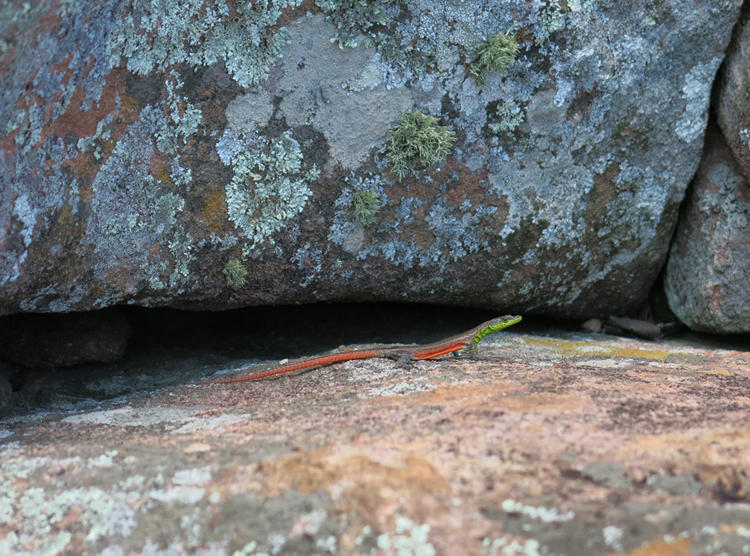
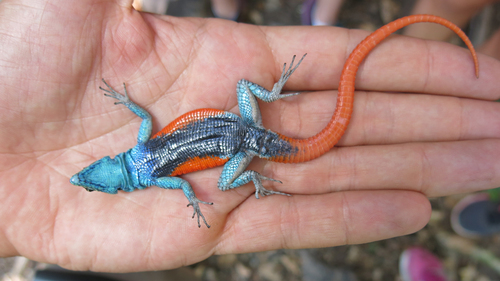
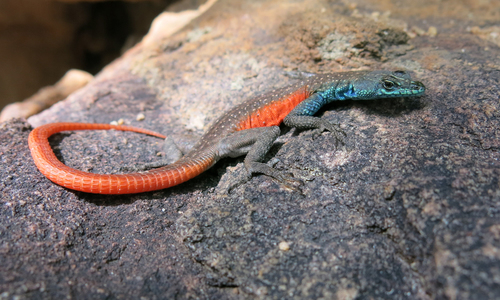
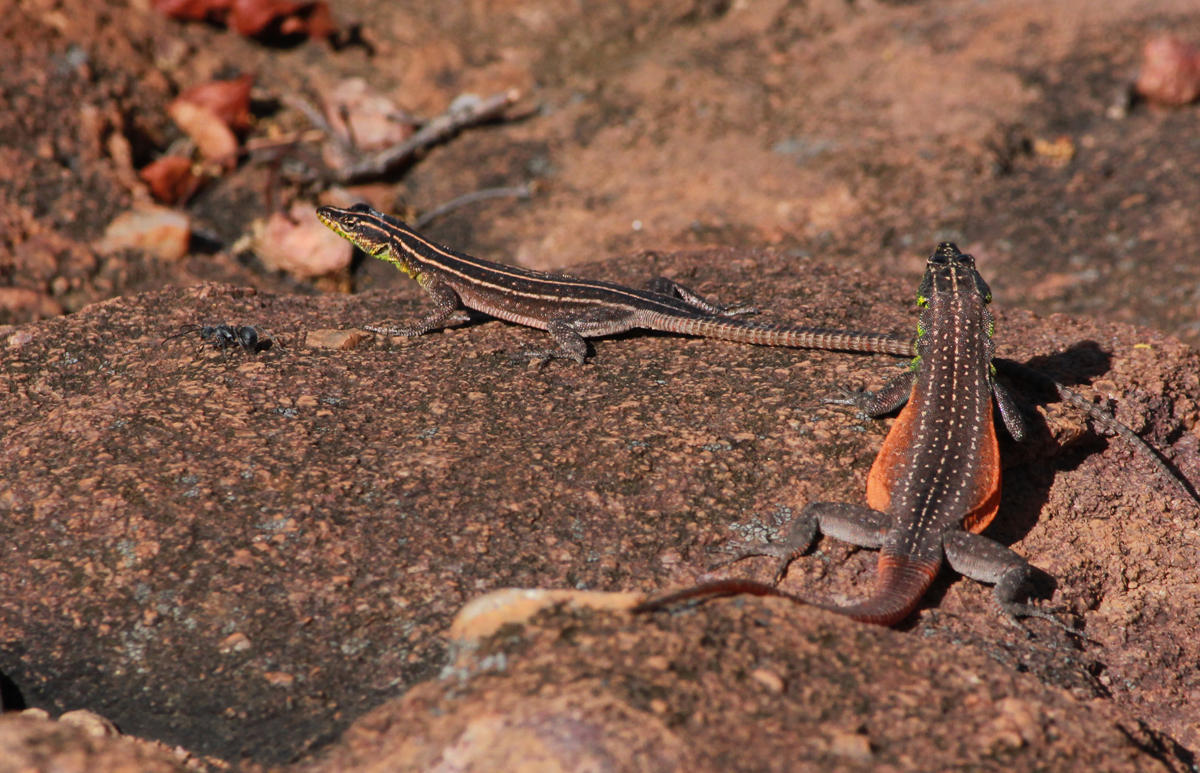
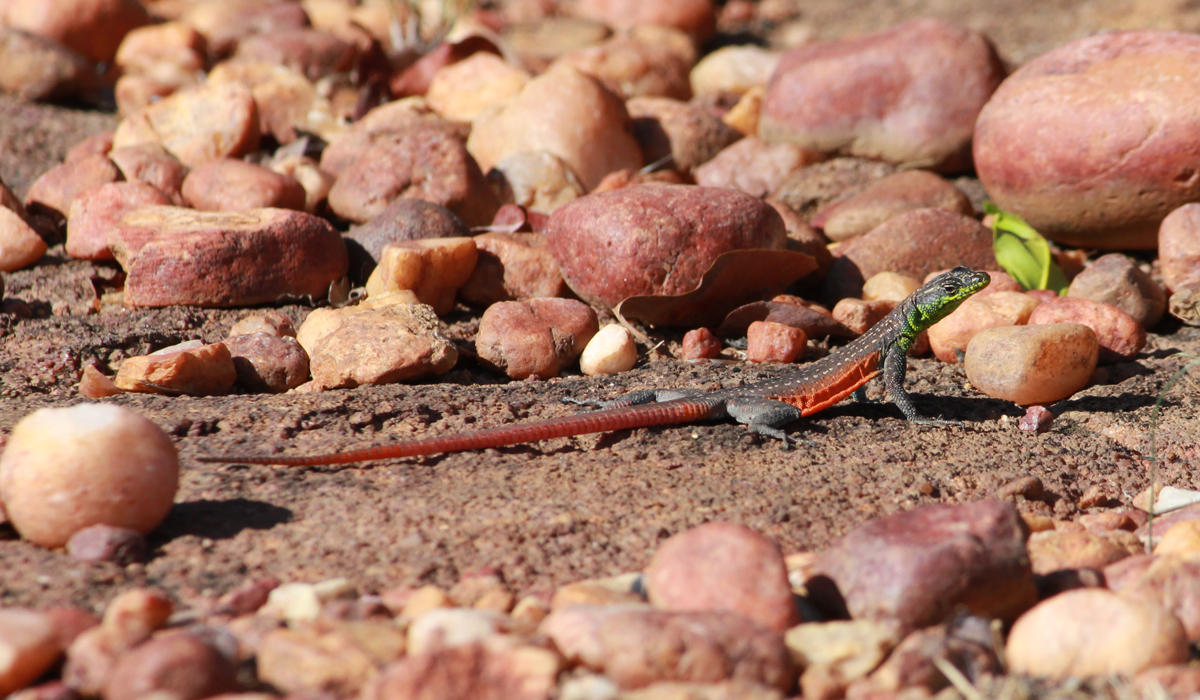
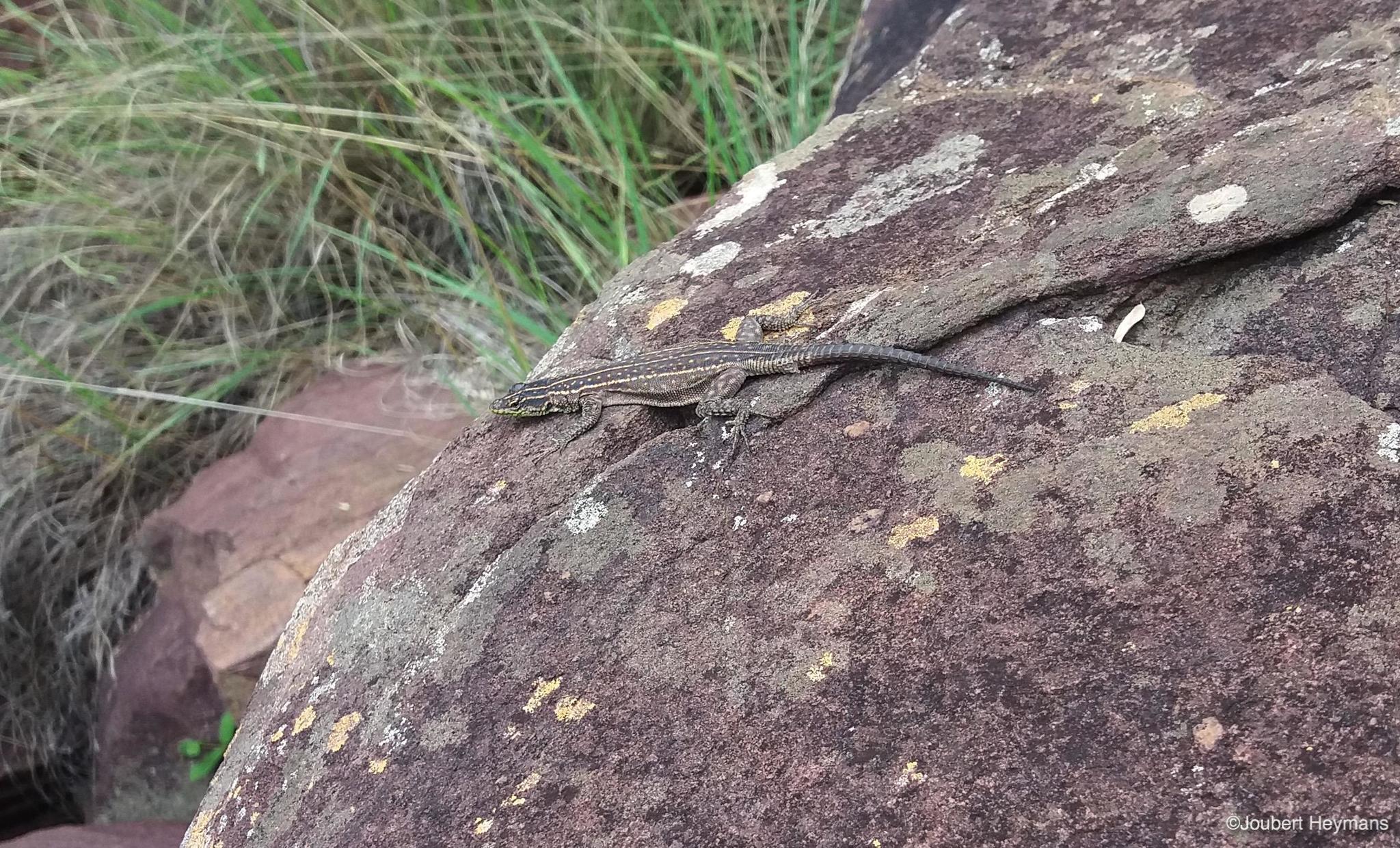
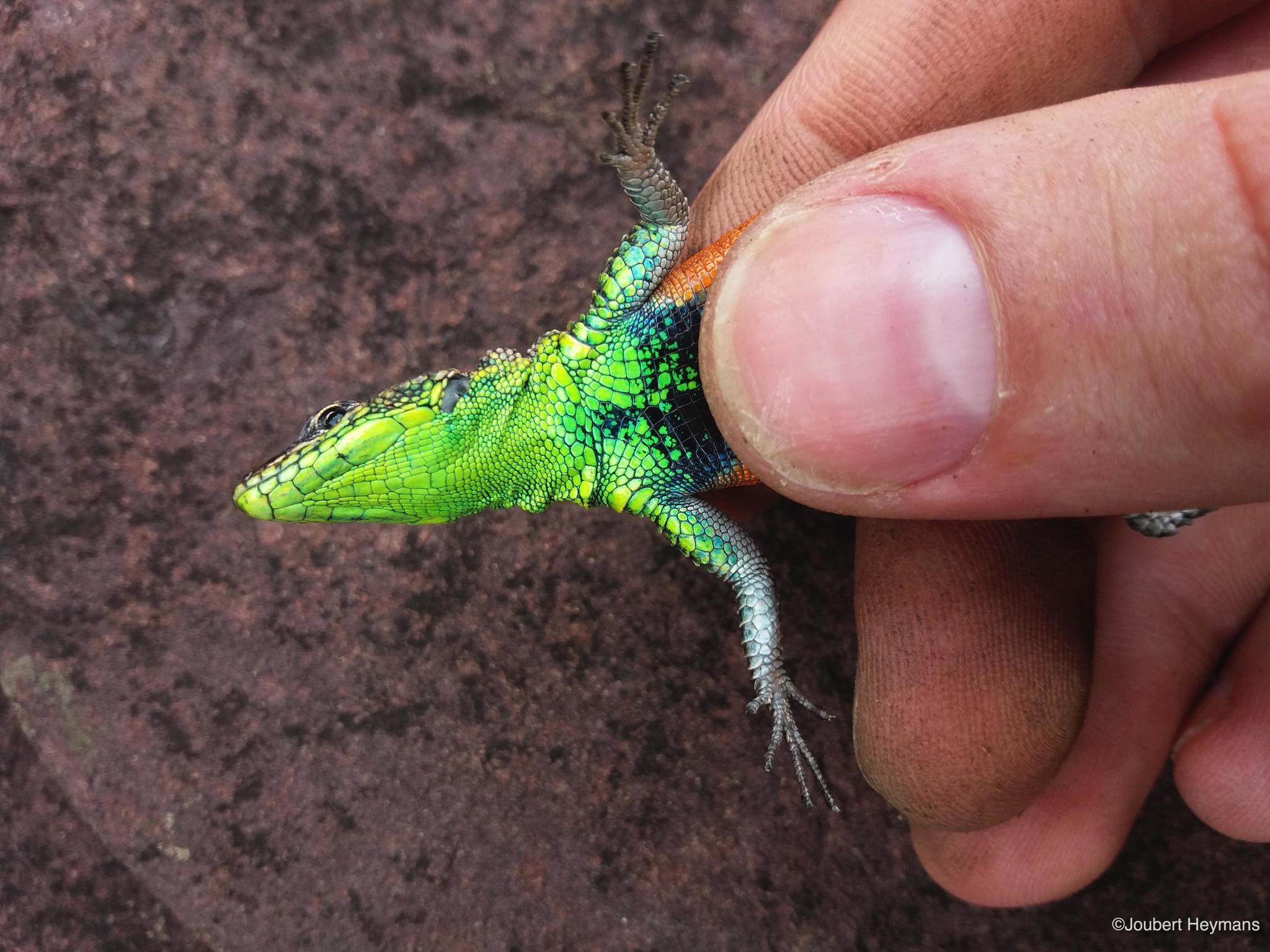
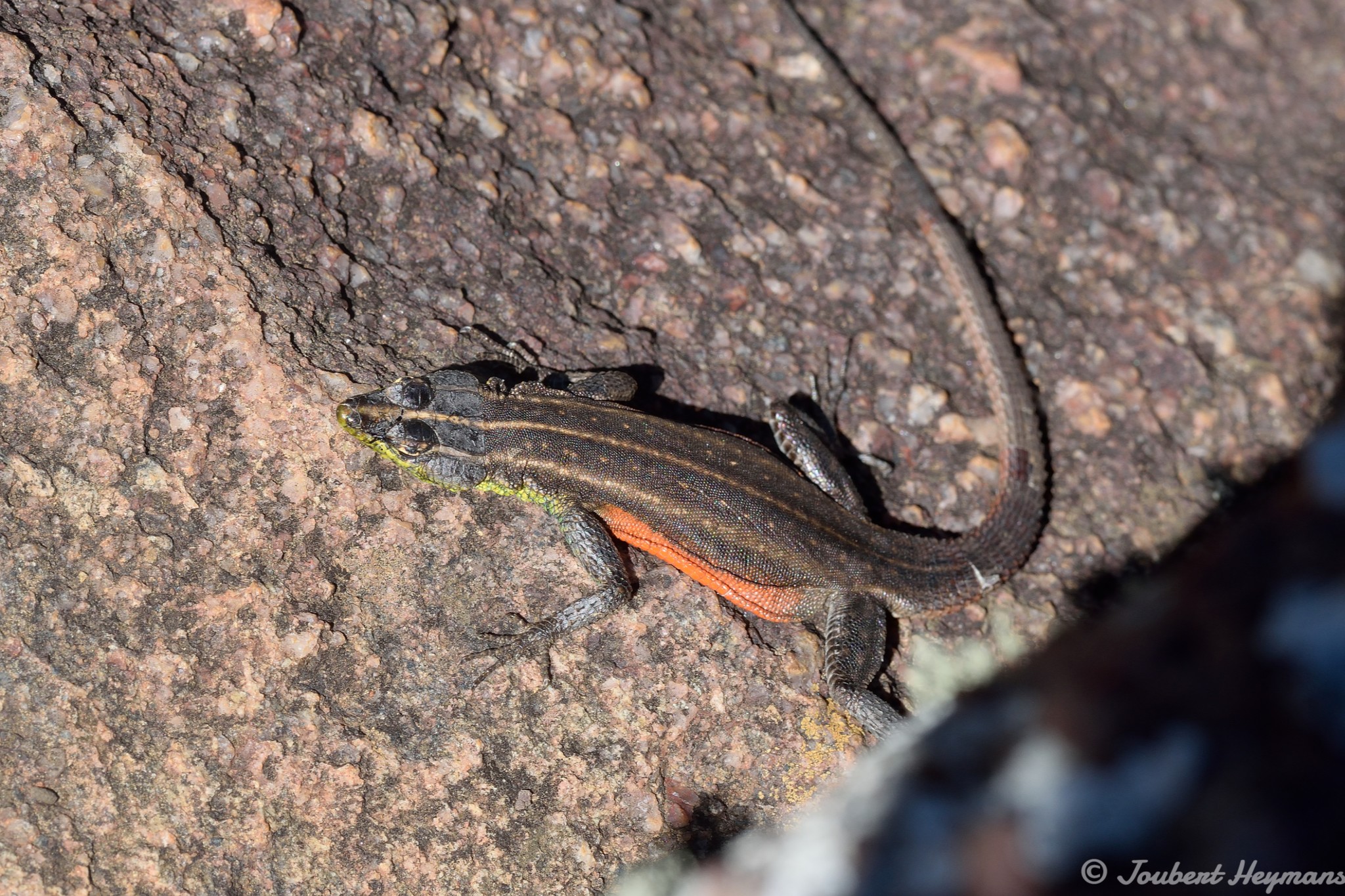
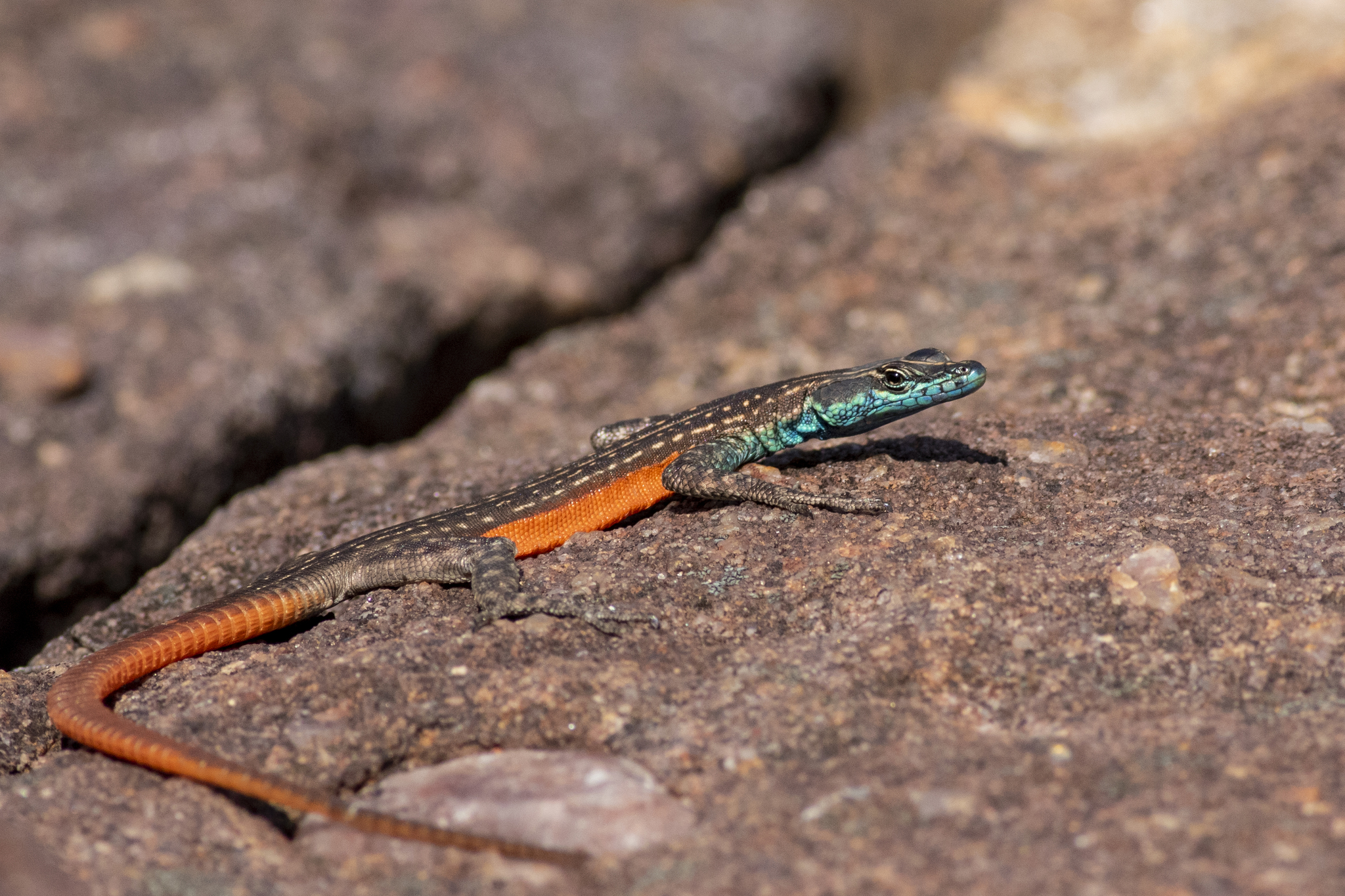
Fitzsimons (1930) described this species as follows: Head strongly depressed, much longer than broad; rostral large; fronto-nasal one and a half times as broad as long, separated from rostral by nasals: a pair of pre-frontals forming a wide suture in middle line; frontal trapezoid, considerably broader anteriorly than posteriorly; inter parietal lozenge-shaped, separating anterior parietals; occipital well developed, in contact anteriorly with interparietal; anterior parietals considerably smaller than posterior. Four supra-oculars, first sub-triangular, second largest and fourth smallest; four supra-ciliaries, second largest; lower eyelid with large trans parent disc; two longitudinal rows of large temporals, upper five vertically elongated, lower four hexagonal in shape; a loreal and large pre-orbital; four infra-orbitals, second and third bordering lip, former longer than any other two together; four upper labials anterior to second infra-orbital. Mental large and sub-pentagonal; four to five lower labials, bordered by a row of five large shields, the fourth of which is almost twice as large as any one other; gular scales small, elongate and quadrangular anteriorly, with a median row of enlarged scales; scales under neck small, rounded and almost granular, increasing in size again toward the collar, which is edged with seven to eight enlarged scales. Dorsal scales homogeneous, small, flattened and granular, becoming slightly larger and more convex on sides. Ventrals square, or slightly broader than long, in 18 longitudinal and 32 to 34 transverse series. Pre-anal scales slightly larger than ventrals, five- or six-sided. Fifteen femoral pores. Limbs moderately short; length of tibia not more than two-thirds of distance from end of snout to lower inferior corner of ear-opening; digits moderate and slender. Scales on upper surface of fore limbs and tibia keeled, granular on thighs and under arms; lower surface of tibia with a series of six enlarged plates. Tail depressed and tapering; scales of annuli elongate, quadrangular and strongly keeled, elongation more accentuated on posterior two thirds of tail.
No separate diagnostic description was provided. Refer to the morphological description.
Type locality: at Vygeboompoort, Waterberg District. Syntypes: DNMNH (= TM) 2109, adult male, DNMNH (= TM) 2367, adult female
This information was extracted from Tolley et al. (2023): This species is sympatric with P. guttatus, but they are morphologically and genetically distinguishable (Jacobsen, 1989; M. Whiting, unpubl. data 2020). While sympatric, they are usually not syntopic (Jacobsen, 1989).
South Africa
This species occurs in west-central Limpopo province, South Africa, throughout the Waterberg, extending into the foothills of the Blouberg range to the north (Tolley et al., 2023).
In general, lizards can sprint, crawl, climb, jump, and glide. When sprinting on four legs, lizards often move their fore feet diagonally in unison—the right fore foot with the left hand and the left fore foot with the right hand. The body's bent is simultaneously reversed. The shoulders, hips, and other joints in the legs as well as the bending of the back all contribute to moving the feet forward. Leg and back muscles work together to power running (Alexander, 2012).
Omnivore (eats plants, animals, fungi, bacteria)
This species feeds mainly on insects, but occasionally feeds on plants (Branch, 1998).
This lizard is oviparous, laying two eggs in summer (Branch, 1998).
No data.
Savanna
This map contains point-based occurrences at different locations
Occurrence in African countries and South African provinces. Residence status indicates if a taxon is indigenous, endemic, or alien in a specific region. This data is based on specimen records and literature.
FSA
SA
BOT
NAM
ESW
LES
WC
EC
NC
FS
GA
KZN
LP
MP
NW
Absent
Indigenous
Endemic
Naturalised
Invasive
Names and Sources
| Common Name | Language |
|---|---|
| Waterberg Platakkedis, Waterberg Flat Lizard | En |
| Waterberg Flat Lizard | En |
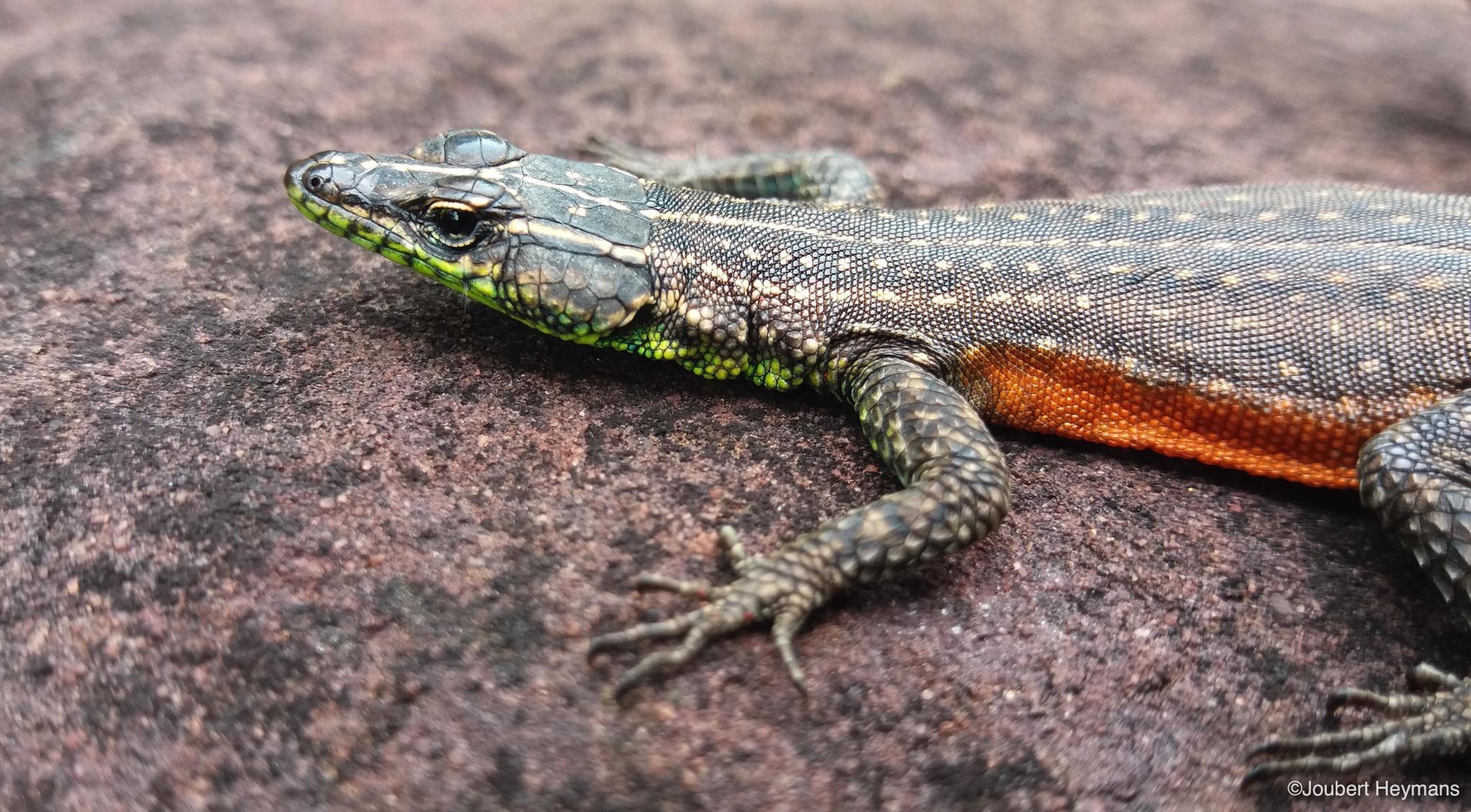
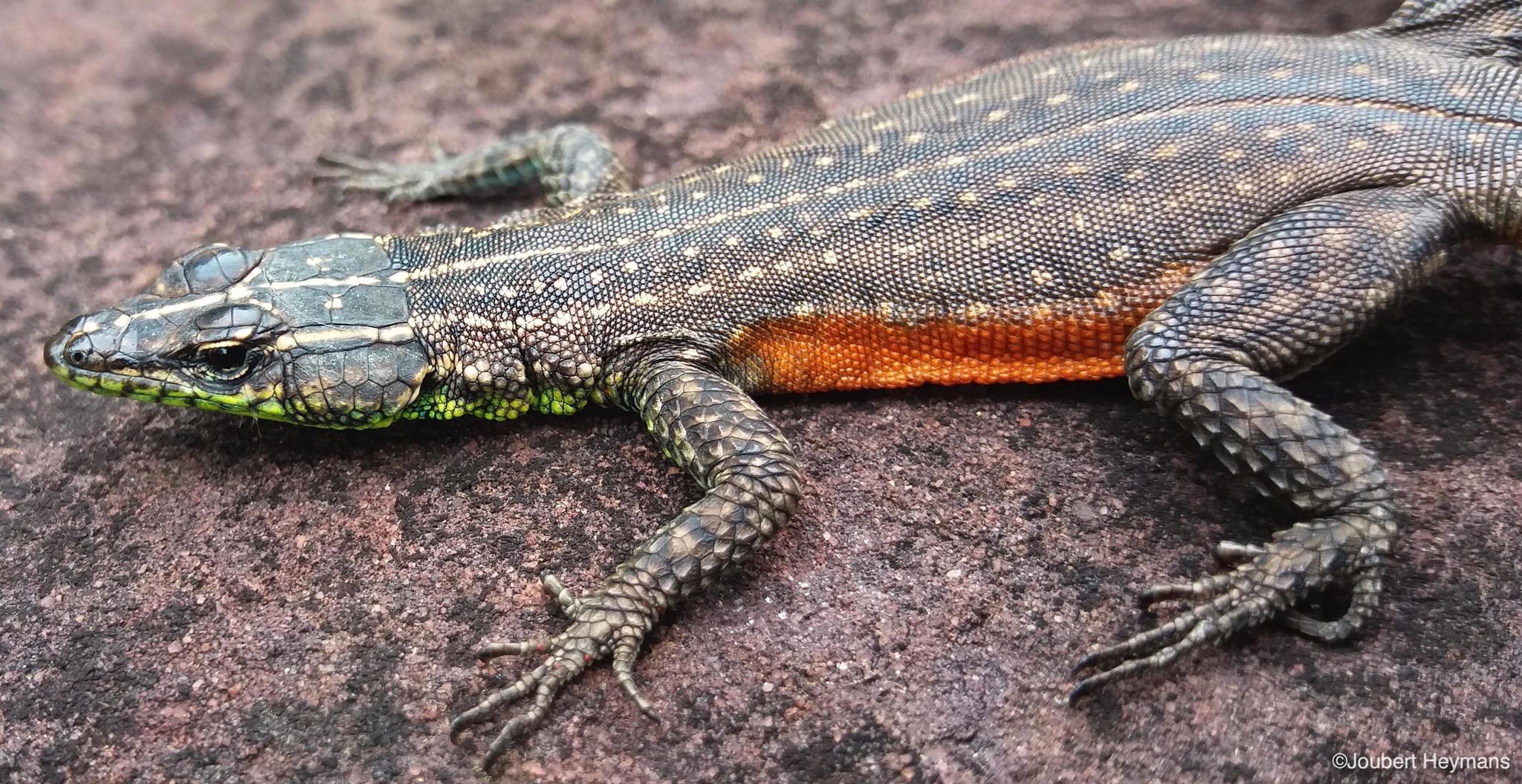
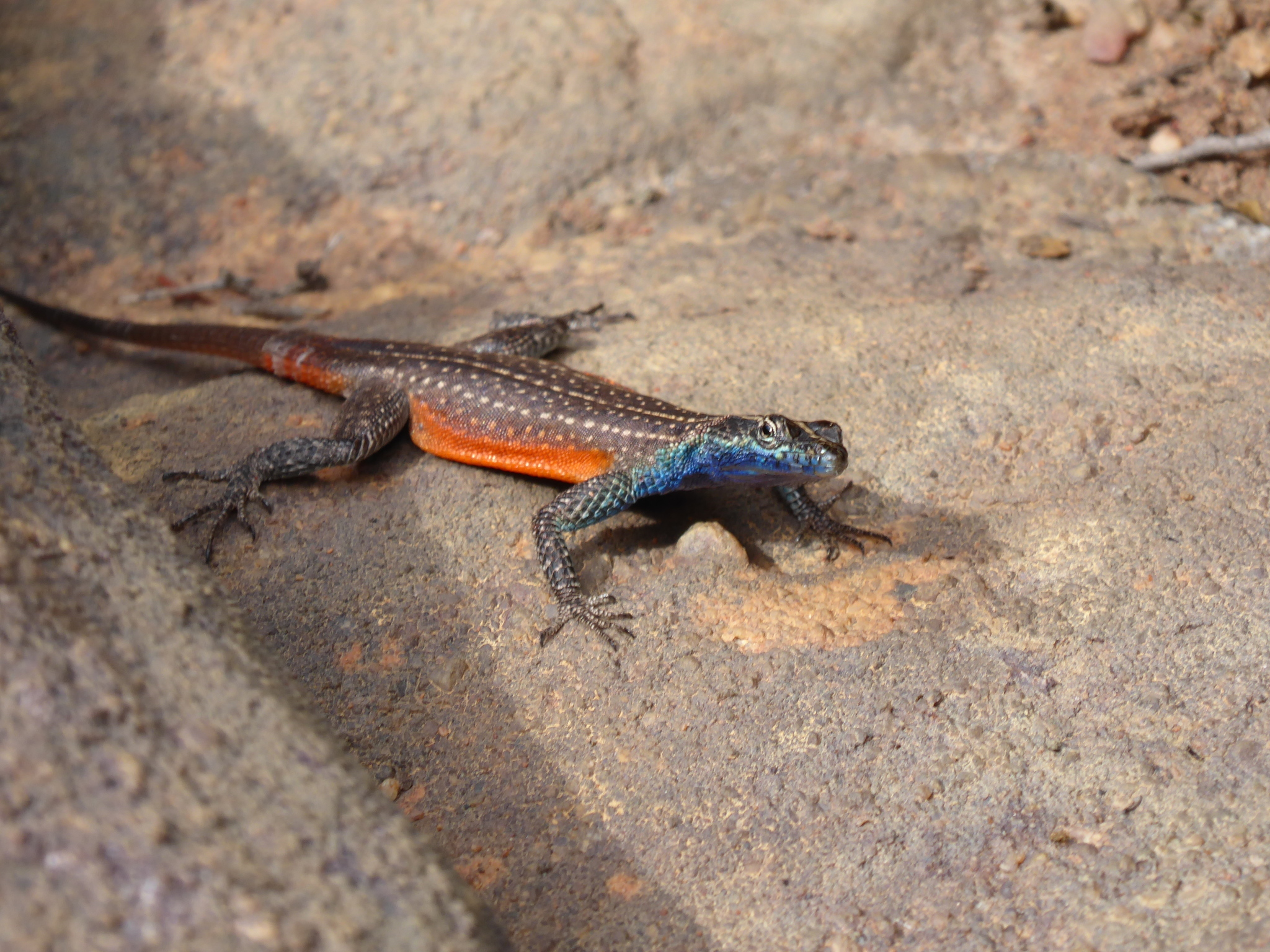
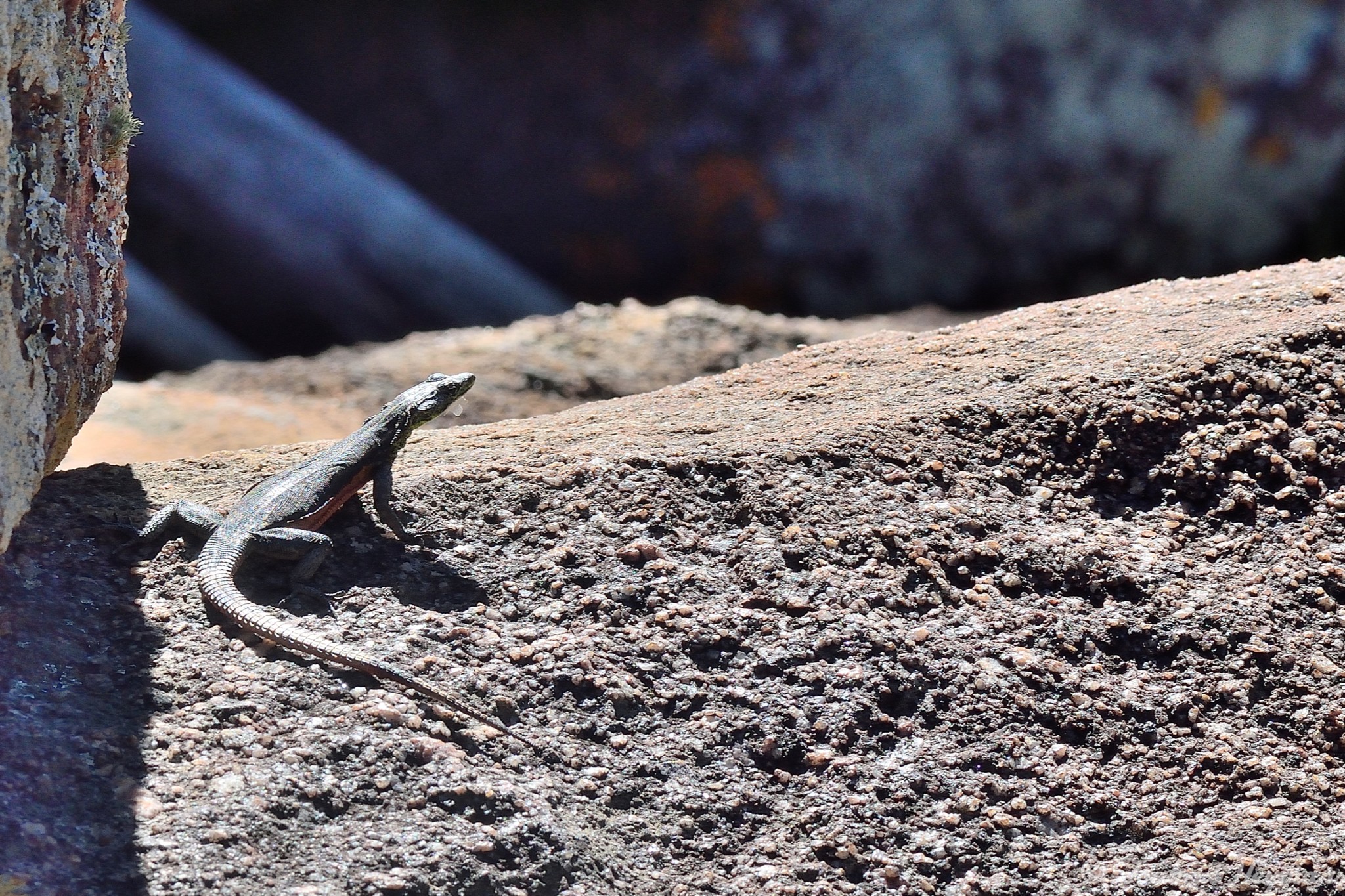
Classification
KINGDOM Animalia
PHYLUM Chordata
CLASS Reptilia
ORDER Squamata
FAMILY Cordylidae
GENUS Platysaurus
SPECIES minor
No results found for Platysaurus minor FitzSimons, 1930
No data.
20 results for Platysaurus minor FitzSimons, 1930
This map contains point-based occurrences at different locations
1930
JOURNAL ARTICLE
Descriptions of new South African Reptilia and Batrachia, with distribution records of allied species in the Transvaal Museum collectionFitzSimons, V.. 1930. Descriptions of new South African Reptilia and Batrachia, with distribution records of allied species in the Transvaal Museum collection Vol. 14. Transvaal Museum. pp.20-48.
1998
BOOK
Field Guide to Snakes and Other Reptiles of Southern AfricaBranch, B.. 1998. Field Guide to Snakes and Other Reptiles of Southern Africa. Cape Town. Struik Publishers.
2012
JOURNAL ARTICLE
Locomotion of ReptilesAlexander, R.. 2012. Locomotion of Reptiles Vol. 121 pp.1-4.
2023
BOOK
Conservation status of the reptiles of South Africa, Eswatini and LesothoTolley, K., Burger, M., Alexander, G., Pietersen, D., Conradie, W., Weeber, J.. 2023. Conservation status of the reptiles of South Africa, Eswatini and Lesotho Vol. Suricata 10. Pretoria. South African National Biodiversity Institute.
1989
TECHNICAL REPORT
The distribution and conservation status of reptiles and amphibians in the Transvaal. Final Report Project TN 6/4/1/30Jacobsen, N.. 1989. The distribution and conservation status of reptiles and amphibians in the Transvaal. Final Report Project TN 6/4/1/30. Pretoria. Chief Directorate of Nature and Environmental Conservation.
Status and criteria
LC
Assessor(s)
Michael Bates
Reviewer(s)
Graham Alexander


