ANIMALIA / CHORDATA / REPTILIA / SQUAMATA / CORDYLIDAE / PLATYSAURUS / RELICTUS
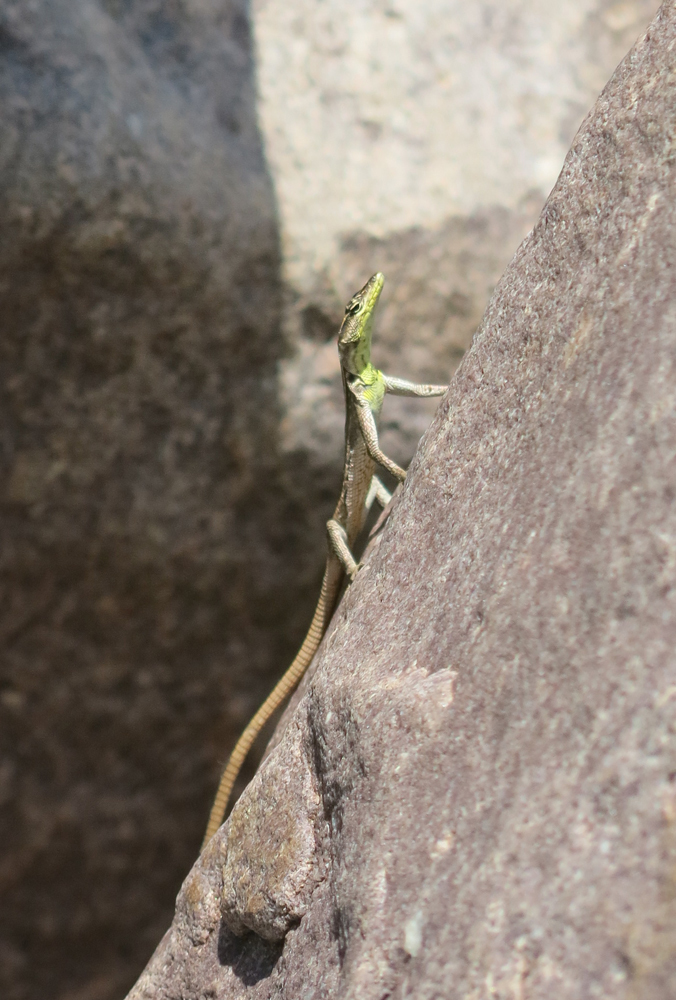
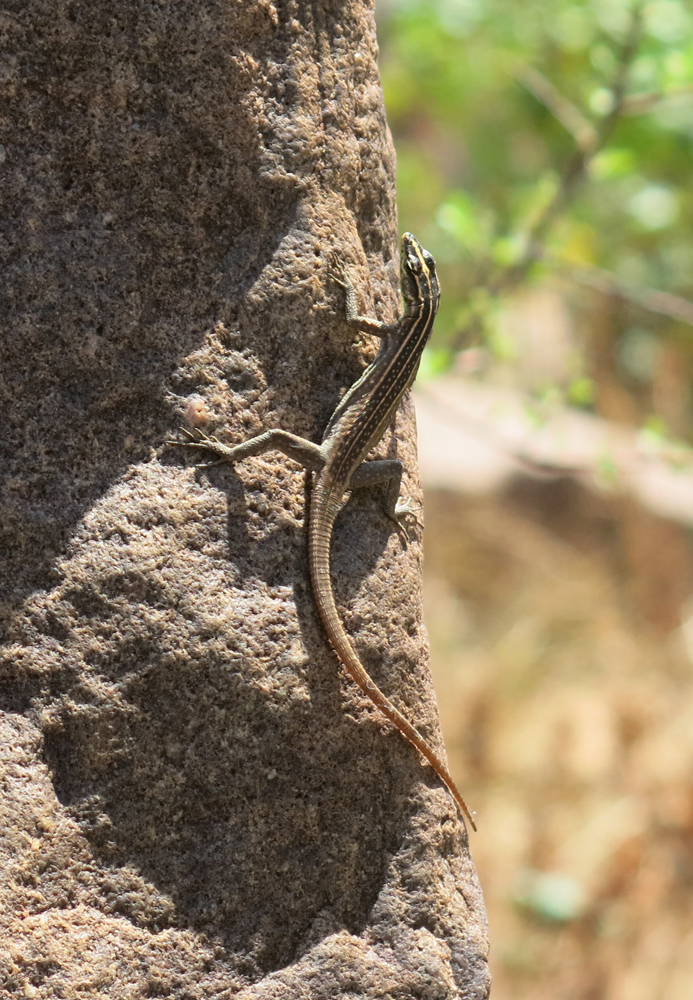
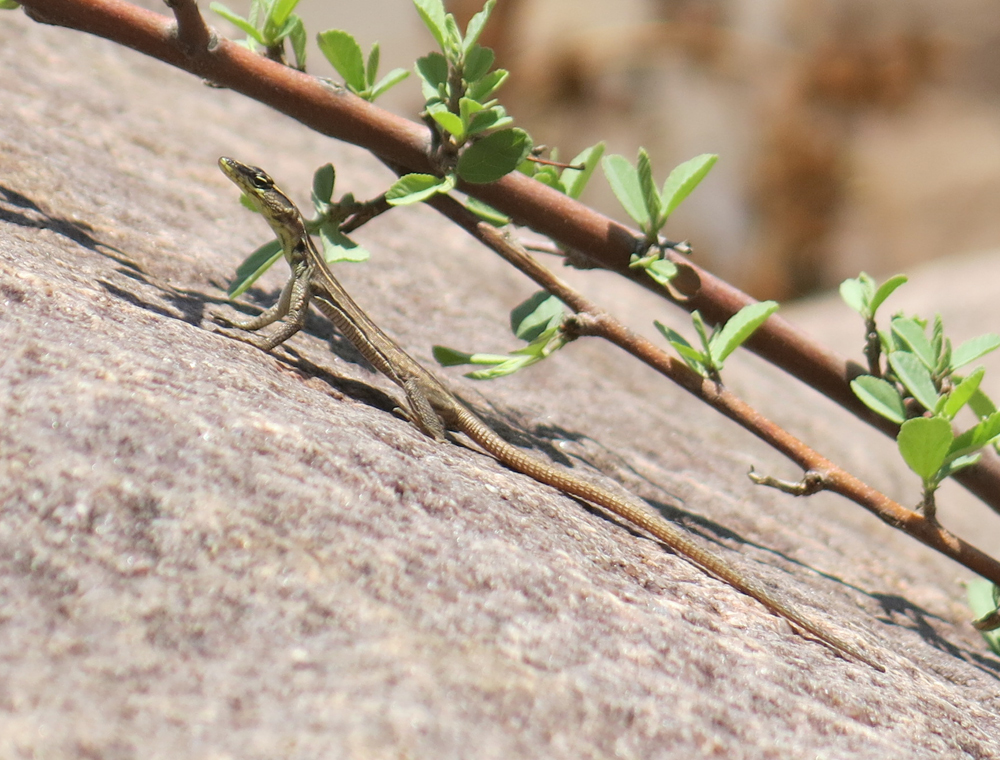
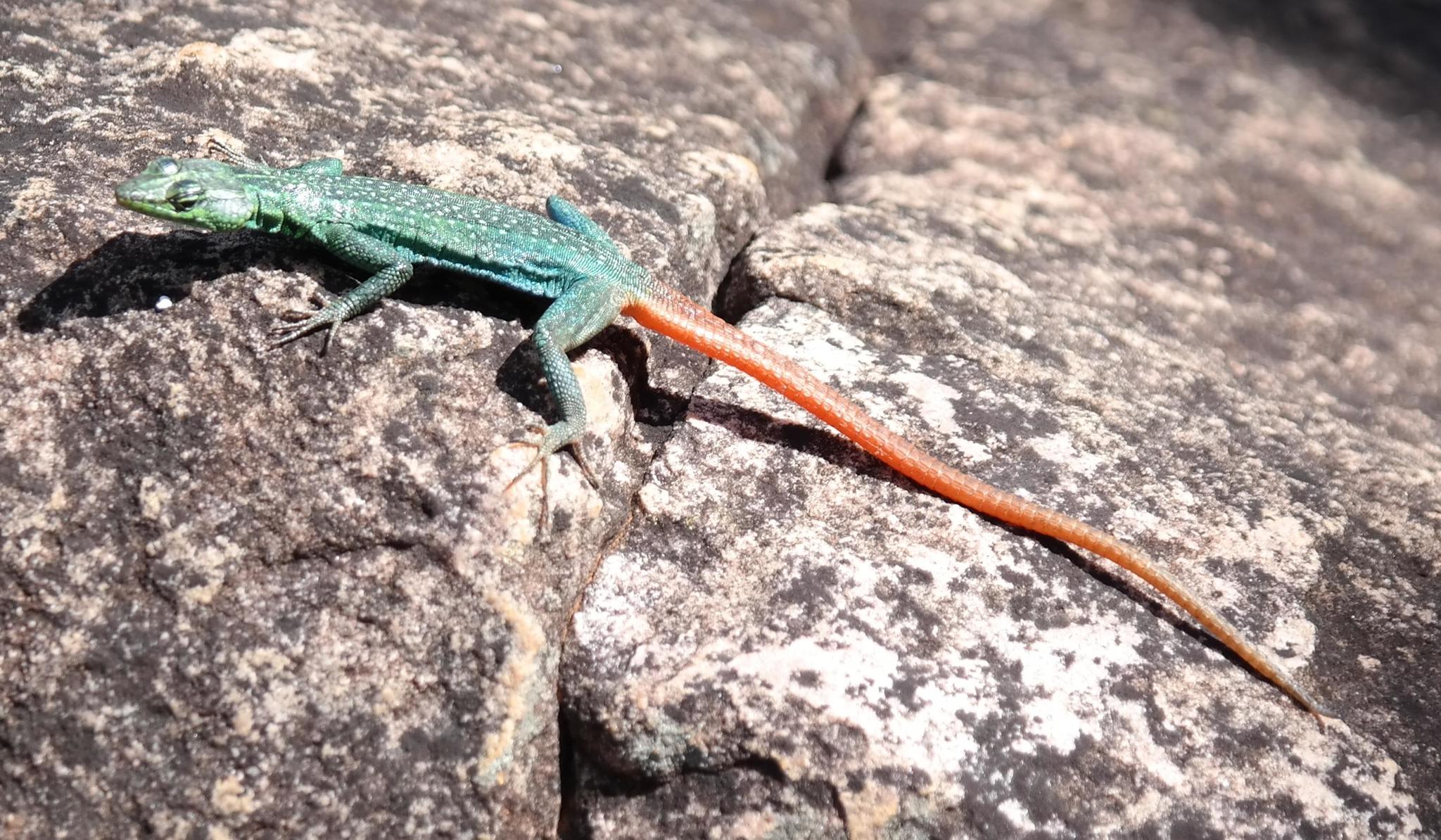
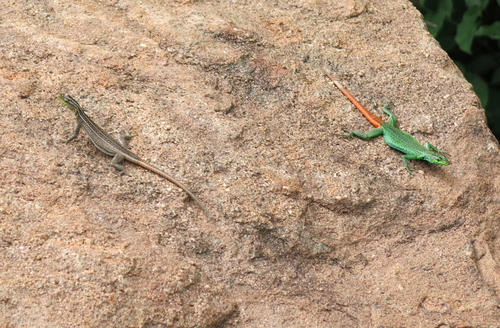
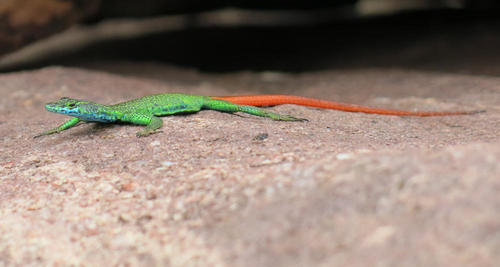
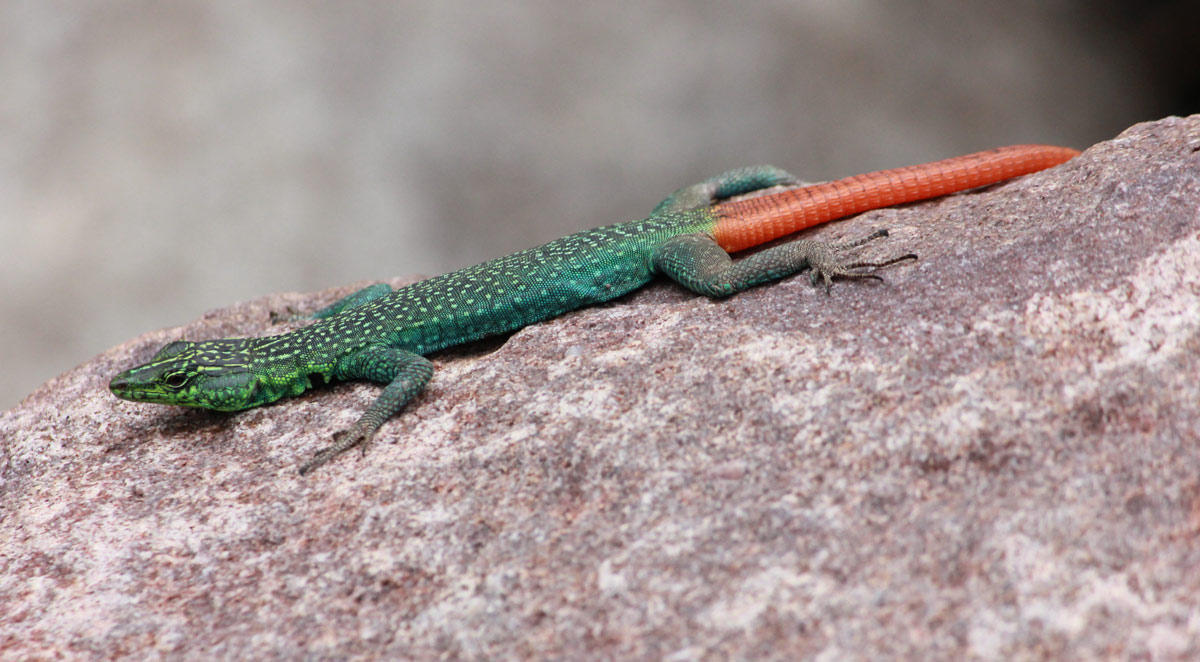
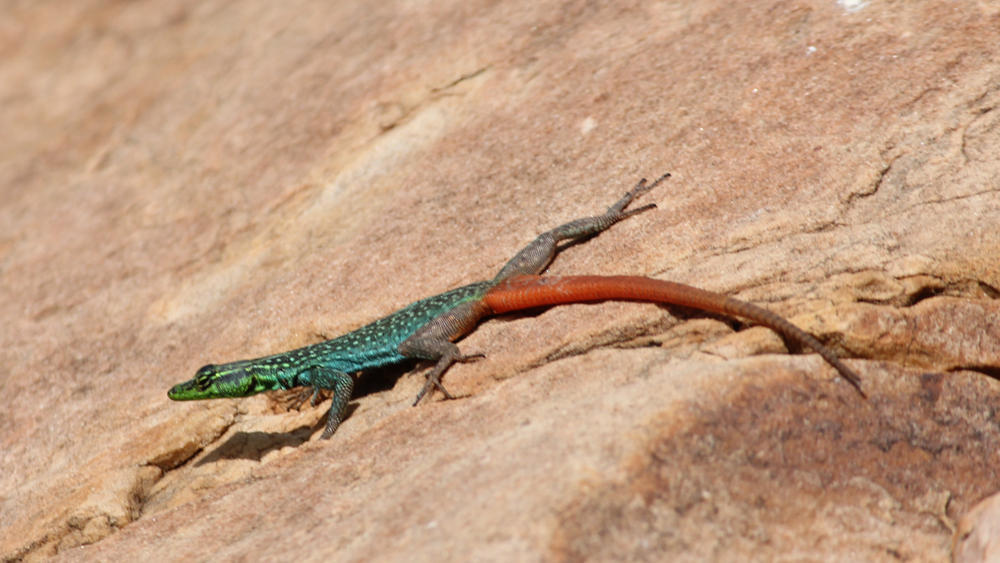
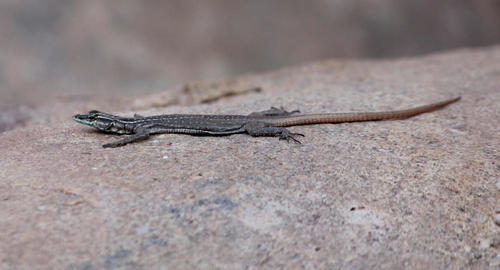
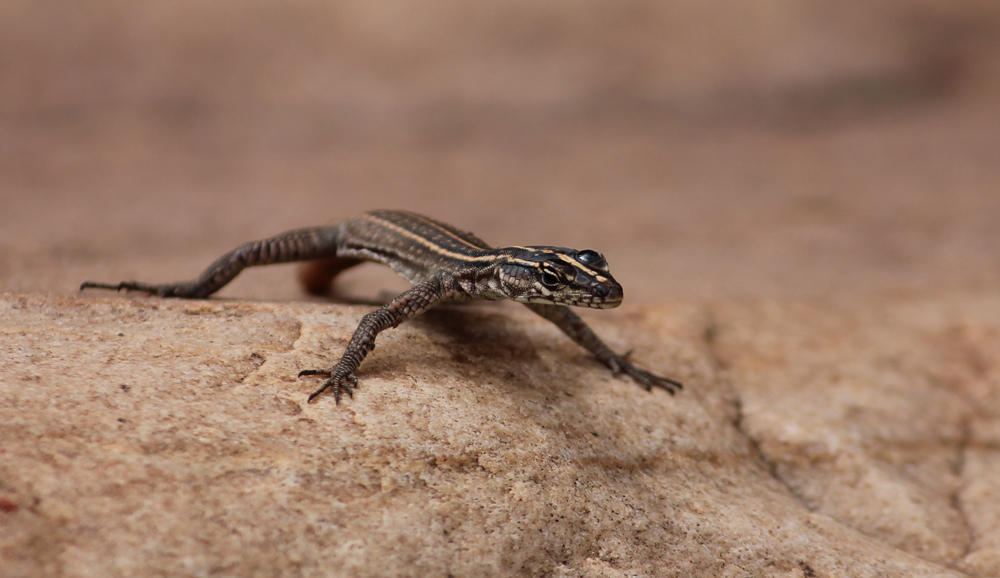
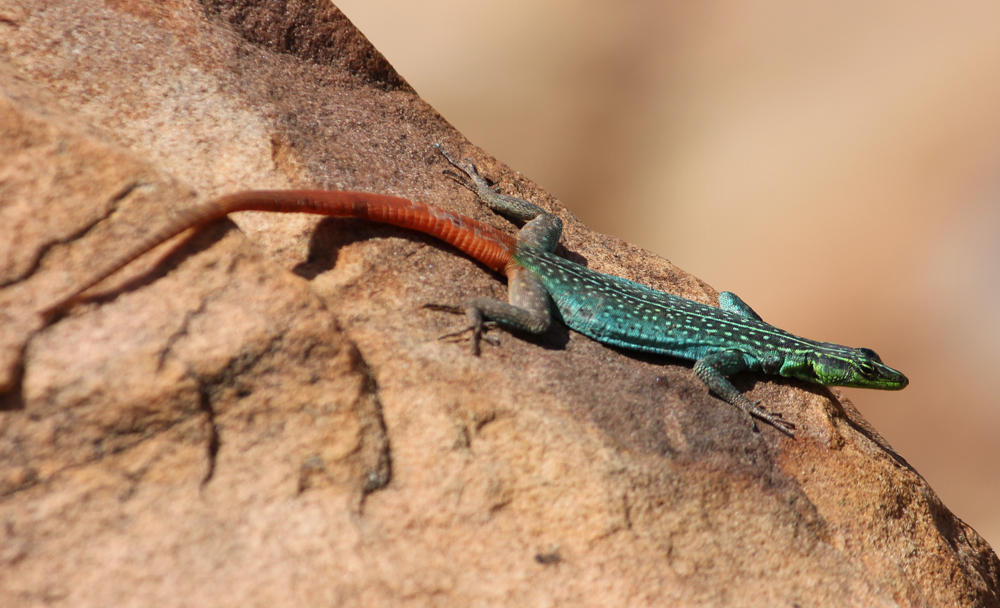
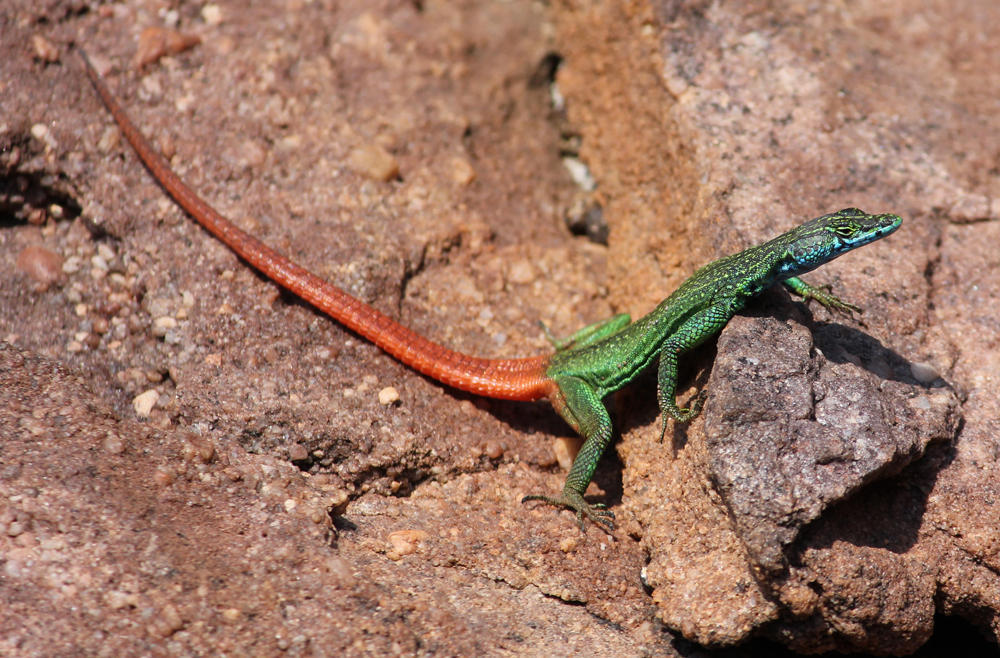
Description was extracted from Branch (1998): This small platy has opaque lower eyelids, each divided by a series of vertical septa. The supranasals are fused with the nasals. The middle row of gulars is not very enlarged. The scales on the sides of the neck are flattened and enlarged, and those on the flanks are no larger than those on the back. The ventrals are in 1 8-20 longitudinal row. There are 18-20 femoral pores in males. Females and juveniles have a dark brown back, with three cream stripes and a few spots between the stripes. The tail is straw-coloured. Adult males have a dark green back and limbs, with pale yellow-green marks on the head, a faint yellow-green stripe along the backbone and numerous yellow-green spots. The tail is bright orange. The throat is blue-white, with a black collar. The chest and belly are dark blue.
No separate diagnostic description was provided. Refer to the morphological description.
Type locality: Waterpoort, Soutpansberg District, northern Transvaal, South Africa. Holotype: DNMNH (= TM) 39637
No notable issues.
South Africa
This species is endemic to the western and central Soutpansberg in Limpopo province, South Africa (Petford et al., 2019). Within the Soutpansberg, it is most common on the northern slopes where there is less rainfall and more exposed rock without large tracts of forest (Jacobsen, 1989).
In general, lizards can sprint, crawl, climb, jump, and glide. When sprinting on four legs, lizards often move their fore feet diagonally in unison—the right fore foot with the left hand and the left fore foot with the right hand. The body's bent is simultaneously reversed. The shoulders, hips, and other joints in the legs as well as the bending of the back all contribute to moving the feet forward. Leg and back muscles work together to power running (Alexander, 2012).
Carnivore - Invertivore (invertebrate-eating)
This lizard feeds on small invertebrates, including flies, beetles and larvae (Branch, 1998).
This information was extracted from Branch (1998) referring to all Platysaurus species in general: In courtship, males present head-on to females, raising the head and forebody on straightened forelimbs, revealing the bright coloration of the throat and chest. Platysaurus are oviparous and lay only two eggs, usually in November-December. The eggs are large, elongate and soft-shelled, and are laid in deep cracks, usually in damp leaf mould. Numerous females may nest in the same crack, where as many as 30 eggs may be laid.
No data.
Grassland, Savanna
This map contains point-based occurrences at different locations
Occurrence in African countries and South African provinces. Residence status indicates if a taxon is indigenous, endemic, or alien in a specific region. This data is based on specimen records and literature.
FSA
SA
BOT
NAM
ESW
LES
WC
EC
NC
FS
GA
KZN
LP
MP
NW
Absent
Indigenous
Endemic
Naturalised
Invasive
Names and Sources
| Common Name | Language |
|---|---|
| Soutpansberg Flat Lizard- Transvaal Flat Lizard | En |
| Transvaal Flat Lizard | En |
| Soutpansberg Platakkedis | En |
Classification
KINGDOM Animalia
PHYLUM Chordata
CLASS Reptilia
ORDER Squamata
FAMILY Cordylidae
GENUS Platysaurus
SPECIES relictus
No results found for Platysaurus relictus Broadley, 1976
There is no known trade in this species (Tolley et al., 2023).
20 results for Platysaurus relictus Broadley, 1976
This map contains point-based occurrences at different locations
1976
JOURNAL ARTICLE
Two new forms of Platysaurus from the northern Transvaal (Sauria: Cordylidae)Broadley, D.. 1976. Two new forms of Platysaurus from the northern Transvaal (Sauria: Cordylidae) Vol. 8(8) pp.1-3.
1989
TECHNICAL REPORT
The distribution and conservation status of reptiles and amphibians in the Transvaal. Final Report Project TN 6/4/1/30Jacobsen, N.. 1989. The distribution and conservation status of reptiles and amphibians in the Transvaal. Final Report Project TN 6/4/1/30. Pretoria, South Africa. Chief Directorate of Nature and Environmental Conservation.
1998
BOOK
Field Guide to Snakes and Other Reptiles of Southern AfricaBranch, B.. 1998. Field Guide to Snakes and Other Reptiles of Southern Africa. Cape Town. Struik Publishers.
2012
JOURNAL ARTICLE
Locomotion of ReptilesAlexander, R.. 2012. Locomotion of Reptiles Vol. 121 pp.1-4.
2023
BOOK
Conservation status of the reptiles of South Africa, Eswatini and LesothoTolley, K., Burger, M., Alexander, G., Pietersen, D., Conradie, W., Weeber, J.. 2023. Conservation status of the reptiles of South Africa, Eswatini and Lesotho Vol. Suricata 10. Pretoria. South African National Biodiversity Institute.
1988
SECTION IN BOOK
Platysaurus relictus: species accountJacobsen, N.. 1988. Platysaurus relictus: species account. CSIR.
2019
JOURNAL ARTICLE
Influences of ecology and climate on the distribution of restricted, rupicolous reptiles in a biodiverse hotspotAlexander, G., Petford, M., Van Huyssteen, R.. 2019. Influences of ecology and climate on the distribution of restricted, rupicolous reptiles in a biodiverse hotspot Vol. 68(2). pp.118-133.
Status and criteria
LC
Assessor(s)
Michael Bates
Reviewer(s)
Graham Alexander