ANIMALIA / CHORDATA / REPTILIA / SQUAMATA / CORDYLIDAE / PSEUDOCORDYLUS / MICROLEPIDOTUS
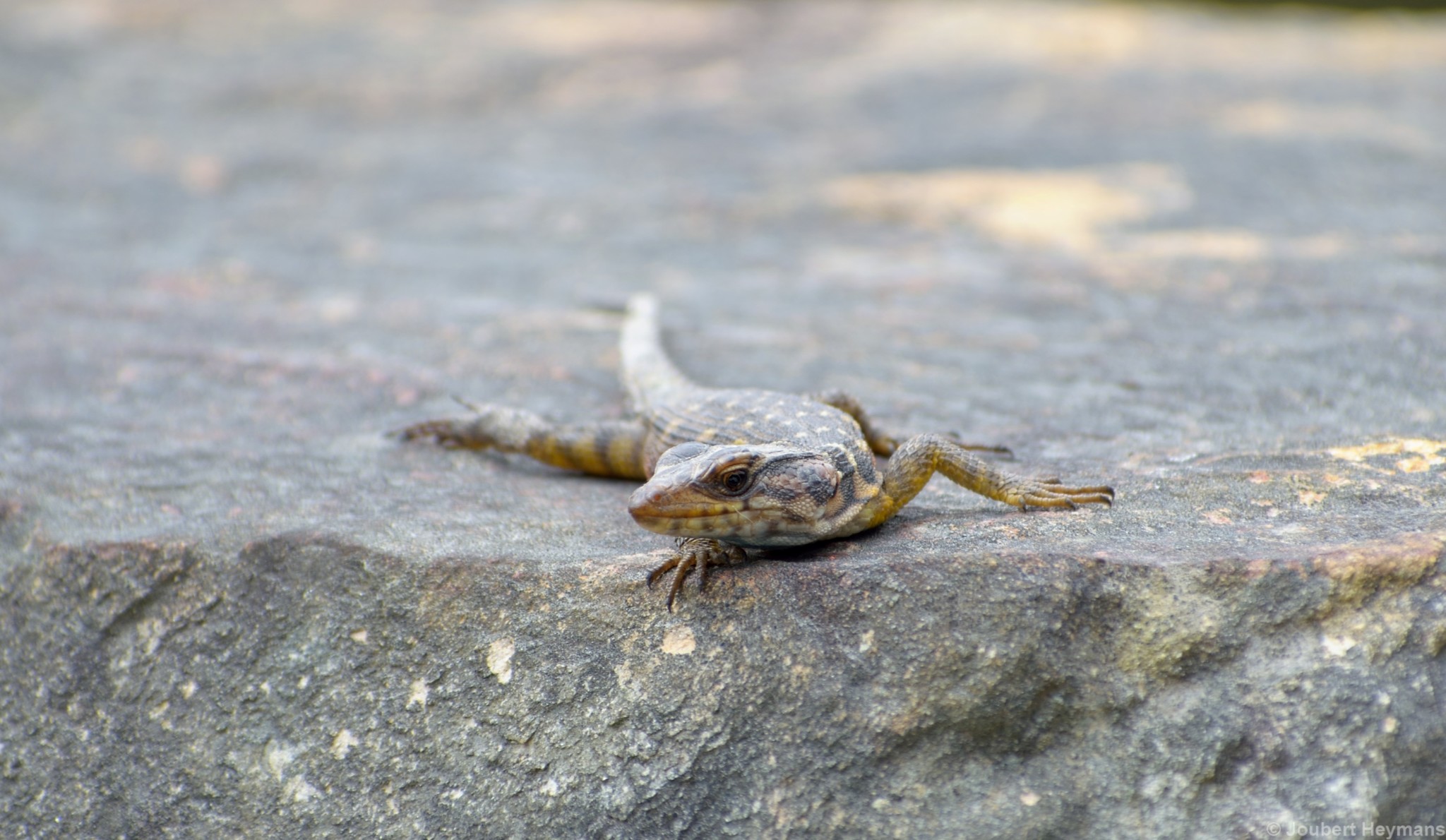
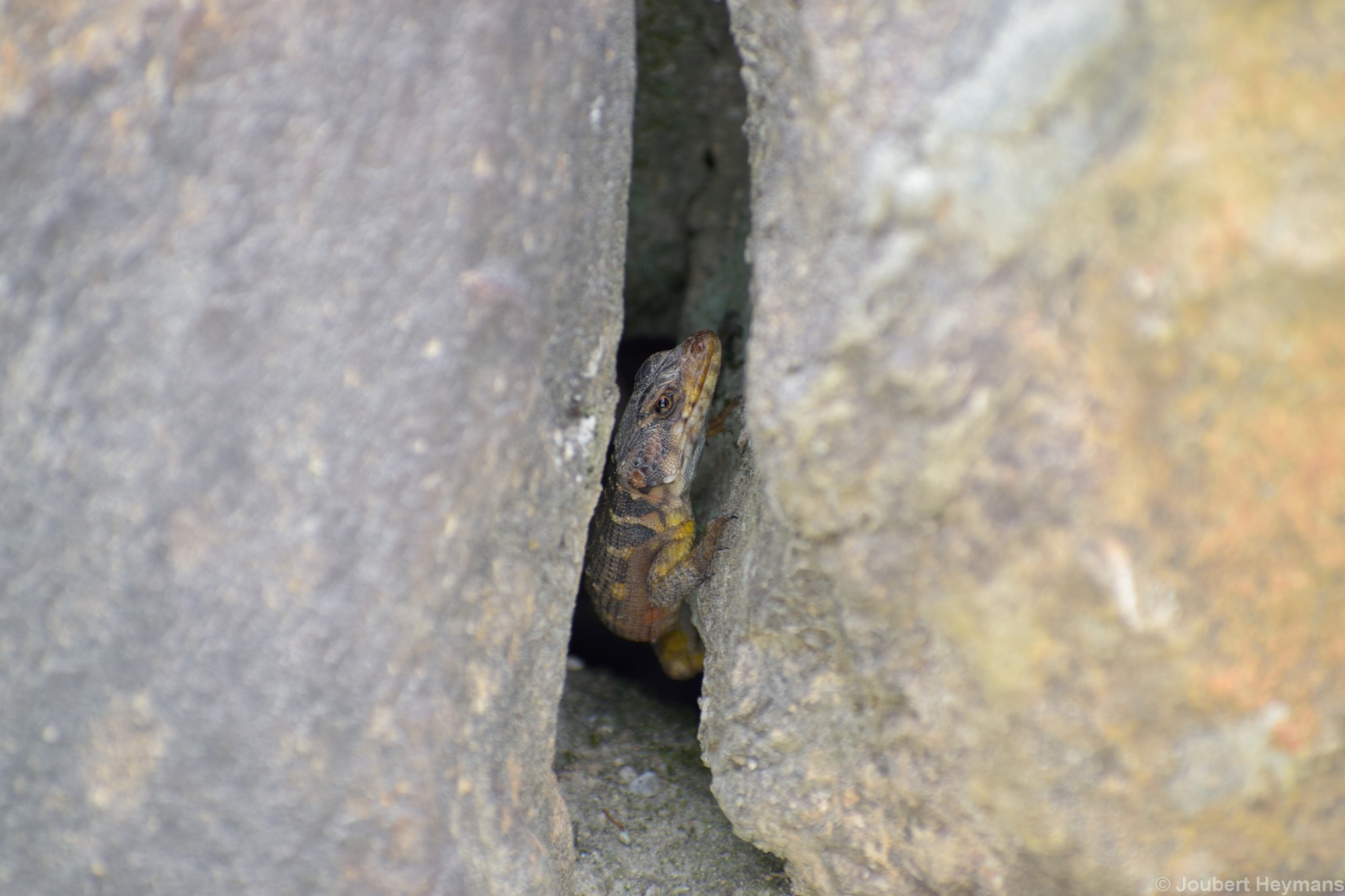
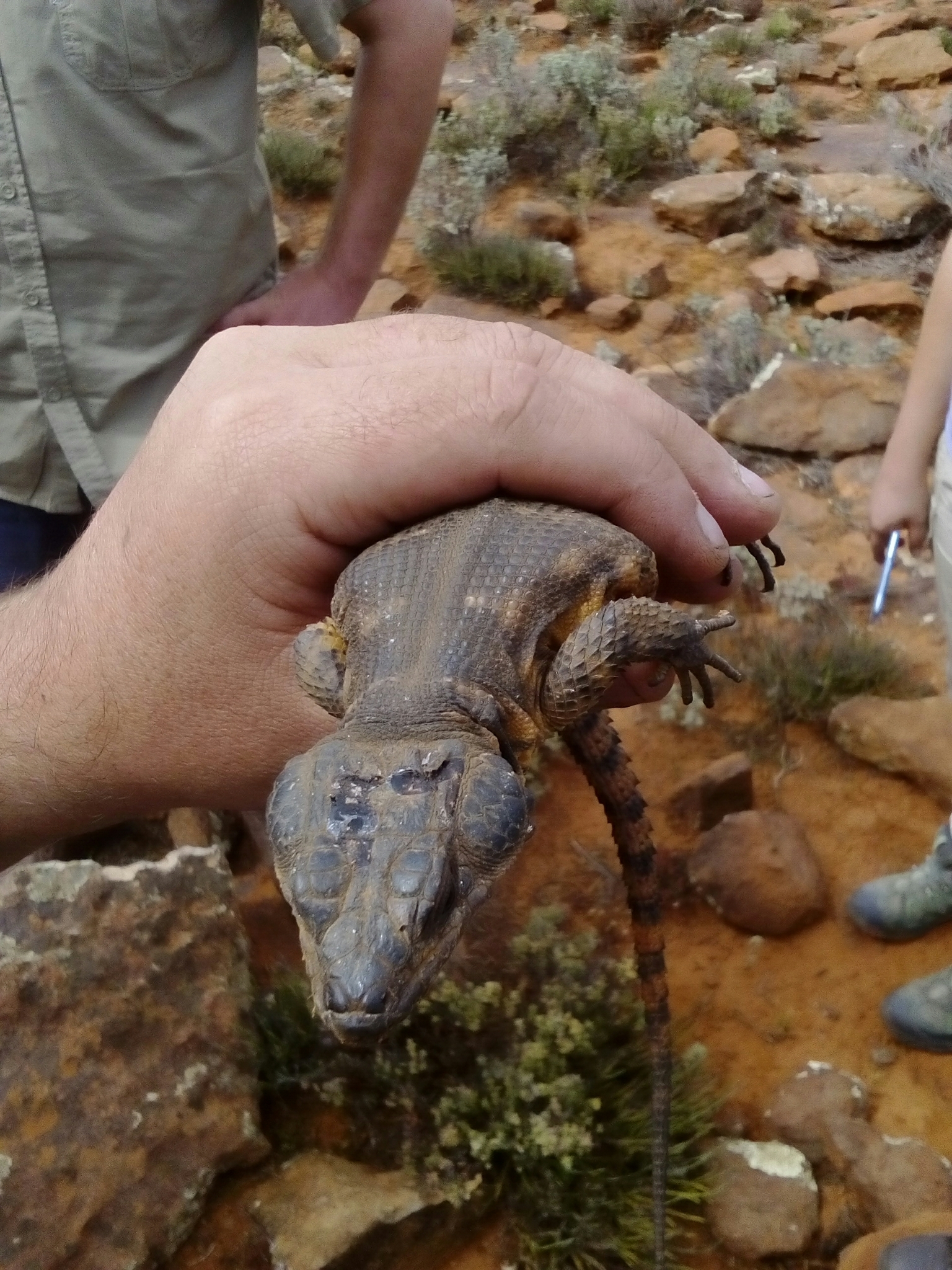
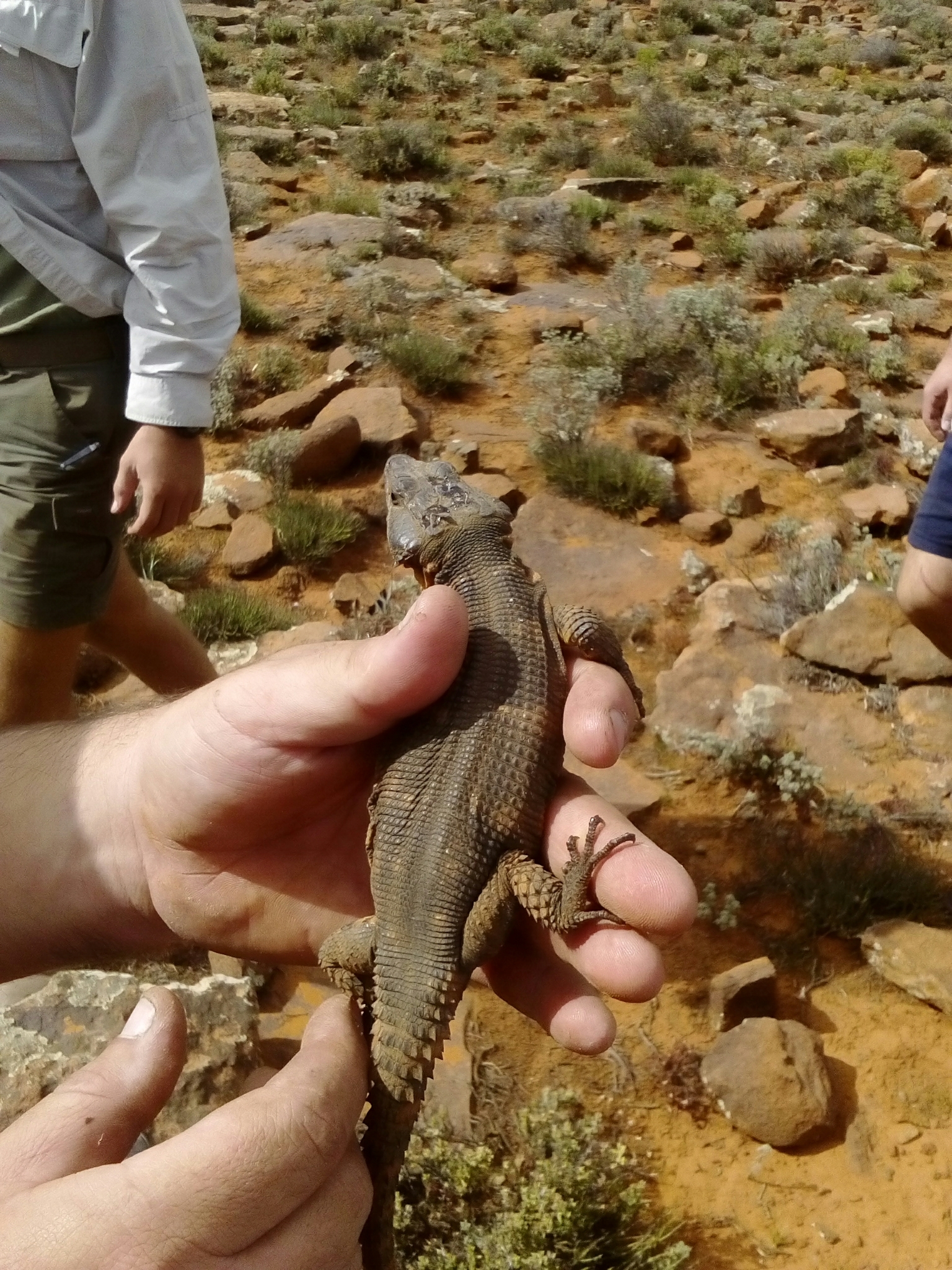
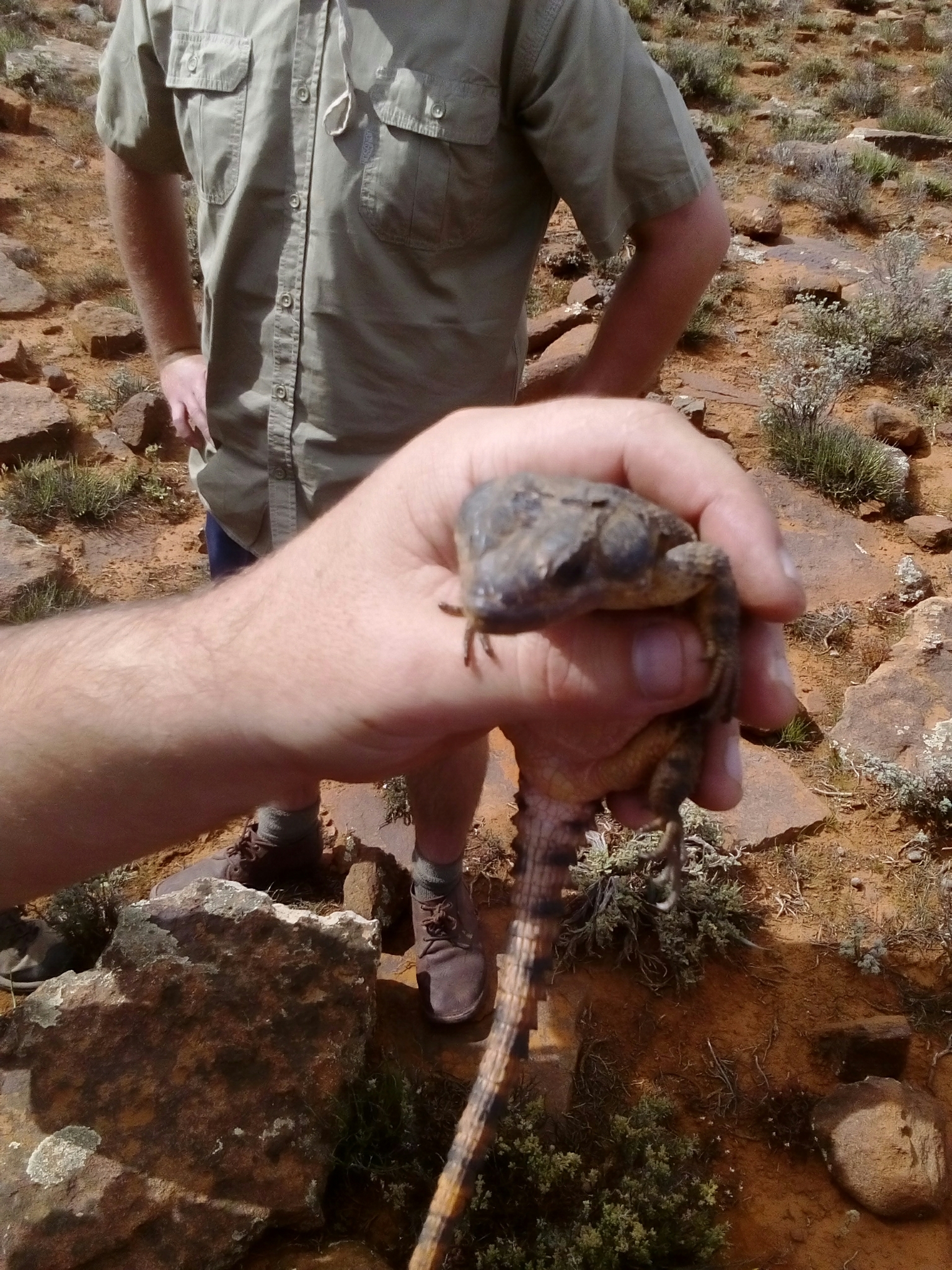
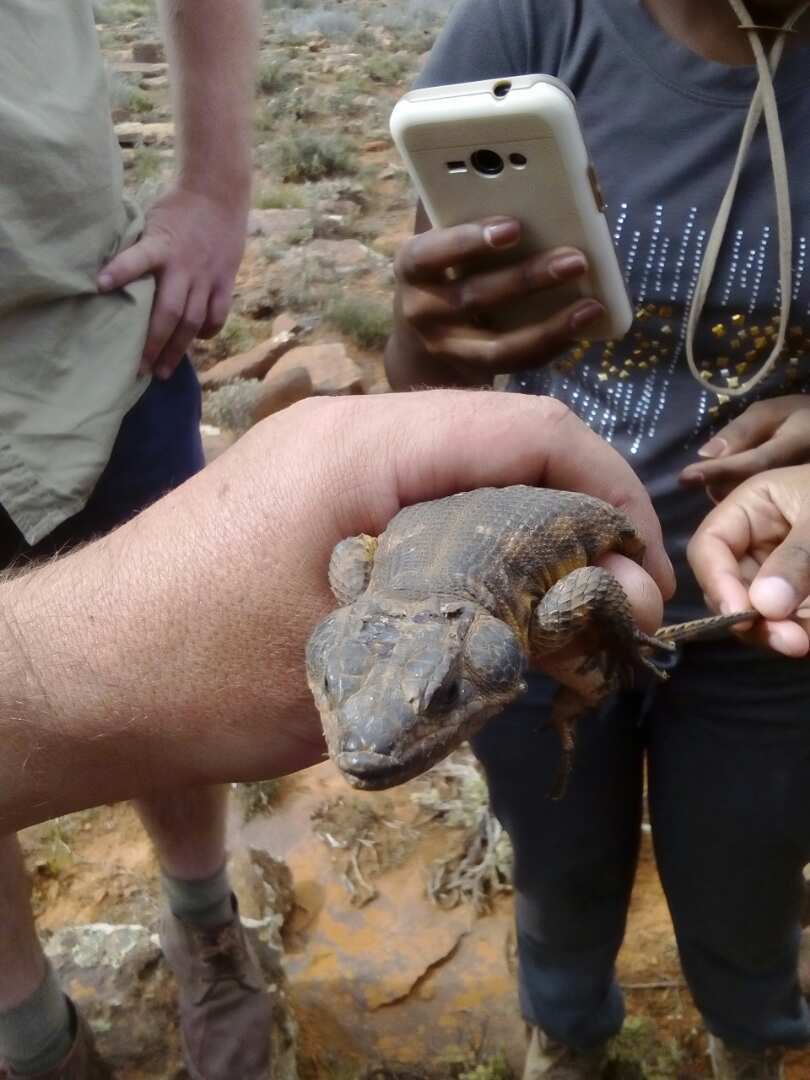
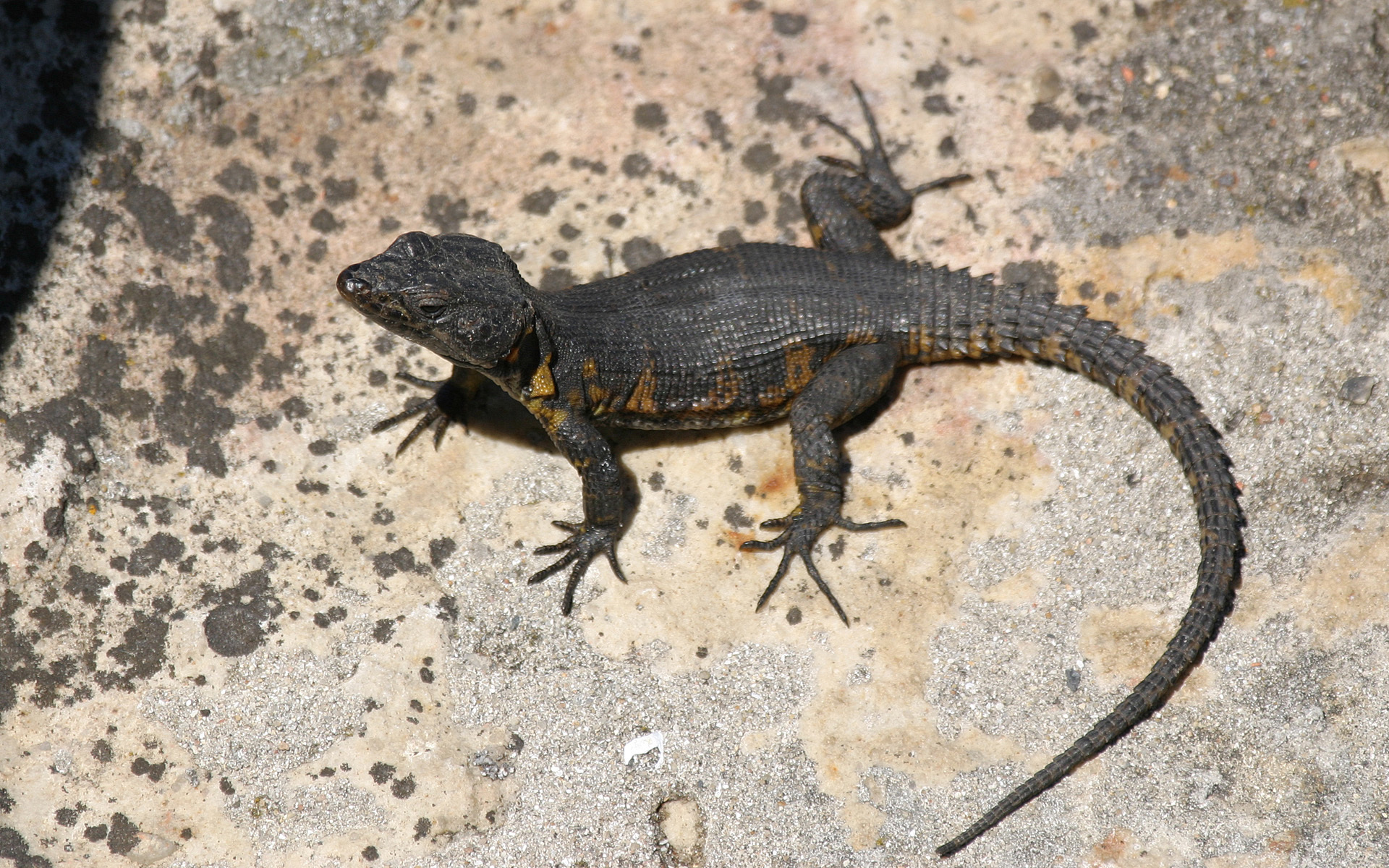
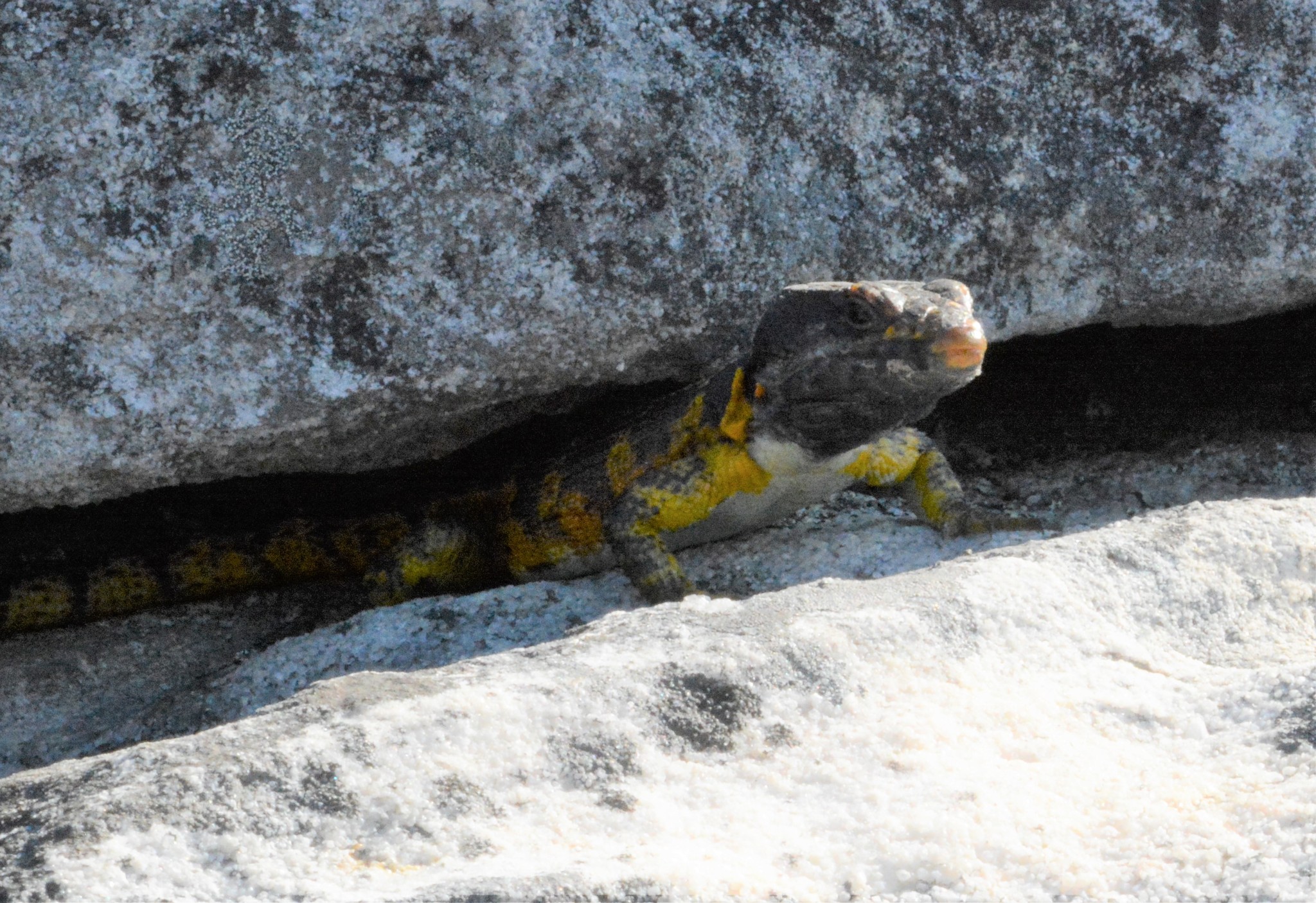
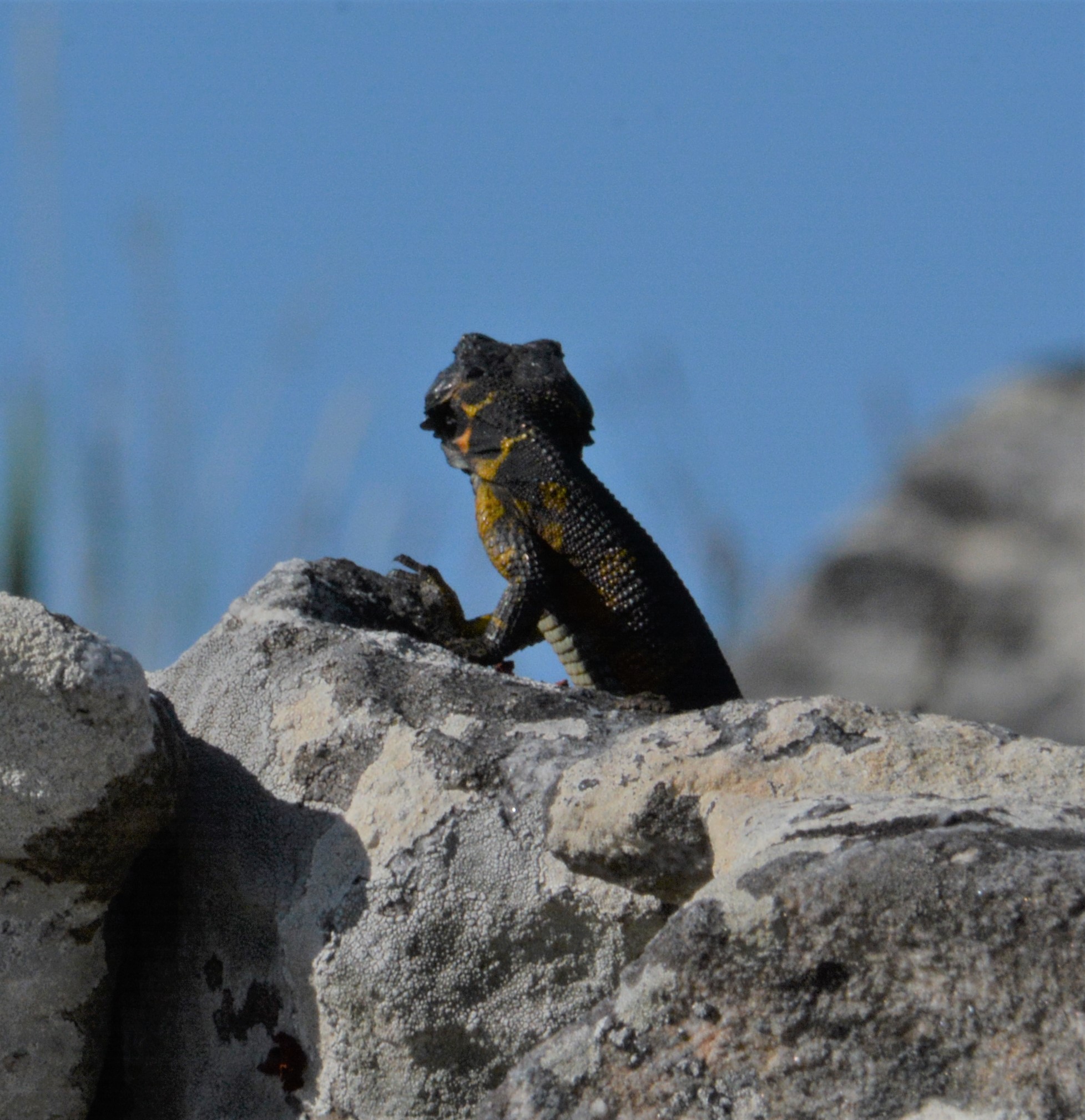
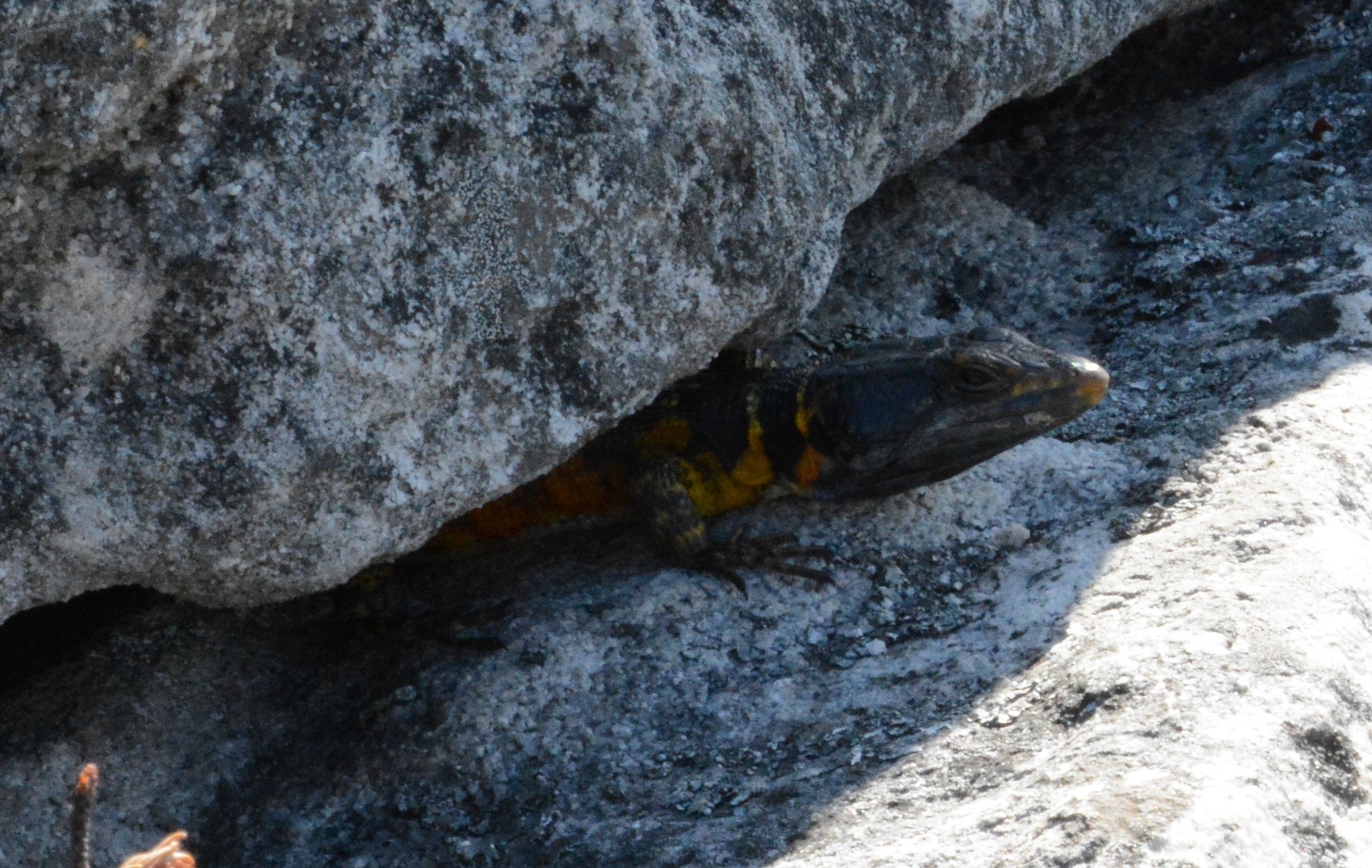
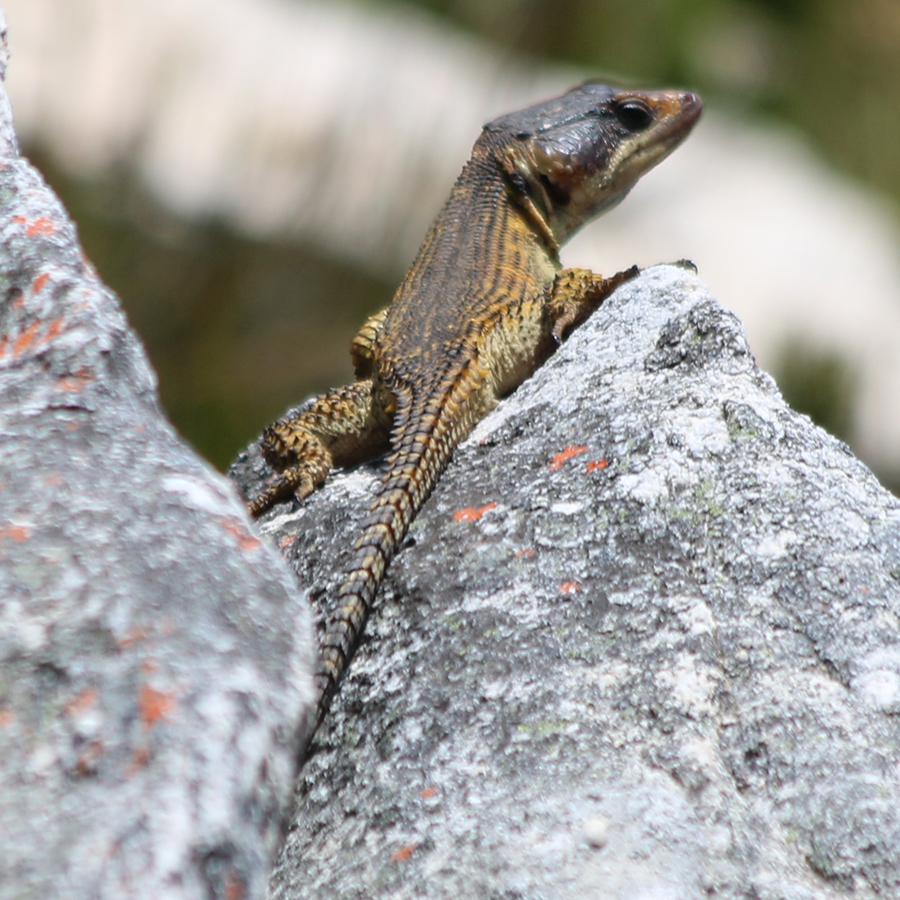
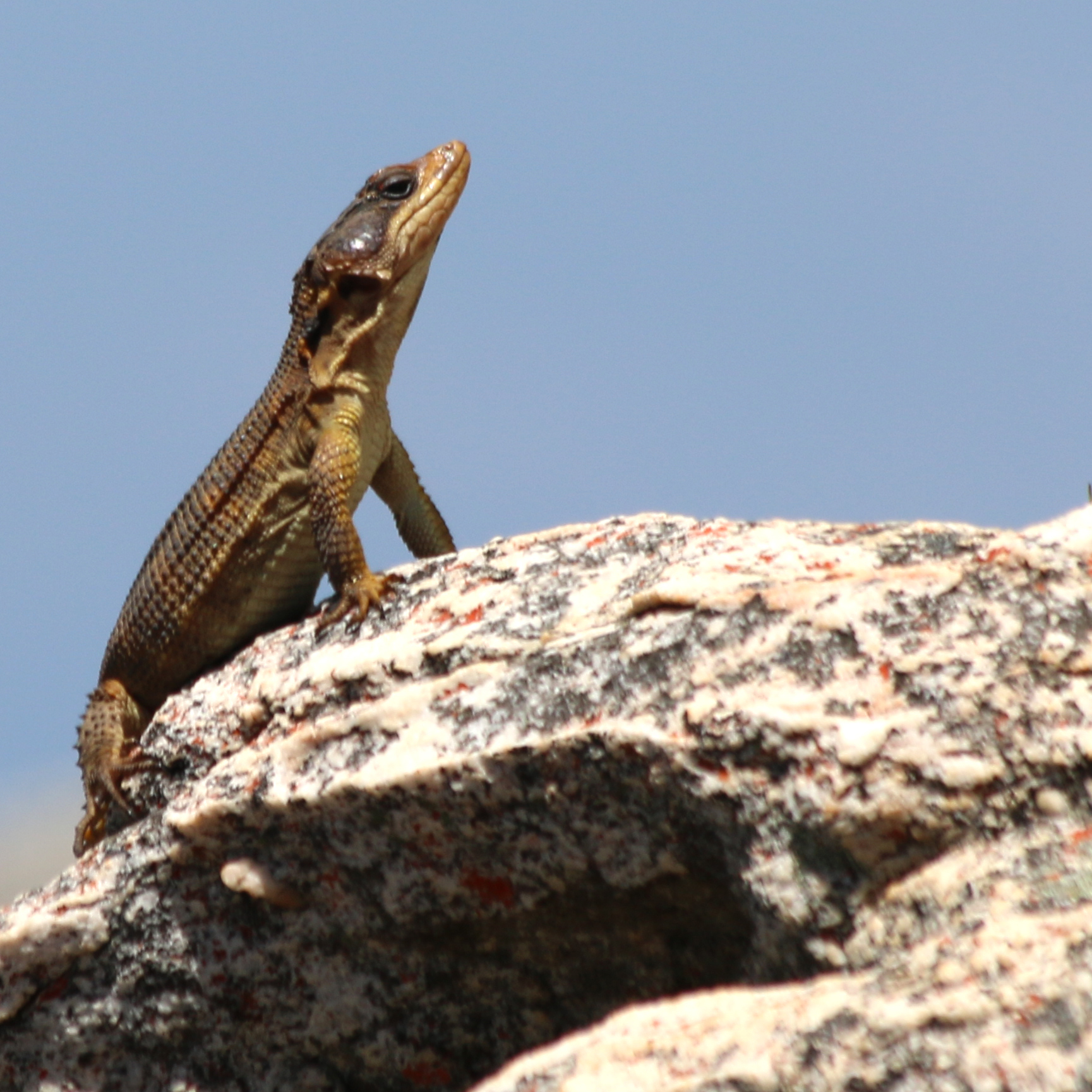
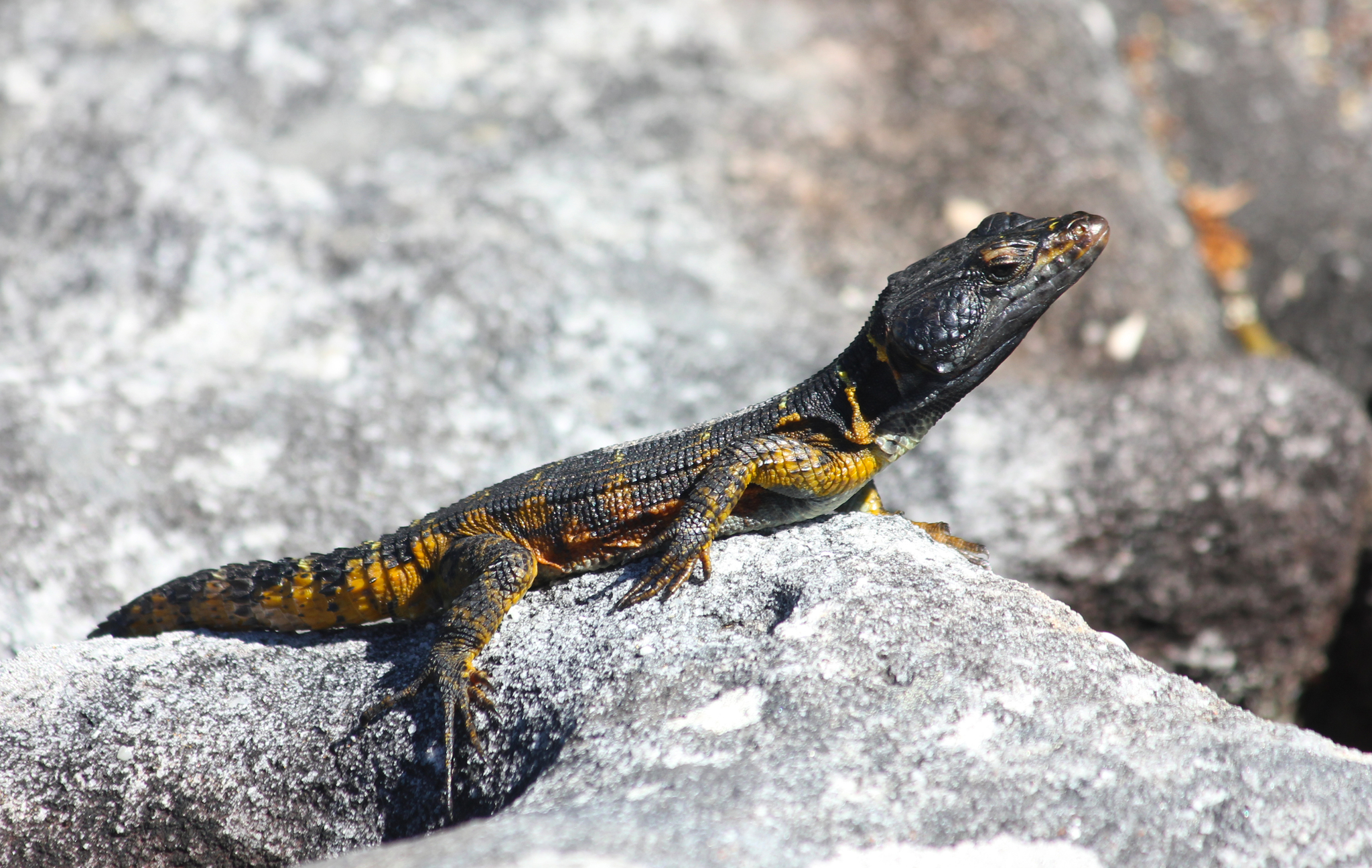
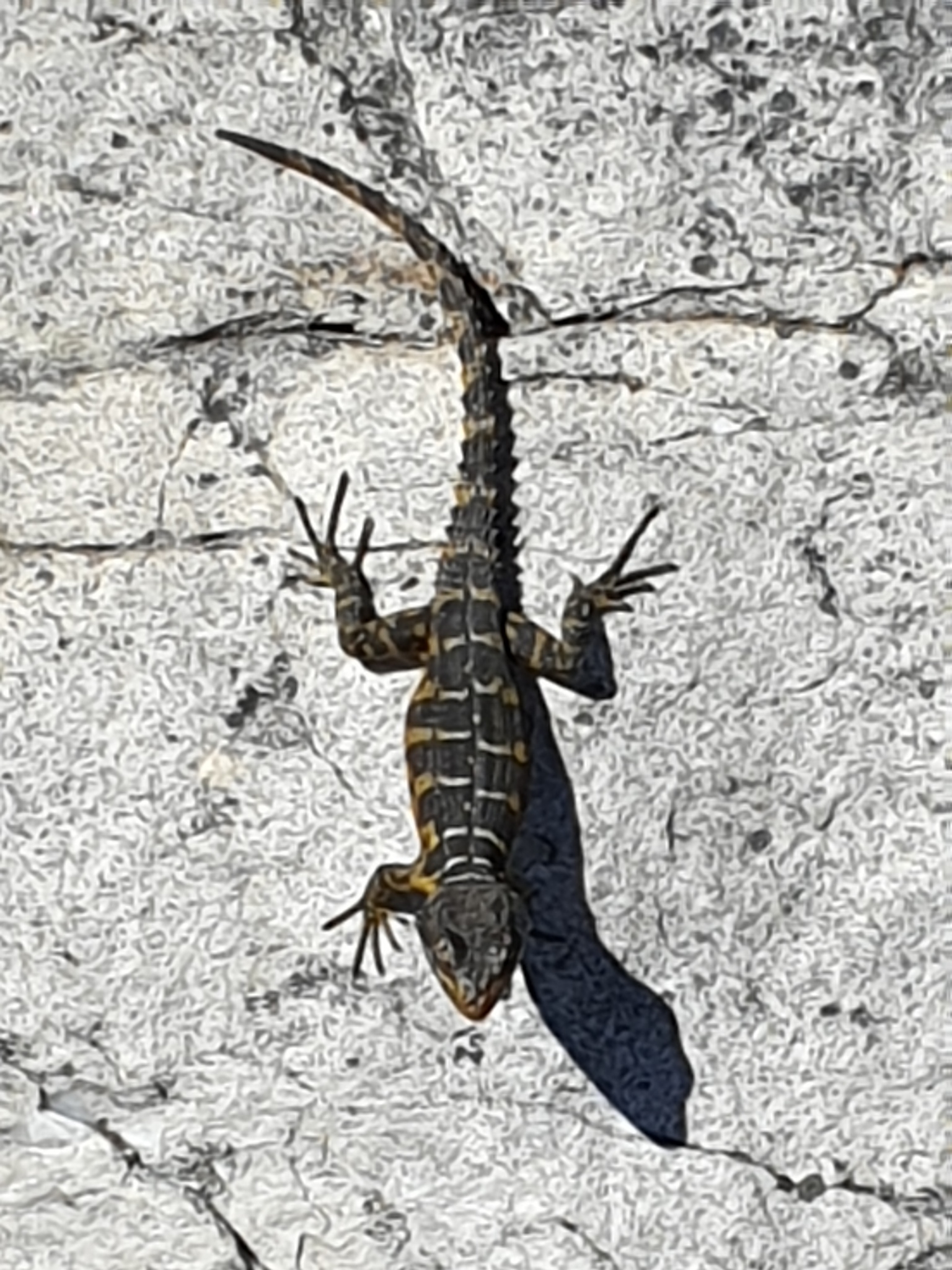
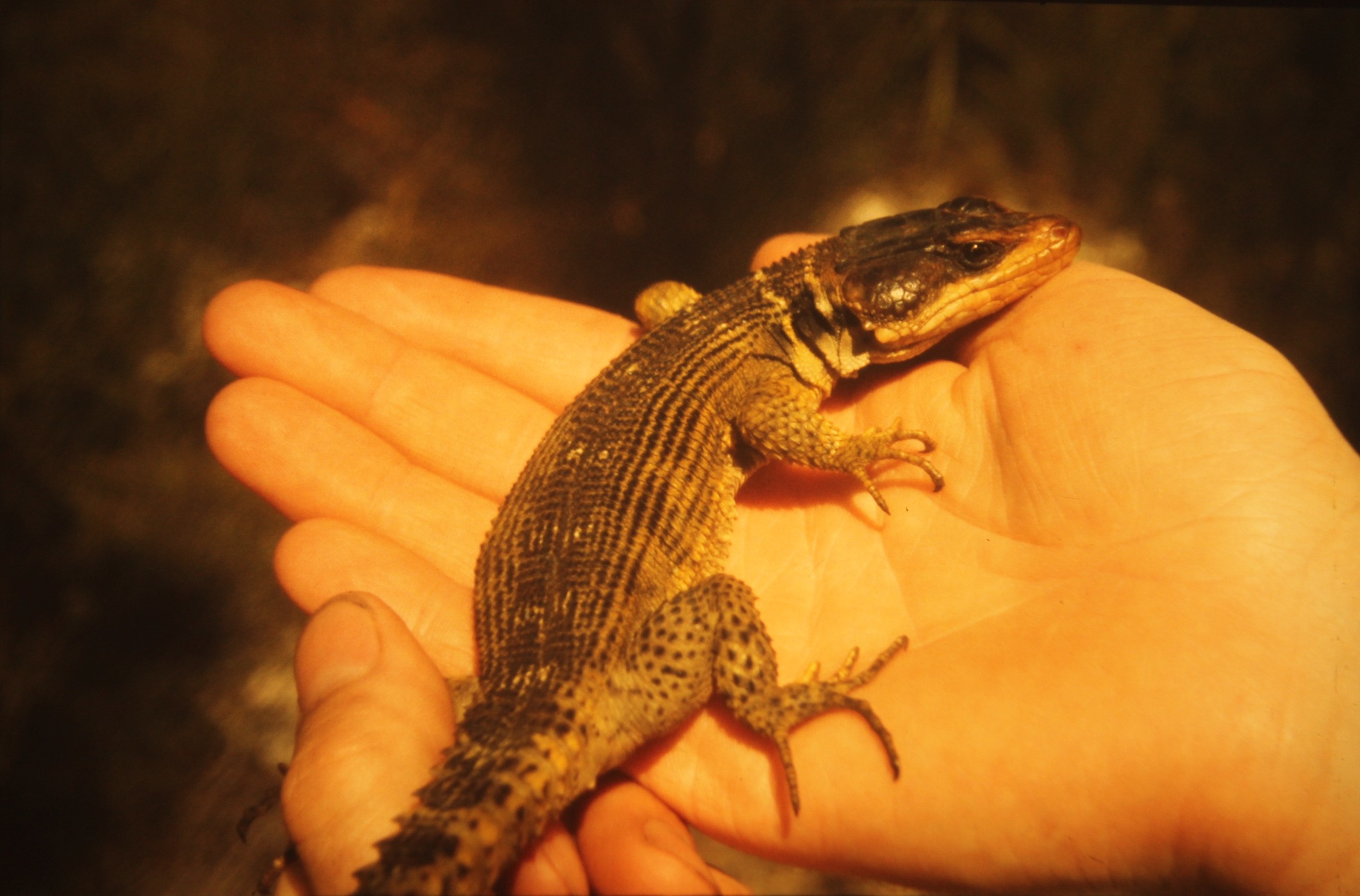
Boulenger (1885) re-described this species as follows: Head much depressed, much longer than broad. Head-shields slightly rugose; nasals generally forming a suture; frontonasal hexagonal, broader than long, followed by a pair of preefrontals ; frontal hexagonal, broader anteriorly ; interparietal small, inclosed between the two pairs of parietals, of which the posterior is the largest; occipital small, elongate subtriangular; four supraoculars, anterior largest ; four or five supraciliaries ; lower eyelid opaque; a loreal, a larger preorbital; four infraorbitals, second descending to the lip, separating the fourth and fifth, or the fifth and sixth labials ; temporals in two or three rows; two projecting compressed scales in front of the ear; six or seven upper labials; rostral pentagonal, nearly three times as broad as high. Mental with straight posterior border; six lower labials, posterior largest and keeled, in contact with five large shields. Gular scales small, elongate anteriorly, granular medially, increasing in size, and imbricate, towards the collar; latter angular, attached in the middle; sides of neck folded. Back covered with small flat roundish sub triangular feebly keeled tubercles forming regular longitudinal and transverse series separated by minute granules; the tubercles becoming smaller and passing into the granules on the flanks; a lateral fold. Ventral scales large, quadrangular, broader than long, juxtaposed, forming twelve or fourteen longitudinal and thirty-three or thirty-four transverse series. Preanal scales rather irregular, generally a posterior pair enlarged. Limbs above with imbricate strongly keeled scales, inferiorly with smooth or granular scales. Femoral pores in two or three rows in the males, the inferior row composed of six to ten pores. Caudal scales smooth or feebly keeled inferiorly, strongly keeled above, and spinose on the sides, on the upper surface a whorl of large scales alternates with a whorl of smaller ones. Brown, blackish, reddish, or olive above, with darker or lighter markings; large black spots, bordered with yellow, on the neck; yellowish inferiorly; throat sometimes black. Measurements: Total length 258 mm, Head 34, Width of head 28 mm, Body 104 mm, Forelimb 43 mm, Hindlimb 63 mm, Tail (injured) 120 mm.
No separate diagnostic description was provided. Refer to the morphological description.
microlepidotus: Type locality: “Africa” Type: BMNH 1946.8.8.49 (and possibly additional specimens).
Although there are some morphological features unique to each subspecies (FitzSimons, 1943; Bates, 2005), their taxonomic status is uncertain. In the east of the distribution, P. microlepidotus may be parapatric with P. melanotus subviridis (Bates et al., 2014) and this could cause confusion with identifications (Tolley et al, 2023).
South Africa
This species occurs throughout the Cape Fold Mountains and inland mountain ranges along the Great Escarpment, South Africa (Bates, 2005). The species has also been recorded from high elevations on large inselbergs within the Great Karoo (Tolley et al., 2023).
In general, lizards can sprint, crawl, climb, jump, and glide. When sprinting on four legs, lizards often move their fore feet diagonally in unison—the right fore foot with the left hand and the left fore foot with the right hand. The body's bent is simultaneously reversed. The shoulders, hips, and other joints in the legs as well as the bending of the back all contribute to moving the feet forward. Leg and back muscles work together to power running (Alexander, 2012).
Carnivore
This lizard forages for food on adjacent flat rocks, eating large grasshoppers, beetles. It will readily kill small lizards, such as agamas and geckos (Branch, 1998).
The Cape Crag Lizard is viviparous, giving birth to three to seven (usually four) babies between January-March (Branch, 1998).
The Cape Crag Lizard bites readily and painfully and holds on with a bulldog-like tenacity. It hibernates in winter in a deep retreat. It is very pugnacious; males and females maintain exclusive territories (Branch, 1998).
Fynbos, Succulent Karoo
This map contains point-based occurrences at different locations
Occurrence in African countries and South African provinces. Residence status indicates if a taxon is indigenous, endemic, or alien in a specific region. This data is based on specimen records and literature.
FSA
SA
BOT
NAM
ESW
LES
WC
EC
NC
FS
GA
KZN
LP
MP
NW
Absent
Indigenous
Endemic
Naturalised
Invasive
Names and Sources
| Common Name | Language |
|---|---|
| Cape Crag Lizard | EN |

Classification
KINGDOM Animalia
PHYLUM Chordata
CLASS Reptilia
ORDER Squamata
FAMILY Cordylidae
GENUS Pseudocordylus
SPECIES microlepidotus
No results found for Pseudocordylus microlepidotus (Cuvier, 1829)
This species is listed in CITES Appendix II, but a total of only ten individuals were legally removed from the wild in 1997 in South Africa for export (UNEP-WCMC, 2020), and it therefore cannot be considered as being extensively traded (Tolley et al., 2023).
20 results for Pseudocordylus microlepidotus (Cuvier, 1829)
This map contains point-based occurrences at different locations
1998
BOOK
Field Guide to Snakes and Other Reptiles of Southern AfricaBranch, B.. 1998. Field Guide to Snakes and Other Reptiles of Southern Africa. Cape Town. Struik Publishers.
2005
JOURNAL ARTICLE
Taxonomic history and geographical distribution of the Pseudocordylus melanotus (A. Smith, 1838) and P. microlepidotus (Cuvier, 1829) complexes (Sauria: Cordylidae)Bates, M.. 2005. Taxonomic history and geographical distribution of the Pseudocordylus melanotus (A. Smith, 1838) and P. microlepidotus (Cuvier, 1829) complexes (Sauria: Cordylidae) Vol. 21 pp.37-112.
2011
JOURNAL ARTICLE
Between a rock and a hard polytomy: rapid radiation in the rupicolous girdled lizards (Squamata: Cordylidae)Branch, W., Bauer, A., Stanley, E., Jackman, T., Mouton, P.. 2011. Between a rock and a hard polytomy: rapid radiation in the rupicolous girdled lizards (Squamata: Cordylidae) Vol. 58 pp.53–70.
2012
JOURNAL ARTICLE
Locomotion of ReptilesAlexander, R.. 2012. Locomotion of Reptiles Vol. 121 pp.1-4.
2023
BOOK
Conservation status of the reptiles of South Africa, Eswatini and LesothoTolley, K., Burger, M., Alexander, G., Pietersen, D., Conradie, W., Weeber, J.. 2023. Conservation status of the reptiles of South Africa, Eswatini and Lesotho Vol. Suricata 10. Pretoria. South African National Biodiversity Institute.
1943
JOURNAL ARTICLE
The Lizards of South AfricaFitzsimons, V.. 1943. The Lizards of South Africa Vol. 1. Pretoria pp.1-528.
2014
BOOK
Atlas and Red List of the Reptiles of South Africa, Lesotho and SwazilandBates, M., Bauer, A., Marais, J., Burger, M., Alexander, G., de Villiers, M.. 2014. Atlas and Red List of the Reptiles of South Africa, Lesotho and Swaziland Vol. Suricata 1. Pretoria. South African National Biodiversity Institute pp..
2020
DATABASE
The Reptile DatabaseUetz, P., Hošek, J., Freed, P.. 2020. The Reptile Database. Available at: http://www.reptile- database.org. (Accessed: 15 September 2020).
Status and criteria
LC
Assessor(s)
Michael Bates
Contributors
Josh Weeber
Reviewer(s)
Graham Alexander