
ANIMALIA / CHORDATA / REPTILIA / SQUAMATA / CORDYLIDAE / PSEUDOCORDYLUS / SPINOSUS
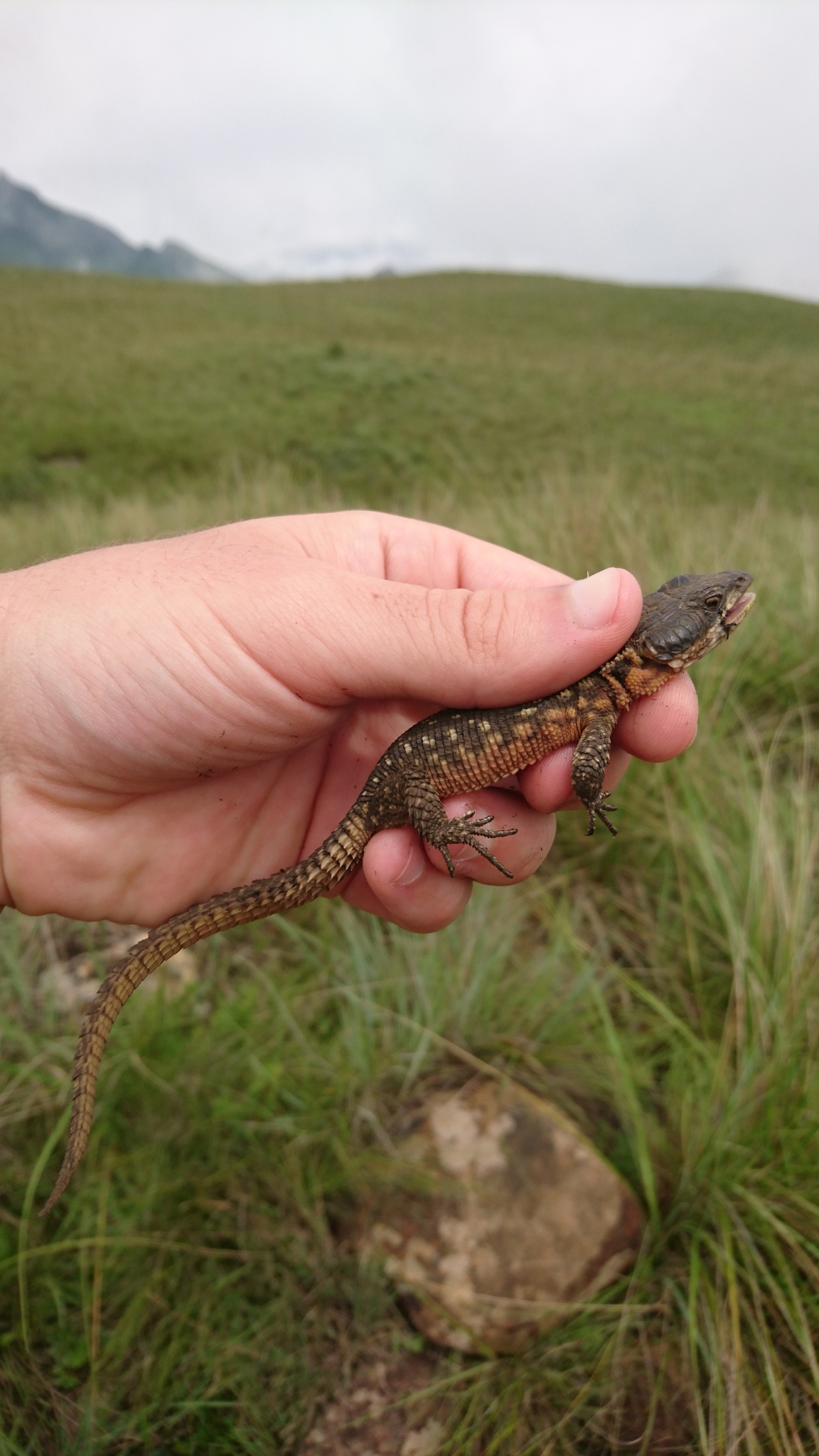
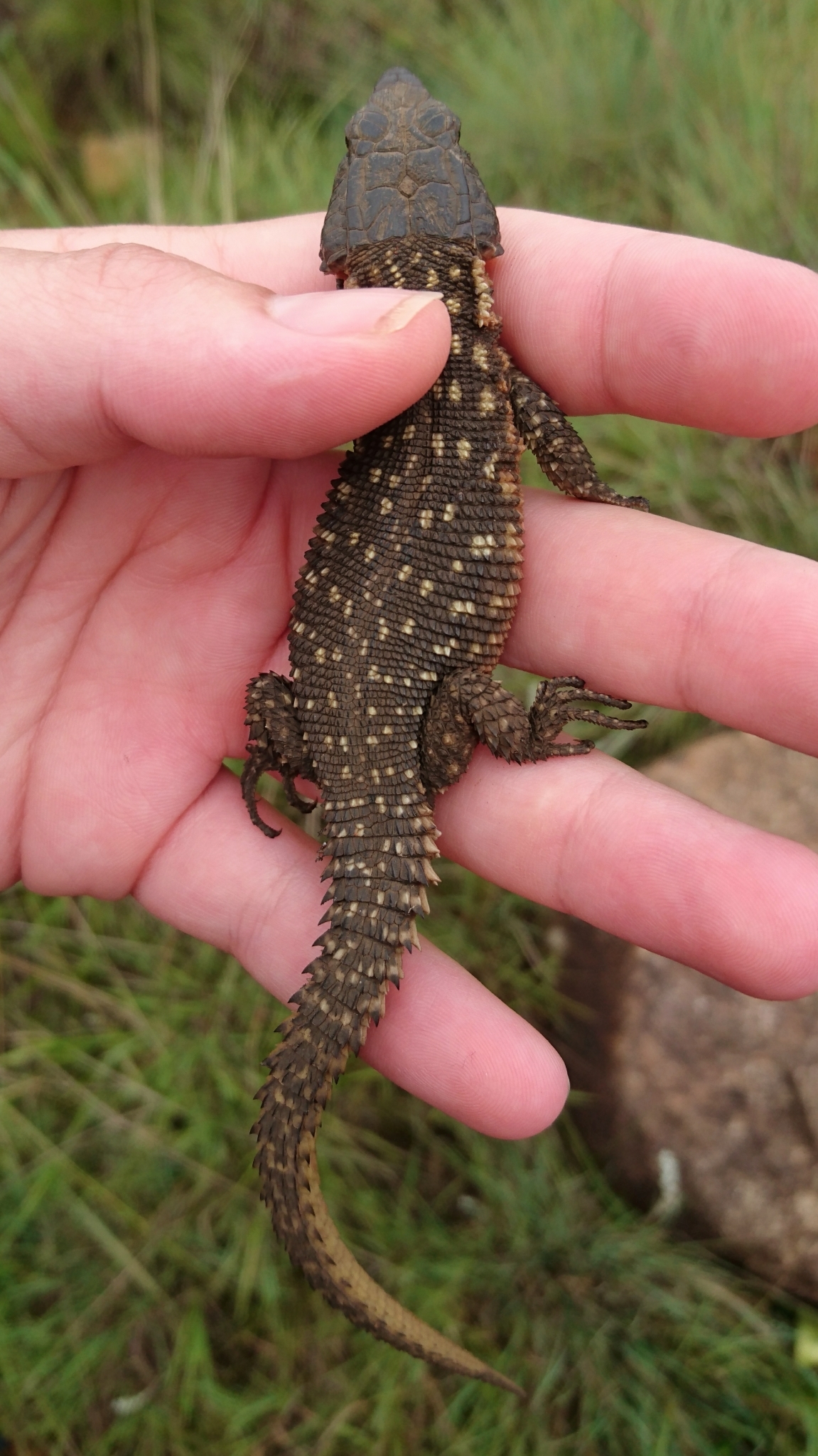
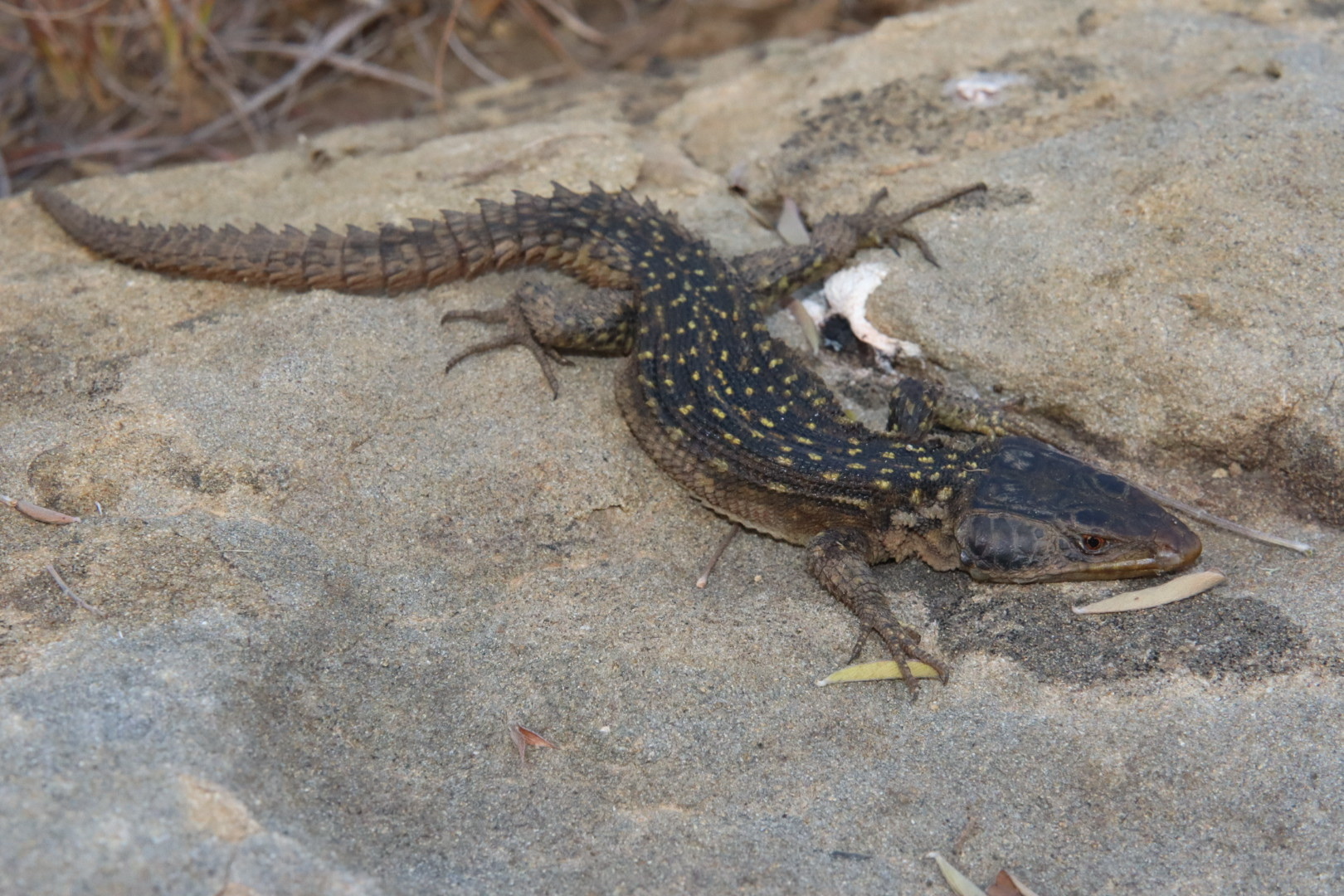
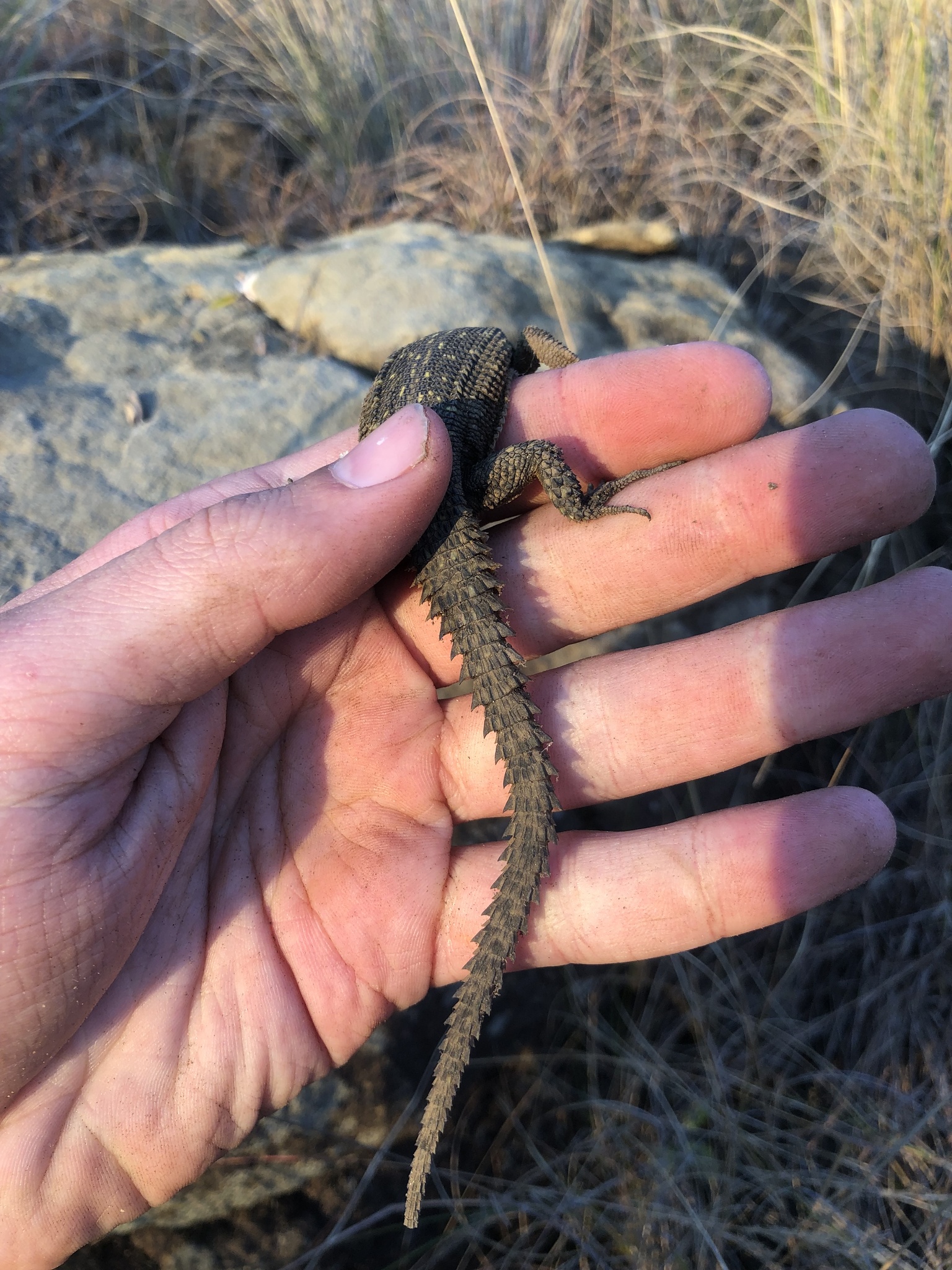
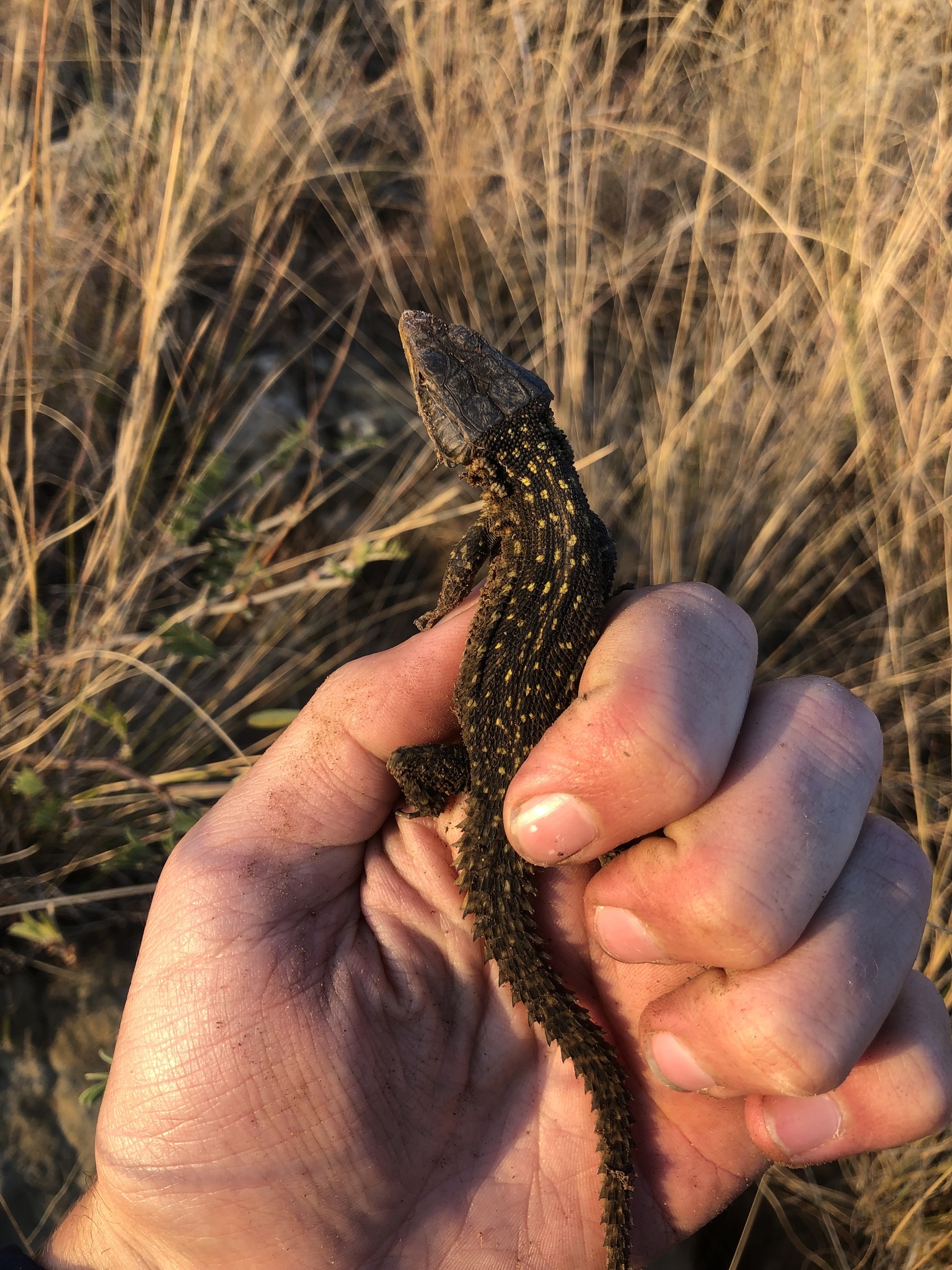
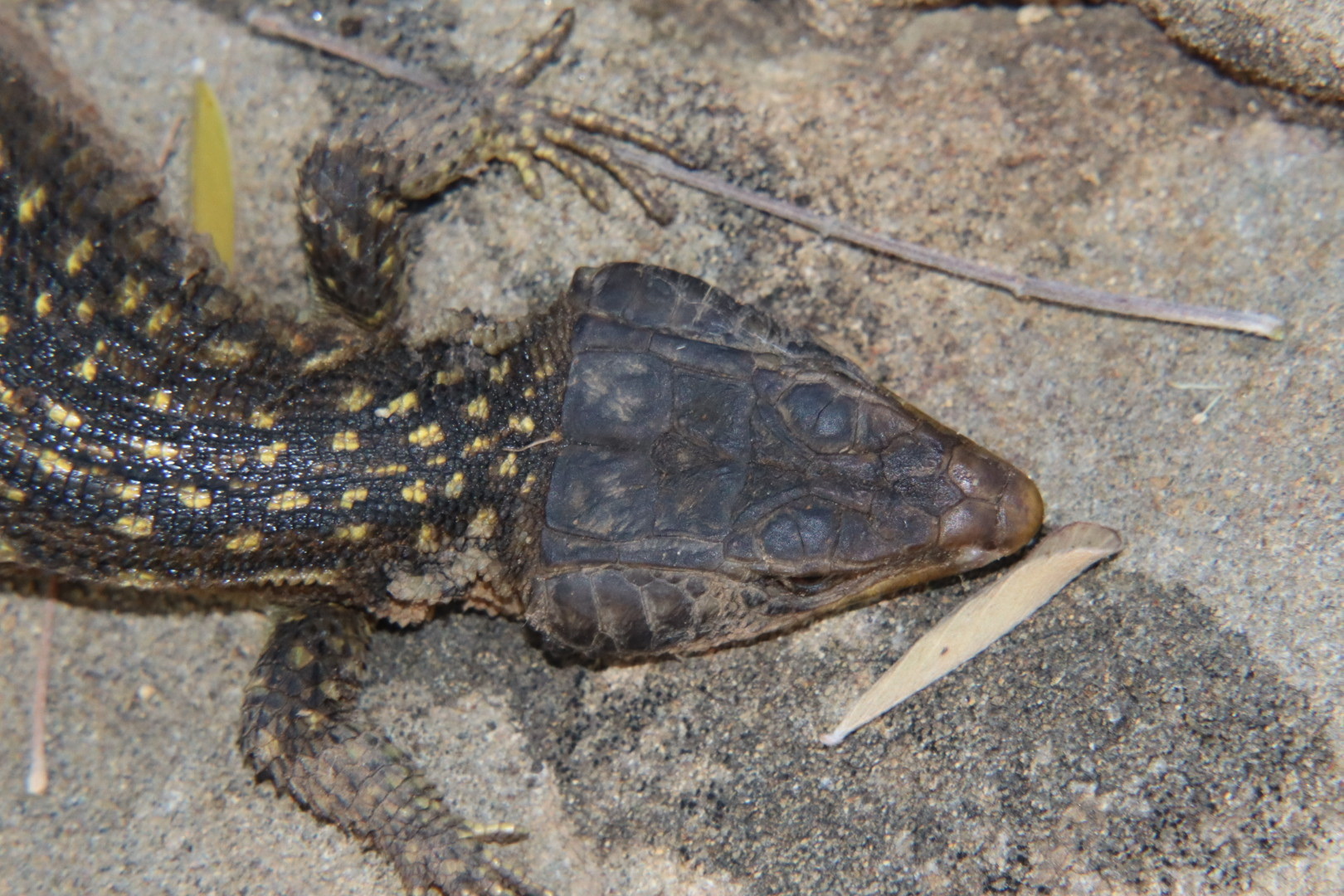
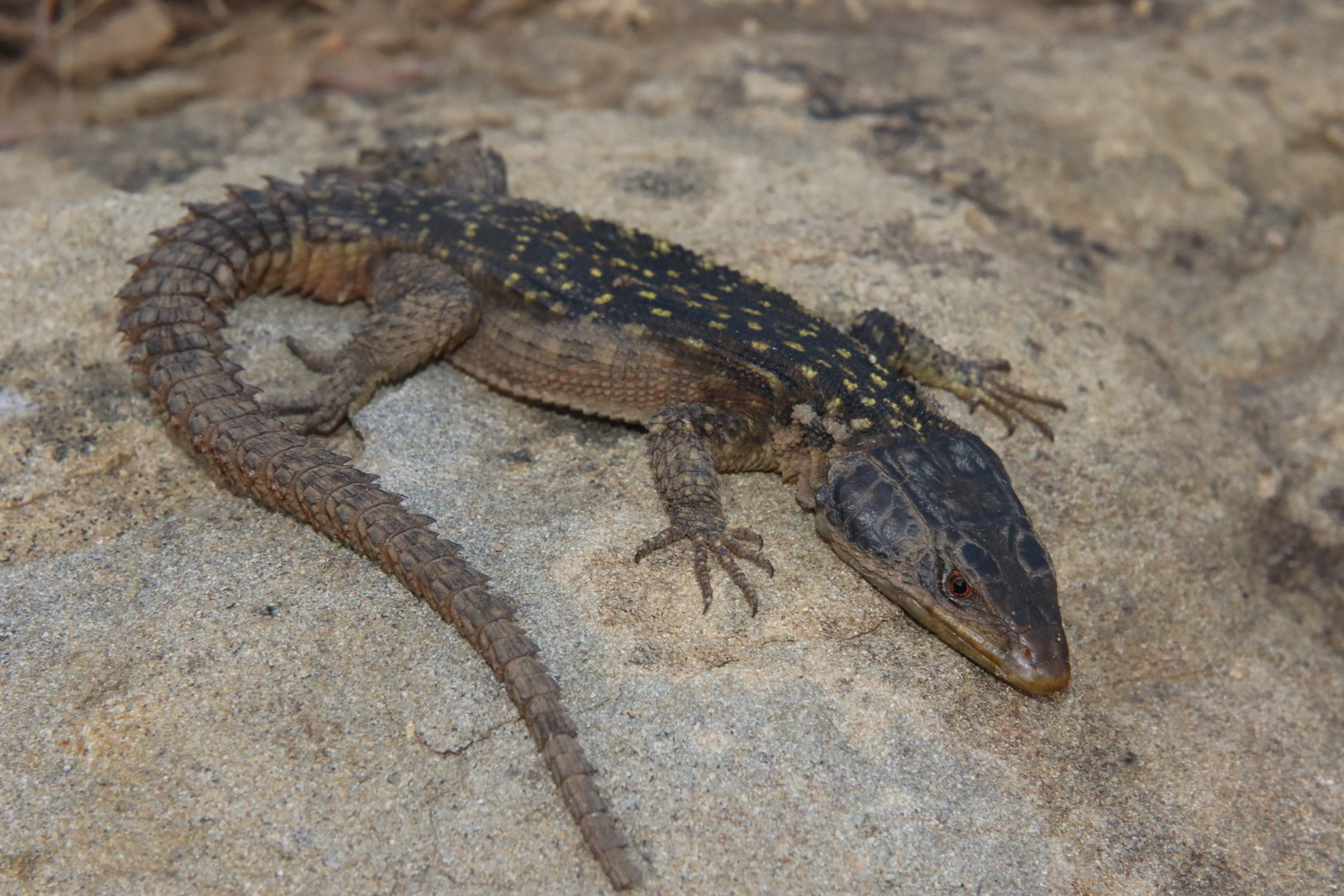
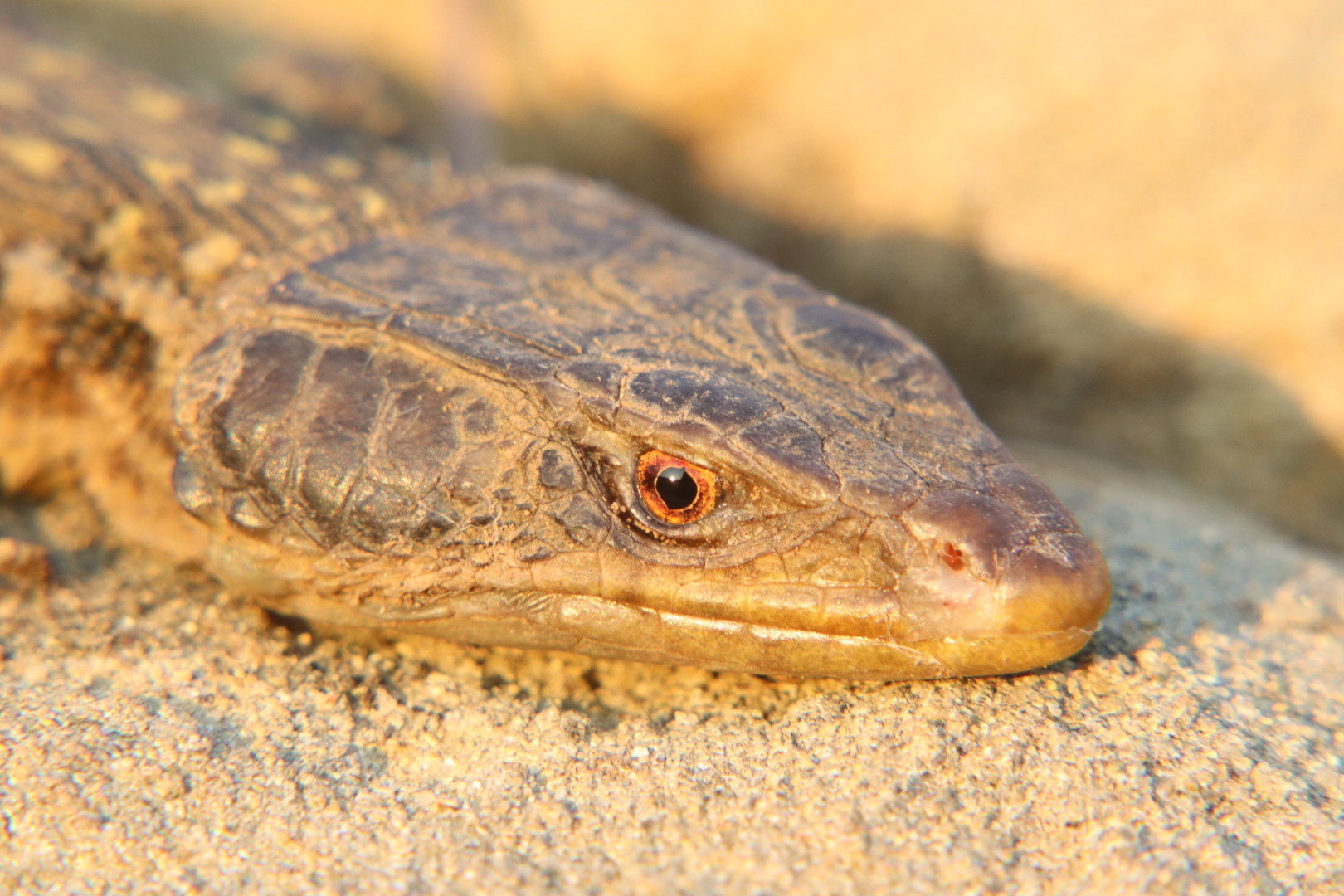
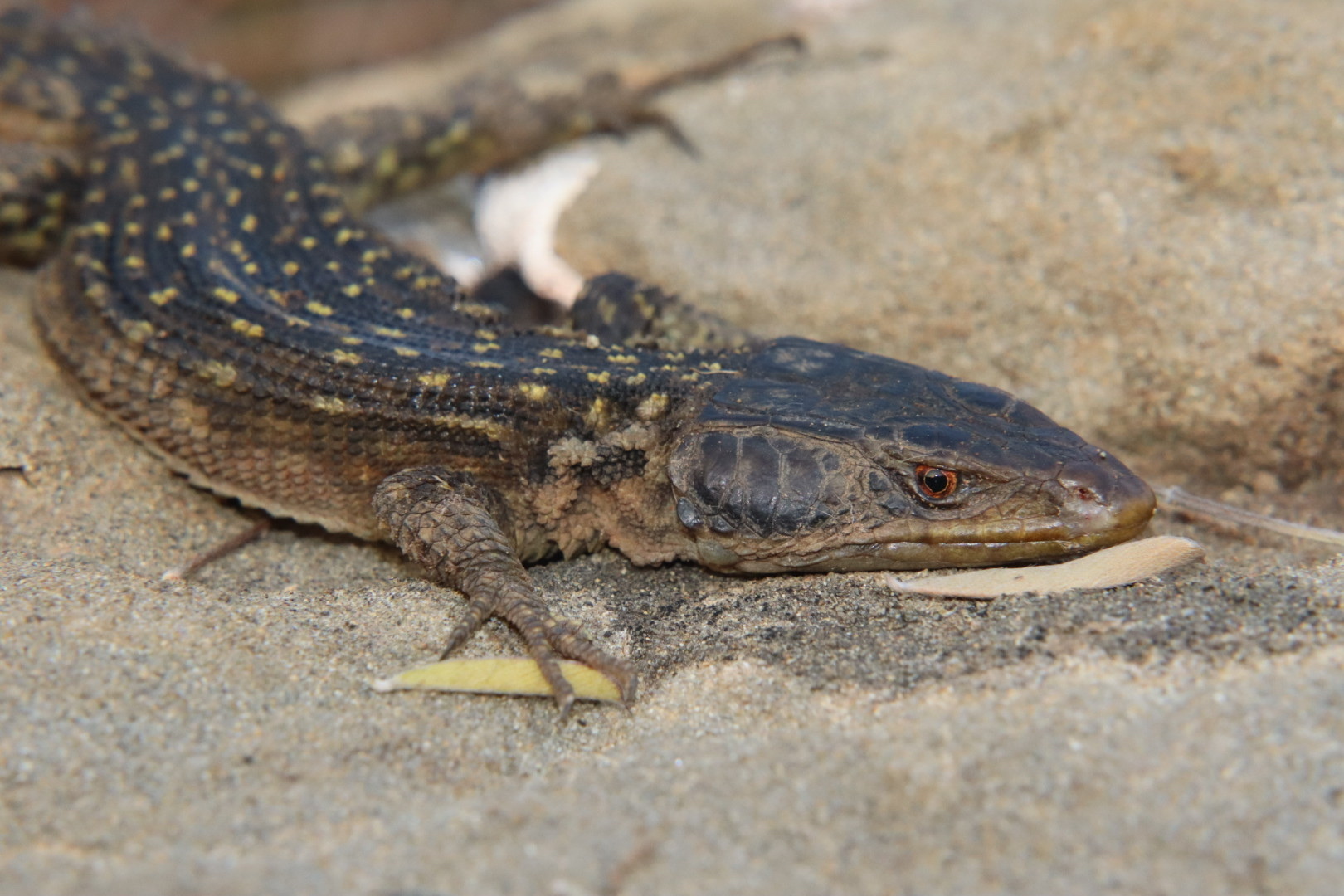
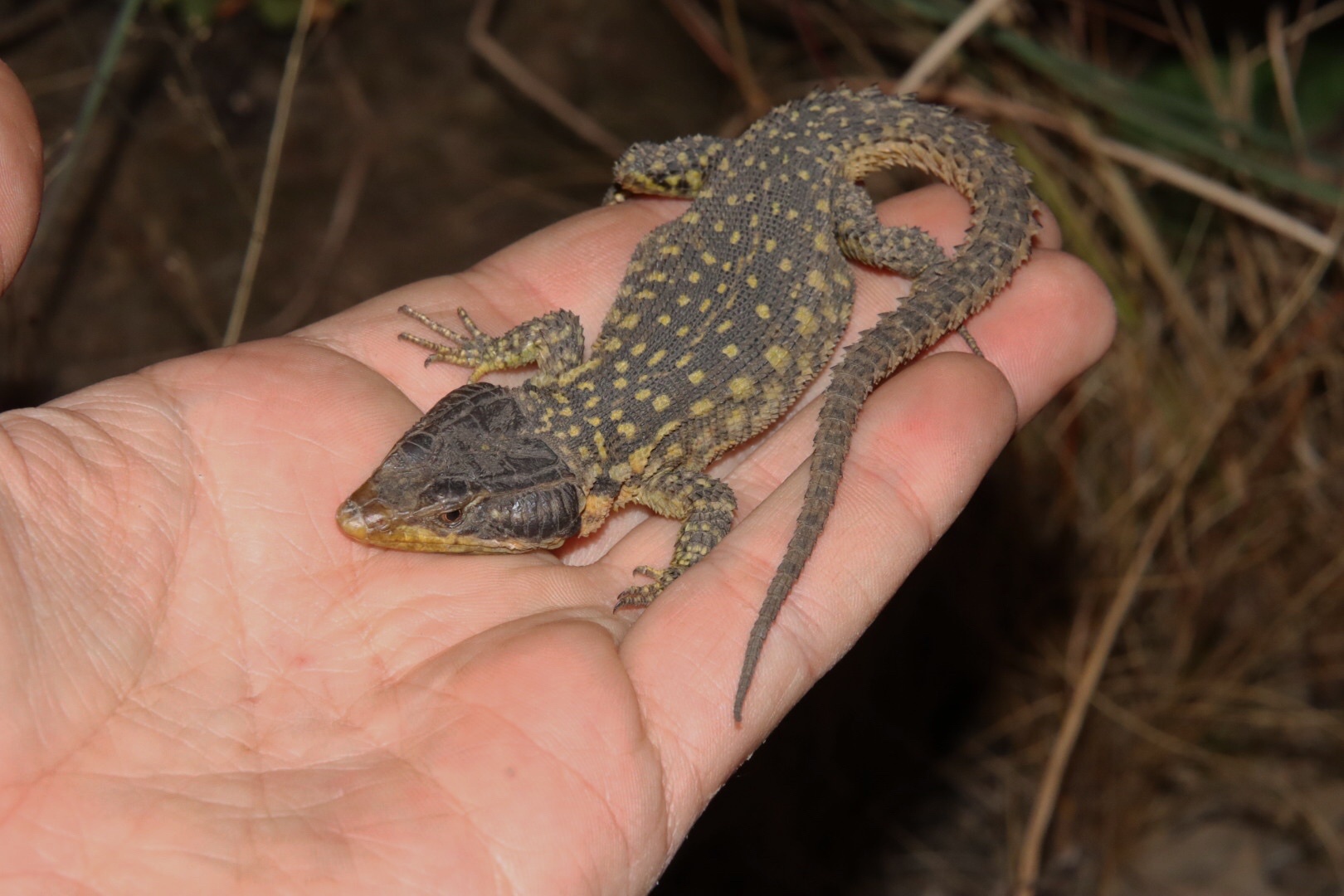
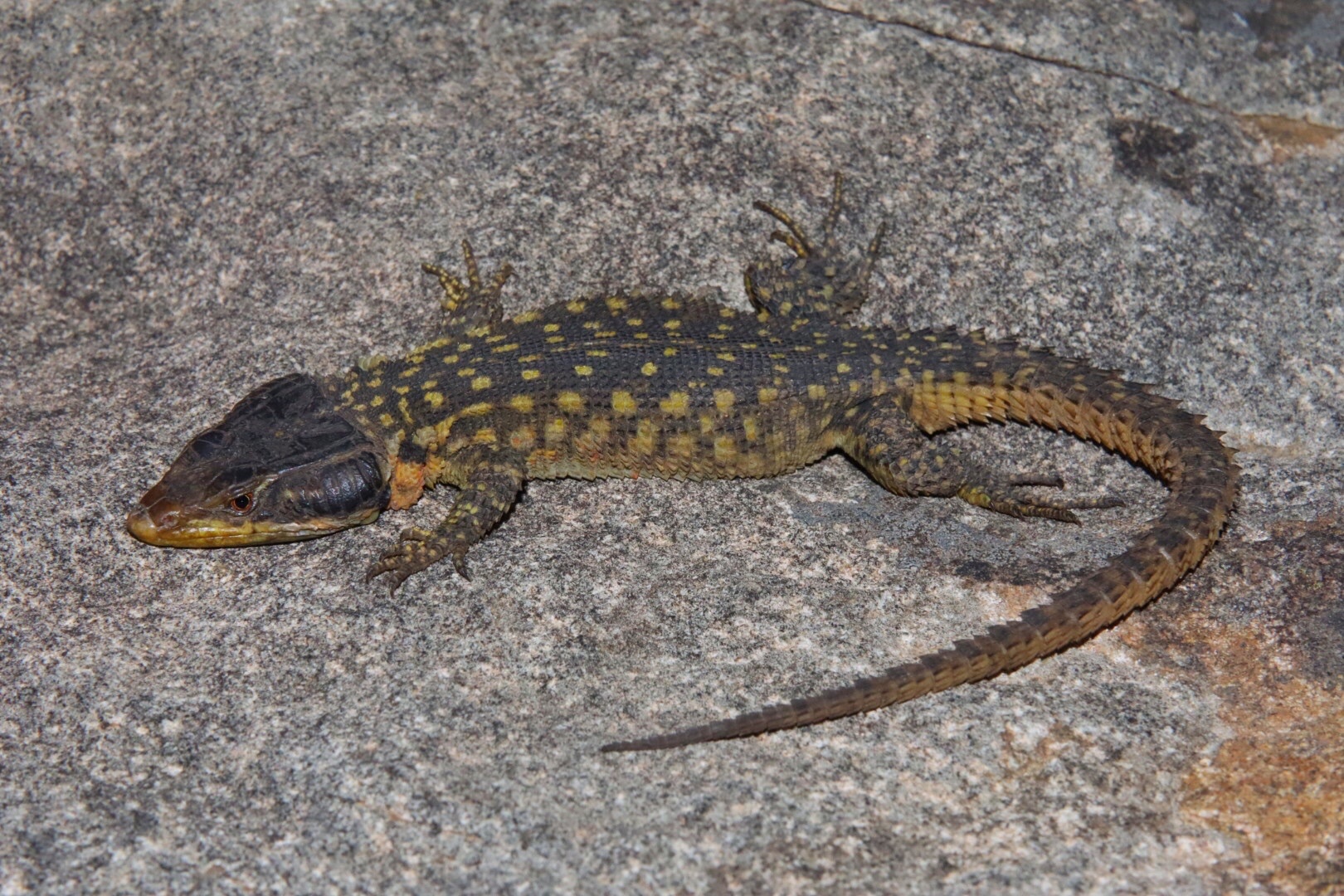
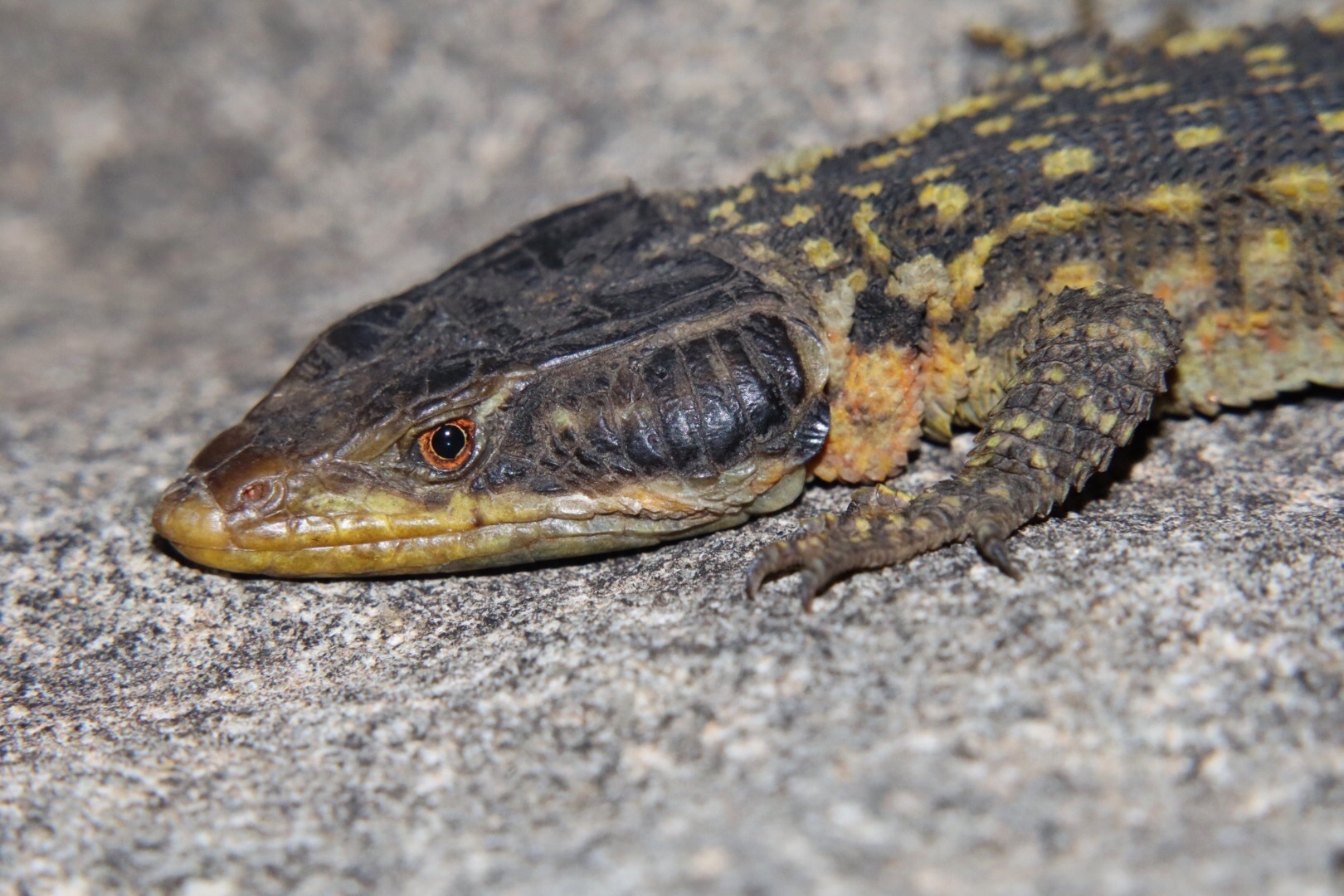
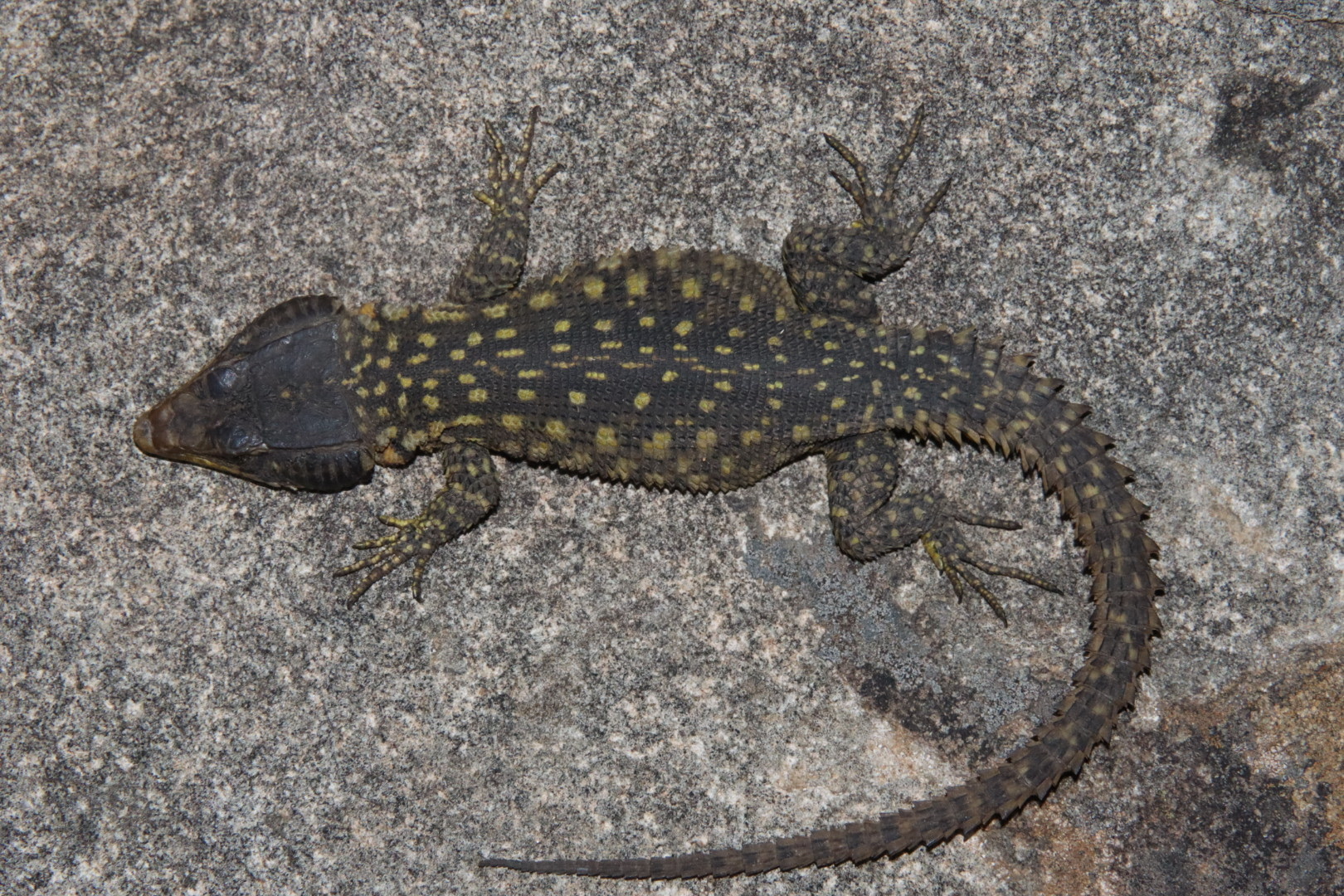
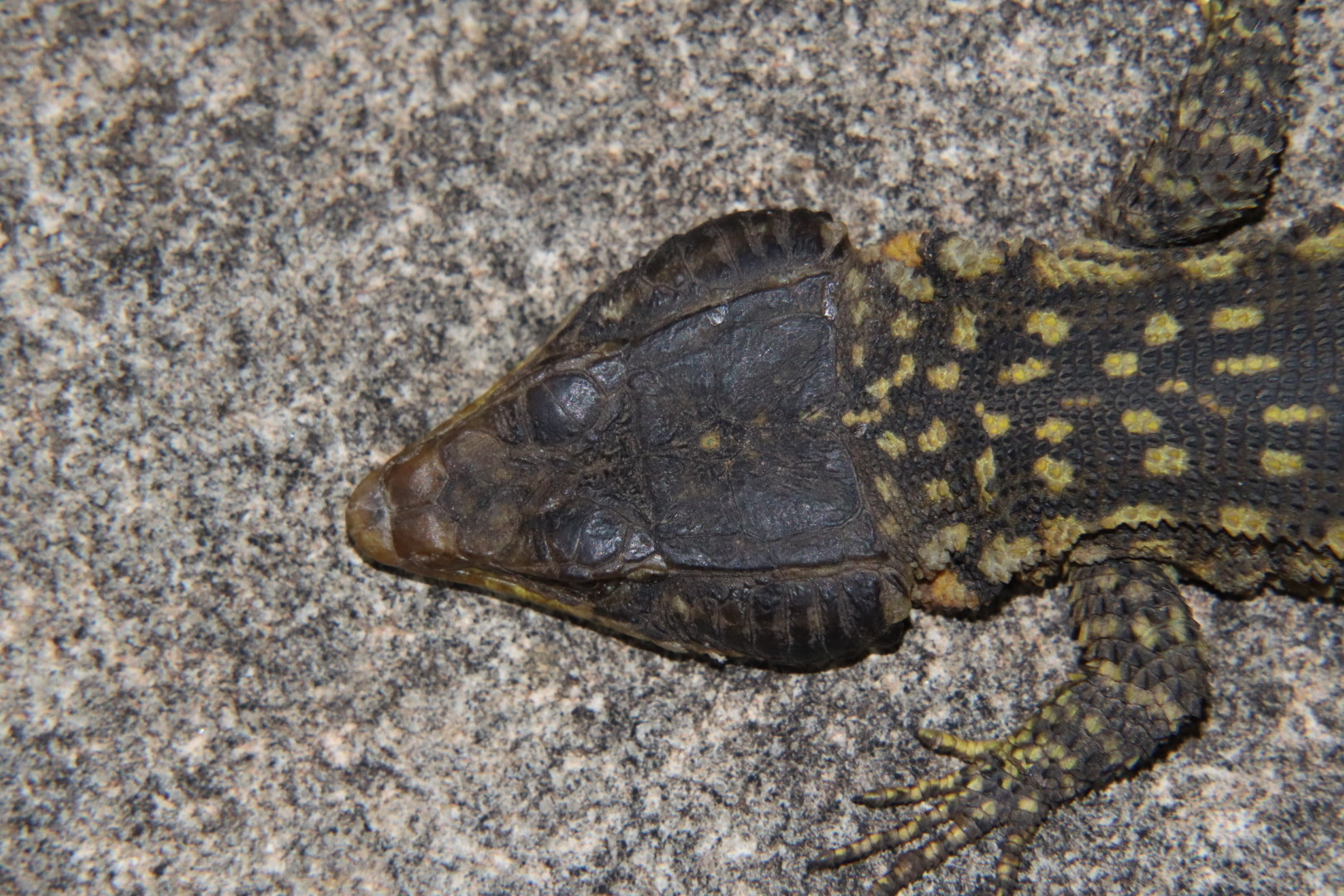
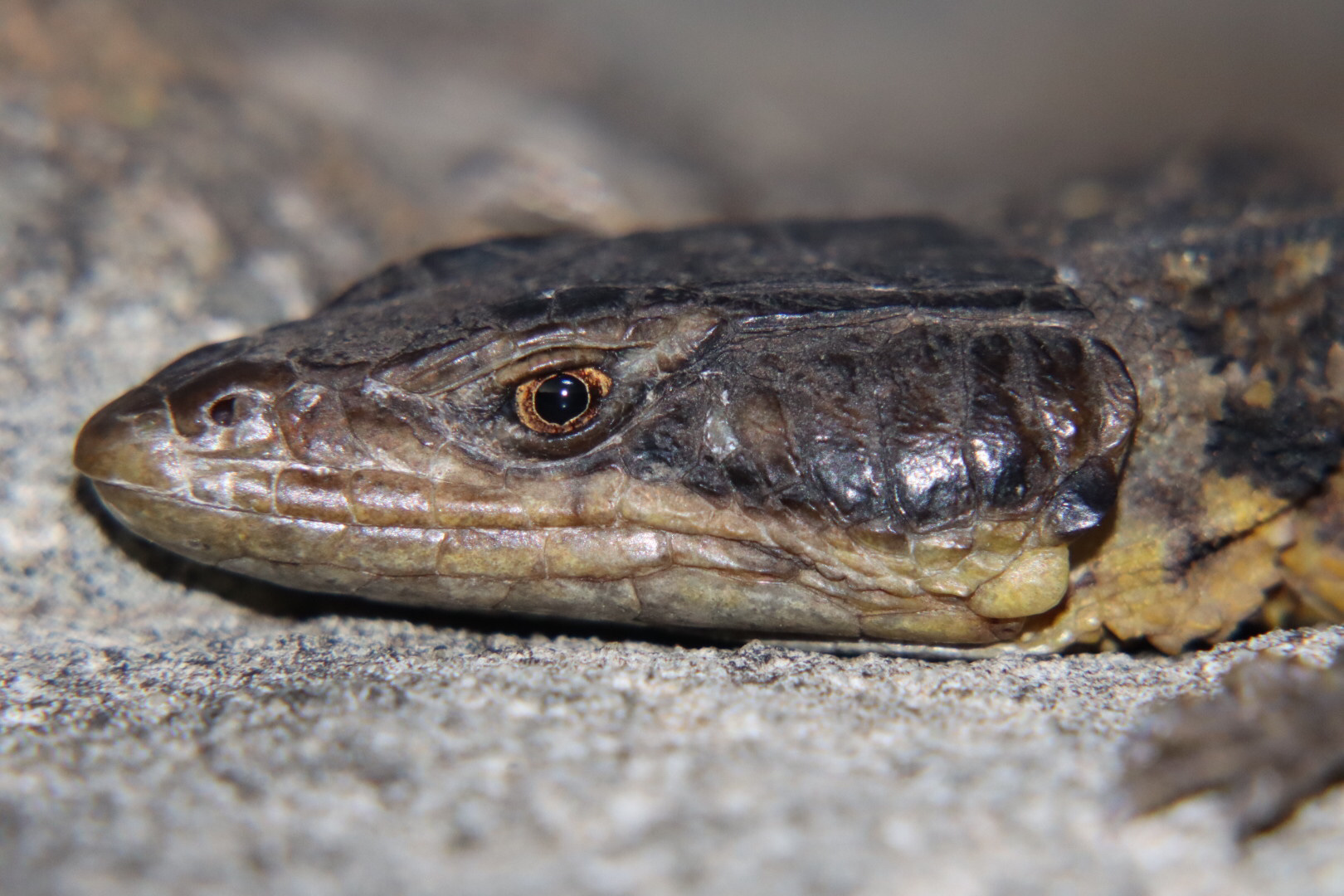
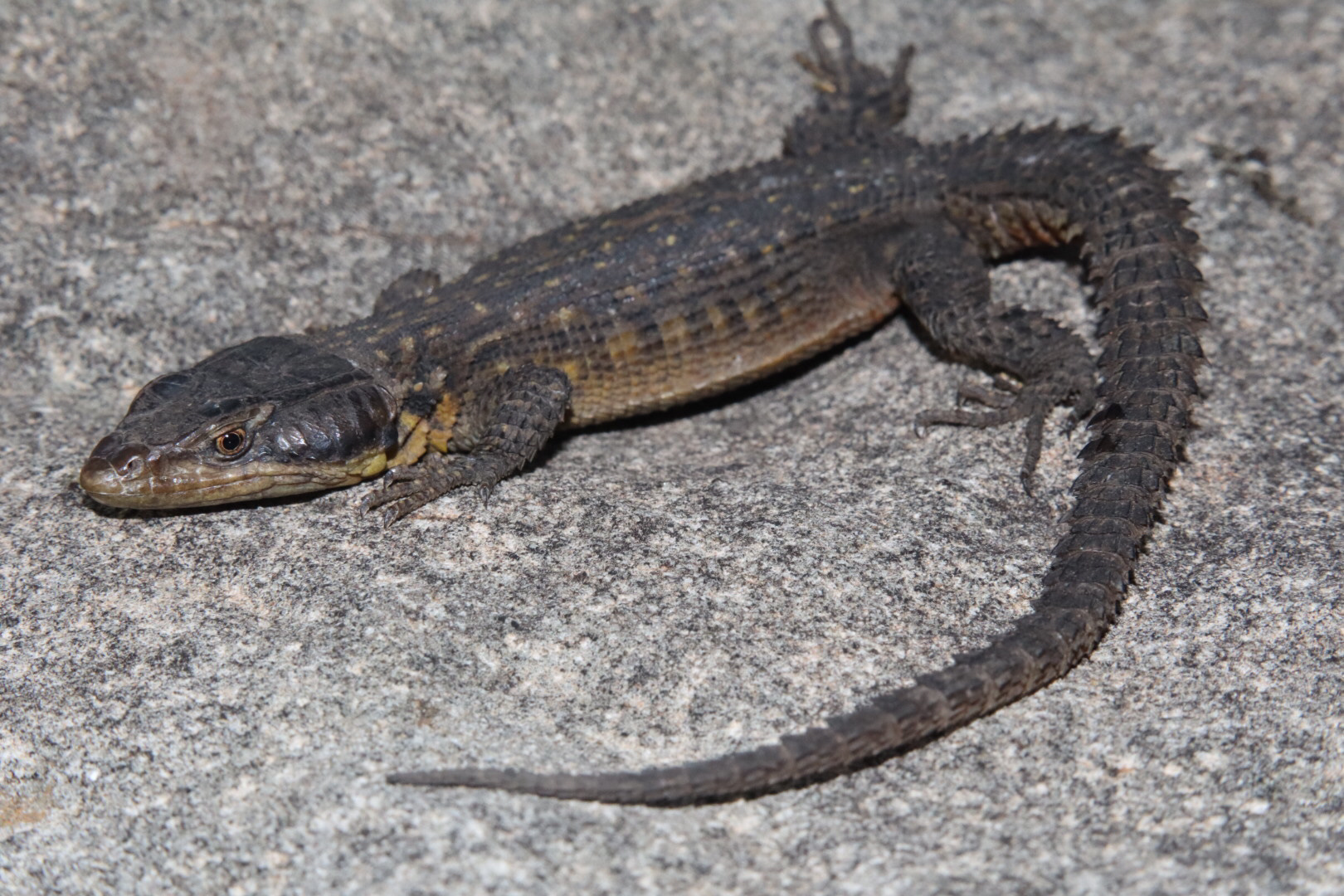
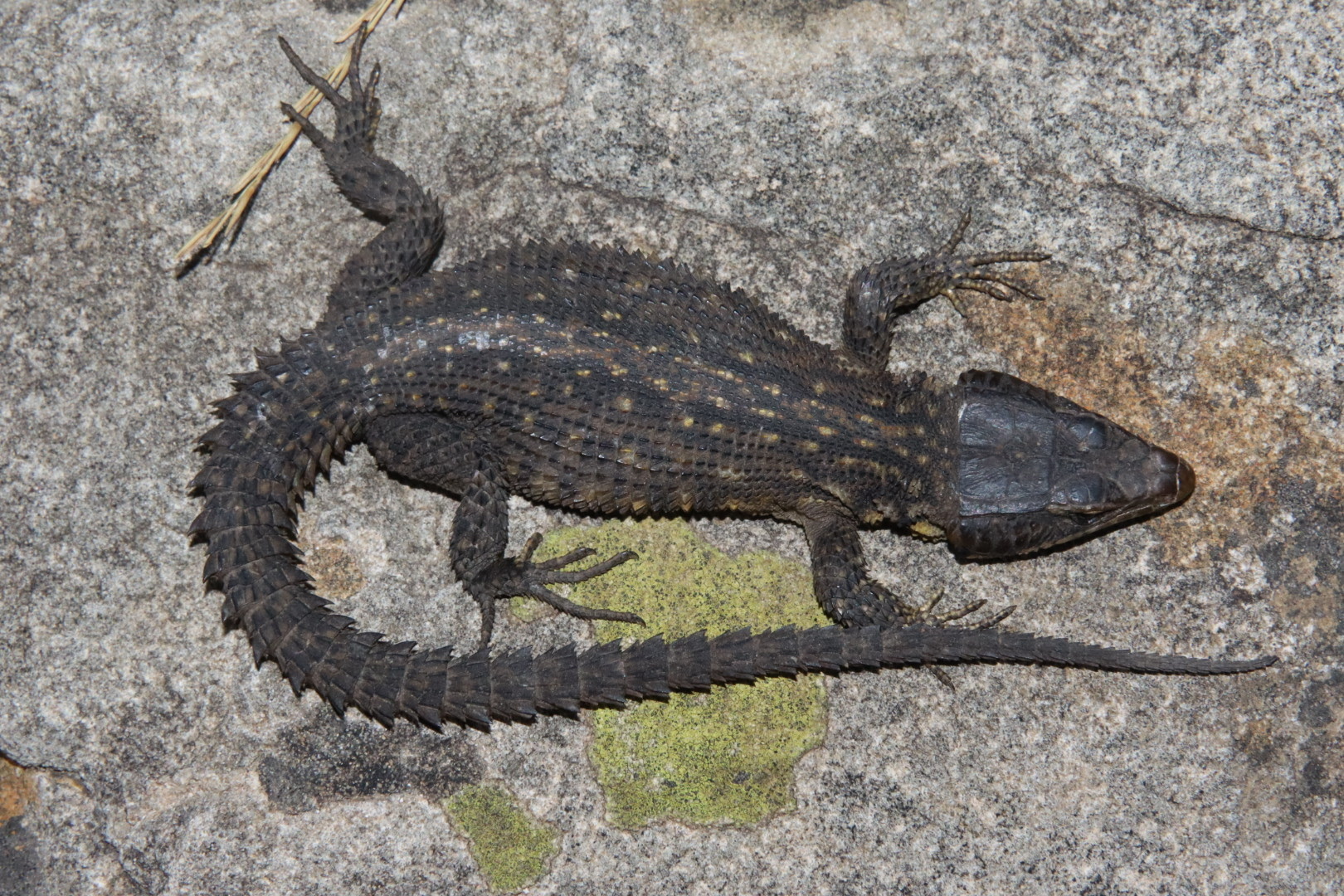
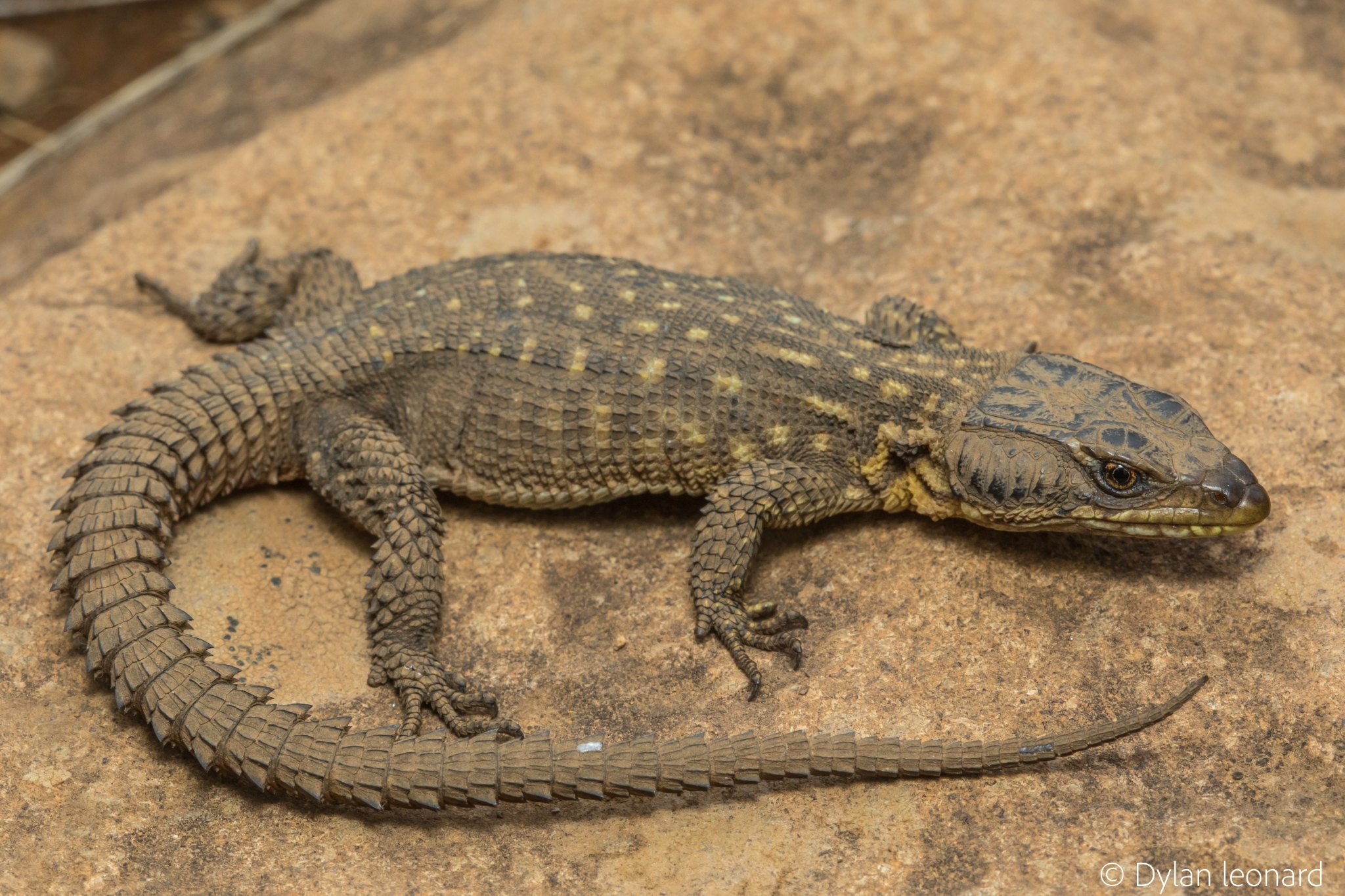
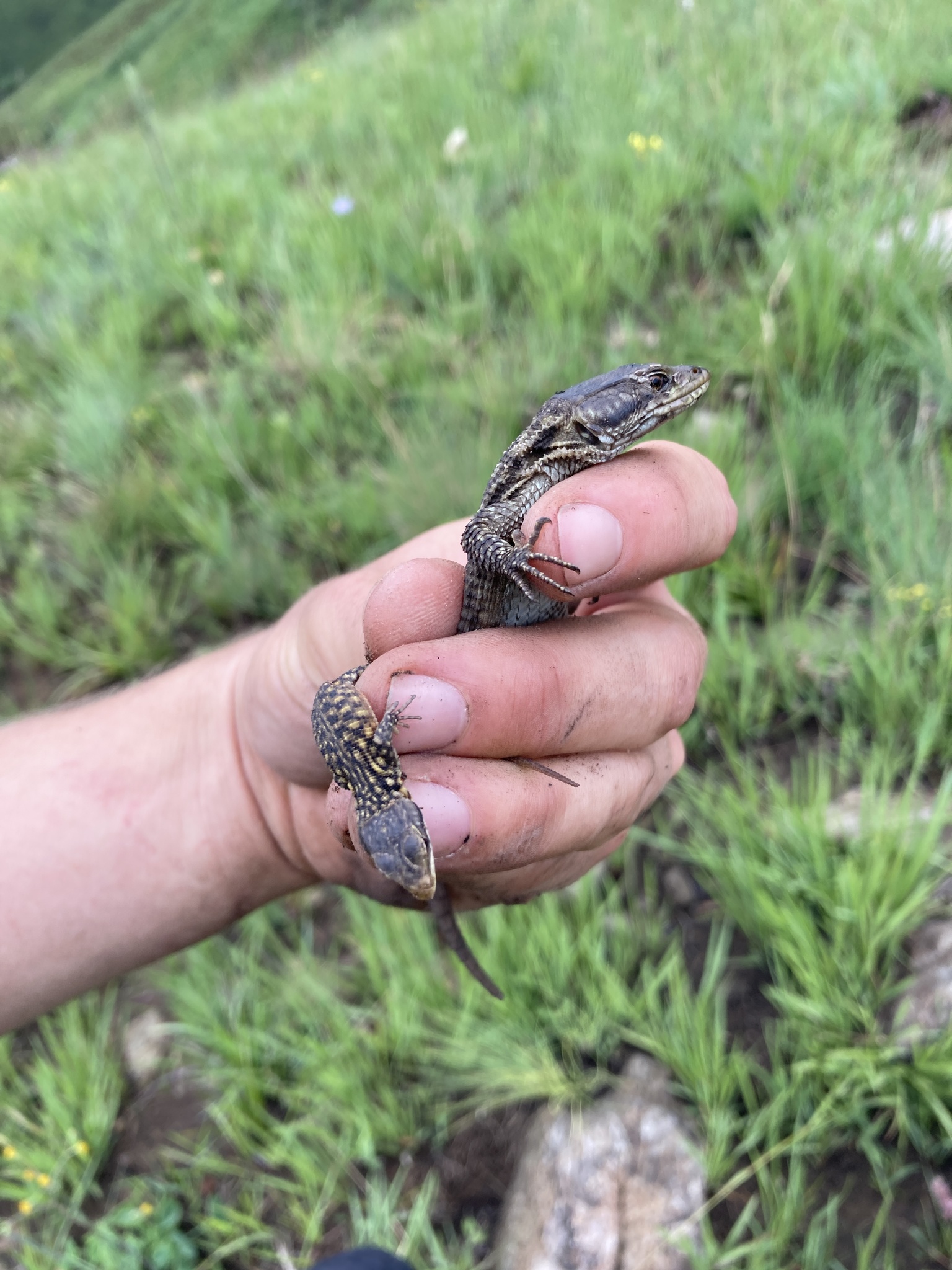
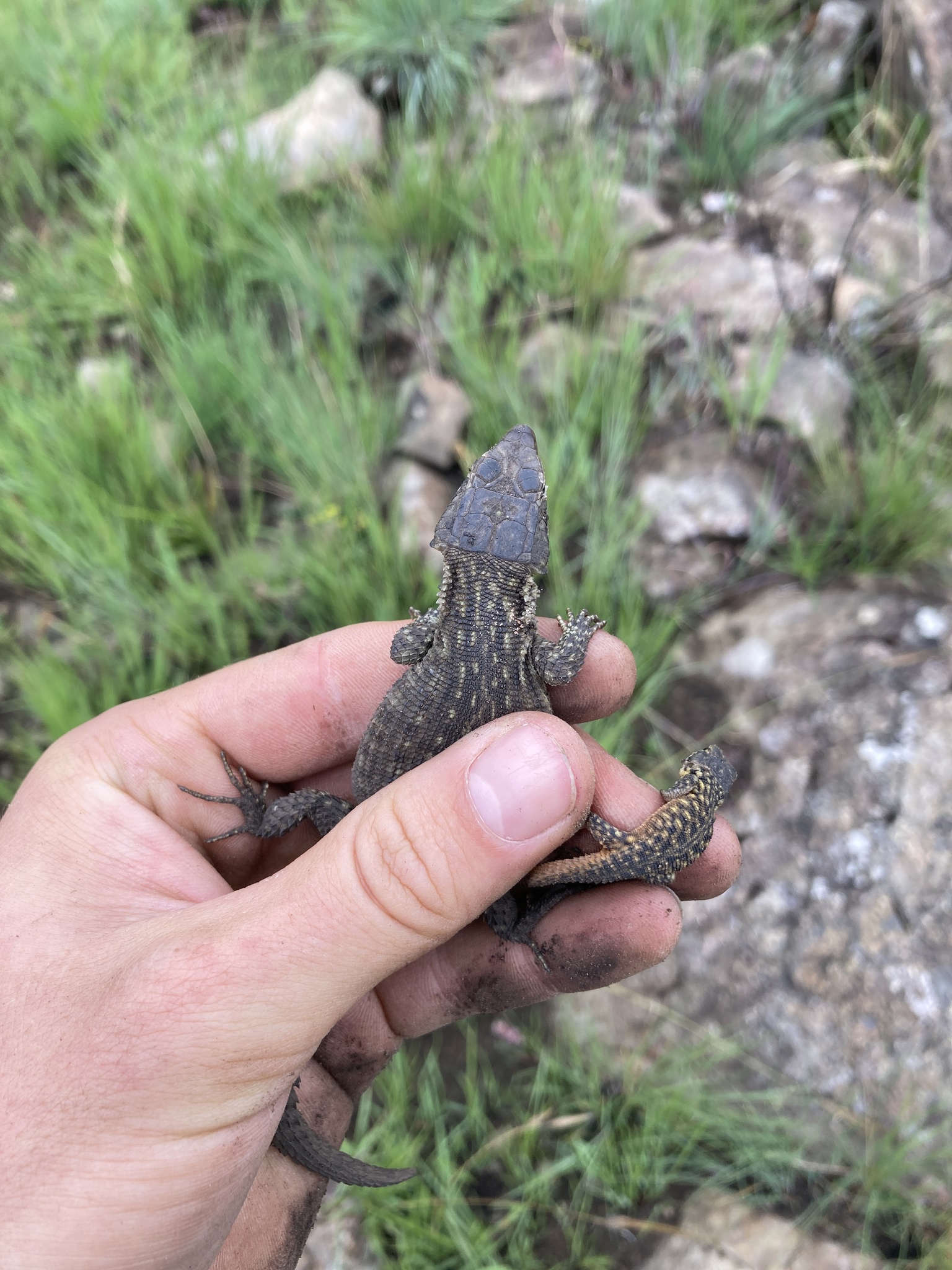
Description was extracted from Branch (1998): This small crag lizard has rough scales. The lateral scales are spiny and are not separated by granules, and there is a single row of elongate temporal scales. The nasals are in contact, separating the rostral and the fronto-nasal, which is undivided and small and does not touch the anterior loreals. There are usually 3-4 upper labials anterior to the subocular, and six lower labials. This species lacks occipitals. There are 3-5 femoral pores in both sexes. The back is dull brown, with pale, elongate spots forming irregular rows. The head is dark brown to black, with pale labials. The belly is pale brown. There is a pair of parallel grey stripes on the throat. Breeding males develop bright orange flanks and spots.
No separate diagnostic description was provided. Refer to the morphological description.
Type locality: Cathkin Peak area, Drakensberg [KwaZulu-Natal], South Africa. Holotype: DNMNH (= TM) 21267, a subadult to adult male
This information was extracted from Tolley et al. (2023): A multi-locus phylogeny shows that the subspecies P. melanotus subviridis falls in the P. spinosus clade, not the P. m. melanotus clade (Stanley et al., 2011). Although morphologically quite distinct from P. m. subviridis, P. spinosus from Goodoo Pass in the Drakensberg also shared the same 16S mitochondrial haplotype as several P. m. subviridis individuals (Bates, 2007). Isolated subpopulations at Ixopo and Donnybrook in southern KwaZulu-Natal province require taxonomic investigation.
South Africa
This species occurs along the lower and mid-elevation slopes of the Drakensberg, with an isolated population near Donnybrook and Ixopo in southern KwaZulu-Natal province, South Africa (Bates, 2005; Bourquin, 2004).
In general, lizards can sprint, crawl, climb, jump, and glide. When sprinting on four legs, lizards often move their fore feet diagonally in unison—the right fore foot with the left hand and the left fore foot with the right hand. The body's bent is simultaneously reversed. The shoulders, hips, and other joints in the legs as well as the bending of the back all contribute to moving the feet forward. Leg and back muscles work together to power running (Alexander, 2012).
Carnivore - Insectivore (insect-eating)
The Spiny Crag Lizard feeds on small beetles and cockroaches (Branch, 1998).
This species is viviparous, giving birth to one to four babies in late summer (Branch, 1998).
Spiny Crag lizard is wary and very difficult to approach (Branch 1998).
Grassland
This map contains point-based occurrences at different locations
Occurrence in African countries and South African provinces. Residence status indicates if a taxon is indigenous, endemic, or alien in a specific region. This data is based on specimen records and literature.
FSA
SA
BOT
NAM
ESW
LES
WC
EC
NC
FS
GA
KZN
LP
MP
NW
Absent
Indigenous
Endemic
Naturalised
Invasive
Names and Sources
| Common Name | Language |
|---|---|
| Spiny Crag Lizard | En |
| Stekel Rotsskeurakkedis | En |
Classification
KINGDOM Animalia
PHYLUM Chordata
CLASS Reptilia
ORDER Squamata
FAMILY Cordylidae
GENUS Pseudocordylus
SPECIES spinosus
No results found for Pseudocordylus spinosus FitzSimons, 1947
This species is listed in CITES Appendix II, but it has not been recorded by CITES as being exported for the pet trade (UNEP-WCMC, 2020).
16 results for Pseudocordylus spinosus FitzSimons, 1947
This map contains point-based occurrences at different locations
2007
THESIS
An analysis of the Pseudocordylus melanotus complex (Sauria: Cordylidae)Bates, M.. 2007. An analysis of the Pseudocordylus melanotus complex (Sauria: Cordylidae) Vol. PhD. Stellenbosch. University of Stellenbosch.
2011
JOURNAL ARTICLE
Between a rock and a hard polytomy: rapid radiation in the rupicolous girdled lizards (Squamata: Cordylidae)Branch, W., Bauer, A., Stanley, E., Jackman, T., Mouton, P.. 2011. Between a rock and a hard polytomy: rapid radiation in the rupicolous girdled lizards (Squamata: Cordylidae) Vol. 58 pp.53–70.
2005
JOURNAL ARTICLE
Taxonomic history and geographical distribution of the Pseudocordylus melanotus (A. Smith, 1838) and P. microlepidotus (Cuvier, 1829) complexes (Sauria: Cordylidae)Bates, M.. 2005. Taxonomic history and geographical distribution of the Pseudocordylus melanotus (A. Smith, 1838) and P. microlepidotus (Cuvier, 1829) complexes (Sauria: Cordylidae) Vol. 21(4). Bloemfontein. National Museum pp.37-112.
2020
WEBSITE
CITES Trade DatabaseUNEP-WCMC, . 2020. CITES Trade Database. https:// trade.cites.org/. (Accessed: 15 September 2020).
1998
BOOK
Field Guide to Snakes and Other Reptiles of Southern AfricaBranch, B.. 1998. Field Guide to Snakes and Other Reptiles of Southern Africa. Cape Town. Struik Publishers.
2023
BOOK
Conservation status of the reptiles of South Africa, Eswatini and LesothoTolley, K., Burger, M., Alexander, G., Pietersen, D., Conradie, W., Weeber, J.. 2023. Conservation status of the reptiles of South Africa, Eswatini and Lesotho Vol. Suricata 10. Pretoria. South African National Biodiversity Institute.
2004
JOURNAL ARTICLE
Reptiles (Reptilia) in KwaZulu- Natal: 1 – diversity and distributionBorquin, O.. 2004. Reptiles (Reptilia) in KwaZulu- Natal: 1 – diversity and distribution Vol. 29 pp.57-103.
Status and criteria
LC
Assessor(s)
Michael Bates
Contributors
Klaus Adolphs
Josh Weeber
Reviewer(s)
Graham Alexander


