
ANIMALIA / CHORDATA / REPTILIA / SQUAMATA / CORDYLIDAE / PSEUDOCORDYLUS / TRANSVAALENSIS
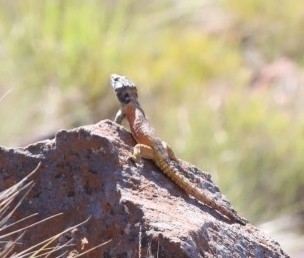
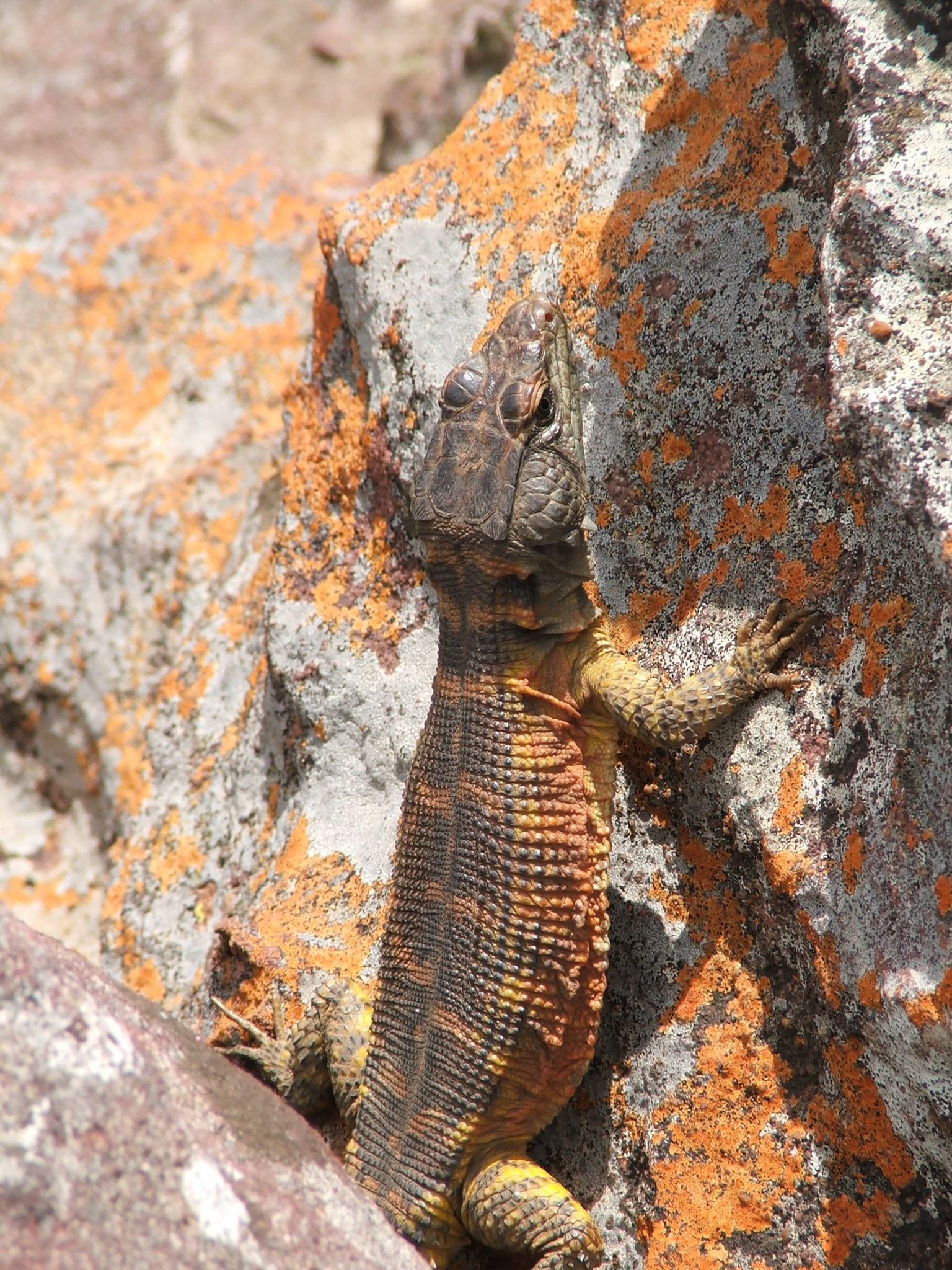
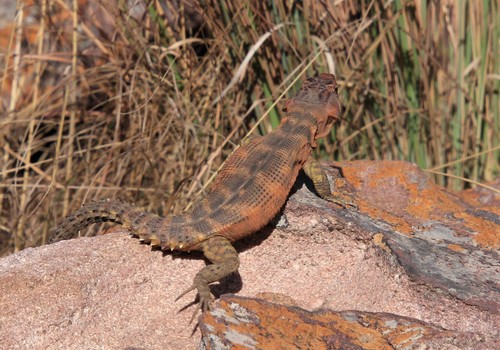
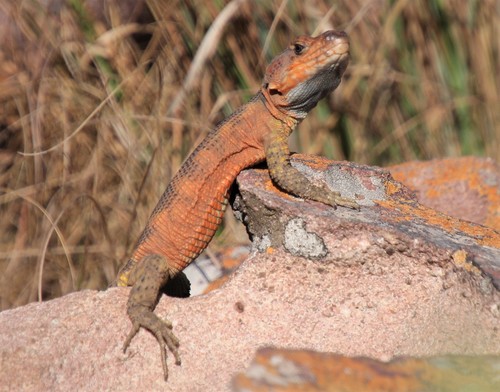
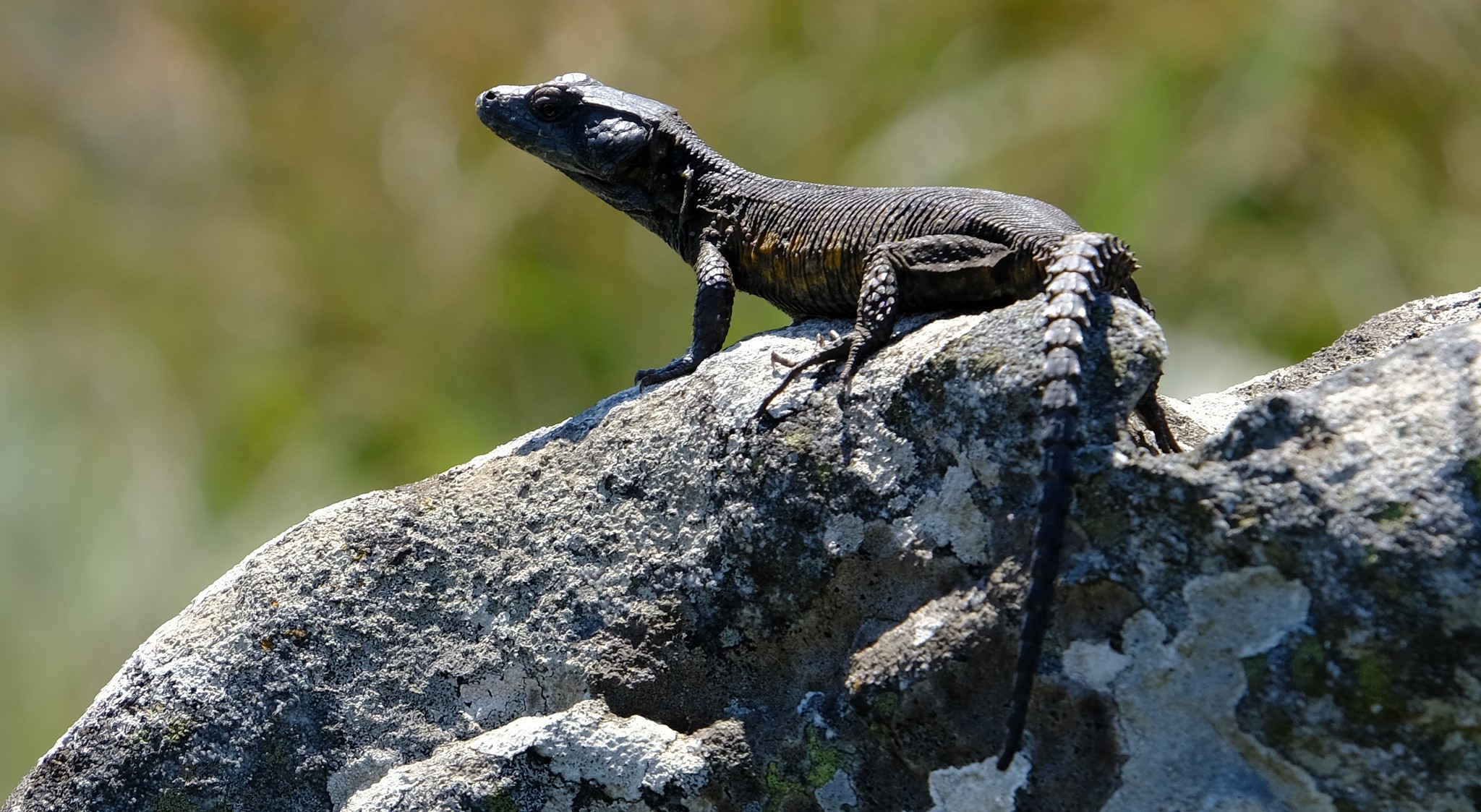
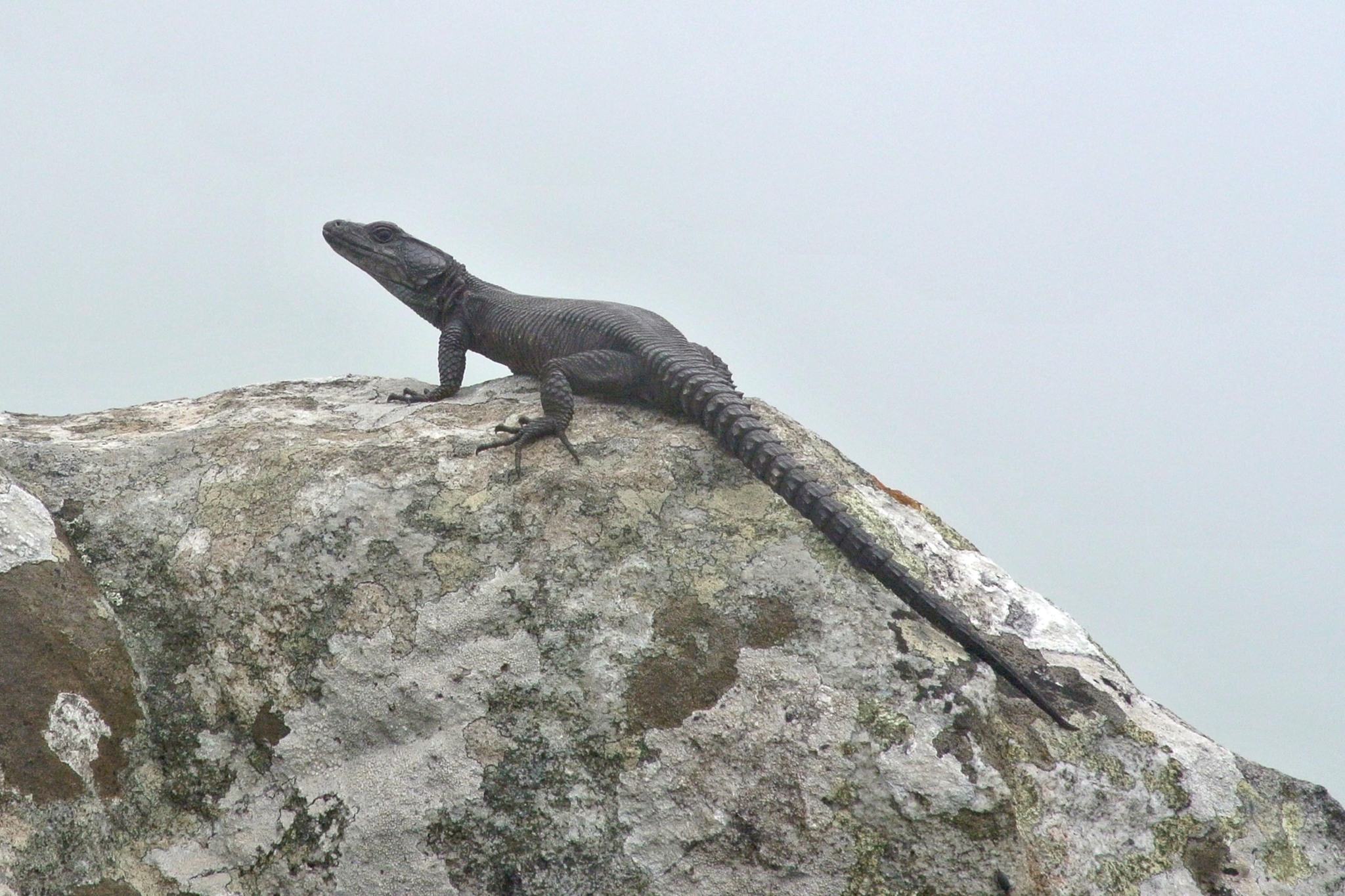
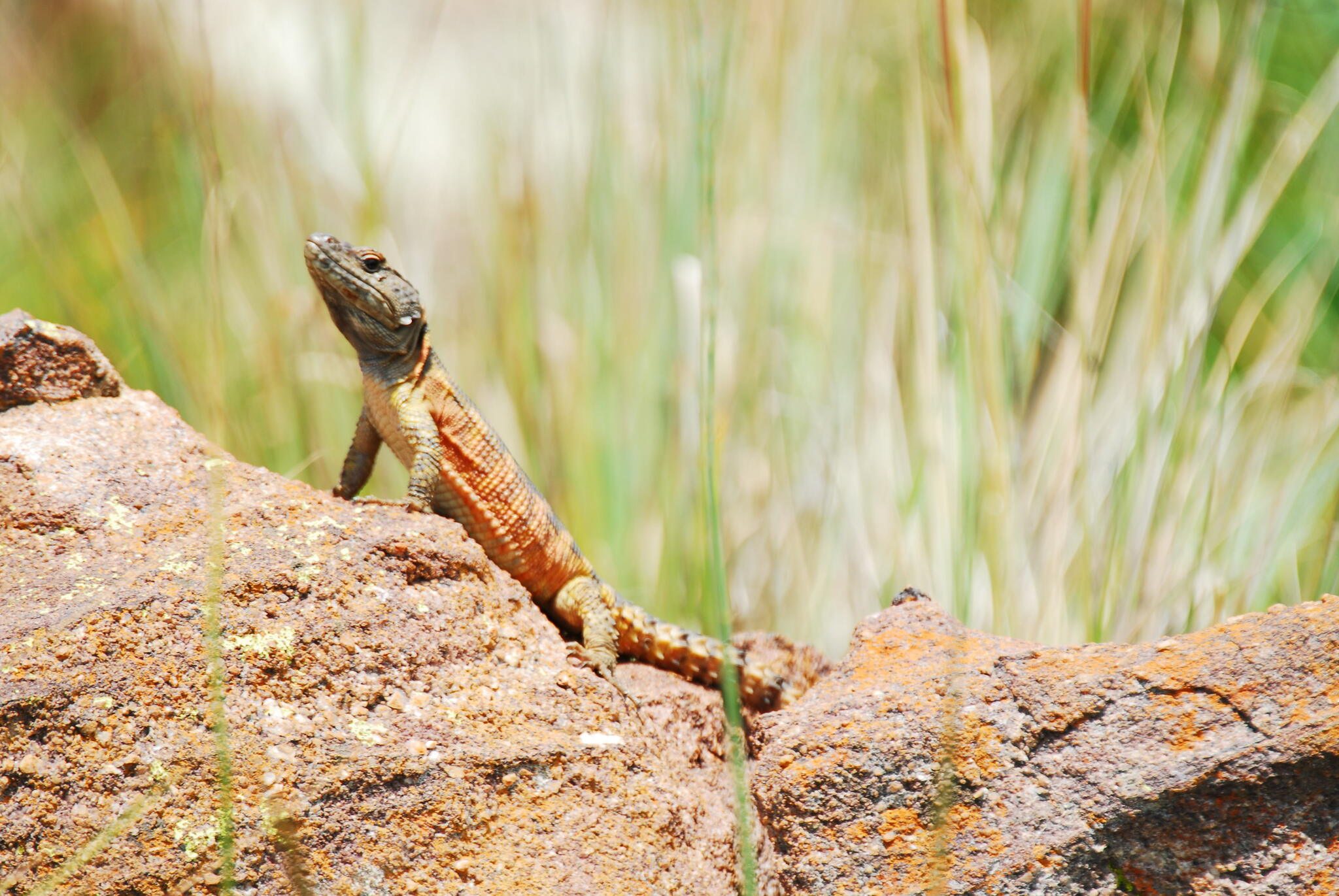
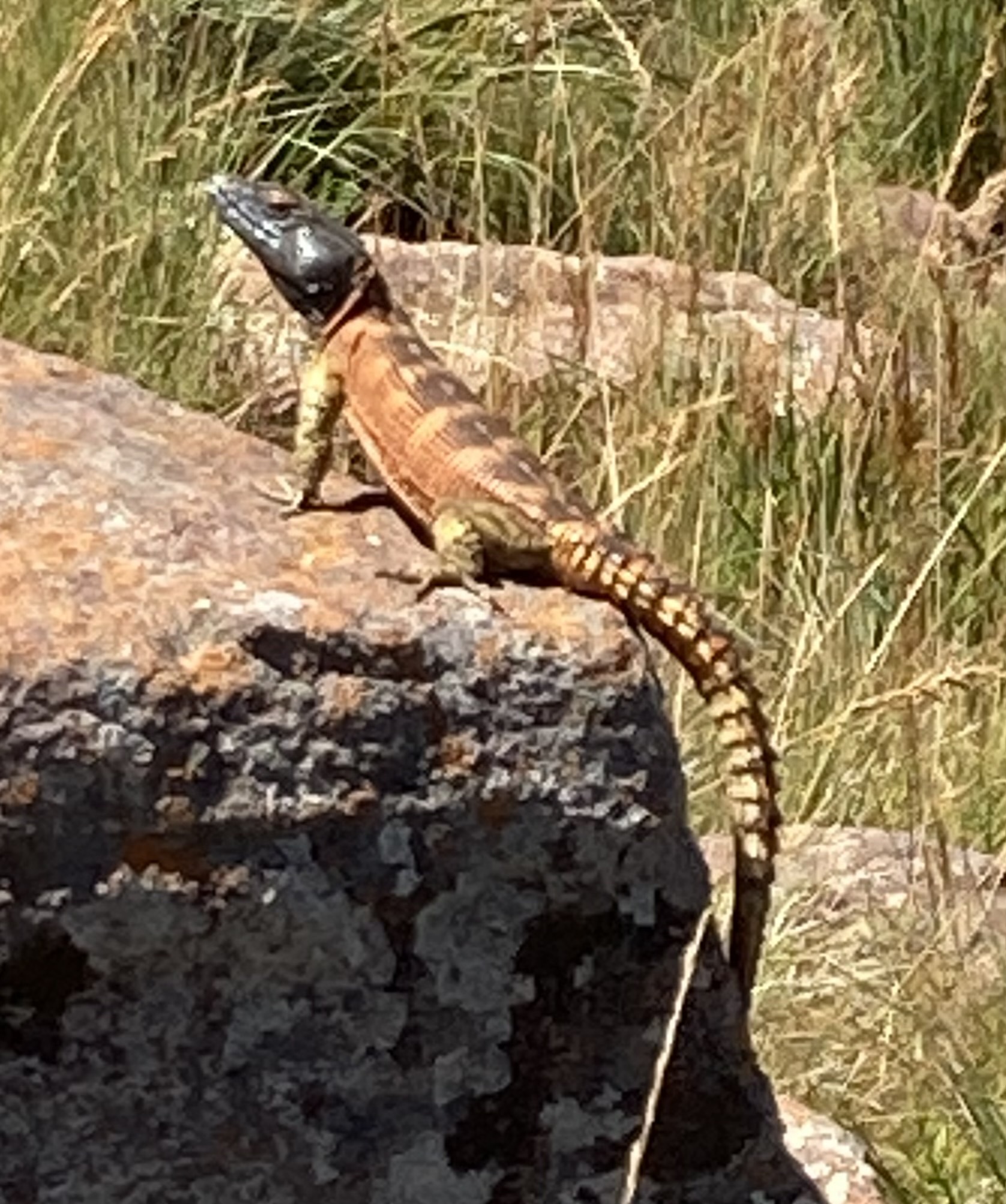
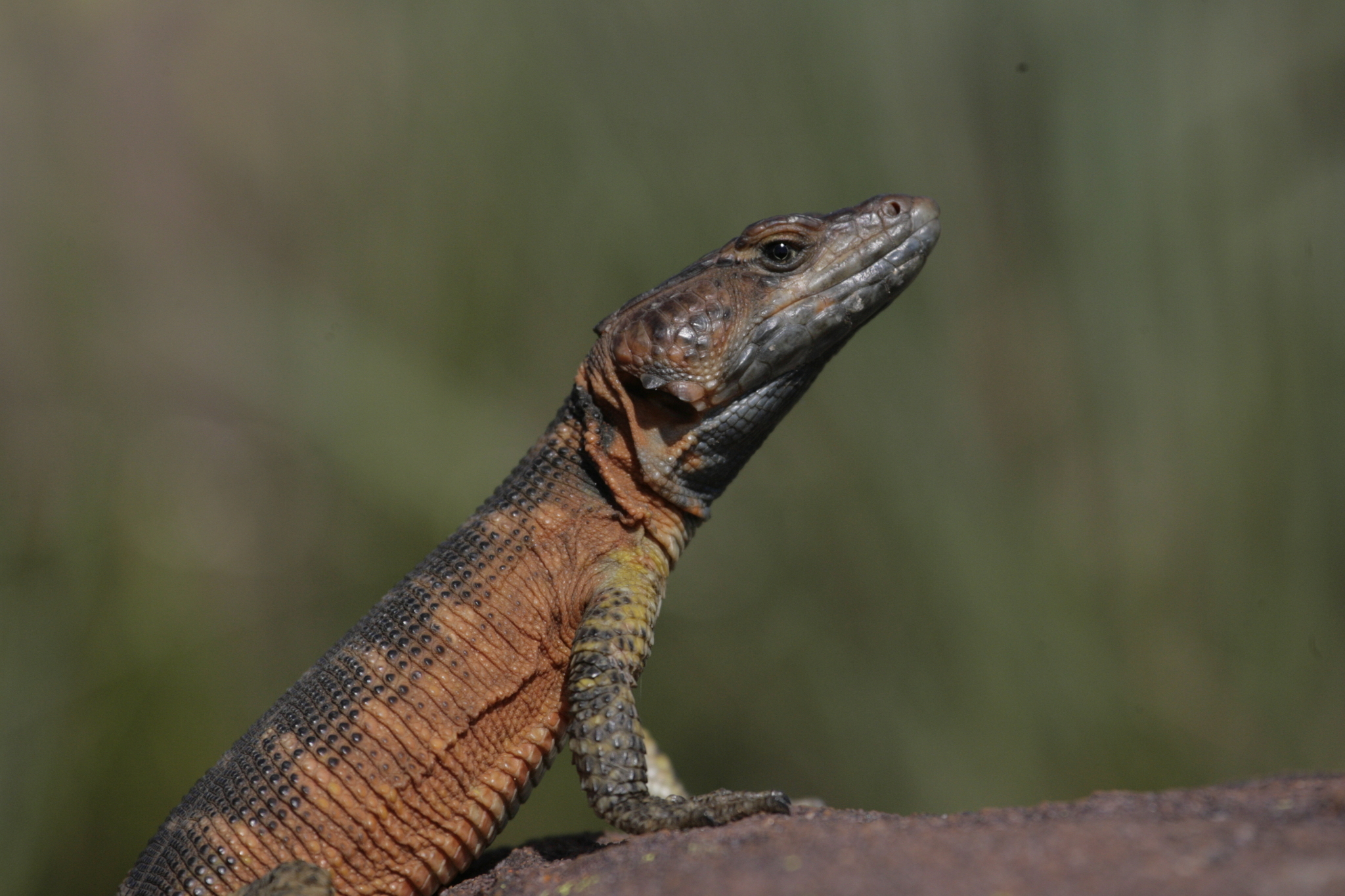
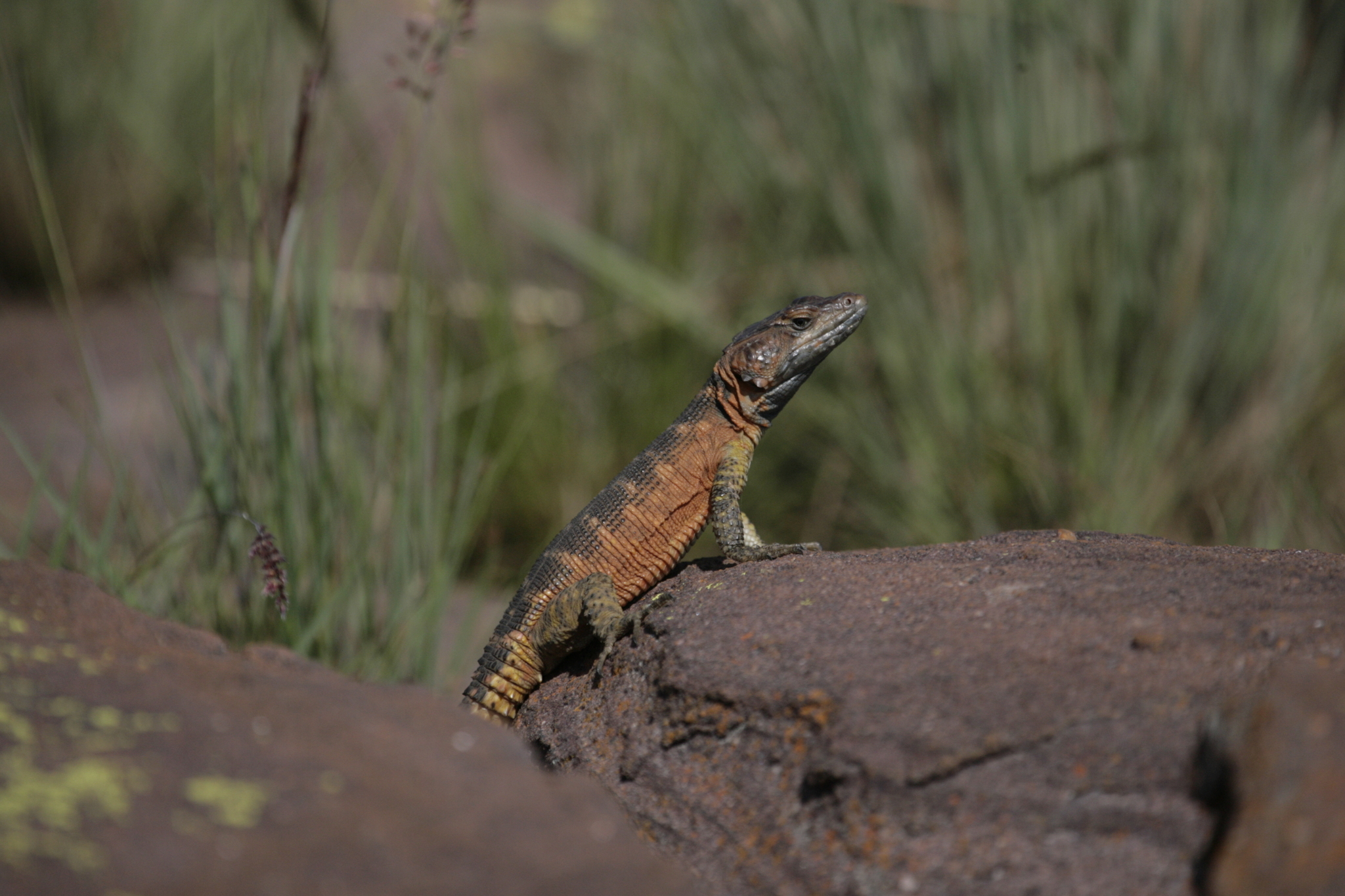
Fitzsimons (1943) describes this species as follows: A larger form than typical subviridis, and readily distinguished by having two distinct rows of temporals, the upper of which are larger and vertically elongate, the lower smaller and sub-hexagonal: usually five (sometimes 4 or even 3) temporals in upper row and three in lower. Nasals usually in contact with one another. Temporal spines, even in adult males, feebly projecting and bluntly pointed. Four upper labials anterior to subocular; last lower labial not or but feebly keeled. Median dorsal scales small, smooth, juxtaposed, subquadrangular to rounded; dorsolaterals much larger, subcircular to oval, for the most part smooth or obtusely keeled, separated by wide granular interspaces; 40-46 scales across middle of body. Ventral plates in 12 longitudinal and 28-30 transverse rows, the two median rows much broader than long. 7-8 Femoral pores on each side.
No separate diagnostic description was provided. Refer to the morphological description.
Type locality: Woodbush, Pietersburg District, N. Transvaal Holotype: DNMNH (= TM), Transvaal Museum, Pretoria
This information was extracted from Tolley et al. (2023): Based on morphological and phylogenetic analyses, P. transvaalensis was found to be a valid species rather than a subspecies of P. melanotus (Jacobsen, 1989; Bates, 2005, 2007; Stanley et al., 2011). The three allopatric populations differ morphologically (Bates 2007), but it is not possible to assess if they are differentiated genetically due to incomplete sampling (Bates, 2007; Stanley et al., 2011).
South Africa.
This species is thought to occur in three allopatric populations, i.e., western (Thabazimbi area), central (Mokopane area) and eastern (Woodbush/ Haenertsburg area) in Limpopo province, South Africa (Jacobsen, 1989; Bates, 2005).
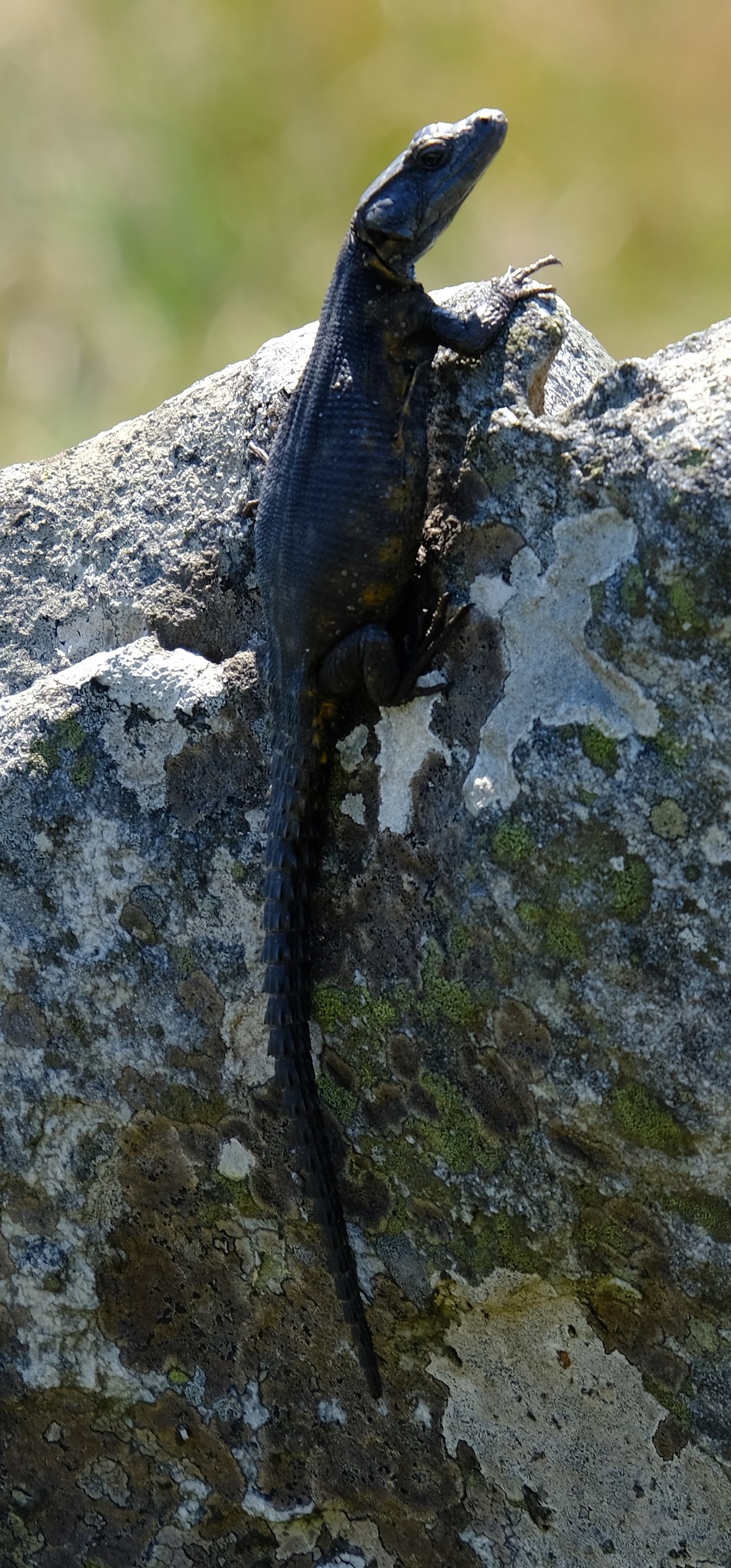
In general, lizards can sprint, crawl, climb, jump, and glide. When sprinting on four legs, lizards often move their fore feet diagonally in unison—the right fore foot with the left hand and the left fore foot with the right hand. The body's bent is simultaneously reversed. The shoulders, hips, and other joints in the legs as well as the bending of the back all contribute to moving the feet forward. Leg and back muscles work together to power running (Alexander, 2012).
Carnivore - Insectivore (insect-eating)
Pseudocordylus eat a wide range of large invertebrates, including beetles, crickets and grasshoppers, and also take small vertebrates, particularly other lizards (Branch, 1998).
The Northern Crag Lizard is viviparous, giving birth to two to seven young in midsummer (Branch, 1998).
No data.
Savanna, Grassland
This map contains point-based occurrences at different locations
Occurrence in African countries and South African provinces. Residence status indicates if a taxon is indigenous, endemic, or alien in a specific region. This data is based on specimen records and literature.
FSA
SA
BOT
NAM
ESW
LES
WC
EC
NC
FS
GA
KZN
LP
MP
NW
Absent
Indigenous
Endemic
Naturalised
Invasive
Names and Sources
| Common Name | Language |
|---|---|
| Northern Crag Lizard | En |
| Noordelike Rotsskeurakkedis | En |
| Northern Crag Lizard | En |



Classification
KINGDOM Animalia
PHYLUM Chordata
CLASS Reptilia
ORDER Squamata
FAMILY Cordylidae
GENUS Pseudocordylus
SPECIES transvaalensis
No results found for Pseudocordylus transvaalensis FitzSimons, 1943
This species is listed in CITES Appendix II, but only four individuals have been exported under CITES legislation (in 2010) for use as ‘small leather products’ (UNEP-WCMC, 2020).
20 results for Pseudocordylus transvaalensis FitzSimons, 1943
This map contains point-based occurrences at different locations
1943
JOURNAL ARTICLE
The Lizards of South AfricaFitzsimons, V.. 1943. The Lizards of South Africa Vol. 1. Pretoria pp.1-528.
2005
JOURNAL ARTICLE
Taxonomic history and geographical distribution of the Pseudocordylus melanotus (A. Smith, 1838) and P. microlepidotus (Cuvier, 1829) complexes (Sauria: Cordylidae)Bates, M.. 2005. Taxonomic history and geographical distribution of the Pseudocordylus melanotus (A. Smith, 1838) and P. microlepidotus (Cuvier, 1829) complexes (Sauria: Cordylidae) Vol. 21 pp.37-112.
2007
THESIS
An analysis of the Pseudocordylus melanotus complex (Sauria: Cordylidae)Bates, M.. 2007. An analysis of the Pseudocordylus melanotus complex (Sauria: Cordylidae) Vol. PhD. Stellenbosch. University of Stellenbosch.
1989
TECHNICAL REPORT
The distribution and conservation status of reptiles and amphibians in the Transvaal. Final Report Project TN 6/4/1/30Jacobsen, N.. 1989. The distribution and conservation status of reptiles and amphibians in the Transvaal. Final Report Project TN 6/4/1/30. Pretoria. Chief Directorate of Nature and Environmental Conservation.
2011
JOURNAL ARTICLE
Between a rock and a hard polytomy: rapid radiation in the rupicolous girdled lizards (Squamata: Cordylidae)Branch, W., Bauer, A., Stanley, E., Jackman, T., Mouton, P.. 2011. Between a rock and a hard polytomy: rapid radiation in the rupicolous girdled lizards (Squamata: Cordylidae) Vol. 58 pp.53–70.
1998
BOOK
Field Guide to Snakes and Other Reptiles of Southern AfricaBranch, B.. 1998. Field Guide to Snakes and Other Reptiles of Southern Africa. Cape Town. Struik Publishers.
2023
BOOK
Conservation status of the reptiles of South Africa, Eswatini and LesothoTolley, K., Burger, M., Alexander, G., Pietersen, D., Conradie, W., Weeber, J.. 2023. Conservation status of the reptiles of South Africa, Eswatini and Lesotho Vol. Suricata 10. Pretoria. South African National Biodiversity Institute.
2020
DATABASE
The Reptile DatabaseUetz, P., Hošek, J., Freed, P.. 2020. The Reptile Database. Available at: http://www.reptile- database.org. (Accessed: 15 September 2020).
Status and criteria
LC
Assessor(s)
Michael Bates
Contributors
Josh Weeber
Reviewer(s)
Graham Alexander


