
ANIMALIA / CHORDATA / REPTILIA / CROCODYLIA / CROCODYLIDAE / CROCODYLUS / NILOTICUS
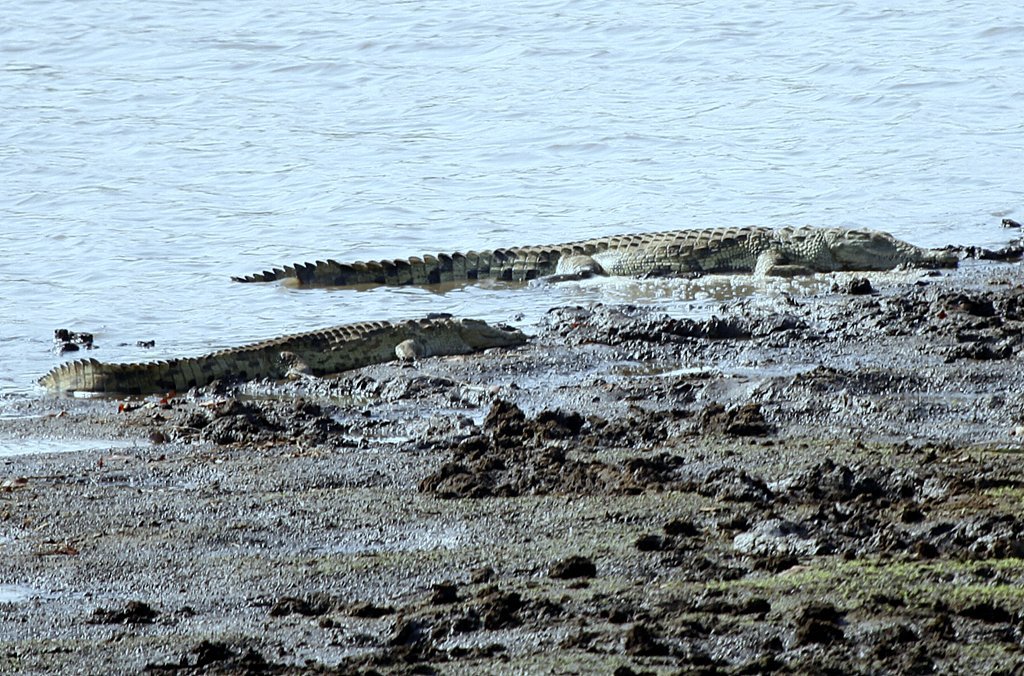
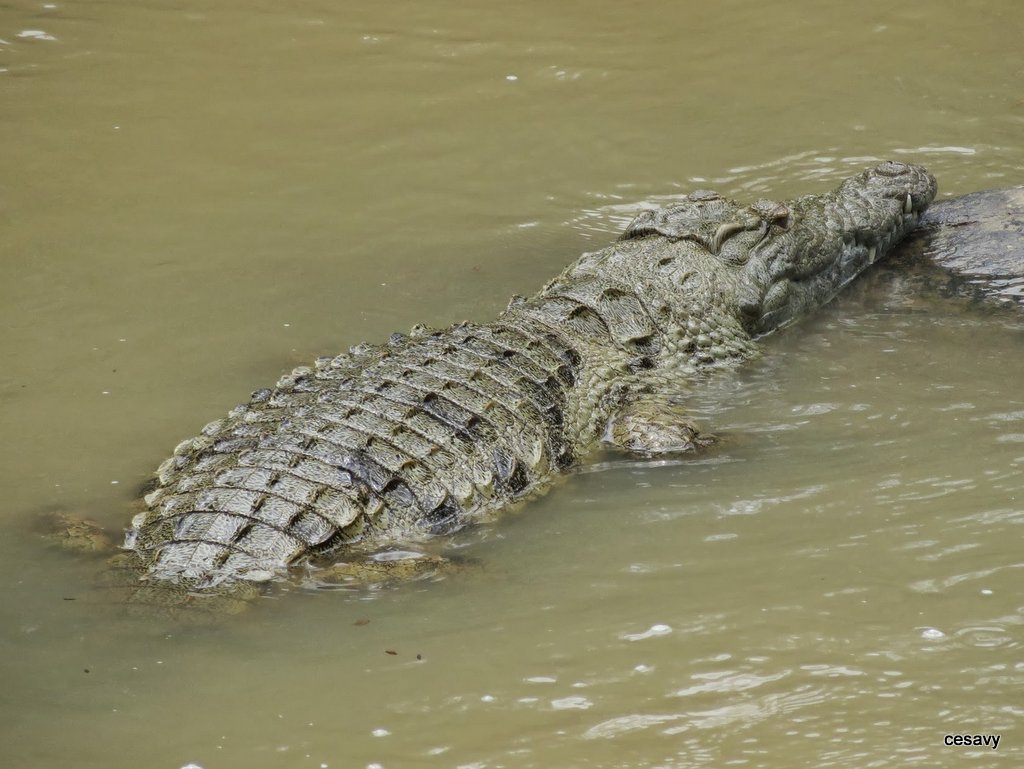
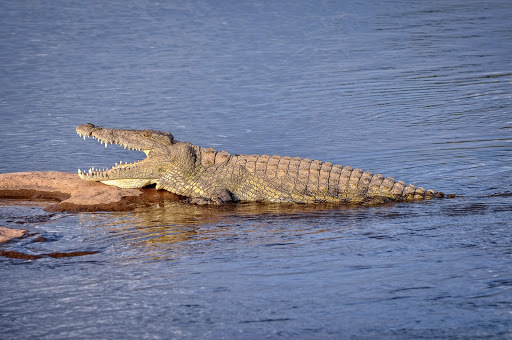
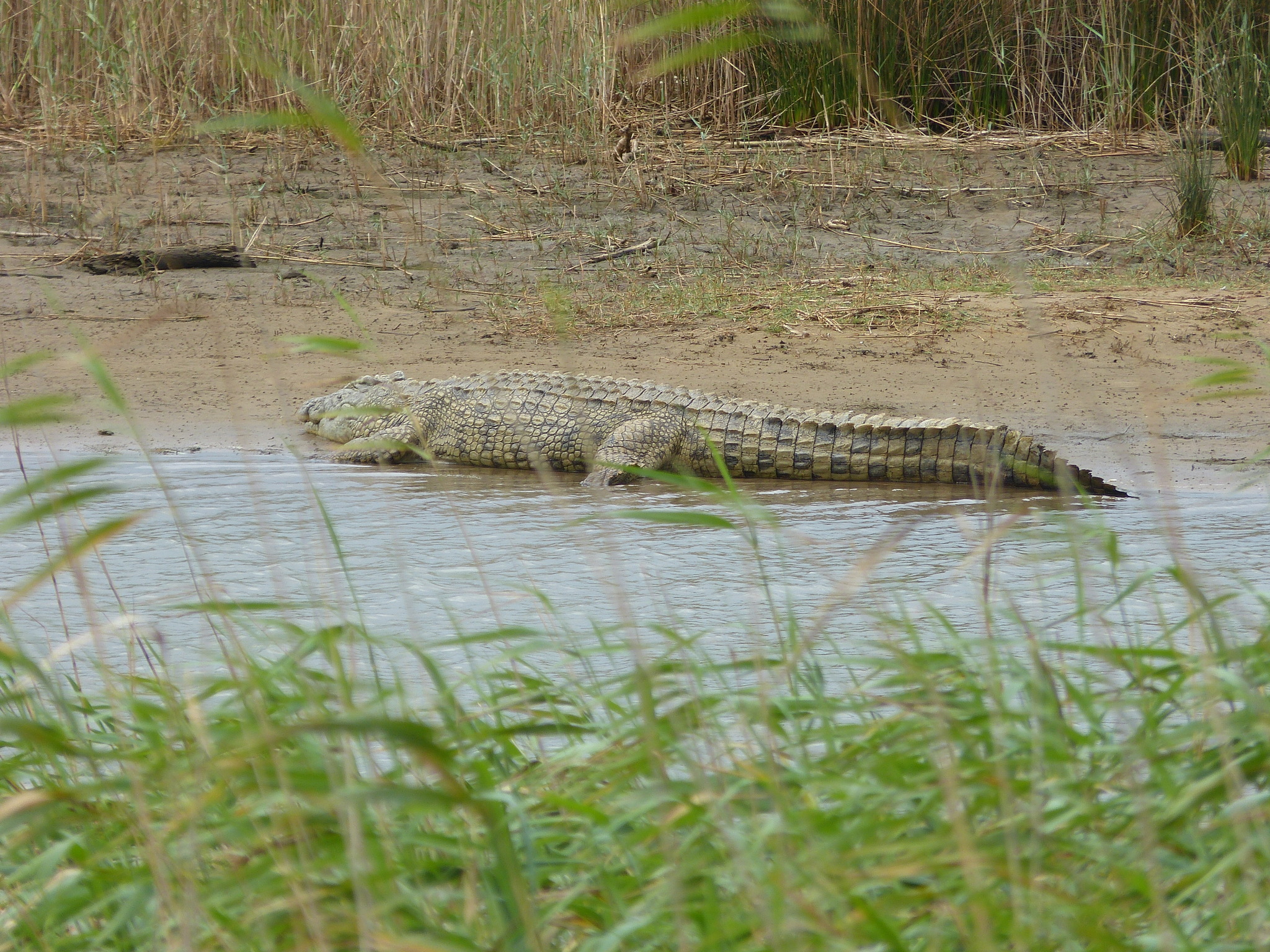
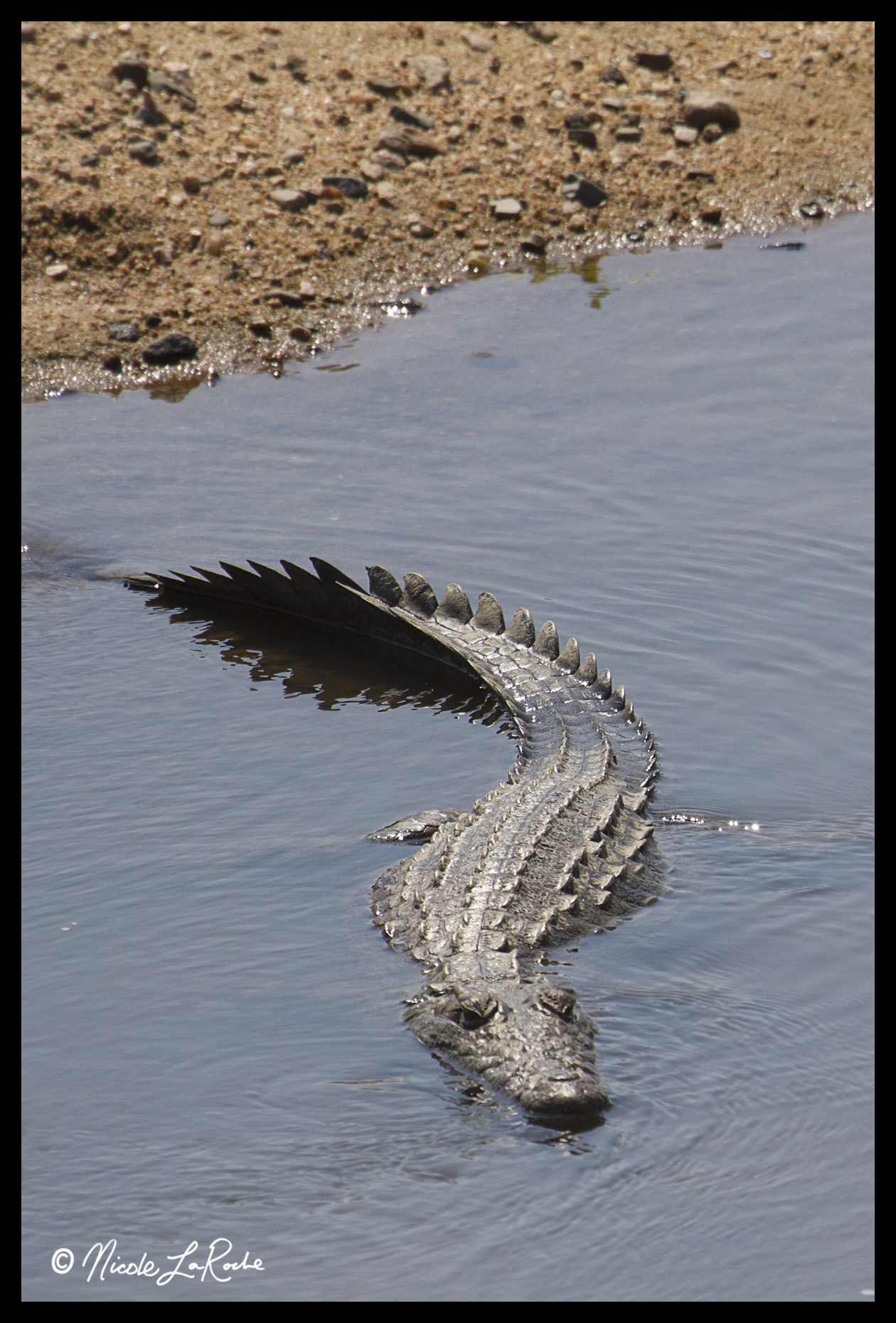
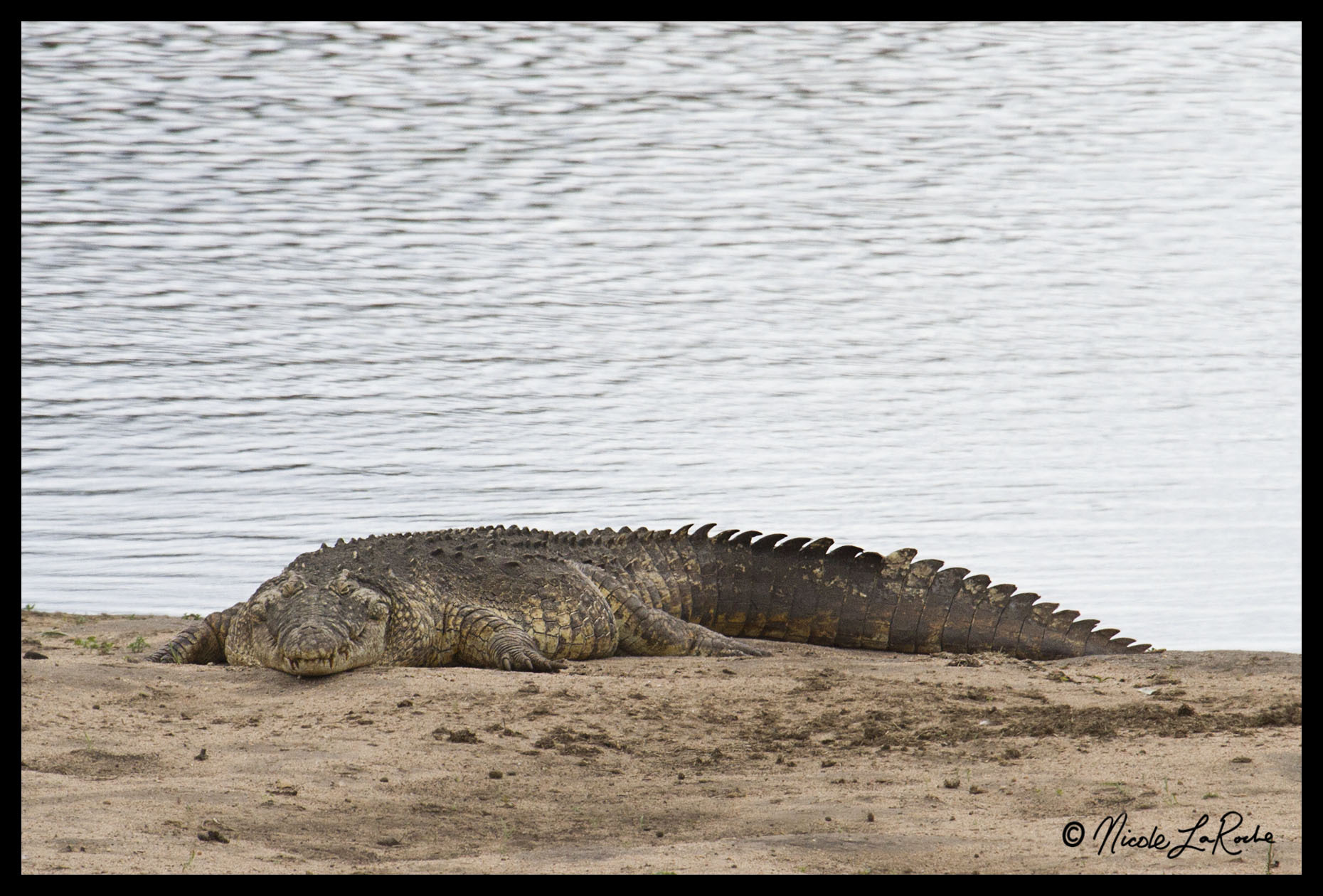
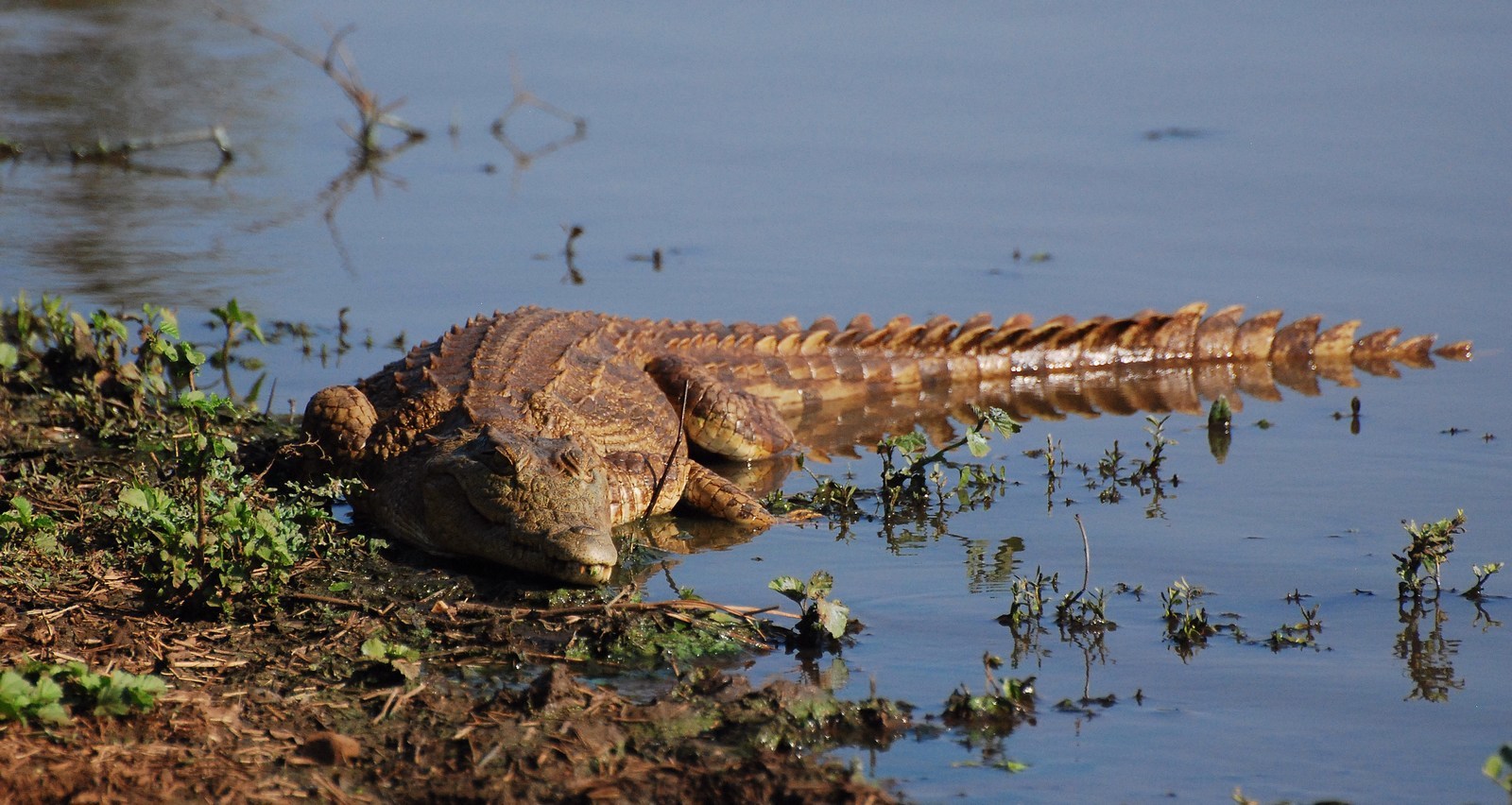
Branch (1998) described the species as follows: Nile crocodiles may exceptionally exceed 1000 kg in weight. The jaws are long and have prominent teeth. The eyes and valved nostrils are situated on top of the head. The skin is covered with geometrically arranged, horny plates, many of which are keeled and bony. The plates on top of the head are fused to the skull. The hind feet are webbed. The tail is 40% of the total body length, rectangular in cross-section and has two raised dorsal keels. The young are greenish, with irregular black markings over the back and sides, and the throat and belly are uniform straw yellow. Adults are darker, being uniform olive to grey, with a yellow or cream belly.
Type locality: restricted to Tanzania fide Fuchs et al. 1974. Holotype: unlocated (fide King & Burke 1989), lost fide Fuchs et al. 1974 Holotype: lost fide Fuchs et al. 1974: 114 [africanus] Holotype: SMF 28161 [octophractus] Holotype: NMSL (Colombo) fide DERANIYAGALA 1948 [pauciscutatus] Holotype: SMF 28161 [multiscutatus] Holotype: MNHN-RA 6498 (type status uncertain) [madagascariensis]
This information was extracted from Tolley et al. (2023): There is population-level genetic structure within C. niloticus that corresponds with major river basins across continental Africa and Madagascar (Hekkala et al. 2010), but there has been no assessment as to whether this supports the five subspecies (see Uetz et al. 2020). The subpopulation in the region is referable to C. niloticus cowiei, and this subspecies may correspond with the genetically distinct population in the Limpopo River basin (see Hekkala et al. 2010).
Angola, Botswana, Burundi, Cameroon, Democratic Republic of the Congo, Egypt, Equatorial Guinea, Eritrea, Eswatini, Ethiopia, Gabon, Kenya, Madagascar, Malawi, Mozambique, Namibia, Republic of the Congo, Rwanda, Somalia, South Africa, South Sudan, Sudan, Tanzania, Uganda, Zambia, Zimbabwe
This information was extracted from Tolley et al. (2023): Widely distributed across eastern sub-Saharan Africa. In the region, it occurs from south of the Tugela River (Zinkwazi River) in KwaZulu-Natal province (Combrink et al., 2011), northwards into Mpumalanga, Limpopo and northeastern North West provinces. Surveys in the Limpopo province have filled in many information gaps in the northern Eastern and Western Cape provinces (Feely 2010) but has become locally extinct in many areas in the early 1900s (Feely, 2010; Combrink et al., 2011). The species also has become locally extinct from tributaries of the Limpopo River in parts of North West province (see Smith, 1836, 1840). A population has been re-established in the Pilanesberg National Park (J. Power, pers. comm. 2020), and there is a population in Rust de Winter Dam in southern Limpopo province that might be either introduced, re-established or naturally colonised, with the population able to persist due to the presence of perennial waters in the dam (Jacobsen, 1984). There are also online reports of crocodiles at another dam (Rhenosterkop Dam), lower in the Elands River in Mpumalanga province. In the 1980s six individuals were released at Dwesa Nature Reserve, Eastern Cape province (Combrink et al., 2011). These individuals may have reproduced (Combrink et al., 2011), and two to three individuals have been recorded from there in recent years (Venter and Conradie, 2015).
Crocodiles are adapted to be belly-crawlers, high-walkers, gallopers, efficient swimmers, floaters and divers. Their movement in water seems fluid and effortless as they swim by propelling their bodies through the water using their tails; however, on land, it seems ponderous and sluggish (Alexander and Marais, 2007).
Carnivore- fish, terrapins, birds& mammals.
This information was extracted from Branch (1998): The Nile Crocodile spends much of its time out of water eating small prey. Subadults prefer swamps and backwaters, eating fish, terrapins, birds, and small mammals. Adults grasp prey with a fast, sideways swipe of the head. The tail may be used to knock over vegetation to dislodge nestling birds or to direct fish to within the striking distance of jaws. They prey on animal that is approaching to drink, although they mostly eat fish, especially catfish. Although zebras and buffalos can be defeated, antelope are typically taken. Attacks on humans (and fatalities) are relatively common. Large food items are softened by biting. If too large to be swallowed whole, prey is torn to bits by the crocodile seizing a mouthful and spinning on its long axis. Carrion is readily taken.
This information was extracted from Branch (1998): Nile crocodiles are attentive parents, and nest construction and care for the young is very advanced. Sexual maturity is reached in 12-15 years at about 2-3 (70-100 kg). At the start of the breeding season (May), males may develop a dominance hierarchy. Courtship is elaborate, and mating takes place in the water in July-August. The female chooses a suitable sunny sandbank with sufficient drainage and protection close by, above floodwater level. For the rest of her life, unless something disturbs her, she will use it. She excavates a hole (30–45 cm deep) using her hind legs at night, generally in November, and lays 16–80 hard-shelled, white eggs (70–78 × 50–56 mm, 85–125 g). The female crocodile does not eat during this time, but she may visit the water to drink. The nest place is protected from predators and other crocodiles. The male stays close by, but he is not permitted to go near the nest mound. After 84-90 days the hatchlings, while still in the egg, give a high-pitched cheeping noise that is audible 20 m away. The female carefully opens the nest and takes the young into her mouth. The hatchlings (280-320 mm TL) are taken to the water, washed, and released. They remain in a creche area for 6-8 weeks. The sex of hatchlings is determined by egg incubation temperature; unlike chelonians, females are produced at lower temperatures (26-30˚C) and males at higher ones (31-34˚C).
No data.
Savanna, Indian Ocean Coastal Belt, Grassland
This map contains point-based occurrences at different locations
Occurrence in African countries and South African provinces. Residence status indicates if a taxon is indigenous, endemic, or alien in a specific region. This data is based on specimen records and literature.
FSA
SA
BOT
NAM
ESW
LES
WC
EC
NC
FS
GA
KZN
LP
MP
NW
Absent
Indigenous
Endemic
Naturalised
Invasive
Names and Sources
| Common Name | Language |
|---|---|
| Nile Crocodile |
Classification
KINGDOM Animalia
PHYLUM Chordata
CLASS Reptilia
ORDER Crocodylia
FAMILY Crocodylidae
GENUS Crocodylus
SPECIES niloticus
No results found for Crocodylus niloticus Laurenti, 1768
Information extracted from Tolley et al. (2023): The CITES trade database shows significant recent exports from South Africa of trophies, bodies, bones, teeth and skins from wild and ranched sources (UNEP-WCMC, 2020). Commercial trade reported to CITES shows 1 799 trade events involving animals sourced from the wild and ranches between 2017 and 2019 (UNEP-WCMC, 2020). Harvesting from the wild for local traditional medicine does not fall under CITES. It is difficult to quantify the trade fully, as most CITES exports indicate the number of derived products
20 results for Crocodylus niloticus Laurenti, 1768
This map contains point-based occurrences at different locations
2007
BOOK
A Guide to Reptiles of Southern AfricaAlexander, G., Marais, J.. 2007. A Guide to Reptiles of Southern Africa. Cape Town. Struik Publishers.
2010
JOURNAL ARTICLE
Molecular assessment of population differentiation and individual assignment potential of Nile crocodile (Crocodylus niloticus) populationsHekkala, E., Amato, G., Desalle, R., Blum, M.. 2010. Molecular assessment of population differentiation and individual assignment potential of Nile crocodile (Crocodylus niloticus) populations Vol. 11. . pp.1435-1443.
2020
DATABASE
The Reptile DatabaseUetz, P., Hošek, J., Freed, P.. 2020. The Reptile Database. Available at: http://www.reptile- database.org. (Accessed: 15 September 2020).
1998
BOOK
Field Guide to Snakes and Other Reptiles of Southern AfricaBranch, B.. 1998. Field Guide to Snakes and Other Reptiles of Southern Africa. Cape Town. Struik Publishers.
2023
BOOK
Conservation status of the reptiles of South Africa, Eswatini and LesothoTolley, K., Burger, M., Alexander, G., Pietersen, D., Conradie, W., Weeber, J.. 2023. Conservation status of the reptiles of South Africa, Eswatini and Lesotho Vol. Suricata 10. Pretoria. South African National Biodiversity Institute.
2015
JOURNAL ARTICLE
checklist of the reptiles and amphibians found in protected areas along the South African Wild Coast, with notes on conservation implicationsVenter, J., Conradie, W.. 2015. checklist of the reptiles and amphibians found in protected areas along the South African Wild Coast, with notes on conservation implications Vol. 57(1) pp.1-25.
2011
JOURNAL ARTICLE
Evidence of a declining Nile Crocodile (Crocodylus niloticus) population at Lake Sibaya, South AfricaKyle, R., Combrink, X., Korrubel, J., Taylor, R., Ross, P.. 2011. Evidence of a declining Nile Crocodile (Crocodylus niloticus) population at Lake Sibaya, South Africa Vol. 41)2) pp.145-157.
1984
JOURNAL ARTICLE
The distribution and status of crocodile populations in the Transvaal outside the Kruger National ParkJacobsen, N.. 1984. The distribution and status of crocodile populations in the Transvaal outside the Kruger National Park Vol. 29 pp.191-200.
2012
JOURNAL ARTICLE
Ecosystem change and the Olifants River crocodile mass mortality eventsVenter, J., Govender, D., Hall, G., Woodborne, S., Huchzermeyer, K., Pienaar, D., Myburgh, J., Deacon, A., Lubucker, N.. 2012. Ecosystem change and the Olifants River crocodile mass mortality events Vol. 3(10) pp.1-17.
1836
REPORT
Report of the Expedition for Exploring Central Africa, from the Cape of Good Hope, June 23, 1834, Under the Superintendence of Dr. A. SmithSmith, A.. 1836. Report of the Expedition for Exploring Central Africa, from the Cape of Good Hope, June 23, 1834, Under the Superintendence of Dr. A. Smith. Cape Town. Government Gazette Office.
1840
BOOK
The Diary of Dr Andrew Smith, Director of the ‘Expedition for Exploring Central Africa,’ 1834–1836Smith, A.. 1840. The Diary of Dr Andrew Smith, Director of the ‘Expedition for Exploring Central Africa,’ 1834–1836 Vol. II. The Van Riebeeck Society.
Status and criteria
VU
Assessor(s)
Andrew Turner
Reviewer(s)
Michael Bates


