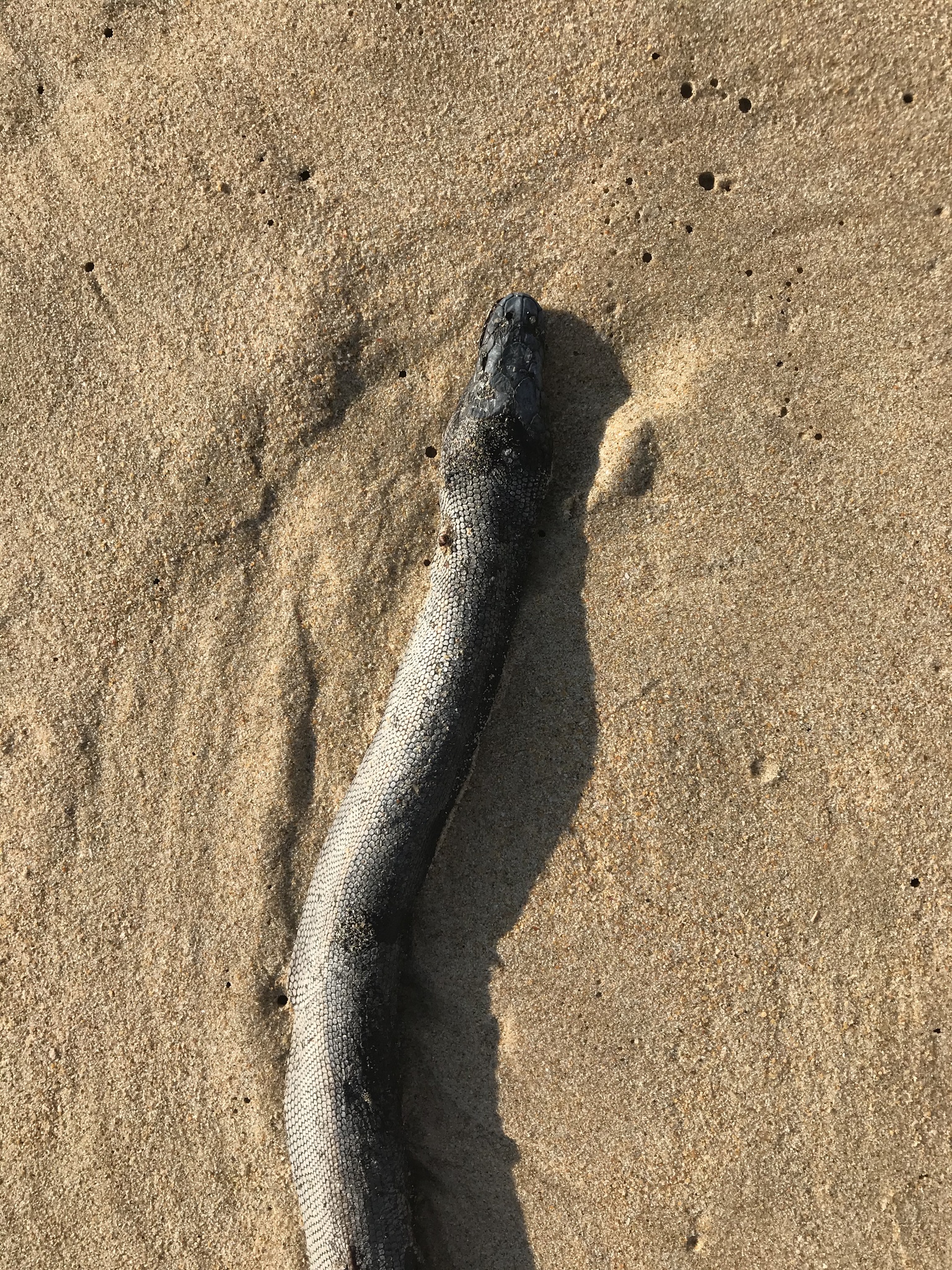
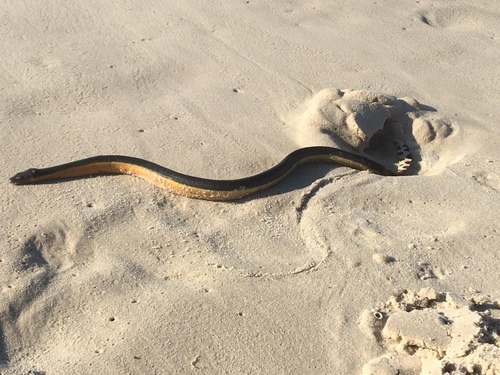
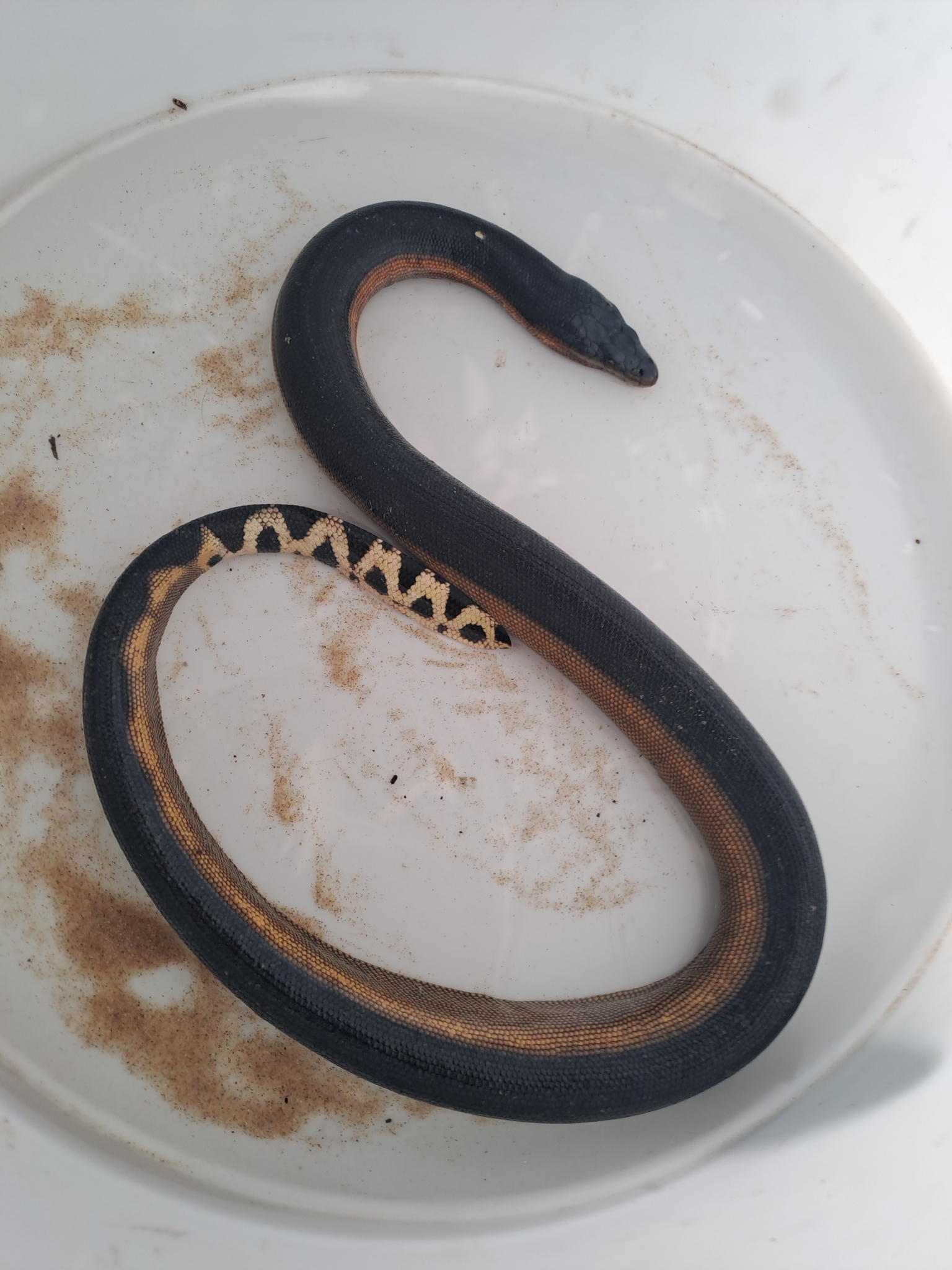
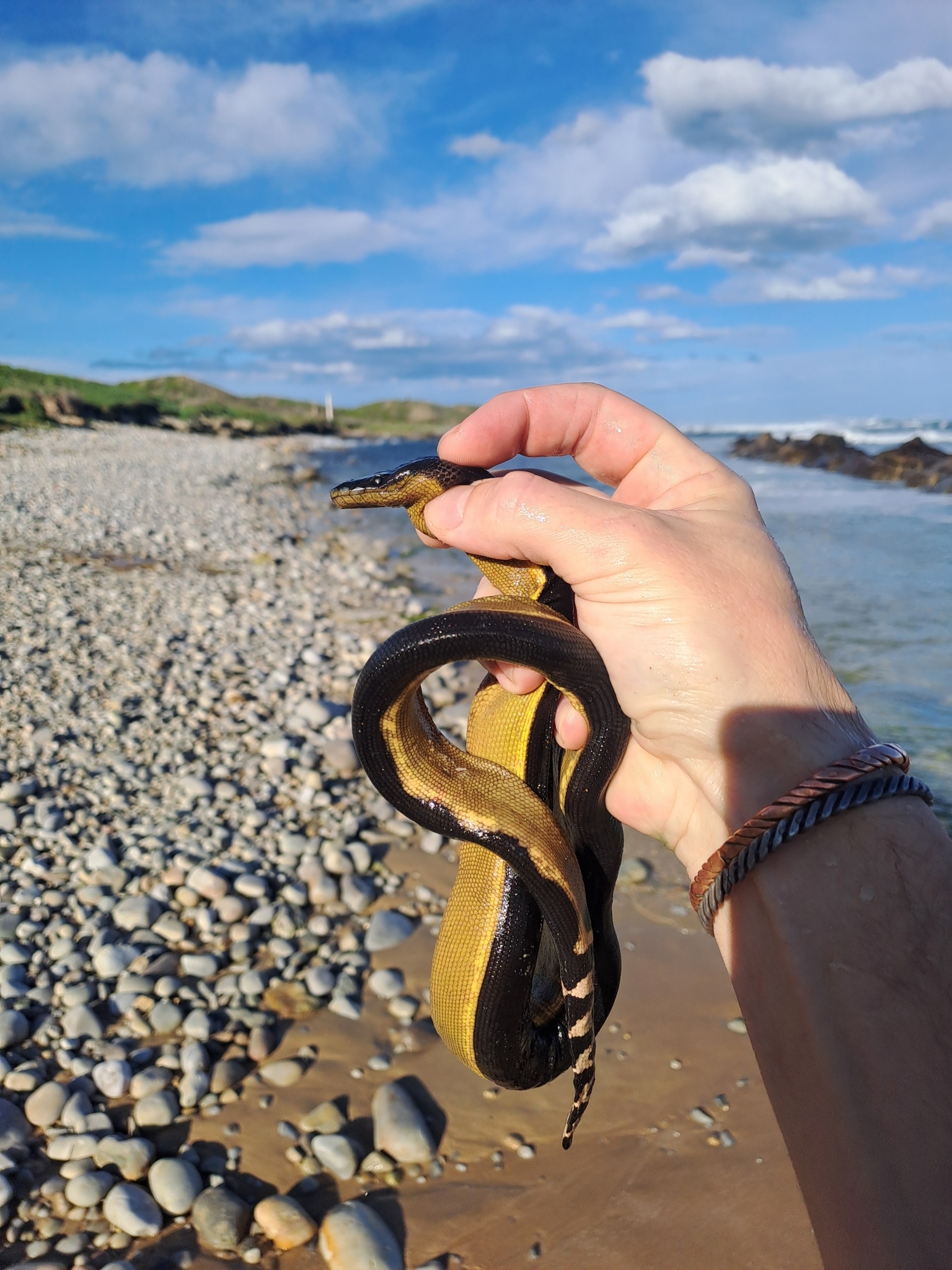
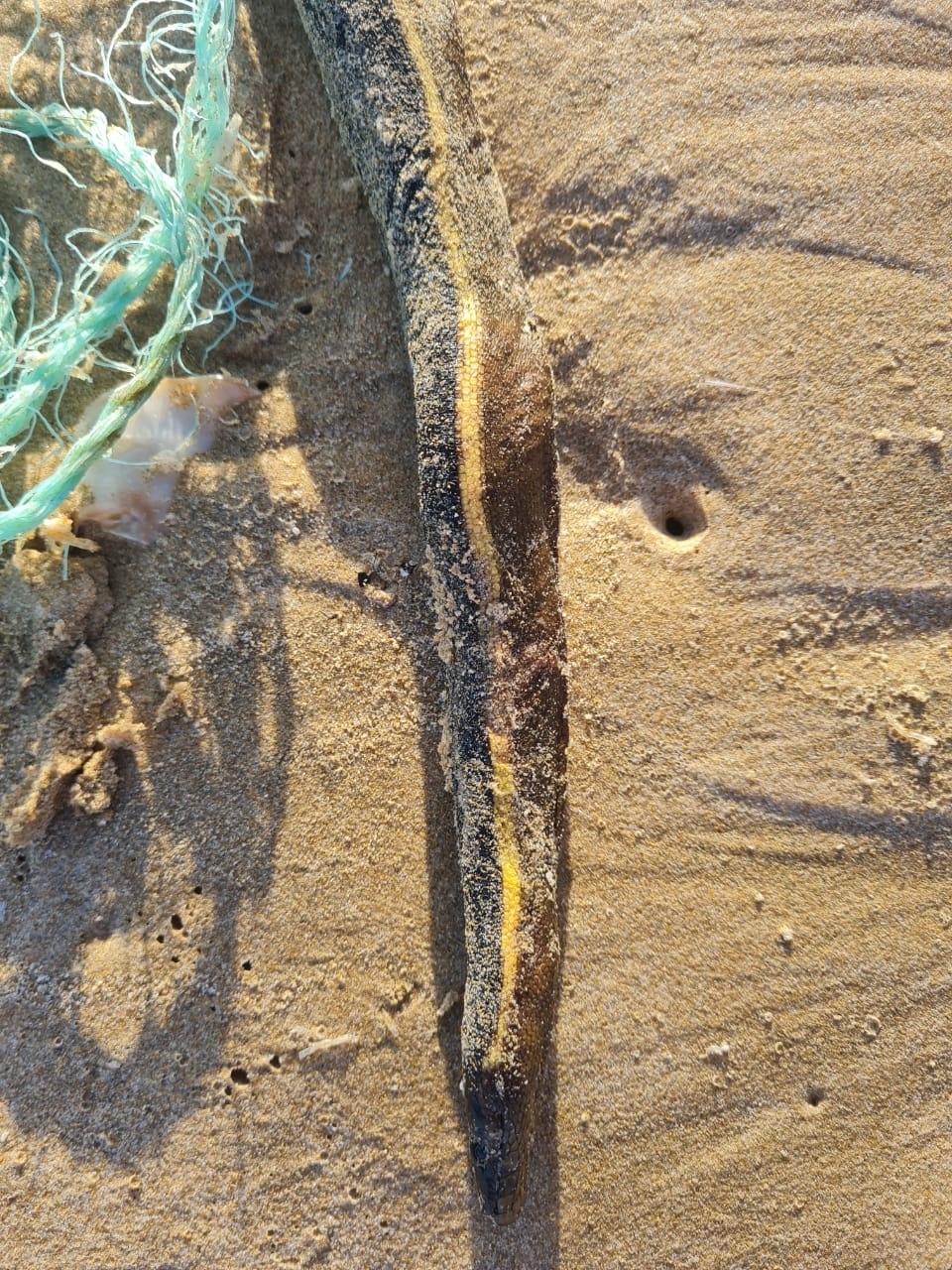
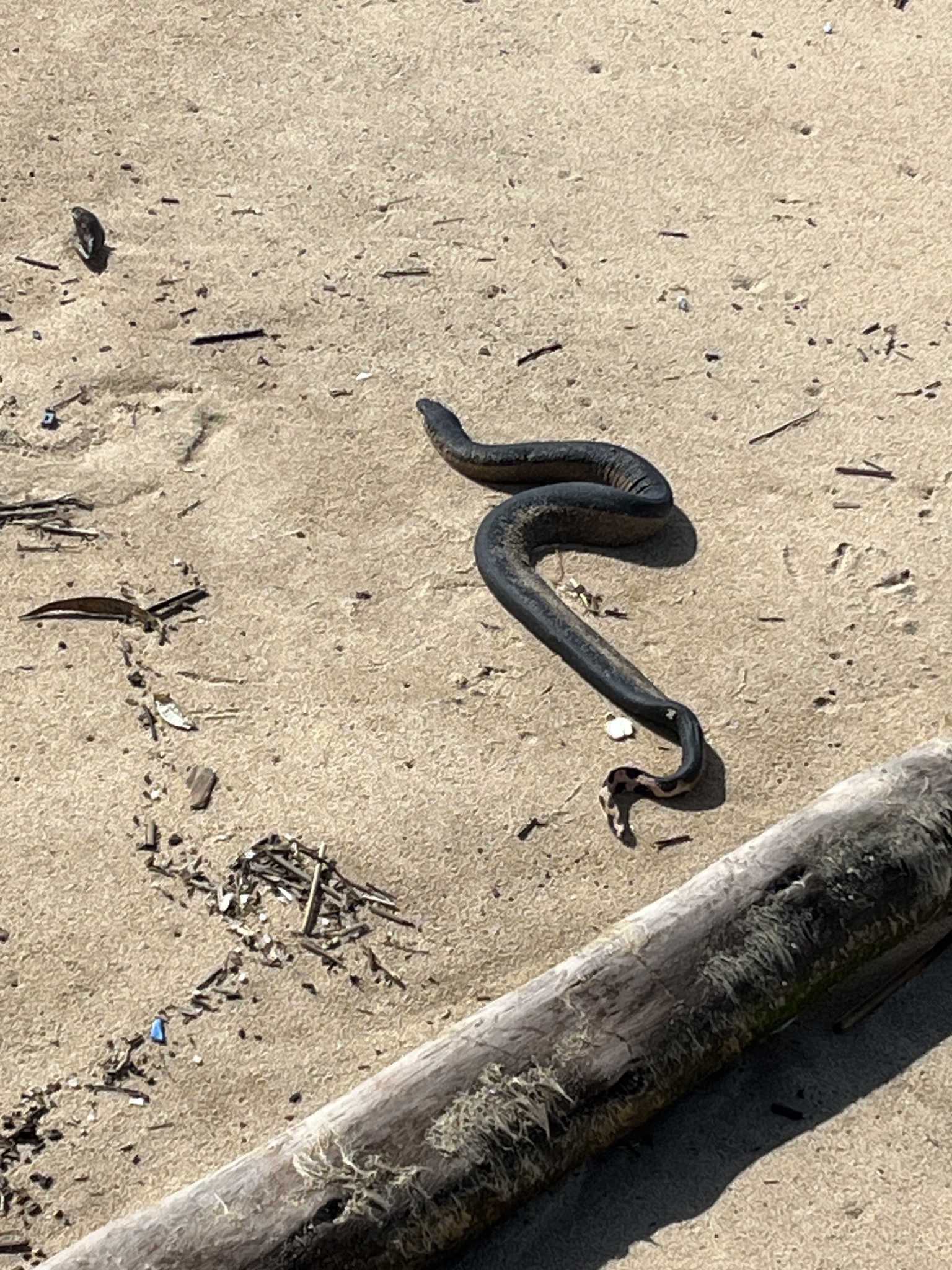
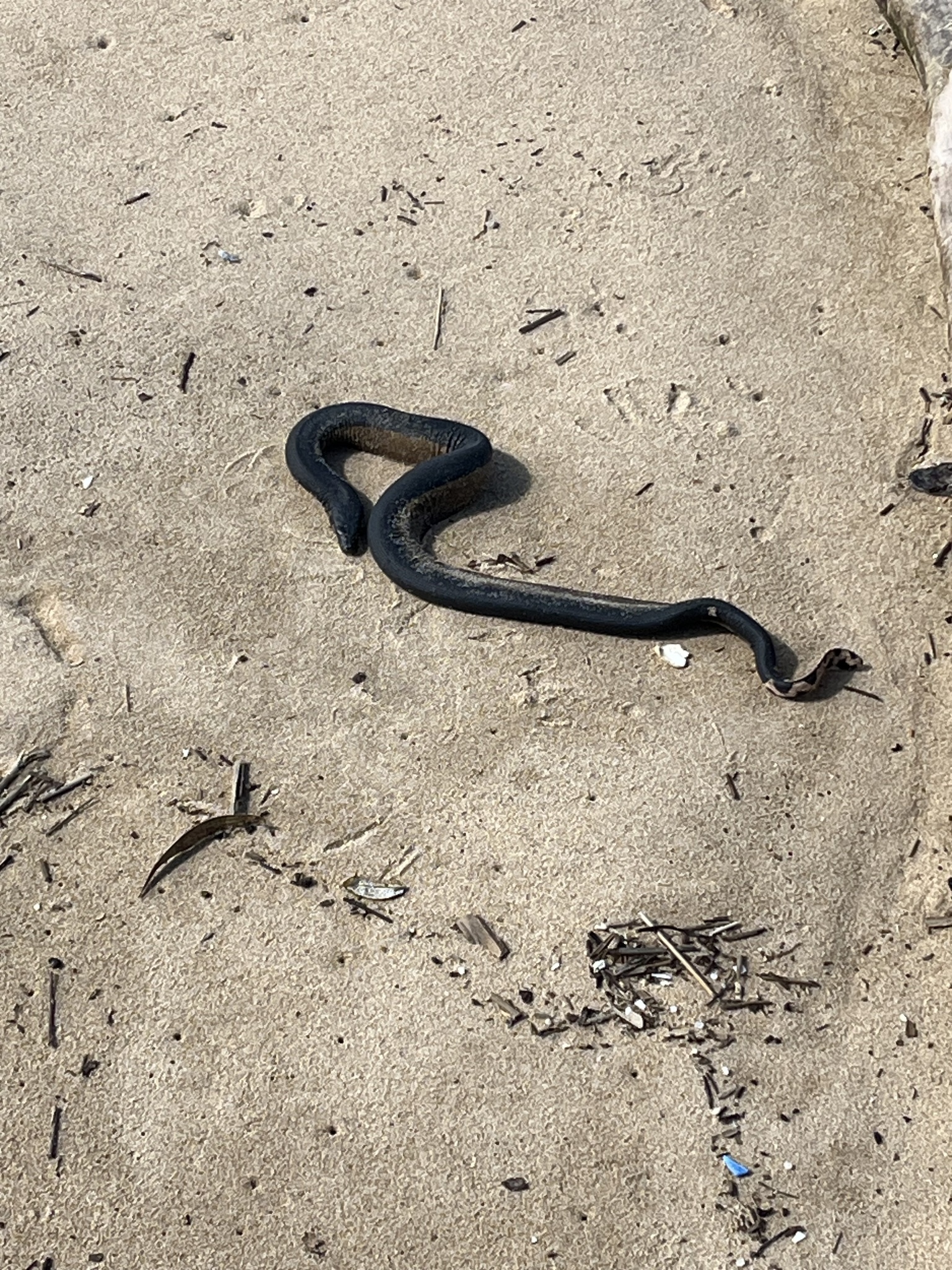
Boulenger (1896) re-described this species as follows: Rostral as deep as broad or a little broader than deep, frontal large, at least as long as the snout or the parietals; one or two pre- and two or three postoculars; one or two suboculars sometimes present; temporals small and numerous; seven or eight upper labials, second in contact with the praefrontal, fourth, fifth, or fourth and fifth usually entering the eye; chin-shields small or indistinct. 45 to 47 scales round the body, smooth in the female and young, laterals and ventrals rough with one, two, or three small tubercles in the male. Black or brown and yellow, the markings very variable. Total length 700 mm; tail 80 mm
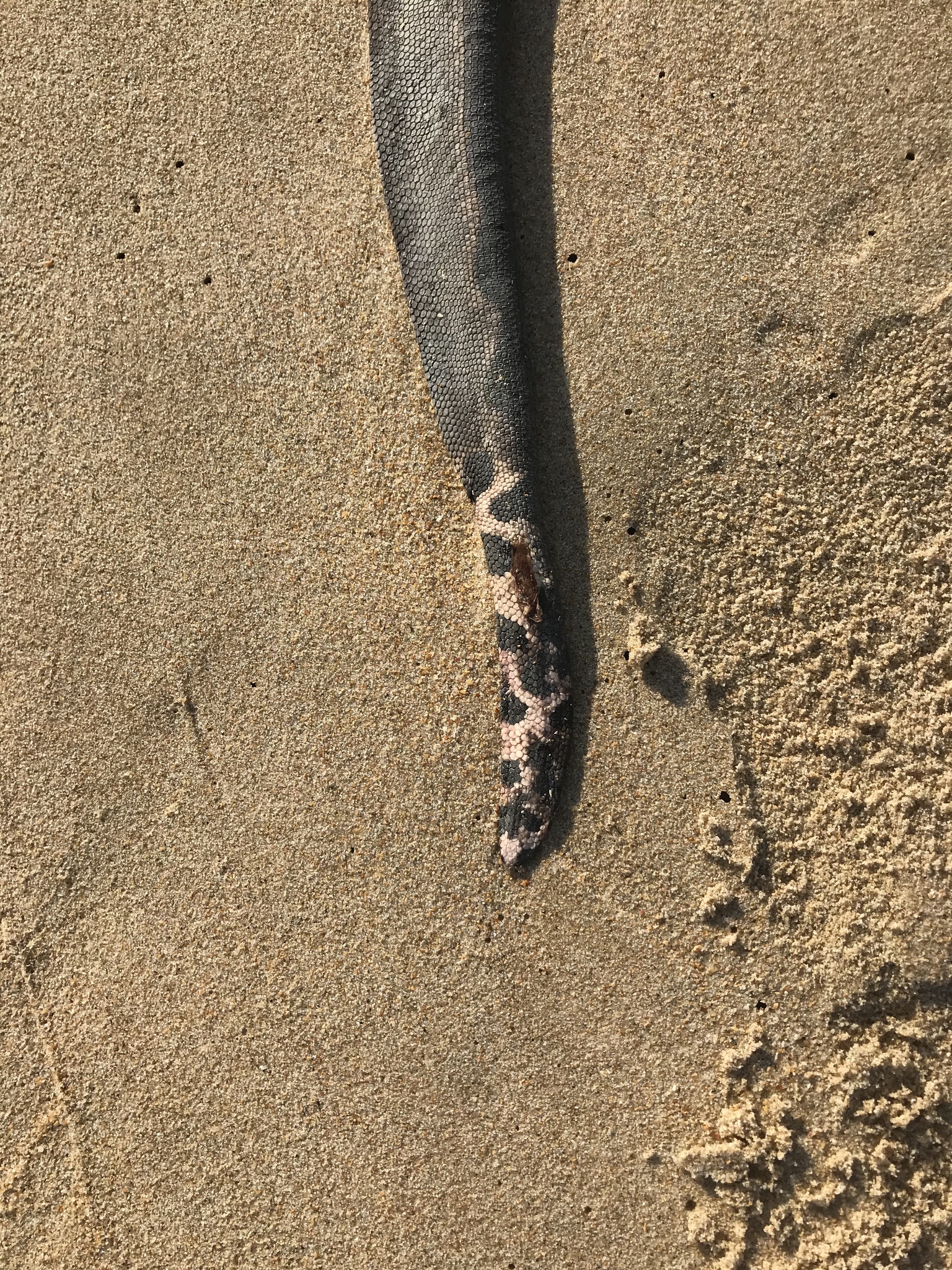
This information was extracted from Rezaie-Atagholipour et al. 2016: Here we describe a new, allopatric subspecies, Hydrophis platurus xan- thos subsp. n., or yellow sea snake, from the inner basin of Costa Rica’s Golfo Dulce. The new subspecies is diagnosed based on a dramatic color character state, as well as by a marked difference in body size. Aspects of behavior also appear to be unique. Hydrophis platurus xanthos is diagnosed as differing from other H. platurus by its predominantly yellow coloration and smaller size. Apparent additional behavioral di- agnostic traits include a sinusoidal ambush posture, and a preference for surfacing in rough rather than smooth waters, lacking an association with drift lines. No specimens unambiguously assignable to this taxon have shown full lateral striation on head and body or prominent spots or bands on the tail. The appearance of H. p. xanthos starkly contrasts with the coloration of most conspecifics found in the broader Eastern Pa- cific, or even in the adjacent mouth of the Golfo Dulce, which evince nearly solid black pigmentation along the dorsum, breaking into spots or bands at the caudal end. H. platurus xanthos is also shorter in length, with an average adult TL of 49 cm, compared to about 60–75 cm for other H. platurus populations. Comparing our TL data for H. p. xanthos with those of Rubinoff et al. (1986) for H. platurus in the Gulf of Panama, note that the two samples do not even overlap, despite good sample sizes. The difference between the underlying distributions is significant with P < .01 (Wilcoxin Rank Sum Test, N1 = 15, N2 = 69, T1 = 1155). Behavioral differences are equally pronounced between H. platurus xanthos and its yellow-bellied conspecifics. Drift lines, which play a critical role in the natural history of the species, supporting aggregations for feeding, reproduction and transport, are not used by H. platurus xan- thos. Furthermore, while H. platurus feeds diurnally, stretched out in smooth water, H. platurus xanthos feeds at night, in turbulent water, assuming a sinusoidal ambush posture never previously reported for the species.
Holotype: unknown (fide PETERS 1960, NGUYEN et al. 2009). Holotype: UCR (originally as MZUCR:HERP 20614, Zoological Museum of University of Costa Rica, San Jose, Costa Rica), collected 13 February 2009 by A. Solórzano [xanthos]
Previously known as Pelamis platurus. Sanders et al. (2012), in a phylogeny of the hydrophines, showed that Pelamis was nested within Hydrophis, necessitating the transfer of P. platurus to Hydrophis.
Indian Ocean, India (Gujarat, Kerala, Andaman Islands, Nicobar Islands), Sri Lanka, Pacific Ocean (Japan), Bangladesh, Singapore, South China Sea northward to the coastal regions of Zhejiang and Taiwan, Vietnam, Pakistan, Myanmar, Maldives, Malaysia, Indonesia (Borneo) coasts of Malay Peninsula and Indoaustralian Archipelago to New Guinea, Gulf of Thailand and Philippines (Surigao del Norte etc.), Korea, Vanuatu, Fiji, Micronesia (Kosrae), Palau Russia (S Primorskij Territory; Only one dead specimen was found in Russia: on the coast of the Sea of Japan, near Vladivostok city; a second one was reported by Kharin 2007) Middle East: Iraq, Qatar Africa and Near East: Madagascar, Tanzania (Loveridge 1957), Somalia, Namibia (Branch 1998), Persian Gulf (Oman, United Arab Emirates (UAE), Iran etc.) to Bay of Bengal, coastal South Africa Australia (New South Wales, Northern Territory, Queensland, Tasmania, Victoria, Western Australia), New Zealand, Solomon Islands [McCoy 2000], New Caledonia, Nauru, Americas: USA (California - occasionally, e.g. during El Niño years), Mexico (Chiapas, Oaxaca, Gulf of California, Jalisco, Sonora, Sinaloa, Guerrero, Nayarit), Guatemala, Honduras, El Salvador, Nicaragua, Costa Rica, Panama, Colombia, Ecuador, Galapagos Islands, Peru; Chile, possibly introduced to the Caribbean.
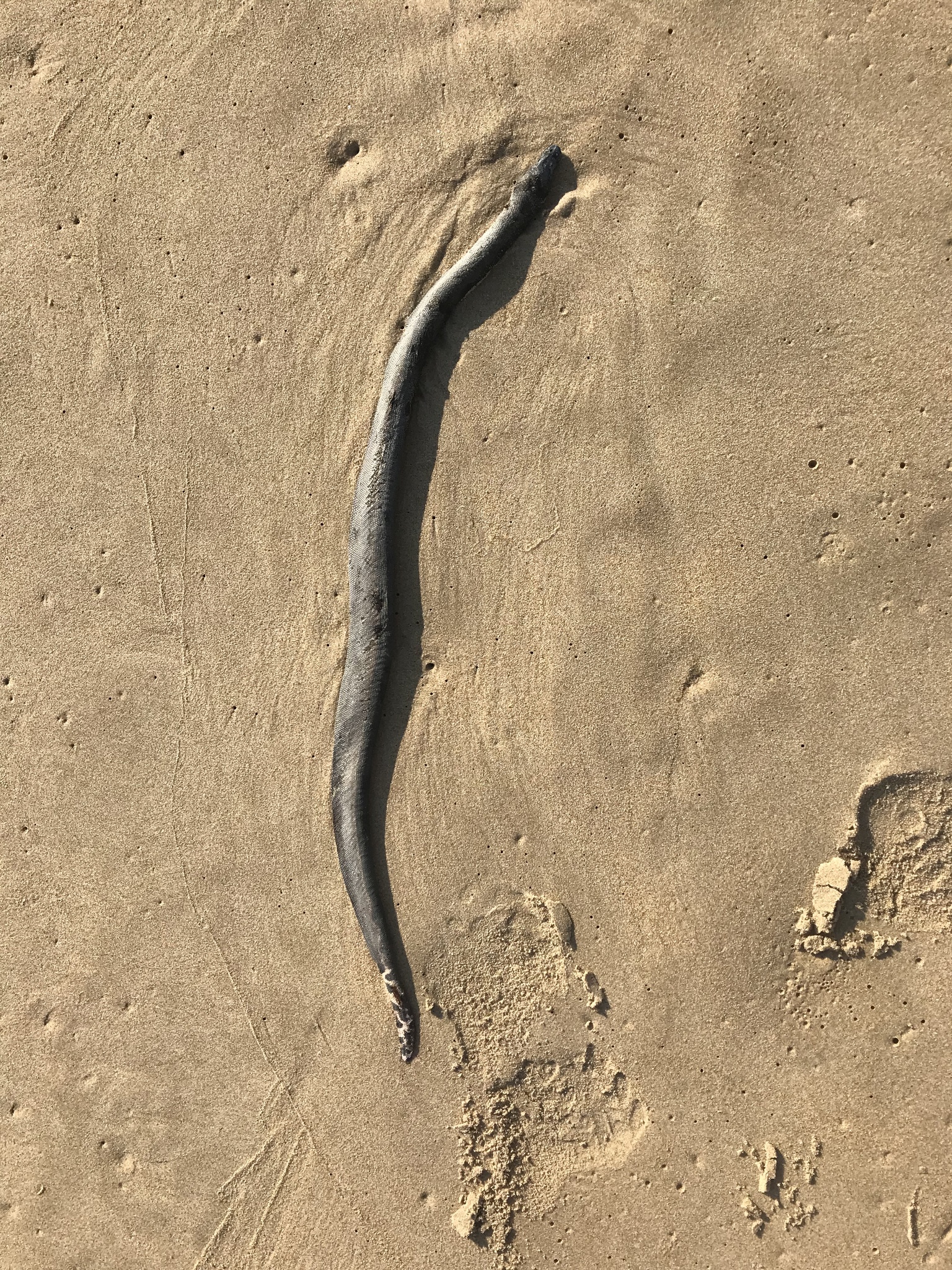
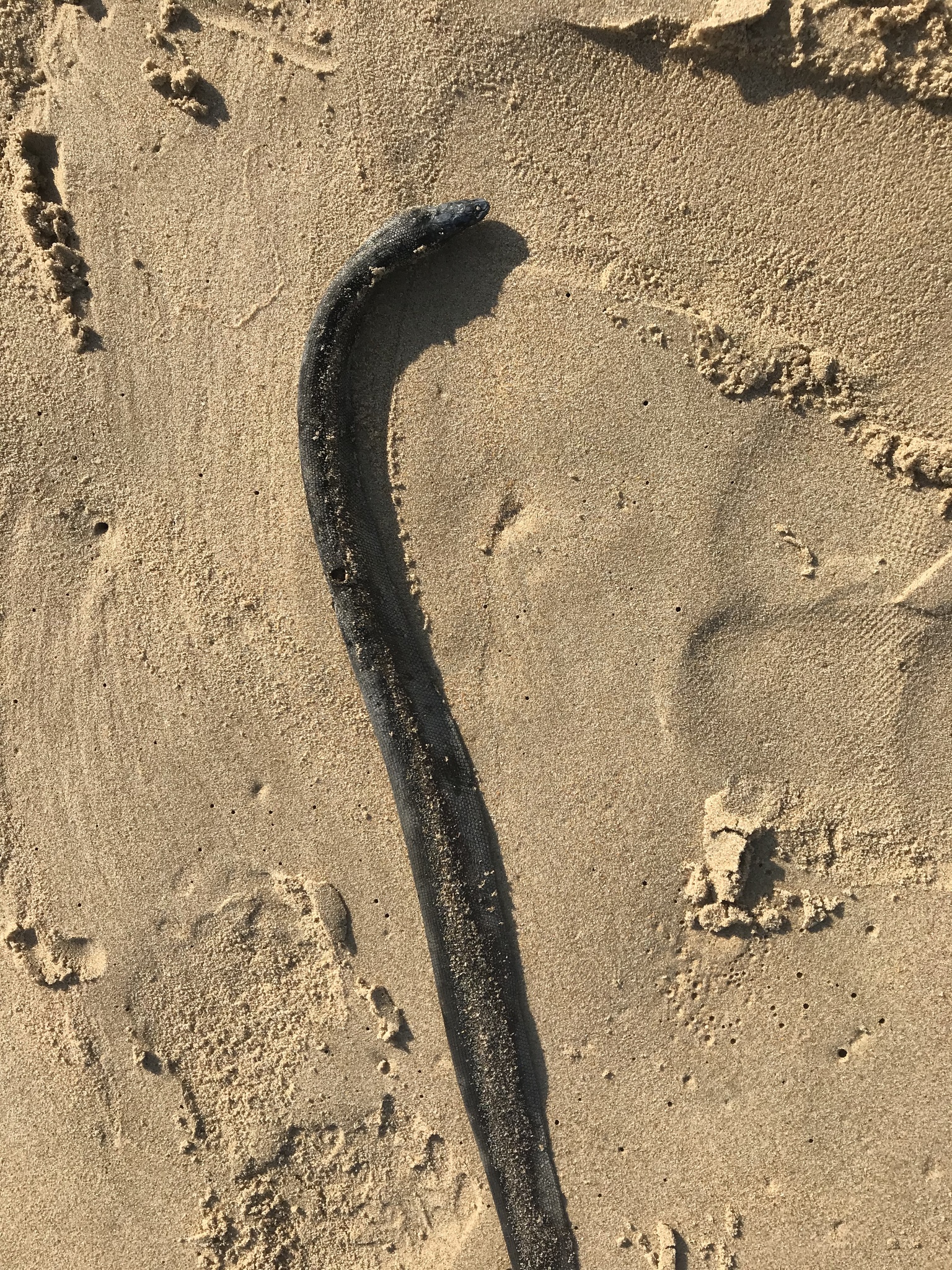
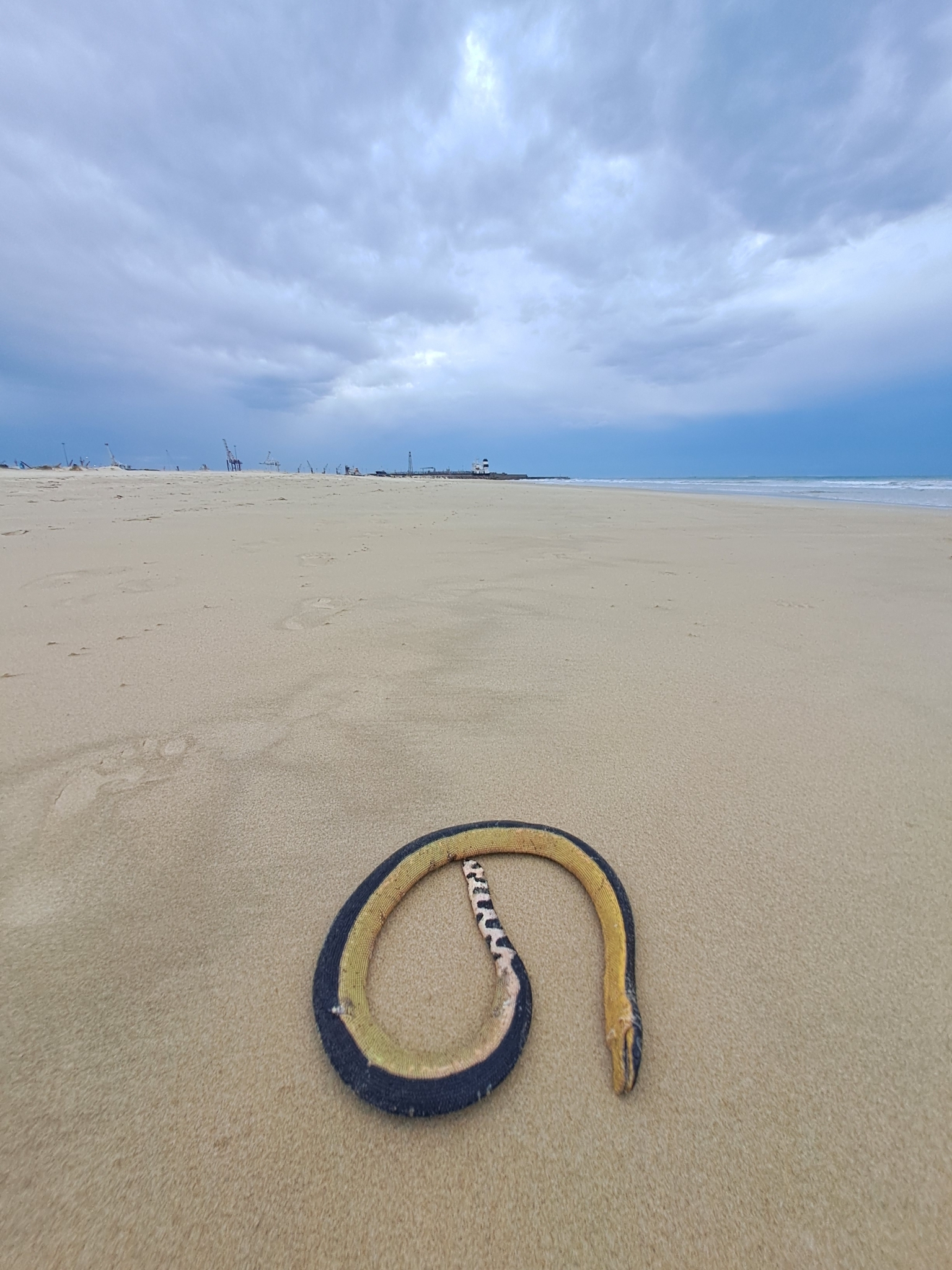
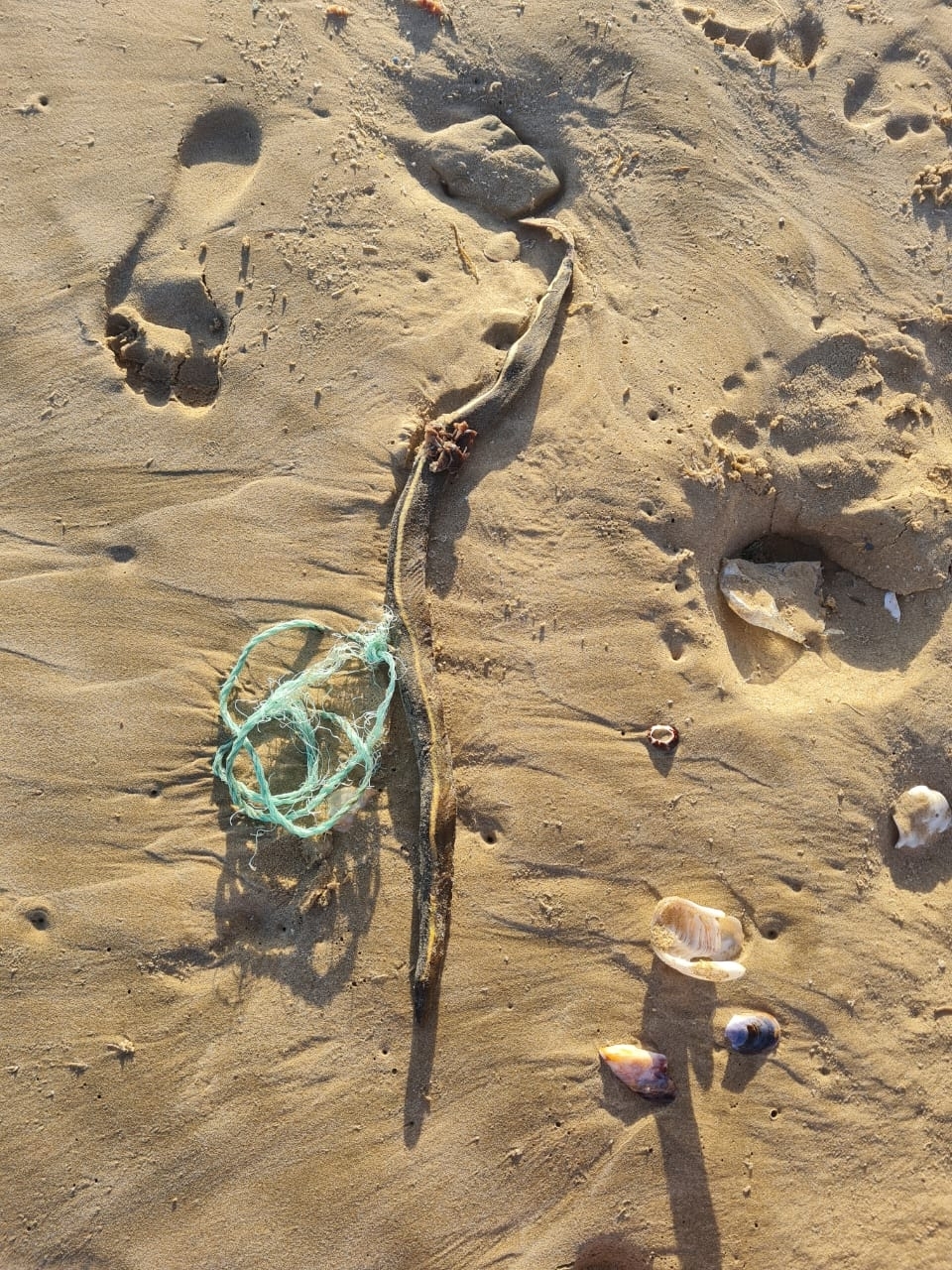
The Yellow-Bellied Sea snake occasionally washes up on the shores of KwaZulu-Natal and the Eastern and Western Cape provinces (Bates et al., 2014).
No data.
Carnivore - Piscivore (fish-eating)
This highly venomous species is pelagic, drifting in warm ocean currents and feeding on small fish (Branch, 1998), often in association with drift lines.
The Yellow-Bellied Sea snake is ovoviparous. They give birth to 3-8 live young (250 mm TL) in March-October (Branch, 1998).
This information was extracted from Branch (1998): The Yellow-Bellied Sea snake shed their skin with a ‘knotting’ behaviour, rubbing one part of the body against another. They are excellent swimmers, being able to move either backwards or forwards with ease but are helpless when washed ashore. Can dive easily to depths of 50 m and spend 87% of their time underwater, for periods up to 213 minutes. Their venom is toxic to fish. It is possible that their bright coloration is aposematic.
Marine oceanic-epipelagic
This map contains point-based occurrences at different locations
Occurrence in African countries and South African provinces. Residence status indicates if a taxon is indigenous, endemic, or alien in a specific region. This data is based on specimen records and literature.
FSA
SA
BOT
NAM
ESW
LES
WC
EC
NC
FS
GA
KZN
LP
MP
NW
Absent
Indigenous
Endemic
Naturalised
Invasive
Names and Sources
| Common Name | Language |
|---|---|
| Yellow-bellied sea snake, Pelagic Sea Snake | EN |
No results found for Hydrophis platurus (Linnaeus, 1766)
No data.
7 results for Hydrophis platurus (Linnaeus, 1766)
This map contains point-based occurrences at different locations
1998
BOOK
Field Guide to Snakes and Other Reptiles of Southern AfricaBranch, B.. 1998. Field Guide to Snakes and Other Reptiles of Southern Africa. Cape Town. Struik Publishers.
2003
BOOK
The Dangerously Venomous Snakes of Myanmar Illustrated Checklist with Keys.Leviton, A, , Guinevere, O, , Koo, S, , Zug, R, . 2003. The Dangerously Venomous Snakes of Myanmar Illustrated Checklist with Keys. Vol. 54 (24) pp.407–462.
2007
BOOK
A Guide to the Reptiles of Southern AfricaAlexander, G., Marias, J.. 2007. A Guide to the Reptiles of Southern Africa. Cape Town. Struik Publishers.
1766
BOOK
Systema naturæ per regna tria naturæ, secundum classes, ordines, genera, species, cum characteribus, differentiis, synonymis, locis.Linnaeus, C.. 1766. Systema naturæ per regna tria naturæ, secundum classes, ordines, genera, species, cum characteribus, differentiis, synonymis, locis. pp.1-532.
1896
BOOK
Catalogue of the snakes in the British MuseumBoulenger, G.. 1896. Catalogue of the snakes in the British Museum Vol. 3. London. Natural History Museum Publications pp..
2016
JOURNAL ARTICLE
Sea snakes (Elapidae, Hydrophiinae) in their westernmost extent: an updated and illustrated checklist and key to the species in the Persian Gulf and Gulf of OmanRezaie-Atagholipour, M, Ghezellou, P, Hesni, M, Dakhteh, S, Ahmadian, H, Vidal, N. 2016. Sea snakes (Elapidae, Hydrophiinae) in their westernmost extent: an updated and illustrated checklist and key to the species in the Persian Gulf and Gulf of Oman Vol. 622 pp.129-164.
2023
BOOK
Conservation status of the reptiles of South Africa, Eswatini and LesothoTolley, K., Burger, M., Alexander, G., Pietersen, D., Conradie, W., Weeber, J.. 2023. Conservation status of the reptiles of South Africa, Eswatini and Lesotho Vol. Suricata 10. Pretoria. South African National Biodiversity Institute.