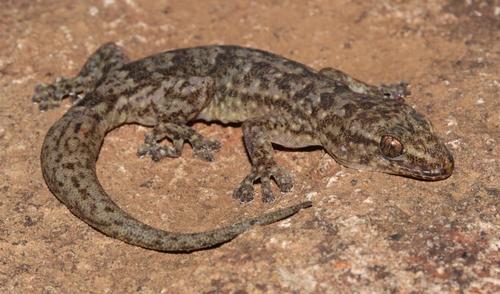
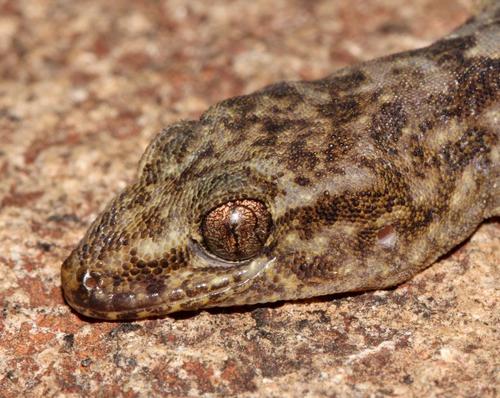
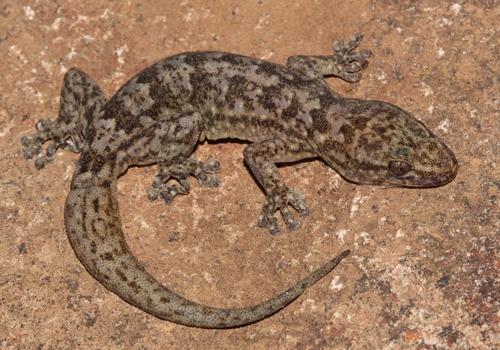
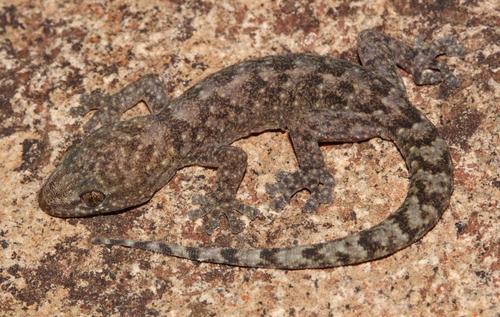
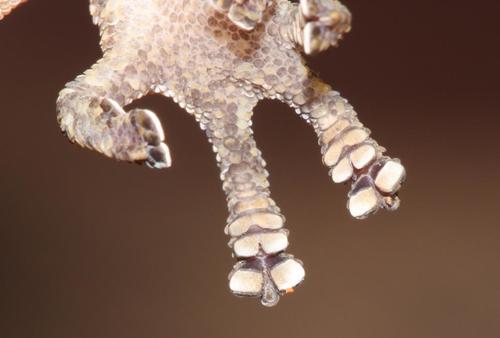
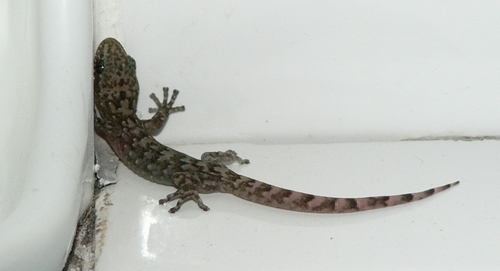
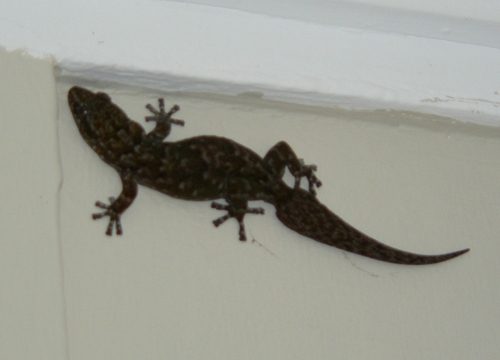
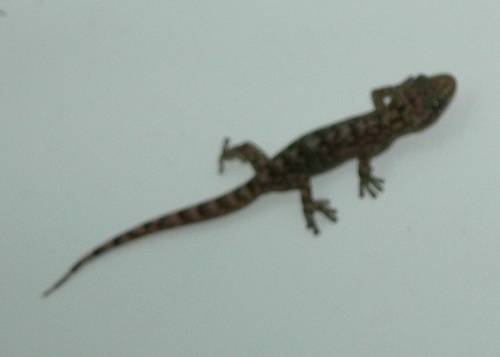
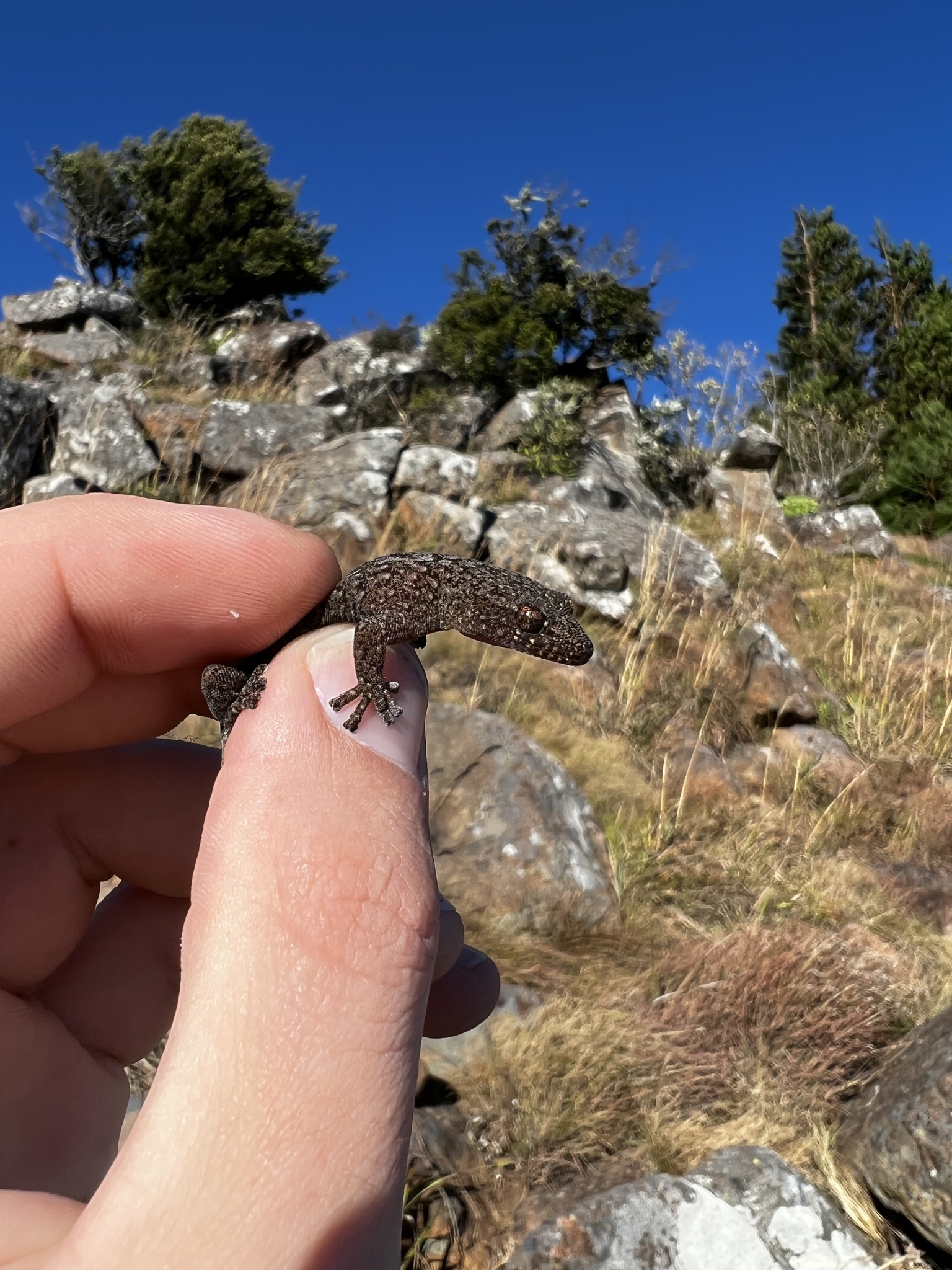
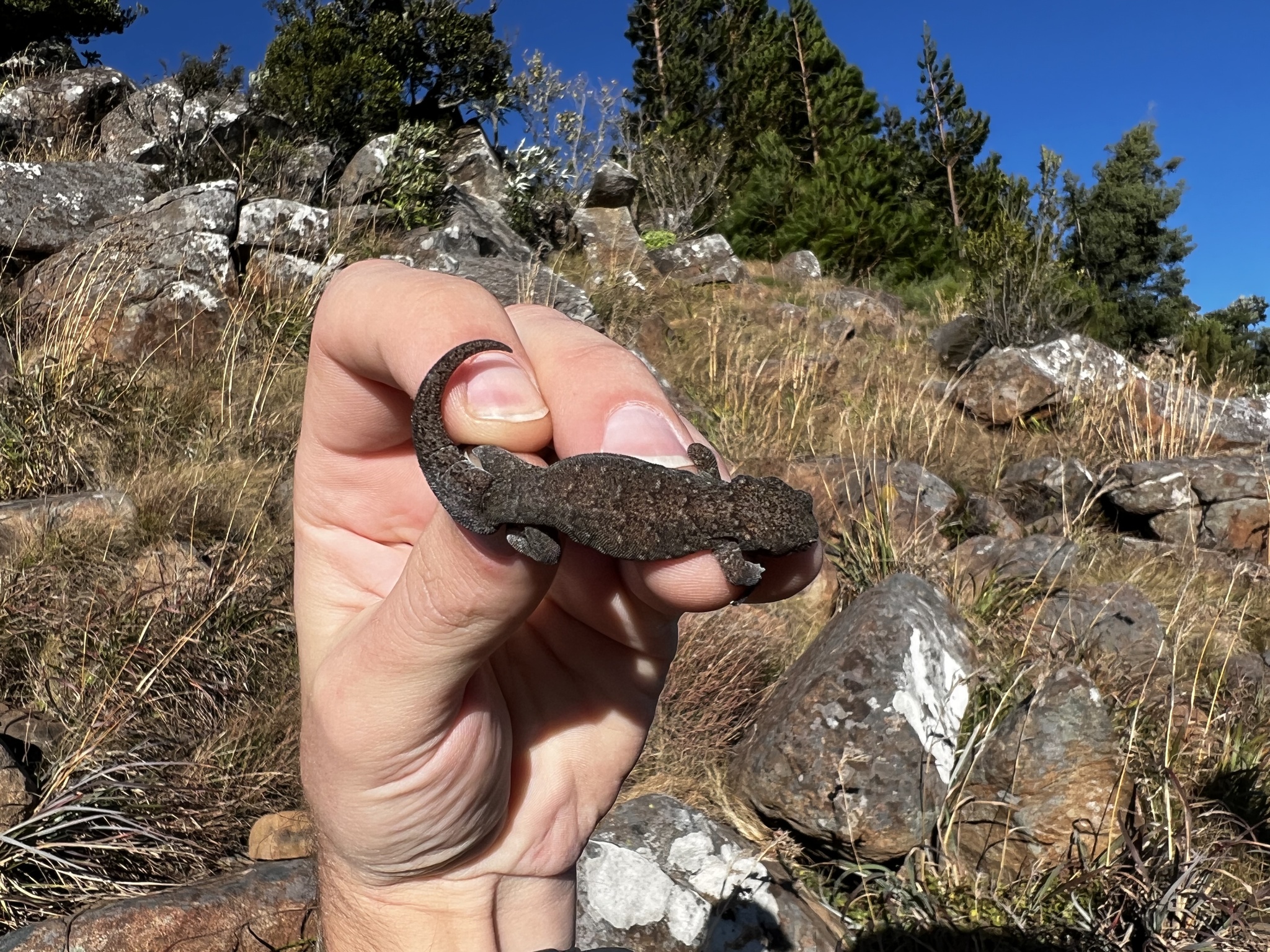
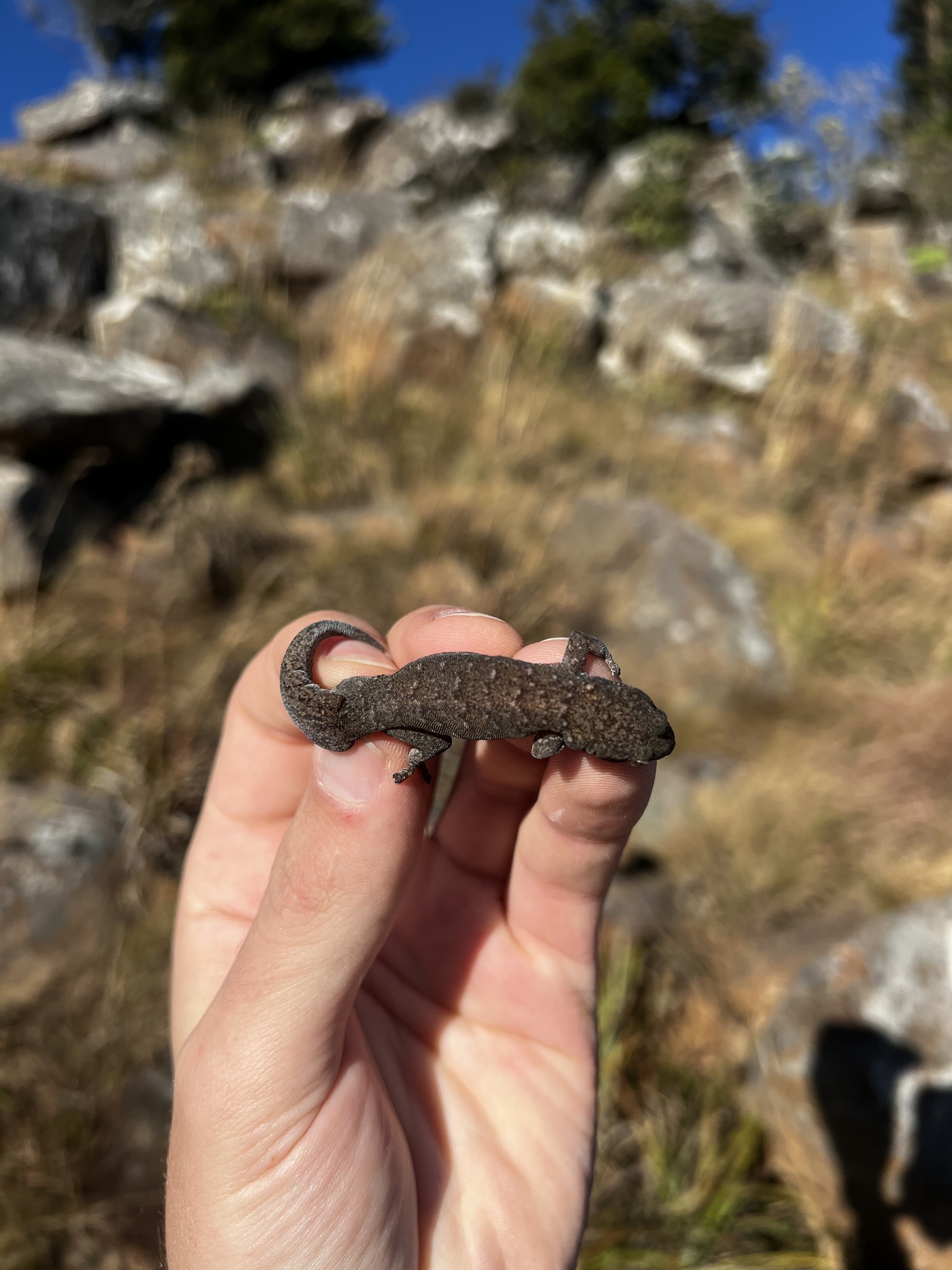
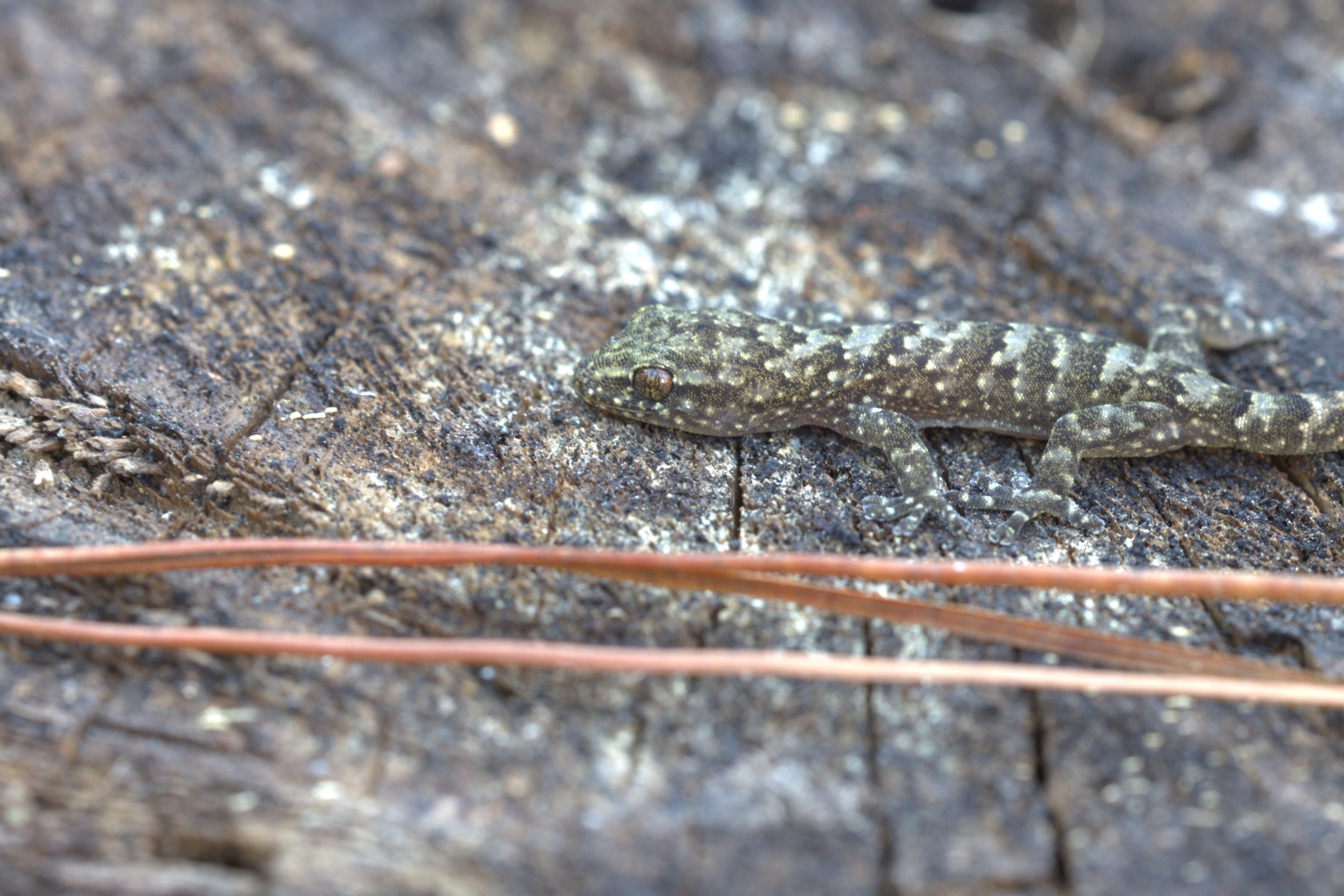
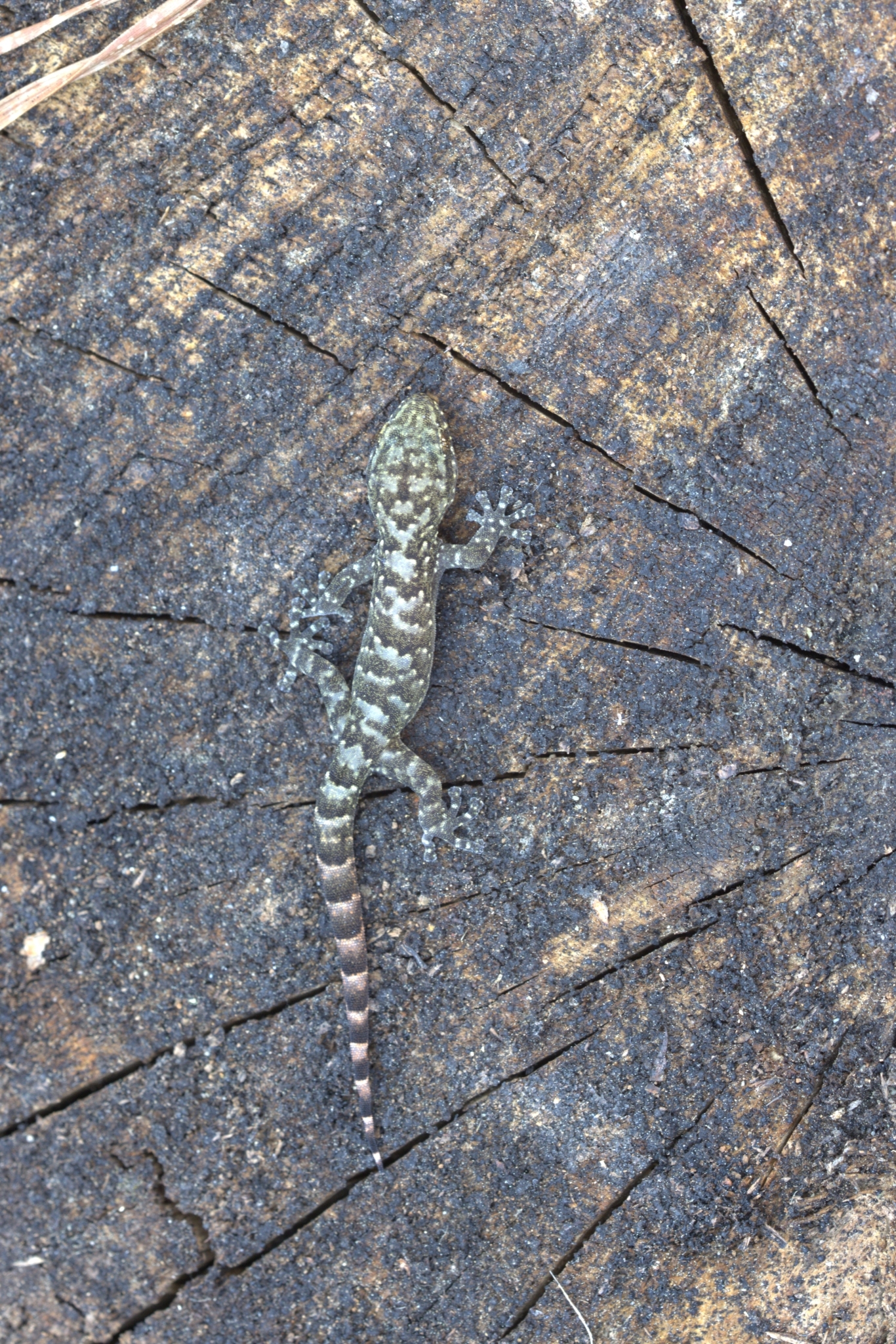
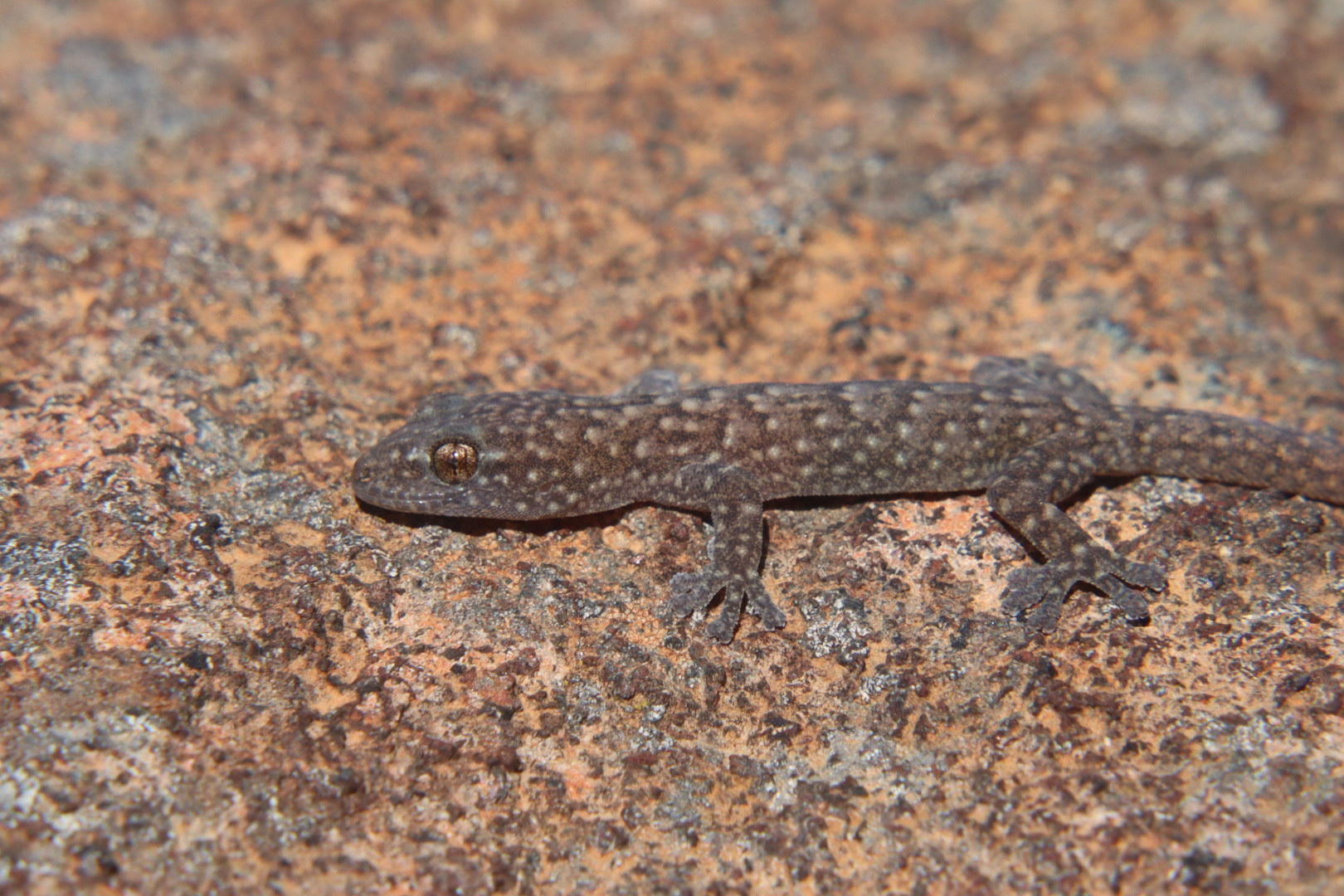
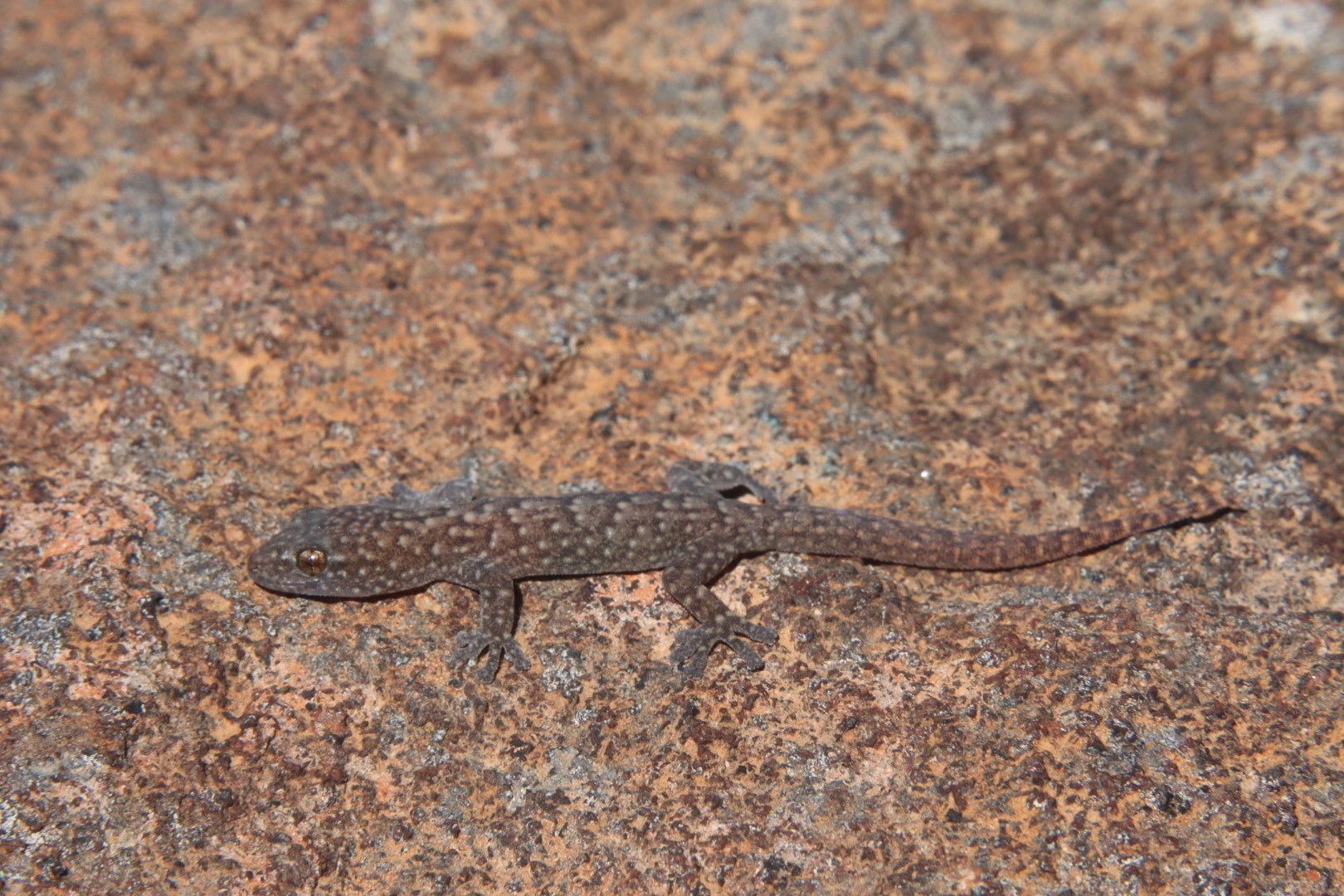
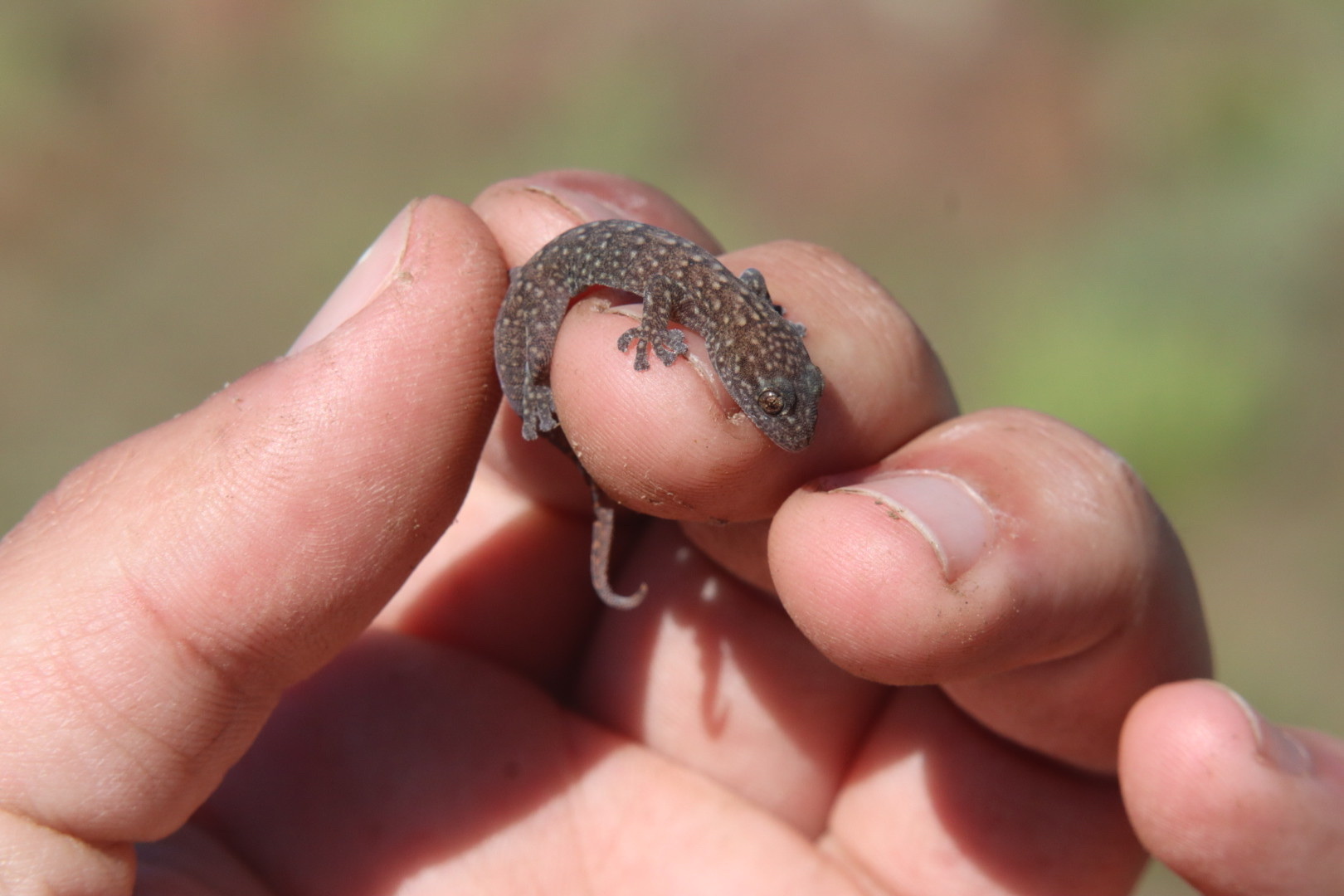
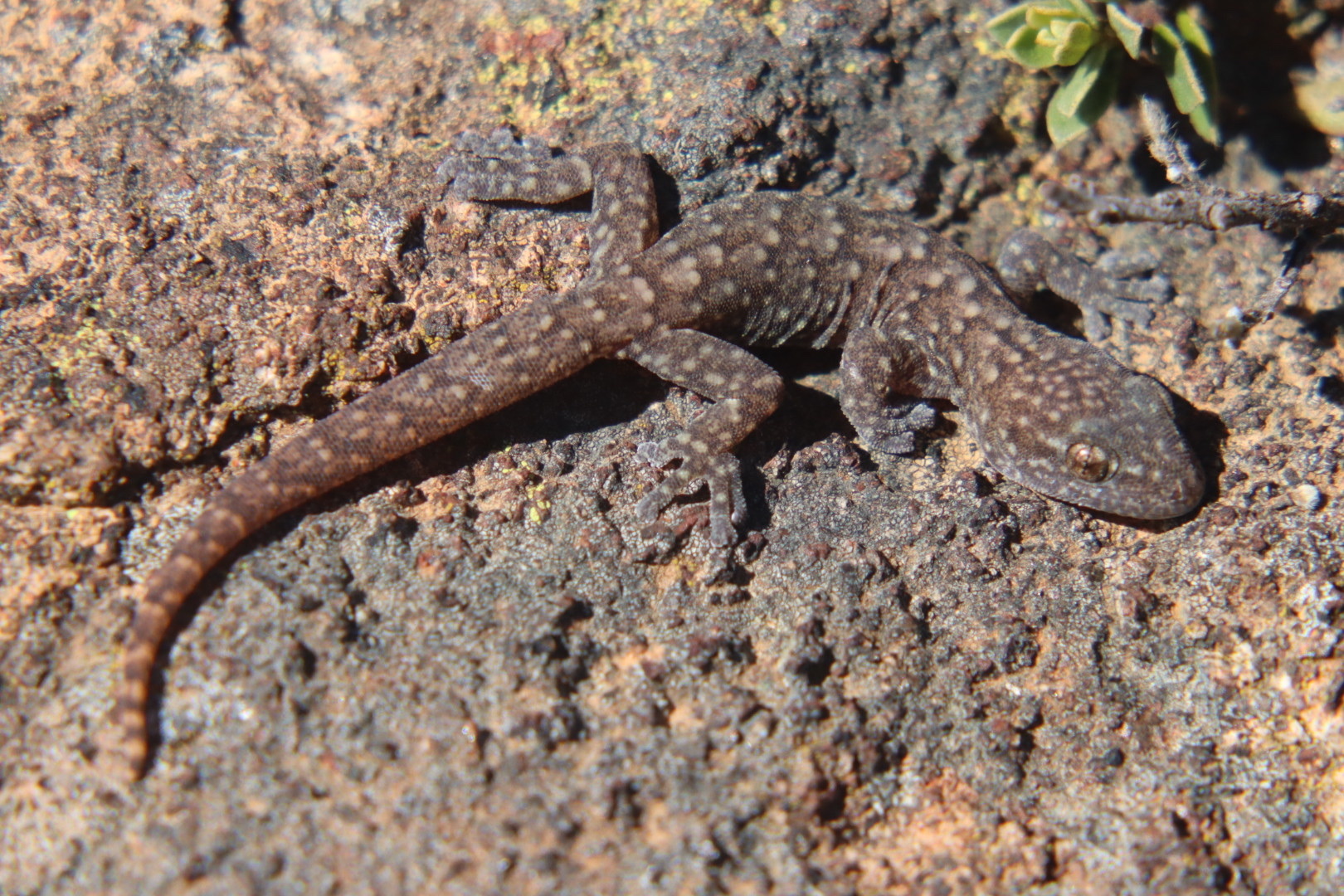
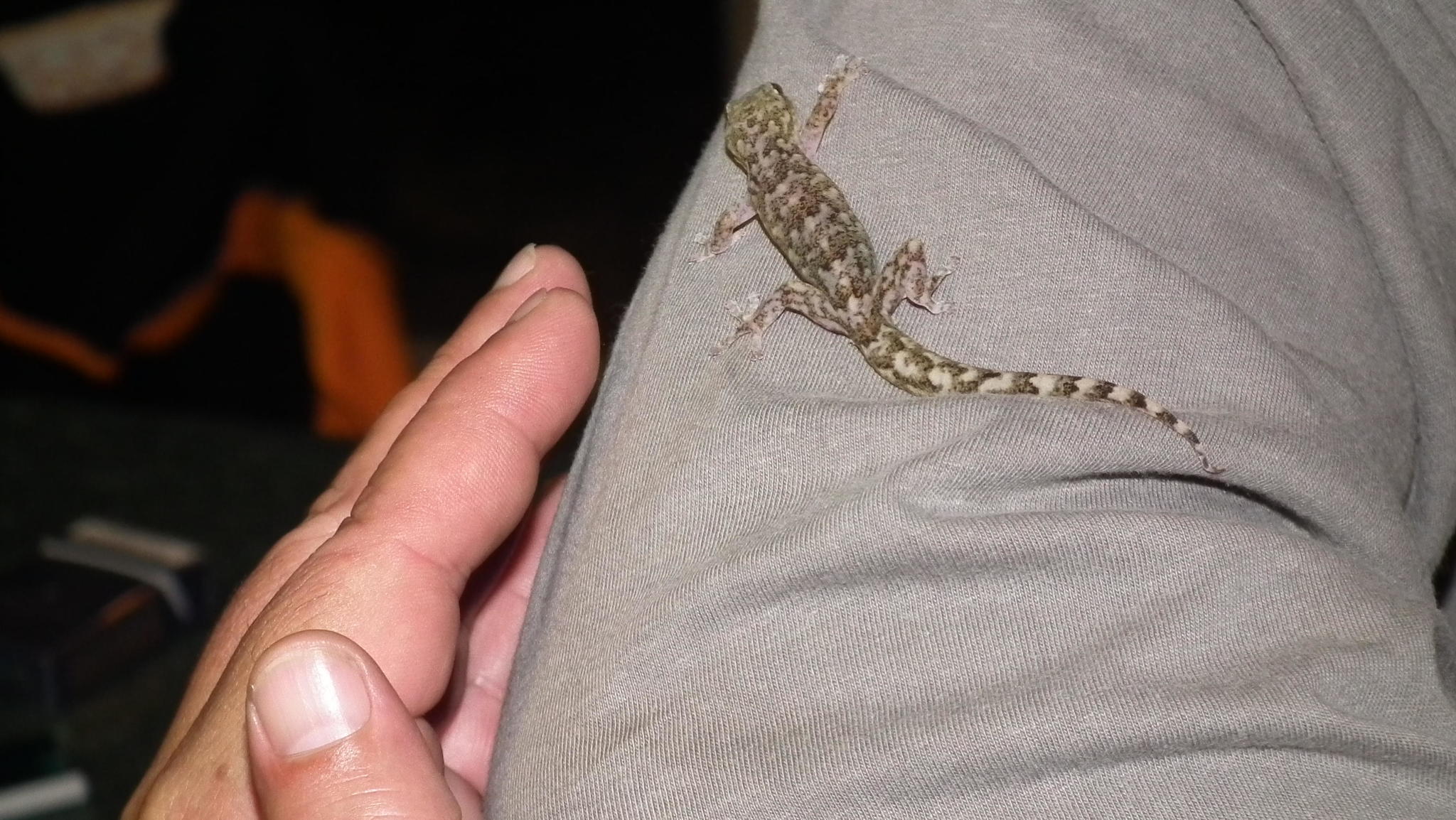
Hewitt (1925) described this species as follows: This species has considerable resemblance to pondolia, in the characters of the scutellation of snout and chin, but seems distinct therefrom in the digital characters: there are smaller differences in the number of preanal pores, and in the segmentation of the tail. A stout heavy form. Large nasals separated from each other by an enlarged granule. Rostral and first labial entering the nostril. Rostral hardly twice as broad as high. Mental large, slightly broader than the first labial at its base, narrowing towards its apex, sub pentagonal or subtriangular. Enlarged chin-shields present. Lower labials 7-9. Dorsal scales convexly granular on the head throughout, somewhat flattened and sub imbricate on the back, smallest on the occiput. Digits of hands and feet rather stout, each with two pairs of well-developed adhesive plates at the distal end of the basal portion inferiorly: there is an infero-median row of about six or seven enlarged scales, all of which are much elongated transversely, the distal one very greatly so, being dumb-bell shaped. Male with an oblique row of four tubercles at the base of the tail on each side of the vent, the uppermost largest: 12 preanal pores. Tail a little depressed, and showing distinct segmentation at the sides, but this is scarcely noticeable to the naked eye: reproduced portion without segmentation. Coloration: Above brownish grey with about seven or eight irregular wavy, darker cross-stripes on the back: loreal region dark, but no definite stripe. Size: Total length 100, tail (partly reproduced) 46, breadth of head 11.5
No separate diagnostic description was provided. Refer to the morphological description.
Type locality: near Hogsback (elevation: 6000 feet), Amatola Range, Cape Province
Phylogenetic analyses suggest that there could be cryptic species within the A. amatolica complex (Makhubo et al., 2015).
South Africa
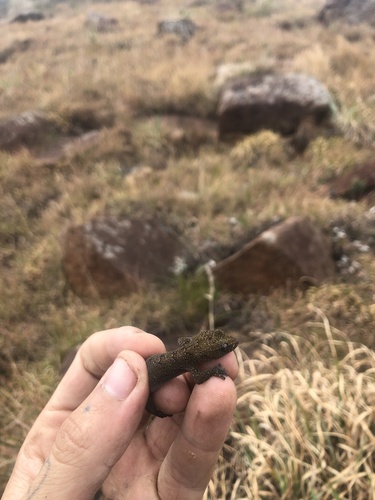
This species is distributed in high, mountainous areas of the Winterberg and Amathole mountain ranges of the Eastern Cape province, South Africa (Tolley et al., 2023).
This species has adhesive toe pads, which allow them to stick onto even smooth surfaces, making them extremely good climbers (Branch, 1998). They also have strong legs, allowing for very rapid movements if necessary.
Carnivore - Insectivore (insect-eating)
Amatola Flat Gecko feeds on arthropods like beetles, moths, flies and spiders (Alexander and Marais, 2007).
Amatola Flat Geckos are oviparous. with females typically laying two eggs in a rock crack, although a total of about 10-30 eggs may be found in a communal site Hatchlings appear in January-February (Branch, 1998).
The Amatola Flat Gecko hibernates in deep cracks to escape the snow that covers the mountains in winter (Branch, 1998).
Albany Thicket, Grassland
This map contains point-based occurrences at different locations
Occurrence in African countries and South African provinces. Residence status indicates if a taxon is indigenous, endemic, or alien in a specific region. This data is based on specimen records and literature.
FSA
SA
BOT
NAM
ESW
LES
WC
EC
NC
FS
GA
KZN
LP
MP
NW
Absent
Indigenous
Endemic
Naturalised
Invasive
Names and Sources
| Common Name | Language |
|---|---|
| Amatola Platgeitjie, Amatola Rock Gecko | En |
| Amatola Flat Gecko | En |
| Amatola Rock Gecko | En |
No results found for Afroedura amatolica (Hewitt, 1925)
No data.
8 results for Afroedura amatolica (Hewitt, 1925)
This map contains point-based occurrences at different locations
1925
JOURNAL ARTICLE
On some new species of reptiles and amphibians from South AfricaHewitt, J.. 1925. On some new species of reptiles and amphibians from South Africa Vol. 3 pp.343–368.
1998
BOOK
Field Guide to Snakes and Other Reptiles of Southern AfricaBranch, B.. 1998. Field Guide to Snakes and Other Reptiles of Southern Africa. Cape Town. Struik Publishers.
2023
BOOK
Conservation status of the reptiles of South Africa, Eswatini and LesothoTolley, K., Burger, M., Alexander, G., Pietersen, D., Conradie, W., Weeber, J.. 2023. Conservation status of the reptiles of South Africa, Eswatini and Lesotho Vol. Suricata 10. Pretoria. South African National Biodiversity Institute.
2015
JOURNAL ARTICLE
Molecular phylogeny of the Afroedura nivaria (Reptilia: Gekkonidae) species complex in South Africa provides insight on cryptic speciationTolley, K., Bates, M., Makhubo, B.. 2015. Molecular phylogeny of the Afroedura nivaria (Reptilia: Gekkonidae) species complex in South Africa provides insight on cryptic speciation Vol. 82 pp.31-42.
Status and criteria
LC
Assessor(s)
Michael Bates
Reviewer(s)
Buyisile Makhubo