
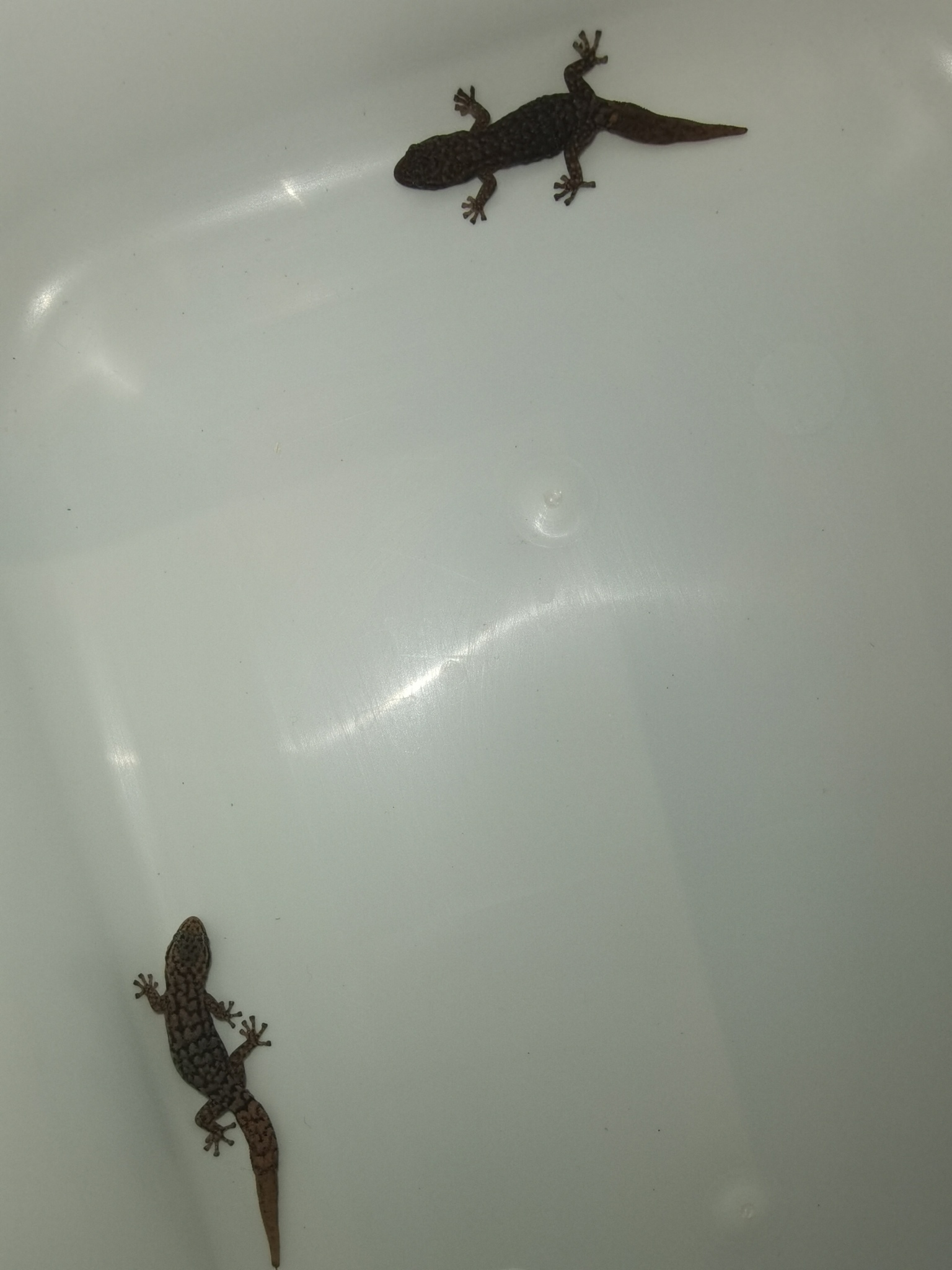
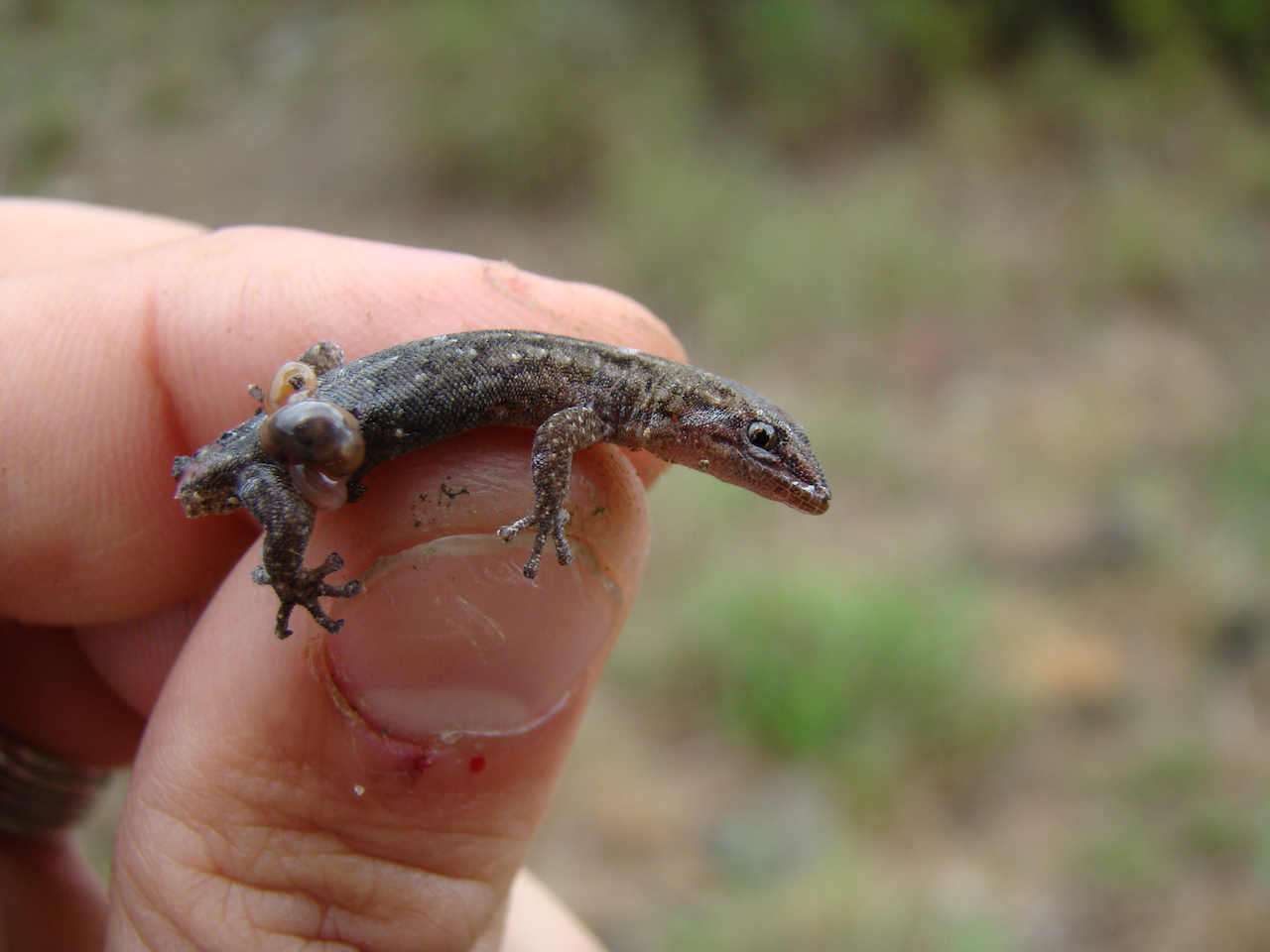
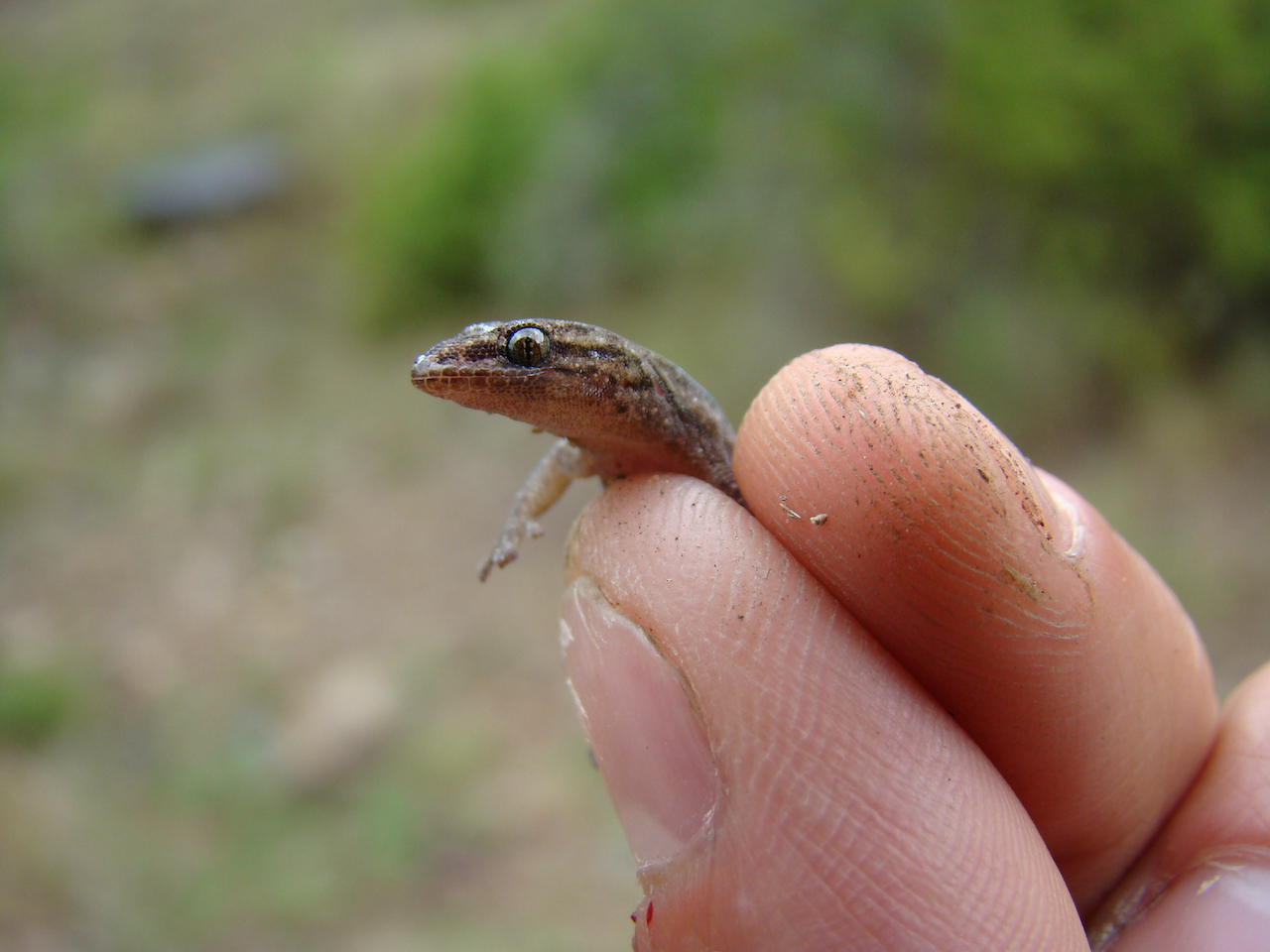
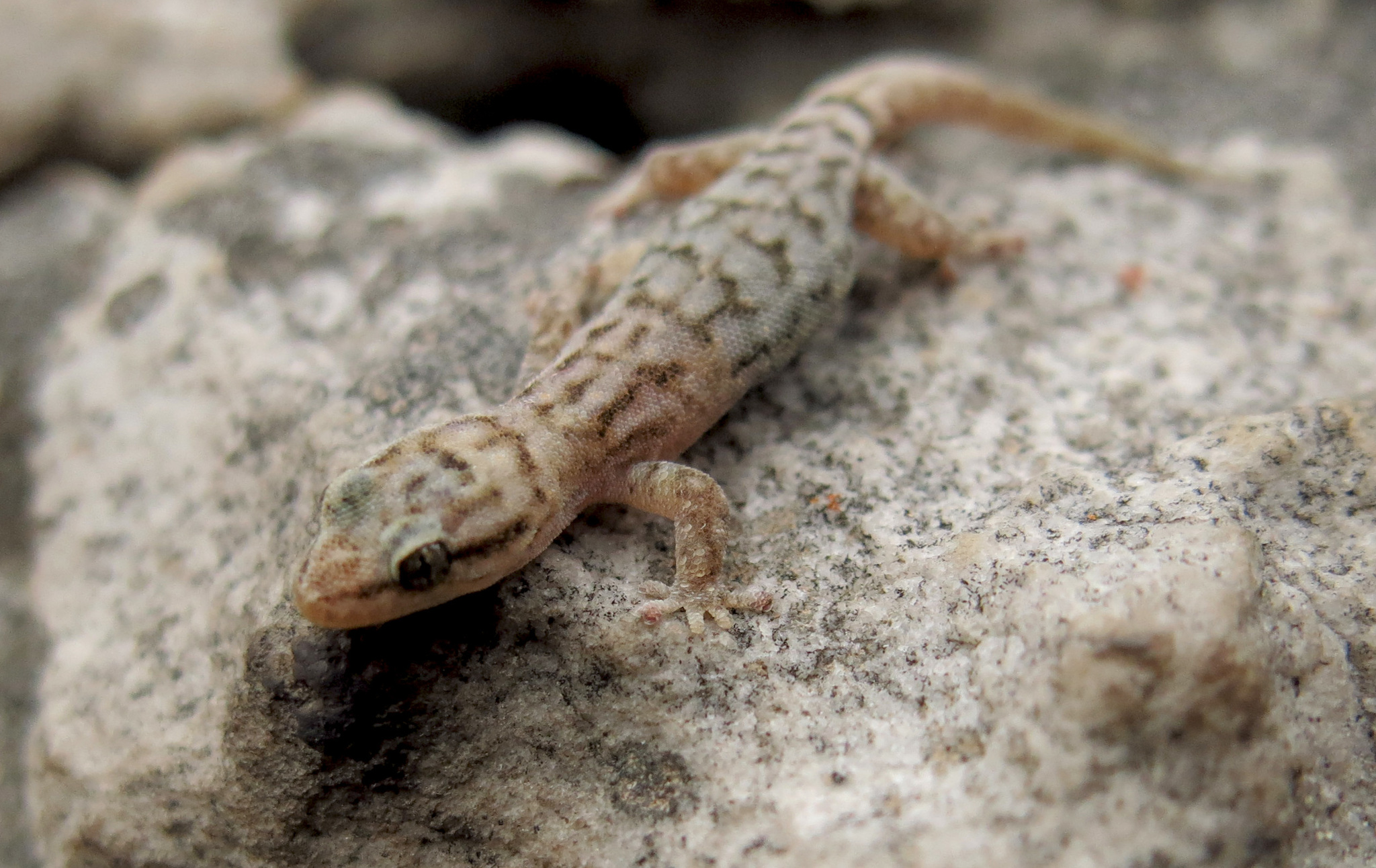
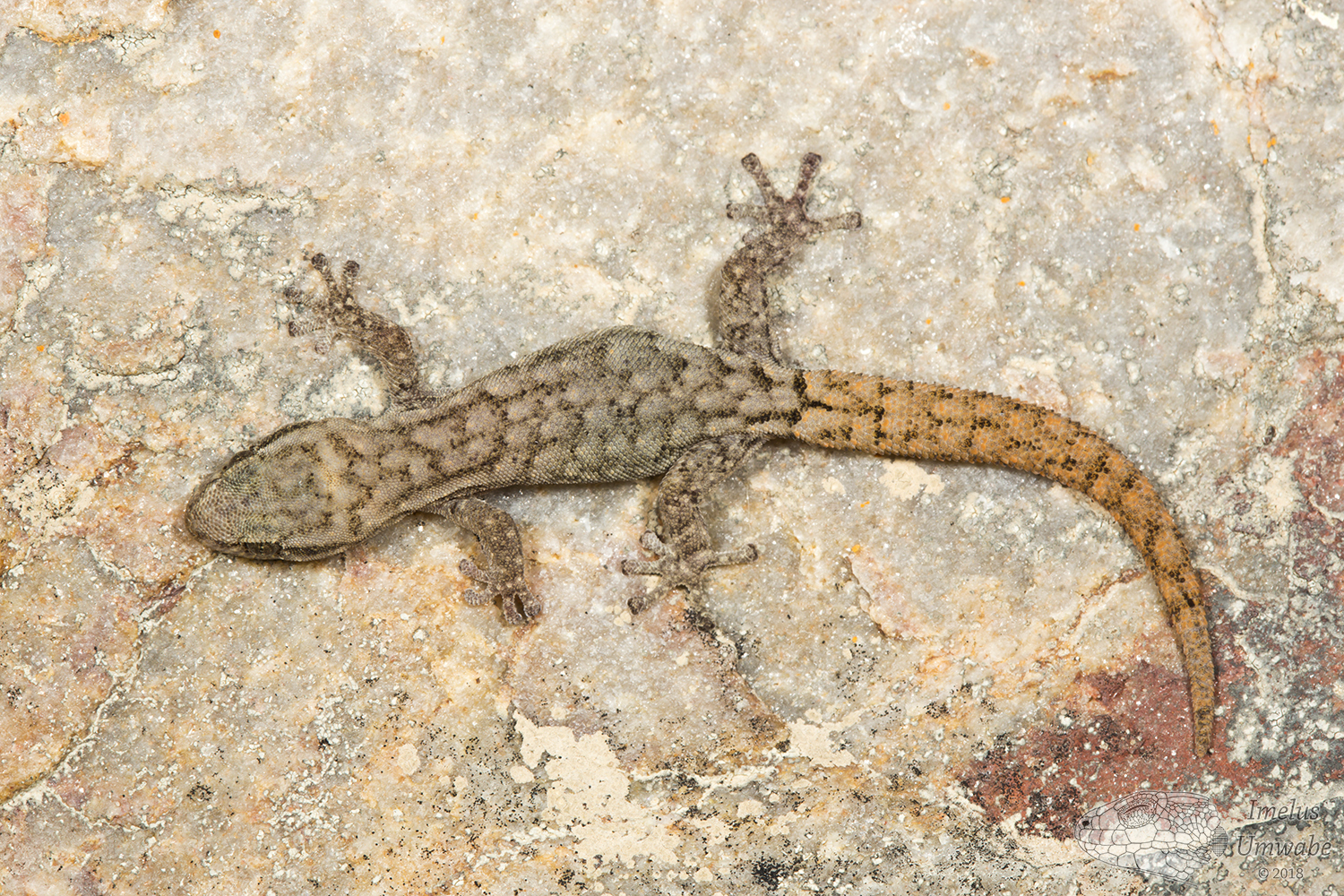
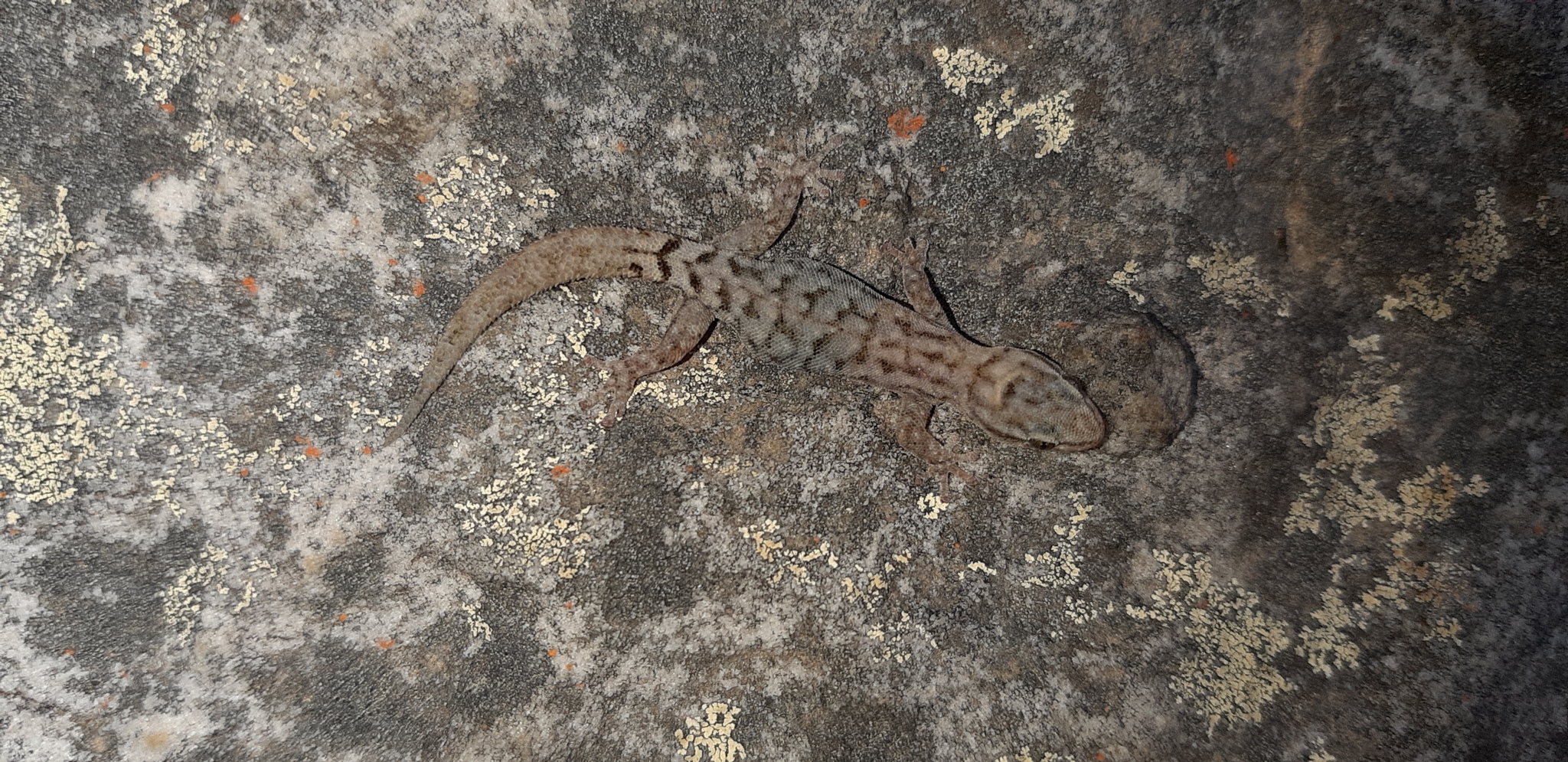
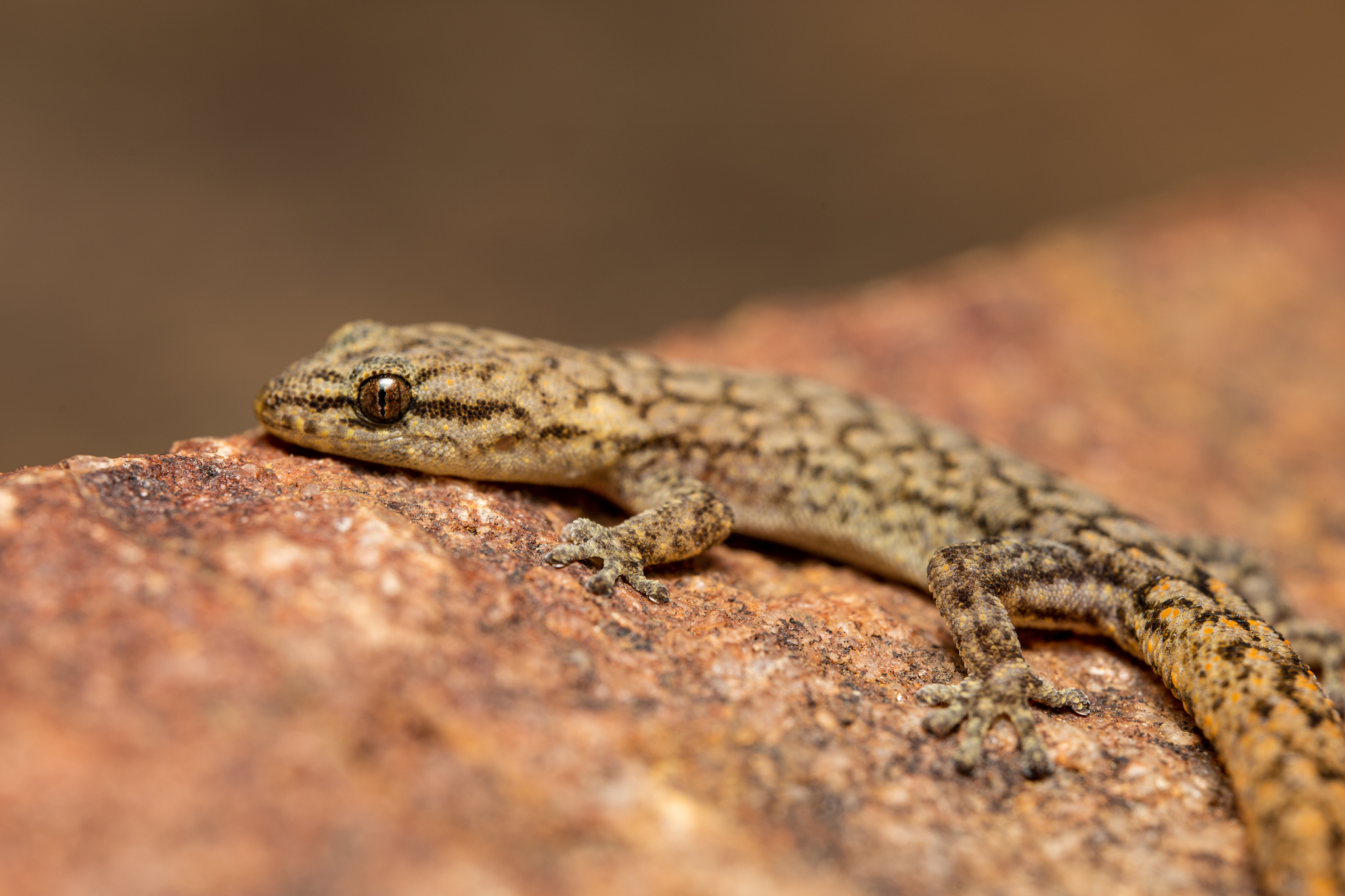
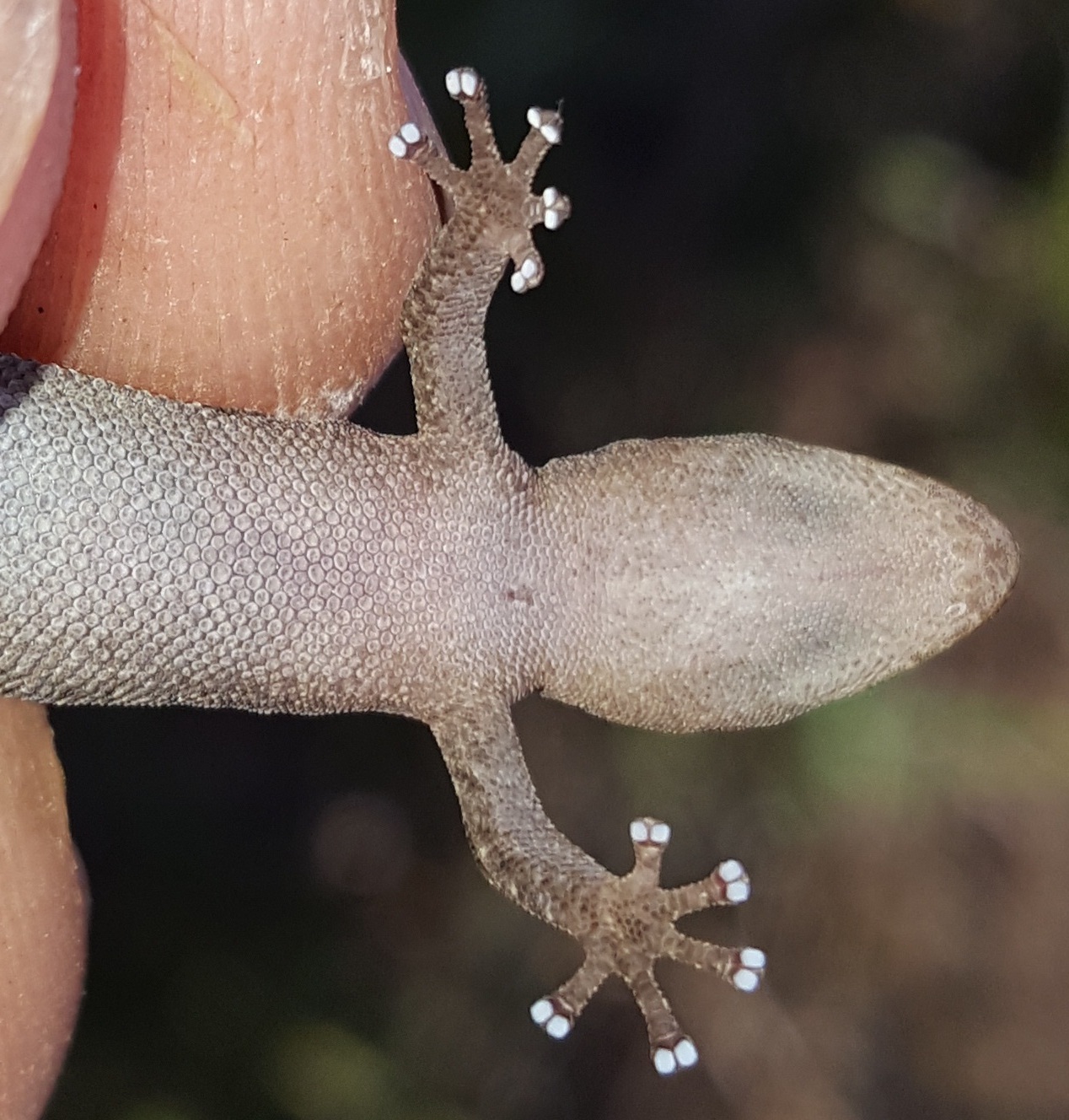
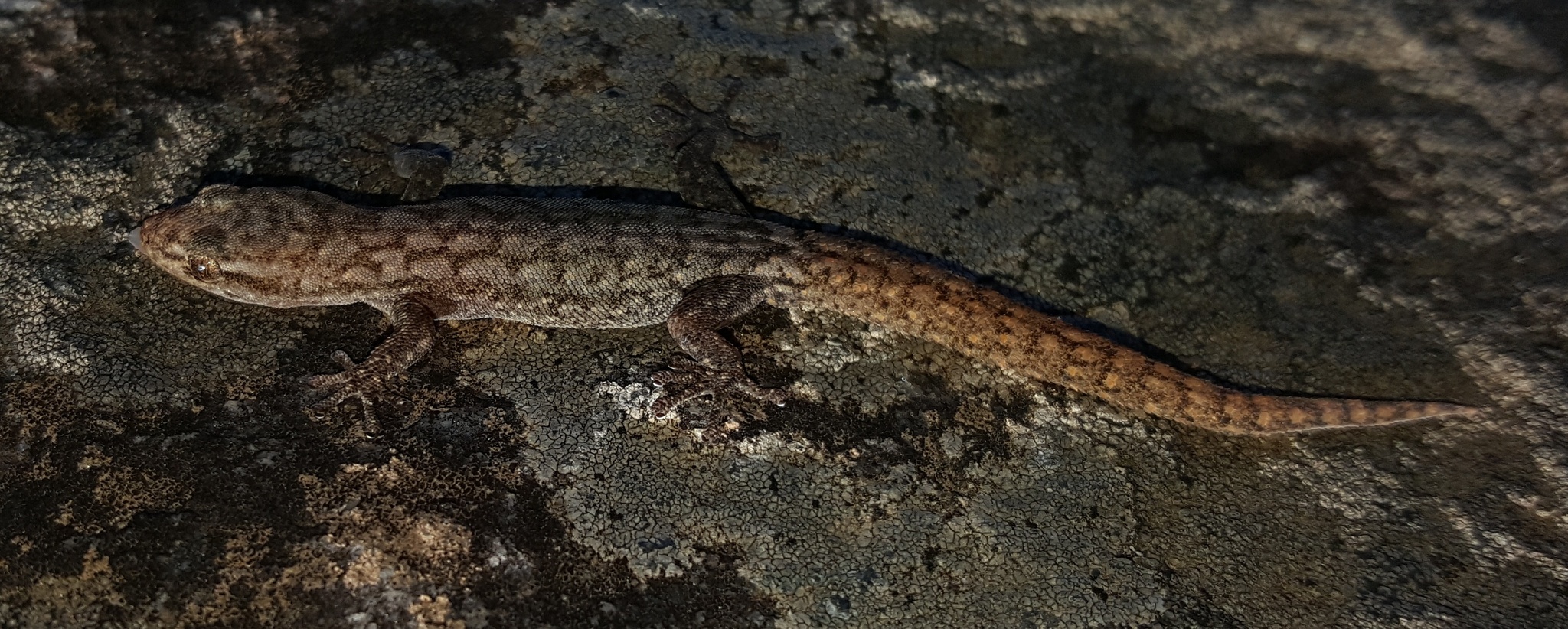
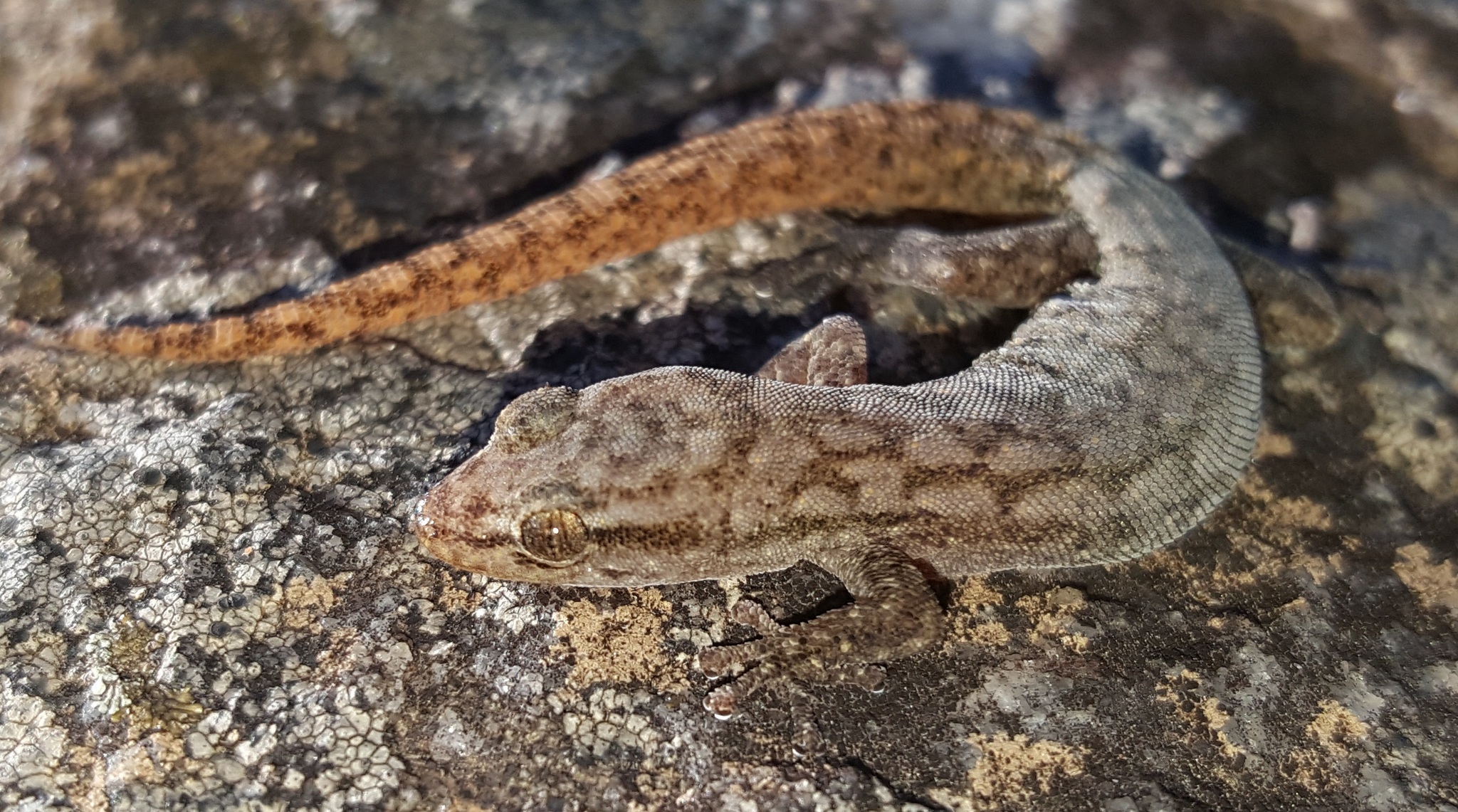
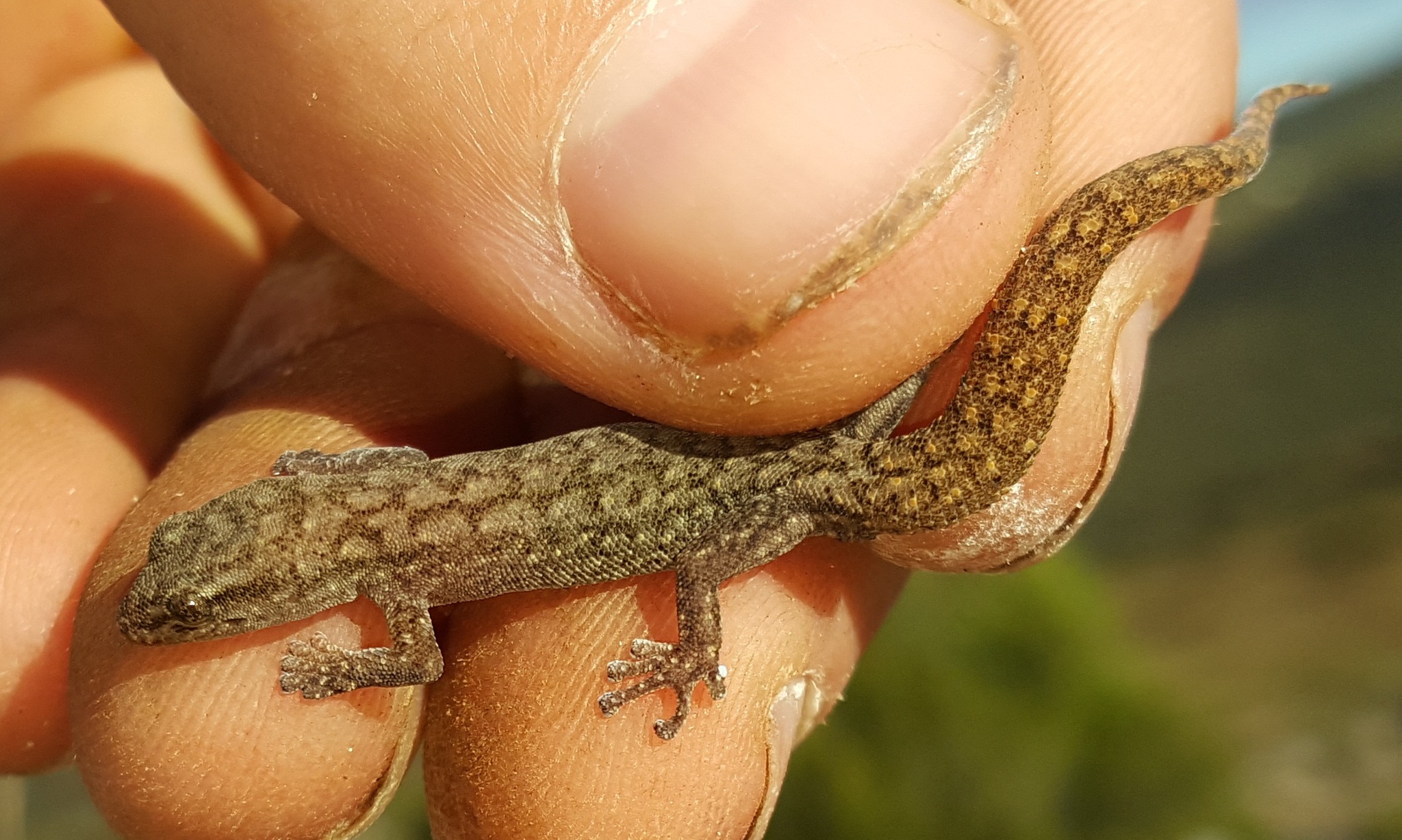
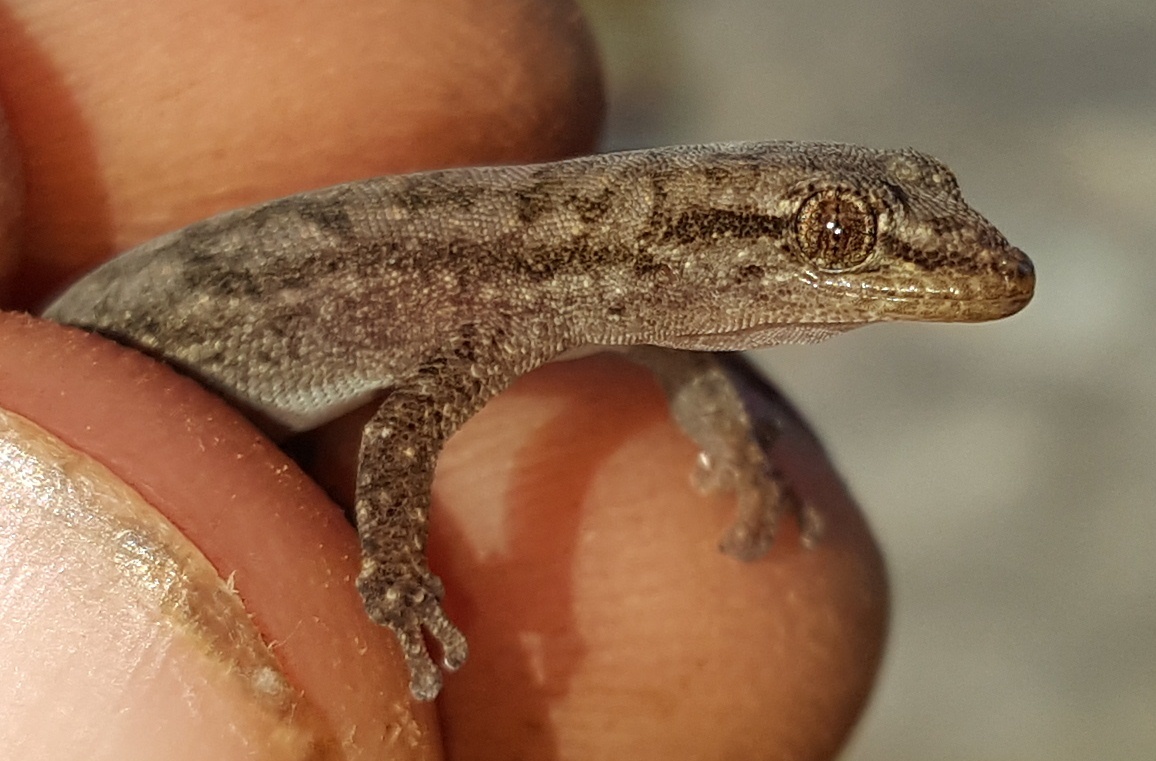
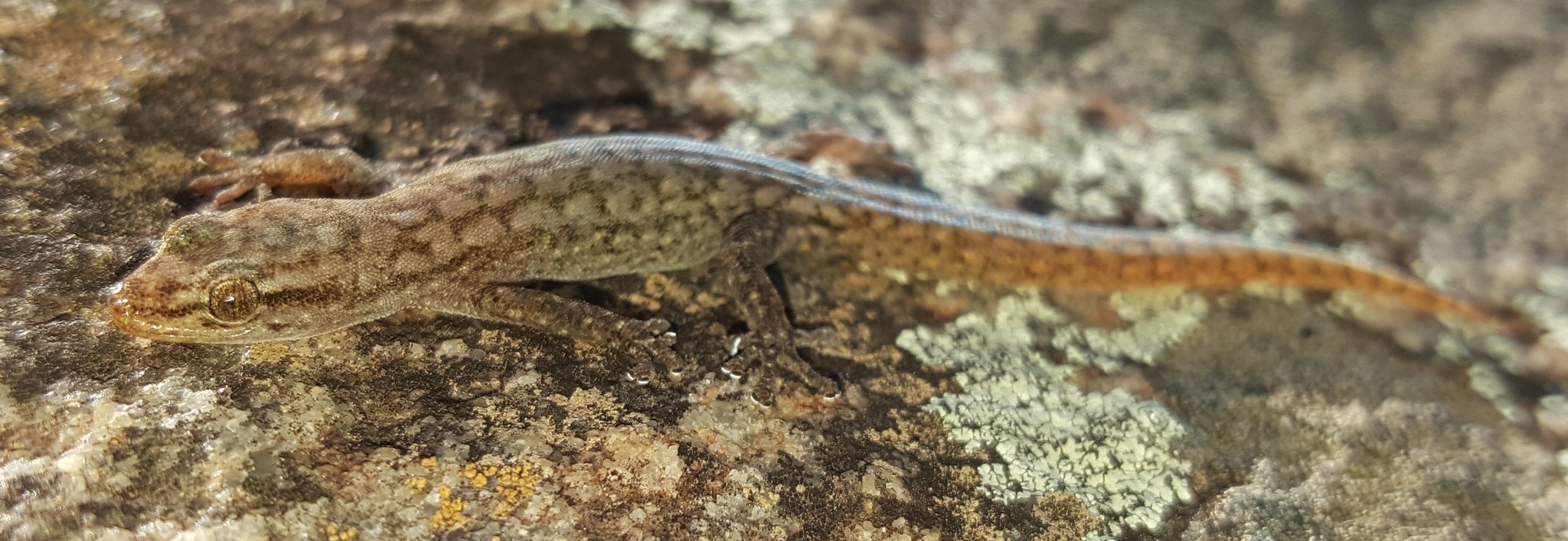
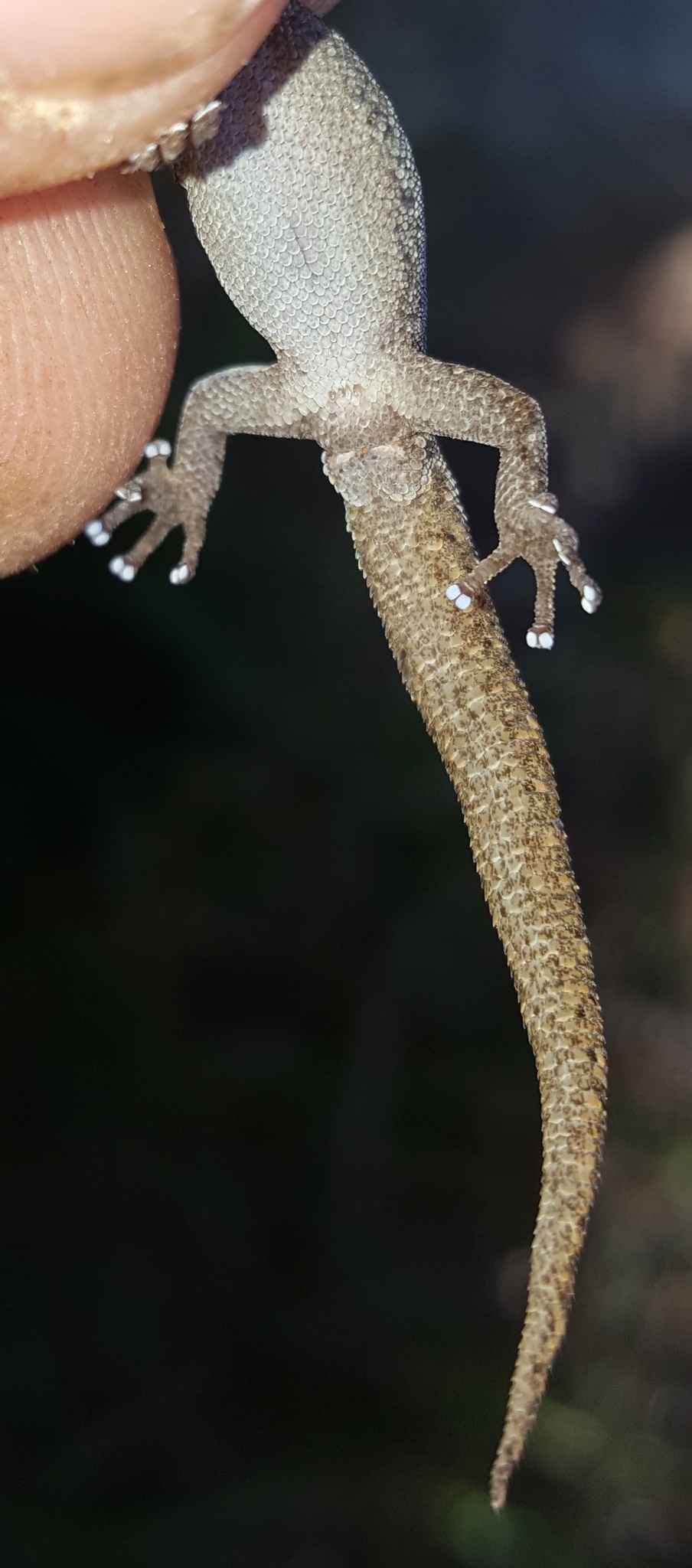
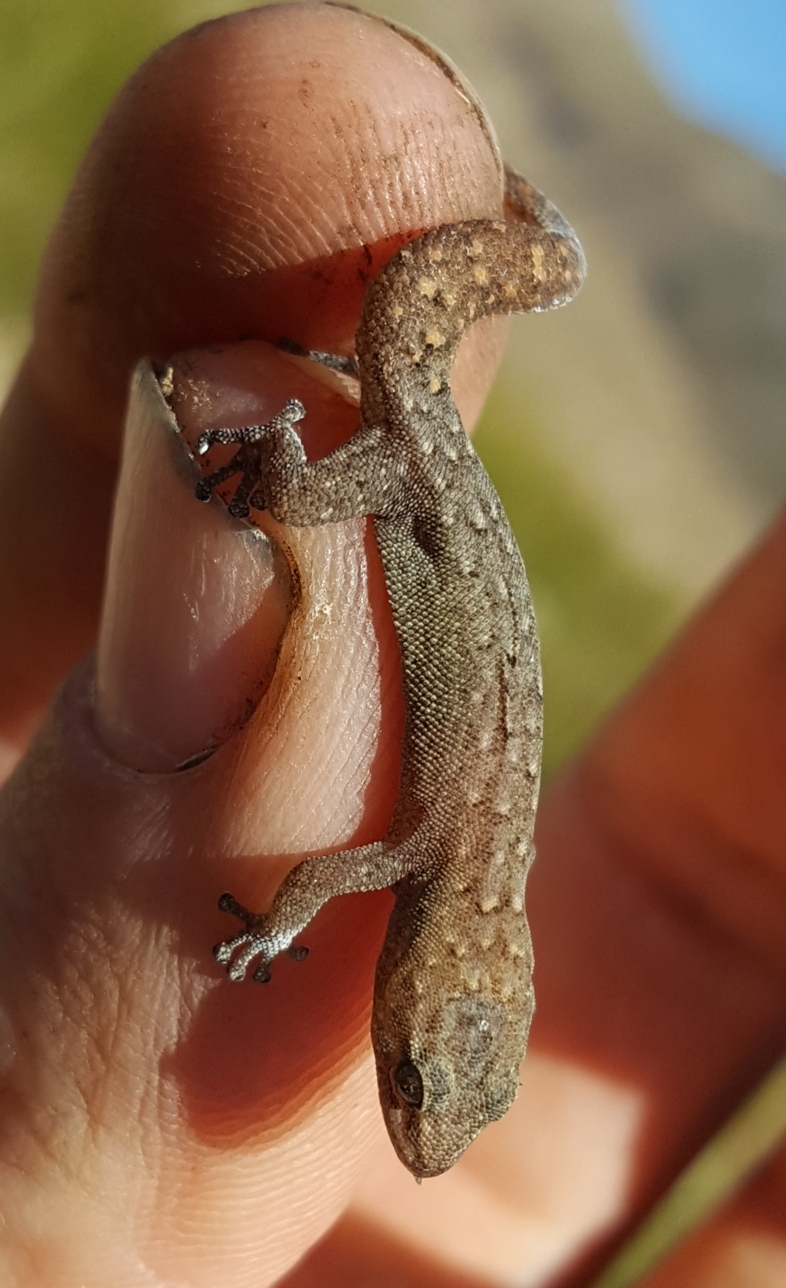
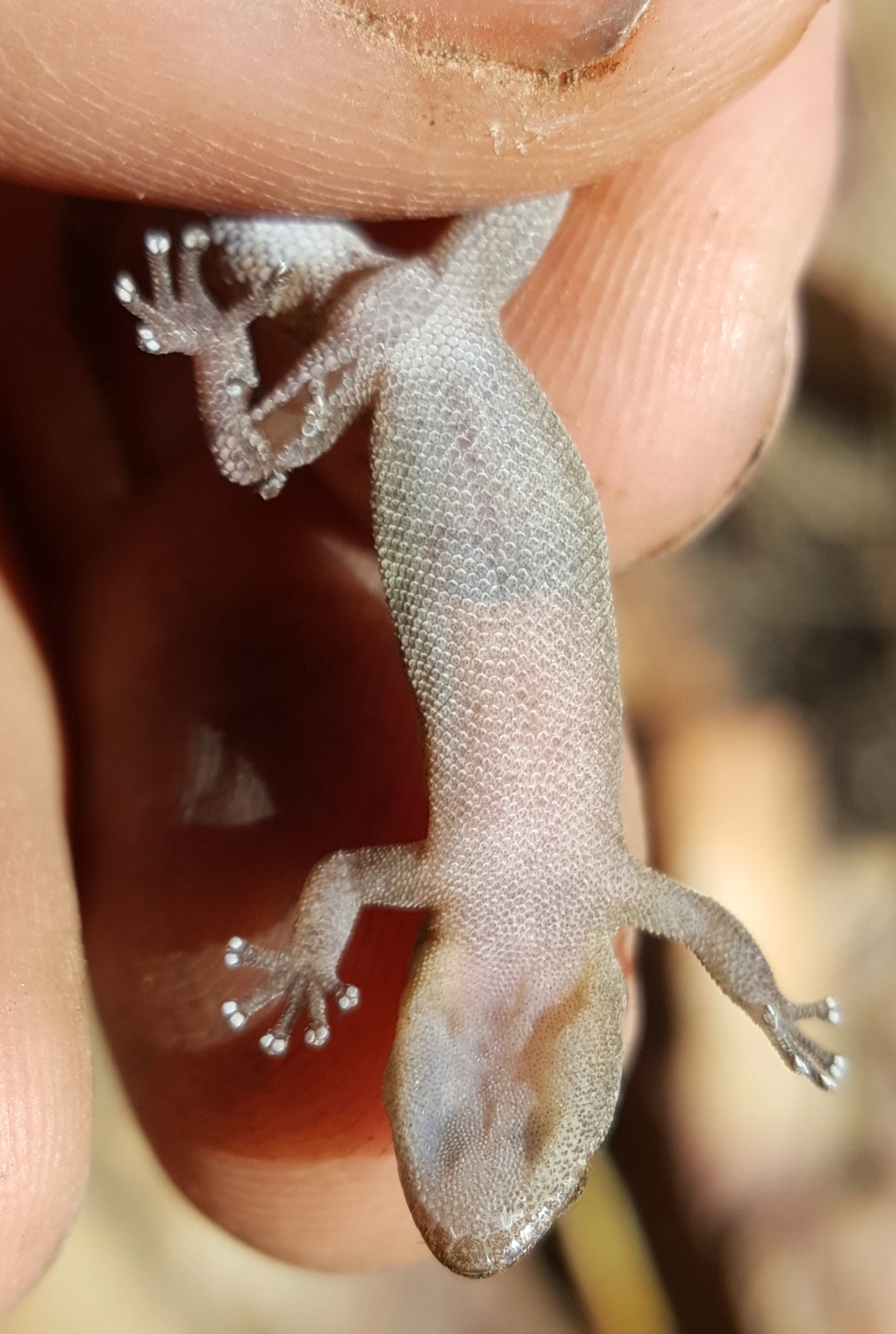
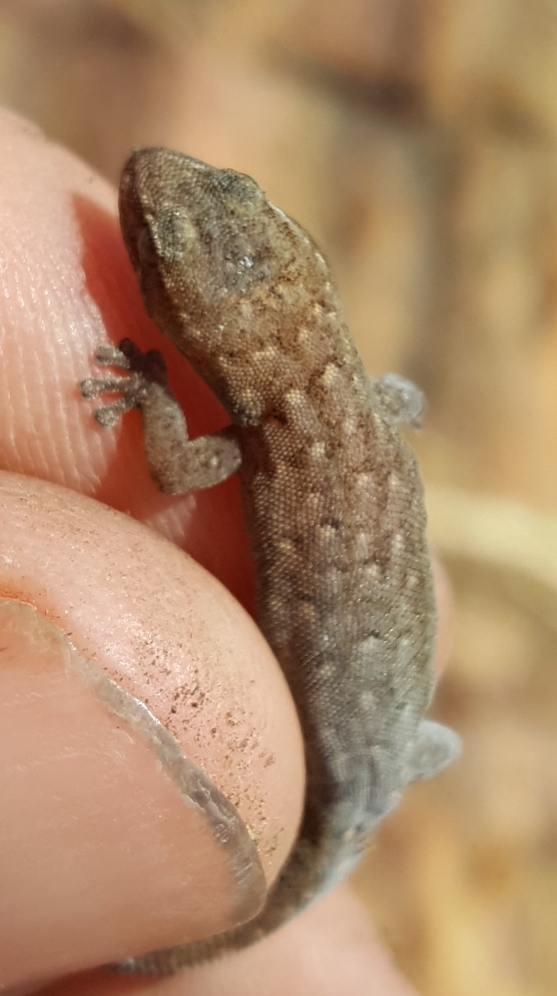
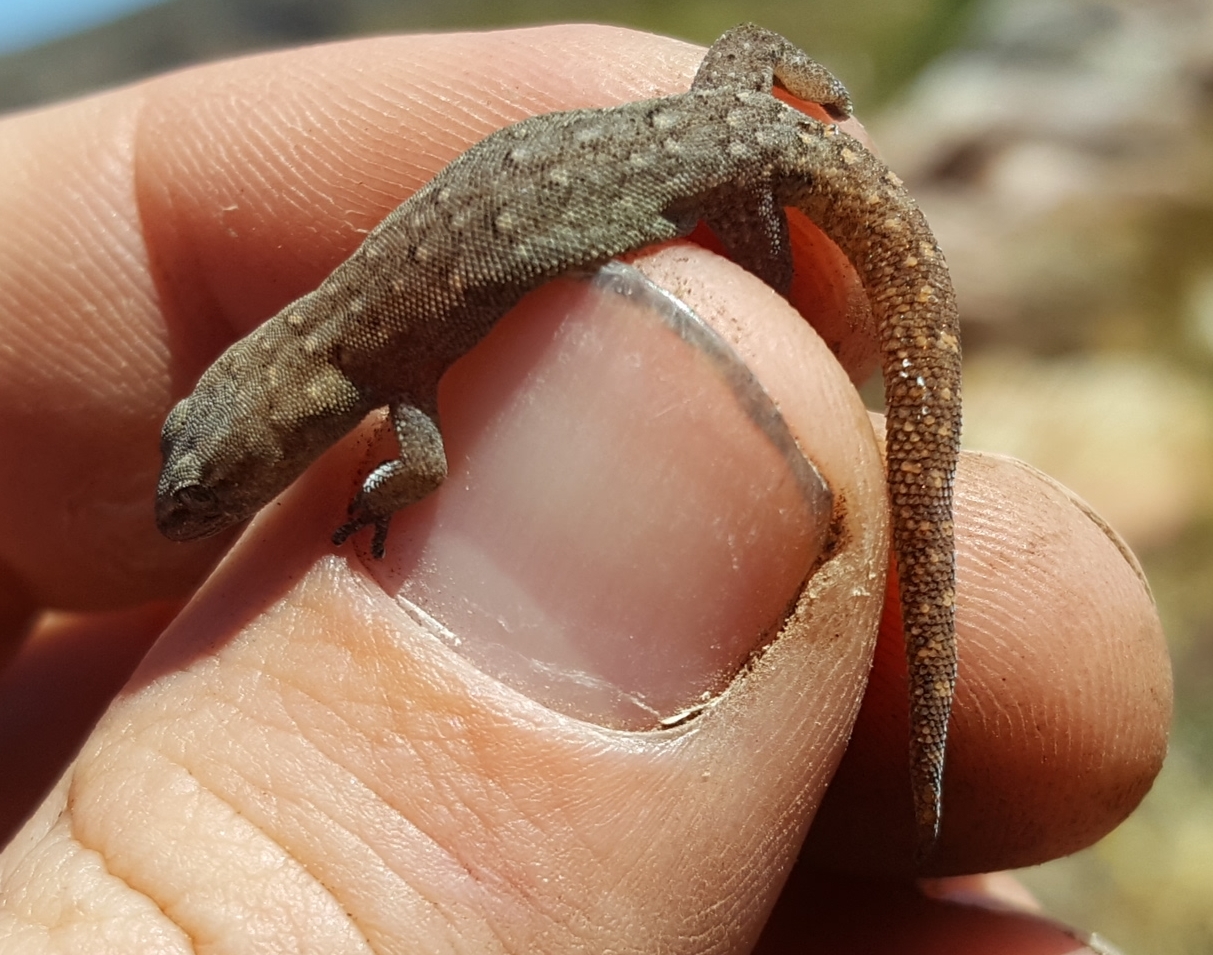
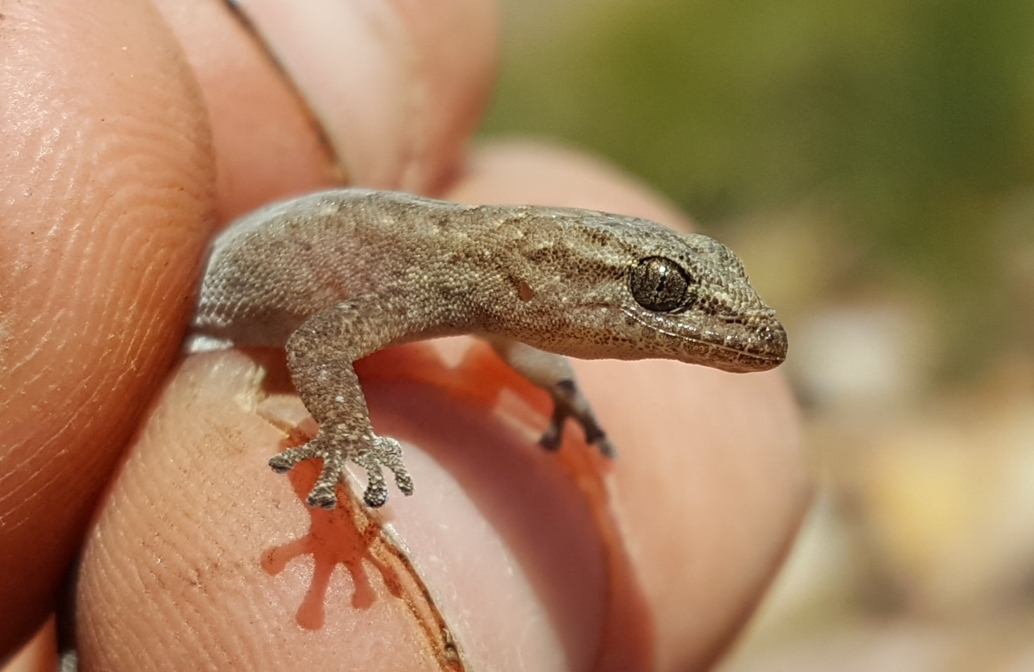
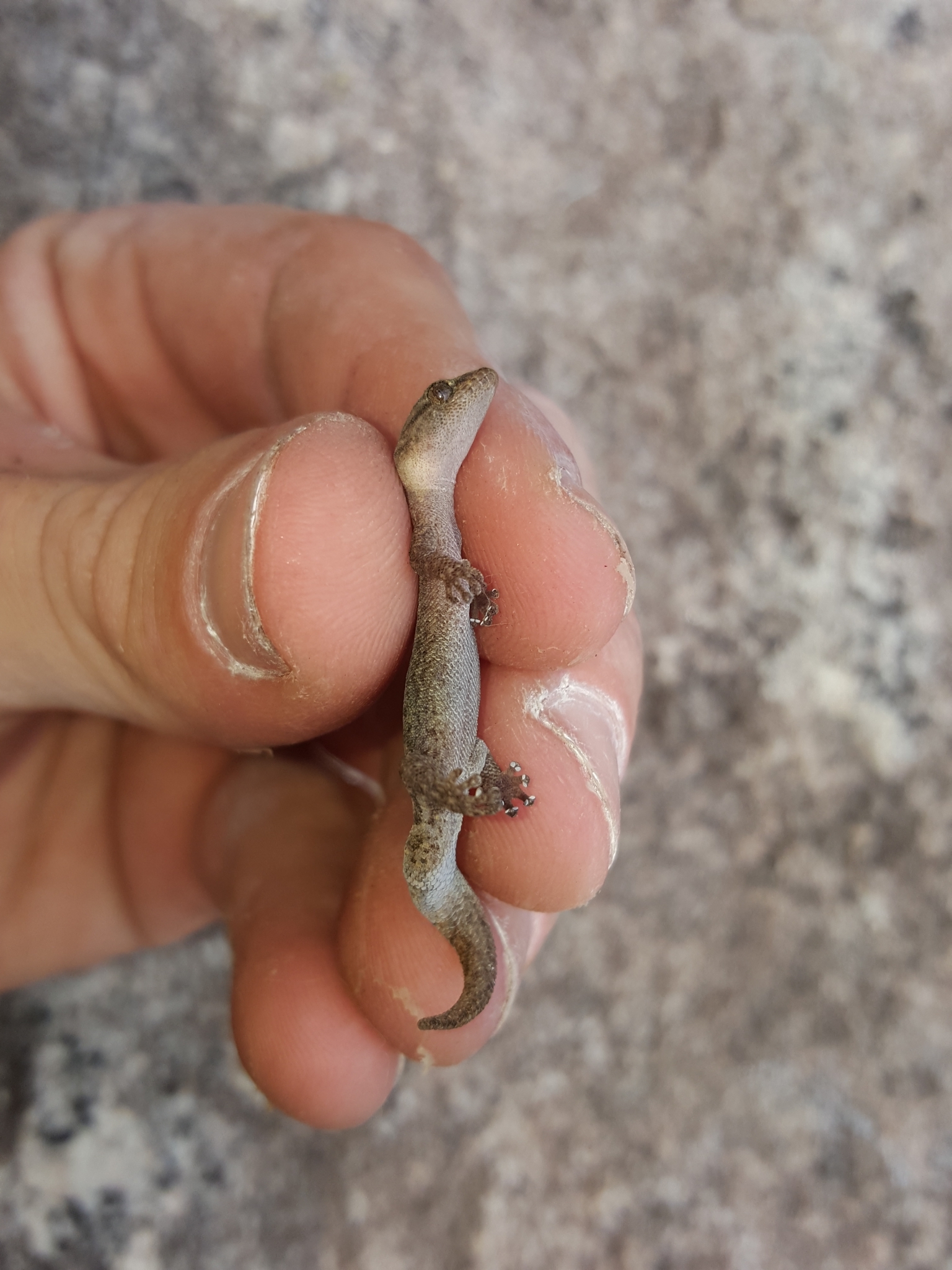
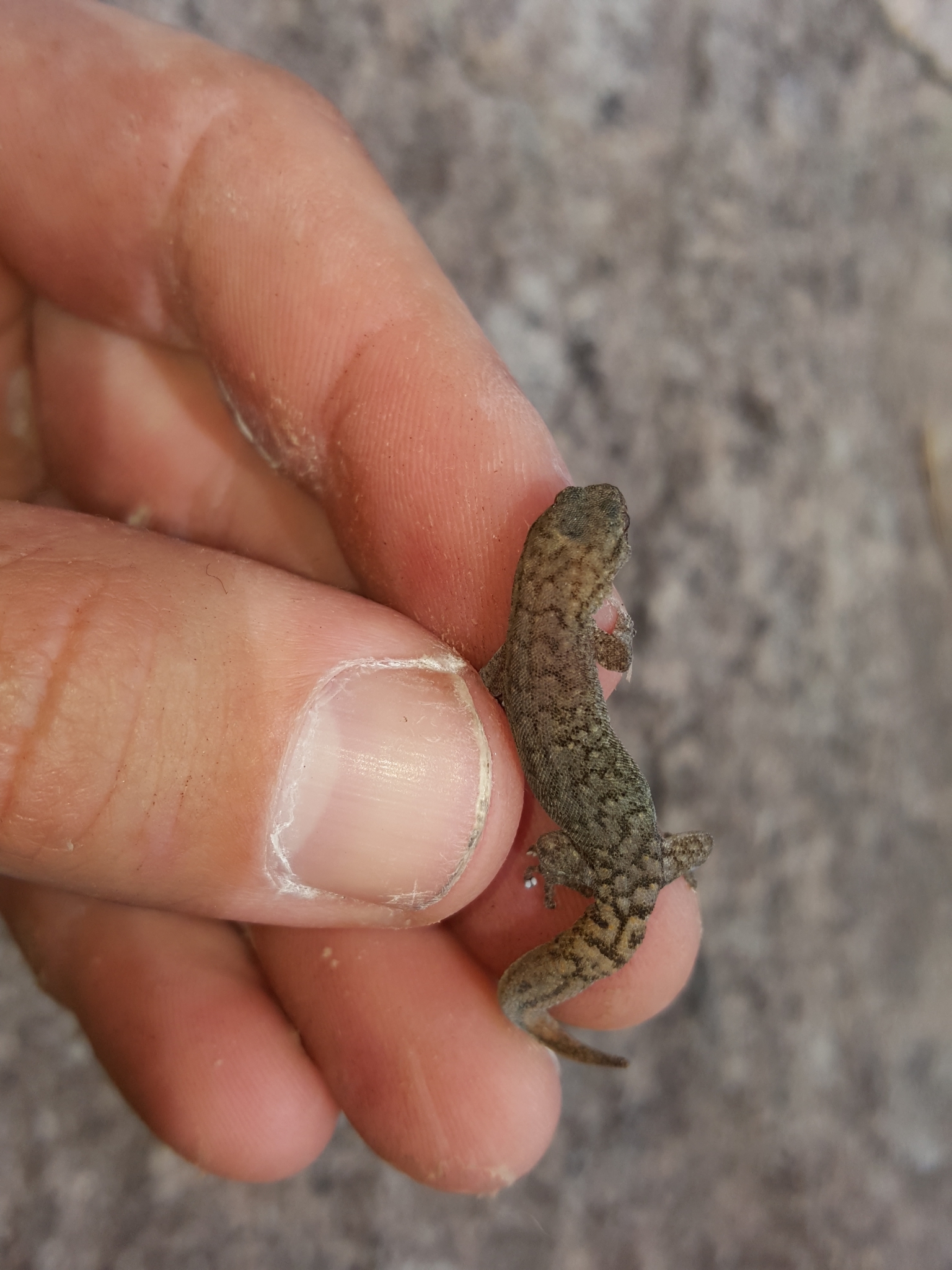
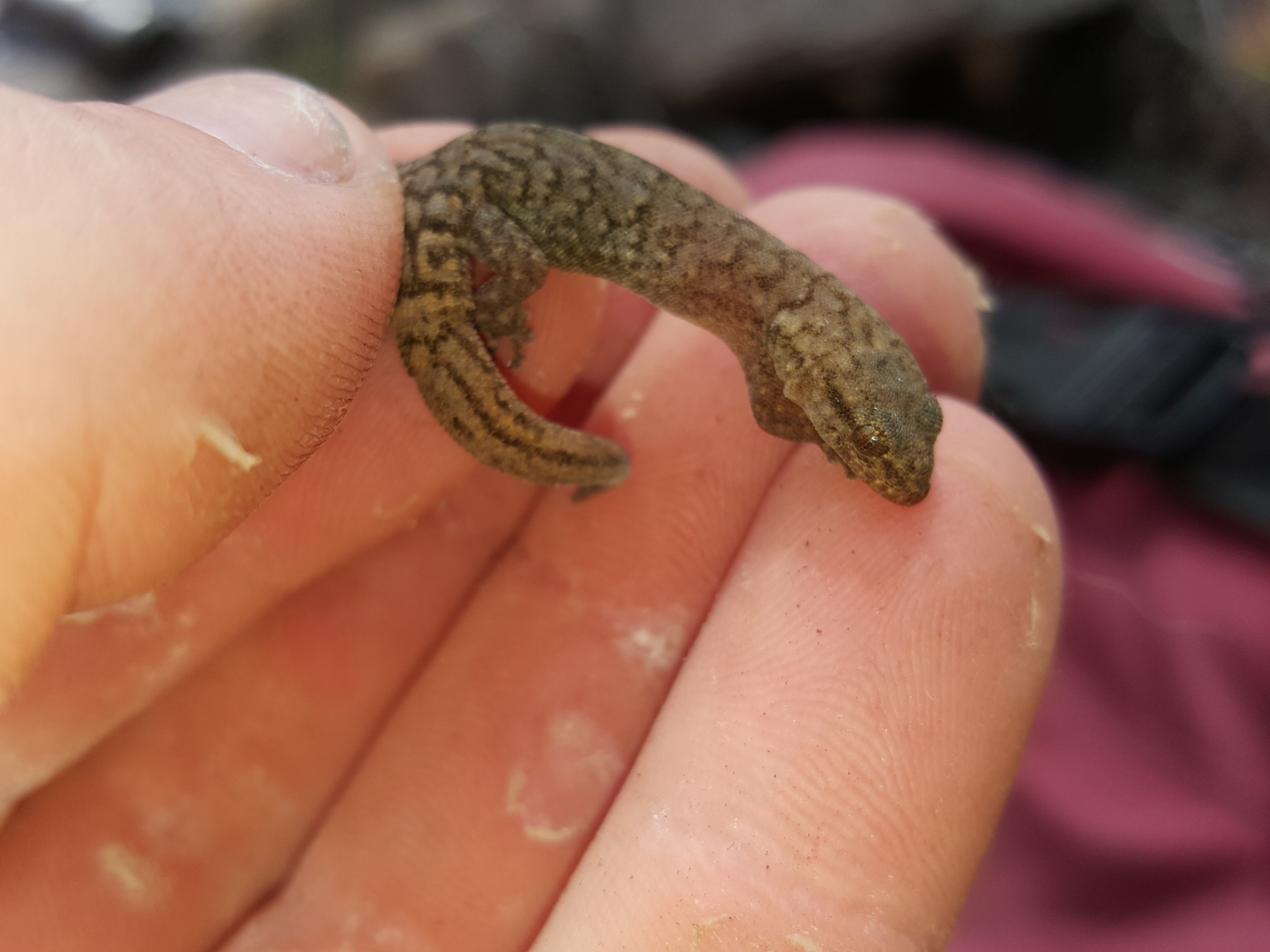
Branch et al. (1995) re-described this species as follows: Head dorso-ventrally flattened (depth 1.95 times width; range 1.53-2.46); snout rounded, and at least 1.5 times the eye diameter; ear opening small, obliquely rounded, and without enlarged lobules or a tympanic shield; rostral subpentagonal with a median cleft above; nostril pierced between rostral, 1st supralabial and three nasals, the largest bordering the rostral; usually I (33.3%) or 2 (41.7%) nasorostral grannles, rarely 0 (12.5%) or 3 (12.5%); supralabials usually 7 (66.6%), often 8 (27.8%), rarely 9 (5.6%); infralabials usually 7 (77.8%), sometimes 6 (22.2%); mental subpentagular bordered by 2-3 (average 2.14) chinshields that are larger than adjacent granules; 5-9 (average 6.45) granules bordering chinshields. Body short (maximum snout-vent length 28.4 mm) and dorsoventrally flattened, covered dorsally with uniform, smooth, flattened, subimbricate granules; belly covered in smooth, hexagonal, imbricate scales that are much larger than on back. Limbs moderate and covered in uniform, flattened, subimbricate granules; digits flattened basally, with three rows of subdigital granules, the median series slightly broader; toe tips rounded, only slightly expanded and bearing a pair of large, subrectangular scansors that enclose a small claw. An angular series of 4 (100%, n = 7) preanal pores present only in males; two to three enlarged tubercular scales on either side of tail base near vent, that are larger in males. Original tail cylindrical, tapering, and subequal to (max. 0.912 times) snout-vent length; covered above with regular rows of uniform, smooth granules, that are much larger, flattened and imbricate on ventral surface. Colour: (PEM R7236, Farm Hounslow, Grahamstown District). Above grey-brown with irregular series of 5-6 pale spots, emargined anteriorly in dark brown (in some specimens the dark edges fuse to form an irregular series of 8-10 scalloped bars); back of head, temporal region and upper surfaces of limbs pale brown with dark reticulation; a vague dark band extends from middle of eye on to the snout; original tail with irregular bars formed from the fused, dark anterior margins of paired vertebral pale spots; lower surfaces of throat, belly, limbs and tail, dirty cream. The pattern in some specimens (eg. PEM R 11711, Pluto's Vale, Albany District) is obscured by heavy stippling, that extends on to the ventrum.
This information was extracted from Branch et al. (1995): Distinguished from other members of the P. lineatus complex by a combination of the following features: Usually four preanal pores in males, a medium number of midbody scale rows (78-84), 9-12 scales between the nostril and anterior margin of the orbit, (only 0-2 nasorostrals, and a dorso-ventrally flattened head and body. In addition, it differs by 5-8 fixed alleles from the other taxa examined electrophoretically.
Type locality: Hounslow, near Grahamstown, Cape Province Lectotype: PEM R11157 (designated by BRANCH et al. 1995); Syntype: UMMZ 61515
No taxonomic issues, although this species is morphologically similar to G. hewitti, leading to confusion between the two species (Tolley et al., 2023).
South Africa
This species occurs in the south-central Eastern Cape province, South Africa. It is probably more widespread, but the range is difficult to define due to confusion with G. hewitti. Recent records show that this species extends marginally into the Western Cape province (Heinicke et al., 2017).
This species has a pair of very distinctive leaf-shaped adhesive toe pads (scansors) under each toe-tip plus a small, retractible claw on each foot, which allow them to stick onto even smooth surfaces, making them extremely good climbers (Branch, 1998).
Carnivore - Insectivore (insect-eating)
Although the diet of these geckos has not been analysed, this species almost certainly feeds exclusively on arthropods, similar to most small geckos (Loveridge, 1947).
Essex’s Pygmy gecko is oviparous. Communal sites under sun-warmed rocks are used for egg-laying (Branch 1998).
No data.
Albany Thicket, Nama-Karoo, Fynbos
This map contains point-based occurrences at different locations
Occurrence in African countries and South African provinces. Residence status indicates if a taxon is indigenous, endemic, or alien in a specific region. This data is based on specimen records and literature.
FSA
SA
BOT
NAM
ESW
LES
WC
EC
NC
FS
GA
KZN
LP
MP
NW
Absent
Indigenous
Endemic
Naturalised
Invasive
Names and Sources
| Common Name | Language |
|---|---|
| Essex's Leaftoe Gecko, Essex's Pygmy Gecko | En |
| Essex se Pigmeegeitjie | En |
| Essex's Pygmy Gecko | En |
No results found for Goggia essexi (Hewitt, 1925)
No data.
10 results for Goggia essexi (Hewitt, 1925)
This map contains point-based occurrences at different locations
1925
JOURNAL ARTICLE
On some new species of Reptiles and Amphibians from South AfricaHewitt, J.. 1925. On some new species of Reptiles and Amphibians from South Africa Vol. 3. Grahamstown. pp.343-370.
1998
BOOK
Field Guide to Snakes and Other Reptiles of Southern AfricaBranch, B.. 1998. Field Guide to Snakes and Other Reptiles of Southern Africa. Cape Town. Struik Publishers.
2023
BOOK
Conservation status of the reptiles of South Africa, Eswatini and LesothoTolley, K., Burger, M., Alexander, G., Pietersen, D., Conradie, W., Weeber, J.. 2023. Conservation status of the reptiles of South Africa, Eswatini and Lesotho Vol. Suricata 10. Pretoria. South African National Biodiversity Institute.
2017
JOURNAL ARTICLE
Molecular phylogeny reveals strong biogeographic signal and two new species in a Cape Biodiversity Hotspot endemic mini-radiation, the pygmy geckos (Gekkonidae: Goggia)Heinicke, M., Bauer, A., Turk, D.. 2017. Molecular phylogeny reveals strong biogeographic signal and two new species in a Cape Biodiversity Hotspot endemic mini-radiation, the pygmy geckos (Gekkonidae: Goggia) Vol. 4312 pp.449-470.
1995
JOURNAL ARTICLE
Species limits in the Phyllodactylus lineatus complex (Reptilia: Gekkonidae), with the elevation of two taxa to specific status and the description of two new speciesBranch, W., Bauer, A., Good, D.. 1995. Species limits in the Phyllodactylus lineatus complex (Reptilia: Gekkonidae), with the elevation of two taxa to specific status and the description of two new species Vol. 44(2) pp.33-54.
1947
JOURNAL ARTICLE
Revision of the African lizards of the family GekkonidaeLoveridge, A.. 1947. Revision of the African lizards of the family Gekkonidae Vol. 98. Harvard College pp.1-469.
Status and criteria
LC
Assessor(s)
Michael Bates
Contributors
Aaron Bauer
Bryan Maritz
Josh Weeber
Reviewer(s)
Adrian Armstrong


