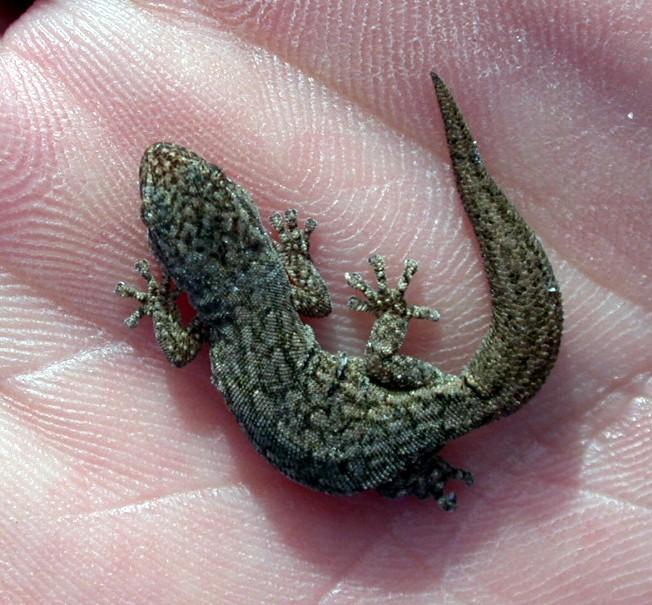
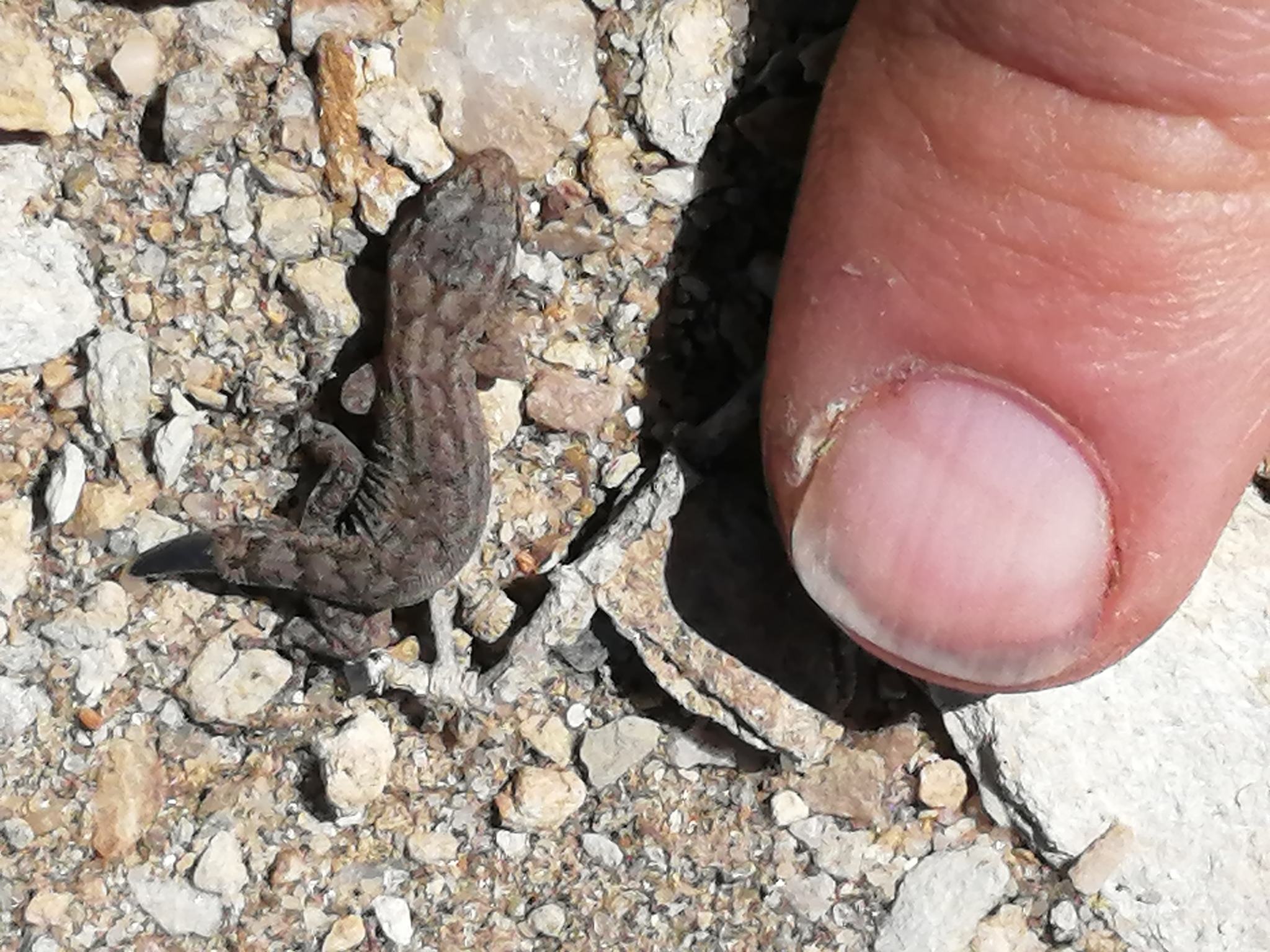
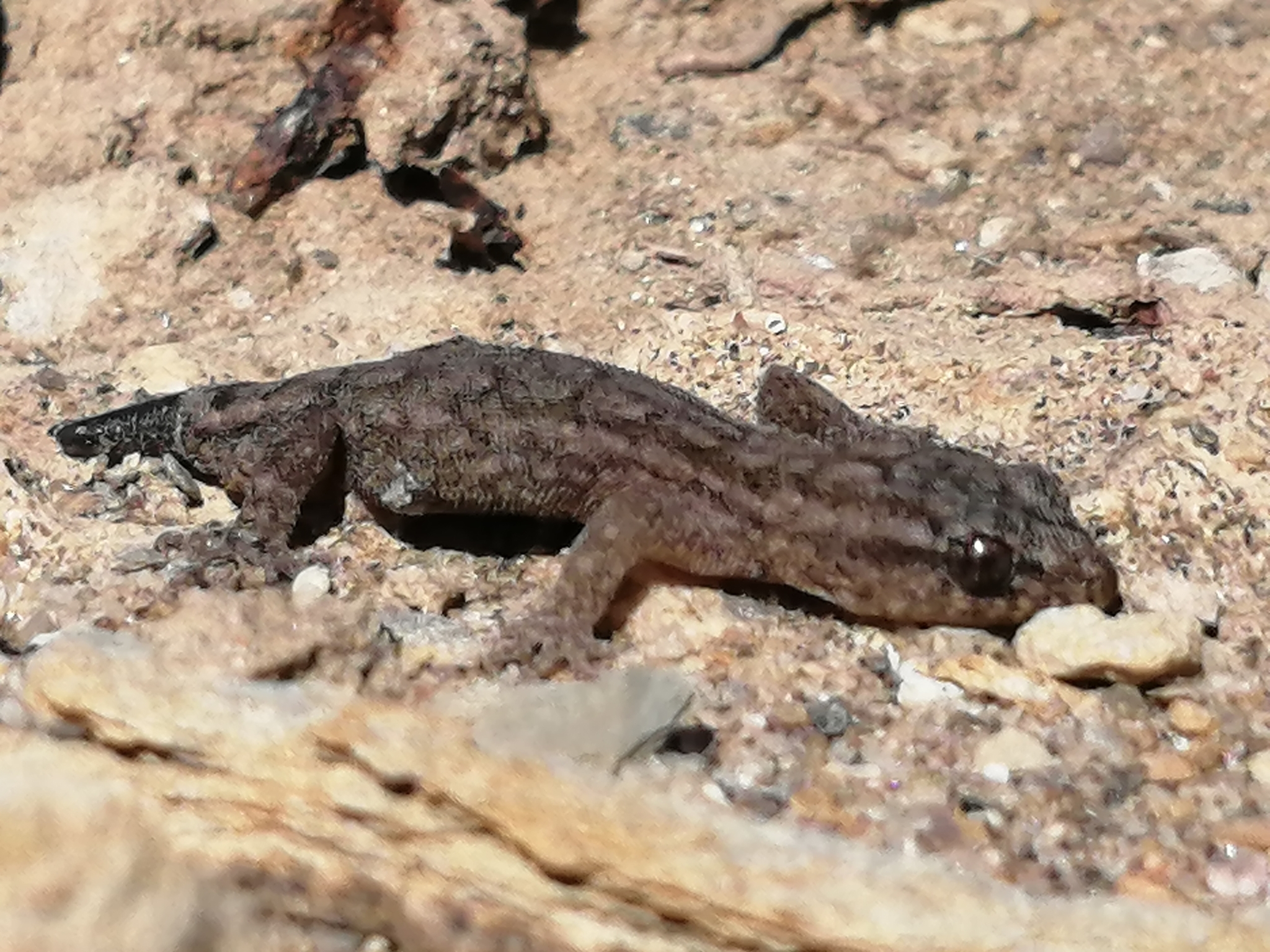
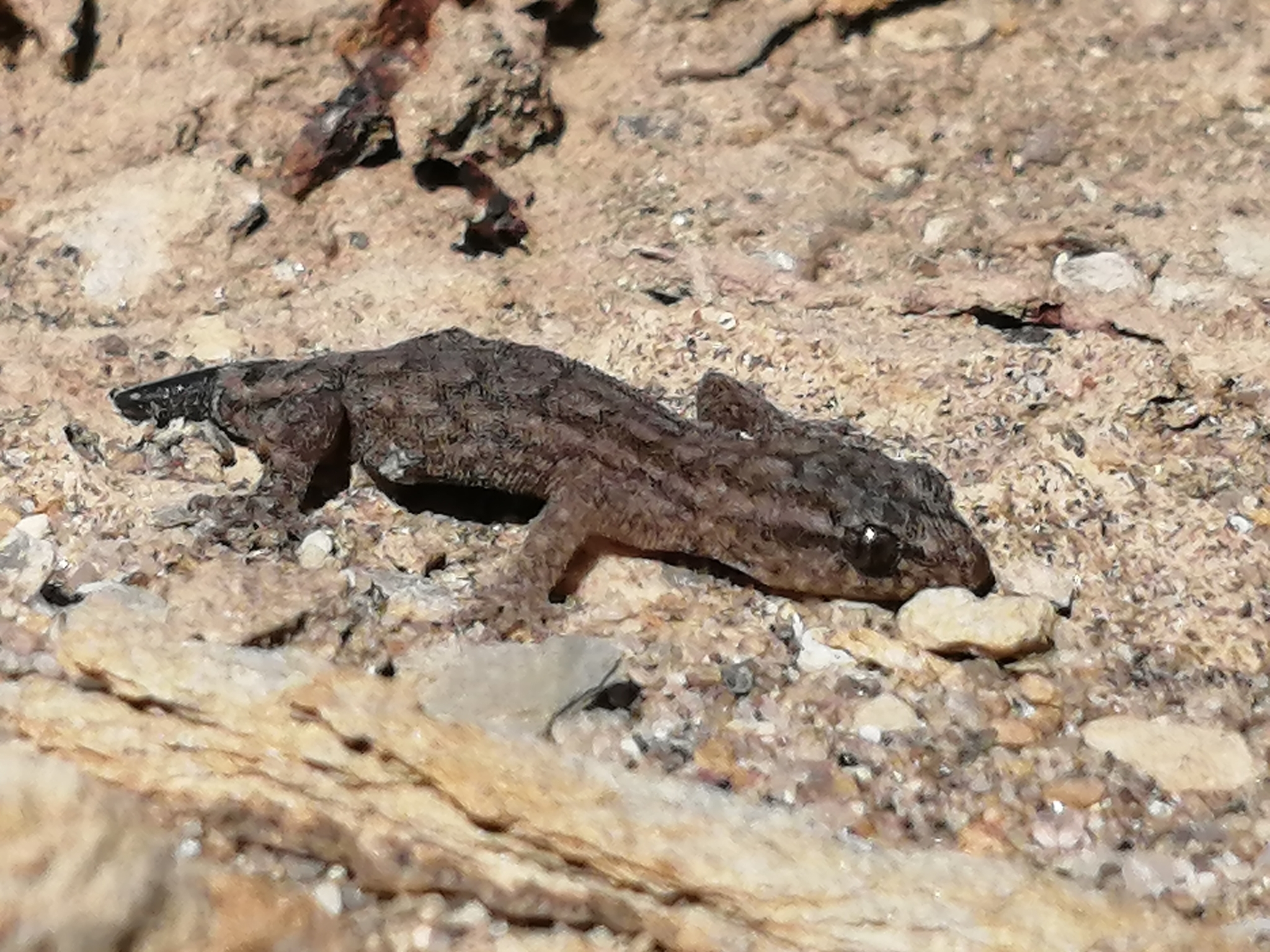
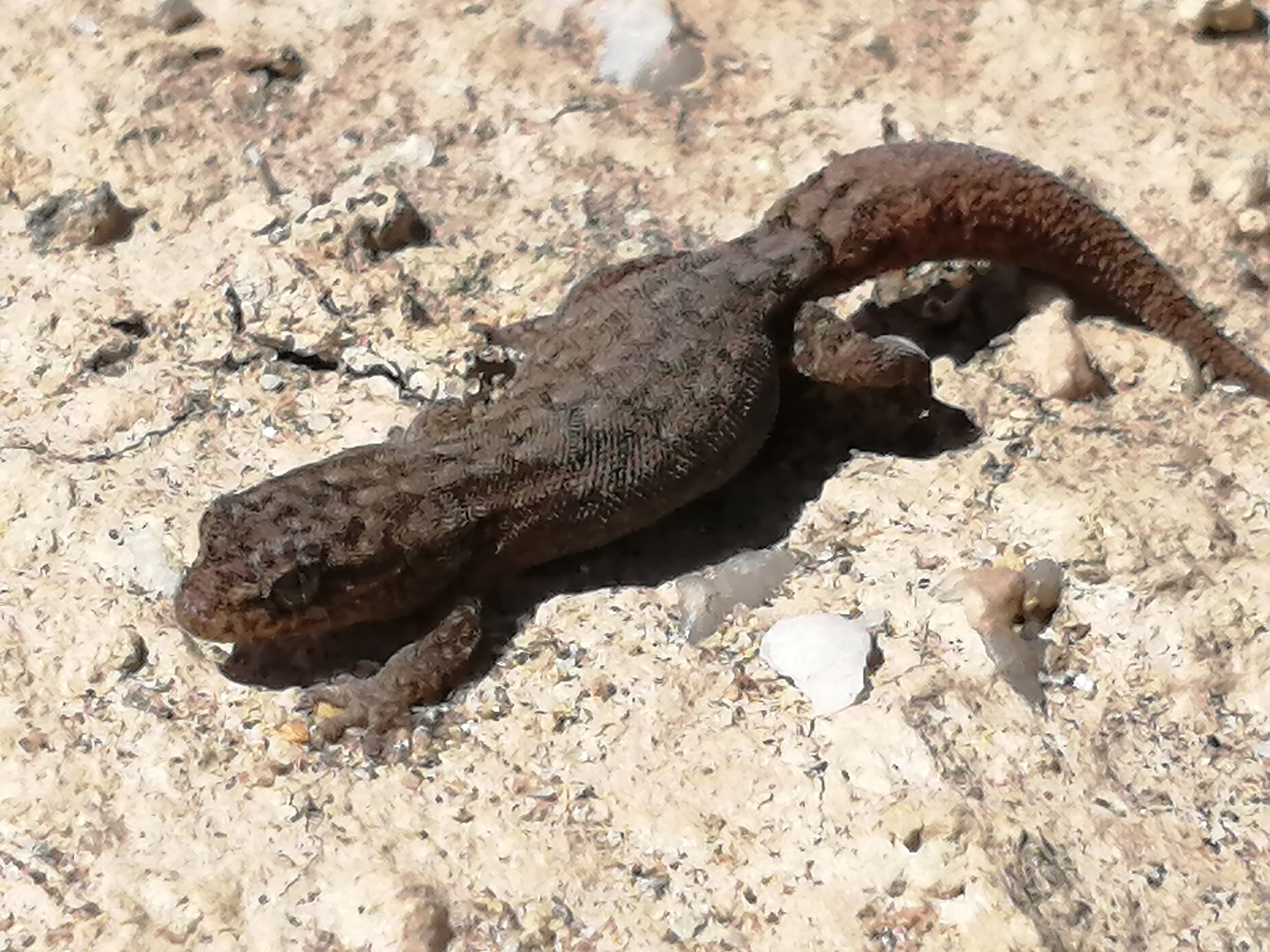
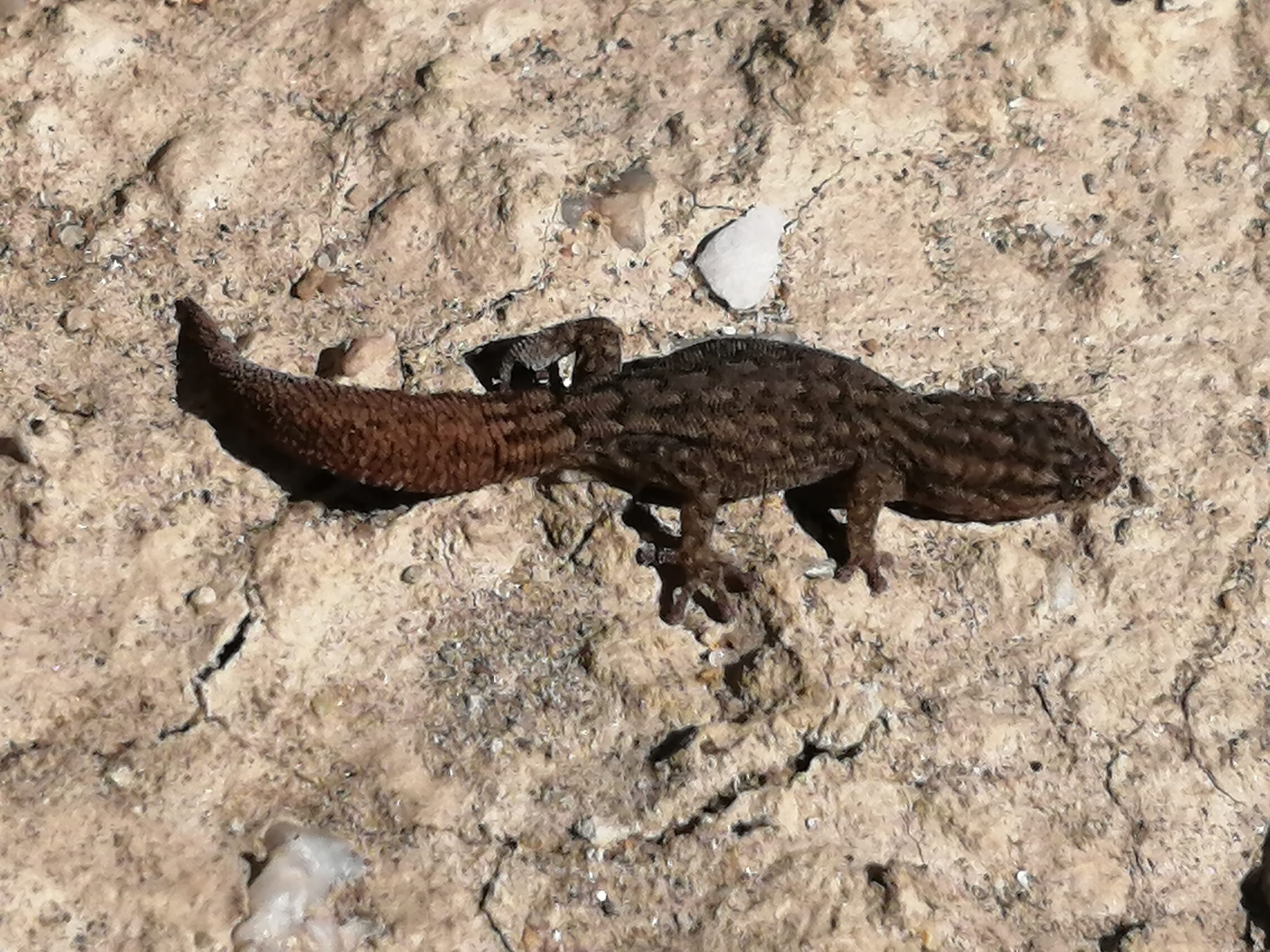
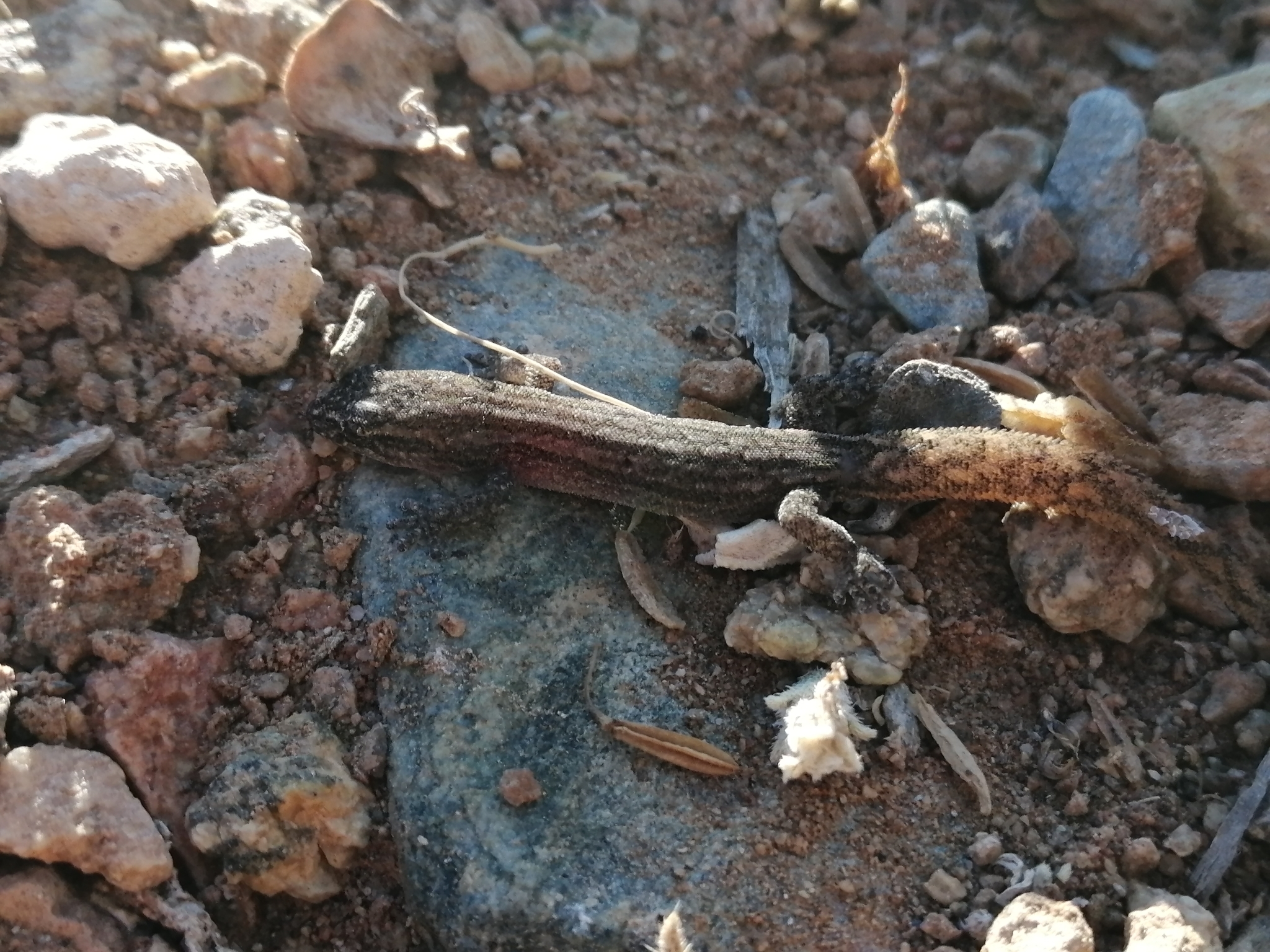
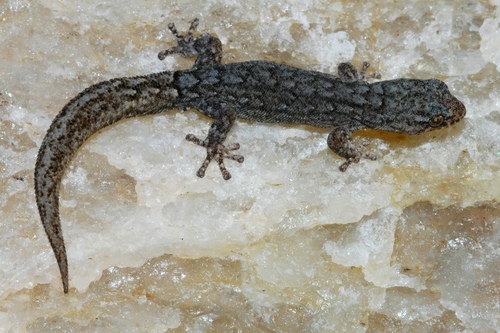
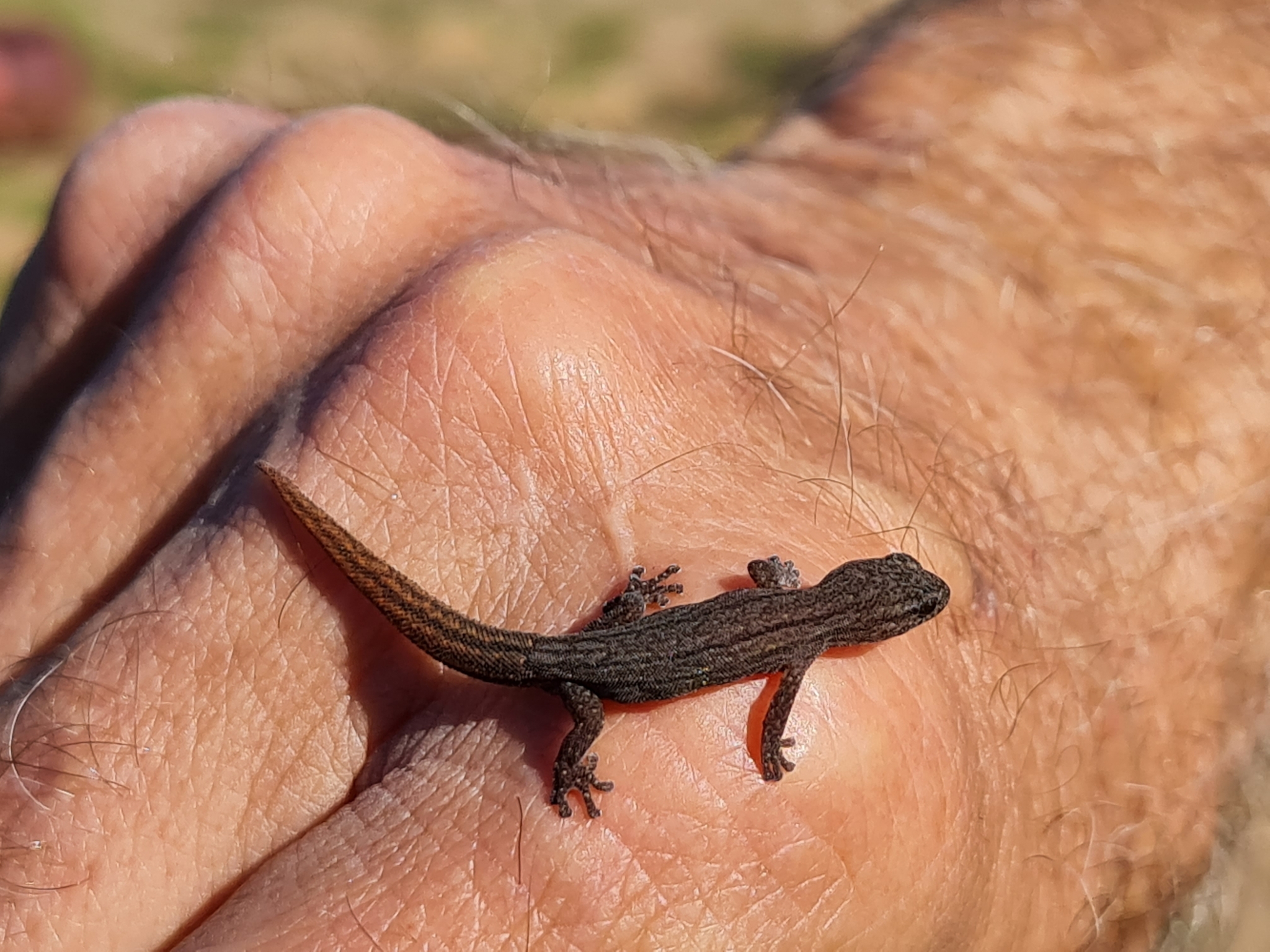
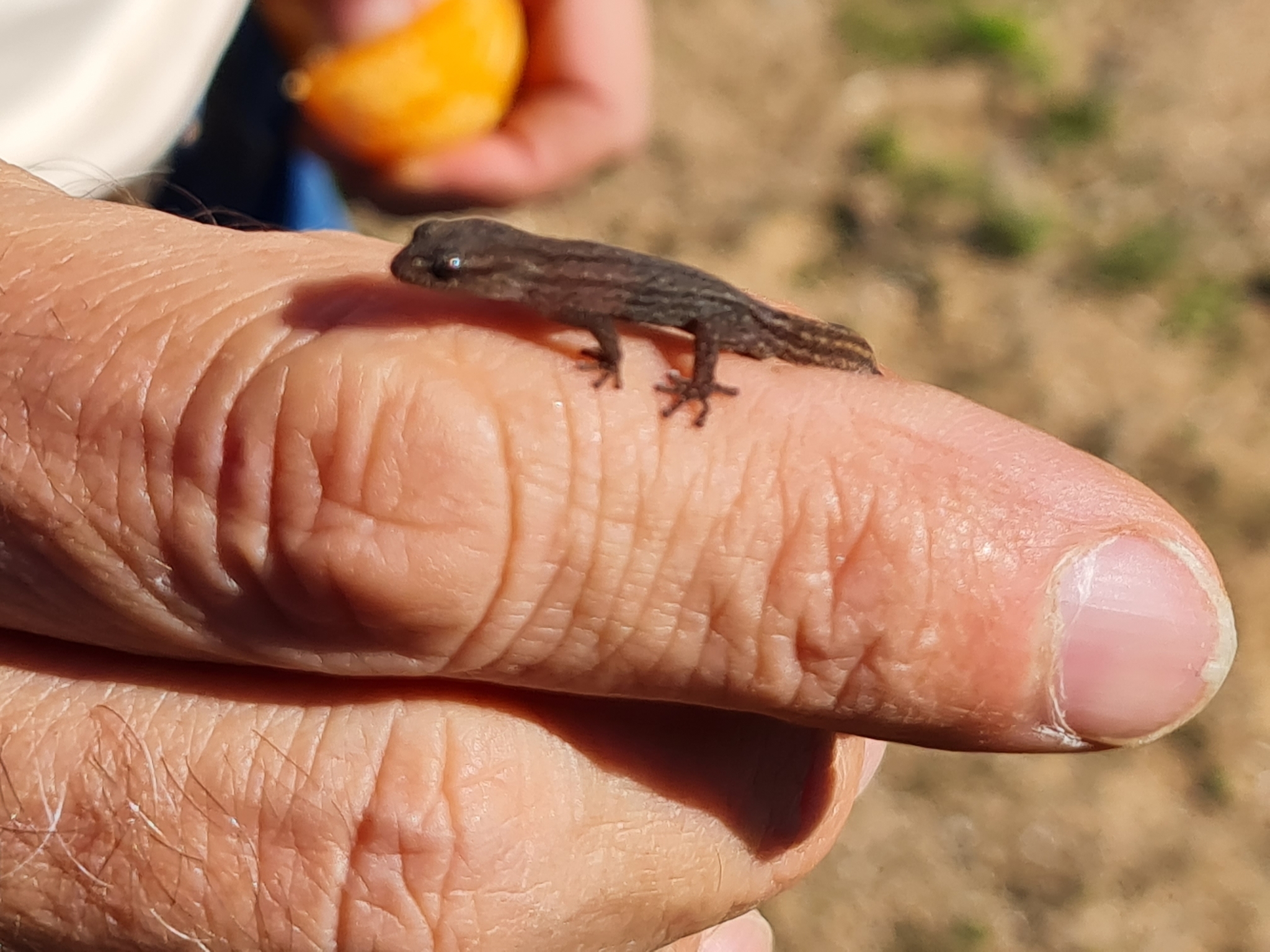
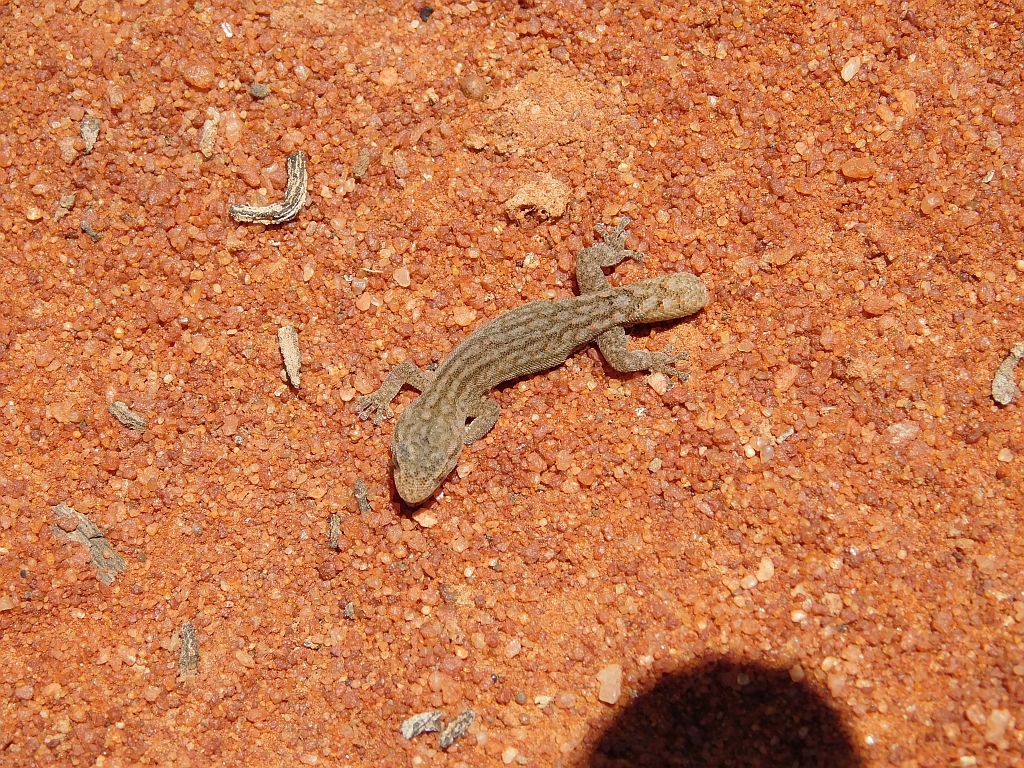
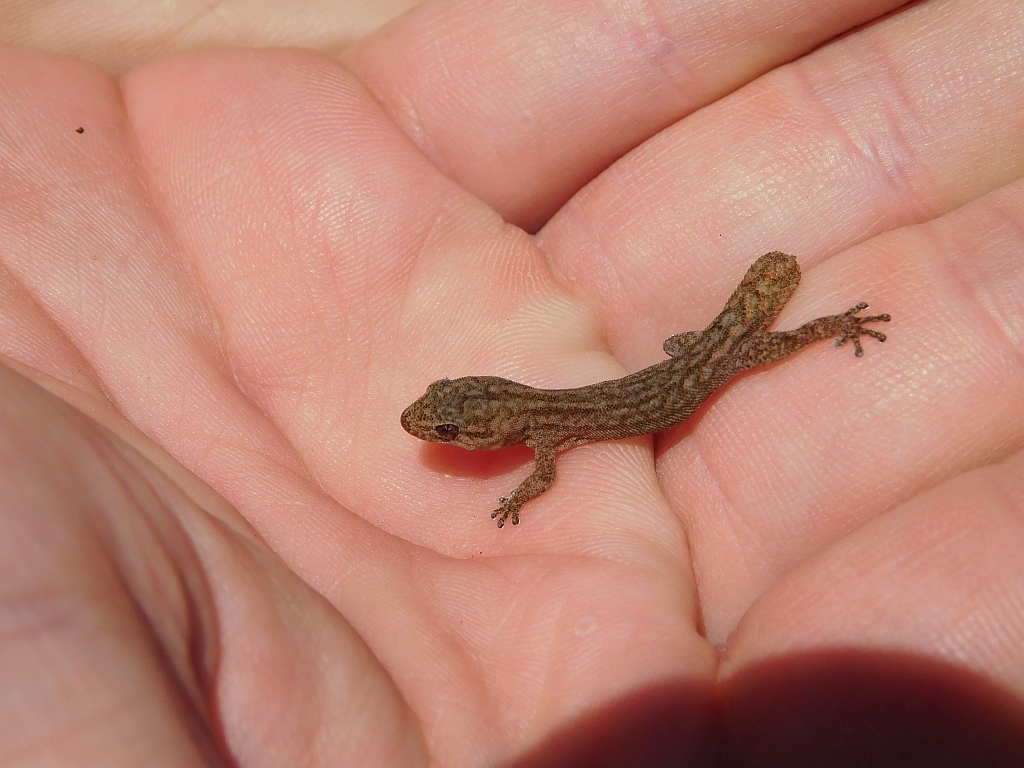
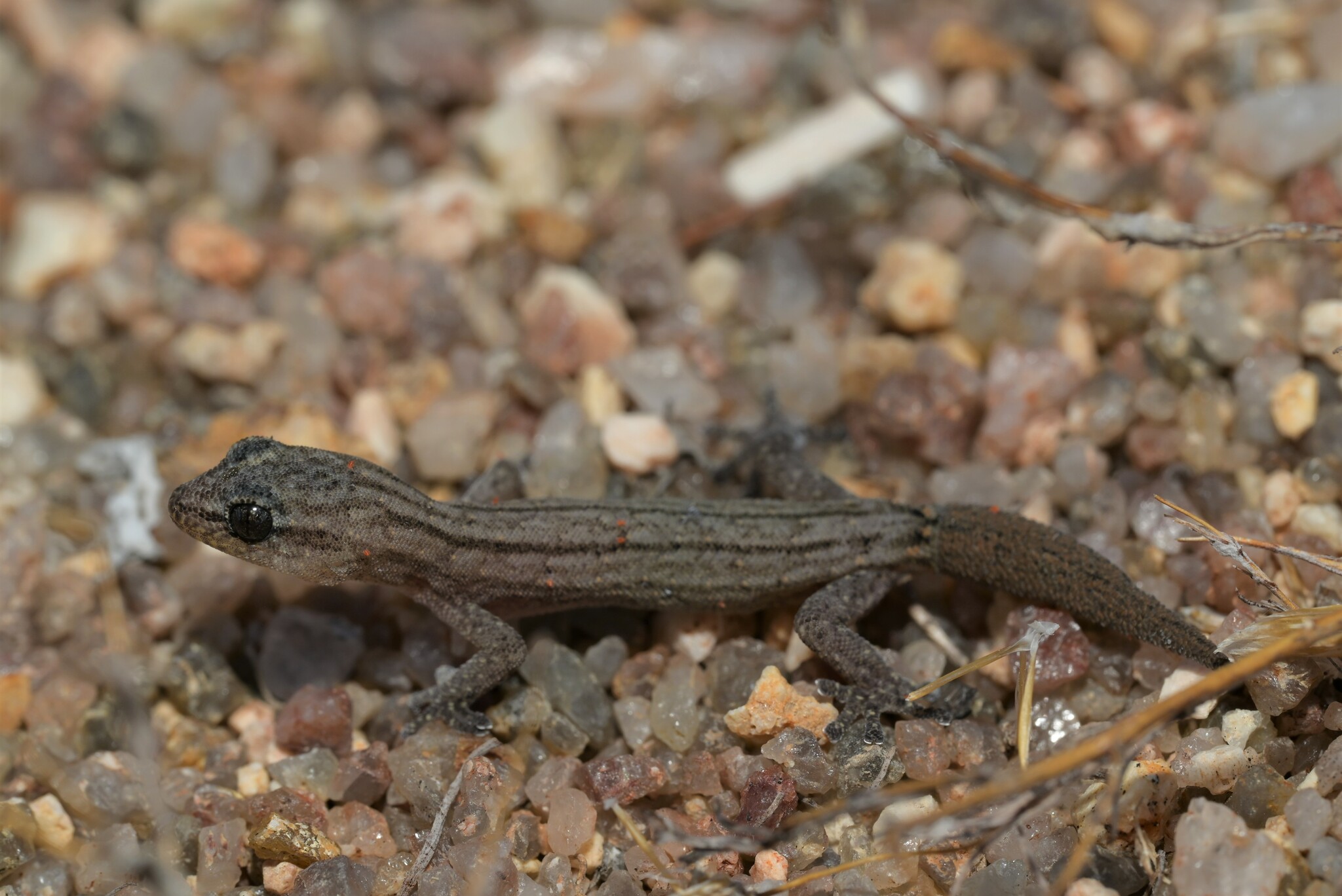
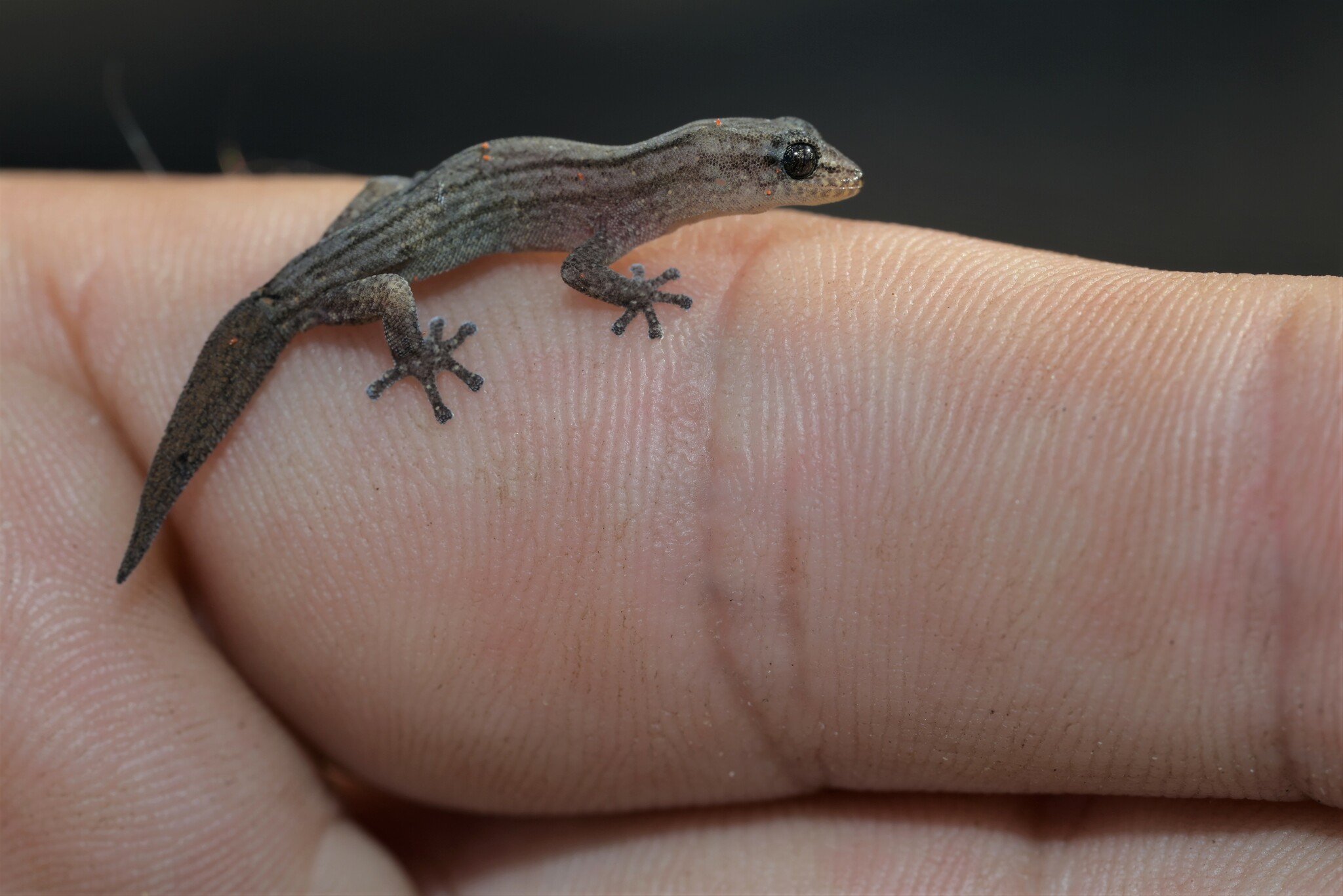
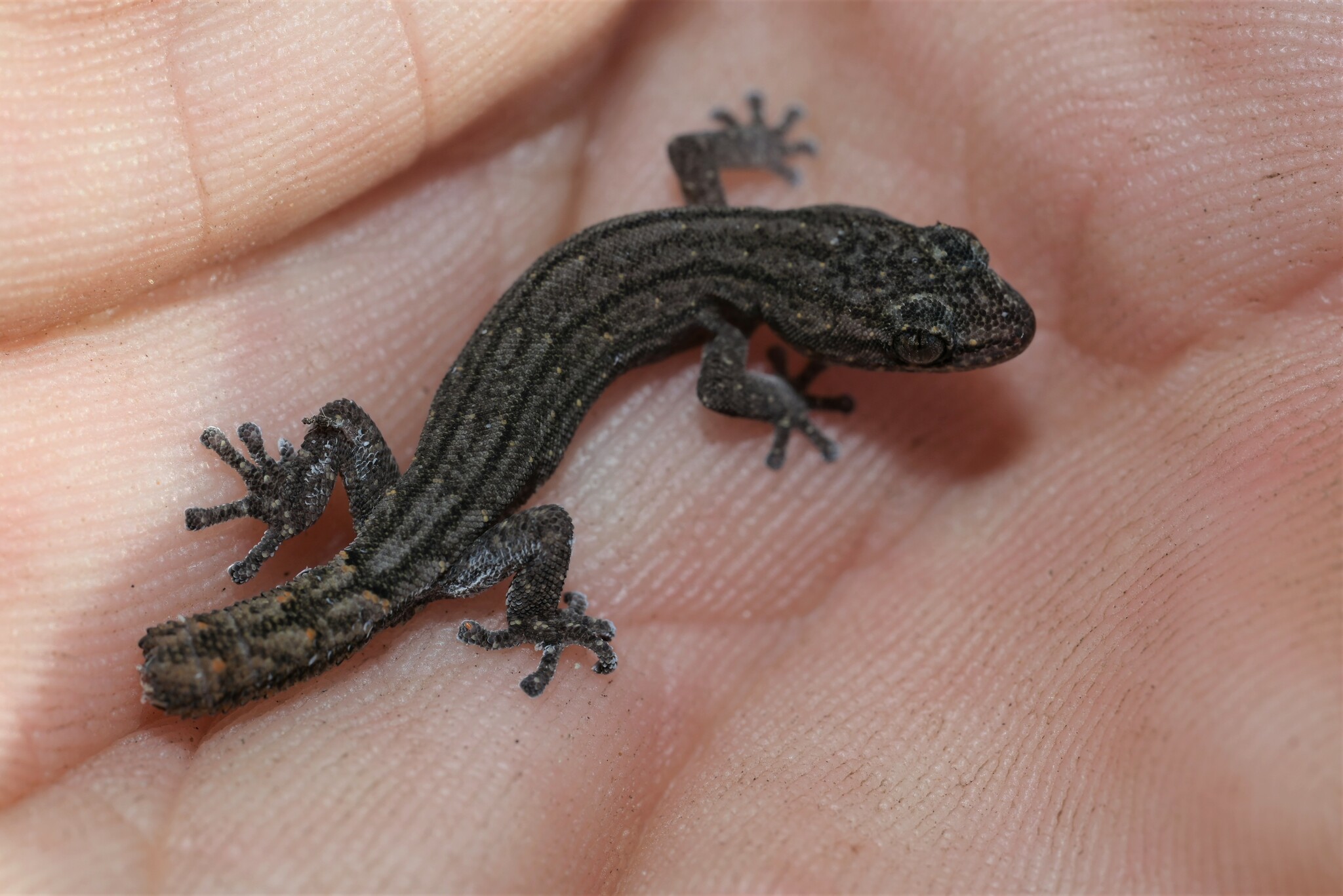
Boulenger (1885) re-described this species as follows: Head oviform, longer than broad, very convex; snout rounded, a little shorter than the distance between the eye and the ear-opening, slightly longer than the diameter of the orbit; forehead not concave; ear-opening small, roundish. Body short. Limb’s moderate. Digits depressed in their basal part, with three series of scales inferiorly, the central series of which is slightly enlarged transversely; digital expansion rounded, scarcely wider than the basal part, measuring about half the diameter of the eye. Upper surface of head covered with small convex granules, largest on the snout ; rostral subpentagonal, nearly twice as broad as high, with median cleft above ; nostril pierced between the rostral, the first labial, and three small nasals, which are generally not distinguishable from the surrounding granules; six or seven upper and as many lower labials; mental pentagonal ; a row of small chin-shields, the two median largest, and in contact with the mental; behind these, convex granules becoming gradually smaller. Upper surface of body and limbs covered with flat, smooth, subimbricate roundish scales, as large as the granules on the snout, abdominal scales larger, hexagonal, imbricate, smooth. Tail cylindrical, tapering, covered with uniform, strongly imbricate. smooth scales. Upper surfaces greyish brown, generally with four or six dark-brown longitudinal lines on the back and tail, sometimes replaced by transverse undulated brown lines; head generally variegated with dark brown; a dark line passing through the eye; lower surfaces brownish white.
This information was extracted from Branch et al. (1995): Distinguished from other members of the P. lineatus complex by a combination of lhe following features: usually five preanal pores in males, a low number of midbody scale rows (64-84), few scales between the nostril and anterior margin of the orbit (7-10), a deep head, and a cylindrical body. In addition, it differs by 4-8 fixed alleles from the other taxa examined electrophoretically.
Type locality: Namaqualand; Cape of Good Hope (fide Bauer et al. 1995). Syntype: BMNH xxi.11.2-3 (fide Loveridge 1947: 250, De Lisle et al. 2013: 101), maybe lost (Heinicke et al. 2017)
The southern populations of G. lineata were assigned to a new species, G. incognita (Heinicke et al. 2017), and the two species appear to be parapatric in the Knersvlakte area (Tolley et al., 2023).
South Africa, Namibia
This species occurs along the arid western margin of South Africa from the coastal area to about 170 km inland. It is peripheral in southern Namibia (Sperrgebiet and Karasburg districts; Branch, 1994). In South Africa, it occurs as far south as the Knersvlakte in the Northern Cape province, where it apparently overlaps with the northern extent of G. incognita (Tolley et al., 2023).
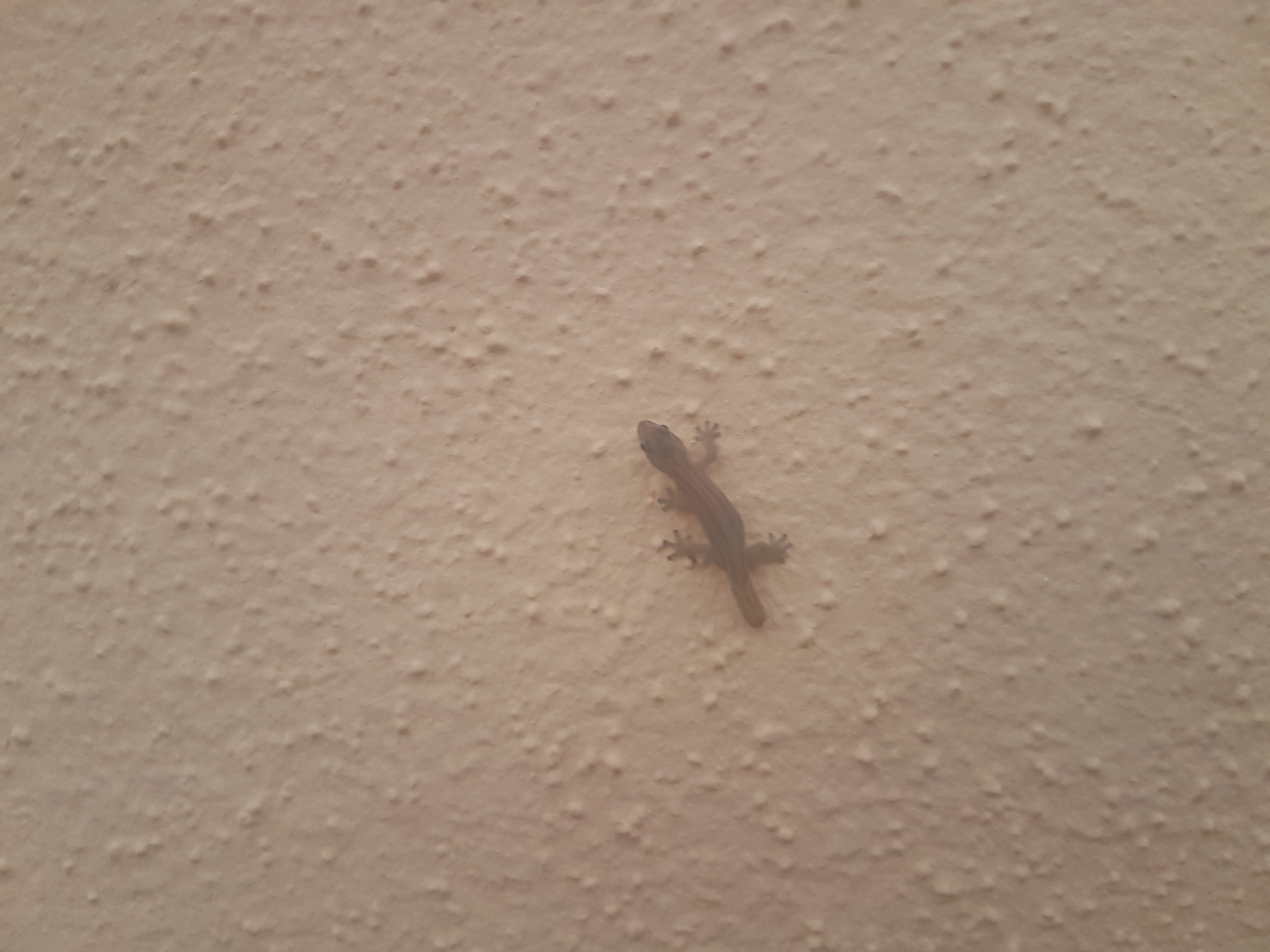
This species has a pair of very distinctive leaf-shaped adhesive toe pads (scansors) under each toe-tip plus a small, retractible claw on each foot, which allow them to stick onto even smooth surfaces, making them extremely good climbers (Branch, 1998).
Carnivore - Insectivore (insect-eating)
Striped Pygmy Geckos feed on small insects, particularly termites (Branch, 1998).
Striped Pygmy Geckos are oviparous, laying two round, hard-shelled eggs under bark or debris. Several clutches may be laid during a season (Branch, 1998).
This species is nocturnal, sheltering in a retreat during the day and emerging at sunset to hunt (Branch, 1998).
Fynbos, Succulent Karoo, Nama-Karoo
This map contains point-based occurrences at different locations
Occurrence in African countries and South African provinces. Residence status indicates if a taxon is indigenous, endemic, or alien in a specific region. This data is based on specimen records and literature.
FSA
SA
BOT
NAM
ESW
LES
WC
EC
NC
FS
GA
KZN
LP
MP
NW
Absent
Indigenous
Endemic
Naturalised
Invasive
Names and Sources
| Common Name | Language |
|---|---|
| Striped Pygmy Gecko | En |
| Stripy Leaftoe Gecko | En |
| Stripy Pygmy Gecko | En |
| Gestreepte Pigmeegeitjie | En |
No results found for Goggia lineata (Gray, 1838)
No data.
20 results for Goggia lineata (Gray, 1838)
This map contains point-based occurrences at different locations
1838
BOOK
A new species of lizard and land shells from South AfricaGray, J.. 1838. A new species of lizard and land shells from South Africa Vol. 11. London. pp.268-269.
1885
BOOK
Catalogue of the lizards in the British Museum (Nat. Hist.) I. Geckonidae, Eublepharidae, Uroplatidae, Pygopodidae, AgamidaeBoulenger, G.. 1885. Catalogue of the lizards in the British Museum (Nat. Hist.) I. Geckonidae, Eublepharidae, Uroplatidae, Pygopodidae, Agamidae. London pp.450 pp.
1998
BOOK
Field Guide to Snakes and Other Reptiles of Southern AfricaBranch, B.. 1998. Field Guide to Snakes and Other Reptiles of Southern Africa. Cape Town. Struik Publishers.
2023
BOOK
Conservation status of the reptiles of South Africa, Eswatini and LesothoTolley, K., Burger, M., Alexander, G., Pietersen, D., Conradie, W., Weeber, J.. 2023. Conservation status of the reptiles of South Africa, Eswatini and Lesotho Vol. Suricata 10. Pretoria. South African National Biodiversity Institute.
1995
JOURNAL ARTICLE
Species limits in the Phyllodactylus lineatus complex (Reptilia: Gekkonidae), with the elevation of two taxa to specific status and the description of two new speciesBranch, W., Bauer, A., Good, D.. 1995. Species limits in the Phyllodactylus lineatus complex (Reptilia: Gekkonidae), with the elevation of two taxa to specific status and the description of two new species Vol. 44(2) pp.33-54.
1994
JOURNAL ARTICLE
Herpetofauna of the Sperrgebiet region of southern NamibiaBranch, W.. 1994. Herpetofauna of the Sperrgebiet region of southern Namibia Vol. 2(1) pp.1-11.
Status and criteria
LC
Assessor(s)
Michael Bates
Reviewer(s)
Buyisile Makhubo